Tag: World War II

  • The War That Moved America: How WWII Reshaped the Nation’s Population

    The War That Moved America: How WWII Reshaped the Nation’s Population

    In 1940, one in ten Americans was unemployed, and the country’s industrial heartland was the Northeast and Midwest. By 1945, the map of where Americans lived had been redrawn. The war had set in motion the largest internal migration in U.S. history 15 million people crossed state lines, roughly one in ten Americans and the direction was unmistakably south and west.

    The Pre-War Map

    Before Pearl Harbor, the United States was a different country. The South was poor, agricultural, and segregated. The West was sparsely populated, dependent on timber, mining, and farming. The Great Depression still lingered, with unemployment hovering around 15 percent. The classic Great Migration of African Americans from the rural South to Northern cities had already been underway for three decades, but the West Coast had relatively small Black populations Los Angeles counted just 75,000 Black residents in 1940.

    The War as Catalyst

    The attack on Pearl Harbor on December 7, 1941, changed everything. The federal government mobilized for war, and the War Production Board began directing contracts to locations with available labor, land, and power. Defense spending during WWII reached roughly $300 billion in 1940s dollars, and about 70 percent of war contracts went to just a handful of states: California, Washington, Texas, New York, and Michigan.

    California alone received about 10 percent of all prime war supply contracts. Los Angeles County received more war contracts than any single state except California itself. The aircraft industry in Southern California Lockheed, Douglas, North American became a magnet for workers. Shipbuilding boomed in the Pacific Northwest, in Portland, Seattle, and Vancouver. Military bases sprouted across the South and West, chosen for year-round flying weather and cheap land San Diego, Norfolk, San Antonio, Phoenix, and inland California cities like Riverside and Fresno.

    The Westward Surge

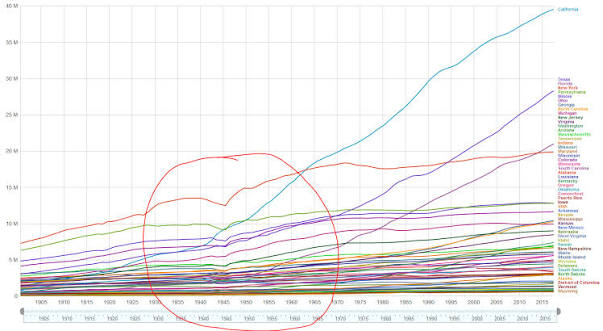
    The result was explosive growth. California gained nearly 2 million residents between 1940 and 1945, making it the fastest-growing state in the nation. Sunbelt cities—Los Angeles, San Diego, Phoenix, Houston, Dallas, Atlanta, Miami—saw their populations soar. Meanwhile, rural areas and the Rust Belt stagnated or declined as workers left for defense jobs.

    This was not just a continuation of earlier trends; it was a distinct, war-driven phenomenon. The federal government was, in effect, moving the population. The Pacific Coast transformed from a resource-extractive periphery into a manufacturing powerhouse.

    The Second Great Migration

    The war also marked the beginning of the second wave of the Great Migration, when African Americans left the South in even larger numbers than before. During the 1940s alone, about 1.5 million Black Americans left the South, many drawn to West Coast defense plants like the Kaiser Shipyards in Richmond, California, and aircraft factories in Los Angeles, where labor shortages were acute.

    But the war was not a haven of racial equality. Black migrants faced discrimination in housing, unions, and the military itself, which remained segregated until 1948. Race riots erupted in 1943 in Detroit, Harlem, and Los Angeles—the Zoot Suit Riots. The experience gave rise to the “Double V” campaign: victory abroad against fascism, victory at home against racism. The political base for the Civil Rights Movement was being built, as Black voters in Northern and Western cities gained influence.

    The White Migrant Experience

    Millions of white Southerners, many from Appalachia and the rural South, also moved to defense plants in the Midwest and West. The “Okies” and “Arkies” of the Dust Bowl era continued their westward trek, now finding work in California’s war industries. They too faced stigma, labeled “hillbillies” and often settling in segregated white working-class neighborhoods.

    The Post-War Legacy

    The shift did not end in 1945. Cold War defense spending kept the Sunbelt booming. The GI Bill of 1944 subsidized housing and education, disproportionately benefiting veterans who settled in the South and West. The interstate highway system, air conditioning, and suburbanization further entrenched the region’s rise. By 1960, California had surpassed New York as the most populous state—a position it held until 2020.

    World War II was not just a conflict fought overseas; it was a domestic revolution. The federal government’s wartime spending—directed to the coasts and the South—permanently reoriented the nation’s economy and population. The 15 million Americans who moved during the war years carried the country’s center of gravity with them, and the Sunbelt’s dominance today is a direct legacy of the choices made in 1941.

    Summary

    • WWII triggered the largest internal migration in American history: 15 million people moved across state lines between 1940 and 1945.
    • California gained ~2 million residents, becoming the fastest-growing state, driven by aircraft manufacturing and shipbuilding.
    • The South and West received the bulk of $300 billion in defense spending, with ~70% of war contracts going to just a handful of states.
    • The war marked the beginning of the Second Great Migration, as 1.5 million African Americans left the South during the 1940s, many heading west.
    • The GI Bill and Cold War spending extended the shift, cementing the Sunbelt’s rise and California’s status as the most populous state by 1960.

    FAQ

    Q: How many Americans moved during WWII?
    A: Roughly 15 million Americans moved across state lines during the war years (1940–1945), about one in ten of the population.

    Q: Why did the population shift south and west?
    A: The federal government directed defense contracts and military bases to the South and West due to available labor, land, climate, and power resources. California alone received ~10% of all prime war supply contracts.

    Q: What was the Second Great Migration?
    A: The Second Great Migration (1940–1970) was the larger, more westward-oriented wave of African American migration from the South. During the 1940s alone, ~1.5 million Black Americans left the South, many for West Coast defense jobs.

    Q: Did the migration end after the war?
    A: No. The GI Bill, Cold War defense spending, and later the interstate highway system and air conditioning continued to attract people to the Sunbelt. California surpassed New York as the most populous state in 1960.

    Q: What were the social impacts of the migration?
    A: The migration created both economic opportunity and racial tension. Discrimination in housing and jobs persisted, leading to race riots in 1943. It also built a political base for the Civil Rights Movement.
  • The Precarious Peace: How Switzerland, Sweden, and Spain Survived World War II

    The Precarious Peace: How Switzerland, Sweden, and Spain Survived World War II

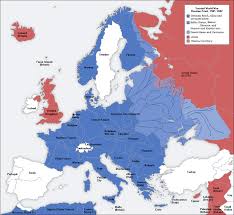
    In 1940, after the fall of France, the map of Europe turned almost entirely gray with Axis occupation. Yet three small western nations Switzerland, Sweden, and Spain remained unoccupied, their flags flying over capitals that never saw a single German tank. Their neutrality, however, was not a quiet absence from the war. It was a high-wire act, a daily negotiation with survival, and a moral tightrope that each nation crossed differently.

    This is the story of how these countries fed their people, armed their borders, and wrestled with their consciences while the world burned around them. It is a story of ration books and refugee lines, of secret railway carriages and wolfram mines, and of the painful compromises that kept them out of the war but not untouched by it.

    Switzerland: The Armed Hedgehog

    When German forces swept through the Low Countries and into France in May 1940, Switzerland found itself completely surrounded by the Axis. The Swiss response was swift and defiant. General Henri Guisan, the commander-in-chief, ordered the mobilization of up to 850,000 soldiers roughly 20% of the entire population. Every able-bodied man had a rifle and a place in the line.

    But Guisan had a plan that was less about holding the border and more about making conquest futile. From 1940 onward, the Swiss army withdrew into the Réduit, a fortified redoubt deep in the Alps. The lowlands, where most of the population and industry lived, would be ceded to an invader. But the mountains would become a fortress, with tunnels, bunkers, and artillery hidden in the rock. Any invader would pay a terrible price for the lowlands and still face an unbreakable core. The strategy was simple: make Switzerland too expensive to take.

    Life on the home front was a lesson in scarcity. Food, clothing, and fuel were rationed using a points system. Every family received a booklet of coupons, and every purchase—bread, butter, shoes, coal—required points. The government, under agronomist Friedrich Wahlen, launched a crash program to make the country self-sufficient. Every patch of arable land was pressed into service: parks became potato fields, and flower beds gave way to cabbage. By 1943, Swiss farmers were producing about 60% of the nation’s food, a remarkable feat for a country that had imported heavily before the war.

    Yet the Swiss also made a devil’s bargain. Encircled by the Axis, they had to trade with Germany to survive. They imported coal and food, and in return, they sold precision instruments, machine tools, and armaments. Swiss banks, through a plan negotiated by diplomat Paul Walen, bought gold from the Reichsbank—much of it looted from occupied countries. This trade kept the Swiss economy afloat but also kept the German war machine running. It was a moral stain that would haunt the country for decades.

    The refugee question was equally fraught. Switzerland officially admitted around 300,000 refugees during the war, including interned soldiers and civilians. But the policy was painfully restrictive. Between 1942 and 1943, Swiss border guards turned away tens of thousands of Jewish refugees, often sending them back to almost certain death in occupied France. It was only in 1944, as the war turned, that the doors opened wider. The Swiss also interned about 100,000 foreign soldiers—mostly Allied and Italian—who had crossed the border. These men were housed in camps and often put to work on roads and farms.

    Sweden: The Pragmatic Neutral

    Sweden’s neutrality was of a different sort. While Switzerland was physically surrounded, Sweden had a coastline and a long border with German-occupied Norway. It also had something Germany desperately needed: iron ore. From the mines of Kiruna in the far north, Sweden supplied about 75% of Germany’s iron ore during the war. This was not a trivial export; it was the backbone of the German arms industry.

    In exchange, Sweden allowed German troops and war materiel to transit its railways. This “permittenttrafik” was a massive concession. Over the course of the war, up to two million German soldiers passed through Sweden on their way to and from Norway and Finland. The most glaring breach came in 1941, when a fully armed German division—the Engelbrecht Division—was allowed to travel from Norway to Finland through Swedish territory. This move caused a domestic political crisis, known as the “Midnight Crisis,” and revealed how far Sweden was willing to bend to German pressure.

    But the Swedish government, led by Prime Minister Per Albin Hansson, was playing a longer game. They believed that a too-close alliance with the Allies would invite invasion, and a too-close alliance with Germany would make them a target. So they made concessions, but they also quietly prepared. Defense spending skyrocketed from about 4% to 25% of GDP. The military was modernized, and plans were drawn up for a possible German attack.

    On the home front, life was a study in rationing. Coffee, sugar, gasoline, and tires were all rationed. A bland “mixed bread” made from rye and other grains was mandated to stretch wheat supplies. The black market flourished, and many Swedes grew vegetables in their gardens. Yet the country was not starving, and the economy remained functional.

    The turn came after the German defeat at Stalingrad in 1943. Sweden began to tilt toward the Allies. The troop transits stopped. Swedish airfields were opened to Allied airmen in need of emergency landing. And the refugee policy changed dramatically. Sweden accepted around 200,000 refugees in total, including 8,000 Danish Jews who were smuggled across the Øresund in October 1943, and about 30,000 Norwegian resistance members and Jews. It also took in 30,000 Baltic conscripts from the German army. In 1945, Count Folke Bernadotte’s “White Buses” operation rescued 15,000 to 20,000 prisoners from German concentration camps. It was a humanitarian record that helped balance the earlier, darker compromises.

    Spain: The Hungry Neutral

    Spain had just emerged from its own civil war, a brutal conflict that left the country in ruins when World War II began. The economy was shattered. Wheat production had fallen to about 30% of pre-war levels. The 1940s became known as “los años del hambre”—the years of hunger. Bread, oil, and other staples were rationed from 1939, and the rationing did not end until 1952. For many Spaniards, the war years were a daily struggle against starvation.

    Franco’s regime was ideologically aligned with the Axis. He had come to power with German and Italian help, and he owed them a debt. But he was also a pragmatist. In October 1940, he met Hitler at Hendaye, on the French-Spanish border. Franco demanded Gibraltar, French Morocco, and massive food aid as the price for entering the war. Hitler balked at the demands, and the meeting ended without a deal. Spain would remain officially “non-belligerent”—not neutral, but not at war.

    Still, Spain found ways to support the Axis without formally joining. The most famous was the Blue Division, some 47,000 Spanish volunteers who fought on the Eastern Front against the Soviet Union from 1941 to 1943. These men were officially volunteers, not state forces, but they were a clear signal of Franco’s sympathies. They were eventually withdrawn as the war turned.

    Spain also traded with both sides. The most critical export was tungsten, or wolfram, a metal essential for armor-piercing shells. Germany bought Spanish tungsten until 1944, when Allied pressure—the “wolfram crisis”—forced a cutoff. In return, Spain received German arms and technology. Spanish ports quietly served as resupply points for German U-boats, and Spanish intelligence cooperated with the Abwehr.

    On the refugee front, Spain was inconsistent. It allowed perhaps 20,000 to 30,000 Jewish refugees to transit through the country, often via the Pyrenees route. But the policy was erratic, sometimes depending on bribes or the whim of a local official. Some were saved; others were turned back. Spain also accepted thousands of Allied airmen who crash-landed on Spanish soil, most of whom were repatriated.

    For ordinary Spaniards, the war was less about politics and more about survival. The black market was rampant, and hunger was a constant companion. And yet, compared to the occupied nations of Europe, Spain had a measure of freedom. There was no Gestapo, no forced labor, no deportations. The price was a regime that would remain in power for decades, its economy stunted by isolation and its politics frozen in the shadow of civil war.

    What Neutrality Meant

    These three countries were not passive bystanders. They were active participants in a war they officially avoided. Their neutrality was a constantly negotiated position, shaped by geography, economics, and the shifting fortunes of battle. Switzerland had to balance its armed defiance with trade with the Axis. Sweden had to balance its iron ore exports with its growing humanitarian role. Spain had to balance its Axis sympathies with the desperate needs of its own people.

    In the end, all three survived the war without invasion. But the survival came at a cost. They made moral compromises, some of which would take decades to confront. And they proved that neutrality was never a comfortable middle ground—it was a tightrope walk, where one misstep could mean destruction, and where the safety of the nation often came at the expense of others.

    The neutrality of Switzerland, Sweden, and Spain during World War II was not a simple refusal to take sides. It was a series of high-stakes calculations, each nation trading with the devil to keep its people alive. They emerged from the war with their flags intact, but the war left its mark on all of them—in the ration books, the refugee policies, and the quiet compromises that history would later judge.

    Summary

    • Switzerland mobilized 20% of its population and retreated to an alpine redoubt, but traded with Germany and turned away many Jewish refugees.
    • Sweden supplied 75% of Germany’s iron ore and allowed troop transits, but later shifted to the Allies and rescued thousands of concentration camp prisoners.
    • Spain, devastated by civil war, remained officially non-belligerent, sent volunteers to the Eastern Front, and traded tungsten to Germany while its people starved.
    • All three countries maintained official neutrality but made pragmatic concessions that kept them out of the war while deeply involving them in it.

    FAQ

    Q: Why didn’t Germany invade Switzerland?
    A: The Swiss Réduit strategy made conquest prohibitively costly, and Switzerland’s trade with Germany was more valuable than its occupation.

    Q: How many refugees did Switzerland accept?
    A: About 300,000 total, but tens of thousands of Jewish refugees were turned away at the border in 1942–1943.

    Q: What was the ‘Midnight Crisis’?
    A: In 1941, Sweden allowed a fully armed German division to transit its territory, causing a political crisis that highlighted Sweden’s concessions to Germany.

    Q: Did Spain fight in World War II?
    A: Spain sent volunteers (the Blue Division) to fight on the Eastern Front, but the state never formally entered the war.

    Q: What were ‘los años del hambre’?
    A: The ‘years of hunger’ in Spain during the 1940s, when food rationing and economic collapse led to widespread starvation.

  • The Shadow Economy of WWII: How Rationing Gave Birth to the Black Market

    The Shadow Economy of WWII: How Rationing Gave Birth to the Black Market

    In 1943, an American housewife in Chicago could buy a pound of butter on the legal market only with the right ration stamps if her grocer had any in stock. But two blocks away, a butcher kept a stash under the counter, and for $1.50 (nearly four times the official price) she could walk out with that butter, no questions asked. That transaction, repeated millions of times across every combatant nation, was the black market.

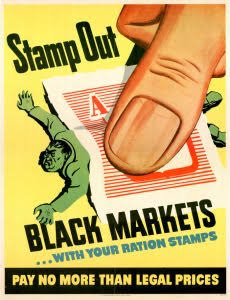
    World War II rationing was a monumental act of collective sacrifice: governments froze prices, limited purchases, and issued coupons to ensure scarce goods were shared fairly. But these controls created an artificial scarcity that ordinary citizens, desperate for a taste of normalcy, were willing to circumvent. The result was a vast shadow economy that, at its peak in the United States, moved roughly $1 billion a year equivalent to $15–18 billion today.

    The Rationing That Created the Opportunity

    Rationing wasn’t a minor inconvenience; it touched nearly every aspect of daily life. In the United States, it began in May 1942 with sugar, then expanded to coffee, gasoline, tires, meat, butter, and processed foods. Every civilian received a ration book filled with stamps, each color and letter designating what could be purchased and in what quantity. A car owner had to display a windshield sticker A, B, C, or T to show how much gasoline they were entitled to, with the lowest category (A) allowing just a few gallons a week.

    The United Kingdom started even earlier, in January 1940, and rationing there extended to clothing and fuel, continuing long after the war ended some items weren’t freed until 1954. The Soviet Union maintained strict state rationing throughout the war, and Germany introduced its system in 1939.

    These controls were necessary. Submarine warfare, bombing raids, and labor shortages disrupted supply chains; without rationing, the wealthy would have hoarded food and fuel, and prices would have spiraled out of control. But the system had a fundamental flaw: it created shortages where none truly existed. Goods were available just not at the official price or in the legal quantity. That gap between what the government allowed and what people wanted was the black market’s breeding ground.

    The black market of WWII was neither a simple crime wave nor a heroic resistance. It was a messy, human response to the impossible pressures of total war a shadow economy that fed the hungry, frustrated the powerful, and, in the end, proved as unstoppable as the tide. When the guns fell silent, the black market didn’t vanish; it lingered for years, a stubborn reminder that even in the most disciplined of societies, the urge to trade, to barter, to survive, cannot be rationed away.

    Summary

    • Black markets emerged in every combatant nation, driven by artificial scarcity from rationing and price controls
    • In the U.S., the OPA estimated black market activity reached $1 billion per year at its 1943–1944 peak
    • Ordinary citizens, not just criminals, participated seeing it as survival or a way to beat the system
    • In occupied Europe, black markets were often the only source of food for urban populations
    • Post-war, black markets persisted, with cigarettes serving as currency in Germany until the 1948 currency reform

    FAQ

    Q: What exactly was the black market during WWII?
    A: It was the illegal buying and selling of rationed goods—food, gasoline, clothing, and more—outside government controls. It operated in every combatant nation, from the U.S. to the Soviet Union.

    Q: Why did rationing create a black market?
    A: Rationing set legal limits on purchases and official prices, but demand still exceeded supply. Goods existed but couldn’t be legally obtained, so people turned to illegal channels to get them.

    Q: Were black marketeers punished severely?
    A: It varied. In the U.S., the OPA had about 3,000 investigators, and penalties included fines and jail, but enforcement was inconsistent. In Germany, the Gestapo pursued black marketeers brutally, with executions for serious offenses.

    Q: Did the black market help or hurt the war effort?
    A: It’s ambiguous. It undermined rationing’s fairness but also helped feed people in occupied countries where official rations were starvation-level. Many participants saw it as a necessary survival mechanism.

    Q: What happened to the black market after the war?
    A: It persisted for years due to continued shortages. In Germany, cigarettes became the de facto currency until the 1948 currency reform introduced the Deutsche Mark, which restored confidence in official money.

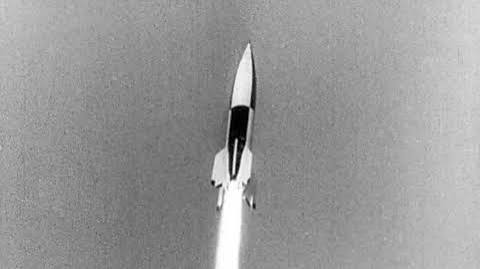
  • The V-2: How a Terror Weapon Launched the Space Age

    The V-2: How a Terror Weapon Launched the Space Age

    In the autumn of 1944, Londoners had grown used to the wail of air-raid sirens. But on September 8, at 6:43 p.m., a new terror struck without warning. A 14-meter missile, flying faster than sound, slammed into the quiet residential street of Chiswick, killing three people and leaving a crater six meters deep. There was no siren, no drone of engines just a sudden, shattering explosion. The V-2, the world’s first operational ballistic missile, had arrived.

    This weapon, built by slave labor in a subterranean factory, was a desperate gamble by a failing regime. It did not change the course of the war. Yet its engineering a liquid-fueled rocket with gyroscopic guidance became the seed from which both the Cold War’s intercontinental missiles and the Apollo Moon missions grew. The V-2 is a story of contradictions: a horrific instrument of terror that also marked humanity’s first tentative step toward space.

    A Rocket Born from the Ashes of Versailles

    The story begins not in the chaos of 1944, but in the mid-1930s, in the pine forests of Peenemünde on Germany’s Baltic coast. There, a young engineer named Wernher von Braun led a team of the Army’s research center, tasked with building a weapon that could strike enemies without risking a single aircraft. The Treaty of Versailles had crippled Germany’s conventional military, but rocketry was unregulated. Von Braun, then only in his twenties, had a grander vision: spaceflight. The army, however, wanted a bomb.

    Their early attempts the A-1, A-2, and A-3 were test beds for the technologies that would become the A-4. The critical breakthrough came with the engine. The A-4 used a turbopump to feed 75% ethanol and liquid oxygen into a combustion chamber, generating 25 tons of thrust. This was not a simple pressure-fed system; it was a complex, high-performance machine that could push a 12.5-ton rocket to the edge of space.

    On October 3, 1942, the A-4 first flew successfully, reaching an altitude of 83 kilometers high enough to be considered the beginning of outer space. Von Braun reportedly declared, “We have invaded space with our rocket.” For the first time, a human-made object had breached the threshold of the cosmos, even if only for a few minutes.

    A Vengeance Weapon—And a Failure

    The weapon was a strategic failure. Its warhead carried just one ton of Amatol explosive—a fraction of what a single bomber could deliver. Its guidance system relied on gyroscopes and an integrating accelerometer, but accuracy was abysmal: the circular error probable was about 17 kilometers. In practice, the V-2 could hit a city, but not a specific target within it.

    From September 1944 to March 1945, the Germans launched roughly 3,200 V-2s against London, Antwerp, and other cities. In London, 2,754 people were killed; in Antwerp, 1,736. The numbers were tragic, but they did not move the needle of the war. The economist’s view is stark: the resources poured into the V-2 program—materials, engineers, and the lives of thousands of forced laborers—could have been used to build jet fighters or anti-aircraft guns that might have actually defended Germany.

    The V-2 was also a psychological weapon, but its effect was blunted by its own silence. It fell faster than sound, giving no warning. The unpredictability bred fear, but also a grim resignation. It was, in the words of one observer, “an answer to the question of whether the war could be won by technology alone—and the answer was no.”

    The Dark Underbelly: Mittelwerk and Dora

    To build the rockets, the Nazis moved production to an underground factory in the Harz mountains, called Mittelwerk. The workforce was supplied by the Dora-Mittelbau concentration camp. Prisoners—Jews, Poles, Soviets, and others—were worked to death in horrific conditions. They were starved, beaten, and executed. The death toll among the laborers is estimated at 12,000 to 20,000, far exceeding the number of people killed by the weapon in London and Antwerp combined.

    The contrast is one of the most uncomfortable aspects of the V-2’s legacy. The same technology that would one day take humans to the Moon was built on the backs of enslaved people who were treated as expendable components. When the war ended, the Allies would capture the technology and the engineers, but the moral stain remained—and was quickly swept aside in the geopolitical calculus of the Cold War.

    The Race to Capture the Rocket

    As the Third Reich crumbled, both the Americans and the Soviets scrambled to get their hands on the V-2. Von Braun and his team, anticipating defeat, made a calculated decision: they surrendered to the Americans. In May 1945, von Braun and about 500 engineers crossed into US lines. Operation Paperclip brought them to the United States, where they were put to work on missile development, their Nazi pasts quietly erased.

    The US also captured about 100 complete V-2s and tons of components. The Soviets, arriving later, found the Mittelwerk site stripped but took the remaining infrastructure and several engineers. Both superpowers used the V-2 as a starting point for their own ballistic missile programs. The result was the intercontinental ballistic missile—the V-2’s direct descendant—that became the backbone of Cold War deterrence.

    From Terror to Discovery: The V-2 in the American Desert

    In the immediate postwar years, captured V-2s were launched from White Sands, New Mexico, not as weapons, but as research vehicles. On October 24, 1946, a V-2 carrying a DeVry camera took the first photograph of Earth from space, capturing the curvature of the planet from an altitude of 105 kilometers. The image was grainy, but it changed the way humanity saw itself.

    These launches were the first steps of the American space program. Von Braun and his team eventually moved to NASA’s Marshall Space Flight Center, where they developed the Saturn V—the rocket that carried Apollo astronauts to the Moon. The lineage is direct: the A-4’s engine technology, guidance concepts, and engineering expertise all fed into the Saturn V. The V-2 was not just a weapon; it was the prototype for every large liquid-fueled rocket that followed.

    The V-2’s Contradictory Legacy

    The V-2 is a study in contradictions. As a weapon, it was a terrible failure. As an engineering achievement, it was a triumph. As a product of slave labor, it was a crime against humanity. As a stepping stone to space, it was a catalyst.

    Today, the V-2 is remembered not for its military impact, which was minimal, but for the way it opened a new era. It was the first human-built object to reach the edge of space, and it paved the way for the Apollo program. Yet its legacy is forever tainted by the Mittelwerk and the thousands who died building it. The rocket that carried humanity’s first glimpse of Earth from above was also a monument to human cruelty.

    In the end, the V-2 teaches us that technological progress is never morally neutral. The same knowledge that can destroy a city can also carry a camera to the edge of space. The choice of how to use it lies with us.

    The V-2 was a weapon born of desperation, built on suffering, and destined to fail in its immediate purpose. Yet it also lit a path to the stars. On September 8, 1944, a rocket fell on London; on July 20, 1969, a rocket carried humans to the Moon. The thread connecting those two moments is unbroken—and it runs through the dark heart of the Third Reich. This is the paradox of the V-2: it was a terror weapon that inadvertently gave humanity a future among the stars.

    Summary

    • The V-2 (A-4) was the first operational ballistic missile, first launched successfully on October 3, 1942, from Peenemünde, and first used against London on September 8, 1944.
    • It was a military failure: poor accuracy (CEP ~17 km), small warhead, and enormous cost diverted resources from more effective weapons.
    • More people died building the V-2 (est. 12,000–20,000 forced laborers at Mittelwerk) than were killed by its use (~2,754 in London, ~1,736 in Antwerp).
    • The V-2’s technology and engineers, captured by the US and USSR, directly launched the Cold War missile race and the space race; von Braun’s team later developed the Saturn V.
    • A V-2 launched at White Sands in 1946 took the first photograph of Earth from space, marking the beginning of space exploration.

    FAQ

    Q: How many V-2 rockets were built and launched?
    A: Approximately 5,700–6,000 were produced, mostly by forced laborers at Mittelwerk. Around 3,200–3,700 were launched against Allied targets.

    Q: What was the V-2’s accuracy?
    A: Very poor. The circular error probable (CEP) was about 17 kilometers (10.5 miles), meaning it could hit a city but not a specific target.

    Q: Why was the V-2 called a ‘Vengeance Weapon’?
    A: The Nazi propaganda ministry, led by Joseph Goebbels, named it Vergeltungswaffe 2 (Vengeance Weapon 2) as part of a campaign to present it as retaliation for Allied bombing of German cities.

    Q: How did the V-2 contribute to the space race?
    A: The V-2 was the first human-made object to reach the edge of space, and its technology was used in early US and Soviet missile programs. Wernher von Braun and his team later developed the Saturn V rocket for NASA.

    Q: What were the living conditions for the forced laborers who built the V-2?
    A: They were horrific. Workers at Dora-Mittelbau were starved, beaten, and worked to death; the mortality rate was estimated at 12,000–20,000, higher than in many other camps.

  • The Enigma Machine: How Codebreakers Cracked the Nazi Cipher

    The Enigma Machine: How Codebreakers Cracked the Nazi Cipher

    In the summer of 1939, with war clouds gathering over Europe, a group of Polish mathematicians handed their British and French counterparts a gift that would alter the course of history: a working replica of the German Enigma machine. The Poles had been breaking German ciphers for years, but as the threat of invasion loomed, they chose to share their hard-won secrets. That act of trust set in motion a chain of events that would lead to the cracking of the Nazis’ most secret communications and, arguably, shorten the war by years.

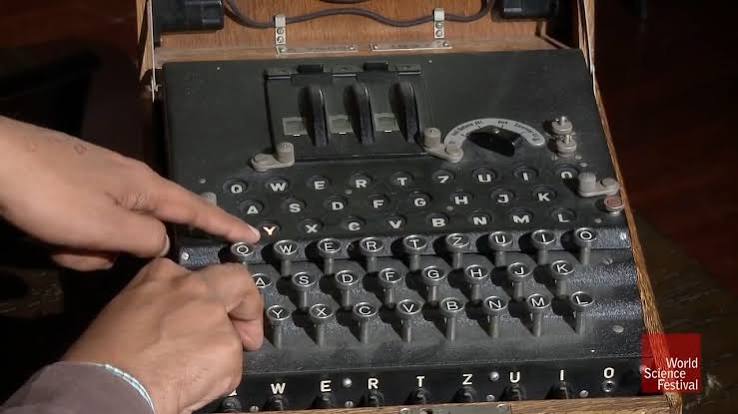
    The Enigma machine, a portable device that looked like a typewriter inside a wooden box, was supposed to be unbreakable. Its complex system of rotors and a plugboard generated an astronomical number of possible settings roughly 158 quintillion. Yet, through a combination of mathematical brilliance, operator error, and sheer determination, codebreakers at Bletchley Park in England managed to break it, producing intelligence codenamed ULTRA that gave the Allies a decisive edge. This is the story of that achievement.

    The Machine and Its Secrets

    Arthur Scherbius, a German engineer, patented the Enigma in 1918, envisioning it as a secure business encryption device. But the German military saw its potential and adopted it in the late 1920s, refining it throughout the 1930s. By World War II, it was the standard for all branches of the Wehrmacht, the SS, and intelligence services.

    The machine’s brilliance lay in its mechanics. Three to five rotors scrambled each letter, advancing after every keypress to create a new substitution for the next letter. A plugboard, the Steckerbrett, swapped pairs of letters before and after the rotor scramble, adding another layer of complexity. A reflector sent the signal back through the rotors in reverse, ensuring that encryption and decryption were identical processes a clever design that simplified use but also created a vulnerability.

    The key space was staggering: with 3 rotors chosen from 5, 26 possible ring settings per rotor, and 10 plugboard cables, there were about 158 quintillion possible settings. Even with the fastest computers of the time, brute-force decryption seemed impossible. The Germans were confident in their machine’s invincibility. They were wrong.

    The Polish Breakthrough

    The first cracks appeared in Warsaw, not London. In 1932, Marian Rejewski, a 27-year-old mathematician at the Polish Cipher Bureau, used pure mathematics specifically group theory and permutations to reconstruct the Enigma’s rotor wirings without ever seeing a machine. He and his colleagues Henryk Zygalski and Jerzy Różycki developed methods to decrypt German messages, and they built a device called the “bomba” to speed up the process. For seven years, the Poles read German traffic, making them the unsung heroes of the Enigma story.

    But their success was fragile. In 1938, the Germans added two extra rotors and changed procedures, making the Polish bomba obsolete. As the threat of war grew, the Poles decided to share their knowledge with their allies. At a secret meeting in Pyry, near Warsaw, in July 1939, they handed over their machines and methods. This was the crucial handoff that allowed the British to take the next step.

    Bletchley Park and the Bombe

    At Bletchley Park, a Victorian mansion in the English countryside, the Government Code and Cypher School (GC&CS) had been quietly working on Enigma, but without the Polish insights, they had made little progress. The Polish contribution was the spark they needed. Under the leadership of mathematician Alan Turing and Gordon Welchman, a classicist turned codebreaker, the British refined the Polish methods and built a new machine: the Bombe.

    The Bombe was not a computer it was an electromechanical device designed to test rotor settings at high speed. It exploited known plaintext, or “cribs,” which were predictable phrases in German messages, such as weather reports or “Heil Hitler” salutations. The Bombe would try possible rotor settings, looking for a configuration that produced the crib in the ciphertext. When it found a hit, it stopped, and the operators would test the setting manually.

    Turing and Welchman also introduced key insights. The “Herivel tip,” named after a young codebreaker named John Herivel, exploited the lazy habits of German operators who often chose obvious rotor starting positions, like their initials or repeated letters, known as “cillies.” These shortcuts gave the codebreakers a way in.

    The Battle for Naval Enigma

    The Army and Air Force Enigmas were broken relatively early in the war, but the Naval Enigma proved far more difficult. The German Navy used more complex procedures and had its own codebooks. The breakthrough came in 1941, when the British captured codebooks from the U-boat U-110. Combined with the use of “short signal” weather reports, the codebreakers finally cracked naval Enigma. This was a turning point in the Battle of the Atlantic, as the Allies could now track U-boat positions and reroute convoys to avoid attack.

    The Human Machine

    Bletchley Park grew from a small team of academics to a sprawling operation employing over 10,000 people, most of them women. They worked in shifts around the clock, in huts and blocks scattered across the estate. The atmosphere was one of intense secrecy and intellectual ferment, a mix of mathematicians, classicists, chess champions, and crossword puzzle solvers. They were bound by the Official Secrets Act, and many took the secret to their graves.

    The intelligence they produced, codenamed ULTRA, was so sensitive that its use was strictly controlled. Even Winston Churchill knew that revealing its source would compromise the operation. ULTRA informed major decisions, from the North African campaign to the D-Day landings, and it saved countless lives.

    The Colossus Connection

    It is often wrongly assumed that Colossus, the world’s first programmable electronic computer, was built to crack Enigma. In fact, Colossus was designed for a different, even more complex German cipher: the Lorenz, used for strategic-level communications. But Colossus, built at Bletchley Park in 1943–44, was a direct descendant of the codebreaking culture that Turing and his colleagues created. It demonstrated that machines could be used for more than just brute-force checking—they could be programmed to solve problems.

    The Impact and the Legacy

    The exact impact of ULTRA is still debated, but estimates suggest that it shortened the war by 2 to 4 years and saved millions of lives. The breaking of Enigma was not just a technical triumph; it was a testament to human ingenuity and collaboration. The Polish mathematicians who started it, the British codebreakers who refined it, and the thousands of workers who kept the operation running all contributed to a victory that was as much intellectual as military.

    The story of Enigma is a reminder that even the most secure systems can be vulnerable, not just to mathematical genius, but to human error. The German operators’ lazy habits and predictable phrases were their undoing. And the codebreakers’ willingness to share knowledge, even across national boundaries, proved that cooperation can overcome seemingly insurmountable odds.

    The Enigma machine was a marvel of engineering, but it was not unbreakable. The combined efforts of Polish, British, and other Allied codebreakers turned a cipher that seemed impenetrable into a fountain of intelligence. Their work not only shortened the war but also laid the groundwork for the digital age. The next time you send an encrypted message, remember the cryptanalysts of Bletchley Park who proved that no code is truly unbreakable.

    Summary

    • The Enigma machine used rotors and a plugboard to create a cipher with 158 quintillion possible settings.
    • Polish mathematician Marian Rejewski cracked the cipher in 1932 using pure mathematics, a crucial but often overlooked contribution.
    • At Bletchley Park, Alan Turing and Gordon Welchman designed the Bombe to automate testing of rotor settings, using cribs and operator errors.
    • Naval Enigma was broken in 1941 after the capture of codebooks from U-boat U-110, turning the tide in the Battle of the Atlantic.
    • ULTRA intelligence shortened the war by an estimated 2–4 years and saved millions of lives.

    FAQ

    Q: What was the Enigma machine?
    A: A rotor-based cipher machine used by Nazi Germany during WWII to encrypt and decrypt secret messages. It was invented by Arthur Scherbius and adopted by the German military in the late 1920s.

    Q: How did the Poles break Enigma first?
    A: In 1932, Marian Rejewski used group theory and permutation mathematics to reconstruct the rotor wirings without seeing the machine. He and his colleagues developed the ‘bomba’ and ‘Zygalski sheets’ to decrypt German messages.

    Q: What was the difference between the Bombe and Colossus?
    A: The Bombe was an electromechanical machine used to break Enigma by testing rotor settings. Colossus was a programmable electronic computer built to break the Lorenz cipher, a different, more complex German system.

    Q: How did ULTRA intelligence affect the war?
    A: ULTRA gave the Allies advance knowledge of German plans, helping in campaigns like the Battle of the Atlantic and D-Day. Estimates suggest it shortened the war by 2–4 years and saved millions of lives.

    Q: Why was Enigma considered unbreakable?
    A: The key space of 158 quintillion settings made brute-force attacks impossible with manual methods. However, operator errors and predictable phrases (cribs) provided vulnerabilities that codebreakers exploited.

  • The Secret City: Inside the Manhattan Project’s Race to Build the Bomb

    The Secret City: Inside the Manhattan Project’s Race to Build the Bomb

    In the summer of 1945, a handful of scientists gathered on a remote stretch of New Mexico desert. At 5:29 a.m., the first atomic bomb detonated, turning night into day and sand into glass. The Trinity test was the culmination of a three-year, $2 billion gamble that had consumed the lives of 130,000 people most of whom had no idea what they were building.

    This is the story of that gamble: a secret race against Nazi Germany, a convergence of brilliant minds and brute industrial force, and the moment when humanity’s relationship with science changed forever.

    A Letter That Changed History

    The Manhattan Project began with a letter. In August 1939, Albert Einstein and physicist Leo Szilard wrote to President Franklin D. Roosevelt, warning that Nazi Germany might be developing an atomic bomb. The theoretical groundwork was already in place: Einstein’s equation E=mc² had hinted at the energy locked inside matter, and in 1938, German chemists Otto Hahn and Fritz Strassmann had split the uranium atom a discovery explained by Lise Meitner and Otto Frisch as nuclear fission.

    Roosevelt took action. The U.S. Advisory Committee on Uranium was formed, but it moved slowly. It wasn’t until 1942, when the U.S. Army Corps of Engineers took over, that the project gained its name and its urgency. The Manhattan Project was born.

    A City of Secrets

    General Leslie Groves, a no-nonsense military engineer, was put in charge. He chose J. Robert Oppenheimer, a theoretical physicist with a reputation for brilliance and a left-leaning past, to lead the scientific effort. Together, they created a network of secret sites across the country.

    Los Alamos, New Mexico, became the brain a remote laboratory on a mesa where Oppenheimer gathered the greatest minds in physics: Enrico Fermi, Hans Bethe, Richard Feynman, Edward Teller. They worked in an atmosphere of urgency and secrecy, solving problems that had never been attempted.

    At Oak Ridge, Tennessee, workers built the K-25 gaseous diffusion plant the largest building in the world at the time, covering 44 acres to separate the rare uranium-235 isotope from its more common cousin. In Hanford, Washington, nuclear reactors churned out plutonium, an element that barely existed in nature.

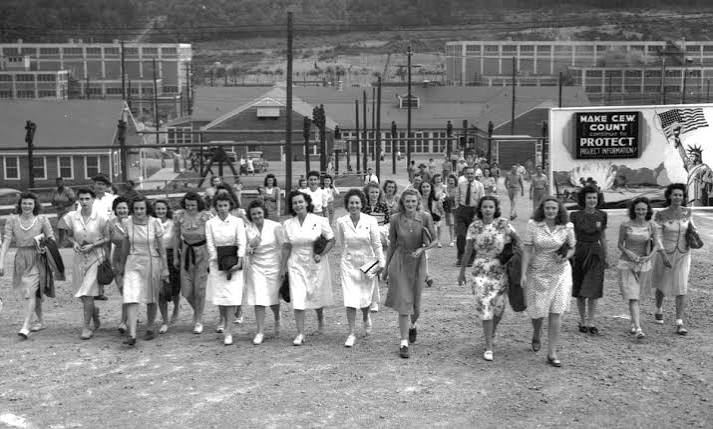
    The scale was staggering. At its peak, the project employed 130,000 people across 30 sites. Most of them the factory workers, the technicians, the clerks had no idea what they were building. They knew only that it was vital to the war effort, and that they must never speak of it.

    The Race Against Germany

    The project was driven by fear. German scientists had discovered fission, and the Nazis had a head start. But the German program, the Uranverein, was underfunded and fragmented. It never came close to a weapon. The Manhattan Project’s scientists didn’t know that. They worked as if every day mattered, because it might.

    There was also a quieter race: the Soviet Union. Even as the United States worked in secret, Soviet spies were inside the project. Klaus Fuchs, a British physicist, passed detailed information to the Soviets. Theodore Hall, a young American scientist, did the same. Their espionage would accelerate the Soviet bomb program by years.

    The First Chain Reaction

    On December 2, 1942, Enrico Fermi stood beneath the stands of a squash court at the University of Chicago. Above him, a pile of graphite and uranium—Chicago Pile-1—was about to become the world’s first controlled nuclear chain reaction. When the neutron count began to rise, and the reaction sustained itself, Fermi smiled. He had proven that a chain reaction was possible. The bomb was now a matter of engineering.

    But engineering was a challenge. The gun-type design, which fired one piece of uranium into another, was relatively straightforward—but it required uranium-235. The implosion design, which squeezed a sphere of plutonium with explosives, was far more complex. At Los Alamos, Oppenheimer’s team wrestled with the physics of implosion, testing and retesting until they got it right.

    Trinity and the End of the War

    On July 16, 1945, the world’s first nuclear explosion lit up the New Mexico sky. The blast was visible 200 miles away. Oppenheimer later recalled a line from the Bhagavad Gita: “Now I am become Death, the destroyer of worlds.”

    Less than a month later, on August 6, a B-29 bomber named Enola Gay dropped “Little Boy” on Hiroshima, Japan. Three days later, “Fat Man” fell on Nagasaki. The bombs killed an estimated 200,000 people, most of them civilians. Japan surrendered on August 15, 1945.

    The war was over. But the questions were just beginning.

    A Moral Reckoning

    Even before the bombs were dropped, scientists had debated their use. The Franck Report, written in June 1945, urged a demonstration explosion rather than an attack on cities. Leo Szilard, who had helped start the project, petitioned against use. But the decision was made by President Harry Truman, who had only learned of the project after Roosevelt’s death. Truman’s stated goal was to end the war and save American lives. An invasion of Japan, he argued, would have cost hundreds of thousands of casualties.

    Oppenheimer, initially supportive, later expressed deep regret. He opposed the development of the hydrogen bomb, a weapon far more powerful than the ones he had helped create. He was called before a security hearing in 1954 and stripped of his security clearance—a punishment for his past associations and his outspokenness.

    The project officially ended with the Atomic Energy Act of 1946, which transferred control to the civilian Atomic Energy Commission. But its legacy was permanent. It had created the template for “big science”—government-funded research on a massive scale—and it had unleashed a nuclear age that would define the Cold War and beyond.

    The workers at Oak Ridge and Hanford, many of whom had labored in ignorance, later learned what they had built. Some faced health problems from radiation exposure. The communities around the sites absorbed the environmental costs. The full human toll is still being measured.

    The Manhattan Project was a triumph of science and a tragedy of war. It was a race that ended with a weapon that could destroy the world—and a question that still haunts us: what do we do with it?

    The Manhattan Project was not just a scientific achievement or a military milestone; it was a profound turning point in human history. It demonstrated that the same knowledge that could power cities could also vaporize them. As we live with the legacy of that secret race—the nuclear arsenals, the national laboratories, the ethical quandaries—we are still, in a sense, inside that desert test site, watching the light and wondering what it means.

    Summary

    • The Manhattan Project was a secret U.S. program (1942-1946) that built the first atomic bombs, employing 130,000 people across 30 sites.
    • Key sites included Los Alamos (design), Oak Ridge (uranium enrichment), and Hanford (plutonium production).
    • The bombs, “Little Boy” and “Fat Man,” were dropped on Hiroshima and Nagasaki in August 1945, leading to Japan’s surrender.
    • The project was motivated by fear of a Nazi bomb, but Soviet espionage (Klaus Fuchs, Theodore Hall) accelerated the Soviet program.
    • It sparked debates over ethics, led to the Atomic Energy Act of 1946, and established the model for large-scale government-funded science.

    FAQ

    Q: Why was it called the Manhattan Project?
    A: It began in the Manhattan Engineer District of the U.S. Army Corps of Engineers, and the name stuck even as the work moved to other sites.

    Q: How much did the project cost?
    A: Roughly $2 billion at the time, equivalent to over $30 billion today.

    Q: Did Germany have an atomic bomb program?
    A: Yes, the Uranverein, but it was underfunded and never came close to building a weapon.

    Q: How did Soviet spies affect the outcome?
    A: Klaus Fuchs and others passed secrets that allowed the Soviet Union to build its own bomb by 1949, accelerating the Cold War arms race.

    Q: Were there protests against using the bomb?
    A: Yes, the Franck Report and Leo Szilard’s petition urged a demonstration instead of use on cities, but the U.S. government decided to drop the bombs to end the war quickly.

  • The Cauldron at Kiev: How 665,000 Soviet Soldiers Were Trapped in History’s Largest Encirclement

    The Cauldron at Kiev: How 665,000 Soviet Soldiers Were Trapped in History’s Largest Encirclement

    In the late summer of 1941, the largest encirclement in military history was not a single dramatic clash but a slow, grinding trap that closed over weeks. By the time it snapped shut, nearly 700,000 Soviet soldiers were caught inside, and the entire Southwestern Front had ceased to exist. The Battle of Kiev was not just a battle—it was a catastrophe that reshaped the Eastern Front and forced a bitter reckoning within the German High Command.

    The Salient and the Stubborn Stand

    By August 1941, the German Army Group South had slogged through the Ukraine, facing fierce Soviet counterattacks. The Soviet Southwestern Front, commanded by General Mikhail Kirponos, held a massive bulge around Kiev that jutted westward into German lines. This salient was a tempting target a huge concentration of Soviet forces ripe for envelopment.

    But Stalin refused to yield. Despite repeated pleas from his generals to withdraw from the salient to avoid encirclement, Stalin ordered the defense of Kiev at all costs. He believed the Germans would not risk a major operation there. He was wrong.

    The Great Debate

    Within the German command, a furious argument raged. Hitler insisted on seizing Ukraine for its grain and coal, and destroying the Soviet forces in the Kiev salient before advancing on Moscow. His generals Heinz Guderian, Fedor von Bock, Franz Halder wanted to push straight for Moscow, the political and logistical heart of the USSR. They argued that diverting south would waste precious time and allow the Soviets to reinforce the capital.

    Hitler overruled them. On August 21, he issued Directive No. 33, ordering the turn south. Guderian’s Panzer Group 2 was detached from Army Group Center and sent south to meet Ewald von Kleist’s Panzer Group 1 coming north. The plan was a classic double envelopment a Kesselschlacht, or cauldron battle.

    The Trap Closes

    From August 23 to September 12, Guderian’s tanks drove south from the Gomel area, while Kleist’s forces struck north from the Kremenchug bridgehead on the Dnieper River. The two pincers moved relentlessly, and on September 14–16, they met at Lokhvitsa, about 120 miles east of Kiev. The pocket was sealed.

    Inside were five Soviet armies the 21st, 5th, 37th, 26th, and part of the 38th roughly 452,000 to 700,000 soldiers. They were trapped, but not yet defeated. For the next ten days, the Germans methodically reduced the pocket. The Soviets attempted breakout after breakout, but the ring held. On September 20, General Kirponos was killed in action. By September 26, the last organized resistance ended.

    The numbers are staggering. The Germans claimed 665,000 prisoners a figure that even conservative Soviet-era estimates exceed 450,000. They also captured over 3,000 artillery pieces, 900 tanks, and 400 aircraft. Soviet losses for the entire operation reached roughly 600,000 to 700,000 killed, wounded, captured, or missing. German casualties were a fraction of that: about 100,000 to 128,000 total.

    The Aftermath and the Controversy

    Kiev fell on September 19, 1941. The victory opened the road to the Donbas and Crimea, and it secured the southern flank for the German advance. But it also delayed the drive on Moscow. Operation Typhoon, the assault on the capital, did not begin until October 2—a month later than originally planned.

    That delay became one of the most debated strategic questions of the war. Guderian and Halder later argued that the Kiev detour was a fatal mistake, allowing the Red Army to bring fresh Siberian divisions west, which contributed to the German defeat at the gates of Moscow in December 1941.

    But historian David Stahel and others counter that Army Group Center was too weak to take Moscow in 1941 regardless. The Kiev victory, they argue, was necessary to secure the southern flank and resources. The debate remains unresolved, but the scale of the encirclement is not in question.

    The Human Cost

    The Battle of Kiev was a catastrophe for the Soviet Union. The entire Southwestern Front was effectively destroyed, and the loss of life was immense. The prisoners taken at Kiev were marched into captivity, many to die in German camps. The battle stands as a grim reminder of the cost of strategic stubbornness and the brutality of the Eastern Front.

    For the Germans, it was a triumph—a textbook example of operational art. But it was also a warning. The sheer number of prisoners taken was a sign of the Red Army’s resilience: even after losing hundreds of thousands of men, the Soviets continued to fight. The cauldron at Kiev was the largest encirclement in history, but it would not be the last.

    The Battle of Kiev remains the largest encirclement in military history, a brutal demonstration of the scale of war on the Eastern Front. It was a German victory that came at a strategic cost, and a Soviet defeat that was avoidable. The cauldron at Kiev closed on nearly 700,000 men, and its legacy is a study in the consequences of high-stakes decision-making under fire.

    Summary

    • The Battle of Kiev (August 23 – September 26, 1941) was the largest encirclement in history, trapping over 450,000 Soviet soldiers.
    • Hitler ordered a turn south to seize Ukraine, overriding his generals’ push for Moscow.
    • Guderian’s and Kleist’s panzer groups met at Lokhvitsa, sealing the pocket.
    • The Soviet Southwestern Front was destroyed, with ~600,000 total casualties and ~665,000 prisoners taken.
    • The victory delayed the German assault on Moscow, sparking a lasting strategic debate.

    FAQ

    Q: What was the largest encirclement in military history?
    A: The Battle of Kiev in 1941, where German forces trapped over 450,000 Soviet soldiers, with some estimates exceeding 665,000 prisoners.

    Q: Why did Hitler divert forces to Kiev instead of Moscow?
    A: Hitler prioritized Ukraine’s agricultural and industrial resources and wanted to destroy the Soviet forces in the Kiev salient before advancing on Moscow.

    Q: How did the Soviets end up encircled?
    A: Stalin refused to allow withdrawal from the Kiev salient, leaving the Southwestern Front in place, which allowed the Germans to execute a double envelopment.

    Q: What was the outcome of the Battle of Kiev?
    A: A decisive German victory, with the entire Soviet Southwestern Front destroyed, opening the road to the Donbas and Crimea.

    Q: Did the Battle of Kiev contribute to the German defeat at Moscow?
    A: Many historians argue that the delay caused by the Kiev operation allowed the Soviets to reinforce Moscow, contributing to the German failure in December 1941, though others dispute this.

  • The Battle of Monte Cassino: A Four-Month Siege That Turned an Abbey into Rubble

    The Battle of Monte Cassino: A Four-Month Siege That Turned an Abbey into Rubble

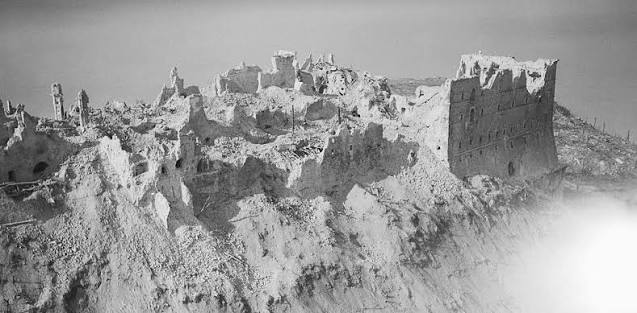
    Second World War fight to protect Monte Cassino Abbey was a battle over Europe's history

    On February 15, 1944, 229 B-17 Flying Fortresses darkened the sky over Monte Cassino. In a single morning, they dropped 1,400 tons of bombs on a 1,400-year-old Benedictine monastery, reducing it to a heap of broken stone and dust. The decision to bomb would become one of the most controversial acts of the Italian campaign and it would hand the German defenders an advantage they exploited ruthlessly.

    What followed was a four-month ordeal of blood and mud, a series of four Allied assaults against the Gustav Line, the formidable German defensive wall anchoring on that ruined hilltop. By the time the fighting ended on May 18, 1944, roughly 55,000 Allied soldiers and 20,000 Germans had been killed, wounded, or gone missing. The abbey, once a symbol of faith and learning, had become a graveyard.

    The Gates of Italy

    After the Allied invasion of Italy in September 1943, the Germans fell back to a chain of fortifications stretching across the boot from the Tyrrhenian Sea to the Adriatic. This was the Gustav Line, and its keystone was Monte Cassino a 520-meter peak 130 kilometers southeast of Rome, commanding the entrance to the Liri Valley. The terrain was a defender’s dream: steep mountains, narrow valleys, and winter rain that turned the ground to sludge.

    On the summit stood a monastery founded in 529 AD by St. Benedict himself. The abbey was the birthplace of the Benedictine order, a treasure house of manuscripts, art, and relics. For centuries, it had survived Lombards, Saracens, and earthquakes. Now it faced a new kind of destruction.

    The German command had promised the Vatican they would not occupy the abbey, and they kept that promise initially. But its position made it a natural observation post, and the Allies, suspecting the worst, prepared to eliminate it.

    The First Battle: A Bloody Introduction

    The first assault began on January 17, 1944. U.S. II Corps and British X Corps tried to outflank the position, pushing up the Rapido River and across the mountains. The weather was brutal cold rain, fog, and snow. The Germans, entrenched in bunkers and minefields, held their ground. After nearly a month of fighting, the Allies had gained almost nothing but casualties. The first battle was a failure.

    The second battle opened with a decision that would echo through history. On February 15, the bombers came. The official justification: intelligence suggested German observation posts in the abbey. That intelligence was flawed. The abbey was empty of German troops.

    The bombing killed hundreds of Italian civilians who had taken refuge inside—estimates suggest around 2,000 civilians died in the bombing and the ensuing chaos. Survivors fled into the mountains or into the German lines. When the smoke cleared, the abbey was rubble. And only then did the Germans move in—not because they had been driven out, but because the ruins offered perfect defensive cover.

    The Second Battle: Rubble as a Fortress

    The infantry assault that followed the bombing was a disaster. The Allies expected the ruins to be easy to take; instead, the rubble created a labyrinth of defensive positions. German paratroopers of the elite 1st Parachute Division moved into the ruins and made them impregnable. The second battle ended in failure.

    The third battle, in March, saw New Zealand Corps hammer the town of Cassino below the abbey with a massive artillery barrage, then fight house-to-house through the streets. It was brutal, close-quarters combat, but the abbey held. The third battle, too, failed.

    The Fourth Battle: Breaking the Line

    The final assault, Operation Diadem, began on May 11. This time, the Allies coordinated a multi-national offensive. French forces under General Juin broke through the mountains to the north, punching a hole in the German line. British and Indian troops fought through the town. And Polish II Corps, commanded by General Władysław Anders, attacked the abbey from the northeast.

    The Poles had a personal stake: many were veterans who had been deported to Siberia, then freed to fight for their homeland. They attacked the heights with fury. The German paratroopers, exhausted and out of ammunition, finally fell back. On May 18, Polish soldiers raised their flag over the ruins.

    The Gustav Line had collapsed. Rome was liberated on June 4, just two days before D-Day.

    The Aftermath: Rebuilding and Remembering

    The cost was staggering: about 55,000 Allied casualties and 20,000 German. Add roughly 2,000 dead civilians. The abbey itself lay in ruins, its treasures—many evacuated to the Vatican by German officers before the bombing—survived the war in crates.

    After the war, the monastery was rebuilt using original materials where possible. The Italian government and private donors funded the reconstruction, which was completed in the 1950s. Today, it stands again, a place of prayer and memory, though the scars of 1944 remain visible in the surrounding cemetery and the town below.

    The debate over the bombing has never fully settled. Was it a military necessity, or a tragic mistake that killed civilians and made the German defense stronger? Many historians argue it was a strategic error—the rubble was more defensible than the intact abbey would have been. Others point to the fog of war, the genuine fear of observation posts, and the pressure to break the stalemate. What is certain is that the Battle of Monte Cassino became a symbol of the Italian campaign’s brutality: a four-month siege where the ancient and the modern collided, and the ancient lost.

    The Battle of Monte Cassino was not a single engagement but a series of four, each more desperate than the last. It ended not with a strategic masterstroke but with the grinding advance of infantry and the courage of soldiers from Poland, India, France, Britain, and the United States. The abbey they fought over was rebuilt, but the memory of what happened there—the bombing, the rubble, the thousands of graves—endures as a reminder of what war costs.

    Summary

    • The Battle of Monte Cassino was a four-month series of assaults (January 17 – May 18, 1944) to break the German Gustav Line in Italy.
    • The Allies bombed the ancient Benedictine abbey on February 15, 1944, with 1,400 tons of bombs, turning it into rubble and inadvertently creating a stronger defensive position for the Germans.
    • Four major battles were fought, with Polish II Corps finally capturing the ruins on May 18, 1944.
    • Casualties were heavy: ~55,000 Allied and ~20,000 German dead, wounded, or missing, plus ~2,000 Italian civilian deaths.
    • The abbey was rebuilt after the war, and the bombing remains a controversial decision debated by historians.

    FAQ

    Q: Why was the abbey bombed?
    A: The Allies believed German observation posts were located in the abbey, which would have allowed artillery spotting over the front lines. Intelligence later proved this was not the case; the abbey was unoccupied at the time of the bombing.

    Q: Did the Germans use the abbey before the bombing?
    A: No. German commanders, including Field Marshal Albert Kesselring, had agreed with the Vatican to keep the abbey out of the defensive line. They only occupied the ruins after the bombing, using the rubble as a fortress.

    Q: How many civilians died?
    A: Approximately 2,000 Italian civilians, many of whom had taken refuge in the abbey, were killed during the bombing and the subsequent fighting.

    Q: What was the outcome of the battle?
    A: The Allies broke the Gustav Line, opening the road to Rome, which was captured on June 4, 1944. The battle was a costly but strategic success.

    Q: Is the abbey still standing today?
    A: Yes, the abbey was rebuilt in the 1950s using original materials where possible, and it functions as a monastery and a memorial to those who died in the battle.

  • The Muddy, Bloody Italian Campaign: 20 Months That History Forgot

    The Muddy, Bloody Italian Campaign: 20 Months That History Forgot

    On September 9, 1943, as American troops waded ashore at Salerno, they expected a quick march up Italy’s boot. Instead, they walked into a meat grinder that would chew up 20 months of their lives and 312,000 Allied casualties. The Italian Campaign became the longest, muddiest, and most brutal slog of the Western war yet it barely registers in popular memory.

    Why? Because the day Rome finally fell June 4, 1944 was the day before D-Day. The headlines, and history, moved on to Normandy. But the soldiers who fought from Sicily to the Alps knew: Italy was no soft underbelly. It was a fortress of mountains, mud, and German steel.

    A Soft Underbelly? Churchill’s Miscalculation

    Winston Churchill called Italy the “soft underbelly” of the Axis. He convinced the Allies at the Casablanca Conference in January 1943 that knocking Italy out would open the Mediterranean, secure shipping lanes, and force Germany to divert divisions from the Eastern Front. The Americans, led by General George Marshall, saw it as a distraction from the cross-Channel invasion they wanted. The compromise: invade Italy, but with limited resources Overlord would remain the priority.

    That compromise would haunt every Allied soldier who fought in Italy. They got just enough troops to start a campaign, but never enough to finish it quickly. By the time the fighting ended, Italy had become a secondary theater, stripped of divisions for other fronts, yet still expected to pin down German forces.

    Kesselring’s Genius: Turning Mountains into Fortresses

    Field Marshal Albert Kesselring, Germany’s defensive mastermind, did what Hitler initially thought impossible: he turned the Italian peninsula into a fortress. Rather than retreating to the Alps, Kesselring chose to defend south of Rome, using the Apennine Mountains a spine of ridges and peaks running the length of Italy as natural defensive lines.

    He built not one, but six successive lines: the Volturno, Barbara, Bernhardt, Winter, Gustav, and finally the Gothic Line. Each was a network of bunkers, minefields, pre-registered artillery, and interlocking fields of fire. Kesselring’s strategy was simple: delay, bleed, and make the Allies pay for every inch. He demolished roads, blew bridges, and flooded valleys. His troops counterattacked viciously, and his artillery was so well-coordinated that Allied soldiers learned to fear the whistle of incoming shells.

    The Gustav Line, anchored on the ancient Benedictine monastery of Monte Cassino, was the strongest. It blocked the road to Rome, and for four months in early 1944, it stopped the Allies cold.

    The Four Battles of Monte Cassino: Blood on the Mountain

    Monte Cassino was a 1,700-foot peak dominating the Liri Valley. The Germans had dug into the slopes, and from the summit, they could see every Allied move. Four times the Allies threw themselves against it.

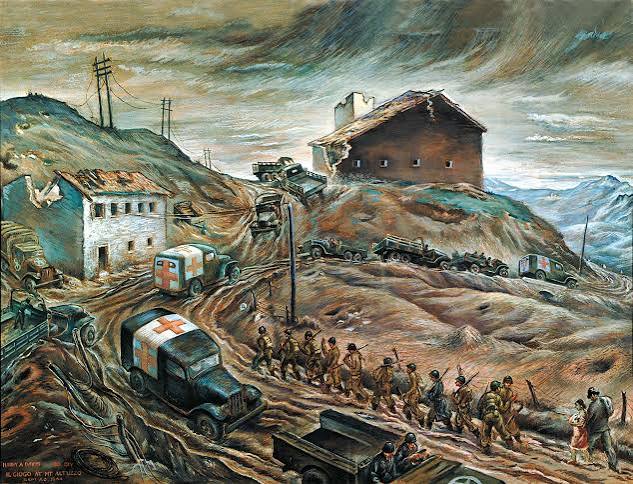
    The first battle, in January 1944, was a series of frontal assaults across the Rapido River. The 36th Texas Division tried to cross under machine-gun fire and artillery, losing over 2,000 men in a single day. The second battle, in February, saw the Allies bomb the ancient monastery to rubble—but the Germans simply moved into the ruins, making the position even stronger. The third and fourth battles, in March and May, finally broke through with the help of Polish, Indian, and Free French troops. The Polish Corps raised their flag over the ruins on May 18, 1944. But by then, the mountain was a lunar landscape, and the Allied casualty count was over 50,000.

    Anzio: The Amphibious Gamble That Stalled

    In January 1944, the Allies tried to outflank the Gustav Line with a surprise landing at Anzio, 40 miles south of Rome. The plan was bold: land troops behind German lines, cut their supply routes, and force them to abandon Monte Cassino. But the Allied commander, Major General John Lucas, moved cautiously, fearing a repeat of Salerno. He paused to consolidate, and that pause was fatal.

    Kesselring reacted with shocking speed, rushing reinforcements to ring the beachhead. For four months, the Allies were trapped in a pocket, bombarded by artillery and counterattacked relentlessly. The beach was nicknamed “the largest self-supporting POW camp in the world.” It wasn’t until May 1944, when the Allies finally broke out and linked up with the main advance, that the Anzio stalemate ended. The breakout cost 30,000 Allied casualties.

    The Mud: The Third Enemy

    If the Germans were the first enemy, the mud was the second. Autumn 1943 and winter 1944 were among the wettest in Italian history. Roads turned to quagmires, vehicles bogged down to their axles, and infantry slogged through knee-deep muck that clung to boots and froze at night. A Canadian officer wrote: “The mud is not just mud. It’s a thick, sticky paste that swallows men whole.”

    Supplies had to be carried by mules and men over mountains. Artillery pieces sank into the earth, and tanks were useless off the roads. At Cassino, the Rapido River flooded, turning the valley into a swamp. The weather was as much an enemy as Kesselring, and it never let up.

    Rome Falls—But Nobody Notices

    On June 4, 1944, American troops of the 5th Army entered Rome. The city was free, the first Axis capital to fall. But the celebration was short-lived. Two days later, on June 6, Allied forces landed in Normandy. The news cycle, and history, moved on. The Italian Campaign was suddenly old news.

    General Mark Clark, commanding the 5th Army, chose to drive on Rome rather than trap the retreating German 10th Army at the Hitler Line. That decision has been debated ever since. Clark wanted the glory of taking Rome, but it let Kesselring escape with his forces to fight another day. The fall of Rome was a victory, but it was a hollow one—the war in Italy would drag on for another 11 months.

    The Gothic Line: The Stalemate That Almost Broke the Allies

    After Rome, the Allies pushed north, but they were exhausted and under-resourced. In August 1944, Operation Dragoon—the invasion of southern France—pulled seven Allied divisions out of Italy. The campaign was now a sideshow.

    Kesselring retreated to the Gothic Line, a massive defensive belt across the Apennines near Florence. The Allies threw themselves against it in September 1944, breaking through at the Gothic Line’s weakest point in the east, but then stalled. The winter of 1944–45 was one of the coldest on record. Snow buried the mountains, and both sides dug in. The fighting ground to a halt, with neither side able to move.

    The Final Push: Operation Grapeshot

    In April 1945, the Allies launched their final offensive, Operation Grapeshot. With the war in Europe nearly over, they finally had the resources to end it. The British 8th Army and the U.S. 5th Army, now including Brazilian, Indian, Polish, and Italian co-belligerent units, broke through the Gothic Line and drove into the Po Valley. On April 28, Italian partisans captured and executed Mussolini. On May 2, German forces in Italy surrendered unconditionally—two days after Hitler’s death in Berlin.

    The campaign was over. It had lasted 20 months, longer than North Africa and Normandy combined, and had cost over 312,000 Allied casualties and 434,000 German. Tens of thousands of Italian civilians had died in the crossfire, and the country’s infrastructure and cultural heritage lay in ruins.

    Why “Forgotten”?

    The Italian Campaign has been called the “forgotten front” for good reason. It was overshadowed by D-Day, which happened the day after Rome fell. It was drained of resources for the sake of Overlord and Dragoon. And it never delivered the decisive strategic payoff Churchill promised. Instead, it became a grinding war of attrition, a series of bloody fights for hills and rivers that didn’t even have names most people recognize.

    But the soldiers who fought there never forgot. They remembered the mud, the mountains, and the unrelenting German defense. They remembered that Italy was not a soft underbelly—it was a hard shell, and cracking it cost more than anyone expected.

    The Italian Campaign may not have the iconic imagery of D-Day or the Bulge, but it was one of the most brutal theaters of World War II. It proved that no front was easy, and that the cost of victory is often paid in forgotten places. The mud of Italy washed away the blood, but the memory of those 20 months lives on in the men who fought there—and in the history that finally remembers them.

    Summary

    • The Italian Campaign lasted 20 months (July 1943–May 1945), longer than North Africa or Normandy-to-Elbe.
    • Allied casualties were ~312,000; German ~434,000; Italian civilians in the tens of thousands.
    • Kesselring’s defensive lines, especially the Gustav Line at Monte Cassino, turned Italy into a fortress.
    • The fall of Rome on June 4, 1944, was overshadowed by D-Day on June 6.
    • After Operation Dragoon, Italy became a secondary theater, yet still pinned down hundreds of thousands of Germans.

    FAQ

    Q: Why is the Italian Campaign called the ‘forgotten front’?
    A: Because it was overshadowed by D-Day (which occurred two days after Rome fell), drained of resources for other fronts, and lacked a decisive strategic payoff. The popular narrative focused on Normandy and the Eastern Front.

    Q: What was the toughest part of fighting in Italy?
    A: The combination of mountainous terrain, relentless mud, and a brilliant German defensive strategy. The Apennines and rivers made every advance a brutal uphill fight, and the winter weather made conditions miserable.

    Q: How did the Allies finally win?
    A: Through overwhelming resources in the final offensive (Operation Grapeshot, April 1945), combined with German forces being weakened by the broader collapse of the Third Reich. The Germans surrendered on May 2, 1945.

    Q: What was the role of Italian partisans?
    A: They fought a guerrilla war against German and Fascist forces, harassing supply lines and eventually capturing and executing Mussolini on April 28, 1945.

    Q: Did the campaign achieve its strategic goals?
    A: Partially. It knocked Italy out of the war and tied down German divisions, but it didn’t lead to a quick victory. The Allies’ resources were diverted to Overlord, and Italy became a secondary front.

  • Kursk 1943: The Clash That Broke the Wehrmacht’s Back

    Kursk 1943: The Clash That Broke the Wehrmacht’s Back

    On the morning of July 5, 1943, the quiet fields around the Russian city of Kursk erupted in fire. Over 2 million soldiers, 6,000 tanks, and 5,000 aircraft were about to collide in the largest armored battle in history. The outcome would decide not just the fate of the Eastern Front, but the entire war.

    A Salient in the Steppe

    The winter of 1942–43 had been catastrophic for Germany. Stalingrad had shattered the Sixth Army, and the Red Army’s counteroffensive had pushed the front line westward. By spring, a massive bulge 150 miles wide and 100 miles deep had formed around Kursk, a city in western Russia. It was a tempting target for Hitler: pinch it off, and he would shorten his lines, destroy several Soviet armies, and regain the initiative.

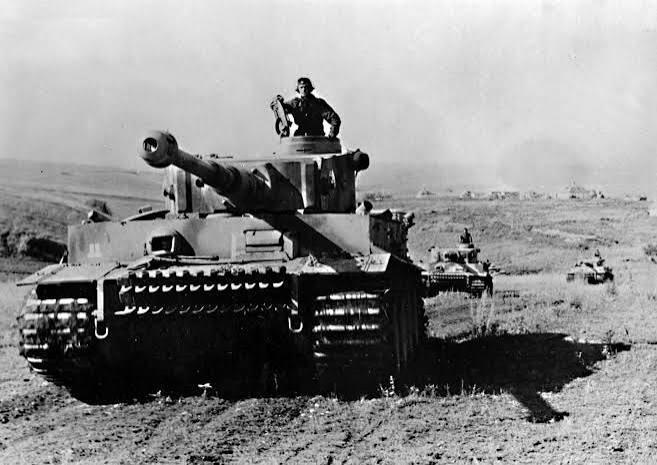
    Operation Citadel was born. But the Germans waited. They waited for new weapons the Panther tank, the Ferdinand tank destroyer, and improved Tigers. The delay, from May to July, was fatal. It gave the Soviets time to dig in.

    Meanwhile, Soviet intelligence both the “Lucy” spy ring in Switzerland and intercepts of German communications had laid the German plan bare, down to the hour of the attack. Marshal Georgy Zhukov and his commanders decided on a bold strategy: let the Germans exhaust themselves against deep defenses, then unleash their own offensives.

    The Soviets built not one, not two, but three successive defensive belts, stretching up to 100 miles deep. They dug over 3,000 miles of trenches, laid 400,000 mines, and created thousands of anti-tank strongpoints. Behind the salient, they massed the Steppe Front, a strategic reserve of over half a million men ready to counterattack.

    The Storm Breaks

    At dawn on July 5, 1943, the Germans struck. In the north, General Walter Model’s 9th Army pushed south. In the south, Field Marshal Erich von Manstein’s 4th Panzer Army and Army Detachment Kempf drove north. Their goal: meet east of Kursk and trap the entire Soviet defense.

    The Germans expected speed. They found a wall. In the north, they advanced only 6 to 9 miles in eleven days. In the south, they pushed 20 to 25 miles, but at a terrible cost. The Panthers broke down, the Ferdinands were vulnerable to infantry attacks, and the minefields were denser than anything the Wehrmacht had seen.

    By July 11, the southern pincer had reached the village of Prokhorovka. There, on July 12, the climax came.

    Prokhorovka: The Cauldron of Steel

    History remembers Prokhorovka as a single, epic charge of Soviet tanks into the German line. The reality was more chaotic. Roughly 600 to 800 Soviet tanks from the 5th Guards Tank Army slammed into 300 to 400 German tanks from the II SS Panzer Corps. But it was not a neat battle line; it was a series of confused, close-range engagements, often at distances of less than 100 yards.

    Tanks fired point-blank. Crews abandoned their vehicles, some to be crushed by the advancing columns. The dust and smoke were so thick that commanders lost sight of their own units. By day’s end, the Germans had lost perhaps 100 tanks, the Soviets more than 300. Tactically, it was a German success. Strategically, it was a Soviet victory: the German advance had been stopped dead.

    Recent scholarship, including the work of Karl-Heinz Frieser and Valeriy Zamulin, has reframed Prokhorovka as a “tactical draw” or even a German tactical win. But the outcome was unambiguous. The Wehrmacht never again launched a strategic offensive in the East.

    The Turning of the Tide

    Even as the tanks clashed at Prokhorovka, the Soviets were launching their own offensives. Operation Kutuzov struck the German-held Orel salient to the north on July 12. Operation Rumyantsev followed on August 3, targeting Belgorod and Kharkov. The Germans, already bleeding from Citadel, were forced into a fighting retreat.

    By August 23, when the battle officially ended, the Red Army had pushed the front line back decisively. The Soviet Union had won its first summer offensive of the war. The strategic initiative passed permanently to the Soviets, never to return.

    The cost was staggering. Soviet casualties ranged from 180,000 to 250,000 killed, missing, or wounded—some estimates go higher. The Germans lost 50,000 to 60,000 men, with 700 to 1,200 tanks destroyed or damaged beyond repair. But the numbers tell only part of the story.

    The Human Cost

    Behind the statistics were soldiers like the conscripted peasants and workers who filled the Red Army’s ranks. They fought with extraordinary bravery, often with little training and less equipment. They held their ground against the Panzer divisions, sometimes with nothing more than anti-tank rifles and Molotov cocktails. Their sacrifice was enormous, but it was not in vain.

    The German soldiers, too, fought with skill and determination. But their army was overstretched, short on fuel and replacements, and now facing a Red Army that had learned the bitter lessons of 1941 and 1942.

    The Battle of Kursk was not just a battle of machines; it was a battle of will. And in the end, the Soviet will proved stronger.

    Why Kursk Matters

    Kursk was the largest tank battle in history, but it was also the turning point of the war in Europe. Before Kursk, the Wehrmacht had always managed to regain the initiative after a setback. After Kursk, it never did. The Red Army’s victory set the stage for the march to Berlin.

    For historians, Kursk remains a rich field of study. The debate over Prokhorovka—was it a Soviet triumph or a German tactical success?—continues to this day. What is not in doubt is the outcome: the largest armored clash in history ended in a decisive Soviet strategic victory, and the course of World War II was changed forever.

    Lessons from the Steppe

    The battle also offers enduring lessons. Intelligence and preparation mattered more than technological superiority. The Germans had better tanks, but the Soviets had better intelligence, better defenses, and better reserves. The delay to wait for new weapons gave the enemy time to prepare, a classic mistake. And the ability to absorb losses and keep fighting—that, too, was a decisive factor.

    As the dust settled over the Kursk salient, the world knew: the war had turned. The Red Army was coming west, and nothing would stop it.

    Kursk was the last great German offensive, and the first Soviet summer victory. It broke the Wehrmacht’s back and set the stage for the Red Army’s march to Berlin. The largest tank battle in history was more than a battle; it was the moment the Eastern Front shifted forever.

    Summary

    • The Battle of Kursk, from July 5 to August 23, 1943, was the largest armored engagement in history, involving over 2 million troops and 6,000–8,000 tanks.
    • The Germans delayed Operation Citadel to wait for new tanks, giving the Soviets time to build three defensive belts with 3,000 miles of trenches and 400,000 mines.
    • The climactic tank clash at Prokhorovka on July 12, 1943, was a tactical draw but a strategic Soviet victory, halting the German advance.
    • The Soviet counter-offensives (Kutuzov and Rumyantsev) forced the Germans into retreat, and the Red Army won its first summer offensive, seizing permanent initiative.
    • Casualties were heavy: 180,000–250,000 Soviet and 50,000–60,000 German troops, with 700–1,200 German tanks lost.

    FAQ

    Q: Why is the Battle of Kursk considered the largest tank battle?
    A: It involved an estimated 6,000 to 8,000 tanks and self-propelled guns from both sides, more than any other battle in history, including the earlier tank engagements of World War II.

    Q: Was the tank battle at Prokhorovka a Soviet victory?
    A: Tactically, the Germans may have inflicted higher losses, but strategically, the Soviets stopped the German advance. Recent scholarship calls it a tactical draw or even a German tactical success, but it was a Soviet operational victory.

    Q: What role did intelligence play in the Soviet victory?
    A: Soviet intelligence, including the “Lucy” spy ring and intercepts, provided detailed warning of the German plan, allowing the Soviets to prepare extensive defenses and mass reserves.

    Q: How many casualties were there at Kursk?
    A: Soviet losses were between 180,000 and 250,000 killed, missing, or wounded (some estimates up to 800,000 including sick). German losses were about 50,000 to 60,000, with 700 to 1,200 tanks destroyed.

    Q: What was the outcome of the Battle of Kursk?
    A: It was a decisive Soviet strategic victory. The Wehrmacht’s last major offensive capability on the Eastern Front was broken, and the Red Army seized the strategic initiative permanently.

  • The Kokoda Track: The Jungle War That Stopped Japan at Australia’s Doorstep

    The Kokoda Track: The Jungle War That Stopped Japan at Australia’s Doorstep

    In July 1942, a Japanese army landed on the northern coast of Papua New Guinea, aiming to cross the Owen Stanley Range and capture Port Moresby. The only route was a 96-kilometer footpath that clawed over razorback ridges and through fetid jungle. For four months, Australian soldiers many of them teenage conscripts fought a desperate delaying action along that track, and in the end, they did what no other Allied force had yet done: they halted a Japanese land offensive and forced it into retreat.

    The Kokoda Track Campaign was a war of extremes: heat and cold, mud and blood, courage and exhaustion. It was fought by men with little food and less sleep, against an enemy that seemed unstoppable. But the battle was not won by Australians alone it depended on the labor of Papuan villagers who carried supplies forward and wounded men back. Their story, too, is part of the track’s brutal legacy.

    The Gate to Australia

    By early 1942, Japan had swept through Southeast Asia. Rabaul had fallen, and Lae and Salamaua were in enemy hands. Port Moresby, on the southern coast of Papua, was the last Allied base between Japan and Australia. It was a critical staging point for any counteroffensive and a perfect launch pad for an invasion of Australia itself.

    The Japanese first tried to take Port Moresby by sea. That plan was shattered at the Battle of the Coral Sea in May 1942, so they devised an overland approach. The South Seas Detachment, led by Major General Tomitaro Horii, would land on the north coast at Gona and Buna, cross the Owen Stanley Range, and strike Port Moresby from the rear.

    Their intelligence said the track was passable and resistance would be light. Both assumptions were wrong.

    A Track That Breaks Men

    The Kokoda Track is not a road; it is a footpath that climbs to 2,190 meters at Mount Bellamy. It twists through dense jungle, over steep ridges, and along razorback spurs. Rain falls almost daily, turning the ground into deep mud. In the lowlands, the heat is tropical; at altitude, the nights are near freezing. There are no vehicles everything, from ammunition to food to wounded men, moves by foot.

    The first Australians to fight on the track were members of the 39th Battalion, a militia unit made up mostly of teenage conscripts many were 18 or 19 years old. They were untrained, under-equipped, and outnumbered, but they had one job: delay the Japanese long enough for experienced AIF troops to return from the Middle East.

    They did their job. From the first contact at Awala on 23 July 1942, the 39th fought a series of rearguard actions, falling back from one ridge to the next. They destroyed bridges, set ambushes, and slowed the Japanese advance at every step.

    The Long Retreat to Ioribaiwa

    The Japanese pushed hard. By late August, they had driven the Australians back to Ioribaiwa Ridge, just 40 kilometers from Port Moresby. From that ridge, soldiers could see the lights of the city—and the Coral Sea beyond. It was the closest the Japanese ever came to their objective.

    But the advance had already stalled. The Japanese supply line stretched back over the mountains, and they were running out of food and ammunition. Meanwhile, the AIF’s 7th Division was arriving from the Middle East, fresh and well-equipped. The tide was about to turn.

    On 14 September, the Japanese received orders to withdraw. The Guadalcanal campaign was consuming resources, and the South Seas Detachment was overextended. The retreat became a nightmare: starving, diseased, and harassed by Australian patrols, thousands of Japanese soldiers died on the track.

    The Recapture of Kokoda

    The Australians went on the offensive. On 2 November 1942, they recaptured Kokoda village and its airstrip—the first significant victory of the campaign. But the fighting was far from over. The Japanese retreated to the coast, where they fortified the Buna–Gona beachhead. The battle there, from November 1942 to January 1943, was even more brutal than the mountain campaign—a slog through swamps and bunkers that cost thousands of lives.

    By the time the campaign ended, the Australians had lost about 625 killed and 1,055 wounded. More than 4,000 were evacuated sick, most with malaria and dysentery. The Japanese lost around 6,500 dead—many from starvation and disease during the retreat. Of the roughly 16,000 men they deployed, only a fraction survived.

    The Fuzzy Wuzzy Angels

    The campaign would have been impossible without the Papuan villagers who served as carriers and stretcher-bearers. They carried supplies forward, often under fire, and carried wounded Australians back to safety. The troops called them “Fuzzy Wuzzy Angels” for their hair and their kindness.

    Their contribution was extraordinary. But it also came at a cost. Many were conscripted or coerced into service, and they suffered casualties and displacement. After the war, they were largely forgotten, and their post-war neglect remains a point of contention in Australian–Papua New Guinean relations.

    A Defining National Story

    For Australians, Kokoda has become a national narrative—a story of endurance, mateship, and courage. It is often compared to Gallipoli, but with a crucial difference: Kokoda was a defensive victory on Australia’s doorstep. It stopped the Japanese advance and proved that the AIF could fight and win in the most brutal conditions imaginable.

    For Japan, the campaign is a lesser-known tragedy—a costly failure driven by overreach and underestimation. For Papua New Guinea, it is a story of resilience and sacrifice, but also of exploitation and broken promises.

    The track itself remains. It is now a pilgrimage site for trekkers, who walk the same ridges and mud, often in awe of what the soldiers endured. The Kokoda Track is a monument to the men who fought there, the villagers who helped them, and the terrible cost of war in the jungle.

    The Kokoda Track Campaign was a turning point in the Pacific War. It proved that the Japanese army could be stopped on land, and it secured Port Moresby as a base for the Allied counteroffensive. But its true legacy lies in the men who fought and the Papuans who carried them—ordinary people pushed to extraordinary limits in a place that seemed designed to break them.

    Summary

    • The Kokoda Track Campaign (July–November 1942) was a series of engagements along a 96-kilometer footpath in Papua New Guinea.
    • Australian forces, including the 39th Battalion militia, halted a Japanese overland advance on Port Moresby and forced a retreat.
    • The campaign was fought in extreme conditions: dense jungle, steep mountains, mud, and constant rain.
    • Australian casualties: ~625 killed, ~1,055 wounded, ~4,000+ sick. Japanese: ~6,500 dead, many from starvation and disease.
    • Papuan villagers, known as “Fuzzy Wuzzy Angels,” served as carriers and stretcher-bearers, playing a vital role.

    FAQ

    Q: How long is the Kokoda Track?
    A: The Kokoda Track is approximately 96 kilometers (60 miles) long.

    Q: Who fought in the Kokoda Track Campaign?
    A: The campaign was fought between Australian forces (including AIF and militia units) and the Imperial Japanese Army, primarily the South Seas Detachment.

    Q: What was the outcome of the Kokoda Track Campaign?
    A: The Allies achieved a strategic victory. The Japanese advance on Port Moresby was halted and reversed, marking a turning point in the Pacific War.

    Q: What were the main causes of casualties?
    A: In addition to combat, disease—especially malaria and dysentery—was a major killer. Many Japanese died from starvation and disease during the retreat.

    Q: What role did Papuan villagers play?
    A: Papuan villagers served as carriers, stretcher-bearers, and guides, transporting supplies and wounded soldiers. They were essential to the campaign, though many were conscripted or coerced into service.

  • The 872 Days That Defined Leningrad: A City That Refused to Die

    The 872 Days That Defined Leningrad: A City That Refused to Die

    In the winter of 1941, the thermometer in Leningrad dropped to minus 30 degrees Celsius. There was no heat, no electricity, and no running water. The daily bread ration for a worker was 125 grams a slice so thin it was barely worth the name. Yet the city did not surrender.

    The siege of Leningrad lasted 872 days, from September 8, 1941, to January 27, 1944. It was not a battle for territory in the traditional sense. Hitler ordered a blockade, a strategy of deliberate starvation designed to erase the city from the map. What followed was one of the most harrowing and heroic chapters of World War II, a story of endurance against impossible odds.

    The Trap Closes

    On June 22, 1941, Germany launched Operation Barbarossa, a massive invasion of the Soviet Union. Army Group North pushed through the Baltic states with relentless speed, heading for Leningrad, the USSR’s second-largest city and a symbol of the 1917 revolution. By early September, the Germans had reached the outskirts. On September 8, they captured Shlisselburg, a town on Lake Ladoga’s southern shore. With that, the last land route into the city was severed. The siege had begun.

    Hitler’s orders were explicit: no surrender, no negotiated settlement. The city was to be starved into submission and then razed. The Finns, allied with Germany, blockaded from the north but did not advance beyond their 1939 border. The Spanish Blue Division added a few thousand troops to the German line. But the main weapon was hunger.

    Inside the city, Soviet leadership initially resisted evacuation. Stalin feared a mass exodus would cause panic and undermine morale. As a result, nearly 2.5 million civilians, including hundreds of thousands of children, were trapped.

    The Anatomy of Starvation

    By November 1941, the food situation had become catastrophic. Warehouses had been bombed early in the siege, and the city’s reserves were dangerously low. The daily bread ration was cut repeatedly. In the worst months November and December 1941 workers received 250 grams of bread per day, while children and non-working adults got just 125 grams. That bread was often made with sawdust and other substitutes, making it more filler than sustenance.

    People ate everything: wallpaper paste, leather shoes, furniture glue. They boiled and ate cats, dogs, and crows. Cannibalism was reported, and the NKVD prosecuted those who committed it. The city’s morgues overflowed; bodies lay in the streets, frozen solid, waiting for spring to thaw them into a stinking reminder of the dead.

    Disease compounded the starvation. Scurvy, dysentery, and typhus swept through the population. Without electricity, water pumps froze, and people melted snow for drinking water. The winter of 1941-42 was brutally cold, one of the coldest on record.

    The Road of Life

    The only hope was Lake Ladoga. In the summer, barges carried supplies across the water. But it was the winter ice that became legendary. When the lake froze thick enough, truck convoys began rolling across the ice, a route that came to be known as the “Road of Life.” Despite constant German bombing and the ever-present risk of the ice cracking, the road kept the city barely alive.

    Over the course of the siege, the Road of Life carried about 1.5 million tons of supplies and evacuated roughly 1.3 million people, mostly women and children. For the survivors, the road was both a lifeline and a cemetery. Thousands of trucks broke through the ice, their drivers and passengers drowning in the freezing water.

    Culture as Resistance

    Even in the face of starvation, the city’s cultural institutions fought back. The Leningrad Radio broadcast daily, with poet Olga Berggolts reading her verses to the besieged citizens. Her voice became a symbol of endurance. In August 1942, Dmitri Shostakovich’s Symphony No. 7, subtitled “Leningrad,” was premiered in the city. The orchestra was half-starved; musicians were pulled from the front lines and hospitals. The performance was broadcast live, a defiant statement that the city would not be silenced.

    The Hermitage Museum was stripped of its treasures; many were evacuated by train. But the building itself remained, its empty frames a silent testament to what had been lost and what was being defended.

    The Breaking of the Blockade

    For over a year, the city endured. Then, in January 1943, the Soviet Army launched Operation Iskra, a desperate attempt to break the siege. The offensive was costly, but it succeeded in opening a narrow corridor along the southern shore of Lake Ladoga. For the first time in 16 months, land communication with the rest of the USSR was restored. Food and supplies could now reach the city by rail, though the corridor was still within German artillery range.

    The full lifting of the siege came a year later, on January 27, 1944, after Operation January Thunder pushed the German lines back. The 872-day nightmare was over. But the cost was staggering. Estimates of civilian deaths range from 1 to 1.5 million, the vast majority from starvation. Military casualties added another 300,000 to 500,000. The exact numbers remain contested, but the scale is beyond dispute.

    A Complex Legacy

    The siege of Leningrad is remembered as a heroic epic in Russian national memory. In 1945, the city was named a Hero City. The story is told as one of unbroken endurance, of a people who refused to surrender even when faced with annihilation.

    But the full story is more complex. Survivor diaries, like that of Tanya Savicheva, who recorded the deaths of her entire family in a small notebook, reveal a darker side: moral collapse, theft, and even cannibalism. The Soviet leadership, including Stalin, has been criticized for failing to evacuate civilians earlier and for suppressing information about the true scale of suffering.

    The German perspective, too, is contested. While some officers saw the siege as a necessary military operation, the starvation policy was part of the broader “Hunger Plan” for the USSR, which aimed at the deliberate extermination of civilians. Many historians now view the siege as a war crime and an act of genocide-by-starvation.

    The siege of Leningrad stands as a stark reminder of the cost of war and the resilience of the human spirit. It is a story of suffering that defies easy narratives, but it is also a story of survival against impossible odds.

    The siege of Leningrad was not just a military engagement; it was a test of human endurance. For 872 days, a city of millions faced the relentless assault of starvation, cold, and enemy fire. The road to survival was paved with unimaginable sacrifice, and the memory of those who died is etched into the city’s stones. As the years pass, the siege remains a powerful symbol—both of the capacity for human cruelty and the strength of the human will to live.

    Summary

    • The siege of Leningrad lasted 872 days, from September 8, 1941, to January 27, 1944.
    • An estimated 1–1.5 million civilians died, mostly from starvation, cold, and disease.
    • The daily bread ration at the worst point was 125 grams for workers and 250 grams for others.
    • The ‘Road of Life’ across frozen Lake Ladoga supplied the city and evacuated about 1.3 million people.
    • The siege ended with the Soviet offensive Operation January Thunder in 1944.

    FAQ

    Q: How long did the siege of Leningrad actually last?
    A: The siege lasted 872 days, from September 8, 1941, to January 27, 1944. It is often rounded to ‘900 days’ in Russian rhetoric for symbolic impact.

    Q: What was the ‘Road of Life’?
    A: It was a supply route across frozen Lake Ladoga that operated in winter. It carried food and supplies into the city and evacuated civilians. Despite German bombing, it was the city’s only lifeline.

    Q: How many people died during the siege?
    A: Civilian deaths are estimated at 1–1.5 million, mostly from starvation. Military casualties add another 300,000–500,000. Total numbers remain contested.

    Q: Why didn’t the Soviet leadership evacuate civilians earlier?
    A: Stalin initially refused a full evacuation, fearing it would cause panic and undermine morale. This decision has been criticized by post-Soviet historians and human rights groups.

    Q: What happened to the city after the siege?
    A: Leningrad was named a Hero City in 1945. It remains a central symbol of Soviet and Russian national identity, with the siege commemorated annually on January 27.

  • The Battle of Stalingrad: 163 Days That Turned the Tide of World War II

    The Battle of Stalingrad: 163 Days That Turned the Tide of World War II

    On August 23, 1942, the Luftwaffe unleashed a hell of fire and steel on the city of Stalingrad. In a single day, waves of bombers dropped thousands of tons of explosives, turning the industrial metropolis on the Volga River into a moonscape of craters and burning rubble. Tens of thousands of civilians perished in the inferno, their bodies buried under collapsed buildings. That morning, the German 6th Army had reached the city’s outskirts; by nightfall, Stalingrad was a funeral pyre.

    What followed was not a conventional battle but a brutal, 163-day ordeal that would consume over two million lives. The Battle of Stalingrad, fought from August 23, 1942, to February 2, 1943, remains the bloodiest single engagement in human history. It was a clash of titans Nazi Germany and the Soviet Union locked in a struggle that would decide the fate of Europe. This is the story of how a city that bore Stalin’s name became the graveyard of the German Wehrmacht and the turning point of World War II.

    The City That Had to Be Taken

    Stalingrad was not just a city; it was a symbol. It bore the name of the Soviet dictator, and its factories churned out tanks, artillery, and small arms that fueled the Red Army. Strategically, it sat astride the Volga River, a vital artery for transporting oil from the Caucasus and supplies from the north. If Hitler could seize Stalingrad, he would cut the Soviet Union in half and secure the flanks of his drive toward the oil fields.

    For Hitler, the capture of Stalingrad was personal. He saw it as a propaganda coup that would demoralize the Soviets and cement his own myth of invincibility. For Stalin, losing the city would be a catastrophic blow to his prestige. In July 1942, he issued Order No. 227: “Not a step back!” The order forbade retreat under penalty of death, establishing penal battalions and blocking detachments that would shoot any soldier who fled. Both leaders had staked their reputations on a city that would become a meat grinder.

    The German summer offensive, codenamed Case Blue, had been launched in June 1942. Army Group South split into two prongs: one aimed for the Caucasus oil fields, the other, the 6th Army under General Friedrich Paulus, drove toward Stalingrad. By late August, Paulus’s forces, numbering over 300,000 men, were poised to take the city.

    The Bombing and the Rat War

    The Luftwaffe’s bombing on August 23 was designed to break the city’s will. It succeeded in killing thousands and leveling buildings, but it also created ideal defensive terrain. The rubble became a labyrinth of bunkers, sniper nests, and ambush points. The Soviet 62nd Army, commanded by General Vasily Chuikov, adopted a strategy that defied conventional military logic: hug the enemy.

    Chuikov’s doctrine was simple: keep Soviet lines so close to German lines that the Luftwaffe and artillery could not bomb without hitting their own troops. This turned the battle into a close-quarters brawl, fought with grenades, knives, and submachine guns. Soldiers engaged in what became known as the “rat war” fighting in sewers, basements, and the skeletons of buildings. Sniper duels became legendary; Vasily Zaytsev, a Soviet sniper, reportedly killed over 200 Germans, his exploits immortalized in the film Enemy at the Gates.

    By November, the Germans controlled about 90% of the city, but they could not dislodge the Soviet defenders from a narrow strip along the Volga’s western bank. Reinforcements and supplies crossed the river under constant fire, often at night. The eastern bank was held at all costs, becoming a lifeline that kept the defense alive.

    The Encirclement: Operation Uranus

    While the world’s attention was fixed on the street fighting, the Soviet high command was planning a massive counteroffensive. Generals Georgy Zhukov and Aleksandr Vasilevsky conceived Operation Uranus, a bold double envelopment designed to trap the German 6th Army. They amassed over a million troops, hidden through a masterful deception campaign (maskirovka) that fooled German intelligence about Soviet reserves.

    On November 19, 1942, the Red Army struck north and south of Stalingrad, smashing through the Romanian and Italian armies that protected the German flanks. Within four days, the pincers met at Kalach, encircling nearly 300,000 Axis troops in a pocket that stretched across the Volga steppe. The German high command was stunned. Hitler, in his bunker in East Prussia, refused to authorize a breakout, declaring that the 6th Army would hold the city and be resupplied by air.

    That promise proved hollow. The Luftwaffe’s transport fleet, already strained, could not deliver the required 700 tons of supplies per day. At its peak, it delivered only about 100–120 tons daily, a fraction of what was needed. The encircled army began to starve and freeze. Soldiers suffered frostbite, dysentery, and the gnawing agony of hunger. Horses were eaten, then pets, then rats.

    The Relief Attempt and the Siege’s End

    In December, Field Marshal Erich von Manstein launched Operation Winter Storm, a desperate attempt to break through to the trapped 6th Army. German tanks advanced to within 30 miles of the pocket before being halted by Soviet counterattacks. Hitler again forbade Paulus from attempting an exit, believing that holding Stalingrad was a matter of honor. It was a death sentence.

    By January 1943, the pocket had shrunk to a few square miles. The sick, wounded, and frostbitten huddled in cellars, surviving on scraps of bread and melted snow. The Red Army tightened the noose, capturing airfields and overwhelming the starving defenders. On January 31, Paulus was promoted to Field Marshal by Hitler—a clear signal that he should commit suicide rather than surrender. No German field marshal had ever been captured. Paulus chose life over honor.

    The northern pocket surrendered on February 2, 1943. Of the ~300,000 Axis troops encircled, about 91,000 were taken prisoner, including 24 generals. They were marched into captivity in the Soviet Union, a journey that most would not survive. Only about 5,000–6,000 ever returned to Germany.

    The Human Cost

    The numbers are staggering: combined military and civilian casualties ranged from 1.8 to 2.5 million. The Axis lost about 800,000–850,000 killed, wounded, or captured, while the Soviets suffered approximately 1.1–1.2 million casualties. Civilians bore the brunt of the initial bombing and the subsequent starvation; estimates of civilian deaths range from 40,000 to over 100,000. In the end, the city was a wasteland, its population decimated, its buildings reduced to hollow shells.

    The Battle of Stalingrad was not just a military defeat for Germany; it was a psychological and moral catastrophe. The myth of German invincibility was shattered. For the first time, the Wehrmacht had lost an entire army, and the tide of World War II in Europe had turned irrevocably. The Red Army would never lose the strategic initiative again, driving westward all the way to Berlin.

    For the soldiers who fought, Stalingrad was a descent into the abyss. Diaries and letters from both sides speak of the relentless horror: the stench of death, the constant shelling, the faces of comrades who vanished in a flash of fire. A German officer, Kurt Reuber, drew a charcoal sketch of a mother and child surrounded by darkness, titled the “Stalingrad Madonna,” a symbol of hope in the midst of despair.

    The Legacy

    Today, Volgograd—renamed in 1961 during de-Stalinization—stands as a monument to the battle. The Mamayev Kurgan hill, the site of some of the fiercest fighting, is crowned by a colossal statue, “The Motherland Calls.” It rises 85 meters above the city, a testament to the sacrifice of millions.

    Stalingrad remains a lesson in the dangers of overreach, the folly of hubris, and the terrible cost of war. It was a battle where the theories of generals collided with the grim reality of urban combat, where the will of a people proved stronger than the tanks of an invader. The blood of Stalingrad soaked into the Volga steppe, and from that blood rose a new world order.

    The battle’s outcome shaped the rest of the 20th century. It marked the beginning of the end for Nazi Germany and set the stage for the Cold War. For those who endured it, it was an experience that defied description. As one Soviet veteran wrote: “We who survived Stalingrad will never be the same. We have seen the face of war, and it is a face of utter ruin.”

    The Battle of Stalingrad was more than a military engagement; it was a crucible of fire and blood that forged the fate of nations. It demonstrated that even the most powerful army could be broken, and that the human spirit, when pushed to the brink, could endure unimaginable suffering. The names of Paulus, Chuikov, and Zaytsev are etched in history, but the countless anonymous soldiers and civilians who perished in the rubble are the true heroes of that epic struggle. As the world remembers the 80th anniversary of this cataclysm, we do well to reflect on the cost of hubris and the fragile value of peace.

    Summary

    • The Battle of Stalingrad (August 23, 1942 – February 2, 1943) was the bloodiest battle in history, with 1.8–2.5 million total casualties.
    • The German 6th Army was encircled by Soviet forces in Operation Uranus, leading to the surrender of ~91,000 soldiers, only a few thousand of whom survived captivity.
    • The battle marked a strategic turning point in World War II, ending the German advance into the Soviet Union.
    • Key tactics included Soviet “rat war” in the ruins and Chuikov’s “hug the enemy” strategy to neutralize German air superiority.
    • The Luftwaffe’s failed air supply operation doomed the encircled 6th Army, which suffered starvation and frostbite before surrendering.

    FAQ

    Q: Why is Stalingrad considered a turning point in World War II?
    A: Stalingrad was the first major defeat of the German Wehrmacht, resulting in the loss of an entire army. It shattered the myth of German invincibility and gave the Soviet Union the strategic initiative, which it never lost until Berlin fell in 1945.

    Q: How many people died in the Battle of Stalingrad?
    A: Estimates vary, but combined military and civilian casualties range from 1.8 to 2.5 million. The Axis suffered about 800,000–850,000 casualties, while the Soviet Union lost approximately 1.1–1.2 million soldiers and tens of thousands of civilians.

    Q: What was the “rat war”?
    A: The “rat war” referred to the brutal, close-quarters fighting in the ruins of Stalingrad, where soldiers battled in basements, sewers, and collapsed buildings. It was characterized by sniper duels, grenade attacks, and hand-to-hand combat, often at point-blank range.

    Q: Why did Hitler forbid the 6th Army from breaking out?
    A: Hitler believed that holding Stalingrad was essential for both strategic and propaganda reasons. He was confident the Luftwaffe could supply the army by air, but that proved impossible. He also promoted Paulus to Field Marshal, expecting him to commit suicide rather than surrender.

    Q: What was the fate of German prisoners of war from Stalingrad?
    A: Of the ~91,000 German soldiers taken prisoner, only about 5,000–6,000 survived Soviet captivity. Many died from disease, starvation, and the harsh conditions of labor camps during and after the war.

  • The Longest Retreat: How the Forgotten Army Turned the Tide in Burma

    The Longest Retreat: How the Forgotten Army Turned the Tide in Burma

    In March 1942, the British Empire suffered its longest retreat in history. Outnumbered and outmaneuvered, Allied forces trudged over 1,000 miles from Rangoon back to India, leaving Burma to the Japanese. The monsoon rains turned the roads to mud, and disease cut down more men than enemy fire. For the soldiers who survived, it was a humiliating low point of the war.

    Yet within two years, the same force now rebuilt and renamed the Fourteenth Army would shatter the Japanese Army at Imphal and Kohima, a battle often called the ‘Stalingrad of the East.’ This is the story of how a forgotten army, composed mostly of Indian soldiers, stopped the Japanese advance and reclaimed Burma.

    The Fall of Burma: A Disaster in the Jungle

    Japan’s invasion of Burma began in January 1942, just weeks after the attack on Pearl Harbor. The British forces in Burma were woefully unprepared. They lacked jungle training, had no air cover, and their commanders dismissed tanks as useless in the dense terrain. The RAF was outnumbered ten to one. Within months, Rangoon fell, and the British began a desperate retreat.

    The retreat was a humanitarian catastrophe. Thousands of civilians British, Anglo-Indian, and Indian fled on foot over the mountains, carrying what they could. Many died of starvation, disease, or exhaustion. The army itself lost most of its equipment and morale. By the time the survivors reached India, they were a shattered remnant.

    The Birth of the Fourteenth Army

    In 1943, General William Slim took command of the newly formed Fourteenth Army. He faced a daunting task: rebuild a demoralized force, train it for jungle warfare, and do it all with minimal resources. Burma was a secondary theater; the priority was Europe and the Pacific.

    Slim’s solution was revolutionary. He emphasized air supply using transport planes to drop food, ammunition, and medicine to troops deep in the jungle. This freed the army from vulnerable ground supply lines. He also insisted on aggressive patrolling and sent his men to jungle training schools. Morale slowly improved as soldiers gained confidence in their ability to fight in the terrain that had once seemed impenetrable.

    The Fourteenth Army grew into the largest Commonwealth army of the war, peaking at over one million men. The backbone was the Indian Army, which had expanded from 200,000 in 1939 to over 2.5 million by 1945. These were volunteers Hindus, Muslims, Sikhs, and Gurkhas who fought for the British Empire while their homeland was under colonial rule.

    The Battle of the Admin Box: A New Way of Fighting

    In February 1944, the Japanese launched a local offensive in the Arakan region, aiming to cut off Allied supply lines. They surrounded a division at a position called the Admin Box. In previous battles, encirclement meant disaster. But this time, the Allies held their ground.

    Supplied entirely by air, the troops inside the box fought off repeated Japanese attacks. The Japanese, accustomed to surrounding and destroying isolated units, found themselves facing a determined defense that refused to break. After two weeks, the Japanese withdrew, having suffered heavy losses. The Battle of the Admin Box proved that the Allies could defeat the Japanese at their own game—if they had the right tactics and logistics.

    Imphal and Kohima: The Turning Point

    In March 1944, the Japanese launched Operation U-Go, a major offensive aimed at invading India and sparking a rebellion against British rule. Their target was the town of Imphal, the gateway to India. The plan was bold: cross the Chindwin River, cut off the Allied supply lines, and force a decisive battle.

    The Japanese were confident. They had a new ally: Subhas Chandra Bose and the Indian National Army (INA), composed of Indian prisoners of war who had switched sides to fight for Indian independence. For the British Indian Army, this created a moral dilemma—they were fighting their own countrymen who wanted the same thing they did: freedom from colonial rule.

    But the INA was poorly equipped and never fully integrated into Japanese strategy. The Japanese also underestimated the Allied air supply. When they surrounded Imphal and the nearby town of Kohima, they expected the Allies to starve. Instead, the Allies flew in supplies and reinforcements, sustaining a defense that ground the Japanese down.

    The fighting was brutal. At Kohima, the battle raged around the tennis court of the Deputy Commissioner’s bungalow, with the front line shifting back and forth for weeks. By July 1944, the Japanese offensive had collapsed. They retreated in disarray, losing an estimated 50,000 men—many to starvation and disease. The Allies reaped a decisive victory, and the initiative passed permanently to them.

    The Reconquest of Burma

    With the Japanese broken, Slim’s army surged forward. They crossed the Irrawaddy River and fought a series of battles to capture Mandalay in March 1945. The Japanese, cut off from supplies and reinforcements, fell back in chaos. Rangoon was taken in May, just as the monsoon broke.

    The campaign was not without cost. The Japanese lost over 150,000 men, many from disease and starvation during their retreat. Allied casualties were lower—around 30,000 to 40,000—but every death was felt. The Burmese civilian population suffered immensely, caught between two armies and subjected to Allied bombing and Japanese repression.

    The Aftermath: A Complex Legacy

    The Burma Campaign ended in August 1945 with Japan’s surrender. But the war had sown the seeds of change. The Indian soldiers who had fought so bravely returned to a country that was on the brink of independence. The trials of INA officers in Delhi in 1945-46 sparked massive protests, accelerating the end of British rule.

    In Burma, Aung San—who had initially collaborated with the Japanese—switched sides in March 1945 and helped the Allies. He would later negotiate Burma’s independence in 1948. The British return to Burma was brief; they had neither the will nor the resources to re-impose colonial rule.

    The Fourteenth Army was disbanded, its soldiers returning to their homes. For decades, their achievements were overshadowed by other theaters of war. But the campaign was a testament to the courage and resilience of the ordinary soldier—especially the Indian soldier—who fought in a forgotten corner of the world and helped stop the Japanese tide.

    The Burma Campaign was a brutal struggle fought in the shadow of more famous battles. But it was here that the Japanese Army was first broken on land, and it was here that the British Empire demonstrated its ability to adapt and fight back. The story of the Fourteenth Army is not just one of military victory, but of human endurance—of soldiers who overcame disease, terrain, and despair to achieve what seemed impossible. Their legacy lives on in the independent nations of India, Burma, and the Commonwealth, and in the memory of a war that changed the world.

    Summary

    • The Burma Campaign (1942-1945) began with the fall of Rangoon and the longest retreat in British military history.
    • General William Slim rebuilt the defeated army into the Fourteenth Army, using air supply and jungle training to transform its fortunes.
    • The Battles of Imphal and Kohima (1944) were the turning point, breaking the Japanese offensive and forcing a disastrous retreat.
    • The Fourteenth Army was the largest Commonwealth army of the war, with over 1 million men, mostly Indian soldiers.
    • The campaign had far-reaching consequences, including the weakening of British colonial rule in India and Burma.

    FAQ

    Q: Why is the Burma Campaign called the ‘Forgotten Army’?
    A: The Fourteenth Army fought in a secondary theater, with resources going to Europe and the Pacific. Its soldiers felt forgotten by the rest of the world, and later by history.

    Q: What was the Battle of the Admin Box?
    A: It was a February 1944 battle where Allied troops, supplied by air, held a defensive position against Japanese encirclement, proving that the Allies could beat the Japanese at their own tactics.

    Q: Who was Subhas Chandra Bose and what was the Indian National Army?
    A: Bose was an Indian nationalist who led the INA, formed from Indian prisoners of war who switched sides to fight for Indian independence. They fought alongside the Japanese against the British.

    Q: What was the role of the Indian Army in the Burma Campaign?
    A: The Indian Army was the backbone of the Fourteenth Army, providing over a million soldiers who fought bravely in the jungle. Their contributions were crucial to the Allied victory.

    Q: How did the campaign end and what was its impact?
    A: The Allies reconquered Burma in 1945, but the war weakened British colonial power and accelerated the independence of India and Burma. The INA trials sparked protests that led to India’s independence.

  • The Aleutian Islands Campaign: The Forgotten Battle on American Soil

    The Aleutian Islands Campaign: The Forgotten Battle on American Soil

    In the cold, fog-shrouded Aleutian Islands, a battle raged that most Americans have never heard of. It was the only World War II battle fought on North American soil, a campaign of brutal weather and fierce combat that lasted 14 months and claimed thousands of lives. Yet, it remains overshadowed by the simultaneous Battle of Midway, a name that echoes in history while the Aleutians are forgotten.

    This is the story of a forgotten war, where the enemy was as much the weather as the Japanese, where the fog could hide an entire evacuation, and where American soldiers fought and died on their own continent. It is a tale of strategic feints, heroic sacrifices, and the harsh lessons learned in a place described as ‘a place where the wind never stops and the fog never lifts.’

    As we explore the Aleutian Islands Campaign, we uncover a critical chapter of WWII that shaped the Pacific War and taught the U.S. military costly lessons that would prove vital in the island-hopping campaigns to come. This is the battle on American soil that time forgot.

    The Aleutians: A Strategic Afterthought

    When the Japanese attacked Dutch Harbor on June 3, 1942, they struck a remote U.S. naval base in the Aleutian Islands, a volcanic archipelago stretching over 1,000 miles from mainland Alaska. The attack was not a desperate gamble but a calculated feint. Japan’s primary objective was Midway Island, where they hoped to lure the U.S. Pacific Fleet into a decisive battle. The Aleutian assault was designed to draw American carriers north, away from Midway, and to establish a defensive perimeter against potential U.S. bombing raids on Japan via Alaska.

    The Aleutians sit along the Great Circle Route, the shortest air path between North America and Asia, making them strategically valuable. The U.S. feared Japan would use the islands as a staging ground to attack the West Coast or interdict the Alaska-Siberia lend-lease air route. So, when Japanese troops landed unopposed on Kiska and Attu on June 6–7, 1942, the U.S. had no choice but to respond.

    But the attack on Dutch Harbor and the invasions of Attu and Kiska were a diversion. And the Americans, thanks to codebreakers, knew it. They did not divert forces from Midway, and Japan lost four carriers there. The Aleutian campaign, however, was just beginning, and it would become a long, arduous fight in one of the most inhospitable places on Earth.

    The Battle of Attu: Blood and Ice

    The first major confrontation came in May 1943, when U.S. forces landed on Attu. The 7th Infantry Division, trained for desert warfare, was ill-prepared for the Aleutian tundra. They expected a quick victory over a small Japanese garrison, but they faced entrenched defenders in the mountains, and the weather was a relentless adversary.

    From May 11 to May 30, the Battle of Attu raged. The Japanese, led by Colonel Yasuyo Yamasaki, fought from fortified positions. The U.S. troops suffered from frostbite, trench foot, and pneumonia, with more casualties from weather than from enemy fire. The fog prevented air support and naval bombardment, leaving the infantry to fight a brutal, close-quarters battle.

    On May 29, Yamasaki launched a final banzai charge, one of the largest of the war. It broke through U.S. lines before being annihilated. Nearly all of the 2,500 Japanese defenders died, with only 28 captured. The U.S. lost 549 killed and 1,148 wounded, with over 2,100 casualties from weather-related causes. The battle was a sobering preview of the bloody island campaigns to come in the Pacific.

    The Battle of Attu was the only land battle fought on American soil during WWII, and its cost was high. It taught the U.S. military valuable lessons about amphibious assaults, logistics, and the importance of adapting to extreme environments. But the Aleutians were not done with the Americans yet.

    The Ghost of Kiska: Evacuation and Friendly Fire

    Following Attu, the Allies turned their attention to Kiska, the larger Japanese base. For weeks, the U.S. subjected Kiska to relentless bombing, with over 1,200 sorties, making it the most heavily bombed island in the Pacific relative to its size. But the Japanese, under the cover of fog, had secretly evacuated on July 28, 1943, using cruisers and destroyers. The U.S. Navy never detected the evacuation.

    On August 15, 1943, a force of 34,000 U.S. and Canadian troops landed on Kiska, expecting a fierce battle. Instead, they found an empty island. The Japanese had vanished, leaving behind booby traps and abandoned equipment. In the confusion and fog, Allied forces fired on each other, triggering booby traps, and suffering accidents. In the end, 313 Allied casualties were incurred, all from friendly fire, booby traps, and accidents. The Japanese had evacuated without a single combat loss.

    The Kiska landing was a humiliating anti-climax, but it ended the Aleutian campaign. On August 24, 1943, Kiska was declared secure, and the only battle on North American soil was over.

    The Legacy: Lessons Learned and Forgotten

    The Aleutian Islands Campaign is often overshadowed by Midway, but its significance extends beyond its place in history. It was the first major amphibious assault by U.S. forces in the Pacific, providing critical lessons in amphibious warfare, logistics, and the challenges of fighting in extreme environments. The mistakes made at Attu, from inadequate clothing to poor coordination, were addressed in later campaigns.

    Strategically, the campaign secured the northern flank of the Pacific theater, preventing Japan from using the islands as a staging ground for attacks on the West Coast or disruptions of shipping lanes. It also demonstrated the vital role of intelligence, as the U.S. was able to anticipate Japanese moves.

    Yet, the campaign remains forgotten. The veterans of Attu and Kiska returned to a nation that didn’t know they had fought on American soil. The fog that hid the Japanese evacuation also hid the campaign’s memory. Today, the Aleutian Islands are a remote, windswept outpost, but they hold the graves of hundreds of Americans who died to defend their country. It is time to remember them.

    The Aleutian Islands Campaign is a reminder that war is not just about grand battles and famous names. It is about soldiers fighting in freezing fog, on islands few could locate on a map, for reasons that seemed distant and abstract. Yet, their sacrifice was real, and their victory secured the northern frontier of the United States. As we honor the veterans of WWII, let us not forget those who fought in the forgotten battle on American soil. The wind still blows across Attu and Kiska, but the memory of their courage should not be lost to the mist.

    Summary

    • The Aleutian Islands Campaign was the only WWII battle fought on North American soil, lasting from June 1942 to August 1943.
    • Japanese forces bombed Dutch Harbor and occupied Attu and Kiska as a diversion from the Battle of Midway.
    • The Battle of Attu in May 1943 resulted in nearly all 2,500 Japanese defenders killed, with 549 U.S. deaths and thousands of weather-related casualties.
    • The invasion of Kiska in August 1943 found the island abandoned, with 313 Allied casualties from friendly fire and booby traps.
    • The campaign provided crucial lessons in amphibious warfare and secured the northern Pacific flank.

    FAQ

    Q: Why is the Aleutian Islands Campaign often forgotten?
    A: It occurred simultaneously with the Battle of Midway, a turning point in the Pacific War, and the campaign’s remote location and harsh conditions made it difficult to report. Additionally, the Kiska landing’s anti-climactic end (finding the island empty) overshadowed the earlier fighting.

    Q: What was the strategic importance of the Aleutian Islands?
    A: The islands sat along the Great Circle Route, the shortest air path between North America and Asia. They were valuable for staging attacks and defending against potential Japanese strikes on the U.S. West Coast or disruption of shipping lanes.

    Q: How did the weather affect the campaign?
    A: The Aleutians are notorious for dense fog, storms, and freezing temperatures. More U.S. casualties on Attu came from weather-related injuries like frostbite and trench foot than from Japanese fire. Fog also hampered air support and naval bombardment and enabled the Japanese evacuation of Kiska.

    Q: What lessons were learned from the Aleutian campaign?
    A: The campaign was the first major U.S. amphibious assault in the Pacific. It highlighted the need for proper cold-weather gear, better coordination, and the importance of intelligence. These lessons were applied in later island-hopping campaigns.

    Q: Were there any civilians in the Aleutian Islands during the campaign?
    A: Yes, a small U.S. weather station on Attu was captured, and the Japanese took prisoners. Additionally, the U.S. evacuated the native Aleut population from the islands for their safety, but they were relocated to internment camps in Alaska, a tragic episode in itself.