Tag: World War II

  • The Big Three: How Roosevelt, Churchill, and Stalin Forged an Uneasy Alliance That Won World War II

    The Big Three: How Roosevelt, Churchill, and Stalin Forged an Uneasy Alliance That Won World War II

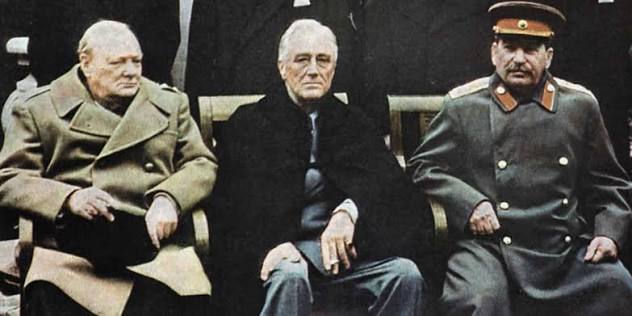
    In November 1943, three men sat together in a Soviet embassy in Tehran for the first time. Franklin D. Roosevelt, Winston Churchill, and Joseph Stalin represented the most powerful nations fighting against the Axis. But they shared little in common beyond a common enemy. Roosevelt was a patrician Democrat, Churchill an aristocratic imperialist, and Stalin a revolutionary dictator. Their alliance, forged by necessity, would decide the fate of Europe and the shape of the postwar world.

    This is the story of how these three leaders the ‘Big Three’ managed their profound differences to defeat Nazi Germany, and how their fragile partnership sowed the seeds of the Cold War.

    The Unlikely Alliance

    The Grand Alliance was a marriage of convenience from the start. The Soviet Union, under Stalin, had signed a non-aggression pact with Hitler in 1939, and the United States remained officially neutral until the attack on Pearl Harbor in December 1941. Britain, alone after the fall of France, relied on American aid through Lend-Lease, but it was not until Germany invaded the Soviet Union in June 1941 that the three powers were drawn together.

    Stalin’s demands were immediate and relentless: open a second front in Western Europe to relieve the Red Army. Churchill and Roosevelt, wary of a premature invasion that could fail catastrophically, stalled. The delay would become a source of deep resentment for Stalin, who saw the Western Allies as happy to let the Soviets bleed.

    The Personal Dynamics

    Roosevelt and Churchill shared a warm, almost intimate correspondence. Churchill signed his letters ‘Former Naval Person’ and Roosevelt replied as ‘President.’ They met frequently, from the Atlantic Charter meeting in August 1941 to the Casablanca Conference in 1943. Their strategic visions aligned on many issues, though they clashed over colonialism Roosevelt pushed for decolonization, while Churchill was determined to preserve the British Empire.

    Stalin was the odd one out. Suspicious and demanding, he tested his allies’ resolve. At Tehran, he reportedly joked about executing 50,000 German officers, prompting Churchill to storm out of the room. Yet Roosevelt and Churchill recognized that Stalin’s cooperation was essential for victory, so they accommodated his paranoia.

    Roosevelt’s health was failing by 1944. He died of a cerebral hemorrhage in April 1945, weeks before Germany’s surrender. His successor, Harry Truman, stepped into the role with little preparation.

    The Conferences That Shaped the World

    Tehran: First Contact

    At the Tehran Conference (November–December 1943), the Big Three met for the first time. They agreed on Operation Overlord the invasion of Normandy which would finally open the second front. They also discussed postwar borders, with Stalin demanding parts of Poland and the Baltic states. Roosevelt and Churchill, needing Stalin’s continued participation in the war, made concessions they would later regret.

    Yalta: The High-Water Mark of Cooperation

    In February 1945, with Germany’s defeat imminent, the Big Three met at Yalta in the Crimea. They agreed to divide Germany into occupation zones, to allow the Soviet Union to enter the war against Japan, and to create the United Nations. Stalin also pledged to hold ‘free elections’ in Eastern Europe a promise he would break.

    Yalta has been called a ‘betrayal’ by some, who argue that Roosevelt and Churchill handed Eastern Europe to Stalin. Others view it as a realistic acknowledgment of military realities: the Red Army already occupied much of the region.

    Potsdam: The Changing of the Guard

    The Potsdam Conference (July–August 1945) was different. Truman represented the United States, and Churchill was replaced mid-conference by Clement Attlee after Labour won the British election. Only Stalin remained, the wily survivor. They issued the Potsdam Declaration, demanding Japan’s unconditional surrender, and finalized the terms for Germany’s occupation. The alliance was already fraying, and Potsdam set the stage for the Cold War.

    Beyond the Big Three: Other Key Allied Leaders

    While the Big Three dominated decisions, other leaders played crucial roles. Charles de Gaulle led the Free French Forces, determined to restore France’s honor. Chiang Kai-shek headed the Nationalist government of China, while Mao Zedong led communist forces in a civil war against him both nominally Allied. King George VI symbolized British resistance, and General Dwight D. Eisenhower commanded the Allied forces in Europe.

    The Alliance’s Collapse

    The alliance that won the war did not survive the peace. Within two years of Germany’s surrender, Churchill was giving his ‘Iron Curtain’ speech, and the world had entered the Cold War. The Soviet Union installed communist governments across Eastern Europe, and the United States responded with the Truman Doctrine and the Marshall Plan.

    The seeds of this collapse were planted at Yalta and earlier. The Atlantic Charter’s promise of self-determination was never applied to colonies, and Stalin’s demands for a buffer zone were met with Western suspicion.

    Why It Still Matters

    The decisions made by the Big Three shaped the world we live in. The United Nations, the division of Germany, the borders of Eastern Europe all trace back to their meetings. Their uneasy alliance demonstrates that, in war, ideology can be set aside for survival. But it also shows that such marriages of convenience rarely last beyond the end of the conflict.

    The Big Three were not friends. They were rivals who found a common enemy. Their cooperation was essential to defeating the Axis, but their mutual distrust ensured that the peace would be fragile. Roosevelt’s vision, Churchill’s oratory, and Stalin’s ruthlessness each shaped the outcome. The alliance they forged and its collapse remains a powerful lesson about the limits of wartime unity.

    Summary

    • The Big Three Roosevelt, Churchill, and Stalin led the US, UK, and USSR during World War II, meeting at Tehran, Yalta, and Potsdam.
    • Their alliance was one of convenience, not friendship, with deep ideological differences.
    • Key decisions included the second front, German occupation zones, and the creation of the UN.
    • Stalin’s broken promises on Eastern Europe contributed to the Cold War.
    • Other leaders like de Gaulle and Chiang Kai-shek played important but secondary roles.

    FAQ

    Q: Who were the Big Three?
    A: Franklin D. Roosevelt (US President), Winston Churchill (British Prime Minister), and Joseph Stalin (Soviet leader). They led the three major Allied powers during World War II.

    Q: What was the Atlantic Charter?
    A: A joint declaration by Roosevelt and Churchill in August 1941, outlining postwar goals such as self-determination and free trade. Stalin was not present.

    Q: Why did Stalin want a second front?
    A: The Soviet Union suffered enormous casualties on the Eastern Front. Stalin wanted the Western Allies to invade Germany from the west to relieve pressure on the Red Army.

    Q: Was Yalta a betrayal of Eastern Europe?
    A: Critics say yes, because Roosevelt and Churchill allowed Stalin to control the region in exchange for Soviet help against Japan. Others argue it reflected military reality.

    Q: Who attended the Potsdam Conference?
    A: Harry Truman (US), Winston Churchill and then Clement Attlee (UK), and Joseph Stalin (USSR).
  • Hideki Tojo: The General Who Led Japan into Pearl Harbor and Paid the Ultimate Price

    Hideki Tojo: The General Who Led Japan into Pearl Harbor and Paid the Ultimate Price

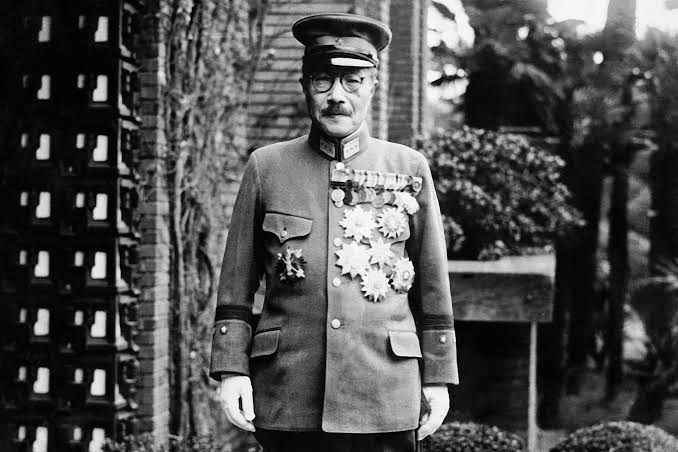
    On December 7, 1941, Japanese carrier aircraft devastated the U.S. Pacific Fleet at Pearl Harbor, killing over 2,400 Americans and dragging the United States into World War II. The man who authorized that attack was Hideki Tojo, Japan’s Prime Minister and a general whose name became synonymous with wartime atrocities. But Tojo was not simply a cartoon villain; he was a product of a militarized state, a dogged bureaucrat who rose through the ranks by embracing expansionism, and a leader whose legacy remains fiercely contested in Japan today.

    Tojo’s story is not just about one man’s ambition. It’s about how a nation’s political system can be hijacked by military hardliners, how a single decision can reshape the global order, and how the aftermath of war forces us to confront questions of guilt, responsibility, and justice. From his samurai lineage to his execution by hanging in 1948, Tojo’s life offers a stark lens into the darkest chapters of the 20th century.

    From Samurai Son to Military Hardliner

    Hideki Tojo was born on December 30, 1884, in Tokyo’s Kōjimachi district, into a family with deep military roots. His father, Hidenori Tojo, was a lieutenant general in the Imperial Japanese Army, and young Hideki was groomed for a martial career from the start. He graduated from the Imperial Japanese Army Academy in 1915 and later the Army War College, quickly distinguishing himself as a disciplined, no-nonsense officer.

    Tojo’s early career included a stint in the Siberian Intervention (1918–1922), where Japanese forces joined an international effort to topple the Bolsheviks. But it was his time as a military attaché in Germany in the early 1920s that left a lasting impression. He observed firsthand the rise of Nazi militarism its discipline, its aggression, and its ideological fervor. These lessons would later shape his own worldview.

    Back in Japan, Tojo aligned himself with the Kōdōha, or Imperial Way faction, a group of ultranationalist officers who believed in aggressive expansionism and spiritual discipline over the more cautious, pragmatic approach of the rival Tōseiha (Control) faction. The Imperial Way saw Japan as destined to lead Asia, by force if necessary. Tojo’s rise was steady: he became Chief of the Kempeitai (military police) in Manchuria in 1935, where he ruthlessly suppressed dissent and oversaw harsh occupation policies. By 1938, he was Vice-Minister of War, and in 1940, he became Army Minister under Prime Minister Fumimaro Konoe.

    The Road to Pearl Harbor

    As Army Minister, Tojo was a driving force behind Japan’s aggressive foreign policy. He pushed for the Tripartite Pact with Nazi Germany and Fascist Italy in September 1940, formally aligning Japan with the Axis powers. He also championed the “Greater East Asia Co-Prosperity Sphere,” a propaganda slogan that masked Japanese imperial domination over Southeast Asia and the Pacific.

    But the critical issue was China. Japan had been bogged down in a brutal war there since 1937, and the United States, alarmed by Japanese expansion, imposed oil and steel embargoes in 1941. Tojo saw these embargoes as a threat to Japan’s very survival. Negotiations with Washington stalled, and the Japanese military leadership including Tojo concluded that war with the West was inevitable.

    In October 1941, Tojo replaced Konoe as Prime Minister, largely because he was seen as the strongest advocate for war. He also held the portfolios of Army Minister and Home Minister, accumulating unprecedented power. On December 7, 1941, he authorized the attack on Pearl Harbor, along with simultaneous strikes on Malaya, Singapore, Hong Kong, and the Philippines. The goal was to cripple the U.S. Pacific Fleet and give Japan a free hand to conquer resource-rich territories.

    Wartime Dictator and Brutal Policies

    In the first six months after Pearl Harbor, Japanese forces swept across the Pacific, achieving a string of stunning victories. Tojo wielded more power than any civilian leader in modern Japanese history, effectively becoming a dictator. He also authorized some of the most brutal policies of the war.

    The Bataan Death March in the Philippines, where thousands of American and Filipino POWs died from abuse and starvation, happened under his watch. He implemented the sankō sakusen, or “kill-all, burn-all, loot-all” policy in China, which caused the deaths of countless civilians. He also oversaw the forced labor of POWs and Asian civilians on projects like the Burma Railway, and he failed to apply the Geneva Conventions to POWs, leading to widespread mistreatment.

    But Tojo’s military fortunes turned after the Battle of Midway in June 1942, when the U.S. Navy dealt a devastating blow to Japanese carrier forces. The subsequent Allied island-hopping campaign, culminating in the fall of Saipan in July 1944, made Japan’s defeat inevitable. Tojo resigned on July 22, 1944, taking responsibility for the war’s failures, but he remained a powerful figure until Japan’s surrender in August 1945.

    The Attempted Suicide and the Tokyo Trials

    After Japan surrendered, Tojo knew his fate was sealed. On September 11, 1945, as U.S. military police approached his home, he shot himself in the chest with a pistol. The bullet missed his heart, and he survived—only to be arrested, tried, and convicted.

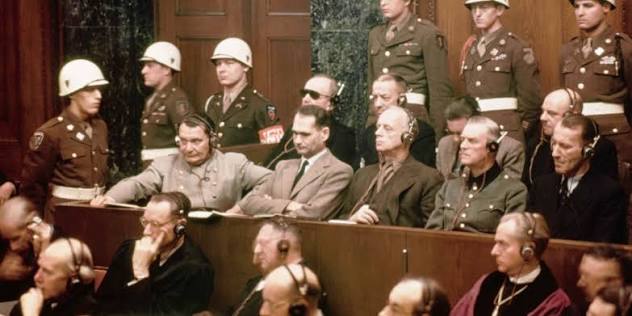
    The International Military Tribunal for the Far East, known as the Tokyo Trials, began in 1946. Tojo was charged with war crimes, crimes against peace, and crimes against humanity. He accepted responsibility for Japan’s wartime actions but argued that he was following orders from Emperor Hirohito and acting in Japan’s self-defense. The court rejected his defense, and he was convicted on seven of 55 counts, including waging aggressive war.

    On December 23, 1948, Tojo was hanged at Sugamo Prison in Tokyo. His ashes were scattered at sea, though some remains were reportedly taken by supporters and enshrined at Yasukuni Shrine, Japan’s controversial war memorial.

    Three Perspectives on Tojo’s Legacy

    Tojo’s legacy is not monolithic. In the West, he is almost universally condemned as the architect of the Pacific War—a militaristic, expansionist leader who personally ordered Pearl Harbor and authorized atrocities. This perspective sees his execution as justice.

    Some historians, however, offer a more structuralist view. They argue that Tojo was not a lone madman but a product of a militarized state. The decision for war was collective—the Emperor, the Privy Council, and the military leadership all shared responsibility. Tojo was more of an administrator than a strategic genius, and he inherited a war machine already in motion. This perspective doesn’t excuse his actions but complicates the simple villain narrative.

    In Japan, a vocal minority of nationalists and revisionists, associated with groups like Nippon Kaigi, portray Tojo as a tragic patriot who defended Japan against Western imperialism. They argue that his actions, while misguided, were motivated by a desire to protect Japan’s interests. This view is deeply contested, and many Japanese and international observers reject it as a whitewash of war crimes.

    Why Tojo Still Matters

    The story of Hideki Tojo is a reminder of how quickly a nation can descend into militarism and how individual leaders can bear immense responsibility for catastrophic decisions. It also highlights the ongoing struggle over historical memory—how we remember wartime leaders and their actions shapes national identity and international relations.

    Today, visits by Japanese politicians to Yasukuni Shrine, where Tojo is enshrined, continue to provoke diplomatic tensions with China and South Korea. The question of whether Tojo was a criminal or a patriot remains unresolved in some quarters, but the historical record is clear: his decisions led to the deaths of millions and the suffering of countless others. That is not a matter of interpretation; it is a fact.

    Hideki Tojo was neither a genius nor a madman—he was a product of a militarized system that he helped to strengthen, and he made choices that had devastating consequences. His execution in 1948 marked the end of an era, but his legacy continues to shape debates about war, responsibility, and justice. As we reflect on Tojo’s life, we are reminded that leadership carries a heavy weight, and that the decisions made in times of crisis can echo for generations.

    Summary

    • Hideki Tojo was Prime Minister of Japan from 1941 to 1944 and ordered the attack on Pearl Harbor.
    • He held multiple portfolios simultaneously, effectively becoming a dictator during wartime.
    • Tojo authorized brutal policies, including the Bataan Death March and the ‘kill-all, burn-all, loot-all’ strategy in China.
    • After Japan’s surrender, he attempted suicide but survived and was tried by the International Military Tribunal for the Far East.
    • He was convicted of war crimes and executed on December 23, 1948.
    • His legacy remains contested: condemned internationally, but viewed by some Japanese nationalists as a tragic patriot.

    FAQ

    Q: What was Hideki Tojo’s role in the attack on Pearl Harbor?
    A: As Prime Minister of Japan, Tojo authorized the attack on Pearl Harbor on December 7, 1941, which brought the United States into World War II.

    Q: Why did Tojo attempt suicide after the war?
    A: Tojo attempted suicide on September 11, 1945, to avoid capture and trial by the Allied forces. He shot himself in the chest but survived and was later arrested.

    Q: What crimes was Tojo convicted of?
    A: Tojo was convicted on seven of 55 counts at the Tokyo Trials, including waging aggressive war and crimes against humanity, and was sentenced to death.

    Q: How is Tojo viewed in Japan today?
    A: In Japan, Tojo’s legacy is contested. Some nationalists view him as a patriot who defended Japan against Western imperialism, while others and the international community condemn him as a war criminal.

    Q: Why is Tojo enshrined at Yasukuni Shrine?
    A: Tojo’s remains were reportedly taken by supporters and enshrined at Yasukuni Shrine, a war memorial that has become a source of diplomatic tension because it honors convicted war criminals.

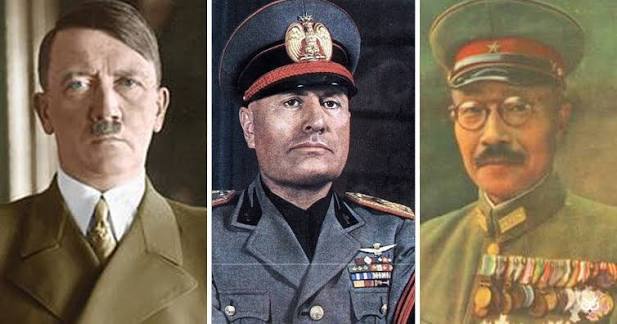
  • The Axis Leaders: Hitler, Mussolini, and Imperial Japan’s Wartime Command

    The Axis Leaders: Hitler, Mussolini, and Imperial Japan’s Wartime Command

    When World War II broke out in 1939, the Axis Powers Germany, Italy, and Japan united to challenge the Allied forces. Their leaders Adolf Hitler, Benito Mussolini, and Japan’s Emperor Hirohito with Prime Minister Hideki Tojo each shaped the conflict in distinct ways. But their alliance was less a unified bloc and more a pragmatic pact of convenience, driven by divergent ambitions and ideologies. This article examines who these leaders were, how they rose to power, and why their partnership ultimately unraveled.

    The Rise of Dictators

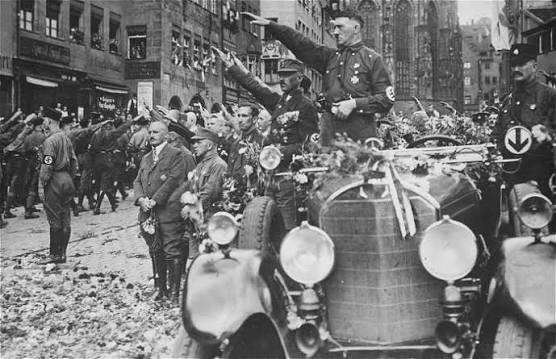
    Adolf Hitler came to power in Germany in 1933, capitalizing on the chaos of the Weimar Republic and the humiliation of the Treaty of Versailles. His Nazi Party fused extreme nationalism, racial antisemitism, and a vision of territorial expansion to win over a desperate population. By 1934, he declared himself Führer, merging the roles of chancellor and president, and began dismantling German democracy.

    Benito Mussolini had already seized control in Italy a decade earlier. In 1922, his March on Rome pressured King Victor Emmanuel III to appoint him Prime Minister. Mussolini’s Fascist ideology emphasized authoritarian nationalism, corporatism, and imperial revival a stark contrast to Germany’s race-based Nazi doctrine. Yet both men shared a thirst for power and a disdain for the post-WWI order.

    In Japan, the path to militarism was different. The 1930s saw the military and ultranationalist factions gain dominance over civilian government, fueled by economic crisis and a desire for resource security. Emperor Hirohito viewed as a divine figure reigned as a constitutional monarch, but his exact role in wartime decisions remains contested. Hideki Tojo, a hardline general, became Prime Minister in 1941 and effectively led the nation’s war efforts, though he always acted in the Emperor’s name.

    The Axis Alliance: A Marriage of Convenience

    The term “Axis” was coined by Mussolini in 1936, referring to the Rome–Berlin line around which other European states might align. The Rome–Berlin Axis was formalized in 1939 with the Pact of Steel, a military alliance between Germany and Italy. Japan joined the following year with the Tripartite Pact, creating the Berlin-Rome-Tokyo axis.

    But this was not a united front. Germany and Italy shared a fascist kinship, yet clashed over ambitions in Austria and the Balkans. Japan was primarily anti-communist and expansionist in Asia, with little ideological affinity for European fascism. The alliance lacked a unified strategy or command each power pursued its own war aims. Hitler, for instance, declared war on the United States after Pearl Harbor, a decision that ultimately dragged Germany into a two-front war and sealed its fate.

    The Personal Dynamics

    Hitler and Mussolini’s relationship evolved from admiration to strain. Mussolini initially viewed Hitler with a mix of respect and rivalry, but Italy’s military failures in Greece and North Africa exposed its weaknesses. In 1943, Allied forces invaded Sicily, and Mussolini was deposed and arrested. Hitler, determined to rescue his ally, sent commandos to free him from the Gran Sasso mountain hotel. Mussolini was then installed as the puppet leader of the Italian Social Republic in northern Italy, but his power was hollow.

    Germany and Japan had even less coordination. They fought separate wars Germany in Europe, Japan in the Pacific with minimal strategic cooperation. The two powers were separated by vast distances and had no shared war plan.

    The Fall of the Axis Leaders

    The end of the war brought violent deaths for most of the Axis leadership. Mussolini attempted to flee to Switzerland in April 1945, but was captured by Italian partisans and executed. His body was hung upside down in Milan, displayed to a vengeful public.

    Hitler, surrounded by Soviet forces in Berlin, committed suicide on April 30, 1945, by gunshot and cyanide. His body was burned in the Chancellery garden, and his ashes were scattered a deliberate attempt to prevent any future shrine.

    Tojo attempted suicide but survived and was captured by Allied forces. He was convicted of war crimes by the International Military Tribunal for the Far East and executed by hanging in 1948.

    Hirohito escaped prosecution. The Allies, eager to maintain stability in occupied Japan, shielded him from trial, arguing that he had been a passive figure manipulated by militarists. This decision remains controversial in East Asia, where many hold him responsible for wartime atrocities.

    The Broader Axis Leadership

    Beyond the “Big Three,” the Axis included a network of lesser leaders with varied motivations. Ion Antonescu of Romania, Miklós Horthy of Hungary, and Ante Pavelić of Croatia led regimes aligned with the Axis, either out of ideological sympathy, territorial gain, or coercion. In China, Wang Jingwei headed a Japanese puppet state, and Thailand’s Plaek Phibunsongkhram collaborated with Japan to expand Thai territory.

    These leaders often had more in common with their own survival instincts than with any shared Axis ideology. Their alliances were pragmatic, shifting with the fortunes of war.

    Ideological Fault Lines

    Nazism was rooted in racial theory, culminating in the Holocaust the systematic murder of six million Jews and millions of others. Italian Fascism was less racially extreme, though Mussolini enacted antisemitic laws in 1938 to align with Germany. Japanese militarism centered on emperor worship and pan-Asianism the idea of “Asia for Asians” but was not based on a racial hierarchy in the same way as Nazism. Instead, it saw Japan as the natural leader of Asia, liberating the region from Western colonialism.

    These ideological differences contributed to the alliance’s fragility. The Axis was never a coherent force; it was a temporary alignment of convenience that collapsed under the weight of its own contradictions.

    The Legacy

    By 1945, all three principal Axis powers had been defeated. Their leaders were dead or disgraced, and their ideologies were thoroughly discredited. The post-war world was rebuilt on the principles of the Allied powers, shaping international institutions like the United Nations.

    The Axis leaders remain a stark reminder of the dangers of totalitarianism, militarism, and unchecked nationalism. Their rise and fall offer lessons about the fragility of democracy and the catastrophic consequences of aggressive expansion.

    The Axis leaders Hitler, Mussolini, and Japan’s wartime command were driven by a shared desire to overturn the existing world order, but their alliance was never more than a marriage of convenience. Their divergent ideologies and ambitions ultimately undermined their cause, leading to their complete defeat. The war they unleashed cost millions of lives and reshaped the global landscape, leaving a legacy that still informs international relations today.

    Summary

    • The Axis Powers were primarily led by Adolf Hitler (Germany), Benito Mussolini (Italy), and Japan’s Emperor Hirohito with Prime Minister Hideki Tojo.
    • The alliance was pragmatic, not ideological, with each power pursuing its own expansionist goals.
    • Personal relationships among the leaders were strained, particularly between Hitler and Italy’s failing military efforts.
    • The fall of the Axis leaders came through suicide, execution, or—in Hirohito’s case—preservation under Allied occupation.
    • The broader Axis included numerous lesser leaders with varied motivations, from ideological alignment to coercion.

    FAQ

    Q: What was the Axis alliance?
    A: The Axis was a military coalition formed by Germany, Italy, and Japan, formalized through agreements like the Pact of Steel (1939) and the Tripartite Pact (1940). It was a pragmatic alliance of convenience rather than a unified ideological bloc.

    Q: Why did Italy join the Axis?
    A: Benito Mussolini sought to revive the Roman Empire’s glory and saw an alliance with Germany as an opportunity for territorial expansion in Africa and the Mediterranean.

    Q: What was Hirohito’s role in Japan’s war effort?
    A: Emperor Hirohito was the constitutional monarch, but historians debate his actual involvement. Some argue he was a passive figurehead manipulated by militarists, while others contend he actively supported key decisions, including the attack on Pearl Harbor.

    Q: How did the Axis leaders die?
    A: Hitler committed suicide in 1945, Mussolini was executed by partisans, and Tojo was executed after a war crimes trial. Hirohito died of natural causes in 1989 after retaining his throne under Allied occupation.

    Q: Were there other Axis leaders besides the ‘Big Three’?
    A: Yes, many other countries and puppet states were part of the Axis, including Hungary (Miklós Horthy), Romania (Ion Antonescu), Croatia (Ante Pavelić), and the Japanese puppet state in China (Wang Jingwei).

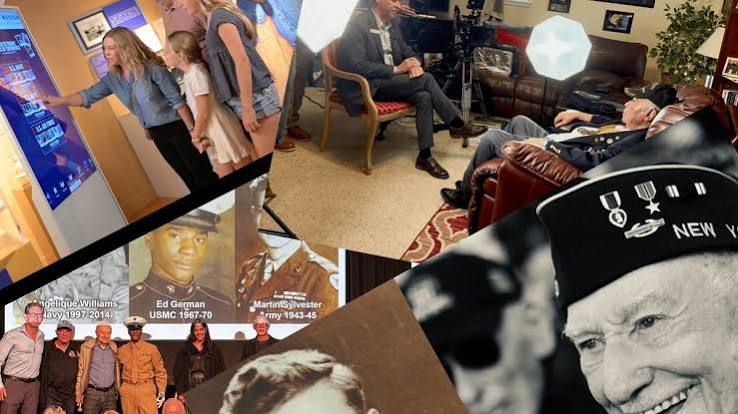
  • The Last Witnesses: Why We’re Racing to Record WWII Veterans’ Stories

    The Last Witnesses: Why We’re Racing to Record WWII Veterans’ Stories

    In April 2024, Lou Conter, the last surviving crew member of the USS Arizona, died at 102. His passing marked another irreplaceable loss: with him went a first-hand account of the attack on Pearl Harbor, a memory that no book or film could fully replicate. Conter was part of a generation that is disappearing at a staggering rate.

    As of 2024, only about 119,000 of the 16.4 million Americans who served in World War II are still alive. Their median age is 98. The U.S. Department of Veterans Affairs projects that 130 to 180 die each day; by 2030, fewer than 1,000 are expected to remain. This isn’t just a statistical trend it’s a closing window for capturing living history. Journalists, historians, and families are in a race against time to record these stories before they vanish.

    The Urgency of Now

    The numbers are stark. The National WWII Museum cites roughly 131 deaths per day in 2023. In the UK, fewer than 10,000 British veterans remain. Similar declines are happening across the globe, from Russia to Japan. The passing of Medal of Honor recipient Hershel “Woody” Williams in 2022 and Conter in 2024 brought this urgency into public view, but the quiet daily losses are just as significant.

    This is not the first time we’ve faced this moment. In the 1930s, the Works Progress Administration (WPA) conducted interviews with Civil War veterans but they waited too long. By then, many veterans had died, and the interviews captured only a fraction of the stories. Historians still lament the lost details. Today’s oral history projects are determined not to repeat that mistake.

    The Art of the Interview

    Interviewing a 98-year-old veteran is not like interviewing a younger subject. It requires logistical finesse, ethical sensitivity, and emotional stamina.

    Logistics: Many veterans are frail, with hearing or memory impairments. Interviewers must schedule around health, energy levels, and family availability. They often travel to the veteran’s home or care facility. The interview itself may last only an hour, with breaks. Some veterans tire quickly; others can talk for hours once they start.

    Ethics: The risk of re-traumatization is real. Asking a centenarian to relive D-Day or the Battle of the Bulge can trigger painful memories. Interviewers must be trained to read cues of distress and to back off when needed. Informed consent is tricky when memory is fragile does a 98-year-old fully understand what they’re agreeing to? Family members often serve as gatekeepers, either encouraging or discouraging interviews. Some veterans refuse to speak at all, and that choice must be respected.

    Emotional toll: Interviewers often form deep bonds with subjects, only to attend their funerals months later. It’s a cycle of grief that many oral historians know too well.

    Why Veterans Speak or Stay Silent

    For decades, many veterans remained silent. The “silent generation” trope has roots in trauma, humility, and a desire to move on. But in late life, many choose to speak. The reasons vary:

    • Legacy: They want their families and future generations to know what they experienced.
    • Reconciliation: Some find that telling their story helps them make peace with the past.
    • Duty: They feel an obligation to warn against the horrors of war.

    Others refuse. Some don’t want to relive the pain. Some feel their service wasn’t “heroic” enough—they were cooks, clerks, or medics, not frontline soldiers. The label “Greatest Generation” can feel like a burden. Many veterans deflect praise, insisting that the real heroes are those who never came home.

    The Historian’s Caveat

    Oral history is not objective truth. Memory is fallible, shaped by decades of retelling, media portrayals, and personal bias. A veteran may misremember dates, conflate events, or embellish details. That’s why historians cross-reference interviews with military records, unit diaries, and other sources. The goal is not to debunk but to understand—to see how memory works, and what it reveals about the narrator’s experience.

    Still, these stories carry a truth that documents cannot: the emotional weight, the sensory details, the human perspective. A letter home might say “we advanced under fire,” but a veteran’s voice can convey the terror, the chaos, and the camaraderie in ways that written records cannot.

    Beyond the U.S.: Different Memory Cultures

    The urgency is global, but the approach varies. In Germany, veterans rarely speak publicly, overshadowed by the country’s reckoning with Nazi crimes. In Russia, WWII memory is central to state ideology, with veterans honored as national heroes. In Japan, veterans’ experiences are often filtered through the atomic bomb narrative, and the war in Asia remains a contentious topic.

    These differences shape what is recorded and how. A German veteran’s silence is itself a part of history, just as a Russian veteran’s public testimony serves a political purpose.

    The New Frontier: Technology and Memory

    Technology is changing how we preserve these stories. Early oral histories were audio tape. Today, projects use 4K video, 3D scanning, and AI-assisted transcription. The USC Shoah Foundation’s “Dimensions in Testimony” goes further: it creates interactive holograms of Holocaust survivors that can answer questions from future audiences.

    But can a hologram truly “preserve” a person? The technology captures words and images, but it may miss the nuance, the hesitation, the tears. Some argue that the human element is irreplaceable. Others see technology as a way to extend the reach of these stories, making them accessible to generations who will never meet a veteran in person.

    The Library of Congress Veterans History Project has collected over 100,000 narratives. The National WWII Museum has over 9,000 oral histories. StoryCorps has recorded thousands more. These efforts are invaluable, but they represent only a fraction of the stories that could be told.

    A Personal Act of Preservation

    You don’t have to be a professional historian to help. If you have a family member who served in WWII—or in any conflict—consider recording their story. A smartphone is enough. Ask open-ended questions: What do you remember about your first day of training? What did you eat? How did you feel when you heard the war was over?

    These interviews are not just for posterity. They are a way to honor a person’s life and to connect generations. When a veteran passes, the stories die with them unless we’ve taken the time to listen.

    The window is closing. In a few years, there will be no living witnesses to WWII. The interviews we conduct today—whether by professional historians or family members—are the only way to ensure that these voices are not lost. It’s a race against time, but it’s a race we can still win, one conversation at a time.

    Summary

    • Only ~119,000 of 16.4 million American WWII veterans are still alive (2024), with a median age of 98.
    • Roughly 130–180 veterans die each day; by 2030, fewer than 1,000 are projected to remain.
    • Major oral history projects include the Library of Congress, National WWII Museum, and StoryCorps.
    • Interviewing elderly veterans requires ethical care to avoid re-traumatization and to respect their silence.
    • Technology like VR and AI is creating new ways to preserve testimony, but the human element remains irreplaceable.

    FAQ

    Q: How many WWII veterans are still alive?
    A: As of 2024, about 119,000 American WWII veterans are alive, according to the U.S. Department of Veterans Affairs. Their median age is 98.

    Q: Why is there urgency to record their stories now?
    A: The mortality rate is high—130 to 180 veterans die each day. By 2030, fewer than 1,000 are expected to remain, so the window for first-person testimony is closing.

    Q: What are some major oral history projects?
    A: The Library of Congress Veterans History Project has over 100,000 narratives, the National WWII Museum has over 9,000, and StoryCorps has recorded thousands more.

    Q: Is it ethical to interview very old veterans about traumatic events?
    A: Yes, if done with care. Interviewers must be trained to recognize distress, obtain informed consent, and respect the veteran’s decision to refuse to speak. Family members often play a key role in facilitating or protecting.

    Q: How is technology changing oral history?
    A: Projects now use 4K video and AI transcription, and some like the USC Shoah Foundation’s “Dimensions in Testimony” create interactive holograms. However, technology can’t fully replicate the human nuance of a live conversation.

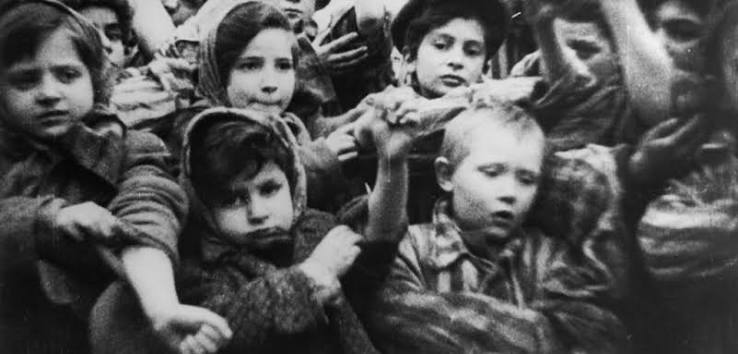
  • The Children Who Survived: Their Lives After the Holocaust

    The Children Who Survived: Their Lives After the Holocaust

    When the Second World War ended in 1945, the Allied forces discovered a devastated Europe. Among the ruins were thousands of children who had somehow survived the Holocaust. They were a small fraction of the 1.5 to 2 million Jewish children who had been alive in 1939. Only about 100,000 to 150,000 made it through. These children emerged from hiding places, forests, and concentration camps, often alone, malnourished, and traumatized. Their journey after liberation was not a simple return to normal life it was a new struggle for survival, identity, and a place to call home.

    This article traces what happened to these children once the war was over. It looks at their initial care in displaced persons camps, the long and often painful process of reuniting with family or finding new ones, and the paths they took to new countries. It also explores the different experiences of those who went to Britain, France, Palestine, and elsewhere, and the lasting impact of those years on their lives.

    The Liberation: A Bitter Sweet Beginning

    When the camps were liberated, soldiers found children in horrifying conditions. At Auschwitz, for example, only a few hundred children were found alive, many of them twins who had been used for medical experiments. The survivors were often severely malnourished, suffering from tuberculosis and other diseases. Some had forgotten their names, their languages, and even how to play. They had spent years in conditions that stripped away their childhood.

    The first priority was medical care and food. But the psychological scars were deep. Many children had witnessed the murder of their families. They had learned to hide, to lie, to trust no one. The process of recovery would take years, and for some, it never fully happened.

    Displaced Persons Camps: A Temporary Home

    Most surviving children were initially placed in Displaced Persons (DP) camps run by the Allies. These camps were often former concentration camps or military barracks. Bergen-Belsen, Feldafing, and Zeilsheim became temporary homes for thousands of orphans. The United Nations Relief and Rehabilitation Administration (UNRRA) and later the International Refugee Organization (IRO) managed these camps, with help from Jewish organizations like the American Jewish Joint Distribution Committee (JDC).

    In these camps, the children received basic education, vocational training, and some psychological support. But life was hard. They lived in crowded barracks, faced shortages of food and clothing, and had to deal with the uncertainty of their future. The camps were meant to be temporary, but some children remained for years, waiting for emigration or for news of family.

    The Search for Family

    One of the most agonizing experiences for child survivors was the search for surviving relatives. The Central Tracing Bureau was set up to help locate family members. Lists of survivors were posted, and children were photographed and registered. Many children clung to the hope that a parent or sibling might have survived. For some, this hope was fulfilled. They were reunited with a mother, a father, or a sibling who had also survived. But for the vast majority, the search ended in despair. They were alone in the world.

    Some children were too young to remember their families. They had been hidden as infants or toddlers and had no memory of their parents. Others had been given new names and identities. The task of rebuilding a family was often impossible. Adoption was one option, but many children were reluctant to leave the hope of finding a biological relative. Others were placed in group homes or orphanages, where they lived with other child survivors.

    The Windermere Children: A British Story

    One of the most famous rehabilitation programs was the Windermere Children scheme. In August 1945, 732 child survivors, mostly from the Theresienstadt ghetto and other camps, were flown to the Lake District in England. They were housed in a former RAF camp near the town of Windermere. Here, they received intensive care: good food, warm clothing, education, and psychological support. They were taught English, woodworking, and other trades. The goal was to help them recover and prepare them for a new life in Britain.

    The children at Windermere formed a close bond, and many stayed in the UK, becoming British citizens. Their story was later told in a book and a 2020 film, The Windermere Children. For many, this program was a turning point. It gave them a chance to heal and to build a future.

    The Buchenwald Boys: A Different Path

    In April 1945, American troops liberated the Buchenwald concentration camp. Among the survivors were hundreds of boys, many of them teenagers. These boys, known as the Buchenwald Boys, were taken to France, where they were placed in homes and rehabilitation centers. One of them was Elie Wiesel, who would later become a Nobel Prize-winning author and a voice for Holocaust survivors.

    The Buchenwald Boys were given education and support, and many went on to successful lives. But they, too, faced the challenge of rebuilding their identities. Some had been in the camp for years, and the outside world was foreign to them. They had to learn to live in society again, a process that was not always easy.

    The Hidden Children: A Crisis of Identity

    Not all child survivors were in camps. Many had been hidden—in convents, with Christian families, in attics, or in the countryside. These “hidden children” often survived by passing as non-Jewish. They took on Christian names, learned Christian prayers, and sometimes were baptized. When the war ended, they faced a unique problem: they had to decide whether to return to their Jewish roots or remain in the Christian world they had come to know.

    Some hidden children chose to remain Christian, either because they had formed deep bonds with their rescuers or because their Jewish identity had become alien to them. Others struggled with guilt and confusion. They had to “relearn” their Jewish identity, sometimes for the first time. The Hidden Child Foundation, founded in 1991, has documented hundreds of these stories, showing the diversity of experiences and the long-term psychological impact.

    The Kibbutz Experience: Building a New Nation

    For many child survivors, the destination was British Mandate Palestine, soon to become Israel. Youth Aliyah, a Jewish organization, organized the transport and care of thousands of children. They were taken to agricultural settlements, or kibbutzim, where they lived communally. The idea was to rehabilitate them through work, education, and a new national identity. In the kibbutz, they learned Hebrew, worked the land, and became part of a collective.

    For some, this was a positive experience. It gave them a sense of belonging and purpose. They were part of building a new nation. But others felt pressured to abandon their European past and adopt a new identity. They were expected to be strong, to not speak about their trauma, and to focus on the future. This could be a heavy burden. Some later wrote about the tension between their past and present, and the difficulty of integrating their Holocaust experiences into their new lives.

    The United States and Other Destinations

    A smaller number of child survivors emigrated to the United States. Under the Displaced Persons Act of 1948, amended in 1950, about 1,000 to 1,500 unaccompanied child survivors were admitted. They were sponsored by Jewish agencies and often placed in foster homes or group homes. Canada, Australia, and South Africa also accepted small numbers.

    These children started new lives, but they often faced challenges. They had to learn new languages, adapt to new cultures, and cope with their past. Some succeeded remarkably, becoming doctors, lawyers, and artists. Others struggled with mental health issues, and some never spoke about their experiences until later in life.

    The Lasting Legacy

    The children who survived the Holocaust grew up, married, and had families. Many became advocates for Holocaust education, sharing their stories with the world. They founded organizations, wrote memoirs, and spoke at schools and museums. Their experiences shaped not only their own lives but also the way we understand the Holocaust.

    However, the trauma never fully disappeared. Many survivors suffered from depression, anxiety, and post-traumatic stress disorder. They often had difficulty forming close relationships, and some passed on their trauma to their children. But they also showed remarkable resilience. They rebuilt their lives, often in new countries, and contributed to society in countless ways.

    Today, as the number of survivors diminishes, their stories become even more precious. They remind us of the horrors of the Holocaust, but also of the strength of the human spirit. The children who survived were not just victims; they were survivors who built new lives. Their legacy is a testament to the power of hope and the will to live.

    The children who survived the Holocaust faced a long and difficult road after liberation. They had to heal from profound trauma, find or create new families, and build new lives in unfamiliar lands. Their experiences varied—from the rehabilitation of the Windermere Children to the identity crises of the hidden children to the communal life of the kibbutzim. Yet, despite the challenges, many went on to lead productive lives, contributing to their new communities and preserving the memory of those who perished. Their story is one of both tragedy and resilience, a reminder of the humanity that endured even in the darkest of times.

    Summary

    • Only about 100,000–150,000 of the 1.5–2 million Jewish children in Europe in 1939 survived the Holocaust.
    • Most child survivors were initially placed in DP camps, where they received basic care and education.
    • Many were reunited with family, but the majority were orphaned and had to find new homes.
    • Emigration destinations included Palestine/Israel, the UK, the US, and other countries, with programs like Youth Aliyah and the Windermere Children scheme.
    • The hidden children faced identity crises, while all survivors dealt with long-term psychological effects.

    FAQ

    Q: How many children survived the Holocaust?
    A: Estimates vary, but it is generally accepted that between 100,000 and 150,000 Jewish children survived out of the 1.5 to 2 million who were alive in 1939. This is a survival rate of less than 10 percent.

    Q: What was the Windermere Children program?
    A: The Windermere Children program was a rehabilitation scheme that brought 732 child survivors, mostly from the Theresienstadt ghetto, to the Lake District in England in August 1945. The children received education, vocational training, and psychological support to help them recover and integrate into British society.

    Q: Where did surviving children go after the war?
    A: Most child survivors were first placed in displaced persons camps in Germany, Austria, and Italy. Later, they emigrated to various countries, with the largest numbers going to British Mandate Palestine (later Israel), the United States, and the United Kingdom. Smaller numbers went to Canada, Australia, South Africa, and Latin America.

    Q: What were the “hidden children”?
    A: “Hidden children” were Jewish children who survived the Holocaust by hiding in convents, with Christian families, in attics, or in other concealed places. Often, they had to pass as non-Jewish, taking on Christian identities. After the war, they faced challenges in reconciling their Jewish heritage with their wartime experiences.

    Q: How did the children cope with the trauma of the Holocaust?
    A: Many survivors experienced long-term psychological effects, including depression, anxiety, and PTSD. However, rehabilitation programs, new families, and the support of organizations helped many to rebuild their lives. Some found solace in sharing their stories, while others remained silent for decades.

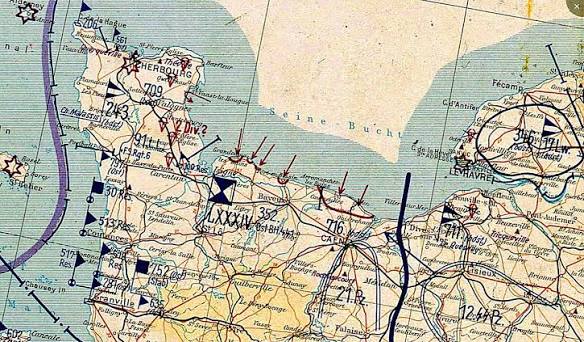
  • The Civilian Road Map That Outmaneuvered the German Army on D-Day

    The Civilian Road Map That Outmaneuvered the German Army on D-Day

    On June 6, 1944, as Allied troops stormed the beaches of Normandy, they carried a secret weapon that had nothing to do with new tanks or code-breaking machines. It was a simple road map, designed for French motorists, published by the tire company Michelin. This map, No. 51 in Michelin’s series, covering the region from Caen to Le Mans, would prove to be one of the most effective intelligence assets of the entire campaign.

    The Germans had fortified the Atlantic Wall with concrete bunkers, millions of mines, and formidable artillery. But they had overlooked the humble road map. While German officers navigated with outdated military surveys, Allied commanders unfolded their Michelin maps and saw a detailed web of minor roads, farm tracks, and bridges that the German maps simply didn’t show. In the chaos of the Normandy bocage a maze of sunken lanes and earthen hedgerows this difference was decisive.

    A Map Made for Tourists, Not Soldiers

    Michelin began producing detailed road maps of France in 1900, not for military strategists but for the growing number of motorists who wanted to explore the countryside in their new automobiles. The company’s tire salesmen and local correspondents fed a constant stream of updates back to the mapmakers, ensuring that roads, bridges, and even isolated farms were accurately depicted. By the 1930s, these maps had become the gold standard for civilian travel in France.

    When the Second World War broke out, the British War Office recognized the potential military value of these maps. They quietly began stockpiling Michelin maps, and when France fell in 1940, they made sure to secure as many copies as possible. But the real champion of the Michelin map was Major David “Dai” Rees, a Welsh cartographer with the British Army’s Geographical Section, General Staff (GSGS).

    The Cartographer Who Saw the Obvious

    Major Rees was not a flamboyant intelligence officer. He was a meticulous mapmaker who understood that the official military maps of Normandy were woefully inadequate. Many were based on surveys from the 19th century, and they lacked the granular detail of minor roads and sunken lanes that would be crucial for troop movements in the bocage. Rees knew that the Michelin maps, with their up-to-date road networks, gradients, and even the locations of isolated farmhouses, were infinitely better.

    He faced bureaucratic resistance. Some officers dismissed the idea of using a commercial touring map for military operations. But Rees persisted, and his foresight paid off. The War Office reproduced the Michelin maps in huge numbers, classifying them as “GSGS 4249.” Hundreds of thousands of copies were printed on lightweight, color-coded paper that could be folded and stuffed into a soldier’s pocket.

    The Bocage: A Navigator’s Nightmare

    The terrain of Normandy was unlike anything the Allied troops had encountered. The bocage was a patchwork of small fields enclosed by thick, earthen hedgerows, often topped with trees and shrubs. Sunken lanes, worn down by centuries of use, crisscrossed the landscape. Tanks and infantry could easily get lost, and the hedgerows provided the Germans with excellent defensive positions. For the Allies, every advance required precise navigation.

    German forces, by contrast, were often operating with maps that lacked the same level of detail. They had not anticipated that the Allies would rely on a civilian commercial map, and they certainly did not expect the Allies to have such intimate knowledge of the minor road network. This gave the Allies a significant navigational advantage, especially in the months of brutal fighting that followed the initial landings.

    The Secret That Wasn’t

    The maps were not classified documents. The secrecy lay in the fact that the Allies were using them at all, and in the scale of the reproduction effort. The Germans could not conceive that a tire company’s product for motorists would become a critical military tool. It was a cartographic sleight of hand that took the enemy by surprise.

    After the war, Michelin’s role was officially acknowledged. The company was praised for its foresight in maintaining detailed, up-to-date maps of France. The maps, originally created to sell tires, had helped to liberate the country.

    The Michelin map of Normandy is a reminder that sometimes the most effective tools are not the most sophisticated. A civilian road map, designed for Sunday drives, gave the Allies a crucial edge in one of the most complex military operations in history. It was a triumph of commercial cartography applied to the grim business of war, and it saved countless lives.

    Summary

    • The Michelin road map No. 51 (covering Caen to Le Mans) was used extensively by Allied forces during D-Day and the Battle of Normandy.
    • The map provided detailed data on minor roads, bridges, and terrain features that official military maps lacked.
    • Major David “Dai” Rees, a British cartographer, championed the use of the Michelin maps, overcoming bureaucratic resistance.
    • The maps were mass-produced by the British War Office as “GSGS 4249” and distributed to hundreds of thousands of Allied troops.
    • The Germans were unaware that the Allies relied on a civilian commercial map, giving the Allies a significant navigational advantage in the bocage country.

    FAQ

    Q: Were the Michelin maps classified as ‘secret’ during the war?
    A: No, the maps themselves were not classified. The secrecy was in the fact that the Allies were using them at all, and in the scale of the reproduction effort.

    Q: Why were the official military maps of Normandy so poor?
    A: Many were based on outdated surveys, some dating back to the 19th century, and they lacked detail on minor roads and sunken lanes. Additionally, the French national mapping agency had been compromised by the Vichy regime, and some official maps were deliberately inaccurate.

    Q: How did the Allies get their hands on the Michelin maps?
    A: The British War Office stockpiled Michelin maps before the war, and additional copies were smuggled out of occupied France by resistance networks.

    Q: What made the Michelin maps better than military maps?
    A: They were updated frequently and included details like road widths, gradients, and the locations of isolated farms, making them far more accurate for navigation in the bocage.

    Q: Did the Germans ever figure out that the Allies were using Michelin maps?
    A: There is no evidence they did. The Germans did not anticipate that the Allies would rely on a civilian commercial map, and the Allies’ detailed knowledge of minor roads took them by surprise.

  • How the Blitz and the Queue Built Britain’s Welfare State

    How the Blitz and the Queue Built Britain’s Welfare State

    Bombing - Social Impact of WWII in Britain - National 4 History Revision - BBC Bitesize

    In September 1940, as German bombs rained on London, a social experiment began that would reshape Britain forever. Children from the East End, pale and underfed, were packed onto trains and sent to rural villages. Their hosts, comfortable middle-class families, were shocked to see rickets, lice, and malnutrition up close. This was the ‘national revelation’ that cracked open the door to the modern welfare state.

    By 1948, just three years after the war ended, Britain had a health service free at the point of use, universal social insurance, and family allowances. The journey from those crowded railway platforms to the founding of the NHS was not smooth or inevitable. It took a war, a bestselling report, and a landslide election to turn shared sacrifice into permanent social rights.

    The Hungry Thirties: A Patchwork of Punishment

    Before the war, Britain’s social safety net was a cruel contradiction. The 1911 National Insurance Act covered only select workers for health and unemployment, leaving millions to fall back on the Poor Law a system designed to deter, not help. Means tests were intrusive and humiliating; benefits were inconsistent. In Jarrow, South Wales, and Clydeside, unemployment peaked at 22% in 1932, and whole communities were left to rot.

    Public health was equally dire. Malnutrition was widespread, and medical care was simply unaffordable for many working-class families. A hospital visit could mean bankruptcy. Voluntary hospitals relied on charity, and the sick poor often went untreated. This was the Britain that went to war in 1939.

    Wartime Transformations: Bombs, Rationing, and a New Solidarity

    The war changed everything, starting with the evacuation. In just four days in September 1939, 1.5 million people mostly children were moved from cities to the countryside. For the first time, the middle classes saw how the other half lived. Rickets, lice, and chronic malnutrition were not abstract statistics; they were children sleeping in their spare rooms. This ‘national revelation’ made poverty a national scandal.

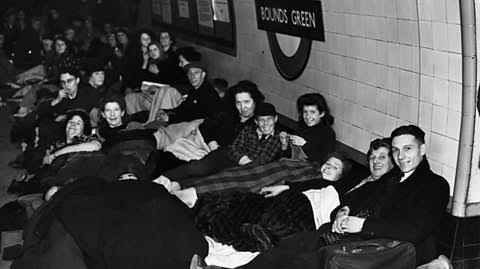
    The Blitz deepened the shift. Bombing did not discriminate between rich and poor neighborhoods. Rich and poor huddled together in underground stations, sharing the same risk. The state organized shelters, emergency services, and, from 1940, universal rationing. Everyone got the same rations, whether they lived in Mayfair or Manchester. This was a radical experiment in equality, and it worked. The state proved it could run large-scale operations effectively — from the Ministry of Food to the Ministry of Supply.

    Full employment was the final proof. By 1943, unemployment had fallen below 1%. The state had managed the economy to mobilize for war, and it had succeeded. If it could do that, why could it not conquer poverty in peacetime?

    The Beveridge Report: A Bestseller That Changed the Debate

    In December 1942, economist Sir William Beveridge — a Liberal, not a Labour man — published his report on social insurance. It was commissioned by the wartime coalition, which included Labour ministers like Clement Attlee and Ernest Bevin. Beveridge proposed a universal system of social insurance, funded by flat-rate contributions, covering every citizen ‘from cradle to grave.’ He structured his plan around five ‘Giant Evils’: Want, Disease, Ignorance, Squalor, and Idleness.

    The report sold over 600,000 copies. It was read in factories, pubs, and army camps. People queued to buy it. The government initially tried to downplay it, but the public demand was unstoppable. All parties were forced to accept its broad framework. The question after the war was not whether to implement Beveridge, but how quickly and how completely.

    1945: The Landslide That Made It Happen

    The July 1945 election was a shock. Winston Churchill, the victorious wartime leader, was defeated in a landslide. Labour won 393 seats to the Conservatives’ 213. The people wanted more than victory; they wanted a new Britain. Clement Attlee became Prime Minister, and his government moved with remarkable speed.

    One of the first acts was the Family Allowances Act of 1945, which gave a universal cash benefit to mothers. Then came the National Insurance Act of 1946, a comprehensive contributory scheme covering sickness, unemployment, retirement, and widowhood. The National Health Service Act of 1946 created the NHS, which launched on 5 July 1948. The National Assistance Act of 1948 provided a safety net for those outside the insurance system. By 1948, the welfare state was complete.

    Aneurin Bevan, the Health Minister, was the architect of the NHS. He faced fierce opposition from doctors who feared losing their independence. But Bevan held firm, famously saying that he would ‘stuff their mouths with gold’ — in the end, he won them over with a compromise that allowed private practice alongside NHS work. The NHS was born on 5 July 1948, offering free healthcare to everyone, regardless of income.

    The Wartime Roots of the Welfare State

    The war did not just create the conditions for the welfare state; it created the political will. The evacuation and the Blitz exposed inequality in a way that could not be ignored. Rationing normalized state intervention in daily life. Full employment proved the state could manage the economy. And the phrase ‘People’s War’ captured the idea that this was a war of the whole nation, deserving a post-war reward.

    But the war alone was not enough. It took a Labour landslide and a government determined to implement Beveridge’s vision. The war created the opportunity; Labour seized it. The welfare state was not a gift from the wartime coalition — it was a victory won by the people, through their votes and their sacrifices.

    The welfare state was built on the ruins of war, but it was not an accident of history. It was a deliberate choice, made by a people who had endured the Blitz and rationing and decided they deserved better. The NHS, the National Insurance scheme, and family allowances were not just policies; they were promises that the sacrifices of war would not be in vain. Today, as debates about the welfare state continue, it is worth remembering that its foundations were laid in the fires of the People’s War.

    Summary

    • The Beveridge Report (1942) sold over 600,000 copies and framed the post-war social settlement around five ‘Giant Evils’: Want, Disease, Ignorance, Squalor, and Idleness.
    • Evacuation and the Blitz exposed middle-class Britons to urban poverty, creating a ‘national revelation’ that fueled demand for change.
    • Universal rationing and full employment during the war normalized state intervention and proved the government could manage the economy effectively.
    • Labour’s landslide victory in 1945 gave Attlee’s government a mandate to implement Beveridge’s plan with remarkable speed.
    • By 1948, the NHS, National Insurance, and National Assistance had created a universal welfare state ‘from cradle to grave.’

    FAQ

    Q: Why is the Beveridge Report considered so important?
    A: It was the first comprehensive plan for a universal welfare state, covering all citizens ‘from cradle to grave’ and identifying five ‘Giant Evils’ to be conquered. Its popularity (over 600,000 copies sold) forced all parties to accept its framework.

    Q: What role did the war play in creating the welfare state?
    A: The war exposed social inequality through evacuation and the Blitz, normalized state intervention through rationing, and proved the state could manage the economy through full employment. It created the political will for change.

    Q: Was the welfare state a Labour achievement?
    A: Yes, the Labour government elected in 1945 implemented the legislation. But the wartime coalition, which included Labour ministers, commissioned the Beveridge Report and passed the 1944 Education Act. The war created the conditions; Labour provided the political will.

    Q: Why did the 1945 election result in a Labour landslide?
    A: The public associated the Conservatives with the pre-war depression and wanted a new Britain after the war. Labour’s promise to implement the Beveridge Report resonated with voters, leading to 393 seats for Labour versus 213 for the Conservatives.

    Q: What were the five ‘Giant Evils’?
    A: Beveridge identified Want (poverty), Disease (ill health), Ignorance (lack of education), Squalor (poor housing), and Idleness (unemployment) as the five major social problems the welfare state was designed to overcome.

  • The War That Remade the Middle East: How WWII’s Legacy Fuels Modern Conflicts

    The War That Remade the Middle East: How WWII’s Legacy Fuels Modern Conflicts

    In the summer of 1941, British and Soviet troops rolled into Iran, forcing Reza Shah to abdicate his throne. The invasion was swift, almost bloodless, but its consequences echoed for decades. It secured the supply lines that would help the Soviet Union survive the Nazi onslaught, yet it also planted seeds of resentment that bloomed into the 1953 coup and a lasting Iranian distrust of the West.

    World War II is often remembered through the beaches of Normandy or the jungles of the Pacific. But in the Middle East, the war was a violent tide that reshaped the coastline of history. It toppled empires, created new nations, and set the stage for conflicts that still rage today. The war’s legacy in this region is not a footnote; it is the foundation of the modern Middle East.

    The Crossroads of the World

    Long before the first shot of WWII, the Middle East was already a prize. Its oil fields fueled the navies and air forces of the great powers. The Suez Canal was the jugular of the British Empire, a shortcut to India and the Far East. And its geography made it a natural crossroads for armies and ideologies.

    When war erupted in 1939, the region became a theater of operations. The North African Campaign (1940–1943) saw British and Commonwealth forces push back the Italians and Germans in a back-and-forth struggle across Libya and Egypt. To the east, the Anglo-Soviet invasion of Iran in 1941 was a preemptive strike to secure oil and open the Persian Corridor a route that would deliver over 4 million tons of Lend-Lease aid to the Soviet Union. Meanwhile, in the Levant, British and Free French forces ousted Vichy French control from Syria and Lebanon, a campaign that would set those territories on the path to independence in 1943–1946.

    These campaigns were not abstract chess moves. They brought hundreds of thousands of Allied troops into the region, along with their equipment, their ideas, and their promises. The war disrupted local economies, caused famines in Iran and the Levant, and accelerated urbanization as people flocked to cities for work and safety. It also expanded oil production dramatically, cementing the region’s global importance.

    The Promise of Self-Determination

    In August 1941, Franklin Roosevelt and Winston Churchill issued the Atlantic Charter, a declaration of principles for the post-war world. It affirmed the right of all peoples to choose their own government. For Arab nationalists, these words were a beacon. They had lived under British and French mandates since the collapse of the Ottoman Empire, and they saw the war as a chance to claim their freedom.

    Churchill later insisted that the charter applied only to Europe, not to the British Empire. But the damage was done. The idea of self-determination had taken root. The war had armed and trained a generation of local officers and elites, many of whom would lead independence movements. When the war ended, Britain and France were economically and militarily exhausted, unable to maintain their colonial grip. The result was a wave of decolonization: Syria and Lebanon gained full independence in 1946, Jordan followed suit, and the British withdrew from Palestine in 1948, leaving behind a volatile situation.

    The Arab League, founded in Cairo in 1945, was a visible sign of this new era. It was a platform for pan-Arab coordination, but it also exposed the divisions that would come to define the region.

    The Holocaust and the Creation of Israel

    The Holocaust was the darkest shadow of WWII, and its legacy in the Middle East is profound. The systematic murder of six million Jews created an international moral imperative for a Jewish homeland. The Balfour Declaration of 1917, which had promised British support for a Jewish national home in Palestine, now seemed like a debt that had to be paid.

    But Palestine was not empty. It was home to a growing Arab population that had its own national aspirations. The war had intensified Jewish immigration and the Zionist project, and the horrors of the Holocaust made the establishment of a Jewish state a matter of existential urgency for many survivors. In 1947, the United Nations voted to partition Palestine into separate Jewish and Arab states. The Arabs rejected the plan; the Jews accepted it. In 1948, Israel declared independence, and the first Arab-Israeli war began.

    The creation of Israel is often seen as a direct consequence of WWII and the Holocaust. But the roots of the conflict go deeper, to the Balfour Declaration and decades of Zionist settlement. WWII did not create the conflict; it accelerated and intensified it, making a resolution tragically more difficult.

    A New World Order

    When the guns fell silent in 1945, the Middle East was no longer the backyard of Britain and France. The United States, emerging from the war as a superpower, began to fill the vacuum. The onset of the Cold War turned the region into a chessboard for U.S.–Soviet rivalry. Superpowers backed different regimes, fueled arms races, and manipulated coups. The Baghdad Pact, Nasser’s alignment with the USSR, and the 1953 CIA-backed coup in Iran were all moves in this larger game.

    For Iran, the legacy of WWII was particularly bitter. The 1941 invasion had been a violation of sovereignty, but it also modernized the country’s infrastructure and state institutions. The war’s aftermath set the stage for the nationalization of the oil industry under Mossadegh and his subsequent overthrow, a coup that deeply shaped Iran’s distrust of Western powers. That distrust persists today.

    For Arab nationalists, WWII was a time when the hypocrisy of the colonial powers was laid bare. They fought for freedom in Europe while denying it in the Middle East. The creation of Israel was seen as a Western imposition, a way to assuage guilt over the Holocaust at the expense of the Palestinians. This perspective continues to fuel regional conflicts.

    The Artificial Borders

    The war accelerated the creation of new nation-states, but the borders were often arbitrary, drawn by colonial powers with little regard for ethnic or sectarian realities. Syria, Lebanon, Jordan, and Israel were all carved out of the former Ottoman territories, and many of these borders remain contested today. The Kurdish people, for example, found themselves divided among several countries, a source of ongoing tension. The creation of Israel, in particular, reshaped the map in ways that continue to provoke conflict.

    The War’s Long Shadow

    World War II is not a distant memory in the Middle East; it is a living history. The strategic importance of the region, the promises of self-determination, the trauma of the Holocaust, the rise of the United States, and the artificial borders—all of these are wartime legacies that still influence modern conflicts. The Arab-Israeli conflict, the Iranian distrust of the West, the instability in Syria and Iraq, and the proxy wars of the 21st century all have roots in the upheaval of 1939–1945.

    To understand the Middle East today, one must look back to the war that remade it. The guns have long since fallen silent, but the echoes of that conflict are still heard in every ceasefire, every protest, and every diplomatic standoff.

    World War II reshaped the Middle East in ways that still reverberate. It destroyed empires, created nations, and set the stage for a Cold War that turned the region into a battlefield of ideologies. The promises of self-determination were left unfulfilled, the trauma of the Holocaust led to a new state and a new conflict, and the strategic importance of oil made the region a pawn in global power struggles. The legacy of WWII is not merely historical; it is the foundation of modern Middle Eastern politics and conflict.

    Summary

    • WWII was a critical theater in the Middle East due to oil, the Suez Canal, and the Persian Corridor, which delivered over 4 million tons of aid to the USSR.
    • The war weakened Britain and France, accelerating decolonization and the creation of new states like Syria, Lebanon, and Jordan.
    • The Holocaust intensified international support for a Jewish homeland, leading to the 1947 UN Partition Plan and the 1948 Arab-Israeli War.
    • The rise of the U.S. and the Cold War turned the Middle East into a proxy battleground, with superpowers supporting rival regimes.
    • The artificial borders drawn during and after WWII continue to fuel ethnic and sectarian conflicts today.

    FAQ

    Q: Did WWII cause the Arab-Israeli conflict?
    A: No. The conflict predates WWII, rooted in the Balfour Declaration and Zionist settlement. WWII and the Holocaust intensified and accelerated it, but did not create it.

    Q: Was the Middle East a minor theater in WWII?
    A: No. It was strategically vital for oil, logistics, and the defeat of the Axis. The Persian Corridor alone delivered over 4 million tons of supplies to the Soviet Union.

    Q: How did WWII affect Iran?
    A: The 1941 Anglo-Soviet invasion forced Reza Shah to abdicate, but it also modernized infrastructure. The war’s aftermath set the stage for the 1953 CIA-backed coup, shaping long-term Iranian distrust of the West.

    Q: What role did the Atlantic Charter play?
    A: Its promise of self-determination was cited by Arab nationalists, even though Churchill later said it didn’t apply to the British Empire. It fueled decolonization movements.

    Q: How are artificial borders a legacy of WWII?
    A: The war accelerated the creation of states like Syria, Lebanon, Jordan, and Israel, often with arbitrary borders that ignore ethnic and sectarian realities, leading to enduring conflicts.

  • How World War II Still Directs the Movies You Watch

    How World War II Still Directs the Movies You Watch

    In 1942, Hollywood wasn’t just making movies about the war it was making the war. Studios churned out propaganda features like Casablanca and Mrs. Miniver, while Frank Capra’s Why We Fight series played in barracks across the globe. The Office of War Information reviewed scripts, and the War Activities Committee shipped prints to troops. The result was a generation of filmmakers who learned their craft in service of a single, unambiguous story: the good war against fascism.

    Eighty years later, that story still dominates our screens. From Saving Private Ryan to Call of Duty, WWII remains the default setting for moral clarity in entertainment. But the war’s influence runs deeper than recycled plotlines. It shaped how Hollywood works with the Pentagon, how we remember (and forget) history, and why a superhero created as propaganda in 1941 still headlines blockbusters today.

    The Birth of the Modern Blockbuster

    The war didn’t just give cinema a subject it gave it a template. The combat film, perfected in the 1940s and 1950s, established the beats we still see today: the rag-tag squad, the reluctant hero, the sacrificial last stand. Twelve O’Clock High (1949) and The Bridge on the River Kwai (1957) added psychological depth, but the core structure stuck. When Steven Spielberg shot the Omaha Beach sequence for Saving Private Ryan (1998), he wasn’t inventing a new language he was amplifying one forged in the 1940s.

    But the war’s influence isn’t just aesthetic. It’s institutional. The Pentagon’s film liaison office, born from wartime collaboration, still reviews scripts today. Productions that want military hardware and cooperation must submit to oversight. That’s why you see the same heroic framing of American troops in films from Top Gun to Transformers—a direct legacy of the OWI’s wartime mandate.

    The Cold War’s Invisible Censor

    Here’s a fact that might surprise you: the Eastern Front, where Germany suffered roughly 80% of its military casualties, barely appears in American WWII films made before the 1990s. That’s not an accident. As the Cold War hardened, Hollywood quietly downplayed the Soviet role to avoid glorifying a rival superpower. The result was a Western-centric narrative that cast the US as the sole liberator a story that still shapes perceptions today.

    International filmmakers pushed back. Come and See (1985), a Soviet film, showed the war as brutal, chaotic, and morally ambiguous. Das Boot (1981) put Germans in the submarine, making audiences empathize with the enemy. Downfall (2004) humanized Hitler’s inner circle. These films didn’t just fill gaps they challenged the clean hero/villain binary that American cinema had cemented.

    The Pacific Theater and the Bomb’s Long Shadow

    The Pacific war never fit neatly into the “good war” narrative. The racialized brutality of island-hopping, the firebombing of Tokyo, and the atomic bombs raised questions that American films often sidestepped. The Thin Red Line (1998) and Letters from Iwo Jima (2006) approached the Pacific with more nuance, but it was Oppenheimer (2023) that finally forced a mainstream reckoning with the bomb’s moral weight. The film’s success showed that audiences are hungry for complexity, not just heroics.

    Alternate History: The War as Sandbox

    What if the Nazis won? That question has fueled a subgenre of speculative fiction, from Philip K. Dick’s The Man in the High Castle (1962) to the Wolfenstein video game series. These works use WWII as a moral sandbox, exploring what happens when evil isn’t defeated. Inglourious Basterds (2009) rewrote history so that Jewish soldiers assassinate Hitler a cathartic fantasy that critiques the very idea of historical accuracy. And Captain America: The First Avenger (2011) turned a 1941 propaganda comic into a modern origin story, proving that the war’s symbols still resonate.

    The Fading of Living Memory

    Tom Brokaw’s 1998 book The Greatest Generation cemented a narrative that has dominated American culture for two decades. But as the last veterans die, the war is shifting from personal testimony to mediated history. That’s why Band of Brothers (2001) and Masters of the Air (2024) feel like monuments they’re preserving a story before it’s gone. The risk is that this story becomes frozen, stripped of controversy and complexity. The challenge for filmmakers is to keep the war alive without turning it into a theme park.

    What the War Means Now

    WWII endures because it offers something modern conflicts rarely do: moral clarity. The fight against fascism was unambiguous, the stakes existential. That clarity is seductive, especially in an era of gray-area warfare. But it’s also a trap. The best WWII art Come and See, The Pianist, Letters from Iwo Jima resists that clarity, showing war as chaos, suffering, and moral decay. The war’s influence on pop culture is undeniable, but its true power lies in the questions it keeps asking.

    World War II shaped the infrastructure of modern cinema, the narratives we inherit, and the way we imagine heroism. But as living memory fades, the war is becoming something else: a mirror we hold up to ourselves. The films we make about it heroic, revisionist, or speculative reveal more about our own anxieties than about 1945. That’s why the war will never really end on screen. It’s too useful as a story, and too dangerous to forget.

    Summary

    • WWII established the combat film template and Hollywood’s ongoing partnership with the Pentagon.
    • The Cold War suppressed the Soviet role in Western narratives, shaping a Western-centric view.
    • International films like Come and See and Das Boot challenged the hero/villain binary.
    • Alternate history and superhero films use WWII as a moral sandbox, critiquing the present.
    • As living memory fades, WWII storytelling is shifting from testimony to mediated history.

    FAQ

    Q: Why does Hollywood still make WWII movies if the war ended 80 years ago?
    A: WWII offers moral clarity—a rare commodity in modern storytelling. It also has institutional support: the Pentagon’s film liaison office, a legacy of wartime collaboration, still facilitates productions that portray the military favorably.

    Q: How did the Cold War affect WWII films?
    A: To avoid glorifying the Soviet Union, American cinema downplayed the Eastern Front, where 80% of German casualties occurred. This created a Western-centric narrative that persisted for decades.

    Q: What are some non-American WWII films that offer different perspectives?
    A: Come and See (Soviet, 1985), Das Boot (German, 1981), Downfall (German, 2004), and The Pianist (Polish, 2002) all resist the clean hero/villain binary, focusing on suffering and moral ambiguity.

    Q: How does alternate history use WWII?
    A: Works like The Man in the High Castle and Wolfenstein ask “what if” the Nazis won, using the war as a sandbox to explore themes of resistance, evil, and the fragility of history.

    Q: Is the “Greatest Generation” narrative accurate?
    A: It’s a powerful but selective story. It emphasizes American heroism and unity while often marginalizing Black soldiers, Japanese-American internees, and the broader Allied coalition. Recent films and historians are complicating that narrative.

  • The Legal Earthquake: How WWII Forged a New Era of Human Rights and International Law

    The Legal Earthquake: How WWII Forged a New Era of Human Rights and International Law

    In the autumn of 1945, the world’s gaze turned to Nuremberg, a German city still scarred by war. There, for the first time in history, the victors did not simply execute the defeated leaders they put them on trial. Twenty-two men in the dock, accused not of violating any single nation’s law, but of crimes against peace, war crimes, and a new category: crimes against humanity. The very idea was revolutionary. For centuries, a sovereign state’s treatment of its own citizens was its own business, and leaders were immune from external judgment. The Nuremberg trials shattered that principle, marking a seismic shift in how the world would govern itself.

    This was no isolated courtroom drama. It was the cornerstone of a new international legal order, built on the ashes of a conflict that had killed an estimated 50 to 70 million people. From the Universal Declaration of Human Rights to the Genocide Convention and the 1949 Geneva Conventions, the post-war years saw a burst of law-making that redefined the relationship between the individual, the state, and the international community. This is the story of that transformation how the horrors of WWII compelled humanity to draft a new social contract, and how those documents still shape our world today.

    The Pre-War Void: Where Law Was Silent

    Before WWII, international law was a system for states, not for people. The Hague Conventions of 1899 and 1907 had set rules for warfare prohibiting certain weapons, protecting hospital ships but they had no enforcement mechanism. If a state violated them, there was no court to punish the offenders. Individuals were not subjects of international law; they were objects, mere pawns in the hands of sovereign powers.

    The principle of absolute sovereignty was the bedrock. A state’s treatment of its own citizens was considered a purely domestic affair, shielded from outside scrutiny. The League of Nations, established after WWI, had no human rights framework. Its covenant mentioned neither individual rights nor the protection of minorities, except in a few treaties for specific groups in Eastern Europe.

    The aftermath of WWI offered a glimpse of what might have been. The Treaty of Versailles called for the trial of Kaiser Wilhelm II for ‘a supreme offence against international morality and the sanctity of treaties.’ But the Netherlands refused to extradite him, and the Kaiser lived out his days in exile. The Leipzig trials of 1921, where a handful of German war criminals were prosecuted, resulted in trivial sentences. The system had failed. The world would have to wait for a catastrophe to try again.

    Nuremberg: The Trial That Changed Everything

    On November 20, 1945, the International Military Tribunal convened in Nuremberg. The London Charter, signed just months earlier, had defined the legal basis: crimes against peace (waging aggressive war), war crimes (violations of the laws of war), and crimes against humanity (widespread atrocities against civilians, including one’s own citizens). The last category was the most radical. It declared that how a government treated its people was no longer a private matter.

    The trial of the major Nazi leaders was not just about punishment; it was about establishing a record. The prosecution presented documents, films, and testimonies that laid bare the Holocaust and the systematic brutality of the Nazi regime. In the end, 12 of the 22 defendants were sentenced to death, 3 were acquitted, and the rest received prison terms. But the verdicts were secondary to the principle they established: individuals, not just states, could be held accountable under international law.

    Two legal defenses were decisively rejected. The ‘act of state’ defense—that individuals could hide behind state sovereignty—was abandoned. And the ‘superior orders’ defense was no longer a blanket immunity; it could only mitigate a sentence, not erase guilt. The message was clear: ‘I was just following orders’ was no longer an acceptable excuse for atrocity.

    The Universal Declaration: A Global Aspiration

    As the Nuremberg trials concluded, a new effort was underway at the United Nations. In 1946, a commission chaired by Eleanor Roosevelt began drafting what would become the Universal Declaration of Human Rights. Roosevelt, the former First Lady, brought a moral fervor to the task, aided by a remarkable committee: René Cassin of France, who drafted the text; P.C. Chang of China, who pushed for a universalist perspective; and Charles Malik of Lebanon, who brought a philosophical depth.

    On December 10, 1948, the UN General Assembly adopted the UDHR with 48 votes in favor, none against, and 8 abstentions (including the Soviet bloc, Saudi Arabia, and South Africa). It was not a treaty, so it had no binding legal force. But its thirty articles—covering everything from the right to life and liberty to freedom of speech and assembly—set a common standard for all peoples and nations. Over time, its principles have become customary international law, meaning they bind all states, whether or not they have ratified a specific treaty.

    The UDHR was drafted alongside another landmark: the Genocide Convention. The term ‘genocide’ had been coined just a few years earlier by Raphael Lemkin, a Polish-Jewish lawyer who had lost family in the Holocaust. The convention, adopted on December 9, 1948, defined genocide as a crime under international law, and obliged signatories to prevent and punish it. Together, the UDHR and the Genocide Convention formed a dual approach: one setting out the rights all people should enjoy, the other providing a legal mechanism to punish the worst violation of those rights.

    The Geneva Conventions: Protecting the Vulnerable in War

    The laws of war also underwent a radical transformation. The 1929 Geneva Conventions had covered wounded and sick soldiers and prisoners of war, but not civilians. World War II, with its bombing of cities, mass shootings of civilians, and brutal occupation regimes, made it impossible to ignore the civilian toll. The 1949 Geneva Conventions, four treaties signed in August of that year, expanded protections to civilians in times of war, establishing rules for their treatment and for humanitarian assistance.

    Crucially, the conventions introduced the concept of ‘grave breaches’—acts such as willful killing, torture, or inhuman treatment of protected persons. Grave breaches were defined as war crimes, and states were obligated to search for and prosecute those responsible, regardless of their nationality. This created a universal jurisdiction over the most serious offenses, a direct response to the atrocities of WWII.

    The UN Charter: A New Foundation

    Underpinning all these developments was the United Nations Charter, signed in San Francisco in June 1945. The charter’s preamble proclaimed a determination ‘to save succeeding generations from the scourge of war,’ and it listed among the UN’s purposes the promotion of human rights and ‘the dignity and worth of the human person.’ While the charter was primarily a framework for international peace and security, its human rights provisions were a significant departure from the League of Nations, which had no such mandate.

    The Critics and the Unfinished Business

    The post-war legal order was not without its flaws. The most obvious was its selectivity. Nuremberg prosecuted only the defeated Axis powers. The Allies’ own atrocities—the firebombing of Dresden, the atomic bombings of Hiroshima and Nagasaki, the violence of colonial empires—were never subject to the same standards. This double standard was not lost on critics, who pointed out that the ‘never again’ promise seemed to apply only to some victims.

    Moreover, the UDHR was drafted by a committee dominated by Western powers. Colonial territories, still under European rule, had no voice in shaping the document. Some post-colonial critics have argued that the human rights framework, for all its universalist language, was a continuation of the old ‘civilizing mission’—the belief that the West had a duty to impose its values on the rest of the world. This critique has gained traction in recent decades, as debates over humanitarian intervention and the universality of human rights continue to rage.

    Yet, despite these critiques, the legal innovations of the post-war years have had a lasting impact. They have provided the foundation for subsequent developments, from the International Criminal Court to the Responsibility to Protect doctrine. They have also given victims a language to claim their rights and a means to seek justice. The road has been uneven, and the promise of universal rights remains unfulfilled, but the legal architecture built in the shadow of WWII continues to shape the world’s response to atrocity.

    World War II was a catastrophe of unimaginable proportions, but from its ashes emerged a new legal order that sought to make ‘never again’ a binding commitment. The Nuremberg trials, the Universal Declaration of Human Rights, the Genocide Convention, and the 1949 Geneva Conventions were not mere documents; they were a collective judgment that humanity must be governed by law, not by force. The work is far from complete. The double standards and selectivity that critics have pointed out remain live issues. But the principles established in those years—individual accountability, universal rights, and the protection of civilians—have become the touchstones of international justice. They remind us that even in the darkest times, the law can be a beacon.

    Summary

    • The Nuremberg Trials (1945-1946) were the first to hold individual leaders criminally responsible under international law, rejecting the ‘act of state’ and ‘superior orders’ defenses.
    • The Universal Declaration of Human Rights (1948) set universal standards for human rights, despite being a non-binding resolution, and has since become customary international law.
    • The Genocide Convention (1948) defined genocide as a crime under international law, a direct response to the Holocaust.
    • The 1949 Geneva Conventions expanded protection to civilians in war and established ‘grave breaches’ as war crimes with universal jurisdiction.
    • The UN Charter (1945) made human rights a foundational purpose of the international order, a significant departure from the League of Nations.

    FAQ

    Q: Why were the Nuremberg Trials a turning point in international law?
    A: They were the first time in history that individual leaders were held criminally responsible under international law for crimes against peace, war crimes, and crimes against humanity. The trials rejected the ‘act of state’ and ‘superior orders’ defenses, establishing that individuals cannot hide behind state sovereignty.

    Q: Is the Universal Declaration of Human Rights legally binding?
    A: The UDHR is not a treaty, so it was not legally binding when adopted. However, over time, its principles have become customary international law, meaning they are now considered binding on all states.

    Q: What was the significance of the ‘crimes against humanity’ category?
    A: It was a radical departure from prior norms because it applied to a government’s treatment of its own citizens, breaking the principle of absolute sovereignty. This recognized that human rights violations are a matter of international concern.

    Q: How did the 1949 Geneva Conventions expand the laws of war?
    A: They expanded protections to civilians in times of war, which had not been covered by previous conventions. They also introduced ‘grave breaches’ as war crimes, obligating states to prosecute offenders regardless of nationality.

    Q: What were some criticisms of the post-war legal framework?
    A: Critics point out that the framework was selectively applied—only defeated Axis powers were prosecuted at Nuremberg, while Allied atrocities were ignored. Also, the UDHR was drafted under Western dominance, with colonial territories having no voice.

  • Judgment at Nuremberg: How the World Put Nazi Leaders on Trial

    Judgment at Nuremberg: How the World Put Nazi Leaders on Trial

    On November 20, 1945, in a partially bombed-out courthouse in Nuremberg, Germany, the world’s first international war crimes tribunal convened. The defendants were not anonymous soldiers but the most powerful men of the Nazi regime: Hermann Göring, Rudolf Hess, Joachim von Ribbentrop, and 19 others. They sat in the dock accused of crimes so vast they needed new legal definitions to describe them.

    This was no show trial, though many expected one. The Allied powers the United States, Britain, the Soviet Union, and France had debated whether to simply execute these men. Instead, they chose to build a courtroom, hire prosecutors, and let evidence speak. Over the next year, the world watched as the horrors of the Holocaust were laid out in documents, films, and testimony, and as the principle of individual accountability for atrocities was tested for the first time.

    A Court Built on Ruins

    Nuremberg was not chosen by accident. The Palace of Justice stood largely intact amid the rubble of a city that had hosted massive Nazi party rallies. Its courthouse and adjacent prison were secure, and its symbolism was unmistakable: justice would be served in the very heart of the regime’s propaganda machine.

    The legal foundation was the London Agreement, signed on August 8, 1945, by the four Allied powers. Each supplied a judge and an alternate. The chief American prosecutor was Robert H. Jackson, a U.S. Supreme Court Justice who had helped shape the proceedings. His British counterpart was Sir Hartley Shawcross. The Soviet judge, Major-General Iona Nikitchenko, had stated before the trial that the defendants were already guilty a remark that unsettled Western jurists and foreshadowed the tensions to come.

    Four Charges That Redefined Law

    The indictment contained four counts, each a legal innovation. Crimes against peace covered planning and waging wars of aggression. War crimes meant violations of the laws of war, such as murdering prisoners of war or destroying property without military necessity. Crimes against humanity a phrase coined for this trial encompassed murder, extermination, enslavement, and deportation of civilian populations. The fourth count was conspiracy to commit the others.

    These charges had roots in earlier attempts at international law. The 1919 Treaty of Versailles had tried to prosecute Kaiser Wilhelm II, but the effort fizzled. The 1928 Kellogg-Briand Pact had outlawed war as an instrument of national policy. Nuremberg was the first time these principles were actually enforced against individuals.

    The Evidence of Genocide

    The prosecution’s case rested heavily on documents. The Nazis were meticulous record-keepers, and the Allies had captured vast archives. Over 100,000 documents were entered into evidence, along with thousands of affidavits and millions of pages of testimony. The court also screened film footage from liberated concentration camps.

    The effect was devastating. In the courtroom, the scale of the Holocaust the systematic murder of approximately 6 million Jews and millions of others became undeniable. For many, this was the first time they saw the emaciated bodies, the mass graves, the gas chambers. The evidence was not abstract; it was concrete, and it demanded a response.

    The Defense and Its Rejection

    German defense attorneys mounted several arguments. They claimed the tribunal was ex post facto law punishing acts that were not crimes when committed. They argued that the defendants were following orders, a defense known as “superior orders.” And they pointed out, with some justification, that the Allies themselves had committed acts that could be considered war crimes, such as the firebombing of Dresden and the atomic bombings of Hiroshima and Nagasaki.

    The tribunal rejected the ex post facto argument, holding that the crimes were so universally condemned that they were already implicit in international law. The “superior orders” defense was dismissed as an absolute shield, though it could be considered as a mitigating factor in sentencing. The court also rejected the “victor’s justice” critique implicitly, by insisting on due process, allowing defense counsel, and acquitting three defendants for lack of evidence.

    The Verdicts and Their Aftermath

    On October 1, 1946, after nearly a year of testimony, the judges delivered their verdicts. Twelve defendants were sentenced to death. Ten were hanged on October 16, 1946; Hermann Göring cheated the gallows by swallowing cyanide the night before. Martin Bormann, tried in absentia, was also sentenced to death—his remains were later found and identified. Three men were acquitted: Hjalmar Schacht, Franz von Papen, and Hans Fritzsche. Seven received prison terms ranging from 10 years to life.

    Rudolf Hess was sentenced to life imprisonment and spent the rest of his life in Spandau Prison. Albert Speer, Hitler’s architect and armaments minister, received 20 years. He served his full term, released in 1966.

    The Aftermath: A Double-Edged Legacy

    The Nuremberg Trials left a complicated legacy. On one hand, they established the principle of individual criminal responsibility—that individuals, not just states, can be held accountable for atrocities. This principle directly informed the creation of the International Criminal Court decades later and the tribunals for Rwanda and the former Yugoslavia. The trials also produced an enormous documentary record that became the foundational archive for Holocaust historiography.

    On the other hand, the “victor’s justice” critique has never fully dissipated. The Allies prosecuted only the defeated, not their own wartime actions. The Soviet Union, a co-prosecutor, had itself committed atrocities, including the Katyn Massacre, which Soviet prosecutors tried to blame on Germany. This hypocrisy cast a shadow over the proceedings.

    Yet the defendants were not innocent. The evidence was overwhelming. The trials forced Germany and the world to confront the Holocaust in a legal setting, establishing a historical record that could not be denied. As Robert Jackson said in his opening statement, “The wrongs which we seek to condemn and punish have been so calculated, so malignant, and so devastating, that civilization cannot tolerate their being ignored because it cannot survive their being repeated.”

    The Nuremberg Trials were not perfect. They were shaped by the politics of their time, and their flaws are easy to see in hindsight. But they were also a genuine attempt to replace vengeance with law, to let evidence and argument determine guilt or innocence. The trial record remains a monument to that effort, and the principles established there—that leaders are accountable for their crimes, that following orders is not a defense—remain the cornerstone of international justice.

    Summary

    • The Nuremberg Trials ran from November 20, 1945, to October 1, 1946, for the major war criminals, with 12 subsequent trials through 1949.
    • The tribunal was established by the London Agreement of August 8, 1945, signed by the U.S., UK, USSR, and France.
    • Defendants faced four charges: crimes against peace, war crimes, crimes against humanity, and conspiracy.
    • Verdicts: 12 death sentences (10 executed), 3 acquittals, 7 prison terms.
    • The trials established individual criminal responsibility and rejected the “superior orders” defense, but faced criticism as “victor’s justice.”

    FAQ

    Q: Why were the trials held in Nuremberg?
    A: The Palace of Justice was largely intact, the adjacent prison was secure, and the city was symbolic as the site of Nazi rallies.

    Q: What were the four charges?
    A: Crimes against peace, war crimes, crimes against humanity, and conspiracy to commit these crimes.

    Q: How many defendants were there?
    A: 24 were indicted, 22 stood trial (one committed suicide, one was unfit).

    Q: What was the “superior orders” defense?
    A: The argument that defendants were just following orders, which was rejected as an absolute defense but allowed as a mitigating factor.

    Q: Was there criticism of the trials?
    A: Yes, the main critique was “victor’s justice”—only the defeated were tried, while Allied actions like the bombings of Dresden and Hiroshima were not examined.

  • The Coordinated Life: How the Nazis Seized Control of Everyday Germany

    The Coordinated Life: How the Nazis Seized Control of Everyday Germany

    On the morning of February 28, 1933, the Reichstag building in Berlin smoldered. Within hours, President Hindenburg signed the Reichstag Fire Decree, suspending civil liberties across Germany. It was the first of many legal instruments that would dismantle the Weimar Republic and reshape daily life under Nazi rule. The decree allowed the regime to arrest political opponents without trial, search homes without warrants, and confiscate property all in the name of protecting the state from a Communist threat.

    But the Nazis’ control went far beyond legal repression. They aimed to orchestrate every aspect of existence: what people read, listened to, learned, and even how they spent their leisure time. Through a process they called Gleichschaltung coordination all institutions were aligned under Nazi ideology, creating a society where private life and public duty merged. This article explores how the regime penetrated the everyday, using a mix of terror, propaganda, and material incentives to bind ordinary Germans to the state.

    The Intensification of Control During War

    When World War II began in September 1939, control tightened further. Rationing of food, clothing, and consumer goods was introduced, and the regime planned the economy through the Four Year Plan, which prioritized rearmament and autarky. The war also brought new forms of mobilization: women were conscripted into factories, children were evacuated to the countryside, and forced laborers from occupied territories were brought in to work in German industry.

    Dissent was met with increasing brutality. The Gestapo and SD became more aggressive, and concentration camps expanded. The regime also executed thousands of Germans for “defeatist” remarks or resistance, including the members of the White Rose movement in 1943. Everyday life under war became a balancing act: survival, loyalty, and the need to avoid suspicion.

    The Nazis’ control of everyday life was neither purely coercive nor purely voluntary. It was a combination of terror, propaganda, and tangible benefits that created a society where many Germans were complicit in the regime’s crimes. The block warden, the denouncer, and the enthusiastic Hitler Youth member were as much a part of the system as the Gestapo officer. Understanding this coordination how a modern state can infiltrate the most intimate aspects of life remains a sobering lesson about the fragility of democracy and the dangers of totalitarian ambition.

    Summary

    • The Nazi regime used legal decrees like the Reichstag Fire Decree and the Enabling Act to dismantle democracy and establish a dictatorship.
    • Propaganda, led by Goebbels, controlled all media and culture, shaping public opinion through radio, film, and press.
    • Mass organizations like the Hitler Youth and Strength Through Joy provided benefits and indoctrination, fostering loyalty among the “racially valuable” population.
    • Everyday surveillance relied on block wardens and voluntary denunciations, making the Gestapo effective despite its small size.
    • Control intensified during WWII, with rationing, total mobilization, and brutal repression of dissent.

    FAQ

    Q: What was Gleichschaltung?
    A: Gleichschaltung, or “coordination,” was the Nazi process of aligning all political, social, and cultural institutions under Nazi control. It involved banning other political parties, replacing trade unions with the German Labor Front, and bringing media, education, and religion in line with Nazi ideology.

    Q: How did the Gestapo operate if it was so small?
    A: The Gestapo relied heavily on voluntary denunciations from ordinary Germans. Citizens reported neighbors, coworkers, and even family members for political crimes. This system of surveillance was so effective that the Gestapo could focus on the most serious cases, while the threat of denunciation kept the population in line.

    Q: Were there any benefits for ordinary Germans under Nazi rule?
    A: Yes, many Germans received material benefits, such as employment through rearmament and public works programs, leisure activities through the Strength Through Joy program, and welfare from the NSV, but only if they were considered “racially worthy.” These benefits helped secure loyalty and a sense of belonging.

    Q: How did Nazi control of everyday life change during World War II?
    A: During the war, control intensified. Rationing was introduced, women were mobilized for factory work, children were evacuated, and dissent was brutally suppressed. The regime also used forced labor from occupied territories, and the threat of execution for even minor criticism increased.

    Q: What was the role of block wardens?
    A: Block wardens were Nazi party officials assigned to apartment blocks. They monitored households for political loyalty, flag displays, and compliance with regulations, and reported any suspicious behavior to the party or police. They were a key part of the everyday surveillance system.

  • Rosie’s Rivets: How Six Million Women Built the Arsenal of Democracy

    Rosie’s Rivets: How Six Million Women Built the Arsenal of Democracy

    In 1942, a 20 year old farm girl named Rose Monroe walked into a Detroit aircraft plant and picked up a rivet gun for the first time. Within months, she was helping build B-24 bombers, part of a workforce that would change the face of American industry forever. Rose was one of millions a real-life Rosie the Riveter, though the name would later become a symbol far bigger than any single woman.

    When President Franklin D. Roosevelt promised to make America the ‘Arsenal of Democracy’ in 1940, he was talking about machines and munitions. But the arsenal needed hands to build it, and those hands were increasingly female. By 1943, women were not just a token presence in factories; they were the backbone of production, riveting fuselages, welding hulls, and loading shells. This is the story of how they got there, what they did, and what happened when the war ended.

    The Labor Crisis That Opened the Factory Gates

    Before the war, heavy industry was a man’s world. Women worked in textile mills, as domestic servants, or in offices, but the idea of a woman operating a drill press or welding a ship’s hull was considered absurd even dangerous. The Great Depression had reinforced the notion that a woman’s place was in the home, with many states passing laws that barred married women from certain jobs.

    Then the war came. Between 1941 and 1945, over 16 million men left civilian life for the military. The factories that had been retooling for war production suddenly faced a catastrophic shortage of workers. In 1942, the War Manpower Commission realized that voluntary male labor could not meet the desperate need for aircraft, ships, and ammunition. The government and industry had to swallow their prejudices.

    At first, they tried to recruit women into “light” work assembling small parts, packing supplies. But the need was too great. Soon, women were being trained for the same jobs as men: riveting, welding, operating cranes, and working in foundries. The U.S. Employment Service launched a campaign with the slogan, “The More Women at Work, the Sooner We Win!”

    6 Million Strong: The Scale of the Shift

    By the war’s end, roughly 6 million women had entered the workforce. Of those, between 2 and 3 million went directly into war industries aircraft factories like Boeing and Lockheed, shipyards like the Kaiser yards on the West Coast, and munitions plants scattered across the country. At peak, women made up 37% of the civilian labor force in war production.

    The numbers were staggering. In 1940, there were almost no women building airplanes. By 1943, women constituted nearly 40% of the aircraft industry workforce. In shipyards, they were welding hulls and installing electrical systems. One Kaiser shipyard in Richmond, California, employed over 20,000 women, many of whom had never held a job outside the home.

    These women were not all young and single. Many were married, some with children. They came from all backgrounds former waitresses, teachers, and housewives. They learned to read blueprints, use micrometers, and operate heavy machinery. They worked 48 to 60-hour weeks, often on night shifts, and then went home to cook, clean, and care for their families.

    The Icon and the Reality

    The name “Rosie the Riveter” comes from a 1942 song by Redd Evans and John Jacob Loeb, which told of a woman working on an assembly line. The song was a hit, and the name stuck. But the image we know today the bandana, the rolled-up sleeve, the flexed bicep comes from two different sources.

    In 1943, Norman Rockwell painted a cover for the Saturday Evening Post depicting a muscular Rosie with a rivet gun in her lap and a copy of Mein Kampf under her foot. That image, with its blend of patriotism and power, was what most Americans saw during the war. A year earlier, J. Howard Miller had created a poster for Westinghouse Electric showing a woman in a red bandana with the slogan “We Can Do It!” That poster was hung in factories for a few weeks, then largely forgotten—until the 1980s, when feminist activists rediscovered it and turned it into a symbol of women’s empowerment.

    The reality was more complicated. Women were paid significantly less than men—on average, 50 to 65% of what men earned for the same work. Some unions, like the United Auto Workers, pushed for equal pay, but it rarely happened. The government’s propaganda, meanwhile, emphasized that women were working as a “temporary” measure, a patriotic duty rather than a career.

    The Double Shift and the Struggle for Respect

    Media portrayed women as effortlessly balancing factory work and home life—”She can do it!” was a common refrain. But the truth was that many women were exhausted. They worked eight or ten-hour shifts, then came home to cook dinner, do laundry, and care for children. The federal government did fund over 3,000 childcare centers under the Lanham Act, but coverage was spotty. Many women relied on grandparents, neighbors, or older siblings to watch their kids.

    In the factories, women faced skepticism and sometimes outright hostility. Male supervisors often assumed they couldn’t handle the work and gave them the dirtiest, most dangerous jobs. African American women, who made up about 600,000 of the industrial workforce, faced segregation in many plants. They were often assigned to the most hazardous tasks, like handling explosives, and were excluded from the better-paying positions reserved for white women.

    Despite all this, women proved themselves. They learned to rivet, weld, and operate cranes. They built the B-29 bombers that would end the war. They laid the steel plates of Liberty ships, sometimes in record time. A woman named Beatrice Morales, a Mexican American from Los Angeles, worked as a welder at a shipyard and later said, “I loved it. I felt like I was doing something important.”

    When the War Ended

    The war ended in 1945, and the industrial machine slowed. Women were the first to be laid off. By 1947, the female labor force participation rate had dropped to near pre-war levels, though it never fully returned to the 1940 figure. Many women left willingly, exhausted by the double shift and eager to return to normal life. Others were pushed out—their jobs given to returning veterans.

    The government and media, which had spent four years urging women to work, now told them to go home. A 1945 article in The New York Times advised women to “return to the home” and make room for the men who had fought for their country. The “We Can Do It!” poster was retired.

    But something had changed. Millions of women had earned their own money, learned new skills, and tasted a kind of independence they had never known. They may have left the factories, but they carried that experience into the post-war world. Many returned to work within a few years, not in factories but in the growing clerical and service sectors. The Rosie the Riveter generation laid the groundwork for the women’s rights movement of the 1960s, even if they didn’t always see it themselves.

    The Legacy

    Today, Rosie the Riveter is a symbol of women’s strength and capability. The “We Can Do It!” poster is reproduced on T-shirts, coffee mugs, and posters. But the real Rosies—the millions of women who worked in the arsenal of democracy—were not just symbols. They were real people who got their hands dirty, who built the machines that won the war, and who challenged the notion of what women could do.

    In 2000, the Rosie the Riveter/World War II Home Front National Historical Park was established in Richmond, California, at the site of one of the largest Kaiser shipyards. It stands as a tribute to the women and men who worked there. But the greatest tribute is the memory: a generation of women who, when their country called, answered with their hands and their courage.

    Rosie the Riveter was never one woman, but millions. They built the planes, ships, and arms that turned the tide of World War II. They worked for less pay, faced discrimination, and carried the double burden of work and home. Yet they did it—and in doing so, they changed America forever. Their legacy is not just in the machines they built, but in the doors they opened for the women who came after them.

    Summary

    • Over 6 million women entered the workforce during WWII, with 2-3 million in war industries like aircraft, shipbuilding, and munitions.
    • At peak, women made up 37% of the civilian labor force in war production.
    • Women were paid 50-65% of men’s wages for the same work, despite equal-pay rhetoric.
    • The ‘We Can Do It!’ poster was created in 1943 but only became famous in the 1980s; Norman Rockwell’s 1943 cover was more iconic during the war.
    • Women faced a ‘double shift’ of factory work and home duties, with limited childcare support.
    • After the war, most women were laid off, but their wartime work laid the foundation for future women’s rights movements.

    FAQ

    Q: Who was the real Rosie the Riveter?
    A: Rosie is a composite icon, not a single person. Several women have been proposed as inspirations, including Rose Monroe, a riveter at Willow Run, and Geraldine Hoff Doyle, who may have been the model for the ‘We Can Do It!’ poster. But the name comes from a 1942 song, not any one individual.

    Q: What did women actually do in the war industries?
    A: They did almost everything: riveting aircraft fuselages, welding ship hulls, operating cranes, assembling ammunition, and working in steel mills. They were trained on the job and often excelled at precision work.

    Q: Were women paid the same as men?
    A: No. On average, women earned 50-65% of what men were paid for the same work. Some unions fought for equal pay, but it was rarely achieved.

    Q: How did women manage childcare while working?
    A: The federal government funded over 3,000 Lanham Act childcare centers, but they were unevenly distributed. Many women relied on family members or informal arrangements.

    Q: What happened to women workers after the war?
    A: Most were laid off to make room for returning veterans. By 1947, women’s labor force participation had dropped to near pre-war levels, though it never fully returned to 1940 rates.

  • The Stain of Executive Order 9066: How 120,000 Japanese Americans Lost Their Liberty

    The Stain of Executive Order 9066: How 120,000 Japanese Americans Lost Their Liberty

    On February 19, 1942, President Franklin D. Roosevelt signed Executive Order 9066, a single page of paper that would uproot over 120,000 people. They were not spies or saboteurs—no Japanese American was ever convicted of such crimes. They were farmers, shopkeepers, and fishermen, two-thirds of them U.S. citizens, living on the West Coast. The order gave military commanders the power to exclude “any or all persons” from designated areas, and though it never named Japanese Americans, it was used exclusively against them.

    Within months, families were given days to dispose of their homes and businesses, then herded onto buses and trains bound for remote camps ringed with barbed wire. The internment lasted until 1945–46, but its scars legal, financial, and moral endure. This is the story of how fear overrode the Constitution, how the courts failed, and how a nation eventually apologized.

    The Machinery of Exclusion

    Executive Order 9066 did not mention Japanese Americans, but its target was unmistakable. The military designated the entire West Coast as a “military area,” and by June 1942, nearly all 120,000 people of Japanese descent including 70,000 U.S. citizens had been removed. They were sent to ten remote sites: Manzanar and Tule Lake in California, Heart Mountain in Wyoming, Topaz in Utah, Gila River and Poston in Arizona, Minidoka in Idaho, Rohwer and Jerome in Arkansas, and Granada in Colorado.

    The speed was staggering. Families had as little as 48 hours to settle their affairs. They sold homes, businesses, and heirlooms at pennies on the dollar, or simply abandoned them. The financial losses, measured in 2023 dollars, range from $1.3 billion to $4 billion. One fisherman in Terminal Island, California, lost his boat, his nets, and his cannery all confiscated or ruined while he was behind barbed wire.

    The government called these places “relocation centers.” The internees called them concentration camps. Armed guards patrolled the perimeters, and searchlights swept the grounds at night. Families slept in cramped barracks furnished with straw mattresses and a single lightbulb. The mess halls served institutional food, and privacy was nonexistent.

    The Legal Failure

    In 1944, the Supreme Court heard the case of Fred Korematsu, a 23-year-old U.S. citizen who had refused to report for relocation. In a 6–3 decision, the Court upheld his conviction, ruling that the exclusion orders were constitutional because of “military necessity.” The majority accepted the government’s claim that Japanese ancestry itself posed a risk of espionage an assertion with no supporting evidence.

    Justice Robert Jackson dissented in words that would haunt the Court for decades. He warned that the ruling was “a loaded weapon” ready for future misuse. He wrote, “The principle then lies about like a loaded weapon, ready for the hand of any authority that can bring forward a plausible claim of an urgent need.”

    The same year, the Court decided Ex parte Endo, ruling that loyal U.S. citizens could not be detained indefinitely. That decision effectively ended the internment, but it did not overturn Korematsu. The exclusion orders were technically upheld, and Korematsu’s conviction stood until his conviction was vacated in 1983 long after the war.

    The Loyalty Questionnaire and the No-No Boys

    In 1943, the government ordered all internees over age 17 to complete a loyalty questionnaire. Questions 27 and 28 asked whether they would serve in combat and whether they would forswear allegiance to Japan. For Issei—first-generation immigrants barred from U.S. citizenship by law—the questions were a trap. Answering yes could mean renouncing their only legal status; answering no branded them disloyal.

    Thousands answered no, not out of loyalty to Japan but in protest of their treatment. They were labeled “No-No Boys” and sent to Tule Lake, the segregation camp for “disloyals.” More than 5,000 internees refused the draft from the camps, and 263 were convicted and imprisoned for their refusal. Among them was Frank Emi, who organized resistance at Heart Mountain, arguing that it was illegal to draft men from behind barbed wire.

    Meanwhile, more than 33,000 Japanese Americans served in the U.S. military. The 442nd Regimental Combat Team, composed largely of Nisei, became the most decorated unit for its size in American history. They fought in Italy and France, earning thousands of Purple Hearts and Distinguished Service Crosses. Their valor did not stop their families from being incarcerated.

    The Unfounded Justification

    For decades, the government maintained that internment was a military necessity. But post-war documents, including from the Army’s own Western Defense Command, revealed a different story. Military leaders knew there was no evidence of disloyalty. The FBI and Naval Intelligence had investigated Japanese American communities before Pearl Harbor and found no threat.

    In 1983, the Commission on Wartime Relocation and Internment of Civilians (CWRIC) issued its report. It condemned the internment as “not justified by military necessity” and cited “race prejudice, war hysteria, and a failure of political leadership.” The report was a turning point. It gave survivors the validation they had long been denied.

    The Apology and Reparations

    In 1988, President Ronald Reagan signed the Civil Liberties Act, formally apologizing on behalf of the nation. The act acknowledged a “grave injustice” and authorized $20,000 in reparations to each surviving internee. About 82,000 people received payments, totaling roughly $1.6 billion. President George H.W. Bush sent a formal letter of apology in 1991, and President Bill Clinton did the same for Tule Lake survivors in 1993.

    But the payments came with a catch. To receive the $20,000, survivors had to sign a statement that they would not sue the government. Many refused, arguing that the amount was a fraction of their losses. Others accepted, not for the money, but for the official acknowledgment of what had been done to them.

    The internment left a legacy of silence. Many survivors did not speak about their experiences for decades, ashamed of what had happened to them. It was only in the 1970s and 1980s, as the redress movement grew, that they began to share their stories. The oral histories, photographs, and documents preserved by survivors and their descendants are now a vital record of this chapter in American history.

    The Modern Echo

    Korematsu v. United States has never been formally overturned, but its authority is in tatters. In 2018, in Trump v. Hawaii, the Supreme Court cited Korematsu approvingly—then Chief Justice John Roberts explicitly disavowed it, writing that its holding was “gravely wrong the day it was decided.” But Roberts stopped short of overturning it, leaving the precedent technically alive.

    The case remains a warning. Justice Jackson’s “loaded weapon” has been cited in debates over detention, surveillance, and the treatment of Muslim Americans after 9/11. The internment is a reminder that constitutional protections can evaporate in times of fear, and that the courts do not always stand in the way.

    The internment of Japanese Americans was a legal and moral failure. It punished people for their ancestry, not their conduct, and it did so with the full weight of the law. The apologies and reparations of the 1980s were a necessary step, but they cannot undo the lost years, the broken businesses, or the humiliation of being treated as enemies in your own country. The story of Executive Order 9066 is not just a historical footnote—it is a warning about what can happen when fear overrides the Constitution.

    Summary

    • Executive Order 9066 led to the forced relocation of 120,000 Japanese Americans, two-thirds of them U.S. citizens, during World War II.
    • No Japanese American was ever convicted of espionage or sabotage, and the government’s “military necessity” claim was later deemed unfounded.
    • The Supreme Court upheld the internment in Korematsu v. United States (1944), but the ruling has been widely repudiated, including by Chief Justice Roberts in 2018.
    • The Civil Liberties Act of 1988 formally apologized and provided $20,000 in reparations to each surviving internee.
    • More than 33,000 Japanese Americans served in the U.S. military during the war, with the 442nd Regimental Combat Team becoming the most decorated unit for its size.

    FAQ

    Q: How many Japanese Americans were interned during World War II?
    A: Approximately 120,000 people of Japanese descent were forcibly relocated and incarcerated. Of these, roughly 70,000 were U.S. citizens.

    Q: What was the legal justification for the internment?
    A: The government claimed military necessity—that removing Japanese Americans from the West Coast was needed to prevent espionage. But post-war documents and the 1983 CWRIC report found no evidence to support this claim.

    Q: Was the internment ever ruled unconstitutional?
    A: The Supreme Court upheld the exclusion orders in Korematsu v. United States (1944). That ruling has never been formally overturned, but it has been publicly repudiated, including by Chief Justice Roberts in 2018.

    Q: Did Japanese Americans receive reparations?
    A: Yes. The Civil Liberties Act of 1988 provided $20,000 in reparations to each surviving internee. About 82,000 people received payments.

    Q: What was the loyalty questionnaire?
    A: In 1943, all internees over age 17 were required to answer questions about their willingness to serve in the U.S. military and forswear allegiance to Japan. Those who answered “no” were labeled “No-No Boys” and sent to Tule Lake segregation camp.

  • Surviving the Great Patriotic War: Life in Stalin’s Soviet Union, 1941–1945

    Surviving the Great Patriotic War: Life in Stalin’s Soviet Union, 1941–1945

    At dawn on June 22, 1941, German artillery opened fire along a front stretching from the Baltic to the Black Sea. Within hours, millions of Soviet citizens found themselves plunged into a war that would consume their country for four years.

    By the time the guns fell silent on May 9, 1945, the Soviet Union had lost over 26 million people more than any other nation in history. Yet the survivors endured. They worked 16-hour shifts in freezing factories, ate bread rations measured in grams, and watched their cities burn. This is the story of how ordinary people lived and died under Stalin’s rule during the Great Patriotic War.

    The Shock of Invasion: June 1941

    The Red Army was catastrophically unprepared. In the first six months, roughly 4 million soldiers were killed or captured. Entire armies were encircled at Kiev alone, about 600,000 men were taken prisoner. Stalin, reportedly in shock for days, finally addressed the nation on July 3, 1941, not as comrades but as “Brothers and sisters.”

    That address marked a turning point. The regime dropped overt communist rhetoric and instead invoked Russian nationalism, Orthodox Christianity, and historical heroes like Alexander Nevsky and Kutuzov. The war became the “Great Patriotic War,” a defense of the Motherland. The Comintern was dissolved in 1943 as a gesture to Western allies.

    The Home Front: Endurance and Suffering

    With over 34 million men mobilized, women filled the void. By 1943, they made up roughly 80% of the agricultural workforce and a large share of industrial labor. Over 800,000 women also served in the military as snipers, pilots, medics, and partisans.

    Rationing began in July 1941. Workers received 400-800 grams of bread daily; dependents as little as 250 grams. Black markets thrived despite severe penalties. In Leningrad, the siege lasted 872 days. About 1 million civilians died, mostly of starvation. The only supply line was the “Road of Life” across frozen Lake Ladoga. Cannibalism was documented.

    Factories ran 14-16 hour shifts. Children worked alongside adults. Schools moved to bomb shelters or closed entirely.

    The Great Evacuation: Moving an Industry East

    Between 1941 and 1942, over 1,500 factories were dismantled and relocated east of the Urals. This was one of the largest industrial migrations in history. Workers reassembled machinery in weeks, often in open fields, and resumed production. Millions of people were evacuated in cattle cars, losing everything. Over 25 million were left homeless.

    Order No. 227: “Not a Step Back!”

    In July 1942, as German forces pushed toward Stalingrad, Stalin issued Order No. 227. It established blocking detachments—barrier troops who could shoot retreating soldiers. Desertion was punishable by execution. The order was brutal, but it signaled that surrender was not an option.

    At the front, conditions were desperate. Early on, some units had one rifle for every two men. Later, Soviet tactics relied on mass artillery and “human wave” assaults. Despite the terror, many fought fiercely out of patriotism.

    The Gulag and Internal Exile

    Prisoners in the Gulag built factories, railroads, and mines in the east. Some were released early to join penal battalions. Entire nationalities were accused of collaboration and deported: Chechens, Ingush, Crimean Tatars, Volga Germans, and others. Over 1.5 million people were sent to Central Asia and Siberia, with high mortality.

    Soviet POWs suffered doubly. Stalin declared them traitors under Order No. 270. Of about 5.7 million Soviet POWs, roughly 3.3 million died in German captivity. Those who returned were often sent to filtration camps and then to the Gulag or penal battalions.

    Lend-Lease: The Lifeline from the West

    The United States and Allies supplied about $11 billion in aid—food, trucks, aircraft, raw materials. This contributed roughly 10–15% of Soviet war production inputs. It was critical for logistics, especially Studebaker trucks, but not the majority of armaments.

    The Human Cost: 26 Million Lost

    The Soviet Union lost over 26–27 million citizens—military and civilian combined. Roughly 8.7–11 million military deaths and 13–14 million civilian deaths from starvation, bombing, disease, and mass executions. At its peak, Nazi Germany occupied about 1.5 million square kilometers of Soviet territory, home to about 85 million people—nearly 40% of the population.

    Aftermath: A Country Transformed

    Victory came at an unimaginable price. The war left deep scars on Soviet society. Millions were displaced, orphaned, or widowed. Yet the regime emerged stronger, having successfully reframed itself as the defender of the Motherland. For the survivors, the memory of those years—the hunger, the loss, the endurance—would shape the Soviet identity for decades.

    The Great Patriotic War was not just a military conflict; it was a test of human endurance. Under Stalin’s iron rule, millions sacrificed everything for a victory that would define the Soviet Union’s place in history. The war’s legacy—of suffering and survival—remains etched in the collective memory of Russia and its neighbors.

    Summary

    • The Soviet Union lost over 26 million people during WWII, including 8.7–11 million military deaths and 13–14 million civilian deaths.
    • The German invasion in June 1941 caught the Red Army unprepared, leading to catastrophic losses in the first months.
    • The home front endured extreme hardship: rationing, 16-hour work shifts, and the 872-day siege of Leningrad.
    • Over 1,500 factories were evacuated east of the Urals, one of the largest industrial migrations in history.
    • Stalin’s regime used terror and nationalism to maintain control, including Order No. 227 and ethnic deportations of over 1.5 million people.

    FAQ

    Q: How many Soviet citizens died in WWII?
    A: The Soviet Union lost over 26–27 million citizens, including both military and civilian deaths.

    Q: What was the Siege of Leningrad?
    A: It was a 872-day siege by German forces from 1941 to 1944, during which about 1 million civilians died, mostly from starvation.

    Q: What was Order No. 227?
    A: Issued in July 1942, it was Stalin’s “Not a Step Back!” order that established blocking detachments to shoot retreating soldiers and made desertion punishable by execution.

    Q: How did Lend-Lease help the Soviet Union?
    A: The US and Allies provided about $11 billion in aid—food, trucks, aircraft, raw materials—which contributed roughly 10–15% of Soviet war production inputs, critical for logistics.

    Q: What happened to Soviet POWs?
    A: Stalin declared them traitors under Order No. 270. Of about 5.7 million Soviet POWs, roughly 3.3 million died in German captivity, and many returnees were sent to the Gulag or penal battalions.