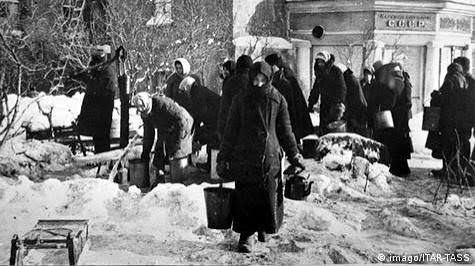
In the winter of 1941, the thermometer in Leningrad dropped to minus 30 degrees Celsius. There was no heat, no electricity, and no running water. The daily bread ration for a worker was 125 grams a slice so thin it was barely worth the name. Yet the city did not surrender.
The siege of Leningrad lasted 872 days, from September 8, 1941, to January 27, 1944. It was not a battle for territory in the traditional sense. Hitler ordered a blockade, a strategy of deliberate starvation designed to erase the city from the map. What followed was one of the most harrowing and heroic chapters of World War II, a story of endurance against impossible odds.
The Trap Closes
On June 22, 1941, Germany launched Operation Barbarossa, a massive invasion of the Soviet Union. Army Group North pushed through the Baltic states with relentless speed, heading for Leningrad, the USSR’s second-largest city and a symbol of the 1917 revolution. By early September, the Germans had reached the outskirts. On September 8, they captured Shlisselburg, a town on Lake Ladoga’s southern shore. With that, the last land route into the city was severed. The siege had begun.
Hitler’s orders were explicit: no surrender, no negotiated settlement. The city was to be starved into submission and then razed. The Finns, allied with Germany, blockaded from the north but did not advance beyond their 1939 border. The Spanish Blue Division added a few thousand troops to the German line. But the main weapon was hunger.
Inside the city, Soviet leadership initially resisted evacuation. Stalin feared a mass exodus would cause panic and undermine morale. As a result, nearly 2.5 million civilians, including hundreds of thousands of children, were trapped.
The Anatomy of Starvation
By November 1941, the food situation had become catastrophic. Warehouses had been bombed early in the siege, and the city’s reserves were dangerously low. The daily bread ration was cut repeatedly. In the worst months November and December 1941 workers received 250 grams of bread per day, while children and non-working adults got just 125 grams. That bread was often made with sawdust and other substitutes, making it more filler than sustenance.
People ate everything: wallpaper paste, leather shoes, furniture glue. They boiled and ate cats, dogs, and crows. Cannibalism was reported, and the NKVD prosecuted those who committed it. The city’s morgues overflowed; bodies lay in the streets, frozen solid, waiting for spring to thaw them into a stinking reminder of the dead.
Disease compounded the starvation. Scurvy, dysentery, and typhus swept through the population. Without electricity, water pumps froze, and people melted snow for drinking water. The winter of 1941-42 was brutally cold, one of the coldest on record.
The Road of Life
The only hope was Lake Ladoga. In the summer, barges carried supplies across the water. But it was the winter ice that became legendary. When the lake froze thick enough, truck convoys began rolling across the ice, a route that came to be known as the “Road of Life.” Despite constant German bombing and the ever-present risk of the ice cracking, the road kept the city barely alive.
Over the course of the siege, the Road of Life carried about 1.5 million tons of supplies and evacuated roughly 1.3 million people, mostly women and children. For the survivors, the road was both a lifeline and a cemetery. Thousands of trucks broke through the ice, their drivers and passengers drowning in the freezing water.
Culture as Resistance
Even in the face of starvation, the city’s cultural institutions fought back. The Leningrad Radio broadcast daily, with poet Olga Berggolts reading her verses to the besieged citizens. Her voice became a symbol of endurance. In August 1942, Dmitri Shostakovich’s Symphony No. 7, subtitled “Leningrad,” was premiered in the city. The orchestra was half-starved; musicians were pulled from the front lines and hospitals. The performance was broadcast live, a defiant statement that the city would not be silenced.
The Hermitage Museum was stripped of its treasures; many were evacuated by train. But the building itself remained, its empty frames a silent testament to what had been lost and what was being defended.
The Breaking of the Blockade
For over a year, the city endured. Then, in January 1943, the Soviet Army launched Operation Iskra, a desperate attempt to break the siege. The offensive was costly, but it succeeded in opening a narrow corridor along the southern shore of Lake Ladoga. For the first time in 16 months, land communication with the rest of the USSR was restored. Food and supplies could now reach the city by rail, though the corridor was still within German artillery range.
The full lifting of the siege came a year later, on January 27, 1944, after Operation January Thunder pushed the German lines back. The 872-day nightmare was over. But the cost was staggering. Estimates of civilian deaths range from 1 to 1.5 million, the vast majority from starvation. Military casualties added another 300,000 to 500,000. The exact numbers remain contested, but the scale is beyond dispute.
A Complex Legacy
The siege of Leningrad is remembered as a heroic epic in Russian national memory. In 1945, the city was named a Hero City. The story is told as one of unbroken endurance, of a people who refused to surrender even when faced with annihilation.
But the full story is more complex. Survivor diaries, like that of Tanya Savicheva, who recorded the deaths of her entire family in a small notebook, reveal a darker side: moral collapse, theft, and even cannibalism. The Soviet leadership, including Stalin, has been criticized for failing to evacuate civilians earlier and for suppressing information about the true scale of suffering.
The German perspective, too, is contested. While some officers saw the siege as a necessary military operation, the starvation policy was part of the broader “Hunger Plan” for the USSR, which aimed at the deliberate extermination of civilians. Many historians now view the siege as a war crime and an act of genocide-by-starvation.
The siege of Leningrad stands as a stark reminder of the cost of war and the resilience of the human spirit. It is a story of suffering that defies easy narratives, but it is also a story of survival against impossible odds.
The siege of Leningrad was not just a military engagement; it was a test of human endurance. For 872 days, a city of millions faced the relentless assault of starvation, cold, and enemy fire. The road to survival was paved with unimaginable sacrifice, and the memory of those who died is etched into the city’s stones. As the years pass, the siege remains a powerful symbol—both of the capacity for human cruelty and the strength of the human will to live.
Summary
- The siege of Leningrad lasted 872 days, from September 8, 1941, to January 27, 1944.
- An estimated 1–1.5 million civilians died, mostly from starvation, cold, and disease.
- The daily bread ration at the worst point was 125 grams for workers and 250 grams for others.
- The ‘Road of Life’ across frozen Lake Ladoga supplied the city and evacuated about 1.3 million people.
- The siege ended with the Soviet offensive Operation January Thunder in 1944.
FAQ
Q: How long did the siege of Leningrad actually last?
A: The siege lasted 872 days, from September 8, 1941, to January 27, 1944. It is often rounded to ‘900 days’ in Russian rhetoric for symbolic impact.
Q: What was the ‘Road of Life’?
A: It was a supply route across frozen Lake Ladoga that operated in winter. It carried food and supplies into the city and evacuated civilians. Despite German bombing, it was the city’s only lifeline.
Q: How many people died during the siege?
A: Civilian deaths are estimated at 1–1.5 million, mostly from starvation. Military casualties add another 300,000–500,000. Total numbers remain contested.
Q: Why didn’t the Soviet leadership evacuate civilians earlier?
A: Stalin initially refused a full evacuation, fearing it would cause panic and undermine morale. This decision has been criticized by post-Soviet historians and human rights groups.
Q: What happened to the city after the siege?
A: Leningrad was named a Hero City in 1945. It remains a central symbol of Soviet and Russian national identity, with the siege commemorated annually on January 27.
Leave a Reply