Tag: World War II

  • The Blitz: How London Endured 267 Days of Nazi Bombs

    The Blitz: How London Endured 267 Days of Nazi Bombs

    On the evening of September 7, 1940, the sky over London filled with the drone of 348 German bombers. They came in waves, targeting the docks and the working-class neighborhoods of the East End. By dawn, 430 people were dead and another 1,600 injured. The raid marked the beginning of a relentless campaign that would last for 267 days, testing the city’s resolve in ways that had never been imagined. This is the story of how London survived not just the bombs, but the fear, the exhaustion, and the uncertainty that came with them.

    A City Under Siege

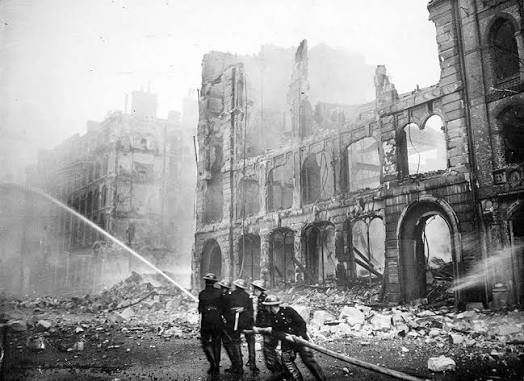
    The Blitz was not a single event but a sustained assault. From September 7, 1940, to May 11, 1941, London was attacked 71 times. In the first 57 nights, the bombs fell without pause. Over 18,000 tons of high explosives were dropped on the capital, and more than one million homes were damaged or destroyed. The casualty figures were staggering: around 20,000 to 25,000 Londoners lost their lives, with many more injured. The city that had once seemed untouchable was now a frontline battlefield.

    The Human Experience

    Life under the Blitz was a study in endurance. Families queued for rations, then spent the night huddled in shelters. The Anderson shelter a corrugated iron structure half-buried in the garden offered some protection but was cold and damp. In 1941, the Morrison shelter, an indoor steel cage, provided a safer alternative for those without gardens. Public shelters, particularly tube stations, became a refuge for up to 177,000 people each night. The stations were not officially sanctioned at first, but the people’s need was undeniable. They turned platforms into makeshift dormitories, with bunks, tea stalls, and a strange sense of community.

    The psychological toll was immense. Mass Observation, a social research organization, documented the strain in diaries. People reported sleepless nights, anxiety, and a numbing fatigue. Yet they also found moments of solidarity. The ‘Blitz spirit’ a term coined during the war captured the resilience and stoicism that became a national symbol. The government and media promoted this image, from Edward R. Murrow’s broadcasts (‘London can take it’) to the Ministry of Information’s film ‘Britain Can Take It.’ But the spirit was real, forged in the shared experience of danger and loss.

    The Unequal Burden

    The bombs did not fall equally. The East End, with its docks and working-class terraces, bore the brunt. The West End, home to the wealthy, was less affected at least initially. This inequality bred resentment. Fears of social unrest grew, and the government responded with rest centers and improved shelters in poorer areas. When Buckingham Palace was hit on September 13, 1940, Queen Elizabeth famously declared, ‘Now we can look the East End in the eye.’ The bombing of the palace, intended to demoralize, was turned into a symbol of shared sacrifice.

    The Battle Above

    The Blitz was not a one-sided slaughter. The RAF’s victory in the Battle of Britain had already forced Hitler to abandon his invasion plans, but the bombing continued. The Luftwaffe used radio navigation beams, known as Knickebein, to guide their bombers. British scientists developed countermeasures, jamming the signals and setting decoy fires. Anti-aircraft guns, searchlights, and night-fighters improved over time. The raid on September 15, 1940, later known as Battle of Britain Day, saw the RAF repel a massive daylight attack, convincing Hitler that air superiority was unattainable.

    The Turning Point

    The Blitz ended not with a negotiated peace but with a strategic shift. On May 10, 1941, the Luftwaffe launched its final major raid on London. Over 1,400 people were killed and 3,000 injured in what became known as ‘The Longest Night.’ The next month, Hitler turned his forces east for Operation Barbarossa, the invasion of the Soviet Union. The Blitz was over, but its legacy endured. It shaped British identity, influenced the Allied bombing of Germany, and left a city scarred but unbroken.

    The Legacy

    London’s survival was not inevitable. It was the result of preparation, improvisation, and sheer human endurance. The Air Raid Precautions, established years before the war, provided a framework for civil defense. The evacuation of 1.5 million children in September 1939, though many returned during the Phoney War, was a massive logistical feat. The Blitz tested the city’s resilience, and London rose to the challenge. Today, the scars remain, but so does the memory of how ordinary people faced extraordinary circumstances and survived.

    The Blitz was a crucible that forged a collective spirit. It showed that a city, even when bombed night after night, could hold. The bombs destroyed buildings, but they did not break the will of the people. That legacy, born in the darkness of the shelters, remains a testament to human resilience.

    Summary

    • The Blitz lasted 267 days, with 57 consecutive nights of bombing at the start.
    • London was attacked 71 times, with over 18,000 tons of explosives dropped.
    • Around 20,000–25,000 Londoners died, and over a million homes were damaged.
    • Shelters, from Andersons to tube stations, became a way of life.
    • The Blitz ended in May 1941 as Hitler shifted focus to the Soviet Union.

    FAQ

    Q: What was the Blitz?
    A: The Blitz was Nazi Germany’s sustained bombing campaign against the United Kingdom from September 7, 1940, to May 11, 1941. It targeted London and other cities to break morale and disrupt war production.

    Q: How many people died during the Blitz?
    A: Approximately 43,000 civilians were killed across the UK, with London accounting for roughly half. Over 51,000 were seriously injured.

    Q: What were Anderson shelters?
    A: Anderson shelters were corrugated iron structures half-buried in gardens, issued to about 2.25 million households. They offered protection from bomb blasts and shrapnel.

    Q: Why did the Blitz end?
    A: The Blitz ended as Hitler shifted military resources to Operation Barbarossa, the invasion of the Soviet Union, in May 1941. The Luftwaffe had also failed to achieve air superiority.

    Q: Did the Blitz affect the course of the war?
    A: Yes, it influenced the Allied strategic bombing of Germany and solidified British resolve. It also demonstrated that civilian populations could endure prolonged aerial attack, shaping future military strategies.

  • The China-Burma-India Theater: The War Churchill Called ‘The Forgotten Front’

    The China-Burma-India Theater: The War Churchill Called ‘The Forgotten Front’

    In the spring of 1942, as Japanese forces swept through Burma, a small band of American pilots the Flying Tigers took to the skies over the jungles of Southeast Asia. Their P-40 fighters, painted with shark mouths, were outnumbered and outgunned, yet they inflicted outsized damage on the Japanese Air Force. It was the opening act of a theater that would stretch across three countries, involve millions of soldiers, and become the most complex and neglected campaign of World War II.

    Winston Churchill called it ‘the Forgotten Front,’ a term that stuck. The China-Burma-India (CBI) Theater spanned from 1942 to 1945, encompassing the jungles of Burma, the mountains of Assam, and the vast plains of China. It was the only ground war where American, British, Chinese, and Indian forces fought side by side against a common enemy. Yet it received the lowest priority for resources, and its battles often fought in disease-ridden jungles or on remote Himalayan ridges were overshadowed by the more publicized campaigns in Europe and the Pacific.

    This is the story of that theater: of the Hump airlift that defied the Himalayas, the road that was built at unimaginable cost, and the commanders whose rivalries shaped the fate of nations. It is a story of strategic necessity, human endurance, and the bitter price of war.

    The Strategic Stakes: Why China Mattered

    The CBI Theater existed because of a simple calculation: if China fell, over a million Japanese troops would be freed to fight elsewhere. The United States, committed to a Germany-first strategy, still recognized that keeping China in the war was vital. China was bleeding Japan’s army, tying down forces that would otherwise threaten Australia, India, or the Pacific islands.

    The only land link to China was the Burma Road, a twisting mountain highway that had carried supplies since 1937. When the Japanese seized Burma in 1942, they cut that road, isolating China. The Allies faced a dire choice: find another way to supply China, or watch it collapse. The answer was an air bridge over the Himalayas—a route so treacherous that pilots called it the ‘Hump.’

    Between 1942 and 1945, the Air Transport Command flew over 650,000 tons of supplies over the Hump. The cost was staggering: over 600 aircraft and more than 1,000 aircrew lost to storms, icing, and Japanese fighters. The weather was the real enemy; sudden squalls could tear a plane apart, and the mountains offered no safe landing. Yet the airlift kept China in the war, and its success laid the groundwork for the eventual reopening of a land route.

    The Commanders and Their Clashes

    The CBI was a theater of strong personalities and bitter rivalries. At the center was General Joseph Stilwell, a blunt, acerbic soldier who served as U.S. Commander of CBI, Chief of Staff to Chiang Kai-shek, and Deputy Supreme Allied Commander of Southeast Asia. Stilwell believed the war would be won on the ground, and he pushed for a massive offensive to retake Burma. He despised Chiang’s caution, seeing it as a betrayal of the Allied cause.

    Opposing Stilwell was General Claire Chennault, commander of the Flying Tigers and later the 14th Air Force. Chennault argued that air power alone could defeat Japan in China—bombing Japanese shipping and bases would strangle their supply lines without the need for a costly ground war. He had the ear of Chiang, who preferred to conserve his army for the post-war struggle against the Communists.

    The conflict between Stilwell and Chennault was more than a personality clash; it was a strategic debate that divided the Allied command. Stilwell wanted to build a road through northern Burma to reconnect with the Burma Road. Chennault wanted to use those resources to build up air bases in China. The argument consumed months, even as the Japanese advanced.

    Chiang Kai-shek, for his part, played one against the other. He was less interested in defeating Japan than in preserving his forces. His primary concern was the Communists, who were growing stronger in the north. He saw the Americans as tools to be manipulated, not allies to be trusted. This distrust would have profound consequences.

    The Hump and the Ledo Road: Engineering Against the Odds

    While the Hump airlift was the lifeline, the ground route was the long-term goal. The Ledo Road, later renamed the Stilwell Road, was a 1,079-mile engineering marvel. It began in Ledo, Assam, and snaked through the jungles of northern Burma, over mountain passes, and across rivers, finally linking with the old Burma Road at Kunming, China.

    The road was built by U.S. Army engineers and thousands of local laborers, working in grueling conditions. Malaria, dysentery, and Japanese ambushes took a constant toll. The road was completed in January 1945, at a cost of enormous effort and lives. Yet by the time it opened, the Hump airlift was delivering more tonnage per month than the road ever would. The road was a strategic achievement, but also a symbol of how the war had changed—air power had eclipsed ground logistics.

    The Battles That Turned the Tide

    The CBI saw some of the most brutal fighting of the war. In Burma, the British Fourteenth Army, commanded by General William Slim, fought a campaign that would become legendary. At its peak, Slim’s army numbered about a million troops, mostly Indian soldiers, who bore the brunt of the fighting.

    The turning point came in 1944 at the Battle of Imphal and Kohima. Japanese forces invaded India, hoping to capture the supply bases and break British morale. The battle was fought in the hills of Assam, where the Japanese surrounded British and Indian forces. The siege lasted months, with supplies dropped by air. The Japanese, cut off and starving, suffered catastrophic losses. Their defeat at Imphal and Kohima is often called ‘the Stalingrad of the East.’ It broke the back of the Japanese Burma Area Army, which lost over 150,000 dead, many from starvation and disease.

    In China, the Japanese launched Operation Ichi-Go in 1944, a massive offensive to capture Allied airfields and link their forces from north to south. The Chinese armies, weakened by years of war and internal strife, retreated. The operation was a strategic disaster for the Allies, but it came too late to change the course of the war. Japan was already losing in the Pacific.

    The Forgotten Soldiers and Their Legacy

    The soldiers of the CBI served in obscurity. The British Fourteenth Army was called the ‘Forgotten Army’ by its own men, fighting in a theater that the British public barely knew existed. American soldiers, whether flying the Hump or building the Ledo Road, labored in conditions of extreme hardship. The Chinese soldiers, millions strong, fought with inadequate equipment and leadership, yet held on against the Japanese.

    The theater was also a place of shifting alliances. General Aung San, a Burmese nationalist, initially collaborated with Japan, believing they would grant Burma independence. By 1945, he switched sides to the Allies, a move that would shape the post-war independence movement. The war in Burma was not just a colonial struggle; it was a crucible for nationalism.

    The End of the Theater

    The CBI Theater was formally dissolved after Japan surrendered in August 1945. The war had ended, but the legacy was complex. The United States had achieved its goal of keeping China in the war, but at a cost. The relationship between Stilwell and Chiang had soured, and the failure to integrate American aid with Chinese military strategy left a bitter taste. The British reclaimed Burma, but the war had eroded their empire. The Chinese Communists, strengthened by the war, would soon topple Chiang and take control of China.

    The Forgotten Front was not just a backwater; it was a place where the future of Asia was being decided. The sacrifices of the soldiers, pilots, and laborers were not in vain, but they were often overlooked. As Churchill said, it was indeed forgotten—but the echoes of those battles still resonate in the politics and borders of modern Asia.

    The China-Burma-India Theater remains a testament to the complexity of war and the endurance of the human spirit. It was a theater of contradictions: enormous sacrifices for uncertain goals, strategic debates that delayed action, and alliances that were as fragile as the terrain. The Hump airlift and the Ledo Road stand as monuments to what was achieved, while the battles of Imphal and Kohima remind us of the cost. The soldiers of the CBI, whether American, British, Chinese, or Indian, fought and died in a place that history almost forgot. Their story deserves to be remembered, not just as a footnote, but as a vital chapter in the global struggle against fascism.

    Summary

    • The CBI Theater was the largest land theater of the Pacific War, yet received the lowest priority for resources.
    • The Hump airlift flew over 650,000 tons of supplies to China, at the cost of 600+ aircraft and 1,000+ aircrew.
    • The Ledo Road, completed in 1945, was a 1,079-mile engineering feat that was soon outpaced by air supply.
    • The Battle of Imphal and Kohima in 1944 was the turning point, breaking the Japanese invasion of India.
    • Strategic rivalries, especially between Stilwell and Chennault, shaped the course of the war in this theater.

    FAQ

    Q: Why is the CBI Theater called the ‘Forgotten Front’?
    A: Winston Churchill coined the term because the theater received little attention and few resources compared to Europe and the Pacific, despite its strategic importance.

    Q: What was the Hump airlift?
    A: It was the air route over the eastern Himalayas used to supply China after the Burma Road was cut. It delivered over 650,000 tons of supplies, with heavy losses in aircraft and crews.

    Q: Who were the key commanders in the CBI?
    A: General Joseph Stilwell (U.S.), General Claire Chennault (Flying Tigers), Generalissimo Chiang Kai-shek (China), Lord Louis Mountbatten (SEAC), and General William Slim (British Fourteenth Army).

    Q: What was the significance of the Ledo Road?
    A: It was a 1,079-mile road built to reconnect land supply routes to China. Completed in 1945, it was a major engineering achievement, though its practical impact was limited by the success of the airlift.

    Q: How many casualties were there in the CBI?
    A: Allied casualties exceeded 200,000, including those from disease. Japanese losses in Burma alone were over 150,000 dead, many from starvation and disease.

  • The Battle of the Coral Sea: When the World’s Navies Fought Without Seeing Each Other

    The Battle of the Coral Sea: When the World’s Navies Fought Without Seeing Each Other

    On May 8, 1942, in the waters northeast of Australia, two naval forces fought a battle unlike any before. They never saw each other. No ship fired a shot at an enemy vessel. Instead, aircraft from four carriers two American, two Japanese located and struck their targets from over a hundred miles away. By the end of the day, one American carrier lay sinking, and a Japanese carrier was crippled. The Battle of the Coral Sea was the world’s first carrier-versus-carrier battle, and it changed naval warfare forever.

    The fight was not a clear-cut victory for either side. The Americans lost the fleet carrier USS Lexington, while the Japanese lost the light carrier Shōhō and saw Shōkaku heavily damaged. Yet strategically, the outcome favored the United States: Japan’s invasion of Port Moresby was called off, marking the first time a Japanese amphibious operation was turned back. More importantly, the battle blunted Japanese airpower at a critical moment, setting the stage for the decisive Battle of Midway one month later.

    The Strategic Chessboard

    In the spring of 1942, Japan’s expansion across the Pacific seemed unstoppable. After Pearl Harbor, they had swept through the Philippines, Malaya, and the Dutch East Indies. Their next target was Port Moresby on the southern coast of Papua New Guinea, a stepping stone for threatening Australia. Operation MO, as it was called, aimed to seize Port Moresby and establish a seaplane base at Tulagi in the Solomon Islands.

    But the United States had a secret weapon: codebreakers. They had cracked parts of the Japanese naval code, JN-25, and learned of the operation. This allowed Admiral Chester Nimitz to send carriers to intercept, even though his forces were still recovering from the devastating raid on Pearl Harbor.

    The Forces Converge

    The American side was built around two fleet carriers: USS Yorktown and USS Lexington. Rear Admiral Frank Jack Fletcher commanded the combined Task Force 17. The Japanese side, under Vice Admiral Takeo Takagi, had the fleet carriers Shōkaku and Zuikaku, plus the light carrier Shōhō, which was assigned to support the invasion force.

    Both sides had strengths and weaknesses. The Japanese pilots were battle-hardened from victories across the Pacific. The Americans were less experienced but had the advantage of better intelligence and a more concentrated force. The Japanese plan, by contrast, was complex and dispersed, splitting their carriers into separate groups with different missions.

    The First Strikes

    The battle began on May 3 when Japanese forces occupied Tulagi. The next day, American aircraft from Yorktown launched strikes on the invasion force, sinking a few small ships but failing to find the main carriers. For the next two days, both sides searched for each other, their scouts crisscrossing the Coral Sea.

    On May 7, the search paid off in a chaotic series of strikes. American aircraft spotted what they thought was the main Japanese carrier force—it turned out to be the light carrier Shōhō. They attacked with devastating effect, sinking her in minutes. Lieutenant Commander Robert Dixon radioed the famous message: “Scratch one flat-top!” It was the first Japanese carrier sunk in the war.

    Meanwhile, Japanese aircraft also found targets—but they were the wrong ones. They bombed and sank the destroyer USS Sims and the oiler USS Neosho, mistaking the latter for a carrier. It was a costly error for both sides: the Americans lost valuable ships, and the Japanese wasted bombs on a tanker.

    The Main Event

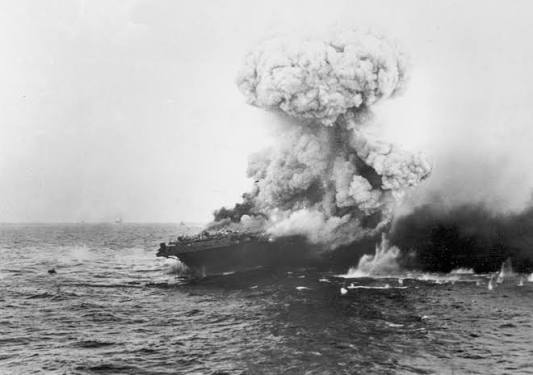
    On May 8, both carrier forces finally located each other almost simultaneously. Each launched full strikes. The American aircraft found Shōkaku and hit her with three bombs, putting her flight deck out of action. But Zuikaku, hidden in a rain squall, escaped undamaged. The Japanese strike found both American carriers. Yorktown took a bomb hit but remained operational. Lexington, however, was struck by two torpedoes and two bombs. At first, she seemed to be in stable condition, and her crew began damage control.

    Then, hours later, a massive explosion rocked Lexington. Fuel vapors had ignited, setting off a chain of internal blasts. The fires quickly became uncontrollable. By evening, the order was given to abandon ship. American destroyers scuttled her with torpedoes, sending the great carrier to the bottom.

    Aftermath and Consequences

    The battle ended with both sides withdrawing. The Japanese had lost Shōhō, and Shōkaku was so damaged she had to return to Japan for repairs. Zuikaku still had her flight deck, but she had lost so many aircraft and pilots that she was effectively out of action. The invasion of Port Moresby was postponed and then canceled.

    For the United States, the loss of Lexington was a bitter blow. But the battle had achieved its strategic goal: the Japanese advance on Australia was halted. More importantly, the battle severely weakened Japanese carrier airpower. The experienced pilots lost at Coral Sea were irreplaceable—Japan had no training program to quickly produce new ones. This proved decisive at Midway, where the Japanese would face the Americans with fewer veteran airmen and only three operational fleet carriers.

    The Battle of the Coral Sea also validated the new doctrine of carrier-centric warfare. It showed that ships could fight each other without ever coming into visual range, and that airpower was now the dominant factor at sea. For the first time in naval history, the surface fleet had taken a back seat to the aircraft carrier.

    The lessons learned were costly. The loss of Lexington highlighted the dangers of fuel vapor and the need for better damage control. The confusion of the searches showed the importance of effective scouting and coordination. These lessons would be applied just weeks later at Midway, where the United States would turn the tide of the Pacific War.

    The Battle of the Coral Sea was a turning point, even though neither side could claim a clear tactical victory. It stopped Japan’s expansion and set the stage for Midway. It also marked the beginning of a new era in naval warfare, where the carrier reigned supreme and the battleship became obsolete. In the annals of history, it stands as the first battle where the enemy was only a distant speck on a radar screen, a harbinger of how wars would be fought in the future.

    Summary

    • The Battle of the Coral Sea (May 4–8, 1942) was the first naval battle where opposing ships never sighted each other.
    • The U.S. lost the carrier Lexington, but stopped the Japanese invasion of Port Moresby, achieving a strategic victory.
    • The Japanese lost the light carrier Shōhō and suffered heavy aircraft and pilot losses, weakening their carrier force for the Battle of Midway.
    • The battle demonstrated the dominance of carrier aviation and the importance of intelligence and scouting.

    FAQ

    Q: Why is the Battle of the Coral Sea considered a turning point?
    A: It was the first time Japan’s expansion was halted, and the first carrier-versus-carrier battle, showing that airpower would decide future naval engagements.

    Q: What was the strategic significance of the battle?
    A: The U.S. prevented Japan from capturing Port Moresby, which would have threatened Australia, and the attrition of Japanese aircrews contributed to their defeat at Midway.

    Q: How did the loss of Lexington affect the U.S. Navy?
    A: It was a heavy blow, but it led to improvements in damage control and validated the carrier as the primary offensive weapon.

    Q: Did the Japanese achieve their objective?
    A: No, they failed to take Port Moresby and had to call off the invasion, marking their first strategic setback in the Pacific.

    Q: What happened to the Japanese carriers after the battle?
    A: Shōkaku was damaged and out of action for months, while Zuikaku lost so many aircraft and pilots that she could not participate in the Battle of Midway.

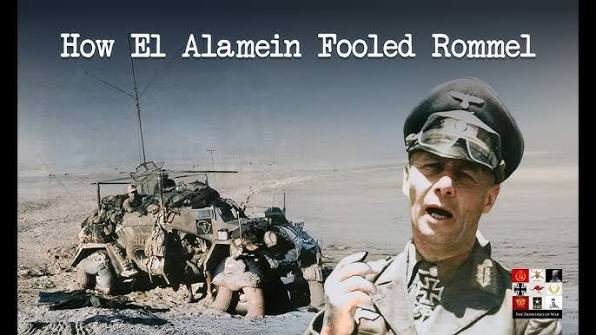
  • The Desert Fox Versus the Master Planner: How El Alamein Broke Rommel

    The Desert Fox Versus the Master Planner: How El Alamein Broke Rommel

    In the late summer of 1942, the British Eighth Army was a force in retreat. Its commander had been sacked, its morale was in tatters, and its soldiers were looking over their shoulders at the advancing German Afrika Korps, led by the man the British press had dubbed the Desert Fox. Erwin Rommel had just captured Tobruk, taken thousands of prisoners, and driven the British back to a dusty railway halt called El Alamein, a mere 60 miles from Alexandria. If he broke through, Egypt, the Suez Canal, and the oil of the Middle East would lie open before him.

    Yet within three months, the Eighth Army had a new commander, a new spirit, and a plan. On October 23, 1942, at 9:40 p.m., a thousand British guns opened fire on the Axis lines. The bombardment was so intense that it could be heard in Alexandria. When it stopped, the infantry moved forward, and the greatest set-piece battle of the desert war began. By November 4, Rommel’s army was in full retreat, never to stop until it surrendered in Tunisia seven months later.

    This is the story of how a meticulous, arrogant, and brilliant British general named Bernard Montgomery outthought and outfought the most famous German commander of the war—and why the victory at El Alamein marked the true turning point of World War II.

    The Road to El Alamein

    The desert war had been a seesaw of sweeping advances and humiliating retreats. In late 1940, the British launched Operation Compass and drove the Italian army out of Egypt, capturing 130,000 prisoners in two months. But Hitler, alarmed at the collapse of his ally, sent a small German force under a relatively unknown general named Erwin Rommel to stiffen the Italian lines.

    Rommel was a master of mobile warfare. He attacked within days of arriving in February 1941, launching a series of surprise offensives that pushed the British back across Libya. By June 1942, he had captured the fortress of Tobruk—a prize that had held out against him for eight months the previous year—and swept into Egypt. The British Eighth Army, commanded by General Claude Auchinleck, managed to halt Rommel at the First Battle of El Alamein in July 1942, but the situation remained precarious. Churchill, desperate for a victory, replaced Auchinleck with Bernard Montgomery on August 13, 1942.

    Montgomery was a stark contrast to Rommel. Where Rommel was improvisational, Montgomery was a meticulous planner. He was also a master of morale. He addressed his troops directly, spoke of victory as an inevitability, and immediately began to rebuild the Eighth Army’s confidence. He also made a critical decision: he would not retreat. He had the Qattara Depression to his south—an impassable salt marsh that protected his flank—and he intended to use this narrow front to his advantage.

    Rommel’s Last Gamble: Alam el Halfa

    Rommel knew that time was running out. His supply lines were stretched thin, and the British were receiving fresh troops and tanks from the United States. In late August, he launched his last offensive, the Battle of Alam el Halfa. He planned to swing south around the British flank, but Montgomery, forewarned by intelligence, had laid a trap. The British tanks and anti-tank guns held their ground, and Rommel’s attack was repulsed. It was a defensive victory for Montgomery—a sign that the Eighth Army could now stand up to the Desert Fox.

    But Montgomery was not content with a mere defensive success. He began planning a massive offensive of his own. He had one overwhelming advantage: supplies. The British had access to thousands of tanks, guns, and shells from the factories of Britain and America. Rommel, by contrast, was running on fumes. His supply ships were being sunk in the Mediterranean by the Royal Navy and the air force, and he was short of fuel and ammunition.

    The Second Battle of El Alamein

    On the night of October 23, 1942, Montgomery launched Operation Lightfoot. The plan was a classic set-piece battle: a massive artillery bombardment, followed by a carefully coordinated infantry and tank advance through the Axis minefields. The goal was to break through the northern sector of the line, while a diversionary attack in the south pinned down the Italian divisions.

    The battle was brutal and attritional. The minefields were thicker than expected, and the infantry made slow progress. For days, the two armies ground against each other in a deadly stalemate. Rommel, who was on sick leave in Germany at the start of the battle, rushed back to his headquarters. He threw his last reserves into the fight, including the 21st Panzer Division, but the British superiority in numbers and firepower was overwhelming.

    On November 2, Montgomery launched Operation Supercharge, a second push designed to break through the Axis line once and for all. The British tanks poured through a gap in the minefields and into the open desert beyond. Rommel, seeing that his army was about to be encircled, began a retreat. But Hitler ordered him to stand fast, and Rommel was forced to obey—at least for a time. The inevitable could not be postponed. On November 4, the Axis line cracked. The Italian and German units were separated, and the retreat turned into a rout. The Eighth Army pursued Rommel’s forces across Libya, capturing thousands of prisoners and vast quantities of equipment.

    The casualties at El Alamein were heavy on both sides. The Axis lost approximately 30,000 men killed, wounded, or captured—the vast majority of them prisoners. The Eighth Army suffered around 13,500 casualties. But the strategic result was decisive: Rommel’s army was broken, and the Axis never regained the initiative in North Africa.

    The Aftermath: Operation Torch and the End in Tunisia

    Just days after El Alamein, the Allies launched Operation Torch, the Anglo-American landings in Morocco and Algeria on November 8, 1942. This opened a second front in North Africa, trapping Rommel’s forces between the Eighth Army advancing from the east and the new Allied forces attacking from the west. The Axis forces retreated into Tunisia, where they fought a desperate delaying action.

    Rommel’s last offensive was at the Kasserine Pass in February 1943, where he inflicted a sharp defeat on the inexperienced American forces. But it was a tactical success that could not change the strategic situation. In March, Rommel left Africa for good, officially for health reasons—though he was also disillusioned with Hitler’s refusal to allow a strategic withdrawal. On May 13, 1943, the remaining Axis forces in North Africa surrendered. Over 250,000 German and Italian soldiers were taken prisoner.

    The Rommel Myth and the Reality

    Rommel’s reputation as a brilliant and chivalrous commander was carefully cultivated by both sides. The British needed a scapegoat for their defeats, and Rommel’s skill made him a convenient villain. After the war, his image was further polished by his involvement in the July 20, 1944 plot to assassinate Hitler, which made him a hero of the German resistance in the eyes of many.

    The reality was more complex. Rommel was certainly a tactical genius—his ability to conduct mobile warfare in the desert was unmatched. But he was also strategically reckless, often overextending his supply lines and ignoring logistics. He was not the “clean” warrior of legend; he accepted Nazi decorations and turned a blind eye to the persecution of Jews in his theater. His chivalry extended only to those he considered worthy of it.

    Montgomery, on the other hand, was a cautious, methodical planner who believed in overwhelming force. He was not flashy, but he was effective. He restored the Eighth Army’s confidence, outthought Rommel at Alam el Halfa, and then crushed him at El Alamein. He may have lacked Rommel’s flair, but he had something more important: a strategy that worked.

    The Significance of El Alamein

    El Alamein was the first major, permanent land victory by the Allies over the Germans in World War II. It came before Stalingrad, which ended in February 1943, and it proved that the Wehrmacht could be beaten. It secured the Suez Canal, protected the oil of the Middle East, and opened the way for the invasion of Italy. It also gave the British people a much-needed morale boost during the darkest days of the war.

    Churchill famously said: “Before Alamein we never had a victory. After Alamein we never had a defeat.” It was an exaggeration, but it captured the moment’s significance. El Alamein was the turning point not just of the desert war, but of the entire conflict. The Desert Fox had been outfoxed, and the tide had turned.

    The desert war between Rommel and Montgomery was more than a clash of generals. It was a contest between improvisation and preparation, between a commander who relied on dash and one who relied on logistics. At El Alamein, Montgomery proved that in modern war, the side with better supplies and a disciplined plan will usually win. Rommel’s retreat from Egypt marked the beginning of the end for the Axis in North Africa, and the lessons of that battle—about the importance of supply lines, intelligence, and morale—resonate to this day.

    Summary

    • The Second Battle of El Alamein (October 23–November 4, 1942) was the first major Allied land victory over the Germans in WWII, marking a turning point in the war.
    • Montgomery’s defensive victory at Alam el Halfa (August 1942) blunted Rommel’s last offensive and set the stage for the counterattack.
    • El Alamein was won through overwhelming material superiority—the British had more tanks, guns, and supplies, while Rommel’s forces were starved of fuel and ammunition.
    • The Allied victory at El Alamein, combined with Operation Torch in November 1942, trapped the Axis forces in Tunisia and led to their surrender in May 1943.
    • Rommel’s reputation as a “clean” and chivalrous general is largely a myth; he was a tactical genius but strategically reckless and complicit in the Nazi system.

    FAQ

    Q: What was the significance of the Battle of El Alamein?
    A: It was the first major, permanent land victory by the Allies over the Germans in World War II. It secured the Suez Canal and the Middle East oil fields, and it marked the turning point in the North African campaign, leading to the Axis surrender in Tunisia in May 1943.

    Q: How did Montgomery differ from Rommel as a commander?
    A: Montgomery was a meticulous planner who emphasized preparation, logistics, and overwhelming force. Rommel was an improviser who excelled at mobile warfare but often overextended his supply lines. Montgomery’s caution contrasted with Rommel’s boldness, and at El Alamein, Montgomery’s strategy proved decisive.

    Q: What was the “Rommel myth”?
    A: The “Rommel myth” was the idea that Rommel was a brilliant, chivalrous general who fought a “clean” war without Nazi atrocities. This was promoted by Allied propaganda and by Rommel himself, but it obscures his strategic recklessness and his complicity in the Nazi system.

    Q: How did the Qattara Depression affect the battle?
    A: The Qattara Depression, an impassable salt marsh, protected the British southern flank at El Alamein. This meant that Rommel could not outflank the British by sweeping around the desert, so he was forced into a frontal assault against a well-prepared defensive line, which played into Montgomery’s hands.

    Q: What role did Operation Torch play in the North African campaign?
    A: Operation Torch (November 8, 1942) was the Anglo-American invasion of Morocco and Algeria. It created a second front in North Africa, trapping Rommel’s forces between the Eighth Army advancing from the east and the new Allied forces attacking from the west, leading to the Axis surrender in Tunisia.

  • The Briefcase That Almost Killed Hitler: The July 20th Plot

    The Briefcase That Almost Killed Hitler: The July 20th Plot

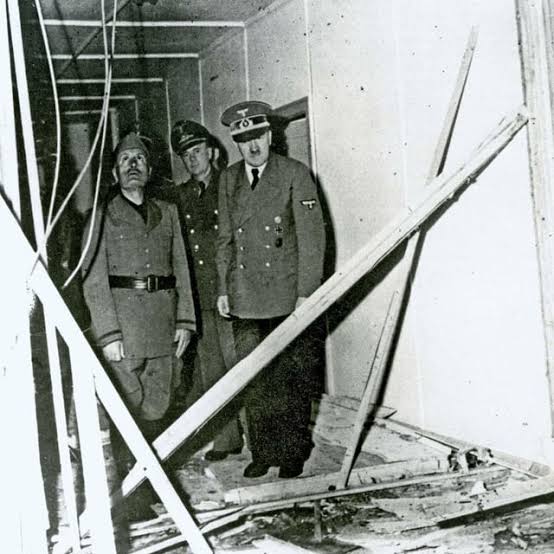
    At 12:42 PM on 20 July 1944, a bomb ripped through a wooden briefing hut at Hitler’s East Prussian headquarters, the Wolf’s Lair. Four men were killed instantly, but the intended target Adolf Hitler stumbled out alive, his trousers torn, his eardrums burst, and his arm bruised. The explosion was the culmination of years of plotting, a desperate, last-ditch attempt by a group of German officers to end the Nazi regime. This is the story of that conspiracy, the men behind it, and why it failed.

    The Man with the Bomb

    Colonel Claus Schenk Graf von Stauffenberg was not an obvious revolutionary. A decorated officer, a count, and a man who had once admired Hitler’s early successes, he had become a leading figure in the military resistance by 1944. He had lost his right hand, two fingers on his left, and an eye while serving in North Africa injuries that would complicate his mission but not deter it.

    Stauffenberg was Chief of Staff to the Replacement Army, a post that gave him direct access to Hitler’s military briefings. He carried two 1-kilogram blocks of British-made plastic explosive in his briefcase, armed with a chemical time fuse. Only one was primed his injuries made it difficult to handle both. That single bomb, placed in a briefcase, would be the instrument of the most serious attempt on Hitler’s life.

    The Plan: Operation Valkyrie

    The assassination was only the first step. The conspirators had adapted a contingency plan originally designed to suppress internal unrest Operation Valkyrie into a mechanism for a military coup. The plan called for the Replacement Army to seize control of Berlin, arrest Nazi leaders, and take over communications, all under the guise of responding to an SS coup attempt.

    Key figures included General Friedrich Olbricht, who was instrumental in operational planning; General Ludwig Beck, a former Chief of the General Staff who was to become head of state; and Major-General Henning von Tresckow, the spiritual leader of the resistance, who had tried to kill Hitler the year before by placing a bomb on his plane it failed to detonate.

    The Failure: A Table Leg and a Kicked Briefcase

    On the day of the attempt, the briefing was moved from a concrete bunker to a wooden hut because of the heat. The wood should have made the blast more effective. Stauffenberg placed the briefcase under the conference table, close to Hitler. Then, with an excuse, he left the room to make a phone call.

    But Colonel Heinz Brandt, an officer attending the briefing, found the briefcase in his way. He kicked it behind the heavy oak table leg. When the bomb exploded at 12:42 PM, that leg deflected the blast away from Hitler. The Führer survived with minor injuries: a bruised arm, burst eardrums, singed hair, and torn trousers. Brandt was not so lucky; he was killed, along with three others.

    Stauffenberg, hearing the explosion from outside, was convinced Hitler was dead. He flew to Berlin to trigger Operation Valkyrie. But the coup failed within hours. Indecision among the conspirators, communication failures, and the news that Hitler was alive unraveled the plan. By nightfall, Stauffenberg, Olbricht, and others were executed by firing squad at the Bendlerblock, the War Ministry in Berlin.

    The Brutal Aftermath

    Hitler’s revenge was swift and merciless. Approximately 200 people were executed, though some estimates suggest up to 5,000 were arrested. The People’s Court under Roland Freisler conducted show trials, with victims hanged from meat hooks, filmed for Hitler’s viewing. Among those killed were Field Marshal Erwin Rommel, who was forced to commit suicide; General Hans Oster; Admiral Wilhelm Canaris; and the theologian Dietrich Bonhoeffer, executed in a concentration camp.

    The conspirators were not democrats in the modern sense. Most were conservative nationalists who wanted to end the war and preserve Germany’s honor, hoping to make peace with the Western Allies while continuing against the Soviets. Some, like Tresckow and Bonhoeffer, were driven by Christian ethics. Tresckow had said: “The assassination must be attempted, whatever the cost. Even if it fails, we must do something in Berlin.”

    The Long Road to Resistance

    Resistance to Hitler had existed since the mid-1930s but was fragmented. The 1938 September Conspiracy, led by General Beck and Admiral Canaris, planned a coup if Hitler invaded Czechoslovakia, but it was abandoned after the Munich Agreement. The early military victories made a coup seem treasonous. The turning point came with the Eastern Front, the Stalingrad defeat, and the growing awareness of war crimes the Einsatzgruppen massacres and the Holocaust.

    Stauffenberg himself had been sympathetic to some Nazi goals early on but was radicalized by the atrocities in the East. The July 20 attempt was the culmination of a long-running conspiracy that included the Kreisau Circle and the Abwehr resistance, with multiple attempts planned since 1938. The briefcase bomb was the closest they ever came.

    The July 20th plot failed, but it remains a testament to the courage of a few who were willing to sacrifice everything to stop a monster. In the words of Tresckow, the attempt had to be made, even if it failed. The conspirators’ names are remembered not for their success, but for their moral stand in the face of tyranny.

    Summary

    • The assassination attempt on 20 July 1944 at the Wolf’s Lair involved a 1-kilogram plastic explosive in a briefcase, placed by Colonel Claus von Stauffenberg.
    • The bomb killed four men but spared Hitler, who survived with minor injuries because the briefcase was kicked behind a heavy table leg.
    • The coup, Operation Valkyrie, failed within hours due to indecision and the news that Hitler was alive.
    • The conspirators included military officers and civilians, many of whom were conservative nationalists or driven by religious ethics.
    • Hitler’s retaliation was brutal: about 200 executions, with some victims hanged from meat hooks, and thousands arrested.

    FAQ

    Q: Why did Stauffenberg only arm one bomb?
    A: Stauffenberg had lost his right hand and two fingers on his left hand in North Africa, making it difficult to handle two bombs. He armed only one due to time constraints and his injuries.

    Q: What was Operation Valkyrie?
    A: Originally a contingency plan to suppress internal unrest, it was adapted by the conspirators to seize control of Berlin after Hitler’s assassination, using the Replacement Army to arrest Nazi leaders and take over communications.

    Q: Who were the key leaders of the conspiracy?
    A: Key figures included Stauffenberg, General Friedrich Olbricht, General Ludwig Beck (designated head of state), General Erich Hoepner, and Major-General Henning von Tresckow.

    Q: How many people were executed after the plot?
    A: Approximately 200 people were executed, though some estimates suggest up to 5,000 were arrested. Notable victims include Field Marshal Erwin Rommel (forced suicide) and Dietrich Bonhoeffer.

    Q: Were the conspirators democrats?
    A: No, most were conservative nationalists who wanted to end the war and preserve Germany’s honor, hoping to negotiate peace with the Western Allies while continuing against the Soviets.

  • The Red Orchestra: The Spy Network That Danced in the Dark Heart of Nazi Germany

    The Red Orchestra: The Spy Network That Danced in the Dark Heart of Nazi Germany

    The Red Orchestra - JIFF

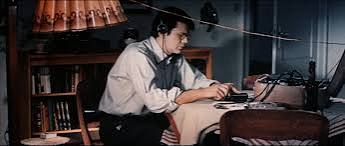
    In the summer of 1941, as German troops massed on the Soviet border, a small group of Berliners began transmitting secrets from the capital of the Reich. They were not professional spies in the usual sense a Luftwaffe officer, an economist, a film publicist, an American woman but they formed the nucleus of what the Gestapo would later call the Rote Kapelle, the Red Orchestra. The name came from the Gestapo’s own slang: ‘Kapelle’ meant a radio operator, whose keying sounded like music, and ‘Rot’ meant red, for communism. The orchestra played a deadly tune, and when the Nazis finally found the source, the music stopped in a prison courtyard, but the echo of its notes would reach across the Cold War and into the present day.

    This is the story of two intertwined networks one in Berlin, one in Western Europe that fed intelligence to Moscow from the heart of the Nazi war machine. It is a story of courage, betrayal, and a warning that was tragically ignored. It is also a story that challenges easy categories: these were not heroes in the usual sense, nor traitors, but people caught between ideologies and loyalties, who made choices that cost many of them their lives.

    The Birth of the Orchestra

    The Red Orchestra did not emerge from a vacuum. It grew out of the wreckage of the Great Purge, which had decimated Soviet intelligence in the late 1930s. Desperate for reliable agents in Germany, the GRU Soviet military intelligence, not the NKVD turned to existing anti-fascist networks. One such network centered on Harro Schulze-Boysen, a Luftwaffe intelligence officer with a deep hatred of Nazism, and Arvid Harnack, an economist at the Reich Ministry of Economics. They were joined by their wives, Libertas and Mildred, and a circle of friends, artists, and civil servants who shared a loathing for Hitler.

    This was not a monolithic communist cell. The Berlin group was a loose and diverse circle: some were communists, but others were conservatives, nationalists, or simply humanists. They were united by opposition to the regime, not by ideology. This diversity gave them access to a wide range of information Harro could see Luftwaffe plans, Arvid had contact with economic data but it also created security lapses. The Gestapo, which initially underestimated communist networks, would later exploit these weaknesses.

    Meanwhile, in Brussels, a separate network was being built by Leopold Trepper, a Polish-Jewish communist and a veteran of Soviet intelligence. His network was more professional, composed of experienced agents and organized into cells. They focused on military and economic intelligence, and they would become the principal Soviet source in Western Europe.

    The Pact and the Silence

    The Nazi-Soviet Pact of 1939 created a moral and operational crisis for the Berlin group. Many of its members were anti-Nazi but not pro-Soviet; the pact forced them to choose between opposing Hitler and supporting Stalin. Some paused their operations, unwilling to help Moscow while it was allied with Berlin. Others continued to gather intelligence but withheld it from Moscow, waiting for the day when the two dictators would turn on each other.

    That day came on June 22, 1941, when German forces invaded the Soviet Union. The Red Orchestra’s warning of the invasion date—delivered via the Swiss ‘Lucy’ network, run by Rudolf Roessler—was dismissed by Stalin as British disinformation. It was a tragic intelligence failure that would cost millions of lives. After the invasion, the Berlin group’s work became urgent. They began transmitting information on German military production, Luftwaffe aircraft specifications, troop movements, and even the planned invasion itself—though the warning arrived too late.

    The Music of the Airwaves

    The Trepper network sent thousands of messages from Brussels and Paris. They reported on German logistics, economic data, and, crucially, the development of V-1 and V-2 rockets at Peenemünde. The Berlin group, despite its amateurish nature, provided valuable intelligence on the Luftwaffe and on German war production. The Swiss ‘Red Three’ network, a related but distinct operation run by Alexander Foote and Rachel Dübendorfer, transmitted over 3,000 messages to Moscow, including the Barbarossa warning.

    The Gestapo, however, was listening. The Funkabwehr, the German radio counterintelligence unit, used direction-finding to locate the transmitters. The discovery of the networks was not a single stroke but a slow process of triangulation, helped by a Belgian informant who betrayed the Trepper network in late 1941. The noose began to tighten.

    The Fall of the Orchestra

    In the summer of 1942, the Gestapo struck. Over 50 members of the Berlin group were arrested in a wave of raids. The arrests were followed by torture and interrogations, which led to further arrests. The trials were swift and brutal. Most of the accused were sentenced to death for ‘preparing to commit high treason’ and ‘aiding the enemy.’

    The executions took place at Plötzensee Prison in Berlin—by hanging or firing squad. Harro Schulze-Boysen was executed on December 22, 1942. His wife Libertas was killed the same day. Arvid Harnack was executed, and Mildred Harnack, who was American, was initially sentenced to six years in prison, but Hitler personally ordered a new trial, and she was executed on February 16, 1943. In all, more than 50 members of the Berlin group lost their lives.

    Trepper was arrested in 1942 but managed to escape in 1943 and survived the war. Anatoli Gurevich, codename ‘Kent,’ was captured and later returned to the USSR, where he was imprisoned—a fate that awaited many Soviet agents who had fallen into enemy hands. The network that had once been the Red Orchestra was no more.

    Aftermath and Memory

    The Red Orchestra’s place in history is contested. In West Germany, they were often branded as traitors, excluded from the honored narrative of the German resistance, which centered on the conservative plotters of the July 20, 1944, assassination attempt on Hitler. The communist association made them suspect. Only in recent decades have they been rehabilitated, with exhibitions at the German Resistance Memorial Center in Berlin.

    From the Soviet perspective, the network was a source of pride and a source of suspicion. Moscow treated the survivors with suspicion, imprisoning some, like Gurevich, despite their service. The Cold War froze the Red Orchestra into a propaganda tool, and the complex human stories behind the espionage were often lost.

    Today, the Red Orchestra is remembered as a rare instance of resistance from within the heart of the Nazi state, but it is also a cautionary tale about the limits of intelligence and the cost of political idealism. The warning they sent about Barbarossa was ignored, but the intelligence they gathered was not entirely without effect. The story of the Red Orchestra is not a simple victory or defeat; it is a story of moral ambiguity, sacrifice, and the terrible choices that war forces on people.

    The Trepper Network and the ‘Red Three’

    The Trepper network, separate from the Berlin group, was more professional but faced similar risks. Its members included Anatoli Gurevich, who operated in France and Switzerland, and a network of communist cells across Belgium and the Netherlands. The ‘Red Three’ in Switzerland, run by Alexander Foote and Rachel Dübendorfer, was crucial in transmitting the Barbarossa warning, but it also had its own internal tensions and was eventually compromised by a double agent.

    The information they provided was vast: reports on German logistics, economic data, and the V-2 rocket program. But the impact of this intelligence on the war’s outcome is debated. Some historians argue that it helped the Soviet Union prepare for the German onslaught, while others point to Stalin’s distrust and the failure to act on the warnings. The Red Orchestra’s legacy is thus ambiguous—neither a triumph nor a total failure, but a testament to the courage of individuals who risked everything to fight a monstrous regime from within.

    The Red Orchestra played its final notes in a Berlin prison, but its music has not faded. The story of these spies—the Luftwaffe officer, the economist, the American woman, the Polish communist—reminds us that resistance can take many forms, and that the line between hero and traitor is often drawn by history’s victors. Their warning was ignored, but their sacrifice was not in vain; it stands as a haunting reminder of the cost of ignoring the truth, and of the enduring power of human conviction in the face of tyranny.

    Summary

    • The Red Orchestra was a Soviet spy network in Nazi Germany, named by the Gestapo, with two main groups: the Berlin circle and the Trepper network in Western Europe.
    • Active from 1938 to 1942, it transmitted military and economic intelligence to Moscow, including the warning of Operation Barbarossa, which Stalin dismissed.
    • The Berlin group was a diverse anti-Nazi circle, not purely communist, while the Trepper network was more professional and communist-based.
    • The networks were broken by German radio counterintelligence and betrayal, leading to over 50 arrests and executions, including Harro Schulze-Boysen and Arvid Harnack.
    • Post-war, they were often excluded from the German resistance narrative, but have been rehabilitated in recent decades.

    FAQ

    Q: What was the Red Orchestra?
    A: The Red Orchestra was a Soviet spy network operating in Nazi Germany and Western Europe during World War II. It consisted of two main groups: the Berlin group led by Harro Schulze-Boysen and Arvid Harnack, and the Trepper network based in Brussels and Paris, led by Leopold Trepper.

    Q: Why was it called the Red Orchestra?
    A: The Gestapo coined the name ‘Rote Kapelle’ (Red Orchestra) because ‘Kapelle’ was their slang for a radio operator, whose transmissions sounded like music, and ‘Rot’ referred to communism. So the name literally meant ‘Red Band’ or ‘Red Orchestra.’

    Q: What information did the Red Orchestra send to Moscow?
    A: The Berlin group sent information on German military production, Luftwaffe aircraft specifications, and troop movements. The Trepper network reported on German logistics, economic data, and V-1/V-2 rocket development. The Swiss ‘Red Three’ network transmitted over 3,000 messages, including the warning of Operation Barbarossa.

    Q: How was the Red Orchestra discovered?
    A: The networks were broken by the German Funkabwehr (radio counterintelligence) using radio direction-finding to locate transmitters, and by a Belgian informant who betrayed the Trepper network in late 1941.

    Q: What happened to the members of the Red Orchestra?
    A: Over 50 members of the Berlin group were arrested in 1942 and most were executed by hanging or firing squad at Plötzensee Prison. Leopold Trepper was arrested but escaped in 1943 and survived the war. Anatoli Gurevich was captured and later imprisoned in the USSR.

  • The Warning That Wasn’t Heard: How Intelligence Failures Doomed Pearl Harbor

    The Warning That Wasn’t Heard: How Intelligence Failures Doomed Pearl Harbor

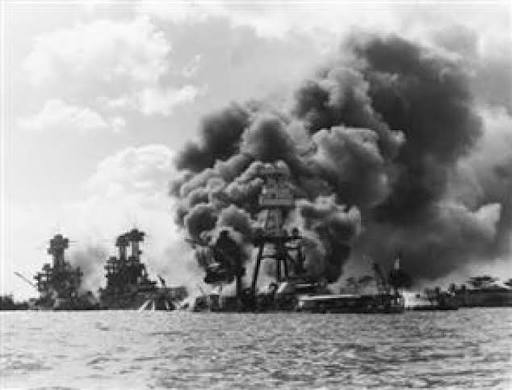
    At 7:48 a.m. on December 7, 1941, the first wave of Japanese aircraft descended on Pearl Harbor, turning a quiet Sunday morning into a scene of fire and steel. When the attack ended, 2,403 Americans lay dead, eight battleships were sunk or damaged, and the U.S. Pacific Fleet was in ruins. The question that has haunted historians ever since is not how Japan managed such a feat, but why the United States with its codebreakers, its spies, and its warnings was so completely unprepared.

    The answer lies not in a single failure, but in a cascade of them: fragmented intelligence, bureaucratic rivalry, and a stubborn belief that Pearl Harbor was an impossible target. The pieces of the puzzle were on the table, but no one assembled them in time.

    The Morning of December 7, 1941

    The first wave of 183 Japanese aircraft fighters, bombers, and torpedo planes came in low over the Ko’olau Range, catching the U.S. Pacific Fleet at anchor in Battleship Row. Within minutes, the USS Arizona was ripped apart by a 1,760-pound armor-piercing bomb that ignited its forward magazine, killing 1,177 crewmen. The USS Oklahoma capsized after multiple torpedo hits, trapping hundreds below deck. By 9:45 a.m., when the second wave of 170 aircraft withdrew, the harbor was a graveyard of smoke and oil fires.

    The official toll: 2,403 dead, 1,178 wounded, 188 aircraft destroyed. All eight battleships were either sunk or damaged though six would later be raised and refitted. The attack was a tactical masterpiece, but strategically it was a blunder: the U.S. aircraft carriers were at sea, the oil storage tanks were untouched, and the shipyards remained operational. Yet on that day, the United States had suffered its worst military disaster in history.

    The Intelligence That Was There

    The story of the intelligence failures begins long before the first bomb fell. By 1941, American cryptanalysts had achieved a remarkable feat: they had broken Japan’s highest-level diplomatic cipher, codenamed MAGIC. This gave Washington the ability to read secret messages between Tokyo and its embassies, including the Japanese embassy in Washington, D.C.

    MAGIC was a goldmine, but it had a critical blind spot: it covered diplomacy, not military operations. The Japanese Navy’s operational code, JN-25, remained largely unbroken. American codebreakers had made some progress on JN-25, but not enough to read fleet movements in real time. As a result, the U.S. could see the diplomatic tea leaves but not the naval battle fleet.

    What the U.S. did have were other clues. In late November 1941, traffic analysts at the Navy’s radio intelligence stations noticed something alarming: Japanese aircraft carriers and battleships had gone silent. The Japanese fleet had been emitting a steady stream of radio signals; suddenly, nothing. This was a classic sign of a major operation ships observing strict radio silence to hide their movement. But where were they going? The analysts couldn’t say.

    The Japanese strike force, under Vice Admiral Chuichi Nagumo, had departed Japan on November 26, taking a northern Pacific route far from commercial shipping lanes and U.S. patrols. The fleet maintained absolute radio silence throughout the 3,500-mile journey. The U.S. had no radar network in Hawaii only a mobile SCR-270 radar unit in training so there was no electronic tripwire.

    The Warnings That Were Ignored

    Between late November and December 7, a series of warnings were sent to U.S. commanders, but each was diluted by assumptions and miscommunication.

    November 27, 1941: Chief of Naval Operations Harold Stark sent a “war warning” to Pacific commanders, including Admiral Husband Kimmel in Hawaii. The message stated: “This dispatch is to be considered a war warning. Negotiations with Japan have ceased… An aggressive move by Japan is expected within the next few days.” The message went on to say that Japan might attack the Philippines, Malaya, or the Dutch East Indies—but made no mention of Pearl Harbor. Kimmel, like most officers, took the warning seriously but focused on the likely targets in Southeast Asia.

    December 6, 1941: The first 13 parts of a 14-part Japanese diplomatic message—a final note breaking off negotiations—were intercepted and decoded by U.S. intelligence. By 9:30 p.m., they were on President Roosevelt’s desk. The President read them and remarked to an aide, “This means war.” But the final, 14th part—the actual declaration of war—was not decoded until the morning of December 7. It was delivered to the White House at around 2:00 p.m., hours after the attack had begun.

    The “Winds” message was another missed signal. The Japanese had coded a hidden phrase in their radio broadcasts that would indicate whether war was imminent with the United States, Britain, or the Soviet Union. The phrase for the United States was “east wind, rain.” On December 6, American intercept stations picked up a broadcast containing the phrase, but the decoding and translation were delayed. By the time it was fully understood, the attack was already underway.

    The Fog of Bureaucracy

    Even when intelligence was available, it was siloed. The Army and Navy had separate intelligence systems that rarely shared information. In Washington, the FBI, the Office of Naval Intelligence (ONI), and Army G-2 each worked independently. In Hawaii, Admiral Kimmel and Lieutenant General Walter Short—the Army commander—had a strained relationship and communicated sparingly.

    One of the most glaring examples of this fragmentation occurred on the morning of December 7. At 7:02 a.m., a radar operator at the Opana Point mobile unit detected a large formation of aircraft approaching from the north—the first wave of the Japanese attack. The operator called the Army’s Information Center, but the officer on duty, Lieutenant Kermit Tyler, assumed it was a flight of B-17 bombers scheduled to arrive from the mainland. He told the operator, “Don’t worry about it.” The warning was never passed to the Navy. The radar contact was the last, clearest signal, and it was dismissed.

    The Investigations and the Verdict

    In the aftermath, the U.S. government launched at least nine official investigations between 1941 and 1946. The first was the Roberts Commission, appointed by Roosevelt in December 1941. It concluded that there had been “dereliction of duty” by Kimmel and Short, but it did not find a conspiracy.

    Subsequent investigations—including the Army Pearl Harbor Board, the Navy Court of Inquiry, and the Joint Congressional Committee (1945–46)—produced similar findings. They cited failures of command, communication, and judgment. The Army and Navy commanders had not taken adequate precautions, and Washington had failed to provide them with clear, actionable intelligence. But the investigations were unanimous on one point: there was no evidence that Roosevelt or other top officials had prior knowledge of the attack and deliberately withheld it.

    The “conspiracy theory” that FDR knew and allowed the attack to happen has been thoroughly debunked by historians. No credible evidence has ever surfaced to support it. The reality is more mundane and more tragic: a series of errors, assumptions, and missed signals compounded into catastrophic surprise.

    Lessons That Went Unlearned—Until Later

    The Pearl Harbor failures led to a major overhaul of U.S. intelligence. The military and civilian intelligence agencies were reorganized, and a unified command structure was created in the Pacific. The CIA was established in 1947, in part to ensure that intelligence was centralized and shared.

    But the deeper lesson—that intelligence is only as good as the people who act on it—remains as relevant today as it was in 1941. The attack on Pearl Harbor was not a failure of collection; it was a failure of analysis, communication, and imagination. The United States had the pieces, but it could not see the picture.

    The attack on Pearl Harbor was a tragedy of misjudgment, not a conspiracy. The intelligence failures that allowed the Japanese strike to succeed were rooted in human error, bureaucratic rivalry, and a strategic assumption that Pearl Harbor was an unlikely target. The lessons of December 7, 1941, are not just historical footnotes; they are a sobering reminder that even the best intelligence can be rendered useless if it is not shared, analyzed, and acted upon.

    Summary

    • The U.S. had broken Japanese diplomatic codes (MAGIC) but not the naval operational code (JN-25), leaving a critical gap in intelligence.
    • Multiple warnings were sent in late November 1941, but they focused on Southeast Asian targets, not Pearl Harbor.
    • The “Winds” message and the 14-part diplomatic note were intercepted but not fully acted upon in time.
    • A radar contact on the morning of December 7 was dismissed as a flight of B-17s.
    • Nine official investigations concluded there were failures of command and communication, but no conspiracy.

    FAQ

    Q: Did the U.S. have any warning that Japan would attack Pearl Harbor?
    A: Yes, but the warnings were indirect. The U.S. had intercepted Japanese diplomatic messages indicating a breakdown in negotiations, and a “war warning” was sent to Pacific commanders on November 27, 1941. However, none of these warnings specifically mentioned Pearl Harbor, and the U.S. military assumed Japan would strike Southeast Asia.

    Q: What was MAGIC intelligence?
    A: MAGIC was the code name for U.S. intelligence derived from breaking the Japanese diplomatic cipher machine, known as Purple. It allowed the U.S. to read high-level diplomatic messages between Tokyo and its embassies, but it did not include military or naval operational traffic.

    Q: Did President Roosevelt know about the attack in advance?
    A: No. Claims that FDR deliberately withheld intelligence to force the U.S. into war are a conspiracy theory with no supporting evidence. Multiple investigations concluded that while there were intelligence failures, there was no prior knowledge of the attack on Pearl Harbor.

    Q: Why did the U.S. not expect an attack on Pearl Harbor?
    A: The prevailing assumption was that Japan would attack British or Dutch possessions in Southeast Asia—such as Malaya or the Dutch East Indies—to secure oil and resources. Pearl Harbor was considered too far from Japan and too heavily defended for a carrier raid, so it was ruled out as a likely target.

    Q: What were the main intelligence failures?
    A: The main failures were: the inability to read JN-25, the naval code; poor communication between Army and Navy intelligence; the dismissal of the radar contact on December 7; and the delay in decoding the “Winds” message and the final part of the Japanese diplomatic note.

  • The Women of SOE: The Female Spies Sent to Occupied France

    The Women of SOE: The Female Spies Sent to Occupied France

    In the summer of 1940, as Britain braced for invasion, a secret organization was born with a mandate from Winston Churchill: “set Europe ablaze.” The Special Operations Executive (SOE) was tasked with sabotaging the Nazi war machine from within, and its French Section would soon dispatch an unlikely weapon women. While the military establishment balked, SOE’s F Section sent nearly forty women into occupied France, where they would serve as couriers, wireless operators, and even leaders of resistance networks. Their story is one of extraordinary courage, betrayal, and sacrifice, and their contribution was pivotal in the fight against Nazism.

    The Unlikely Recruits

    These were not professional spies. They were secretaries, shop assistants, and even a princess. Violette Szabo, a young widow with a young daughter, had worked as a shop assistant before the war. Noor Inayat Khan was an Indian-American musician and children’s author, descended from Tipu Sultan. Nancy Wake, an Australian journalist, had already witnessed Nazi brutality in Vienna and was determined to fight. Odette Sansom, a French-born mother of three, had initially written to the War Office offering a family photograph for a map an innocent letter that would lead her into the heart of the resistance.

    They came from diverse backgrounds, but they shared a common willingness to risk everything. The SOE was desperate for agents. Men were being conscripted, and women offered a tactical advantage: they could move through checkpoints and crowded streets with less suspicion. As one SOE officer noted, a woman could cycle through the French countryside carrying a wireless set in a shopping basket, and no one would look twice.

    Training: Equal Rigor, Unequal Pay

    Once recruited, these women were subjected to the same grueling training as their male counterparts at Special Training Schools scattered across Scotland and England. At Wanborough Manor and Arisaig, they learned silent killing, unarmed combat, and how to handle explosives. They practiced parachute jumps, often at night, and memorized complex wireless codes. At STS 31, the Thatched Barn, they studied fieldcraft how to live rough, evade capture, and maintain cover.

    The training was brutal and unrelenting. Instructors pushed them to their physical and mental limits, weeding out those who could not handle the pressure. Yet, despite this equal training, women were paid less than men and were initially barred from leadership roles. The role of organizer the leader of a resistance circuit was deemed too dangerous, too demanding for a woman. That would change as the war progressed, but the prejudice was persistent.

    The Toughest Jobs in the Field

    Once in France, these women took on roles that were often more dangerous than those of their male colleagues. Couriers like Andrée Borrel carried messages, weapons, and supplies across enemy territory, constantly moving and always at risk of being stopped at a checkpoint. Wireless operators like Noor Inayat Khan faced the most perilous job of all: transmitting intelligence to London while German direction-finding vans roamed the streets, capable of pinpointing their location within minutes of a transmission. To be a wireless operator was to live on borrowed time, knowing that each signal could be your last.

    Some women eventually took on organizing roles. Pearl Witherington, a courier who had infiltrated France in 1943, assumed command of a maquis group after her organizer was arrested. She built a force of 1,500 men, coordinating sabotage operations that disrupted German supply lines in the lead-up to D-Day. When the British government offered her the Military Cross, she refused, pointing out that as a woman she was ineligible for the award. She later accepted the CBE, but her refusal highlighted the double standard that persisted even in the face of extraordinary service.

    The Shadow of Betrayal

    The SOE’s operations in France were constantly threatened by German counter-intelligence. The Sicherheitsdienst (SD) ran a ruthless campaign to infiltrate and dismantle resistance networks. The infamous Funkspiel—”radio game”—involved captured wireless operators transmitting false messages to London, tricking the SOE into sending more agents into traps.

    One of the most devastating blows was the fall of the Prosper network in 1943. This extensive circuit, which coordinated sabotage and resistance across northern France, was thoroughly compromised. Mass arrests followed, sweeping up many agents, including Andrée Borrel and Noor Inayat Khan. The disaster raised questions about SOE security and whether London had ignored warnings of compromise. For the women caught in this wave, the consequences were fatal.

    The Final Brutality

    Of the approximately 39 women sent to France, 13 never returned. Their fates were among the most brutal of the war. In July 1944, four women—Andrée Borrel, Diana Rowden, Vera Leigh, and Sonya Olschanezky—were executed at Natzweiler-Struthof concentration camp by lethal injection. Their bodies were cremated, their remains never recovered. Violette Szabo was captured after a firefight with German troops, tortured, and sent to Ravensbrück, where she was executed in early 1945. Noor Inayat Khan was shackled in chains and sent to Dachau, where she was shot. Odette Sansom survived Ravensbrück, but only after enduring unspeakable torture that left her with permanent injuries.

    These were not casualties of battle; they were deliberate executions, meted out to women who had dared to fight. The Gestapo treated female agents with particular cruelty, subjecting them to beatings, starvation, and solitary confinement. Yet, many of these women maintained their defiance to the end. Witnesses reported that Violette Szabo sang as she was led to her execution.

    A Legacy Remembered

    Recognition came slowly. Odette Sansom became the first woman to receive the George Cross in 1946, but it would take decades for others to gain similar honors. Noor Inayat Khan was posthumously awarded the George Cross in 1949. Violette Szabo’s story was popularized by the 1958 film Carve Her Name with Pride. In 1991, the Valençay SOE Memorial was unveiled in France, honoring the 104 SOE agents who died in service, including the 13 women.

    The women of SOE were not merely participants in the war; they were pioneers who shattered the boundaries of what women were believed capable of. They proved that courage, skill, and determination were not the province of men alone. Their legacy is not just one of sacrifice, but of possibility—a reminder that even in the darkest times, ordinary people can rise to extraordinary heights.

    The women of SOE were not footnotes in the history of espionage. They were central players in a desperate fight, and their contributions came at a staggering cost. Today, their stories are preserved in archives and memorials, but they deserve more than remembrance. They deserve to be recognized as models of bravery, and as proof that the fight for freedom knows no gender.

    Summary

    • The SOE sent approximately 39 women into occupied France as spies, of whom 13 were killed.
    • Women served as couriers, wireless operators, and later as organizers, often in roles more dangerous than those of men.
    • They underwent the same rigorous training as men but were paid less and initially barred from leadership roles.
    • The Prosper network disaster and the Gestapo’s Funkspiel operation led to the capture and execution of several female agents.
    • Recognition was slow but posthumous honors include George Crosses for Noor Inayat Khan and Violette Szabo, and the Valençay Memorial honors all fallen agents.

    FAQ

    Q: How many women were sent to France by the SOE?
    A: Approximately 39 women were sent to occupied France as SOE agents, though some sources say 40 depending on inclusion criteria. Of these, 13 were killed in action, executed, or died in captivity.

    Q: What roles did these women perform?
    A: They served primarily as couriers, carrying messages and supplies, and as wireless operators, transmitting intelligence to London. A few, like Pearl Witherington, eventually led resistance networks as organizers.

    Q: Were women treated equally in the SOE?
    A: No. Despite undergoing the same training as men, women were paid less and were initially barred from leadership roles. They were only given roles as organizers later in the war.

    Q: What was the “Funkspiel”?
    A: Funkspiel, meaning “radio game,” was a German counter-intelligence operation where captured wireless operators were forced to transmit false messages to London, tricking the SOE into sending more agents into traps.

    Q: How are these women remembered today?
    A: They are honored at the Valençay SOE Memorial in France, and several have been posthumously awarded the George Cross. Their stories are preserved in archives at the Imperial War Museum and the Special Forces Club.

  • The Spy Ring That Could Have Sunk America: Inside the FBI’s Greatest Counterespionage Coup

    The Spy Ring That Could Have Sunk America: Inside the FBI’s Greatest Counterespionage Coup

    In the spring of 1941, a German-born American citizen named William Sebold walked into FBI headquarters in New York City. He had a story to tell one that would unravel the largest Nazi espionage network ever discovered on U.S. soil. Sebold was a naturalized American, but during a visit to Germany, he had been pressured by the Abwehr, German military intelligence, to return to the U.S. and spy on American industrial and military secrets. Instead, he turned himself in. The FBI saw an opportunity: use Sebold as a double agent to expose the entire ring.

    What followed was a two-year operation that would end with 33 convictions, a 300-year prison sentence for the ring’s leader, and a permanent expansion of FBI power. But behind the headlines of triumph lay a darker story of betrayal, desperation, and the fragile line between security and liberty one that still resonates today.

    The Man Who Would Be Spy

    Fritz Joubert Duquesne was not your average spy. Born in South Africa to a Dutch father and a mother of Huguenot descent, he had spent a lifetime nursing a deep hatred of Britain fueled by his experiences in the Boer War, where he had been a captain and had seen his family’s farm burned by British troops. That hatred made him a perfect recruit for German intelligence, and by the late 1930s, he was running a network of agents across the United States, feeding information to Berlin through shortwave radio and coded messages.

    Duquesne was a flamboyant figure, a big-game hunter and adventurer who had once claimed to have been the only survivor of a British ship he had torpedoed (a claim the British never confirmed). He recruited a motley crew: a German-born housewife in New York, a former soldier, a chemist, a mechanic, and a few businessmen none of them professional spies. They were motivated by ideology, money, or personal grievances, but they shared one thing: a willingness to sell out their adopted country for a cause that was about to plunge the world into war.

    The Double Agent

    When Sebold came forward, the FBI’s counterintelligence division then still in its infancy saw a chance to turn the tables. Under Director J. Edgar Hoover, the Bureau had been pushing for greater authority to investigate foreign espionage, and this case could prove its worth. Sebold was given a new identity, a fake office in New York, and a shortwave radio that the FBI could monitor. The office was rigged with hidden microphones and cameras, and Sebold was instructed to encourage the agents to talk freely about their activities.

    Between 1939 and 1941, Sebold met with dozens of suspects, recording their conversations and handing over fabricated intelligence that the FBI hoped would be useless to Germany. The operation was a masterstroke of tradecraft, but it was also a legal minefield. Defense lawyers later argued entrapment—that Sebold had induced the agents to commit crimes they wouldn’t have otherwise. The courts rejected that argument, but the case raised questions that would echo for decades: how far can the government go to catch spies without violating civil liberties?

    The Ring Comes Apart

    The FBI’s break came in June 1941, when it arrested Duquesne and 32 others in a coordinated sweep. The evidence was overwhelming: transcripts of conversations, photographs of documents, and radio transmissions that showed the ring had been sending information on ship movements, aircraft production, and military equipment. The trial began in September 1941, but it was interrupted by Pearl Harbor in December, which only heightened public anger toward the defendants.

    On January 2, 1942, the jury convicted all 33 members. Duquesne received 300 years—the maximum sentence, effectively a life term. Others got 20 to 30 years. Hoover called it “the greatest spy roundup in American history,” and the press agreed. But the victory was not without cost: many of the agents had sent little more than harmless gossip and fabricated data, and the real damage to U.S. security was minimal. The ring was less a threat than a symbol—a symbol of the “fifth column” that Americans feared was lurking in every German-American neighborhood.

    The Broader Web

    The Duquesne ring was not the only Nazi operation on U.S. soil. In 1942, Operation Pastorius landed eight saboteurs by U-boat on Long Island and Florida with plans to blow up bridges, factories, and transportation hubs. They were caught quickly, tried by military tribunal, and six were executed. Two others, who confessed and cooperated, were imprisoned and later pardoned in 1948. The trial, known as Ex parte Quirin, set a controversial precedent: civilians could be tried in military courts for espionage, bypassing civilian due process.

    Other rings, like the Lone Star and Joe K networks, were smaller but equally doomed. The FBI claims to have arrested over 100 German agents during the war, but many of these were low-level operatives who provided little real intelligence. The Abwehr, for its part, was increasingly skeptical of its U.S. network—especially after Sebold’s betrayal became known. In the end, the German espionage effort in America was a failure, but it left a lasting legacy: the FBI’s expanded power, justified by the threat of spies, would grow into the massive counterintelligence apparatus of the Cold War.

    The Cost of Fear

    The Duquesne case also fed a climate of fear that had darker consequences. The “fifth column” panic convinced many that German and Japanese immigrants were a danger, leading to the internment of over 100,000 Japanese-Americans and thousands of German and Italian aliens. While the spies were real, the vast majority of immigrants were loyal Americans. The government’s response, driven by the same logic that had caught the Duquesne ring, swept up innocent people in a net designed for a few.

    William Sebold, the man who helped break the ring, vanished into obscurity after the trial. He had risked his life to expose the spies, but the FBI’s secrecy meant he could never return to a normal life. He died in 1965, largely forgotten. The spies he helped convict served their sentences, but the questions they raised—about loyalty, security, and the price of freedom—remain as relevant as ever.

    The Nazi spy ring in the United States was never the grave threat that the headlines suggested. But it was a turning point. It gave the FBI the power it craved, tested the limits of civil liberties in wartime, and showed how easily fear can justify overreach. In the end, the spies were caught not because they were clever, but because one man chose to betray them. The lesson is not that vigilance is unnecessary—but that the tools we use to protect ourselves must be examined as carefully as the enemies we face.

    Summary

    • The Duquesne Spy Ring (1938–1941) was the largest Nazi espionage operation in U.S. history, with 33 members convicted in 1942.
    • FBI double agent William Sebold, a German-born American, infiltrated the ring, providing evidence through hidden microphones and cameras.
    • The ring’s leader, Fritz Duquesne, received a 300-year sentence; others got 20–30 years.
    • Other operations included Operation Pastorius (1942), where eight saboteurs landed but six were executed, and smaller rings like Lone Star and Joe K.
    • The case expanded FBI counterintelligence powers and fueled fifth-column fears, contributing to the internment of Japanese-Americans and other aliens.

    FAQ

    Q: How did the FBI catch the Duquesne Spy Ring?
    A: The FBI used a double agent, William Sebold, who had been recruited by German intelligence but turned himself in. He set up a fake office and radio station in New York, which the FBI wired with hidden microphones and cameras, allowing them to record the agents’ activities.

    Q: What was Operation Pastorius?
    A: In June 1942, eight German saboteurs were landed by U-boat on Long Island and Florida with plans to attack U.S. infrastructure. They were caught within weeks, tried by military tribunal, and six were executed; two were imprisoned and later pardoned in 1948.

    Q: Were there other Nazi spy rings in the U.S.?
    A: Yes, the FBI also broke up the Lone Star and Joe K rings in 1944–1945, smaller networks that were also unsuccessful. In total, the FBI arrested over 100 German agents during the war.

    Q: What was the legal controversy in the Duquesne trial?
    A: Defense lawyers argued entrapment, saying Sebold induced the agents to commit crimes. The courts rejected this, but the case raised questions about the use of secret evidence and the balance between security and civil liberties.

    Q: How did this case affect U.S. counterintelligence?
    A: It cemented the FBI’s role in domestic intelligence and expanded its powers, leading to a larger counterintelligence apparatus that grew during the Cold War. It also contributed to the internment of Japanese-Americans and other aliens due to fifth-column fears.

  • The Resistance Networks: How Ordinary People Became Spies

    The Resistance Networks: How Ordinary People Became Spies

    In the gray dawn of a Nazi-occupied European city, a schoolteacher walks to work with a loaf of bread under her arm. Hidden inside the crust are microdots containing German troop positions. She is not a soldier, not a trained agent just an ordinary woman who decided to fight back. Across the continent, millions of civilians faced a stark choice: submit to occupation or resist. A brave minority chose the latter, becoming spies, couriers, forgers, and saboteurs in clandestine networks that would help shape the outcome of World War II.

    This is the story of those ordinary people farmers, postal workers, clergy, students, housewives who transformed themselves into intelligence operatives. They operated in the shadows, faced unimaginable risks, and their efforts, though often overlooked, were vital to the Allied war effort. From the Dutch resistance’s tragic Englandspiel to the Polish cryptologists who cracked Enigma, these networks showed that courage could be found in the most unexpected places.

    The Making of a Spy

    Resistance networks were not born from thin air. They emerged from the brutal reality of Nazi occupation systematic repression, forced labor, food shortages, and mass murder. For many, the decision to resist was a moral response to witnessing atrocities. A teacher in Lyon who saw a neighbor dragged away for hiding a Jewish child might decide that silence was no longer possible.

    Patriotism also played a role. After conventional armies surrendered, resistance became a continuation of national defense. For communists, especially after Germany invaded the Soviet Union in June 1941, resistance was an ideological imperative. But perhaps the most common path into the resistance was through personal networks—a friend, a family member, a trusted priest or teacher already involved. Trust was the currency of recruitment.

    These new spies came from every walk of life. Railway workers could observe troop movements. Postal workers could intercept communications. Farmers knew the terrain and could hide fugitives. Women, often overlooked by German patrols, served as couriers, carrying messages and supplies under the noses of the occupiers.

    The Cell Structure: Safety in Compartments

    Resistance networks operated on a cell structure. Each member knew only a few others a courier might know one contact, who knew another, and so on. If one person was captured, the rest of the network remained safe. This compartmentalization was crucial for survival.

    The tradecraft was often basic but effective. Lemon juice or milk could serve as invisible ink. Messages were hidden in personal ads, dead drops, or brush passes—handing documents to a contact in passing, as if by accident. Early in the war, couriers were the primary method of communication, carrying information across cities and borders. Later, wireless radio operators, often trained in Britain and parachuted in, became vital—but also extremely dangerous. German direction-finding units could locate transmitters within minutes, making the operator’s life expectancy tragically short.

    The Comet Line: A Highway to Freedom

    One of the most remarkable networks was the Réseau Comète, or Comet Line, which smuggled downed Allied airmen from Belgium and France across the Pyrenees into neutral Spain. Run by a young Belgian woman named Andrée De Jongh, the Comet Line saved roughly 800 airmen. The route was perilous: airmen had to be hidden, fed, and moved through checkpoints with forged papers. The network relied on a chain of safe houses, each run by ordinary families who risked their lives every time they opened their doors.

    Of the ~200 agents who worked on the line, about 30 were killed or died in concentration camps. The cost was high, but the impact was undeniable—returning pilots and crew could fly again, and the intelligence they carried was invaluable.

    The Englandspiel Disaster

    Not all resistance efforts succeeded. The Dutch resistance suffered a catastrophic blow in the Englandspiel, or “England Game,” which ran from 1942 to 1944. German military intelligence, the Abwehr, captured Dutch agents and used them to send false messages to London. For almost two years, the British SOE sent supplies, money, and new agents—directly into German hands. Dozens of agents were captured and executed. The disaster was a stark lesson in the dangers of amateur espionage and the fragility of trust.

    The Polish Enigma

    The Polish Home Army (Armia Krajowa) ran one of the largest underground intelligence operations, but perhaps their greatest contribution was intellectual. In the 1930s, Polish cryptologists—Marian Rejewski, Henryk Zygalski, and Jerzy Różycki—broke early Enigma codes. In 1939, as war loomed, they passed their work to British intelligence. This breakthrough laid the foundation for Bletchley Park’s later successes, which shortened the war by years. Ordinary mathematicians, not trained spies, had changed the course of history.

    The Danish Rescue

    In October 1943, the Danish resistance organized one of the most extraordinary acts of rescue of the war. When the Nazis ordered the roundup of Danish Jews, the resistance, with help from ordinary citizens, evacuated over 7,000 Jews to neutral Sweden. Fishermen sailed their boats across the Øresund, hiding families below decks. This was not intelligence gathering, but it was resistance in its purest form—a moral stand that saved thousands of lives.

    Women: The Invisible Spies

    Women were often the backbone of resistance networks. Their roles as couriers were particularly vital because they were less likely to be searched or suspected. A woman with a basket of groceries or a baby carriage could move through checkpoints with relative ease. Women also ran safe houses, forged documents, and provided medical care. Many paid the ultimate price—arrest, torture, and execution in concentration camps.

    The gender angle is striking: in many networks, women were more numerous than men, and their contributions were essential to survival. Yet after the war, their stories were often overlooked, their heroism downplayed.

    The Moral Complexity

    Resistance was not without its moral ambiguities. Some actions, such as assassinations, provoked brutal reprisals against civilian populations. The question of whether such actions were justified remains debated. The line between collaboration and resistance was not always clear—many ordinary people collaborated, out of fear, opportunism, or ideology. The resistance was a minority, perhaps 1–2% of the population in most occupied countries.

    But for those who joined, the choice was often clear: to resist was to affirm humanity in the face of inhumanity. They were not professional soldiers, but they became spies, saboteurs, and lifelines for the persecuted. Their courage was not born of training, but of conviction.

    The resistance networks were a testament to the power of ordinary people under extraordinary pressure. They did not have the training of professional spies, but they had something else: a deep-seated commitment to freedom and justice. Their actions, whether cracking codes or hiding a downed pilot, made a tangible difference in the war. As we look back, we see not just the heroics, but the human cost—the arrests, the torture, the deaths. Yet their legacy endures, a reminder that even in the darkest times, ordinary people can choose to become extraordinary.

    Summary

    • Resistance networks in Nazi-occupied Europe were composed of ordinary civilians—teachers, farmers, housewives, and students—who engaged in espionage, sabotage, and rescue operations.
    • The Comet Line saved roughly 800 downed Allied airmen, at the cost of about 30 agents killed or dead in concentration camps.
    • The Polish cryptologists broke Enigma codes in the 1930s, providing a crucial head start to British intelligence.
    • The Denmark resistance evacuated over 7,000 Jewish citizens to neutral Sweden in October 1943, a remarkable moral and logistical feat.
    • Women played a vital role as couriers, using their perceived innocence to move intelligence and supplies under German noses.

    FAQ

    Q: What was the Englandspiel?
    A: The Englandspiel was a German counterintelligence operation that ran from 1942 to 1944, in which the Abwehr captured Dutch resistance agents and used them to send false messages to London, leading to the capture and death of dozens of agents.

    Q: How did ordinary people learn spy craft?
    A: They learned basic techniques like invisible ink, dead drops, and coded messages through word-of-mouth, training from Allied intelligence officers, or trial and error. Many learned on the job, relying on caution and the network’s cell structure for safety.

    Q: Were women really less suspected?
    A: Yes, German patrols were often less thorough in searching women, especially those with children or groceries, making them ideal couriers. This allowed women to play a disproportionately large role in intelligence networks.

    Q: Did all resistance networks have Allied support?
    A: Many did, particularly from the British SOE and MI6, and later the American OSS. However, support was not always reliable, as the Englandspiel disaster showed, and some networks operated with minimal outside help.

    Q: What happened to resistance members after the war?
    A: Many returned to civilian life, but their contributions often went unrecognized for years. Some were persecuted by new communist regimes in Eastern Europe, while others struggled with the trauma of their experiences. Many were eventually honored, but not all.

  • The Corpse That Fooled the Nazis: Inside Operation Mincemeat

    The Corpse That Fooled the Nazis: Inside Operation Mincemeat

    In April 1943, a dead man washed ashore on the coast of Spain, carrying a briefcase chained to his wrist. The documents inside would change the course of the war in Europe. This is the story of Operation Mincemeat, the most audacious deception of World War II.

    The Allies needed to convince Hitler that the invasion of Europe would come through Greece and Sardinia, not Sicily. Their plan: a corpse, a fake identity, and a briefcase full of lies. The body was that of Glyndwr Michael, a homeless Welshman who had died from rat poison. The British dressed him as a Royal Marines officer and set him adrift, hoping the Germans would take the bait.

    The operation was the brainchild of two intelligence officers, Charles Cholmondeley and Ewen Montagu, who turned a grim necessity into a masterpiece of misdirection. It would ultimately save thousands of Allied lives and pave the way for the invasion of Sicily.

    The Strategic Trap

    In early 1943, the Allies had swept through North Africa and were gearing up for the next big move. Sicily was the obvious target—it would open the Mediterranean and serve as a launchpad for the invasion of Italy. The Germans knew this. They had fortified the island and were ready to repel an assault.

    The Allies needed a way to make Hitler look elsewhere. The plan was to convince the German High Command that the real invasion would come in the Balkans, with Greece and Sardinia as the primary objectives. If the Germans bought it, they would divert troops away from Sicily, leaving the island vulnerable.

    The challenge was to make the deception stick. Wireless transmissions could be intercepted and analyzed. Double agents could be exposed. But a dead body carrying forged documents? That was a different kind of gamble.

    The idea had been floating around since 1939, when Lieutenant Commander Ian Fleming—yes, the future James Bond author—suggested using a corpse with false papers. In 1942, Charles Cholmondeley of MI5 proposed a similar scheme. The two concepts were merged, and Operation Mincemeat was born.

    The Man Who Never Was

    The operation needed a body that would pass as a drowning victim, not a murder or a disease. The planners found their man in Glyndwr Michael, a 34-year-old Welsh laborer who had died in London from ingesting rat poison. His death was tragic, but it was perfect for the deception—phosphorus poisoning would be hard to detect after days in the sea.

    Michael’s family was never told. His body was taken to a coroner’s office and kept on ice until it was ready. He was given a new identity: Major William Martin, Royal Marines. The fictional major was given a personality through the documents in his pockets and the letters in his briefcase. He had a fiancée, Pamela, whose photograph and love letters were included to make him seem human. He even had a ticket stubs and a letter from his bank about an overdraft.

    The key documents were two letters. One was from General Sir Archibald Nye, Vice-Chief of the Imperial General Staff, to General Sir Harold Alexander, the Allied commander in North Africa. The other was from Admiral Louis Mountbatten to Admiral Sir Andrew Cunningham. Both referenced a plan called “Operation Husky”—the real codename for the Sicily invasion—and suggested that it was a cover for the true targets: Greece and Sardinia.

    The letters were crafted with deliberate care. They hinted at Allied intentions without being too explicit. The Germans would have to read between the lines, and they did.

    The Drop and the Bite

    On April 30, 1943, the submarine HMS Seraph surfaced off the coast of Huelva, Spain. The crew launched a canister labeled as an “optical instrument,” containing Major Martin’s body, dressed in his Royal Marines uniform, with the briefcase chained to his wrist. The tide carried him to shore.

    Spain was officially neutral, but it was sympathetic to the Axis. The local authorities found the body and the documents. Before returning them to the British, they allowed German intelligence—the Abwehr—to photograph and study them. This was exactly what the British had hoped for.

    The Germans were fooled. They examined the letters and concluded that the Allied invasion would come in Greece and Sardinia. Hitler ordered reinforcements to the Balkans and the Aegean. Troops were diverted away from Sicily, and the island was left with a skeleton defense.

    On July 9, 1943, the Allies landed in Sicily. They achieved complete tactical surprise. The invasion was a success, and the door to Italy was open.

    The Aftermath

    The operation remained a secret for years. It was revealed to the public in 1950, when Ewen Montagu published The Man Who Never Was, which was later made into a film. But the true identity of the body—Glyndwr Michael—was not disclosed until 1996, when historian Roger Morgan uncovered the records.

    Michael’s story is a footnote in history, but his sacrifice was immense. He never knew the role he would play, and his family never knew what happened to him. In a way, he became the ultimate unsung hero of the war.

    Operation Mincemeat is now studied as a classic example of strategic deception. It showed that sometimes, the most effective weapon is not a bomb or a bullet, but a lie, carefully crafted and delivered with conviction.

    Operation Mincemeat remains one of the most brilliant and audacious deceptions in military history. It proved that a single corpse, a fictional identity, and a briefcase of forged documents could alter the course of a war. The success of the operation saved countless lives and demonstrated the power of creative intelligence work. Glyndwr Michael, the man who never was, helped turn the tide in Europe—his story is a testament to the strange and often tragic ways war is fought.

    Summary

    • Operation Mincemeat was a British deception operation in 1943, aimed at convincing the Germans that the Allies would invade Greece and Sardinia, not Sicily.
    • The operation used the corpse of Glyndwr Michael, a homeless man who had died from rat poison, dressed as a Royal Marines officer named Major William Martin.
    • The body was dropped off the coast of Spain, where German intelligence gained access to the forged documents and was deceived.
    • As a result, Hitler diverted troops away from Sicily, allowing the Allied invasion on July 9, 1943, to achieve tactical surprise.
    • The operation was revealed in 1950, but the true identity of the corpse was only disclosed in 1996.

    FAQ

    Q: Who was the real person behind the corpse?
    A: The corpse was that of Glyndwr Michael, a 34-year-old Welsh homeless man who died from ingesting rat poison. His identity was concealed, and he was given the fictional identity of Major William Martin.

    Q: What was in the briefcase chained to the body?
    A: The briefcase contained forged personal documents, including love letters from a fictional fiancée, and two crucial letters from high-ranking British officers that discussed the Allied invasion plans, suggesting Greece and Sardinia as targets.

    Q: How did the Germans get hold of the documents?
    A: The body washed ashore in Huelva, Spain, a region with a known German agent. The Spanish authorities, who were sympathetic to the Axis, allowed German intelligence to examine the documents before returning them to the British.

    Q: Did Operation Mincemeat actually succeed?
    A: Yes, the Germans were deceived. They reinforced the Balkans and Sardinia, diverting troops away from Sicily, which allowed the Allied invasion of Sicily to achieve tactical surprise and succeed.

    Q: When was the operation revealed to the public?
    A: The operation was declassified and revealed in 1950 through Ewen Montagu’s book, The Man Who Never Was. The true identity of the body was not disclosed until 1996.

  • The Hunger Winter: When the Netherlands Ate Tulip Bulbs to Survive

    The Hunger Winter: When the Netherlands Ate Tulip Bulbs to Survive

    In the winter of 1944-45, the western Netherlands became a silent, frozen landscape of starvation. With German occupation forces blocking all food transport and the Allies stalled south of the Rhine, over 4.5 million people were trapped in a famine that would kill an estimated 20,000 to 30,000 civilians. Tulip bulbs, sugar beets, and even grass became the last resort for survival.

    This is the story of how a railway strike, a failed military operation, and a brutal winter combined to create one of the darkest chapters of World War II in Western Europe  and how the Dutch endured, resisted, and ultimately survived against impossible odds.

    The Perfect Storm: Railway Strike, Market Garden, and the German Embargo

    The Hunger Winter did not arrive suddenly. It was the product of a chain of events that began in September 1944, when the Allies launched Operation Market Garden, a bold plan to capture key bridges in the Netherlands and outflank the German defenses. The operation failed at the Battle of Arnhem, leaving the western Netherlands under German occupation for another eight months. The Allies were stuck south of the Rhine, and the Germans were determined to hold their ground.

    On September 17, 1944, the Dutch government-in-exile in London called for a nationwide railway strike to support the Allied advance. The strike was largely successful, crippling German logistics. In retaliation, the German Reichskommissar Arthur Seyss-Inquart imposed a total embargo on all food and fuel transport into the western Netherlands on September 27, 1944. The embargo was partially lifted in November, but by then the damage was done. The winter had set in, freezing the canals, and the Germans had deliberately flooded large agricultural areas the inundations to impede Allied advances, destroying crops and farmland in the process.

    The Netherlands had been a net food importer before the war. Under occupation, food was rationed but generally sufficient until 1944. The embargo, combined with the loss of agricultural land to flooding, the destruction of transport infrastructure, and the general collapse of the German administrative apparatus, created a total breakdown of the food distribution system. By December 1944, the official ration had already dropped below subsistence. By February 1945, the official daily ration was down to 400–600 calories and often the rations were unavailable altogether. Actual intake was frequently even lower.

    The Human Cost: Cities Under Siege

    The cities of Amsterdam, Rotterdam, The Hague, and Utrecht were hit hardest. Urban dwellers had no access to farmland, and the German army requisitioned much of the harvest from rural areas. People queued for hours for a loaf of bread made from flour substitutes like tulip bulbs or sugar beets. The bread was grey, heavy, and barely edible, but it was something.

    Thousands of city dwellers took to the roads in what became known as “Hunger Walks” — long treks into the countryside to trade valuables like jewelry, linens, and bicycles for food with farmers. Many died on these journeys, either from exhaustion, cold, or starvation. The roads were littered with the bodies of those who had collapsed and never got up again.

    Children were particularly vulnerable. The famine had a profound effect on them, both physically and psychologically. Many were sent to live with families in the countryside or in the liberated south, where food was more plentiful. These “Hunger Winter children” later became a subject of medical study, as researchers traced the long-term health effects of prenatal and early childhood malnutrition.

    Women bore the brunt of household survival strategies. They queued for hours in the cold, foraged for anything edible, and managed the family’s meager rations with meticulous care. The psychological toll was immense. Many women later spoke of the constant, gnawing hunger, the desperation, and the guilt of having to choose who in the family would eat.

    The Humanitarian Response: A Ray of Hope

    Despite the dire situation, there were glimmers of hope. The Swedish Red Cross organized limited relief shipments, delivering flour and margarine through the port of Delfzijl in the north in early 1945. These shipments were a lifeline, but they were not enough to feed millions.

    The turning point came in April 1945, when the Allies and the German occupiers reached a secret agreement to allow food drops over German-occupied territory. Operation Manna (British) and Operation Chowhound (American) saw Allied bomber crews dropping food packages from April 29 to May 8, 1945. For the Dutch, the sight of those planes was a harbinger of liberation. The drops were followed by Operation Faust, ground convoys of food trucks that entered the liberated areas immediately after the German surrender on May 5, 1945.

    The Aftermath: A Legacy of Hunger

    The German surrender on May 5, 1945 — Liberation Day — ended the famine, but the damage was done. An estimated 20,000 to 30,000 people had died directly from starvation and malnutrition-related illness. The survivors carried the scars for the rest of their lives. The Hunger Winter became a defining experience for a generation of Dutch people, shaping their attitudes toward food, security, and resilience.

    The famine also had a lasting impact on the Dutch landscape and psyche. The inundations had destroyed vast areas of farmland, and it took years to rebuild. The Hunger Winter is remembered every year on May 4-5, when the Netherlands commemorates its war dead and celebrates liberation. It serves as a stark reminder of the fragility of food systems and the human cost of war.

    The Hunger Winter of 1944-45 was a tragedy born of war, strategy, and circumstance. The Dutch endured unimaginable suffering, but they also demonstrated remarkable resilience. The food drops of Operation Manna and Chowhound were a testament to international solidarity, and the eventual liberation brought relief and reconstruction. Today, the Hunger Winter stands as a powerful reminder of the horrors of war and the importance of peace.

    Summary

    • The Hunger Winter occurred from October/November 1944 to May 1945, affecting the western and northern Netherlands.
    • Caused by a German rail and port embargo in retaliation for the Dutch railway strike, and the failure of Operation Market Garden.
    • An estimated 20,000-30,000 deaths from starvation and malnutrition-related illness.
    • Official daily rations dropped to as low as 400-600 calories by February-April 1945.
    • Ended by the German surrender on May 5, 1945, and Allied food drops (Operation Manna/Chowhound) and ground convoys (Operation Faust).

    FAQ

    Q: What was the Hunger Winter?
    A: The Hunger Winter (Hongerwinter) was a famine in the German-occupied western Netherlands during the winter of 1944-45, caused by a German embargo on food and fuel transport, leading to starvation and over 20,000 deaths.

    Q: Why did the Dutch run out of food?
    A: The Dutch government-in-exile called a railway strike in September 1944 to support the Allies. In retaliation, the Germans embargoed all food and fuel transport into the western Netherlands. The failure of Operation Market Garden left the area under German control, and the winter froze canals, preventing food distribution.

    Q: What did people eat during the Hunger Winter?
    A: People resorted to eating tulip bulbs, sugar beets, and bread made from flour substitutes. They also foraged for anything edible, and many went on “Hunger Walks” to the countryside to trade valuables for food.

    Q: How did the Hunger Winter end?
    A: The famine ended with the German surrender on May 5, 1945, and the subsequent Allied food drops (Operation Manna/Chowhound) and ground convoys (Operation Faust) that delivered food to the starving population.

    Q: What were the long-term effects of the Hunger Winter?
    A: The famine had lasting health effects on survivors, especially children who experienced malnutrition. It also became a defining cultural memory for the Netherlands, commemorated annually on May 4-5.

  • The Fount of Life: Inside the Nazis’ Program to Breed an Aryan Race

    The Fount of Life: Inside the Nazis’ Program to Breed an Aryan Race

    In the winter of 1936, a secluded mansion in Steinhöring, Bavaria, opened its doors to a new kind of patient: unmarried pregnant women who had passed a rigorous racial examination. The home, run by the SS, offered these women luxurious care, anonymity, and a promise their children would be raised as the future elite of the Third Reich. This was Lebensborn, the ‘Fount of Life,’ a program conceived by Heinrich Himmler to reverse Germany’s declining birth rate by breeding a ‘racially pure’ Aryan generation.

    Lebensborn was the positive face of Nazi eugenics, a counterpart to the forced sterilizations and Nuremberg Laws that sought to eliminate ‘undesirable’ genes. While the numbers of children born in these homes remained small perhaps 20,000 across all of Europe the program’s chilling ambition revealed the depths of Nazi ideology: a bureaucratic machinery designed to treat human reproduction as a state-controlled enterprise. This is the story of that machinery, the women who entered it, and the children who bore its legacy long after the war ended.

    The Architecture of a Racial Utopia

    Heinrich Himmler, the Reichsführer-SS, was obsessed with demography. He believed that Germany’s finest blood the Nordic stock that he saw as the backbone of the nation was being wasted. Unmarried mothers faced social stigma, often resorting to abortion or giving up their children, while the birth rate among the ‘racially valuable’ was declining. Lebensborn, founded on December 12, 1935, was his answer: a state-sponsored network of maternity homes where ‘genetically healthy’ women could give birth in secret, supported by the SS.

    The program was meticulously designed. Women, married or not, had to prove their racial purity through genealogical records dating back to 1800. They underwent medical and psychological examinations, and their physical features were assessed for ‘Nordic’ traits. The father, too, had to be approved by the SS. Once accepted, the mothers were housed in comfortable facilities well-nourished, medically supervised, and shielded from the shame that society heaped on unwed mothers. For many vulnerable women, the offer was a lifeline; for the SS, it was a way to harvest ‘valuable’ children.

    Inside the Homes

    The first home opened in Steinhöring, and by the late 1930s, more followed across Germany. The atmosphere inside was a curious blend of clinical efficiency and maternal care. Nurses monitored the mothers’ health rigorously, and the children, once born, were registered with the SS and often placed for adoption into ‘worthy’ families typically SS officers’ households. The program’s business manager, Max Sollmann, and medical director, Gregor Ebner, ensured that every detail aligned with Nazi racial doctrine. Even the naming of children was a bureaucratic process: each birth was logged in special registers, with the mother’s racial score recorded alongside the child’s physical measurements.

    But Lebensborn was not confined to Germany. As the war expanded, so did the program. Norway, with its large contingent of German soldiers, became a key site: nine or ten homes operated there, exploiting the relationships between occupiers and local women. Similar facilities were established in Poland, France, Belgium, Luxembourg, Denmark, and the Netherlands. The scale remained modest—the war’s chaos and the SS’s obsession with secrecy limited expansion—but the intent was clear: to populate Europe with Aryan progeny, one birth at a time.

    The Darkest Extension: Kidnapping

    The program’s most sinister facet emerged in occupied Eastern Europe. In Poland and other territories, SS units conducted ‘racial assessments’ of children, particularly those in orphanages or foster care. Those judged ‘racially valuable’—blond hair, blue eyes, ‘Nordic’ skull measurements—were forcibly taken from their families, given German names, and placed in Lebensborn homes or with German families. The numbers are staggering: estimates range from tens of thousands to over 100,000 abducted children, though the exact figure remains unknown. Many were never returned after the war, and the trauma of these abductions continues to haunt Polish families to this day.

    This was the logical endpoint of Himmler’s ideology: human beings treated as genetic material, selected and relocated like livestock. The bureaucracy was chilling—forms, medical exams, racial scoring—all applied to children torn from their mothers’ arms.

    The Norwegian Aftermath

    In Norway, the legacy of Lebensborn was particularly bitter. Norwegian women who had relationships with German soldiers were ostracized after the war; many were arrested, interned, or lost their jobs. Their children, known as ‘tyskerbarn’ (German children), faced discrimination and abuse. Some were placed in psychiatric institutions, where they were mistreated, and many were denied education and social advancement. It wasn’t until 2018 that Norway’s prime minister formally apologized for this treatment, acknowledging the state’s role in perpetuating the stigma.

    For the women who entered Lebensborn homes, the experience was ambiguous. Some were grateful for the care and anonymity; others felt coerced, used by a regime that valued them only for their wombs. The children, now in their eighties, have spoken out in recent years, sharing stories of identity crises, silent shame, and, in some cases, the discovery of their origins only in adulthood. Their voices are a crucial counterpoint to the clinical records that survive.

    The End and the Unfinished Reckoning

    When Allied forces overran Germany in 1945, they found the Lebensborn homes abandoned, their records partially destroyed by the SS. The organization was formally dissolved in the 1950s, but the legal and moral questions it raised have never fully resolved. In Germany, the children were largely ignored for decades, with no official recognition of their suffering. In Norway, a 2004 report documented abuses, but compensation was initially denied and only partially granted. In Poland, the abducted children remain a painful wound—many never learned their true identities, and the search for families continues even today.

    The numbers are small compared to the millions who died in the Holocaust, but the significance of Lebensborn lies in its ambition. It was a state attempting to control human reproduction with the same precision as a breeding program for animals. The program’s failure to produce a ‘master race’ was inevitable, but its legacy of human suffering is a reminder of what happens when ideology overrides basic humanity.

    Lebensborn was not a footnote in Nazi history; it was a core expression of the regime’s racial ideology. The program’s homes, births, and abductions were all part of a larger plan to reshape humanity, and its consequences echo in the lives of the children and mothers who survived. As the last survivors age, their stories serve as a testament to the resilience of the human spirit against the coldest bureaucracies of the state.

    Summary

    • Founded by Heinrich Himmler on December 12, 1935, as an SS program to increase births of ‘racially pure’ Aryan children.
    • Provided maternity homes and financial support to women who met strict racial criteria, with around 20,000 children born across Germany and occupied territories.
    • Expanded into kidnapping ‘racially valuable’ children in Eastern Europe, with estimates of abducted children ranging from tens of thousands to over 100,000.
    • Norway was the most significant site outside Germany, with 9–10 homes; postwar children faced severe discrimination, leading to a formal apology in 2018.
    • The program was shut down in 1945, but legal and reparations issues remain unresolved, especially for Polish abductees.

    FAQ

    Q: What does ‘Lebensborn’ mean?
    A: It translates to ‘Fount of Life’ or ‘Spring of Life,’ reflecting the program’s goal to increase the birth rate of ‘racially pure’ Aryan children.

    Q: How many children were born in Lebensborn homes?
    A: Estimates suggest around 8,000–10,000 in Germany and 8,000–12,000 in Norway, totaling perhaps 20,000 or fewer across all territories.

    Q: Were all Lebensborn children born to unmarried mothers?
    A: No. While the program aimed to help unmarried mothers avoid social stigma, married women were also eligible if they and their husbands met the racial criteria.

    Q: Did the program operate outside Germany?
    A: Yes, it expanded into occupied territories, especially Norway, but also Poland, France, Belgium, Luxembourg, Denmark, and the Netherlands.

    Q: What happened to the children after the war?
    A: Many faced discrimination and stigma, particularly in Norway, where they were called ‘tyskerbarn.’ Some were placed in psychiatric institutions and abused. In Germany, they were largely ignored for decades. The abducted Polish children often never learned their true identities.

  • The Warsaw Ghetto Uprising: Defiance in the Face of Annihilation

    The Warsaw Ghetto Uprising: Defiance in the Face of Annihilation

    On the eve of Hitler’s birthday, April 19, 1943, the streets of Warsaw’s Jewish ghetto erupted in gunfire. For nearly a month, a few hundred poorly armed Jewish fighters held off thousands of German troops, turning a symbol of Nazi oppression into a beacon of resistance. This is the story of life in the ghetto and the desperate, heroic stand that followed.

    The Ghetto: A City Within a City

    In October 1940, the German occupiers sealed off a 3.3-square-kilometer area of Warsaw, confining over 400,000 Jews behind brick walls and barbed wire. At its peak, the ghetto held about 460,000 people roughly 30% of the city’s population in just 2.4% of its area. Families crowded into rooms with seven to nine people, sometimes thirteen. The official food ration provided a mere 184 calories per day, a death sentence in slow motion.

    Daily Survival: Smuggling, Soup Kitchens, and the Black Market

    To survive, the ghetto developed a clandestine economy. Smuggling was not a crime but a necessity. Children, small and nimble, crawled through sewers or slipped over walls to bring in food. The black market thrived, with the wealthy eating well while the poor starved in the streets. Soup kitchens run by charitable organizations offered meager meals, but they could not stem the tide of hunger. By mid-1942, over 83,000 Jews had died from starvation, typhus, and exposure.

    Culture and Resistance: The Spirit Endures

    Despite the misery, life persisted. Underground theaters staged plays, orchestras performed in secret, and schools operated in basements. Religious services continued, and political parties met covertly. Historian Emanuel Ringelblum organized the Oneg Shabbat archive, burying documents in milk cans to ensure the truth would survive even if they did not. This cultural defiance was a precursor to armed rebellion.

    The Great Action: Deportations to Treblinka

    From July to September 1942, the Germans conducted the “Great Action,” deporting approximately 265,000 Jews to the Treblinka extermination camp. The Judenrat, led by Adam Czerniaków, faced an impossible choice. When ordered to sign deportation orders for children, Czerniaków committed suicide. The deportations shattered the illusion that labor would save them. Those who remained about 50,000 to 70,000 knew the end was near.

    The Birth of the Resistance

    In October 1942, a coalition of Jewish youth movements and political factions formed the Jewish Combat Organization (ŻOB), with Mordechai Anielewicz as commander. A separate right-wing group, the Jewish Military Union (ŻZW), led by Pavel Frenkel, also prepared for battle. They acquired a handful of pistols, grenades, and Molotov cocktails, and built a network of bunkers and tunnels. When the Germans returned for another round of deportations in January 1943, ŻOB fighters ambushed them, forcing a four-day retreat. It was a small but crucial victory.

    The Uprising: April 19 – May 16, 1943

    On April 19, 1943, German forces entered the ghetto to liquidate it, expecting little resistance. They were met with gunfire and homemade bombs. The fighters, numbering about 750 to 1,000, used hit-and-run tactics, disappearing into bunkers and rooftops. The Germans, initially 2,000 strong, brought in tanks, artillery, and flame throwers. The fighting was brutal and unequal. The Germans systematically burned buildings, forcing fighters into the open. By May 8, the ŻOB command bunker at 18 Miła Street fell; Anielewicz and many of his comrades died there. The uprising was finally suppressed on May 16, when SS General Jürgen Stroop declared, “The Warsaw Ghetto is no more.”

    Aftermath and Legacy

    Over 13,000 Jews were killed during the uprising, and about 7,000 were deported to Treblinka. The remaining survivors, some 42,000, were captured and sent to labor and death camps. German casualties were light around 300 to 400. But the uprising had profound significance. It was the largest single act of Jewish resistance during the Holocaust, proving that even in the face of annihilation, defiance was possible. The fighters chose how to die, and in doing so, they inspired future revolts in other ghettos and camps.

    Conclusion

    The Warsaw Ghetto Uprising was not a military victory, but a moral one. It demonstrated that the human spirit could resist even the most systematic dehumanization. The courage of the fighters, and the resilience of the ghetto’s inhabitants, remains a testament to the will to live and the refusal to surrender. Their story is a reminder that even in the darkest times, hope and resistance can emerge.

    Summary

    • The Warsaw Ghetto confined over 460,000 Jews in 3.3 square kilometers, with deadly overcrowding and starvation.
    • Daily life involved smuggling, black markets, and a vibrant clandestine culture, including the Oneg Shabbat archive.
    • The “Great Action” of 1942 deported 265,000 to Treblinka, leading to the formation of the ŻOB and ŻZW resistance groups.
    • The uprising began April 19, 1943, and lasted nearly a month, with 750–1,000 fighters against 2,000–4,000 German troops.
    • Though suppressed, the uprising became a symbol of Jewish resistance, inspiring future revolts.

    FAQ

    Q: What was the Warsaw Ghetto?
    A: A sealed district in Warsaw where over 400,000 Jews were forced to live in overcrowded, unsanitary conditions, with minimal food and constant threat of deportation.

    Q: How did Jews resist before the uprising?
    A: Through smuggling, cultural activities, underground schools, and the secret Oneg Shabbat archive, which documented life and preserved evidence for posterity.

    Q: Who led the uprising?
    A: The Jewish Combat Organization (ŻOB), commanded by Mordechai Anielewicz, and the Jewish Military Union (ŻZW), led by Pavel Frenkel.

    Q: Why did the uprising happen?
    A: After mass deportations to Treblinka, it became clear that the Germans intended to exterminate all Jews. The remaining residents chose to fight rather than go passively to their deaths.

    Q: What was the outcome?
    A: The uprising was crushed, with most fighters killed or deported, but it became a powerful symbol of resistance and a moral victory against Nazi tyranny.

  • The Holocaust: The Systematic Extermination of Six Million Jews

    The Holocaust: The Systematic Extermination of Six Million Jews

    In the winter of 1942, a train pulled into the ramp at Auschwitz-Birkenau. The doors slid open to reveal hundreds of men, women, and children, bewildered and exhausted after days without food or water. Within hours, most would be dead, their bodies consumed by the chimneys of the crematoria. This scene repeated itself thousands of times across occupied Europe, part of a machinery of murder that claimed the lives of six million Jews.

    The Holocaust, known in Hebrew as the Shoah, was not a spontaneous eruption of violence but a state-sponsored, meticulously organized campaign of annihilation. It unfolded over twelve years, from the Nazi seizure of power in 1933 to the final death marches in 1945, and it touched nearly every corner of the European continent. Understanding the Holocaust means confronting the darkest capabilities of human bureaucracy and ideology, and it demands a reckoning with how ordinary people became complicit in genocide.

    From Discrimination to Destruction: The Legal Persecution (1933–1939)

    The Nazi rise to power in January 1933 did not begin with mass murder. It began with a systematic legal assault on Jewish life. Within months, Jews were purged from the civil service, universities, and the arts. The Nuremberg Laws of 1935 stripped Jews of German citizenship and prohibited marriage or sexual relations between Jews and non-Jews. These laws, which defined Jewishness by blood rather than faith, were a crucial step in dehumanizing a whole population.

    Emigration was initially encouraged, but as Germany expanded, the doors began to close. By 1939, hundreds of thousands of Jews had fled, but many remained, trapped in a country that had declared them enemies of the state. The violence escalated on Kristallnacht, November 9–10, 1938, when synagogues were burned, homes and businesses were ransacked, and at least 91 Jews were killed. Yet even this pogrom seemed a prelude to something worse not a departure from policy but a radicalization of it.

    Ghettos and Einsatzgruppen: The War in the East (1939–1941)

    World War II provided the cover for genocide. Following the invasion of Poland in September 1939, the Nazis forced Jews into overcrowded ghettos. In Warsaw alone, over 400,000 Jews were crammed into an area of just over one square mile, with an average of seven people per room. Disease and starvation killed thousands each month, but this was only a holding pattern.

    The turning point came with Operation Barbarossa, the invasion of the Soviet Union in June 1941. Behind the advancing German army came the Einsatzgruppen mobile killing squads whose task was to eliminate Jews, Roma, and Soviet officials. They conducted mass shootings in open fields, ravines, and forests. At Babi Yar, near Kyiv, 33,771 Jews were murdered in two days in September 1941. Across the Baltic states and Ukraine, an estimated 1.5 million Jews were killed by these units and their local collaborators. The shooting was inefficient, psychologically taxing for the killers, and increasingly public. The Nazis sought a more industrialized method.

    The Final Solution: Industrialized Murder (1941–1945)

    On January 20, 1942, senior Nazi officials gathered at a villa in Wannsee, a Berlin suburb, to coordinate the deportation of Jews from across Europe to the East. The Wannsee Conference did not decide on the Holocaust that decision had evolved through a series of incremental steps but it formalized the logistics. The “Final Solution to the Jewish Question” was a euphemism for genocide.

    The Nazis constructed dedicated extermination camps in occupied Poland: Chelmno, Belzec, Sobibor, Treblinka, and Auschwitz-Birkenau. At Treblinka, between 800,000 and 900,000 people were killed in under a year, mostly by carbon monoxide gas in stationary chambers. At Auschwitz-Birkenau, the largest of the camps, over 1.1 million people perished, about 90% of them Jews, many killed with the pesticide Zyklon B.

    The process was chillingly efficient. Victims were selected on arrival those deemed unfit for labor, usually the elderly, the sick, and children, were sent directly to the gas chambers. Their belongings were sorted and shipped to Germany. Gold teeth were extracted from corpses. The camps were designed to maximize death while minimizing cost and psychological strain on the perpetrators.

    Perpetrators and Collaborators: A Continent-Wide Effort

    The Holocaust was not solely a German project. Across occupied Europe, local regimes and police forces participated in roundups and deportations. Vichy France, the Netherlands, Hungary, and Romania all collaborated to varying degrees. Romania’s wartime regime, acting independently of direct German orders, murdered an estimated 280,000 to 380,000 Jews in territories it controlled. In many cases, local antisemitism was stoked and exploited by the Nazis to ensure cooperation.

    The perpetrators were not just fanatical Nazis. They included ordinary soldiers, policemen, and bureaucrats who followed orders or seized opportunities for career advancement. The Holocaust was a bureaucratic crime, facilitated by railway timetables, punch-card machines, and the administrative routines of modern states. This is one of its most troubling legacies: genocide was not the act of deranged monsters, but of a society’s institutions and individuals who chose to participate.

    Resistance and Rescue: Light in the Darkness

    Even in the face of annihilation, there was resistance. The Warsaw Ghetto Uprising of April–May 1943 saw a few hundred lightly armed Jewish fighters hold out for nearly a month against the German army. At Sobibor and Treblinka, prisoners staged revolts that briefly shut down the death camps. These acts did not stop the Holocaust, but they affirmed the humanity of the victims.

    Rescuers also emerged, often at great personal risk. The Righteous Among the Nations, a designation given by Yad Vashem, honors over 28,000 individuals who saved Jews. Among them are Oskar Schindler, who protected over a thousand Jewish workers in his factory, and Raoul Wallenberg, the Swedish diplomat who issued protective passports to tens of thousands of Hungarian Jews. The villagers of Le Chambon-sur-Lignon in France sheltered thousands of Jewish refugees, an act of collective courage that shows how ordinary people could defy the machinery of death.

    The End and Its Legacy

    The Holocaust ended only with the military defeat of Nazi Germany in 1945. In the final months, as Soviet forces advanced, the Nazis forced concentration camp prisoners on death marches in freezing conditions, killing tens of thousands. When the camps were liberated, soldiers found emaciated survivors, piles of corpses, and evidence of an unimaginable crime.

    The number — six million — is a statistical abstraction. Among them were 1.5 million children, the vast majority of Jewish children in occupied Europe. The Holocaust destroyed vibrant communities that had existed for centuries, leaving a void that still resonates.

    Historians continue to debate whether the Holocaust was a pre-planned master plan or an incremental process that radicalized over time. Most now accept that ideology set the goal — the destruction of the Jewish people — but the methods evolved through bureaucratic competition, wartime pressures, and local initiatives. What is indisputable is the centrality of the Holocaust to Nazi aims. It was not a side effect of war; it was a war aim, pursued even when it diverted resources from the military effort.

    The Holocaust forces us to ask uncomfortable questions about the nature of evil, the role of bureaucracy, and the fragility of civilization. It is a warning of what happens when prejudice is enshrined in law, when state power is used to dehumanize a group, and when ordinary people look away. Remembering six million dead is an act of defiance against those who sought to erase them.

    The Holocaust was not a remote event confined to the past; it is a rupture in human history that continues to shape our understanding of morality, law, and the limits of human cruelty. To study it is to engage with the darkest recesses of the human soul and the societal structures that enable mass murder. Yet the stories of resistance, rescue, and survival remind us that even in the abyss, there were sparks of humanity. The legacy of the six million is not just a number — it is a call to vigilance against hatred, a demand for remembrance, and a pledge that “never again” must be more than a slogan.

    Summary

    • The Holocaust was the state-sponsored, systematic persecution and annihilation of European Jewry by Nazi Germany and its collaborators between 1933 and 1945.
    • Approximately six million Jews, including 1.5 million children, were murdered, roughly two-thirds of the pre-war European Jewish population.
    • The genocide evolved from legal persecution (Nuremberg Laws) to ghettoization and mass shootings (Einsatzgruppen) to industrialized murder in extermination camps like Auschwitz-Birkenau and Treblinka.
    • The Wannsee Conference in January 1942 coordinated the deportations, marking the formal implementation of the “Final Solution.”
    • Resistance and rescue occurred, as seen in the Warsaw Ghetto Uprising and the actions of the Righteous Among the Nations, but they could not prevent the scale of the catastrophe.

    FAQ

    Q: What is the difference between the Holocaust and the Shoah?
    A: The Holocaust is the term commonly used in English, derived from the Greek for “burnt whole,” while Shoah, a Hebrew word meaning “catastrophe,” is preferred by many scholars and survivors because it avoids religious connotations of sacrifice.

    Q: How many Jews were killed in the Holocaust?
    A: Approximately six million Jews were murdered, a figure widely accepted by historians based on Nazi records, postwar investigations, and demographic studies. This included about 1.5 million children.

    Q: Were there other victims besides Jews?
    A: Yes, the Nazis also murdered millions of others, including Roma, Soviet prisoners of war, disabled people, Polish elites, and political opponents. However, the Holocaust specifically refers to the genocide of the Jews, which was unique in its totality and industrial scale.

    Q: What were the main methods of murder used?
    A: The Nazis used poison gas (Zyklon B and carbon monoxide), mass shootings, starvation, disease, and death marches. Extermination camps like Auschwitz-Birkenau employed gas chambers, while Einsatzgruppen carried out open-air executions.

    Q: Did anyone resist the Nazis?
    A: Yes, there was armed resistance, such as the Warsaw Ghetto Uprising and revolts at Sobibor and Treblinka. Many individuals also rescued Jews, with over 28,000 recognized as Righteous Among the Nations by Yad Vashem.