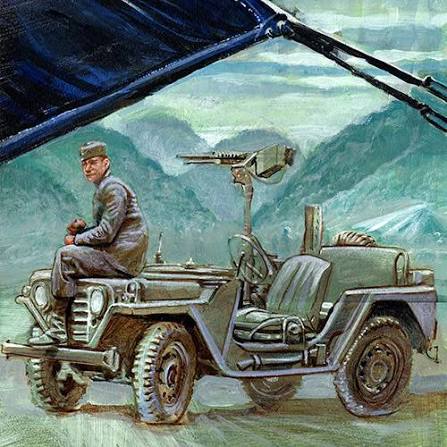
Tag: World War II

  • The Jeep: How a Simple Vehicle Became the Icon of the Allied War Effort

    The Jeep: How a Simple Vehicle Became the Icon of the Allied War Effort

    In the summer of 1940, as German Panzers rolled through France, the U.S. Army realized it had a mobility problem. Its reconnaissance fleet was a patchwork of motorcycles, sidecars, and modified civilian cars none of which could keep pace with a modern mechanized army. So the Army drafted a spec for a small, rugged, four-wheel-drive vehicle that could go almost anywhere. The result, after a frantic competition among three automakers, was a machine that would become as recognizable as the rifle: the Jeep.

    By the war’s end, American factories had produced over 640,000 of them. They landed on Normandy beaches, crossed the Rhine, clawed through Pacific jungles, and rolled into Berlin. But the Jeep was more than a vehicle it was a symbol of industrial might, a mobile command post, and a lifeline for soldiers who needed to move fast and hit hard.

    The Spec That Started It All

    The Army’s initial request, issued in 1940, was deceptively simple: a lightweight reconnaissance car weighing no more than 1,300 pounds, with a payload of 600 pounds and a wheelbase under 75 inches. But the requirements quickly grew more demanding four-wheel drive, a crew of three, and the ability to be air-dropped. The weight limit was later revised to 2,160 pounds, which still seemed impossibly tight for a vehicle that needed to haul troops, machine guns, and radio gear.

    Three companies answered the call: the American Bantam Car Company, Willys-Overland, and Ford. Bantam, a small Pennsylvania firm, delivered the first working prototype in September 1940 a feat of engineering speed that earned it a place in history. But Bantam lacked the production capacity to build thousands of vehicles. Willys won the main contract, thanks to its more powerful engine: a 60-horsepower L-head four-cylinder nicknamed the “Go-Devil.” Ford, with its enormous factories, built the same vehicle under license. The result was near-identical: the Willys MB and the Ford GPW.

    Between 1941 and 1945, they rolled off assembly lines at a staggering pace—363,000 from Willys, 277,000 from Ford. Bantam, after losing the contract, mostly built trailers. The Jeep, as it was soon called, was standardized, reliable, and cheap. Its flat hood doubled as a map table. Its 80-inch wheelbase let it turn on a dime. And its 4×4 drivetrain could climb a 40-degree slope, ford a stream, or plow through mud that would swallow a truck.

    The Name: A Myth and a Mystery

    Everyone knows the Jeep’s name came from “GP”—General Purpose. But that’s likely a myth. Ford’s “GPW” designation stood for “Government, 80-inch wheelbase, Willys design,” not “General Purpose.” The word “jeep” was already in American slang before the vehicle existed: it appeared in Popeye comic strips in the 1930s and was used by soldiers to describe new recruits or unproven equipment.

    The name stuck to the vehicle after a 1941 Washington Daily News article described a soldier test-driving a prototype and calling it a “jeep.” The Army officially adopted the name in 1942. Whatever its true origin, the name was perfect—short, tough, and impossible to forget.

    Mobility for the Small Unit

    The Jeep’s greatest military contribution wasn’t any single battle. It was the way it transformed small-unit mobility. Before the Jeep, a squad on patrol had to walk or pile into a truck that couldn’t leave the road. The Jeep gave them wings—or at least wheels that could go almost anywhere.

    In North Africa, British Long Range Desert Group patrols mounted machine guns and extra fuel cans on Jeeps to raid Axis airfields hundreds of miles behind the lines. In Burma, Brigadier Orde Wingate’s Chindits used Jeeps to move deep into jungle territory, resupplying by air and striking at Japanese supply lines. On D-Day, Jeeps rolled off landing craft onto Omaha Beach, some fitted with waterproofing kits to wade ashore. In the Battle of the Bulge, Jeeps hauled ammunition, food, and radio equipment to surrounded American units at Bastogne.

    The Jeep was also a weapons platform. A .30-caliber machine gun mounted on the passenger side turned it into a light attack vehicle. Some crews added a .50-caliber for heavier firepower. Others stripped the doors and windshield for better visibility, or welded on armor plate for protection.

    But the Jeep’s versatility went beyond combat. Medics used them as field ambulances, carrying wounded on stretchers across the hood and rear. Officers used them as mobile command posts, with radios bolted to the dash. Engineers used them to pull anti-tank guns and trailers. And when roads were destroyed, the Jeep could be fitted with flanged wheels to run on railroad tracks—a trick that proved invaluable in Italy and France.

    The Logistical Workhorse

    Some historians argue the Jeep’s most important role was logistical. With thousands of vehicles in the field, the Army needed a machine that was easy to maintain and repair. The Jeep was that machine. Its engine was simple, its parts were standardized, and a mechanic with basic tools could fix most problems in the field. This reliability reduced the strain on supply lines and kept units moving.

    The Jeep was also easy to transport. It could be air-dropped by parachute, loaded into gliders, or lashed to the deck of a landing craft. In the Pacific, where islands were small and airstrips scarce, this was critical. A Jeep could be delivered to a unit that had no road at all.

    Lend-Lease shipments spread the Jeep across the globe. The Soviet Union received about 50,000 Jeeps, which they used for everything from reconnaissance to towing artillery. British forces used them in North Africa, Burma, and Europe. Free French, Chinese, and Polish units all received Jeeps. For many soldiers, the Jeep was their first taste of American industrial production—and it was a taste they never forgot.

    A Symbol for the GI

    Beyond its practical utility, the Jeep became a cultural icon. Its open body, flat hood, and rugged simplicity matched the image of the American GI: informal, resourceful, and a little bit irreverent. War correspondents photographed Jeeps everywhere, from the sands of Iwo Jima to the ruins of Berlin. Newsreels showed GIs driving Jeeps through liberated villages, waving to crowds. The Jeep appeared in cartoons, on posters, and in the letters soldiers sent home.

    But the Jeep wasn’t universally loved by the men who drove it. It was noisy, cold, and drafty. Its brakes were weak, and its high center of gravity made it prone to tipping. Soldiers complained about the hard ride and the lack of doors. Many modified their Jeeps with improvised heaters, extra padding, or battle-scarred armor.

    Still, the Jeep’s strengths outweighed its flaws. It started in cold weather, climbed steep hills, and kept running when other vehicles broke down. For the GI, it was a lifeline—a way to get from one place to another without walking, and a way to carry the gear that made survival possible.

    The Postwar Legacy

    When the war ended, thousands of Jeeps were left behind in Europe and Asia. Some were sold to civilians. Others were shipped home with returning soldiers. The Jeep’s rugged design inspired a new generation of civilian 4×4 vehicles: the Willys CJ series, the Land Rover, and the Toyota Land Cruiser all trace their lineage to the wartime Jeep.

    The Jeep also left a mark on popular culture. It starred in TV shows like MASH and The Rat Patrol*, and became a staple of veteran reunions and military museums. Today, the word “Jeep” is a brand, a style, and a symbol—but it all started with a simple spec and a desperate need for mobility.

    The Truth About Bantam

    One of the most persistent myths about the Jeep is that Bantam invented it and was cheated out of the contract. The truth is more complicated. Bantam built the first prototype, but the Army required a company that could produce tens of thousands of vehicles. Bantam, with its small factory in Butler, Pennsylvania, simply couldn’t scale up. Willys and Ford had the capacity and the engineering resources to meet the demand.

    The Army didn’t cheat Bantam—it made a pragmatic choice. But Bantam’s contribution was real. Its engineers, led by Karl Probst, worked around the clock to design the prototype in just 49 days. That prototype set the template for everything that followed. Bantam may have lost the contract, but its name is forever linked to the Jeep’s origin.

    The Jeep in the Pacific and Beyond

    The Jeep proved its worth in every theater, but the Pacific presented unique challenges. Dense jungles, narrow trails, and island terrain demanded a vehicle that could squeeze through tight spaces and handle muddy, rutted tracks. The Jeep did both. Marines used them to haul supplies across beaches, to tow artillery pieces, and to evacuate wounded from forward positions.

    In the Aleutians and the frozen north, Jeeps struggled with extreme cold, but still managed to start and run. In the deserts of North Africa, they outran German patrols and outlasted their supply lines. In the mountains of Italy, they climbed switchbacks that would stall a truck.

    By 1945, the Jeep was everywhere. It was the workhorse of the Allied war effort—not glamorous, but essential. It carried messages, ammunition, food, and wounded men. It pulled guns, hauled trailers, and even served as a mobile field kitchen. The Jeep didn’t win the war alone, but it helped win it in ways that are easy to overlook.

    The Enduring Icon

    The Jeep’s story is a reminder that sometimes the simplest tools are the most important. It wasn’t the fastest, the most comfortable, or the most powerful vehicle of the war. But it was reliable, versatile, and everywhere. It connected the front lines to the rear, the soldier to his supplies, and the Allied armies to each other.

    After the war, the Jeep became a symbol of freedom and adventure. It inspired a global 4×4 industry and a culture of off-road exploration. But for the veterans who drove it, the Jeep was more than a symbol—it was a piece of home, a reliable friend, and a reminder that even in the chaos of war, American industry could build something that worked.

    The Jeep is still with us today, in various forms, on roads and trails around the world. But its greatest legacy is not the vehicles that bear its name. It’s the memory of the soldiers who drove it, the battles it fought, and the simple idea that a lightweight, four-wheel-drive car could change the course of history.

    The Jeep was a simple vehicle that became an icon because it was exactly what the Allies needed at exactly the right moment. It was fast to produce, easy to maintain, and capable of going almost anywhere. More than that, it was a symbol of American ingenuity and industrial might. As the historian Paul Fussell once wrote, the Jeep was “one of the few good things to come out of the war.” It remains a testament to the power of design, the value of simplicity, and the enduring bond between a soldier and his machine.

    Summary

    • The Jeep was developed from a 1940 Army spec for a lightweight, 4×4 reconnaissance car, with prototypes from Bantam, Willys, and Ford.
    • Willys won the main contract due to its powerful “Go-Devil” engine, and Ford built the same vehicle under license, producing over 640,000 units combined.
    • The name “Jeep” likely came from Army slang and a 1941 newspaper article, not from “General Purpose” as commonly believed.
    • The Jeep’s versatility made it essential in every theater: scout car, ambulance, weapons platform, radio car, and even a rail vehicle.
    • Post-war, the Jeep inspired the civilian 4×4 market, including the Land Rover and Toyota Land Cruiser.

    FAQ

    Q: Where did the Jeep’s name come from?
    A: The name likely came from Army slang and a 1941 newspaper article, not from “General Purpose.” The “GP” in Ford’s GPW stood for “Government, 80-inch wheelbase, Willys design.”

    Q: How many Jeeps were produced during World War II?
    A: Over 640,000 units were built between 1941 and 1945—about 363,000 by Willys and 277,000 by Ford.

    Q: Did Bantam invent the Jeep?
    A: Yes, Bantam built the first prototype, but the Army chose Willys and Ford for mass production due to their larger manufacturing capacity.

    Q: What was the Jeep used for in the war?
    A: The Jeep was used as a scout car, ambulance, weapons platform, radio car, command vehicle, artillery tractor, and even a makeshift rail vehicle.

    Q: How did the Jeep affect post-war vehicles?
    A: The Jeep’s design inspired civilian 4×4 vehicles like the Willys CJ series, the Land Rover, and the Toyota Land Cruiser.
  • The Balloon Bombs: Japan’s Silent, Deadly Attack on the American Mainland

    The Balloon Bombs: Japan’s Silent, Deadly Attack on the American Mainland

    On May 5, 1945, six people died in a quiet forest near Bly, Oregon. They weren’t soldiers on a battlefield; they were a minister’s wife and five children on a Sunday school picnic. The weapon that killed them had traveled over 5,000 miles, carried by the wind, launched from a secret Japanese laboratory. It was a balloon 33 feet wide, made of paper, and armed with explosives.

    This was the Fu-Go campaign, Japan’s only attack on the American mainland during World War II. Over 9,000 balloon bombs were launched across the Pacific in the winter of 1944-45. They were designed to burn down America’s forests, sow panic, and pull military resources away from the front lines. But a combination of bad weather, luck, and a government-imposed news blackout kept the threat hidden from the public until it was too late for a handful of civilians.

    The Paper Weapon

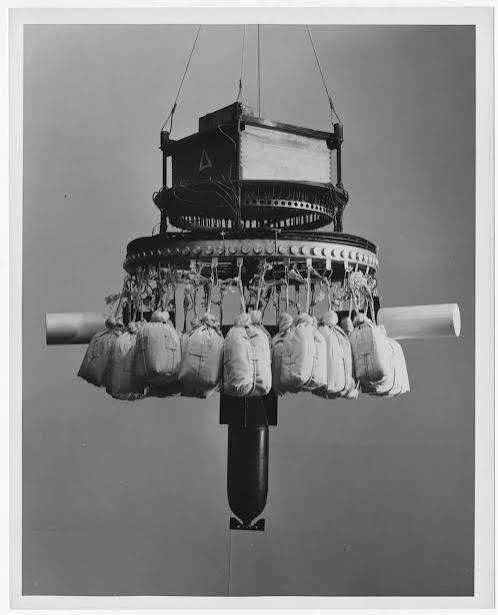
    Japan’s balloon bombs were a feat of engineering, built from humble materials. Each balloon was made of four to five layers of washi, a paper crafted from mulberry bark, glued together with konnyaku, a paste derived from devil’s tongue root. The result was a lightweight but durable envelope that could hold about 19,000 cubic feet of hydrogen. At launch, the balloon stood three stories tall.

    Suspended from the balloon was a payload of 33 to 36 pounds: thermite incendiary bombs to start fires, a single anti-personnel fragmentation bomb with a delayed fuse, and sandbags for ballast. An altimeter mechanism released the sandbags as the balloon lost altitude, keeping it cruising at around 30,000 feet high enough to catch the jet stream, a wind current that Japanese meteorologists had discovered could carry objects across the Pacific in 30 to 60 hours.

    The program, developed by the Imperial Japanese Army’s Noborito Research Institute a secret weapons lab was a direct response to the Doolittle Raid of April 1942. That bombing of Tokyo had shown Japan’s vulnerability, and the military sought both revenge and a way to stretch American resources. Major General Sueyoshi Kusaba oversaw the effort, and by November 1944, launch sites on Honshu were sending balloons skyward.

    The Silent Crossing

    On November 3, 1944, the first balloons were launched. The next day, a U.S. Navy patrol spotted something unusual off the coast of San Pedro, California. It was the first confirmed sighting, but it would be months before the military understood what they were dealing with.

    Over the next six months, roughly 9,300 balloons were launched from three sites: Ōtsu, Ichinomiya, and Nakoso. The peak came in March 1945, with about 1,400 balloons sent off in a single month. Not all made the journey, but an estimated 340 to 370 reached North America, with some reports suggesting the number could be as high as 1,000.

    The balloons landed everywhere from the Pacific Northwest to the Midwest, and as far east as Michigan. They were found in fields, forests, and even on a farm in Iowa. One balloon caused a brief scare when it tangled in power lines in Washington state, knocking out electricity for a few hours. But the intended damage massive forest fires never materialized. The winter of 1944–45 was unusually wet, and the remote, damp forests where most balloons landed were poor fuel for thermite.

    The Silence Campaign

    The U.S. military quickly identified the balloons’ origin through an unlikely clue: the sand in the ballast bags contained diatom species unique to Japanese beaches. That evidence, along with serial numbers on bomb components, confirmed the threat. But rather than alert the public, the government did the opposite.

    The Office of Censorship and the War Department asked newspapers, radio stations, and broadcasters to keep all balloon incidents quiet. The rationale was simple: officials feared that public reports would cause panic, give the Japanese valuable intelligence on where balloons landed, and encourage them to refine the program. The media largely complied, making this one of the most successful censorship campaigns of the war.

    In the background, the military took action. Fighter aircraft were scrambled to intercept balloons, a program called Project Sunset, but the balloons flew too high and too fast for most planes. Radar stations were upgraded, and a network of ground observers was established. Still, the balloons kept coming, and the silence held.

    The silence had a deadly cost. On May 5, 1945, Reverend Archie Mitchell and his wife Elsie took a group of children from their church on a picnic near Bly, Oregon. While the reverend was parking the car, the children ran ahead into the woods and found a strange object lying on the ground—a balloon bomb that had landed days earlier. When they dragged it, the anti-personnel bomb exploded. Elsie Mitchell, 26 and pregnant, was killed along with five children aged 11 to 14. They were the only casualties of the balloon campaign on American soil.

    The End and the Aftermath

    The Bly tragedy broke the silence. The military, fearing more deaths, finally lifted the news blackout, and the story of the balloon bombs became public. But by then, the campaign was already winding down. Japan launched its last balloons in April 1945, its supply of paper and hydrogen exhausted. The program had failed in its primary goals: it started no significant fires and caused no military disruption. It did, however, achieve a kind of psychological effect—after the war, the U.S. public learned that their home front had not been entirely safe.

    The declassification in 1947 revealed the full scope of the operation. In Japan, the Noborito Research Institute’s work was largely forgotten, obscured by the larger narrative of the war. But for the families of the Bly victims, the memory remained. Today, a stone monument at the site of the explosion marks the spot where six civilians died, the only deaths from enemy action on the U.S. mainland during World War II.

    The balloon bombs were a desperate gamble, a weapon of limited technology and even more limited results. They were a reminder that even in a world war, the home front could be a target—and that sometimes, the most dangerous weapons are the ones that arrive silently, carried by the wind.

    The Fu-Go campaign was a failure in military terms, but its legacy is a cautionary tale about the unforeseen consequences of warfare. Japan’s paper balloons flew farther than any other weapon of their kind, yet they caused no fires, no panic, and no strategic diversion. Instead, they left a small, quiet tragedy in an Oregon forest—a reminder that even the most ambitious plans can end in unexpected, heartbreaking ways.

    Summary

    • Japan launched over 9,000 balloon bombs (Fu-Go) from November 1944 to April 1945, aiming to start forest fires and disrupt the U.S. home front.
    • The balloons were made of paper and glue, carried thermite and anti-personnel bombs, and rode the jet stream across the Pacific in 30–60 hours.
    • The U.S. military imposed a news blackout on all balloon incidents to prevent panic and deny Japan intelligence, and the media largely complied.
    • The only casualties were six civilians—Elsie Mitchell and five children—killed on May 5, 1945, near Bly, Oregon.
    • The campaign failed to cause any significant damage, but it remains the only enemy attack on the U.S. mainland during WWII to result in deaths.

    FAQ

    Q: How many balloon bombs reached the United States?
    A: There were 340–370 documented incidents, but some estimates suggest up to 1,000 balloons may have arrived, with many going unreported or undiscovered.

    Q: What were the balloons made of?
    A: Each balloon was constructed from four to five layers of washi (mulberry bark paper) glued with konnyaku (devil’s tongue root paste). They were about 33 feet in diameter and filled with hydrogen.

    Q: Why did the U.S. government hide the balloon attacks?
    A: Officials feared public knowledge would cause panic, provide Japan with valuable intelligence on landing sites, and encourage improvements to the program. The media voluntarily complied with a news blackout.

    Q: Did the balloon bombs cause any major fires?
    A: No. Despite the intent, the bombs caused negligible damage, largely due to wet winter conditions and the remote, forested areas where most landed.

    Q: When did the public learn about the balloon bombs?
    A: The full story was declassified in 1947, though the Bly, Oregon deaths in May 1945 forced the military to partially lift the news blackout.

  • The Submarine War: How U-Boats Nearly Strangled Britain

    The Submarine War: How U-Boats Nearly Strangled Britain

    In the spring of 1941, a convoy of 42 merchant ships lumbered across the North Atlantic, their holds stuffed with food, fuel, and aircraft parts. They were the lifeline of an island nation that imported 70% of its food and nearly all of its oil. But in the dark waters around them, a pack of German U-boats was closing in. Over three nights, they sank 21 ships, sending over 100,000 tons of cargo to the bottom. The convoy’s escorts a handful of corvettes and destroyers could only watch as their charges exploded and burned.

    This was the Battle of the Atlantic, the longest continuous campaign of World War II, and it nearly killed Britain. Between 1939 and 1945, German submarines waged a war of attrition against the ships that kept Britain alive, sinking over 14 million tons of Allied shipping and killing tens of thousands of merchant seamen. Winston Churchill later admitted, “The only thing that ever really frightened me during the war was the U-boat peril.”

    The Lifeline That Had to Be Cut

    Britain’s vulnerability was not a secret. Before the war, the nation imported roughly 55 million tons of goods annually everything from wheat to tungsten. Once the fighting began, that flow became a matter of survival. The British war economy required about 1 million tons of imports per week to sustain itself. By 1942, imports had fallen to just 23 million tons. The country was bleeding out, slowly.

    Germany knew this. Admiral Karl Dönitz, commander of the U-boat fleet, had studied Britain’s dependence on the sea and concluded that if his submarines could cut the transatlantic lifeline, they could starve the island into submission. His strategy was simple: sink more ships than the Allies could build.

    The U-Boat Armada and the Wolf Packs

    The U-boats that prowled the Atlantic were not the sleek nuclear submarines of the Cold War. They were cramped, diesel-electric boats mostly Type VIIs of about 770 tons that spent most of their time on the surface, diving only to attack or evade. They carried about 14 torpedoes and a crew of 44 men who lived in conditions that were, by any measure, appalling.

    Dönitz’s innovation was the wolf pack tactic. Instead of hunting alone, U-boats would spread out in a patrol line across the likely convoy routes. When one boat spotted a convoy, it would shadow it, sending position reports via radio to call in other boats. At night, they would attack on the surface, where their small silhouettes made them almost invisible to escort lookouts. In 1940 and 1941, this tactic worked devastatingly well. The “Happy Time,” as German crews called it, saw U-boats sinking ships faster than Allied yards could replace them. In 1942 alone, they sank more than 1,000 ships in the Atlantic.

    The Merchant Navy: Civilians Under Fire

    The men who bore the brunt of this onslaught were not soldiers. They were merchant seamen—civilian volunteers who signed on to crew the cargo ships, tankers, and transports that carried the goods. They had no combat training, and their ships were often unarmed. Their casualty rate was among the highest of any service branch: roughly one in four merchant seamen who served in the Atlantic did not survive.

    A torpedo strike was a sudden, violent end. A 500-ton freighter could break apart and sink in minutes. Survivors often found themselves in lifeboats or clinging to wreckage, adrift for days or weeks in the freezing North Atlantic. Some were picked up by the same U-boats that had sunk them; others were never found. The psychological toll was immense—many men refused to go back to sea after a single attack, while others returned again and again, knowing the odds.

    The Allies Fight Back: Convoys and Technology

    The first line of defense was the convoy system, revived from World War I. Grouping merchant ships into columns, protected by escorts, dramatically reduced losses. Independent sailers were easy prey; convoyed ships were not. In 1940, the loss rate for independent ships was about 10%; for convoyed ships, it was less than 1%.

    The escorts improved over time. Flower-class corvettes—small, rugged ships built on merchant hulls—were joined by frigates and destroyers equipped with ASDIC (sonar), radar, and depth charges. The introduction of high-frequency direction finding (Huff-Duff) allowed escorts to pinpoint a U-boat’s position the moment it transmitted a radio message, forcing them to stay silent and breaking up wolf pack coordination.

    Air power was the final piece. For the first three years, a “Mid-Atlantic Gap”—a stretch of ocean beyond the range of land-based aircraft—provided a safe hunting ground for U-boats. In 1943, long-range B-24 Liberators and escort carriers closed that gap, and the U-boats lost their sanctuary.

    The Secret Weapon: Ultra

    The most decisive advantage, though, was invisible. At Bletchley Park, a team of codebreakers—many of them women—had cracked the German Enigma cipher. The intelligence, codenamed Ultra, allowed Allied commanders to read U-boat signals and reroute convoys around wolf packs. This was not a perfect system; the Germans periodically changed their codes, and there were times when the Allies were blind. But overall, Ultra gave the Allies an enormous edge.

    Some historians argue that Ultra’s contribution has been overstated, pointing out that convoys and air cover were the primary defensive measures. But even the skeptics concede that knowing where the U-boats were—or at least where they weren’t—saved thousands of lives and millions of tons of shipping.

    Black May: The Turning Point

    The campaign reached its climax in May 1943. The Allies had finally assembled enough escorts, enough aircraft, and enough intelligence to take the offensive. In a single month, they sank 41 U-boats—more than one per day—while losing only 34 merchant ships. It was a massacre. The Kriegsmarine’s wolf packs were forced to withdraw from the North Atlantic, and they never returned in strength.

    Dönitz later admitted that the battle was lost. The U-boat arm continued to fight, but it was a losing struggle against overwhelming Allied industrial might. The United States was launching Liberty ships in as little as 42 days, while Germany’s shipyards could not replace U-boats fast enough. In the end, of the roughly 1,170 U-boats that served, about 785 were sunk. Of the 40,000 men who served in the U-boat arm, some 28,000 died—a casualty rate of 70%, the highest of any German service branch.

    The Human Cost and the Legacy

    The Battle of the Atlantic was not a clean, heroic struggle. It was a brutal war of logistics, fought by men in cold, dark, dangerous places. On the German side, U-boat crews were romanticized as “iron coffins”—a grim nickname that proved all too accurate. On the Allied side, merchant seamen were often forgotten, their sacrifices overshadowed by the more glamorous battles of the war.

    But Britain survived. The imports kept flowing, the convoys got through, and the island became the launching pad for the liberation of Europe. The U-boat war was a close-run thing, but in the end, the Allies’ combination of intelligence, technology, and sheer industrial capacity won out. As Churchill put it, the U-boat peril was the only thing that truly frightened him. It was a fear that proved justified—and a fight that was won against the odds.

    The submarine war was a test of endurance, a struggle between a nation that needed to import 1 million tons of supplies every week and an enemy determined to stop it. For nearly four years, the outcome hung in the balance. But the Allies adapted, innovated, and out-produced their enemy. By May 1943, the U-boats had been driven from the Atlantic, and Britain’s lifeline was secure. The cost was enormous—in ships, in cargo, and above all in lives—but the lesson of the Battle of the Atlantic is clear: even a near-fatal blow can be survived if you have the will, the technology, and the industrial might to keep fighting.

    Summary

    • The Battle of the Atlantic was the longest continuous campaign of WWII, lasting from 1939 to 1945, and was a close-run struggle for Britain’s survival.
    • Germany’s U-boats sank over 14 million tons of Allied shipping and killed thousands of merchant seamen, nearly cutting off Britain’s vital imports.
    • The turning point came in May 1943 when Allied forces sank 41 U-boats in a single month, forcing the Germans to abandon the North Atlantic.
    • Key Allied advantages included the convoy system, new technologies like Huff-Duff and radar, and the breaking of the Enigma code (Ultra).
    • The human cost was staggering: 28,000 of 40,000 U-boat crewmen died, and one in four Allied merchant seamen perished.

    FAQ

    Q: What was the ‘Happy Time’ for U-boats?
    A: The ‘Happy Time’ (1940-1941) was a period when German U-boats sank Allied ships faster than they could be replaced, thanks to wolf pack tactics and the lack of effective Allied countermeasures.

    Q: How did the Allies close the Mid-Atlantic Gap?
    A: The gap was closed in 1943 by using long-range B-24 Liberator bombers and escort carriers that could provide air cover for convoys across the entire Atlantic.

    Q: What was the role of Ultra intelligence?
    A: Ultra was the Allied codebreaking effort that decrypted German Enigma messages, allowing convoys to be rerouted around U-boat wolf packs and saving countless ships and lives.

    Q: Why was Britain so dependent on imports?
    A: Britain imported about 70% of its food and nearly all of its oil and strategic materials, requiring roughly 1 million tons of imports per week to sustain its war economy.

    Q: What was the casualty rate for U-boat crews?
    A: U-boat crews suffered a casualty rate of about 70%—28,000 out of 40,000 men died—the highest of any German service branch.

  • The Proximity Fuze: The Secret Weapon That Stopped the Kamikazes

    The Proximity Fuze: The Secret Weapon That Stopped the Kamikazes

    The Allies' Billion-dollar Secret: The Proximity Fuze of World War II

    In the spring of 1945, off the coast of Okinawa, a U.S. Navy sailor watched a Japanese Zero dive toward his ship. The anti-aircraft guns opened fire, but the shells weren’t aimed to hit the plane—they were set to explode in the air, filling the sky with shrapnel. Yet this time, something was different. The shells didn’t burst at a pre-set altitude. They waited until the plane was close, then detonated with deadly precision, shredding the Zero before it could release its payload or crash into the deck.

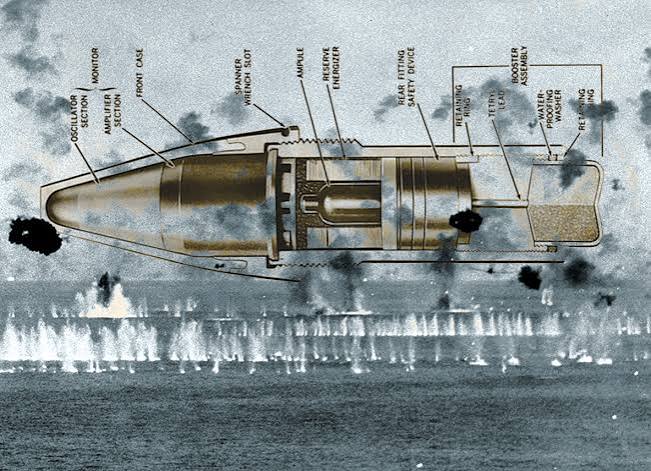
    That difference was the proximity fuze, a tiny radar inside each shell that made it ‘smart’ for the first time in history. Developed in utmost secrecy, it was arguably as important as the atomic bomb in ending World War II and it was the key to stopping the kamikaze onslaught that threatened to turn the tide in the Pacific.

    The Problem: A Shell That Couldn’t Hit a Plane

    By 1940, aircraft had become faster and more maneuverable than ever. Anti-aircraft guns fired shells that exploded either on impact or after a preset time, calculated by a gunner who had to guess the aircraft’s speed, altitude, and direction. Against a diving Zero or a high-flying bomber, that guess was often wrong. A shell that exploded too early produced a harmless puff of smoke; too late, and it fell into the sea. The U.S. Navy calculated that it took about 2,500 rounds of standard 5-inch ammunition to down a single aircraft. That was an unacceptable ratio when Japanese planes were intentionally crashing into American ships.

    The solution required a fundamental change: a fuze that could sense the target and detonate at the optimal moment. That meant putting a radar transmitter and receiver inside a shell small enough to fit in a 5-inch gun, rugged enough to survive the 20,000g shock of being fired, and cheap enough to produce by the millions.

    The Innovation: A Radar in Every Shell

    The idea was proposed by British scientists, who shared their cavity magnetron—a device that generated high-frequency radio waves with the United States in 1940 as part of the Tizard Mission. This breakthrough made it possible to miniaturize radar. The U.S. Navy’s National Defense Research Committee, under the leadership of Dr. Merle Tuve at Johns Hopkins University’s Applied Physics Laboratory, took on the challenge.

    The result was the VT fuze, short for ‘variable time.’ Each fuze contained a tiny radio transmitter that sent out a signal. When the shell approached a target, the signal bounced back, and the fuze detonated the shell within 20 to 70 feet of the aircraft close enough for the shrapnel to be lethal. The first successful test was in January 1942, and by 1943, factories were mass-producing them.

    The Secret Weapon: Guarding the Secret

    The proximity fuze was one of the most closely guarded secrets of World War II. The U.S. military was terrified that if an unexploded shell fell into enemy hands, the Germans or Japanese would reverse-engineer the technology. So, the fuze was used only over water where the shells would sink into the ocean and only against aircraft. Its use over land was forbidden until the Battle of the Bulge in December 1944, when the U.S. Army, desperate against a surprise German offensive, got permission to use VT-fuzed artillery. The results were devastating: shells that exploded in the air above German infantry in the open caused horrific casualties and helped break the offensive.

    The secrecy extended even to allies. The British had helped develop the technology, but the U.S. initially restricted sharing details, a source of tension. Only after the fuze’s success was undeniable did the U.S. relax the restrictions.

    The Kamikaze Crisis: A Turning Point at Okinawa

    The kamikaze campaign began in earnest in October 1944, during the Battle of Leyte Gulf. By the time the U.S. invaded Okinawa in April 1945, the Japanese were launching mass waves of suicide planes. The attacks were devastating: in the first weeks, kamikazes sank or damaged dozens of ships, killing thousands of sailors. The U.S. Navy was facing a crisis that threatened the entire invasion.

    The proximity fuze was the answer. When VT-fuzed shells were used in the anti-aircraft guns, the kill probability per round increased by four to five times. The Navy’s radar-directed fire control, combined with VT fuzes, meant that a shell didn’t have to hit the plane it just had to get close. Japanese pilots reported that American shells seemed to ‘explode in their faces’ with uncanny accuracy, a psychological blow as much as a physical one. By the end of Okinawa, the VT fuze had helped the Navy shoot down thousands of kamikaze planes, turning the tide.

    The Industrial Miracle: A Billion-Dollar Investment

    Developing the fuze was only half the battle. Producing it in the quantities needed was another. The program cost roughly $1 billion in 1940s dollars comparable to the Manhattan Project. By 1945, U.S. factories, including those run by Sylvania and Raytheon, were producing over 1 million fuzes per month. Each one contained fragile vacuum tubes that had to survive the shock of being fired. It was a triumph of industrial engineering, turning a complex electronic device into a cheap, reliable component.

    The Legacy: From War to Peace

    After the war, the proximity fuze’s technology found peacetime uses. It was adapted for weather radar, air traffic control, and modern artillery. But its greatest impact was on the battlefield. Some historians, like Ralph Baldwin, argue that it was the second most important secret weapon of World War II, after the atomic bomb. While the bomb ended the war, the proximity fuze saved countless American lives and helped secure victory in the Pacific.

    The proximity fuze was a weapon of genius, born of scientific collaboration and industrial might. It didn’t just improve anti-aircraft fire it transformed it, turning a desperate defense into a lethal shield. In the dark days of the kamikaze campaign, it was the difference between defeat and victory. And yet, it remains one of the least-known secrets of the war, a silent hero that saved thousands of lives and helped end the conflict.

    Summary

    • The proximity fuze (VT fuze) used a miniature radar to detonate shells near targets, making anti-aircraft fire 4-5 times more effective.
    • Developed in secret by the U.S. Navy and NDRC, it cost ~$1 billion and was produced at a rate of 1 million per month by 1945.
    • It played a crucial role against kamikazes at Okinawa, where it helped shoot down thousands of planes.
    • Its use was restricted to over-water operations to keep it secret, until the Battle of the Bulge.
    • Post-war, the technology was adapted for weather radar and air traffic control.

    FAQ

    Q: What is a proximity fuze?
    A: A proximity fuze, or VT fuze, is a radar-based detonator that explodes a shell when it comes within 20-70 feet of its target, rather than on impact or after a preset time.

    Q: How did the proximity fuze work?
    A: Each fuze contained a tiny radio transmitter and receiver. The transmitter sent out a signal; when it bounced back off a target, the fuze triggered the explosion.

    Q: Why was it so secret?
    A: The U.S. feared that if an unexploded shell fell into enemy hands, they could reverse-engineer the technology. So it was only used over water until late in the war.

    Q: How effective was it against kamikazes?
    A: VT-fuzed shells increased kill probability by 4-5 times compared to time fuzes, and were a primary defense at Okinawa, helping to defeat the kamikaze campaign.

    Q: What was the post-war impact?
    A: The technology was adapted for weather radar, air traffic control, and modern artillery, leaving a lasting legacy beyond the battlefield.

  • The Mold That Won the War: How Penicillin Beat Infection and Saved Millions

    The Mold That Won the War: How Penicillin Beat Infection and Saved Millions

    In the summer of 1944, as Allied troops stormed the beaches of Normandy, each medic carried a small tin box containing a yellow powder that would redefine battlefield medicine. That powder penicillin had been discovered sixteen years earlier in a cluttered London laboratory, but it took a world war to turn it into the miracle that saved an estimated 200,000 soldiers on D-Day alone.

    This is not just a story of a lucky accident. It’s a story of desperate improvisation, a rotting cantaloupe, and an industrial push that rivaled the Manhattan Project. It’s the story of how a fragile mold became the most sought-after substance on Earth, and how it changed medicine forever.

    A Petri Dish and a Stroke of Luck

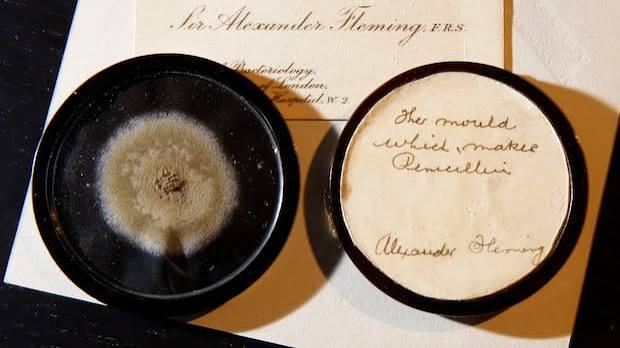
    On a September morning in 1928, Alexander Fleming returned from vacation to his cluttered lab at St. Mary’s Hospital in London. Before leaving, he had stacked a pile of Petri dishes inoculated with staphylococcus bacteria. Now, one dish was contaminated with mold. But instead of tossing it, Fleming noticed something odd: around the mold, the bacteria had been destroyed.

    The mold was Penicillium notatum, a common airborne fungus. Fleming published his findings in 1929, but he couldn’t isolate the active compound. The mold produced penicillin in such tiny amounts that purifying it seemed impossible. For a decade, the discovery languished as a lab curiosity.

    Oxford’s Improvised Assembly Line

    In 1939, a team at Oxford University pathologist Howard Florey, biochemist Ernst Chain, and biochemist Norman Heatley took up the challenge. They had a hunch that Fleming’s mold could be the key to fighting bacterial infections that killed millions. But they faced a brutal problem: how to produce enough penicillin to test it in humans.

    Heatley’s solution was ingenious in its simplicity. He grew the mold in a broth of nutrients, using whatever vessels he could find bedpans, milk churns, even old bookshelves lined with glass jars. The “surface culture” method was laborious: each container yielded only a few drops of the precious liquid. But it worked.

    By 1941, the team had enough penicillin to treat their first patient, a British policeman named Albert Alexander. Alexander had scratched his face on a rose bush, and the wound had become infected with a deadly mix of staphylococci and streptococci. He was near death when the Oxford team administered penicillin. Within days, his fever broke, and the infection began to clear. But the supply ran out before he was cured. Alexander relapsed and died. The lesson was stark: penicillin worked, but producing it at scale was a matter of life and death.

    The American Solution

    Britain, battered by the Blitz and stretched thin by war, couldn’t build the production facilities penicillin demanded. So Florey crossed the Atlantic in 1941, carrying a precious sample of mold in his coat pocket. He appealed to the U.S. government, and the Office of Scientific Research and Development (OSRD) launched a crash program—secret, urgent, and massive.

    The USDA’s Northern Regional Research Laboratory in Peoria, Illinois, became the epicenter of the search for a better mold. Scientists scoured the globe for samples, testing hundreds of strains. The winner came from a rotting cantaloupe in a Peoria grocery store. This strain, Penicillium chrysogenum, produced 200 times more penicillin than Fleming’s original.

    The next breakthrough was engineering. Instead of shallow trays, Pfizer, a Brooklyn chemical company, developed deep-tank fermentation—giant vats where the mold grew in a constantly stirred, aerated broth. Corn steep liquor, a byproduct of corn processing, proved to be the perfect nutrient. By 1944, Pfizer’s plant in Brooklyn was producing penicillin around the clock.

    Triage and Triumph on the Battlefield

    Penicillin was so scarce that doctors had to make agonizing choices about who would receive it. In North Africa and Sicily in 1943, early trials showed dramatic results: soldiers with infected wounds, gangrene, and pneumonia recovered in days. But there wasn’t enough for everyone. Some doctors reserved penicillin for soldiers with battle wounds, while those with venereal disease had to wait—a moral calculus that haunted many physicians.

    By D-Day, June 6, 1944, the supply had caught up with the need. Allied forces carried enough penicillin to treat an estimated 200,000 casualties. Field medics applied it as a powder to wounds, and penicillin became standard in every medical kit. The results were staggering: mortality from bacterial pneumonia in military hospitals fell from about 18% to just 1% in some studies. Gangrene and sepsis, the scourges of WWI, became treatable.

    A Nobel Prize and a New Era

    In 1945, Fleming, Florey, and Chain shared the Nobel Prize in Physiology or Medicine. By the end of the war, U.S. production had reached over 600 billion units per month—enough to treat every wounded soldier and still have surplus for civilians.

    Penicillin’s success didn’t just save lives; it transformed medicine. It proved that government, industry, and academia could collaborate on a scale never before attempted. It sparked a golden age of antibiotics—streptomycin, tetracyclines, and beyond—and set the mold for how modern drugs are developed and mass-produced.

    But the story also has a cautionary edge. The scarcity that forced doctors to choose who lived and who died is a reminder of the ethics of triage. And the patents and production disputes between the U.S. and Britain foreshadowed today’s global battles over drug access. Penicillin was a miracle, but it was a human-made miracle—fraught with the same ambitions, conflicts, and inequalities that shape all human endeavors.

    The story of penicillin is not just about a mold that happened to kill bacteria. It’s about the power of collaboration, the urgency of war, and the audacity to scale a fragile discovery into a global lifesaver. Fleming noticed the mold, but it took the Oxford team’s ingenuity, the Peoria cantaloupe, and the industrial might of American companies to turn it into a weapon against death. As we face new infectious threats, the lesson of penicillin endures: a breakthrough in the lab means nothing until it can be produced, distributed, and used—often in the chaos of a battlefield or a pandemic.

    Summary

    • Alexander Fleming discovered penicillin in 1928, but it took over a decade to purify and produce it.
    • The Oxford team (Florey, Chain, Heatley) developed methods for extraction and testing, including the first human trial in 1941.
    • The U.S. led mass production during WWII, with a crucial breakthrough from a cantaloupe mold and deep-tank fermentation.
    • Penicillin reduced mortality from infections dramatically, saving an estimated 200,000 soldiers on D-Day alone.
    • The drug’s success established models for government-industry-academic collaboration and sparked the antibiotic era.

    FAQ

    Q: Why did it take so long to develop penicillin after Fleming’s discovery?
    A: Fleming couldn’t isolate or stabilize the active compound, and the mold produced it in tiny amounts. It wasn’t until the Oxford team in 1939 developed methods to extract and concentrate penicillin that it became viable for testing in humans.

    Q: What was the ‘surface culture’ method?
    A: Norman Heatley’s technique involved growing penicillin mold in shallow layers of broth in improvised vessels like bedpans and milk churns. It was laborious but allowed the Oxford team to produce enough penicillin for early experiments and the first human trial.

    Q: How did a cantaloupe contribute to penicillin production?
    A: In 1943, the USDA lab in Peoria, Illinois, found a mold strain (Penicillium chrysogenum) on a rotting cantaloupe from a local market. This strain produced 200 times more penicillin than Fleming’s original, making mass production feasible.

    Q: Was penicillin used on D-Day?
    A: Yes, Allied forces carried enough penicillin to treat an estimated 200,000 casualties, and it was standard in field medical kits, dramatically reducing infection deaths.

    Q: Why is Norman Heatley often called ‘the forgotten man’?
    A: Heatley developed the extraction and purification methods and the surface culture technique, but he was not included in the Nobel Prize, which went to Fleming, Florey, and Chain. His contributions were vital to making penicillin practical.

  • The Radar Revolution: How Technology Won the Battle of Britain

    The Radar Revolution: How Technology Won the Battle of Britain

    In the summer of 1940, as Luftwaffe bombers droned across the English Channel, a handful of men and women in wooden towers and underground bunkers held the key to Britain’s survival. They weren’t pilots or gunners, but radar operators and plotters, armed with little more than cathode-ray tubes and telephone lines. Their work gave Fighter Command a precious gift: time.

    Before radar, defending against an air raid was like fighting in the dark. Sound locators giant concrete ears and binoculars gave at best five to eight minutes of warning, often less, and were useless in cloud or at night. The bomber, it was said, would always get through. But a secret network of steel towers, code-named Chain Home, would shatter that assumption and rewrite the rules of aerial warfare.

    The Daventry Experiment

    On a damp February morning in 1935, a young scientist named Robert Watson-Watt stood beside a van in a field near Daventry, England. Inside the van, a receiver was tuned to the BBC’s shortwave broadcast from nearby Daventry. As a bomber flew through the radio beam, the receiver detected a sudden fluctuation the aircraft had reflected the radio waves. The Daventry Experiment was a success, proving that radio waves could detect aircraft.

    Watson-Watt, who had been tasked by the Air Ministry’s Committee for the Scientific Survey of Air Defence to investigate a “death ray,” had instead delivered something far more practical. Within weeks, his team began developing a system that would become Chain Home.

    Building the Chain Home Network

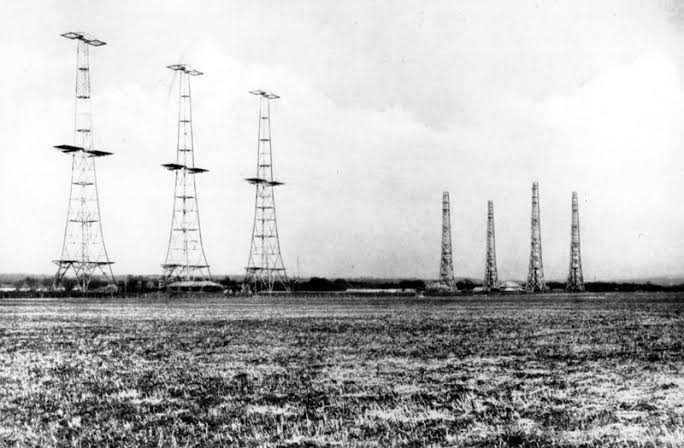
    By 1939, a chain of 21 coastal radar stations stretched from the Orkney Islands to the Isle of Wight, later expanding to about 30. Each station featured 350-foot steel transmitter towers emitting 25-meter wavelength pulses, with wooden receiver towers set back from the coast. Operators measured the time delay of reflected pulses to determine the range and bearing of incoming aircraft.

    The system could detect planes up to 120 miles away enough to provide 10 to 15 minutes of warning before German formations reached the coast. But it had limitations: it couldn’t accurately determine altitude, and once aircraft crossed the coastline, they were lost to the radar. Overland tracking fell to the Royal Observer Corps, whose 1,000 posts fed information to a central command.

    The Dowding System: Brains and Brawn

    The real innovation wasn’t just radar; it was the integration of radar into a single command-and-control network, known as the Dowding System, after Air Chief Marshal Hugh Dowding. Radar stations telephoned their data to Filter Rooms, where WAAF plotters moved markers across a large table with croupier-style rakes. Controllers then scrambled fighters and vectored them via radio to intercept the enemy.

    This closed loop—detection, filtering, decision, interception—was unprecedented. It allowed Fighter Command to conserve its limited aircraft and pilots by launching them only when and where they were needed, rather than keeping standing patrols that burned fuel and exhausted crews.

    German intelligence knew of the radar masts but severely underestimated their capability. They believed the towers were navigation beacons or crude early-warning devices, easily jammed. They didn’t grasp the sophistication of the Dowding System, and their attempts to bomb the radar stations in August 1940 were brief and not sustained. Göring’s decision to shift attacks to London, aiming to break British morale, is often cited as a critical error—it gave the RAF’s airfields a reprieve.

    The Numbers Behind the Victory

    During the height of the Battle in August and September 1940, the Dowding System processed information from over 1,000 Observer Corps posts and more than 21 radar stations. The warning time it provided was decisive: fighters could be scrambled and climb to altitude before the Luftwaffe arrived, turning what could have been a slaughter into a defensive victory.

    Without radar, Fighter Command would have been forced to maintain standing patrols, exhausting pilots and fuel, and would have been caught on the ground during raids. Radar allowed the RAF to meet the enemy at the right place, at the right time, and with the right numbers. It was a contest of attrition, and radar tipped the balance.

    Radar didn’t win the Battle of Britain alone—the pilots, ground crews, WAAF plotters, and Observer Corps volunteers were equally vital. But without the Chain Home network and the Dowding System, the RAF would have been fighting blind. The technology didn’t just give Britain an edge; it gave them the ability to fight another day, and in the summer of 1940, that was everything.

    Summary

    • Chain Home, a network of 21+ coastal radar stations, gave Fighter Command 10–15 minutes of warning before German raids reached the coast.
    • The Dowding System integrated radar data, Observer Corps reports, and fighter control into a single command network, enabling precise interception.
    • German intelligence underestimated British radar, believing it crude and easily jammed, and failed to sustain attacks on radar stations.
    • Radar allowed the RAF to conserve resources by scrambling fighters only when needed, avoiding standing patrols that would have exhausted pilots and fuel.
    • The Battle of Britain was a contest of attrition; radar provided the strategic advantage that made victory possible.

    FAQ

    Q: What was the Daventry Experiment?
    A: It was a February 1935 test where a bomber flying through a BBC radio beam was detected by a receiver, proving radio waves could detect aircraft. This led to the development of Chain Home.

    Q: How did Chain Home radar work?
    A: It used 350-foot steel towers to emit radio pulses; receivers measured the time delay of reflected pulses to determine aircraft range and bearing. It could detect planes up to 120 miles away.

    Q: What was the Dowding System?
    A: It was an integrated command-and-control network linking radar stations, Observer Corps posts, operations rooms, and fighter airfields, allowing centralized tracking and vectoring of fighters.

    Q: Why didn’t the Germans destroy the radar stations?
    A: German intelligence underestimated their importance, believing they were navigation beacons or crude early-warning devices. Their attacks in August 1940 were brief and not sustained; Göring then shifted focus to London.

    Q: Could the RAF have won without radar?
    A: Without radar, Fighter Command would have had to maintain standing patrols, exhausting pilots and fuel, and would have been caught on the ground. Radar was necessary, though not sufficient, for victory.

  • The Bombs That Never Fell: Why the Allies Didn’t Target Auschwitz

    The Bombs That Never Fell: Why the Allies Didn’t Target Auschwitz

    Why Wasn't Auschwitz Bombed? - Warfare History NetworkIn the summer of 1944, American B-17 bombers roared over the Polish countryside, their bomb bays opening over the I.G. Farben synthetic fuel plant at Monowitz, just five miles from the gas chambers of Auschwitz-Birkenau. The bombs shook the earth, and prisoners in the camp felt the vibrations. Some dared to hope that the next wave would hit the crematoria. It never did.

    This is the story of a moral and military quandary that has haunted historians for decades: why did the Allies, who had the planes, the intelligence, and the proximity, choose not to bomb Auschwitz? The answers are tangled in strategy, bureaucracy, and the brutal calculus of war, but they begin with a simple fact: the Allies knew, and they did not act.

    The Knowledge They Had

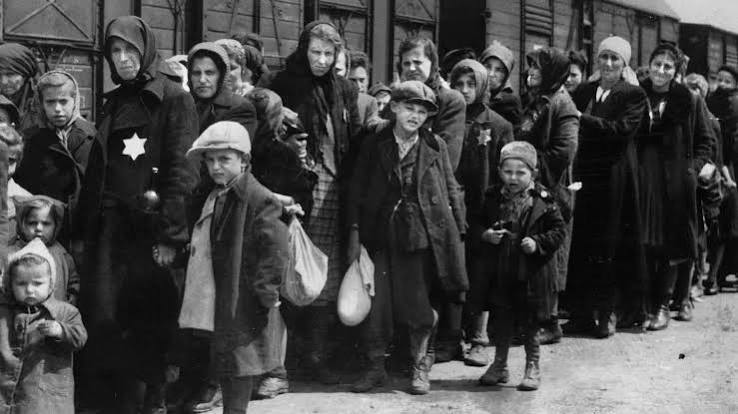
    By mid-1944, the Allies possessed irrefutable evidence of the horrors at Auschwitz. The most detailed account came from two escapees, Rudolf Vrba and Alfred Wetzler, who in April 1944 produced a report describing the camp’s layout, the gas chambers, and the crematoria in chilling detail. The report reached London and Washington within weeks. Polish underground intelligence had been sending similar warnings since 1942. Aerial reconnaissance photographs taken during the Monowitz raids even captured the gas chambers and crematoria, though interpreters at the time failed to identify them.

    Yet knowledge did not translate into action. When Jewish organizations formally petitioned the U.S. and British governments in May 1944 to bomb Auschwitz or the railway lines leading to it, the requests were met with a wall of official reluctance. The U.S. War Department called the idea “impracticable” and warned it would require “the diversion of considerable air support essential for the success of our forces elsewhere.” Assistant Secretary of War John J. McCloy added a chilling caveat: bombing might “provoke even more vindictive action by the Germans.”

    The Strategic Priorities of 1944

    The summer of 1944 was not a time of slack for Allied air power. D-Day had just launched on June 6, and the Normandy campaign was consuming vast resources. The strategic bombing offensive—Operation Pointblank—was hammering German oil production, aircraft factories, and transportation networks. Every bomber was assigned to a target that would shorten the war. The prevailing doctrine, articulated by Churchill and Roosevelt, was that the fastest way to save the victims was to win the war outright. Diverting planes to Auschwitz, the argument went, would not end the killing—it might even prolong it.

    This was not a decision made lightly, but it was made firmly. In July 1944, McCloy wrote again, repeating that bombing Auschwitz “might provoke even more vindictive action by the Germans.” The requests were denied, and no serious military planning was ever undertaken.

    What the Bombers Could Have Done

    The counterargument is stark: Allied aircraft were already flying over the area. On April 4, 1944, U.S. planes bombed the I.G. Farben plant at Monowitz, and on August 20, 1944, 127 B-17 Flying Fortresses dropped their loads on the same target, with bombs landing within two miles of the gas chambers. A raid on September 13 caused bombs to fall on Auschwitz I, killing both SS personnel and prisoners. These raids proved that the Allies had the capability to reach the camp complex. The moral question is whether they had the will.

    Proponents of bombing argued that even an imprecise raid could disrupt the killing machinery, destroy the rail lines, or at least demonstrate Allied resolve. Rail lines, however, were a weak point in the argument—German engineers could repair them within days. The gas chambers themselves were harder to hit without precision, and a direct hit risked killing the very prisoners the Allies sought to save.

    The Soviet Factor and the Politics of Rescue

    Another layer of complexity was the geopolitical reality. Auschwitz lay in the Soviet zone of operations. The Western Allies argued that the Red Army was best positioned to liberate the camp, which it did on January 27, 1945. Stalin was never consulted about bombing requests, and Soviet cooperation was never explored. Some historians suggest that the Western Allies were reluctant to expend resources in a theater where the Soviets would claim the credit.

    But the deeper issue was the “rescue versus victory” debate. Jewish organizations and some politicians argued that targeted rescue operations could save lives without delaying victory. The Allies countered that every bomb diverted to Auschwitz was a bomb not dropped on a German factory or a V-2 launch site. In the brutal arithmetic of war, the lives of the prisoners were weighed against the lives of soldiers and civilians across Europe.

    The Aftermath and the Enduring Question

    In November 1944, Himmler ordered the cessation of gassings, and the crematoria were dismantled as the Red Army advanced. Auschwitz was liberated on January 27, 1945. The Allies had not bombed the camp, and the debate over why has never fully subsided. Historians have offered many explanations—military impracticality, strategic priorities, bureaucratic inertia, and even indifference. But the fact remains that the Allies had the intelligence, the aircraft, and the proximity. They chose not to act, and that choice has become a permanent scar on the moral history of World War II.

    The question of why the Allies did not bomb Auschwitz is not a comfortable one. It forces us to confront the limits of military power in the face of human evil, and the uncomfortable reality that even the most righteous war has its blind spots. The bombs that fell on Monowitz were aimed at German industry, not at the machinery of murder. In the end, the answer is a complex web of strategic calculation, political hesitation, and a failure of moral imagination that continues to resonate today.

    Summary

    • The Allies had credible intelligence about Auschwitz as early as 1942, and detailed reports by 1944, yet no bombing mission was ever ordered.
    • Requests from Jewish organizations to bomb the camp or rail lines were formally rejected by the U.S. War Department in 1944 as “impracticable” and a diversion of resources.
    • Allied aircraft bombed the nearby I.G. Farben plant at Monowitz multiple times in 1944, proving the area was within reach.
    • The official rationale was that bombing would not shorten the war and might provoke even more vindictive German actions.
    • The debate remains a moral flashpoint, highlighting the tension between military priorities and humanitarian intervention.

    FAQ

    Q: Was there ever a formal plan to bomb Auschwitz?
    A: No. Despite requests from Jewish organizations, the U.S. War Department and British government never authorized or planned a bombing mission against the camp complex or its rail infrastructure.

    Q: How close did Allied bombs come to the gas chambers?
    A: During a raid on August 20, 1944, bombs landed within two miles of the gas chambers at Birkenau. Another raid on September 13 caused bombs to fall on Auschwitz I, but these were accidental and not aimed at the camp.

    Q: Were the railway lines to Auschwitz ever bombed?
    A: No. The Allies never targeted the rail lines, despite arguments that disrupting the deportations of Hungarian Jews in mid-1944 could have saved lives.

    Q: Did the Allies have enough information to act?
    A: Yes. The Vrba-Wetzler Report, Polish underground intelligence, and aerial reconnaissance provided detailed knowledge of the camp’s layout and the mass murders.

    Q: What was the main reason for not bombing?
    A: The official position was that bombing was “impracticable” and would divert resources from the strategic bombing campaign aimed at winning the war. There was also concern about precision and the risk of killing prisoners.

  • The Ghost Army: How 1,100 Artists Fooled the Nazis with Inflatable Tanks

    The Ghost Army: How 1,100 Artists Fooled the Nazis with Inflatable Tanks

    In the spring of 1945, a lone American soldier stood on a bluff overlooking the Rhine River, puffing on a cigarette. Across the water, German artillery zeroed in on his position, sending shells whistling past. The soldier didn’t flinch. He was a decoy part of an elaborate ruse that had fooled the Germans into believing a massive Allied force was massing for an assault. In reality, he was one of 1,100 artists, actors, and sound engineers who had spent the past year staging the greatest theatrical production of World War II.

    This was the Ghost Army, officially the 23rd Headquarters Special Troops, a unit so secret that its existence was classified for decades. Armed with inflatable tanks, fake radio traffic, and recordings of clanking armor, these men waged a war of illusion across Europe, saving thousands of lives without firing a shot. Their story, declassified in 1996 and honored with a Congressional Gold Medal in 2022, reveals how creativity became one of the Allies’ most potent weapons.

    The Birth of a Deception

    By early 1944, the Allies faced a brutal problem: how to invade Fortress Europe without being annihilated. The Germans had fortified the Atlantic Wall with millions of mines, concrete bunkers, and crack divisions. A successful landing required not just overwhelming force, but strategic surprise. The Allies needed to convince the Germans that the invasion would come somewhere other than Normandy.

    Traditional deception—dummy camps, fake radio chatter—had been used before, but never with the sophistication the Allies now envisioned. So they assembled a unit unlike any other: the 23rd Headquarters Special Troops, activated in January 1944 in England. Its ranks were drawn from art schools, advertising agencies, and design firms. Among its members were fashion designer Bill Blass, painter Ellsworth Kelly, and photographer Art Kane. These were men trained to create beauty, not destruction—yet their canvas was the battlefield itself.

    Three Kinds of Illusion

    The Ghost Army operated in three parallel tracks, each designed to deceive a different German sense.

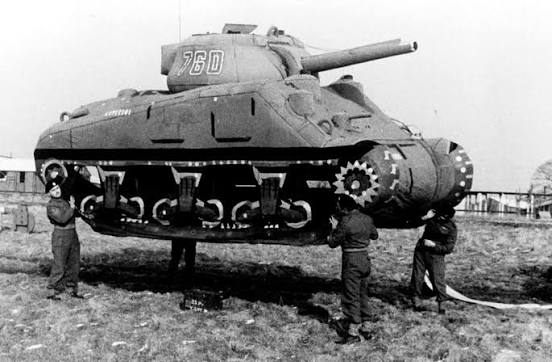
    Visual Deception: The core of the unit’s arsenal was a collection of inflatable rubber tanks, trucks, artillery pieces, and even airplanes. From a distance—or through aerial reconnaissance—these balloons looked like real armor. The soldiers would carefully arrange them, draping them with camouflage netting, painting on shadows and highlights, and positioning them to mimic the chaotic layout of a genuine encampment. At night, they inflated them with air compressors; by dawn, a phantom division would appear where hours earlier there had been empty fields.

    Radio Deception: The Germans were avid listeners to Allied radio frequencies. Ghost Army signalmen exploited this by creating fake radio traffic that mimicked the call signs, transmission patterns, and even the individual Morse code “fists” of real units. They would broadcast false orders, coordinate movements, and maintain a steady stream of chatter that made the phantom units seem alive. This was painstaking work—each operator had to learn the unique rhythms of the real operators they were impersonating.

    Audio Deception: The most theatrical element was sound. Engineers recorded the roar of tanks, the rumble of artillery, and the shouts of troops—then played these recordings through massive speakers that could project sound up to 15 miles away. At night, the Ghost Army would broadcast the noise of a moving column: engines revving, tracks clanking, voices calling out. To German listening posts, it sounded like a full division was on the march.

    The Theatrical Element

    But the Ghost Army’s most audacious trick was human. Soldiers were trained to impersonate officers of real units. They would drive jeeps with the correct insignia, wear the right patches, and even visit local towns to be seen by German spies or sympathetic civilians. Some spoke fluent German and would spread false information in bars and cafes. One soldier, posing as a general, would drive past German observers with a map case full of fake documents.

    This was not just camouflage—it was a performance. As one veteran later put it, “We were actors, and the stage was Europe.” The illusion was so convincing that German intelligence often reported Allied units in places where they had never set foot, and failed to spot the real units that were moving under the cover of their phantom counterparts.

    Key Operations: Saving Lives with Illusion

    The Ghost Army executed over 20 major operations between June 1944 and May 1945. Three stand out.

    Operation Quicksilver (1944): The unit’s first major test came during the D-Day invasion. Their mission was to convince the Germans that the main Allied invasion would land at Pas-de-Calais, not Normandy. They deployed inflatable tanks and landing craft along the English coast, broadcast fake radio traffic, and even used sound effects to simulate the assembly of a massive invasion fleet. The ruse was so powerful that the Germans kept a full army group—nearly 200,000 troops—in reserve at Pas-de-Calais for weeks after the Normandy landings, waiting for an attack that never came.

    Operation Viersen (March 1945): As the war neared its end, the Ghost Army executed one of its most critical deceptions. The U.S. 9th Army needed to cross the Rhine River, but the Germans held the opposite bank in strength. The Ghost Army deployed near Viersen, creating the illusion of a massive buildup across from a different section of the river. They inflated hundreds of dummy tanks, played recordings of bridging operations, and broadcast fake radio traffic. The Germans shifted their defenses to meet the phantom threat, leaving the real crossing point lightly guarded. The 9th Army crossed with minimal resistance—a success that likely saved thousands of lives.

    Operation Bettembourg (1945): In the final weeks of the war, the Ghost Army drew German fire away from the real 6th Armored Division. By creating a fake armored column near Bettembourg, they tricked German artillery into wasting shells on empty fields. The real division moved unmolested, preserving its strength for the final push into Germany.

    The Price of Secrecy

    The Ghost Army’s work was so secret that even their own commanders struggled to acknowledge it. The unit’s existence was classified as top secret, and its members were sworn to silence. They were told that if they were captured, they would likely be executed as spies. After the war, the equipment was packed away, and the men returned to civilian life, carrying a secret they could not share.

    For decades, the story remained unknown. The unit’s records were declassified in 1996, and veterans began to speak publicly. In 2022, the Ghost Army was awarded the Congressional Gold Medal, the highest civilian honor Congress can bestow. For the surviving members—and the families of those who had died—it was a long-overdue recognition of their extraordinary service.

    Was It Effective? The Debate

    While many historians credit the Ghost Army with saving thousands of lives, some caution against overstating its impact. The Germans were already plagued by intelligence failures and stretched thin across a collapsing front. Some operations, like Quicksilver, may have reinforced German misconceptions that were already forming. The exact number of lives saved is impossible to quantify.

    Yet even skeptics acknowledge the unit’s uniqueness. The Ghost Army was the first dedicated tactical deception unit in American history, and its methods—combining visual, radio, and audio illusion—were revolutionary. Its legacy can be seen in modern psychological operations and the elaborate decoys used in conflicts from the Gulf War to the present day.

    A Legacy of Artists and Illusionists

    The Ghost Army’s story is also one of creative minds turned to destructive ends. Many of its members went on to become celebrated artists: Ellsworth Kelly became a pioneer of abstract painting, Bill Blass built a fashion empire, and Art Kane photographed some of the most iconic images of the 20th century. They brought to war the same skills that would later define their careers: an eye for detail, a talent for persuasion, and a deep understanding of how to make people see what they expect to see.

    In that sense, the Ghost Army’s greatest deception was not on the battlefield—it was the irony that artists, trained to reveal truth, were turned into masters of falsehood. But as one veteran reflected, “In war, the lie that saves lives is the noblest truth.”

    The Ghost Army remains one of World War II’s most extraordinary stories—a unit of 1,100 artists who fought with imagination instead of bullets. Their inflatable tanks never fired a shot, yet they helped divert German divisions, protect Allied crossings, and save countless lives. Declassified in 1996 and honored with a Congressional Gold Medal in 2022, their legacy endures as a testament to the power of creativity, even in the darkest of times.

    Summary

    • The Ghost Army (23rd Headquarters Special Troops) was a U.S. Army deception unit of about 1,100 men, active in Europe from June 1944 to May 1945.
    • It used inflatable decoys, fake radio traffic, and sound recordings to fool German forces about Allied troop locations and movements.
    • Key operations included Operation Quicksilver (D-Day cover), Operation Viersen (Rhine crossing), and Operation Bettembourg (drawing fire away from the 6th Armored Division).
    • Members included notable artists like fashion designer Bill Blass, painter Ellsworth Kelly, and photographer Art Kane.
    • The unit’s existence was top secret until 1996; it received the Congressional Gold Medal in 2022.

    FAQ

    Q: What was the Ghost Army?
    A: The Ghost Army was the nickname for the U.S. Army’s 23rd Headquarters Special Troops, a tactical deception unit active in Europe during World War II. It used inflatable tanks, fake radio traffic, and sound effects to deceive German forces about Allied troop positions and strength.

    Q: How did the Ghost Army fool the Nazis?
    A: They used three main methods: visual deception (inflatable rubber tanks and artillery), radio deception (fake radio traffic mimicking real units), and audio deception (recordings of tank and troop movements played through speakers). They also used theatrical impersonation, with soldiers posing as officers of real units.

    Q: What was the Ghost Army’s most famous operation?
    A: Operation Quicksilver, which helped convince the Germans that the D-Day invasion would occur at Pas-de-Calais rather than Normandy. This deception kept German forces tied up in the wrong location for weeks.

    Q: Was the Ghost Army successful?
    A: Most historians credit it with saving thousands of lives by drawing enemy fire away from real units and creating confusion. Operations like Viersen helped the U.S. 9th Army cross the Rhine with minimal resistance. However, the exact strategic impact is debated.

    Q: Why was the Ghost Army kept secret for so long?
    A: The unit’s methods were classified as top secret to protect the techniques and the soldiers, who risked execution if captured. The story was declassified in 1996, and the unit received the Congressional Gold Medal in 2022.

  • The Man Who Walked Into Hell: Witold Pilecki’s Voluntary Mission to Auschwitz

    The Man Who Walked Into Hell: Witold Pilecki’s Voluntary Mission to Auschwitz

    In September 1940, a Polish cavalry officer named Witold Pilecki made a decision that defies easy comprehension. He walked into the heart of Nazi terror not as a prisoner, but as a volunteer. His mission: to infiltrate Auschwitz, gather intelligence, and organize resistance from within. For nearly two and a half years, he lived among the horrors he had come to document, sending out reports that would later be dismissed by Allied leaders who couldn’t believe the truth.

    Pilecki’s story is not just a tale of extraordinary courage. It is a stark reminder of how easily truth can be ignored when it is inconvenient. This is the account of a man who risked everything to bear witness—and who paid the ultimate price not at the hands of the Nazis, but his own country’s post-war communist regime.

    The Man Behind the Mission

    Witold Pilecki was born on May 13, 1901, in Olonets, Russia, into a Polish noble family. Raised in the eastern borderlands, he grew up with a deep sense of patriotism and duty. He fought in the Polish-Soviet War of 1919–1921, then settled as a cavalry officer and landowner. When Germany invaded Poland in September 1939, Pilecki was already involved in underground resistance. He helped organize networks that would become the foundation of the Polish Underground State.

    By 1940, the Nazis had established Auschwitz as a concentration camp for Polish political prisoners. Pilecki saw an opportunity. If he could get inside, he could gather firsthand intelligence on the camp’s operations and atrocities—and perhaps even spark an uprising. In September 1940, he deliberately allowed himself to be caught in a Warsaw street roundup, using the cover name “Tomasz Serafiński.” On September 22, he arrived at Auschwitz as prisoner number 4859.

    Inside the Camp

    The conditions Pilecki encountered were beyond anything he had imagined. Prisoners were beaten, starved, and worked to death. Executions were routine. Yet Pilecki’s resolve did not waver. He began quietly recruiting fellow prisoners who shared his commitment to resistance. Within months, they formed the ZOW (Związek Organizacji Wojskowej—Union of Military Organization), a secret cell dedicated to gathering intelligence and preparing for a possible uprising.

    The ZOW operated under the constant threat of betrayal. Any slip could mean torture and death. Despite this, they managed to smuggle out detailed reports on camp conditions, including the gas chambers and medical experiments. Pilecki’s reports were among the earliest firsthand accounts of the Holocaust to reach the outside world.

    The Uprising That Never Came

    Pilecki and his comrades hoped that if the Allies knew the truth, they would act—perhaps by bombing the camp or supporting an armed uprising. They prepared plans, cached weapons, and waited for a signal that never came. The Allies received Pilecki’s reports but were skeptical. Many officials simply could not believe the scale of the atrocities. Others argued that bombing the camp was not feasible or strategically justified.

    By 1943, Pilecki realized that an uprising without outside support would be suicidal. He also knew that his continued presence endangered the ZOW network. On the night of April 26–27, 1943, he escaped with two comrades, using a diversion and bribed guards. He had spent nearly two and a half years inside Auschwitz.

    The Report and Its Fate

    After his escape, Pilecki wrote a detailed account of his experiences—known as the Pilecki Report. He delivered it to the Polish Underground, who passed it to the British government. The report described the camp’s layout, the daily brutality, the mass murder of Jews, and the possibility of an uprising. It was a treasure trove of intelligence.

    Yet the Allies did little with it. The report was filed away, and Auschwitz remained a target that was never bombed. The British government later acknowledged receiving the information but said it was “not considered to be of great importance.” Pilecki’s mission had succeeded in gathering the truth, but the world was not ready to act on it.

    War After Auschwitz

    Pilecki did not stop fighting after his escape. In 1944, he participated in the Warsaw Uprising against the Germans. When the uprising was crushed, he was captured and sent to POW camps in Lamsdorf and Murnau. He survived the war, but his ordeal was far from over.

    In 1945, Poland fell under Soviet influence, and the new communist government viewed former resistance fighters as enemies. Pilecki returned to Poland in 1947, hoping to resume a normal life. Instead, he was arrested and accused of espionage and plotting to overthrow the government. After a show trial, he was executed by firing squad on May 25, 1948, in Warsaw’s Mokotów Prison. His body was buried in a secret location.

    Legacy

    For over four decades, Pilecki’s name was erased from Polish history. It was only after the fall of communism in 1990 that he was officially rehabilitated. In 2006, he was posthumously awarded the Order of the White Eagle, Poland’s highest state decoration. Today, he is remembered as a national hero—a man who voluntarily entered hell to bear witness and who paid for his courage with his life.

    Witold Pilecki’s story is a reminder that courage is not always rewarded, and that truth does not always prevail. He gave up his freedom, risked his life, and ultimately lost it—all in the hope that his reports would move the world to action. They did not. But his legacy endures as a testament to the power of individual conscience in the face of unimaginable evil. In a world that often looks away, Pilecki chose to look directly into the abyss and tell us what he saw.

    Summary

    • Witold Pilecki voluntarily infiltrated Auschwitz in September 1940, becoming prisoner number 4859.
    • Inside the camp, he organized a resistance network called ZOW and smuggled out detailed reports on atrocities.
    • His reports were largely ignored by Allied leaders, who doubted their accuracy or deemed them not actionable.
    • Pilecki escaped in April 1943, fought in the Warsaw Uprising, and was later executed by Poland’s communist regime in 1948.
    • He was rehabilitated in 1990 and posthumously awarded the Order of the White Eagle in 2006.

    FAQ

    Q: Why did Witold Pilecki volunteer to enter Auschwitz?
    A: Pilecki’s mission was to gather intelligence on the camp’s conditions and atrocities, organize a resistance network inside, and prepare for a potential uprising or Allied liberation. He believed that if the Allies knew the truth, they would act.

    Q: How did he escape from Auschwitz?
    A: In April 1943, Pilecki escaped with two comrades after being assigned to the camp bakery, which gave him access to the outer perimeter. The escape was aided by a planned diversion and bribed guards.

    Q: What was the Pilecki Report?
    A: The Pilecki Report was a detailed firsthand account of Auschwitz, including the gas chambers, medical experiments, and daily life in the camp. It was delivered to the Polish Underground and then to the British government, but was largely ignored.

    Q: Why didn’t the Allies bomb Auschwitz?
    A: The decision not to bomb Auschwitz remains debated. Some argue it was not strategically feasible, while others believe the Allies were skeptical of the reports or prioritized other military objectives.

    Q: How was Pilecki treated after the war?
    A: Pilecki returned to Poland in 1947, where the Soviet-backed communist government arrested him on false charges of espionage. He was executed in 1948, and his name was cleared only after the fall of communism in 1990.

  • The White Rose: Six Leaflets That Defied Hitler

    The White Rose: Six Leaflets That Defied Hitler

    In the winter of 1943, as the Sixth Army froze and starved at Stalingrad, a small group of students in Munich began to print leaflets. They called themselves the White Rose. Their weapons were not guns or explosives, but words typed, mimeographed, and slipped into mailboxes and phone booths across the city.

    Their first leaflet opened with a blunt accusation: ‘The German people slumber on in a dull, stupid sleep and encourage the fascist criminals.’ That sentence was a death warrant for its authors. Within months, the core members would be executed by guillotine, but their words would outlive them, dropped by Allied planes over a Germany they had tried to awaken.

    The Students Who Saw Too Much

    Hans Scholl was 24 when he helped found the White Rose. He had served as a medic on the Eastern Front, where he witnessed the brutal treatment of Jews and prisoners of war. The experience shattered whatever illusions he had about the Nazi regime. His sister Sophie, 21, joined later, initially out of loyalty to her brother, but she quickly became as committed as he was. Christoph Probst, a 23-year-old medical student, completed the inner circle.

    They were not professional revolutionaries. They were students at the University of Munich, raised in a middle-class family, and deeply influenced by Christian morality and German idealism. Their professor, Kurt Huber, taught philosophy and provided intellectual grounding, drawing on Aristotle and Augustine to argue that tyranny must be resisted on moral grounds.

    The group’s name, White Rose, may have come from a novel by B. Traven, but it also evoked purity and resistance. They chose a symbol, not a battle cry.

    Six Leaflets, One Message

    Between June 1942 and February 1943, the White Rose produced six leaflets. Each was a call to passive resistance, sabotage of the war effort, and moral awakening. They were not asking for a coup or an assassination. They were asking Germans to think for themselves.

    The first four leaflets, distributed in Munich and other cities, were followed by a fifth, titled “Appeal to the Germans,” in January 1943. The sixth and final leaflet was printed in a run of approximately 6,000 to 9,000 copies. It was smuggled abroad through Helmuth von Moltke’s contacts and later dropped by Allied planes over Germany in 1943—a testament to the reach of their words, if not their immediate impact.

    The leaflets were not sophisticated political tracts. They were moral arguments, rooted in the belief that every individual had a duty to resist evil. They condemned the mass murder of Jews, the suppression of free speech, and the blind obedience that allowed the regime to continue.

    The Moment of Capture

    On February 18, 1943, Hans and Sophie Scholl carried a suitcase full of the sixth leaflet to the University of Munich. They left stacks in the hallways and on windowsills. A janitor saw them and reported them to the Gestapo.

    They were arrested within hours. In interrogation, Sophie was defiant. She reportedly told her interrogators that what she did, she did for Germany. The trial was swift. On February 22, 1943, Hans Scholl, Sophie Scholl, and Christoph Probst were found guilty of high treason and sentenced to death. They were executed by guillotine the same day at Stadelheim Prison.

    Their deaths did not end the movement. A second wave of arrests followed, leading to the execution of Willi Graf, Alexander Schmorell, and Kurt Huber later in 1943. Dozens more were imprisoned or sent to concentration camps.

    The Symbolic Impact

    The White Rose did not shorten the war by a single day. They did not save a single life directly. Their audience was limited to educated Germans who could access and understand the leaflets. Some historians argue they were ineffective as a resistance movement, lacking any plan for overthrowing the regime.

    But their impact was not operational. It was symbolic. They showed that “another Germany” existed—a Germany of conscience, not just complicity. The sixth leaflet, dropped by Allied planes, became a piece of propaganda that proved to the world that not all Germans supported Hitler.

    Sophie Scholl’s role is particularly significant. In a narrative dominated by men, she stands out as a young woman who defied the regime with equal courage. Her defiance during interrogation challenged the stereotype of women as passive bystanders in Nazi Germany.

    The Moral Legacy

    What remains today is not the strategy, but the moral clarity. The White Rose leaflet’s message—that ordinary people must resist evil, even at the cost of their lives—continues to resonate. Their Christian faith, both Protestant and Catholic, framed Nazism as a false religion demanding absolute loyalty. Kurt Huber’s final words before execution were: “In a few minutes you will stand before a higher judge.”

    The White Rose was a small group, but their words were big. They did not win, but they refused to be silent. That refusal, captured in six leaflets, remains a powerful example of conscience in the face of tyranny.

    The White Rose movement ended with the thud of a guillotine blade on February 22, 1943. But their leaflets, scattered across Munich and later dropped from Allied planes, carried a message that outlived the Third Reich. They were ordinary students who decided that silence was complicity. Their story is not a military victory but a moral one—a reminder that even the smallest voices can speak truth to power.

    Summary

    • The White Rose was a non-violent resistance group at the University of Munich, led by Hans and Sophie Scholl, Christoph Probst, and supported by Professor Kurt Huber.
    • They produced six leaflets between June 1942 and February 1943, calling for passive resistance and moral awakening.
    • The core members were caught distributing the sixth leaflet on February 18, 1943, and executed by guillotine on February 22, 1943.
    • The leaflets were later dropped by Allied planes, symbolizing that “another Germany” existed.
    • Their impact was symbolic rather than operational, but their moral clarity endures.

    FAQ

    Q: Who were the core members of the White Rose?
    A: The inner circle consisted of Hans Scholl (24), Sophie Scholl (21), and Christoph Probst (23). Key associates included Professor Kurt Huber, Alexander Schmorell, Willi Graf, and Jürgen Wittenstein.

    Q: What did the White Rose leaflets call for?
    A: They called for passive resistance, sabotage of the war effort, and a moral awakening of the German people. They were not a call for violent overthrow, but a plea for conscience.

    Q: How were the leaflets distributed?
    A: They were mailed to addresses across Germany and Austria, left in phone booths, trains, and public spaces, and placed in the University of Munich hallways.

    Q: What happened to the group after the Scholls were caught?
    A: A second wave of arrests led to the execution of Willi Graf, Alexander Schmorell, and Kurt Huber in 1943. Dozens more were imprisoned or sent to concentration camps.

    Q: Was the White Rose effective?
    A: They did not directly hasten the end of the war, but their leaflets were dropped by Allied planes as proof that “another Germany” existed, and their moral example has inspired generations.

  • The Firestorm Over Dresden: The Ethics of Area Bombing and the Civilian Cost of War

    The Firestorm Over Dresden: The Ethics of Area Bombing and the Civilian Cost of War

    At 10:15 PM on February 13, 1945, the first wave of RAF Lancasters began dropping their loads on Dresden. Within minutes, the city’s narrow streets were ablaze, and a firestorm—a self-sustaining conflagration with hurricane-force winds—was born. Over the next 48 hours, four raids by the Royal Air Force and the United States Army Air Forces would turn one of Europe’s most beautiful cities into a smoking ruin, and spark a moral controversy that still rages today.

    The attack on Dresden was not an anomaly but the culmination of a strategic doctrine—area bombing—that had evolved over four years of total war. Its goal was not to strike a specific factory or rail yard, but to destroy the city itself, to kill and displace its inhabitants, and to break the will of the German people. The ethical questions it raised—about the distinction between combatants and civilians, the limits of military necessity, and the meaning of proportionality—remain painfully relevant in an age of urban warfare and drone strikes.

    The Rise of Area Bombing

    Area bombing did not emerge from a vacuum. In the interwar years, international norms—such as the 1923 Hague Draft Rules and the 1938 League of Nations resolution—explicitly prohibited bombing civilians. But these were never ratified, and when war came, the taboo eroded quickly. The German bombing of Rotterdam in May 1940 and the Blitz on London that followed broke the implicit agreement, and the RAF, which had already experimented with area bombing in 1940, embraced it fully.

    The turning point came with the Butt Report of 1941. It revealed that RAF precision bombing was disastrously inaccurate: only one in five bombers dropped its payload within five miles of the target. For Bomber Command’s commander, Air Chief Marshal Arthur “Bomber” Harris, the conclusion was stark. If you couldn’t hit the factory, you could still destroy the houses around it. The Area Bombing Directive of February 1942 explicitly authorized attacks on civilian morale, and the Casablanca Directive of January 1943 called for the “progressive destruction and dislocation of the German military, industrial, and economic system.” In practice, this meant the systematic destruction of Germany’s cities.

    The RAF’s 1942 “dehousing” plan was chillingly explicit: “the destruction of houses, public utilities, transport and human lives; the creation of a refugee problem on an unprecedented scale; the breakdown of the orderly life of the community” would cripple German war production. The logic was simple—if you destroy the homes of workers, they cannot work. But the cost was measured in civilian lives.

    Why Dresden?

    By February 1945, the war was nearly over. The Red Army was advancing from the east, and the Allies were closing in from the west. Dresden, known as “Florence on the Elbe,” had been spared the worst of the bombing so far. It was a major transport hub, a garrison city, and home to factories producing fuses, optics, and aircraft parts. But it was also a cultural jewel, and its population had swelled with refugees fleeing the Soviet advance.

    The Soviet Union, at the Yalta Conference, requested bombing of Berlin and eastern German cities to disrupt troop movements and refugee flows. Dresden was a natural target. It was a critical rail and road junction, and destroying it would hinder German reinforcements moving to the Eastern Front. Some historians also argue that the raid was partly intended to demonstrate Allied air power to the Soviets in the emerging post-war power struggle.

    Whatever the strategic rationale, the execution was devastating. On the night of February 13–14, two waves of RAF bombers dropped a mix of high-explosive blast bombs and incendiaries. The goal was to create a firestorm—and they succeeded. The conflagration generated winds that reached hurricane force, sucking oxygen from the streets and consuming everything in its path. The following day, USAAF bombers returned for two daylight raids, targeting the remaining infrastructure and adding to the chaos.

    The Toll

    The exact death toll remains a matter of bitter dispute. The German commission of 2010 concluded that between 18,000 and 25,000 people died, with a plausible upper bound of 40,000. Most modern historians accept a range of 25,000 to 40,000. But for years, the figure was inflated by Nazi propaganda—which claimed 135,000 or more—and later peddled by Holocaust deniers to equate Allied bombing with Nazi genocide. The city’s population had been swollen by refugees, many of whom perished in the flames.

    The physical destruction was staggering. Approximately 15 square kilometers—about 90% of the city center—was destroyed. Of Dresden’s 220,000 dwellings, some 25,000 to 35,000 were destroyed or severely damaged. A city that had stood for centuries was reduced to rubble in 48 hours.

    The Ethical Quandary

    The military necessity argument for Dresden is straightforward. Dresden was a legitimate target—a communications center, a garrison city, and an industrial producer. The raid disrupted German logistics and demoralized the Wehrmacht, potentially shortening the war. Area bombing, its defenders argue, was a rational response to the inaccuracy of existing technology. Precision bombing was not yet feasible, and the Allies were fighting a total war against a regime that had initiated the bombing of civilians at Warsaw, Rotterdam, and London.

    But the moral condemnation is equally powerful. The raid killed tens of thousands of civilians, including refugees, women, and children, with no clear military payoff so late in the war. The firestorm was deliberately engineered—incendiaries were chosen specifically to maximize civilian casualties. The bombing violated the principles of discrimination (distinguishing combatants from non-combatants) and proportionality (the harm caused must not be excessive relative to the military advantage gained).

    Winston Churchill himself seemed to recognize this. In a draft memo that he never sent, he called the bombing “an act of sheer terrorism.” The fact that he distanced himself from the raid after the fact suggests a deep unease, even among its architects.

    The Legacy

    The debate over Dresden is not merely historical. It raises questions that still haunt military ethics: How do we weigh the lives of civilians against the imperative to end a war quickly? Does the wickedness of an enemy justify the means used to defeat them? And where do we draw the line between legitimate military targets and unacceptable civilian casualties?

    The advent of precision-guided munitions has made area bombing seem obsolete, but the ethical questions remain. In modern conflicts, civilian deaths are often described as “collateral damage,” but the principle is the same. The firestorms of Dresden serve as a warning: once you accept the logic of area bombing, the civilian cost of war becomes a matter of degree, not of kind.

    The Allied bombing of Dresden remains one of the most controversial acts of World War II. It was a military operation with a clear strategic rationale, but it exacted a terrible toll in civilian lives. The ethical questions it raised—about discrimination, proportionality, and the limits of military necessity—continue to resonate. As we grapple with the morality of modern warfare, Dresden stands as a stark reminder of what happens when the targeting of civilians becomes a deliberate strategy. The debate over its necessity and morality will never be fully resolved, but the firestorm that consumed Dresden should never be forgotten.

    Summary

    • The Dresden raids (February 13–15, 1945) killed an estimated 25,000–40,000 civilians, with the city center nearly destroyed.
    • Area bombing was a deliberate strategy born of the RAF’s inability to precision-bomb, as shown by the Butt Report of 1941.
    • Dresden was a legitimate military target—a transport hub and industrial center—but the firestorm deliberately targeted civilians.
    • The ethical debate centers on the principles of discrimination and proportionality, which the raid arguably violated.
    • The controversy persists, with figures ranging from 18,000 to 135,000, the latter inflated by Nazi propaganda and Holocaust deniers.

    FAQ

    Q: Was Dresden a legitimate military target?
    A: Yes, Dresden was a major transport and communications hub, with factories producing military equipment. However, the scale of civilian casualties and the deliberate creation of a firestorm raise questions about whether the attack was proportionate.

    Q: How many people died in the Dresden bombing?
    A: The death toll is contested, but most modern historians and the official German commission of 2010 estimate between 18,000 and 40,000, with a plausible upper bound of 40,000. The higher figure of 135,000 was Nazi propaganda.

    Q: Why did the Allies use area bombing instead of precision bombing?
    A: Early in the war, precision bombing was highly inaccurate. The Butt Report of 1941 showed that only 1 in 5 bombers hit within 5 miles of the target, leading to the adoption of area bombing as a practical, albeit brutal, strategy.

    Q: Did the bombing of Dresden shorten the war?
    A: The raid disrupted German logistics and demoralized the Wehrmacht, but Germany surrendered only months later. The military advantage gained is debatable, especially given the high civilian cost.

    Q: What ethical principles did the Dresden bombing violate?
    A: The bombing violated the principles of discrimination (distinguishing combatants from non-combatants) and proportionality (the harm caused must not be excessive relative to the military advantage). The deliberate targeting of civilians is the core of the moral condemnation.

  • The Code That Forbade Surrender: Bushido and the Japanese Soldier in WWII

    The Code That Forbade Surrender: Bushido and the Japanese Soldier in WWII

    In the spring of 1945, on the island of Okinawa, a Japanese soldier named Kiyoshi Ogawa climbed into a bomb-laden plane. His mission was not to return. He was one of thousands of pilots who volunteered for suicide attacks, believing that dying for the Emperor was the highest honor. But Ogawa’s choice was not simply the result of an ancient warrior code. It was the product of a modern, carefully constructed ideology that had been built over decades.

    This ideology, called bushido, or ‘the Way of the Warrior,’ has become synonymous with the Japanese refusal to surrender. Yet the reality is more complex. The code that demanded death before dishonor was not a timeless tradition but a reinvented doctrine, wielded by the state to create an army that would fight to the last man. This article explores how bushido was transformed from a samurai ideal into a weapon of war, and why so many Japanese soldiers chose death over capture.

    The Samurai Ideal: A Flexible Code

    The samurai emerged in Japan during the Heian period (794–1185) as provincial warriors. Their early ethos was pragmatic. In the Gempei War (1180–1185), samurai surrendered, ransomed captives, and even changed sides when it suited them. The romanticized ideal of death before dishonor was not absolute.

    It was only during the long peace of the Edo period (1603–1868) that bushido was codified. With no wars to fight, samurai became bureaucrats, and their code became a philosophy of loyalty and self-discipline. In 1716, Yamamoto Tsunetomo wrote the Hagakure, a manual that declared, ‘The Way of the Samurai is found in death.’ But this was a spiritual ideal, not a practical guide. Many samurai lived long lives, and surrender was not always seen as shameful.

    The Meiji Reinvention

    The Meiji Restoration of 1868 abolished the samurai class, but the new government needed a unifying ideology. It revived bushido, but with a new twist. The code was fused with Shinto emperor-worship and Confucian loyalty to create a state religion of sacrifice.

    In 1882, Emperor Meiji issued the Imperial Rescript to Soldiers and Sailors, which demanded absolute loyalty and obedience. Soldiers were taught that death in battle was the highest honor. This was a break from the past: the samurai’s loyalty had been to a lord, but now it was to the Emperor, a divine figure.

    The Indoctrination Machine

    By the 1930s, Japan was a militarist state, and indoctrination was systematic. Children in schools learned ‘moral education’ (shushin), which glorified self-sacrifice. They heard stories of the ‘Three Brave Warriors’ of the 1932 Shanghai Incident, who died in a suicide charge. The military itself was a brutal institution. Recruits were hazed and beaten to break their individuality. Surrender was equated with cowardice and betrayal.

    In 1941, General Tojo Hideki issued the Senjinkun, or Field Code of Conduct. It was a simple, chilling document that stated: ‘Do not suffer the shame of being taken alive.’ It was read aloud daily and treated as sacred. The code left no room for interpretation: capture was a crime against the Emperor and the nation.

    The Battlefield Reality

    On the battlefield, the no-surrender ethos was reinforced by fear. Japanese soldiers were told that Allied forces would torture and execute prisoners. This was partly propaganda, but there were real instances of Allied atrocities, such as the killing of Japanese POWs at the Battle of the Bismarck Sea in 1943. The Japanese military also had no provision for surrender. There was no protocol, no training. Officers often shot men who tried to give up.

    Cultural shame was a powerful force. Surrender brought disgrace not only to the soldier but to his family and hometown. Families of POWs were ostracized, and some soldiers’ families were told they had died honorably even when they were captured. This social pressure made death seem like the only acceptable option.

    The result was a staggering casualty rate. Of approximately 1.74 million Japanese soldiers killed in WWII, only about 20,000 to 50,000 were taken prisoner by Western Allies (excluding Soviet captures). This ratio of dead to captured was far higher than in other major armies, such as the German or American.

    The Modern Invention

    Scholars like John Dower and Edward Drea argue that the ‘death cult’ was a modern invention. They point out that the Hagakure was not widely read until the 1930s, when it was resurrected as propaganda. The Meiji and Showa states deliberately cherry-picked and distorted bushido to create a military ethos that prioritized efficiency over life.

    This view is supported by the fact that the phenomenon was not uniform. Some Japanese soldiers did surrender, especially late in the war. Some units fought for survival rather than honor. The no-surrender ethos was strongest among officers and the most indoctrinated. Even so, the pressure was immense. Group dynamics and peer pressure made individual survival unthinkable. The unit was a ‘total institution’ that demanded absolute conformity.

    The Post-War Repudiation

    After 1945, under Allied occupation, bushido was officially repudiated as militaristic propaganda. The 1947 Constitution renounced war, and the Japanese military was disbanded. But the legacy of bushido did not disappear. It persists in corporate culture, where loyalty and hard work are still valued, and in martial arts, where discipline and honor are emphasized.

    The story of bushido is a cautionary tale about the power of ideology. It shows how an ancient code, reinvented for modern purposes, can drive ordinary men to extraordinary acts of self-destruction. It also reminds us that the line between honor and fanaticism is often drawn by those in power.

    The Japanese soldiers who fought to the death were not the products of an unchanging ancient code. They were the products of a modern state that systematically indoctrinated them with a distorted version of bushido. Understanding this distinction is crucial, not only for historical accuracy but for recognizing how ideologies can be weaponized. The code that forbade surrender was a choice, made by leaders who valued military efficiency over human life. And it cost over a million lives.

    Summary

    • Bushido, the ‘Way of the Warrior,’ was not an unchanging ancient code but a flexible ethic that was reinvented in the Meiji era for nation-building.
    • The 1882 Imperial Rescript and the 1941 Senjinkun explicitly forbade surrender, framing capture as a shameful crime.
    • Indoctrination through education, military training, and propaganda created a culture where death was preferred over dishonor.
    • Of 1.74 million Japanese soldiers killed, only 20,000–50,000 were taken prisoner, a far lower ratio than in other armies.
    • After WWII, bushido was repudiated, but its legacy persists in modern Japanese culture.

    FAQ

    Q: Was bushido the sole cause of Japanese soldiers’ refusal to surrender?
    A: No. Bushido was a key factor, but it was supplemented by military indoctrination, the Senjinkun, fear of Allied mistreatment, and deep cultural shame. The state deliberately promoted a distorted version of bushido to create soldiers who would fight to the death.

    Q: Did any Japanese soldiers surrender during WWII?
    A: Yes. Some did, especially late in the war. The no-surrender ethos was strongest among officers and the most indoctrinated. The overall ratio of dead to captured, however, was far higher than in other armies.

    Q: What is the Senjinkun?
    A: The Senjinkun, issued in 1941 by General Tojo, was the Field Code of Conduct for the Japanese military. It explicitly stated, ‘Do not suffer the shame of being taken alive,’ and was read aloud daily.

    Q: How was bushido used after the Meiji Restoration?
    A: The Meiji government revived bushido as a tool for nation-building, fusing it with Shinto emperor-worship and Confucian loyalty. It became a state ideology that demanded absolute sacrifice for the Emperor.

    Q: What happened to bushido after WWII?
    A: Under Allied occupation, bushido was officially repudiated as militaristic propaganda. The 1947 Constitution renounced war. However, elements of the code persist in Japanese corporate culture and martial arts.

  • The Moral Calculus of Hiroshima: A City, a Bomb, and a Choice

    The Moral Calculus of Hiroshima: A City, a Bomb, and a Choice

    At 8:15 on the morning of August 6, 1945, the city of Hiroshima disappeared behind a fireball that reached temperatures hotter than the surface of the sun. The bomb, nicknamed ‘Little Boy,’ had fallen from the Enola Gay, a B-29 Superfortress, and exploded 1,900 feet above the city. In the seconds that followed, an estimated 70,000 to 80,000 people were killed outright. By the end of the year, radiation sickness would push that number to roughly 140,000.

    The decision to drop that bomb and the one that followed three days later on Nagasaki has never stopped being argued. Was it a necessary act that saved millions of lives by ending World War II quickly? Or was it an atrocity that killed civilians on a scale that no military necessity could justify? The facts of those August days are not in dispute. The meaning of those facts remains as contentious as the radioactive fallout itself.

    The Weight of the Pacific War

    To understand Hiroshima, you have to understand the war that preceded it. By the summer of 1945, the United States had been fighting Japan for nearly four years. The battles were brutal and the casualty counts staggering. At Iwo Jima, roughly 26,000 Americans were killed or wounded. At Okinawa, the numbers were worse: about 50,000 American casualties and an estimated 150,000 Okinawan civilians died. The Japanese fought with a ferocity that suggested they would never surrender.

    Japan still had about 2 million troops in the home islands. They had organized a civilian militia that was training with bamboo spears. Their military doctrine was to fight to the death. Kamikaze attacks were intensifying, and the U.S. military was planning Operation Downfall, an invasion of the Japanese home islands set for November 1945. The projected American casualties ranged from 250,000 to 1 million. Japanese deaths would have been in the millions.

    President Harry Truman, who had learned about the Manhattan Project only after Franklin Roosevelt’s death in April 1945, saw the atomic bomb as a way to avoid that bloodbath. In his memoirs, he would later write that he authorized the bomb to save half a million American lives. Secretary of War Henry Stimson put the number at 1 million. The estimates were rough, but the fear was real.

    The Bomb’s Genesis

    The Manhattan Project was a $2 billion gamble—roughly $30 billion in today’s dollars—run by physicist J. Robert Oppenheimer and General Leslie Groves. It employed over 100,000 people across secret sites, from Los Alamos, New Mexico, to Oak Ridge, Tennessee. On July 16, 1945, at the Trinity test site in New Mexico, the first atomic bomb was detonated. Oppenheimer later recalled a line from the Bhagavad Gita: “Now I am become Death, the destroyer of worlds.” But at the time, the mood among the scientists and military leaders was more pragmatic than philosophical. The weapon worked. Now they had to decide what to do with it.

    The Debate Among Scientists

    Not everyone inside the project agreed on how the bomb should be used. In July 1945, a group of scientists led by James Franck submitted a petition—known as the Franck Report—urging that the bomb be demonstrated in an uninhabited area rather than used on a city. They warned that using it without warning would trigger a nuclear arms race with the Soviet Union.

    The Scientific Advisory Panel, which included Oppenheimer, Enrico Fermi, Ernest Lawrence, and Arthur Compton, considered the idea. They rejected it. A demonstration, they argued, was too risky. The bomb might be a dud. The Japanese might move Allied prisoners of war to the target area. And even if the demonstration succeeded, the Japanese government might not believe it—or might not be impressed enough to surrender. The panel recommended military use, without warning.

    The Interim Committee, a group established in May 1945 to advise on atomic policy, came to the same conclusion. On June 1, they recommended that the bomb be used against Japan as soon as possible, without prior warning. The target, they said, should be a military installation surrounded by houses—which, in practice, meant a city.

    The Ultimatum and the Silence

    On July 26, 1945, the Allies issued the Potsdam Declaration, an ultimatum demanding Japan’s unconditional surrender. It threatened “prompt and utter destruction” if Japan refused. The Japanese government did not formally respond. Prime Minister Kantaro Suzuki used the word “mokusatsu,” which can be translated as “to ignore” or “to treat with silent contempt.” The Allies took this as a rejection.

    Historians still debate whether Japan was close to surrender before the bombs fell. Japan’s core condition was preservation of the emperor. The U.S. State Department had discussed this, but the decision to allow the emperor to remain was not communicated clearly to Japan before Hiroshima. The Japanese government was also deeply divided. The “peace party” favored a negotiated surrender, but the military hardliners were determined to fight on, hoping to inflict enough casualties to force a more favorable settlement.

    The Soviet Union was scheduled to declare war on Japan in August 1945, as agreed at Yalta. The U.S. was eager to end the war before the Soviets could gain territory in Asia. Some historians argue that the bomb was used at least in part to send a message to Stalin.

    August 6, 1945

    At 8:15 a.m., the Enola Gay dropped Little Boy over Hiroshima. The bomb exploded with the force of about 15,000 tons of TNT. The city was flattened. Of the estimated 350,000 people in the city, 70,000 to 80,000 died immediately. Many were incinerated. Others were trapped under collapsed buildings. In the days and weeks that followed, radiation sickness began to claim more lives. By the end of 1945, the death toll had reached about 140,000.

    Truman received the news aboard the USS Augusta, returning from the Potsdam Conference. He announced, “This is the greatest thing in history.” The president framed the bomb as a military weapon, used to end the war quickly and save American lives. He did not lose sleep, by his own account.

    Three days later, on August 9, the U.S. dropped a second bomb, “Fat Man,” on Nagasaki. The immediate death toll was 40,000 to 75,000. By the end of the year, it was 70,000 to 80,000. On August 15, Emperor Hirohito announced Japan’s surrender. The formal surrender was signed on September 2 aboard the USS Missouri.

    The Justification and Its Critics

    The traditional justification for the bomb rests on three pillars. First, it saved lives—American lives, and potentially Japanese lives too, by ending the war before the invasion. Second, it shortened the war, preventing the continued slaughter of Allied prisoners and civilians in occupied territories. Third, it demonstrated American power, which some argue helped deter Soviet expansion in the postwar era.

    Revisionist historians challenge each of these points. They argue that Japan was already defeated by August 1945. The U.S. Navy had blockaded the home islands, and the strategic bombing campaign had devastated Japanese cities. The Japanese economy was in ruins. The Soviet declaration of war, which came on August 8, was arguably the decisive blow that convinced the Japanese leadership to surrender—not the atomic bombs.

    They also point out that the U.S. had other options. A demonstration over an uninhabited area might have shocked the Japanese into surrender. Or the U.S. could have clarified its position on the emperor, which it eventually did anyway. The atomic bombings, they argue, were not necessary to end the war. They were acts of terror designed to intimidate the Soviet Union.

    The Human Cost

    The numbers are so large that they risk becoming abstract. But the human cost was not abstract. The survivors, known as hibakusha, suffered from radiation sickness, burns, and cancers. They faced discrimination in Japanese society, which feared contamination. Many were left without families, homes, or livelihoods. The psychological trauma persisted for decades.

    The bomb also changed the world forever. It introduced the possibility of nuclear annihilation, and it set the stage for the Cold War arms race that the Franck Report had warned about. Within a few years, the Soviet Union had its own bomb, and the world entered a standoff that lasted for half a century.

    The Question That Won’t Go Away

    Was Hiroshima justified? The answer depends on how you weigh the lives saved against the lives taken. If you believe that the invasion of Japan would have cost millions of lives—American and Japanese—then the bomb can be seen as the lesser evil. If you believe that Japan was on the verge of surrender and that the bomb was dropped for political reasons, then it looks like a war crime.

    The historical record supports neither side completely. The casualty estimates for the invasion were speculative, but they were based on the ferocious fighting of the Pacific War. The Japanese government was divided, but the hardliners were still in control. The Soviet entry helped, but it came after Hiroshima. The truth is that we will never know what would have happened if the bombs had not been dropped.

    What we do know is that the decision was made by men who were exhausted by four years of war and who had a weapon that they believed could end it. They were not monsters, but they made a choice that killed more than 200,000 people in the span of a week. The question of whether that choice was justified is not just a historical debate. It is a moral question that continues to haunt us.

    The atomic bombings of Hiroshima and Nagasaki remain a singular event in human history—the only time nuclear weapons have been used in war. The debate over their justification will never be settled because it is not simply a matter of facts. It is a matter of values. How much weight do we give to the lives of soldiers who might have died in an invasion? How much weight do we give to the lives of civilians who actually died under the bomb? These are not academic questions. They are the questions that define what it means to be human in the nuclear age.

    Summary

    • The atomic bombings of Hiroshima (August 6, 1945) and Nagasaki (August 9, 1945) resulted in an estimated 140,000 and 70,000–80,000 deaths by the end of 1945, respectively.
    • The U.S. decision to use the bomb was based on the belief that it would end the war quickly and save hundreds of thousands of American lives that would be lost in an invasion.
    • The Manhattan Project’s scientists were divided, with the Franck Report urging a non-combat demonstration, but the Scientific Advisory Panel and Interim Committee recommended military use without warning.
    • Revisionist historians argue that Japan was already near surrender and that the bombs were dropped primarily to intimidate the Soviet Union.
    • Japan’s surrender on August 15, 1945, came after the bombings and the Soviet declaration of war, but the relative importance of each factor remains debated.

    FAQ

    Q: How many people died in the Hiroshima bombing?
    A: The immediate death toll was estimated at 70,000–80,000. By the end of 1945, radiation-related illnesses brought the total to approximately 140,000.

    Q: Why did the U.S. choose Hiroshima as a target?
    A: Hiroshima was a military and industrial center with a population of about 350,000. The Interim Committee selected it as a target because it had not been heavily bombed, which would allow for a clear assessment of the bomb’s destructive power.

    Q: What was the Potsdam Declaration?
    A: It was an ultimatum issued on July 26, 1945, demanding Japan’s unconditional surrender and threatening “prompt and utter destruction” if refused. Japan did not formally respond, which the Allies interpreted as rejection.

    Q: Did the bombings lead directly to Japan’s surrender?
    A: The bombings contributed to Japan’s surrender, but the Soviet Union’s declaration of war on August 8, 1945, also played a significant role. The relative importance of each factor is still debated by historians.

    Q: Were there alternatives to dropping the bomb?
    A: Some scientists proposed a demonstration over an uninhabited area. The idea was rejected due to concerns about a dud, potential capture of the weapon, and the possibility that Japan would not be impressed enough to surrender.

  • The Finnish Winter War: How One Nation Defied the Soviet Giant

    The Finnish Winter War: How One Nation Defied the Soviet Giant

    On November 30, 1939, at 6:50 in the morning, Soviet artillery opened fire across the Karelian Isthmus. Without a formal declaration of war, the Red Army rolled into Finland, expecting a swift victory over a nation of barely three and a half million people. Instead, they met a wall of snow, silence, and stubborn resistance that would become legend.

    For 105 days, Finland—outnumbered, outgunned, and fighting in the deep winter—held the Soviet giant at bay. The world watched as a small democracy defied the odds, and in doing so, Finland forged a national identity that endures to this day. This is the story of the Winter War, a conflict that reshaped the map of Northern Europe and exposed the cracks in the Soviet war machine.

    The Spark: Stalin’s Demand and Finland’s Refusal

    The roots of the Winter War lie in the uneasy geography of the Baltic. Leningrad, the Soviet Union’s second-largest city, sat just 32 kilometers from the Finnish border. To Stalin, this was an unacceptable vulnerability. He feared that Finland could become a launching pad for an invasion by Germany or other hostile powers. In October 1939, the Kremlin presented Helsinki with an ultimatum: exchange Finnish territory near Leningrad for larger but less valuable Soviet land in eastern Karelia, and lease the Hanko Peninsula as a naval base.

    Finland saw this as a prelude to annexation. The government, led by President Kyösti Kallio and Foreign Minister Väinö Tanner, refused. The Soviet Union, having already signed the Molotov-Ribbentrop Pact with Nazi Germany—which placed Finland in the Soviet sphere—was not prepared to take no for an answer.

    The Invasion: A Miscalculation of the Worst Kind

    The Red Army that crossed the border on November 30 was a force the Finns had no hope of matching. Estimates suggest between 450,000 and 1 million Soviet troops were committed, supported by roughly 1,000 aircraft and 2,000 to 3,000 tanks. Finland could field only about 340,000 to 400,000 men, with just 32 tanks and 114 aircraft, most of them obsolete. The Soviet high command expected the campaign to last a few weeks at most. They were wrong.

    What the Red Army hadn’t accounted for was the terrain, the weather, and the Finnish soldier. The Karelian Isthmus was defended by the Mannerheim Line, a series of fortifications that, while not as formidable as the Maginot Line, was perfectly suited to the forested, lake-dotted landscape. And then there was the winter—temperatures dropped to -40°C, and the Finns, who knew how to ski and fight in the cold, used it to their advantage.

    The Battles That Made Legends

    In December 1939, the Red Army’s advance ground to a halt. At the Battle of Tolvajärvi, Finnish forces under Colonel Paavo Talvela launched a surprise counterattack that routed a Soviet division. But the most famous engagement came at Suomussalmi, where Finnish troops encircled and destroyed two Soviet divisions on the Raate Road. The Finns, moving silently on skis, cut the enemy columns into small pockets and picked them off one by one. It was a victory that stunned the world and gave birth to the myth of the ‘White Death’—a nickname for Finnish sniper Simo Häyhä, who reportedly accounted for over 500 kills.

    The Soviet military, already reeling from Stalin’s purges of its officer corps in 1937-38, proved ill-prepared for this kind of unconventional warfare. Poor logistics, low morale, and commanders who refused to adapt to the conditions led to catastrophic losses. But the Red Army had numbers on its side, and Stalin was not willing to accept defeat.

    The Soviet Reckoning: Timoshenko and the February Offensive

    In January 1940, Stalin replaced the initial commander, Kirill Meretskov, with Marshal Semyon Timoshenko. The Red Army regrouped, bringing in fresh troops, heavy artillery, and overwhelming air power. On February 1, they launched a massive offensive against the Mannerheim Line. For weeks, Soviet artillery pounded the Finnish positions, while waves of infantry and tanks advanced, often suffering horrific losses but slowly grinding down the defenders.

    By mid-February, the line was breached. The Finnish army, exhausted and running low on ammunition, fell back. Yet even in retreat, they fought with a ferocity that earned the respect of their enemies. The Soviet breakthrough was achieved only at tremendous cost, and it was clear to Moscow that a full conquest of Finland would require a complete reorganization of its forces—time Stalin was not willing to give.

    The Moscow Peace Treaty: Independence, but at a Price

    On March 12, 1940, Finland signed the Moscow Peace Treaty. The terms were harsh: Finland ceded the Karelian Isthmus, the city of Viipuri (Vyborg), and parts of Ladoga Karelia—about 10% of its pre-war territory. The Hanko Peninsula was leased to the USSR for 30 years as a naval base. In total, roughly 400,000 to 450,000 Finns were evacuated from the ceded lands, leaving behind homes, farms, and ancestral graves.

    But Finland kept its independence. That was the key outcome. The Soviet Union, despite its overwhelming superiority, had failed to subjugate the country. For the Finns, this was a moral victory that would shape their national psyche for generations. The ‘Spirit of the Winter War’—a term used to describe the unity and resilience of the Finnish people—became a cornerstone of their identity, healing the deep divisions of the 1918 Civil War.

    The Global Repercussions

    On December 14, 1939, the League of Nations expelled the Soviet Union for its aggression—an act that was largely symbolic but demonstrated the outrage of the international community. Britain and France debated sending an expeditionary force to aid Finland, but the plan was never executed, in part because of Scandinavian neutrality and in part because the Allies were more interested in cutting off Swedish iron ore supplies to Germany.

    Germany, surprisingly, remained neutral, bound by the Molotov-Ribbentrop Pact. But Hitler watched the Red Army’s clumsy performance with growing contempt. The Winter War exposed glaring weaknesses in the Soviet military—poor leadership, ineffective logistics, and low morale—which directly contributed to Hitler’s decision to launch Operation Barbarossa in June 1941. The Winter War, in effect, helped shape the course of World War II.

    The Legacy of the Winter War

    Today, the Winter War remains a pivotal moment in Finnish history. It is remembered not as a defeat, but as a testament to the power of determination against overwhelming odds. The term ‘sisu’—a Finnish concept of grit and resilience—became a national motto. The war also had a profound impact on the Soviet Union, forcing Stalin to enact military reforms that would ultimately help defeat Germany.

    The human cost was staggering: Soviet casualties are estimated at 126,000 to 170,000 killed or missing, with 200,000 to 270,000 wounded, while Finland lost 25,000 to 27,000 dead and 43,000 to 45,000 wounded. The ratio of losses—roughly 5 to 1 against the Soviets—tells the story of a mismatched fight where skill and determination often trumped raw numbers.

    As the world watched in the winter of 1939-40, a small nation stood its ground against a superpower. The Winter War may have been a territorial loss for Finland, but it was a strategic and moral victory that resonated far beyond its borders. It proved that even in the darkest of times, courage and unity can defy the odds.

    The Finnish Winter War ended on March 13, 1940, but its echoes have never faded. It showed that numbers alone do not decide the outcome of a conflict—that a determined people, fighting for their homes and their independence, can hold back a giant. Finland lost territory, but it preserved its sovereignty, its culture, and its pride. The world learned a lesson that would shape the years to come: the Red Army was not invincible, and the cost of aggression can be far higher than any dictator anticipates. For Finland, the Winter War remains a defining moment—a story of courage, sacrifice, and an unbreakable will to be free.

    Summary

    • Finland defied Soviet invasion for 105 days (Nov 30, 1939 – Mar 13, 1940), despite being vastly outnumbered and outgunned.
    • Key victories at Tolvajärvi and Suomussalmi showcased Finnish skiing tactics and ‘sisu’ resilience.
    • The Moscow Peace Treaty forced Finland to cede 10% of its territory, but it retained its independence.
    • Soviet losses were catastrophic (126,000–170,000 killed), exposing military weaknesses that influenced Hitler’s decision to invade the USSR.
    • The war forged a unified Finnish national identity and left a lasting cultural legacy.

    FAQ

    Q: Why did the Soviet Union invade Finland in 1939?
    A: The main reasons were strategic security—Leningrad was only 32 km from the Finnish border—and Stalin’s fear that Finland could be used as a staging ground for an invasion by Germany or other powers. The USSR also sought territorial concessions and a naval base at Hanko, which Finland refused.

    Q: What was the ‘Mannerheim Line’?
    A: It was a defensive fortification line across the Karelian Isthmus, built by Finland to deter Soviet aggression. While not a continuous wall, it used natural terrain—lakes, forests, and rocks—to create strong defensive positions. It played a crucial role in halting the initial Soviet advance.

    Q: How did Finland manage to hold out for so long?
    A: Finland’s success was due to a combination of factors: knowledge of the harsh winter terrain, excellent soldier training, effective use of ski troops and guerrilla tactics, and strong national unity that transcended political divisions. The Red Army, by contrast, was ill-prepared for winter warfare and suffered from poor leadership and logistics.

    Q: What were the terms of the Moscow Peace Treaty?
    A: Finland ceded about 10% of its territory, including the Karelian Isthmus, the city of Viipuri, and parts of Ladoga Karelia, and leased the Hanko Peninsula to the USSR for 30 years. Approximately 400,000–450,000 Finns were evacuated from these areas.

    Q: How did the Winter War affect World War II?
    A: The war exposed the Red Army’s weaknesses, leading Hitler to believe the USSR could be quickly defeated—a key factor in his decision to launch Operation Barbarossa in 1941. It also delayed Soviet attention and forced military reforms that later helped the USSR defeat Germany. The war also led to the League of Nations expelling the USSR, and it shaped Allied plans for Scandinavia, though these were never executed.

  • The Night Denmark Refused to Look Away: How a Small Nation Saved 7,000 Jews

    The Night Denmark Refused to Look Away: How a Small Nation Saved 7,000 Jews

    In the early hours of October 2, 1943, as German troops began their roundup of Danish Jews, the streets of Copenhagen were eerily quiet. The homes they targeted were empty. A leak had triggered the largest single act of rescue in the Holocaust—a desperate, improvised ferry operation that would carry 7,200 Jews and 700 of their non-Jewish relatives across the narrow Øresund strait to safety in Sweden. This is the story of how a small nation, under occupation, chose solidarity over compliance.

    A Warning in the Night

    The deportation order came from SS-General Werner Best on September 28, 1943, timed for the night of October 1–2—Rosh Hashanah, when Jewish families would be gathered at home. But Best, skeptical of the operation’s practicality, made a calculated move: he leaked the plan to Georg Duckwitz, a German maritime attaché who had deep ties to Danish politicians. Duckwitz, who would later be honored by Yad Vashem as Righteous Among the Nations, passed the warning to Hans Hedtoft, a Social Democratic leader. Within hours, a network of synagogues, community leaders, and ordinary citizens began spreading the alarm.

    A Government That Said No

    Denmark’s unique position under occupation made this possible. When Germany invaded on April 9, 1940, they granted Denmark a lenient “model protectorate” status: the government stayed in office, the king remained, and the parliament continued to function. In exchange for agricultural exports, Danes retained internal autonomy. Crucially, the government refused to enact anti-Jewish laws. When the Germans pushed, Danish officials stalled, citing constitutional obstacles. No Danish Jew was forced to wear a yellow star. No Danish Jew was deported before 1943. This was not a policy of resistance—it was a policy of quiet obstruction that preserved a fragile normalcy.

    The arrangement collapsed in August 1943 when the Danish government resigned rather than accept German demands for the death penalty for saboteurs. Martial law followed, and Berlin pressed for action. Best’s leak was a cynical move: he could report compliance to Berlin while avoiding a political disaster that might cripple Denmark’s cooperation. The result was a three-week window of chaotic, heroic improvisation.

    The Great Ferry

    The Øresund strait is narrow—as little as 4 kilometers wide at some points—but heavily patrolled by German naval vessels. Fishermen, doctors, police, and clergy turned their communities into waystations. Jews were hidden in private homes, hospitals, and churches, then moved to coastal towns like Gilleleje, Snekkersten, and Dragør. From there, they were ferried across in fishing boats, rowboats, and even canoes.

    Some fishermen charged exorbitant fees; others worked for free. The resistance soon stepped in to regulate prices, ensuring that no one was turned away for lack of money. The Danish police, who largely refused to cooperate with the Germans, often warned Jews of impending raids. German patrols were sometimes lax, but the danger was real: patrol boats, mines, and the risk of betrayal hung over every crossing.

    Sweden, which had officially offered asylum on October 2, became the beacon. The Swedish government publicly announced it would accept all Danish Jews, a crucial signal that encouraged the operation and reassured those who hesitated.

    The Numbers: Rescue and Tragedy

    By the end of October, approximately 7,200–7,800 Jews and 700 non-Jewish relatives had reached Sweden. The commonly cited “7,000” is a rounded approximation—the actual figure is higher. But not everyone escaped. About 480–500 Jews were captured and deported to Theresienstadt concentration camp. Sustained Danish political pressure and Red Cross interventions ensured that all but roughly 50 of them survived the war. Compared to the fate of Jews elsewhere in occupied Europe, this survival rate was nothing short of extraordinary.

    Myths and Realities

    A popular story claims that King Christian X wore a yellow star in solidarity with Danish Jews. It is not true. There is no historical evidence for this, and Danish Jews were never required to wear the star. The king’s role was symbolic and supportive—he remained in the country and his presence buttressed Danish morale—but the rescue was carried out by ordinary Danes, not royal decree.

    Another misconception is that the rescue happened overnight. In fact, it unfolded over several weeks, with the most intense activity in the first 48 hours after the leak. The “overnight” framing captures the urgency but obscures the sustained effort required to move thousands of people across a heavily guarded strait.

    Why Denmark Acted

    The Danish Jewish community was tiny—about 7,500–8,000 people, largely assimilated, middle-class, and integrated into civic life. This integration was key. When the roundup began, Jews were not strangers; they were neighbors, colleagues, and friends. The rescue was not a single organized operation but a spontaneous, collective act of defiance. It is a reminder that under the right conditions, ordinary people can choose decency over complicity—and that even a small nation can make an outsized difference.

    The rescue of the Danish Jews was not a single night’s work, but it was a single decision: that Denmark would not hand its Jewish citizens over. It was a decision made by fishermen, doctors, and homemakers, often at great personal risk. And it was a decision that, for a brief moment, turned the machinery of genocide into a story of human solidarity. That story endures not as a myth, but as a challenge—a reminder that resistance is possible, even in the darkest times.

    Summary

    • In October 1943, approximately 7,200–7,800 Danish Jews and 700 non-Jewish relatives were ferried across the Øresund strait to neutral Sweden, with the most intense activity in the first 48 hours after a leak of the deportation order.
    • The rescue was triggered by a warning from German maritime attaché Georg Duckwitz, who leaked the plan to Danish politician Hans Hedtoft, sparking a community-wide alert network.
    • Denmark’s unique “model protectorate” status (1940–1943) meant the Danish government remained in office and refused to enact anti-Jewish laws, allowing a culture of quiet obstruction to develop.
    • The escape involved hundreds of ordinary Danes—fishermen, police, clergy, and civilians—who hid Jews and transported them across the strait, despite German naval patrols.
    • About 480–500 Jews were captured and deported to Theresienstadt, but due to Danish political pressure and Red Cross interventions, all but ~50 survived.
    • The story of King Christian X wearing a yellow star is a myth; the rescue was carried out by ordinary Danes, not royal symbolism.

    FAQ

    Q: Did King Christian X really wear a yellow star to show solidarity?
    A: No. There is no historical evidence for this story. Danish Jews were never required to wear the yellow star, and the king’s role was symbolic, not heroic in that specific way. The rescue was carried out by ordinary Danes.

    Q: How many Jews were rescued, and how many were deported?
    A: Approximately 7,200–7,800 Jews and 700 non-Jewish relatives were rescued to Sweden. Around 480–500 were captured and deported to Theresienstadt; of those, all but about 50 survived.

    Q: Why did the Germans deport Danish Jews only in 1943?
    A: The deportation was triggered by the Danish government’s resignation in August 1943, which ended the cooperative “model protectorate” status. Under martial law, SS-General Werner Best was pressured by Berlin to act, but he leaked the plan to avoid a political disaster—a calculated move that enabled the rescue.

    Q: What role did Sweden play?
    A: Sweden publicly announced it would grant asylum to all Danish Jews, which was crucial. This official welcome encouraged the operation and gave escapees a clear destination.

    Q: Was the rescue really an “overnight” operation?
    A: No. While the initial warning and first wave of escapes happened within 48 hours, the full rescue unfolded over several weeks in October 1943. The “overnight” framing simplifies a sustained, complex effort.