Tag: World War II

  • The Monuments Men: How 345 Art Experts Outwitted the Nazis and Saved Europe’s Cultural Heritage

    The Monuments Men: How 345 Art Experts Outwitted the Nazis and Saved Europe’s Cultural Heritage

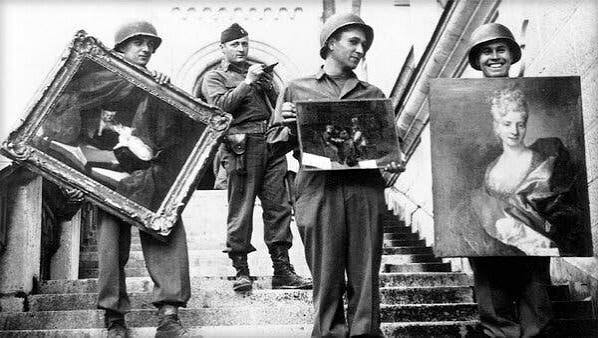
    In the spring of 1945, as Allied tanks rolled into the German countryside, a small group of middle-aged art historians and museum curators drove through the front lines in unarmored jeeps, carrying nothing more than maps, notebooks, and a fierce determination. Their mission was not to capture territory or destroy enemy positions, but to find and rescue the millions of artworks the Nazis had stolen and hidden across Europe. They were the Monuments, Fine Arts, and Archives officers—the Monuments Men—and their work would define how the world protects cultural heritage in times of war.

    The Threat to Civilization

    The Nazis’ systematic looting of Europe’s art was not a sideshow to the war; it was a core part of their ideology. Under the direction of the Einsatzstab Reichsleiter Rosenberg (ERR), special units confiscated Jewish-owned collections across occupied Europe. Hitler planned to fill a grand Führermuseum in Linz, Austria, with the best of these stolen works, while Hermann Göring, second in command of the Third Reich, built his own private collection from the spoils.

    By 1943, the scale of the destruction and theft had become a concern for the Allies. Historic cities were being reduced to rubble, and priceless monuments were disappearing under bombs. The American art world, led by the American Defense Harvard Group, pressured the U.S. government to act. In response, the Roberts Commission was created, and the Monuments, Fine Arts, and Archives program was born.

    The Unlikely Soldiers

    The MFAA was a group of about 345 men and women from 13 nations. They were not trained soldiers; they were art historians, curators, architects, and educators. George Stout, a conservator who pioneered modern art conservation techniques, developed the methods for packing and moving fragile works. James Rorimer, who would later become the director of the Metropolitan Museum of Art, led the group in the European Theater. Sculptor Walker Hancock worked in Italy and later helped recover works from the Altaussee salt mine in Austria.

    One of the most remarkable figures was Rose Valland, a French art historian who was not officially an MFAA officer but whose intelligence was crucial. Working at the Jeu de Paume museum in Paris, which the Nazis used as a sorting depot for looted art, she secretly recorded the details of every shipment—where it came from, where it was going. Her meticulous notes, passed to the Allies, provided the roadmap for recovery.

    These were men and women in their 30s and 40s, often physically unfit for combat, yet they operated near the front lines, sometimes under fire. They faced constant skepticism from military commanders who saw them as a burden. But they persisted, armed with the conviction that civilization’s treasures were worth risking their lives for.

    The Hunt for the Salt Mines

    As the war drew to a close, the Monuments Men received reports that the Nazis had hidden vast quantities of art in salt mines, which offered stable temperature and humidity. The most famous of these was the Merkers salt mine in Germany, where they found not only artworks but the German national gold reserves. But the most extraordinary discovery came in Altaussee, Austria, in May 1945.

    Deep inside the Altaussee mine, the Monuments Men found over 6,500 paintings, including works by Vermeer, Michelangelo, and the Ghent Altarpiece—one of the most important artworks in European history. The Nazis had stored them there, and in the final days of the war, they had placed explosives at the mine’s entrance with orders to destroy everything. But the miners, who had been forced to work there, removed the explosives and saved the treasures.

    The recovery was painstaking. Each work had to be carefully packed and transported to a Central Collecting Point, where it was identified, cataloged, and prepared for return. The Monuments Men worked for years after the war, sorting through over 1,000 repositories—mines, castles, monasteries—and recovering an estimated 5 million cultural objects.

    The Cost of Duty

    The work was not without sacrifice. Two MFAA officers were killed in action: Ronald Balfour, a British art historian, died in 1945 while trying to save a church in Cleves, Germany. Their deaths underscored the danger these scholars faced, not with weapons but with clipboards.

    The Monuments Men also faced moral dilemmas. After the war, some MFAA officers protested the U.S. decision to send German-owned art to America for safekeeping, arguing that it violated the principles they had fought for. Their protest, known as the Wiesbaden Manifesto, was a reminder that the line between protection and looting can be thin.

    A Lasting Legacy

    The Monuments Men’s work did not end with the return of art. Their experience influenced the creation of the 1954 Hague Convention for the Protection of Cultural Property in the Event of Armed Conflict, which established international norms for preserving heritage during war. Today, the U.S. military has a similar unit, the Monuments, Fine Arts, and Archives program, which was deployed in Iraq and Afghanistan.

    The story of the Monuments Men has been told in books and films, most notably the 2014 George Clooney movie. But the real story is more complex and more remarkable. These were not action heroes; they were scholars who believed that a society’s culture is worth protecting, even at the cost of their own safety.

    The Unfinished Work

    Not every piece was recovered. Some works remain missing, their fates unknown. Some restitutions were delayed for decades, and some families never saw their treasures again. The Monuments Men’s work was not perfect, but it set a precedent that the world has followed ever since.

    In the quiet halls of the Central Collecting Points, amid the smell of old canvas and packing straw, a small group of dedicated people ensured that the Nazis’ attempt to erase a culture did not succeed. They were not soldiers in the traditional sense, but they fought a battle that mattered just as much.

    The Monuments Men’s legacy is not just in the millions of artworks they saved, but in the principle they established: that cultural heritage is a universal treasure, worth defending even in the darkest times. Their story is a reminder that even in the chaos of war, there are those who fight to preserve beauty, knowledge, and history for future generations.

    Summary

    • The Monuments, Fine Arts, and Archives (MFAA) program was a group of about 345 art historians, curators, and architects from 13 nations who served in WWII.
    • They were tasked with protecting cultural property from war damage and recovering art looted by the Nazis.
    • Key figures included George Stout, James Rorimer, Walker Hancock, and French art historian Rose Valland.
    • Major recoveries included the Merkers salt mine (with the bust of Nefertiti) and the Altaussee salt mine (with over 6,500 paintings, including the Ghent Altarpiece).
    • The MFAA’s work influenced the 1954 Hague Convention and set a precedent for cultural preservation in conflict.

    FAQ

    Q: Who were the Monuments Men?
    A: They were a group of approximately 345 men and women from 13 nations, mostly art historians, curators, architects, and educators, who served in the Allied armies during World War II to protect cultural property and recover looted art.

    Q: How much art did they recover?
    A: They searched over 1,000 repositories and recovered an estimated 5 million cultural objects, though exact numbers vary by source.

    Q: What was the most significant discovery?
    A: The Altaussee salt mine in Austria, where they found over 6,500 paintings, including works by Vermeer, Michelangelo, and the Ghent Altarpiece.

    Q: Did any Monuments Men die in the line of duty?
    A: Yes, two were killed in action: Ronald Balfour, a British art historian, and another officer whose name is less well-known.

    Q: What impact did they have on modern practice?
    A: Their work influenced the 1954 Hague Convention for the Protection of Cultural Property in Armed Conflict, and the modern U.S. military has a similar unit today.
  • The Children of WWII: Evacuation, Survival, and the Long Shadow of Loss

    The Children of WWII: Evacuation, Survival, and the Long Shadow of Loss

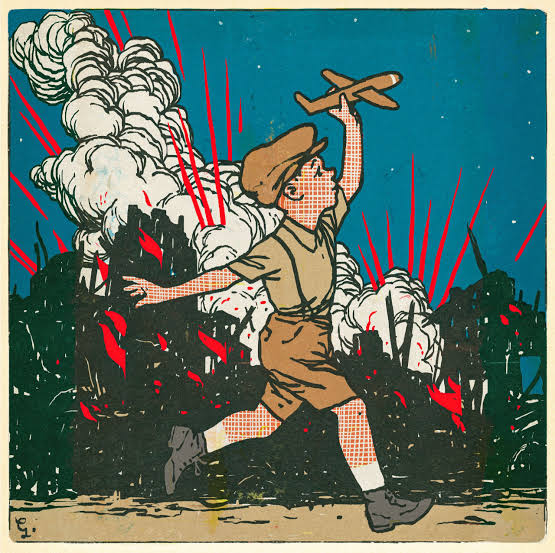
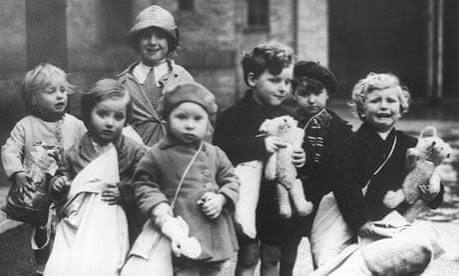
    In the first week of September 1939, as the British government prepared for war, a railway network across the country moved a small army—not of soldiers, but of children. Over three days, 1.5 million young Londoners, Mancunians, and Glaswegians were sent to the countryside, clutching gas masks and name tags. They were part of Operation Pied Piper, the largest planned evacuation of children in history. The trains were packed with school groups, siblings, and bewildered toddlers, many of whom had never left their urban streets before.

    This was not a uniquely British story. From the bombed-out cities of Germany to the freezing steppes of the Soviet Union and the island villages of Japan, the Second World War uprooted tens of millions of children. Governments saw them as the future of the nation—both biologically and ideologically—and moved them in massive state-run operations. But the evacuation was not just a logistical feat; it was a profound rupture in the lives of children, many of whom would never return home, never see their parents again, or would carry the psychological scars for decades.

    These are the untold stories of those children: the trauma of separation, the clash of class and culture, the indoctrination camps, the famine trains, and the silence that followed the war. The scale of the displacement is staggering—over 3.5 million in Britain alone, up to 15 million in the Soviet Union—but the human cost is measured in the small, individual moments of confusion and loss that shaped a generation.

    The Great Uprooting: Why Governments Sent Children Away

    The fear of aerial bombing was the driving force behind the mass evacuations. Politicians and military strategists, remembering the predictions of Stanley Baldwin that “the bomber will always get through,” anticipated that cities would be flattened and civilians would suffer catastrophic casualties. Children, as the most vulnerable and the future of the nation, were the first to be moved.

    In Britain, the evacuation was organized by the government, with school groups billeted in rural homes. The operation was massive: 1.5 million children moved in the first days of September 1939, and by 1945, about 3.5 million had been evacuated at some point, including a second wave during the Blitz. The children were sent to live with host families, a practice that was supposed to be temporary but often lasted for years. The clash of class and culture was immediate: middle-class children found themselves in working-class homes, and vice versa. Some were treated with warmth; others were neglected, exploited, or abused. The government later acknowledged that vetting of host families was inadequate.

    Across the Channel, the German Kinderlandverschickung (KLV) program moved 2.5 to 3 million children from bomb-threatened cities to rural areas. But the KLV was not just about safety—it was an ideological project. Children were sent to camps run by the Hitler Youth, where they wore uniforms, participated in paramilitary training, and were indoctrinated with Nazi ideology. The camps were designed to remove children from the “weak” influence of their urban parents and turn them into loyal soldiers for the Reich. Many children later described the experience as a “second childhood”—both formative and deeply traumatic.

    The Soviet Union evacuated children on an even grander scale, though the records are incomplete. Estimates suggest 12 to 15 million children were displaced eastward, often traveling for weeks in cattle cars to Central Asia, Siberia, or the Urals. Many children were evacuated with their schools or orphanages, not with their families. The journey was brutal: starvation, disease, and cold killed many before they reached safety. During the siege of Leningrad, ~400,000 children were evacuated, but many perished on the way or in the evacuation zones due to famine.

    Japan, facing the threat of American bombing in 1944-45, evacuated over 400,000 children from major cities to rural temples and villages. The Sokai (group evacuation) program sent elementary school children in school cohorts, with teachers acting as surrogate parents. The children often faced malnutrition, disease, and harsh labor in the rural areas, where food was also scarce.

    The Trauma of Separation

    For many children, the departure was a moment of inexplicable loss. They were too young to understand why they were being sent away, and some never saw their parents again. The separation disrupted the primary attachment bonds that are crucial for healthy development. Psychologists later used these experiences to develop attachment theory, but at the time, the emotional toll was largely ignored.

    Letters were the only link, but postal systems were slow and unreliable. Some children did not hear from their parents for months, and the uncertainty compounded the anxiety. In Britain, the government tried to keep families informed, but the system was often overwhelmed. In the Soviet Union, the state’s control over communication meant that many children were simply lost in the system, with no way to trace their families.

    The class and culture clash in Britain was particularly jarring. Children who had never seen a cow were suddenly expected to help on farms; those from affluent homes were billeted with families who had no indoor plumbing. The experience could be enlightening or degrading, depending on the host family. Some children were treated as beloved guests; others were used as unpaid labor or subjected to neglect. The long-term psychological effects were profound: a generation of children grew up feeling abandoned, even if their parents had acted out of love.

    The Nazi KLV: Indoctrination and a “Second Childhood”

    The Kinderlandverschickung was the most ideologically driven evacuation program. The camps were run by the Hitler Youth and Nazi welfare organizations, and the children were subjected to constant propaganda. They learned Nazi racial theory, practiced military drills, and were taught to idolize Hitler. The goal was to create a generation of loyal Nazis, independent of family influence.

    Life in the camps was regimented but also offered a sense of community and adventure. Some children later recalled that the camps provided a rare escape from the bombing and the fear, a “second childhood” of sorts. However, the indoctrination left deep scars. After the war, many German evacuees did not speak about their experiences until the 1990s, partly out of shame for the Nazi ideology they had been taught and partly because the cultural focus was on adult suffering.

    The Soviet Orphan Trains: Starvation and State Control

    In the Soviet Union, evacuation was often a matter of survival, but it came at a terrible cost. Children were sent eastward in cattle cars, packed in with little food or water. Many died en route from disease or starvation. The state placed children in state-run institutions, where they were trained for labor and subjected to strict discipline. Family reunification was slow and often impossible; the state’s records were incomplete, and many children simply fell through the cracks.

    The siege of Leningrad was a particular tragedy. Around 400,000 children were evacuated from the city, but many perished in the evacuation zones due to famine. The survivors were often orphaned, as their parents had died in the siege or were never traced. The Soviet government did not prioritize family reunification; the state was the parent, and children were expected to contribute to the war effort.

    The Japanese Sokai: Group Survival and Post-War Silence

    In Japan, the evacuation was a group effort. Schools were moved wholesale to rural areas, with teachers acting as surrogate parents. The children lived in temple compounds or village homes, often in cramped and unsanitary conditions. Food was scarce, and many suffered from malnutrition and disease. They were also expected to work, helping with farm labor or other tasks.

    The Japanese evacuees rarely spoke about their experiences after the war. The narrative of victimhood was complicated by Japan’s role as an aggressor, and many felt ashamed or were told to forget. It was not until the 1980s and 1990s that some began to share their stories, revealing a similar pattern of trauma and loss as seen in Britain and Germany.

    The Invisible Casualties: Children Killed and Orphaned

    The evacuation was meant to protect children, but it could not shield them from the war’s violence. In Britain, ~7,700 children were killed in bombing raids, including the Blitz. In Germany, ~20,000–25,000 children died in bombing raids, including the firebombing of Hamburg and Dresden. The Holocaust claimed ~1.5 million Jewish children, most of whom were not evacuated but killed in ghettos and camps. In the Soviet Union, historians estimate that 1–2 million children died from war-related causes—starvation, bombing, disease, and violence.

    The evacuation itself could be deadly. In the Soviet Union, children died on the trains; in Japan, they died in the rural areas from malnutrition; in Britain, some were killed in bombing raids on the very areas they had been sent to for safety, as the Germans also targeted rural industrial sites. The loss was not just physical but psychological: many children who survived were orphaned, either by the bombing or by the chaos of displacement.

    The Long Shadow: Post-War Silence and Memory

    For decades after the war, the experiences of the evacuated children were largely ignored. In Britain, there was a cultural focus on the “Blitz spirit” and the heroism of adults; children’s stories were seen as secondary. In Germany, the focus was on the guilt of the Nazi era, and the children who had been indoctrinated were often silenced by shame. In the Soviet Union, the state controlled the narrative, and the suffering of children was subsumed into the broader story of Soviet victory. In Japan, the victimhood of children was complicated by the nation’s aggression.

    It was not until the 1990s that these stories began to be told. Oral history projects, memoirs, and academic studies have since revealed the long-term psychological impact: anxiety, depression, attachment disorders, and a persistent sense of loss. The children of WWII are now elderly, but their stories are a vital part of understanding the war’s full cost. They remind us that the most vulnerable are often the first to be uprooted and the last to be heard.

    The evacuation of children during World War II was a massive experiment in social engineering, driven by fear and ideology, but it was carried out on the backs of children who had no say in the matter. The stories of these children—of separation, survival, and loss—are not just historical footnotes; they are a testament to the resilience of the human spirit and a warning about the costs of war. As the generation of evacuees passes, their memories become even more precious, urging us to remember that the true price of conflict is written not in numbers, but in the quiet, enduring pain of children who were sent away and never fully returned.

    Summary

    • The scale was massive: Over 3.5 million children were evacuated in Britain, 2.5–3 million in Germany, 12–15 million in the Soviet Union, and 400,000+ in Japan.
    • The reasons were complex: Governments moved children to protect them from bombing, but also for ideological purposes (Nazi KLV) and due to state control (Soviet Union).
    • The experience was traumatic: Separation from parents, culture clash, abuse, starvation, and death were common.
    • Many children never recovered: The psychological scars lasted a lifetime, but were often silenced by shame or cultural focus on adult suffering.
    • The stories were hidden for decades: It was not until the 1990s that many evacuees began to speak about their experiences, revealing the long-term cost of the war’s disruption.

    FAQ

    Q: How many children were evacuated during WWII?
    A: In Britain, around 3.5 million children were evacuated; in Germany, 2.5–3 million via the KLV; in the Soviet Union, estimates range from 12–15 million displaced; and in Japan, over 400,000 children were sent to rural areas.

    Q: What was the Kinderlandverschickung (KLV)?
    A: The KLV was a German program that evacuated children from bomb-threatened cities to rural camps run by the Hitler Youth. It aimed not only to protect children but also to indoctrinate them in Nazi ideology, removing them from the influence of their parents.

    Q: Why did it take so long for these stories to be told?
    A: Many evacuees stayed silent due to shame (in Germany about Nazi ideology), cultural focus on adult suffering (in Britain), state control of memory (in the Soviet Union), and complicated narratives of victimhood (in Japan). It was only in the 1990s that oral histories began to emerge.

    Q: What were the long-term psychological effects on evacuated children?
    A: Many children experienced separation trauma, which disrupted attachment bonds. This led to anxiety, depression, and attachment disorders that persisted into adulthood. The effects were often unrecognized for decades.

    Q: Did any children die during the evacuation?
    A: Yes, many children died during evacuation, especially in the Soviet Union, where they traveled in cattle cars and faced starvation and disease. In Germany, children also died in bombing raids despite being evacuated; the firebombing of Hamburg and Dresden killed thousands of evacuees.

  • The Katyn Massacre: How Stalin’s Secret Police Murdered 21,857 Poles and Blamed Hitler

    The Katyn Massacre: How Stalin’s Secret Police Murdered 21,857 Poles and Blamed Hitler

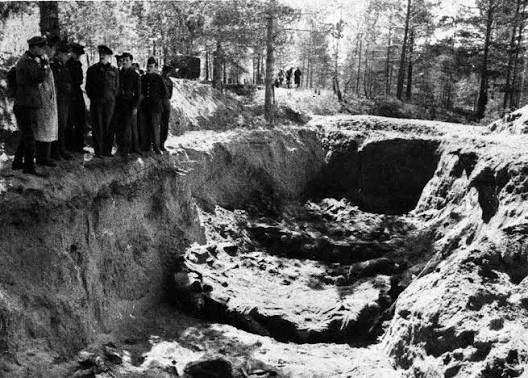
    In April 1943, German soldiers advancing through the Smolensk region stumbled upon a horror that would haunt the twentieth century. In the Katyn Forest, they found mass graves filled with the bodies of Polish officers, their hands bound, each shot in the back of the head. The discovery set off a propaganda war between two totalitarian regimes, each eager to pin the atrocity on the other. But the truth, buried for fifty years, pointed to a crime ordered by Joseph Stalin himself.

    The Forest and the Graves

    The Katyn Forest, a quiet expanse of birch and pine near the Russian city of Smolensk, became the silent witness to one of the largest single massacres of World War II. In the spring of 1940, Soviet secret police—the NKVD—executed nearly 22,000 Polish prisoners of war and civilians. Most were military officers, but the dead also included intellectuals, police officers, and clergy. They were shot in the back of the head in soundproofed rooms, loaded onto trucks, and buried in layered pits, their bodies stacked like cordwood.

    The victims came from three main POW camps: Kozelsk, Starobelsk, and Ostashkov. The largest group, about 8,000 to 8,500 officers, was held at Kozelsk. Families back in Poland received no word of their fate; they were simply told the men had been moved to unknown locations. Many assumed their loved ones were still alive in Soviet camps, unaware that the NKVD had already carried out the executions.

    The Order and Its Rationale

    The decision to murder these men was not the act of a rogue commander but a deliberate policy approved at the highest level of the Soviet state. On March 5, 1940, NKVD chief Lavrentiy Beria submitted a formal note to the Politburo, recommending the execution of the Polish prisoners. He described them as “hardened and uncompromising enemies of Soviet power” who posed a permanent threat—potential leaders of a future Polish resistance or an Allied-backed army. The Politburo approved unanimously, and Stalin signed the order.

    The executions took place over several weeks in April and May 1940. In Katyn, and at two other sites—Kalinin (now Tver) and Kharkiv—the NKVD carried out the killings with brutal efficiency. The selection of Katyn was deliberate: the forest’s remoteness made it easy to conceal the crime.

    The Nazi Discovery and the Propaganda War

    For three years, the massacre remained a secret. Then, in April 1943, German forces occupying the region discovered the graves. They immediately announced the find, inviting international forensic experts, including a delegation from the Polish Red Cross, to examine the site. The Germans used the discovery as a propaganda weapon against the Soviet Union, broadcasting details to the world.

    The Soviet response was swift and indignant. They accused the Germans of committing the atrocity themselves, claiming the Nazis had occupied the area in 1941 and killed the prisoners then. To bolster their case, the Soviets broke diplomatic relations with the Polish government-in-exile in London when it requested an investigation by the International Red Cross—a move that only deepened Polish suspicions.

    In 1944, after Soviet forces recaptured the region, a Soviet-led commission headed by Nikolai Burdenko concluded that the Germans were guilty. This version—the “Burdenko Commission” report—became the official Soviet narrative, taught in schools and repeated in histories for decades. The Nazis, for their part, were no less cynical; Joseph Goebbels used the massacre to stoke anti-Soviet sentiment, but his propaganda machine had no interest in the truth.

    The Cover-Up That Lasted Half a Century

    The lie held for nearly fifty years. During World War II, the Western Allies, knowing the Soviets were guilty, chose to suppress the issue to maintain unity against Germany. Winston Churchill privately admitted Soviet responsibility but publicly avoided the topic. At the Nuremberg Trials in 1945-46, the Soviets included Katyn in their indictment against German defendants, but the prosecution’s case collapsed when the defense produced evidence pointing to Soviet guilt. The tribunal never ruled on the matter.

    For Poles, Katyn became a symbol of Soviet oppression—a wound that festered through the Cold War. The Polish government-in-exile and later the anti-communist opposition kept the memory alive, but the official Soviet line remained unchanged.

    Acknowledgment and Its Limits

    The truth finally emerged with the collapse of the Soviet Union. In April 1990, Soviet President Mikhail Gorbachev formally admitted Soviet responsibility and handed over documents to Polish President Wojciech Jaruzelski. Two years later, Russian President Boris Yeltsin released the key archival documents, including the Beria note, confirming Stalin’s personal involvement.

    In 2010, the Russian State Duma officially recognized the massacre as a Stalinist crime. But the acknowledgment has been partial and fraught. In 2015, Russia’s Investigative Committee closed the case without naming any perpetrators as defendants. And in 2022, Russia’s Supreme Court refused to recognize the massacre as a crime against humanity, citing the “rehabilitation” of its perpetrators. The echoes of the Katyn lie persist in Russia’s official memory.

    The Weight of the Dead

    The Katyn massacre remains one of the most brutal chapters of World War II—a crime that was not only hidden but deliberately blamed on the enemy. For Poland, the massacre and its cover-up shaped national identity and memory. The 2010 Smolensk air disaster, which killed Polish President Lech Kaczyński and 95 others en route to a Katyn memorial ceremony, deepened the trauma. The forest at Katyn, once a place of death, now stands as a cemetery and a reminder of what happens when power is wielded without accountability.

    The Katyn massacre is a case study in the mechanics of denial. For fifty years, a lie was maintained by a superpower, and the truth was sacrificed for political expediency. The dead, however, could not be silenced forever. Their memory, kept alive by families and historians, finally forced the world to confront the crime. Yet the recent rulings in Russia show that the battle over history is never truly over. Katyn stands as a permanent warning: when a state commits atrocity and blames another, the truth may be delayed, but it cannot be buried forever.

    Summary

    • In spring 1940, the Soviet NKVD executed approximately 21,857 Polish prisoners of war and civilians, including officers, intelligentsia, police, and clergy, at Katyn and other sites.
    • The executions were authorized by the Soviet Politburo on March 5, 1940, on the recommendation of NKVD chief Lavrentiy Beria, and signed by Stalin.
    • The massacre was discovered by German forces in April 1943, who used it for propaganda; the Soviets blamed the Nazis, a lie maintained until 1990.
    • The Soviet cover-up collapsed with Gorbachev’s 1990 admission and Yeltsin’s 1992 release of key documents.
    • Russia’s recent legal rulings have refused to recognize the massacre as a crime against humanity, leaving the legacy of the crime contested.

    FAQ

    Q: Who ordered the Katyn massacre?
    A: The executions were ordered by the Soviet Politburo on March 5, 1940, on the recommendation of NKVD chief Lavrentiy Beria, and signed by Joseph Stalin.

    Q: How many people were killed?
    A: Approximately 21,857 Polish prisoners of war and civilians were executed, with the largest group—around 8,000 to 8,500 officers—killed at Katyn.

    Q: Why did the Soviets blame the Nazis?
    A: The Soviet government denied responsibility for decades, claiming the Germans committed the massacre in 1941. This false narrative was maintained officially to avoid political fallout and was reinforced by the 1944 Burdenko Commission.

    Q: When did the Soviet Union admit guilt?
    A: In April 1990, Soviet President Mikhail Gorbachev formally admitted Soviet responsibility and handed over documents to Polish President Wojciech Jaruzelski.

    Q: What is Russia’s current position on Katyn?
    A: In 2010, the Russian State Duma recognized the massacre as a Stalinist crime, but in 2015 the Investigative Committee closed the case without naming perpetrators, and in 2022 the Supreme Court refused to recognize it as a crime against humanity.

  • The White Mouse: Nancy Wake and the War She Refused to Lose

    The White Mouse: Nancy Wake and the War She Refused to Lose

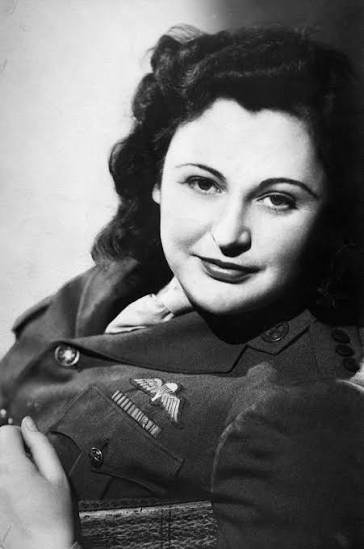
    In the spring of 1944, a woman with a price on her head pedaled a bicycle through the French countryside. German checkpoints dotted the roads, and every patrol car carried her photograph. Nancy Wake—known to the Gestapo as the White Mouse—was on a mission that would cover 500 kilometers, crossing enemy lines to deliver a radio codebook that would link the Maquis to London.

    She was 31 years old, a former journalist who had traded her typewriter for a Sten gun. The Germans had put a 5-million-franc bounty on her head, a sum that made her the most wanted person in the Marseille region. But Wake never stopped moving. ‘I was never afraid,’ she later said. ‘I was too busy to be afraid.’

    From Sydney to the Shadows

    Nancy Grace Augusta Wake was born in Wellington, New Zealand, in 1912, the youngest of six children in a poor family. When she was still a child, her family moved to Sydney, Australia. At 16, she left home to work as a nurse, but a small inheritance gave her a chance to escape. She used it to travel to Europe, where she trained as a journalist.

    By the mid-1930s, Wake was working for the Hearst press in Paris. Her assignments took her to Vienna and Berlin, where she watched the rise of Nazism firsthand. The violence and hatred she witnessed radicalized her. ‘I made up my mind then that if I ever had the chance, I would do something about it,’ she recalled.

    The chance came sooner than she expected. In 1939, she married Henri Fiocca, a wealthy French industrialist, and settled in Marseille. When France fell to the Germans in June 1940, Wake didn’t flee. Instead, she joined the Resistance.

    The Escape Line

    Marseille became a hub for the Resistance, and Wake found her niche in an escape network that smuggled Allied airmen and refugees over the Pyrenees into neutral Spain. She used her charm, her looks, and her fluency in French to move through checkpoints and bribe officials. ‘I was the most feminine thing that ever was,’ she once said, ‘and I could out-drink any man.’

    The Gestapo began to notice. They gave her the nickname ‘White Mouse’ because she slipped through their traps time and again. By 1943, they had placed a 5-million-franc bounty on her head—an astronomical sum. Henri urged her to leave, but she refused. When the net tightened, he stayed behind in Marseille while she escaped over the mountains to Spain, then to Britain.

    It was the last time she would see him alive.

    The SOE and the Maquis

    In London, Wake joined the Special Operations Executive, the secret organization Churchill had created to ‘set Europe ablaze.’ The SOE trained her in sabotage, wireless communication, and hand-to-hand combat. In April 1944, she parachuted into the Auvergne region of central France as a courier.

    Her mission was to arm and organize the Maquis—rural guerrilla bands of young men who had fled to the hills to avoid forced labor in Germany. By the time she arrived, they were scattered and poorly equipped. Wake changed that. She coordinated airdrops of weapons and explosives, trained fighters, and helped unite the groups into a force of some 7,000 men.

    Her methods were direct. When a radio codebook was needed urgently, she cycled 500 kilometers across German checkpoints to deliver it. When an SS sentry raised the alarm during a raid, she killed him with a karate chop to the neck. ‘I’d never done anything like that before,’ she admitted, ‘but it had to be done.’

    In June 1944, she led a 150-strong Maquis attack on the Gestapo headquarters in Montluçon. The raid was a success, but the Germans were closing in. Wake and her men were forced to retreat, but they had proved that the Resistance was a force to be reckoned with.

    The Cost of War

    When the war ended, Wake was celebrated as the most decorated servicewoman of WWII. She received the George Medal from Britain, the Médaille de la Résistance and the Croix de Guerre with Palm from France, and the US Medal of Freedom. But the accolades couldn’t erase the personal cost.

    In 1949, she learned the truth about her husband. Henri had been captured by the Gestapo in 1943. He was tortured for information about her whereabouts, but he refused to talk. The Gestapo executed him. Wake was devastated. ‘I thought I had nothing left to live for,’ she said.

    She spent the next decades working for British intelligence, then moved to Australia, where she ran unsuccessfully for Parliament. The war never left her. She admitted to nightmares and heavy drinking. ‘I was a bloody awful woman,’ she once said, ‘but I was the right person for the job.’

    The Forgotten Heroine

    In her later years, Wake moved to a retirement home in London, largely forgotten by the public. She died in 2011 at the age of 98. But her story has endured, not just as a tale of bravery, but as a reminder of the roles women played in the war—roles that were often dismissed or ignored.

    Wake herself was blunt about the double standard. ‘I don’t see why we women should just wave our men a proud goodbye and then knit them balaclavas,’ she said. She refused to be defined by gender, and she refused to be forgotten.

    Nancy Wake’s war was not a matter of abstract ideology. It was a series of concrete choices—to stay in Marseille, to climb the Pyrenees, to parachute into France, to ride a bicycle through checkpoints, to kill a man with her bare hands. She did not act out of a love of violence, but out of a conviction that fascism had to be stopped. ‘Freedom is the only thing worth living for,’ she once said. ‘I wasn’t afraid to die for it.’

    Summary

    • Nancy Wake was a New Zealand-born journalist who joined the French Resistance after the fall of France, helping smuggle Allied airmen over the Pyrenees.
    • The Gestapo gave her the nickname ‘White Mouse’ and placed a 5-million-franc bounty on her head, making her the most wanted person in the Marseille region.
    • As an SOE agent, she organized and armed 7,000 Maquis fighters in the Auvergne, cycled 500 kilometers to deliver a radio codebook, and killed an SS sentry with a karate chop.
    • Her husband, Henri Fiocca, was executed by the Gestapo in 1943 for refusing to reveal her whereabouts.
    • Wake became the most decorated servicewoman of WWII, but was largely forgotten in later life, dying in 2011 at 98.

    FAQ

    Q: Why was Nancy Wake called the ‘White Mouse’?
    A: The Gestapo gave her the nickname because she repeatedly eluded their traps, slipping through their nets like a mouse. The name stuck, and it was used on wanted posters.

    Q: How did Nancy Wake kill an SS sentry?
    A: During a raid on the Gestapo headquarters in Montluçon, a sentry raised the alarm. Wake killed him with a karate chop to the neck, an action she later described as necessary but shocking.

    Q: What was the 5-million-franc bounty on Wake?
    A: The Gestapo offered 5 million francs for her capture, a sum that made her the most wanted person in the Marseille region. She evaded it by escaping to Spain and then to Britain.

    Q: What happened to Nancy Wake’s husband?
    A: Henri Fiocca was captured by the Gestapo in 1943. He was tortured for information about Wake’s whereabouts but refused to talk. He was executed, and Wake didn’t learn of his death until 1949.

    Q: What awards did Nancy Wake receive?
    A: She received the George Medal (UK), the Médaille de la Résistance and the Croix de Guerre with Palm (France), and the US Medal of Freedom, making her the most decorated servicewoman of WWII.

  • How World War II Still Shapes the 21st Century: Politics, Memory, and Culture

    How World War II Still Shapes the 21st Century: Politics, Memory, and Culture

    On a quiet morning in 1945, the world emerged from six years of war with 70 to 85 million dead—roughly 3% of the global population at the time. The conflict had consumed continents, toppled empires, and introduced weapons that could end civilization. But the war did not end in 1945. Its institutions, its memories, and its unresolved tensions continue to shape the politics and culture of this century.

    Today, when a Russian official invokes the ‘Great Patriotic War’ to justify action in Ukraine, or when a German chancellor bows before the Holocaust memorial in Berlin, they are reaching for the same historical anchor. The post-war order—the United Nations, the European Union, the nuclear non-proliferation regime—was built as a direct response to the war’s horrors. Understanding the 21st century means tracing these lineages back to the conflict that defined the modern era.

    The Architecture of the Post-War World

    The war’s most enduring legacy is the institutional framework that governs international relations. In 1945, the United Nations was founded with a Security Council whose five permanent members—the United States, the United Kingdom, France, Russia, and China—are the war’s principal victors. That structure remains unchanged, giving the winners of 1945 a permanent veto over global security decisions. The Bretton Woods institutions (the IMF and World Bank) created in 1944 still anchor the global financial system, and the Universal Declaration of Human Rights (1948) set the standard for international law.

    Europe’s integration, too, is a war project. The 1951 European Coal and Steel Community was designed explicitly to bind France and Germany’s heavy industries so tightly that another war would be impossible. That coal-and-steel pact evolved into the European Union, a political and economic bloc of 27 nations. When the EU faces a crisis—whether the eurozone debt or Brexit—it is grappling with the legacy of a peace project born from the ashes of war.

    Nuclear Deterrence: A Fragile Peace

    The war’s final act, the atomic bombings of Hiroshima and Nagasaki, created a doctrine that has—so far—prevented direct great-power conflict. Nuclear deterrence theory holds that the fear of mutual assured destruction keeps rival states from open war. The Cold War’s proxy conflicts in Korea, Vietnam, and Afghanistan were bloody, but the US and Soviet Union never fought each other directly. That logic persists: the Treaty on the Non-Proliferation of Nuclear Weapons (1968) remains the cornerstone of arms control, even as states like North Korea and Iran challenge its limits.

    Yet the system is fragile. The war’s nuclear legacy has spread to nine countries, and the risk of use—through accident, miscalculation, or terrorism—remains a defining threat of this century. As the Bulletin of the Atomic Scientists’ Doomsday Clock has repeatedly warned, the world is closer to nuclear catastrophe than at any point since the Cold War’s darkest days.

    The Geopolitical Chessboard: From Colonies to Superpowers

    The war accelerated the collapse of European colonial empires. Britain, France, and the Netherlands emerged from the conflict financially exhausted and unable to maintain control over their colonies. India gained independence in 1947, followed by dozens of African and Asian nations in the following decades. But the war’s promise of self-determination clashed with colonial powers’ reluctance—a tension that still resonates in postcolonial states grappling with borders drawn during the war era.

    The war also created the bipolar superpower rivalry that defined the Cold War. The US and the Soviet Union emerged as the two dominant powers, each with a global sphere of influence. That rivalry shaped the post-war map: NATO expanded eastward after the Cold War’s end, and the US maintains approximately 750 military bases in over 80 countries—a posture that originated in WWII and Cold War strategy. When Russia invaded Ukraine in 2022, it explicitly invoked WWII memory, casting the conflict as a continuation of the ‘Great Patriotic War’ against Western encroachment. Ukraine’s president, Volodymyr Zelenskyy, in turn, has drawn parallels to the Nazi invasion.

    Memory as a Political Weapon

    The war’s memory is not a static relic; it is a living political tool. In Russia, 80% of the population views the war as the most important event of the 20th century. The ‘Great Patriotic War’ narrative is central to President Vladimir Putin’s legitimacy, framing Russia as the liberator of Europe and a bulwark against fascism. This memory justifies military actions and suppresses dissent by equating criticism with betrayal.

    In Germany, by contrast, the war has produced Vergangenheitsbewältigung—a term for ‘coming to terms with the past.’ Holocaust memory is a cornerstone of German and European identity. Germany has mandatory Holocaust education, and its leaders routinely visit memorials. But this reckoning is not universal. Japan’s handling of its wartime atrocities, particularly the ‘comfort women’ issue, remains a source of conflict with South Korea. Poland’s 2018 Holocaust law, which criminalized blaming the Polish nation for Nazi crimes, sparked international outrage.

    These divergent memories create real-world disputes. In 2023, the Polish government demanded reparations from Germany for WWII damages, while Germany insists the matter is closed. In the US, the ‘Greatest Generation’ myth of heroic unity contrasts with more critical European cinema, which explores collaboration and guilt.

    Culture: How We Remember and Represent

    Cultural production continually reinterprets the war, reflecting each generation’s concerns. Steven Spielberg’s Schindler’s List (1993) shaped American perceptions of the Holocaust, while Jonathan Glazer’s The Zone of Interest (2023) offers a more challenging view, focusing on the banality of evil. Novels, films, and video games—from The Book Thief to Call of Duty—keep the war in public consciousness, but each medium selects its own truths.

    The war also transformed gender roles. With millions of men mobilized, women entered the workforce in unprecedented numbers, symbolized by ‘Rosie the Riveter’ in the US. This shift laid groundwork for post-war feminist movements. The war’s racial dimensions—from Japanese American internment to the Holocaust’s racial ideology—sparked civil rights struggles that continue to this day.

    The Unfinished Business of Decolonization

    The war’s promise of self-determination, enshrined in the Atlantic Charter (1941), clashed with colonial realities. The post-war period saw a wave of decolonization, but it was neither smooth nor complete. The partition of India, the Algerian War, and the Vietnam War all traced their roots to the war’s aftermath. Today, postcolonial states still struggle with the arbitrary borders drawn by European powers during the war era, fueling conflicts from the Middle East to Africa.

    The Strained Liberal Order

    The post-war order—liberal internationalism, free trade, human rights—is now under strain. Revisionist powers like Russia and China view it as a Western-imposed hierarchy, while Western leaders defend it as the guarantor of peace. The war’s legacy is thus a contested one: is the ‘rules-based order’ a shield against tyranny, or a weapon of the powerful? The answer depends on where you stand.

    The Demographic Legacy: Migration and the Baby Boom

    The war triggered massive demographic upheaval. Millions of refugees, displaced persons, and soldiers crossed borders, reshaping nations. The ‘baby boom’ (1946–1964) created a generation whose size drove economic growth and cultural change in the US and Europe. The war also led to the entry of women into the workforce at scale, a shift that had lasting implications for family structures and gender equality.

    The War in the 21st Century: A Living Legacy

    Seventy-eight years after the war’s end, its influence is everywhere: in the UN Security Council’s vetoes, in Europe’s shared currency, in the nuclear warheads that guard against another great-power war, in the memory politics that inflame national pride. The war’s trauma and triumph are woven into the fabric of our political and cultural institutions. To understand the 21st century—from the rise of China to the war in Ukraine—one must trace the lines back to 1945.

    World War II was not a distant event but the foundation upon which the modern world was built. Its institutions, its memories, and its unresolved tensions continue to shape our politics and culture. As new powers rise and old alliances fray, the war’s legacy remains a touchstone—a reminder of both the worst of humanity and the fragile systems we have built to prevent it from repeating.

    Summary

    • The UN Security Council’s permanent members are WWII’s victors, a structure that still governs global security.
    • The EU’s origins lie in the 1951 European Coal and Steel Community, designed to prevent Franco-German conflict.
    • Nuclear deterrence, born from the war’s atomic conclusion, has prevented direct great-power conflict but remains fragile.
    • The war accelerated decolonization and created the bipolar superpower rivalry that defined the Cold War.
    • National memories of the war differ sharply and are used as political tools, from Russia’s ‘Great Patriotic War’ to Germany’s Holocaust reckoning.

    FAQ

    Q: How does World War II still influence international politics today?
    A: The war created the UN Security Council, the IMF, and the World Bank, which still govern global governance and finance. The US maintains ~750 military bases from that era, and the nuclear non-proliferation regime is a direct response to the war’s atomic bombings.

    Q: Why is WWII memory so contested in different countries?
    A: Nations remember the war through different lenses: victimhood (Russia, Poland), perpetrator reckoning (Germany, Japan), and triumph (US, UK). These narratives are used to justify contemporary policies and shape national identity.

    Q: What is the ‘rules-based order’ and why is it debated?
    A: The ‘rules-based order’ refers to the post-WWII framework of international law and institutions. Western powers see it as preventing great-power war, while revisionist states like Russia and China view it as a Western-imposed hierarchy.

    Q: How did WWII reshape gender roles?
    A: With men mobilized, women entered the workforce in unprecedented numbers (e.g., ‘Rosie the Riveter’), laying the groundwork for post-war feminist movements and lasting changes in family structures.

    Q: What is Germany’s ‘Vergangenheitsbewältigung’?
    A: It is the process of ‘coming to terms with the past,’ involving Holocaust education, memorials, and public reckoning. It has made Holocaust memory a central part of German and European identity.

  • The Remaking of the Middle East: How Two World Wars Redrew a Region

    The Remaking of the Middle East: How Two World Wars Redrew a Region

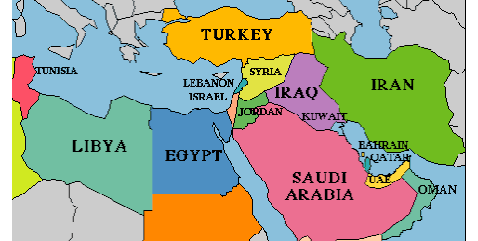
    In 1916, two diplomats Sir Mark Sykes of Britain and François Georges-Picot of France sat over a map of the Ottoman Empire and drew a line. With a pencil, they divided the Arab provinces into zones of future control: the British would take what became Iraq and Jordan, the French would take Syria and Lebanon. The line was arbitrary, cutting through tribal lands and ethnic enclaves, but it would become the border of four modern states.

    That single stroke, and the wars that followed, transformed the Middle East from a multi-ethnic empire into a mosaic of nation-states. World War I destroyed the Ottoman Empire; World War II destroyed the European empires that replaced it. Each war left an indelible mark on the region’s borders, politics, and conflicts that still shape headlines today.

    The Fall of the Ottomans: A World Drawn by Pencils

    For 400 years, the Ottoman Empire ruled the Middle East from Istanbul. Its collapse in 1918 was not sudden—it had been crumbling for decades—but the war delivered the final blow. When the empire dissolved, the Allies, led by Britain and France, were left to decide the region’s fate.

    The Sykes-Picot Agreement of 1916 was the blueprint. It was a secret pact, revealed to the world only when the Bolsheviks published it after the Russian Revolution. The agreement divided the Ottoman Arab provinces into British and French zones, with a nod to Russian interests in the north. The borders it drew ignored the region’s ethnic and religious mosaic. Kurds found themselves split among Turkey, Iraq, Syria, and Iran. Shiite and Sunni Arab communities were merged into new states that had never existed before.

    The League of Nations formalized this division in 1920 with the mandate system, a euphemism for colonial rule. Britain took mandates for Iraq, Palestine, and Transjordan; France took Syria and Lebanon. The mandates were supposed to prepare these territories for self-governance, but in practice, they were colonies with a veneer of international oversight.

    One declaration from 1917 cast a long shadow: the Balfour Declaration, in which Britain expressed support for a “national home for the Jewish people” in Palestine. At the time, Palestine was 90 percent Arab and 10 percent Jewish. The declaration, which contradicted British promises to Arab leaders during the war, sowed the seeds of a conflict that would erupt decades later.

    The Birth of New States and the Rise of Turkey

    Out of the Ottoman wreckage, new states emerged, often with rulers chosen by the colonial powers. The Hashemite dynasty, which had led the Arab Revolt against the Ottomans, was rewarded with thrones in Iraq and Transjordan. The French, meanwhile, carved Syria and Lebanon out of the Levant, favoring the Maronite Christians in Lebanon and the Alawite minority in Syria—a policy of divide and rule that would have lasting consequences.

    The borders were artificial, and the populations were not consulted. As the British diplomat T.E. Lawrence famously said, the lines were “drawn by the pencil of a diplomat, not by the sword of a soldier.” The result was a legacy of instability: nations whose borders did not align with ethnic or tribal loyalties.

    Not all of the Middle East fell under mandate rule. The Turkish War of Independence (1919–1923), led by Mustafa Kemal Atatürk, expelled Greek and Allied forces from Anatolia and established the Republic of Turkey. Atatürk abolished the Caliphate in 1924, ending a 1,300-year institution that had symbolized Muslim unity. Turkey emerged as a secular, nationalist state—a model that would inspire other Middle Eastern leaders.

    World War II: The End of Empire

    World War II devastated Europe, leaving Britain and France financially exhausted and militarily weakened. The war also brought the Middle East into sharper focus as a strategic prize. Oil, discovered in the region in the early 20th century, had become essential for modern warfare. The Suez Canal, controlled by Britain, was the lifeline to India and the East.

    The war accelerated Jewish immigration to Palestine, driven by the Holocaust. Between 1939 and 1948, the Jewish population of Palestine doubled, intensifying Arab-Jewish tensions. In 1947, the United Nations proposed a partition plan, dividing Palestine into Arab and Jewish states. The Arab leadership rejected it; the Jewish leadership accepted it. On May 14, 1948, Israel declared independence, and the first Arab-Israeli War began the next day.

    The war was a catastrophe for Palestinian Arabs, who called it the Nakba, or “catastrophe.” Around 700,000 Palestinians were displaced or fled from their homes, becoming refugees in neighboring countries. The state of Israel survived, but the conflict became a defining issue of Middle Eastern politics for decades.

    The Cold War and the Rise of Nationalism

    As the European empires withdrew, the United States and the Soviet Union moved in, turning the Middle East into a Cold War battleground. Each superpower sought allies, offering military aid, economic support, and diplomatic protection in exchange for influence. The region’s oil reserves made it a prize worth competing for.

    Arab nationalism, already a potent force, surged in the decades after World War II. Leaders like Gamal Abdel Nasser of Egypt, who came to power in a 1952 coup, championed secular pan-Arabism—the idea that all Arabs should unite in a single state or bloc, free of colonial influence. Nasser’s rhetoric inspired millions, but his dreams of unity were thwarted by the very borders the Sykes-Picot Agreement had drawn.

    Oil became the lever for economic sovereignty. Iran nationalized its oil industry in 1951, taking control from the Anglo-Iranian Oil Company. The move was a direct challenge to British power, and it was met with Western retaliation—a CIA-backed coup in 1953 restored the Shah and reversed the nationalization. But the genie was out of the bottle: other oil-producing states began to demand a greater share of profits and control.

    The Suez Crisis of 1956 was the final nail in the coffin of Anglo-French dominance. When Nasser nationalized the Suez Canal, Britain, France, and Israel invaded Egypt. The United States and the Soviet Union, both opposed to the invasion, pressured the three powers to withdraw. The humiliating retreat marked the definitive end of Britain’s and France’s imperial era in the Middle East.

    A Region Redrawn: From Empires to Nation-States

    By the 1960s, the Middle East was unrecognizable from the Ottoman era. The multi-ethnic empires that had ruled the region for centuries were replaced by a system of sovereign nation-states with fixed borders. The colonial powers were gone, replaced by new actors: the United States, the Soviet Union, and a new generation of Arab leaders.

    The legacy of the two world wars is a double-edged sword. On one hand, the nation-states that emerged brought a new form of political identity—nationalism—that gave people a sense of belonging and self-determination. On the other hand, the borders drawn by colonial powers and the conflicts that followed have left a volatile legacy. The Israeli-Palestinian conflict, the Kurdish question, and the sectarian tensions in Iraq and Syria all trace their roots to the decisions made in the aftermath of the wars.

    The Middle East today is a product of the 20th century’s wars, but it is not a passive product. The people of the region have reshaped the structures imposed on them, sometimes violently, sometimes peacefully. The remaking of the Middle East is not a finished story; it continues to unfold in every border dispute, every movement for change, every negotiation over oil and identity.

    The two world wars dismantled the Ottoman Empire and then the European empires that succeeded it, leaving behind a new Middle East. The borders drawn by diplomats in the 1910s and 1920s still define the region, but they are not eternal. The forces of nationalism, religion, and geopolitics continue to strain against those boundaries, a reminder that the remaking of the Middle East is an ongoing process, shaped by the choices of its people.

    Summary

    • World War I dissolved the Ottoman Empire, leading to the Sykes-Picot Agreement and the mandate system, which created artificial borders.
    • The Balfour Declaration of 1917 set the stage for the Israeli-Palestinian conflict.
    • World War II weakened Britain and France, accelerating decolonization and the rise of independent states.
    • The establishment of Israel in 1948 and the Nakba displaced ~700,000 Palestinians, fueling regional conflict.
    • The Cold War made the Middle East a superpower battleground, while Arab nationalism and oil nationalization reshaped politics.

    FAQ

    Q: What was the Sykes-Picot Agreement?
    A: It was a 1916 secret treaty between Britain and France that divided the Ottoman Empire’s Arab provinces into zones of control, forming the basis for modern Middle Eastern borders.

    Q: Why are Middle Eastern borders considered artificial?
    A: Because they were drawn by European diplomats without regard for ethnic, tribal, or religious boundaries, often splitting communities across different states.

    Q: How did World War II affect the Middle East?
    A: It weakened Britain and France, leading to decolonization, intensified Jewish immigration to Palestine, and set the stage for the Cold War rivalry between the US and USSR.

    Q: What is the Nakba?
    A: The Nakba, meaning “catastrophe,” refers to the displacement of ~700,000 Palestinian Arabs during the 1948 Arab-Israeli War.

    Q: How did the Suez Crisis change the region?
    A: The 1956 crisis, in which Britain, France, and Israel invaded Egypt after the Suez Canal was nationalized, ended with a US-Soviet forced withdrawal, marking the end of European colonial dominance in the Middle East.

  • The Unfinished War: How WWI Laid the Powder Keg for WWII

    The Unfinished War: How WWI Laid the Powder Keg for WWII

    In November 1918, the guns of the Western Front fell silent, but the peace that followed was anything but settled. The Armistice was a ceasefire, not a resolution—a pause that left the deep fractures of a continent-wide conflict unhealed. Twenty years later, those fractures would crack wide open again, plunging the world into an even deadlier conflict. The Treaty of Versailles, the collapse of empires, and a global economic depression did not make World War II inevitable, but they created the conditions in which a charismatic demagogue could rise and exploit the grievances of a humiliated nation.

    To understand how WWI set the stage for WWII, we must look beyond the trenches and the armistice. We must examine the punitive peace, the myth of betrayal, and the fragile international order that was built on sand. This is the story of how the Great War’s ending became the prelude to an even greater catastrophe.

    The Treaty of Versailles: A Carthaginian Peace

    The Paris Peace Conference of 1919 was dominated by four men: Woodrow Wilson of the United States, David Lloyd George of Britain, Georges Clemenceau of France, and Vittorio Orlando of Italy. Wilson brought his idealistic Fourteen Points, calling for self-determination and a League of Nations. Clemenceau, scarred by the war that had been fought largely on French soil, demanded security and revenge.

    The result was a compromise that pleased no one. Germany was forced to sign the Treaty of Versailles, which included the infamous War Guilt Clause (Article 231), assigning full responsibility for the war to Germany. The treaty demanded reparations of 132 billion gold marks—a staggering sum that would take decades to pay. Germany lost 13% of its European territory, including Alsace-Lorraine to France, and all of its overseas colonies. Its military was reduced to a token force of 100,000 men, with no air force, submarines, or conscription. The Rhineland was demilitarized, leaving Germany defenseless in the west.

    French Marshal Ferdinand Foch, who had commanded the Allied forces, famously remarked, “This is not a peace. It is an armistice for twenty years.” His prediction proved eerily accurate. The treaty was too harsh to be accepted by Germans as fair, yet too lenient to permanently cripple Germany. It created a reservoir of resentment that would be tapped by nationalist demagogues.

    The Collapse of Empires and the Birth of a New Order

    World War I destroyed four great empires: the Austro-Hungarian, Ottoman, Russian, and German. Their collapse redrew the map of Europe and the Middle East, creating new states and new tensions.

    The Austro-Hungarian Empire dissolved into Austria, Hungary, Czechoslovakia, and parts of Poland, Romania, and Yugoslavia. The Ottoman Empire was partitioned under the Treaty of Sèvres in 1920, with modern Turkey emerging and the Middle East divided into League of Nations mandates under British and French control—Syria, Iraq, Palestine, Transjordan. The Russian Empire collapsed in 1917, leading to the Bolshevik Revolution and the creation of the Soviet Union. Germany became the Weimar Republic, a democratic experiment born from defeat.

    These new nations were often fragile, with borders that did not match ethnic divisions. The principle of self-determination was applied selectively, leaving large German populations outside Germany’s borders—notably in the Sudetenland of Czechoslovakia and Danzig (now Gdańsk, Poland). These irredentist claims would become a rallying cry for Hitler.

    The League of Nations: A Paper Tiger

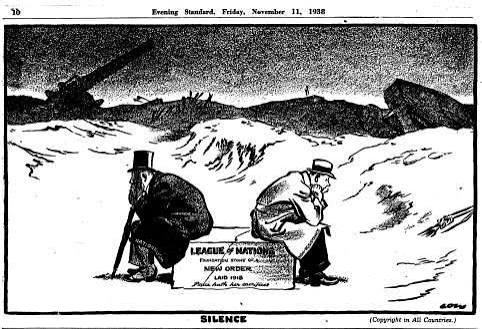
    President Wilson’s dream of a League of Nations was realized in the Treaty of Versailles, but it was a crippled institution from the start. The United States, the world’s rising superpower, never joined—the Senate rejected membership, fearing it would entangle the US in foreign conflicts. Germany was initially excluded, and the Soviet Union was also shut out. The League had no enforcement mechanism; it had no army, and any action required unanimous consent from its members, making it nearly impossible to act decisively.

    When Japan invaded Manchuria in 1931, the League’s response was a series of ineffective condemnations. When Italy invaded Ethiopia in 1935, the League imposed sanctions that were not enforced. These failures demonstrated that the international order created after WWI was incapable of maintaining peace. The League was a paper tiger, and revisionist powers like Germany, Italy, and Japan knew it.

    The Stab-in-the-Back Myth: A Poisonous Lie

    One of the most toxic legacies of WWI was the German “stab-in-the-back” myth (Dolchstoßlegende). German right-wing propaganda claimed that the army was undefeated in the field but was betrayed by politicians, socialists, and Jews on the home front. This narrative was actively promoted by military leaders like Hindenburg and Ludendorff, who sought to deflect blame for the defeat.

    The myth was a lie—the German army was exhausted and starving, and the civilian government had no choice but to seek an armistice—but it was powerful. It allowed Germans to believe that their nation had been robbed of victory. Hitler and the Nazis seized on this myth, using it to delegitimize the Weimar Republic and to scapegoat Jews and leftists. The myth became a cornerstone of Nazi propaganda, fueling the hatred that would lead to the Holocaust.

    Economic Devastation and the Rise of Extremism

    The German economy was shattered by the war and the reparations burden. In 1923, hyperinflation struck as the government printed money to pay reparations and resist French occupation of the Ruhr. The currency collapsed, wiping out the savings of the middle class and creating a deep sense of insecurity.

    But the worst was yet to come. The Great Depression, triggered by the US stock market crash in 1929, hit Germany with brutal force. The US had been lending money to Germany to help it pay reparations, and American loans were recalled. Global trade collapsed, and German unemployment soared to about 30% by 1932. The Weimar Republic, already fragile, was destroyed by the economic crisis. Political extremism flourished: the Communist Party and the Nazi Party grew rapidly, each promising a radical solution.

    Hitler’s rise was not inevitable, but the Depression created the conditions. In 1933, he was appointed Chancellor, and he quickly dismantled democracy, establishing a dictatorship. His foreign policy was explicitly aimed at overturning Versailles—rearming Germany, remilitarizing the Rhineland, and uniting all Germans in a Greater Germany.

    A Thirty Years’ War? The Continuity and Break

    The

    Historians debate whether WWII was the inevitable result of WWI or a separate catastrophe. Some, like A.J.P. Taylor and Eric Hobsbawm, argue that the period from 1914 to 1945 was a “Thirty Years’ War” with a 20-year truce. The unresolved issues of WWI—territorial disputes, economic instability, ideological extremism—directly produced WWII.

    Others contend that WWII was not inevitable. They point out that the Great Depression, the failure of appeasement, and the specific rise of Hitler were contingent events. Versailles created grievances, but it did not make Hitler inevitable. The Depression, not the treaty, destroyed the Weimar Republic’s viability.

    The economic angle supports a middle view: the global economic system built after WWI was inherently unstable. The US lent money to Germany, Germany paid reparations to France and Britain, and they paid war debts to the US—a circular flow that collapsed in 1929. This economic collapse, not Versailles alone, radicalized European politics and empowered fascism.

    Geopolitically, the collapse of the Ottoman Empire and the redrawing of the Middle East created long-lasting conflicts. The arbitrary borders and mandates sowed the seeds of instability that continue to this day. But the immediate link to WWII was the way the Treaty of Versailles and the League of Nations failed to resolve the power vacuum left by the fallen empires.

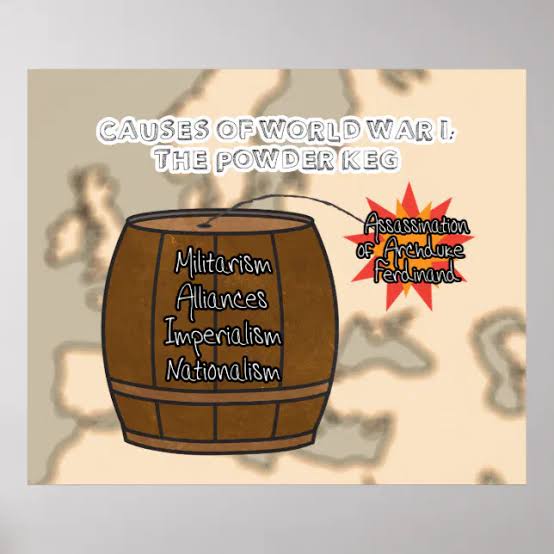
    The debate between continuity and break is not merely academic. It shapes how we understand the causes of war and the responsibility of peacemakers. What is clear is that WWI set the stage for WWII by creating a world of unresolved grievances, economic turmoil, and a weak international order—a powder keg waiting for a spark.

    World War I did not directly cause World War II, but it created the conditions that made it possible. The Treaty of Versailles humiliated Germany without destroying its potential for resurgence. The collapse of empires created new nations with deep ethnic tensions. The League of Nations proved too weak to enforce peace. And the Great Depression, building on the economic instability of the post-war order, radicalized politics across Europe. When Hitler rose to power, he was not a random accident—he was the culmination of these forces. The unfinished business of the Great War, left to fester for two decades, exploded again with a vengeance.

    Summary

    • The Treaty of Versailles imposed harsh terms on Germany, including the War Guilt Clause and massive reparations, creating deep resentment.
    • The collapse of four empires led to new states with ethnic tensions and irredentist claims.
    • The League of Nations was fatally weak, lacking the US, military force, and unanimous action.
    • The ‘stab-in-the-back’ myth poisoned German politics, delegitimizing democracy and scapegoating Jews.
    • The Great Depression, amplified by the unstable post-war economic system, radicalized Europe and empowered extremists like Hitler.

    FAQ

    Q: Why is the Treaty of Versailles considered a cause of WWII?
    A: The treaty imposed punitive terms on Germany—war guilt, huge reparations, territorial losses, and military restrictions—creating widespread resentment and undermining the legitimacy of the Weimar Republic. This grievance was exploited by nationalist movements, including the Nazis.

    Q: How did the collapse of empires contribute to WWII?
    A: The collapse of the Austro-Hungarian, Ottoman, Russian, and German empires created new states with borders that did not match ethnic populations, leading to irredentist claims (e.g., Germans in the Sudetenland) and regional instability that Hitler exploited to justify aggression.

    Q: What was the ‘stab-in-the-back’ myth?
    A: It was a false narrative promoted by German military leaders that the army was undefeated but betrayed by civilians—especially socialists and Jews—on the home front. The Nazis used it to attack democracy and to justify extreme nationalism and anti-Semitism.

    Q: How did the Great Depression lead to WWII?
    A: The Depression devastated Germany’s economy, with unemployment reaching ~30% by 1932, destroying public confidence in the Weimar Republic and driving voters to extremist parties. It also weakened the international community’s ability to respond to aggression.

    Q: Could WWII have been avoided?
    A: Many historians argue that WWII was not inevitable. The Depression and Hitler’s rise were contingent events. But the unresolved issues of WWI—especially the Versailles treaty and the weak League of Nations—created a fertile ground for a second conflict.

  • The League of Nations: A Promise Broken by Its Own Members

    The League of Nations: A Promise Broken by Its Own Members

    On a crisp January morning in 1920, delegates from 42 nations gathered in Geneva, Switzerland, to inaugurate the world’s first permanent peacekeeping body. The League of Nations was born out of the ashes of World War I, a war that had killed over 16 million people and left Europe in ruins. Its founding covenant, embedded in the Treaty of Versailles, was a bold promise: never again would the world descend into such catastrophic conflict. The League would resolve disputes, disarm aggressors, and protect the weak.

    But within two decades, that promise lay in tatters. The League failed to stop Japanese aggression in Manchuria, Italian conquest of Ethiopia, and German remilitarization of the Rhineland. By 1939, it was a powerless bystander to the outbreak of World War II. The story of the League is not just a chronicle of institutional weakness; it is a cautionary tale about the limits of international cooperation when great powers refuse to lead.

    Birth of an Ideal

    The League’s intellectual roots stretched back to philosopher Immanuel Kant’s 1795 essay Perpetual Peace and the Concert of Europe that followed Napoleon’s defeat. But it was World War I that turned these ideas into a political reality. As the war dragged on, President Woodrow Wilson championed the cause, and in January 1918, his Fourteen Points called for a ‘general association of nations’ to guarantee political independence and territorial integrity. The British League of Nations Union and South African statesman Jan Smuts added their weight, and by the Paris Peace Conference in 1919, the Covenant was drafted in weeks.

    The structure was ambitious. The Assembly gave every member an equal vote. The Council had permanent seats for Britain, France, Italy, and Japan, plus rotating non-permanent members. The Secretariat, led by Sir Eric Drummond, provided day-to-day administration. The Permanent Court of International Justice opened in The Hague in 1922. The International Labour Organization, a semi-autonomous agency, aimed to improve working conditions globally.

    Yet the Covenant’s heart was collective security, outlined in Articles 10–16. Members pledged to respect each other’s territorial integrity and to respond to aggression with economic sanctions or military force. It was a revolutionary concept: aggression against one would be met by all.

    The Fatal Absence

    From the start, the League was crippled by the absence of its most powerful champion. The U.S. Senate, led by Henry Cabot Lodge, refused to ratify the Treaty of Versailles in 1919 and 1920. Lodge and his allies feared that Article X would drag America into foreign wars without congressional approval. President Wilson campaigned futilely for ratification, but the Senate voted no. The United States never joined.

    Without American participation, the League lacked military and economic heft. Britain and France, war-weary and financially strained, were reluctant to enforce sanctions against major powers. The League’s only real strength was moral suasion, and that proved insufficient against determined aggressors.

    Successes That Foreshadowed the UN

    Despite its eventual collapse, the League did achieve tangible successes, especially in the 1920s. It resolved the Åland Islands dispute between Finland and Sweden in 1921, peacefully settling a territorial conflict. In 1926, it mediated the Mosul question between Turkey and Iraq, and in 1934, it handled the Leticia dispute between Colombia and Peru.

    The League also pioneered humanitarian work. Fridtjof Nansen, a Norwegian explorer and diplomat, devised a passport system for stateless refugees in 1922, helping hundreds of thousands of displaced people. The League’s Health Organization fought epidemics like typhus and malaria, laying groundwork for the World Health Organization. It addressed drug trafficking, white slavery, and child labor, and it oversaw a mandates system to administer former German and Ottoman territories—though critics later dismissed this as colonialism in disguise.

    These successes, however, were local and administrative. They did not touch the core issue of great-power aggression.

    Cracks in the Edifice

    The 1930s brought the Great Depression, which fueled nationalism and militarism. The League’s first major test came in 1931, when Japan invaded Manchuria. China appealed to the League, which dispatched the Lytton Commission. The commission condemned Japan’s aggression, but no sanctions followed. Japan simply withdrew from the League in 1933. The message was clear: the League would not act against a major power.

    The second blow came in 1935, when Italy invaded Ethiopia. The League imposed partial sanctions, but oil was excluded—a fatal omission. Meanwhile, British and French foreign ministers secretly negotiated the Hoare-Laval Pact, which would have given Italy two-thirds of Ethiopia. The plan leaked, causing outrage, but the damage was done. Ethiopia was annexed, and the League’s credibility collapsed.

    Germany, now under Hitler, remilitarized the Rhineland in 1936, violating the Treaty of Versailles. The League took no action. The Spanish Civil War from 1936 to 1939 saw the Non-Intervention Committee fail to stop foreign intervention. When Germany annexed Austria in 1938 and the Sudetenland later that year, the League was bypassed entirely. By the time Germany invaded Poland in 1939, the League was effectively defunct.

    The Final Curtain

    The League held its last assembly on April 18, 1946, and formally dissolved the next day. Its assets and functions were transferred to the United Nations, founded in October 1945. The League’s legacy is ambiguous. It failed at its primary mission, yet it established the model for the UN and other international bodies. Its successes in health, labor, and refugee work were seeds that grew into specialized agencies.

    But the League’s failure offers a stark lesson: international institutions are only as strong as their member states’ willingness to act. The absence of the United States, the hesitancy of Britain and France, and the rise of totalitarian regimes combined to doom the experiment. As the UN faces its own challenges, the League’s story remains a warning that peace is not guaranteed by treaties alone—it requires constant vigilance and commitment.

    The League of Nations was not a failure of ideals but a failure of execution. It was a promise made by the world’s leaders to prevent another war, and it was broken not by its institutions but by the nations that created it. Its memory serves as a reminder that peace is a fragile achievement, requiring the active participation of the powerful. The League’s ghost still haunts Geneva, urging us to learn from its mistakes.

    Summary

    • The League of Nations was founded on January 10, 1920, as part of the Treaty of Versailles, with 42 original members.
    • It had both successes (e.g., Åland Islands, refugee work) and failures (Manchuria, Ethiopia).
    • The failure of the U.S. to join is considered a fatal flaw, weakening the League’s power.
    • The League dissolved on April 18-19, 1946, and its assets were transferred to the United Nations.
    • Its legacy includes establishing the model for the UN and specialized agencies like the ILO and WHO.

    FAQ

    Q: Why did the League of Nations fail?
    A: The League failed due to a combination of factors: the absence of the United States, the reluctance of Britain and France to enforce sanctions, the rise of aggressive totalitarian regimes, and the League’s lack of military enforcement power.

    Q: What were the League’s main successes?
    A: The League successfully resolved several territorial disputes, including the Åland Islands and Mosul. It also pioneered refugee assistance, health programs, and labor standards, which later influenced the UN.

    Q: How did the United States’ failure to join affect the League?
    A: The U.S. refusal to join deprived the League of its most powerful member, reducing its credibility and military and economic influence, making it harder to enforce collective security.

    Q: What happened at the last assembly of the League?
    A: The League’s last assembly was held on April 18, 1946, where it formally dissolved itself, and its functions and assets were transferred to the newly created United Nations.

    Q: What is the League’s legacy today?
    A: The League’s legacy is twofold: it is a cautionary tale of international failure, but it also established the framework for the UN and specialized agencies like the ILO and WHO, and its humanitarian work continues to inspire.