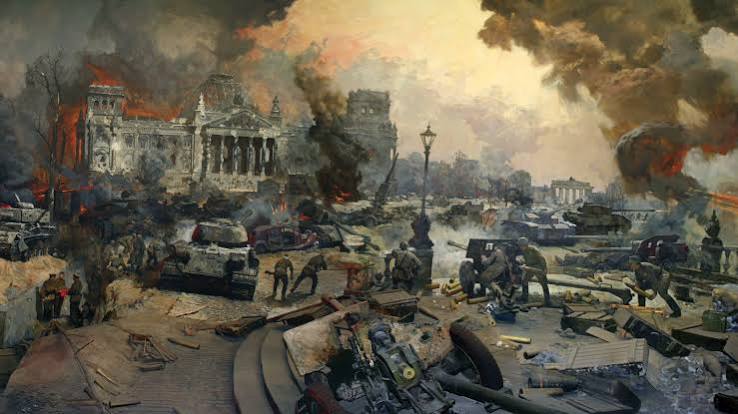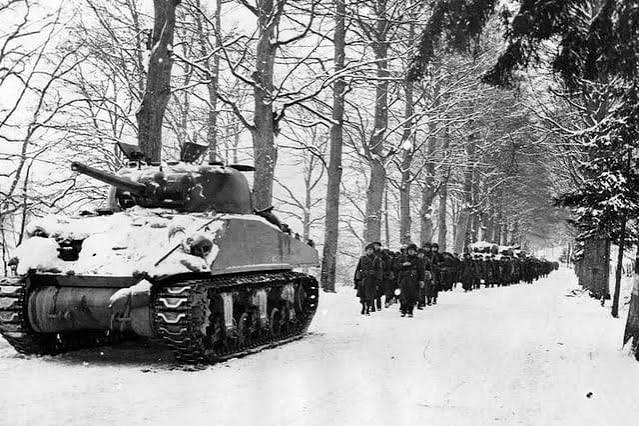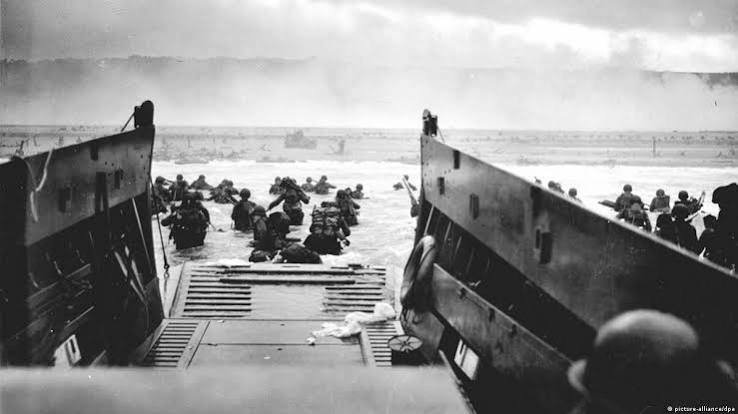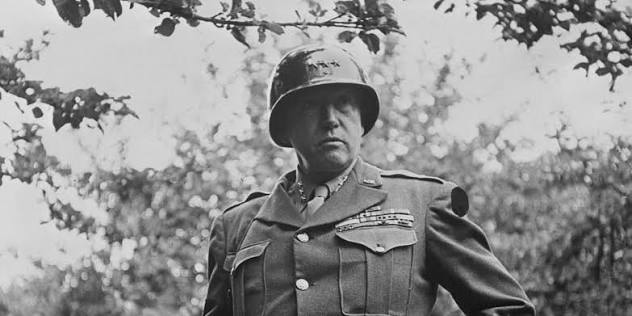
At 4:45 AM on September 1, 1939, the German battleship Schleswig-Holstein opened fire on a Polish military transit depot at Westerplatte, near Danzig. Within minutes, German dive-bombers screamed over Polish cities, and armored columns crashed across the border from three directions. The invasion of Poland had begun not as a border skirmish, but as the opening act of the deadliest conflict in human history.
Poland’s army, nearly a million strong, was the fifth-largest in Europe. It had tanks, aircraft, and a plan. But the plan relied on something that never came: a Western offensive against Germany. By October 6, organized Polish resistance was over. The country was partitioned between Hitler’s Reich and Stalin’s USSR. The war that followed would claim over 50 million lives.
The False Dawn: Poland Between the Wars
Poland had been erased from maps for 123 years, partitioned by Russia, Prussia, and Austria. Its rebirth in 1918 was a miracle of Versailles and the Polish-Soviet War of 1919–21. But the reconstituted state was fragile. The Polish Corridor, a strip of land giving Poland access to the Baltic Sea, sliced East Prussia off from the rest of Germany. Danzig (now Gdańsk) was declared a Free City under League of Nations oversight, its population overwhelmingly German. To Hitler, this was an intolerable wound. To many Germans, it was a genuine grievance — but Hitler had no interest in negotiation. He wanted war.
Nazi propaganda called Poland a “seasonal state” (Saisonstaat), a temporary aberration created by the Treaty of Versailles. Poles were portrayed as Untermenschen — subhumans. Hitler’s real goal was Lebensraum, living space for the German people in the East. Poland was the first target, not the last.
The Pact That Shocked the World
On August 23, 1939, the world witnessed one of the most cynical diplomatic reversals in history. Nazi Germany and the Soviet Union, ideological enemies, signed the Molotov-Ribbentrop Pact. Publicly, it was a non-aggression treaty. Secretly, it divided Eastern Europe into spheres of influence. Poland would be split roughly along the Bug River — the same line Stalin had demanded in 1920.
Stalin’s motives were cold and strategic. He distrusted Hitler but needed time to rebuild the Red Army, decimated by his own purges. The pact gave him a buffer zone and the chance to reclaim territories lost after World War I. It also ensured that if Germany attacked, the USSR would not be the first target. For Poland, the pact was a death sentence, signed behind its back.
Blitzkrieg: The German Onslaught
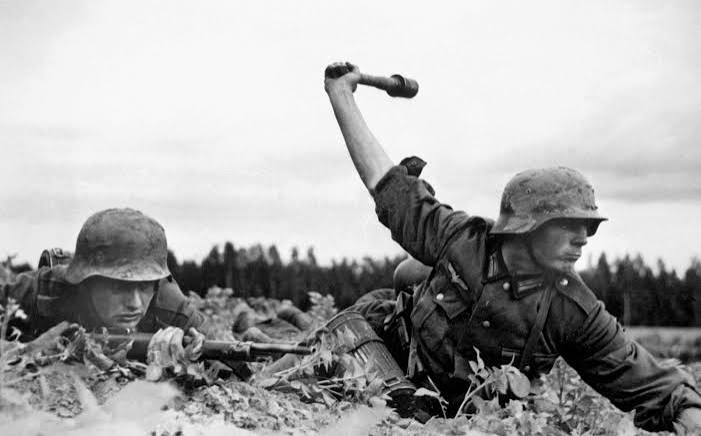
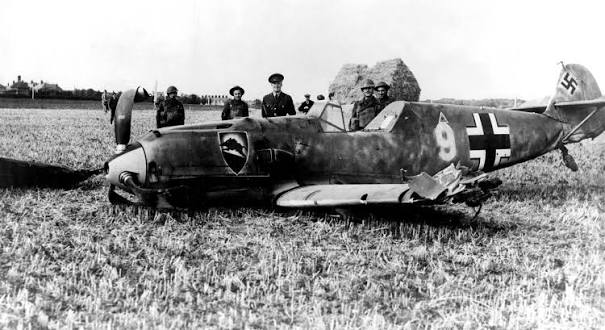
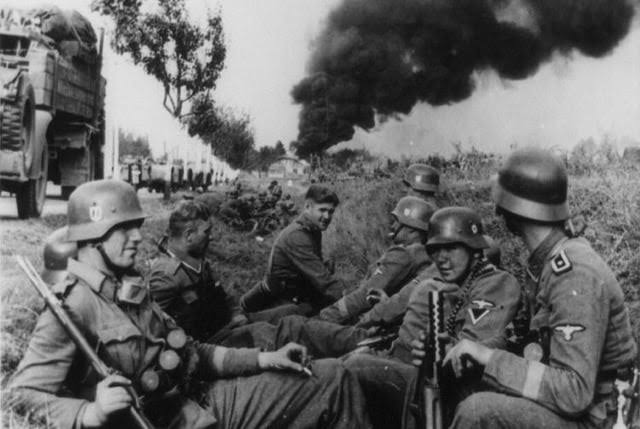
September 1, 1939. Germany hurled 1.5 million troops, 2,700 tanks, and 2,300 aircraft at Poland. The strategy was Blitzkrieg — lightning war. It wasn’t just about speed; it was about coordination. Panzer divisions punched through weak points, encircling entire Polish armies. Stuka dive-bombers acted as flying artillery, shattering communications and morale. The Polish air force, with roughly 400 outdated planes, was largely destroyed on the ground in the first days.
Poland had mobilized about a million men, but not all units reached their positions. Its 880 tanks were mostly obsolete, its cavalry — despite romantic myths — was used for reconnaissance, not charges against armor. The Polish plan was defensive: hold the frontier, fall back to the Vistula River, and wait for France and Britain to attack Germany from the west. That attack never came.
The Western Allies: Words Without Action
On September 3, Britain and France declared war on Germany. But the declaration was followed by silence. In the west, the French army sat behind the Maginot Line while Germany’s western frontier was defended by only about 30 second-rate divisions. The main German forces were in Poland. A determined Allied offensive might have broken through. It didn’t happen. This period became known as the “Phoney War” — a strange, eerie calm in the West while Poland burned.
Historians still debate whether an Allied attack could have changed the course of the war. What is certain is that Poland was let down. Its government had signed a military alliance with France in 1921 and received British guarantees in 1939. Those promises proved hollow. The Polish campaign lasted 36 days — not because Poland was weak, but because it fought alone against two overwhelming enemies.
The Soviet Invasion: The Stab in the Back
On September 17, 1939, the Red Army crossed Poland’s eastern border. Officially, Moscow claimed it was “liberating” ethnic Ukrainians and Belarusians from Polish oppression. In reality, it was executing the secret protocol of the Molotov-Ribbentrop Pact. Soviet forces numbered up to 800,000 troops, with thousands of tanks and aircraft. Polish resistance in the east was light — the country was already collapsing under the German onslaught.
The timing was deliberate. The Polish government and military command had just fled to Romania, hoping to continue the fight from exile. The Soviet invasion sealed Poland’s fate. There was no possibility of a prolonged defense. The last major engagement, the Battle of Kock, ended on October 6. Poland was partitioned once again — the fourth partition in its history.
The Human Cost: Numbers That Stun
Poland’s military lost an estimated 66,000–70,000 dead and 130,000–200,000 wounded. Around 700,000 soldiers were captured by Germany and the USSR. Civilians fared no better. Between 150,000 and 200,000 Polish civilians were killed during the campaign itself, many in bombing raids, executions, and atrocities. The Luftwaffe bombed open cities, hospitals, and refugee columns — a foretaste of total war.
German casualties were light by comparison: roughly 16,000–17,000 dead and 30,000 wounded. Soviet losses were even smaller, around 1,000–3,000 killed. But the true horror came later. In 1940, the NKVD executed approximately 15,000–20,000 Polish officers and intelligentsia in the Katyn Forest and other sites. The Nazis would go on to kill millions of Polish citizens, including nearly all of Poland’s 3 million Jews. The invasion was not just a military campaign; it was the beginning of a racial war of annihilation.
Acts of Defiance: Westerplatte, Bzura, and Warsaw
Even in defeat, there were moments of extraordinary courage. The Battle of Westerplatte lasted seven days. Outnumbered and outgunned, a garrison of 182 Polish soldiers held out against naval bombardment and ground assaults before surrendering. The Battle of the Bzura was the largest Polish counterattack of the campaign. For a week, Polish forces managed to temporarily halt a German advance, inflicting significant casualties. The defense of Warsaw held until September 27–28, when relentless bombing and shelling forced the city to capitulate.
These actions did not change the outcome, but they defined Poland’s narrative of resistance. The campaign may have been a military disaster, but it was not a moral one. The Polish government-in-exile continued the fight in France and Britain, and the Polish Underground State would become one of the largest resistance movements in occupied Europe.
The Legacy: A War Begun in Deceit
The invasion of Poland is often cited as the clearest case of aggressive war under international law. It was the central charge at the Nuremberg trials. The Molotov-Ribbentrop Pact remains a symbol of how great powers can sacrifice smaller nations for their own ends. For Poland, the war lasted five and a half years, but the occupation was genocidal. An estimated 6 million Polish citizens died — about 17% of the country’s population.
The invasion also shattered the illusion that appeasement could contain Hitler. It forced a reluctant Britain and France into war. And it set the stage for the Holocaust, the Eastern Front, and the division of Europe that would last until 1989. The 36 days of the Polish campaign were not just a prelude; they were the explosion that set the world ablaze.
The invasion of Poland was a collision of brutal ideology, diplomatic betrayal, and military innovation. It ended with a country erased from maps again, but it also ignited a war that would ultimately consume its aggressors. The courage of Polish soldiers and civilians, fighting against overwhelming odds without allied help, remains a stark reminder of what happens when states choose appeasement over resistance. The war that began on September 1, 1939, did not end until 1945, but its first chapter was written in Polish blood.
Summary
- Germany invaded Poland on September 1, 1939, using Blitzkrieg tactics. Poland was outnumbered and outgunned, with obsolete equipment and a defensive strategy.
- The Soviet Union invaded from the east on September 17, 1939, as per the secret Molotov-Ribbentrop Pact. Poland was partitioned between Germany and the USSR.
- Britain and France declared war on Germany but did not launch a major offensive, leaving Poland to fight alone.
- Polish military and civilian casualties were heavy: 66,000–70,000 military dead, 150,000–200,000 civilian dead, and 700,000 captured.
- The invasion was the opening act of World War II and led to a brutal occupation that killed an estimated 6 million Polish citizens, including 3 million Jews.
FAQ
Q: Why did Germany invade Poland?
A: Hitler wanted to regain Danzig and the Polish Corridor, but his larger goal was Lebensraum — living space for Germans in the East. Nazi ideology viewed Poles as subhumans, and the invasion was the first step in a racial war of annihilation.
Q: Why did the Soviet Union invade Poland?
A: The USSR invaded on September 17, 1939, executing the secret protocol of the Molotov-Ribbentrop Pact. Stalin wanted to reclaim territories lost after World War I, create a buffer zone against Germany, and buy time to rebuild the Red Army.
Q: What was the Molotov-Ribbentrop Pact?
A: Signed on August 23, 1939, it was a non-aggression treaty between Nazi Germany and the Soviet Union. A secret protocol divided Eastern Europe into spheres of influence, leading to the partition of Poland.
Q: Why didn’t France and Britain help Poland?
A: They declared war on Germany on September 3, 1939, but did not launch a major offensive. This period became known as the Phoney War. Historians debate whether an Allied attack could have succeeded, but Poland was left to fight alone.
Q: How did Poland fall so quickly?
A: Poland was outnumbered and outgunned, with obsolete tanks and aircraft. Its defense relied on allied help that never came. The Soviet invasion on September 17 sealed Poland’s fate. The last organized resistance ended on October 6, 1939.