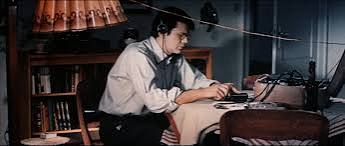
In the summer of 1941, as German troops massed on the Soviet border, a small group of Berliners began transmitting secrets from the capital of the Reich. They were not professional spies in the usual sense a Luftwaffe officer, an economist, a film publicist, an American woman but they formed the nucleus of what the Gestapo would later call the Rote Kapelle, the Red Orchestra. The name came from the Gestapo’s own slang: ‘Kapelle’ meant a radio operator, whose keying sounded like music, and ‘Rot’ meant red, for communism. The orchestra played a deadly tune, and when the Nazis finally found the source, the music stopped in a prison courtyard, but the echo of its notes would reach across the Cold War and into the present day.
This is the story of two intertwined networks one in Berlin, one in Western Europe that fed intelligence to Moscow from the heart of the Nazi war machine. It is a story of courage, betrayal, and a warning that was tragically ignored. It is also a story that challenges easy categories: these were not heroes in the usual sense, nor traitors, but people caught between ideologies and loyalties, who made choices that cost many of them their lives.
The Birth of the Orchestra
The Red Orchestra did not emerge from a vacuum. It grew out of the wreckage of the Great Purge, which had decimated Soviet intelligence in the late 1930s. Desperate for reliable agents in Germany, the GRU Soviet military intelligence, not the NKVD turned to existing anti-fascist networks. One such network centered on Harro Schulze-Boysen, a Luftwaffe intelligence officer with a deep hatred of Nazism, and Arvid Harnack, an economist at the Reich Ministry of Economics. They were joined by their wives, Libertas and Mildred, and a circle of friends, artists, and civil servants who shared a loathing for Hitler.
This was not a monolithic communist cell. The Berlin group was a loose and diverse circle: some were communists, but others were conservatives, nationalists, or simply humanists. They were united by opposition to the regime, not by ideology. This diversity gave them access to a wide range of information Harro could see Luftwaffe plans, Arvid had contact with economic data but it also created security lapses. The Gestapo, which initially underestimated communist networks, would later exploit these weaknesses.
Meanwhile, in Brussels, a separate network was being built by Leopold Trepper, a Polish-Jewish communist and a veteran of Soviet intelligence. His network was more professional, composed of experienced agents and organized into cells. They focused on military and economic intelligence, and they would become the principal Soviet source in Western Europe.
The Pact and the Silence
The Nazi-Soviet Pact of 1939 created a moral and operational crisis for the Berlin group. Many of its members were anti-Nazi but not pro-Soviet; the pact forced them to choose between opposing Hitler and supporting Stalin. Some paused their operations, unwilling to help Moscow while it was allied with Berlin. Others continued to gather intelligence but withheld it from Moscow, waiting for the day when the two dictators would turn on each other.
That day came on June 22, 1941, when German forces invaded the Soviet Union. The Red Orchestra’s warning of the invasion date—delivered via the Swiss ‘Lucy’ network, run by Rudolf Roessler—was dismissed by Stalin as British disinformation. It was a tragic intelligence failure that would cost millions of lives. After the invasion, the Berlin group’s work became urgent. They began transmitting information on German military production, Luftwaffe aircraft specifications, troop movements, and even the planned invasion itself—though the warning arrived too late.
The Music of the Airwaves
The Trepper network sent thousands of messages from Brussels and Paris. They reported on German logistics, economic data, and, crucially, the development of V-1 and V-2 rockets at Peenemünde. The Berlin group, despite its amateurish nature, provided valuable intelligence on the Luftwaffe and on German war production. The Swiss ‘Red Three’ network, a related but distinct operation run by Alexander Foote and Rachel Dübendorfer, transmitted over 3,000 messages to Moscow, including the Barbarossa warning.
The Gestapo, however, was listening. The Funkabwehr, the German radio counterintelligence unit, used direction-finding to locate the transmitters. The discovery of the networks was not a single stroke but a slow process of triangulation, helped by a Belgian informant who betrayed the Trepper network in late 1941. The noose began to tighten.
The Fall of the Orchestra
In the summer of 1942, the Gestapo struck. Over 50 members of the Berlin group were arrested in a wave of raids. The arrests were followed by torture and interrogations, which led to further arrests. The trials were swift and brutal. Most of the accused were sentenced to death for ‘preparing to commit high treason’ and ‘aiding the enemy.’
The executions took place at Plötzensee Prison in Berlin—by hanging or firing squad. Harro Schulze-Boysen was executed on December 22, 1942. His wife Libertas was killed the same day. Arvid Harnack was executed, and Mildred Harnack, who was American, was initially sentenced to six years in prison, but Hitler personally ordered a new trial, and she was executed on February 16, 1943. In all, more than 50 members of the Berlin group lost their lives.
Trepper was arrested in 1942 but managed to escape in 1943 and survived the war. Anatoli Gurevich, codename ‘Kent,’ was captured and later returned to the USSR, where he was imprisoned—a fate that awaited many Soviet agents who had fallen into enemy hands. The network that had once been the Red Orchestra was no more.
Aftermath and Memory
The Red Orchestra’s place in history is contested. In West Germany, they were often branded as traitors, excluded from the honored narrative of the German resistance, which centered on the conservative plotters of the July 20, 1944, assassination attempt on Hitler. The communist association made them suspect. Only in recent decades have they been rehabilitated, with exhibitions at the German Resistance Memorial Center in Berlin.
From the Soviet perspective, the network was a source of pride and a source of suspicion. Moscow treated the survivors with suspicion, imprisoning some, like Gurevich, despite their service. The Cold War froze the Red Orchestra into a propaganda tool, and the complex human stories behind the espionage were often lost.
Today, the Red Orchestra is remembered as a rare instance of resistance from within the heart of the Nazi state, but it is also a cautionary tale about the limits of intelligence and the cost of political idealism. The warning they sent about Barbarossa was ignored, but the intelligence they gathered was not entirely without effect. The story of the Red Orchestra is not a simple victory or defeat; it is a story of moral ambiguity, sacrifice, and the terrible choices that war forces on people.
The Trepper Network and the ‘Red Three’
The Trepper network, separate from the Berlin group, was more professional but faced similar risks. Its members included Anatoli Gurevich, who operated in France and Switzerland, and a network of communist cells across Belgium and the Netherlands. The ‘Red Three’ in Switzerland, run by Alexander Foote and Rachel Dübendorfer, was crucial in transmitting the Barbarossa warning, but it also had its own internal tensions and was eventually compromised by a double agent.
The information they provided was vast: reports on German logistics, economic data, and the V-2 rocket program. But the impact of this intelligence on the war’s outcome is debated. Some historians argue that it helped the Soviet Union prepare for the German onslaught, while others point to Stalin’s distrust and the failure to act on the warnings. The Red Orchestra’s legacy is thus ambiguous—neither a triumph nor a total failure, but a testament to the courage of individuals who risked everything to fight a monstrous regime from within.
The Red Orchestra played its final notes in a Berlin prison, but its music has not faded. The story of these spies—the Luftwaffe officer, the economist, the American woman, the Polish communist—reminds us that resistance can take many forms, and that the line between hero and traitor is often drawn by history’s victors. Their warning was ignored, but their sacrifice was not in vain; it stands as a haunting reminder of the cost of ignoring the truth, and of the enduring power of human conviction in the face of tyranny.
Summary
- The Red Orchestra was a Soviet spy network in Nazi Germany, named by the Gestapo, with two main groups: the Berlin circle and the Trepper network in Western Europe.
- Active from 1938 to 1942, it transmitted military and economic intelligence to Moscow, including the warning of Operation Barbarossa, which Stalin dismissed.
- The Berlin group was a diverse anti-Nazi circle, not purely communist, while the Trepper network was more professional and communist-based.
- The networks were broken by German radio counterintelligence and betrayal, leading to over 50 arrests and executions, including Harro Schulze-Boysen and Arvid Harnack.
- Post-war, they were often excluded from the German resistance narrative, but have been rehabilitated in recent decades.
FAQ
Q: What was the Red Orchestra?
A: The Red Orchestra was a Soviet spy network operating in Nazi Germany and Western Europe during World War II. It consisted of two main groups: the Berlin group led by Harro Schulze-Boysen and Arvid Harnack, and the Trepper network based in Brussels and Paris, led by Leopold Trepper.
Q: Why was it called the Red Orchestra?
A: The Gestapo coined the name ‘Rote Kapelle’ (Red Orchestra) because ‘Kapelle’ was their slang for a radio operator, whose transmissions sounded like music, and ‘Rot’ referred to communism. So the name literally meant ‘Red Band’ or ‘Red Orchestra.’
Q: What information did the Red Orchestra send to Moscow?
A: The Berlin group sent information on German military production, Luftwaffe aircraft specifications, and troop movements. The Trepper network reported on German logistics, economic data, and V-1/V-2 rocket development. The Swiss ‘Red Three’ network transmitted over 3,000 messages, including the warning of Operation Barbarossa.
Q: How was the Red Orchestra discovered?
A: The networks were broken by the German Funkabwehr (radio counterintelligence) using radio direction-finding to locate transmitters, and by a Belgian informant who betrayed the Trepper network in late 1941.
Q: What happened to the members of the Red Orchestra?
A: Over 50 members of the Berlin group were arrested in 1942 and most were executed by hanging or firing squad at Plötzensee Prison. Leopold Trepper was arrested but escaped in 1943 and survived the war. Anatoli Gurevich was captured and later imprisoned in the USSR.
Leave a Reply