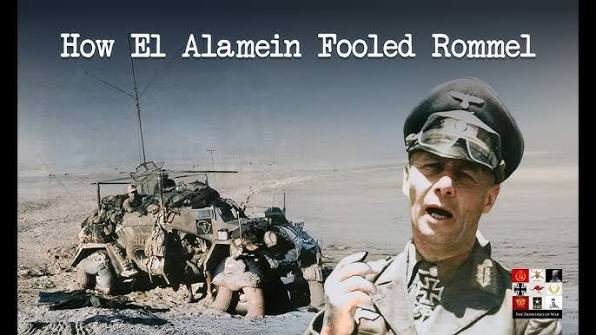
In the late summer of 1942, the British Eighth Army was a force in retreat. Its commander had been sacked, its morale was in tatters, and its soldiers were looking over their shoulders at the advancing German Afrika Korps, led by the man the British press had dubbed the Desert Fox. Erwin Rommel had just captured Tobruk, taken thousands of prisoners, and driven the British back to a dusty railway halt called El Alamein, a mere 60 miles from Alexandria. If he broke through, Egypt, the Suez Canal, and the oil of the Middle East would lie open before him.
Yet within three months, the Eighth Army had a new commander, a new spirit, and a plan. On October 23, 1942, at 9:40 p.m., a thousand British guns opened fire on the Axis lines. The bombardment was so intense that it could be heard in Alexandria. When it stopped, the infantry moved forward, and the greatest set-piece battle of the desert war began. By November 4, Rommel’s army was in full retreat, never to stop until it surrendered in Tunisia seven months later.
This is the story of how a meticulous, arrogant, and brilliant British general named Bernard Montgomery outthought and outfought the most famous German commander of the war—and why the victory at El Alamein marked the true turning point of World War II.
The Road to El Alamein
The desert war had been a seesaw of sweeping advances and humiliating retreats. In late 1940, the British launched Operation Compass and drove the Italian army out of Egypt, capturing 130,000 prisoners in two months. But Hitler, alarmed at the collapse of his ally, sent a small German force under a relatively unknown general named Erwin Rommel to stiffen the Italian lines.
Rommel was a master of mobile warfare. He attacked within days of arriving in February 1941, launching a series of surprise offensives that pushed the British back across Libya. By June 1942, he had captured the fortress of Tobruk—a prize that had held out against him for eight months the previous year—and swept into Egypt. The British Eighth Army, commanded by General Claude Auchinleck, managed to halt Rommel at the First Battle of El Alamein in July 1942, but the situation remained precarious. Churchill, desperate for a victory, replaced Auchinleck with Bernard Montgomery on August 13, 1942.
Montgomery was a stark contrast to Rommel. Where Rommel was improvisational, Montgomery was a meticulous planner. He was also a master of morale. He addressed his troops directly, spoke of victory as an inevitability, and immediately began to rebuild the Eighth Army’s confidence. He also made a critical decision: he would not retreat. He had the Qattara Depression to his south—an impassable salt marsh that protected his flank—and he intended to use this narrow front to his advantage.
Rommel’s Last Gamble: Alam el Halfa
Rommel knew that time was running out. His supply lines were stretched thin, and the British were receiving fresh troops and tanks from the United States. In late August, he launched his last offensive, the Battle of Alam el Halfa. He planned to swing south around the British flank, but Montgomery, forewarned by intelligence, had laid a trap. The British tanks and anti-tank guns held their ground, and Rommel’s attack was repulsed. It was a defensive victory for Montgomery—a sign that the Eighth Army could now stand up to the Desert Fox.
But Montgomery was not content with a mere defensive success. He began planning a massive offensive of his own. He had one overwhelming advantage: supplies. The British had access to thousands of tanks, guns, and shells from the factories of Britain and America. Rommel, by contrast, was running on fumes. His supply ships were being sunk in the Mediterranean by the Royal Navy and the air force, and he was short of fuel and ammunition.
The Second Battle of El Alamein
On the night of October 23, 1942, Montgomery launched Operation Lightfoot. The plan was a classic set-piece battle: a massive artillery bombardment, followed by a carefully coordinated infantry and tank advance through the Axis minefields. The goal was to break through the northern sector of the line, while a diversionary attack in the south pinned down the Italian divisions.
The battle was brutal and attritional. The minefields were thicker than expected, and the infantry made slow progress. For days, the two armies ground against each other in a deadly stalemate. Rommel, who was on sick leave in Germany at the start of the battle, rushed back to his headquarters. He threw his last reserves into the fight, including the 21st Panzer Division, but the British superiority in numbers and firepower was overwhelming.
On November 2, Montgomery launched Operation Supercharge, a second push designed to break through the Axis line once and for all. The British tanks poured through a gap in the minefields and into the open desert beyond. Rommel, seeing that his army was about to be encircled, began a retreat. But Hitler ordered him to stand fast, and Rommel was forced to obey—at least for a time. The inevitable could not be postponed. On November 4, the Axis line cracked. The Italian and German units were separated, and the retreat turned into a rout. The Eighth Army pursued Rommel’s forces across Libya, capturing thousands of prisoners and vast quantities of equipment.
The casualties at El Alamein were heavy on both sides. The Axis lost approximately 30,000 men killed, wounded, or captured—the vast majority of them prisoners. The Eighth Army suffered around 13,500 casualties. But the strategic result was decisive: Rommel’s army was broken, and the Axis never regained the initiative in North Africa.
The Aftermath: Operation Torch and the End in Tunisia
Just days after El Alamein, the Allies launched Operation Torch, the Anglo-American landings in Morocco and Algeria on November 8, 1942. This opened a second front in North Africa, trapping Rommel’s forces between the Eighth Army advancing from the east and the new Allied forces attacking from the west. The Axis forces retreated into Tunisia, where they fought a desperate delaying action.
Rommel’s last offensive was at the Kasserine Pass in February 1943, where he inflicted a sharp defeat on the inexperienced American forces. But it was a tactical success that could not change the strategic situation. In March, Rommel left Africa for good, officially for health reasons—though he was also disillusioned with Hitler’s refusal to allow a strategic withdrawal. On May 13, 1943, the remaining Axis forces in North Africa surrendered. Over 250,000 German and Italian soldiers were taken prisoner.
The Rommel Myth and the Reality
Rommel’s reputation as a brilliant and chivalrous commander was carefully cultivated by both sides. The British needed a scapegoat for their defeats, and Rommel’s skill made him a convenient villain. After the war, his image was further polished by his involvement in the July 20, 1944 plot to assassinate Hitler, which made him a hero of the German resistance in the eyes of many.
The reality was more complex. Rommel was certainly a tactical genius—his ability to conduct mobile warfare in the desert was unmatched. But he was also strategically reckless, often overextending his supply lines and ignoring logistics. He was not the “clean” warrior of legend; he accepted Nazi decorations and turned a blind eye to the persecution of Jews in his theater. His chivalry extended only to those he considered worthy of it.
Montgomery, on the other hand, was a cautious, methodical planner who believed in overwhelming force. He was not flashy, but he was effective. He restored the Eighth Army’s confidence, outthought Rommel at Alam el Halfa, and then crushed him at El Alamein. He may have lacked Rommel’s flair, but he had something more important: a strategy that worked.
The Significance of El Alamein
El Alamein was the first major, permanent land victory by the Allies over the Germans in World War II. It came before Stalingrad, which ended in February 1943, and it proved that the Wehrmacht could be beaten. It secured the Suez Canal, protected the oil of the Middle East, and opened the way for the invasion of Italy. It also gave the British people a much-needed morale boost during the darkest days of the war.
Churchill famously said: “Before Alamein we never had a victory. After Alamein we never had a defeat.” It was an exaggeration, but it captured the moment’s significance. El Alamein was the turning point not just of the desert war, but of the entire conflict. The Desert Fox had been outfoxed, and the tide had turned.
The desert war between Rommel and Montgomery was more than a clash of generals. It was a contest between improvisation and preparation, between a commander who relied on dash and one who relied on logistics. At El Alamein, Montgomery proved that in modern war, the side with better supplies and a disciplined plan will usually win. Rommel’s retreat from Egypt marked the beginning of the end for the Axis in North Africa, and the lessons of that battle—about the importance of supply lines, intelligence, and morale—resonate to this day.
Summary
- The Second Battle of El Alamein (October 23–November 4, 1942) was the first major Allied land victory over the Germans in WWII, marking a turning point in the war.
- Montgomery’s defensive victory at Alam el Halfa (August 1942) blunted Rommel’s last offensive and set the stage for the counterattack.
- El Alamein was won through overwhelming material superiority—the British had more tanks, guns, and supplies, while Rommel’s forces were starved of fuel and ammunition.
- The Allied victory at El Alamein, combined with Operation Torch in November 1942, trapped the Axis forces in Tunisia and led to their surrender in May 1943.
- Rommel’s reputation as a “clean” and chivalrous general is largely a myth; he was a tactical genius but strategically reckless and complicit in the Nazi system.
FAQ
Q: What was the significance of the Battle of El Alamein?
A: It was the first major, permanent land victory by the Allies over the Germans in World War II. It secured the Suez Canal and the Middle East oil fields, and it marked the turning point in the North African campaign, leading to the Axis surrender in Tunisia in May 1943.
Q: How did Montgomery differ from Rommel as a commander?
A: Montgomery was a meticulous planner who emphasized preparation, logistics, and overwhelming force. Rommel was an improviser who excelled at mobile warfare but often overextended his supply lines. Montgomery’s caution contrasted with Rommel’s boldness, and at El Alamein, Montgomery’s strategy proved decisive.
Q: What was the “Rommel myth”?
A: The “Rommel myth” was the idea that Rommel was a brilliant, chivalrous general who fought a “clean” war without Nazi atrocities. This was promoted by Allied propaganda and by Rommel himself, but it obscures his strategic recklessness and his complicity in the Nazi system.
Q: How did the Qattara Depression affect the battle?
A: The Qattara Depression, an impassable salt marsh, protected the British southern flank at El Alamein. This meant that Rommel could not outflank the British by sweeping around the desert, so he was forced into a frontal assault against a well-prepared defensive line, which played into Montgomery’s hands.
Q: What role did Operation Torch play in the North African campaign?
A: Operation Torch (November 8, 1942) was the Anglo-American invasion of Morocco and Algeria. It created a second front in North Africa, trapping Rommel’s forces between the Eighth Army advancing from the east and the new Allied forces attacking from the west, leading to the Axis surrender in Tunisia.
Leave a Reply