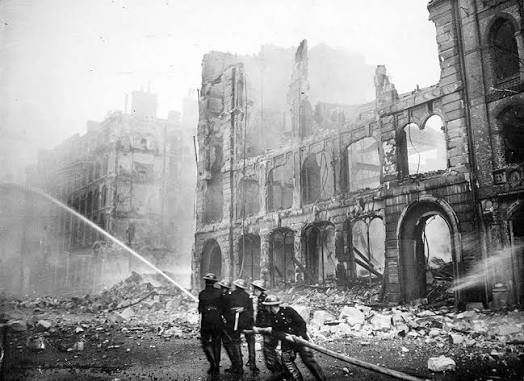
On the evening of September 7, 1940, the sky over London filled with the drone of 348 German bombers. They came in waves, targeting the docks and the working-class neighborhoods of the East End. By dawn, 430 people were dead and another 1,600 injured. The raid marked the beginning of a relentless campaign that would last for 267 days, testing the city’s resolve in ways that had never been imagined. This is the story of how London survived not just the bombs, but the fear, the exhaustion, and the uncertainty that came with them.
A City Under Siege
The Blitz was not a single event but a sustained assault. From September 7, 1940, to May 11, 1941, London was attacked 71 times. In the first 57 nights, the bombs fell without pause. Over 18,000 tons of high explosives were dropped on the capital, and more than one million homes were damaged or destroyed. The casualty figures were staggering: around 20,000 to 25,000 Londoners lost their lives, with many more injured. The city that had once seemed untouchable was now a frontline battlefield.
The Human Experience
Life under the Blitz was a study in endurance. Families queued for rations, then spent the night huddled in shelters. The Anderson shelter a corrugated iron structure half-buried in the garden offered some protection but was cold and damp. In 1941, the Morrison shelter, an indoor steel cage, provided a safer alternative for those without gardens. Public shelters, particularly tube stations, became a refuge for up to 177,000 people each night. The stations were not officially sanctioned at first, but the people’s need was undeniable. They turned platforms into makeshift dormitories, with bunks, tea stalls, and a strange sense of community.
The psychological toll was immense. Mass Observation, a social research organization, documented the strain in diaries. People reported sleepless nights, anxiety, and a numbing fatigue. Yet they also found moments of solidarity. The ‘Blitz spirit’ a term coined during the war captured the resilience and stoicism that became a national symbol. The government and media promoted this image, from Edward R. Murrow’s broadcasts (‘London can take it’) to the Ministry of Information’s film ‘Britain Can Take It.’ But the spirit was real, forged in the shared experience of danger and loss.
The Unequal Burden
The bombs did not fall equally. The East End, with its docks and working-class terraces, bore the brunt. The West End, home to the wealthy, was less affected at least initially. This inequality bred resentment. Fears of social unrest grew, and the government responded with rest centers and improved shelters in poorer areas. When Buckingham Palace was hit on September 13, 1940, Queen Elizabeth famously declared, ‘Now we can look the East End in the eye.’ The bombing of the palace, intended to demoralize, was turned into a symbol of shared sacrifice.
The Battle Above
The Blitz was not a one-sided slaughter. The RAF’s victory in the Battle of Britain had already forced Hitler to abandon his invasion plans, but the bombing continued. The Luftwaffe used radio navigation beams, known as Knickebein, to guide their bombers. British scientists developed countermeasures, jamming the signals and setting decoy fires. Anti-aircraft guns, searchlights, and night-fighters improved over time. The raid on September 15, 1940, later known as Battle of Britain Day, saw the RAF repel a massive daylight attack, convincing Hitler that air superiority was unattainable.
The Turning Point
The Blitz ended not with a negotiated peace but with a strategic shift. On May 10, 1941, the Luftwaffe launched its final major raid on London. Over 1,400 people were killed and 3,000 injured in what became known as ‘The Longest Night.’ The next month, Hitler turned his forces east for Operation Barbarossa, the invasion of the Soviet Union. The Blitz was over, but its legacy endured. It shaped British identity, influenced the Allied bombing of Germany, and left a city scarred but unbroken.
The Legacy
London’s survival was not inevitable. It was the result of preparation, improvisation, and sheer human endurance. The Air Raid Precautions, established years before the war, provided a framework for civil defense. The evacuation of 1.5 million children in September 1939, though many returned during the Phoney War, was a massive logistical feat. The Blitz tested the city’s resilience, and London rose to the challenge. Today, the scars remain, but so does the memory of how ordinary people faced extraordinary circumstances and survived.
The Blitz was a crucible that forged a collective spirit. It showed that a city, even when bombed night after night, could hold. The bombs destroyed buildings, but they did not break the will of the people. That legacy, born in the darkness of the shelters, remains a testament to human resilience.
Summary
- The Blitz lasted 267 days, with 57 consecutive nights of bombing at the start.
- London was attacked 71 times, with over 18,000 tons of explosives dropped.
- Around 20,000–25,000 Londoners died, and over a million homes were damaged.
- Shelters, from Andersons to tube stations, became a way of life.
- The Blitz ended in May 1941 as Hitler shifted focus to the Soviet Union.
FAQ
Q: What was the Blitz?
A: The Blitz was Nazi Germany’s sustained bombing campaign against the United Kingdom from September 7, 1940, to May 11, 1941. It targeted London and other cities to break morale and disrupt war production.
Q: How many people died during the Blitz?
A: Approximately 43,000 civilians were killed across the UK, with London accounting for roughly half. Over 51,000 were seriously injured.
Q: What were Anderson shelters?
A: Anderson shelters were corrugated iron structures half-buried in gardens, issued to about 2.25 million households. They offered protection from bomb blasts and shrapnel.
Q: Why did the Blitz end?
A: The Blitz ended as Hitler shifted military resources to Operation Barbarossa, the invasion of the Soviet Union, in May 1941. The Luftwaffe had also failed to achieve air superiority.
Q: Did the Blitz affect the course of the war?
A: Yes, it influenced the Allied strategic bombing of Germany and solidified British resolve. It also demonstrated that civilian populations could endure prolonged aerial attack, shaping future military strategies.
Leave a Reply