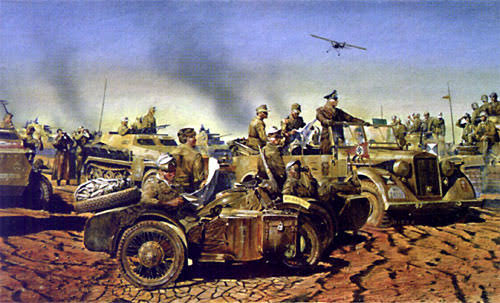
Tag: World War II

  • Erwin Rommel: The Making and Unmaking of the Desert Fox Myth

    Erwin Rommel: The Making and Unmaking of the Desert Fox Myth

    Erwin Rommel is the most famous German general of World War II. His name evokes images of desert warfare, tactical brilliance, and a kind of chivalrous conduct that seemed out of place in the Nazi regime. But the ‘Desert Fox’ was as much a product of propaganda as of actual military achievement. Over the past few decades, historians have chipped away at the legend, revealing a more complex—and less heroic—figure.

    This article separates the man from the myth. We’ll trace Rommel’s rise from a WWI hero to Hitler’s favorite general, examine his campaigns in France and North Africa, and finally confront the uncomfortable truths about his relationship with Nazism and his role in the July 20 plot. The story that emerges is not about a clean soldier in a dirty war, but about a man whose reputation was carefully constructed—and is now being dismantled.

    The Making of a Legend: WWI and the Interwar Years

    Rommel was born in 1891 in Heidenheim, Germany, into a middle-class family. His father was a schoolteacher, and the young Rommel initially considered engineering. But he joined the infantry as an officer cadet in 1910, and the military became his life.

    In WWI, Rommel fought on the Western and Eastern fronts, then in Italy. At the Battle of Caporetto in 1917, he led a series of infiltration attacks that captured key mountain positions, using tactics that would later define his style. For this, he won the Pour le Mérite, Germany’s highest military honor at the time. After the war, he stayed in the army and wrote a manual, Infantry Attacks (1937), based on his experiences. The book caught the attention of Hitler, who was always looking for officers who thought offensively. It also became a bestseller abroad—George Patton read it, and it influenced his own aggressive armored warfare.

    The Ghost Division: Rommel in 1940

    When WWII broke out, Rommel was given command of the 7th Panzer Division. In the invasion of France in May 1940, he ignored orders and pushed his tanks at breakneck speed, often leaving the infantry far behind. His division moved so fast that it became known as the “Ghost Division”—it seemed to be everywhere at once. In one engagement, he used captured British tanks to confuse the enemy. His success was undeniable, but it also sowed seeds for his later arrogance: he believed he could outrun logistics and outsmart any opponent.

    The Desert Fox: North Africa, 1941–1943

    In February 1941, Rommel was sent to North Africa to rescue the struggling Italian army. He arrived with just two divisions, but within weeks he had pushed the British back across the desert. The British, desperate to explain their defeats, began to mythologize Rommel. They called him the “Desert Fox”—a clever, chivalrous enemy who outfoxed them with daring maneuvers. This propaganda suited the British: it made their defeat seem noble and their eventual victory more glorious.

    Rommel’s early successes were real. He recaptured Cyrenaica, besieged the port of Tobruk for months, and by June 1942 he had taken Tobruk and pushed his forces deep into Egypt. For that, Hitler promoted him to Field Marshal. But his advance stalled at El Alamein, just 100 miles from Alexandria. The supply lines stretched, the tanks wore out, and the British under Montgomery had the advantage of shorter logistics. Rommel’s gamble failed. After the Second Battle of El Alamein in October–November 1942, he was forced into a long retreat across Libya and Tunisia, finally leaving Africa in March 1943 due to illness—just before the Axis surrender in Tunisia.

    The Myth and the Reality: Rommel’s Strategic Flaws

    The legend says Rommel was a tactical genius, but historians have pointed out his strategic weaknesses. He often overextended his supply lines, underestimated logistics, and made decisions based on intuition rather than careful planning. His obsession with offensive action could be reckless. In North Africa, he ignored the advice of his quartermasters and pushed too far, which contributed to his eventual defeat. The “military genius” reputation was also inflated by British propaganda—they needed a superhuman enemy to justify their own setbacks.

    A Nazi General? Rommel’s Relationship with the Regime

    For decades, Rommel was seen as an apolitical soldier who served his country, not the Nazi Party. This view was promoted by his widow, his former subordinates, and even the Western Allies after the war, who found him a useful symbol of a “clean” German military. But recent scholarship has painted a different picture.

    Rommel was not a member of the Nazi Party, but he was not opposed to Hitler either. He benefited from Hitler’s favor, receiving rapid promotions and decorations that were often outside the normal chain of command. He also tolerated, and at times supported, war crimes. In North Africa, he ordered “energetic action” against Jewish refugees in Tunisia, and he did not object to the murder of captured commandos. His attitude toward the Holocaust was at best indifferent, at worst complicit.

    The July 20 Plot and Forced Suicide

    By 1944, Rommel was in command of Army Group B in Normandy, tasked with defending the Atlantic Wall against an expected Allied invasion. He argued that the panzer divisions should be stationed near the coast, but Hitler overruled him. On D-Day, June 6, 1944, Rommel was in Germany for his wife’s birthday—a fact that has been used to explain the chaotic German response. He returned to Normandy and was wounded on July 17 when an Allied fighter strafed his car.

    Three days later, on July 20, a bomb exploded in Hitler’s headquarters. The conspirators’ plot failed, but under torture, some named Rommel as a potential supporter. Hitler gave Rommel a choice: face a public trial for treason, which would mean the execution of his family, or take a cyanide pill and be given a state funeral with honors. Rommel chose suicide. On October 14, 1944, he was driven to a quiet spot, swallowed the poison, and died. His death was officially reported as resulting from his wounds—a lie that held for years.

    The End of the Legend

    Rommel’s role in the July 20 plot was passive at best. He had been approached by conspirators, but he was more concerned about the war’s inevitable defeat than about overthrowing Hitler. He did not actively participate, and his motives were not moral but pragmatic. The myth of Rommel as a principled resistance fighter is just that—a myth.

    Today, historians like Ralf Georg Reuth and Peter Lieb have argued that Rommel was a committed Nazi who used Hitler’s favor for his career and was complicit in crimes. His legend was built on selective memory and propaganda, both by the British to explain their defeats and by postwar Germans to distance themselves from the Nazi regime. The real Rommel was a brilliant tactical commander, yes, but also a man who served a criminal regime and looked away from its horrors.

    Erwin Rommel was a complex figure: a brave soldier, a talented tactician, and a man who rose to fame under a murderous dictatorship. His myth as the “clean” general served many purposes after the war, but it does not survive scrutiny. Understanding the real Rommel—with his flaws, his complicity, and his tragic end—is more valuable than preserving a legend. It reminds us that heroism is never simple, and that even the most celebrated figures can be built on sand.

    Summary

    • Rommel’s early successes in WWI and his manual Infantry Attacks made him a favorite of Hitler and a respected military mind.
    • In WWII, he led the “Ghost Division” in France and the Afrika Korps in North Africa, earning the nickname “Desert Fox” from the British.
    • His strategic flaws, especially overextending supply lines, contributed to his defeat at El Alamein.
    • The “clean Wehrmacht” myth is false: Rommel was a beneficiary of Nazism, tolerated war crimes, and was not a principled opponent of Hitler.
    • He was forced to commit suicide in 1944 after being implicated in the July 20 plot, but his involvement was passive and pragmatic.

    FAQ

    Q: Was Rommel a member of the Nazi Party?
    A: No, he was not a formal member, but he supported the regime and benefited from Hitler’s favor. He was not a principled opponent of Nazism.

    Q: What was Rommel’s role in the July 20 plot?
    A: His involvement was minimal. He was approached by conspirators, but he did not actively participate. His concerns were more about the war’s outcome than about overthrowing Hitler.

    Q: Why did the British call him the “Desert Fox”?
    A: They used the nickname to explain their defeats in North Africa, creating an image of a clever and chivalrous enemy. It was part of propaganda that later contributed to the Rommel myth.

    Q: Did Rommel commit war crimes?
    A: He tolerated and sometimes ordered actions that were war crimes, such as the murder of captured commandos and “energetic action” against Jewish refugees in Tunisia.

    Q: How did Rommel die?
    A: He was forced to commit suicide in 1944 after being implicated in the July 20 plot. Hitler gave him the choice of suicide with family protection or a public trial with family persecution. He chose suicide.
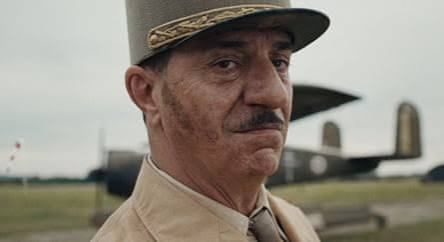
  • Charles de Gaulle: The Man Who Reimagined France

    Charles de Gaulle: The Man Who Reimagined France

    On 18 June 1940, a little-known French brigadier general sat in a London studio and, over BBC radio, told his countrymen that France had lost a battle, not the war. That broadcast, heard by a minority of the population, would become the seed of French resistance and the foundation of a political legend. Charles de Gaulle was not just a soldier or a statesman; he was a man possessed by an idea ‘a certain idea of France’ that drove him to defy defeat, reshape the republic, and leave a mark on global politics that still endures.

    De Gaulle’s life spanned two world wars, the collapse and rebirth of French democracy, and the end of empire. From the mud of Verdun to the pinnacle of presidential power, his trajectory was anything but linear. He spent years in the wilderness, only to be called back in times of crisis, each time bending the course of history to his stubborn vision. This is the story of a man whose legacy is as polarizing as it is monumental.

    A Certain Idea of France

    Born in 1890 in Lille, de Gaulle grew up in a devout Catholic, patriotic family. His father, a philosophy professor, instilled in him a deep sense of duty and history. After graduating from the elite Saint-Cyr military academy in 1912, he entered an army still haunted by the trauma of 1870’s defeat by Prussia. The young officer quickly distinguished himself, but it was World War I that forged his character.

    At Verdun in 1916, de Gaulle was wounded and captured. He spent 32 months as a prisoner of war, attempting escape five times. The experience taught him patience and the importance of moral resilience qualities he would later draw upon during his darkest political moments. After the war, he served on the staff of Marshal Pétain, the hero of Verdun, but his thinking began to diverge radically from the conservative high command.

    The Prophet of Armor

    During the interwar years, de Gaulle became an early advocate of mechanized warfare. In his 1934 book, The Army of the Future, he argued for the creation of professional, armored divisions that could strike quickly and decisively—a concept later vindicated by Germany’s blitzkrieg. The French military establishment, wedded to static defense, largely ignored him. When the Germans invaded in 1940, France collapsed in six weeks, precisely because it had failed to embrace the mobile warfare de Gaulle had preached.

    In June 1940, as the government sued for peace, de Gaulle refused to accept defeat. He fled to London and, on the 18th, made his historic broadcast. The Appeal of 18 June was a direct challenge to the legitimacy of the Vichy regime, which had surrendered to Hitler. De Gaulle declared that the flame of French resistance must not be extinguished. At that moment, he was a brigadier general with no army, no resources, and no international recognition.

    The Outsider in London

    De Gaulle’s relationship with his allies was fraught. Winston Churchill, who had offered him asylum, found him insufferable yet indispensable. President Franklin Roosevelt viewed him as a potential dictator and refused to recognize the Free French as a legitimate government. Despite these obstacles, de Gaulle maneuvered relentlessly to assert French sovereignty. He insisted that France, though defeated, must be treated as a great power.

    His stubbornness paid off. By 1944, de Gaulle had become the symbol of the Resistance, and his provisional government was welcomed into liberated Paris. He walked down the Champs-Élysées to the roar of the crowd, a moment that cemented his role as the savior of French honor. But his vision of a strong executive clashed with the political class, and in 1946 he resigned, disgusted by the new constitution that gave parliament the upper hand.

    The Long March Back

    For the next twelve years, de Gaulle was out of power. He led a political movement, the Rally of the French People, but it fizzled out. He retired to his estate in Colombey-les-Deux-Églises, writing his memoirs and waiting. His patience was rewarded in 1958, when France faced its gravest crisis since the war: the Algerian War had triggered an army revolt in Algiers, and the Fourth Republic teetered on the brink of collapse.

    The generals demanded de Gaulle’s return. He accepted, but on his own terms. He was granted emergency powers and quickly drafted a new constitution that created a powerful presidency, directly accountable to the people. The Fifth Republic was born, and de Gaulle was elected its first president. His return marked a turning point—he intended to end the Algerian War, which had become a quagmire.

    Ending the War, Surviving Assassins

    De Gaulle’s solution for Algeria was self-determination, a move that enraged the French settlers and the military. The Secret Army Organization (OAS) launched a campaign of terror, and de Gaulle survived numerous assassination attempts. In 1962, the Évian Accords granted Algeria independence, and de Gaulle, once hated by the far right, secured his legacy as a decolonizer.

    His foreign policy was equally bold. He pursued an independent nuclear deterrent, the force de frappe, ensuring France could defend itself without relying on the United States. In 1966, he withdrew France from NATO’s integrated military command, a shock that underscored his commitment to French autonomy. He also sought détente with the Soviet bloc and built a special partnership with West Germany, symbolized by the Élysée Treaty of 1963.

    Grandeur at Home and the Storm of 1968

    Domestically, de Gaulle modernized France. He introduced the new franc to stabilize the currency, promoted industrial growth, and invested in infrastructure. His vision of grandeur—a France that stood tall on the world stage—was matched by a period of economic prosperity that lasted through the 1960s.

    But the revolution came in May 1968. Students took to the streets of Paris, soon joined by millions of workers in a general strike that paralyzed the country. De Gaulle was initially caught off guard. He fled to Baden-Baden in Germany to consult with French military commanders, a move that some saw as a sign of weakness, others as a strategic retreat. When he returned, he called snap elections, framing the vote as a choice between him and chaos. He won a massive majority, but the events had shaken his authority.

    The Final Act

    De Gaulle’s political career ended not with a defeat at the polls, but with a referendum on regional reform and Senate changes. He had promised to resign if the proposal was rejected, and when the French voted no in April 1969, he kept his word. He retired to Colombey, where he died on 9 November 1970, just a few weeks before his 80th birthday.

    His funeral was deliberately modest, held in his hometown, with no state ceremony. Yet his influence on France is immeasurable. The Fifth Republic he created endures to this day, and his name remains synonymous with a certain idea of national independence and pride.

    Charles de Gaulle was a paradox: a man of tradition who embraced modernity, a nationalist who ended an empire, and a democrat who wielded power with an iron fist. His legacy is not without contradictions, but his impact is undeniable. He gave France a constitution that brought stability, a foreign policy that asserted its independence, and a sense of honor that survived the humiliation of 1940. Whether revered or criticized, de Gaulle remains a towering figure, a testament to what one stubborn visionary can achieve.

    Summary

    • De Gaulle’s 1940 ‘Appeal of 18 June’ from London became the founding act of the French Resistance, even though the BBC broadcast was heard by a minority at the time.
    • He was an early proponent of armored warfare, but the French high command ignored his ideas, contributing to the 1940 collapse.
    • After leading the provisional government, he resigned in 1946, spending 12 years in the political wilderness before returning in the 1958 Algerian crisis.
    • As president, he ended the Algerian War, established an independent nuclear deterrent, and withdrew France from NATO’s integrated command in 1966.
    • The Fifth Republic, with its strong executive, remains his most enduring institutional legacy, still governing France today.

    FAQ

    Q: Why is de Gaulle considered a savior of France?
    A: He refused to accept the armistice with Nazi Germany in 1940, rallied the French to resist from London, and eventually led the provisional government that restored France as a sovereign power. His ‘Appeal of 18 June’ became a symbol of national defiance.

    Q: What was the ‘Algerian crisis’ and why was it significant?
    A: The Algerian War (1954–1962) was a brutal conflict over Algeria’s independence from France, causing a political crisis that threatened the Fourth Republic. De Gaulle was called back to power in 1958, and he ended the war by granting Algeria independence in 1962, despite opposition from French settlers.

    Q: How did de Gaulle reshape the French constitution?
    A: He founded the Fifth Republic in 1958 with a constitution that strengthened the presidency, allowing the head of state to act decisively without parliamentary paralysis. From 1962, the president was directly elected by the people, and the executive gained significant powers.

    Q: What were de Gaulle’s main foreign policy goals?
    A: He pursued ‘grandeur’—a France that was independent and influential. This included building a nuclear arsenal (force de frappe), withdrawing from NATO’s integrated military command in 1966, fostering cooperation with West Germany, and pursuing détente with the Soviet Union.

    Q: Why did de Gaulle resign in 1969?
    A: He resigned after losing a referendum on reforming the Senate and creating regional governments. He had promised to step down if the proposal was rejected, and he honored that pledge, ending his political career.

  • The Birth of the United Nations: A Hope for Global Peace

    The Birth of the United Nations: A Hope for Global Peace

    On June 26, 1945, in the San Francisco Opera House, delegates from 50 nations put pen to paper and signed the United Nations Charter. The world was still smoldering from the ashes of World War II a conflict that had killed an estimated 60 to 80 million people and ended with the blinding flash of atomic bombs over Hiroshima and Nagasaki. The charter was not just a document; it was a promise, born from the wreckage of a failed League of Nations, that humanity would find a better way to settle its disputes.

    The road to that signing was long and winding, shaped by wartime alliances and the dogged vision of leaders who had witnessed two catastrophic global wars. This article traces that journey from the Atlantic Charter to the San Francisco Conference and examines how the United Nations came to embody both the hopes and the contradictions of a post-war world order.

    The League’s Ghost

    Before the United Nations, there was the League of Nations a grand experiment that began with high ideals after World War I but collapsed under the weight of its own weaknesses. It had no enforcement mechanism, no standing army, and the United States, its most powerful potential backer, never joined. When Japan invaded Manchuria in 1931, the League could only issue condemnations. When Italy marched into Ethiopia in 1935, its sanctions were toothless. When Hitler remilitarized the Rhineland in 1936, the League stood by, paralyzed.

    The lesson was clear: a peacekeeping body without teeth was a paper tiger. As World War II erupted in 1939, it became brutally apparent that the next attempt at global governance would need to be stronger and more inclusive.

    Wartime Blueprints

    The planning for a new world order began even as the bombs fell. In August 1941, President Franklin D. Roosevelt and British Prime Minister Winston Churchill met aboard a warship in the North Atlantic and issued the Atlantic Charter a joint declaration that outlined goals for a post-war world, including disarmament of aggressors and a “permanent system of general security.”

    By January 1942, 26 Allied nations signed the Declaration by United Nations, pledging to fight the Axis powers and affirming the Atlantic Charter’s principles. It was in that declaration that Roosevelt first coined the term “United Nations” a phrase that would come to define a global institution.

    The blueprint took shape at the Dumbarton Oaks Conference in Washington, D.C., in the autumn of 1944. Representatives from the U.S., the UK, the USSR, and China drafted proposals for the new organization’s structure, including a Security Council with five permanent members each holding veto power. Then, in February 1945, at the Yalta Conference, Roosevelt, Churchill, and Stalin finalized the voting procedures and set a date for a formal conference in San Francisco.

    San Francisco: The World Gathers

    When delegates assembled in San Francisco on April 25, 1945, the world had changed. Roosevelt had died just two weeks earlier, and Germany’s surrender was only days away. The conference carried an air of urgency a sense that the world was holding its breath.

    Fifty nations sent 850 delegates, and more than 2,500 journalists covered every twist and turn. The smaller nations particularly those from Latin America and the Middle East pushed back against the dominance of the Big Five. They demanded stronger human rights language and a greater role for the General Assembly. Their insistence led to the inclusion of the Trusteeship Council and a more robust commitment to decolonization.

    After two months of intense negotiation, the Charter was unanimously adopted on June 25, 1945. The next day, delegates signed it in the Herbst Theatre, the same venue where the conference had opened. Poland, absent at the signing, would add its name on October 15, bringing the original membership to 51.

    A Charter of Contradictions

    The United Nations Charter, drafted by South African statesman Jan Smuts, opens with the stirring words: “We the peoples of the United Nations determined to save succeeding generations from the scourge of war.” Article 1 lays out the organization’s core purposes: to maintain international peace and security, develop friendly relations among nations, achieve international cooperation in solving economic, social, cultural, and humanitarian problems, and to be a center for harmonizing the actions of nations.

    But the Charter also enshrined a fundamental tension. The Security Council’s five permanent members — the U.S., the UK, the USSR, France, and China — each hold veto power, a provision that gave the great powers a privileged position. Smaller nations, who had hoped for a more democratic structure, had to settle for a General Assembly where every nation had one vote, but where resolutions carried no binding force.

    The First Steps

    The Charter entered into force on October 24, 1945, after the five permanent members and a majority of other signatories ratified it. That date is now celebrated as United Nations Day.

    The first General Assembly opened on January 10, 1946, at Central Hall, Westminster, in London. Fifty-one member states were represented. The Security Council held its first meeting a week later, on January 17. The UN initially operated from temporary quarters — first in London, then at the Sperry Gyroscope plant in Lake Success, New York — until its permanent headquarters on the East River in Manhattan was completed in 1952.

    The League of Nations, meanwhile, formally dissolved itself on April 18, 1946, at its final session in Geneva, transferring its assets and functions to its successor. The old order was gone. The new one had begun.

    A Hope, Not a Guarantee

    The United Nations was born with a heavy burden: to prevent another world war. Its first decades were marked by the Cold War, colonial wars, and regional conflicts — but the UN has also facilitated peacekeeping missions, brokered ceasefires, and provided humanitarian relief to millions. The Charter’s promise of collective security has never been fully realized, but the organization has evolved, expanding to 193 member states and taking on issues its founders never imagined, from climate change to global health.

    The birth of the UN was a hope — a fragile and imperfect one, but a hope nonetheless. As the world continues to grapple with conflict and division, that founding vision remains a touchstone, a reminder that even in the darkest hours, nations can come together to build something better.

    The United Nations was not a clean slate; it was a response to catastrophe, built on the lessons of a failed League and the ashes of war. Its creation in 1945 represented a collective leap of faith — that diplomacy could outpace destruction, and that the nations of the world could cooperate to secure peace. That hope endures, even as the organization continues to face the hard realities of a fractured world.

    Summary

    • The UN Charter was signed on June 26, 1945, by 50 nations at the San Francisco Conference; Poland later signed, making 51 original members.
    • The Charter came into force on October 24, 1945, after ratification by the five permanent Security Council members and a majority of signatories.
    • The UN replaced the League of Nations, which failed to prevent World War II due to lack of enforcement and U.S. absence.
    • Key wartime milestones: Atlantic Charter (1941), Declaration by United Nations (1942), Moscow Conference (1943), Dumbarton Oaks (1944), Yalta (1945).
    • The San Francisco Conference (April–June 1945) involved 850 delegates from 50 nations, with smaller nations pushing for human rights and decolonization.

    FAQ

    Q: When was the United Nations founded?
    A: The UN was founded on October 24, 1945, when the Charter came into force after ratification by the five permanent members and a majority of other signatories.

    Q: What was the League of Nations, and why did it fail?
    A: The League was a post-World War I organization created to maintain peace. It failed because it lacked enforcement power, had no standing military, and the U.S. never joined, making it unable to prevent Japanese, Italian, and German aggression in the 1930s.

    Q: Who coined the term “United Nations”?
    A: U.S. President Franklin D. Roosevelt coined the term in the Declaration by United Nations on January 1, 1942.

    Q: What is the role of the Security Council?
    A: The Security Council is responsible for maintaining international peace and security. It has five permanent members (U.S., UK, USSR/Russia, France, China) with veto power, plus ten rotating non-permanent members.

    Q: Where was the UN’s first meeting held?
    A: The first General Assembly opened on January 10, 1946, at Central Hall, Westminster, London. The UN later moved to temporary quarters in Lake Success, New York, before its permanent headquarters was completed in 1952.

  • The Brief, Radical Rearrangement: How WWII Redrew the Map of Women’s Work

    The Brief, Radical Rearrangement: How WWII Redrew the Map of Women’s Work

    In 1942, a young woman in Detroit named Rose Will Monroe left her job at a beauty parlor to rivet B-24 bombers at the Willow Run plant. She was one of six million American women who stepped into factories, shipyards, and offices during World War II. The war did not merely open doors it kicked them off their hinges. But the story of what happened after the war is more complex than a simple before-and-after.

    The Great Manpower Vacuum

    When the United States entered the war in December 1941, the demand for war materiel exploded. By 1943, the country was producing more than 86,000 aircraft a year, and every one of those planes required thousands of hours of labor. With 12 million men in uniform by 1944, factories faced a critical shortage. The government’s War Manpower Commission launched a recruitment drive aimed squarely at women, using posters and films to frame factory work as patriotic duty.

    Women responded in numbers that shocked even the optimists. By 1944, they constituted 36% of the civilian labor force, up from 27% in 1940. In the shipyards of California and the steel mills of Pennsylvania, women operated cranes, welded hulls, and inspected shells. The image of “Rosie the Riveter” first drawn by J. Howard Miller in 1942 as a private-industry morale booster, then made famous by Norman Rockwell’s 1943 Saturday Evening Post cover became a national symbol. But Rosie was not just a poster. She was a real workforce that kept the war machine running.

    The British Experiment: Conscription of Women

    Across the Atlantic, Britain went further than any other Western nation. In 1941, the National Service Act (No. 2) conscripted unmarried women aged 20 to 30 into war work the first time in British history that women were drafted. By 1943, nearly 80% of married women under 40 were doing some form of war work, from assembling aircraft to driving buses. The Women’s Land Army sent tens of thousands of women to farms, replacing male laborers who had joined the military. Women also served in auxiliary military services the ATS, WAAF, and WRNS performing roles from anti-aircraft gun operations (though they did not fire the guns, they plotted the targets) to codebreaking at Bletchley Park.

    This conscription was a radical break with pre-war norms. Before 1939, many British employers enforced “marriage bars” policies that forced women to leave their jobs upon marriage. The war made such policies untenable, and they were formally abolished between 1944 and 1946. The change was pragmatic, not ideological. The government needed workers, and women were the only available pool.

    The Soviet Exception: Women in Combat

    No nation mobilized women as thoroughly as the Soviet Union. Over 800,000 women served in the Red Army, a scale unmatched by any other belligerent. They flew combat missions in the all-female 588th Night Bomber Regiment, the “Night Witches,” who dropped bombs from obsolete biplanes under cover of darkness. Lyudmila Pavlichenko, a sniper, recorded 309 confirmed kills, making her one of the deadliest snipers in history. Women also drove tanks, served as medics under fire, and worked in partisan units.

    The Soviet mobilization was born of desperation. With 27 million Soviet deaths, the military had no choice but to turn to women. But even after the war, Soviet women’s labor participation remained high out of economic necessity. The state’s rhetoric re-emphasized motherhood, but the reality of reconstruction demanded that women continue to work. The result was a peculiar paradox: women were celebrated as heroes yet still expected to bear the double burden of work and domesticity.

    The Post-War Push-Back

    The war ended in 1945, and with it came a concerted effort to return women to the home. In the United States, the GI Bill of 1944 provided education and housing benefits to veterans—overwhelmingly male—giving them a leg up in the job market. By 1947, about 3.5 million women had left or been forced out of the workforce. The baby boom, which began in 1946 and lasted until 1964, reinforced the ideology of domesticity. Magazines, films, and advertising all promoted the image of the happy homemaker.

    But the reversal was never complete. Women’s workforce participation did not return to pre-war levels. In 1940, about 27% of women worked; by 1950, that figure had risen to over 33%. The war had normalized married women’s employment, and many women—especially working-class women and women of color—continued to work out of financial necessity. The “marriage bar” in Britain was gone for good. The war also created a cohort of women who had experienced independence and wages, and who would not forget it. That cohort would provide the leadership for the second-wave feminism of the 1960s and 1970s.

    A Legacy of Contradiction

    The war’s impact on gender roles was not a simple liberation story. It was a rearrangement—temporary, but with lasting consequences. The war proved that women could do “men’s work,” but it also reinforced the idea that this was an exception, a patriotic sacrifice. The “double burden”—paid work plus unpaid domestic labor—was born in this era, as women juggled factory shifts with rationing, childcare, and household management.

    Revisionist historians have pointed out that the “Rosie” narrative obscures the continuity of gender inequality. Many women were laid off at war’s end, and those who stayed often faced lower pay and exclusion from supervisory roles. Yet the war also created cracks in the edifice. It gave women a taste of economic independence, and it altered public perception of what women could do. When the feminist movement of the 1960s demanded equal pay and equal opportunity, it drew on the memory of women who had welded ships and flown bombers.

    The war changed gender roles not by overthrowing the system, but by bending it so far that it could not spring fully back into shape.

    World War II did not permanently transform gender roles, but it permanently unsettled them. The women who worked in factories and served in uniform did not set out to start a revolution, yet they laid the groundwork for one. Their labor—and their willingness to return to the home—created the conditions for the debates that would dominate the following decades. The war’s legacy is not a simple narrative of progress, but a story of how a crisis can rearrange the possible.

    Summary

    • Over 6 million American women entered the workforce during WWII, boosting women’s share of the civilian labor force from 27% to 36% by 1944.
    • The UK conscripted unmarried women aged 20-30 into war work in 1941, a historic first, and abolished marriage bars by 1946.
    • The Soviet Union mobilized over 800,000 women in the military, including combat roles like snipers and pilots.
    • After the war, millions of women were pushed out of jobs, but female workforce participation never fell to pre-war levels.
    • The war normalized married women’s employment and provided a foundation for the 1960s feminist movement.

    FAQ

    Q: How many women worked in war industries during WWII?
    A: In the US, over 6 million women entered the workforce, with 36% of the civilian labor force being women by 1944. In the UK, about 2 million women were recruited into war work.

    Q: Were women conscripted in any country?
    A: Yes, Britain conscripted unmarried women aged 20-30 into war work in 1941. The Soviet Union also mobilized women, but through a general draft rather than a gender-specific one.

    Q: Did women serve in combat roles?
    A: Yes, in the Soviet Union, over 800,000 women served in the Red Army, including snipers, pilots, and tank crews. The all-female 588th Night Bomber Regiment was famous.

    Q: What happened to women’s jobs after the war?
    A: In the US, about 3.5 million women left or were pushed out of the workforce by 1947. However, women’s participation rate did not return to pre-war levels, indicating a lasting change.

    Q: Did WWII lead to equal pay?
    A: No, equal pay was not achieved during or immediately after the war. Women’s wages rose relative to men’s but remained unequal, and many women were laid off when men returned.

  • The Lost U-Boats: Unraveling the Fate of Germany’s Missing Submarines

    The Lost U-Boats: Unraveling the Fate of Germany’s Missing Submarines

    In the cold, dark waters of the Atlantic, hundreds of German U-boats met their end during World War II. Yet for decades, the fate of dozens remained a mystery boats that simply vanished, their crews never heard from again. Families waited in anguish, navies puzzled over enemy reports, and historians searched archives for answers. Only with the advent of modern underwater technology have many of these lost submarines been found, each discovery rewriting the stories of those who served beneath the waves.

    This is the tale of the missing U-boats: how they disappeared, what happened to them, and why some still remain unaccounted for.

    The Vanishing Act: When U-Boats Went Missing

    During World War II, Germany commissioned roughly 1,170 U-boats. Of those, about 785 were lost sunk, scuttled, or destroyed. But not every loss was immediately understood. Around 50 to 60 boats were officially listed as “overdue, presumed lost,” meaning they failed to report within a set window and no one knew why. In the vastness of the ocean, a submarine could disappear without a trace, leaving only questions.

    One such case was U-47, commanded by the celebrated Günther Prien, who had sunk the British battleship Royal Oak in Scapa Flow. In March 1941, U-47 vanished during a patrol in the North Atlantic. No distress signal, no wreckage, no survivors. The British later claimed depth charges sank it, but the exact location and cause remained unclear for years. It wasn’t until 2002 that a wreck discovered by a research vessel was tentatively identified as U-47, though the identification is still debated.

    Similarly, U-122 disappeared in June 1940, and U-196 vanished in the Indian Ocean in 1942. These boats simply stopped communicating. In wartime, such losses were common, but the uncertainty was agonizing. For the families of the 40 to 60 men on board each boat, there was no grave to visit, no closure. German authorities would eventually declare the crews dead, but the precise fate of many men remained unknown for decades.

    Why Did U-Boats Disappear?

    The causes of U-boat losses were numerous. Depth charges from escort ships were the most common, especially before 1943. Aircraft attacks became increasingly deadly after mid-1943, when Allied planes equipped with radar could locate surfaced submarines even at night. Mines claimed many boats in coastal waters and the Bay of Biscay, where U-boats transited to and from their bases. Mechanical failures, battery explosions, and accidental flooding also took their toll. In some cases, crews scuttled their own boats to avoid capture.

    But why did some losses go unexplained? Often, a submarine sank in deep water, beyond the reach of wartime sonar. No survivors meant no testimony. Even when Allied records, including Ultra decrypts, later revealed likely causes, some cases remained ambiguous. The ocean kept its secrets.

    The Hunt for Wrecks: Modern Discoveries

    The end of the war brought a massive cleanup operation. Over 200 U-boats were scuttled by their crews under Operation Regenbogen to prevent capture. The Allies raised many of these for scrapping or sank them in Operation Deadlight, which disposed of 116 captured U-boats in late 1945. But some wrecks were left to rust on the seabed, forgotten.

    It took decades for technology to catch up with history. Underwater archaeologists began using side-scan sonar, remotely operated vehicles (ROVs), and historical records to locate the missing boats. In 1991, off the coast of New Jersey, divers found the wreck of U-869, a boat that had been presumed lost with all hands in 1945. The discovery, chronicled in the book Shadow Divers, revealed that the U-boat had been sunk by depth charges from an American destroyer escort—a fate that had been recorded, but the wreck site was never confirmed.

    In 2014, U-576 was found off Cape Hatteras, North Carolina. It had been sunk in 1942 during a convoy battle, but its exact location was unknown. The wreck lay in 240 feet of water, remarkably intact. Similarly, U-166, which had been reported lost in the Gulf of Mexico, was discovered in 2001 during an oil pipeline survey, lying just a few miles from where it had attacked a passenger ship.

    Each discovery adds a piece to the puzzle. For example, U-20, the submarine that sank the Lusitania in 1915, was found off Denmark in 1984. Its wreck helped historians understand the final moments of a boat that had been a symbol of German naval power in World War I.

    The Still-Unaccounted-For

    Despite these finds, as of recent estimates, roughly 30 to 40 World War II U-boats remain officially unlocated. The number shrinks as new wrecks are identified, but some will likely never be found. In the North Sea and the Mediterranean, dozens of World War I U-boats also remain missing. The deep ocean, especially the Atlantic, is a vast and unforgiving place. Some wrecks lie in waters too deep for exploration, or have been buried by sediment over the decades.

    The uncertainty has fueled legends. The most persistent myth is that Hitler escaped to Argentina aboard a U-boat, often linked to U-977 and U-530, which surrendered in Argentina in 1945. Historians have debunked these claims, but they persist in popular culture. Another case, U-234, was carrying uranium oxide and advanced technology when it surrendered in 1945, sparking rumors of a secret Nazi mission. The reality, while less sensational, is still remarkable: U-234’s cargo was a precursor to the Cold War’s nuclear race.

    The Human Cost

    Behind every missing U-boat was a crew of men, many of them young. For their families, the word “missing” meant years of uncertainty. Some families never learned what happened. Even today, when a wreck is found, it often becomes a war grave, protected by law. Divers and archaeologists treat these sites with respect, knowing that they are the tombs of hundreds of sailors.

    In 2022, a sonar survey off the coast of Belgium identified the wreck of U-103, a World War I U-boat that had been missing for over a century. The discovery brought closure to a historical mystery, but it also served as a reminder of the enduring human cost of the submarine war.

    The Legacy of the Lost

    The missing U-boats are more than just historical puzzles. They are a testament to the brutal realities of naval warfare and the limits of human knowledge. The Battle of the Atlantic was a turning point in World War II, and the U-boat fleet’s defeat by mid-1943 marked a strategic shift. The lost submarines symbolize that defeat, but they also represent the lives of the men who served and died beneath the waves.

    As technology improves, more wrecks will likely be found. Each discovery adds to our understanding of the past, but it also reminds us that some questions may never be answered. The ocean is vast, and its secrets are not easily surrendered.

    The lost U-boats are a haunting reminder of the Second World War’s maritime battles. Of the hundreds that vanished, many have been found, but dozens remain hidden beneath the waves. Their stories are not just about warfare; they are about the men who served, the families who waited, and the enduring mystery of the deep. As underwater archaeology advances, some mysteries may finally be solved, but the memory of the missing will persist—a silent tribute to those who never came home.

    Summary

    • During WWII, around 50-60 U-boats were listed as ‘overdue, presumed lost,’ with no confirmed cause of destruction at the time.
    • Causes of loss included depth charges, aircraft attacks, mines, mechanical failures, and scuttling, but some losses remained unexplained due to deep water or lack of survivors.
    • Modern sonar and ROVs have located many wrecks, such as U-869 (found in 1991), U-576 (2014), and U-166 (2001).
    • Roughly 30-40 WWII U-boats remain unlocated, along with dozens from WWI.
    • Myths, like Hitler’s escape to Argentina, persist despite historical debunking, but the human cost of missing U-boats remains a somber legacy.

    FAQ

    Q: How many U-boats are still missing?
    A: As of recent estimates, roughly 30-40 WWII U-boats remain officially unlocated, though the number shrinks as new wrecks are identified. Dozens of WWI U-boats are also still missing.

    Q: What happened to U-869?
    A: U-869 was presumed lost in 1945, but its wreck was found off New Jersey in 1991. It was later determined to have been sunk by depth charges from an American destroyer escort.

    Q: Why did U-boats go missing without a trace?
    A: Many sank in deep water, beyond the reach of wartime sonar. With no survivors or wreckage, their fate remained unknown until modern technology could locate the wrecks.

    Q: Did Hitler escape via U-boat?
    A: No. Claims that Hitler escaped to Argentina aboard U-977 or U-530 have been widely debunked by historians. Both boats surrendered in Argentina in 1945, but there is no evidence Hitler was aboard.

    Q: Are U-boat wrecks protected?
    A: Yes, many are considered war graves and are protected by international law. Divers and archaeologists treat them with respect, and disturbing them is often illegal.

  • The Ratlines: How Nazi War Criminals Escaped to South America

    The Ratlines: How Nazi War Criminals Escaped to South America

    Nazi Ratlines: Escape to South America - PILOT GUIDES

    In the spring of 1945, as Allied forces closed in on Berlin, the architects of the Holocaust began to vanish. Some surrendered and faced justice at Nuremberg. Others, like Adolf Eichmann and Josef Mengele, slipped through the cracks of a shattered Europe and found their way to new lives in South America. Their escape was not a miracle of luck, but the result of a network of sympathizers, corrupt officials, and Cold War priorities that came to be known as the ratlines.

    The Chaos of Post-War Europe

    The end of World War II left Europe in ruins. Millions of displaced persons wandered the continent, while occupation authorities struggled to feed, house, and process endless streams of refugees, prisoners, and collaborators. In this chaos, the Allied program to denazify Germany was deeply inconsistent. The U.S. zone initially pursued rigorous screenings, but as tensions with the Soviet Union grew, the focus shifted. By 1947, many war criminals were released from internment camps like Dachau and Neuengamme, either due to overcrowding, lack of documentation, or because they were seen as potential allies against communism.

    Among those released were men who had orchestrated mass murder. They needed new identities, travel documents, and safe passage. And they found willing helpers in the unlikeliest of places: the Vatican, the Red Cross, and the government of Argentina.

    The Vatican’s Helping Hand

    In Rome, Bishop Alois Hudal, an Austrian cleric, ran a network that became the heart of the ratlines. He believed that Nazi fugitives were valuable anti-communist assets and provided them with Red Cross passports and funds to escape. His efforts were part of a larger Vatican relief operation that issued documents to displaced persons, but Hudal’s assistance was deliberately aimed at war criminals. He later boasted in his memoirs that he had helped hundreds of them reach South America.

    Hudal worked closely with the Pontifical Commission for Assistance, which issued travel documents based on recommendations from church officials. Often, these were forged or based on false identities. The Vatican’s role remains a matter of debate: some historians see it as a humanitarian effort that was exploited, while others point to deliberate complicity. What is certain is that the “monastery route” — hiding fugitives in monasteries and convents across Italy and Austria — was a critical first step for many escapees.

    A parallel network was run by Father Krunoslav Draganović, a Croatian Franciscan who helped Ustaše war criminals. Both networks operated with at least the tacit knowledge of Vatican authorities, who prioritized the fight against communism over the pursuit of justice.

    The Red Cross’s Blind Eye

    The International Committee of the Red Cross (ICRC) also played an unwitting role. It issued “laissez-passer” travel documents to stateless persons, which were accepted by many countries for visa purposes. The ICRC relied on recommendations from churches and relief organizations, which were often forged. While the ICRC has acknowledged that its documents were misused, it maintains that it was unaware of the scale of the fraud at the time. For a fugitive like Eichmann, a Red Cross passport under the alias Ricardo Klement was enough to secure an Argentine visa.

    Perón’s Argentina: A Safe Haven

    The most significant state sponsor of the ratlines was Argentina under Juan Perón. Perón, who took office in 1946, was motivated by a mix of ideology and pragmatism. He admired European fascism and saw Nazi fugitives as potential allies against communism. He also wanted German scientists, engineers, and military expertise to modernize Argentina.

    Argentine diplomats in Europe, especially in Italy and Switzerland, were instructed to facilitate the immigration of “technicians” — a euphemism for Nazi fugitives. Argentina’s immigration law was deliberately vague, and the country had a large German-Argentine community that could absorb newcomers without drawing attention. Perón even established a Special Commission to recruit German scientists, some of whom were war criminals.

    The Men Who Got Away

    The list of those who escaped is long and chilling. Adolf Eichmann, the architect of the Final Solution, arrived in Argentina in 1950 under the alias Ricardo Klement. He lived there for a decade until Mossad agents captured him in Buenos Aires in 1960. Josef Mengele, the Angel of Death of Auschwitz, fled to Argentina in 1949, then moved to Paraguay and Brazil, where he drowned in 1979. Klaus Barbie, the Butcher of Lyon, escaped to Bolivia in 1951 with U.S. assistance. Franz Stangl, commandant of Treblinka, made it to Brazil in 1951. Walter Rauff, developer of mobile gas vans, settled in Chile in 1949. Erich Priebke, responsible for the Ardeatine Caves massacre, escaped to Argentina in 1948.

    These were not minor functionaries. They were the men who implemented the Holocaust. And they lived out their lives in relative peace, some never facing justice.

    How Many Escaped?

    Estimates vary widely, from several hundred to several thousand. The peak period was between 1946 and 1952, before West Germany began actively prosecuting war crimes and as Cold War priorities shifted. The networks were largely dismantled by the mid-1950s, but isolated cases continued into the 1960s. The exact number will never be known.

    The Cold War’s Role

    The ratlines were not just a product of post-war chaos. They were also a result of the emerging Cold War. Western intelligence agencies, including the CIA, were more interested in recruiting anti-Soviet assets than in prosecuting former Nazis. This was particularly true for Klaus Barbie, who worked for U.S. intelligence in Germany before escaping to Bolivia. Similar deals were made with other war criminals, trading their knowledge of Soviet operations for their freedom.

    The Legacy

    The ratlines left a lasting stain on the post-war order. They allowed some of history’s worst criminals to evade justice, and they revealed the moral compromises made in the name of anti-communism. They also created a lasting challenge for the countries of South America, which spent decades dealing with the consequences of harboring fugitives. The capture of Eichmann in 1960, the extradition of Barbie in 1983, and the conviction of Priebke in 1998 showed that justice, however delayed, was still possible.

    The ratlines were a dark chapter in the aftermath of World War II — a time when the desire to fight a new enemy blinded the world to the need to punish old ones. The men who escaped were not simply victims of circumstance; they were aided by institutions and governments that chose to look the other way. Their stories serve as a reminder that justice can be delayed, but also that it is never completely out of reach.

    Summary

    • Ratlines were escape networks for Nazi war criminals to flee to South America, primarily Argentina and Brazil, between 1945 and the early 1950s.
    • Key facilitators included Bishop Alois Hudal and the Vatican’s relief network, the Red Cross’s laissez-passer documents, and Argentine President Juan Perón’s government.
    • Notable escapees included Adolf Eichmann, Josef Mengele, Klaus Barbie, Franz Stangl, and Walter Rauff, many of whom lived freely for decades.
    • The Cold War led Western intelligence agencies to prioritize anti-communism over prosecuting Nazis, enabling some escapes.
    • Estimates of the number of escapees range from several hundred to several thousand, with the peak period between 1946 and 1952.

    FAQ

    Q: What were the ratlines?
    A: The ratlines were informal networks of escape routes used by Nazi and fascist war criminals after World War II to flee Europe, primarily to South America. The term was popularized by U.S. intelligence in the 1950s.

    Q: How did the Vatican help Nazi war criminals escape?
    A: The Vatican’s relief organizations, particularly under Bishop Alois Hudal, issued Red Cross passports and travel documents to displaced persons, including war criminals. The “monastery route” hid fugitives in monasteries while documents were prepared.

    Q: Why did Argentina accept Nazi war criminals?
    A: President Juan Perón welcomed them for ideological reasons (anti-communism and admiration for fascism) and practical reasons (to gain German technical expertise). Argentine diplomats were instructed to facilitate their immigration.

    Q: Were the Red Cross documents forged?
    A: The ICRC issued travel documents based on recommendations from churches and relief organizations, which were often forged or used false identities. The ICRC has acknowledged misuse but denies knowing the scale.

    Q: How many Nazi war criminals escaped to South America?
    A: Estimates range from several hundred to several thousand, though exact figures remain unknown. The peak period was 1946–1952.

  • The Bunker, the Bullet, and the Jawbone: What Really Happened to Hitler on April 30, 1945

    The Bunker, the Bullet, and the Jawbone: What Really Happened to Hitler on April 30, 1945

    On April 30, 1945, as Soviet artillery shells pounded central Berlin, a single gunshot echoed through the concrete corridors of the Führerbunker. The man who had plunged the world into war was dead or so the story goes. For eight decades, that story has been picked apart, questioned, and spun into conspiracy theories that refuse to die.

    The official record is clear: Adolf Hitler shot himself in the right temple, his wife Eva Braun died beside him from cyanide, and their bodies were burned in the Chancellery garden. But the mystery persists because the physical evidence has been locked away in Moscow, the Soviet Union played games with the truth, and no body was ever put on public display. What do we actually know, and what remains uncertain?

    The Final Days: A Dictator Trapped Underground

    By late April 1945, the Third Reich was collapsing in on itself. The Soviet Red Army had encircled Berlin on April 25, and the Battle of Berlin was entering its final, brutal phase. Hitler had retreated to the Führerbunker on January 16, 1945, and rarely emerged. From a labyrinth of reinforced concrete rooms beneath the Reich Chancellery, he directed armies that no longer existed, issuing orders to units that had been destroyed days earlier.

    On April 29, Hitler dictated his last will and political testament. In it, he blamed international Jewry for the war and appointed Admiral Karl Dönitz as his successor. He also married Eva Braun, his long-time companion, in a brief civil ceremony. The next day, April 30, after a lunch of spaghetti and a final meeting with his staff, Hitler and Braun retired to their private suite. A single shot was heard in the corridor. When the door was opened, Hitler was slumped on a sofa, dead from a gunshot wound to the right temple. A Walther PPK 7.65mm pistol lay nearby. Eva Braun was dead beside him, her lips blue from cyanide.

    The bodies were carried upstairs, placed in a bomb crater in the Chancellery garden, doused with petrol, and set alight. The burning was incomplete Soviet forces arriving days later found charred remains that were impossible to fully identify on sight.

    The Soviet Evidence: A Jawbone and a Skull Fragment

    Soviet intelligence, specifically the SMERSH counterintelligence unit, recovered the remains on May 4–5, 1945. They conducted a forensic examination, but the results were classified and hidden for decades. The key evidence was a jawbone and a dental bridge. Hitler’s dental assistants, Käthe Heusermann and Fritz Echtmann, were captured by the Soviets and forced to identify the teeth. They confirmed that the bridge matched Hitler’s dental records and X-rays taken in 1944. This dental match remains the strongest forensic evidence that Hitler died in the bunker.

    A fragment of skull, with a bullet hole on the left side, was also recovered and attributed to Hitler. But in 2009, a U.S. researcher named Nick Bellantoni analyzed the skull fragment and found that it was from a female skull. This cast doubt on the skull fragment, but not on the jawbone. The jawbone remains the authenticating artifact, and it is held in Russian state archives in Moscow, along with the skull fragment.

    The Cold War Fog: Stalin’s Disinformation and Secrecy

    Why did the mystery persist? The Soviet Union held the physical evidence and forensic reports under strict secrecy for decades. Stalin himself told Western leaders that Hitler had escaped, a deliberate disinformation tactic to sow distrust among the Allies. This fed the rumor mill. If the Soviet Union wouldn’t show the body, the reasoning went, maybe there was something to hide.

    Unlike Mussolini, who was hung upside down in a Milan square, Hitler’s body was never publicly exhibited. The Soviets buried and reburied the remains multiple times. In 1970, KGB chief Yuri Andropov ordered the remains exhumed, cremated, and scattered into the Biederitz River in East Germany, to prevent the site from becoming a neo-Nazi shrine. This effectively destroyed any chance of independent verification.

    The Conspiracy Theories: Escape to Argentina and Beyond

    Without a public body, conspiracy theories flourished. The most famous is the “escape to Argentina” narrative, popularized by the 2011 book Grey Wolf: The Escape of Adolf Hitler by Gerrard Williams and Simon Dunstan. The book claims that Hitler and Eva Braun fled to Argentina via submarine, lived on a ranch, and died in the 1960s. Proponents point to FBI and CIA files on Hitler sightings in South America as evidence of ongoing investigations.

    But these files are exactly what they appear to be: investigations of unsubstantiated rumors. The FBI and CIA chased leads that went nowhere. No credible evidence of Hitler’s survival has ever emerged. The consensus among mainstream historians—Ian Kershaw, Antony Beevor, Richard J. Evans—is that Hitler died by his own hand in the bunker. They point to the dental evidence, eyewitness testimony, and the overwhelming logic of a cornered dictator choosing suicide over capture, especially after Mussolini’s corpse was displayed in public.

    What the Evidence Actually Supports

    Let’s separate what we know from what we don’t.

    What we know:
    – Hitler died on April 30, 1945, in the Führerbunker.
    – The cause of death was a self-inflicted gunshot wound, likely combined with cyanide.
    – His jawbone, recovered by Soviet forces, matches dental records.
    – Multiple bunker staff, including Otto Günsche, Heinz Linge, and Rochus Misch, gave consistent accounts of the suicide and burning.

    What we don’t know:
    – The exact sequence of events in the final moments (did he shoot himself before or after biting the cyanide capsule? Was the skull fragment actually Hitler’s?)
    – The final disposition of all remains—the Soviets destroyed most of them in 1970.

    The skull fragment controversy is real, but it doesn’t overturn the dental evidence. The jawbone is the key artifact, and it has never been disputed by credible experts. The mystery of Hitler’s death is not about whether he died in the bunker—it’s about why people continue to doubt it.

    The mystery of Hitler’s death is less about the historical record and more about the human appetite for conspiracy. The evidence—dental records, eyewitness testimony, and the logic of history—points overwhelmingly to one conclusion: Hitler died in the bunker on April 30, 1945. The Soviet secrecy and the destruction of remains created a vacuum, but it was filled with rumor, not fact. The jawbone in Moscow is the final word, and it says what the history books have always said.

    Summary

    • Hitler died by suicide on April 30, 1945, in the Führerbunker, with a gunshot to the right temple and cyanide.
    • The strongest evidence is a jawbone and dental bridge recovered by Soviet forces, matched by Hitler’s dental assistants.
    • Soviet secrecy and the destruction of remains in 1970 fueled conspiracy theories, but no credible evidence of escape has emerged.
    • A 2009 study cast doubt on a skull fragment, but not the jawbone, which remains authentic.
    • Mainstream historians universally accept the suicide account, citing dental evidence and eyewitness testimony.

    FAQ

    Q: Did Hitler really die in the bunker?
    A: Yes. The consensus of historians, based on dental records, eyewitness accounts, and Soviet forensic reports, is that Hitler died by suicide on April 30, 1945.

    Q: Why do some people believe Hitler escaped to Argentina?
    A: The theory, popularized by books like Grey Wolf, relies on unsubstantiated sightings and Cold War-era rumors. FBI and CIA files show investigations but no credible evidence.

    Q: What is the skull fragment controversy?
    A: A 2009 DNA study found that a skull fragment attributed to Hitler was from a female. However, this does not affect the jawbone, which is the key authenticating evidence.

    Q: Where are Hitler’s remains now?
    A: Most were destroyed by Soviet intelligence in 1970. The only surviving official remains are a skull fragment and jawbone held in Russian state archives in Moscow.

    Q: Why did Stalin spread rumors that Hitler escaped?
    A: Stalin used disinformation to sow distrust among Western Allies. It was a Cold War tactic, not a reflection of actual evidence.

  • The Missing Nazi Gold: Where Is It Now?

    The Missing Nazi Gold: Where Is It Now?

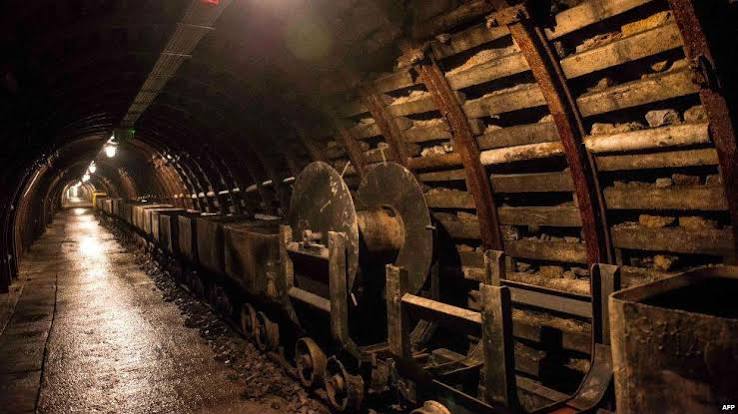
    Nazi gold train: 'No evidence' of discovery in Poland - BBC News

    In the spring of 1945, as the Third Reich crumbled, a train loaded with gold, silver, and personal belongings stolen from Hungarian Jews rolled westward through Austria. U.S. forces intercepted it near the town of Werfen in May, but much of its cargo vanished into the hands of soldiers and officials before it could be inventoried. The Hungarian Gold Train is just one chapter in the unfinished story of Nazi loot.

    Between 1933 and 1945, the Nazis systematically stripped central banks and Jewish households across Europe of their wealth. Estimates put the value of gold alone at $550–600 million at the time roughly $8–10 billion today. While the Allies recovered a significant cache in a German salt mine, billions of dollars in gold and other valuables remain unaccounted for, buried in lakes, sealed in bank vaults, or simply lost to history.

    The Machinery of Theft

    Nazi looting was not a chaotic free-for-all. The Reichsbank, under presidents Hjalmar Schacht and later Walther Funk, ran a formal operation. Looted gold from central banks in Belgium, the Netherlands, and Czechoslovakia, as well as from Jewish deportees was melted down and recast into anonymous bars. The Degussa company handled the smelting, erasing any marks that might reveal the gold’s origin. SS officer Bruno Melmer even established a dedicated account at the Reichsbank, through which dental gold and jewelry flowed directly from concentration camps.

    The scale was staggering. At its peak, the Reichsbank held hundreds of tons of gold. But as Allied bombs fell on Berlin, the regime began moving its hoard.

    The Merkers Discovery

    In early 1945, Nazi officials packed the remaining Reichsbank gold into trucks and trains, heading for a salt mine in Merkers, Thuringia. The choice was practical: the mine was deep, dry, and far from the front lines. On April 8, 1945, U.S. troops descended into the mine and found a scene of organized chaos gold bars stacked like bricks, crates of currency, and paintings wrapped in paper.

    The haul was enormous: approximately 100 tons of gold, worth about $238 million at the time. Alongside it were millions in cash, art, and other valuables. The Allies shipped this treasure to Frankfurt, where the Tripartite Gold Commission (TGC) established by the U.S., UK, and France in 1946 began the slow work of returning it to claimant nations. The TGC distributed roughly $60 million (1946 value) to 16 countries before winding down in 1998. But not all of the Merkers gold could be traced to its owners, and some remained in a pool for unresolved claims.

    The Swiss Connection

    Switzerland played a pivotal role in laundering Nazi gold. The Swiss National Bank (SNB) accepted gold from the Reichsbank throughout the war, exchanging it for Swiss francs—a lifeline that allowed Germany to purchase raw materials. An estimated 80% of all Nazi gold sales passed through Swiss banks. The Swiss have often argued they were neutral and unaware, but the 1996 Eizenstat Report, commissioned by the U.S. State Department, revealed extensive knowledge and cooperation.

    In 1946, the Washington Agreement forced Switzerland to pay 250 million Swiss francs (about $58 million) to the Allies for restitution. Critics then and now have called this a bargain. After the London Conference on Nazi Gold in 1998, Swiss banks agreed to a $1.25 billion settlement with Holocaust survivors and their heirs, acknowledging their role in laundering funds and holding dormant accounts.

    The Hungarian Gold Train

    The case of the Hungarian Gold Train illustrates how even when the Allies captured loot, restitution could fail. In 1945, Hungarian fascists and Nazis loaded a train with property confiscated from the country’s Jewish population—gold, silver, jewelry, and art—and fled toward Austria. U.S. forces captured the train in May 1945, but the contents were never fully inventoried or returned to owners.

    A 1999 U.S. government investigation found that U.S. military personnel had taken items for personal use, and some goods were sold at a discount to local merchants. Only a fraction of the train’s contents was eventually returned to Hungary or distributed to survivors. The rest remains unaccounted for.

    The Mysteries That Remain

    Beyond the known caches, several tantalizing leads have never been resolved. During the war’s final days, U-boats like U-234 carried gold and documents toward South America or Japan; some were captured, others scuttled, their cargoes uncertain. Lake Toplitz in Austria, a deep alpine lake, was rumored to hold crates of counterfeit British pounds and valuables. Divers have recovered currency and documents, but no significant gold.

    In 2015, two explorers claimed to have found a buried armored train near Walbrzych, Poland—the so-called “Nazi Gold Train.” Ground-penetrating radar showed anomalies, but a thorough excavation in 2016 found nothing. The claim is now widely dismissed as a hoax.

    It’s also important to distinguish the Yamashita Gold—a largely mythologized hoard allegedly hidden in the Philippines by Japanese forces—from the Nazi looting apparatus. The two are often confused in popular culture, but they are separate stories.

    The Legacy of Unfinished Business

    The search for Nazi gold is not just about treasure; it’s about accountability. The 1998 London Conference forced governments and banks to audit their wartime records, but many archives remain sealed or destroyed. The Tripartite Gold Commission’s work ended in 1998, leaving unresolved claims. The Swiss settlement of $1.25 billion was a step, but it cannot undo the systematic destruction of lives and livelihoods.

    Today, the hunt continues—not for myth, but for facts. Governments, historians, and private investigators dig through archives and probe lake beds, hoping to answer a question that has haunted the post-war world: where is the rest of the gold?

    The missing Nazi gold is more than a treasure hunt; it is a reminder of the scale of Nazi crimes and the difficulties of justice after atrocity. While the Merkers discovery and the Tripartite Gold Commission recovered a significant portion, billions of dollars in looted wealth vanished into the chaos of war and the silence of banks. The stories of the Hungarian Gold Train and the Walbrzych hoax show that the truth is often more complex than legend. As archives open and technology improves, the full account may never be known, but the effort to trace the gold is part of a broader reckoning with history.

    Summary

    • The Nazis looted an estimated $550–600 million in gold (equivalent to $8–10 billion today) from central banks and Jewish citizens.
    • The largest recovery was at the Merkers salt mine in 1945: about 100 tons of gold, worth $238 million then.
    • Switzerland laundered an estimated 80% of Nazi gold sales, leading to post-war settlements and a $1.25 billion fund in 1997.
    • The Hungarian Gold Train was captured by U.S. forces, but much of its contents were never returned to owners.
    • Mysteries remain, including scuttled U-boats and Lake Toplitz, while the 2015 Walbrzych “Nazi gold train” claim was debunked.

    FAQ

    Q: How much Nazi gold is still missing?
    A: While exact figures are unknown, estimates suggest that only a fraction of the looted gold was recovered. The Merkers mine yielded about 100 tons, but the Nazis seized far more. Unaccounted amounts include gold sold to neutral countries, lost in transport, or hidden in unverified locations.

    Q: Was the “Nazi gold train” in Poland real?
    A: No. In 2015, two explorers claimed to have found a buried armored train near Walbrzych, but excavation in 2016 found no trace. The claim is widely considered a hoax.

    Q: What was the role of Switzerland in Nazi gold?
    A: Switzerland was the primary buyer and launderer of Nazi gold, exchanging it for Swiss francs that funded Germany’s war effort. The Swiss National Bank accepted gold knowing its likely origin. Post-war settlements included a 1946 payment of 250 million francs and a 1997 settlement of $1.25 billion.

    Q: What happened to the gold found at Merkers?
    A: The approximately 100 tons of gold was taken to Frankfurt and administered by the Tripartite Gold Commission, which returned about $60 million worth to claimant nations by 1998.

    Q: Is the Yamashita Gold part of the Nazi gold story?
    A: No. The Yamashita Gold is a separate, largely mythologized hoard allegedly hidden by Japanese forces in the Philippines. It is often confused with Nazi gold in popular culture but is not connected.

  • The Night Churchill Learned of Pearl Harbor: Shock, Relief, and the Question of Foreknowledge

    The Night Churchill Learned of Pearl Harbor: Shock, Relief, and the Question of Foreknowledge

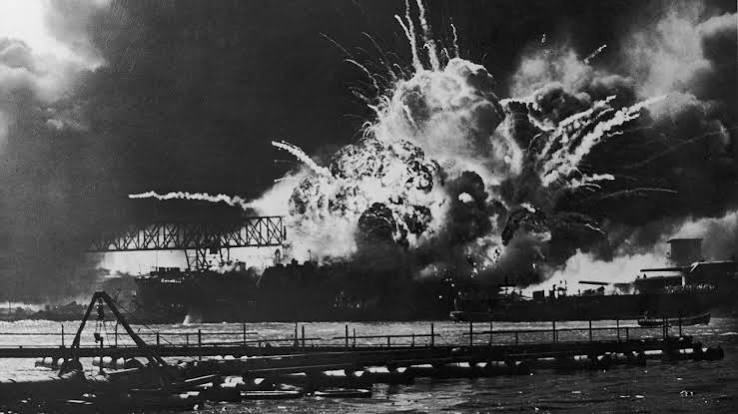
    On the evening of December 7, 1941, at Chequers, the British Prime Minister’s country retreat, Winston Churchill was at dinner with two American guests: U.S. Ambassador John Winant and W. Averell Harriman, President Roosevelt’s special envoy. The conversation was likely tense; the world was at war, but the United States remained on the sidelines. Then the BBC interrupted its broadcast with a terse bulletin: Japanese aircraft had attacked the U.S. Pacific Fleet at Pearl Harbor.

    Churchill later wrote that he went to bed that night and “slept the sleep of the saved and thankful.” That reaction relief as much as shock has fueled a persistent conspiracy theory: that Churchill knew the attack was coming and deliberately withheld the intelligence to drag America into the war. But the historical record, including Churchill’s own memoirs and the findings of multiple official inquiries, paints a more complex picture of surprise, strategic desperation, and a failure of intelligence that was shared across both nations.

    The Scene at Chequers

    Churchill was not in London that night. He had retreated to Chequers, the 16th-century manor in Buckinghamshire that serves as the Prime Minister’s country residence, for a working dinner with Winant and Harriman. The trio had just finished their meal when a butler named Sawyers entered the dining room. According to Churchill’s account, he switched on a small wireless set in the room. The BBC was broadcasting news of the attack on Pearl Harbor.

    Churchill immediately placed a transatlantic call to the White House. Roosevelt came on the line and told him directly: “They have attacked us. We are all in the same boat now.” The American President’s voice was calm, but the weight of the words was immense. For Churchill, it was the moment he had been waiting for since the fall of France in 1940.

    Eyewitnesses describe Churchill’s initial reaction as one of genuine surprise. Harriman later said that Churchill was stunned by the news, though he quickly grasped its implications. The Prime Minister’s own memoirs confirm this: he wrote that he was “thankful” that the United States was finally in the war, but he did not claim to have anticipated the attack on Pearl Harbor specifically.

    The Intelligence Picture: What Britain Knew

    By late 1941, British codebreakers at Bletchley Park had cracked the German Enigma cipher, giving them access to significant German military communications. But Japanese naval codes were a different story. The Imperial Japanese Navy’s main operational code, JN-25, was only partially broken, and the British were largely reliant on diplomatic intercepts—decrypted by the Americans and shared with London—and on signals intelligence from their Far East stations.

    Britain’s Far East Combined Bureau in Singapore had been tracking Japanese fleet movements for weeks. There were clear indications that Japan was preparing for a major offensive. But the consensus among British and American intelligence analysts was that the most likely targets were Britain’s own colonies—Malaya, Singapore, or the Dutch East Indies—or perhaps the American-held Philippines. Pearl Harbor, 4,000 miles from Japan, seemed an unlikely target, protected by its distance and by the assumption that the U.S. Pacific Fleet would deter any attack.

    Churchill was aware of the deteriorating diplomatic situation between the U.S. and Japan. Roosevelt had kept him informed through their secret correspondence, in which Churchill signed as “Former Naval Person.” The Prime Minister knew that war in the Pacific was likely, but he did not know when or where it would break out. He certainly had no specific warning of the attack on Pearl Harbor.

    The “Germany First” Strategy: A Matter of Policy, Not Deception

    One of the pillars of the conspiracy theory is the claim that Churchill had a motive to trick the U.S. into war. But the historical record shows that the U.S. and Britain had already agreed on a “Germany First” strategy in secret staff talks held in early 1941, known as the ABC-1 talks. The U.S. military had formally adopted the policy that if America entered the war, the priority would be defeating Germany before Japan.

    Churchill did not need to deceive Roosevelt into joining the war in Europe; the U.S. was already committed to that strategy in principle. What Churchill wanted was for the U.S. to become a full belligerent, and Pearl Harbor achieved that. But the idea that he withheld specific intelligence about the attack requires evidence that simply does not exist in the archives.

    The Conspiracy Theory and Its Flaws

    Proponents of the “Churchill knew” theory point to a few pieces of circumstantial evidence: Churchill’s relief at the news, the presence of British intelligence officers in the Pacific, and the claim that British codebreakers had intercepted Japanese signals indicating an attack on Pearl Harbor. Authors like James Rusbridger in Betrayal at Pearl Harbor and Robert Stinnett in Day of Deceit have argued that the British (or, in Stinnett’s case, the Americans) deliberately suppressed intelligence about the attack.

    But these claims collapse under scrutiny. The Roberts Commission, established in 1941, and the later Joint Committee on the Investigation of the Pearl Harbor Attack (1945–46) examined the intelligence failures in exhaustive detail. Neither found any evidence of British foreknowledge. The Japanese fleet that attacked Pearl Harbor maintained strict radio silence during its transit, and the U.S. Navy’s own intelligence community—which had broken Japanese diplomatic codes but not the naval code—was caught off guard. The British were no better positioned.

    Churchill’s relief was real, but it was the relief of a leader who had just seen his greatest strategic hope realized. He had spent two years trying to bring the United States into the war. The attack on Pearl Harbor did not merely bring America in; it united the American people behind the war effort in a way no political maneuvering could have achieved. Churchill’s own words on the night of the attack capture his state of mind: “I went to bed and slept the sleep of the saved and thankful.” Those are not the words of a man surprised by a plan gone right; they are the words of a man who had just been handed a lifeline.

    The Immediate Aftermath

    The day after the attack, Churchill convened Parliament and declared that Britain and the United States were now “in this together.” He immediately began planning a trip to Washington, which took place in late December 1941 under the codename ARCADIA. At that conference, the “Germany First” strategy was formally confirmed, and the Allied war effort was locked into a unified command structure.

    For Churchill, the road to victory was now clear. But the path to Pearl Harbor had been paved with misjudgments and missed signals on both sides of the Atlantic. The attack was a surprise not because some grand conspiracy was in play, but because the intelligence systems of two great powers—both struggling to process a flood of information—failed to anticipate a single, audacious move.

    The question of whether Churchill knew about Pearl Harbor in advance has a clear answer: no. The evidence is overwhelming that he was surprised by the attack, even if he was not surprised that Japan was going to war. His relief was not a sign of complicity but of desperation, as a man who had been fighting alone against Hitler saw the world’s greatest industrial power finally join the fight. The conspiracy theory persists because it offers a tidy explanation for a messy event, but the historical record shows a more human story of intelligence failures, misperceptions, and a leader who, like the rest of the world, was caught off guard by the audacity of the Japanese attack.

    Summary

    • Churchill learned of the Pearl Harbor attack from a BBC bulletin at Chequers, not from a private intelligence channel.
    • He expressed shock, then relief, because U.S. entry into the war guaranteed eventual Allied victory.
    • British intelligence had warnings of a Japanese strike, but the consensus was that targets would be British Malaya, the Philippines, or the Dutch East Indies—not Pearl Harbor.
    • The U.S. and Britain had already agreed on a “Germany First” strategy in secret talks, undermining the claim that Churchill needed to deceive Roosevelt.
    • Official inquiries (Roberts Commission, Joint Committee) found no evidence of British foreknowledge.

    FAQ

    Q: Did Churchill have specific warning of the Pearl Harbor attack?
    A: No. Churchill was aware that Japan was preparing for war, but there is no credible evidence that he knew the specific target or timing of the Pearl Harbor attack. The intelligence available to Britain pointed to likely targets in Southeast Asia, not Hawaii.

    Q: Why did Churchill feel relief after the attack?
    A: Churchill had spent two years trying to bring the United States into the war, as Britain was fighting alone against Germany. The attack on Pearl Harbor achieved that goal, and Churchill believed that U.S. entry guaranteed Allied victory. His relief was a strategic, not conspiratorial, reaction.

    Q: What was the “Germany First” strategy, and how does it relate to the conspiracy theory?
    A: “Germany First” was a strategy agreed upon in secret U.S.-British staff talks in early 1941, stating that if America entered the war, the priority would be defeating Germany before Japan. This makes the claim that Churchill needed to trick the U.S. into the war less plausible, as the U.S. was already committed to that strategy.

    Q: Have any official investigations found evidence of British foreknowledge?
    A: No. The Roberts Commission (1941–42) and the Joint Committee on the Investigation of the Pearl Harbor Attack (1945–46) thoroughly examined the intelligence failures and found no evidence that the British (or anyone else) knew the attack was coming.

    Q: Why does the conspiracy theory persist?
    A: The theory persists because it offers a simple explanation for a complex event, and because Churchill’s relief at the news can be misread as confirmation of a plan. However, the historical record shows a surprise attack that was the result of intelligence failures, not deliberate deception.

  • Hitler’s Fatal Gamble: Why Germany Declared War on America After Pearl Harbor

    Hitler’s Fatal Gamble: Why Germany Declared War on America After Pearl Harbor

    On December 11, 1941, four days after Japanese bombers devastated the U.S. Pacific Fleet at Pearl Harbor, Adolf Hitler stood before the Reichstag in Berlin and declared war on the United States. It was a decision that would seal the fate of the Third Reich, yet at the time, it seemed to many including Hitler himself like a calculated, even inevitable, move. But why did Hitler, already bogged down in a brutal war against the Soviet Union and Britain, willingly add the industrial might of America to his list of enemies? The answer lies in a toxic mix of ideology, miscalculation, and strategic desperation.

    To understand Hitler’s decision, one must look beyond the formal texts of treaties and into the Führer’s own racial fantasies and geopolitical delusions. He saw America as a weak, mongrelized nation, incapable of fighting a real war. He believed that war with the U.S. was coming anyway, so why not seize the moment? Yet his gamble backfired catastrophically, uniting the world’s greatest powers against Germany and ensuring its ultimate defeat. This is the story of how Hitler’s hubris turned a tactical opportunity into a strategic disaster.

    The Pact That Didn’t Bind

    When Japan attacked Pearl Harbor on December 7, 1941, Hitler had no legal obligation to join the war. The Tripartite Pact, signed in September 1940, committed Germany, Italy, and Japan to defend one another only if one of them was attacked. Japan was the aggressor, not the victim. Germany’s ambassador to Japan, Eugen Ott, had even been instructed to urge Japan to avoid war with the U.S. unless absolutely necessary. Yet within hours of the attack, Hitler’s Foreign Minister, Joachim von Ribbentrop, began pressing for a declaration of war, and Hitler was eager to comply.

    Why? For Hitler, the pact was never just a legal instrument; it was a declaration of solidarity among the “have-not” nations against the Anglo-American world order. In his December 11 speech, he framed the war as a cosmic struggle between the “Jewish-capitalist” world, led by Roosevelt, and National Socialist Germany. He listed grievances: U.S. violations of neutrality, the Lend-Lease program, and Roosevelt’s “warmongering.” He wanted to show that Germany stood by its Axis partners, even at the cost of plunging into a two-front war.

    But there was more than ideology at play. Hitler and his generals genuinely believed that the United States was a paper tiger. They thought the U.S. was militarily weak, politically divided, and would take years to mobilize its industrial might. In Hitler’s racial worldview, America was a “mongrel” nation, dominated by Jews and incapable of true military greatness. He once told his generals, “The American is like a child—he needs to be led, and he has no idea what he wants.” Such contempt blinded him to the reality of American production capacity.

    The Atlantic Undeclared War

    The formal declaration was, in many ways, just a formality. The U.S. and Germany had been fighting an undeclared naval war in the Atlantic for months. U.S. destroyers were escorting convoys to Britain, and they had exchanged fire with German U-boats. In September 1941, the USS Greer was attacked by a German submarine after being tracked by a British plane. In October, the USS Reuben James was torpedoed and sunk with the loss of 100 American sailors. Hitler had ordered his U-boats to avoid provoking the U.S., but Roosevelt was pushing the envelope, ordering the Navy to “shoot on sight” any German warships in U.S. defensive zones.

    Hitler’s restraint was a strategic choice. He hoped to keep America out of the war until the Soviet Union was conquered. But by late 1941, Operation Barbarossa had stalled before Moscow, and the Wehrmacht was suffering massive casualties. The war in the East was not going as planned, and Hitler needed a victory somewhere. Declaring war on America gave him the chance to unleash unrestricted submarine warfare in the Atlantic, cutting Britain’s lifeline before the U.S. could intervene effectively. He also hoped that tying down American forces in the Pacific would relieve pressure on Germany.

    The Great Miscalculation

    Hitler’s decision was based on a profound misreading of the situation. He believed that the U.S. could not project meaningful military power into Europe before 1944 or 1945, by which time he expected to have conquered the USSR and secured Europe. He was convinced that Roosevelt would have entered the war eventually anyway, so why not act first and appear decisive? In his mind, the declaration was a preemptive strike, not a gamble.

    But Hitler underestimated the U.S. in every way. He failed to grasp the speed and scale of American mobilization. Within months, U.S. factories were producing more war materiel than Germany, Japan, and Italy combined. He also misjudged the political will of the American people. While isolationism had been strong before Pearl Harbor, the attack—and Germany’s declaration—united the country behind the war effort. Roosevelt and Churchill were relieved; Churchill later wrote that he “slept the sleep of the saved” upon hearing the news. The German declaration solved the political problem of how to bring the U.S. into the European war when public opinion was focused on revenge against Japan.

    The Aftermath: A United Enemy

    The declaration on December 11, 1941, formally merged the European and Pacific theaters into one global conflict. The U.S. Congress reciprocated with a declaration of war against Germany on the same day. For Hitler, the move was meant to solidify the Axis and encourage Japan to tie down British and American forces. But it had the opposite effect: it ensured that the U.S., Britain, and the Soviet Union would fight as allies against Germany, with the full weight of American industrial power committed to Europe.

    Historians have long viewed Hitler’s declaration as one of the greatest strategic blunders of the war. It was a miscalculation so profound that it turned a difficult war into an impossible one. Hitler’s racial ideology and his contempt for American democracy blinded him to the facts. He saw the U.S. as a weak, divided nation, but in reality, it was a sleeping giant. When it awakened, it destroyed the Third Reich.

    Hitler’s declaration of war on America was not a rational act of statecraft but a product of his ideological delusions and strategic desperation. He believed he was being decisive, but he was actually signing his own death warrant. The decision unified the Allies, unleashed American industrial might against Germany, and ultimately ensured the fall of the Third Reich. It remains a chilling example of how hubris and miscalculation can turn a moment of opportunity into a catastrophe.

    Summary

    • Germany was not obligated by the Tripartite Pact to declare war on the U.S., as Japan was the aggressor at Pearl Harbor.
    • Hitler viewed war with America as inevitable and wanted to appear decisive, while also seeking to unleash unrestricted submarine warfare.
    • Hitler’s racial ideology led him to underestimate American military capability and resolve.
    • The U.S. and Germany were already engaged in an undeclared naval war in the Atlantic before the formal declaration.
    • The declaration backfired strategically, uniting the U.S., Britain, and the USSR against Germany and ensuring American industrial might was turned against the Third Reich.

    FAQ

    Q: Was Germany forced to declare war on the U.S. by the Tripartite Pact?
    A: No. The pact required mutual assistance only if a member was attacked. Japan was the aggressor at Pearl Harbor, so Germany had no legal obligation to declare war.

    Q: Why did Hitler believe the U.S. was weak?
    A: Hitler held a racialized view of America, seeing it as a ‘mongrel nation’ dominated by Jews and incapable of true military greatness. He also believed the U.S. would take years to mobilize and was politically divided by isolationism.

    Q: What was the immediate impact of Hitler’s declaration?
    A: The U.S. Congress declared war on Germany on the same day, formally merging the European and Pacific theaters into one global conflict. It also relieved Roosevelt and Churchill, who saw it as a solution to bringing the U.S. into the European war.

    Q: Did the U.S. and Germany have any prior hostilities before Pearl Harbor?
    A: Yes. The U.S. and Germany were engaged in an undeclared naval war in the Atlantic, with U.S. destroyers escorting convoys and exchanging fire with German U-boats, including incidents like the USS Greer and the sinking of the USS Reuben James.

    Q: How do historians view Hitler’s decision?
    A: Most historians view it as one of the greatest strategic blunders of the war, as it united the U.S., Britain, and the USSR against Germany and ensured the full weight of American industrial power would be brought to bear on the Third Reich.

  • The Firestorm Over Dresden: Was It a War Crime?

    The Firestorm Over Dresden: Was It a War Crime?

    On the night of February 13, 1945, the sky over Dresden turned orange. Within 24 hours, more than 1,300 bombers from the Royal Air Force and the US Army Air Forces had dropped nearly 4,000 tons of explosives and incendiaries. The resulting firestorm a self-sustaining inferno with winds like a hurricane and temperatures exceeding 1,000°C consumed the baroque heart of a city known as ‘Florence on the Elbe.’ By the time the last plane left on February 15, an estimated 22,000 to 25,000 people lay dead. Three-quarters of the built-up area was rubble.

    Seventy-five years later, the question still smolders: Was the bombing of Dresden a war crime? The answer depends on how you weigh military necessity against civilian suffering, and on which facts you choose to emphasize. This article lays out the arguments on both sides, grounded in the historical record, and lets you decide where the line falls.

    The City Before the Storm

    Dresden in early 1945 was not the untouched cultural jewel of Allied propaganda. It was a functioning military hub. The city’s factories produced fuses, optics, and aircraft parts. Its rail yards moved troops and supplies toward the Eastern Front, where the Red Army was pushing westward. The German military used Dresden as a garrison and a communications center.

    But it was also a city swollen with refugees. Its normal population of about 600,000 had grown to perhaps double or triple that, as civilians fled the Soviet advance from the east. They packed the streets, the parks, and the cellars. Many had no homes left. They had come to Dresden because it had been spared the bombing that had flattened other German cities. That safety was about to end.

    The Attack: Four Waves, One Firestorm

    The raid unfolded in four distinct waves over three days. The first two were RAF night raids, beginning on February 13. The bombers dropped a mix of high-explosive and incendiary bombs. The high explosives blew off roofs and shattered windows, exposing the wooden beams and flammable interiors of the old buildings. The incendiaries ignited them.

    The result was a firestorm, a rare and terrifying phenomenon. The fire created its own wind system, sucking in oxygen from the surrounding streets and fueling the flames. Temperatures reached over 1,000°C. People in cellars suffocated as the fire consumed the oxygen. Others were incinerated in the open. The USAAF followed with two daylight raids on February 14 and 15, targeting marshalling yards and industrial areas, but the city was already a blazing ruin.

    The death toll is disputed. The official German commission in 2010 estimated up to 25,000 dead. Earlier claims of 100,000 or more, popularized by the British writer David Irving, have been discredited by historians. The modern consensus is 22,000–25,000, although some argue for slightly higher figures. The destruction was staggering: about 75% of the built-up area was damaged or destroyed, including 23,000 houses and the historic Altstadt.

    The Case for Military Necessity

    The defenders of the raid argue that Dresden was a legitimate target. It was a rail and communications hub, an industrial center, and a garrison city. The attack was coordinated with the Soviet command, which saw Dresden as a strategic priority to disrupt German logistics on the Eastern Front. The raid was part of a broader Allied strategy of area bombing, designed to destroy German morale, industry, and transportation—and to hasten the end of the war.

    In the context of total war, civilian casualties were an accepted consequence. The Allies believed that bombing, even area bombing, would shorten the war and save overall lives. Arthur Harris, the head of RAF Bomber Command, defended area bombing as a way to break Germany’s will and capacity to fight. Dresden was not uniquely singled out; it was one of many German cities subjected to this policy. The Nuremberg Trials, which judged the crimes of the Nazi regime, did not charge anyone for the Dresden bombing. That silence, defenders argue, is telling.

    The Case for War Crime

    Those who call the bombing a war crime point to the principle of proportionality. By February 1945, the war was effectively decided. Germany was crumbling. The strategic value of Dresden—a city crowded with refugees, many of them women and children—was negligible compared to the civilian carnage. The raid served little military purpose and may have been intended as a show of force to the Soviets, a signal of Allied air superiority as the post-war map was being drawn.

    The attack violated the laws of war as they were understood at the time. The Hague Conventions and customary international law prohibited attacks that caused disproportionate harm to civilians. Dresden was not a military target in the narrow sense; it was a city of people, and the firestorm killed them indiscriminately. Some argue this was terror bombing—deliberately targeting civilians to break morale, which is a war crime under any definition.

    The refugee factor compounds the charge. These were not soldiers or munitions workers. They were families fleeing an army. They had no military value, and their deaths were not a necessary consequence of a legitimate military operation. The sheer scale of destruction—a city of baroque beauty reduced to ash—suggests an intent to annihilate, not just to disrupt.

    The Moral Fog of War

    Neither the military nor the legal case is clean. The Allies did not formally classify Dresden as a war crime. No one was prosecuted. But the debate is not settled by a tribunal. It is a moral question, and it refuses to go away.

    In the immediate aftermath, the bombing was a propaganda tool. Joseph Goebbels used it to rally German resistance. Later, Soviet-aligned East Germany used it to criticize Western Allied conduct, framing their own suffering as a moral indictment of capitalism. In the West, the bombing was initially defended, but the publication of Kurt Vonnegut’s Slaughterhouse-Five in 1969—a novel based on his own experience as a prisoner of war in Dresden—forced a new generation to confront the human cost.

    The debate today is not just about Dresden. It is about the nature of war itself. Modern conflicts continue to raise the same questions: What is a legitimate target? How many civilian deaths are acceptable? When does military necessity become a crime? Dresden is a test case, a moment when the line seemed to blur.

    The firestorm was real. The deaths were real. The question is whether they were justified.

    The bombing of Dresden remains a haunting example of the moral compromises of war. It was not a simple act of evil, nor was it a clean military operation. It was a policy decision made by men who believed they were ending war faster, and it killed tens of thousands of civilians in a firestorm of their making. Whether that constitutes a war crime depends on where you place the burden of proof—on the necessity of the target or on the proportionality of the harm. The historical record does not give a final answer. It gives us the facts, and the choice to weigh them.

    Summary

    • The bombing of Dresden took place February 13–15, 1945, in four waves by the RAF and USAAF, killing an estimated 22,000–25,000 people and destroying 75% of the city.
    • Defenders argue Dresden was a legitimate military target—a rail hub, industrial center, and garrison—and that the raid was part of a broader strategy to shorten the war.
    • Critics argue the attack violated proportionality under the laws of war, especially given the city’s crowded refugee population and the war’s nearing end.
    • No international tribunal classified the bombing as a war crime; the Nuremberg Trials did not charge anyone for it.
    • The debate remains unresolved, reflecting the enduring tension between military necessity and civilian protection in war.

    FAQ

    Q: How many people died in the Dresden bombing?
    A: Modern estimates range from 22,000 to 25,000 deaths, based on the official German commission’s 2010 report. Earlier claims of 100,000+ have been discredited.

    Q: Was Dresden a legitimate military target?
    A: Yes, Dresden had military significance as a railway and communications hub, with factories producing military equipment. However, its value as a target is disputed given the war’s status in February 1945.

    Q: Why did the Allies bomb Dresden?
    A: The raid was part of the Allied area bombing strategy and Operation Thunderclap, aimed at disrupting German logistics, supporting the Soviet advance, and demonstrating air superiority.

    Q: Was the Dresden bombing ever classified as a war crime?
    A: No. The Nuremberg Trials did not charge anyone for the bombing, and no international tribunal has classified it as a war crime.

    Q: What was the firestorm?
    A: A firestorm is a self-sustaining conflagration caused by incendiary bombs, creating hurricane-force winds and temperatures over 1,000°C. It caused most of the casualties in Dresden.

  • They Knew: The Allies’ Early Intelligence on the Holocaust

    They Knew: The Allies’ Early Intelligence on the Holocaust

    In the summer of 1941, as German forces swept into Soviet territory, a different kind of battle was being fought in the quiet corridors of Bletchley Park, England. There, codebreakers intercepted and decrypted German police radio messages that described, in chilling detail, the mass shooting of Jewish men, women, and children. By December 1941, the Polish government-in-exile in London was issuing formal reports of mass executions in occupied Poland. The Allies knew. The question is not whether they knew, but how much they knew, when they knew it, and what they did with that knowledge.

    This article examines the timeline of Allied awareness, the channels through which information flowed, and the choices made by Allied governments in the face of an unfolding genocide. It is a story of intelligence, bureaucracy, and moral failure—a story that challenges the comfortable assumption that the horrors of the Holocaust were unknown until the liberation of the camps.

    The Earliest Warnings: 1941-1942

    The first concrete evidence reached Allied leaders through signals intelligence. In August 1941, British codebreakers at Bletchley Park decrypted German police messages that explicitly described the mass murder of Jews in the Soviet Union. These were not vague rumors; they included numbers, locations, and details of execution methods. The information was classified as “Ultra,” the highest level of secrecy, and its use was restricted to prevent the Germans from realizing their codes were broken.

    Human intelligence soon followed. The Polish underground, one of the most extensive resistance networks in occupied Europe, provided eyewitness accounts. In 1942, Jan Karski, a Polish courier, smuggled himself into the Belzec death camp and later reported to Allied leaders, including President Franklin D. Roosevelt. His testimony was detailed and unequivocal.

    The most significant single document was the Bund Report, delivered in June 1942, which described the extermination of Jews in Poland using gas vans. That same month, the BBC reported that over 700,000 Jews had already been killed in Poland.

    The Riegner Cable and Its Suppression

    In August 1942, Gerhart Riegner, a representative of the World Jewish Congress in Geneva, sent a cable to the U.S. State Department and the British Foreign Office. He reported that the Germans were planning the systematic extermination of European Jews, using Zyklon B gas. The cable was based on information from a German industrialist—a rare and credible source.

    The U.S. State Department, however, suppressed the cable. It was not passed on to Jewish leaders or the American public until months later. Assistant Secretary of State Breckinridge Long, who controlled visa issuance, was known for his anti-Semitic views and actively obstructed Jewish immigration. The suppression was a bureaucratic decision, but it had moral consequences.

    Public Condemnation: December 1942

    By late 1942, the evidence was overwhelming. On December 17, 1942, the Allies issued a joint declaration condemning the “bestial policy of cold-blooded extermination” of Jews. The declaration was widely reported in the press. The New York Times ran the story on its front page, though not as the lead. The information was public knowledge.

    Yet public knowledge did not translate into action. The declaration was a statement of condemnation, not a plan for rescue. The Allies issued no threat of reprisal, no offer of refuge, no commitment to intervene.

    The Auschwitz Protocols: 1944

    In 1944, the Allies received the most detailed intelligence about the Holocaust yet: the Auschwitz Protocols, also known as the Vrba-Wetzler Report. This 32-page document, compiled by two escapees from Auschwitz, included maps, descriptions of the gas chambers and crematoria, and the number of people killed. It reached Allied officials in June 1944.

    Aerial reconnaissance flights over the camp in 1944 took photographs that showed the camp’s layout, but interpreters did not initially recognize the gas chambers or crematoria. The photos were taken for military purposes, not for humanitarian intelligence.

    The Allies did not bomb Auschwitz or its railway lines. The U.S. War Department formally rejected a request for such a bombing in August 1944, stating it was “impracticable.” The arguments were practical: risk to aircrews, accuracy concerns, and the possibility that bombing would kill prisoners without stopping the killings. But there was also a deeper reason: the Allies’ military strategy was focused on defeating Germany, not on humanitarian intervention.

    The Moral Calculus: Knowledge and Inaction

    The Allies’ response was shaped by several factors. The “Germany First” strategy prioritized military victory over rescue operations. Resources were stretched, and any diversion was seen as a risk to the war effort. The restrictive immigration policies of the U.S. and Britain, rooted in anti-Semitism and political calculation, closed doors to Jewish refugees. The Évian Conference of 1938, called by Roosevelt, had produced no increase in admissions; the Bermuda Conference of 1943 was similarly ineffective.

    But the core issue was a failure of imagination and will. Intelligence was fragmented and compartmentalized. Some officials dismissed early reports as propaganda, remembering the exaggerated atrocity stories of World War I. Others knew but chose not to act, either out of indifference or because they believed that winning the war was the only way to stop the killings.

    What the Allies Knew and When

    • 1941: British intelligence intercepts German police messages describing mass shootings.
    • 1942: The Bund Report and the Riegner cable provide detailed accounts of systematic extermination.
    • 1942: The Allies issue a public declaration condemning the extermination.
    • 1944: The Auschwitz Protocols reach the Allies, including maps and descriptions of gas chambers.
    • 1944–1945: Liberation of camps brings undeniable public knowledge.

    The question is not whether the Allies knew. They knew. The question is what they did with that knowledge—and the answer is that they did far too little.

    The Allies knew about the Holocaust years before the liberation of the camps. They had intelligence from codebreakers, underground couriers, and escapees. They issued condemnations, but they did not act to save lives. The reasons were complex—military strategy, bureaucratic inertia, anti-Semitism, and a failure to fully grasp the scale of the horror. But the result was a moral failure that continues to haunt us. Understanding this history is not about assigning blame for the sake of judgment; it is about recognizing the consequences of knowing and not acting. The next time we hear of atrocities, we must ask not only what we know, but what we will do.

    Summary

    • The Allies received credible intelligence about the Holocaust as early as 1941, including decrypted German messages and eyewitness reports from the Polish underground.
    • The Riegner cable of August 1942, detailing plans for systematic extermination, was suppressed by the U.S. State Department.
    • The Allies issued a public declaration condemning the extermination in December 1942, but took no significant action to rescue Jews.
    • The Auschwitz Protocols of 1944 provided detailed information about the camp, yet the Allies did not bomb it.
    • Knowledge was fragmented, and Allied governments prioritized military victory over humanitarian intervention, leading to a moral failure.

    FAQ

    Q: Did the Allies know about the Holocaust before it happened?
    A: Yes. The Allies had credible intelligence about systematic mass killings as early as 1941. This included decrypted German police messages and reports from the Polish underground and Jewish escapees.

    Q: When did the Allies learn about Auschwitz specifically?
    A: Detailed reports on Auschwitz, including the Vrba-Wetzler Report, reached the Allies in 1944. Aerial reconnaissance photos were also taken but not fully interpreted until later.

    Q: Why didn’t the Allies bomb Auschwitz?
    A: The U.S. War Department rejected the request in 1944, citing practical concerns such as risk to aircrews and accuracy, as well as a belief that bombing would not stop the killings.

    Q: What was the Riegner cable?
    A: It was a telegram sent in August 1942 by World Jewish Congress representative Gerhart Riegner, reporting that the Germans were planning to exterminate European Jews using Zyklon B gas. The U.S. State Department initially suppressed it.

    Q: Did the Allies issue any public statement about the Holocaust?
    A: Yes, on December 17, 1942, the Allies issued a joint declaration condemning the “bestial policy of cold-blooded extermination” of Jews. It was widely reported in the press.

  • Harry S. Truman: The Accidental President Who Defined an Era

    Harry S. Truman: The Accidental President Who Defined an Era

    On April 12, 1945, Harry S. Truman had been Vice President for just 82 days when Franklin D. Roosevelt died. He was thrust into the presidency at the most critical moment in modern history: World War II was still raging, the atomic bomb was a secret he knew nothing about, and the global order was about to be reshaped. Truman, a plain-spoken farmer and haberdasher from Missouri with no college degree, became the man who would make decisions that defined the second half of the 20th century.

    His presidency was a whirlwind of monumental choices: dropping the atomic bomb, rebuilding Europe, containing communism, desegregating the military, and fighting a war in Korea. He was deeply controversial in his time, with approval ratings that plunged to 22%, and yet historians consistently rank him among the top ten presidents. How did this ‘accidental president’ become a defining figure of the Cold War era? The answer lies in his character a man who accepted responsibility, made tough calls, and famously kept a sign on his desk that read: ‘The Buck Stops Here.’

    The Making of a President: From Farm to Senate

    Harry S. Truman was born on May 8, 1884, in Lamar, Missouri. The ‘S’ in his name was a compromise between his grandfathers, Anderson Shipp Truman and Solomon Young it didn’t stand for a middle name, a quirk that reflected his humble, pragmatic upbringing. He grew up on a farm, never attended college (the only 20th-century president without a degree), and worked as a bank clerk, farmer, and then a haberdasher. His clothing store went bankrupt, leaving him with debts he spent years repaying. This experience of failure and personal responsibility shaped his later worldview.

    His political career began in local administration as a county judge in Jackson County, where he was known for honest, efficient governance. He moved to the U.S. Senate in 1935, but it was the Truman Committee that brought him national fame. During World War II, he chaired this committee that investigated waste and corruption in defense spending, saving an estimated $15 billion and earning a reputation for no-nonsense integrity. That reputation made him an attractive running mate for FDR in 1944, chosen to balance the ticket and replace the controversial Henry Wallace. Truman was kept in the dark about the Manhattan Project he only learned of the atomic bomb after becoming president.

    When Roosevelt died, Truman was stunned. His first words to reporters were: ‘I felt like the moon, the stars, and all the planets had fallen on me.’ Yet within months, he would make some of the most consequential decisions in human history.

    The Atomic Bomb: A Decision That Ended a War and Haunted History

    In August 1945, Truman authorized the use of atomic bombs on Hiroshima and Nagasaki. Japan surrendered shortly after. The decision remains the most debated of his presidency. Truman and his contemporaries argued that the bomb saved hundreds of thousands of American and Japanese lives by avoiding an invasion of Japan. The projected casualties for an invasion were staggering estimates ran into the millions. Truman saw the bomb as a military weapon to end a brutal war, and he never expressed public regret.

    Later critics have questioned whether Japan was already near surrender, whether the bomb was partly intended to intimidate the Soviet Union, and whether targeting civilians was morally defensible. Historians remain divided. What is clear is that Truman faced an impossible choice and made a decisive one. As he later wrote: ‘I knew what I was doing when I stopped the war that would have killed half a million boys on both sides.’ The bombings killed an estimated 200,000 people, mostly civilians, but the war ended within days. Truman’s decision set a precedent for nuclear deterrence that defined the Cold War.

    Architect of the Cold War: Containment, Marshall Plan, and NATO

    Truman’s response to Soviet expansionism was swift and assertive. In 1947, he announced the Truman Doctrine, pledging to support free peoples resisting communist subjugation initially in Greece and Turkey, but it became the foundation of U.S. containment policy. That same year, Secretary of State George Marshall proposed the European Recovery Program, better known as the Marshall Plan, which poured over $13 billion into rebuilding Western Europe. The plan was a stunning success: by 1952, European industrial output was 35% above pre-war levels, and the economic recovery helped stabilize democratic governments.

    In 1948, the Soviet Union blockaded Berlin, cutting off all land routes to the western sectors of the city. Truman refused to abandon the city, launching the Berlin Airlift. For 15 months, American and British planes delivered food, fuel, and supplies averaging 8,000 tons per day until the blockade was lifted. This bold move demonstrated Truman’s resolve to stand up to Soviet pressure without resorting to war. In 1949, he signed the North Atlantic Treaty, creating NATO, the first peacetime military alliance in U.S. history. These actions collectively built the framework for winning the Cold War, though they also committed the U.S. to a global interventionist posture that would later escalate in Vietnam.

    Civil Rights: A Reluctant Reformer Who Changed the Military

    Truman’s record on civil rights is a study in contradiction. He grew up in segregated Missouri, and his early language reflected the racism of his era. Yet as president, he took landmark steps toward equality. In 1946, he appointed a commission on civil rights, which issued a report that called for ending segregation and lynching. In 1948, he issued Executive Order 9981, desegregating the armed forces a move that overrode military leadership and set a precedent for federal action on civil rights. He also ordered fair employment practices in the federal government and proposed anti-lynching, anti-poll tax, and fair employment legislation, though Congress blocked most of it.

    The military desegregation was transformative. It integrated 1.2 million Black soldiers and sailors into units with whites, a precursor to the broader civil rights movement of the 1950s and 1960s. Truman’s motives were both moral and political—he needed Black voters to win the 1948 election, and he saw the contradiction in fighting a war against tyranny while maintaining segregation at home. His actions were progressive for the time, but they were also cautious and limited. He never supported a comprehensive civil rights bill, and his administration did little to dismantle segregation in the South. Nevertheless, his executive orders were a turning point, and they helped pave the way for later legislation.

    The 1948 Upset: Defying the Polls and the Press

    Truman’s 1948 reelection campaign was a masterclass in political grit. Virtually every poll predicted a loss to Republican Thomas Dewey. The Chicago Tribune even printed an early edition with the headline ‘DEWEY DEFEATS TRUMAN’ before the results were final. Truman, undeterred, mounted a ‘whistle-stop’ campaign, traveling over 31,000 miles by train, giving hundreds of speeches from the back platform. He attacked the ‘do-nothing’ Republican Congress, which had passed the Taft-Hartley Act over his veto—a law that restricted union power and which Truman saw as a betrayal of working people. He won with 303 electoral votes to Dewey’s 189, a stunning upset that proved his connection with ordinary Americans.

    His victory was also a triumph for the New Deal coalition. He ran on the ‘Fair Deal,’ an extension of FDR’s legacy that included national health insurance, federal aid to education, and expanded Social Security. While much of the Fair Deal was blocked by Congress, Truman did secure increases in the minimum wage, expanded Social Security coverage, and a housing program. His domestic legacy was a mixed bag, but it kept the liberal flame alive during a conservative era.

    The Korean War and the ‘Truman Doctrine’ in Action

    When North Korea invaded South Korea in June 1950, Truman moved quickly, calling for UN intervention. He did so without prior Congressional approval, setting a precedent for presidential war powers. The UN forces, led by General Douglas MacArthur, initially repelled the invasion and pushed into North Korea. But when China intervened in November 1950, the war turned into a bloody stalemate. MacArthur wanted to expand the war into China, possibly using nuclear weapons. Truman, fearing a wider conflict, fired him in April 1951. The decision was deeply unpopular but upheld the principle of civilian control over the military. The war dragged on until an armistice in 1953, after Truman left office, leaving the Korean Peninsula divided—a conflict that remains unresolved today.

    The Korean War was a turning point. It solidified the U.S. role as a global police officer and led to a massive military buildup, but it also exposed the limits of containment. The war cost over 36,000 American lives and billions of dollars, and Truman’s approval ratings plummeted to 22%. Yet his decision to fire MacArthur was widely supported by legal scholars and later historians, who saw it as a defense of democratic governance. The war also shaped U.S. policy in Asia for decades, including the Vietnam War, which Truman’s successor Eisenhower initiated.

    The Steel Seizure and the Limits of Presidential Power

    Truman’s domestic policies were often met with fierce resistance. In 1952, facing a steel strike that threatened the Korean War effort, he seized the steel mills to keep them operating. The Supreme Court ruled this unconstitutional in Youngstown Sheet & Tube v. Sawyer, a landmark case that limited presidential powers. Truman accepted the ruling, though he grumbled that the steel companies were ‘bigger than the government.’ This episode highlighted his willingness to push the boundaries of executive authority, but also his respect for the rule of law. It remains a key case in constitutional law, illustrating the checks and balances that define American governance.

    The Legacy: ‘The Buck Stops Here’

    Truman left office in 1953, unpopular but undeterred. He retired to Independence, Missouri, where he wrote his memoirs and established the Truman Presidential Library—the first under the 1955 Presidential Libraries Act. He lived to see the civil rights movement and the Vietnam War, and he defended his decisions until his death in 1972 at age 88. In retrospect, historians have reevaluated him as a ‘near-great’ president, ranking him in the top tier. His blunt, decisive style and his willingness to accept responsibility—embodied by his famous motto ‘The Buck Stops Here’—have become symbolic of presidential leadership.

    Truman’s presidency was a crucible of the 20th century. He made the atomic bomb decision, built the Cold War institutions, desegregated the military, and fired a general. He was often criticized as being impulsive or crude, but his actions were grounded in a simple, stubborn American pragmatism. As he once said: ‘I am not a leader. I am a moderate man, trying to do the right thing.’ That attempt, in the face of unprecedented challenges, is what defines his legacy.

    Harry S. Truman rose from a Missouri farm to the highest office at the most dangerous moment in history. He was an accidental president who became a decisive leader, shaping the postwar world through the atomic bomb, the Truman Doctrine, the Marshall Plan, NATO, and the desegregation of the military. His decisions were often controversial, but his willingness to bear the burden of responsibility—to let the buck stop with him—set a standard for presidential leadership. In a time of crisis, he provided the resolve that defined an era.

    Summary

    • Accidental president: Truman served only 82 days as VP before FDR’s death, inheriting the presidency during WWII.
    • Atomic bomb decision: Authorized the bombings of Hiroshima and Nagasaki in 1945, ending the war but sparking enduring debate.
    • Cold War architect: Created the Truman Doctrine, Marshall Plan, and NATO, establishing containment policy that won the Cold War.
    • Civil rights steps: Desegregated the military with Executive Order 9981, a landmark move for racial equality.
    • 1948 election upset: Defeated Thomas Dewey despite all polls, cementing his reputation as a fighter.

    FAQ

    Q: Why is Harry S. Truman’s middle initial ‘S’?
    A: The ‘S’ doesn’t stand for a middle name. It was a compromise between his grandfathers, Anderson Shipp Truman and Solomon Young.

    Q: What was the Truman Doctrine?
    A: A 1947 policy pledging U.S. support to free peoples resisting communist subjugation, initially for Greece and Turkey, and later the foundation of containment.

    Q: How did Truman desegregate the military?
    A: He issued Executive Order 9981 in 1948, which mandated equality of treatment and opportunity in the armed forces, leading to full integration.

    Q: Why did Truman fire General MacArthur?
    A: MacArthur wanted to expand the Korean War into China, possibly using nuclear weapons. Truman fired him to maintain civilian control over the military and avoid a wider conflict.

    Q: What was the ‘Fair Deal’?
    A: Truman’s domestic agenda, extending the New Deal with proposals for national health insurance, federal aid to education, and expanded social security. Much was blocked by Congress, but some parts passed.

  • Franklin D. Roosevelt: The President Who Redefined America

    Franklin D. Roosevelt: The President Who Redefined America

    When Franklin Delano Roosevelt took the oath of office on March 4, 1933, the United States was in freefall. Unemployment had hit 25%, banks were shuttering by the hundreds, and industrial production had been cut in half. In his first inaugural address, he told a terrified nation that “the only thing we have to fear is fear itself.” But FDR didn’t just offer words; he launched an unprecedented wave of legislation that would forever change the relationship between the government and its citizens.

    From Hyde Park to the White House

    Born into privilege in Hyde Park, New York, on January 30, 1882, Franklin Delano Roosevelt seemed destined for a life of comfort, not crisis. A distant cousin of Theodore Roosevelt, he attended Harvard and Columbia Law School (without graduating), then followed his cousin’s path into politics. He served as Assistant Secretary of the Navy under Woodrow Wilson and ran as the vice-presidential candidate on the losing Democratic ticket in 1920.

    Then, in 1921, at age 39, disaster struck. Roosevelt contracted polio, leaving him permanently paralyzed from the waist down. He spent years in rehabilitation, learning to move with braces and a wheelchair. This experience, historians often argue, deepened his empathy for the suffering of ordinary Americans a quality that would define his presidency.

    The New Deal: A New Relationship Between Government and Citizens

    When FDR took office, the nation was in the grips of the Great Depression. His response was the New Deal, a series of programs and reforms that unfolded in two waves. The First New Deal (1933-1934) focused on relief and recovery, creating agencies like the Civilian Conservation Corps (CCC), the Tennessee Valley Authority (TVA), and the Federal Deposit Insurance Corporation (FDIC), which guaranteed bank deposits to restore public confidence.

    The Second New Deal (1935-1936) shifted toward reform and security. The Social Security Act of 1935 established a permanent safety net for the elderly and unemployed. The Wagner Act protected workers’ rights to unionize. The Works Progress Administration (WPA) put millions of Americans to work on public projects, from roads and bridges to murals and plays.

    These programs were transformative, but they were not without controversy. In 1937, FDR overreached with his “court-packing” plan, proposing to expand the Supreme Court to secure favorable rulings on New Deal legislation. The move was widely seen as a political miscalculation, and it tarnished his prestige. A recession in 1937-1938, partly caused by premature spending cuts, also raised doubts about the New Deal’s effectiveness.

    Leading Through World War II

    As the world lurched toward war in the late 1930s, FDR initially pursued neutrality, but he quietly aided the Allies through programs like “cash-and-carry.” In January 1941, he delivered his famous “Four Freedoms” speech, envisioning a world founded on freedom of speech, worship, from want, and from fear.

    When Japan attacked Pearl Harbor on December 7, 1941, FDR led the United States into total war. He served as Commander-in-Chief, implementing a “Germany First” strategy and overseeing the Manhattan Project. He played a central role in Allied conferences at Casablanca, Tehran, and Yalta, shaping the postwar world.

    His leadership was indispensable, but his record is not without stains. In 1942, he signed Executive Order 9066, which led to the internment of over 100,000 Japanese Americans—a grave violation of civil liberties that remains a dark chapter in American history.

    The Legacy: Four Terms and a Transformed Nation

    FDR was elected to an unprecedented four terms, a feat that led to the 22nd Amendment limiting future presidents to two. He was the first president to appear on television and the first to appoint a woman to a cabinet post, choosing Frances Perkins as Secretary of Labor.

    His partnership with his wife, Eleanor Roosevelt, was revolutionary. She transformed the role of First Lady, advocating for human rights and social justice both at home and abroad.

    FDR died of a cerebral hemorrhage on April 12, 1945, just weeks before Germany’s surrender. He never lived to see the final Allied victory or the postwar boom that his policies helped set in motion.

    Scholars continue to debate his economic legacy. Some argue that the New Deal saved capitalism and restored public confidence; others, like economist Amity Shlaes, contend that it prolonged the Depression and that only WWII mobilization brought full recovery. Regardless, FDR’s presidency fundamentally redefined the social contract, establishing the expectation that the federal government would protect its citizens from economic devastation.

    Franklin D. Roosevelt is not just a historical figure; he is the architect of modern America. His presidency expanded the powers of the federal government, created the social safety net, and guided the nation through the two greatest crises of the 20th century. His flaws—from court-packing to internment—remind us that even the most transformative leaders are human. But his vision of a government that actively works for the welfare of its people remains a defining ideal of American democracy.

    Summary

    • FDR served as the 32nd U.S. President from 1933 until his death in 1945, winning four terms.
    • His New Deal programs, including Social Security and the FDIC, created the modern social safety net.
    • He led the U.S. through the Great Depression and World War II, shaping the postwar order.
    • His presidency was marked by both transformative achievements and significant failures, such as the internment of Japanese Americans.
    • His partnership with Eleanor Roosevelt set a new standard for the role of First Lady.

    FAQ

    Q: How many terms did Franklin D. Roosevelt serve?
    A: FDR was elected to four terms, serving from March 4, 1933, until his death on April 12, 1945. His unprecedented tenure led to the 22nd Amendment, which limits presidents to two terms.

    Q: What was the New Deal?
    A: The New Deal was a series of programs and reforms launched by FDR to combat the Great Depression. It included relief for the unemployed, recovery of the economy, and reforms to prevent future crises, such as the Social Security Act and the creation of the SEC.

    Q: Did FDR really have polio?
    A: Yes, FDR contracted polio in 1921 at age 39, which left him paralyzed from the waist down. He used a wheelchair and leg braces, though he worked hard to hide his disability from the public.

    Q: What was the court-packing plan?
    A: In 1937, FDR proposed expanding the Supreme Court to add more justices who would support his New Deal legislation. The plan was widely criticized as an overreach and was rejected by Congress.

    Q: How did FDR handle World War II?
    A: FDR initially pursued neutrality but aided the Allies through programs like Lend-Lease. After Pearl Harbor, he led the U.S. as Commander-in-Chief, implementing a “Germany First” strategy and participating in key Allied conferences like Tehran and Yalta.

  • Winston Churchill: The Lion, the Imperialist, and the Architect of Wartime Britain

    Winston Churchill: The Lion, the Imperialist, and the Architect of Wartime Britain

    On 10 May 1940, as German tanks rolled into France and the Low Countries, a 65-year-old politician with a checkered past took the helm of Britain. Winston Churchill had been written off by many as a washed-up maverick, but within days he would deliver a speech that defined a nation’s resolve: ‘I have nothing to offer but blood, toil, tears and sweat.’ That moment launched the most celebrated chapter of a life that spanned two world wars, five decades in Parliament, and a legacy so towering it still casts shadows both heroic and troubling.

    Churchill is often remembered as the bulldog who defied Hitler, but his story is far more complex. He was a soldier, a journalist, a painter, a Nobel Prize-winning author, a free-trade rebel, an imperialist, and a strategist whose decisions saved millions and condemned millions more. To understand the man, we have to look beyond the bronze statues and the famous quotes. We have to trace his journey from a lonely aristocratic boy to the leader who refused to surrender and then ask what that leadership cost.

    From Blenheim Palace to the Battlefield

    Winston Leonard Spencer-Churchill was born on 30 November 1874, in the gilded splendor of Blenheim Palace, the ancestral home of the Dukes of Marlborough. His father, Lord Randolph Churchill, was a rising Conservative star, and his mother, Jennie Jerome, was a glamorous American heiress. Yet their son was largely ignored left to be raised by nannies while his parents pursued politics and society. He later wrote that his father ‘was my most honoured, and at the same time, my most feared, critic.’

    School was a disaster. Churchill was stubborn, rebellious, and struggled with Latin and Greek. He eventually found his footing at the Royal Military College, Sandhurst, where he graduated eighth in a class of 150. His first taste of action came far from England: in Cuba, India, and Sudan. As a cavalry officer and war correspondent, he charged with the 21st Lancers at the Battle of Omdurman in 1898, one of the last great cavalry charges in history. But it was the Boer War that made him famous. In 1899, he was captured as a prisoner of war and then pulled off a daring escape, hopping trains and hiding in a mine shaft. He returned home a hero, and Parliament was the obvious next step.

    A Political Rollercoaster: From Conservative to Liberal and Back

    Churchill entered the House of Commons in 1900 as a Conservative, but he soon clashed with his party over tariffs. In 1904, he crossed the aisle to the Liberals, a move that scandalized his family and many voters. Over the next two decades, he held a dizzying array of posts: Home Secretary, First Lord of the Admiralty, Minister of Munitions, Secretary of State for War and Air, and finally Chancellor of the Exchequer.

    At the Admiralty before World War I, Churchill pushed to modernize the Royal Navy, championing the all-big-gun Dreadnought battleships and helping to found the Royal Naval Air Service. But his boldness had a dark side. He was the architect of the Gallipoli campaign in 1915, a naval assault on the Ottoman Empire that ended in bloody stalemate, with tens of thousands of Allied casualties. Churchill took the blame, resigned, and went to the trenches in France to command a battalion—a humbling fall from power.

    He returned to government, but his career remained turbulent. As Chancellor in 1925, he put Britain back on the Gold Standard at the pre-war exchange rate, a decision that many economists blame for deflation, unemployment, and the General Strike of 1926. Then came the 1930s: a decade in which Churchill was out of office, derided by many as a warmonger, and vindicated only later. He warned relentlessly about Hitler’s rearmament and Britain’s unpreparedness, but his was a lonely voice.

    The Wilderness Years and the Call to Lead

    Between 1929 and 1939, Churchill was a man without a party that trusted him. He wrote, painted, and built a fortress of words against Nazism. When Germany invaded Poland in 1939, Prime Minister Neville Chamberlain reluctantly brought him back as First Lord of the Admiralty. The signal went out to the fleet: ‘Winston is back.’ Yet even then, few expected him to become prime minister.

    On 10 May 1940, Chamberlain resigned, and Churchill was the compromise candidate. He formed a coalition government that included Labour and Liberal ministers, a move that united the country. In his first speech to the Commons, he offered only ‘blood, toil, tears and sweat.’ A month later, after the evacuation of Dunkirk, he declared, ‘We shall fight on the beaches, we shall fight on the landing grounds, we shall fight in the fields and in the streets, we shall fight in the hills; we shall never surrender.’ Those words, delivered over BBC radio, stiffened British spines when invasion seemed imminent.

    The Architect of Victory—and the Imperialist

    Churchill’s leadership during World War II was strategic and personal. He forged a ‘Special Relationship’ with Franklin D. Roosevelt, signing the Atlantic Charter in 1941, and quickly allied with the Soviet Union after Germany invaded in June 1941. He attended the major conferences—Tehran, Yalta, Potsdam—where the postwar world was carved up. His insistence on fighting in North Africa and the Mediterranean before D-Day remains a matter of debate among historians, but his overall war direction is generally credited with keeping Britain in the fight.

    Yet the man who saved Britain was also a lifelong imperialist. He opposed Indian self-rule, dismissing Gandhi as a ‘half-naked fakir.’ He supported the use of poison gas against ‘uncivilised tribes’ and was adamant about preserving the British Empire. The most tragic consequence came in 1943, when a catastrophic famine struck Bengal, killing an estimated 3 million Indians. Churchill’s wartime government diverted food and shipping to the war effort, and his personal comments were callous. Many historians argue that his policies exacerbated the disaster, a stain on his legacy that cannot be washed away by his wartime heroics.

    The Iron Curtain and a Second Act

    In July 1945, just weeks after Germany’s surrender, Churchill was voted out of office. The British public, exhausted by war, chose Labour’s Clement Attlee to build a new society. Churchill took it in stride, reportedly saying that the people had the right to kick him out. He returned to the opposition and gave one of his most famous speeches in Fulton, Missouri, in 1946, warning that an ‘iron curtain’ had descended across Europe—coining a phrase that defined the Cold War.

    He became prime minister again in 1951, but his second term was a quieter affair, dominated by foreign policy and a declining health. He suffered a stroke in 1953, yet he hung on until April 1955, when he handed over to Anthony Eden. He remained an MP until 1964, and when he died in January 1965, at the age of 90, he was given a state funeral—the only non-royal in the 20th century to receive such an honor, joining the ranks of the Duke of Wellington and Lord Nelson. His funeral was watched by millions, a final salute to the lion who had roared when Britain needed it most.

    The Complex Legacy

    Churchill’s reputation has oscillated. He was voted the greatest Briton in a 2002 BBC poll, and his speeches still echo in political rhetoric. But the revisionist view has grown stronger: he was an imperialist who prioritized empire over the welfare of colonial subjects, a military gambler whose decisions cost lives, and a man who could be cold and callous. The truth is that he was all of these things at once. He was a master of language and a man of action, a visionary and a reactionary, a leader who saved his nation and a politician who failed the people of Bengal.

    Perhaps the most honest assessment comes from his own words, written in My Early Life: ‘Success is not final, failure is not fatal: it is the courage to continue that counts.’ Churchill’s courage was never in doubt. The judgment of history is more complicated—and that is exactly why his story still matters.

    Winston Churchill was not a simple hero. He was a man who rose from political obscurity to lead Britain through its darkest hour, only to be rejected at the ballot box, then returned to shape the Cold War. His legacy is a paradox: the defender of democracy who championed empire, the orator of freedom who oversaw famine. We can honor his wartime leadership without ignoring his flaws. That is the measure of a leader whose life was as complex as the century he helped shape.

    Summary

    • Churchill became Prime Minister on 10 May 1940, uniting Britain with a coalition government and defiant speeches.
    • His pre-war career was a rollercoaster: from Conservative to Liberal, Gallipoli disaster, Gold Standard controversy, and the ‘wilderness years’ of the 1930s.
    • He won the Nobel Prize in Literature in 1953 for his historical and biographical works.
    • He coined the ‘Iron Curtain’ phrase in 1946, shaping Cold War diplomacy.
    • His imperialist views and wartime policies, particularly during the Bengal Famine of 1943, remain deeply controversial.

    FAQ

    Q: Why is Churchill considered a great wartime leader?
    A: He took office in May 1940 when Britain faced invasion and inspired the nation with powerful speeches like ‘We shall fight on the beaches.’ He formed a coalition government and forged key alliances with the US and Soviet Union, helping to secure Allied victory.

    Q: What was Churchill’s role in the Gallipoli campaign?
    A: As First Lord of the Admiralty in 1915, he championed the naval attack on the Dardanelles, which failed disastrously and resulted in a brutal stalemate on the Gallipoli peninsula. He resigned after the failure and served in the trenches to rebuild his reputation.

    Q: Did Churchill support Indian independence?
    A: No. He was a staunch imperialist who opposed Indian self-rule and famously called Gandhi a ‘half-naked fakir.’ His commitment to the British Empire remained unshakeable throughout his life.

    Q: What is the Bengal Famine controversy?
    A: During the 1943 famine in Bengal, which killed around 3 million people, Churchill’s government diverted food supplies and shipping for the war effort. Critics argue his policies worsened the disaster, though the exact degree of personal responsibility is debated.

    Q: How many times was Churchill Prime Minister?
    A: Twice. First from 1940 to 1945 during World War II, and then again from 1951 to 1955. He lost the 1945 election to Clement Attlee’s Labour Party despite his wartime popularity.