Tag: history

  • The Pacific War: A Chronicle of Fire, Ash, and the Shape of the Modern World

    The Pacific War: A Chronicle of Fire, Ash, and the Shape of the Modern World

    At 7:48 a.m. on December 7, 1941, the first wave of Japanese aircraft descended on Pearl Harbor. Within two hours, 2,403 Americans were dead, eight battleships were sunk or damaged, and the United States was irrevocably at war. But the attack on Hawaii was only one stroke in a coordinated sweep across the Pacific—Japanese troops were simultaneously landing in Malaya, the Philippines, and Hong Kong. The war that followed would last nearly four years, consume millions of lives, and redraw the map of Asia and the Pacific.

    This is not a story of clean battle lines or simple heroes. It is a story of island hopping through coral and jungle, of firebombed cities and atomic flashes, of empires crumbling and new nations rising. To understand the Pacific War is to understand how the modern world took shape—through the roar of carrier aircraft, the silence of a surrendered fleet in Tokyo Bay, and the long shadows cast by decisions made in smoke-filled rooms on both sides of the ocean.

    The Road to War: An Empire’s Gamble

    Japan’s path to Pearl Harbor was paved with decades of ambition and desperation. After the Meiji Restoration of 1868, Japan industrialized at a breathtaking pace, but it lacked the raw materials to sustain its growth. The Great Depression of the 1930s only sharpened the crisis, pushing Tokyo toward expansion as a solution. In 1931, Japan occupied Manchuria, establishing the puppet state of Manchukuo. Six years later, it launched a full-scale invasion of China, plunging the region into a brutal conflict that would last until 1945.

    The Western powers watched with growing alarm. The United States, Britain, and the Netherlands—the colonial rulers of Southeast Asia—controlled the oil, rubber, and tin that Japan so desperately needed. When Japan joined Germany and Italy in the Tripartite Pact in 1940, the Western response was swift: embargoes on oil, steel, and scrap metal. Japan’s oil reserves were estimated at only two years’ worth. Facing economic strangulation, Tokyo chose war.

    The strategic logic was simple: strike the U.S. Pacific Fleet at Pearl Harbor to buy time, then seize the Southern Resource Area—the oil fields of the Dutch East Indies, the rubber of Malaya, the rice of Burma—and fortify a defensive perimeter across the Pacific. The plan was a gamble, but Japanese leaders saw it as a necessity. As Admiral Isoroku Yamamoto, who opposed the war, reportedly said, “I shall run wild considerably for the first six months or a year, but I have utterly no confidence for the second and third years.”

    The First Six Months: The Japanese Blitzkrieg

    Yamamoto’s prediction proved accurate. In the months after Pearl Harbor, Japanese forces swept through Southeast Asia and the Pacific with shocking speed. Hong Kong fell on Christmas Day 1941. Singapore, the supposedly impregnable British fortress, surrendered on February 15, 1942, with 80,000 troops captured. The Philippines—where American and Filipino forces under General Douglas MacArthur fought a desperate delaying action—fell by May. The Dutch East Indies, with its vital oil, was overrun in March. By the summer of 1942, Japan controlled a vast empire stretching from the Aleutians to the Solomon Islands.

    The brutality of the occupation was immediate. In the Philippines, the Bataan Death March in April 1942 forced 75,000 prisoners on a 65-mile trek; thousands died from starvation, disease, and execution. In Burma, Allied POWs and Asian laborers were conscripted to build the Death Railway, where an estimated 12,000 POWs and 90,000 laborers perished. The Japanese military, guided by the Bushido code that forbade surrender, treated its captives with a contempt that shocked the Western world.

    The Tide Turns: Midway and Guadalcanal

    Japan’s expansion had to stop somewhere. It stopped at Midway.

    In June 1942, the Japanese fleet—four heavy aircraft carriers, dozens of support ships—steamed toward Midway Atoll, intending to lure the U.S. Navy into a decisive battle. But American codebreakers had cracked Japanese naval codes. Admiral Chester Nimitz knew the plan in advance. On June 4, dive bombers from USS Enterprise and USS Yorktown caught the Japanese carriers rearming and refueling their aircraft. Within five minutes, three of the four carriers were burning wrecks. The fourth was sunk later that day. Japan lost 3,000 men and the core of its naval aviation. The battle halted Japanese expansion in the Pacific—permanently.

    But Midway was not the end. The Allies needed to go on the offensive, and their first target was Guadalcanal, a jungle-covered island in the Solomon Islands where the Japanese were building an airfield. In August 1942, U.S. Marines landed, beginning a six-month campaign of attrition that would define the war in the Pacific. The battles around Guadalcanal—on land, at sea, and in the air—were brutal and costly. The Japanese called it “Starvation Island” as supply lines were cut and troops withered. The Americans held, and by February 1943, the Japanese had evacuated. The first major Allied land offensive had succeeded, but at a terrible price: over 7,000 Allied dead, and over 19,000 Japanese dead, most from starvation and disease.

    Island Hopping: The Road to Tokyo

    After Guadalcanal, the Allies adopted a strategy of “island hopping”: bypass heavily fortified Japanese positions, seize lightly defended islands to build airfields and naval bases, and let the isolated garrisons “wither on the vine.” Admiral Nimitz advanced across the central Pacific, while General MacArthur pushed up from the southwest. The pace was relentless: Tarawa in November 1943, where 1,000 Marines died in 76 hours; the Marshalls in early 1944; then the Marianas—Saipan, Tinian, Guam—in June and July 1944.

    Saipan was a turning point. Its capture brought Japan’s home islands within range of American B-29 bombers. The Japanese knew it, and they defended the island with desperation. When defeat was inevitable, hundreds of civilians threw themselves from the cliffs at Marpi Point rather than surrender. The battle for Saipan cost over 3,000 U.S. dead and over 29,000 Japanese dead.

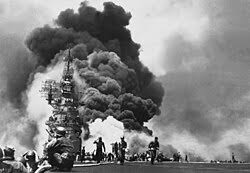
    The largest naval battle in history occurred on October 23–26, 1944, in Leyte Gulf, in the Philippines. The Imperial Japanese Navy deployed nearly its entire remaining fleet in a desperate bid to destroy the U.S. invasion force. The result was a disaster for Japan: three battleships, four carriers, and ten cruisers were sunk, effectively destroying the Japanese fleet as a fighting force. It was also at Leyte Gulf that the Japanese first used kamikaze attacks—suicide pilots who crashed their planes into American ships. They would become a chilling symbol of Japan’s defiance in the face of inevitable defeat.

    The Bloody Islands: Iwo Jima and Okinawa

    By early 1945, the war had moved to Japan’s doorstep. The first target was Iwo Jima, a volcanic island 750 miles from Tokyo, needed as an emergency landing strip for B-29s. The Japanese had fortified the island with 21,000 troops in an elaborate network of tunnels and bunkers. The U.S. Marine assault, starting on February 19, 1945, was supposed to last five days. It took over a month. The iconic photograph of Marines raising the flag on Mount Suribachi became a symbol of American valor, but the cost was staggering: 6,821 U.S. dead and over 18,000 wounded. Of the 21,000 Japanese defenders, only 216 were taken prisoner.

    Okinawa, in April 1945, was even worse. The island was the last defensive ring before the Japanese home islands. The Japanese garrison of over 100,000 troops fought with a fury that stunned the Americans. The battle dragged on for 82 days, the longest and bloodiest in the Pacific theater. The U.S. lost over 12,000 dead; the Japanese lost about 100,000 military dead. But the most tragic casualties were Okinawan civilians—about 150,000, roughly one-third of the island’s population, were killed in the crossfire, forced to commit suicide, or used as human shields.

    Fire from the Sky: The Bombing of Japan

    Even before Iwo Jima and Okinawa, the U.S. had begun a strategic bombing campaign against Japan’s cities. From late 1944, B-29s flew from bases in the Marianas, striking factories, railways, and urban areas. In March 1945, Major General Curtis LeMay ordered a change in tactics: low-altitude night raids using incendiary bombs. The first such raid on Tokyo on March 9–10, 1945, killed an estimated 100,000 people and destroyed 16 square miles of the city. Over the next five months, similar firebombing raids devastated 67 Japanese cities. The raids were horrifically effective, but Japan showed no sign of surrender.

    The firebombing raids were a prelude to something even more terrible. On August 6, 1945, a B-29 named Enola Gay dropped an atomic bomb on Hiroshima, instantly killing an estimated 70,000 people. Three days later, a second bomb was dropped on Nagasaki, killing another 40,000. The long-term effects of radiation would raise the death toll to 200,000 by the end of 1945. On August 8, the Soviet Union declared war on Japan and invaded Manchuria, shattering any hope of a negotiated peace. On August 15, Emperor Hirohito—in a radio broadcast that was the first time most Japanese had heard his voice—announced Japan’s surrender. The formal ceremony took place on September 2, 1945, aboard the battleship USS Missouri in Tokyo Bay.

    The Wider War: China, Southeast Asia, and the Colonial Collapse

    While the U.S. and Japan fought across the Pacific, the war in China raged on. For the Chinese, the war had begun in 1937, not 1941. The conflict between Nationalists under Chiang Kai-shek and Communists under Mao Zedong had been interrupted by a fragile united front against the Japanese, but the two factions also fought each other. China suffered catastrophic losses: an estimated 10 to 20 million military and civilian deaths. The Rape of Nanjing in December 1937, where Japanese troops massacred hundreds of thousands of civilians and committed widespread sexual violence, remains one of the most horrific events of the war.

    In Southeast Asia, the Japanese occupation had a dual legacy. It brutally exploited the region’s resources and peoples: forced labor on the Burma Railway, forced farming of crops for the Japanese war effort, and systematic starvation in the Dutch East Indies, where an estimated 4 million civilians died. But it also shattered the myth of white colonial invincibility. The Japanese defeated British, Dutch, and American colonial powers with stunning ease, and their propaganda of “Asia for the Asiatics” resonated with many who had long resented European rule. When the Japanese surrendered, they left a power vacuum. Independence movements in Indonesia, Vietnam, and the Philippines surged forward, leading to the end of Western colonialism in Asia within a decade.

    The Pacific Islands themselves bore the brunt of the fighting. Tens of thousands of islanders were killed, displaced, or conscripted as laborers by both sides. The war’s end did not bring peace to the islands: the U.S. military continued to occupy and test nuclear weapons in the Marshall Islands, beginning with the Bikini Atoll tests in 1946, a continuation of militarization that would have lasting health and environmental consequences.

    Legacy: The Shape of the Modern World

    The Pacific War remade the world in ways that are still visible today. It ended the Japanese Empire and led to the transformation of Japan into a pacifist democracy under the American occupation. It raised the United States to superpower status, with a network of military bases across the Pacific. It accelerated the collapse of European colonialism and the emergence of new nations. It also left deep scars: the occupation of the Korean peninsula by the U.S. and Soviet Union set the stage for the Korean War; the division of Vietnam led to the Vietnam War; and the unresolved grievances of the war continue to shape relations between Japan, China, and Korea today.

    The war also raised profound moral questions. The atomic bombings of Hiroshima and Nagasaki, the firebombing of Tokyo, the internment of 120,000 Japanese-Americans, the use of kamikaze attacks, and the systematic sexual slavery of “comfort women” all remain subjects of intense debate. Were the atomic bombs necessary? Did the firebombing of cities cross a moral line? These questions have no easy answers, but they are essential to understanding the war’s true cost.

    In the end, the Pacific War was a war of extremes—of islands that were little more than specks on a map, of battles that turned on a few minutes of carrier aircraft, of civilian suffering on a scale that defies imagination. It was a war that began with a surprise attack on a quiet Sunday morning and ended with the flash of an atomic bomb over a city. Its legacy is written in the skyline of modern Tokyo, the independence of former colonies, and the memorials that dot the Pacific—from the USS Arizona in Pearl Harbor to the Peace Memorial in Hiroshima. To walk these sites is to remember that the modern world was forged in fire and ash.

    The Pacific War ended on September 2, 1945, but its consequences have not ended. The war’s battles are re-fought in the history books, its wounds are re-opened in diplomatic disputes, and its lessons are re-examined in every new crisis. The war’s veterans are nearly gone, but the memory of what they did—and what was done in their name—remains. To understand the Pacific War is to understand the price of empire, the fragility of peace, and the enduring power of human resilience. It is a story that deserves to be told, not as a distant relic, but as a living part of our shared history.

    Summary

    • The Pacific War began on December 7/8, 1941, with the attack on Pearl Harbor and simultaneous invasions across Southeast Asia, and ended on September 2, 1945, with the formal surrender ceremony aboard USS Missouri.
    • Key turning points included the Battle of Midway (June 1942), which halted Japanese expansion; Guadalcanal (1942–43), the first major Allied offensive; and Leyte Gulf (October 1944), the largest naval battle in history, which effectively destroyed the Japanese fleet.
    • The war was fought with extreme brutality, including kamikaze attacks, firebombing of Japanese cities, the Bataan Death March, the Burma Railway, and the atomic bombings of Hiroshima and Nagasaki.
    • The war had a devastating human cost: an estimated 2.1–2.5 million Japanese military dead, ~104,000 U.S. military dead, 10–20 million Chinese deaths, and millions of civilian deaths across Southeast Asia, including ~150,000 Okinawan civilians.
    • The war’s end accelerated the collapse of European colonialism in Asia, leading to independence movements in Indonesia, Vietnam, and the Philippines, and set the stage for the Cold War in the Pacific.

    FAQ

    Q: Why did Japan attack Pearl Harbor?
    A: Japan’s attack was a preventive strike to neutralize the U.S. Pacific Fleet, which threatened Japan’s ability to seize oil-rich territories in Southeast Asia. The U.S. had imposed embargoes on oil and steel, and Japan’s reserves were dwindling. The attack was designed to buy time for Japan to fortify its defensive perimeter.

    Q: What was the “island hopping” strategy?
    A: Island hopping was the Allied strategy of bypassing heavily fortified Japanese islands and instead seizing lightly defended islands to build airfields and naval bases. This allowed the Allies to advance toward Japan more quickly, while isolating and starving out Japanese garrisons that were cut off from supply lines.

    Q: How many people died in the atomic bombings of Hiroshima and Nagasaki?
    A: The immediate death toll was an estimated 70,000 in Hiroshima (August 6, 1945) and 40,000 in Nagasaki (August 9, 1945). By the end of 1945, the toll had risen to about 200,000 due to injuries and radiation sickness.

    Q: What role did China play in the Pacific War?
    A: China was a major battleground long before Pearl Harbor. The Second Sino-Japanese War began in 1937, and China suffered 10–20 million deaths, making it one of the largest contributors to the Allied cause. China’s resistance tied down millions of Japanese troops, preventing them from being deployed elsewhere.

    Q: What were the “comfort women”?
    A: “Comfort women” were an estimated 50,000 to 200,000 women, mostly Korean, who were forced into sexual slavery by the Japanese military during the war. The issue remains a major point of friction between Japan and its neighbors, as Japan has not fully acknowledged responsibility.
  • The Birth of the United Nations: A Hope for Global Peace

    The Birth of the United Nations: A Hope for Global Peace

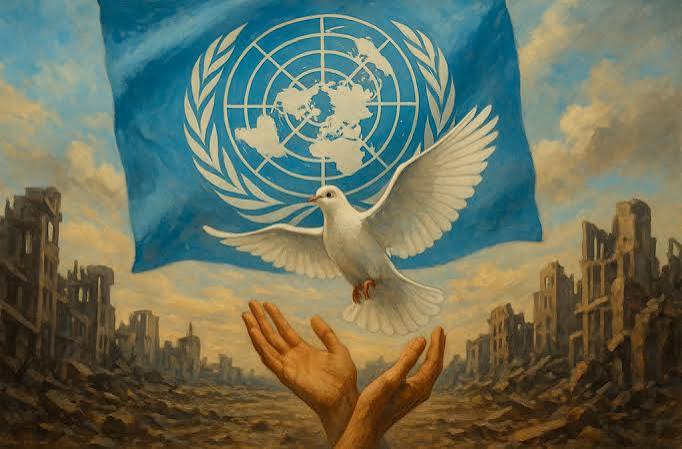
    On June 26, 1945, in the San Francisco Opera House, delegates from 50 nations put pen to paper and signed the United Nations Charter. The world was still smoldering from the ashes of World War II a conflict that had killed an estimated 60 to 80 million people and ended with the blinding flash of atomic bombs over Hiroshima and Nagasaki. The charter was not just a document; it was a promise, born from the wreckage of a failed League of Nations, that humanity would find a better way to settle its disputes.

    The road to that signing was long and winding, shaped by wartime alliances and the dogged vision of leaders who had witnessed two catastrophic global wars. This article traces that journey from the Atlantic Charter to the San Francisco Conference and examines how the United Nations came to embody both the hopes and the contradictions of a post-war world order.

    The League’s Ghost

    Before the United Nations, there was the League of Nations a grand experiment that began with high ideals after World War I but collapsed under the weight of its own weaknesses. It had no enforcement mechanism, no standing army, and the United States, its most powerful potential backer, never joined. When Japan invaded Manchuria in 1931, the League could only issue condemnations. When Italy marched into Ethiopia in 1935, its sanctions were toothless. When Hitler remilitarized the Rhineland in 1936, the League stood by, paralyzed.

    The lesson was clear: a peacekeeping body without teeth was a paper tiger. As World War II erupted in 1939, it became brutally apparent that the next attempt at global governance would need to be stronger and more inclusive.

    Wartime Blueprints

    The planning for a new world order began even as the bombs fell. In August 1941, President Franklin D. Roosevelt and British Prime Minister Winston Churchill met aboard a warship in the North Atlantic and issued the Atlantic Charter a joint declaration that outlined goals for a post-war world, including disarmament of aggressors and a “permanent system of general security.”

    By January 1942, 26 Allied nations signed the Declaration by United Nations, pledging to fight the Axis powers and affirming the Atlantic Charter’s principles. It was in that declaration that Roosevelt first coined the term “United Nations” a phrase that would come to define a global institution.

    The blueprint took shape at the Dumbarton Oaks Conference in Washington, D.C., in the autumn of 1944. Representatives from the U.S., the UK, the USSR, and China drafted proposals for the new organization’s structure, including a Security Council with five permanent members each holding veto power. Then, in February 1945, at the Yalta Conference, Roosevelt, Churchill, and Stalin finalized the voting procedures and set a date for a formal conference in San Francisco.

    San Francisco: The World Gathers

    When delegates assembled in San Francisco on April 25, 1945, the world had changed. Roosevelt had died just two weeks earlier, and Germany’s surrender was only days away. The conference carried an air of urgency a sense that the world was holding its breath.

    Fifty nations sent 850 delegates, and more than 2,500 journalists covered every twist and turn. The smaller nations particularly those from Latin America and the Middle East pushed back against the dominance of the Big Five. They demanded stronger human rights language and a greater role for the General Assembly. Their insistence led to the inclusion of the Trusteeship Council and a more robust commitment to decolonization.

    After two months of intense negotiation, the Charter was unanimously adopted on June 25, 1945. The next day, delegates signed it in the Herbst Theatre, the same venue where the conference had opened. Poland, absent at the signing, would add its name on October 15, bringing the original membership to 51.

    A Charter of Contradictions

    The United Nations Charter, drafted by South African statesman Jan Smuts, opens with the stirring words: “We the peoples of the United Nations determined to save succeeding generations from the scourge of war.” Article 1 lays out the organization’s core purposes: to maintain international peace and security, develop friendly relations among nations, achieve international cooperation in solving economic, social, cultural, and humanitarian problems, and to be a center for harmonizing the actions of nations.

    But the Charter also enshrined a fundamental tension. The Security Council’s five permanent members — the U.S., the UK, the USSR, France, and China — each hold veto power, a provision that gave the great powers a privileged position. Smaller nations, who had hoped for a more democratic structure, had to settle for a General Assembly where every nation had one vote, but where resolutions carried no binding force.

    The First Steps

    The Charter entered into force on October 24, 1945, after the five permanent members and a majority of other signatories ratified it. That date is now celebrated as United Nations Day.

    The first General Assembly opened on January 10, 1946, at Central Hall, Westminster, in London. Fifty-one member states were represented. The Security Council held its first meeting a week later, on January 17. The UN initially operated from temporary quarters — first in London, then at the Sperry Gyroscope plant in Lake Success, New York — until its permanent headquarters on the East River in Manhattan was completed in 1952.

    The League of Nations, meanwhile, formally dissolved itself on April 18, 1946, at its final session in Geneva, transferring its assets and functions to its successor. The old order was gone. The new one had begun.

    A Hope, Not a Guarantee

    The United Nations was born with a heavy burden: to prevent another world war. Its first decades were marked by the Cold War, colonial wars, and regional conflicts — but the UN has also facilitated peacekeeping missions, brokered ceasefires, and provided humanitarian relief to millions. The Charter’s promise of collective security has never been fully realized, but the organization has evolved, expanding to 193 member states and taking on issues its founders never imagined, from climate change to global health.

    The birth of the UN was a hope — a fragile and imperfect one, but a hope nonetheless. As the world continues to grapple with conflict and division, that founding vision remains a touchstone, a reminder that even in the darkest hours, nations can come together to build something better.

    The United Nations was not a clean slate; it was a response to catastrophe, built on the lessons of a failed League and the ashes of war. Its creation in 1945 represented a collective leap of faith — that diplomacy could outpace destruction, and that the nations of the world could cooperate to secure peace. That hope endures, even as the organization continues to face the hard realities of a fractured world.

    Summary

    • The UN Charter was signed on June 26, 1945, by 50 nations at the San Francisco Conference; Poland later signed, making 51 original members.
    • The Charter came into force on October 24, 1945, after ratification by the five permanent Security Council members and a majority of signatories.
    • The UN replaced the League of Nations, which failed to prevent World War II due to lack of enforcement and U.S. absence.
    • Key wartime milestones: Atlantic Charter (1941), Declaration by United Nations (1942), Moscow Conference (1943), Dumbarton Oaks (1944), Yalta (1945).
    • The San Francisco Conference (April–June 1945) involved 850 delegates from 50 nations, with smaller nations pushing for human rights and decolonization.

    FAQ

    Q: When was the United Nations founded?
    A: The UN was founded on October 24, 1945, when the Charter came into force after ratification by the five permanent members and a majority of other signatories.

    Q: What was the League of Nations, and why did it fail?
    A: The League was a post-World War I organization created to maintain peace. It failed because it lacked enforcement power, had no standing military, and the U.S. never joined, making it unable to prevent Japanese, Italian, and German aggression in the 1930s.

    Q: Who coined the term “United Nations”?
    A: U.S. President Franklin D. Roosevelt coined the term in the Declaration by United Nations on January 1, 1942.

    Q: What is the role of the Security Council?
    A: The Security Council is responsible for maintaining international peace and security. It has five permanent members (U.S., UK, USSR/Russia, France, China) with veto power, plus ten rotating non-permanent members.

    Q: Where was the UN’s first meeting held?
    A: The first General Assembly opened on January 10, 1946, at Central Hall, Westminster, London. The UN later moved to temporary quarters in Lake Success, New York, before its permanent headquarters was completed in 1952.

  • The Bunker, the Bullet, and the Jawbone: What Really Happened to Hitler on April 30, 1945

    The Bunker, the Bullet, and the Jawbone: What Really Happened to Hitler on April 30, 1945

    On April 30, 1945, as Soviet artillery shells pounded central Berlin, a single gunshot echoed through the concrete corridors of the Führerbunker. The man who had plunged the world into war was dead or so the story goes. For eight decades, that story has been picked apart, questioned, and spun into conspiracy theories that refuse to die.

    The official record is clear: Adolf Hitler shot himself in the right temple, his wife Eva Braun died beside him from cyanide, and their bodies were burned in the Chancellery garden. But the mystery persists because the physical evidence has been locked away in Moscow, the Soviet Union played games with the truth, and no body was ever put on public display. What do we actually know, and what remains uncertain?

    The Final Days: A Dictator Trapped Underground

    By late April 1945, the Third Reich was collapsing in on itself. The Soviet Red Army had encircled Berlin on April 25, and the Battle of Berlin was entering its final, brutal phase. Hitler had retreated to the Führerbunker on January 16, 1945, and rarely emerged. From a labyrinth of reinforced concrete rooms beneath the Reich Chancellery, he directed armies that no longer existed, issuing orders to units that had been destroyed days earlier.

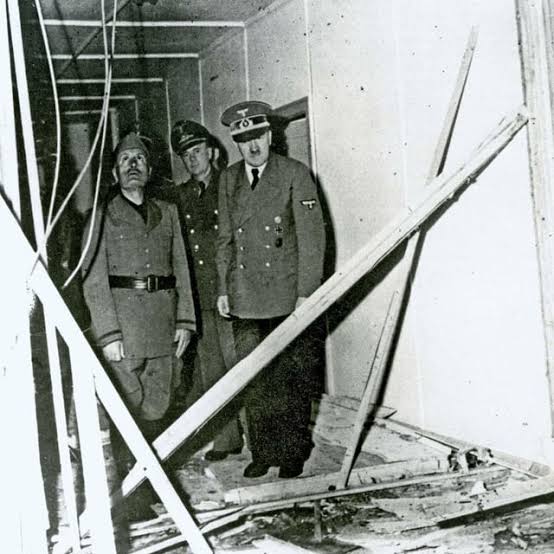
    On April 29, Hitler dictated his last will and political testament. In it, he blamed international Jewry for the war and appointed Admiral Karl Dönitz as his successor. He also married Eva Braun, his long-time companion, in a brief civil ceremony. The next day, April 30, after a lunch of spaghetti and a final meeting with his staff, Hitler and Braun retired to their private suite. A single shot was heard in the corridor. When the door was opened, Hitler was slumped on a sofa, dead from a gunshot wound to the right temple. A Walther PPK 7.65mm pistol lay nearby. Eva Braun was dead beside him, her lips blue from cyanide.

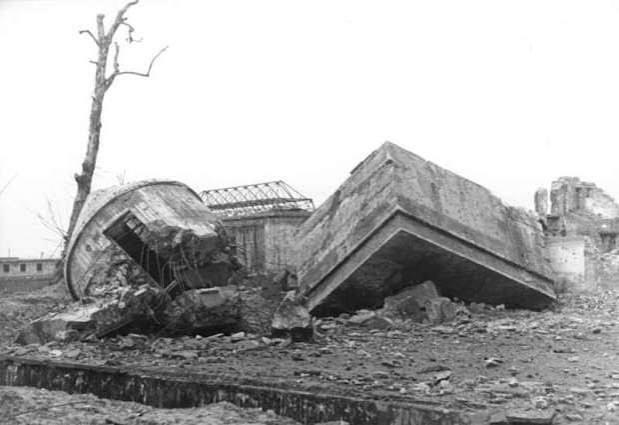
    The bodies were carried upstairs, placed in a bomb crater in the Chancellery garden, doused with petrol, and set alight. The burning was incomplete Soviet forces arriving days later found charred remains that were impossible to fully identify on sight.

    The Soviet Evidence: A Jawbone and a Skull Fragment

    Soviet intelligence, specifically the SMERSH counterintelligence unit, recovered the remains on May 4–5, 1945. They conducted a forensic examination, but the results were classified and hidden for decades. The key evidence was a jawbone and a dental bridge. Hitler’s dental assistants, Käthe Heusermann and Fritz Echtmann, were captured by the Soviets and forced to identify the teeth. They confirmed that the bridge matched Hitler’s dental records and X-rays taken in 1944. This dental match remains the strongest forensic evidence that Hitler died in the bunker.

    A fragment of skull, with a bullet hole on the left side, was also recovered and attributed to Hitler. But in 2009, a U.S. researcher named Nick Bellantoni analyzed the skull fragment and found that it was from a female skull. This cast doubt on the skull fragment, but not on the jawbone. The jawbone remains the authenticating artifact, and it is held in Russian state archives in Moscow, along with the skull fragment.

    The Cold War Fog: Stalin’s Disinformation and Secrecy

    Why did the mystery persist? The Soviet Union held the physical evidence and forensic reports under strict secrecy for decades. Stalin himself told Western leaders that Hitler had escaped, a deliberate disinformation tactic to sow distrust among the Allies. This fed the rumor mill. If the Soviet Union wouldn’t show the body, the reasoning went, maybe there was something to hide.

    Unlike Mussolini, who was hung upside down in a Milan square, Hitler’s body was never publicly exhibited. The Soviets buried and reburied the remains multiple times. In 1970, KGB chief Yuri Andropov ordered the remains exhumed, cremated, and scattered into the Biederitz River in East Germany, to prevent the site from becoming a neo-Nazi shrine. This effectively destroyed any chance of independent verification.

    The Conspiracy Theories: Escape to Argentina and Beyond

    Without a public body, conspiracy theories flourished. The most famous is the “escape to Argentina” narrative, popularized by the 2011 book Grey Wolf: The Escape of Adolf Hitler by Gerrard Williams and Simon Dunstan. The book claims that Hitler and Eva Braun fled to Argentina via submarine, lived on a ranch, and died in the 1960s. Proponents point to FBI and CIA files on Hitler sightings in South America as evidence of ongoing investigations.

    But these files are exactly what they appear to be: investigations of unsubstantiated rumors. The FBI and CIA chased leads that went nowhere. No credible evidence of Hitler’s survival has ever emerged. The consensus among mainstream historians—Ian Kershaw, Antony Beevor, Richard J. Evans—is that Hitler died by his own hand in the bunker. They point to the dental evidence, eyewitness testimony, and the overwhelming logic of a cornered dictator choosing suicide over capture, especially after Mussolini’s corpse was displayed in public.

    What the Evidence Actually Supports

    Let’s separate what we know from what we don’t.

    What we know:
    – Hitler died on April 30, 1945, in the Führerbunker.
    – The cause of death was a self-inflicted gunshot wound, likely combined with cyanide.
    – His jawbone, recovered by Soviet forces, matches dental records.
    – Multiple bunker staff, including Otto Günsche, Heinz Linge, and Rochus Misch, gave consistent accounts of the suicide and burning.

    What we don’t know:
    – The exact sequence of events in the final moments (did he shoot himself before or after biting the cyanide capsule? Was the skull fragment actually Hitler’s?)
    – The final disposition of all remains—the Soviets destroyed most of them in 1970.

    The skull fragment controversy is real, but it doesn’t overturn the dental evidence. The jawbone is the key artifact, and it has never been disputed by credible experts. The mystery of Hitler’s death is not about whether he died in the bunker—it’s about why people continue to doubt it.

    The mystery of Hitler’s death is less about the historical record and more about the human appetite for conspiracy. The evidence—dental records, eyewitness testimony, and the logic of history—points overwhelmingly to one conclusion: Hitler died in the bunker on April 30, 1945. The Soviet secrecy and the destruction of remains created a vacuum, but it was filled with rumor, not fact. The jawbone in Moscow is the final word, and it says what the history books have always said.

    Summary

    • Hitler died by suicide on April 30, 1945, in the Führerbunker, with a gunshot to the right temple and cyanide.
    • The strongest evidence is a jawbone and dental bridge recovered by Soviet forces, matched by Hitler’s dental assistants.
    • Soviet secrecy and the destruction of remains in 1970 fueled conspiracy theories, but no credible evidence of escape has emerged.
    • A 2009 study cast doubt on a skull fragment, but not the jawbone, which remains authentic.
    • Mainstream historians universally accept the suicide account, citing dental evidence and eyewitness testimony.

    FAQ

    Q: Did Hitler really die in the bunker?
    A: Yes. The consensus of historians, based on dental records, eyewitness accounts, and Soviet forensic reports, is that Hitler died by suicide on April 30, 1945.

    Q: Why do some people believe Hitler escaped to Argentina?
    A: The theory, popularized by books like Grey Wolf, relies on unsubstantiated sightings and Cold War-era rumors. FBI and CIA files show investigations but no credible evidence.

    Q: What is the skull fragment controversy?
    A: A 2009 DNA study found that a skull fragment attributed to Hitler was from a female. However, this does not affect the jawbone, which is the key authenticating evidence.

    Q: Where are Hitler’s remains now?
    A: Most were destroyed by Soviet intelligence in 1970. The only surviving official remains are a skull fragment and jawbone held in Russian state archives in Moscow.

    Q: Why did Stalin spread rumors that Hitler escaped?
    A: Stalin used disinformation to sow distrust among Western Allies. It was a Cold War tactic, not a reflection of actual evidence.

  • Hitler’s Fatal Gamble: Why Germany Declared War on America After Pearl Harbor

    Hitler’s Fatal Gamble: Why Germany Declared War on America After Pearl Harbor

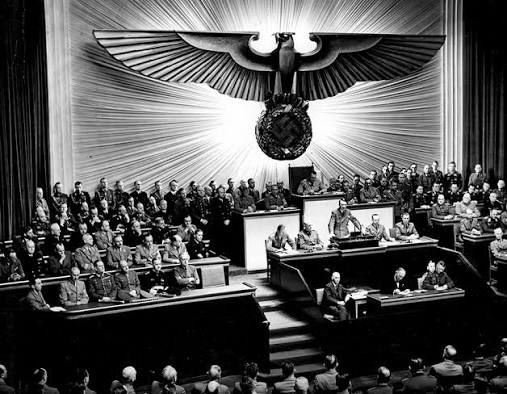
    On December 11, 1941, four days after Japanese bombers devastated the U.S. Pacific Fleet at Pearl Harbor, Adolf Hitler stood before the Reichstag in Berlin and declared war on the United States. It was a decision that would seal the fate of the Third Reich, yet at the time, it seemed to many including Hitler himself like a calculated, even inevitable, move. But why did Hitler, already bogged down in a brutal war against the Soviet Union and Britain, willingly add the industrial might of America to his list of enemies? The answer lies in a toxic mix of ideology, miscalculation, and strategic desperation.

    To understand Hitler’s decision, one must look beyond the formal texts of treaties and into the Führer’s own racial fantasies and geopolitical delusions. He saw America as a weak, mongrelized nation, incapable of fighting a real war. He believed that war with the U.S. was coming anyway, so why not seize the moment? Yet his gamble backfired catastrophically, uniting the world’s greatest powers against Germany and ensuring its ultimate defeat. This is the story of how Hitler’s hubris turned a tactical opportunity into a strategic disaster.

    The Pact That Didn’t Bind

    When Japan attacked Pearl Harbor on December 7, 1941, Hitler had no legal obligation to join the war. The Tripartite Pact, signed in September 1940, committed Germany, Italy, and Japan to defend one another only if one of them was attacked. Japan was the aggressor, not the victim. Germany’s ambassador to Japan, Eugen Ott, had even been instructed to urge Japan to avoid war with the U.S. unless absolutely necessary. Yet within hours of the attack, Hitler’s Foreign Minister, Joachim von Ribbentrop, began pressing for a declaration of war, and Hitler was eager to comply.

    Why? For Hitler, the pact was never just a legal instrument; it was a declaration of solidarity among the “have-not” nations against the Anglo-American world order. In his December 11 speech, he framed the war as a cosmic struggle between the “Jewish-capitalist” world, led by Roosevelt, and National Socialist Germany. He listed grievances: U.S. violations of neutrality, the Lend-Lease program, and Roosevelt’s “warmongering.” He wanted to show that Germany stood by its Axis partners, even at the cost of plunging into a two-front war.

    But there was more than ideology at play. Hitler and his generals genuinely believed that the United States was a paper tiger. They thought the U.S. was militarily weak, politically divided, and would take years to mobilize its industrial might. In Hitler’s racial worldview, America was a “mongrel” nation, dominated by Jews and incapable of true military greatness. He once told his generals, “The American is like a child—he needs to be led, and he has no idea what he wants.” Such contempt blinded him to the reality of American production capacity.

    The Atlantic Undeclared War

    The formal declaration was, in many ways, just a formality. The U.S. and Germany had been fighting an undeclared naval war in the Atlantic for months. U.S. destroyers were escorting convoys to Britain, and they had exchanged fire with German U-boats. In September 1941, the USS Greer was attacked by a German submarine after being tracked by a British plane. In October, the USS Reuben James was torpedoed and sunk with the loss of 100 American sailors. Hitler had ordered his U-boats to avoid provoking the U.S., but Roosevelt was pushing the envelope, ordering the Navy to “shoot on sight” any German warships in U.S. defensive zones.

    Hitler’s restraint was a strategic choice. He hoped to keep America out of the war until the Soviet Union was conquered. But by late 1941, Operation Barbarossa had stalled before Moscow, and the Wehrmacht was suffering massive casualties. The war in the East was not going as planned, and Hitler needed a victory somewhere. Declaring war on America gave him the chance to unleash unrestricted submarine warfare in the Atlantic, cutting Britain’s lifeline before the U.S. could intervene effectively. He also hoped that tying down American forces in the Pacific would relieve pressure on Germany.

    The Great Miscalculation

    Hitler’s decision was based on a profound misreading of the situation. He believed that the U.S. could not project meaningful military power into Europe before 1944 or 1945, by which time he expected to have conquered the USSR and secured Europe. He was convinced that Roosevelt would have entered the war eventually anyway, so why not act first and appear decisive? In his mind, the declaration was a preemptive strike, not a gamble.

    But Hitler underestimated the U.S. in every way. He failed to grasp the speed and scale of American mobilization. Within months, U.S. factories were producing more war materiel than Germany, Japan, and Italy combined. He also misjudged the political will of the American people. While isolationism had been strong before Pearl Harbor, the attack—and Germany’s declaration—united the country behind the war effort. Roosevelt and Churchill were relieved; Churchill later wrote that he “slept the sleep of the saved” upon hearing the news. The German declaration solved the political problem of how to bring the U.S. into the European war when public opinion was focused on revenge against Japan.

    The Aftermath: A United Enemy

    The declaration on December 11, 1941, formally merged the European and Pacific theaters into one global conflict. The U.S. Congress reciprocated with a declaration of war against Germany on the same day. For Hitler, the move was meant to solidify the Axis and encourage Japan to tie down British and American forces. But it had the opposite effect: it ensured that the U.S., Britain, and the Soviet Union would fight as allies against Germany, with the full weight of American industrial power committed to Europe.

    Historians have long viewed Hitler’s declaration as one of the greatest strategic blunders of the war. It was a miscalculation so profound that it turned a difficult war into an impossible one. Hitler’s racial ideology and his contempt for American democracy blinded him to the facts. He saw the U.S. as a weak, divided nation, but in reality, it was a sleeping giant. When it awakened, it destroyed the Third Reich.

    Hitler’s declaration of war on America was not a rational act of statecraft but a product of his ideological delusions and strategic desperation. He believed he was being decisive, but he was actually signing his own death warrant. The decision unified the Allies, unleashed American industrial might against Germany, and ultimately ensured the fall of the Third Reich. It remains a chilling example of how hubris and miscalculation can turn a moment of opportunity into a catastrophe.

    Summary

    • Germany was not obligated by the Tripartite Pact to declare war on the U.S., as Japan was the aggressor at Pearl Harbor.
    • Hitler viewed war with America as inevitable and wanted to appear decisive, while also seeking to unleash unrestricted submarine warfare.
    • Hitler’s racial ideology led him to underestimate American military capability and resolve.
    • The U.S. and Germany were already engaged in an undeclared naval war in the Atlantic before the formal declaration.
    • The declaration backfired strategically, uniting the U.S., Britain, and the USSR against Germany and ensuring American industrial might was turned against the Third Reich.

    FAQ

    Q: Was Germany forced to declare war on the U.S. by the Tripartite Pact?
    A: No. The pact required mutual assistance only if a member was attacked. Japan was the aggressor at Pearl Harbor, so Germany had no legal obligation to declare war.

    Q: Why did Hitler believe the U.S. was weak?
    A: Hitler held a racialized view of America, seeing it as a ‘mongrel nation’ dominated by Jews and incapable of true military greatness. He also believed the U.S. would take years to mobilize and was politically divided by isolationism.

    Q: What was the immediate impact of Hitler’s declaration?
    A: The U.S. Congress declared war on Germany on the same day, formally merging the European and Pacific theaters into one global conflict. It also relieved Roosevelt and Churchill, who saw it as a solution to bringing the U.S. into the European war.

    Q: Did the U.S. and Germany have any prior hostilities before Pearl Harbor?
    A: Yes. The U.S. and Germany were engaged in an undeclared naval war in the Atlantic, with U.S. destroyers escorting convoys and exchanging fire with German U-boats, including incidents like the USS Greer and the sinking of the USS Reuben James.

    Q: How do historians view Hitler’s decision?
    A: Most historians view it as one of the greatest strategic blunders of the war, as it united the U.S., Britain, and the USSR against Germany and ensured the full weight of American industrial power would be brought to bear on the Third Reich.

  • The Firestorm Over Dresden: Was It a War Crime?

    The Firestorm Over Dresden: Was It a War Crime?

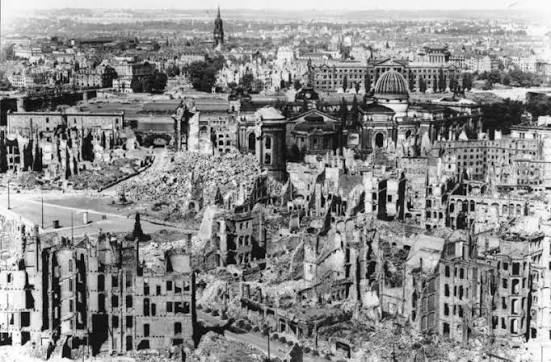
    On the night of February 13, 1945, the sky over Dresden turned orange. Within 24 hours, more than 1,300 bombers from the Royal Air Force and the US Army Air Forces had dropped nearly 4,000 tons of explosives and incendiaries. The resulting firestorm a self-sustaining inferno with winds like a hurricane and temperatures exceeding 1,000°C consumed the baroque heart of a city known as ‘Florence on the Elbe.’ By the time the last plane left on February 15, an estimated 22,000 to 25,000 people lay dead. Three-quarters of the built-up area was rubble.

    Seventy-five years later, the question still smolders: Was the bombing of Dresden a war crime? The answer depends on how you weigh military necessity against civilian suffering, and on which facts you choose to emphasize. This article lays out the arguments on both sides, grounded in the historical record, and lets you decide where the line falls.

    The City Before the Storm

    Dresden in early 1945 was not the untouched cultural jewel of Allied propaganda. It was a functioning military hub. The city’s factories produced fuses, optics, and aircraft parts. Its rail yards moved troops and supplies toward the Eastern Front, where the Red Army was pushing westward. The German military used Dresden as a garrison and a communications center.

    But it was also a city swollen with refugees. Its normal population of about 600,000 had grown to perhaps double or triple that, as civilians fled the Soviet advance from the east. They packed the streets, the parks, and the cellars. Many had no homes left. They had come to Dresden because it had been spared the bombing that had flattened other German cities. That safety was about to end.

    The Attack: Four Waves, One Firestorm

    The raid unfolded in four distinct waves over three days. The first two were RAF night raids, beginning on February 13. The bombers dropped a mix of high-explosive and incendiary bombs. The high explosives blew off roofs and shattered windows, exposing the wooden beams and flammable interiors of the old buildings. The incendiaries ignited them.

    The result was a firestorm, a rare and terrifying phenomenon. The fire created its own wind system, sucking in oxygen from the surrounding streets and fueling the flames. Temperatures reached over 1,000°C. People in cellars suffocated as the fire consumed the oxygen. Others were incinerated in the open. The USAAF followed with two daylight raids on February 14 and 15, targeting marshalling yards and industrial areas, but the city was already a blazing ruin.

    The death toll is disputed. The official German commission in 2010 estimated up to 25,000 dead. Earlier claims of 100,000 or more, popularized by the British writer David Irving, have been discredited by historians. The modern consensus is 22,000–25,000, although some argue for slightly higher figures. The destruction was staggering: about 75% of the built-up area was damaged or destroyed, including 23,000 houses and the historic Altstadt.

    The Case for Military Necessity

    The defenders of the raid argue that Dresden was a legitimate target. It was a rail and communications hub, an industrial center, and a garrison city. The attack was coordinated with the Soviet command, which saw Dresden as a strategic priority to disrupt German logistics on the Eastern Front. The raid was part of a broader Allied strategy of area bombing, designed to destroy German morale, industry, and transportation—and to hasten the end of the war.

    In the context of total war, civilian casualties were an accepted consequence. The Allies believed that bombing, even area bombing, would shorten the war and save overall lives. Arthur Harris, the head of RAF Bomber Command, defended area bombing as a way to break Germany’s will and capacity to fight. Dresden was not uniquely singled out; it was one of many German cities subjected to this policy. The Nuremberg Trials, which judged the crimes of the Nazi regime, did not charge anyone for the Dresden bombing. That silence, defenders argue, is telling.

    The Case for War Crime

    Those who call the bombing a war crime point to the principle of proportionality. By February 1945, the war was effectively decided. Germany was crumbling. The strategic value of Dresden—a city crowded with refugees, many of them women and children—was negligible compared to the civilian carnage. The raid served little military purpose and may have been intended as a show of force to the Soviets, a signal of Allied air superiority as the post-war map was being drawn.

    The attack violated the laws of war as they were understood at the time. The Hague Conventions and customary international law prohibited attacks that caused disproportionate harm to civilians. Dresden was not a military target in the narrow sense; it was a city of people, and the firestorm killed them indiscriminately. Some argue this was terror bombing—deliberately targeting civilians to break morale, which is a war crime under any definition.

    The refugee factor compounds the charge. These were not soldiers or munitions workers. They were families fleeing an army. They had no military value, and their deaths were not a necessary consequence of a legitimate military operation. The sheer scale of destruction—a city of baroque beauty reduced to ash—suggests an intent to annihilate, not just to disrupt.

    The Moral Fog of War

    Neither the military nor the legal case is clean. The Allies did not formally classify Dresden as a war crime. No one was prosecuted. But the debate is not settled by a tribunal. It is a moral question, and it refuses to go away.

    In the immediate aftermath, the bombing was a propaganda tool. Joseph Goebbels used it to rally German resistance. Later, Soviet-aligned East Germany used it to criticize Western Allied conduct, framing their own suffering as a moral indictment of capitalism. In the West, the bombing was initially defended, but the publication of Kurt Vonnegut’s Slaughterhouse-Five in 1969—a novel based on his own experience as a prisoner of war in Dresden—forced a new generation to confront the human cost.

    The debate today is not just about Dresden. It is about the nature of war itself. Modern conflicts continue to raise the same questions: What is a legitimate target? How many civilian deaths are acceptable? When does military necessity become a crime? Dresden is a test case, a moment when the line seemed to blur.

    The firestorm was real. The deaths were real. The question is whether they were justified.

    The bombing of Dresden remains a haunting example of the moral compromises of war. It was not a simple act of evil, nor was it a clean military operation. It was a policy decision made by men who believed they were ending war faster, and it killed tens of thousands of civilians in a firestorm of their making. Whether that constitutes a war crime depends on where you place the burden of proof—on the necessity of the target or on the proportionality of the harm. The historical record does not give a final answer. It gives us the facts, and the choice to weigh them.

    Summary

    • The bombing of Dresden took place February 13–15, 1945, in four waves by the RAF and USAAF, killing an estimated 22,000–25,000 people and destroying 75% of the city.
    • Defenders argue Dresden was a legitimate military target—a rail hub, industrial center, and garrison—and that the raid was part of a broader strategy to shorten the war.
    • Critics argue the attack violated proportionality under the laws of war, especially given the city’s crowded refugee population and the war’s nearing end.
    • No international tribunal classified the bombing as a war crime; the Nuremberg Trials did not charge anyone for it.
    • The debate remains unresolved, reflecting the enduring tension between military necessity and civilian protection in war.

    FAQ

    Q: How many people died in the Dresden bombing?
    A: Modern estimates range from 22,000 to 25,000 deaths, based on the official German commission’s 2010 report. Earlier claims of 100,000+ have been discredited.

    Q: Was Dresden a legitimate military target?
    A: Yes, Dresden had military significance as a railway and communications hub, with factories producing military equipment. However, its value as a target is disputed given the war’s status in February 1945.

    Q: Why did the Allies bomb Dresden?
    A: The raid was part of the Allied area bombing strategy and Operation Thunderclap, aimed at disrupting German logistics, supporting the Soviet advance, and demonstrating air superiority.

    Q: Was the Dresden bombing ever classified as a war crime?
    A: No. The Nuremberg Trials did not charge anyone for the bombing, and no international tribunal has classified it as a war crime.

    Q: What was the firestorm?
    A: A firestorm is a self-sustaining conflagration caused by incendiary bombs, creating hurricane-force winds and temperatures over 1,000°C. It caused most of the casualties in Dresden.

  • The Big Three: How Roosevelt, Churchill, and Stalin Forged an Uneasy Alliance That Won World War II

    The Big Three: How Roosevelt, Churchill, and Stalin Forged an Uneasy Alliance That Won World War II

    In November 1943, three men sat together in a Soviet embassy in Tehran for the first time. Franklin D. Roosevelt, Winston Churchill, and Joseph Stalin represented the most powerful nations fighting against the Axis. But they shared little in common beyond a common enemy. Roosevelt was a patrician Democrat, Churchill an aristocratic imperialist, and Stalin a revolutionary dictator. Their alliance, forged by necessity, would decide the fate of Europe and the shape of the postwar world.

    This is the story of how these three leaders the ‘Big Three’ managed their profound differences to defeat Nazi Germany, and how their fragile partnership sowed the seeds of the Cold War.

    The Unlikely Alliance

    The Grand Alliance was a marriage of convenience from the start. The Soviet Union, under Stalin, had signed a non-aggression pact with Hitler in 1939, and the United States remained officially neutral until the attack on Pearl Harbor in December 1941. Britain, alone after the fall of France, relied on American aid through Lend-Lease, but it was not until Germany invaded the Soviet Union in June 1941 that the three powers were drawn together.

    Stalin’s demands were immediate and relentless: open a second front in Western Europe to relieve the Red Army. Churchill and Roosevelt, wary of a premature invasion that could fail catastrophically, stalled. The delay would become a source of deep resentment for Stalin, who saw the Western Allies as happy to let the Soviets bleed.

    The Personal Dynamics

    Roosevelt and Churchill shared a warm, almost intimate correspondence. Churchill signed his letters ‘Former Naval Person’ and Roosevelt replied as ‘President.’ They met frequently, from the Atlantic Charter meeting in August 1941 to the Casablanca Conference in 1943. Their strategic visions aligned on many issues, though they clashed over colonialism Roosevelt pushed for decolonization, while Churchill was determined to preserve the British Empire.

    Stalin was the odd one out. Suspicious and demanding, he tested his allies’ resolve. At Tehran, he reportedly joked about executing 50,000 German officers, prompting Churchill to storm out of the room. Yet Roosevelt and Churchill recognized that Stalin’s cooperation was essential for victory, so they accommodated his paranoia.

    Roosevelt’s health was failing by 1944. He died of a cerebral hemorrhage in April 1945, weeks before Germany’s surrender. His successor, Harry Truman, stepped into the role with little preparation.

    The Conferences That Shaped the World

    Tehran: First Contact

    At the Tehran Conference (November–December 1943), the Big Three met for the first time. They agreed on Operation Overlord the invasion of Normandy which would finally open the second front. They also discussed postwar borders, with Stalin demanding parts of Poland and the Baltic states. Roosevelt and Churchill, needing Stalin’s continued participation in the war, made concessions they would later regret.

    Yalta: The High-Water Mark of Cooperation

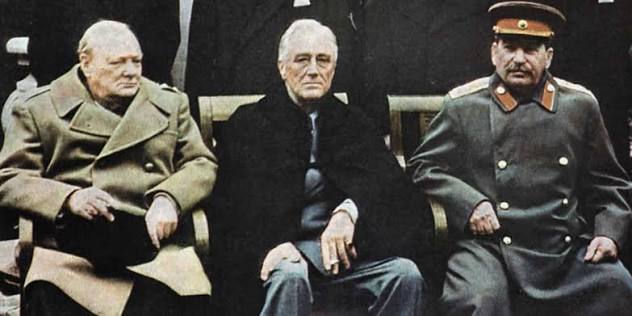
    In February 1945, with Germany’s defeat imminent, the Big Three met at Yalta in the Crimea. They agreed to divide Germany into occupation zones, to allow the Soviet Union to enter the war against Japan, and to create the United Nations. Stalin also pledged to hold ‘free elections’ in Eastern Europe a promise he would break.

    Yalta has been called a ‘betrayal’ by some, who argue that Roosevelt and Churchill handed Eastern Europe to Stalin. Others view it as a realistic acknowledgment of military realities: the Red Army already occupied much of the region.

    Potsdam: The Changing of the Guard

    The Potsdam Conference (July–August 1945) was different. Truman represented the United States, and Churchill was replaced mid-conference by Clement Attlee after Labour won the British election. Only Stalin remained, the wily survivor. They issued the Potsdam Declaration, demanding Japan’s unconditional surrender, and finalized the terms for Germany’s occupation. The alliance was already fraying, and Potsdam set the stage for the Cold War.

    Beyond the Big Three: Other Key Allied Leaders

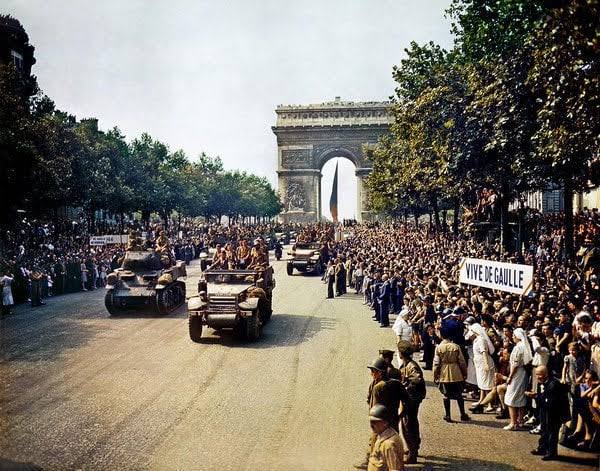
    While the Big Three dominated decisions, other leaders played crucial roles. Charles de Gaulle led the Free French Forces, determined to restore France’s honor. Chiang Kai-shek headed the Nationalist government of China, while Mao Zedong led communist forces in a civil war against him both nominally Allied. King George VI symbolized British resistance, and General Dwight D. Eisenhower commanded the Allied forces in Europe.

    The Alliance’s Collapse

    The alliance that won the war did not survive the peace. Within two years of Germany’s surrender, Churchill was giving his ‘Iron Curtain’ speech, and the world had entered the Cold War. The Soviet Union installed communist governments across Eastern Europe, and the United States responded with the Truman Doctrine and the Marshall Plan.

    The seeds of this collapse were planted at Yalta and earlier. The Atlantic Charter’s promise of self-determination was never applied to colonies, and Stalin’s demands for a buffer zone were met with Western suspicion.

    Why It Still Matters

    The decisions made by the Big Three shaped the world we live in. The United Nations, the division of Germany, the borders of Eastern Europe all trace back to their meetings. Their uneasy alliance demonstrates that, in war, ideology can be set aside for survival. But it also shows that such marriages of convenience rarely last beyond the end of the conflict.

    The Big Three were not friends. They were rivals who found a common enemy. Their cooperation was essential to defeating the Axis, but their mutual distrust ensured that the peace would be fragile. Roosevelt’s vision, Churchill’s oratory, and Stalin’s ruthlessness each shaped the outcome. The alliance they forged and its collapse remains a powerful lesson about the limits of wartime unity.

    Summary

    • The Big Three Roosevelt, Churchill, and Stalin led the US, UK, and USSR during World War II, meeting at Tehran, Yalta, and Potsdam.
    • Their alliance was one of convenience, not friendship, with deep ideological differences.
    • Key decisions included the second front, German occupation zones, and the creation of the UN.
    • Stalin’s broken promises on Eastern Europe contributed to the Cold War.
    • Other leaders like de Gaulle and Chiang Kai-shek played important but secondary roles.

    FAQ

    Q: Who were the Big Three?
    A: Franklin D. Roosevelt (US President), Winston Churchill (British Prime Minister), and Joseph Stalin (Soviet leader). They led the three major Allied powers during World War II.

    Q: What was the Atlantic Charter?
    A: A joint declaration by Roosevelt and Churchill in August 1941, outlining postwar goals such as self-determination and free trade. Stalin was not present.

    Q: Why did Stalin want a second front?
    A: The Soviet Union suffered enormous casualties on the Eastern Front. Stalin wanted the Western Allies to invade Germany from the west to relieve pressure on the Red Army.

    Q: Was Yalta a betrayal of Eastern Europe?
    A: Critics say yes, because Roosevelt and Churchill allowed Stalin to control the region in exchange for Soviet help against Japan. Others argue it reflected military reality.

    Q: Who attended the Potsdam Conference?
    A: Harry Truman (US), Winston Churchill and then Clement Attlee (UK), and Joseph Stalin (USSR).

  • Adolf Hitler: From Failed Artist to Architect of Genocide

    Adolf Hitler: From Failed Artist to Architect of Genocide

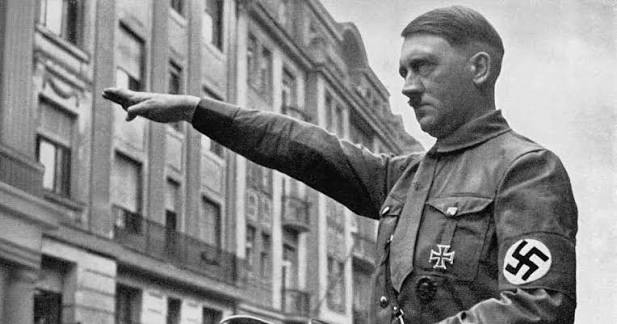
    On January 30, 1933, a failed artist and former army corporal was appointed Chancellor of Germany. Within twelve years, that man Adolf Hitler would plunge the world into a war that killed an estimated 70 to 85 million people and orchestrate the genocide of six million Jews. His rise from obscurity to absolute power remains one of history’s most terrifying and instructive stories.

    How did a man rejected from art school twice become the most destructive dictator in history? The answer lies in a toxic mix of personal obsession, national humiliation, and the willingness of conservative elites to cut a deal with a radical they thought they could control.

    The Early Years: Failure and Resentment

    Adolf Hitler was born on April 20, 1889, in Braunau am Inn, a small town on the Austro-Hungarian border. His father, Alois, was a customs official; his mother, Klara, was his third wife. The family moved frequently, and young Adolf had a rocky relationship with his domineering father, who wanted him to follow into civil service. Instead, Hitler dreamed of becoming an artist.

    In 1907, he moved to Vienna, the capital of a sprawling, multi-ethnic empire, to apply to the Academy of Fine Arts. He was rejected twice. The second rejection, in 1908, was definitive. For the next five years, Hitler lived a marginal existence in Vienna, selling postcards and painting watercolors to scrape by. He later described these years as formative, though his account is likely embellished. Vienna was a cauldron of political extremism, and it was there that Hitler absorbed the anti-Semitic, pan-German, and social Darwinist ideas that would define his worldview.

    In 1913, he moved to Munich, and when World War I broke out in 1914, he volunteered for the German Army. He served as a runner on the Western Front, was wounded, and was decorated with the Iron Cross for bravery. The war gave him a sense of purpose and belonging he had never known. The German defeat in 1918, and the subsequent Treaty of Versailles, which imposed harsh reparations and territorial losses, filled him with bitterness and a belief that the army had been “stabbed in the back” by internal enemies chiefly Jews and socialists.

    The Path to Power: From Beer Hall Putsch to Chancellor

    After the war, Hitler remained in the army, working as an intelligence agent. In 1919, he was sent to monitor a small nationalist group, the German Workers’ Party. He joined instead, quickly becoming its leader and renaming it the National Socialist German Workers’ Party the Nazi Party. His talents as an orator and propagandist soon made him a local figure.

    In 1923, emboldened by the chaos of hyperinflation and political instability, Hitler attempted to seize power in Munich in the Beer Hall Putsch. The coup failed. Hitler was arrested, tried for treason, and sentenced to five years in Landsberg prison. He served only nine months, but during that time he wrote Mein Kampf, a rambling, hate-filled autobiography and political manifesto.

    The putsch taught Hitler a valuable lesson: he would not overthrow the state by force; he would use the ballot box instead. After his release, he rebuilt the Nazi Party around a message of national renewal, anti-communism, and revenge for Versailles. For years, the party remained marginal. In the 1928 election, they won just 2.6% of the vote.

    The Great Depression changed everything. The economic catastrophe that began in 1929 devastated Germany, creating mass unemployment and widespread desperation. Hitler offered a simple, scapegoating explanation: the failures of democracy, the machinations of Jews and communists. By July 1932, the Nazis were the largest party in the Reichstag with 37.3% of the vote. Yet they never won an absolute majority. Hitler came to power on January 30, 1933, not through a popular mandate, but through backroom deals with conservative politicians who believed they could use him to crush the left and restore order.

    Dictatorship and the Road to War

    Within months of becoming Chancellor, Hitler dismantled German democracy. The Reichstag Fire in February 1933 gave him a pretext to suspend civil liberties. The Enabling Act, passed in March, allowed him to rule by decree. By the summer, all political parties except the Nazis were banned, and trade unions were crushed. When President Hindenburg died in August 1934, Hitler merged the offices of President and Chancellor, becoming the absolute dictator—the Führer.

    His domestic policies were brutal. Political opponents were sent to concentration camps. Jews were systematically stripped of their rights, property, and livelihoods. The Nuremberg Laws of 1935 made anti-Semitism official state policy. At the same time, Hitler launched massive public works programs, including the construction of the Autobahn, and rearmed the country in open defiance of the Treaty of Versailles.

    Hitler’s foreign policy was equally aggressive. In 1936, he remilitarized the Rhineland. In 1938, he annexed Austria in the Anschluss and demanded the Sudetenland from Czechoslovakia. The Western powers, desperate to avoid another war, conceded at Munich. Hitler promised it was his last territorial demand. It was a lie. In March 1939, he seized the rest of Czechoslovakia. On September 1, 1939, he invaded Poland. Britain and France, finally drawing a line, declared war. World War II had begun.

    The Holocaust and the War’s End

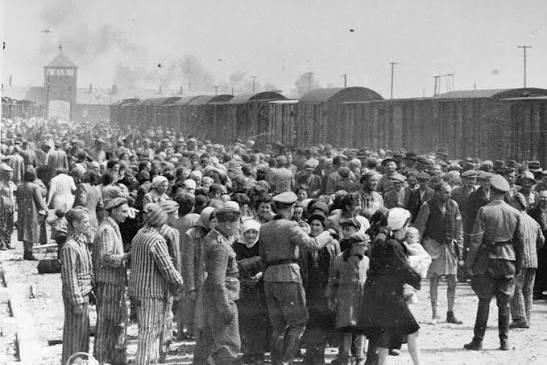
    The war provided Hitler with the cover to implement his most radical ideological goal: the extermination of European Jewry. The Holocaust, as it came to be known, was not a single event but a gradual, escalating process. As German armies advanced across Europe, mobile killing squads—the Einsatzgruppen—massacred Jews in the occupied territories. By 1941, Hitler had authorized the systematic deportation of Jews to ghettos and then to extermination camps like Auschwitz, where they were murdered in gas chambers on an industrial scale.

    In total, approximately six million Jews were murdered, along with five million others: Roma, disabled people, Soviet prisoners of war, political prisoners, homosexuals, and Jehovah’s Witnesses. The machinery of death was coldly bureaucratic, involving ordinary Germans and collaborators from across Europe.

    Hitler’s war in the East was also a war of annihilation. Operation Barbarossa, the invasion of the Soviet Union in June 1941, was intended to conquer living space (Lebensraum) for German settlers and to enslave or kill the Slavic population. The war on the Eastern Front was unimaginably brutal, resulting in the deaths of over 20 million Soviet civilians and soldiers.

    The turning point came in 1943, after the German defeat at Stalingrad. From then on, the war swung inexorably against Germany. The Allied bombing campaigns devastated German cities, killing half a million civilians. Hitler, isolated in his bunker in Berlin, refused to surrender, preferring total destruction over capitulation. On April 30, 1945, with Soviet troops closing in, he shot himself. His empire lasted twelve years and left the world in ruins.

    The Nature of Hitler’s Power: A “Lazy Dictator”?

    Historical debate about Hitler often centers on the question: was he a master planner or an opportunist? The intentionalist school argues that Hitler had a clear, long-term plan for genocide and world conquest, pursued consistently from the 1920s onward. The functionalist school, led by historian Ian Kershaw, offers a more nuanced picture. Kershaw famously described Hitler as a “lazy dictator” who issued broad ideological directives but left the details to his subordinates. Radical officials, eager to “work towards the Führer,” initiated policies that went beyond what Hitler explicitly ordered. The Holocaust, in this view, emerged from a chaotic, competitive Nazi state rather than a single blueprint.

    What is clear is that Hitler’s ideology was coherent, if monstrous. He believed in a racial hierarchy with Aryans at the top and Jews as the ultimate enemy. He saw history as a struggle for survival in which the strong must conquer and the weak must perish. This worldview, rooted in 19th-century racial science and social Darwinism, was not a bizarre aberration but a product of its time—an extreme expression of currents that ran through European culture.

    Hitler’s Legacy: Lessons for Today

    Hitler’s legacy is one of absolute evil, but also of the danger of complacency. His rise was not inevitable. He was brought to power by conservative elites who thought they could control him. He exploited a fragile democracy weakened by economic crisis and social division. He used hate as a political tool, scapegoating minorities for complex national problems. The lesson is stark: democratic institutions must be defended, and hate speech must be taken seriously before it becomes state policy.

    The Nazi regime also demonstrates the banality of evil, in Hannah Arendt’s famous phrase. The genocide was carried out by ordinary people—bureaucrats, soldiers, railway workers, and policemen—who were following orders, obeying the law, or simply going along. The Holocaust was not the work of a few monsters, but of a society that allowed itself to be led by one.

    Hitler’s life and deeds are a warning from history that we ignore at our peril. The dead of the Holocaust and the 70 million victims of the war he started deserve no less than our remembrance and our vigilance.

    Adolf Hitler transformed a personal hatred into a national catastrophe. His life story is a case study in how a charismatic but morally bankrupt individual can exploit political and economic turmoil to seize power and commit unspeakable crimes. Yet it is also a story of human choice: the choices of ordinary Germans to follow, the choices of conservative elites to empower a madman, and the choices of the international community to appease rather than confront. Remembering Hitler is not just about honoring the victims; it is about understanding the mechanisms of tyranny so that we might better resist them.

    Summary

    • Adolf Hitler (1889-1945) was the dictator of Nazi Germany, responsible for the Holocaust and World War II in Europe.
    • He rose from a failed artist to become Chancellor in 1933 through a combination of political maneuvering and exploitation of the Great Depression.
    • The Holocaust resulted in the murder of approximately 6 million Jews and 5 million others.
    • Hitler’s ideology was rooted in racial hierarchy, anti-Semitism, and the concept of Lebensraum.
    • Historians debate whether Hitler had a master plan for genocide or whether it emerged through bureaucratic competition.
    • His legacy serves as a warning about the dangers of hate, complacency, and the fragility of democratic institutions.

    FAQ

    Q: How did Hitler come to power if he never won a majority in free elections?
    A: Hitler was appointed Chancellor on January 30, 1933, as part of a backroom deal with conservative politicians who believed they could control him. The Nazi Party had won 37.3% of the vote in July 1932, making it the largest party, but never an outright majority. Within months, Hitler used the Reichstag Fire and the Enabling Act to establish a dictatorship.

    Q: What was the Holocaust?
    A: The Holocaust was the systematic, state-sponsored persecution and murder of approximately six million Jews by the Nazi regime and its collaborators. It also targeted Roma, disabled people, Soviet prisoners of war, political prisoners, homosexuals, and Jehovah’s Witnesses, bringing the total to about 11 million victims.

    Q: Why did Hitler hate Jews?
    A: Hitler’s anti-Semitism was rooted in a racial ideology that considered Jews to be an inferior race and the primary enemy of the German people. This belief was influenced by 19th-century racial theories and social Darwinism, and it was a central pillar of his worldview, as expressed in Mein Kampf.

    Q: What was Operation Barbarossa?
    A: Operation Barbarossa was the codename for the German invasion of the Soviet Union on June 22, 1941. It was a war of annihilation aimed at conquering living space (Lebensraum) and destroying communism. The Eastern Front became the deadliest theater of World War II, with over 20 million Soviet deaths.

    Q: How did Hitler die?
    A: Hitler committed suicide by gunshot on April 30, 1945, in his Führerbunker in Berlin, as Soviet forces closed in on the city. His wife, Eva Braun, also died by suicide alongside him.

  • The Children Who Survived: Their Lives After the Holocaust

    The Children Who Survived: Their Lives After the Holocaust

    When the Second World War ended in 1945, the Allied forces discovered a devastated Europe. Among the ruins were thousands of children who had somehow survived the Holocaust. They were a small fraction of the 1.5 to 2 million Jewish children who had been alive in 1939. Only about 100,000 to 150,000 made it through. These children emerged from hiding places, forests, and concentration camps, often alone, malnourished, and traumatized. Their journey after liberation was not a simple return to normal life it was a new struggle for survival, identity, and a place to call home.

    This article traces what happened to these children once the war was over. It looks at their initial care in displaced persons camps, the long and often painful process of reuniting with family or finding new ones, and the paths they took to new countries. It also explores the different experiences of those who went to Britain, France, Palestine, and elsewhere, and the lasting impact of those years on their lives.

    The Liberation: A Bitter Sweet Beginning

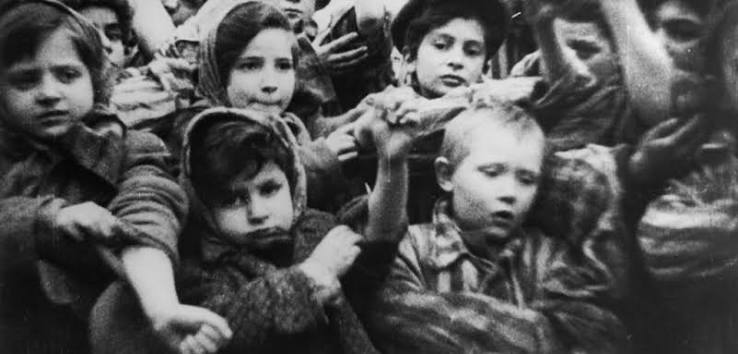
    When the camps were liberated, soldiers found children in horrifying conditions. At Auschwitz, for example, only a few hundred children were found alive, many of them twins who had been used for medical experiments. The survivors were often severely malnourished, suffering from tuberculosis and other diseases. Some had forgotten their names, their languages, and even how to play. They had spent years in conditions that stripped away their childhood.

    The first priority was medical care and food. But the psychological scars were deep. Many children had witnessed the murder of their families. They had learned to hide, to lie, to trust no one. The process of recovery would take years, and for some, it never fully happened.

    Displaced Persons Camps: A Temporary Home

    Most surviving children were initially placed in Displaced Persons (DP) camps run by the Allies. These camps were often former concentration camps or military barracks. Bergen-Belsen, Feldafing, and Zeilsheim became temporary homes for thousands of orphans. The United Nations Relief and Rehabilitation Administration (UNRRA) and later the International Refugee Organization (IRO) managed these camps, with help from Jewish organizations like the American Jewish Joint Distribution Committee (JDC).

    In these camps, the children received basic education, vocational training, and some psychological support. But life was hard. They lived in crowded barracks, faced shortages of food and clothing, and had to deal with the uncertainty of their future. The camps were meant to be temporary, but some children remained for years, waiting for emigration or for news of family.

    The Search for Family

    One of the most agonizing experiences for child survivors was the search for surviving relatives. The Central Tracing Bureau was set up to help locate family members. Lists of survivors were posted, and children were photographed and registered. Many children clung to the hope that a parent or sibling might have survived. For some, this hope was fulfilled. They were reunited with a mother, a father, or a sibling who had also survived. But for the vast majority, the search ended in despair. They were alone in the world.

    Some children were too young to remember their families. They had been hidden as infants or toddlers and had no memory of their parents. Others had been given new names and identities. The task of rebuilding a family was often impossible. Adoption was one option, but many children were reluctant to leave the hope of finding a biological relative. Others were placed in group homes or orphanages, where they lived with other child survivors.

    The Windermere Children: A British Story

    One of the most famous rehabilitation programs was the Windermere Children scheme. In August 1945, 732 child survivors, mostly from the Theresienstadt ghetto and other camps, were flown to the Lake District in England. They were housed in a former RAF camp near the town of Windermere. Here, they received intensive care: good food, warm clothing, education, and psychological support. They were taught English, woodworking, and other trades. The goal was to help them recover and prepare them for a new life in Britain.

    The children at Windermere formed a close bond, and many stayed in the UK, becoming British citizens. Their story was later told in a book and a 2020 film, The Windermere Children. For many, this program was a turning point. It gave them a chance to heal and to build a future.

    The Buchenwald Boys: A Different Path

    In April 1945, American troops liberated the Buchenwald concentration camp. Among the survivors were hundreds of boys, many of them teenagers. These boys, known as the Buchenwald Boys, were taken to France, where they were placed in homes and rehabilitation centers. One of them was Elie Wiesel, who would later become a Nobel Prize-winning author and a voice for Holocaust survivors.

    The Buchenwald Boys were given education and support, and many went on to successful lives. But they, too, faced the challenge of rebuilding their identities. Some had been in the camp for years, and the outside world was foreign to them. They had to learn to live in society again, a process that was not always easy.

    The Hidden Children: A Crisis of Identity

    Not all child survivors were in camps. Many had been hidden—in convents, with Christian families, in attics, or in the countryside. These “hidden children” often survived by passing as non-Jewish. They took on Christian names, learned Christian prayers, and sometimes were baptized. When the war ended, they faced a unique problem: they had to decide whether to return to their Jewish roots or remain in the Christian world they had come to know.

    Some hidden children chose to remain Christian, either because they had formed deep bonds with their rescuers or because their Jewish identity had become alien to them. Others struggled with guilt and confusion. They had to “relearn” their Jewish identity, sometimes for the first time. The Hidden Child Foundation, founded in 1991, has documented hundreds of these stories, showing the diversity of experiences and the long-term psychological impact.

    The Kibbutz Experience: Building a New Nation

    For many child survivors, the destination was British Mandate Palestine, soon to become Israel. Youth Aliyah, a Jewish organization, organized the transport and care of thousands of children. They were taken to agricultural settlements, or kibbutzim, where they lived communally. The idea was to rehabilitate them through work, education, and a new national identity. In the kibbutz, they learned Hebrew, worked the land, and became part of a collective.

    For some, this was a positive experience. It gave them a sense of belonging and purpose. They were part of building a new nation. But others felt pressured to abandon their European past and adopt a new identity. They were expected to be strong, to not speak about their trauma, and to focus on the future. This could be a heavy burden. Some later wrote about the tension between their past and present, and the difficulty of integrating their Holocaust experiences into their new lives.

    The United States and Other Destinations

    A smaller number of child survivors emigrated to the United States. Under the Displaced Persons Act of 1948, amended in 1950, about 1,000 to 1,500 unaccompanied child survivors were admitted. They were sponsored by Jewish agencies and often placed in foster homes or group homes. Canada, Australia, and South Africa also accepted small numbers.

    These children started new lives, but they often faced challenges. They had to learn new languages, adapt to new cultures, and cope with their past. Some succeeded remarkably, becoming doctors, lawyers, and artists. Others struggled with mental health issues, and some never spoke about their experiences until later in life.

    The Lasting Legacy

    The children who survived the Holocaust grew up, married, and had families. Many became advocates for Holocaust education, sharing their stories with the world. They founded organizations, wrote memoirs, and spoke at schools and museums. Their experiences shaped not only their own lives but also the way we understand the Holocaust.

    However, the trauma never fully disappeared. Many survivors suffered from depression, anxiety, and post-traumatic stress disorder. They often had difficulty forming close relationships, and some passed on their trauma to their children. But they also showed remarkable resilience. They rebuilt their lives, often in new countries, and contributed to society in countless ways.

    Today, as the number of survivors diminishes, their stories become even more precious. They remind us of the horrors of the Holocaust, but also of the strength of the human spirit. The children who survived were not just victims; they were survivors who built new lives. Their legacy is a testament to the power of hope and the will to live.

    The children who survived the Holocaust faced a long and difficult road after liberation. They had to heal from profound trauma, find or create new families, and build new lives in unfamiliar lands. Their experiences varied—from the rehabilitation of the Windermere Children to the identity crises of the hidden children to the communal life of the kibbutzim. Yet, despite the challenges, many went on to lead productive lives, contributing to their new communities and preserving the memory of those who perished. Their story is one of both tragedy and resilience, a reminder of the humanity that endured even in the darkest of times.

    Summary

    • Only about 100,000–150,000 of the 1.5–2 million Jewish children in Europe in 1939 survived the Holocaust.
    • Most child survivors were initially placed in DP camps, where they received basic care and education.
    • Many were reunited with family, but the majority were orphaned and had to find new homes.
    • Emigration destinations included Palestine/Israel, the UK, the US, and other countries, with programs like Youth Aliyah and the Windermere Children scheme.
    • The hidden children faced identity crises, while all survivors dealt with long-term psychological effects.

    FAQ

    Q: How many children survived the Holocaust?
    A: Estimates vary, but it is generally accepted that between 100,000 and 150,000 Jewish children survived out of the 1.5 to 2 million who were alive in 1939. This is a survival rate of less than 10 percent.

    Q: What was the Windermere Children program?
    A: The Windermere Children program was a rehabilitation scheme that brought 732 child survivors, mostly from the Theresienstadt ghetto, to the Lake District in England in August 1945. The children received education, vocational training, and psychological support to help them recover and integrate into British society.

    Q: Where did surviving children go after the war?
    A: Most child survivors were first placed in displaced persons camps in Germany, Austria, and Italy. Later, they emigrated to various countries, with the largest numbers going to British Mandate Palestine (later Israel), the United States, and the United Kingdom. Smaller numbers went to Canada, Australia, South Africa, and Latin America.

    Q: What were the “hidden children”?
    A: “Hidden children” were Jewish children who survived the Holocaust by hiding in convents, with Christian families, in attics, or in other concealed places. Often, they had to pass as non-Jewish, taking on Christian identities. After the war, they faced challenges in reconciling their Jewish heritage with their wartime experiences.

    Q: How did the children cope with the trauma of the Holocaust?
    A: Many survivors experienced long-term psychological effects, including depression, anxiety, and PTSD. However, rehabilitation programs, new families, and the support of organizations helped many to rebuild their lives. Some found solace in sharing their stories, while others remained silent for decades.

  • Between Defeat and Dawn: Daily Life in Occupied France, 1940-1944

    Between Defeat and Dawn: Daily Life in Occupied France, 1940-1944

    On June 14, 1940, German troops marched down the Champs-Élysées in Paris. Within days, the French government signed an armistice that split the country in two: the Occupied Zone in the north, under direct German military control, and the southern Free Zone, governed by the collaborationist Vichy regime. For the next four years, the French lived under a shadow of occupation that reached into every corner of public and private life from the ration books that dictated meals to the curfews that silenced streets after dark.

    This is the story of how ordinary people navigated that shadow: the choices they made, the compromises they accepted, and the small acts of defiance that kept hope alive. It is a story of collaboration, resistance, and survival not as abstract categories, but as daily realities shaped by hunger, fear, and the stubborn will to endure.

    The Liberation and Its Aftermath

    The D-Day landings in June 1944 and the liberation of Paris in August brought hope, but the occupation did not end overnight. As the Allies pushed through France, the Vichy regime collapsed, and the collaborators were exposed.

    In the aftermath, roughly 300,000 people were investigated for collaboration. About 100,000 were sentenced, and around 7,000 were executed. Some were punished for crimes, others for opportunism, and still others were simply in the wrong place at the wrong time. The process was imperfect, but it allowed France to confront the choices made during the occupation.

    France emerged from the war with deep scars. Approximately 600,000 French people had died military, civilian, and Holocaust victims. The country had been divided, humiliated, and morally compromised. Yet it also had the legacy of the Resistance, a small but significant number of people who had chosen to fight back against the occupier and the collaborationist state.

    Life in occupied France was a daily negotiation between survival and conscience. Some collaborated, some resisted, and most simply tried to get by. The choices were rarely clear-cut, and the lines between collaboration and resistance blurred in the gray zone of everyday life. But the stories of those who lived through it the denunciations and the hidden Jews, the black market and the Maquis remind us that even in the darkest times, people find ways to endure, to help others, and to reclaim their dignity.

    Summary

    • The occupation split France into the Occupied Zone and the Free Zone, with Vichy collaborating in the south.
    • Rationing and shortages reduced caloric intake to nearly half of normal, fueling a black market.
    • Collaboration ranged from state policy to everyday denunciations, with millions of letters sent.
    • Resistance grew from small acts to organized networks, especially after the STO forced laborers into hiding.
    • Liberation brought justice but also imperfect reckoning, with thousands executed for collaboration.

    FAQ

    Q: What was the difference between the Occupied Zone and the Free Zone?
    A: The Occupied Zone, in the north and along the Atlantic coast, was directly controlled by German military authorities. The Free Zone, in the south, was governed by the Vichy regime under Marshal Pétain, who collaborated with Germany. In November 1942, Germany occupied the Free Zone as well, ending the division.

    Q: How did ordinary French people survive the rationing?
    A: They relied on ration books, but rations were far below normal caloric needs—around 1,500 calories a day. Many turned to the black market, which offered goods at high prices, while rural families often had better access to food. People also grew their own vegetables and bartered with neighbors.

    Q: What was the Milice, and what did it do?
    A: The Milice was Vichy’s paramilitary police force, created in January 1943. It actively hunted Resistance members and Jews, often using torture and summary executions. Its brutality was notorious, and it was feared more than the German Gestapo in some areas.

    Q: How did the STO lead to the growth of the Maquis?
    A: The STO (Service du Travail Obligatoire) required hundreds of thousands of young French men to work in German factories. Many refused and fled to rural areas, joining guerrilla bands known as the Maquis. These groups conducted sabotage and ambushes, and they became a significant part of the Resistance.

    Q: What happened to collaborators after the liberation?
    A: After liberation, roughly 300,000 people were investigated for collaboration. About 100,000 were sentenced, and around 7,000 were executed. The process was often chaotic and sometimes unjust, but it was an attempt to hold people accountable for their actions during the occupation.

  • The Briefcase That Almost Killed Hitler: The July 20th Plot

    The Briefcase That Almost Killed Hitler: The July 20th Plot

    At 12:42 PM on 20 July 1944, a bomb ripped through a wooden briefing hut at Hitler’s East Prussian headquarters, the Wolf’s Lair. Four men were killed instantly, but the intended target Adolf Hitler stumbled out alive, his trousers torn, his eardrums burst, and his arm bruised. The explosion was the culmination of years of plotting, a desperate, last-ditch attempt by a group of German officers to end the Nazi regime. This is the story of that conspiracy, the men behind it, and why it failed.

    The Man with the Bomb

    Colonel Claus Schenk Graf von Stauffenberg was not an obvious revolutionary. A decorated officer, a count, and a man who had once admired Hitler’s early successes, he had become a leading figure in the military resistance by 1944. He had lost his right hand, two fingers on his left, and an eye while serving in North Africa injuries that would complicate his mission but not deter it.

    Stauffenberg was Chief of Staff to the Replacement Army, a post that gave him direct access to Hitler’s military briefings. He carried two 1-kilogram blocks of British-made plastic explosive in his briefcase, armed with a chemical time fuse. Only one was primed his injuries made it difficult to handle both. That single bomb, placed in a briefcase, would be the instrument of the most serious attempt on Hitler’s life.

    The Plan: Operation Valkyrie

    The assassination was only the first step. The conspirators had adapted a contingency plan originally designed to suppress internal unrest Operation Valkyrie into a mechanism for a military coup. The plan called for the Replacement Army to seize control of Berlin, arrest Nazi leaders, and take over communications, all under the guise of responding to an SS coup attempt.

    Key figures included General Friedrich Olbricht, who was instrumental in operational planning; General Ludwig Beck, a former Chief of the General Staff who was to become head of state; and Major-General Henning von Tresckow, the spiritual leader of the resistance, who had tried to kill Hitler the year before by placing a bomb on his plane it failed to detonate.

    The Failure: A Table Leg and a Kicked Briefcase

    On the day of the attempt, the briefing was moved from a concrete bunker to a wooden hut because of the heat. The wood should have made the blast more effective. Stauffenberg placed the briefcase under the conference table, close to Hitler. Then, with an excuse, he left the room to make a phone call.

    But Colonel Heinz Brandt, an officer attending the briefing, found the briefcase in his way. He kicked it behind the heavy oak table leg. When the bomb exploded at 12:42 PM, that leg deflected the blast away from Hitler. The Führer survived with minor injuries: a bruised arm, burst eardrums, singed hair, and torn trousers. Brandt was not so lucky; he was killed, along with three others.

    Stauffenberg, hearing the explosion from outside, was convinced Hitler was dead. He flew to Berlin to trigger Operation Valkyrie. But the coup failed within hours. Indecision among the conspirators, communication failures, and the news that Hitler was alive unraveled the plan. By nightfall, Stauffenberg, Olbricht, and others were executed by firing squad at the Bendlerblock, the War Ministry in Berlin.

    The Brutal Aftermath

    Hitler’s revenge was swift and merciless. Approximately 200 people were executed, though some estimates suggest up to 5,000 were arrested. The People’s Court under Roland Freisler conducted show trials, with victims hanged from meat hooks, filmed for Hitler’s viewing. Among those killed were Field Marshal Erwin Rommel, who was forced to commit suicide; General Hans Oster; Admiral Wilhelm Canaris; and the theologian Dietrich Bonhoeffer, executed in a concentration camp.

    The conspirators were not democrats in the modern sense. Most were conservative nationalists who wanted to end the war and preserve Germany’s honor, hoping to make peace with the Western Allies while continuing against the Soviets. Some, like Tresckow and Bonhoeffer, were driven by Christian ethics. Tresckow had said: “The assassination must be attempted, whatever the cost. Even if it fails, we must do something in Berlin.”

    The Long Road to Resistance

    Resistance to Hitler had existed since the mid-1930s but was fragmented. The 1938 September Conspiracy, led by General Beck and Admiral Canaris, planned a coup if Hitler invaded Czechoslovakia, but it was abandoned after the Munich Agreement. The early military victories made a coup seem treasonous. The turning point came with the Eastern Front, the Stalingrad defeat, and the growing awareness of war crimes the Einsatzgruppen massacres and the Holocaust.

    Stauffenberg himself had been sympathetic to some Nazi goals early on but was radicalized by the atrocities in the East. The July 20 attempt was the culmination of a long-running conspiracy that included the Kreisau Circle and the Abwehr resistance, with multiple attempts planned since 1938. The briefcase bomb was the closest they ever came.

    The July 20th plot failed, but it remains a testament to the courage of a few who were willing to sacrifice everything to stop a monster. In the words of Tresckow, the attempt had to be made, even if it failed. The conspirators’ names are remembered not for their success, but for their moral stand in the face of tyranny.

    Summary

    • The assassination attempt on 20 July 1944 at the Wolf’s Lair involved a 1-kilogram plastic explosive in a briefcase, placed by Colonel Claus von Stauffenberg.
    • The bomb killed four men but spared Hitler, who survived with minor injuries because the briefcase was kicked behind a heavy table leg.
    • The coup, Operation Valkyrie, failed within hours due to indecision and the news that Hitler was alive.
    • The conspirators included military officers and civilians, many of whom were conservative nationalists or driven by religious ethics.
    • Hitler’s retaliation was brutal: about 200 executions, with some victims hanged from meat hooks, and thousands arrested.

    FAQ

    Q: Why did Stauffenberg only arm one bomb?
    A: Stauffenberg had lost his right hand and two fingers on his left hand in North Africa, making it difficult to handle two bombs. He armed only one due to time constraints and his injuries.

    Q: What was Operation Valkyrie?
    A: Originally a contingency plan to suppress internal unrest, it was adapted by the conspirators to seize control of Berlin after Hitler’s assassination, using the Replacement Army to arrest Nazi leaders and take over communications.

    Q: Who were the key leaders of the conspiracy?
    A: Key figures included Stauffenberg, General Friedrich Olbricht, General Ludwig Beck (designated head of state), General Erich Hoepner, and Major-General Henning von Tresckow.

    Q: How many people were executed after the plot?
    A: Approximately 200 people were executed, though some estimates suggest up to 5,000 were arrested. Notable victims include Field Marshal Erwin Rommel (forced suicide) and Dietrich Bonhoeffer.

    Q: Were the conspirators democrats?
    A: No, most were conservative nationalists who wanted to end the war and preserve Germany’s honor, hoping to negotiate peace with the Western Allies while continuing against the Soviets.

  • The OSS vs. the Gestapo: How America’s First Spies Took On Hitler’s Secret Police

    The OSS vs. the Gestapo: How America’s First Spies Took On Hitler’s Secret Police

    In the summer of 1942, a young American named John Doe parachuted into occupied France with forged papers and a mission to blow up a railway bridge. Within hours, he was being hunted by the Gestapo, whose agents had already turned the local café owner into an informant. Doe was one of the first operatives of the Office of Strategic Services (OSS), a brand-new agency that President Franklin D. Roosevelt had created just weeks earlier. The OSS was America’s first centralized intelligence service, and its agents were walking into a war against the most feared secret police in history.

    The Gestapo, Hitler’s secret state police, had a decade of experience in surveillance, infiltration, and brutal interrogation. By 1942, it had already crushed resistance movements across Europe. The OSS, by contrast, was a hastily assembled experiment staffed by Wall Street lawyers, academics, and Olympic athletes led by a Medal of Honor winner named William Donovan. What followed was a shadow war of radio games, double agents, and sabotage, fought in the back alleys of Paris and the mountains of Yugoslavia. This is the story of how a scrappy American upstart took on the Nazi terror machine and helped win a war.

    The Birth of an Agency

    Before World War II, the United States had no permanent foreign intelligence service. Information was scattered across the Army’s G-2, the Navy’s Office of Naval Intelligence, and the State Department, with little coordination. President Roosevelt was frustrated by the lack of actionable intelligence, especially as war loomed in Europe. In 1940, he sent a Wall Street lawyer and WWI hero, William “Wild Bill” Donovan, on a fact-finding trip to Britain. Donovan returned convinced that the U.S. needed a centralized, British-style intelligence organization one that could conduct espionage, sabotage, and psychological warfare.

    On June 13, 1942, Roosevelt signed the order creating the Office of Strategic Services, with Donovan as its director. The OSS was an experiment from the start. It recruited from unlikely places: professors from Ivy League universities, bankers, boxers, and even Hollywood set designers. At its peak, it employed around 13,000 people a fraction of the Gestapo’s 32,000 members, who were backed by an army of informants. The OSS was underfunded, understaffed, and often at odds with the military brass, but it had one thing going for it: Donovan’s willingness to take risks.

    The Gestapo’s Iron Grip

    The Gestapo, short for Geheime Staatspolizei, was Nazi Germany’s secret state police. Founded in 1933 by Hermann Göring, it was later taken over by Heinrich Himmler and folded into the Reich Security Main Office in 1939. The Gestapo’s power rested on surveillance, informants, and the legal authority to use “protective custody” imprisonment without trial. In occupied Europe, it was the hammer that crushed resistance networks. Its agents used torture, summary execution, and the Commando Order of 1942, which mandated the killing of captured saboteurs without trial.

    The Gestapo was everywhere. In France, it maintained a network of informants in every café, train station, and police precinct. It used radio direction-finding to track down clandestine transmitters. It ran double-agent operations that fed false intelligence to the Allies. One of its most infamous successes was the Englandspiel, a radio deception that led to the capture of dozens of Dutch agents. For any OSS operative, the Gestapo was the ever-present enemy, and capture almost always meant death.

    The Shadow War Begins

    OSS agents were dropped into this cauldron with minimal training. They carried forged papers, a pistol, and a cyanide pill. Their missions were simple in concept but deadly in practice: blow up bridges, arm the resistance, gather intelligence on enemy troop movements. In France, the OSS worked with the Maquis, supplying them with weapons and explosives. In Italy, they coordinated with partisans to sabotage German supply lines. In Yugoslavia, they supported both Chetniks and Partisans, trying to decide which side to back.

    The Gestapo, in turn, made hunting OSS agents a priority. They used informants to sniff out strangers in small towns. They set up roadblocks and checked papers. They tortured captured agents to extract names and locations. Many OSS operatives never made it back. Some were executed; others disappeared into concentration camps. Yet the OSS kept pushing, learning from each failure.

    The David vs. Goliath Dynamic

    The OSS was a David against a Goliath. The Gestapo had experience, resources, and a ruthlessness that knew no bounds. The OSS had improvisation and a willingness to break the rules. Donovan recruited academics who spoke multiple languages, athletes who could climb cliffs, and gamblers who could bluff their way past checkpoints. This unconventional approach often worked. OSS agents were trained in guerrilla warfare, and they developed tactics that the Gestapo found hard to counter, such as using local resistance fighters to ambush patrols.

    One key advantage was the OSS’s ability to adapt. When radio games backfired, it switched to more secure communication methods. When agents were captured, it changed codes and safe houses. The Gestapo, by contrast, relied on a rigid hierarchy and a culture of fear, which sometimes led to overconfidence. The OSS’s willingness to take risks—sometimes recklessly—paid off in the end.

    The Cost of the Conflict

    The war of spies came at a terrible cost. The OSS lost hundreds of agents in Europe, many of whom were never accounted for. The Gestapo’s brutal methods broke many under torture, but the OSS’s decentralized structure meant that capturing one agent rarely led to a network. By 1944, the OSS was operating effectively in France, Italy, and the Balkans, supporting the Allied advance. The Gestapo, meanwhile, was stretched thin, fighting a losing battle against the resistance and the Allied armies.

    When the war ended, the OSS was disbanded on October 1, 1945, just weeks after Japan’s surrender. President Truman, wary of a permanent intelligence agency, scattered its functions across the State and War Departments. But the lessons learned in the fight against the Gestapo were not forgotten. In 1947, Congress passed the National Security Act, creating the CIA—the OSS’s direct descendant. The Gestapo, declared a criminal organization at Nuremberg, was dissolved, and many of its leaders were executed or fled to South America. The conflict between the two agencies shaped the future of intelligence for decades.

    The OSS’s fight against the Gestapo was more than a military confrontation; it was a clash between two visions of power. The Gestapo represented totalitarian control, operating outside the law to enforce a brutal ideology. The OSS, for all its flaws, was an experiment in democratic espionage—not perfect, but accountable to a civilian government. The legacy of that experiment lives on in the CIA and in the very concept of American intelligence. The story of the OSS is a reminder that even the most powerful agencies start small, and that courage and improvisation can sometimes outmatch experience and terror.

    Summary

    • The OSS was the first U.S. centralized spy agency, created in 1942 by FDR and led by William “Wild Bill” Donovan.
    • The Gestapo was Nazi Germany’s secret police, a brutal force of 32,000 that targeted resistance and spies across occupied Europe.
    • The OSS operated in direct opposition to the Gestapo, using sabotage, espionage, and support for resistance movements.
    • The conflict was a David vs. Goliath struggle, with the OSS’s unconventional tactics eventually proving effective.
    • The OSS was disbanded after the war, but its legacy lives on in the CIA, while the Gestapo was condemned at Nuremberg.

    FAQ

    Q: What does OSS stand for?
    A: OSS stands for Office of Strategic Services, the United States’ first centralized intelligence agency, established in 1942.

    Q: Who led the OSS?
    A: William “Wild Bill” Donovan, a Medal of Honor recipient and Wall Street lawyer, led the OSS.

    Q: How was the OSS different from the CIA?
    A: The OSS was a wartime agency, disbanded in 1945, while the CIA was created in 1947 as a permanent peacetime agency.

    Q: What happened to captured OSS agents?
    A: Many were tortured and executed by the Gestapo, often under the Commando Order of 1942.

    Q: Did the OSS succeed in its missions?
    A: The OSS contributed to Allied victory by supporting resistance movements, gathering intelligence, and conducting sabotage, though it suffered heavy losses.

  • The Resistance Networks: How Ordinary People Became Spies

    The Resistance Networks: How Ordinary People Became Spies

    In the gray dawn of a Nazi-occupied European city, a schoolteacher walks to work with a loaf of bread under her arm. Hidden inside the crust are microdots containing German troop positions. She is not a soldier, not a trained agent just an ordinary woman who decided to fight back. Across the continent, millions of civilians faced a stark choice: submit to occupation or resist. A brave minority chose the latter, becoming spies, couriers, forgers, and saboteurs in clandestine networks that would help shape the outcome of World War II.

    This is the story of those ordinary people farmers, postal workers, clergy, students, housewives who transformed themselves into intelligence operatives. They operated in the shadows, faced unimaginable risks, and their efforts, though often overlooked, were vital to the Allied war effort. From the Dutch resistance’s tragic Englandspiel to the Polish cryptologists who cracked Enigma, these networks showed that courage could be found in the most unexpected places.

    The Making of a Spy

    Resistance networks were not born from thin air. They emerged from the brutal reality of Nazi occupation systematic repression, forced labor, food shortages, and mass murder. For many, the decision to resist was a moral response to witnessing atrocities. A teacher in Lyon who saw a neighbor dragged away for hiding a Jewish child might decide that silence was no longer possible.

    Patriotism also played a role. After conventional armies surrendered, resistance became a continuation of national defense. For communists, especially after Germany invaded the Soviet Union in June 1941, resistance was an ideological imperative. But perhaps the most common path into the resistance was through personal networks—a friend, a family member, a trusted priest or teacher already involved. Trust was the currency of recruitment.

    These new spies came from every walk of life. Railway workers could observe troop movements. Postal workers could intercept communications. Farmers knew the terrain and could hide fugitives. Women, often overlooked by German patrols, served as couriers, carrying messages and supplies under the noses of the occupiers.

    The Cell Structure: Safety in Compartments

    Resistance networks operated on a cell structure. Each member knew only a few others a courier might know one contact, who knew another, and so on. If one person was captured, the rest of the network remained safe. This compartmentalization was crucial for survival.

    The tradecraft was often basic but effective. Lemon juice or milk could serve as invisible ink. Messages were hidden in personal ads, dead drops, or brush passes—handing documents to a contact in passing, as if by accident. Early in the war, couriers were the primary method of communication, carrying information across cities and borders. Later, wireless radio operators, often trained in Britain and parachuted in, became vital—but also extremely dangerous. German direction-finding units could locate transmitters within minutes, making the operator’s life expectancy tragically short.

    The Comet Line: A Highway to Freedom

    One of the most remarkable networks was the Réseau Comète, or Comet Line, which smuggled downed Allied airmen from Belgium and France across the Pyrenees into neutral Spain. Run by a young Belgian woman named Andrée De Jongh, the Comet Line saved roughly 800 airmen. The route was perilous: airmen had to be hidden, fed, and moved through checkpoints with forged papers. The network relied on a chain of safe houses, each run by ordinary families who risked their lives every time they opened their doors.

    Of the ~200 agents who worked on the line, about 30 were killed or died in concentration camps. The cost was high, but the impact was undeniable—returning pilots and crew could fly again, and the intelligence they carried was invaluable.

    The Englandspiel Disaster

    Not all resistance efforts succeeded. The Dutch resistance suffered a catastrophic blow in the Englandspiel, or “England Game,” which ran from 1942 to 1944. German military intelligence, the Abwehr, captured Dutch agents and used them to send false messages to London. For almost two years, the British SOE sent supplies, money, and new agents—directly into German hands. Dozens of agents were captured and executed. The disaster was a stark lesson in the dangers of amateur espionage and the fragility of trust.

    The Polish Enigma

    The Polish Home Army (Armia Krajowa) ran one of the largest underground intelligence operations, but perhaps their greatest contribution was intellectual. In the 1930s, Polish cryptologists—Marian Rejewski, Henryk Zygalski, and Jerzy Różycki—broke early Enigma codes. In 1939, as war loomed, they passed their work to British intelligence. This breakthrough laid the foundation for Bletchley Park’s later successes, which shortened the war by years. Ordinary mathematicians, not trained spies, had changed the course of history.

    The Danish Rescue

    In October 1943, the Danish resistance organized one of the most extraordinary acts of rescue of the war. When the Nazis ordered the roundup of Danish Jews, the resistance, with help from ordinary citizens, evacuated over 7,000 Jews to neutral Sweden. Fishermen sailed their boats across the Øresund, hiding families below decks. This was not intelligence gathering, but it was resistance in its purest form—a moral stand that saved thousands of lives.

    Women: The Invisible Spies

    Women were often the backbone of resistance networks. Their roles as couriers were particularly vital because they were less likely to be searched or suspected. A woman with a basket of groceries or a baby carriage could move through checkpoints with relative ease. Women also ran safe houses, forged documents, and provided medical care. Many paid the ultimate price—arrest, torture, and execution in concentration camps.

    The gender angle is striking: in many networks, women were more numerous than men, and their contributions were essential to survival. Yet after the war, their stories were often overlooked, their heroism downplayed.

    The Moral Complexity

    Resistance was not without its moral ambiguities. Some actions, such as assassinations, provoked brutal reprisals against civilian populations. The question of whether such actions were justified remains debated. The line between collaboration and resistance was not always clear—many ordinary people collaborated, out of fear, opportunism, or ideology. The resistance was a minority, perhaps 1–2% of the population in most occupied countries.

    But for those who joined, the choice was often clear: to resist was to affirm humanity in the face of inhumanity. They were not professional soldiers, but they became spies, saboteurs, and lifelines for the persecuted. Their courage was not born of training, but of conviction.

    The resistance networks were a testament to the power of ordinary people under extraordinary pressure. They did not have the training of professional spies, but they had something else: a deep-seated commitment to freedom and justice. Their actions, whether cracking codes or hiding a downed pilot, made a tangible difference in the war. As we look back, we see not just the heroics, but the human cost—the arrests, the torture, the deaths. Yet their legacy endures, a reminder that even in the darkest times, ordinary people can choose to become extraordinary.

    Summary

    • Resistance networks in Nazi-occupied Europe were composed of ordinary civilians—teachers, farmers, housewives, and students—who engaged in espionage, sabotage, and rescue operations.
    • The Comet Line saved roughly 800 downed Allied airmen, at the cost of about 30 agents killed or dead in concentration camps.
    • The Polish cryptologists broke Enigma codes in the 1930s, providing a crucial head start to British intelligence.
    • The Denmark resistance evacuated over 7,000 Jewish citizens to neutral Sweden in October 1943, a remarkable moral and logistical feat.
    • Women played a vital role as couriers, using their perceived innocence to move intelligence and supplies under German noses.

    FAQ

    Q: What was the Englandspiel?
    A: The Englandspiel was a German counterintelligence operation that ran from 1942 to 1944, in which the Abwehr captured Dutch resistance agents and used them to send false messages to London, leading to the capture and death of dozens of agents.

    Q: How did ordinary people learn spy craft?
    A: They learned basic techniques like invisible ink, dead drops, and coded messages through word-of-mouth, training from Allied intelligence officers, or trial and error. Many learned on the job, relying on caution and the network’s cell structure for safety.

    Q: Were women really less suspected?
    A: Yes, German patrols were often less thorough in searching women, especially those with children or groceries, making them ideal couriers. This allowed women to play a disproportionately large role in intelligence networks.

    Q: Did all resistance networks have Allied support?
    A: Many did, particularly from the British SOE and MI6, and later the American OSS. However, support was not always reliable, as the Englandspiel disaster showed, and some networks operated with minimal outside help.

    Q: What happened to resistance members after the war?
    A: Many returned to civilian life, but their contributions often went unrecognized for years. Some were persecuted by new communist regimes in Eastern Europe, while others struggled with the trauma of their experiences. Many were eventually honored, but not all.

  • The Cambridge Five: How Britain’s Elite Became Moscow’s Most Valuable Spies

    The Cambridge Five: How Britain’s Elite Became Moscow’s Most Valuable Spies

    In the 1930s, as fascism swept across Europe, a group of brilliant young men at Cambridge University made a choice that would haunt British intelligence for decades. They were not recruited for money or blackmail, but for ideology. They believed the Soviet Union was the only true bulwark against Hitler.

    Over the next thirty years, these five men Kim Philby, Donald Maclean, Guy Burgess, Anthony Blunt, and John Cairncross rose to the highest echelons of British power. They became diplomats, intelligence officers, and even the Queen’s art adviser. All the while, they fed the Kremlin the West’s most guarded secrets, from atomic weapons research to the identities of Western spies.

    The Making of a Spy Ring

    Cambridge University in the 1930s was a cauldron of radical ideas. The Great Depression had shattered economies, the Spanish Civil War was a rallying cry for anti-fascists, and Hitler’s rise in Germany made communism seem like the only credible opposition. For many students, Marxism wasn’t just a theory it was a moral imperative.

    The Soviet NKVD, the predecessor to the KGB, saw an opportunity. They targeted elite universities, reasoning that upper-class recruits could infiltrate Britain’s corridors of power with ease. Their key recruiter was Arnold Deutsch, a Soviet agent who arrived in London in 1934.

    Deutsch found fertile ground. Kim Philby, the son of a British diplomat, was already a committed communist. Donald Maclean, a tall, charismatic Scot, shared his zeal. Guy Burgess, flamboyant and brilliant, was a member of the Apostles, a secret intellectual society that also included Anthony Blunt. The ring grew organically, bound by shared ideology and friendship. John Cairncross, a scholarship boy, joined later, recruited by Blunt.

    Their class background was their shield. Public school, Oxbridge, family connections these were the keys to Britain’s establishment, and the Five had them in spades. No one suspected that these gentlemen could be traitors.

    The Cambridge Five remain a cautionary tale about the power of ideology, the dangers of complacency, and the blindness of privilege. Their story is not just a spy thriller, but a mirror held up to the British establishment a reflection of how easily the elite can be deceived when they cannot imagine betrayal from within.

    Summary

    • The Cambridge Five were five British spies who leaked secrets to the Soviet Union from the 1930s to the 1950s, including atomic intelligence and the identities of Western agents.
    • They were recruited at Cambridge University by Soviet handler Arnold Deutsch, motivated by anti-fascism and Marxist ideology.
    • Their privileged backgrounds made them above suspicion, allowing them to rise to senior positions in MI6, the Foreign Office, and even the royal household.
    • The ring unraveled slowly, beginning with the Venona decrypts and the 1951 defection of Burgess and Maclean, followed by Philby in 1963, and the public unmasking of Blunt in 1979 and Cairncross in 1990.
    • Their actions caused immense damage to Western intelligence and highlighted systemic failures in British intelligence’s old boy network.

    FAQ

    Q: Who were the Cambridge Five?
    A: The Cambridge Five were a ring of British spies—Kim Philby, Donald Maclean, Guy Burgess, Anthony Blunt, and John Cairncross—who passed classified information to the Soviet Union from the 1930s through the 1950s.

    Q: Why did they spy for the Soviet Union?
    A: They were ideologically motivated communists who believed the USSR was the only real bulwark against fascism. They were not paid mercenaries but committed believers in Marxism.

    Q: How were they eventually caught?
    A: The Venona project, a US code-breaking effort, identified Soviet agents codenamed “Homer” (Maclean) and “Stanley” (Philby). The 1951 defection of Burgess and Maclean, the 1963 defection of Philby, and the 1964 confession of Blunt all contributed to the unraveling.

    Q: What was the scale of the damage they caused?
    A: They compromised Western intelligence operations, exposed agents inside Soviet intelligence, and leaked atomic secrets that accelerated the Soviet nuclear program. They also alerted Moscow to the Venona project, allowing the Soviets to change their codes.

    Q: Why were they able to evade detection for so long?
    A: Their class background and establishment connections made them above suspicion. The “old boy network” protected them, and senior figures found it hard to believe that Oxbridge elites could be traitors.

  • The Hunger Winter: When the Netherlands Ate Tulip Bulbs to Survive

    The Hunger Winter: When the Netherlands Ate Tulip Bulbs to Survive

    In the winter of 1944-45, the western Netherlands became a silent, frozen landscape of starvation. With German occupation forces blocking all food transport and the Allies stalled south of the Rhine, over 4.5 million people were trapped in a famine that would kill an estimated 20,000 to 30,000 civilians. Tulip bulbs, sugar beets, and even grass became the last resort for survival.

    This is the story of how a railway strike, a failed military operation, and a brutal winter combined to create one of the darkest chapters of World War II in Western Europe  and how the Dutch endured, resisted, and ultimately survived against impossible odds.

    The Perfect Storm: Railway Strike, Market Garden, and the German Embargo

    The Hunger Winter did not arrive suddenly. It was the product of a chain of events that began in September 1944, when the Allies launched Operation Market Garden, a bold plan to capture key bridges in the Netherlands and outflank the German defenses. The operation failed at the Battle of Arnhem, leaving the western Netherlands under German occupation for another eight months. The Allies were stuck south of the Rhine, and the Germans were determined to hold their ground.

    On September 17, 1944, the Dutch government-in-exile in London called for a nationwide railway strike to support the Allied advance. The strike was largely successful, crippling German logistics. In retaliation, the German Reichskommissar Arthur Seyss-Inquart imposed a total embargo on all food and fuel transport into the western Netherlands on September 27, 1944. The embargo was partially lifted in November, but by then the damage was done. The winter had set in, freezing the canals, and the Germans had deliberately flooded large agricultural areas the inundations to impede Allied advances, destroying crops and farmland in the process.

    The Netherlands had been a net food importer before the war. Under occupation, food was rationed but generally sufficient until 1944. The embargo, combined with the loss of agricultural land to flooding, the destruction of transport infrastructure, and the general collapse of the German administrative apparatus, created a total breakdown of the food distribution system. By December 1944, the official ration had already dropped below subsistence. By February 1945, the official daily ration was down to 400–600 calories and often the rations were unavailable altogether. Actual intake was frequently even lower.

    The Human Cost: Cities Under Siege

    The cities of Amsterdam, Rotterdam, The Hague, and Utrecht were hit hardest. Urban dwellers had no access to farmland, and the German army requisitioned much of the harvest from rural areas. People queued for hours for a loaf of bread made from flour substitutes like tulip bulbs or sugar beets. The bread was grey, heavy, and barely edible, but it was something.

    Thousands of city dwellers took to the roads in what became known as “Hunger Walks” — long treks into the countryside to trade valuables like jewelry, linens, and bicycles for food with farmers. Many died on these journeys, either from exhaustion, cold, or starvation. The roads were littered with the bodies of those who had collapsed and never got up again.

    Children were particularly vulnerable. The famine had a profound effect on them, both physically and psychologically. Many were sent to live with families in the countryside or in the liberated south, where food was more plentiful. These “Hunger Winter children” later became a subject of medical study, as researchers traced the long-term health effects of prenatal and early childhood malnutrition.

    Women bore the brunt of household survival strategies. They queued for hours in the cold, foraged for anything edible, and managed the family’s meager rations with meticulous care. The psychological toll was immense. Many women later spoke of the constant, gnawing hunger, the desperation, and the guilt of having to choose who in the family would eat.

    The Humanitarian Response: A Ray of Hope

    Despite the dire situation, there were glimmers of hope. The Swedish Red Cross organized limited relief shipments, delivering flour and margarine through the port of Delfzijl in the north in early 1945. These shipments were a lifeline, but they were not enough to feed millions.

    The turning point came in April 1945, when the Allies and the German occupiers reached a secret agreement to allow food drops over German-occupied territory. Operation Manna (British) and Operation Chowhound (American) saw Allied bomber crews dropping food packages from April 29 to May 8, 1945. For the Dutch, the sight of those planes was a harbinger of liberation. The drops were followed by Operation Faust, ground convoys of food trucks that entered the liberated areas immediately after the German surrender on May 5, 1945.

    The Aftermath: A Legacy of Hunger

    The German surrender on May 5, 1945 — Liberation Day — ended the famine, but the damage was done. An estimated 20,000 to 30,000 people had died directly from starvation and malnutrition-related illness. The survivors carried the scars for the rest of their lives. The Hunger Winter became a defining experience for a generation of Dutch people, shaping their attitudes toward food, security, and resilience.

    The famine also had a lasting impact on the Dutch landscape and psyche. The inundations had destroyed vast areas of farmland, and it took years to rebuild. The Hunger Winter is remembered every year on May 4-5, when the Netherlands commemorates its war dead and celebrates liberation. It serves as a stark reminder of the fragility of food systems and the human cost of war.

    The Hunger Winter of 1944-45 was a tragedy born of war, strategy, and circumstance. The Dutch endured unimaginable suffering, but they also demonstrated remarkable resilience. The food drops of Operation Manna and Chowhound were a testament to international solidarity, and the eventual liberation brought relief and reconstruction. Today, the Hunger Winter stands as a powerful reminder of the horrors of war and the importance of peace.

    Summary

    • The Hunger Winter occurred from October/November 1944 to May 1945, affecting the western and northern Netherlands.
    • Caused by a German rail and port embargo in retaliation for the Dutch railway strike, and the failure of Operation Market Garden.
    • An estimated 20,000-30,000 deaths from starvation and malnutrition-related illness.
    • Official daily rations dropped to as low as 400-600 calories by February-April 1945.
    • Ended by the German surrender on May 5, 1945, and Allied food drops (Operation Manna/Chowhound) and ground convoys (Operation Faust).

    FAQ

    Q: What was the Hunger Winter?
    A: The Hunger Winter (Hongerwinter) was a famine in the German-occupied western Netherlands during the winter of 1944-45, caused by a German embargo on food and fuel transport, leading to starvation and over 20,000 deaths.

    Q: Why did the Dutch run out of food?
    A: The Dutch government-in-exile called a railway strike in September 1944 to support the Allies. In retaliation, the Germans embargoed all food and fuel transport into the western Netherlands. The failure of Operation Market Garden left the area under German control, and the winter froze canals, preventing food distribution.

    Q: What did people eat during the Hunger Winter?
    A: People resorted to eating tulip bulbs, sugar beets, and bread made from flour substitutes. They also foraged for anything edible, and many went on “Hunger Walks” to the countryside to trade valuables for food.

    Q: How did the Hunger Winter end?
    A: The famine ended with the German surrender on May 5, 1945, and the subsequent Allied food drops (Operation Manna/Chowhound) and ground convoys (Operation Faust) that delivered food to the starving population.

    Q: What were the long-term effects of the Hunger Winter?
    A: The famine had lasting health effects on survivors, especially children who experienced malnutrition. It also became a defining cultural memory for the Netherlands, commemorated annually on May 4-5.

  • The Holocaust: The Systematic Extermination of Six Million Jews

    The Holocaust: The Systematic Extermination of Six Million Jews

    In the winter of 1942, a train pulled into the ramp at Auschwitz-Birkenau. The doors slid open to reveal hundreds of men, women, and children, bewildered and exhausted after days without food or water. Within hours, most would be dead, their bodies consumed by the chimneys of the crematoria. This scene repeated itself thousands of times across occupied Europe, part of a machinery of murder that claimed the lives of six million Jews.

    The Holocaust, known in Hebrew as the Shoah, was not a spontaneous eruption of violence but a state-sponsored, meticulously organized campaign of annihilation. It unfolded over twelve years, from the Nazi seizure of power in 1933 to the final death marches in 1945, and it touched nearly every corner of the European continent. Understanding the Holocaust means confronting the darkest capabilities of human bureaucracy and ideology, and it demands a reckoning with how ordinary people became complicit in genocide.

    From Discrimination to Destruction: The Legal Persecution (1933–1939)

    The Nazi rise to power in January 1933 did not begin with mass murder. It began with a systematic legal assault on Jewish life. Within months, Jews were purged from the civil service, universities, and the arts. The Nuremberg Laws of 1935 stripped Jews of German citizenship and prohibited marriage or sexual relations between Jews and non-Jews. These laws, which defined Jewishness by blood rather than faith, were a crucial step in dehumanizing a whole population.

    Emigration was initially encouraged, but as Germany expanded, the doors began to close. By 1939, hundreds of thousands of Jews had fled, but many remained, trapped in a country that had declared them enemies of the state. The violence escalated on Kristallnacht, November 9–10, 1938, when synagogues were burned, homes and businesses were ransacked, and at least 91 Jews were killed. Yet even this pogrom seemed a prelude to something worse not a departure from policy but a radicalization of it.

    Ghettos and Einsatzgruppen: The War in the East (1939–1941)

    World War II provided the cover for genocide. Following the invasion of Poland in September 1939, the Nazis forced Jews into overcrowded ghettos. In Warsaw alone, over 400,000 Jews were crammed into an area of just over one square mile, with an average of seven people per room. Disease and starvation killed thousands each month, but this was only a holding pattern.

    The turning point came with Operation Barbarossa, the invasion of the Soviet Union in June 1941. Behind the advancing German army came the Einsatzgruppen mobile killing squads whose task was to eliminate Jews, Roma, and Soviet officials. They conducted mass shootings in open fields, ravines, and forests. At Babi Yar, near Kyiv, 33,771 Jews were murdered in two days in September 1941. Across the Baltic states and Ukraine, an estimated 1.5 million Jews were killed by these units and their local collaborators. The shooting was inefficient, psychologically taxing for the killers, and increasingly public. The Nazis sought a more industrialized method.

    The Final Solution: Industrialized Murder (1941–1945)

    On January 20, 1942, senior Nazi officials gathered at a villa in Wannsee, a Berlin suburb, to coordinate the deportation of Jews from across Europe to the East. The Wannsee Conference did not decide on the Holocaust that decision had evolved through a series of incremental steps but it formalized the logistics. The “Final Solution to the Jewish Question” was a euphemism for genocide.

    The Nazis constructed dedicated extermination camps in occupied Poland: Chelmno, Belzec, Sobibor, Treblinka, and Auschwitz-Birkenau. At Treblinka, between 800,000 and 900,000 people were killed in under a year, mostly by carbon monoxide gas in stationary chambers. At Auschwitz-Birkenau, the largest of the camps, over 1.1 million people perished, about 90% of them Jews, many killed with the pesticide Zyklon B.

    The process was chillingly efficient. Victims were selected on arrival those deemed unfit for labor, usually the elderly, the sick, and children, were sent directly to the gas chambers. Their belongings were sorted and shipped to Germany. Gold teeth were extracted from corpses. The camps were designed to maximize death while minimizing cost and psychological strain on the perpetrators.

    Perpetrators and Collaborators: A Continent-Wide Effort

    The Holocaust was not solely a German project. Across occupied Europe, local regimes and police forces participated in roundups and deportations. Vichy France, the Netherlands, Hungary, and Romania all collaborated to varying degrees. Romania’s wartime regime, acting independently of direct German orders, murdered an estimated 280,000 to 380,000 Jews in territories it controlled. In many cases, local antisemitism was stoked and exploited by the Nazis to ensure cooperation.

    The perpetrators were not just fanatical Nazis. They included ordinary soldiers, policemen, and bureaucrats who followed orders or seized opportunities for career advancement. The Holocaust was a bureaucratic crime, facilitated by railway timetables, punch-card machines, and the administrative routines of modern states. This is one of its most troubling legacies: genocide was not the act of deranged monsters, but of a society’s institutions and individuals who chose to participate.

    Resistance and Rescue: Light in the Darkness

    Even in the face of annihilation, there was resistance. The Warsaw Ghetto Uprising of April–May 1943 saw a few hundred lightly armed Jewish fighters hold out for nearly a month against the German army. At Sobibor and Treblinka, prisoners staged revolts that briefly shut down the death camps. These acts did not stop the Holocaust, but they affirmed the humanity of the victims.

    Rescuers also emerged, often at great personal risk. The Righteous Among the Nations, a designation given by Yad Vashem, honors over 28,000 individuals who saved Jews. Among them are Oskar Schindler, who protected over a thousand Jewish workers in his factory, and Raoul Wallenberg, the Swedish diplomat who issued protective passports to tens of thousands of Hungarian Jews. The villagers of Le Chambon-sur-Lignon in France sheltered thousands of Jewish refugees, an act of collective courage that shows how ordinary people could defy the machinery of death.

    The End and Its Legacy

    The Holocaust ended only with the military defeat of Nazi Germany in 1945. In the final months, as Soviet forces advanced, the Nazis forced concentration camp prisoners on death marches in freezing conditions, killing tens of thousands. When the camps were liberated, soldiers found emaciated survivors, piles of corpses, and evidence of an unimaginable crime.

    The number — six million — is a statistical abstraction. Among them were 1.5 million children, the vast majority of Jewish children in occupied Europe. The Holocaust destroyed vibrant communities that had existed for centuries, leaving a void that still resonates.

    Historians continue to debate whether the Holocaust was a pre-planned master plan or an incremental process that radicalized over time. Most now accept that ideology set the goal — the destruction of the Jewish people — but the methods evolved through bureaucratic competition, wartime pressures, and local initiatives. What is indisputable is the centrality of the Holocaust to Nazi aims. It was not a side effect of war; it was a war aim, pursued even when it diverted resources from the military effort.

    The Holocaust forces us to ask uncomfortable questions about the nature of evil, the role of bureaucracy, and the fragility of civilization. It is a warning of what happens when prejudice is enshrined in law, when state power is used to dehumanize a group, and when ordinary people look away. Remembering six million dead is an act of defiance against those who sought to erase them.

    The Holocaust was not a remote event confined to the past; it is a rupture in human history that continues to shape our understanding of morality, law, and the limits of human cruelty. To study it is to engage with the darkest recesses of the human soul and the societal structures that enable mass murder. Yet the stories of resistance, rescue, and survival remind us that even in the abyss, there were sparks of humanity. The legacy of the six million is not just a number — it is a call to vigilance against hatred, a demand for remembrance, and a pledge that “never again” must be more than a slogan.

    Summary

    • The Holocaust was the state-sponsored, systematic persecution and annihilation of European Jewry by Nazi Germany and its collaborators between 1933 and 1945.
    • Approximately six million Jews, including 1.5 million children, were murdered, roughly two-thirds of the pre-war European Jewish population.
    • The genocide evolved from legal persecution (Nuremberg Laws) to ghettoization and mass shootings (Einsatzgruppen) to industrialized murder in extermination camps like Auschwitz-Birkenau and Treblinka.
    • The Wannsee Conference in January 1942 coordinated the deportations, marking the formal implementation of the “Final Solution.”
    • Resistance and rescue occurred, as seen in the Warsaw Ghetto Uprising and the actions of the Righteous Among the Nations, but they could not prevent the scale of the catastrophe.

    FAQ

    Q: What is the difference between the Holocaust and the Shoah?
    A: The Holocaust is the term commonly used in English, derived from the Greek for “burnt whole,” while Shoah, a Hebrew word meaning “catastrophe,” is preferred by many scholars and survivors because it avoids religious connotations of sacrifice.

    Q: How many Jews were killed in the Holocaust?
    A: Approximately six million Jews were murdered, a figure widely accepted by historians based on Nazi records, postwar investigations, and demographic studies. This included about 1.5 million children.

    Q: Were there other victims besides Jews?
    A: Yes, the Nazis also murdered millions of others, including Roma, Soviet prisoners of war, disabled people, Polish elites, and political opponents. However, the Holocaust specifically refers to the genocide of the Jews, which was unique in its totality and industrial scale.

    Q: What were the main methods of murder used?
    A: The Nazis used poison gas (Zyklon B and carbon monoxide), mass shootings, starvation, disease, and death marches. Extermination camps like Auschwitz-Birkenau employed gas chambers, while Einsatzgruppen carried out open-air executions.

    Q: Did anyone resist the Nazis?
    A: Yes, there was armed resistance, such as the Warsaw Ghetto Uprising and revolts at Sobibor and Treblinka. Many individuals also rescued Jews, with over 28,000 recognized as Righteous Among the Nations by Yad Vashem.