Tag: history

  • The Moral Calculus of Hiroshima: A City, a Bomb, and a Choice

    The Moral Calculus of Hiroshima: A City, a Bomb, and a Choice

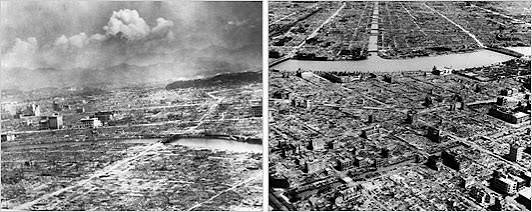
    At 8:15 on the morning of August 6, 1945, the city of Hiroshima disappeared behind a fireball that reached temperatures hotter than the surface of the sun. The bomb, nicknamed ‘Little Boy,’ had fallen from the Enola Gay, a B-29 Superfortress, and exploded 1,900 feet above the city. In the seconds that followed, an estimated 70,000 to 80,000 people were killed outright. By the end of the year, radiation sickness would push that number to roughly 140,000.

    The decision to drop that bomb and the one that followed three days later on Nagasaki has never stopped being argued. Was it a necessary act that saved millions of lives by ending World War II quickly? Or was it an atrocity that killed civilians on a scale that no military necessity could justify? The facts of those August days are not in dispute. The meaning of those facts remains as contentious as the radioactive fallout itself.

    The Weight of the Pacific War

    To understand Hiroshima, you have to understand the war that preceded it. By the summer of 1945, the United States had been fighting Japan for nearly four years. The battles were brutal and the casualty counts staggering. At Iwo Jima, roughly 26,000 Americans were killed or wounded. At Okinawa, the numbers were worse: about 50,000 American casualties and an estimated 150,000 Okinawan civilians died. The Japanese fought with a ferocity that suggested they would never surrender.

    Japan still had about 2 million troops in the home islands. They had organized a civilian militia that was training with bamboo spears. Their military doctrine was to fight to the death. Kamikaze attacks were intensifying, and the U.S. military was planning Operation Downfall, an invasion of the Japanese home islands set for November 1945. The projected American casualties ranged from 250,000 to 1 million. Japanese deaths would have been in the millions.

    President Harry Truman, who had learned about the Manhattan Project only after Franklin Roosevelt’s death in April 1945, saw the atomic bomb as a way to avoid that bloodbath. In his memoirs, he would later write that he authorized the bomb to save half a million American lives. Secretary of War Henry Stimson put the number at 1 million. The estimates were rough, but the fear was real.

    The Bomb’s Genesis

    The Manhattan Project was a $2 billion gamble—roughly $30 billion in today’s dollars—run by physicist J. Robert Oppenheimer and General Leslie Groves. It employed over 100,000 people across secret sites, from Los Alamos, New Mexico, to Oak Ridge, Tennessee. On July 16, 1945, at the Trinity test site in New Mexico, the first atomic bomb was detonated. Oppenheimer later recalled a line from the Bhagavad Gita: “Now I am become Death, the destroyer of worlds.” But at the time, the mood among the scientists and military leaders was more pragmatic than philosophical. The weapon worked. Now they had to decide what to do with it.

    The Debate Among Scientists

    Not everyone inside the project agreed on how the bomb should be used. In July 1945, a group of scientists led by James Franck submitted a petition—known as the Franck Report—urging that the bomb be demonstrated in an uninhabited area rather than used on a city. They warned that using it without warning would trigger a nuclear arms race with the Soviet Union.

    The Scientific Advisory Panel, which included Oppenheimer, Enrico Fermi, Ernest Lawrence, and Arthur Compton, considered the idea. They rejected it. A demonstration, they argued, was too risky. The bomb might be a dud. The Japanese might move Allied prisoners of war to the target area. And even if the demonstration succeeded, the Japanese government might not believe it—or might not be impressed enough to surrender. The panel recommended military use, without warning.

    The Interim Committee, a group established in May 1945 to advise on atomic policy, came to the same conclusion. On June 1, they recommended that the bomb be used against Japan as soon as possible, without prior warning. The target, they said, should be a military installation surrounded by houses—which, in practice, meant a city.

    The Ultimatum and the Silence

    On July 26, 1945, the Allies issued the Potsdam Declaration, an ultimatum demanding Japan’s unconditional surrender. It threatened “prompt and utter destruction” if Japan refused. The Japanese government did not formally respond. Prime Minister Kantaro Suzuki used the word “mokusatsu,” which can be translated as “to ignore” or “to treat with silent contempt.” The Allies took this as a rejection.

    Historians still debate whether Japan was close to surrender before the bombs fell. Japan’s core condition was preservation of the emperor. The U.S. State Department had discussed this, but the decision to allow the emperor to remain was not communicated clearly to Japan before Hiroshima. The Japanese government was also deeply divided. The “peace party” favored a negotiated surrender, but the military hardliners were determined to fight on, hoping to inflict enough casualties to force a more favorable settlement.

    The Soviet Union was scheduled to declare war on Japan in August 1945, as agreed at Yalta. The U.S. was eager to end the war before the Soviets could gain territory in Asia. Some historians argue that the bomb was used at least in part to send a message to Stalin.

    August 6, 1945

    At 8:15 a.m., the Enola Gay dropped Little Boy over Hiroshima. The bomb exploded with the force of about 15,000 tons of TNT. The city was flattened. Of the estimated 350,000 people in the city, 70,000 to 80,000 died immediately. Many were incinerated. Others were trapped under collapsed buildings. In the days and weeks that followed, radiation sickness began to claim more lives. By the end of 1945, the death toll had reached about 140,000.

    Truman received the news aboard the USS Augusta, returning from the Potsdam Conference. He announced, “This is the greatest thing in history.” The president framed the bomb as a military weapon, used to end the war quickly and save American lives. He did not lose sleep, by his own account.

    Three days later, on August 9, the U.S. dropped a second bomb, “Fat Man,” on Nagasaki. The immediate death toll was 40,000 to 75,000. By the end of the year, it was 70,000 to 80,000. On August 15, Emperor Hirohito announced Japan’s surrender. The formal surrender was signed on September 2 aboard the USS Missouri.

    The Justification and Its Critics

    The traditional justification for the bomb rests on three pillars. First, it saved lives—American lives, and potentially Japanese lives too, by ending the war before the invasion. Second, it shortened the war, preventing the continued slaughter of Allied prisoners and civilians in occupied territories. Third, it demonstrated American power, which some argue helped deter Soviet expansion in the postwar era.

    Revisionist historians challenge each of these points. They argue that Japan was already defeated by August 1945. The U.S. Navy had blockaded the home islands, and the strategic bombing campaign had devastated Japanese cities. The Japanese economy was in ruins. The Soviet declaration of war, which came on August 8, was arguably the decisive blow that convinced the Japanese leadership to surrender—not the atomic bombs.

    They also point out that the U.S. had other options. A demonstration over an uninhabited area might have shocked the Japanese into surrender. Or the U.S. could have clarified its position on the emperor, which it eventually did anyway. The atomic bombings, they argue, were not necessary to end the war. They were acts of terror designed to intimidate the Soviet Union.

    The Human Cost

    The numbers are so large that they risk becoming abstract. But the human cost was not abstract. The survivors, known as hibakusha, suffered from radiation sickness, burns, and cancers. They faced discrimination in Japanese society, which feared contamination. Many were left without families, homes, or livelihoods. The psychological trauma persisted for decades.

    The bomb also changed the world forever. It introduced the possibility of nuclear annihilation, and it set the stage for the Cold War arms race that the Franck Report had warned about. Within a few years, the Soviet Union had its own bomb, and the world entered a standoff that lasted for half a century.

    The Question That Won’t Go Away

    Was Hiroshima justified? The answer depends on how you weigh the lives saved against the lives taken. If you believe that the invasion of Japan would have cost millions of lives—American and Japanese—then the bomb can be seen as the lesser evil. If you believe that Japan was on the verge of surrender and that the bomb was dropped for political reasons, then it looks like a war crime.

    The historical record supports neither side completely. The casualty estimates for the invasion were speculative, but they were based on the ferocious fighting of the Pacific War. The Japanese government was divided, but the hardliners were still in control. The Soviet entry helped, but it came after Hiroshima. The truth is that we will never know what would have happened if the bombs had not been dropped.

    What we do know is that the decision was made by men who were exhausted by four years of war and who had a weapon that they believed could end it. They were not monsters, but they made a choice that killed more than 200,000 people in the span of a week. The question of whether that choice was justified is not just a historical debate. It is a moral question that continues to haunt us.

    The atomic bombings of Hiroshima and Nagasaki remain a singular event in human history—the only time nuclear weapons have been used in war. The debate over their justification will never be settled because it is not simply a matter of facts. It is a matter of values. How much weight do we give to the lives of soldiers who might have died in an invasion? How much weight do we give to the lives of civilians who actually died under the bomb? These are not academic questions. They are the questions that define what it means to be human in the nuclear age.

    Summary

    • The atomic bombings of Hiroshima (August 6, 1945) and Nagasaki (August 9, 1945) resulted in an estimated 140,000 and 70,000–80,000 deaths by the end of 1945, respectively.
    • The U.S. decision to use the bomb was based on the belief that it would end the war quickly and save hundreds of thousands of American lives that would be lost in an invasion.
    • The Manhattan Project’s scientists were divided, with the Franck Report urging a non-combat demonstration, but the Scientific Advisory Panel and Interim Committee recommended military use without warning.
    • Revisionist historians argue that Japan was already near surrender and that the bombs were dropped primarily to intimidate the Soviet Union.
    • Japan’s surrender on August 15, 1945, came after the bombings and the Soviet declaration of war, but the relative importance of each factor remains debated.

    FAQ

    Q: How many people died in the Hiroshima bombing?
    A: The immediate death toll was estimated at 70,000–80,000. By the end of 1945, radiation-related illnesses brought the total to approximately 140,000.

    Q: Why did the U.S. choose Hiroshima as a target?
    A: Hiroshima was a military and industrial center with a population of about 350,000. The Interim Committee selected it as a target because it had not been heavily bombed, which would allow for a clear assessment of the bomb’s destructive power.

    Q: What was the Potsdam Declaration?
    A: It was an ultimatum issued on July 26, 1945, demanding Japan’s unconditional surrender and threatening “prompt and utter destruction” if refused. Japan did not formally respond, which the Allies interpreted as rejection.

    Q: Did the bombings lead directly to Japan’s surrender?
    A: The bombings contributed to Japan’s surrender, but the Soviet Union’s declaration of war on August 8, 1945, also played a significant role. The relative importance of each factor is still debated by historians.

    Q: Were there alternatives to dropping the bomb?
    A: Some scientists proposed a demonstration over an uninhabited area. The idea was rejected due to concerns about a dud, potential capture of the weapon, and the possibility that Japan would not be impressed enough to surrender.
  • The Children of WWII: Evacuation, Survival, and the Long Shadow of Loss

    The Children of WWII: Evacuation, Survival, and the Long Shadow of Loss

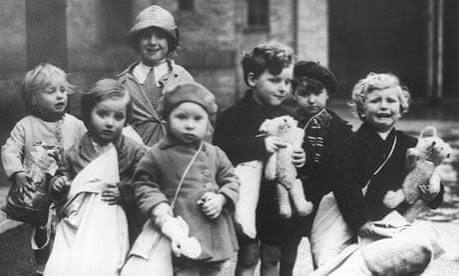
    In the first week of September 1939, as the British government prepared for war, a railway network across the country moved a small army—not of soldiers, but of children. Over three days, 1.5 million young Londoners, Mancunians, and Glaswegians were sent to the countryside, clutching gas masks and name tags. They were part of Operation Pied Piper, the largest planned evacuation of children in history. The trains were packed with school groups, siblings, and bewildered toddlers, many of whom had never left their urban streets before.

    This was not a uniquely British story. From the bombed-out cities of Germany to the freezing steppes of the Soviet Union and the island villages of Japan, the Second World War uprooted tens of millions of children. Governments saw them as the future of the nation—both biologically and ideologically—and moved them in massive state-run operations. But the evacuation was not just a logistical feat; it was a profound rupture in the lives of children, many of whom would never return home, never see their parents again, or would carry the psychological scars for decades.

    These are the untold stories of those children: the trauma of separation, the clash of class and culture, the indoctrination camps, the famine trains, and the silence that followed the war. The scale of the displacement is staggering—over 3.5 million in Britain alone, up to 15 million in the Soviet Union—but the human cost is measured in the small, individual moments of confusion and loss that shaped a generation.

    The Great Uprooting: Why Governments Sent Children Away

    The fear of aerial bombing was the driving force behind the mass evacuations. Politicians and military strategists, remembering the predictions of Stanley Baldwin that “the bomber will always get through,” anticipated that cities would be flattened and civilians would suffer catastrophic casualties. Children, as the most vulnerable and the future of the nation, were the first to be moved.

    In Britain, the evacuation was organized by the government, with school groups billeted in rural homes. The operation was massive: 1.5 million children moved in the first days of September 1939, and by 1945, about 3.5 million had been evacuated at some point, including a second wave during the Blitz. The children were sent to live with host families, a practice that was supposed to be temporary but often lasted for years. The clash of class and culture was immediate: middle-class children found themselves in working-class homes, and vice versa. Some were treated with warmth; others were neglected, exploited, or abused. The government later acknowledged that vetting of host families was inadequate.

    Across the Channel, the German Kinderlandverschickung (KLV) program moved 2.5 to 3 million children from bomb-threatened cities to rural areas. But the KLV was not just about safety—it was an ideological project. Children were sent to camps run by the Hitler Youth, where they wore uniforms, participated in paramilitary training, and were indoctrinated with Nazi ideology. The camps were designed to remove children from the “weak” influence of their urban parents and turn them into loyal soldiers for the Reich. Many children later described the experience as a “second childhood”—both formative and deeply traumatic.

    The Soviet Union evacuated children on an even grander scale, though the records are incomplete. Estimates suggest 12 to 15 million children were displaced eastward, often traveling for weeks in cattle cars to Central Asia, Siberia, or the Urals. Many children were evacuated with their schools or orphanages, not with their families. The journey was brutal: starvation, disease, and cold killed many before they reached safety. During the siege of Leningrad, ~400,000 children were evacuated, but many perished on the way or in the evacuation zones due to famine.

    Japan, facing the threat of American bombing in 1944-45, evacuated over 400,000 children from major cities to rural temples and villages. The Sokai (group evacuation) program sent elementary school children in school cohorts, with teachers acting as surrogate parents. The children often faced malnutrition, disease, and harsh labor in the rural areas, where food was also scarce.

    The Trauma of Separation

    For many children, the departure was a moment of inexplicable loss. They were too young to understand why they were being sent away, and some never saw their parents again. The separation disrupted the primary attachment bonds that are crucial for healthy development. Psychologists later used these experiences to develop attachment theory, but at the time, the emotional toll was largely ignored.

    Letters were the only link, but postal systems were slow and unreliable. Some children did not hear from their parents for months, and the uncertainty compounded the anxiety. In Britain, the government tried to keep families informed, but the system was often overwhelmed. In the Soviet Union, the state’s control over communication meant that many children were simply lost in the system, with no way to trace their families.

    The class and culture clash in Britain was particularly jarring. Children who had never seen a cow were suddenly expected to help on farms; those from affluent homes were billeted with families who had no indoor plumbing. The experience could be enlightening or degrading, depending on the host family. Some children were treated as beloved guests; others were used as unpaid labor or subjected to neglect. The long-term psychological effects were profound: a generation of children grew up feeling abandoned, even if their parents had acted out of love.

    The Nazi KLV: Indoctrination and a “Second Childhood”

    The Kinderlandverschickung was the most ideologically driven evacuation program. The camps were run by the Hitler Youth and Nazi welfare organizations, and the children were subjected to constant propaganda. They learned Nazi racial theory, practiced military drills, and were taught to idolize Hitler. The goal was to create a generation of loyal Nazis, independent of family influence.

    Life in the camps was regimented but also offered a sense of community and adventure. Some children later recalled that the camps provided a rare escape from the bombing and the fear, a “second childhood” of sorts. However, the indoctrination left deep scars. After the war, many German evacuees did not speak about their experiences until the 1990s, partly out of shame for the Nazi ideology they had been taught and partly because the cultural focus was on adult suffering.

    The Soviet Orphan Trains: Starvation and State Control

    In the Soviet Union, evacuation was often a matter of survival, but it came at a terrible cost. Children were sent eastward in cattle cars, packed in with little food or water. Many died en route from disease or starvation. The state placed children in state-run institutions, where they were trained for labor and subjected to strict discipline. Family reunification was slow and often impossible; the state’s records were incomplete, and many children simply fell through the cracks.

    The siege of Leningrad was a particular tragedy. Around 400,000 children were evacuated from the city, but many perished in the evacuation zones due to famine. The survivors were often orphaned, as their parents had died in the siege or were never traced. The Soviet government did not prioritize family reunification; the state was the parent, and children were expected to contribute to the war effort.

    The Japanese Sokai: Group Survival and Post-War Silence

    In Japan, the evacuation was a group effort. Schools were moved wholesale to rural areas, with teachers acting as surrogate parents. The children lived in temple compounds or village homes, often in cramped and unsanitary conditions. Food was scarce, and many suffered from malnutrition and disease. They were also expected to work, helping with farm labor or other tasks.

    The Japanese evacuees rarely spoke about their experiences after the war. The narrative of victimhood was complicated by Japan’s role as an aggressor, and many felt ashamed or were told to forget. It was not until the 1980s and 1990s that some began to share their stories, revealing a similar pattern of trauma and loss as seen in Britain and Germany.

    The Invisible Casualties: Children Killed and Orphaned

    The evacuation was meant to protect children, but it could not shield them from the war’s violence. In Britain, ~7,700 children were killed in bombing raids, including the Blitz. In Germany, ~20,000–25,000 children died in bombing raids, including the firebombing of Hamburg and Dresden. The Holocaust claimed ~1.5 million Jewish children, most of whom were not evacuated but killed in ghettos and camps. In the Soviet Union, historians estimate that 1–2 million children died from war-related causes—starvation, bombing, disease, and violence.

    The evacuation itself could be deadly. In the Soviet Union, children died on the trains; in Japan, they died in the rural areas from malnutrition; in Britain, some were killed in bombing raids on the very areas they had been sent to for safety, as the Germans also targeted rural industrial sites. The loss was not just physical but psychological: many children who survived were orphaned, either by the bombing or by the chaos of displacement.

    The Long Shadow: Post-War Silence and Memory

    For decades after the war, the experiences of the evacuated children were largely ignored. In Britain, there was a cultural focus on the “Blitz spirit” and the heroism of adults; children’s stories were seen as secondary. In Germany, the focus was on the guilt of the Nazi era, and the children who had been indoctrinated were often silenced by shame. In the Soviet Union, the state controlled the narrative, and the suffering of children was subsumed into the broader story of Soviet victory. In Japan, the victimhood of children was complicated by the nation’s aggression.

    It was not until the 1990s that these stories began to be told. Oral history projects, memoirs, and academic studies have since revealed the long-term psychological impact: anxiety, depression, attachment disorders, and a persistent sense of loss. The children of WWII are now elderly, but their stories are a vital part of understanding the war’s full cost. They remind us that the most vulnerable are often the first to be uprooted and the last to be heard.

    The evacuation of children during World War II was a massive experiment in social engineering, driven by fear and ideology, but it was carried out on the backs of children who had no say in the matter. The stories of these children—of separation, survival, and loss—are not just historical footnotes; they are a testament to the resilience of the human spirit and a warning about the costs of war. As the generation of evacuees passes, their memories become even more precious, urging us to remember that the true price of conflict is written not in numbers, but in the quiet, enduring pain of children who were sent away and never fully returned.

    Summary

    • The scale was massive: Over 3.5 million children were evacuated in Britain, 2.5–3 million in Germany, 12–15 million in the Soviet Union, and 400,000+ in Japan.
    • The reasons were complex: Governments moved children to protect them from bombing, but also for ideological purposes (Nazi KLV) and due to state control (Soviet Union).
    • The experience was traumatic: Separation from parents, culture clash, abuse, starvation, and death were common.
    • Many children never recovered: The psychological scars lasted a lifetime, but were often silenced by shame or cultural focus on adult suffering.
    • The stories were hidden for decades: It was not until the 1990s that many evacuees began to speak about their experiences, revealing the long-term cost of the war’s disruption.

    FAQ

    Q: How many children were evacuated during WWII?
    A: In Britain, around 3.5 million children were evacuated; in Germany, 2.5–3 million via the KLV; in the Soviet Union, estimates range from 12–15 million displaced; and in Japan, over 400,000 children were sent to rural areas.

    Q: What was the Kinderlandverschickung (KLV)?
    A: The KLV was a German program that evacuated children from bomb-threatened cities to rural camps run by the Hitler Youth. It aimed not only to protect children but also to indoctrinate them in Nazi ideology, removing them from the influence of their parents.

    Q: Why did it take so long for these stories to be told?
    A: Many evacuees stayed silent due to shame (in Germany about Nazi ideology), cultural focus on adult suffering (in Britain), state control of memory (in the Soviet Union), and complicated narratives of victimhood (in Japan). It was only in the 1990s that oral histories began to emerge.

    Q: What were the long-term psychological effects on evacuated children?
    A: Many children experienced separation trauma, which disrupted attachment bonds. This led to anxiety, depression, and attachment disorders that persisted into adulthood. The effects were often unrecognized for decades.

    Q: Did any children die during the evacuation?
    A: Yes, many children died during evacuation, especially in the Soviet Union, where they traveled in cattle cars and faced starvation and disease. In Germany, children also died in bombing raids despite being evacuated; the firebombing of Hamburg and Dresden killed thousands of evacuees.

  • How World War II Still Shapes the 21st Century: Politics, Memory, and Culture

    How World War II Still Shapes the 21st Century: Politics, Memory, and Culture

    On a quiet morning in 1945, the world emerged from six years of war with 70 to 85 million dead—roughly 3% of the global population at the time. The conflict had consumed continents, toppled empires, and introduced weapons that could end civilization. But the war did not end in 1945. Its institutions, its memories, and its unresolved tensions continue to shape the politics and culture of this century.

    Today, when a Russian official invokes the ‘Great Patriotic War’ to justify action in Ukraine, or when a German chancellor bows before the Holocaust memorial in Berlin, they are reaching for the same historical anchor. The post-war order—the United Nations, the European Union, the nuclear non-proliferation regime—was built as a direct response to the war’s horrors. Understanding the 21st century means tracing these lineages back to the conflict that defined the modern era.

    The Architecture of the Post-War World

    The war’s most enduring legacy is the institutional framework that governs international relations. In 1945, the United Nations was founded with a Security Council whose five permanent members—the United States, the United Kingdom, France, Russia, and China—are the war’s principal victors. That structure remains unchanged, giving the winners of 1945 a permanent veto over global security decisions. The Bretton Woods institutions (the IMF and World Bank) created in 1944 still anchor the global financial system, and the Universal Declaration of Human Rights (1948) set the standard for international law.

    Europe’s integration, too, is a war project. The 1951 European Coal and Steel Community was designed explicitly to bind France and Germany’s heavy industries so tightly that another war would be impossible. That coal-and-steel pact evolved into the European Union, a political and economic bloc of 27 nations. When the EU faces a crisis—whether the eurozone debt or Brexit—it is grappling with the legacy of a peace project born from the ashes of war.

    Nuclear Deterrence: A Fragile Peace

    The war’s final act, the atomic bombings of Hiroshima and Nagasaki, created a doctrine that has—so far—prevented direct great-power conflict. Nuclear deterrence theory holds that the fear of mutual assured destruction keeps rival states from open war. The Cold War’s proxy conflicts in Korea, Vietnam, and Afghanistan were bloody, but the US and Soviet Union never fought each other directly. That logic persists: the Treaty on the Non-Proliferation of Nuclear Weapons (1968) remains the cornerstone of arms control, even as states like North Korea and Iran challenge its limits.

    Yet the system is fragile. The war’s nuclear legacy has spread to nine countries, and the risk of use—through accident, miscalculation, or terrorism—remains a defining threat of this century. As the Bulletin of the Atomic Scientists’ Doomsday Clock has repeatedly warned, the world is closer to nuclear catastrophe than at any point since the Cold War’s darkest days.

    The Geopolitical Chessboard: From Colonies to Superpowers

    The war accelerated the collapse of European colonial empires. Britain, France, and the Netherlands emerged from the conflict financially exhausted and unable to maintain control over their colonies. India gained independence in 1947, followed by dozens of African and Asian nations in the following decades. But the war’s promise of self-determination clashed with colonial powers’ reluctance—a tension that still resonates in postcolonial states grappling with borders drawn during the war era.

    The war also created the bipolar superpower rivalry that defined the Cold War. The US and the Soviet Union emerged as the two dominant powers, each with a global sphere of influence. That rivalry shaped the post-war map: NATO expanded eastward after the Cold War’s end, and the US maintains approximately 750 military bases in over 80 countries—a posture that originated in WWII and Cold War strategy. When Russia invaded Ukraine in 2022, it explicitly invoked WWII memory, casting the conflict as a continuation of the ‘Great Patriotic War’ against Western encroachment. Ukraine’s president, Volodymyr Zelenskyy, in turn, has drawn parallels to the Nazi invasion.

    Memory as a Political Weapon

    The war’s memory is not a static relic; it is a living political tool. In Russia, 80% of the population views the war as the most important event of the 20th century. The ‘Great Patriotic War’ narrative is central to President Vladimir Putin’s legitimacy, framing Russia as the liberator of Europe and a bulwark against fascism. This memory justifies military actions and suppresses dissent by equating criticism with betrayal.

    In Germany, by contrast, the war has produced Vergangenheitsbewältigung—a term for ‘coming to terms with the past.’ Holocaust memory is a cornerstone of German and European identity. Germany has mandatory Holocaust education, and its leaders routinely visit memorials. But this reckoning is not universal. Japan’s handling of its wartime atrocities, particularly the ‘comfort women’ issue, remains a source of conflict with South Korea. Poland’s 2018 Holocaust law, which criminalized blaming the Polish nation for Nazi crimes, sparked international outrage.

    These divergent memories create real-world disputes. In 2023, the Polish government demanded reparations from Germany for WWII damages, while Germany insists the matter is closed. In the US, the ‘Greatest Generation’ myth of heroic unity contrasts with more critical European cinema, which explores collaboration and guilt.

    Culture: How We Remember and Represent

    Cultural production continually reinterprets the war, reflecting each generation’s concerns. Steven Spielberg’s Schindler’s List (1993) shaped American perceptions of the Holocaust, while Jonathan Glazer’s The Zone of Interest (2023) offers a more challenging view, focusing on the banality of evil. Novels, films, and video games—from The Book Thief to Call of Duty—keep the war in public consciousness, but each medium selects its own truths.

    The war also transformed gender roles. With millions of men mobilized, women entered the workforce in unprecedented numbers, symbolized by ‘Rosie the Riveter’ in the US. This shift laid groundwork for post-war feminist movements. The war’s racial dimensions—from Japanese American internment to the Holocaust’s racial ideology—sparked civil rights struggles that continue to this day.

    The Unfinished Business of Decolonization

    The war’s promise of self-determination, enshrined in the Atlantic Charter (1941), clashed with colonial realities. The post-war period saw a wave of decolonization, but it was neither smooth nor complete. The partition of India, the Algerian War, and the Vietnam War all traced their roots to the war’s aftermath. Today, postcolonial states still struggle with the arbitrary borders drawn by European powers during the war era, fueling conflicts from the Middle East to Africa.

    The Strained Liberal Order

    The post-war order—liberal internationalism, free trade, human rights—is now under strain. Revisionist powers like Russia and China view it as a Western-imposed hierarchy, while Western leaders defend it as the guarantor of peace. The war’s legacy is thus a contested one: is the ‘rules-based order’ a shield against tyranny, or a weapon of the powerful? The answer depends on where you stand.

    The Demographic Legacy: Migration and the Baby Boom

    The war triggered massive demographic upheaval. Millions of refugees, displaced persons, and soldiers crossed borders, reshaping nations. The ‘baby boom’ (1946–1964) created a generation whose size drove economic growth and cultural change in the US and Europe. The war also led to the entry of women into the workforce at scale, a shift that had lasting implications for family structures and gender equality.

    The War in the 21st Century: A Living Legacy

    Seventy-eight years after the war’s end, its influence is everywhere: in the UN Security Council’s vetoes, in Europe’s shared currency, in the nuclear warheads that guard against another great-power war, in the memory politics that inflame national pride. The war’s trauma and triumph are woven into the fabric of our political and cultural institutions. To understand the 21st century—from the rise of China to the war in Ukraine—one must trace the lines back to 1945.

    World War II was not a distant event but the foundation upon which the modern world was built. Its institutions, its memories, and its unresolved tensions continue to shape our politics and culture. As new powers rise and old alliances fray, the war’s legacy remains a touchstone—a reminder of both the worst of humanity and the fragile systems we have built to prevent it from repeating.

    Summary

    • The UN Security Council’s permanent members are WWII’s victors, a structure that still governs global security.
    • The EU’s origins lie in the 1951 European Coal and Steel Community, designed to prevent Franco-German conflict.
    • Nuclear deterrence, born from the war’s atomic conclusion, has prevented direct great-power conflict but remains fragile.
    • The war accelerated decolonization and created the bipolar superpower rivalry that defined the Cold War.
    • National memories of the war differ sharply and are used as political tools, from Russia’s ‘Great Patriotic War’ to Germany’s Holocaust reckoning.

    FAQ

    Q: How does World War II still influence international politics today?
    A: The war created the UN Security Council, the IMF, and the World Bank, which still govern global governance and finance. The US maintains ~750 military bases from that era, and the nuclear non-proliferation regime is a direct response to the war’s atomic bombings.

    Q: Why is WWII memory so contested in different countries?
    A: Nations remember the war through different lenses: victimhood (Russia, Poland), perpetrator reckoning (Germany, Japan), and triumph (US, UK). These narratives are used to justify contemporary policies and shape national identity.

    Q: What is the ‘rules-based order’ and why is it debated?
    A: The ‘rules-based order’ refers to the post-WWII framework of international law and institutions. Western powers see it as preventing great-power war, while revisionist states like Russia and China view it as a Western-imposed hierarchy.

    Q: How did WWII reshape gender roles?
    A: With men mobilized, women entered the workforce in unprecedented numbers (e.g., ‘Rosie the Riveter’), laying the groundwork for post-war feminist movements and lasting changes in family structures.

    Q: What is Germany’s ‘Vergangenheitsbewältigung’?
    A: It is the process of ‘coming to terms with the past,’ involving Holocaust education, memorials, and public reckoning. It has made Holocaust memory a central part of German and European identity.

  • Who Owns the Past? The Battle Over Memory in the 21st Century

    Who Owns the Past? The Battle Over Memory in the 21st Century

    In 2018, a new memorial opened in Montgomery, Alabama. It was not a statue of a general or a president, but a field of 800 rusted steel columns, each one representing a county where a lynching occurred. The National Memorial for Peace and Justice, as it is called, forces visitors to confront a history many Americans had long preferred to ignore. It is part of a global wave of memory-making that has transformed how nations reckon with their pasts.

    This is the age of the ‘memory boom.’ Since the 1990s, memorials, museums, truth commissions, and digital archives have proliferated at an unprecedented rate. But as the past becomes a battleground, a fundamental question emerges: who gets to decide what is remembered, and what is forgotten?

    The Rise of the Memory Boom

    Commemoration is not new. Ancient tombs and royal monuments served to legitimize power and ensure spiritual remembrance. In the 19th century, the nation-state turned memory into a civic tool: the Arc de Triomphe, the Lincoln Memorial, and countless war memorials forged national identity out of shared sacrifice. But the Holocaust changed everything. The Nuremberg Trials and the Universal Declaration of Human Rights established ‘never again’ as a moral imperative, yet it took decades for that imperative to reshape public memory.

    By the 1980s and 1990s, a new interdisciplinary field emerged—memory studies—drawing on the work of French historian Pierre Nora and German scholars Jan and Aleida Assmann. Nora introduced the concept of lieux de mémoire, or ‘sites of memory,’ arguing that modern societies, having lost the organic connection to the past, need artificial places to anchor their identities. These sites are not just physical; they include rituals, documents, and even digital archives.

    The result has been a global proliferation of memorials. Since 2000, over 100 new memorials and museums dedicated to the Holocaust, slavery, genocide, and colonial violence have been built worldwide. The Memorial to the Murdered Jews of Europe in Berlin, completed in 2005, is a stark field of 2,711 concrete slabs. The National Memorial for Peace and Justice in Montgomery, which opened in 2018, uses the power of place to confront racial terror. These are not neutral monuments; they are deliberate interventions in public consciousness.

    The Politics of Memory: Truth Commissions and Contested Monuments

    Commemoration is not just about building statues. It is also about truth-telling. Since the 1970s, more than 40 truth commissions have operated globally, from South Africa to Peru, Canada to Colombia. These bodies investigate past abuses, often with the goal of reconciliation. They are a form of institutionalized memory, and they have had mixed results. But they have shifted the conversation: memory is no longer just about honoring the dead; it is about accountability for the living.

    In the United States, the debate over Confederate monuments has become a flashpoint. Since 2015, over 200 such monuments have been removed or renamed, following grassroots movements like Black Lives Matter. To some, this is a long-overdue correction; to others, it is an erasure of heritage. The conflict is not just about the past—it is about the present. As the historian Michael Rothberg argues in his concept of ‘multidirectional memory,’ memories of different atrocities do not compete in a zero-sum game; they interact and shape each other. The struggle over one monument can open the door to other struggles.

    Digital Memory: The Revolution and Its Discontents

    The digital age has democratized memory production. Anyone can create an online memorial, share a story, or preserve a document. The September 11 Digital Archive, launched in 2002, now holds over 150,000 items—emails, photos, videos, and oral histories. Social media platforms have become sites of collective mourning and remembrance, as seen in the outpouring after the death of George Floyd or the attacks in Paris.

    But this democratization has a dark side. Misinformation can spread as easily as truth. Algorithms curate what we see, shaping our memories in ways we may not realize. Digital archives are ephemeral; a website can disappear overnight, taking with it a piece of collective memory. The very abundance of digital data raises new questions: What should be preserved? Who decides? And how do we ensure that the digital memory of the 21st century is not more fragile than the stone monuments of the past?

    Authoritarian Memory: Weaponizing the Past

    While some societies are grappling with how to remember atrocity, others are actively weaponizing memory to consolidate power. In Russia, Hungary, and Poland, governments have rewritten history to suit their narratives. In Russia, the memory of World War II has been turned into a state-sponsored cult, with the ‘Immortal Regiment’ marches that mix genuine grief with official propaganda. In Hungary, the government has constructed a memorial to the German occupation that downplays Hungary’s own role in the Holocaust. These are not neutral acts of commemoration; they are acts of power.

    The 21st century has seen a global ‘memory boom,’ but it has also seen a battle over who controls the past. The International Coalition of Sites of Conscience, founded in 1999, connects over 350 memorial sites worldwide that link past struggles to present human rights issues. These sites—from the District Six Museum in Cape Town to the Tuol Sleng Genocide Museum in Phnom Penh—challenge visitors to see the relevance of the past to the present. They are not just museums; they are calls to action.

    Conclusion

    The battle over memory is not going away. As globalization and migration pluralize our publics, as identity movements demand that marginalized voices be heard, and as authoritarian regimes seek to control the narrative, the question of who owns the past becomes ever more urgent. But memory is not a zero-sum game. As Rothberg suggests, our memories are intertwined; the struggle for one group’s recognition can open space for others. The monuments we build, the archives we preserve, and the stories we tell are not just about the past—they are about the kind of society we want to become.

    The past is never dead; it is not even past. In the 21st century, memory has become a field of struggle, a site of both healing and conflict. The choices we make about what to remember and what to forget will shape the future. The question is not whether we will commemorate, but how—and whose stories we will tell.

    Summary

    • The 21st century has seen a global ‘memory boom,’ with over 100 new memorials and museums built since 2000.
    • More than 40 truth commissions have operated worldwide since the 1970s, linking memory to accountability.
    • Digital archives like the September 11 Digital Archive (over 150,000 items) have democratized memory production but also created new challenges.
    • Since 2015, over 200 Confederate monuments in the U.S. have been removed or renamed, sparking intense debate.
    • Authoritarian regimes in Russia, Hungary, and Poland have weaponized memory to consolidate power.

    FAQ

    Q: What is the ‘memory boom’?
    A: It refers to the unprecedented proliferation of memorials, museums, truth commissions, and digital archives since the 1990s, reflecting a global trend toward reckoning with historical injustice.

    Q: Why are Confederate monuments being removed?
    A: Activists and many local governments argue that these monuments glorify a history of slavery and racial terror. Since 2015, over 200 have been removed or renamed, following movements like Black Lives Matter.

    Q: How has digital technology changed commemoration?
    A: It has democratized memory production, allowing anyone to create and share memorials. The September 11 Digital Archive, for example, preserves over 150,000 personal items. However, it also raises issues of misinformation and ephemerality.

    Q: What is ‘multidirectional memory’?
    A: Coined by Michael Rothberg, it is the idea that memories of different atrocities interact and shape each other, rather than competing in a zero-sum game. This allows for solidarity between groups.

    Q: How do authoritarian regimes use memory?
    A: They often rewrite history to consolidate power, constructing memorials that downplay their own crimes and promote a nationalist narrative—as seen in Russia, Hungary, and Poland.

  • The Great War’s Long Shadow: How WWI Still Shapes Our World

    The Great War’s Long Shadow: How WWI Still Shapes Our World

    At 11 a.m. on November 11, 1918, the guns fell silent along the Western Front. In the preceding four years, over 30 nations had mobilized some 70 million troops. By the time the Armistice was signed, an estimated 9 to 11 million soldiers and 7 to 8 million civilians were dead. The scale of slaughter was unprecedented, and its effects did not end with the ceasefire.

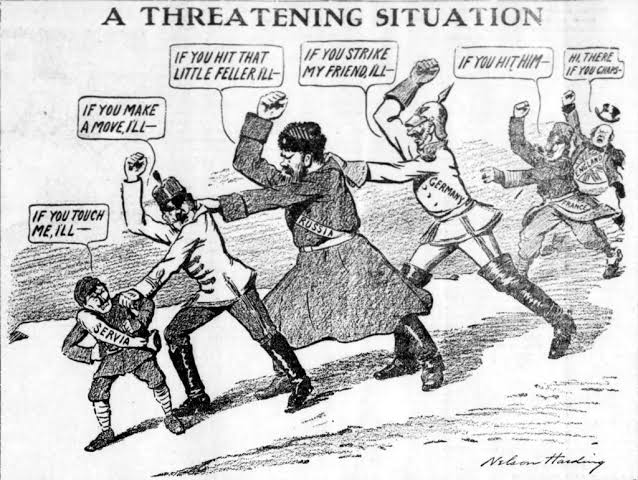
    Today, the legacy of World War I is not merely a matter of history. The borders of the Middle East, the structure of international diplomacy, the very language we use to describe trauma—all trace directly to the decisions made between 1914 and 1918. To understand the present, we must first reckon with the war that reshaped the world.

    The Treaty That Built the Bomb

    When the Allies gathered at Versailles in 1919, they were determined to punish Germany. The resulting treaty assigned sole war guilt to Germany (Article 231), imposed heavy reparations, stripped territory, and limited the German army to 100,000 troops. The treaty’s architects hoped to ensure lasting peace; instead, they created the conditions for resentment that would explode again in 1939.

    Historians debate the precise degree of causation, but the connection is clear: the treaty’s harsh terms fueled German grievance. Adolf Hitler and the Nazi Party weaponized the “stab-in-the-back” myth—the false claim that civilians and socialists had betrayed the army—to undermine the Weimar Republic. The reparations wrecked the German economy, contributing to hyperinflation in 1923 and deepening the misery of the Great Depression. When Hitler rose to power in 1933, he promised to overturn Versailles. The world would pay the price.

    Carving Up the Middle East

    While the Treaty of Versailles mapped Europe, a separate set of agreements redrew the Middle East. In 1916, British and French diplomats signed the Sykes-Picot Agreement, planning to divide the Ottoman Empire’s territories after the war. The subsequent Mandate system created the modern states of Iraq, Syria, Lebanon, Jordan, and Palestine. These borders, drawn with little regard for local ethnic and religious divisions, have proved remarkably durable—and remarkably volatile.

    The sectarian tensions that simmer in Syria and Iraq today, the Israeli-Palestinian conflict, and the persistent instability of the region all have roots in the post-war settlements. The people of the region were promised self-determination but instead were placed under European rule. Resentment simmered, fueling anti-colonial movements. Egypt’s 1919 revolution and Gandhi’s post-war activism in India were direct consequences of the war’s broken promises.

    The New Face of War

    World War I was the first large-scale conflict to feature tanks, aircraft, submarines, and chemical weapons. Chlorine, phosgene, and mustard gas turned the trenches into a nightmare of poison and burning lungs. The machine gun, perfected in colonial wars, now mowed down entire generations. At Verdun and the Somme, millions of shells churned the earth into a lunar landscape. The casualty figures are almost incomprehensible: France alone counted over 2 million wounded.

    The war also changed how we think about the human cost of combat. The term “shell shock” entered the medical lexicon as soldiers returned with what we now call PTSD. The “Lost Generation”—a phrase popularized by Gertrude Stein and Ernest Hemingway—described the psychological and cultural devastation of the survivors. The war poets, Wilfred Owen and Siegfried Sassoon, captured the horror in verse, stripping away any romantic illusion about glory. Their anti-heroic tone has shaped how we perceive war ever since.

    The Fall of Empires

    By 1918, the war had toppled four empires: the German, Austro-Hungarian, Ottoman, and Russian. The Russian Revolution of 1917, born from war-related strain, created the Soviet Union—a state that would define global politics for the next seven decades. The collapse of the Habsburg and Ottoman empires redrew the map of Eastern Europe and the Middle East, creating new nations from the wreckage.

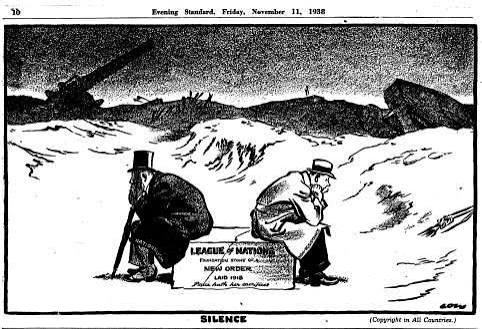
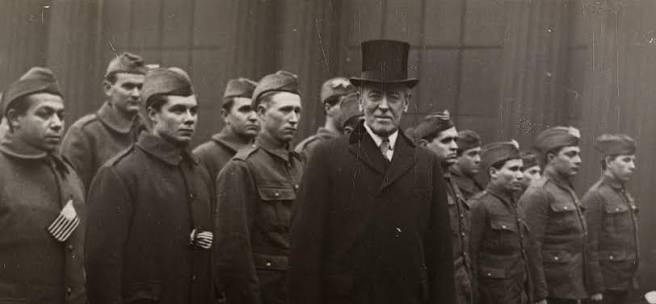
    The war also reshaped the balance of global power. European economies were devastated, while the United States emerged as a creditor nation and a rising military force. The US entry into the war in 1917 was framed as a crusade for democracy, and it marked the beginning of America’s ascent to global dominance. Yet, after the war, the US retreated into isolation, refusing to join the League of Nations—a decision that undermined the new world body from the start.

    The Unfinished Peace

    The League of Nations, conceived as the first global intergovernmental organization for peace, was a direct product of the war. It failed to prevent World War II, but it laid the groundwork for the United Nations. Its creation was a revolutionary idea: that nations could collectively manage conflict. Its failure was a lesson in the limits of idealism.

    On the home front, the war had unleashed social change. Women entered factories and munitions plants in unprecedented numbers, accelerating the push for suffrage. Britain granted partial suffrage in 1918, the US in 1920. But the gains were uneven; after the war, many women were pushed back into domesticity, and the true revolution in gender roles would come later.

    The Long Shadow

    Today, the war’s legacy is invoked in debates about nationalism, border conflicts, and the ethics of military intervention. The chemical weapons ban, enshrined in international law, owes its existence to the horrors of gas warfare. The Middle East’s ongoing instability, the rise of populist nationalism in Europe, and the very structure of the United Nations all bear the imprint of 1914–1918.

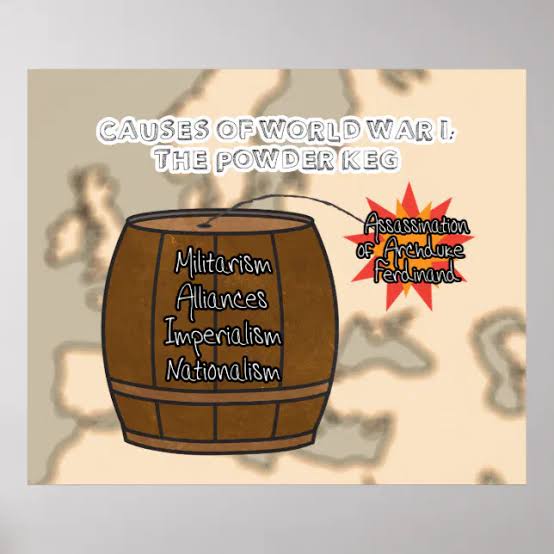
    The war was not “pointless” nor was it wholly “just.” It was a catastrophe caused by a complex web of alliances, militarism, nationalism, and miscalculation—a failure of leadership that cost millions of lives. The lessons of that failure remain urgent. As the last veterans have died, we are left with the monuments and the memory. The task is to remember not just the sacrifice, but the decisions that made it necessary.

    The guns of 1918 have long been silent, but their echo persists. The borders drawn in the sand, the institutions built to prevent another war, and the psychological scars of a generation all continue to shape our world. Understanding the legacy of WWI is not merely an exercise in nostalgia; it is a way of recognizing the fragility of peace and the cost of complacency. The past is never fully past—it lives on in the present, demanding we learn its lessons.

    Summary

    • World War I involved 30+ nations, mobilized ~70 million troops, and caused 9–11 million military deaths.
    • The Treaty of Versailles assigned sole war guilt to Germany, contributing to WWII.
    • Sykes-Picot and the Mandate system created modern Middle Eastern states with enduring conflicts.
    • The war introduced new technologies (tanks, chemical weapons, aircraft) and psychological trauma (PTSD).
    • It led to the collapse of four empires and the rise of the US as a global power.

    FAQ

    Q: How did WWI contribute to WWII?
    A: The Treaty of Versailles imposed harsh reparations and guilt on Germany, fueling resentment that Nazi propaganda exploited. The economic devastation and political instability created conditions for Hitler’s rise.

    Q: What was the Sykes-Picot Agreement?
    A: A 1916 secret agreement between Britain and France to divide Ottoman territories, which laid the foundation for modern Middle Eastern states and their ongoing conflicts.

    Q: How did WWI affect women’s rights?
    A: Women entered the workforce in large numbers during the war, which accelerated suffrage movements. Britain granted partial suffrage in 1918 and the US in 1920, though gains were uneven and contested.

    Q: What is the ‘stab-in-the-back’ myth?
    A: The false German belief that civilians and socialists betrayed the army, leading to defeat. It undermined the Weimar Republic and fueled far-right nationalism.

    Q: Why is the League of Nations important?
    A: It was the first global intergovernmental organization for peace, created after WWI. Though it failed to prevent WWII, it served as a blueprint for the United Nations.

  • The Silence After the Guns: How November 11th Became a Day of Remembrance

    The Silence After the Guns: How November 11th Became a Day of Remembrance

    At 10:59 AM on November 11, 1918, the guns along the Western Front were still firing. Soldiers who knew the Armistice had been signed hours earlier crouched in muddy trenches, waiting. At 11:00, the shelling stopped. In the sudden quiet, men who had spent four years under constant bombardment heard birdsong for the first time in years. Some wept. Others simply stood, stunned by the silence.

    That silence has echoed through the past century. Every November 11th, millions of people pause for two minutes to recreate it. But the day we now call Remembrance Day, Veterans Day, or Armistice Day is more than a historical anniversary. It marks a moment that ended 20 million deaths and began a century of uneasy peace. Understanding why that specific hour—the eleventh hour of the eleventh day of the eleventh month—still matters requires looking at both what happened in 1918 and what we’ve chosen to remember since.

    The Long Road to Compiègne

    The Armistice didn’t happen because the war simply ran out of steam. It happened because Germany’s military position collapsed with stunning speed in the autumn of 1918. After the failed Spring Offensive (March–July 1918), the Allies launched the Hundred Days Offensive in August, pushing German forces back relentlessly. By October, Germany’s allies were falling away one by one: Bulgaria signed an armistice on September 29, the Ottoman Empire on October 30, Austria-Hungary on November 3. Germany stood alone.

    On the home front, the British naval blockade was strangling the country. Food shortages caused widespread suffering, and when the German naval command ordered a final suicide mission against the British fleet in late October, sailors at Kiel mutinied. The revolt spread, forcing Kaiser Wilhelm II to abdicate on November 9. A new civilian government, led by moderate Social Democrats, immediately sought an armistice.

    The German delegation, headed by Matthias Erzberger, arrived at a railway siding in the Forest of Compiègne, France, on November 8. They were brought to a private dining car that belonged to Marshal Ferdinand Foch, the Supreme Allied Commander. Foch’s terms were harsh: Germany must withdraw from all occupied territories, including Alsace-Lorraine, within 14 days. It must surrender 5,000 artillery pieces, 25,000 machine guns, 1,700 aircraft, and 5,000 locomotives. All Allied prisoners of war were to be released immediately. The naval blockade would remain in place until a formal peace treaty was signed.

    The Germans were given 72 hours to accept. They protested that the terms were impossible to fulfill, but Foch was unmoved. At 5:00 AM on November 11, the Armistice was signed. It would take effect at 11:00 AM—six hours later.

    The Deadliest Morning

    Those six hours became one of the war’s most tragic footnotes. Word of the signing spread quickly among Allied commanders, but many units continued fighting until the exact minute of the ceasefire. Some officers, eager to secure strategic positions before the peace took hold, ordered attacks on the final morning. Others, unaware of the news, simply kept fighting.

    The result was an estimated 2,700 to 3,000 casualties on November 11 itself, including 863 British and Commonwealth troops. The last British soldier killed was Private George Edwin Ellison, shot at 9:30 AM near Mons, Belgium. The last Canadian casualty was Private George Lawrence Price, killed at 10:58 AM, just two minutes before the ceasefire. The last French soldier, Augustin Trébuchon, was killed at 10:45 AM, carrying a message to his comrades that soup would be served after the ceasefire.

    In the decades since, the deaths of that final morning have become a powerful symbol of war’s absurdity. They underscore that the Armistice was not a clean, neat ending but a messy, human one—a reminder that even the most decisive historical moments are experienced as chaos by those living through them.

    Not a Surrender

    The Armistice was a ceasefire, not a surrender. The German army was not formally defeated on the battlefield; it was exhausted and withdrawing, but still intact. The terms were deliberately designed to be reversible—the ceasefire was initially signed for 36 days and had to be renewed several times before the Treaty of Versailles was signed on June 28, 1919.

    This distinction would have enormous consequences. In Germany, the belief that the army had been “stabbed in the back” by civilian politicians—the so-called “November Criminals”—took root. The new democratic government, not the military, signed the Armistice, and many Germans refused to accept that their country had lost. This myth would be exploited by Adolf Hitler and the Nazis, contributing directly to the rise of World War II.

    The Armistice’s terms also sowed seeds of resentment. Germany was required to accept full responsibility for the war under Article 231 of the Versailles Treaty, and to pay massive reparations. The economic hardship that followed fueled political extremism. The “war to end all wars” had ended, but its aftermath created the conditions for an even deadlier conflict just 21 years later.

    The Birth of a Tradition

    In the immediate aftermath, November 11 was celebrated with joy and relief. In London, Paris, and New York, crowds poured into the streets. But as the scale of the loss became clear—an estimated 9 to 10 million military deaths and 8 to 10 million civilian deaths—the mood shifted from celebration to mourning.

    The first two-minute silence was held in Cape Town, South Africa, on November 11, 1918, at noon local time. The idea spread, and in 1919, King George V issued a proclamation formalizing the tradition in Britain. At 11:00 AM on November 11, 1919, the entire British Empire paused for two minutes—one minute for the dead, one for the living.

    That same year, the British government conceived the idea of burying an unknown soldier in Westminster Abbey. The Unknown Warrior was buried on November 11, 1920, in soil brought from the battlefields of France. The United States followed with the Tomb of the Unknown Soldier at Arlington National Cemetery, dedicated on November 11, 1921. These burials gave the abstract concept of “the fallen” a physical, sacred focus—a single grave representing millions of individual sacrifices.

    In the United States, November 11 was originally called Armistice Day, declared a federal holiday in 1938. After World War II and the Korean War, veterans’ organizations lobbied to expand the day’s meaning. In 1954, President Dwight D. Eisenhower signed legislation renaming it Veterans Day, to honor all American veterans, not just those who served in World War I. The UK, Canada, Australia, and other Commonwealth nations continue to call it Remembrance Day, while France and Belgium still use Armistice Day.

    The Silence That Speaks

    The two-minute silence has proven remarkably durable. It is observed at war memorials, schools, and workplaces across the Commonwealth and beyond. In the UK, the Royal British Legion distributes millions of red paper poppies each year, inspired by the poem “In Flanders Fields” by John McCrae. The poppy has become an international symbol of remembrance.

    Why does this particular ritual endure? Perhaps because the silence is the most honest way to honor those who died. It doesn’t glorify war or celebrate victory—it simply acknowledges loss. In that silence, the scale of what happened on November 11, 1918, becomes tangible. The guns fell silent, and in that silence, millions of people began the long process of counting their dead.

    That process is never truly complete. Every year, the silence is observed by people who never knew a World War I veteran. They observe it because the war’s impact is still present—in the borders of the Middle East, in the shape of European politics, in the laws of international conflict. The Armistice didn’t just end a war; it created a world.

    The Tragic Irony

    The phrase “the war to end all wars” was used with hope in 1918. It became a bitter joke by 1939. The Armistice’s failure to secure a lasting peace is not a reason to dismiss its significance—it’s a reason to study it more carefully. The day marks not just an ending but a promise that was broken. The silence we observe on November 11 is partly for the 20 million who died in World War I, and partly for the tens of millions who died in wars since, because that promise was not kept.

    Yet the day endures because it also represents something positive: the possibility of peace. The Armistice proved that even the most devastating conflict can be brought to a halt, that human beings can choose to stop killing each other. The fact that the choice was only temporary makes it no less important. Every November 11, we remember that the choice exists.

    The Armistice of November 11, 1918, was a moment of profound silence after four years of unprecedented noise. That silence has become a ritual, a way of remembering not just the dead but the fragile nature of peace. Whether we call it Remembrance Day, Veterans Day, or Armistice Day, the eleventh hour of the eleventh day of the eleventh month remains a day to pause, reflect, and honor those who served. It matters because the choices made in that railway carriage in Compiègne—and the choices made in the years that followed—still shape our world. And it matters because the silence reminds us that peace is not a given; it is something we must actively choose, every day.

    Summary

    • The Armistice that ended World War I was signed at 5:00 AM on November 11, 1918, and took effect at 11:00 AM, after six hours of continued fighting that caused thousands of needless casualties.
    • It was a ceasefire, not a surrender; the formal peace came with the Treaty of Versailles in June 1919.
    • November 11 is observed as Remembrance Day, Veterans Day, or Armistice Day worldwide, with traditions including the two-minute silence and the burial of unknown soldiers.
    • The Armistice’s terms and the “stab in the back” myth contributed to the rise of World War II, adding tragic irony to the “war to end all wars.”
    • The day endures as a symbol of both the horror of war and the possibility of peace.

    FAQ

    Q: Why does the Armistice take effect at the “eleventh hour of the eleventh day of the eleventh month”?
    A: The Armistice was signed at 5:00 AM on November 11, 1918, but the ceasefire was deliberately set for 11:00 AM to give commanders time to communicate the news to all units. The symbolic timing—11/11 at 11:00—has become central to how we remember the event.

    Q: Was the Armistice a surrender?
    A: No. It was a cessation of hostilities with terms designed to be reversible if Germany resumed fighting. The formal peace was established by the Treaty of Versailles, signed on June 28, 1919.

    Q: Why do some countries call it Remembrance Day and others Veterans Day?
    A: The day was originally called Armistice Day everywhere. In 1954, the United States renamed it Veterans Day to honor veterans of all wars, not just World War I. Commonwealth nations retained Remembrance Day, which has a broader focus on commemorating the war dead.

    Q: What is the significance of the two-minute silence?
    A: The tradition began in South Africa in 1918 and was formalized in the UK in 1919. It consists of one minute for the dead and one minute for the living, creating a shared moment of reflection and respect.

    Q: How many people died in World War I?
    A: An estimated 20 million people died, including roughly 9–10 million military personnel and 8–10 million civilians. Millions more were wounded or missing.

  • The Christmas Truce of 1914: When the Guns Fell Silent

    The Christmas Truce of 1914: When the Guns Fell Silent

    On Christmas Eve 1914, along a 500-mile stretch of mud-soaked trenches in Belgium and France, something extraordinary happened. Soldiers who had been trying to kill each other for months began singing carols, exchanging gifts, and even playing football. The Christmas Truce of 1914 remains one of the most remarkable moments of World War I—a spontaneous outbreak of humanity in the midst of industrial slaughter.

    This is the story of how that truce came about, what it meant to the men who took part, and why it has never been forgotten, even as the war ground on for four more brutal years.

    The Road to Christmas

    By December 1914, the war had already proven itself a catastrophe. The swift offensive that leaders on both sides had promised was long gone. After the First Battle of Ypres in October and November, where British and German forces each suffered tens of thousands of casualties, the opposing armies had dug in. The trenches stretched from the North Sea to Switzerland, and in many places, the front lines were only 30 to 100 meters apart.

    Life in those trenches was miserable. Soldiers endured freezing temperatures, relentless rain, and mud that could swallow a man. Rats scurried through dugouts, and frostbite was a constant threat. The constant fear of snipers and artillery took a psychological toll. Yet proximity also meant that soldiers on both sides could hear each other. They could hear the Christmas carols drifting across the wire.

    The First Signs

    On Christmas Eve, the weather began to clear, and the frost set in. Along parts of the British sector near Ypres, German soldiers began decorating their trenches with small Christmas trees, lit with candles. The glowing lights were a strange, beautiful sight in the desolate landscape. Then, the singing started.

    German voices carried ‘Stille Nacht’ (Silent Night) across the lines. British troops responded with ‘The First Noel’ and other carols. The singing was not coordinated, but it created a fragile bridge. Men who had been shooting at each other hours earlier were now harmonizing across the mud.

    Accounts from letters home describe the wonder of that night. One British soldier wrote that he heard the Germans singing and thought it was ‘the most beautiful thing I have ever heard.’ Another described the surreal experience of seeing his enemy emerge from the trenches, unarmed, under a white flag.

    The Truce Spreads

    The truce was not universal. It was strongest in the British sector, where roughly two-thirds of the line saw some form of ceasefire. French and Belgian units were far less likely to participate. For them, the Germans were occupiers of their homeland, and the resentment was too deep. But where it happened, it was powerful.

    In the days around Christmas, soldiers from both sides met in No Man’s Land. They shook hands, exchanged cigarettes, food, buttons, and souvenirs. They helped each other bury their dead. In some places, they even set up makeshift barbershops. The dead were the most pressing concern—bodies had been rotting in No Man’s Land for weeks, and the truce allowed for proper burials, with joint services and prayers.

    The most famous image of the truce is the football match. Contemporary letters and diaries mention kickabouts with improvised balls—bundles of straw, empty tins, or even a real football if one was available. No official match with a score was ever recorded. The accounts are fragmented and contradictory, but the spirit is clear: men desperate for a taste of normalcy, even for a few hours.

    The Commanders’ Response

    Senior officers on both sides were appalled. They saw fraternization as a direct threat to discipline and fighting spirit. They feared that if soldiers saw their enemies as human, they would refuse to fight at all. Orders were issued immediately after the truce, forbidding any further contact with the enemy. Units that had participated were rotated to different sectors to prevent familiarity from building.

    Some soldiers were punished, though the penalties were generally light—reprimands or extra duties rather than courts-martial. The high commands did not want to acknowledge that their men had engaged in such behavior, so they tried to suppress the stories. But the soldiers themselves wrote home, and the news spread.

    The Legacy

    The Christmas Truce of 1914 has taken on a mythic quality. For many, it represents a moment when shared humanity triumphed over the insanity of war. For others, it is a reminder of what was lost—the war continued for four more years, killing millions, and the truce was never repeated on the same scale.

    Historians debate its meaning. Some see it as a spontaneous, genuine expression of peace. Others point to more pragmatic motives: the need to bury the dead, the desire to repair trenches, the sheer exhaustion of both sides. And some argue that the truce was an exception that proves the rule—that the ‘live and let live’ system of tacit non-aggression in quiet sectors was common, but the Christmas truce was unique in its scale and visibility.

    What is not in dispute is the number: around 100,000 soldiers participated in some form of informal ceasefire. That is a staggering figure, and it speaks to a deep, shared desire for a pause in the killing.

    The truce also had a darker side. It raised hopes that the war might end soon, hopes that were cruelly dashed. When the fighting resumed, it was with renewed ferocity. The men who shook hands in No Man’s Land would go on to fight at the Somme, at Verdun, at Passchendaele. Many of them would die.

    A Final Scene

    One of the most poignant accounts from the truce comes from a Scottish soldier who, on Christmas Day, traded a plum pudding for a German helmet. The German soldier gave him his helmet and asked for a photograph. They posed together, arms around each other’s shoulders, grinning at the camera. The photograph was later published in a newspaper. The Scottish soldier was killed in action in 1916.

    The Christmas Truce of 1914 was a brief, fragile moment of peace in a war that would last four more years and claim over 15 million lives. It did not stop the war, nor did it change its outcome. But it proved that even in the darkest of times, the human spirit can find a way to connect. And that is why, more than a century later, we still remember it.

    The Christmas Truce of 1914 remains a powerful symbol of peace and humanity in the midst of war. It was not universal, it was not sanctioned, and it did not last. But for one brief moment, along a stretch of the Western Front, soldiers chose to stop fighting and celebrate Christmas together. Their story reminds us that even in the most brutal of circumstances, compassion can prevail—even if only for a day.

    Summary

    • The Christmas Truce of 1914 was an unofficial ceasefire along parts of the Western Front, involving about 100,000 soldiers.
    • It was strongest in the British sector, with French and Belgian units participating less due to German occupation of their territories.
    • Soldiers exchanged gifts, sang carols, buried their dead, and played informal football matches.
    • Senior commanders opposed the truce and issued orders preventing its recurrence.
    • The truce has been romanticized but was localized and did not stop the war, which continued for four more years.

    FAQ

    Q: Was the Christmas Truce universal?
    A: No. It occurred along roughly two-thirds of the British-held sector of the Western Front, but was much rarer in French and Belgian sectors, where fighting continued.

    Q: Did a football match really happen?
    A: Yes, but not as an organized match with a score. Soldiers played informal kickabouts with improvised balls, as mentioned in contemporary letters and diaries.

    Q: How did commanders react?
    A: They were opposed and issued orders forbidding fraternization. Some soldiers were punished, but lightly, and units were rotated to prevent familiarity.

    Q: Why did French and Belgian soldiers participate less?
    A: Because German troops occupied their countries, making the war a matter of invasion and occupation, which created deep resentment against fraternization.

    Q: Did the truce happen again in later years?
    A: Not on the same scale. Sporadic fraternization continued into early 1915, but high command orders and increased hostility prevented a repeat on Christmas 1915 and beyond.

  • The Remaking of the Middle East: How Two World Wars Redrew a Region

    The Remaking of the Middle East: How Two World Wars Redrew a Region

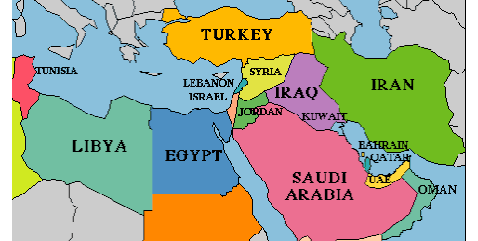
    In 1916, two diplomats Sir Mark Sykes of Britain and François Georges-Picot of France sat over a map of the Ottoman Empire and drew a line. With a pencil, they divided the Arab provinces into zones of future control: the British would take what became Iraq and Jordan, the French would take Syria and Lebanon. The line was arbitrary, cutting through tribal lands and ethnic enclaves, but it would become the border of four modern states.

    That single stroke, and the wars that followed, transformed the Middle East from a multi-ethnic empire into a mosaic of nation-states. World War I destroyed the Ottoman Empire; World War II destroyed the European empires that replaced it. Each war left an indelible mark on the region’s borders, politics, and conflicts that still shape headlines today.

    The Fall of the Ottomans: A World Drawn by Pencils

    For 400 years, the Ottoman Empire ruled the Middle East from Istanbul. Its collapse in 1918 was not sudden—it had been crumbling for decades—but the war delivered the final blow. When the empire dissolved, the Allies, led by Britain and France, were left to decide the region’s fate.

    The Sykes-Picot Agreement of 1916 was the blueprint. It was a secret pact, revealed to the world only when the Bolsheviks published it after the Russian Revolution. The agreement divided the Ottoman Arab provinces into British and French zones, with a nod to Russian interests in the north. The borders it drew ignored the region’s ethnic and religious mosaic. Kurds found themselves split among Turkey, Iraq, Syria, and Iran. Shiite and Sunni Arab communities were merged into new states that had never existed before.

    The League of Nations formalized this division in 1920 with the mandate system, a euphemism for colonial rule. Britain took mandates for Iraq, Palestine, and Transjordan; France took Syria and Lebanon. The mandates were supposed to prepare these territories for self-governance, but in practice, they were colonies with a veneer of international oversight.

    One declaration from 1917 cast a long shadow: the Balfour Declaration, in which Britain expressed support for a “national home for the Jewish people” in Palestine. At the time, Palestine was 90 percent Arab and 10 percent Jewish. The declaration, which contradicted British promises to Arab leaders during the war, sowed the seeds of a conflict that would erupt decades later.

    The Birth of New States and the Rise of Turkey

    Out of the Ottoman wreckage, new states emerged, often with rulers chosen by the colonial powers. The Hashemite dynasty, which had led the Arab Revolt against the Ottomans, was rewarded with thrones in Iraq and Transjordan. The French, meanwhile, carved Syria and Lebanon out of the Levant, favoring the Maronite Christians in Lebanon and the Alawite minority in Syria—a policy of divide and rule that would have lasting consequences.

    The borders were artificial, and the populations were not consulted. As the British diplomat T.E. Lawrence famously said, the lines were “drawn by the pencil of a diplomat, not by the sword of a soldier.” The result was a legacy of instability: nations whose borders did not align with ethnic or tribal loyalties.

    Not all of the Middle East fell under mandate rule. The Turkish War of Independence (1919–1923), led by Mustafa Kemal Atatürk, expelled Greek and Allied forces from Anatolia and established the Republic of Turkey. Atatürk abolished the Caliphate in 1924, ending a 1,300-year institution that had symbolized Muslim unity. Turkey emerged as a secular, nationalist state—a model that would inspire other Middle Eastern leaders.

    World War II: The End of Empire

    World War II devastated Europe, leaving Britain and France financially exhausted and militarily weakened. The war also brought the Middle East into sharper focus as a strategic prize. Oil, discovered in the region in the early 20th century, had become essential for modern warfare. The Suez Canal, controlled by Britain, was the lifeline to India and the East.

    The war accelerated Jewish immigration to Palestine, driven by the Holocaust. Between 1939 and 1948, the Jewish population of Palestine doubled, intensifying Arab-Jewish tensions. In 1947, the United Nations proposed a partition plan, dividing Palestine into Arab and Jewish states. The Arab leadership rejected it; the Jewish leadership accepted it. On May 14, 1948, Israel declared independence, and the first Arab-Israeli War began the next day.

    The war was a catastrophe for Palestinian Arabs, who called it the Nakba, or “catastrophe.” Around 700,000 Palestinians were displaced or fled from their homes, becoming refugees in neighboring countries. The state of Israel survived, but the conflict became a defining issue of Middle Eastern politics for decades.

    The Cold War and the Rise of Nationalism

    As the European empires withdrew, the United States and the Soviet Union moved in, turning the Middle East into a Cold War battleground. Each superpower sought allies, offering military aid, economic support, and diplomatic protection in exchange for influence. The region’s oil reserves made it a prize worth competing for.

    Arab nationalism, already a potent force, surged in the decades after World War II. Leaders like Gamal Abdel Nasser of Egypt, who came to power in a 1952 coup, championed secular pan-Arabism—the idea that all Arabs should unite in a single state or bloc, free of colonial influence. Nasser’s rhetoric inspired millions, but his dreams of unity were thwarted by the very borders the Sykes-Picot Agreement had drawn.

    Oil became the lever for economic sovereignty. Iran nationalized its oil industry in 1951, taking control from the Anglo-Iranian Oil Company. The move was a direct challenge to British power, and it was met with Western retaliation—a CIA-backed coup in 1953 restored the Shah and reversed the nationalization. But the genie was out of the bottle: other oil-producing states began to demand a greater share of profits and control.

    The Suez Crisis of 1956 was the final nail in the coffin of Anglo-French dominance. When Nasser nationalized the Suez Canal, Britain, France, and Israel invaded Egypt. The United States and the Soviet Union, both opposed to the invasion, pressured the three powers to withdraw. The humiliating retreat marked the definitive end of Britain’s and France’s imperial era in the Middle East.

    A Region Redrawn: From Empires to Nation-States

    By the 1960s, the Middle East was unrecognizable from the Ottoman era. The multi-ethnic empires that had ruled the region for centuries were replaced by a system of sovereign nation-states with fixed borders. The colonial powers were gone, replaced by new actors: the United States, the Soviet Union, and a new generation of Arab leaders.

    The legacy of the two world wars is a double-edged sword. On one hand, the nation-states that emerged brought a new form of political identity—nationalism—that gave people a sense of belonging and self-determination. On the other hand, the borders drawn by colonial powers and the conflicts that followed have left a volatile legacy. The Israeli-Palestinian conflict, the Kurdish question, and the sectarian tensions in Iraq and Syria all trace their roots to the decisions made in the aftermath of the wars.

    The Middle East today is a product of the 20th century’s wars, but it is not a passive product. The people of the region have reshaped the structures imposed on them, sometimes violently, sometimes peacefully. The remaking of the Middle East is not a finished story; it continues to unfold in every border dispute, every movement for change, every negotiation over oil and identity.

    The two world wars dismantled the Ottoman Empire and then the European empires that succeeded it, leaving behind a new Middle East. The borders drawn by diplomats in the 1910s and 1920s still define the region, but they are not eternal. The forces of nationalism, religion, and geopolitics continue to strain against those boundaries, a reminder that the remaking of the Middle East is an ongoing process, shaped by the choices of its people.

    Summary

    • World War I dissolved the Ottoman Empire, leading to the Sykes-Picot Agreement and the mandate system, which created artificial borders.
    • The Balfour Declaration of 1917 set the stage for the Israeli-Palestinian conflict.
    • World War II weakened Britain and France, accelerating decolonization and the rise of independent states.
    • The establishment of Israel in 1948 and the Nakba displaced ~700,000 Palestinians, fueling regional conflict.
    • The Cold War made the Middle East a superpower battleground, while Arab nationalism and oil nationalization reshaped politics.

    FAQ

    Q: What was the Sykes-Picot Agreement?
    A: It was a 1916 secret treaty between Britain and France that divided the Ottoman Empire’s Arab provinces into zones of control, forming the basis for modern Middle Eastern borders.

    Q: Why are Middle Eastern borders considered artificial?
    A: Because they were drawn by European diplomats without regard for ethnic, tribal, or religious boundaries, often splitting communities across different states.

    Q: How did World War II affect the Middle East?
    A: It weakened Britain and France, leading to decolonization, intensified Jewish immigration to Palestine, and set the stage for the Cold War rivalry between the US and USSR.

    Q: What is the Nakba?
    A: The Nakba, meaning “catastrophe,” refers to the displacement of ~700,000 Palestinian Arabs during the 1948 Arab-Israeli War.

    Q: How did the Suez Crisis change the region?
    A: The 1956 crisis, in which Britain, France, and Israel invaded Egypt after the Suez Canal was nationalized, ended with a US-Soviet forced withdrawal, marking the end of European colonial dominance in the Middle East.

  • The Fragile Experiment: Liberal Democracy and Capitalism in the Wake of World War I

    The Fragile Experiment: Liberal Democracy and Capitalism in the Wake of World War I

    In the winter of 1918, as the guns fell silent across Europe, a fragile hope took root. The world had just witnessed industrial capitalism’s darkest potential—ten million soldiers and seven million civilians dead, entire economies mobilized for slaughter. Yet from the rubble, a new order was supposed to emerge: liberal democracy, with its parliaments and universal suffrage, and capitalism, with its promise of mass prosperity. For a brief, dazzling moment in the 1920s, that promise seemed real. Then, in a cascade of bank failures and street violence, it collapsed.

    The Weight of the War

    The war had not just killed millions; it had bankrupted the nations that fought it. Britain’s national debt grew tenfold during the conflict; France’s quadrupled. European industrial production fell by roughly 40%. The pre-war faith in progress—the idea that liberal democracy and capitalism were the inevitable destiny of civilized nations—lay buried with the dead.

    The Russian Revolution of 1917 had already offered a stark alternative. The Bolsheviks had seized power, abolished private property, and proclaimed a new socialist state. For many workers and intellectuals across Europe, this was not a distant curiosity but a living proof that capitalism was not eternal. The Comintern, founded in 1919, actively worked to spread revolution westward.

    In Versailles, the victorious powers tried to rebuild the world order. The treaty imposed 132 billion gold marks in reparations on Germany, redrew borders, and created the League of Nations—the first real attempt at global liberal governance. But the United States, the very power that could have anchored it, refused to join. The League was crippled from its first session in 1920.

    The Roaring Twenties: A Temporary Respite

    And yet, against all odds, the 1920s brought a burst of prosperity. The Dawes Plan of 1924 pumped American loans into Germany, stabilizing its currency and restarting its factories. In the United States, GDP grew by about 40% between 1922 and 1929. Automobiles rolled off assembly lines, radios crackled in living rooms, and cinema became mass entertainment. This was capitalism’s triumph—or so it seemed.

    The Weimar Republic, Germany’s first democracy, embodied the experiment. It had universal suffrage, proportional representation, and strong civil liberties. Women voted for the first time in Germany in 1919, as they did in Britain (partially), the United States, and elsewhere. Democracy was expanding, not contracting.

    But the Weimar Republic was born under a curse. The “stab-in-the-back” myth—the lie that democratic politicians had betrayed the army—poisoned its legitimacy from the start. Violence was constant: Spartacist communists rose in 1919, right-wing nationalists attempted the Kapp Putsch in 1920, and Hitler’s Beer Hall Putsch followed in 1923. The republic survived each assault, but the wounds never healed.

    The Crash and the Cascade

    Then came October 1929. The Wall Street Crash turned a boom into a bust with shocking speed. By 1932, U.S. industrial output had fallen by 47%; unemployment hit 25%. The crisis jumped the Atlantic. In 1931, Austria’s largest bank, Credit-Anstalt, collapsed, and the contagion spread across Europe.

    Democracies fell like dominoes. Between 1929 and 1933, Spain, Portugal, Poland, Yugoslavia, Hungary, and the Baltic states all slid into authoritarianism. Italy had already been fascist since 1922, when Mussolini marched on Rome. In January 1933, Hitler was appointed Chancellor of Germany. By the end of that year, liberal democracy had been extinguished across most of the European continent.

    Why did the system fail so completely? The structural weaknesses were plain. Proportional representation in Germany and Italy produced fractured parliaments and unstable coalitions—the Weimar Republic had over twenty cabinets in fourteen years. Democratic culture was shallow; many states had only adopted democracy after the war and had no tradition of peaceful power transfer. And the old elites—landowners, generals, industrialists—never accepted the republics, actively working to undermine them.

    The economic collapse was the final blow. Keynes had warned in 1919 that the Versailles reparations would destroy capitalism and democracy in Europe. He was right, but not even he foresaw how quickly the crash would unleash the demons of fascism.

    The Intellectual Reckoning

    This was not just a political failure but an intellectual one. The war had already shattered the liberal belief in inevitable progress. Now the Depression seemed to prove that capitalism was inherently crisis-prone. Marxists, from Lenin to ordinary workers, argued that this was the final crisis of the system. Fascists offered a “third way”—corporatism, national unity, and a rejection of both liberal democracy and communist internationalism. In the chaos, that brutal simplicity won.

    The interwar experiment taught a harsh lesson: liberal democracy and capitalism are not self-sustaining. They require institutions, trust, and economic stability. When those fail, the alternatives—communism and fascism—stand ready to fill the void.

    The liberal democratic order that emerged from World War I was not doomed from the start, but it was fragile. It survived the 1920s only to be crushed by the Depression. The lesson of those years is not that capitalism inevitably leads to fascism, but that democracy cannot survive when its economic foundations collapse and its citizens lose faith in its institutions. The story of the interwar years is a warning: the path from prosperity to tyranny can be terrifyingly short.

    Summary

    • WWI killed roughly 17 million people and left European economies in ruins, shattering pre-war faith in liberal progress.
    • The Russian Revolution (1917) and the Treaty of Versailles (1919) created new political realities: a socialist alternative and a fragile League of Nations without U.S. participation.
    • The 1920s saw a temporary recovery fueled by American loans, but the Weimar Republic and other new democracies were weak, facing violence from both left and right.
    • The Great Depression after 1929 triggered banking collapses and mass unemployment, leading to democratic breakdowns across Europe and the rise of fascism.
    • The interwar collapse showed that liberal democracy and capitalism need strong institutions and economic stability to survive.

    FAQ

    Q: What was the League of Nations and why did it fail?
    A: The League of Nations was the first international organization aimed at maintaining peace, founded in 1920. It failed partly because the U.S. never joined, and later because it lacked enforcement power against aggressive nations like Germany, Italy, and Japan.

    Q: How did the Treaty of Versailles contribute to the crisis of democracy?
    A: The treaty imposed harsh reparations (132 billion gold marks) and humiliation on Germany, fueling the “stab-in-the-back” myth and economic instability. This weakened the Weimar Republic’s legitimacy and helped the rise of Hitler.

    Q: What were the main weaknesses of interwar democracies like the Weimar Republic?
    A: They faced proportional representation leading to fragmented parliaments, weak democratic traditions, hostility from old elites, and constant political violence from communists and fascists.

    Q: How did the Great Depression affect political systems in Europe?
    A: The Depression caused bank collapses, industrial decline, and mass unemployment, which led voters to turn to radical parties. Between 1929 and 1933, most interwar democracies fell to authoritarian regimes.

    Q: What was the “stab-in-the-back” myth?
    A: It was a false belief in Germany that democratic politicians had betrayed the army by signing the armistice. This myth delegitimized the Weimar Republic from its birth and was used by right-wing forces to attack democracy.

  • Did Alliances Really Cause World War I? A Closer Look at the July Crisis

    Did Alliances Really Cause World War I? A Closer Look at the July Crisis

    On June 28, 1914, a teenage nationalist fired two shots in Sarajevo, killing Archduke Franz Ferdinand and his wife. Within five weeks, the great powers of Europe were at war. The standard explanation? A web of alliances dragged them in. But was the alliance system truly the main culprit, or did it merely provide the scaffolding for a tragedy built on deeper faults?

    The alliance system did not cause the assassination, nor did it create the nationalist fervor, imperial rivalries, or military planning that made war thinkable. But it did determine the war’s terrifying speed and scope. This article examines the evidence, weighing the role of alliances against other long-term factors, and asks whether the system was a cause or a catalyst.

    The Machinery of Alliances

    By 1914, Europe was divided into two blocs. The Triple Alliance—Germany, Austria-Hungary, and Italy—had existed since 1882, originally as a defensive pact. On the other side, the Triple Entente—France, Russia, and Britain—was a looser diplomatic understanding, formalized by 1907. These alliances were not born of aggression; Bismarck had designed his earlier system to isolate France and preserve peace. Yet they created a dangerous dynamic: each power assumed its allies would back it, encouraging risk-taking.

    The July Crisis illustrates this. Austria-Hungary, determined to punish Serbia, sought Germany’s support. On July 5, Kaiser Wilhelm II offered the “blank cheque”—unconditional backing. Emboldened, Austria issued an ultimatum to Serbia on July 23, deliberately harsh. Serbia accepted most terms, but Austria declared war on July 28. Russia, Serbia’s Slavic protector, mobilized. Germany, bound to Austria and fearing Russia’s growing strength, declared war on Russia on August 1. Two days later, Germany declared war on France and invaded Belgium, bringing Britain into the conflict on August 4.

    The cascade was swift and almost mechanical, following alliance lines. Without these commitments, the war might have remained a localized Balkan affair, as had happened in 1912 and 1913. The alliance system, in this view, was the main cause—it transformed a bilateral dispute into a continental war.

    The Deeper Faults

    But alliances alone do not explain why Europe was so ready to fight. Nationalism had been simmering for decades. Pan-Slavism drove Russia to support Serbia; French revanchism yearned to reclaim Alsace-Lorraine; Austria-Hungary’s multi-ethnic empire was threatened by nationalist movements. Imperialism had created colonial frictions, from the Morocco crises of 1905 and 1911 to the Balkan Wars. Militarism fueled an arms race—Britain and Germany competed in dreadnoughts, while armies expanded and planning became rigid.

    Most critically, the Schlieffen Plan made war almost inevitable once Russia mobilized. Germany’s only strategy for a two-front war required a swift invasion of France through Belgium. This meant that German mobilization was not a defensive act but a trigger for war. As historian Fritz Fischer argued, Germany’s leaders actively sought war in 1914, using the crisis as an opportunity. The alliance system was a vehicle, not the driver.

    The Verdict: Necessary but Not Sufficient

    Could the war have been avoided without alliances? Possibly, but only if the underlying tensions—nationalism, imperialism, militarism—had been resolved, which seems unlikely. The alliances were a necessary condition: without them, the war would not have escalated as it did. But they were not sufficient. The assassination, the blank cheque, and the decisions of leaders like Kaiser Wilhelm II and Tsar Nicholas II were all crucial. The alliance system was like a powder keg’s fuse—it made the explosion possible, but the powder was already there.

    Perhaps the most compelling evidence for alliances as the main cause is the speed of escalation. In just over a week, Europe went from peace to world war. This was not a slow build-up but a chain reaction. Yet that chain reaction was set off by human choices, not just structural obligations. Austria-Hungary chose to issue an ultimatum; Germany chose to give the blank cheque; Russia chose to mobilize; Germany chose to invade Belgium. The alliances set the stage, but the actors chose the play.

    The alliance system was a critical mechanism that turned a regional crisis into a world war, but it was not the root cause. Nationalism, imperialism, militarism, and the failures of diplomacy created the conditions for war. Alliances amplified these forces, making escalation rapid and nearly automatic. To blame alliances alone is to ignore the deeper currents of history. Yet to dismiss their role is to miss how structure and choice combined in July 1914. The war was not inevitable, but the alliances made it far more likely.

    Summary

    • The alliance system (Triple Alliance vs. Triple Entente) turned a localized conflict into a continental war within a week.
    • Alliances were originally defensive, but they encouraged risk-taking, as seen in Germany’s ‘blank cheque’ to Austria-Hungary.
    • Long-term causes—nationalism, imperialism, militarism—created a powder keg; the assassination was the spark.
    • The Schlieffen Plan made mobilization a trigger for war, forcing Germany to attack France upon Russian mobilization.
    • Alliances were necessary but not sufficient; human decisions during the July Crisis were equally crucial.

    FAQ

    Q: Was the Triple Entente a formal military alliance?
    A: No, the Triple Entente was an informal diplomatic understanding between France, Russia, and Britain, with no binding military obligations. The Triple Alliance, by contrast, was a formal defensive pact, but Italy’s commitment was conditional and it stayed neutral in 1914.

    Q: How did the alliance system contribute to the outbreak of war?
    A: Alliances created a chain reaction: Austria-Hungary’s war on Serbia led Russia to mobilize, which triggered Germany’s declaration of war on Russia and France, and then Britain’s entry due to Belgium’s invasion. This cascade was possible because each power had obligations to its allies.

    Q: Could the war have been avoided without alliances?
    A: Possibly, but only if the deeper tensions—nationalism, imperialism, militarism—had been managed. The Balkan Wars of 1912–1913 remained localized because no great power intervened; in 1914, alliances ensured they did.

    Q: What was the ‘blank cheque’?
    A: On July 5–6, 1914, Germany gave Austria-Hungary unconditional support for any action against Serbia. This emboldened Austria to issue a harsh ultimatum and declare war, knowing Germany would back it.

    Q: Did the Schlieffen Plan make war inevitable?
    A: The plan assumed a two-front war and required a rapid attack on France via Belgium. Once Russia mobilized, Germany had no alternative plan, so it immediately declared war on France and invaded Belgium, making escalation almost mechanical.

  • The Unfinished War: How WWI Laid the Powder Keg for WWII

    The Unfinished War: How WWI Laid the Powder Keg for WWII

    In November 1918, the guns of the Western Front fell silent, but the peace that followed was anything but settled. The Armistice was a ceasefire, not a resolution—a pause that left the deep fractures of a continent-wide conflict unhealed. Twenty years later, those fractures would crack wide open again, plunging the world into an even deadlier conflict. The Treaty of Versailles, the collapse of empires, and a global economic depression did not make World War II inevitable, but they created the conditions in which a charismatic demagogue could rise and exploit the grievances of a humiliated nation.

    To understand how WWI set the stage for WWII, we must look beyond the trenches and the armistice. We must examine the punitive peace, the myth of betrayal, and the fragile international order that was built on sand. This is the story of how the Great War’s ending became the prelude to an even greater catastrophe.

    The Treaty of Versailles: A Carthaginian Peace

    The Paris Peace Conference of 1919 was dominated by four men: Woodrow Wilson of the United States, David Lloyd George of Britain, Georges Clemenceau of France, and Vittorio Orlando of Italy. Wilson brought his idealistic Fourteen Points, calling for self-determination and a League of Nations. Clemenceau, scarred by the war that had been fought largely on French soil, demanded security and revenge.

    The result was a compromise that pleased no one. Germany was forced to sign the Treaty of Versailles, which included the infamous War Guilt Clause (Article 231), assigning full responsibility for the war to Germany. The treaty demanded reparations of 132 billion gold marks—a staggering sum that would take decades to pay. Germany lost 13% of its European territory, including Alsace-Lorraine to France, and all of its overseas colonies. Its military was reduced to a token force of 100,000 men, with no air force, submarines, or conscription. The Rhineland was demilitarized, leaving Germany defenseless in the west.

    French Marshal Ferdinand Foch, who had commanded the Allied forces, famously remarked, “This is not a peace. It is an armistice for twenty years.” His prediction proved eerily accurate. The treaty was too harsh to be accepted by Germans as fair, yet too lenient to permanently cripple Germany. It created a reservoir of resentment that would be tapped by nationalist demagogues.

    The Collapse of Empires and the Birth of a New Order

    World War I destroyed four great empires: the Austro-Hungarian, Ottoman, Russian, and German. Their collapse redrew the map of Europe and the Middle East, creating new states and new tensions.

    The Austro-Hungarian Empire dissolved into Austria, Hungary, Czechoslovakia, and parts of Poland, Romania, and Yugoslavia. The Ottoman Empire was partitioned under the Treaty of Sèvres in 1920, with modern Turkey emerging and the Middle East divided into League of Nations mandates under British and French control—Syria, Iraq, Palestine, Transjordan. The Russian Empire collapsed in 1917, leading to the Bolshevik Revolution and the creation of the Soviet Union. Germany became the Weimar Republic, a democratic experiment born from defeat.

    These new nations were often fragile, with borders that did not match ethnic divisions. The principle of self-determination was applied selectively, leaving large German populations outside Germany’s borders—notably in the Sudetenland of Czechoslovakia and Danzig (now Gdańsk, Poland). These irredentist claims would become a rallying cry for Hitler.

    The League of Nations: A Paper Tiger

    President Wilson’s dream of a League of Nations was realized in the Treaty of Versailles, but it was a crippled institution from the start. The United States, the world’s rising superpower, never joined—the Senate rejected membership, fearing it would entangle the US in foreign conflicts. Germany was initially excluded, and the Soviet Union was also shut out. The League had no enforcement mechanism; it had no army, and any action required unanimous consent from its members, making it nearly impossible to act decisively.

    When Japan invaded Manchuria in 1931, the League’s response was a series of ineffective condemnations. When Italy invaded Ethiopia in 1935, the League imposed sanctions that were not enforced. These failures demonstrated that the international order created after WWI was incapable of maintaining peace. The League was a paper tiger, and revisionist powers like Germany, Italy, and Japan knew it.

    The Stab-in-the-Back Myth: A Poisonous Lie

    One of the most toxic legacies of WWI was the German “stab-in-the-back” myth (Dolchstoßlegende). German right-wing propaganda claimed that the army was undefeated in the field but was betrayed by politicians, socialists, and Jews on the home front. This narrative was actively promoted by military leaders like Hindenburg and Ludendorff, who sought to deflect blame for the defeat.

    The myth was a lie—the German army was exhausted and starving, and the civilian government had no choice but to seek an armistice—but it was powerful. It allowed Germans to believe that their nation had been robbed of victory. Hitler and the Nazis seized on this myth, using it to delegitimize the Weimar Republic and to scapegoat Jews and leftists. The myth became a cornerstone of Nazi propaganda, fueling the hatred that would lead to the Holocaust.

    Economic Devastation and the Rise of Extremism

    The German economy was shattered by the war and the reparations burden. In 1923, hyperinflation struck as the government printed money to pay reparations and resist French occupation of the Ruhr. The currency collapsed, wiping out the savings of the middle class and creating a deep sense of insecurity.

    But the worst was yet to come. The Great Depression, triggered by the US stock market crash in 1929, hit Germany with brutal force. The US had been lending money to Germany to help it pay reparations, and American loans were recalled. Global trade collapsed, and German unemployment soared to about 30% by 1932. The Weimar Republic, already fragile, was destroyed by the economic crisis. Political extremism flourished: the Communist Party and the Nazi Party grew rapidly, each promising a radical solution.

    Hitler’s rise was not inevitable, but the Depression created the conditions. In 1933, he was appointed Chancellor, and he quickly dismantled democracy, establishing a dictatorship. His foreign policy was explicitly aimed at overturning Versailles—rearming Germany, remilitarizing the Rhineland, and uniting all Germans in a Greater Germany.

    A Thirty Years’ War? The Continuity and Break

    The

    Historians debate whether WWII was the inevitable result of WWI or a separate catastrophe. Some, like A.J.P. Taylor and Eric Hobsbawm, argue that the period from 1914 to 1945 was a “Thirty Years’ War” with a 20-year truce. The unresolved issues of WWI—territorial disputes, economic instability, ideological extremism—directly produced WWII.

    Others contend that WWII was not inevitable. They point out that the Great Depression, the failure of appeasement, and the specific rise of Hitler were contingent events. Versailles created grievances, but it did not make Hitler inevitable. The Depression, not the treaty, destroyed the Weimar Republic’s viability.

    The economic angle supports a middle view: the global economic system built after WWI was inherently unstable. The US lent money to Germany, Germany paid reparations to France and Britain, and they paid war debts to the US—a circular flow that collapsed in 1929. This economic collapse, not Versailles alone, radicalized European politics and empowered fascism.

    Geopolitically, the collapse of the Ottoman Empire and the redrawing of the Middle East created long-lasting conflicts. The arbitrary borders and mandates sowed the seeds of instability that continue to this day. But the immediate link to WWII was the way the Treaty of Versailles and the League of Nations failed to resolve the power vacuum left by the fallen empires.

    The debate between continuity and break is not merely academic. It shapes how we understand the causes of war and the responsibility of peacemakers. What is clear is that WWI set the stage for WWII by creating a world of unresolved grievances, economic turmoil, and a weak international order—a powder keg waiting for a spark.

    World War I did not directly cause World War II, but it created the conditions that made it possible. The Treaty of Versailles humiliated Germany without destroying its potential for resurgence. The collapse of empires created new nations with deep ethnic tensions. The League of Nations proved too weak to enforce peace. And the Great Depression, building on the economic instability of the post-war order, radicalized politics across Europe. When Hitler rose to power, he was not a random accident—he was the culmination of these forces. The unfinished business of the Great War, left to fester for two decades, exploded again with a vengeance.

    Summary

    • The Treaty of Versailles imposed harsh terms on Germany, including the War Guilt Clause and massive reparations, creating deep resentment.
    • The collapse of four empires led to new states with ethnic tensions and irredentist claims.
    • The League of Nations was fatally weak, lacking the US, military force, and unanimous action.
    • The ‘stab-in-the-back’ myth poisoned German politics, delegitimizing democracy and scapegoating Jews.
    • The Great Depression, amplified by the unstable post-war economic system, radicalized Europe and empowered extremists like Hitler.

    FAQ

    Q: Why is the Treaty of Versailles considered a cause of WWII?
    A: The treaty imposed punitive terms on Germany—war guilt, huge reparations, territorial losses, and military restrictions—creating widespread resentment and undermining the legitimacy of the Weimar Republic. This grievance was exploited by nationalist movements, including the Nazis.

    Q: How did the collapse of empires contribute to WWII?
    A: The collapse of the Austro-Hungarian, Ottoman, Russian, and German empires created new states with borders that did not match ethnic populations, leading to irredentist claims (e.g., Germans in the Sudetenland) and regional instability that Hitler exploited to justify aggression.

    Q: What was the ‘stab-in-the-back’ myth?
    A: It was a false narrative promoted by German military leaders that the army was undefeated but betrayed by civilians—especially socialists and Jews—on the home front. The Nazis used it to attack democracy and to justify extreme nationalism and anti-Semitism.

    Q: How did the Great Depression lead to WWII?
    A: The Depression devastated Germany’s economy, with unemployment reaching ~30% by 1932, destroying public confidence in the Weimar Republic and driving voters to extremist parties. It also weakened the international community’s ability to respond to aggression.

    Q: Could WWII have been avoided?
    A: Many historians argue that WWII was not inevitable. The Depression and Hitler’s rise were contingent events. But the unresolved issues of WWI—especially the Versailles treaty and the weak League of Nations—created a fertile ground for a second conflict.

  • The League of Nations: A Promise Broken by Its Own Members

    The League of Nations: A Promise Broken by Its Own Members

    On a crisp January morning in 1920, delegates from 42 nations gathered in Geneva, Switzerland, to inaugurate the world’s first permanent peacekeeping body. The League of Nations was born out of the ashes of World War I, a war that had killed over 16 million people and left Europe in ruins. Its founding covenant, embedded in the Treaty of Versailles, was a bold promise: never again would the world descend into such catastrophic conflict. The League would resolve disputes, disarm aggressors, and protect the weak.

    But within two decades, that promise lay in tatters. The League failed to stop Japanese aggression in Manchuria, Italian conquest of Ethiopia, and German remilitarization of the Rhineland. By 1939, it was a powerless bystander to the outbreak of World War II. The story of the League is not just a chronicle of institutional weakness; it is a cautionary tale about the limits of international cooperation when great powers refuse to lead.

    Birth of an Ideal

    The League’s intellectual roots stretched back to philosopher Immanuel Kant’s 1795 essay Perpetual Peace and the Concert of Europe that followed Napoleon’s defeat. But it was World War I that turned these ideas into a political reality. As the war dragged on, President Woodrow Wilson championed the cause, and in January 1918, his Fourteen Points called for a ‘general association of nations’ to guarantee political independence and territorial integrity. The British League of Nations Union and South African statesman Jan Smuts added their weight, and by the Paris Peace Conference in 1919, the Covenant was drafted in weeks.

    The structure was ambitious. The Assembly gave every member an equal vote. The Council had permanent seats for Britain, France, Italy, and Japan, plus rotating non-permanent members. The Secretariat, led by Sir Eric Drummond, provided day-to-day administration. The Permanent Court of International Justice opened in The Hague in 1922. The International Labour Organization, a semi-autonomous agency, aimed to improve working conditions globally.

    Yet the Covenant’s heart was collective security, outlined in Articles 10–16. Members pledged to respect each other’s territorial integrity and to respond to aggression with economic sanctions or military force. It was a revolutionary concept: aggression against one would be met by all.

    The Fatal Absence

    From the start, the League was crippled by the absence of its most powerful champion. The U.S. Senate, led by Henry Cabot Lodge, refused to ratify the Treaty of Versailles in 1919 and 1920. Lodge and his allies feared that Article X would drag America into foreign wars without congressional approval. President Wilson campaigned futilely for ratification, but the Senate voted no. The United States never joined.

    Without American participation, the League lacked military and economic heft. Britain and France, war-weary and financially strained, were reluctant to enforce sanctions against major powers. The League’s only real strength was moral suasion, and that proved insufficient against determined aggressors.

    Successes That Foreshadowed the UN

    Despite its eventual collapse, the League did achieve tangible successes, especially in the 1920s. It resolved the Åland Islands dispute between Finland and Sweden in 1921, peacefully settling a territorial conflict. In 1926, it mediated the Mosul question between Turkey and Iraq, and in 1934, it handled the Leticia dispute between Colombia and Peru.

    The League also pioneered humanitarian work. Fridtjof Nansen, a Norwegian explorer and diplomat, devised a passport system for stateless refugees in 1922, helping hundreds of thousands of displaced people. The League’s Health Organization fought epidemics like typhus and malaria, laying groundwork for the World Health Organization. It addressed drug trafficking, white slavery, and child labor, and it oversaw a mandates system to administer former German and Ottoman territories—though critics later dismissed this as colonialism in disguise.

    These successes, however, were local and administrative. They did not touch the core issue of great-power aggression.

    Cracks in the Edifice

    The 1930s brought the Great Depression, which fueled nationalism and militarism. The League’s first major test came in 1931, when Japan invaded Manchuria. China appealed to the League, which dispatched the Lytton Commission. The commission condemned Japan’s aggression, but no sanctions followed. Japan simply withdrew from the League in 1933. The message was clear: the League would not act against a major power.

    The second blow came in 1935, when Italy invaded Ethiopia. The League imposed partial sanctions, but oil was excluded—a fatal omission. Meanwhile, British and French foreign ministers secretly negotiated the Hoare-Laval Pact, which would have given Italy two-thirds of Ethiopia. The plan leaked, causing outrage, but the damage was done. Ethiopia was annexed, and the League’s credibility collapsed.

    Germany, now under Hitler, remilitarized the Rhineland in 1936, violating the Treaty of Versailles. The League took no action. The Spanish Civil War from 1936 to 1939 saw the Non-Intervention Committee fail to stop foreign intervention. When Germany annexed Austria in 1938 and the Sudetenland later that year, the League was bypassed entirely. By the time Germany invaded Poland in 1939, the League was effectively defunct.

    The Final Curtain

    The League held its last assembly on April 18, 1946, and formally dissolved the next day. Its assets and functions were transferred to the United Nations, founded in October 1945. The League’s legacy is ambiguous. It failed at its primary mission, yet it established the model for the UN and other international bodies. Its successes in health, labor, and refugee work were seeds that grew into specialized agencies.

    But the League’s failure offers a stark lesson: international institutions are only as strong as their member states’ willingness to act. The absence of the United States, the hesitancy of Britain and France, and the rise of totalitarian regimes combined to doom the experiment. As the UN faces its own challenges, the League’s story remains a warning that peace is not guaranteed by treaties alone—it requires constant vigilance and commitment.

    The League of Nations was not a failure of ideals but a failure of execution. It was a promise made by the world’s leaders to prevent another war, and it was broken not by its institutions but by the nations that created it. Its memory serves as a reminder that peace is a fragile achievement, requiring the active participation of the powerful. The League’s ghost still haunts Geneva, urging us to learn from its mistakes.

    Summary

    • The League of Nations was founded on January 10, 1920, as part of the Treaty of Versailles, with 42 original members.
    • It had both successes (e.g., Åland Islands, refugee work) and failures (Manchuria, Ethiopia).
    • The failure of the U.S. to join is considered a fatal flaw, weakening the League’s power.
    • The League dissolved on April 18-19, 1946, and its assets were transferred to the United Nations.
    • Its legacy includes establishing the model for the UN and specialized agencies like the ILO and WHO.

    FAQ

    Q: Why did the League of Nations fail?
    A: The League failed due to a combination of factors: the absence of the United States, the reluctance of Britain and France to enforce sanctions, the rise of aggressive totalitarian regimes, and the League’s lack of military enforcement power.

    Q: What were the League’s main successes?
    A: The League successfully resolved several territorial disputes, including the Åland Islands and Mosul. It also pioneered refugee assistance, health programs, and labor standards, which later influenced the UN.

    Q: How did the United States’ failure to join affect the League?
    A: The U.S. refusal to join deprived the League of its most powerful member, reducing its credibility and military and economic influence, making it harder to enforce collective security.

    Q: What happened at the last assembly of the League?
    A: The League’s last assembly was held on April 18, 1946, where it formally dissolved itself, and its functions and assets were transferred to the newly created United Nations.

    Q: What is the League’s legacy today?
    A: The League’s legacy is twofold: it is a cautionary tale of international failure, but it also established the framework for the UN and specialized agencies like the ILO and WHO, and its humanitarian work continues to inspire.

  • The 14 Points: How a President’s Dream of Peace Became a Century of Consequences

    The 14 Points: How a President’s Dream of Peace Became a Century of Consequences

    On a cold January evening in 1918, Woodrow Wilson stood before a joint session of Congress and unveiled a vision that would redefine the world’s understanding of peace. The 14 Points were not a treaty or a list of demands, but a moral blueprint—a declaration that the slaughter of millions must end not with vengeance, but with justice. Wilson’s words echoed beyond the chamber, reaching the trenches of the Western Front and the chancelleries of Europe, promising a new order where open diplomacy, self-determination, and a league of nations would banish the shadows of secret alliances and imperial greed.

    Yet the dream that captivated the world would crumble within a year, betrayed by the very leaders who sat at the peace table—and by the American Senate that rejected its own president’s triumph. The 14 Points were never fully realized, but their legacy is not failure. It is a story of how ideals, however compromised, can reshape the course of history, for better and for worse.

    A Speech That Shook the World

    Wilson’s address on January 8, 1918, was a masterstroke of timing. Russia had just exited the war, leaving the Allies to face the full might of the Central Powers alone. The American president, who had entered the war only nine months earlier, needed to give the conflict a purpose beyond territorial conquest. He needed to offer the German and Austrian publics a reason to turn against their own leaders.

    The speech was the product of months of intense intellectual labor. Wilson had assembled a team of about 150 scholars—geographers, historians, economists—known as The Inquiry. They pored over maps, ethnic distributions, and economic data, producing voluminous reports that Wilson distilled into a single, soaring vision. The result was a document of remarkable clarity: open covenants, freedom of the seas, free trade, disarmament, and a league of nations to guarantee the peace.

    Each point was a direct repudiation of the old world order. Point 1, banning secret treaties, struck at the heart of the diplomatic culture that had dragged Europe into war. Point 14, the League of Nations, was the keystone—a permanent institution to enforce the new rules. Wilson was not merely proposing a peace; he was proposing a revolution in international affairs.

    The Paris Chessboard

    When Wilson sailed for France in December 1918, he became the first sitting American president to travel to Europe. He was greeted by crowds of ecstatic Parisians, who saw him as a savior. But the euphoria did not last.

    At the Paris Peace Conference, Wilson faced three formidable opponents. Georges Clemenceau of France, known as ‘The Tiger,’ cared little for ideals; he had seen his country invaded twice in a generation and demanded security. David Lloyd George of Britain was determined to preserve the British Empire and naval supremacy. Vittorio Orlando of Italy sought territorial gains for his young nation.

    The Big Four negotiated in secret, a direct violation of Point 1. Clemenceau pushed for the Rhineland to be detached from Germany, while Lloyd George insisted on a punitive naval blockade. Wilson fought for his principles, but he was forced to make compromises. Germany was saddled with a ‘war guilt’ clause and crushing reparations. The Treaty of Versailles, signed on June 28, 1919, incorporated only some of the 14 Points—and even those were often watered down.

    The German Betrayal

    Perhaps the most tragic consequence of the Versailles Treaty was its impact on Germany. Germany had agreed to the armistice in November 1918 on the explicit understanding that the peace would be based on the 14 Points. When the treaty was unveiled, the Germans were stunned. The territorial losses, the war guilt clause, the astronomical reparations—none of it matched Wilson’s promised ‘peace without victory.’

    The sense of betrayal was not just diplomatic; it was visceral. German nationalists, including a young Adolf Hitler, would use this ‘stab in the back’ myth to undermine the Weimar Republic. The treaty’s harshness did not create Nazism, but it provided the fuel for the fire. Wilson’s dream of a just peace had become, in the eyes of many Germans, a tool of Allied vengeance.

    The League That Never Was

    The League of Nations was created in 1920, with its headquarters in Geneva. Wilson had staked his presidency on it, but he faced an insurmountable obstacle at home: the U.S. Senate. Isolationists, led by Henry Cabot Lodge, opposed the League’s Article X, which committed members to protect each other’s territorial integrity. Wilson refused to compromise, and the Senate refused to ratify the Treaty of Versailles. The United States never joined the League.

    Without American participation, the League was crippled from birth. It had no enforcement mechanism, no standing army, and no great-power unity. It failed to prevent the Italian invasion of Ethiopia, the Japanese annexation of Manchuria, or the rise of Hitler. By 1939, the League was a hollow shell, and the world was at war again.

    The Colonial Blind Spot

    Wilson’s vision of self-determination was revolutionary, but it had a glaring flaw: it applied only to Europeans. Point 5 called for an ‘impartial adjustment of colonial claims,’ with equal weight given to the interests of colonial peoples. But in practice, the victors simply divided up the German and Ottoman empires under the mandate system. The peoples of Africa, the Middle East, and Asia were given no say in their own futures.

    The League’s mandate system was a fig leaf for continued imperial control. ‘Self-determination’ was a promise for the Balkans and the Austro-Hungarian Empire, but not for the subjects of British, French, or Belgian empires. Wilson’s idealism, which had inspired anticolonial movements worldwide, ultimately reinforced the very structures it claimed to reform.

    A Legacy That Endures

    Despite its failures, the 14 Points did not vanish. The League of Nations, however flawed, established the template for the United Nations. The principle of self-determination reshaped the world map, leading to the independence of dozens of nations in the decades after World War II. The idea of open diplomacy, free trade, and international law became the bedrock of the postwar order.

    Wilson received the 1919 Nobel Peace Prize, but he died in 1924 a broken man, convinced his life’s work had failed. He could not foresee that his ideas would outlive him. The 14 Points were a profound moral statement—a recognition that peace cannot be built on revenge, that nations must be governed by law, and that the world’s peoples have a right to shape their own destinies.

    As we look at the wars and conflicts of the 21st century, the questions Wilson raised remain urgent. Can international institutions truly guarantee peace? Can self-determination be reconciled with territorial integrity? The 14 Points were a dream, but dreams have consequences. They may not be realized, but they set the course.

    Woodrow Wilson’s 14 Points remain a touchstone of internationalist thought, a reminder that peace is not merely the absence of war but a positive vision of justice. The dream failed in its time, but it planted seeds that would grow into the architecture of the modern world. Whether we look at the United Nations, the European Union, or the ongoing struggles for self-determination, Wilson’s shadow looms large. His dream was imperfect, and its consequences were often tragic, but it gave the world a new language of hope—one that we still speak today.

    Summary

    • The 14 Points were delivered on January 8, 1918, as a blueprint for a just peace, with significant input from The Inquiry, a team of ~150 experts.
    • Only some points were incorporated into the Treaty of Versailles, which was far harsher than Wilson promised, fueling German resentment and the ‘stab in the back’ myth.
    • The League of Nations was created but the U.S. Senate refused to join, leaving it without great-power support and doomed to fail.
    • Wilson’s self-determination was applied selectively, ignoring the colonial peoples of Africa and Asia, and the mandate system merely legitimized imperial control.
    • Despite its failures, the 14 Points inspired the UN and modern international institutions, and remain a powerful symbol of the pursuit of peace.

    FAQ

    Q: What were the main goals of the 14 Points?
    A: The 14 Points aimed to establish a framework for a just and lasting peace after World War I, including open diplomacy, freedom of the seas, free trade, disarmament, self-determination for European peoples, and the creation of a League of Nations to guarantee peace.

    Q: Why did the U.S. not join the League of Nations?
    A: The U.S. Senate refused to ratify the Treaty of Versailles, partly because of objections to Article X, which required members to protect each other’s territorial integrity. This was a victory for isolationist sentiment led by Senator Henry Cabot Lodge.

    Q: How did Germany react to the Treaty of Versailles?
    A: Germany felt betrayed because it had agreed to the armistice on the assumption that peace would be based on the 14 Points. The treaty’s harsh terms—war guilt, reparations, territorial losses—created a deep sense of injustice that nationalist leaders later exploited.

    Q: Did the 14 Points apply to colonial peoples?
    A: No, despite Point 5 calling for impartial adjustment of colonial claims, the mandate system simply transferred control, and self-determination was applied only to European nations, not to people in Asia, Africa, or the Middle East.

    Q: What is the lasting legacy of the 14 Points?
    A: The 14 Points influenced the creation of the United Nations and other international institutions, and the principle of self-determination reshaped global politics. They remain a symbol of the ideal that peace can be built on justice rather than vengeance, even if that ideal is never fully achieved.

  • What Ancient Civilizations Knew About Anxiety That We’ve Forgotten

    What Ancient Civilizations Knew About Anxiety That We’ve Forgotten

    Anxiety is not a modern invention. Four thousand years ago, a Mesopotamian scribe inscribed a clay tablet describing a racing heart and sleepless nights. Hippocrates blamed black bile. Medieval monks called it acedia. Across eras and cultures, humans have grappled with the same restless dread we now label an anxiety disorder. But here’s what’s striking: for most of human history, there were no pills. No benzodiazepines, no SSRIs. Our ancestors managed anxiety with herbs, rituals, movement, and community—and some of those methods have surprising modern scientific support.

    The Humoral Framework: Balancing the Body

    Hippocrates and later Galen saw anxiety as a physical imbalance, not a character flaw. Too much black bile, they argued, produced fear and melancholy. The fix? Rebalance the body through diet, exercise, and herbal remedies. Galen prescribed moderate living: regular meals, daily walks, and avoiding extremes. His advice echoes in today’s lifestyle psychiatry, where exercise and nutrition are increasingly recognized as foundational for mental health.

    Herbal Allies That Science Now Backs

    Ancient Egyptians brewed chamomile tea for calm. Medieval Europeans turned to lemon balm. Native Americans used passionflower. Modern clinical trials have tested these herbs—and many show real effects. Valerian root, used since ancient Greece, has modest anxiolytic properties through GABAergic activity. Chamomile reduces mild to moderate anxiety in trials. Passionflower has shown comparable efficacy to benzodiazepines for generalized anxiety, with fewer side effects. Even kava, used in Pacific cultures for centuries, has strong evidence for anxiety relief, though liver toxicity concerns limit its use. These aren’t placebos; they’re pharmacologically active plants.

    The Role of Music, Baths, and Travel

    Ancient Greeks and Romans used music therapy and warm baths to soothe the spirit. Avicenna, the Persian polymath, recommended music, psychological counseling, and changes of scenery in his Canon of Medicine. In the 18th century, physicians prescribed travel and mineral waters for ‘nervous complaints.’ These interventions share a common thread: they engage the senses and shift attention away from rumination, a core feature of anxiety.

    Community and Ritual as Anxiety Buffers

    Our ancestors lived embedded in tight-knit communities. Religious calendars provided predictable rhythms; harvest festivals and communal mourning gave shared meaning to joy and grief. Multigenerational households distributed caregiving. Physical labor and outdoor time were woven into daily life. The pace of information was slow—threats were local and immediate, not global and abstract. These structures buffered anxiety in ways we now miss, as modern life often brings isolation, sedentary routines, and a 24/7 news cycle.

    The Rest Cure: A Cautionary Tale

    Not all historical treatments were wise. Silas Weir Mitchell’s 19th-century ‘rest cure’—isolation, bed rest, and overfeeding—was meant for nervous exhaustion but became a form of imprisonment, as Charlotte Perkins Gilman vividly dramatized in The Yellow Wallpaper. This reminds us that historical methods must be evaluated critically, not romanticized wholesale.

    What We Can Learn Without Abandoning Modern Medicine

    The takeaway isn’t that we should toss our antidepressants. It’s that many non-drug approaches—herbs, exercise, community, nature, music—have deep roots and growing evidence. They can complement medication or serve as first-line strategies for mild anxiety. And they address what pills often don’t: the social and environmental factors that fuel anxiety. As we face a global anxiety epidemic, revisiting ancestral wisdom isn’t nostalgia; it’s practical.

    Our ancestors didn’t have a magic bullet for anxiety, but they had a toolkit—herbs, movement, music, community, and a worldview that made sense of suffering. Modern research is validating many of these approaches. The next time anxiety tightens your chest, consider a chamomile tea, a walk in the park, or a call to a friend. Sometimes the oldest remedies are the most forward-thinking.

    Summary

    • Anxiety is ancient; descriptions appear in texts from Mesopotamia, Egypt, Greece, and China over 3,000 years ago.
    • Hippocrates and Galen saw anxiety as a humoral imbalance, treated with diet, exercise, and herbs.
    • Herbal remedies like valerian, chamomile, lemon balm, and passionflower have modern evidence for anxiety relief.
    • Music therapy, baths, and travel were historically prescribed to calm the mind.
    • Strong community ties, ritual, and physical labor served as protective factors against anxiety.
    • The 19th-century rest cure highlights the dangers of uncritical adoption of historical methods.

    FAQ

    Q: Did ancient cultures have a concept of anxiety disorder?
    A: No. They framed anxiety as spiritual (demonic oppression, divine testing), humoral (imbalance of bile), or existential (acedia). The medicalization of anxiety as a treatable condition emerged in the 18th–19th centuries.

    Q: Are herbal remedies for anxiety effective?
    A: Some are. Valerian, chamomile, lemon balm, and passionflower have shown modest to moderate anxiolytic effects in clinical trials. Kava has strong evidence but safety concerns. Always consult a healthcare provider before using herbs, especially with other medications.

    Q: How did community and ritual help reduce anxiety?
    A: Predictable rhythms, shared meaning, and social support buffered stress. Extended families distributed caregiving, and physical labor embedded movement and outdoor time into daily life.

    Q: What was the rest cure?
    A: A 19th-century treatment for nervous disorders involving isolation, bed rest, and overfeeding. It was later criticized as harmful, notably by Charlotte Perkins Gilman in ‘The Yellow Wallpaper’.

    Q: Can historical methods replace modern medication?
    A: For mild anxiety, lifestyle and herbal approaches may suffice. For moderate to severe anxiety, they can complement—but not replace—medication and therapy. Always work with a mental health professional.

  • The Rise and Fall of Great Empires: Lessons from History

    The Rise and Fall of Great Empires: Lessons from History

    From Rome’s legions to Britain’s global navy, empires have shaped the map of the world. But their stories share a common arc: a meteoric rise, a plateau of power, and a fall that often feels sudden—yet was years in the making. This article pulls back the curtain on the patterns behind imperial decline, exploring why even the mightiest powers eventually crumble.

    It’s easy to see empires as relics of the past, but the dynamics that drove them still play out in modern geopolitics. By examining the economic stresses, internal fractures, and strategic overreach that toppled historical giants, we can spot the same warning signs in today’s superpowers. History doesn’t repeat itself, but it rhymes—and understanding those rhymes helps us make sense of the present.

    What Makes an Empire?

    An empire isn’t just a big country. It’s a multi-ethnic, multi- political entity where a central power controls distant territories, often through conquest. The relationship between the ‘center’ (like Rome or London) and the ‘periphery’ (the provinces or colonies) is hierarchical: the center extracts resources and manpower, while the periphery provides them.

    That structure creates inherent tension. Empires must constantly balance the cost of controlling their borders against the benefits of what they extract. The Roman Empire at its peak under Trajan in 117 CE covered about 5 million square kilometers and ruled roughly 20% of the world’s population. The British Empire in 1920 spanned about 35.5 million square kilometers—a quarter of Earth’s land—and governed around 412 million people, or 23% of humanity. But size and power never last forever.

    The Lifecycle of Empires: Patterns of Decline

    Historians have long noticed that empires follow a predictable arc. Sir John Bagot Glubb, in his 1976 essay ‘The Fate of Empires,’ observed that the average lifespan of an empire is about 250 years, though the range is huge: the Byzantine Empire endured over a millennium, while the Mongol Empire lasted barely 160 years. The exact number matters less than the pattern.

    Three recurring pressures show up again and again.

    Fiscal Crisis: When the Money Runs Out

    Empires often spend themselves into oblivion. Rome’s third-century inflation crisis weakened the economy and made it harder to pay soldiers. Spain, despite flooding Europe with gold and silver from the Americas under Philip II, declared bankruptcy multiple times because the cost of wars and administration outpaced the influx of precious metals.

    Overextension is a close cousin. When maintaining borders becomes more expensive than the economic return, the empire starts to bleed. Britain faced exactly that after World War II: it could no longer afford to police a global empire, and the empire dissolved in a couple of decades.

    Internal Decay vs. External Pressure

    Most empires don’t fall because of a single invasion. They fall because internal dysfunction—corruption, civil strife, elite infighting—has already hollowed them out. The external enemy is often the final push, not the root cause. When the Western Roman Empire collapsed in 476 CE, it had already suffered decades of political instability, economic stagnation, and a reliance on barbarian mercenaries. The Visigoths’ sack of Rome in 410 was a symptom, not the disease.

    Elite Overproduction: The Turchin Model

    Peter Turchin, a scientist who applies mathematical models to history, identified a powerful driver of collapse: elite overproduction. When too many ambitious people compete for too few elite positions, society becomes unstable. This happens because population growth and wealth creation produce more educated, aspirational individuals than the system can accommodate. The result is infighting, factionalism, and eventually rebellion or civil war.

    Turchin’s cliodynamics approach charts these cycles with data, showing that the same dynamic recurs across empires and civilizations. It’s a modern, quantitative take on an old idea.

    The Grand Theories: From Polybius to Toynbee

    The idea that empires cycle through birth, growth, maturity, decline, and fall dates back to antiquity. The Greek historian Polybius described a cycle of constitutions: monarchy, tyranny, aristocracy, oligarchy, democracy, mob rule, chaos, and then a new monarchy. The 14th-century Arab historian Ibn Khaldun introduced the concept of asabiyyah—group solidarity that binds a rising tribe or people together, but decays as urban luxury and individualism set in.

    Edward Gibbon’s monumental ‘The History of the Decline and Fall of the Roman Empire’ blamed ‘barbarism and religion.’ Oswald Spengler’s ‘The Decline of the West’ and Arnold Toynbee’s ‘A Study of History’ proposed grand cyclical theories, though modern scholars criticize their deterministic methods. Still, the core insight remains: empires have a lifespan, and trying to defy that is a fool’s errand.

    Decline or Transformation?

    Not all historians accept the word ‘fall.’ Some argue that Rome didn’t fall—it transformed. The Western Empire gave way to the Byzantine Empire and the Catholic Church’s temporal power, both of which carried Roman ideas forward. Similarly, the British Empire morphed into the Commonwealth, a voluntary association of former colonies.

    This distinction matters. If empires can transform rather than simply collapse, the lessons change. It’s not about avoiding decline but about managing it—transitioning to a more sustainable form of power.

    Why This Matters Today

    The United States is often called an empire—or less pejoratively, a hegemon. Scholars like Paul Kennedy, Niall Ferguson, and Amy Chua draw direct parallels between the U.S. and Rome or Britain. Meanwhile, China’s rise and Russia’s imperial ambitions show that the empire game is far from over. Even if the word ’empire’ carries heavy baggage, the dynamics of controlling far-flung territories and populations remain relevant.

    Climate change, resource scarcity, and mass migration are modern pressure points that echo historical triggers of collapse. When borders become too costly to guard, when the center’s wealth doesn’t reach the periphery, when internal divisions outpace external threats—those are the moments when empires crack.

    Lessons for the Present

    So what can we learn from the graveyards of empires?

    First, fiscal discipline matters. Overextending the military without a matching economic base is a recipe for ruin. Second, internal health is more important than any external enemy. A society that manages inequality, keeps institutions strong, and provides pathways for ambition is less likely to fall into the elite-overproduction trap.

    Third, flexibility beats rigidity. Empires that adapt—like the Ottomans, who survived six centuries by changing with the times—outlast those that cling to old structures. But even adaptation has limits. The Ottomans couldn’t stop the Age of Discovery from rerouting trade away from the Mediterranean, just as Britain couldn’t stop the rise of new economic powers.

    Finally, no empire is permanent. The British Empire, at its peak, ruled a quarter of the world. It’s now a small island nation with a few overseas territories. The Soviet Union, which dominated half of Europe, dissolved in 1991. The cycle continues.

    The rise and fall of great empires is not a story of inevitable doom but of recurring patterns. Economics, internal cohesion, and flexibility determine how long any power lasts. The empires that endure the longest are not necessarily the largest or mightiest, but those that learn to adapt. As we watch today’s superpowers navigate these same pressures, the lessons of history remain a vital guide.

    Summary

    • Empires are multi-ethnic, hierarchical entities that rise through conquest and extract resources from peripheries.
    • Most empires follow a lifespan of roughly 250 years, but the range is wide.
    • Common decline drivers: fiscal crisis, overextension, internal decay, and elite overproduction.
    • Grand theories from Polybius to Turchin explain cyclical patterns, but historical determinism is debated.
    • Modern parallels: the U.S., China, and Russia offer case studies in imperial overreach and adaptation.

    FAQ

    Q: What defines an empire?
    A: An empire is a large, multi-ethnic political entity where a central power controls distant territories through conquest, maintaining control via military force, economic extraction, and administration.

    Q: How long do empires typically last?
    A: Historian Sir John Glubb observed an average of about 250 years, but the range is huge—from the Mongol Empire’s 160 years to the Byzantine Empire’s 1,100.

    Q: What are the most common causes of empire collapse?
    A: Fiscal crisis from overextension, internal dysfunction (corruption, civil strife), and elite overproduction—where too many ambitious people compete for few top positions.

    Q: Is the U.S. an empire?
    A: Many scholars describe the U.S. as a contemporary empire or hegemon, drawing comparisons to Rome and Britain, though it lacks formal colonies and exercises power through economic and military influence.

    Q: Can empires avoid falling?
    A: History suggests that empires can extend their lifespans by adapting, maintaining fiscal health, and addressing internal inequalities, but no empire lasts forever.