Tag: history

  • The Libero’s Last Stand: How Football’s Most Elegant Position Vanished

    The Libero’s Last Stand: How Football’s Most Elegant Position Vanished

    In the summer of 1996, Matthias Sammer lifted the European Championship trophy for Germany, having just completed a tournament that redefined the sweeper’s role. He played as a free defender, roaming behind his back line, launching attacks, and even scoring crucial goals. It was the last great hurrah for a position that had dominated football for three decades. By the end of the decade, the libero was all but extinct, a casualty of tactical evolution and the sport’s relentless march toward athleticism and pressing.

    Today, the libero is a ghost on the modern pitch. Teams play with flat back fours, zonal marking, and high defensive lines. The idea of a player who doesn’t mark anyone, who sweeps up behind the defense, and who carries the ball into midfield seems like a relic from a bygone era. But for a generation of fans and players, the libero was the most beautiful expression of defensive art—a position that combined last-ditch defending with the vision of a playmaker.

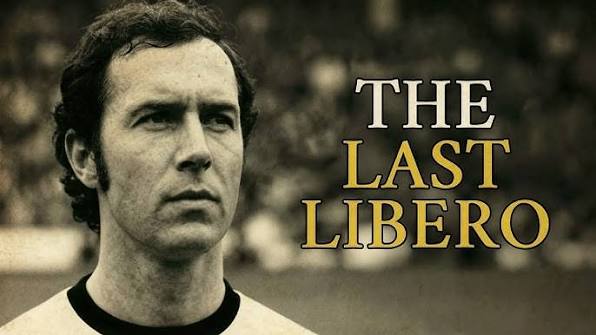
    This is the story of that forgotten art: how the libero evolved from a purely destructive ‘bolt’ in Italian catenaccio to an attacking weapon in the hands of Franz Beckenbauer, and why it vanished so completely.

    The Birth of the Sweeper: Catenaccio’s Last Line

    The libero’s roots lie in the Italian obsession with defense. In the 1950s and 1960s, coaches like Nereo Rocco and Helenio Herrera perfected catenaccio, or ‘door-bolt’—a system designed to smother opponents. At the back, a sweeper, or libero, sat behind the man-marking defenders, with no specific opponent to mark. He was the ‘free’ player, the bolt that locked the door.

    In those early days, the libero was purely destructive. His job was to sweep up loose balls, clear danger, and mark space. He rarely crossed the halfway line. Inter Milan’s Armando Picchi, one of the first great liberos, was a hard-tackling, no-nonsense defender who embodied the role’s defensive spirit. But the position’s potential for more was already apparent: because he wasn’t tied to an opponent, he could read the game and pick his moments to step forward.

    Beckenbauer’s Revolution: The Libero as Playmaker

    If catenaccio gave the libero life, Franz Beckenbauer gave it wings. In the late 1960s, the German defender began doing something unheard of: he carried the ball out of defense, surged into midfield, and even scored goals. ‘Der Kaiser’ redefined the sweeper as an attacking force, a ‘quarterback’ who dictated play from deep.

    Beckenbauer’s performances at the 1970 and 1974 World Cups were a revelation. He roamed freely behind his defense, stepping up to intercept passes, then launching attacks with precise long-range passes. In the 1974 final against the Netherlands, he neutralized Johan Cruyff’s movement by stepping out of defense to close him down—a move that would have been impossible for a traditional marker. West Germany won 2-1, and the libero became the most celebrated position in football.

    The Golden Age: Scirea, Baresi, and the Italian School

    Italy, the libero’s birthplace, produced its finest exponents in the 1980s. Gaetano Scirea, who won the 1982 World Cup, was the anti-Picchi: elegant, technically gifted, and a model of sportsmanship (he never received a red card in his career). He played the role with grace, stepping forward to join midfield and even scoring goals—a rarity for a sweeper.

    Franco Baresi, the AC Milan legend, adapted the libero to the modern era. In Arrigo Sacchi’s high-pressing, zonal system of the late 1980s, Baresi played as a sweeper within a flat back four, sweeping up behind his center-backs while also initiating attacks. His reading of the game was so exceptional that he seemed to anticipate every move before it happened. Milan’s dominance in Europe and Baresi’s performances in World Cup 1990 and 1994 (where he played despite injury) cemented the libero’s reputation as a thinking fan’s position.

    The Last Great Libero: Matthias Sammer

    By the 1990s, the libero was already in decline, but Matthias Sammer proved it could still win at the highest level. At Euro 96, the German played as a sweeper with a license to attack. He scored crucial goals, including one against Russia in the group stage, and was named European Footballer of the Year. His performances were a throwback to Beckenbauer—aggressive, intelligent, and decisive.

    But even as Sammer triumphed, the game was changing. The tactical winds were shifting toward zonal marking, offside traps, and a flat back four. The libero’s freedom created a ‘hole’ that modern attacking midfielders could exploit, and his deep position made it harder to play a high line. The rise of pressing, popularized by Dutch and Spanish coaches, meant that defenders needed to be athletic and aggressive, not just intelligent.

    Why the Libero Vanished: A Tactical Autopsy

    The libero’s death was not sudden but a slow decline across the 1990s. Several factors contributed:

    • Zonal marking: Coaches abandoned man-marking in favor of zonal systems, where each defender is responsible for a zone rather than an opponent. This made a free defender redundant.
    • Offside traps: Modern defenses use a high line and step up in unison to catch attackers offside. A sweeper playing deep would break this line, making the trap impossible.
    • Pressing: The game became more intense, with teams pressing high up the pitch. A libero dropping deep would leave a hole in midfield, allowing opponents to play through.
    • Athleticism: Players became faster and stronger, and the libero’s need for acceleration and reading of the game was no longer enough. Teams needed defenders who could match quick, physical strikers.

    By the early 2000s, the libero was a relic. The last notable exponents were players like Fernando Hierro and Roberto Ayala, who occasionally dropped deep but were primarily conventional center-backs. The position survived in youth football and lower leagues, but at the top level, it was gone.

    The Libero’s Legacy: Echoes in Modern Football

    Though the classic libero is extinct, its DNA survives in modern positions. Sweeper-keepers like Manuel Neuer and Alisson Becker play a similar role, rushing off their line to clear balls and starting attacks with short passes. Deep-lying playmakers like Andrea Pirlo and Jorginho drop between the center-backs to receive the ball—a modern approximation of the libero’s attacking freedom.

    Some teams have even tried to revive the role. At the 2014 World Cup, Germany’s Jerome Boateng occasionally dropped into a sweeper position, and Pep Guardiola has experimented with a ‘false libero’ at Manchester City, using John Stones or Aymeric Laporte to step into midfield. But these are hybrid solutions, not the pure libero of old.

    The libero’s legacy is more than tactical—it’s cultural. It represented a time when football valued intelligence and elegance over pure athleticism. Players like Beckenbauer, Scirea, and Baresi were celebrated as ‘professors’ of the game, artists who could defend and create in equal measure. The position’s demise was inevitable, but its memory endures among those who love the beautiful game’s intellectual side.

    The libero was a product of its time, a tactical innovation that flourished for three decades before the game moved on. But its influence persists, not just in the sweeper-keepers and deep-lying playmakers of today, but in the ideal that defenders can be more than destroyers—they can be creators. The football world may never see another Beckenbauer, but the ghost of the libero still wanders the pitch, whispering that the best defense is not just about stopping goals, but about starting something beautiful.

    Summary

    • The libero, or sweeper, was a defensive position that operated behind the back line with no man-marking duties, sweeping up loose balls and initiating attacks.
    • It evolved from catenaccio’s purely defensive ‘bolt’ to an attacking weapon in the hands of Franz Beckenbauer, who redefined the role in the 1970s.
    • The golden age of the libero ran from the 1960s to the 1990s, with legends like Gaetano Scirea, Franco Baresi, and Matthias Sammer.
    • The role vanished due to the rise of zonal marking, offside traps, pressing, and increased athleticism, which made a free defender redundant.
    • The libero’s legacy lives on in modern sweeper-keepers, deep-lying playmakers, and occasional tactical experiments at top clubs.

    FAQ

    Q: What exactly was the libero’s role?
    A: The libero was a defender who played behind the main defensive line, with no specific opponent to mark. They swept up loose balls, covered for beaten teammates, and often carried the ball forward to start attacks.

    Q: Why was the libero called ‘free’?
    A: ‘Libero’ is Italian for ‘free.’ Because they weren’t assigned a man to mark, they had the freedom to read the game and position themselves where needed, both defensively and offensively.

    Q: Who was the greatest libero of all time?
    A: Franz Beckenbauer is widely considered the greatest. He transformed the role from a purely defensive position into an attacking playmaker role, leading West Germany to the 1974 World Cup title.

    Q: Why did the libero disappear?
    A: The rise of zonal marking, offside traps, and high pressing made the libero’s deep position a liability. Modern defenses need to play as a flat, coordinated unit, and the libero’s freedom created gaps that opponents could exploit.

    Q: Are there any modern players who play like a libero?
    A: Yes, in a sense. Sweeper-keepers like Manuel Neuer and deep-lying playmakers like Andrea Pirlo share some of the libero’s traits, and some coaches have experimented with using center-backs in a ‘false libero’ role, but the classic position is largely extinct.

  • What Rome’s Rise and Fall Teaches Modern Superpowers

    What Rome’s Rise and Fall Teaches Modern Superpowers

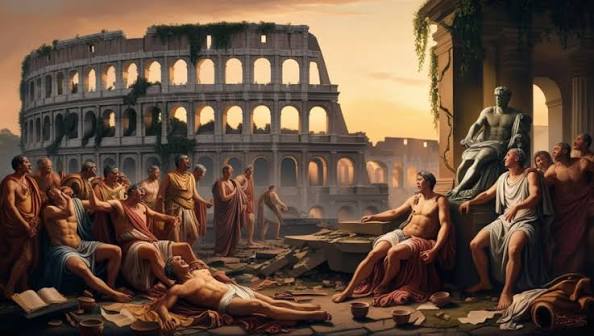
    The Roman Empire’s trajectory—from a small city-state to the ancient world’s superpower, then to a fragmented relic—has fascinated historians and leaders for centuries. Its story is often invoked as a cautionary tale for modern nations, especially the United States. But is the comparison valid? This article explores the factors behind Rome’s rise and fall, and what—if anything—today’s superpowers can learn from its example.

    The Rise: What Made Rome Exceptional

    Rome’s ascent was not inevitable. It began as a modest settlement on the Italian peninsula, but a combination of geography, institutions, and strategy propelled it to dominate the Mediterranean.

    Geographic advantage played a crucial role. Italy’s central location in the Mediterranean, fertile lands, and natural barriers like the Alps and seas provided a secure base. But geography alone doesn’t explain empire. Rome’s institutional innovation—the Republic’s mixed constitution, balancing monarchical (consuls), aristocratic (Senate), and democratic (assemblies) elements—created a stable and adaptable governance system that Polybius praised.

    Military adaptability was another key. The legion system, professionalization, and a willingness to integrate conquered peoples into the military turned former enemies into loyal soldiers. Rome’s citizenship strategy—gradually extending legal rights to allies and conquered peoples—fostered loyalty and integration, unlike many empires that maintained rigid distinctions.

    Infrastructure—roads, aqueducts, ports—enabled rapid troop movement and economic integration. At its peak under Trajan (c. 117 CE), Rome controlled ~5 million square kilometers and 60–70 million people, roughly 20–25% of the world’s population. Its army numbered 300,000–400,000, and its road network spanned 400,000 km, with the denarius as the ancient world’s reserve currency.

    The Fall: A Complex Interplay of Factors

    The traditional narrative of Rome’s fall—moral decay, barbarian invasions, and overexpansion—has been refined by modern scholarship. No single cause explains the collapse; instead, a web of interconnected factors emerged over centuries.

    Economic strain was significant. Rome relied heavily on slave labor, which stifled technological innovation and created a fragile economic base. Currency debasement led to inflation, heavy taxation shrank the tax base, and the cost of maintaining a vast empire strained the treasury.

    Political instability reached a crisis in the third century CE, when 26 emperors ruled in 50 years, most dying by assassination or in battle. This instability weakened central authority and diverted resources to internal power struggles.

    Military overextension was another factor. Rome’s borders stretched over 10,000 km, and defending them with ancient communication and logistics was costly. Increasingly, Rome relied on barbarian mercenaries whose loyalty was questionable.

    Barbarian pressure—driven by Hunnic migrations—pushed Germanic tribes like the Visigoths and Vandals into Roman territory. The sacking of Rome in 410 CE by the Visigoths was a psychological blow, and the deposition of Romulus Augustulus in 476 CE marks the conventional end of the Western Empire.

    Internal decay—corruption, loss of civic virtue, and a widening wealth gap—eroded the social fabric. The division of the empire into East and West by Diocletian in 284 CE left the West economically weaker and more exposed.

    Modern historians add nuance. Climate and disease—the Antonine Plague (165–180 CE), Cyprian Plague (249–262 CE), and the Late Antique Little Ice Age—stressed the empire. The ‘late antiquity’ school argues that Rome transformed rather than collapsed, with cultural and religious continuity. The Eastern Roman (Byzantine) Empire survived until 1453, suggesting the fall was specific to the West.

    Lessons for Modern Superpowers

    Drawing parallels between Rome and the U.S. is common, but such comparisons require caution. Still, several lessons emerge.

    First, overstretch is a real risk. Paul Kennedy’s ‘imperial overstretch’ thesis—military commitments exceeding economic capacity—applies to Rome. The U.S. has allies, technology, and forward bases that reduce costs, but the principle remains: a superpower must balance its global commitments with its economic resources.

    Second, economic health is foundational. Rome’s economic decline—currency debasement, heavy taxation, and reliance on slave labor—undermined its power. Modern superpowers must maintain fiscal responsibility and avoid over-reliance on unsustainable practices.

    Third, political stability matters. Rome’s crisis of the third century shows how internal strife can cripple a state. Polarization and institutional decay are warning signs.

    Fourth, integration and citizenship are strengths. Rome’s extension of citizenship created loyalty. Modern nations that embrace diversity and provide a path to belonging may be more resilient.

    Fifth, adaptability is key. Rome’s military and institutional flexibility aided its rise, but its later rigidity contributed to its fall. Superpowers must innovate and adapt to changing circumstances.

    However, critics argue that direct parallels are selective. The U.S. has nuclear weapons, a globalized economy, and democratic institutions that Rome lacked. The ‘fall’ of Rome was not inevitable, and modern superpowers are not destined to repeat it.

    Conclusion

    Rome’s rise and fall offer a rich tapestry of lessons, but they are not a simple blueprint. The empire’s success stemmed from geography, institutions, and adaptability; its decline resulted from a complex interplay of economic, political, and external pressures. Modern superpowers can learn from Rome’s mistakes—overstretch, economic mismanagement, political instability—but must also recognize the profound differences in their contexts. The Roman story is a reminder that power is fleeting, but it is also a testament to human resilience and transformation.

    The Roman Empire’s story is not a prophecy but a mirror. It reflects the challenges that all great powers face: balancing ambition with resources, unity with diversity, and tradition with change. By studying Rome’s rise and fall, modern superpowers can gain perspective on their own trajectories—not to predict doom, but to make wiser choices.

    Summary

    • Rome’s rise was driven by geography, institutional innovation, military adaptability, and a citizenship strategy that integrated conquered peoples.
    • The fall was not caused by a single factor but by a complex interplay of economic strain, political instability, military overextension, barbarian pressure, and internal decay.
    • Modern scholarship emphasizes climate, disease, and the ‘transformation’ rather than ‘fall’ narrative, noting the Byzantine Empire’s survival.
    • Lessons for modern superpowers include avoiding overstretch, maintaining economic health, ensuring political stability, and embracing integration.
    • Direct parallels are selective; structural differences like nuclear weapons and democratic institutions make Rome’s fate not inevitable.

    FAQ

    Q: What was the main reason for Rome’s fall?
    A: There is no single cause. Modern historians point to a combination of economic strain, political instability, military overextension, barbarian invasions, and internal decay, exacerbated by climate and disease.

    Q: How long did the Roman Empire last?
    A: The Western Empire lasted from 27 BCE to 476 CE, but the Eastern (Byzantine) Empire continued until 1453 CE, making the total span nearly 1,500 years.

    Q: Is the U.S. like Rome?
    A: Some draw parallels in terms of military overstretch and fiscal issues, but critics note structural differences like nuclear weapons, a globalized economy, and democratic institutions that make the comparison imperfect.

    Q: What was the ‘Crisis of the Third Century’?
    A: A period from 235–284 CE when Rome experienced extreme political instability, with 26 emperors in 50 years, economic decline, and external threats, nearly leading to collapse.

    Q: Did Rome really ‘fall’ or transform?
    A: The ‘late antiquity’ school argues that Rome transformed rather than collapsed, with cultural and religious continuity, especially in the East. The Western Empire’s political structure ended, but Roman influence persisted.

  • Tea: The Ancient Leaf That Brewed Modern Culture

    Tea: The Ancient Leaf That Brewed Modern Culture

    From a mythical emperor’s accidental discovery to the global phenomenon of bubble tea, tea has traveled across centuries and continents, shaping economies, inspiring philosophies, and brewing connections between people. More than just a beverage, tea is a cultural artifact—a vessel for ritual, resistance, and relaxation. This article explores how a simple leaf became the world’s second most consumed drink, weaving through ancient ceremonies and modern trends to reveal its enduring cultural significance.

    The Legendary Origins and Early History

    Tea’s story begins in ancient China, wrapped in legend. Emperor Shennong, a mythical figure known as the ‘Divine Farmer,’ is said to have discovered tea around 2737 BCE when leaves from a wild tree blew into his pot of boiling water. While this tale is more folklore than fact, it anchors tea’s origin in Chinese culture. The first documented use of tea dates to the Han Dynasty (206 BCE–220 CE), where it was consumed primarily as a medicinal beverage.

    It was during the Tang Dynasty (618–907 CE) that tea transformed from a health tonic into a cultural cornerstone. Lu Yu’s The Classic of Tea (c. 760–780 CE) became the first comprehensive treatise on tea, covering cultivation, preparation, and philosophy. This text elevated tea from a simple drink to an art form, setting the stage for centuries of tea culture.

    The Song Dynasty (960–1279 CE) saw the rise of whipped powdered tea—a precursor to today’s matcha—and increasingly elaborate ceremonies. By the Ming Dynasty (1368–1644 CE), loose-leaf tea and steeping replaced powdered tea, shifting tea culture toward the brewing methods we use today. This evolution laid the groundwork for tea’s global journey.

    Tea as a Global Historical Force

    Tea’s spread across the globe was not just a matter of taste—it was a driver of history. Buddhist monks carried tea to Japan in the 9th century, where it became intertwined with Zen Buddhism. In the early 17th century, Portuguese and Dutch traders introduced tea to Europe, and by the 1650s, it had reached Britain. The British East India Company monopolized the Chinese tea trade, creating a massive trade deficit that led to the Opium Wars (1839–1842, 1856–1860). This conflict forced China to open its ports, reshaping global trade and power dynamics.

    Tea also played a role in the American Revolution. The Boston Tea Party of 1773 used tea as a symbol of colonial resistance against British taxation, turning a beverage into a political statement. Later, the British shifted tea cultivation to India (Assam, Darjeeling) and Ceylon (Sri Lanka), relying on indentured labor and colonial infrastructure. These plantations left lasting socioeconomic legacies that still resonate today.

    Rituals and Ceremonies: Tea as a Cultural Touchstone

    Across cultures, tea has been elevated into rituals that reflect deeper values. In China, Gongfu Cha is a meticulous, multi-step brewing method emphasizing skill, aroma, and small servings. Rooted in Chaoshan culture, it has gained global popularity in the 20th century, inviting practitioners to slow down and savor each infusion.

    Japan’s Chanoyu (tea ceremony), codified by Sen no Rikyū (1522–1591), is perhaps the most famous tea ritual. It embodies four principles: harmony (wa), respect (kei), purity (sei), and tranquility (jaku). Influenced by Zen Buddhism, the ceremony is a practice in mindfulness and discipline, where every movement is intentional.

    In Britain, Afternoon Tea was popularized by Anna Russell, Duchess of Bedford, around 1840 as a bridge between lunch and dinner. It evolved into a social ritual with specific etiquette—finger sandwiches, scones, and clotted cream—and became a marker of gentility. Meanwhile, Moroccan Mint Tea is a gesture of hospitality, poured from a height to aerate and cool, and served three times with different flavor intensities. In Russia, the samovar tradition involves brewing a strong concentrate (zavarka) and diluting it with hot water, central to social gatherings.

    India’s masala chai—spiced milk tea—is an everyday beverage and street-food staple, distinct from British colonial tea culture. And in Taiwan, bubble tea was invented in the 1980s in Taichung, combining tea, milk, and tapioca pearls. It has since become a global phenomenon, blending tradition with innovation.

    Modern Trends: Tea in the 21st Century

    Today, tea is the second most consumed beverage worldwide after water, with global production exceeding 6 million tonnes annually, led by China, India, Kenya, and Sri Lanka. Modern trends reflect a growing appreciation for quality, health, and sustainability.

    Specialty and third-wave tea—analogous to specialty coffee—emphasizes single-origin leaves, terroir, and artisanal processing. Consumers are increasingly interested in where their tea comes from and how it’s made. Wellness and functional teas like matcha, kombucha, and herbal blends are marketed for health benefits, from antioxidants to calm and energy.

    Sustainability and ethical sourcing are also gaining traction, with demand for fair-trade, organic, and regenerative agriculture practices. Digital tea culture has expanded through online communities, subscription boxes, and virtual tastings, especially during the COVID-19 pandemic. And tea tourism—visiting destinations like Wuyi Mountain in China, Uji in Japan, or Munnar in India—offers immersive experiences for enthusiasts.

    The Philosophical and Social Dimensions

    Tea is not just a drink; it’s a philosophy. In Zen Buddhism, tea promotes mindfulness and ritual discipline. In Daoism, it’s associated with harmony with nature and the flow of qi (vital energy). Confucianism uses tea ceremonies to reinforce social hierarchy and propriety. In North Africa and the Middle East, tea is tied to hospitality and communal bonding, often influenced by Sufism and Islam.

    Tea also reflects social and class dynamics. In Britain, tea was initially a luxury for the elite before becoming a working-class staple. Afternoon tea became a marker of gentility, and tea rooms in the 19th and 20th centuries provided women with socially acceptable public spaces. In Japan, the tea ceremony historically involved strict social protocols, reinforcing status and etiquette.

    Conclusion

    From a mythical emperor’s accidental brew to a global commodity that sparked wars and revolutions, tea has proven to be far more than a beverage. It is a cultural touchstone that adapts to each society it touches, embodying values of hospitality, mindfulness, and connection. As modern trends continue to evolve, tea remains a bridge between ancient rituals and contemporary life, inviting us to pause, savor, and share a moment—one cup at a time.

    Tea’s journey from ancient China to global modernity is a testament to its cultural versatility. Whether in a formal Japanese tea ceremony, a casual British afternoon tea, or a trendy bubble tea shop, tea continues to bring people together. As we look to the future, tea’s role as a symbol of hospitality, wellness, and sustainability ensures its place in our cups and cultures for generations to come.

    Summary

    • Tea originated in China, with legendary roots in Emperor Shennong’s discovery around 2737 BCE, and became a cultural cornerstone during the Tang Dynasty.
    • Tea drove global history, from the Opium Wars to the Boston Tea Party, and shaped colonial economies in India and Sri Lanka.
    • Cultural rituals like Chinese Gongfu Cha, Japanese Chanoyu, British Afternoon Tea, and Moroccan Mint Tea highlight tea’s diverse significance.
    • Modern trends include specialty teas, wellness-focused blends, ethical sourcing, digital tea culture, and tea tourism.
    • Tea is the world’s second most consumed beverage, with deep philosophical and social dimensions that continue to evolve.

    FAQ

    Q: Who discovered tea?
    A: According to legend, Chinese Emperor Shennong discovered tea around 2737 BCE when leaves blew into his boiling water. While mythological, this story anchors tea’s origin in Chinese culture.

    Q: What is the difference between Gongfu Cha and Japanese Chanoyu?
    A: Gongfu Cha is a Chinese brewing method that emphasizes skill, aroma, and small servings, while Chanoyu is a Japanese tea ceremony focused on harmony, respect, purity, and tranquility, influenced by Zen Buddhism.

    Q: How did tea lead to the Opium Wars?
    A: The British East India Company’s monopoly on Chinese tea trade created a massive trade deficit for Britain. To balance it, the British exported opium to China, leading to conflicts known as the Opium Wars (1839–1842, 1856–1860).

    Q: What is the significance of Moroccan mint tea?
    A: Moroccan mint tea is a gesture of hospitality, poured from a height to aerate and cool. It is served three times, each with a different flavor intensity, symbolizing the host’s generosity.

    Q: What are the modern trends in tea consumption?
    A: Modern trends include specialty and third-wave teas, wellness and functional teas like matcha and kombucha, sustainable and ethical sourcing, digital tea culture, and tea tourism.

  • The Forgotten Legends: 10 Footballers Who Defined the 1970s

    The Forgotten Legends: 10 Footballers Who Defined the 1970s

    The 1970s were a golden era for football, a decade that gave us the beautiful game at its most expressive and competitive. While icons like Pelé, Cruyff, and Beckenbauer rightly dominate the conversation, a host of other extraordinary talents lit up the world’s biggest stages, only to fade from modern memory. This article shines a light on ten such players—elite performers whose impact on the 1970s was profound, yet whose legacies have been largely overlooked in today’s discourse.

    From World Cup heroes to European Cup champions, these are the forgotten legends who defined an era. Their stories are not just about goals and trophies, but about the artistry, resilience, and sheer footballing intelligence that made the 1970s a transformative period for the sport. Join us as we revisit the careers of these unsung greats, exploring why they mattered then and why they still deserve our recognition today.

    The Criteria: What Makes a Forgotten Legend?

    Before diving into the list, it’s essential to define what we mean by ‘forgotten.’ These are players who were unquestionably elite during the 1970s—starting for world-class teams, winning major honors, and influencing the game’s evolution—yet are rarely mentioned in modern retrospectives. They are not obscure; they are under-celebrated, often overshadowed by more famous teammates or opponents. The 1970s spanned two World Cups (1970 in Mexico, 1974 in West Germany) and one European Championship (1972 in Belgium), plus the rise of club dominance in the European Cup. Our selections reflect that rich tapestry.

    The Ten Legends

    1. Gerd Müller (West Germany)

    Gerd Müller, known as ‘Der Bomber,’ was the most lethal striker of his generation. His international record is staggering: 68 goals in 62 caps, including the winning goal in the 1974 World Cup final. He was the 1970 World Cup Golden Boot winner with 10 goals, and his club career at Bayern Munich yielded four Bundesliga titles and three European Cups. Yet, he is often overshadowed by his teammate Franz Beckenbauer. Müller’s poacher’s instinct, his low center of gravity, and his ability to score from any angle made him a nightmare for defenders. His legacy is that of a pure goal-scorer, a dying breed in modern football.

    2. Jairzinho (Brazil)

    Jairzinho, ‘The Hurricane,’ was a force of nature on Brazil’s right wing. He is the only player to score in every match of a World Cup, achieving this feat in 1970 with seven goals. His pace, power, and clinical finishing were instrumental in Brazil’s third title, often cited as the greatest team ever. Despite this, he is frequently mentioned only as a footnote to Pelé’s brilliance. Jairzinho’s direct running and ability to cut inside from the flank made him a prototype for modern wingers. His 1970 performance remains one of the greatest individual displays in World Cup history.

    3. Rivelino (Brazil)

    Rivelino, with his thunderous left foot and trademark mustache, was the creative heartbeat of Brazil’s 1970 and 1974 campaigns. He scored a stunning free-kick against Czechoslovakia in 1970 and captained Brazil in 1974. His vision, dribbling, and long-range shooting earned him the nickname ‘The King of the Left Foot.’ Yet, he is often overshadowed by Pelé and Jairzinho. Rivelino’s ability to dictate play from midfield and his set-piece mastery were ahead of his time. He remains a cult figure in Brazilian football, but his global recognition is far less than his talent deserved.

    4. Tostão (Brazil)

    Tostão was the cerebral striker who partnered Pelé in Brazil’s 1970 attack. His intelligent movement and link-up play were crucial to the team’s fluidity. Tragically, a detached retina forced his retirement at just 26, cutting short a career that promised even more. He scored twice in the 1970 World Cup, including a memorable goal in the final. Tostão’s early exit from the game means his legacy is often reduced to a ‘what if.’ Yet, his contribution to that iconic team was immense, and his post-football career as a physician and columnist shows a remarkable mind.

    5. Johan Neeskens (Netherlands)

    Johan Neeskens was the engine of Johan Cruyff’s Total Football machine. As a midfielder, he combined relentless energy with technical excellence, scoring in the 1974 World Cup final against West Germany. He was a key figure in Ajax’s three consecutive European Cup wins (1971-73) and later starred for Barcelona. Despite his pivotal role, Neeskens is often overshadowed by Cruyff. His tackling, passing, and ability to arrive late in the box made him the complete midfielder. Neeskens’ penalty-taking was also legendary—he scored from the spot in the 1974 final, though it wasn’t enough to secure victory.

    6. Johnny Rep (Netherlands)

    Johnny Rep was a winger with a knack for scoring in big matches. He scored in both the 1974 and 1978 World Cup finals, a rare feat. His career spanned Ajax, Bastia, and Saint-Étienne, where he won multiple league titles. Rep’s pace and directness were vital to the Dutch style, yet he is often forgotten in discussions of that great team. His goals in finals, including a crucial equalizer in 1978, demonstrate his big-game temperament. Rep’s ability to drift past defenders and deliver precise finishes made him a constant threat.

    7. Mario Kempes (Argentina)

    Mario Kempes was the hero of Argentina’s 1978 World Cup triumph on home soil. He scored six goals to win the Golden Boot, including two in the final against the Netherlands. His powerful runs and clinical finishing made him the tournament’s standout player. Yet, outside of Argentina, his legacy is often overshadowed by Diego Maradona’s later exploits. Kempes’ performances in 1978 were a masterclass in leading a team to glory, and his club career in Spain with Valencia was equally impressive. He remains a national icon, but his global recognition is surprisingly limited.

    8. Kazimierz Deyna (Poland)

    Kazimierz Deyna was the playmaker of Poland’s golden generation. He led his country to Olympic gold in 1972 and a third-place finish at the 1974 World Cup, where he was named to the All-Star Team. Deyna’s vision, passing, and leadership were exceptional, and he scored twice in the 1974 World Cup, including a stunning free-kick against Sweden. Despite his brilliance, he is rarely mentioned in discussions of the era’s greats. Deyna’s career included stints at Legia Warsaw and Manchester City, but his legacy is firmly rooted in his international exploits.

    9. Grzegorz Lato (Poland)

    Grzegorz Lato was the Golden Boot winner of the 1974 World Cup with seven goals, a feat that remains underappreciated. His pace and finishing were crucial to Poland’s success, which included a memorable victory over Brazil in the third-place match. Lato’s club career was primarily in Poland and Belgium, which limited his exposure, but his international record—45 goals in 100 caps—is outstanding. He is often overshadowed by Deyna, but Lato’s goal-scoring prowess was equally vital. His performance in 1974 remains one of the tournament’s great individual achievements.

    10. Teófilo Cubillas (Peru)

    Teófilo Cubillas, ‘El Nene,’ was Peru’s greatest player and one of the most elegant forwards of the 1970s. He scored 10 goals across the 1970 and 1978 World Cups, including a hat-trick against Iran in 1978. His dribbling, shooting, and free-kick ability were world-class. Peru’s quarterfinal run in 1970 and second-round appearance in 1978 were largely due to his brilliance. Despite this, Cubillas is rarely mentioned alongside the era’s greats, perhaps because Peru never won a major trophy. His legacy is that of a sublime talent who shone on the biggest stage.

    The Context: Why These Players Matter

    The 1970s were a transitional period in football, moving from the defensive rigidity of the 1960s to the tactical fluidity of the modern game. These ten players were at the forefront of that evolution. They were pioneers of Total Football, counter-attacking, and set-piece mastery. Their contributions shaped the tactics we see today, from the false nine to the attacking full-back. Yet, their stories are often lost in the shadow of a few iconic names. By remembering them, we not only honor their achievements but also gain a deeper understanding of the game’s history.

    The Stakes: Why We Should Remember

    Forgetting these legends does a disservice to the sport’s rich heritage. Their achievements inspired generations of players and fans, and their innovations continue to influence modern football. In an era where the past is often reduced to a few famous names, it’s crucial to celebrate the full spectrum of talent that made the 1970s so special. These players were not just footnotes; they were protagonists in one of football’s most exciting decades. Their stories deserve to be told, not just for nostalgia, but for the lessons they offer about skill, determination, and the beautiful game.

    The 1970s were a decade of footballing brilliance, and these ten players were among its brightest stars. While they may not always be the first names that come to mind, their contributions were indispensable. By revisiting their careers, we enrich our understanding of the game and ensure that their legacies endure. Let us not forget the forgotten legends—they defined an era and deserve their place in football’s pantheon.

    Summary

    • The 1970s featured two World Cups and one European Championship, with club dominance from Ajax, Bayern Munich, and Liverpool.
    • ‘Forgotten’ means under-celebrated relative to their impact, not obscure.
    • Gerd Müller, Jairzinho, Rivelino, and Tostão were key to Brazil’s 1970 triumph and West Germany’s 1974 win.
    • Dutch stars Johan Neeskens and Johnny Rep were crucial to Total Football, scoring in World Cup finals.
    • Mario Kempes, Kazimierz Deyna, Grzegorz Lato, and Teófilo Cubillas were standout performers in the 1970s World Cups.

    FAQ

    Q: What makes a player ‘forgotten’ in this context?
    A: A player is considered ‘forgotten’ if they were elite during the 1970s but are rarely mentioned in modern mainstream discussions, unlike icons like Pelé or Cruyff. They are under-celebrated relative to their impact.

    Q: Why were these specific players chosen?
    A: They were selected based on their significant contributions to major tournaments and club competitions in the 1970s, as well as their relative absence from modern discourse. The list includes World Cup heroes, European Cup winners, and Ballon d’Or recipients.

    Q: Are there any notable exclusions?
    A: Yes, players like Zico, Platini, and Boniek were excluded because their prime years were more in the 1980s. Similarly, some 1960s legends like Eusébio were not included.

    Q: How did these players influence modern football?
    A: They were pioneers of tactical innovations like Total Football, counter-attacking, and set-piece mastery. Their styles influenced modern wingers, midfielders, and strikers.

    Q: Where can I learn more about these players?
    A: You can explore their match footage on platforms like YouTube, read biographies, or delve into World Cup archives. Many have detailed profiles on football history websites.

  • From Roman Snack Bars to Gourmet Food Trucks: A Delicious History of Eating on the Go

    From Roman Snack Bars to Gourmet Food Trucks: A Delicious History of Eating on the Go

    Street food is more than just a quick bite—it’s a living link to our urban past. From the marble counters of Pompeii to the neon-lit food trucks of Los Angeles, vendors have fed the world’s cities for millennia. This isn’t just a story about food; it’s a story about migration, innovation, and the universal need for a tasty, affordable meal on the move.

    In this article, we’ll trace the evolution of street food from ancient civilizations to the modern gourmet truck revolution. We’ll explore how a simple snack can reveal the economic, cultural, and social fabric of a city—and why that taco you grab from a cart is part of a tradition that spans thousands of years.

    The Ancient Roots: Rome, Greece, and China

    Street food is as old as cities themselves. In ancient Rome, the thermopolium was the go-to spot for a hot meal. These small eateries featured marble counters with embedded clay jars (dolia) holding hot stews, wine, and other delicacies. Over 200 have been unearthed in Pompeii alone, showing just how popular they were. The staple was puls, a simple porridge, but Romans could also grab bread, olives, cheese, and salted fish. These were the original fast-food joints, serving workers and slaves who had no kitchen of their own.

    Meanwhile, in ancient Greece, the agora (marketplace) was filled with vendors selling small fried fish and flatbreads. The philosopher Theophrastus even mocked a “shameless man” who haggled over a penny’s worth of fish—proof that street food was a daily part of life.

    Across the world, during China’s Tang Dynasty (618–907 CE), the capital Chang’an boasted vibrant night markets. Vendors there sold noodles, dumplings, and roasted meats, offering a culinary experience that predates many European traditions. These early examples show that wherever people gathered in numbers, street food followed.

    Medieval Markets and Pies

    In medieval Europe, street vendors were a common sight in cities like London and Paris. They sold pies, pasties, roasted chestnuts, and the ever-popular meat pie. The term “pie” may come from the magpie bird, which collects scraps, or from the Latin pica. Either way, these portable, filling snacks were perfect for workers on the go.

    In the Middle East, the souq (market) was a hub of street food activity. Vendors offered kebabs, flatbreads, and sweets like baklava, creating a tradition of spiced meats and sweet pastries that still influences global cuisine today.

    The Early Modern Era: London and New York

    By the 18th and 19th centuries, street food had become a defining feature of major cities. In London, you could find hot eels, pea soup, baked potatoes, and even “muffin men” who sold door-to-door. Henry Mayhew’s 1862 book London Labour and the London Poor documented hundreds of street sellers, offering a vivid snapshot of this bustling economy.

    Across the Atlantic, 19th-century New York was equally vibrant. Oyster carts, hot corn vendors, and “pie men” lined the streets. The first pushcarts appeared in the 1820s, selling fruit, cakes, and coffee to a growing urban workforce. These vendors were often immigrants, bringing their culinary traditions and adapting them to new ingredients.

    In Mexico, a unique street food icon was born: tacos al pastor. In the early 20th century, Lebanese immigrants introduced shawarma-style spit-roasting, and Mexicans adapted it to pork, creating a dish that would become a national treasure.

    The Modern Food Truck Revolution

    The food truck as we know it today has a more recent origin. The 2008 recession in the U.S. pushed many chefs to seek low-overhead ventures, and food trucks offered a way to serve gourmet food without the cost of a restaurant. Los Angeles and Portland, Oregon, became early hubs, and social media—Twitter and Facebook—allowed trucks to broadcast their locations to hungry followers.

    But the history of mobile food vending goes back further. In the 1930s and 40s, “roach coaches” served construction workers in the U.S., and the 1970s saw the rise of taco trucks in Los Angeles. These earlier iterations were often seen as low-end, but the modern movement has elevated street food to a culinary art form.

    Today, the global street food market is estimated at over $100 billion annually, with Asia-Pacific leading in consumption. From Bangkok’s pad thai to New York’s halal carts, street food is a global phenomenon that shows no signs of slowing down.

    Why Street Food Matters

    Street food exists because of urbanization and the need for cheap, quick meals for workers who lacked kitchens or time. It’s also a reflection of migration—immigrants bring their recipes and adapt them to local ingredients, creating new culinary hybrids.

    Regulation has always been a challenge. In ancient Rome, officials called aediles oversaw food vendors for hygiene and price. In 19th-century London, the 1866 Sanitary Act cracked down on vendors, leading to a decline in some trades. In the U.S., early 20th-century “pure food” laws and zoning regulations pushed vendors to the margins, often targeting immigrant vendors. Today, food trucks face complex permitting, health codes, and parking restrictions that vary wildly by city.

    Despite these challenges, street food remains culturally significant. It’s often the most authentic expression of a cuisine—democratic, accessible, and reflective of local tastes. UNESCO has even recognized some street food traditions, like Singapore’s hawker culture, as intangible cultural heritage.

    The Future of Street Food

    As technology advances, so does street food. Propane and electric cooking equipment have made mobile kitchens more viable, and social media continues to drive the industry. But the core appeal remains the same: a delicious, affordable meal served with personality and speed.

    Whether you’re biting into a Roman-style flatbread or a gourmet kimchi taco from a food truck, you’re partaking in a tradition that has fed humanity for thousands of years. Street food is not just food—it’s a testament to human ingenuity and the universal love of eating well on the go.

    From the thermopolia of ancient Rome to the gourmet food trucks of today, street food has been a constant companion to urban life. It reflects our history, our migrations, and our creativity. So next time you grab a quick bite from a vendor, take a moment to appreciate the centuries of tradition behind that simple, delicious meal.

    Summary

    • Street food has ancient roots, from Roman thermopolia to Tang Dynasty night markets.
    • Medieval Europe and the Middle East had vibrant street food cultures, including pies and kebabs.
    • The 18th–19th centuries saw street food boom in London and New York, often driven by immigrants.
    • The modern food truck movement began in the U.S. after the 2008 recession, enabled by social media.
    • Street food is culturally significant, with UNESCO recognizing some traditions as intangible heritage.

    FAQ

    Q: What is the oldest known street food?
    A: The thermopolium in ancient Rome is one of the earliest examples, serving hot food and wine from clay jars around 2,000 years ago.

    Q: Why did food trucks become so popular?
    A: The 2008 recession led chefs to seek low-cost ventures, and social media allowed them to market their locations easily, sparking the modern food truck boom.

    Q: Is street food safe to eat?
    A: When properly regulated, street food can be safe. Modern health codes and inspections help mitigate risks, but contamination can still occur if vendors don’t follow hygiene practices.

    Q: How has immigration influenced street food?
    A: Immigrants have brought their culinary traditions and adapted them to local ingredients, creating iconic dishes like tacos al pastor in Mexico, which was influenced by Lebanese shawarma.

    Q: What is the economic impact of street food?
    A: Street food provides a low-barrier entry point for entrepreneurs, especially immigrants and women, and the global market is estimated at over $100 billion annually.

  • The Ottoman Empire: How a 600-Year Dynasty Shapes Modern Turkey’s Identity

    The Ottoman Empire: How a 600-Year Dynasty Shapes Modern Turkey’s Identity

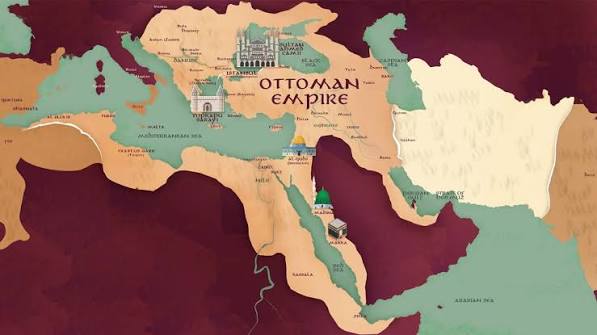
    For over six centuries, the Ottoman Empire was a superpower that bridged East and West, ruling from the gates of Vienna to the deserts of Arabia. Its collapse in the early 20th century gave birth to the Republic of Turkey, a state that deliberately turned its back on its imperial past. Yet today, the Ottoman legacy is experiencing a remarkable revival—not just in museums and architecture, but in the very fabric of Turkish politics, culture, and identity.

    Understanding this legacy is key to grasping modern Turkey’s complex relationship with its history. From the secular reforms of Atatürk to the neo-Ottomanist policies of Erdoğan, the empire’s shadow looms large. This article explores how a fallen dynasty continues to shape a nation’s soul, and why the debate over its meaning is far from settled.

    The Rise: From a Small Principality to a World Power

    The Ottoman Empire began as a tiny beylik (principality) in northwestern Anatolia around 1299, founded by Osman I on the frontier of the weakening Byzantine Empire. Over the next two centuries, it expanded rapidly, conquering the Balkans and, in 1453, achieving its defining moment: the fall of Constantinople under Mehmed II. This conquest ended the Byzantine Empire and transformed the city into Istanbul, the Ottoman capital and a global crossroads.

    By the 16th century, under Suleiman the Magnificent (r. 1520–1566), the empire reached its zenith, spanning three continents—Southeast Europe, Western Asia, and North Africa—with a population of 30–35 million. It was a multi-ethnic, multi-religious state where Turks, Arabs, Greeks, Armenians, Kurds, Jews, and many others coexisted under a sophisticated system of governance.

    The Ottoman System: A Unique Blend of Power and Diversity

    The empire’s success lay in its adaptability. The sultan held absolute authority but ruled through a complex bureaucracy. One of its most distinctive institutions was the devshirme system, which recruited Christian boys for elite military (Janissaries) and administrative roles—a remarkable mechanism for social mobility. Law combined Sharia (Islamic law) with kanun (sultanic secular law), allowing flexibility in governing diverse populations.

    The millet system granted religious communities—Orthodox Christians, Jews, Armenian Christians—autonomy over personal law and education. This fostered a cosmopolitan society, with Istanbul as a melting pot of cultures, languages, and faiths. The empire’s economy thrived on control of key trade routes, from the Silk Road to spice routes, supported by a robust guild system.

    The Fall: The ‘Sick Man of Europe’

    The 19th century brought decline. Military technological lag, nationalist uprisings among subject peoples, European imperial pressure, and financial bankruptcy (default in 1875) earned the empire the label ‘Sick Man of Europe.’ Territorial losses were staggering: Greece (1830), Algeria (1830), Egypt (1882), and nearly all of the Balkans by 1913.

    Attempts at reform, such as the Tanzimat reforms (1839–1876), modernized law, education, and administration, but they couldn’t stem the tide. World War I proved fatal. Defeat as part of the Central Powers led to the Armistice of Mudros (1918) and the subsequent Turkish War of Independence (1919–1923), led by Mustafa Kemal Atatürk. The sultanate was abolished in 1922, and the caliphate in 1924, ending 600 years of Ottoman rule.

    The Republican Break: Erasing the Ottoman Past

    Atatürk’s new Republic of Turkey was built on a deliberate rejection of Ottoman identity. His reforms were revolutionary: adoption of the Latin alphabet (1928), secularization of law and education, abolition of the caliphate, and promotion of a Turkish national identity over Ottoman cosmopolitanism. The early Republic’s historiography framed the Ottoman era as backward and corrupt—a ‘dark age’ to be overcome.

    This narrative minimized Ottoman history in school curricula, focusing instead on pre-Ottoman Turkic origins and the Republic’s modernizing achievements. For decades, the empire was a source of embarrassment, a relic of a theocratic, multi-ethnic past that contradicted the new secular, nationalist vision.

    The Neo-Ottoman Revival: Reclaiming a Glorious Past

    Since 2002, under President Recep Tayyip Erdoğan and the AKP, there has been a deliberate rehabilitation of Ottoman heritage. This ‘neo-Ottomanism’ seeks to restore Ottoman history as a source of national pride and soft power. Examples abound: the 2013 opening of the Panorama 1453 History Museum in Istanbul, the 2016 re-opening of the Hagia Sophia as a mosque (after being a museum since 1935), lavish celebrations of the 1453 conquest, and increased use of Ottoman motifs in state architecture and rhetoric.

    Supporters argue this revival reconnects Turkey with its rich heritage and asserts its influence in former Ottoman territories—the Balkans, Middle East, and North Africa. Critics, however, see it as a political tool to consolidate conservative Muslim identity and project power, often at the expense of secular values and minority rights.

    The Cultural Legacy: Beyond Politics

    Regardless of political debates, the Ottoman cultural legacy is undeniable and deeply embedded in modern Turkey:

    • Architecture: Mimar Sinan’s mosques—Süleymaniye in Istanbul and Selimiye in Edirne—are UNESCO World Heritage sites, masterpieces of engineering and design that still dominate skylines.
    • Cuisine: Ottoman palace cuisine shaped modern Turkish food, from kebabs and mezes to baklava and Turkish coffee, influencing Balkan, Levantine, and Middle Eastern cuisines.
    • Music and Arts: Ottoman classical music, calligraphy, and miniature painting remain vibrant traditions, celebrated in festivals and museums.
    • Language: Although the alphabet changed, Ottoman Turkish vocabulary and expressions persist in modern Turkish, enriching its lexicon.

    This cultural heritage transcends politics, offering a shared identity that many Turks embrace, regardless of their views on the empire’s political legacy.

    The Debate Continues: What Does the Ottoman Legacy Mean Today?

    The Ottoman Empire’s legacy is a battlefield of interpretations. For some, it represents a glorious past of conquest and civilization; for others, a period of oppression and backwardness. The official Republican narrative once demonized it; the current government romanticizes it. The truth lies somewhere in between.

    The empire was neither a golden age nor a dark age—it was a complex, multifaceted state that left an indelible mark on the region. Its legal systems, architectural wonders, and cultural fusion continue to influence modern Turkey and the wider world. As Turkey navigates its future, the Ottoman past remains a powerful lens through which its identity is contested and defined.

    The Ottoman Empire may have fallen a century ago, but its legacy is far from dead. In modern Turkey, it is a living force—shaping politics, culture, and identity. Whether viewed as a source of pride or a cautionary tale, the empire’s imprint is undeniable. As Turkey continues to evolve, the debate over its Ottoman heritage will remain a central thread in its national story, reminding us that history is never truly past.

    Summary

    • The Ottoman Empire lasted over 600 years, reaching its peak under Suleiman the Magnificent in the 16th century.
    • Its collapse after World War I led to the founding of the Republic of Turkey under Atatürk, who deliberately broke with Ottoman identity.
    • The AKP era has seen a neo-Ottomanist revival, rehabilitating Ottoman heritage as a source of national pride and soft power.
    • The cultural legacy—architecture, cuisine, music, and language—remains deeply embedded in modern Turkey, transcending political debates.
    • The Ottoman past is a contested symbol, interpreted differently by secularists, nationalists, and Islamists, reflecting broader struggles over Turkey’s identity.

    FAQ

    Q: When did the Ottoman Empire start and end?
    A: The empire was founded around 1299 by Osman I and lasted until 1922, when the sultanate was abolished. The caliphate was abolished in 1924.

    Q: What was the millet system?
    A: The millet system was an Ottoman governance mechanism that granted religious communities—such as Orthodox Christians, Jews, and Armenian Christians—autonomy over personal law and education, allowing them to manage their own affairs.

    Q: Why did the Ottoman Empire decline?
    A: Decline was driven by military technological lag, nationalist uprisings among subject peoples, European imperial pressure, and financial bankruptcy, culminating in defeat in World War I.

    Q: How did Atatürk break with the Ottoman past?
    A: Atatürk adopted the Latin alphabet, secularized law and education, abolished the caliphate, and promoted a Turkish national identity over Ottoman cosmopolitanism, framing the empire as a backward era.

    Q: What is neo-Ottomanism?
    A: Neo-Ottomanism is a political and cultural movement, particularly associated with the AKP, that seeks to revive Ottoman heritage as a source of national pride and to project Turkish influence in former Ottoman territories.

  • How Pepper, Cinnamon, and Nutmeg Rewrote the Map of the World

    How Pepper, Cinnamon, and Nutmeg Rewrote the Map of the World

    Imagine a world where a handful of peppercorns could buy a man’s freedom, where a single nutmeg could be sold for enough to feed a family for a week, and where nations risked war over a few islands in a distant sea. This was the reality of the spice trade, a global economic engine that ran for over a millennium, shaping the destinies of empires and transforming the way we eat.

    Today, spices are so commonplace that we barely notice them. But for centuries, pepper, cinnamon, and nutmeg were among the most valuable commodities on Earth—more precious than gold. Their allure drove explorers to cross uncharted oceans, sparked the first multinational corporations, and led to some of the darkest chapters of colonial history. This is the story of how three humble spices changed the world.

    The Allure of the East: Why Spices Were Worth a Fortune

    To understand why spices were so coveted, we have to step into a medieval European kitchen. Without refrigeration, meat spoiled quickly, and spices—though not true preservatives—helped mask the taste of decay. They were also believed to have medicinal properties, curing everything from the plague to indigestion (most claims were exaggerated, but the belief was powerful).

    But above all, spices were a status symbol. A dish studded with peppercorns or dusted with cinnamon signaled that the host could afford the rarest luxuries on Earth. In medieval Europe, pepper was literally used as currency: rents, taxes, and even dowries could be paid in peppercorns. The phrase “peppercorn rent”—a nominal sum—survives to this day.

    The mystery surrounding their origins only added to their mystique. Arab traders, who controlled the overland routes, spun fantastic tales to protect their monopoly: cinnamon was said to be harvested from giant bird nests in Arabia, and pepper was guarded by serpents. In reality, cinnamon came from Sri Lanka, and pepper from India’s Malabar Coast, but the secrecy kept prices astronomical.

    The Race for the Spice Islands

    By the 15th century, the spice trade was a lucrative bottleneck controlled by Arab and Venetian middlemen. European monarchs, eager to break this monopoly and tap into the wealth directly, funded daring voyages. The Portuguese, led by Vasco da Gama, rounded the Cape of Good Hope in 1498 and reached India, opening a direct sea route. The Spanish, under Magellan, sought a western passage—and stumbled upon the Americas, which they initially mistook for the Spice Islands.

    The Treaty of Tordesillas (1494) divided the world between Spain and Portugal, largely to settle competing claims over spice territories. This papal decree had a profound impact: it gave Portugal a monopoly on the eastern route to India, and Spain a claim to the Americas, inadvertently shaping the colonial map for centuries.

    The Dark Side of Spice: Dutch Brutality in the Banda Islands

    Nowhere was the spice trade’s ruthlessness more evident than in the Banda Islands, the sole source of nutmeg and mace in the 17th century. The Dutch East India Company (VOC), the world’s first multinational corporation, was determined to control this precious commodity. In the 1620s, they invaded the islands, and in a brutal campaign, they killed or enslaved much of the native population. The survivors were forced to work in the nutmeg groves, and the Dutch destroyed any trees outside their control to maintain a monopoly.

    The VOC’s tactics were chillingly efficient. They restricted nutmeg cultivation to a few islands, burned surplus stock to keep prices high, and even treated nutmeg with lime to prevent it from sprouting elsewhere. This monopoly was so valuable that the Dutch traded Manhattan to the British in 1667—in the Treaty of Breda—to secure their claim to Run, a tiny nutmeg-producing island.

    The Spice Trade’s Legacy: From Monopoly to Globalization

    The Dutch monopoly eventually crumbled. In the 19th century, nutmeg was smuggled out of the Banda Islands and introduced to Grenada in the Caribbean, breaking the Indonesian stranglehold. Cinnamon, too, spread to other colonies, and pepper cultivation expanded across Southeast Asia. By the late 1800s, spice prices had collapsed, and the trade that had once driven global exploration became just another agricultural commodity.

    But the spice trade’s legacy endures. It laid the groundwork for modern capitalism: the VOC pioneered joint-stock companies, tradable shares, and colonial administration—innovations that would shape global commerce. It also transformed cuisines worldwide. While European cooking today uses fewer spices than in medieval times, the flavors of South Asian, Southeast Asian, and Middle Eastern dishes are unimaginable without pepper, cinnamon, and nutmeg.

    Ironically, the spice trade also introduced new crops that would have an even greater impact. Chili peppers, brought from the Americas by Portuguese traders, revolutionized Indian and Thai cooking—though they are not part of the classic trio. The spice trade was a catalyst for the exchange of not just goods, but plants, ideas, and people, on a global scale.

    The Spice Trade’s Enduring Lessons

    The story of pepper, cinnamon, and nutmeg is a cautionary tale about the dangers of monopoly and the human cost of greed. It also demonstrates the power of supply and demand, and how a simple commodity can reshape geopolitics. As we sprinkle cinnamon on our oatmeal or grind pepper over our salad, we are participating in a legacy that spans continents and centuries—a reminder that the most ordinary things can have extraordinary histories.

    The spice trade was more than a commercial enterprise; it was a force that redrew maps, toppled empires, and connected distant cultures. From the pepper fields of Kerala to the nutmeg groves of the Banda Islands, these tiny seeds and barks fueled exploration, innovation, and exploitation. Today, as we enjoy the fruits of that trade, we should remember the complex and often painful history behind every pinch of spice.

    Summary

    • Pepper, cinnamon, and nutmeg were once among the most valuable commodities on Earth, worth more than gold.
    • The search for spices drove European exploration, leading to the discovery of the Americas and the first global trade networks.
    • The Dutch East India Company’s brutal monopoly on nutmeg in the Banda Islands is a dark example of colonial exploitation.
    • The spice trade laid the foundations for modern capitalism, including the joint-stock company and multinational corporations.
    • The legacy of the spice trade is visible in global cuisines and the interconnected world we live in today.

    FAQ

    Q: Why were spices so valuable in medieval Europe?
    A: Spices were prized for their ability to mask the taste of spoiled meat, their supposed medicinal properties, and as status symbols. They were so valuable that they were used as currency in some regions.

    Q: Where did the main spices come from?
    A: Black pepper is native to India’s Malabar Coast, true cinnamon comes from Sri Lanka, and nutmeg and mace are exclusively from the Banda Islands in Indonesia.

    Q: How did the spice trade lead to the discovery of the Americas?
    A: Columbus sought a western sea route to the Spice Islands to break the Arab-Venetian monopoly. He didn’t find the Spice Islands, but he did find the Americas, which were initially mistaken for Asia.

    Q: What was the role of the Dutch East India Company?
    A: The VOC was the first multinational corporation and controlled much of the spice trade in the 17th century. They used violent tactics to maintain a monopoly on nutmeg, including massacring the native population of the Banda Islands.

    Q: Why did the spice trade decline?
    A: The trade declined in the 19th century as cultivation spread to other colonies, breaking the monopolies, and as prices collapsed due to overproduction. Demand also shifted as European tastes evolved.

  • The Spice That Built Empires: How the Silk Road’s Flavor Trade Shaped Our World

    The Spice That Built Empires: How the Silk Road’s Flavor Trade Shaped Our World

    Imagine a world where a single peppercorn could buy a slave, where nations went to war over a nutmeg, and where the quest for cinnamon launched ships into unknown oceans. This was the reality of the Silk Road, a vast network of trade routes that for over a millennium connected the East and West not just with silk, but with the most coveted commodities of the ancient world: spices.

    Today, we sprinkle black pepper on our eggs without a second thought, but in the time of the Roman Empire, it was a luxury so precious it was used as currency. The story of how these humble seeds, barks, and roots traveled thousands of miles, crossing deserts and oceans, is not just a tale of commerce—it’s a saga of human ambition, cultural fusion, and the birth of globalization. This article takes you on a culinary journey along the Silk Road, exploring how the spice trade didn’t just flavor our food, but fundamentally connected civilizations.

    The Spice Road: More Than Just Silk

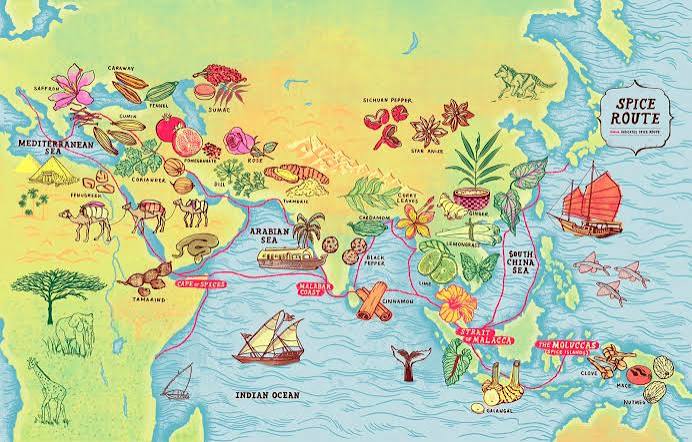
    When we think of the Silk Road, we often picture caravans laden with shimmering fabrics. But in reality, spices were the true engine of this ancient trade network. Active from roughly 130 BCE, when the Han Dynasty of China opened routes to the West, to the mid-15th century, the Silk Road was a complex web of overland paths through Central Asia and maritime routes across the Indian Ocean. The latter, often called the ‘Spice Route,’ was equally crucial for moving bulk quantities of spices.

    Key hubs like Chang’an (modern Xi’an) in China, Samarkand in Uzbekistan, Baghdad in Iraq, and Constantinople (Istanbul) in Turkey became bustling melting pots where merchants from different worlds exchanged goods, ideas, and recipes. At the western end, Venice and Genoa grew wealthy as the final European gateways for these exotic flavors.

    The Golden Spices: A Pantheon of Flavor

    Each region contributed its own treasures to this global pantry. From India came black pepper, the ‘King of Spices,’ and turmeric, the golden root that would define curries. Sri Lanka offered cinnamon, while the remote Moluccas (Indonesia) supplied cloves and nutmeg, so valuable that they were worth more than gold by weight. China contributed star anise and Sichuan pepper, while Persia (modern Iran) gave us saffron, the world’s most expensive spice, and sumac. Even Africa played a part, with grains of paradise from West Africa and long pepper from Ethiopia.

    These spices were not just for the elite. They transformed cooking across the globe. In Europe, pepper and cloves became essential for preserving meat and masking the taste of spoilage—a practice that, while debated by historians, certainly shaped medieval cuisine. In Central Asia, the fusion of Persian and Chinese techniques gave birth to dishes like laghman noodles and pilaf, which are still enjoyed today. In India, the Mughal Empire, which itself arose from Central Asian conquerors, integrated dried fruits and nuts into its cuisine, creating the rich, complex flavors we associate with Mughlai food.

    The Business of Spice: Middlemen, Monopolies, and Risk

    The spice trade was a brutal business. A single peppercorn might change hands ten to fifteen times before reaching a European kitchen, with each middleman adding a hefty markup. Caravans of camels faced bandits, harsh deserts, and political instability, while maritime dhows relied on monsoon winds—sailing east in summer and west in winter—to make their perilous journeys.

    This complexity created immense wealth for those who controlled the routes. Arab and Venetian merchants held a near-monopoly on the European spice trade for centuries, keeping prices artificially high. This stranglehold was a major motivation for European exploration. When Vasco da Gama sailed around Africa to India in 1498, he broke the monopoly, and when Christopher Columbus sailed west in 1492, he was seeking a direct route to the spice islands. The Dutch later took control of the nutmeg and clove trade in the 17th century, often with brutal violence, such as the infamous Banda Islands massacre of 1621.

    Beyond the Kitchen: A Cultural Superhighway

    The Silk Road was never just about spices. It was a superhighway for culture. Buddhism traveled from India to China along these routes, as did Islam, papermaking, gunpowder, and the compass. Spices were often bundled with other luxury goods like silk and porcelain, making them part of a broader system of exchange.

    This cultural fusion is visible in the spice blends we use today. Garam masala in India, baharat in the Middle East, Chinese five-spice, and North African ras el hanout are all palimpsests of centuries of trade, each blend a unique record of the flavors that passed through their regions. The very concept of ‘curry’ is a British colonial umbrella term, not a single Silk Road dish, but it reflects the diversity of spiced cooking that emerged from this interconnected world.

    The Modern Legacy: From Ancient Trade to Global Cuisine

    The legacy of the Silk Road spice trade is still on our plates. Persian stews, Indian curries, Turkish kebabs, and North African tagines all trace their lineage to this ancient network. The spice trade also laid the groundwork for modern capitalism, with its complex logistics, financing, and risk management, and for the monopolies and cartels that would shape global commerce.

    Today, UNESCO has recognized parts of the Silk Road as World Heritage sites, and China’s Belt and Road Initiative has revived interest in the route’s history. But the most tangible reminder is in our kitchens. Every time we reach for a jar of cumin or a stick of cinnamon, we are connecting with a history that spans continents and millennia—a testament to the power of flavor to bring the world together.

    The Silk Road spice trade was more than a commercial enterprise; it was a force that shaped the modern world. It fueled exploration, built empires, and created a global palate that transcends borders. As we savor the complex flavors of a curry or the warmth of a cinnamon bun, we are tasting the legacy of those ancient traders who braved the unknown to connect civilizations through the simple, yet profound, desire for good food.

    Summary

    • The Silk Road was a network of overland and maritime routes that carried spices, not just silk, from East Asia to Europe for over a millennium.
    • Spices like black pepper, cinnamon, cloves, and nutmeg were worth more than gold, driving trade and exploration.
    • The trade was controlled by middlemen and monopolies, leading to high prices and motivating European voyages of discovery.
    • Spices transformed cuisines worldwide, creating fusion dishes and spice blends that are still central to regional identities.
    • The spice trade was a cultural superhighway, spreading religion, technology, and ideas alongside flavors.

    FAQ

    Q: What was the most valuable spice on the Silk Road?
    A: Black pepper was known as the ‘King of Spices’ and was often used as currency. However, saffron, cloves, and nutmeg were also extremely valuable, sometimes worth more than gold by weight.

    Q: Did spices really preserve meat, or is that a myth?
    A: The idea that spices were used primarily to mask spoilage is debated. While some spices have antimicrobial properties, the amounts needed for preservation would have been prohibitively expensive. More likely, spices were used to add flavor to bland or salted foods and as status symbols.

    Q: How did the spice trade end?
    A: The spice trade didn’t end, but it was transformed. The Portuguese broke the Arab-Venetian monopoly in 1498, and later the Dutch and British East India companies dominated the trade. The routes shifted to maritime paths, and spices became more accessible and affordable.

    Q: What is the ‘Spice Route’?
    A: The Spice Route refers to the maritime trade routes across the Indian Ocean that connected Southeast Asia, India, the Middle East, and East Africa. It was a crucial complement to the overland Silk Road, especially for bulk spice transport.

    Q: How did the spice trade influence modern cuisine?
    A: The spice trade created a global palate, introducing ingredients and techniques that blended across cultures. It gave rise to iconic spice blends like garam masala and five-spice, and shaped the culinary identities of regions from Persia to China.

  • The Secret History of Spices: How the Spice Trade Shaped World Cuisines

    The Secret History of Spices: How the Spice Trade Shaped World Cuisines

    Spices are so commonplace today that we rarely think about their origins. A pinch of cinnamon in your oatmeal, a dash of pepper on your eggs—these are everyday conveniences. But for centuries, spices like nutmeg, cloves, and black pepper were worth more than gold. They drove explorers to cross oceans, sparked wars, and built empires. The spice trade is a story of adventure, exploitation, and cultural exchange that has left an indelible mark on the world’s cuisines.

    In this article, we’ll uncover the hidden history of spices, from their ancient origins in the East to their journey into the heart of European kitchens. We’ll explore how the quest for spice led to the discovery of new worlds, the rise of colonial powers, and the fusion of flavors that define modern cooking. By understanding this history, we can better appreciate the spices that add so much to our meals—and the complex legacy they carry.

    The Origins of Spice: Where It All Began

    Spices are dried seeds, roots, bark, or fruits used to flavor food, while herbs are the leafy parts of plants. This distinction matters because spices traveled better than herbs, making them ideal for long-distance trade. The most prized spices came from a few specific regions:

    • Black pepper (the “black gold”) originated on the Malabar Coast of southwest India.
    • Cinnamon came from Sri Lanka and southern India, with a related variety (cassia) from China.
    • Cloves and nutmeg (and its sibling mace) were found only in the Maluku Islands of Indonesia—the legendary “Spice Islands.”
    • Ginger and turmeric were native to Southeast Asia and India.
    • Saffron, the world’s most expensive spice, was harvested from crocus flowers in the Mediterranean and Middle East.

    These spices were not just for flavor. In ancient times, they were used in medicine, religious rituals, and even as currency. The Egyptians used spices in mummification, and the Romans imported pepper by the ton. But it was in medieval Europe that spices became a symbol of wealth and status, often used to pay rent or taxes—pepper rents were a real thing.

    The Trade Routes: How Spices Traveled the World

    Long before Europeans entered the scene, spices were traded along a vast network of routes. The Silk Road connected China to the Mediterranean overland, while Indian Ocean maritime routes linked East Africa, Arabia, India, and Southeast Asia. Arab and Indian merchants dominated this trade, and they guarded their sources fiercely. They spun tales to keep Europeans in the dark—claiming, for instance, that cinnamon came from giant birds’ nests.

    This trade network was sophisticated and profitable, but it was disrupted in 1453 when the Ottoman Empire conquered Constantinople. This cut off the overland routes that brought spices to Europe, making them even scarcer and more expensive. The high prices and limited supply spurred European nations to find a sea route to the Spice Islands. This was the catalyst for the Age of Exploration.

    The Spice Race: How Europe Changed the World

    In their quest for spices, European explorers transformed the globe. Christopher Columbus set sail in 1492 hoping to find a westward route to the Spice Islands. Instead, he stumbled upon the Americas, where he found chili peppers and allspice—new flavors that would eventually revolutionize cuisines worldwide, though they were not the spices he sought.

    Portugal was the first to reach the Spice Islands by sea, with Vasco da Gama rounding the Cape of Good Hope in 1498. The Portuguese established a monopoly on the spice trade in the 1500s, but they were soon challenged by the Dutch and British. The Dutch East India Company (VOC) took control of the nutmeg and clove trade in the 1600s, using brutal tactics to maintain their monopoly. They forced the inhabitants of the Banda Islands to work as slaves and even destroyed nutmeg trees outside their control to keep prices high.

    The British East India Company later expanded into pepper and cinnamon, and the competition between these corporate giants laid the foundations for modern capitalism. The spice trade also had a dark side: it fueled colonization, plantation economies, and slavery. The Dutch, for example, used forced labor on the Banda Islands, and the British established plantations in India and Ceylon (now Sri Lanka) for cinnamon and pepper.

    The Culinary Impact: How Spices Created Fusion Cuisines

    The spice trade didn’t just move spices; it moved ideas and ingredients, creating entirely new cuisines. When chili peppers arrived in Asia from the Americas, they were quickly adopted and transformed Indian, Thai, and Korean cooking. Today, it’s hard to imagine these cuisines without chili, but it’s a relatively recent addition.

    Similarly, the British in India created “curry powder” as a convenient blend of spices, which was then exported back to Britain and became a staple of British cuisine. In Southeast Asia, the spice trade influenced dishes like Indonesian rendang, a rich, spicy meat dish that uses a complex blend of spices. In Mexico, mole sauces combine pre-Columbian ingredients with spices brought by the Spanish, creating a fusion that reflects centuries of cultural exchange.

    Spices also played a role in the medical theories of the time. In medieval Europe, the Galenic system of humoral medicine classified foods as hot, cold, wet, or dry. Spices were considered hot and dry, and were used to balance the body’s humors. This belief influenced European diets and apothecaries, and even today, some traditional medicines use spices for their purported health benefits.

    The Modern Spice World: From Colonial Extraction to Fair Trade

    Today, the spice trade is a global industry worth billions of dollars. India, Indonesia, Vietnam, and China are the leading producers, with Vietnam being the largest exporter of black pepper. However, the legacy of colonial extraction still lingers. Many smallholder farmers in developing countries struggle to earn a living wage, and the industry has been criticized for exploitative practices.

    In response, there has been a growing movement toward fair trade and sustainable sourcing. Organizations work directly with farmers to ensure they receive fair prices and that spices are grown in environmentally friendly ways. This is a step toward rectifying the injustices of the past, but there is still much work to be done.

    The Hidden History: Women, Enslaved Cooks, and Erased Knowledge

    The history of spices is often told from the perspective of European explorers and traders, but this overlooks the contributions of the people who actually cultivated, processed, and cooked with spices. Women in spice kitchens, enslaved cooks, and indigenous peoples all played vital roles in developing spice-based cuisines, yet their knowledge is often erased from colonial records.

    For example, the complex spice blends of Indian and Southeast Asian cuisines were developed over centuries by local cooks, not by European colonizers. The Dutch and British may have controlled the trade, but they relied on local expertise to grow and process the spices. Recognizing this hidden history is essential to understanding the true impact of the spice trade.

    The spice trade is a story of human ingenuity, ambition, and exploitation. It shaped world cuisines by bringing together flavors from distant lands, creating the fusion dishes we enjoy today. But it also left a legacy of colonialism and inequality that we are still grappling with. As we sprinkle a pinch of cinnamon or grind some pepper, we can remember the long and complex journey these spices have taken—and the many hands that brought them to our tables.

    Summary

    • Spices are dried plant parts that traveled better than herbs, making them ideal for trade.
    • The spice trade was driven by European demand, but Asian and Arab merchants dominated it for centuries before Europeans arrived.
    • The quest for spices led to the discovery of the Americas and the rise of colonial empires.
    • Spices transformed cuisines worldwide, creating fusion dishes like Indian curry and Mexican mole.
    • Modern spice production faces challenges of fair trade and sustainability, with a legacy of colonial extraction.

    FAQ

    Q: Were spices really used to mask the flavor of spoiled meat?
    A: No, this is a myth. Spices were expensive, and spoiled meat could still be dangerous. More likely, spices were used to improve the taste of bland, salted, or preserved foods.

    Q: Did Columbus discover the Spice Islands?
    A: No, Columbus never reached the Spice Islands. He found the Americas, where he encountered chili peppers and allspice, which were new to Europeans but not the spices he was seeking.

    Q: Why were spices so valuable in medieval Europe?
    A: Spices were luxury goods that symbolized wealth and status. They were used in medicine, religious rituals, and even as currency or rent payment. Their high value was due to the long, dangerous journey they took to reach Europe.

    Q: How did the spice trade affect the environment?
    A: The spice trade led to deforestation and ecological changes, particularly on the Banda Islands where the Dutch cleared land for nutmeg plantations, and in Ceylon for cinnamon. This had lasting impacts on local ecosystems.

    Q: What is the modern spice trade like?
    A: Today, India, Indonesia, Vietnam, and China are the largest producers. There is a growing focus on fair trade and sustainable sourcing to address the legacy of colonial exploitation and support smallholder farmers.

  • 500-Year-Old Inca Mummies Reveal the Devastating Arrival of Smallpox in the Americas

    500-Year-Old Inca Mummies Reveal the Devastating Arrival of Smallpox in the Americas

    For centuries, the story of how smallpox ravaged the Americas has been told through the words of Spanish chroniclers and the silent testimony of population decline. But a groundbreaking 2024 study has finally provided the first physical proof: ancient DNA from two Inca mummies, buried around the time of European contact, contains the genetic signature of the smallpox virus. This discovery transforms our understanding of one of history’s greatest demographic catastrophes.

    The mummies, discovered near Cusco, Peru, and in a cave in the Chilean Andes, date to the early 16th century—a period when Spanish conquistadors were just beginning their conquest. The presence of Variola virus in their tissues confirms that smallpox was already spreading through the Inca Empire before Francisco Pizarro’s arrival in 1532. This finding not only validates historical accounts but also underscores the immense human cost of the Columbian Exchange, where invisible pathogens were as powerful as any army.

    The Discovery: Ancient DNA Tells a New Story

    In 2024, researchers published a landmark study in the journal Nature that analyzed ancient DNA extracted from two 500-year-old Inca mummies. One was found in a cemetery near the former Inca capital of Cusco, Peru, and the other in a cave in the Chilean Andes. The analysis identified the presence of Variola virus, the pathogen that causes smallpox. This is the first confirmed molecular evidence of smallpox in the pre-Columbian Americas, providing a direct, physical link to a disease that historians have long believed devastated Indigenous populations.

    The mummies date to approximately 1520–1530 CE, a period coinciding with the arrival of Spanish conquistadors and the early stages of European colonization. This timing is crucial: it places the virus in the Americas just as the Spanish were establishing their presence, supporting the theory that European colonists introduced the disease.

    The Columbian Exchange: A Two-Way Transfer of Devastation

    The arrival of Christopher Columbus in 1492 initiated the Columbian Exchange, a massive transfer of plants, animals, people, and pathogens between the Old World and the New World. Europeans brought with them diseases to which they had centuries of acquired immunity, but Indigenous Americans had no prior exposure. This made them immunologically “naïve” and devastatingly vulnerable.

    Smallpox, caused by the Variola major virus, was one of the deadliest of these diseases. Symptoms included high fever, severe rash, and pustules that often left permanent scars. Mortality rates ranged from 30% to 60% in naïve populations. It is estimated that smallpox and other Old World diseases—such as measles, influenza, and typhus—killed 50–90% of Indigenous American populations within a century of contact. This demographic catastrophe contributed to the collapse of the Inca and Aztec empires.

    The Inca Empire and Its Collapse

    At its peak (c. 1438–1533 CE), the Inca Empire, known as Tawantinsuyu, was the largest empire in the pre-Columbian Americas. It spanned modern-day Peru, Ecuador, Bolivia, Chile, and Argentina—over 2 million square kilometers with an estimated 12 million subjects. When Francisco Pizarro arrived in 1532 with fewer than 200 men, the empire was already weakened by a civil war between brothers Atahualpa and Huáscar, and by a devastating smallpox epidemic that had killed the previous emperor, Huayna Capac, around 1524–1527.

    The epidemic is widely believed to have been a decisive factor in the Spanish conquest. It decimated the Inca population and leadership, creating a power vacuum and chaos that Pizarro exploited. The new DNA evidence confirms that smallpox was indeed present in the Andes during this critical period, providing a tangible link between the disease and the empire’s downfall.

    Prior Evidence: Written Accounts and Indirect Clues

    Before this study, evidence for the introduction of smallpox was based primarily on written accounts and indirect clues. Spanish chroniclers like Bartolomé de las Casas and Bernabé Cobo described epidemics ravaging Indigenous communities. Indigenous records, such as the Quipu (knotted-string records) and oral histories, referenced mass death. Demographic estimates suggested catastrophic mortality, and the timing of the Inca civil war and the death of Huayna Capac strongly suggested an epidemic was already spreading before Pizarro’s arrival.

    However, no physical, molecular evidence of the virus had ever been found in pre-Columbian remains. Some scholars even questioned whether smallpox arrived earlier than 1518 (the first documented outbreak in Hispaniola) or whether other diseases were responsible. This study resolves those debates by providing direct evidence of the virus in the Americas at the time of European contact.

    The Significance: A Landmark in Paleomicrobiology

    This discovery is a landmark in paleomicrobiology—the study of ancient pathogens. It demonstrates that ancient DNA (aDNA) techniques can recover viral genomes from mummified tissue, opening doors for future research on other historical diseases such as typhus, measles, and tuberculosis. The study also highlights the importance of museum collections; the mummies had been stored in museums for decades before being analyzed, showing that valuable scientific information can be gleaned from existing specimens.

    A Stark Reminder of Colonial Impact

    The finding is a stark reminder of the human cost of colonization. The “Great Dying” of Indigenous Americans is one of the largest demographic catastrophes in history, and this study provides a tangible, physical link to that tragedy. It reframes the narrative of European conquest: the Spanish did not simply “outfight” the Inca; they were aided by invisible biological allies. This perspective is crucial for understanding the full scope of colonial impact.

    Ethical Considerations and Indigenous Perspectives

    Some Indigenous communities and scholars have raised concerns about the study of human remains without consent from descendant communities. The mummies are ancestors, not just specimens. Researchers must navigate these ethical considerations carefully, balancing scientific inquiry with respect for cultural heritage. This study underscores the need for collaborative approaches that involve Indigenous communities in research decisions.

    The discovery of smallpox DNA in 500-year-old Inca mummies is more than a scientific breakthrough; it is a poignant reminder of the devastating consequences of contact between worlds. It confirms what historians have long suspected and gives a face to the millions who perished. As we continue to uncover the secrets of the past, we must remember the human stories behind the data and the ethical responsibilities that come with studying them.

    Summary

    • First confirmed molecular evidence of smallpox in pre-Columbian Americas, found in 500-year-old Inca mummies.
    • Mummies date to c. 1520–1530 CE, coinciding with Spanish arrival, supporting introduction by European colonists.
    • Smallpox and other Old World diseases killed 50–90% of Indigenous populations, contributing to the collapse of the Inca Empire.
    • Study is a landmark in paleomicrobiology, showing ancient DNA can recover viral genomes from mummified tissue.
    • Raises ethical considerations about studying human remains without Indigenous community consent.

    FAQ

    Q: What exactly was found in the Inca mummies?
    A: Researchers extracted ancient DNA from two mummies and identified the presence of Variola virus, the pathogen that causes smallpox. This is the first confirmed molecular evidence of smallpox in the pre-Columbian Americas.

    Q: How old are the mummies, and where were they found?
    A: The mummies date to approximately 1520–1530 CE. One was found in a cemetery near Cusco, Peru, and the other in a cave in the Chilean Andes.

    Q: Why is this discovery significant?
    A: It provides direct physical proof that smallpox was introduced to the Americas by European colonists, confirming historical theories that were previously based only on written accounts and indirect evidence.

    Q: How did smallpox affect Indigenous populations?
    A: Smallpox and other Old World diseases killed an estimated 50–90% of Indigenous American populations within a century of contact, contributing to the collapse of the Inca and Aztec empires.

    Q: Are there ethical concerns about studying these mummies?
    A: Yes, some Indigenous communities and scholars have raised concerns about studying human remains without consent from descendant communities. Researchers must balance scientific inquiry with respect for cultural heritage.