Tag: history

  • The Surprising Origins of the Barcode: How a Beach Sand Idea Scanned Its Way into Every Store

    The Surprising Origins of the Barcode: How a Beach Sand Idea Scanned Its Way into Every Store

    Every day, billions of times, a small pattern of black and white lines gets scanned at checkout counters around the world. It’s so common that we barely notice it. But the barcode’s journey from a flash of insight on a Miami beach to the ubiquitous technology it is today took over 25 years and nearly failed multiple times.

    The story begins in 1948, not in a high-tech lab, but with a casual conversation overheard by a graduate student. That moment sparked an idea that was decades ahead of its time—an idea that would eventually require lasers, microprocessors, and industry-wide cooperation to become a reality. This is the tale of how a simple concept, born from Morse code and sand, revolutionized retail and inventory management.

    But the barcode’s origins are full of surprises: the inventors sold their patent for a fraction of its eventual worth, the original design looked nothing like the bars we see today, and the first product ever scanned was a pack of gum that now sits in the Smithsonian. Let’s unwrap this history and see how a beach day changed the world of commerce.

    The Problem: Grocery Stores Were Drowning in Manual Work

    In the late 1940s, supermarkets were booming. But every can of soup, box of cereal, and bottle of milk had to be individually stamped with a price, and at checkout, a clerk would read each tag and type it into a cash register. This process was slow, error-prone, and made it nearly impossible to track inventory in real time. As stores grew larger and stocked more items, the need for automation became urgent.

    The grocery industry was actively seeking a solution. They wanted a way to connect physical products to digital data—a concept that was still in its infancy. Computers were room-sized, expensive, and used mainly by the military and large corporations. Lasers didn’t exist in practical form, and solid-state electronics were barely on the horizon. Yet, the industry was already dreaming of a system that could automatically read product information at checkout.

    The Beach Idea: Morse Code in the Sand

    In 1948, Bernard Silver, a graduate student at Drexel Institute of Technology (now Drexel University), overheard a conversation where a grocery store executive asked the dean to research a system for automatically reading product information at checkout. Silver mentioned this to his friend Norman Joseph Woodland, and the two began brainstorming.

    Woodland, a gregarious and inventive character who had worked on the Manhattan Project during WWII, took the problem seriously. The breakthrough came during a winter trip to Miami in 1948-49. Sitting on the beach, he started tracing Morse code patterns in the sand—dots and dashes. Then, in a flash of insight, he pulled the dots and dashes downward, extending them into thin and thick lines. That simple transformation created a linear code that could be scanned.

    The original design, however, was not linear. Woodland and Silver filed a patent for a “Classifying Apparatus and Method” in 1949, which featured a bullseye pattern—concentric circles—because it could be scanned from any direction. They envisioned using a 500-watt incandescent light bulb and a vacuum tube photomultiplier to read the code. But that technology was too slow, too hot, and too unreliable for practical use. The idea was genuinely ahead of its time.

    The Patent That Went Nowhere

    The patent (#2,612,994) was granted on October 7, 1952. But Woodland and Silver couldn’t find a buyer willing to develop it. Eventually, they sold it to Philco, a Philadelphia electronics company, for $15,000—a modest sum even then. Philco later sold it to RCA, but no commercial use materialized. The patent expired in 1962, and the barcode seemed destined for the dustbin of history.

    Woodland later joked about the sale, noting that he’d spent more than $15,000 on a single vacation. But at the time, it seemed like a reasonable deal for an idea that had no practical application.

    The Long Road to Adoption: Lasers, RCA, and IBM

    It took roughly 25 years for the enabling technologies to catch up. In the 1960s, RCA revived the concept, using Woodland’s circular bullseye design, and tested it with Kroger grocery stores. But the printing and scanning technology was still unreliable. The circular pattern was hard to print consistently, and the scanners couldn’t read it accurately enough.

    In the early 1970s, IBM entered the picture. Woodland was now an IBM employee, and he worked on a linear format that would become the Universal Product Code (UPC). The grocery industry formed the Uniform Grocery Product Code Council (now GS1) to select a standard. IBM’s linear code won over RCA’s circular design partly because printing linear codes was easier and more reliable—bars could be printed with standard ink, while circles required more precise printing.

    In 1973, the grocery industry selected the IBM/UPC linear format as the standard. The first commercial scan followed on June 26, 1974, at a Marsh supermarket in Troy, Ohio. The product was a 10-pack of Wrigley’s Juicy Fruit gum. That pack of gum now resides in the Smithsonian Institution’s National Museum of American History.

    The Adoption Paradox: Everyone Must Participate

    The barcode system only works if everyone participates. Manufacturers must print codes on their products, and retailers must install scanners. Early adopters faced high costs—the first scanner at the Marsh store cost roughly $4,000 (about $25,000 in today’s dollars)—with benefits that depended on industry-wide cooperation. It was installed as a publicity stunt/experiment, not because the store expected immediate return on investment.

    Despite these challenges, by the late 1970s, most supermarkets had adopted the system. The barcode had become a standard part of retail.

    The Human Story: Who Got the Credit?

    Norman Joseph Woodland (1921-2012) is the most prominent figure in the barcode’s history. He received the National Medal of Technology from President George H.W. Bush in 1992 for his work. Bernard Silver (1924-1963), however, is often overlooked. He died young at age 38 in a car accident and never saw the barcode succeed commercially. The two men sold their patent for a pittance, a classic “inventor doesn’t profit” narrative.

    But their idea changed the world. Today, barcodes are scanned billions of times daily, not just for checkout but for inventory tracking, shipping, and countless other applications. From a beach in Miami to the Smithsonian, the barcode’s journey is a testament to how a simple idea, combined with the right timing and technology, can revolutionize an industry.

    The barcode’s origins are a reminder that great inventions often take time to become practical. Woodland and Silver’s idea was brilliant, but it needed lasers, microprocessors, and industry cooperation to truly take off. Their story also highlights the unpredictability of innovation: the inventors didn’t profit much, but their contribution is immortalized in every scan. Next time you check out at a store, take a moment to appreciate the decades of effort and ingenuity behind that little pattern of lines.

    Summary

    • The barcode was invented in 1949 by Norman Joseph Woodland and Bernard Silver, who were inspired by Morse code traced in the sand.
    • Their original patent featured a bullseye pattern, not linear bars, but the linear format became the standard due to easier printing.
    • The patent was sold for $15,000 and expired before any commercial use, but the idea was revived in the 1960s and 1970s with better technology.
    • The first commercial barcode scan was on a pack of Wrigley’s Juicy Fruit gum in 1974, now housed in the Smithsonian.
    • The barcode succeeded because of industry-wide cooperation, despite early skepticism and high costs.

    FAQ

    Q: Who invented the barcode?
    A: The barcode was invented by Norman Joseph Woodland and Bernard Silver, who filed a patent in 1949. Woodland was inspired by Morse code while sitting on a Miami beach.

    Q: Why was the original design a bullseye pattern?
    A: The bullseye pattern (concentric circles) was chosen because it could be scanned from any direction, unlike linear bars which require alignment. However, linear bars proved easier to print reliably, so the linear format was adopted.

    Q: How much did the inventors sell their patent for?
    A: They sold the patent to Philco for $15,000 in 1952. Philco later sold it to RCA, but the patent expired before any commercial use.

    Q: What was the first product scanned with a barcode?
    A: The first product scanned was a 10-pack of Wrigley’s Juicy Fruit gum at a Marsh supermarket in Troy, Ohio, on June 26, 1974. That pack of gum is now in the Smithsonian.

    Q: Why did it take so long for barcodes to become popular?
    A: The technology needed to read barcodes—such as lasers and affordable computing—didn’t exist until the 1970s. Also, the system required industry-wide adoption, which took time and cooperation.

  • The Hidden Etymology of Soccer’s Most Confusing Terms: Why We Say ‘Hat-Trick’ and ‘Own Goal’

    The Hidden Etymology of Soccer’s Most Confusing Terms: Why We Say ‘Hat-Trick’ and ‘Own Goal’

    Every soccer fan knows the thrill of a hat-trick and the agony of an own goal. But these terms, so central to the game’s vocabulary, didn’t originate on the pitch. Their roots lie in cricket grounds and Victorian newsrooms, and their journey into football reveals how language travels across sports and cultures.

    Understanding these terms isn’t just a trivia exercise. It illuminates how the world’s most popular sport borrowed and adapted language from its British cradle, and how media standardization shaped the way we talk about the game. Dive into the surprising backstories of two of football’s most colorful phrases.

    The Cricket Connection: How a Hat Became a Trick

    The term “hat-trick” has a precise, documented origin. In 1858, English cricketer H.H. Stephenson achieved something rare: he took three wickets with consecutive balls. His admirers held a collection and presented him with a hat bought with the proceeds. The “hat-trick” was born—a literal reward for a remarkable feat.

    Cricket had a head start on football. Codified in the 18th century, it boasted a longer literary and journalistic tradition. When association football formalized in 1863, cricket’s vocabulary was ripe for borrowing. The term crossed over in the late 19th century, with the Oxford English Dictionary tracing its first football-specific use to around 1878–1882. By the 1880s, “hat-trick” was a staple in football reports.

    Why did the term stick? It solved a narrative problem. Describing a player scoring three goals in one match was a mouthful. “Hat-trick” was concise, vivid, and carried a sense of achievement. It also had a visual hook—the image of a hat as a prize—that made it memorable.

    The Curious Case of the “Own Goal”

    “Own goal” sounds self-explanatory, but its etymology is more nuanced. The term emerged in British football reporting in the late 19th century. The OED traces it to 1888, though earlier cricket phrases like “own wicket” paved the way. “Own” had long denoted self-inflicted actions in British sporting parlance.

    Before “own goal,” reporters used clunky phrases like “a mistake by X” or “a goal against his own side.” The term filled a statistical and narrative gap. It was concise and carried a judgment—an own goal is not just an accident but a self-inflicted wound, often with psychological weight.

    The attribution of own goals remains a statistical quirk. In official records, the goal is credited to the opposing team, not to the player who deflected it. The scorer is listed as “OG,” stripping the unfortunate player of any credit. This can lead to controversy, as seen in the 2018 World Cup when Iran’s Ramin Rezaeian was initially credited with a goal against Morocco, only for it to be changed to an own goal by Morocco’s Aziz Bouhaddouz. Such cases highlight the arbitrary nature of attribution in football.

    From British Fields to Global Lexicon

    Both terms have transcended football. “Hat-trick” now appears in ice hockey, darts, and even politics—three consecutive victories or achievements. “Own goal” has become a metaphor for self-defeating actions in business and politics. Publications like The Economist and Financial Times regularly use it to describe policy blunders.

    The globalization of these terms is fascinating. Non-English football cultures often adopt literal translations: German Eigentor, Spanish autogol, French but contre son camp (goal against one’s own camp). This shows how deeply embedded these concepts are in football’s global psyche.

    The Media’s Role in Shaping Football Language

    Neither term would have spread without the rise of mass-circulation newspapers in late Victorian England. Outlets like Athletic News and Bell’s Life standardized sporting vocabulary. Reporters needed shorthand for dramatic events—a rare feat like a hat-trick or an embarrassing mistake like an own goal. These terms weren’t invented by committees; they emerged organically from the press’s need for color and concision.

    This media influence persists. The “perfect hat-trick”—one goal each with left foot, right foot, and head—was popularized by broadcasters in the 1990s and 2000s. Its exact origin is debated, but it shows how commentators continue to shape football’s language.

    What These Terms Reveal About Football’s History

    The hat-trick and own goal are more than linguistic curiosities. They reveal football’s deep roots in British sporting culture and its debt to cricket. They show how language evolves to meet the needs of storytelling and statistics. And they demonstrate how sports borrow and adapt across boundaries, creating a shared global vocabulary.

    Next time you see a player score three goals or accidentally deflect one into his own net, remember the cricket ground and the Victorian newsroom. These terms carry centuries of history, and their stories are as rich as the game itself.

    The hidden etymology of “hat-trick” and “own goal” reveals football’s linguistic debt to cricket and the media. These terms not only describe events but also carry cultural weight, from Victorian England to global pitches. Understanding their origins deepens our appreciation of football’s rich heritage and the ways language adapts to capture the drama of sport.

    Summary

    • “Hat-trick” originated in cricket in 1858 when H.H. Stephenson was awarded a hat for three consecutive wickets; it crossed to football in the late 19th century.
    • “Own goal” emerged in British football reporting in the 1880s, drawing on earlier cricket phrases like “own wicket.”
    • Both terms were popularized by Victorian newspapers, which standardized sporting vocabulary.
    • “Hat-trick” has expanded to other sports and contexts, while “own goal” has become a metaphor for self-defeating actions.
    • Different languages use literal translations, such as German Eigentor and Spanish autogol.

    FAQ

    Q: Where did the term ‘hat-trick’ actually originate?nA: It started in cricket in 1858. English cricketer H.H. Stephenson took three wickets in consecutive balls, and a collection was held to buy him a hat. The term later migrated to football in the late 19th century.nnQ: What was the first recorded use of ‘own goal’ in football?nA: The Oxford English Dictionary traces the term to 1888, though earlier cricket phrases like “own wicket” existed. It emerged as a concise way to describe a player scoring against their own team.nnQ: How is an own goal officially credited?nA: The goal is credited to the opposing team, with the scorer marked as “OG.” The player who deflected it is not credited, which can lead to disputes over attribution.nnQ: Why do so many football terms come from cricket?nA: Cricket was codified earlier and had a longer literary tradition, so its vocabulary was established before football’s rules were formalized in 1863. The same social circles played both sports, facilitating language exchange.nnQ: How did the media influence these terms?nA: Victorian newspapers like Athletic News and Bell’s Life standardized sporting language. Reporters needed vivid shorthand for dramatic events, helping popularize terms like “hat-trick” and “own goal.”

  • The Secret History of the Fork: How a Two-Pronged Tool Conquered Europe Against All Odds

    The Secret History of the Fork: How a Two-Pronged Tool Conquered Europe Against All Odds

    In 1004, a Byzantine princess named Maria Argyropoulina sat down to her wedding banquet in Venice and did something scandalous: she ate with a small, golden, two-pronged fork. The Venetian clergy were horrified. To them, this delicate instrument was an insult to God, who had given humans fingers for a reason. When Maria died of plague just a few years later, a prominent cardinal declared it divine punishment for her vanity.

    Yet, despite this inauspicious start, the fork went on to conquer Europe. It took over 700 years, but today it’s hard to imagine a Western table without it. How did a tool once condemned as satanic and effeminate become a universal symbol of civilized dining? The answer is a story of religion, class, gender, and changing food habits—a story that reveals a lot about how cultural change actually happens.

    The Fork’s Ancient Origins

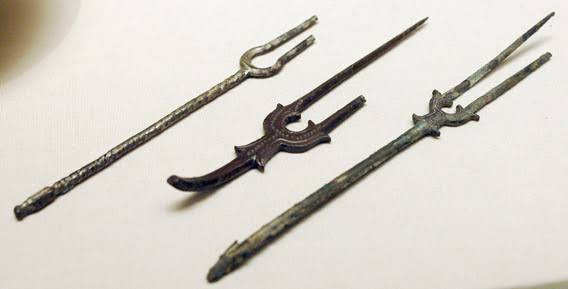
    Forks weren’t invented in Byzantium. Ancient Egyptians, Greeks, and Romans used two-pronged forks, but they were strictly cooking tools—great for lifting a chunk of meat out of a boiling pot, but never placed on the dining table. Eating was done with fingers, knives, and spoons.

    The fork’s journey to the table began in the Eastern Roman Empire, where courtly manners were more refined than in the West. By the 10th century, Byzantine elites had started using small forks to eat sticky or messy foods, a practice that struck Western visitors as dangerously luxurious.

    The Scandal of the Byzantine Princess

    Maria Argyropoulina was one such visitor. When she married the Doge of Venice in 1004, she brought her golden fork to the banquet. The guests had never seen anything like it. Instead of touching her food with her hands, she speared each morsel and lifted it to her mouth.

    The reaction was swift and vicious. Saint Peter Damian, a cardinal, wrote a blistering condemnation, calling her fork use “excessive delicacy” and an affront to God’s design. When Maria died shortly after, Damian framed it as divine punishment. The fork, he implied, was an instrument of the devil.

    This episode set the tone for centuries. The fork was associated with Byzantine decadence, Eastern luxury, and a rejection of natural humility. Many Europeans saw it as a vanity, even a sin.

    Why Did the Fork Face So Much Resistance?

    It wasn’t just about religion. The fork threatened a deeply ingrained social order.

    Fingers were the norm. For centuries, everyone—from peasants to kings—ate with their hands. Table manners dictated that you use only three fingers (the “clean” ones) and that you wash your hands before and after meals. Napkins were common. Finger-eating wasn’t considered dirty; it was just how things were done.

    The fork was a status symbol. Early forks were made of gold or silver, so only the ultra-wealthy could afford them. Using one signaled ostentatious wealth and foreign habits, which made it suspicious to both the Church and the common people.

    It was gendered. Fork use was quickly associated with women and effeminacy. Men who used forks were mocked as weak or unmanly. This stigma delayed adoption among male elites for centuries.

    It was impractical. Early two-pronged forks were straight and had no curve. They were good for spearing meat, but useless for scooping peas or soup. You still needed a spoon or your fingers for most dishes. The fork only became truly useful when food preparation changed—when meat was served in smaller, pre-cut pieces, making it easier to spear.

    The Slow Spread: From Venice to the Rest of Europe

    For centuries, the fork remained an oddity confined to Italian city-states like Venice and Florence. It wasn’t until the 15th and 16th centuries that it began to spread, and even then, it was a slow, uneven process.

    Catherine de’ Medici is often credited with bringing forks to France when she married King Henry II in 1533. The evidence is debated, but French courtiers did eventually adopt the fork—though they were skeptical at first. By the late 16th century, King Henry III used a fork at meals and was widely mocked for it. Satirists called him “effeminate” and “decadent.”

    England was late to the party. In 1608, an English traveler named Thomas Coryate visited Italy and saw forks in use. He was so impressed that he brought one home and started eating with it. He even published a book, Coryate’s Crudities (1611), describing his discovery. But his fellow Englishmen ridiculed him, calling him “Furcifer” (fork-bearer). It took another century for forks to become common in England.

    The Fork’s Victory: 17th to 19th Centuries

    By the 17th century, the fork began to win over Northern Europe. Travel literature and aristocratic fashion played a big role. The fork became a marker of “civilized” dining, distinguishing the refined elite from the “barbaric” masses who still ate with their fingers.

    In the 18th century, the fork underwent a crucial design change: it became curved and developed four tines, with a spoon-shaped bowl. This made it far more practical—you could scoop as well as spear. Table settings standardized, and the fork became a staple of the Enlightenment-era dining table.

    By the 19th century, industrialization made forks affordable for the middle and working classes. For the first time, the fork was no longer a luxury item. It became universal in Western dining.

    Was It Really About Hygiene?

    The traditional story of the fork is a triumph of hygiene and civilization: a “barbaric” Europe slowly learned manners from the “civilized” East. But this narrative is misleading.

    Finger-eating wasn’t dirty by the standards of the time. People washed their hands before and after meals, and napkins were used. The fork’s victory wasn’t about cleanliness; it was about cultural values. It represented a new ideal of refinement, distance from the animal act of eating, and control over one’s body.

    The Church’s opposition was eventually overcome, not by science, but by changing social norms. As the fork became a symbol of elite status, more people adopted it to signal their own sophistication.

    The Fork Today

    We rarely think about the fork’s history when we pick one up at dinner. But it’s a reminder that even the most mundane objects carry centuries of cultural baggage. The fork was once a scandalous luxury, a symbol of sin, and a marker of effeminacy. Now it’s just… a fork.

    The fork’s conquest of Europe took over 700 years, and it wasn’t a straight line from invention to acceptance. It faced religious condemnation, gendered mockery, and practical limitations. It only won when it aligned with broader social changes: the rise of a refined elite, the evolution of food preparation, and eventually, the democratization of manufacturing. So the next time you use a fork, remember: you’re holding a piece of history that defied the devil, the clergy, and centuries of skepticism.

    Summary

    • The fork was used in ancient times only for cooking, not eating.
    • Byzantine princess Maria Argyropoulina scandalized Venice with a golden fork in 1004, leading to Church condemnation.
    • The fork faced resistance due to religious beliefs, class stigma, gendered associations, and its impractical two-pronged design.
    • Adoption spread slowly from Italy to France, England, and Northern Europe over several centuries.
    • The modern curved, four-tined fork emerged in the 18th century, and industrialization made it universal by the 19th century.
    • The fork’s victory was cultural, not hygienic, reflecting changing ideas of refinement and social status.

    FAQ

    Q: Who introduced the fork to Europe?
    A: A Byzantine princess named Maria Argyropoulina is credited with bringing the fork to Venice in 1004, but it wasn’t widely adopted for centuries. Catherine de’ Medici and Thomas Coryate are also associated with spreading the fork in France and England, respectively.

    Q: Why did the Church oppose the fork?
    A: The Church saw the fork as an affront to God, who gave humans natural tools—fingers. It was considered a sign of vanity and excessive delicacy, and was even linked to satanic imagery.

    Q: Why did the fork take so long to become popular?
    A: Forks were expensive, impractical (two straight tines couldn’t scoop), and carried negative associations with foreign luxury and effeminacy. It took changes in food preparation, social norms, and eventually mass production to make it common.

    Q: Were early forks like modern ones?
    A: No, early eating forks had two straight tines and were used only for spearing. The curved, four-tined fork with a spoon-shaped bowl didn’t appear until the 18th century, making it far more versatile.

    Q: Did people really eat with their hands before forks?
    A: Yes, people of all classes ate with their hands, using knives and spoons for certain foods. They washed their hands before and after meals, and napkins were common, so it wasn’t considered unhygienic by the standards of the time.

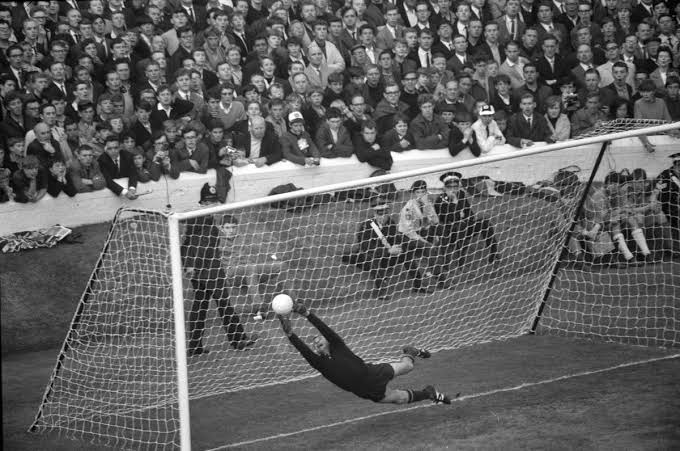
  • The Goalkeeper Who Changed the Rules: How Lev Yashin Made the Penalty Area His Kingdom

    The Goalkeeper Who Changed the Rules: How Lev Yashin Made the Penalty Area His Kingdom

    In 1963, a 34-year-old Soviet goalkeeper named Lev Yashin won the Ballon d’Or, the most prestigious individual award in football. No goalkeeper has won it since. To understand why Yashin was not just an exception but a revolutionary, you have to look beyond the trophy and into the penalty area he treated as his personal fiefdom.

    Yashin’s career spanned two decades at Dynamo Moscow, where he made over 300 league appearances, and he became a national hero for the Soviet Union, winning Olympic gold in 1956 and the first European Championship in 1960. But his true legacy lies in how he redefined the goalkeeper’s role—from a static shot-stopper to an active, commanding presence who could change the course of a match with his decisions and his psychology.

    The Black Spider’s Web: A New Kind of Goalkeeper

    In the 1950s and 1960s, goalkeepers were expected to stay on their line. Their job was reactive: make saves, catch crosses, punt the ball upfield. The idea of a goalkeeper as a sweeper, a playmaker, or a psychological weapon was alien. Then came Lev Yashin, dressed head-to-toe in black, earning nicknames like “The Black Spider” and “The Octopus” for his uncanny reach and his habit of covering every inch of his goal.

    But Yashin’s web extended far beyond the goal line. He was the first true sweeper-keeper, routinely charging out of his penalty area to clear through balls, punch crosses away, and act as an extra outfield player. In an era when the back-pass rule didn’t exist—goalkeepers could pick up any ball played back to them—Yashin’s willingness to leave his line was a radical departure. He didn’t just defend his goal; he patrolled the entire penalty area, organizing his defense, claiming crosses with authority, and starting counterattacks with accurate throws.

    His style was so ahead of its time that it took decades for the rest of the world to catch up. Modern sweeper-keepers like Manuel Neuer, Alisson, and Ederson owe a direct debt to Yashin’s pioneering aggression. When Neuer races off his line to clear a through ball, he’s channeling the Black Spider’s spirit. And when a goalkeeper commands his box and shouts orders at his defenders, he’s following a template Yashin set half a century ago.

    The Penalty Psychologist: 150 Saves and Counting

    Yashin’s penalty-saving record is the stuff of legend. Estimates put his career total at over 150 penalties saved—a figure that, if accurate, is unmatched in the modern game. But what made him so good at stopping spot-kicks wasn’t just reflexes; it was psychology.

    Yashin studied penalty takers meticulously. He watched their body language, their run-up, their preferred corners. He was known to delay facing penalties, staring down the taker to unsettle them. He used gamesmanship—shuffling on his line, spreading his arms wide to make himself look bigger, and sometimes even pointing to where he thought the ball would go. This wasn’t random guesswork; it was calculated psychological warfare.

    In an era before video analysis and data-driven penalty metrics, Yashin relied on intuition and observation. Modern goalkeepers now have detailed databases on every taker’s tendencies, but Yashin did it all with his own eyes. He turned penalty shootouts into a duel of wits, and more often than not, he came out on top.

    His approach echoes in today’s game. When a goalkeeper like Emiliano Martínez tries to distract a penalty taker with trash talk or antics, he’s tapping into the same psychological principles Yashin pioneered. The difference is that Yashin did it with a quiet intensity that earned him respect even from the players he denied.

    The Only Ballon d’Or Goalkeeper: A Cold War Icon

    The 1963 Ballon d’Or was a shock. Goalkeepers simply didn’t win the award, which was dominated by outfield players. But Yashin, then 34, finished ahead of Italian midfielder Gianni Rivera and English striker Jimmy Greaves. The award wasn’t just for his shot-stopping; it was for his entire influence on the position.

    Yashin’s success carried political weight. He was a Soviet state hero, a symbol of communist athletic prowess. Yet he was also adored in the West, where his all-black kit and dramatic style made him a cult figure. In an era when Soviet athletes were often portrayed as robotic, Yashin’s flair and sportsmanship—he was known to comfort opponents who missed penalties against him—transcended the Iron Curtain.

    His legacy in Russia is immense. There are statues of him, a stadium named in his honor, and the annual Yashin Award, which was given to the best goalkeeper at the World Cup from 1994 to 2018. But his influence goes beyond trophies and honors. He changed how the world viewed goalkeepers, and his innovations laid the groundwork for the modern game.

    The Rules Caught Up: The Back-Pass Rule and Beyond

    One of the most intriguing aspects of Yashin’s story is how his innovations eventually influenced rule changes. In 1992, FIFA introduced the back-pass rule, which prohibited goalkeepers from handling deliberate passes from teammates. The rule was partly a response to time-wasting tactics, but it also reflected a changing understanding of the goalkeeper’s role—a role Yashin had redefined decades earlier.

    Ironically, Yashin’s sweeping style was made less necessary by the rule change, since goalkeepers could no longer pick up back-passes. But the rule also made sweeping more important in a different way: goalkeepers now had to be skilled with their feet, and the modern sweeper-keeper emerged as a direct consequence. Yashin’s willingness to play as an extra defender foreshadowed this evolution, even if the rules of his time didn’t require it.

    Today, the best goalkeepers are expected to be comfortable with the ball at their feet, capable of playing out from the back and sweeping behind a high defensive line. That expectation would have felt familiar to Yashin, who was doing it in the 1960s with a heavy leather ball and no protective gloves.

    The Octopus’s Legacy: What Modern Goalkeepers Can Learn

    Yashin’s career offers timeless lessons for goalkeepers at every level. First, the mental game matters as much as physical ability. His penalty-saving record was built on study and psychology, not just reflexes. Second, the goalkeeper is not a passive last line of defense but an active participant in the team’s tactics. Yashin’s sweeping and organization were ahead of their time, and they’re now standard practice.

    Third, style matters. Yashin’s all-black kit wasn’t just a fashion choice; it was a statement. It made him stand out, intimidated opponents, and became part of his legend. In a sport where confidence and presence are crucial, Yashin understood that perception is performance.

    Finally, Yashin’s career shows that true innovation often comes from breaking the rules—or at least pushing against their boundaries. He didn’t wait for permission to leave his penalty area; he did it because he saw opportunities that others missed. That mindset is what separates a good goalkeeper from a game-changer.

    As of 2025, no goalkeeper has won the Ballon d’Or since Yashin. The award remains the exclusive domain of outfield players, but Yashin’s place in history is secure. He didn’t just play the position; he reimagined it. And in doing so, he made the penalty area his kingdom—a kingdom that modern goalkeepers still inhabit, whether they know it or not.

    Lev Yashin’s legacy is not measured in trophies alone, though he had plenty. It’s measured in the way goalkeepers play today. Every time a keeper charges off their line, commands their box, or studies a penalty taker’s run-up, they’re following the template Yashin created. He was the Black Spider who wove a web across the penalty area, and the football world is still caught in it.

    Summary

    • Lev Yashin is the only goalkeeper to win the Ballon d’Or (1963), and no goalkeeper has won it since.
    • He pioneered the sweeper-keeper role, routinely leaving his penalty area to intercept passes and organize his defense, decades before modern keepers like Manuel Neuer.
    • Yashin’s estimated 150+ penalty saves were a result of intense psychological study of takers, using body language and gamesmanship to gain an edge.
    • His all-black kit and dramatic style made him a cult figure during the Cold War, transcending political divides.
    • His innovations influenced the evolution of the goalkeeper position, including the eventual 1992 back-pass rule, and his legacy lives on in the modern game.

    FAQ

    Q: How many penalties did Lev Yashin save?
    A: Unofficial counts estimate Yashin saved over 150 penalties during his career, a figure widely cited as unmatched in modern football.

    Q: Why is Lev Yashin considered a pioneer of the sweeper-keeper role?
    A: He routinely left his penalty area to clear through balls, punch crosses, and act as an extra defender, a style that was revolutionary in the 1950s and 1960s and is now standard for many top goalkeepers.

    Q: What was the Yashin Award?
    A: The Yashin Award was given to the best goalkeeper at each FIFA World Cup from 1994 to 2018, named in honor of Lev Yashin. It has since been replaced by the Best FIFA Goalkeeper award.

    Q: Did Lev Yashin win any major international trophies?
    A: Yes, he won Olympic gold in 1956 and the first European Championship in 1960 with the Soviet Union.

    Q: How did Yashin’s style influence the back-pass rule?
    A: While the 1992 back-pass rule was primarily introduced to stop time-wasting, it reflected a changing view of goalkeepers as active players. Yashin’s sweeping style foreshadowed the modern expectation that keepers be skilled with their feet.

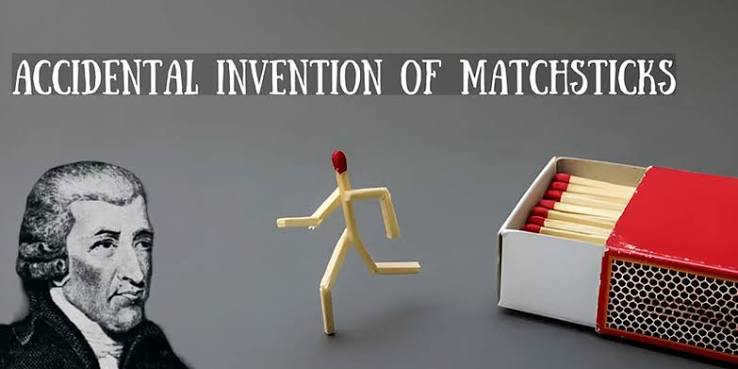
  • The Accidental Spark: How John Walker’s 1826 Discovery Ignited the Modern Match

    The Accidental Spark: How John Walker’s 1826 Discovery Ignited the Modern Match

    In 1826, a chemist in northern England accidentally scraped a stick coated with a strange paste against his hearthstone. The stick burst into flame. That moment gave the world the friction match the first fire that anyone could start instantly, without skill, without waiting, and without a smoldering ember. John Walker’s discovery was accidental, but it was no stroke of luck; it was the result of careful observation and a deep understanding of reactive chemicals.

    Before Matches: Fire Was a Chore

    Imagine needing a fire to cook dinner, heat your home, or light a candle. Before the match, that required either keeping a fire constantly burning or mastering a laborious skill. The common method was flint and steel: striking a piece of steel against a flint to create sparks, which you then had to catch on specially prepared tinder—usually charred cloth or dried fungus. It took practice, good materials, and dry conditions. In damp weather, you might fail for hours. Other methods were even more demanding. The fire drill—spinning a stick against a wooden base—required stamina and technique. A solar lens worked only on sunny days. For most people, fire was maintained, not created. You banked your hearth fire overnight, hoping it would still be glowing in the morning. If it went out, you might have to borrow a hot coal from a neighbor.

    In the early 1800s, chemists began experimenting with ways to ignite fire chemically. They had discovered phosphorus (1669) and potassium chlorate (1786), both highly reactive. By 1805, a French chemist named Jean Chancel had made a match that ignited when you dipped it in a small bottle of sulfuric acid—but that was dangerous and cumbersome. What people needed was a simple, safe, and reliable way to start a fire with one hand, in any weather.

    The Accidental Spark: John Walker’s Discovery

    John Walker was a chemist and druggist in Stockton-on-Tees, a port town in northeast England. He was not a famous professor but a practical shopkeeper who mixed remedies and experimented with chemicals. In 1826, he was stirring a pot of a paste made of antimony sulfide, potassium chlorate, gum arabic, and starch. These were common ingredients in his experiments with explosives. When he wiped the stirring stick on his hearthstone to clean it, the dried paste scraped off and ignited, producing a flame.

    Walker recognized what he had seen. The friction had generated enough heat to trigger a chemical reaction between the potassium chlorate (which supplies oxygen) and the antimony sulfide (a fuel). He refined the mixture, shaped it into small sticks, and began selling them as “Congreves,” named after Sir William Congreve, a British rocket pioneer. Each box of 50 cost one shilling—about a day’s wage for a laborer, but still affordable for many households.

    Walker’s matches were not the first chemical matches, but they were the first to use friction to ignite. This was a crucial innovation. Earlier matches required dipping in acid or breaking a glass vial. Walker’s matches could be lit by scraping them against any rough surface—a brick, a piece of sandpaper, or a hearthstone. They were portable, simple, and worked on demand.

    A Missed Fortune: Why Walker Never Patented His Invention

    Walker never patented his invention. Why? Historians speculate that he was not commercially aggressive, or that he was content with his shop. He sold his matches locally, and they were popular. But without a patent, anyone could copy the idea. Within a few years, other chemists and entrepreneurs began producing their own friction matches, often improving on Walker’s formula. Walker did not pursue legal protection, and he died in 1859 without significant wealth from his discovery. His name is remembered in history books but not in the fortune he might have earned.

    The failure to patent had a silver lining: it allowed the match to spread rapidly. By the 1830s, friction matches were being manufactured across Europe and the United States. The principle was out in the open, and inventors could refine it.

    The Dark Side: White Phosphorus and ‘Phossy Jaw’

    Walker’s formula used antimony sulfide, which was relatively safe. But in 1830, a French chemist named Charles Sauria added white phosphorus to the match head. White phosphorus is extremely flammable—it can ignite from the heat of your pocket—but it is also highly toxic. It made matches easier to light, and a new industry grew around the “strike-anywhere” match.

    The cost was horrific. Factory workers who dipped matchsticks into the white phosphorus paste developed a disfiguring and often fatal condition called “phossy jaw”—necrosis of the jawbone. The phosphorus fumes caused the bone to decay, leading to abscesses, loss of teeth, and eventually death. Thousands of workers, many of them young women and children, suffered this fate. White phosphorus was also used in suicides and murders because it was readily available and lethal if ingested.

    The public health crisis eventually forced change. In 1906, the Berne Convention banned the use of white phosphorus in matches. The United States followed in 1912, largely due to the Diamond Match Company, which patented a safe alternative using phosphorus sesquisulfide (P₄S₃) and then donated the patent to the public. This non-toxic compound allowed strike-anywhere matches to remain convenient without the lethal side effects.

    Safety Matches: A Swedish Improvement

    Meanwhile, in Sweden, Gustaf Erik Pasch had introduced a better idea in 1844: separate the chemicals. He placed red phosphorus on the striking surface of the matchbox, not on the match head. The match head contained antimony sulfide and potassium chlorate. Only when you scrape the head against the red phosphorus strip does the reaction occur. This meant the matches were safer—they wouldn’t ignite accidentally on just any surface. However, Pasch’s design was not commercially successful until Johan Edvard Lundström perfected it in 1855. Lundström’s safety matches were a hit, and Sweden became a major match producer. The safety match reduced accidental fires and eliminated the toxic white phosphorus from the match head.

    Today, both safety matches and strike-anywhere matches exist, but the safety match is the standard in most countries due to its lower risk.

    The Matchstick’s Legacy: Fire for the Masses

    The matchstick changed daily life in profound ways. It made fire available to anyone, anytime, without skill or prior preparation. This had ripple effects:

    • Cigarettes became popular: Before matches, smoking a pipe required a lit ember from a fire. With matches, you could light a cigarette anywhere, anytime. This helped drive the rise of cigarette smoking in the late 19th century.
    • Household labor eased: No longer did families have to keep a fire burning all night or labor with flint and steel. A match could light a stove or lamp in seconds.
    • Industry grew: Match factories became major employers, though often under terrible conditions. The industry also drove innovation in industrial chemistry and manufacturing processes.

    The matchstick also illustrates a powerful lesson about innovation: a stroke of luck is only useful if you recognize it. John Walker’s accidental discovery was not a random event. He knew enough chemistry to understand what had happened and to develop it into a marketable product. His failure to patent, however, shows that a good invention is not enough—you need business acumen or a system that protects inventors. The match’s history is a mix of brilliance, tragedy, and eventual regulation, showing how technology can both empower and endanger, and how society eventually steps in to mitigate harm.

    John Walker’s accidental match was a spark that lit a revolution in fire-making. From that moment in 1826, fire became a tool accessible to everyone. But the story doesn’t end with the spark—it continues through the dark chapter of white phosphorus, the regulatory triumph of the Berne Convention, and the Swedish safety match that made fire-making safer for all. The matchstick is a tiny artifact, but it holds a large lesson: innovation can arise from a mishap, but its true value is shaped by human choices—about patents, safety, and responsibility.

    Summary

    • In 1826, John Walker accidentally discovered that a stick coated with a chemical paste ignited when scraped against a rough surface, leading to the first friction match.
    • Walker did not patent his invention, allowing others to copy and improve it, but he gained little financial reward.
    • The addition of white phosphorus in 1830 made matches easier to light but caused ‘phossy jaw’ and poisoning deaths among workers and consumers.
    • The Berne Convention (1906) and later Diamond Match Company’s donation of a safe formula (1911) led to the end of white phosphorus in matches.
    • Safety matches, invented by Gustaf Erik Pasch and perfected by Johan Edvard Lundström in Sweden (1855), separated chemicals and made matches safer.

    FAQ

    Q: Who invented the matchstick?
    A: The modern friction match was invented by John Walker, an English chemist, in 1826. He discovered it accidentally when a stick coated with a chemical paste ignited upon friction.

    Q: Why didn’t John Walker patent his invention?
    A: Historians are not entirely sure, but Walker likely did not see the commercial potential or was not aggressive in business. He sold his matches locally but never secured a patent.

    Q: What was ‘phossy jaw’?
    A: ‘Phossy jaw’ was a painful and often fatal condition caused by exposure to white phosphorus in match factories. It led to necrosis of the jawbone and was common among workers who dipped matches.

    Q: What is the difference between safety matches and strike-anywhere matches?
    A: Safety matches have the phosphorus (red phosphorus) on the striking surface, so they only ignite when struck on that surface. Strike-anywhere matches have phosphorus sesquisulfide in the head, allowing them to ignite on any rough surface.

    Q: When did the use of white phosphorus in matches end?
    A: The Berne Convention in 1906 banned white phosphorus, and the United States followed in 1912. The Diamond Match Company helped by patenting a safe alternative and donating the patent to the public.

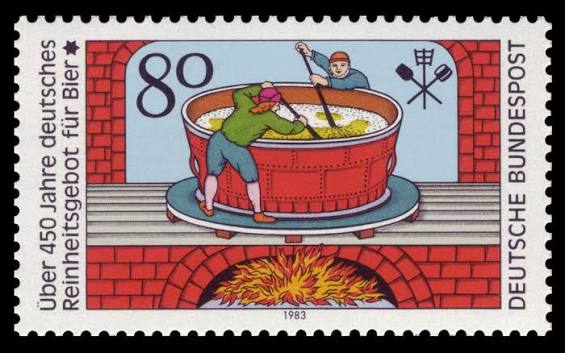
  • The 1516 Beer Purity Law: How a Bavarian Edict Still Shapes Your Pint

    The 1516 Beer Purity Law: How a Bavarian Edict Still Shapes Your Pint

    On April 23, 1516, in the Bavarian town of Ingolstadt, Duke Wilhelm IV issued a decree that would outlive his dynasty by centuries. The Reinheitsgebot, or Beer Purity Law, limited beer ingredients to water, barley, and hops. It was a practical measure to prevent price gouging and protect bread grain, but it became a cornerstone of brewing identity.

    Today, that 500-year-old regulation still influences what you drink—from the crisp lagers of Munich to the hazy IPAs in a Brooklyn taproom. It sparked legal battles, inspired craft brewers, and even earned a spot on Germany’s cultural heritage list. Understanding its origins and legacy helps explain why beer tastes the way it does and why some styles are harder to find in Germany than elsewhere.

    A Law Born of Chaos and Famine

    In the early 1500s, brewing was a messy business. Without refrigeration or microbiology, beer spoiled quickly, and brewers often resorted to questionable additives to mask off-flavors: soot, henbane, mushrooms, even animal byproducts. Some of these could cause hallucinations or worse. Meanwhile, bad harvests meant wheat and rye were precious for bread. The dukes wanted to ensure that barley—which made poor bread but good beer—was used for brewing, leaving wheat and rye for bakers.

    The 1516 law set maximum prices too: one to two Pfennigs per Maß (about a liter), depending on the season and quality. Brewers caught selling impure beer faced confiscation and fines. Repeat offenders could lose their livelihood. It was a consumer-protection measure, but also a power grab: brewing was a major tax source, and the dukes wanted strict control.

    Why Hops? Why Not Yeast?

    Hops were a newfangled addition, arriving in Bavaria from Bohemia in the 14th–15th centuries. They provided natural preservation and bitterness, replacing gruit—a blend of herbs like yarrow and juniper, often controlled by the Church. By mandating hops, the law inadvertently killed the gruit trade and clipped the Church’s economic wings.

    The law’s silence on yeast is often misunderstood. Fermentation was a mystery—Louis Pasteur wouldn’t identify yeast’s role until the 19th century. Brewers relied on wild yeast or back-sloping (adding sediment from a previous batch). So yeast was omitted because it was unknown, not because it was unimportant.

    From Bavarian Rule to German Law

    The Reinheitsgebot initially applied only to Bavaria. When the German Empire formed in 1871, it remained a Bavarian peculiarity. In 1906, it was extended to the whole empire, with allowances for bottom-fermented beers. Wheat beer, long a royal monopoly, wasn’t formally permitted until 1918.

    The law began to crack under European pressure. In 1987, the European Court of Justice ruled that the Reinheitsgebot violated EU free-trade principles, forcing Germany to allow foreign beers with additives. Germany responded in 1993 with the Provisional Beer Law, which kept the purity rules for domestic brewers but allowed imports to use other ingredients.

    Today, the Reinheitsgebot is voluntary for German brewers. They can brew with fruit, spices, or lactose, but they can’t call the result “Bier”—it must be labeled a “mixed beer beverage” or similar. Bavaria enforces this more strictly than other states. In 2016, UNESCO recognized the law as part of Germany’s intangible cultural heritage.

    The Traditionalist Case

    The Reinheitsgebot is the world’s oldest food-safety law still in effect. German brewers, especially Bavarians, wear it as a badge of honor. They argue that it guarantees quality, protects consumers, and preserves a heritage that dates back five centuries. The German Brewers’ Federation maintains that the law is a mark of purity that no other beer can claim.

    Many German brewers follow it voluntarily even when exporting, because international drinkers associate “German beer” with this purity. It’s a marketing advantage as much as a legal one.

    The Critics’ Rebuttal

    Detractors see the law as protectionist and stifling. It blocks innovation and excludes modern ingredients like lactose, fruit, and alternative grains. The 1987 EU ruling exposed this: foreign beers with additives were kept out for decades, not because they were unsafe, but because they competed with domestic products.

    Historically, the law was never about quality—it was about price control and grain allocation. And in the craft beer era, its limits are glaring. Styles like milkshake IPAs, fruit sours, and pastry stouts can’t legally be called “beer” in Germany. That’s why many German craft brewers choose to label their experimental products as “mixed beverages,” which feels like a semantic workaround rather than a badge of honor.

    Some argue this legal straitjacket has slowed Germany’s craft beer scene compared to the US, UK, or Scandinavia, where brewers freely experiment with adjuncts and flavors.

    Global Echoes

    Despite its critics, the Reinheitsgebot has shaped brewing standards worldwide. It influenced purity laws in other countries, including the US Reinheitsgebot-inspired campaigns by some brewers who tout all-malt recipes. The law’s legacy is visible in the global dominance of lager—a style that relies on the barley, water, and hops that the law enshrined.

    Even in countries without such laws, the Reinheitsgebot frames debates about beer ingredients and authenticity. Craft brewers often invoke it ironically, celebrating their freedom to add vanilla or coffee while acknowledging the Bavarian rule that made beer what it is.

    A Living Anachronism

    The Reinheitsgebot survives because it’s more than a regulation—it’s a cultural symbol. For Bavarians, it represents pride in their brewing tradition. For critics, it’s a reminder that laws can outlive their original purpose. And for brewers everywhere, it’s a benchmark: a simple rule that defined beer for centuries, and against which every new style must measure.

    As you sip a crisp German pilsner or a bold American IPA, consider the 500-year-old edict that still shapes your glass. The law may have been born of famine and fraud, but it became the foundation of a global industry—and a testament to how a single decree can echo through history.

    The Beer Purity Law of 1516 was a pragmatic response to its time, but its influence reached far beyond Bavarian borders. It shaped the ingredients, styles, and regulations of beer worldwide, and it continues to provoke debate about purity, innovation, and tradition. Whether you view it as a guardian of quality or a barrier to creativity, there’s no denying its lasting impact on the world’s favorite fermented beverage.

    Summary

    • The Reinheitsgebot, issued in 1516, restricted beer to water, barley, and hops.
    • It was a public health, food security, and price control measure, not a quality standard.
    • Yeast was omitted because it was unknown, not because it was unimportant.
    • The law became German-wide in 1906, but the EU forced changes in 1987, making it voluntary for German brewers.
    • Today, it still influences German brewing, but critics say it stifles craft innovation.

    FAQ

    Q: What exactly does the Reinheitsgebot allow?
    A: It allows only water, barley, and hops in beer. Yeast was not included because it wasn’t discovered as a fermentation agent until the 19th century.

    Q: Is the Reinheitsgebot still in force?
    A: Yes, but it’s now voluntary for German brewers. They can use other ingredients, but they must label such products as “mixed beer beverages” rather than “beer.” Bavaria enforces it more strictly than other states.

    Q: Why was the law issued?
    A: To prevent brewers from using harmful additives like soot or henbane, to preserve wheat and rye for bread, and to regulate prices. It also gave the dukes more control over brewing, a major economic activity.

    Q: How did the law affect craft beer?
    A: It restricts styles like fruit sours or milkshake IPAs that use additional ingredients. German craft brewers often label these as “mixed beverages” to comply, which some see as a hindrance to innovation.

    Q: Did the law apply to all of Germany?
    A: No, it was Bavarian-only until 1906, when it was extended to the German Empire. Bavaria still enforces it more strictly than other states.

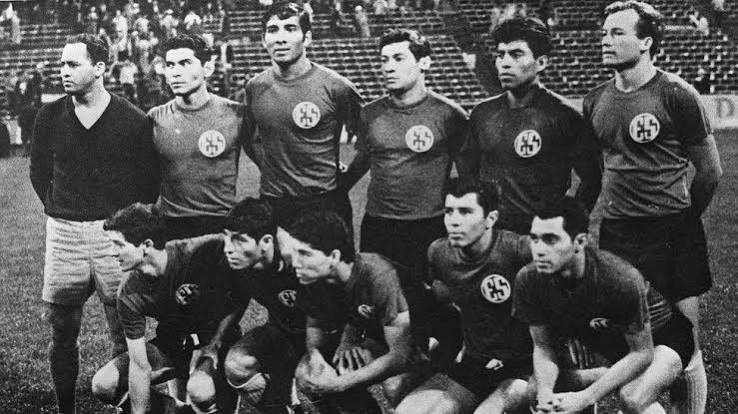
  • The 1969 ‘Soccer War’: When a World Cup Qualifier Sparked a Real-Life Conflict

    The 1969 ‘Soccer War’: When a World Cup Qualifier Sparked a Real-Life Conflict

    In June 1969, two neighboring countries went to war over a football match. But the real battle lines were drawn decades earlier, in the soil of land reform, migration, and economic desperation. On July 14, El Salvador launched a full-scale military invasion of Honduras, triggered by riots after a World Cup qualifying game. The conflict lasted just 100 hours, but it left thousands dead and over 100,000 Salvadorans displaced.

    The ‘Soccer War’ is often remembered as an absurd footnote in sports history a moment when a game turned deadly. But that framing misses the deeper tragedy: the war was a violent eruption of long-simmering tensions over land, population, and power. What happened on the pitch was merely the spark that lit a powder keg built over decades.

    The Spark: Three Matches That Shook Central America

    The road to the 1970 FIFA World Cup in Mexico brought El Salvador and Honduras together in a three-match playoff. The stakes were high—a spot in the world’s biggest sporting event—but the atmosphere was already toxic.

    The first match, played in Tegucigalpa on June 8, 1969, ended in a 1–0 win for Honduras. Reports of a Honduran fan being killed in San Salvador followed. The second match, in San Salvador on June 15, saw El Salvador win 3–0, but the victory was marred by violent riots. Two Honduran fans were reportedly killed, and the Salvadoran players had spent the night before the game harassed by noise outside their hotel—a tactic some accounts say was used against the Honduran team in Tegucigalpa as well.

    By June 26, El Salvador had severed diplomatic relations with Honduras, citing attacks on its citizens. Border skirmishes escalated, and on July 14, the Salvadoran military invaded. The war lasted until July 18, when the Organization of American States (OAS) brokered a ceasefire. A third, decisive match—played in neutral Mexico City in October—saw El Salvador win 3–2 in extra time, qualifying for the World Cup. But by then, the damage was done.

    The Real Battlefield: Land and Migration

    The football matches were a catalyst, not a cause. The root of the conflict lay in a demographic and economic imbalance that had been building for decades.

    El Salvador was the smallest and most densely populated country in Central America, with a tiny oligarchy controlling most of the arable land. Landless peasants, pushed out by poverty and inequality, migrated en masse to Honduras, which had a much lower population density. By the 1960s, an estimated 300,000 Salvadorans were living in Honduras, many as squatters on land they farmed.

    Honduras, meanwhile, was implementing its own agrarian reform. The 1962 land reform laws threatened the land held by Salvadoran migrants, and in 1969, the Honduran government began enforcing them, expelling Salvadoran squatters and smallholders. This was a direct threat to the livelihoods of thousands of families, and it created a humanitarian crisis that El Salvador’s government could not ignore.

    The economic disparity between the two nations also fueled resentment. El Salvador was more industrialized, and Hondurans feared economic domination. Salvadoran migrants, who were often more skilled or willing to work for lower wages, were scapegoated for economic woes. Honduran media amplified these grievances, while Salvadoran media highlighted abuses against its citizens abroad. Both governments used nationalist rhetoric to deflect domestic problems and rally public support.

    The War Itself: 100 Hours of Chaos

    El Salvador’s invasion was framed as a self-defense measure to protect its citizens, but the military campaign was far from a swift victory. The Salvadoran army advanced several kilometers into Honduran territory but quickly stalled due to supply line failures and determined Honduran resistance, including air attacks on Salvadoran oil facilities and the international airport at Ilopango.

    El Salvador’s air force consisted of World War II-era P-51 Mustangs and even civilian aircraft rigged with bombs. Honduras, though less equipped, managed to hold its own. Neither side achieved a decisive military victory; the war ended in a stalemate, with estimates of 2,000 to 6,000 dead, mostly Honduran civilians and Salvadoran migrants caught in the crossfire.

    The OAS played a crucial role in ending the conflict, brokering a ceasefire on July 18. El Salvador initially resisted, but the threat of economic sanctions and pressure from the United States—wary of instability in Central America during the Cold War—forced its troops to withdraw by August. The war also severely disrupted the Central American Common Market, a regional integration effort that had been a rare success story in the region.

    The Aftermath: Displacement and a War’s Legacy

    The most lasting consequence of the war was the mass expulsion of Salvadoran migrants from Honduras. Between 100,000 and 130,000 Salvadorans were forced to flee or were deported, often leaving behind everything they owned. This created a refugee crisis in El Salvador, which was already struggling with land scarcity and poverty.

    The war also deepened the divide between the two nations, and relations remained tense for decades. The ‘Soccer War’ became a cautionary tale about how nationalism and economic desperation can turn a sporting event into a deadly conflict.

    Beyond the Absurdity: Why the ‘Soccer War’ Still Matters

    The popular narrative of the ‘Soccer War’ focuses on the absurdity of a football match sparking a war—and it is absurd, in the sense that it reveals how easily human lives can be sacrificed for nationalist pride. But the real lesson is more sobering: the war was a ‘war of the poor against the poor,’ as some historians have described it. Salvadoran peasants fleeing an oligarchic land monopoly clashed with Honduran peasants defending their own land reform, all while elites on both sides manipulated nationalist sentiment for political gain.

    The conflict remains a powerful illustration of how migration, land inequality, and economic disparity can create tinderbox conditions, waiting for any spark to ignite. And the fact that the spark was a football match—a game meant to unite—is a bitter irony that still resonates today, in a world where sports and politics are increasingly intertwined.

    The 1969 ‘Soccer War’ is not just a footnote in sports history; it is a stark reminder that wars are rarely about what they appear to be on the surface. The World Cup qualifying matches were the trigger, but the ammunition was decades of land inequality, forced migration, and nationalist manipulation. As we watch modern-day conflicts unfold, it’s worth remembering that the battlefields of the future may be ignited not by a football goal, but by any number of economic and social injustices that we fail to address.

    Summary

    • The ‘Soccer War’ (July 14–18, 1969) between El Salvador and Honduras was triggered by riots during a World Cup qualifying match, but the real causes were economic and demographic.
    • The conflict lasted roughly 100 hours, left an estimated 2,000–6,000 dead, and led to the expulsion of 100,000–130,000 Salvadoran migrants from Honduras.
    • Root causes included severe land inequality in El Salvador, Honduran agrarian reform that displaced Salvadoran squatters, and nationalist scapegoating by both governments.
    • The war ended in a stalemate, with an OAS-brokered ceasefire; El Salvador withdrew after the threat of economic sanctions.
    • The war serves as a case study in how migration, land disputes, and nationalist rhetoric can turn a sporting event into a deadly conflict.

    FAQ

    Q: Why is it called the ‘Soccer War’?
    A: Because the immediate trigger was riots following a World Cup qualifying match between El Salvador and Honduras in June 1969. The war started less than a month later.

    Q: How long did the war last?
    A: The actual military conflict lasted about 100 hours, from July 14 to July 18, 1969. It is one of the shortest interstate wars in modern history.

    Q: What were the real causes of the war?
    A: The underlying causes were economic and demographic: land inequality in El Salvador, mass migration of Salvadorans to Honduras, and Honduran land reforms that threatened their livelihoods. Both governments used nationalism to deflect domestic issues.

    Q: How many people died?
    A: Estimates range from 2,000 to 6,000 deaths, mostly Honduran civilians and Salvadoran migrants. The exact number is still debated.

    Q: Did El Salvador qualify for the 1970 World Cup?
    A: Yes. After the war, a third match was played in Mexico City in October 1969, which El Salvador won 3–2 in extra time, earning a spot in the World Cup—though they did not advance past the group stage.

  • The Spice That Built Empires: How Nutmeg Drove Exploration, Conquest, and the Global Palate

    The Spice That Built Empires: How Nutmeg Drove Exploration, Conquest, and the Global Palate

    In the 17th century, a single nutmeg could buy a small fortune. It was worth more by weight than gold, and the quest to control its source—a handful of tiny islands in the Indonesian archipelago—would reshape the world. European powers fought wars, committed genocide, and traded entire colonies over this humble seed.

    Today, nutmeg is a kitchen staple, sprinkled into pumpkin pie and eggnog without a second thought. But its journey from tropical island to spice rack is a story of colonial ambition, economic ruthlessness, and culinary transformation. This is the tale of how a forgotten spice built an empire and changed what we eat.

    A Spice Worth Killing For

    Nutmeg comes from the seed of the Myristica fragrans tree, native only to the Banda Islands in Indonesia’s Maluku archipelago—the legendary Spice Islands. For centuries, the Bandanese enjoyed a natural monopoly: the tree would not grow elsewhere, and the tropical maritime climate of these islands was essential for its cultivation.

    Long before Europeans arrived, Arab and Gujarati traders had established a lucrative spice route, moving nutmeg from the Malukus to markets in the Middle East and India. Venetian merchants then distributed it across Europe, where it commanded astronomical prices. The source was a closely guarded secret, deliberately obscured by middlemen to protect their margins. This mystery only added to its allure.

    Nutmeg’s value was driven by more than just rarity. In an era without refrigeration, spices masked the taste of spoiled meat and made preserved foods palatable. Physicians prescribed nutmeg for everything from the plague to gout, and it was even thought to have hallucinogenic properties in high doses. For European elites, possessing nutmeg was a status symbol—a marker of wealth and sophistication. Prices were so high that nutmeg was often stored in ornate boxes and grated fresh at the table, a display of conspicuous consumption.

    The Portuguese and the First Monopoly

    In 1511, the Portuguese captured Malacca, a key trading port in the region, and soon after sailed to the Banda Islands directly. They established the first European monopoly on nutmeg, cutting out the Arab and Venetian middlemen. For the next century, Portugal controlled the global supply, reaping enormous profits.

    But the Portuguese were not alone for long. In 1602, the Dutch East India Company (VOC) was founded, and it aggressively pushed into the Spice Islands. The Dutch were determined to dominate the nutmeg trade, and they were willing to do whatever it took.

    The Banda Massacre and Dutch Ruthlessness

    The Dutch East India Company’s pursuit of a total nutmeg monopoly reached its horrifying peak in 1621. Under the command of Jan Pieterszoon Coen, Dutch forces launched a brutal campaign against the native Bandanese, who had resisted the company’s demands for exclusive trade. The result was the Banda Massacre: an estimated 15,000 people were killed or exiled, and the islands were depopulated. Coen’s forces enslaved the survivors and imposed a system of forced labor to cultivate nutmeg for the VOC.

    This genocide was a calculated act of economic strategy. By eliminating the local population and replacing them with enslaved laborers, the Dutch secured absolute control over nutmeg production. They then went to extreme lengths to protect their monopoly: they coated exported nutmeg with lime to prevent germination, killed anyone caught smuggling seeds, and destroyed nutmeg trees on other islands to maintain scarcity.

    The strategy worked. At its 17th-century peak, nutmeg voyages returned profits of 600 to 1,500 percent. The VOC became the world’s first multinational corporation, partly on the back of this single spice. The Dutch model of artificial scarcity—restricting supply to keep prices high—was a precursor to modern cartel economics.

    The islands themselves became a fortress of sorts, with the Dutch enforcing their monopoly through a combination of violence, surveillance, and trade restrictions. The nutmeg trade was so lucrative that it funded the Dutch Golden Age, financing everything from art to military campaigns.

    A Colony Traded for Nutmeg

    One of the most famous episodes in nutmeg history occurred in 1667 with the Treaty of Breda. The Dutch, who had captured the small nutmeg-producing island of Run from the English, ceded it to England in exchange for Manhattan (then New Amsterdam). In hindsight, this seems like an absurd trade—Manhattan would become one of the world’s most valuable cities, while Run is a tiny speck in the Pacific.

    But at the time, it made perfect sense. Nutmeg was a strategic resource, and Run was one of the few places where it grew. Manhattan, by contrast, was a struggling settlement with little economic value. The Dutch were making a rational choice based on the economic logic of the day. Today, the trade is often cited as a prime example of how the spice trade shaped global geopolitics.

    Breaking the Monopoly: The French and British

    The Dutch monopoly on nutmeg lasted for over a century, but it was not unbreakable. In the 1770s, a French naturalist named Pierre Poivre (literally ‘Peter Pepper’) managed to smuggle nutmeg seedlings out of the Banda Islands to Mauritius, then a French colony. Despite Dutch efforts to prevent the export of live plants, Poivre succeeded, and the monopoly began to crumble.

    The British followed suit, transplanting nutmeg to Penang, Singapore, and Grenada in the 19th century. With multiple producers now in the game, prices plummeted, and the spice became accessible to the masses. Grenada, in particular, became a major producer, and nutmeg is still a significant part of its economy today.

    The Culinary Legacy

    Nutmeg’s journey from luxury spice to everyday ingredient is a direct result of this colonial history. During the Renaissance, European cooks incorporated nutmeg into savory dishes like meat pies and sausages, as well as sweet treats like puddings and mulled wine. Its warm, nutty flavor was a mark of sophistication.

    As the spice became more affordable, it found its way into béchamel sauce, eggnog, pumpkin pie spice blends, and holiday baking. These culinary traditions are a legacy of the colonial supply chains that once made nutmeg a commodity worth fighting over.

    But nutmeg was not new to the cuisines of Asia and the Middle East. For centuries, it had been a staple in South Asian and Middle Eastern cooking, appearing in garam masala, biryani, and Persian stews. European adoption came much later and was driven by the same trade networks that built empires.

    Today, nutmeg is so common that we rarely think about its origins. But every time we sprinkle it into a latte or a pie, we are tasting the result of a global struggle for power and wealth—a story of exploration, exploitation, and culinary exchange that changed the world.

    Nutmeg is not just a spice; it is a relic of an era when a single commodity could drive nations to conquest. The Dutch East India Company’s ruthless monopoly, the Banda Massacre, and the Treaty of Breda are reminders of the human cost behind the flavors we take for granted. Yet nutmeg’s legacy is also one of cultural fusion—it bridged continents and enriched cuisines from Europe to Asia. The next time you reach for that jar in your spice rack, remember: you’re holding history in your hands.

    Summary

    • Nutmeg was once worth more than gold, driving European exploration and colonial expansion.
    • The Dutch East India Company committed genocide in the Banda Islands to secure a monopoly.
    • The Treaty of Breda traded Manhattan for a nutmeg island, reflecting the spice’s strategic value.
    • Nutmeg’s culinary integration into global cuisines is a direct legacy of colonial trade networks.
    • The spice’s monopoly was broken by smuggling and transplantation in the 18th and 19th centuries.

    FAQ

    Q: Why was nutmeg so valuable in the 17th century?
    A: Nutmeg was rare, exotic, and believed to have medicinal properties. It was used to mask spoiled meat, preserve food, and as a status symbol for the wealthy. European prices were extraordinarily high, often exceeding the value of gold by weight.

    Q: What was the Banda Massacre?
    A: In 1621, Dutch forces under Jan Pieterszoon Coen slaughtered or enslaved nearly the entire native population of the Banda Islands—an estimated 15,000 people—to secure total control of nutmeg production. This genocide was a calculated act to eliminate resistance and enforce a monopoly.

    Q: How did the Dutch maintain their nutmeg monopoly?
    A: The Dutch used a combination of violence, surveillance, and artificial scarcity. They coated exported nutmeg with lime to prevent germination, killed smugglers, and destroyed nutmeg trees on other islands. They also enslaved the local population to work on plantations.

    Q: What was the Treaty of Breda?
    A: The Treaty of Breda (1667) ended the Second Anglo-Dutch War. The Dutch ceded the small nutmeg-producing island of Run to the English in exchange for Manhattan (New Amsterdam). At the time, nutmeg was considered more valuable than the future site of New York City.

    Q: How did the nutmeg monopoly end?
    A: In the 1770s, French naturalist Pierre Poivre smuggled nutmeg seedlings to Mauritius, breaking the Dutch monopoly. The British later transplanted nutmeg to Penang, Singapore, and Grenada, leading to multiple producers and a collapse in prices.

  • The Pencil’s Hidden History: How Graphite, War, and a French Revolution Created the Modern No. 2

    The Pencil’s Hidden History: How Graphite, War, and a French Revolution Created the Modern No. 2

    Think about the last time you picked up a pencil. Maybe it was to jot a quick note, mark a crossword, or fill in a bubble on a test. That simple wooden stick with a graphite core is so common that we rarely give it a second thought. Yet its journey from a lump of rock in an English valley to the standardized No. 2 in your desk drawer is a tale of war, ingenuity, and industrial revolution.

    This is not a story about a mundane office supply. It’s a story about how a French blockade forced a scientist to invent a new way to make pencils, how a misnomer about lead stuck for centuries, and how standardized testing shaped the pencil you use today. By the end, you’ll never look at a pencil the same way again.

    The Accidental Discovery: Borrowdale’s Treasure

    In 1564, something extraordinary was found in Borrowdale, England—a massive deposit of pure graphite. It was soft, dark, and could be cut into sticks. Locals first used it to mark sheep, but it wasn’t long before artists and merchants realized its potential for writing and drawing.

    But there was a catch. This graphite was so valuable that the British Crown seized control of the mines. Thieves faced severe punishment, and the graphite was extracted under armed guard. Britain had a global monopoly on solid graphite for over a century, and they guarded it fiercely.

    And here’s a quirk of history: people called it “plumbago,” meaning “lead ore,” because it looked like lead. The term “lead pencil” stuck, even though pencils never contained lead. That’s why we still ask for a “lead” pencil today, despite the fact that the core is actually graphite.

    The French Problem: A Blockade and a Call for Innovation

    Fast forward to the 1790s. France is at war with Britain, and the British navy has blockaded French ports. This cuts off France’s access to high-quality Borrowdale graphite. The French had only low-grade, powdery graphite—useless for making solid pencil sticks.

    The French government, desperate for writing instruments for its military and bureaucracy, put out a call: find a way to make pencils from this inferior graphite.

    Enter Nicolas-Jacques Conté, a scientist, army officer, and all-around innovator. He had already worked on military balloons, so he was used to solving problems under pressure. His solution was elegant: grind the powdery graphite into a fine dust, mix it with clay and water to form a paste, shape it into rods, and then fire them in a kiln. The result was a pencil core that was both smooth and usable.

    By adjusting the ratio of clay to graphite, Conté could control the hardness and darkness of the mark. More clay meant a harder, lighter pencil; more graphite meant a softer, darker one. This was a breakthrough. It meant you could produce pencils of consistent quality, and it didn’t require the rare, pure graphite from England.

    Conté patented his method in 1795, but he wasn’t the only one with the idea. Joseph Hardtmuth in Austria had developed a similar technique around 1790, and he went on to found the Koh-I-Noor company. There’s some debate over who came first, but Conté’s patent was instrumental in spreading the technology.

    The Industrial Revolution and the Rise of Mass Production

    For most of history, pencils were luxury items. They were used by artists, surveyors, and merchants—people who needed precise marks. But the 19th century brought two forces that would change everything: the expansion of public education and the growth of bureaucracy.

    As schools became more common, teachers needed cheap, reliable writing tools for students. Railroads, governments, and businesses required record-keeping on an unprecedented scale. The demand for pencils skyrocketed.

    Enter Joseph Dixon, an American inventor. In 1822, he developed a milling process that could mass-produce pencil slats and grooves, cutting costs dramatically. Then, in 1861, Eberhard Faber opened the first major pencil factory in New York City, bringing German craftsmanship to the American market.

    Prices plummeted. In the 1820s, a pencil might cost 25 cents—a significant sum. By the 1860s, you could buy one for a few cents. The pencil became the first truly mass-produced writing tool, well before the typewriter or the ballpoint pen.

    The Eraser: A Patent Battle

    In 1858, Hymen Lipman had a simple idea: why not attach a small eraser to the end of a pencil? He patented it, and it seemed like a winning concept. But the patent was challenged in court, and in 1875, the U.S. Supreme Court ruled in Reckendorfer v. Faber that combining a pencil and an eraser was not a patentable invention—you were just putting two existing things together. The patent was invalidated.

    This was an early landmark case in patent law, establishing that mere combination of known elements, without a new and useful result, doesn’t qualify for a patent. So the attached eraser became fair game for all manufacturers, and it became a standard feature.

    The Birth of the “No. 2”

    The number on a pencil refers to its hardness grade. In the U.S. system, the scale runs from 1 (softest and darkest) to 4 (hardest and lightest). A No. 2 pencil is the sweet spot—dark enough to be easily read, but hard enough to erase cleanly. On the European scale, it’s known as HB, which stands for “hard-black.”

    But why did No. 2 become the standard? The answer lies in standardized testing. In the 1970s, Scantron machines were introduced to grade multiple-choice tests. These machines used optical mark recognition to detect where students had filled in bubbles. The graphite in a No. 2 pencil has the right density to reflect light in a way that the machines can read reliably. So No. 2 became the default for bubble sheets, and it’s been the go-to for tests ever since.

    The Pencil by the Numbers

    Pencils are remarkable tools, and the numbers are mind-boggling:

    • A single pencil can draw a line roughly 35 miles long.
    • The average pencil can write about 45,000 words.
    • About 2 billion pencils are produced annually in the U.S. alone.

    The wood of choice for most pencils is incense cedar, particularly from California. It sharpens cleanly and doesn’t splinter, making it ideal. But the heavy logging of cedar forests led to supply concerns by the mid-20th century. Manufacturers turned to alternative woods like jelutong from Southeast Asia, and today, some pencils are made from plastic or resin composites. Modern pencil companies are increasingly using sustainably sourced wood and recycled materials.

    The Pencil’s Legacy

    From a guarded mine in England to a standardized tool for millions of students, the pencil’s history is a testament to human ingenuity in the face of adversity. The French blockade forced Conté to innovate, and his clay-and-graphite method laid the foundation for every pencil made today. The industrial revolution made pencils affordable, and standardized testing made No. 2 the universal choice.

    Next time you pick up a pencil, remember the story embedded in that simple wooden shaft. It’s a story of war, science, and the relentless march of progress. And it all started with a bunch of sheep and a lump of rock.

    The pencil is more than a writing tool; it’s a little piece of history. From the Borrowdale mines to the French kilns, from the factory floors of the 19th century to the Scantron machines of the 20th, each pencil carries a legacy of innovation. So the next time you use a No. 2, know that you’re holding a small miracle of problem-solving that spans centuries.

    Summary

    • Graphite was discovered in Borrowdale, England in 1564, and was initially used to mark sheep.
    • France’s blockade during the Revolutionary Wars cut off access to English graphite, prompting Nicolas-Jacques Conté to invent a method of mixing powdered graphite with clay.
    • Conté’s 1795 patent allowed control of pencil hardness and darkness, forming the basis of modern pencils.
    • Mass production in the 19th century (Dixon, Faber) made pencils affordable for the masses.
    • The No. 2 pencil became standard due to its balance of darkness and erasability, and its compatibility with Scantron machines.

    FAQ

    Q: Why are pencils called ‘lead’ pencils if they don’t contain lead?nA: When graphite was first discovered, it was mistaken for lead ore and called ‘plumbago.’ The name stuck, even though pencils never contained lead.nnQ: What does the ‘No. 2’ mean on a pencil?nA: It’s a hardness grade. In the U.S., the scale runs from 1 (softest, darkest) to 4 (hardest, lightest). No. 2 is the middle ground, offering a balance of darkness and erasability. It corresponds to HB on the European scale.nnQ: Why did the French need to invent a new pencil-making method?nA: During the French Revolutionary Wars, Britain blockaded France, cutting off access to high-quality English graphite. France had only low-grade, powdery graphite, which couldn’t be used to make solid pencil sticks. Conté’s invention allowed them to use that powder by mixing it with clay.nnQ: Is it true that the pencil eraser attachment was not patentable?nA: Yes, in 1875 the U.S. Supreme Court ruled that combining a pencil and an eraser was not a patentable invention because it was just combining two existing items without a new and useful result.nnQ: How far can a single pencil write?nA: A single pencil can draw a line roughly 35 miles long and can write about 45,000 words.

  • How a Nutmeg Island Cost the Dutch Their Empire in America


    In 1667, two global powers signed a treaty that would redraw the map of the world. The Dutch handed over a muddy, contentious patch of North America—including the island of Manhattan—to the English. In return, they received a tiny volcanic speck in the Banda Sea called Run, barely three kilometers long. The prize? A monopoly on nutmeg, a spice worth more than its weight in gold.

    This was not an isolated quirk of diplomacy. For two centuries, the Banda Islands—the only source of nutmeg on Earth—fueled a trade that built empires, funded the Dutch Golden Age, and ultimately led to one of the most brutal colonial genocides in history. The story of nutmeg is not just about a spice; it’s about how a single seed can shape the fate of nations.

    The Spice That Launched a Thousand Ships

    Long before coffee or tea, nutmeg was the world’s most coveted luxury. Its warm, sweet aroma and purported medicinal powers made it a status symbol for European aristocrats. In the 16th century, a single nutmeg could sell in London for enough to buy a small property or several sheep. It was believed to cure plague, stomach ailments, and even act as a general panacea. While modern science shows nutmeg has mild antibacterial properties, its mystique was enough to drive explorers across uncharted oceans.

    The source of this treasure was a secret: the Banda Islands, a cluster of ten volcanic islets in eastern Indonesia, totaling just 180 square kilometers. For centuries, nutmeg and its derivative mace grew nowhere else. Arab and Indian merchants controlled the trade, moving the spice westward through a chain of middlemen—from Maluku to Java to Malacca to India to the Middle East to Venice. Each step added a markup of 1,000% to 3,000%, so that by the time nutmeg reached European tables, it was literally worth more than gold.

    The Portuguese Crack the Code, Then Lose It

    In 1511, the Portuguese captured Malacca, the key trading hub of Southeast Asia, and finally discovered the source of nutmeg. They established a fort on Banda Neira, but they never managed to monopolize the trade. The Bandanese were skilled negotiators who played European powers against each other, selling to anyone who paid well. The Portuguese held on for a century but failed to break the local resistance.

    The Dutch, however, were not content with a share of the market. In 1602, they chartered the Dutch East India Company (VOC)—the world’s first multinational corporation, with its own army, navy, and authority to sign treaties. The VOC’s mission was total control of the spice trade, by any means necessary.

    The Genocide That Secured a Monopoly

    Between 1609 and 1621, the Dutch tightened their grip on the Banda Islands. They demanded exclusive trading rights, but the Bandanese resisted. In 1621, Governor-General Jan Pieterszoon Coen launched a brutal campaign. With the help of Japanese mercenaries, his forces overwhelmed the islands. An estimated 15,000 Bandanese were killed, enslaved, or fled. Those who survived were either enslaved or escaped to neighboring islands.

    The Dutch then repopulated the islands with slaves and convicts to work the nutmeg plantations. They also introduced a system of ecological control: they destroyed all nutmeg trees on non-Banda islands to prevent any outside supply. Every nutmeg had to be processed and stored in Amsterdam, and the seeds were lime-washed before export to prevent germination if smuggled. Patrol fleets, called hongi, enforced the monopoly by burning any unauthorized nutmeg trees.

    The result was a global monopoly that generated enormous profits for the VOC, funding the Dutch Golden Age—its art, its infrastructure, and its naval power. For the Bandanese, it was a genocide that nearly wiped out an entire people.

    The Island Trade That Changed the World

    One island in the Banda group, Run, had remained under English control since 1616. The English had signed a treaty with the Bandanese to protect them from the Dutch, but they were no match for the VOC’s might. After years of skirmishes, the two nations decided to settle their colonial disputes with a treaty.

    The Treaty of Breda in 1667 was a land-for-spice swap: the Dutch ceded New Netherland—including Manhattan, which they had founded as New Amsterdam—to the English. In exchange, they received Run, a tiny nutmeg-producing island that the English had held.

    This trade is often cited as the moment “Manhattan was traded for nutmeg.” At the time, it seemed like a good deal for the Dutch. Nutmeg was worth more than gold, and Run was the key to their monopoly. Manhattan, on the other hand, was a relatively small settlement of about 1,500 people. The English renamed it New York.

    In hindsight, it looks like one of the worst trades in history, but it illustrates how the spice trade dominated global politics. Nutmeg was not just a commodity; it was a strategic asset that could fund an empire.

    The Dutch monopoly on nutmeg lasted until the late 18th century. In the 1770s, a French naturalist named Pierre Poivre (which literally means “pepper” in French) smuggled nutmeg seedlings to Mauritius, then a French colony. This broke the Dutch exclusivity. By 1817, the British had transplanted nutmeg trees to their own colonies, including Grenada in the Caribbean. Within decades, nutmeg cultivation spread across the tropics, ending the Banda Islands’ unique status forever.

    A Lesson in Monopoly and Empire

    The story of nutmeg is a textbook case of monopoly economics. The VOC created artificial scarcity by controlling supply, manipulating prices, and using violence to enforce exclusivity. It’s a brutal reminder of what companies and nations will do to protect a profitable resource.

    It also shows how a single agricultural product can drive imperial competition. The Portuguese, Dutch, and English fought over these small islands, and the Dutch were willing to commit genocide to secure their monopoly. The spice trade was not just about flavor; it was about power.

    Today, nutmeg is a common kitchen spice, costing a few dollars per jar. But its history is anything but ordinary. The Banda Islands were the center of a global economy for centuries, and the lengths to which nations went to control them changed the course of world history. The next time you sprinkle nutmeg on your eggnog, remember that each seed carries the weight of empires, genocides, and a treaty that shaped the modern world.

    Summary

    • The Banda Islands in Indonesia were the only source of nutmeg in the world until the 19th century.
    • Nutmeg was worth more than gold in 17th-century Europe, driving European exploration and competition.
    • The Dutch East India Company committed genocide against the Bandanese in 1621 to secure a monopoly.
    • In the Treaty of Breda (1667), the Dutch traded Manhattan for the tiny nutmeg island of Run, illustrating the spice’s immense value.
    • The monopoly was broken in the late 18th century when botanists smuggled nutmeg seedlings to other colonies, ending the Banda Islands’ exclusive status.

    FAQ

    Q: Why was nutmeg so valuable in the 17th century?
    A: Nutmeg was prized for its supposed medicinal properties and as a status symbol for aristocrats. It was also used to flavor foods, and because it came from a single, distant source, the supply was limited and the price was astronomical—worth more than gold by weight.

    Q: What was the Dutch East India Company (VOC)?
    A: The VOC was a Dutch trading company founded in 1602, often considered the first multinational corporation. It had its own army, navy, and authority to sign treaties, and it used these powers to establish a monopoly on nutmeg and other spices.

    Q: How did the Dutch enforce their nutmeg monopoly?
    A: They used a combination of treaties, violence, and ecological control. They destroyed nutmeg trees on other islands, forced locals to sell only to the VOC, and used patrol fleets to enforce exclusivity. They also lime-washed nutmeg seeds to prevent germination if smuggled.

    Q: What happened to the native Bandanese people?
    A: In 1621, the Dutch launched a brutal campaign against the Bandanese, killing or enslaving an estimated 15,000 people. The survivors were either enslaved or fled, and the islands were repopulated with slaves and convicts to work the nutmeg plantations.

    Q: Did the Dutch really trade New York for a nutmeg island?
    A: Yes, in the Treaty of Breda (1667), the Dutch ceded New Netherland (including Manhattan) to the English in exchange for the island of Run, a nutmeg-producing island. This trade highlights how valuable nutmeg was at the time.

  • The Forgotten Table: How the 1492 Expulsion Forged Sephardic Cuisine


    In 1492, an estimated 100,000 to 200,000 Jews fled Spain rather than convert to Catholicism. They carried no cookbooks, no written recipes—only memory, habit, and a palate shaped by eight centuries of Muslim Iberian rule. That palate, forged in the convivencia of Al-Andalus, would travel across the Mediterranean, adapt to new lands, and survive for over five centuries as a living culinary archive of a lost world.

    Today, Sephardic cuisine remains largely overshadowed by Ashkenazi food, the Eastern European tradition that came to define ‘Jewish food’ in the American and Israeli imagination. But the Sephardic table—with its olive oil, eggplant, saffron, and sweet-and-sour sauces—tells a different story of Jewish survival, one marked by expulsion, adaptability, and a profound connection to the tastes of medieval Spain.

    The Expulsion That Started It All

    On March 31, 1492, the Alhambra Decree ordered all Jews out of Spain. Within months, whole communities packed whatever they could carry—and for cooks, that meant recipes carried in the head, not on paper. Dishes had to be adaptable, using whatever local ingredients presented themselves in the Ottoman Empire, North Africa, or the Balkans.

    Olive oil remained a constant in the Mediterranean basin, but in colder climes like Amsterdam, Sephardim switched to butter. This flexibility was key to survival. A recipe for a Sabbath stew might swap lamb for beef, or add local vegetables like potatoes, which didn’t exist in Spain until after the Columbian exchange.

    A Cuisine Born of Convivencia

    Before the expulsion, Jews had lived under Muslim rule in Iberia for nearly 800 years, in a period of cultural exchange known as convivencia. Arab and Berber cooks introduced ingredients that would become Sephardic staples: rice, eggplant, spinach, citrus, almonds, sugar, and saffron. They also brought techniques like slow-cooking and the art of combining sweet and sour in the same dish.

    This Moorish influence is unmistakable in Sephardic cooking. Dishes like albondigas (meatballs in lemon-egg sauce) and pollo con tomate (chicken with tomato) show a love of bright, tart flavors. Desserts like dulce de membrillo (quince paste) and honey-soaked pastries echo Arab sweets. The result was a fusion cuisine long before the term existed.

    The Sephardic Pantry: A World in Ingredients

    A Sephardic kitchen relies on a distinctive set of ingredients that set it apart from Ashkenazi cooking:

    • Olive oil, not schmaltz, as the primary fat
    • Legumes: chickpeas, lentils, and fava beans
    • Vegetables: eggplant, spinach, zucchini, and artichokes
    • Fresh herbs: parsley, cilantro, mint
    • Spices: cumin, coriander, cinnamon, allspice, saffron
    • Citrus: lemons, oranges, and their preserved peels
    • Dried fruits and nuts: dates, raisins, almonds

    This is a cuisine of the Mediterranean sun, not the Eastern European shtetl. It favors freshness and brightness, with a characteristic sweet-and-sour profile that shows up in agridulce sauces and honey-based desserts.

    Sabbath Stews and Holiday Traditions

    At the heart of Sephardic practice is hamin (or adafina), the slow-cooked Sabbath stew that parallels Ashkenazi cholent. On Friday afternoon, families would seal a pot of meat, chickpeas, potatoes, and eggs and carry it to the communal baker’s oven, where it would cook slowly until Saturday lunch. The result is a deeply flavorful, tender dish that defies the prohibition against cooking on the Sabbath.

    Holidays also have their own culinary signatures. On Passover, Sephardic Jews eat kitniyot—rice, legumes, and corn—which Ashkenazi Jews traditionally avoid. This divergence reflects different interpretations of Jewish law and different historical circumstances: Sephardim lived in places where rice and beans were dietary staples, not luxuries.

    The Time Capsule Effect

    In the Ottoman Empire, Sephardic communities remained relatively insular, preserving their Spanish-Jewish dishes for centuries. While Spain itself moved on, the exiles kept cooking medieval recipes that had long disappeared from the Iberian Peninsula. This created a culinary time capsule: linguists and food historians now use Sephardic recipes to reconstruct what Spanish food was like in 1492.

    For example, dishes like borekas (filled pastries) and fritadas (vegetable-egg casseroles) have no direct Spanish equivalent today, yet they clearly descend from Moorish and medieval Spanish cooking. The language of the kitchen also preserves this heritage—many culinary terms remain in Ladino, the Judeo-Spanish dialect that Sephardim carried with them.

    Why Was It Forgotten?

    Several factors conspired to push Sephardic cuisine to the margins. The massive wave of Ashkenazi immigration to the United States from 1880 to 1924 made Eastern European food the default ‘Jewish food’ in the popular imagination. Cookbooks, restaurants, and delis celebrated bagels, gefilte fish, and matzo ball soup, while Sephardic dishes remained largely unknown.

    The Holocaust dealt a devastating blow: Sephardic communities in Greece and the Balkans were nearly wiped out. Salonika, which was 60% Jewish before World War II, lost roughly 96% of its Jewish population. The living chain of culinary transmission was severed in those places.

    Later, when Sephardic Jews emigrated from Arab lands to Israel in the 1950s and 60s, they found a society that often suppressed their culture in favor of the Ashkenazi mainstream. Sephardic food, like Ladino and other traditions, was pushed aside in the melting pot ethos of the early state.

    A Revival on the Horizon

    In recent decades, food historians, chefs, and home cooks have begun to rediscover Sephardic cuisine. Cookbooks like Claudia Roden’s “The Book of Jewish Food” and the work of organizations like the Sephardic Sisterhood have brought these recipes to a wider audience. Restaurants in Israel, the US, and Europe now feature shakshuka, borekas, and other Sephardic dishes, often without diners realizing their origins.

    The revival is not just about nostalgia. Sephardic cuisine offers a model of adaptability and resilience—a reminder that food can carry identity across generations and continents. As more people explore this forgotten table, they find not just recipes but a story of survival, creativity, and the enduring taste of a lost homeland.

    The cuisine of the Sephardic Jews is not a relic of the past but a living tradition that has survived expulsion, assimilation, and near-erasure. It reminds us that food is more than sustenance—it is memory, identity, and a bridge across time and place. As Sephardic dishes find their way onto modern tables, they carry with them the flavors of medieval Spain and the resilience of a people who refused to forget who they were.

    Summary

    • The 1492 expulsion from Spain forced Sephardic Jews to carry their cuisine in memory, adapting it to new lands.
    • Sephardic cooking is rooted in the convivencia of Muslim Iberia, blending Arab, Berber, and Spanish influences.
    • Key ingredients include olive oil, legumes, eggplant, citrus, and spices like saffron and cumin, setting it apart from Ashkenazi food.
    • Dishes like hamin and the Passover allowance of kitniyot reflect distinct Sephardic practices.
    • The cuisine was marginalized by Ashkenazi dominance, the Holocaust, and Israeli assimilation policies, but is now experiencing a revival.

    FAQ

    Q: What is the difference between Sephardic and Ashkenazi cuisine?
    A: Sephardic cuisine uses olive oil, vegetables, legumes, and spices like saffron and cumin, while Ashkenazi cuisine relies on chicken fat (schmaltz), root vegetables, and heavier dishes. Sephardic food is lighter and more Mediterranean, with a characteristic sweet-and-sour flavor.

    Q: Why did Sephardic Jews eat rice and legumes during Passover?
    A: Sephardic Jews traditionally allow kitniyot (rice, legumes, corn) during Passover, a practice that Ashkenazi Jews forbid. This difference stems from distinct historical circumstances and rabbinic interpretations—Sephardim lived in regions where these foods were dietary staples.

    Q: What is hamin?
    A: Hamin (also called adafina) is a slow-cooked Sabbath stew, the Sephardic counterpart to Ashkenazi cholent. It typically contains meat, chickpeas, potatoes, and eggs, and is cooked slowly from Friday afternoon until Saturday lunch, allowing Jews to enjoy a hot meal on the Sabbath without violating the prohibition on cooking.

    Q: How did Sephardic cuisine survive the expulsion?
    A: Recipes were carried orally, primarily through women, and adapted to local ingredients. In the Ottoman Empire, Sephardic communities remained insular, preserving Spanish-Jewish dishes for centuries. This created a culinary time capsule that survived even as the originals disappeared from Spain.

    Q: Why is Sephardic cuisine considered ‘forgotten’?
    A: Ashkenazi food became the dominant ‘Jewish food’ narrative in the 20th century due to mass Eastern European immigration. The Holocaust destroyed many Sephardic communities in the Balkans and Greece, and later, Israeli assimilation policies suppressed Sephardic culture. Only recently has there been a revival of interest.

  • The Great Stink of 1858: How a Putrid River Forced London to Build the Sewer System That Still Works Today


    In the summer of 1858, London was engulfed by a stench so vile that Parliament considered relocating. The River Thames, the city’s longtime dumping ground, had become a festering open sewer, and a blistering heatwave turned it into a biological weapon. The crisis—dubbed the Great Stink by the press—was more than an olfactory assault. It was a public health emergency that exposed the fatal flaw of Victorian urban growth: a city of nearly 3 million people had no working sewage system.

    What happened next was a political and engineering marvel. In just 18 days, Parliament authorized millions of pounds for a solution. Chief engineer Joseph Bazalgette then built a sewer network of over 1,000 miles that not only ended the stench but also eradicated cholera from central London. Remarkably, that same system still operates today, handling 2 billion liters of waste daily. The Great Stink is a case study in how a short, sharp crisis can break through political inertia and lead to lasting, transformative change.

    A City Drowning in Its Own Waste

    By the mid-19th century, London had become the largest city in the world, but its sanitation was stuck in the Middle Ages. For centuries, human waste, animal carcasses, and slaughterhouse offal had been dumped into cesspits, streets, and directly into the Thames. The invention of the flush toilet—patented in 1778 and popularized in the 1840s—made things worse. Water closets flushed waste into overflowing cesspits or into street drains designed only for rainwater, which then emptied into the river.

    London’s population had exploded from 1 million in 1800 to 2.8 million by 1858, but infrastructure had not kept pace. The Thames, which served as both the city’s water source and its sewer, was a tidal river. That meant sewage didn’t wash out to sea; it sloshed back and forth with the tides, accumulating for decades. By the 1850s, the river was effectively dead—fish had vanished, and the banks were caked with black, putrefying sludge.

    Meanwhile, cholera outbreaks in 1831, 1848, and 1853 had killed tens of thousands. Dr. John Snow had demonstrated in 1854 that cholera was waterborne, but most officials still believed in the miasma theory—that disease spread through bad air. The smell of the Thames was considered a direct threat to public health, not just an aesthetic nuisance.

    The Summer Everything Boiled Over

    The summer of 1858 was unusually hot and dry. With little rain to dilute the filth, the Thames dropped to a sluggish trickle. The heat accelerated bacterial decomposition, releasing hydrogen sulfide and other noxious gases. The result was an odor so overpowering that it permeated every corner of the city. Sufferers described it as a mix of rotten eggs and putrefying flesh.

    The epicenter of the crisis was the Houses of Parliament, which had been rebuilt just six years earlier on the banks of the Thames. MPs found the stench unbearable. They tried hanging curtains soaked in chloride of lime in the windows, a desperate measure that did little to help. The situation became so dire that Parliament seriously considered relocating to Oxford or St. Albans.

    Newspapers, led by The Times, coined the term “Great Stink” and fanned public alarm. The crisis reached its peak in June, and the political pressure became irresistible.

    Parliament Acts with Unprecedented Speed

    On August 2, 1858, Parliament passed emergency legislation—informally known as the Great Stink Act—authorizing the Metropolitan Board of Works (MBW) to borrow £3 million (roughly £300 million today) to build a comprehensive sewer system. The bill passed in just 18 days, a lightning-fast pace for a body that had previously debated sanitation for decades with little action.

    The MBW had been created just three years earlier, in 1855, with limited powers. The Great Stink gave it the mandate and money to act decisively. The man tasked with solving the problem was Joseph Bazalgette, the MBW’s chief engineer.

    Bazalgette was a civil engineer who had worked on railway and drainage projects. He had been advocating for a modern sewer system for years, and now he finally had the green light. His plan was audacious, far-sighted, and, as it turned out, nearly perfect.

    Bazalgette’s Master Plan

    Bazalgette’s design was elegantly simple in concept but massive in scale. He proposed building a network of 1,100 miles of brick-lined sewers (1,770 km) that would feed into 82 miles (132 km) of intercepting sewers running parallel to the Thames. These interceptors would catch the sewage before it reached the river and divert it downstream, east of the city, where it could be discharged safely.

    The system required enormous engineering feats. At Crossness on the south bank and Abbey Mills on the north, Bazalgette built massive steam-powered pumping stations that lifted the sewage from the low-lying sewers into the interceptors. The project also created the Victoria, Albert, and Chelsea Embankments—reclaiming land from the river and constructing new roads that still exist today.

    Construction began in 1859 and was largely completed by 1865. The materials were staggering: 318 million bricks, 880,000 cubic yards of concrete, and 670,000 cubic yards of excavation. The final cost exceeded £4.6 million—more than £500 million in today’s money.

    Designing for the Future

    Perhaps Bazalgette’s most remarkable decision was to plan for a future he could not possibly predict. London’s population at the time was about 2.8 million. Bazalgette designed the sewers to handle a population of 4.2 million—and when critics questioned the excess capacity, he reportedly replied, “We’re bound to be wrong. We’re only doing this once, and there’s always a chance.”

    That single decision has paid dividends for over 160 years. Today, London’s population has surpassed 9 million, and the sewer system Bazalgette built still handles about 2 billion liters of sewage daily. It has been upgraded and augmented, but the core network remains in service—a testament to his foresight.

    The public health impact was immediate and profound. Cholera outbreaks in central London ceased after the system was completed. The Great Stink had forced a solution that not only eliminated the smell but also ended the cycle of waterborne disease that had plagued the city for generations.

    The Legacy of the Great Stink

    The Great Stink of 1858 is often overshadowed by other Victorian achievements, but it was a turning point in urban history. It demonstrated that a short, sharp crisis—one that directly inconvenienced the powerful—could break through political gridlock. In just 18 days, Parliament authorized a project that would take decades to complete and cost millions, because the alternative was unthinkable.

    It also marked a shift in how cities viewed infrastructure. Before 1858, sanitation was a private matter. After it, governments accepted responsibility for providing clean water and safe waste disposal. The Great Stink helped pave the way for modern public health policy, urban planning, and environmental regulation.

    Today, as cities around the world face their own infrastructure crises—from aging water systems to climate change—the Great Stink offers a powerful lesson. Sometimes it takes a crisis to force the long-term investments we should have made decades ago. The trick is to build not for the present, but for the future we can only guess at.

    The Great Stink was a revolting, deadly, and transformative event. It forced Victorian London to confront the consequences of unchecked urbanization and to build a solution that would serve millions of people for generations. Joseph Bazalgette’s sewers remain one of the greatest engineering achievements in history—not just because they worked, but because they were built to last. The crisis of 1858 reminds us that when the stench of neglect becomes unbearable, even the most stubborn governments can be moved to act.

    Summary

    • In the summer of 1858, a heatwave turned London’s River Thames into an open sewer, producing a stench so bad it disrupted Parliament.
    • Parliament passed the Great Stink Act in just 18 days, authorizing £3 million for a modern sewer system.
    • Joseph Bazalgette designed and built 1,100 miles of sewers, diverting waste downstream and ending cholera outbreaks in central London.
    • The project used 318 million bricks and cost over £4.6 million; Bazalgette deliberately over-engineered for future population growth.
    • London’s sewer system still operates today, handling 2 billion liters of sewage daily, a testament to Bazalgette’s foresight.

    FAQ

    Q: What caused the Great Stink of 1858?
    A: The Great Stink was caused by centuries of human and industrial waste being dumped into the River Thames, which served as London’s open sewer. An unusually hot, dry summer accelerated bacterial decomposition, releasing hydrogen sulfide and other noxious gases that created an overwhelming stench.

    Q: How did the Great Stink lead to the sewer system?
    A: The stench was so unbearable that Parliament, located beside the Thames, was forced to act. In August 1858, it passed emergency legislation authorizing the Metropolitan Board of Works to borrow £3 million to build a comprehensive sewer system, which was designed by Joseph Bazalgette.

    Q: How did Joseph Bazalgette’s sewer system work?
    A: Bazalgette built a network of 1,100 miles of sewers that fed into 82 miles of intercepting sewers running parallel to the Thames. These interceptors diverted sewage downstream, away from central London, and used steam-powered pumping stations to lift the waste for discharge.

    Q: Is Bazalgette’s sewer system still in use?
    A: Yes. The system still operates today, handling about 2 billion liters of sewage daily. Bazalgette intentionally over-sized the sewers to accommodate future population growth, which is why they remain functional more than 160 years later.

    Q: Did the Great Stink end cholera in London?
    A: Yes, cholera outbreaks in central London stopped after the sewer system was completed. The new system removed sewage from the Thames, which was the source of drinking water, thereby eliminating the waterborne transmission of cholera.

  • The Vanishing Act of the Passenger Pigeon: How a Billion Birds Became Extinct in a Century


    On September 1, 1914, a pigeon named Martha died alone in her cage at the Cincinnati Zoo. She was about 29 years old, and she was the last of her kind. A century earlier, her species had numbered in the billions—possibly the most abundant bird on Earth. How did a population that once darkened the sky for days vanish so completely? The story is a cautionary tale about human ingenuity, short-sightedness, and the hidden fragility of even the most numerous species.

    The Bird That Blotted Out the Sun

    Imagine standing in a forest in 1813, and the sky grows dim as if a storm is rolling in. But it’s not clouds—it’s birds. The flock of passenger pigeons overhead is so vast that it takes three days to pass completely. John James Audubon, the famous naturalist, witnessed this and wrote that the air was ‘literally filled with Pigeons.’ The sound was deafening, and the droppings fell like snow.

    These weren’t just any birds. Passenger pigeons (Ectopistes migratorius) were sleek, fast, and built for endurance. Males had slate-blue heads and backs, with iridescent copper throats and reddish breasts. Females were duller, more brownish-gray. They were about the size of a mourning dove, their closest living relative—not the common city pigeon you see today.

    At their peak, there were an estimated 3 to 5 billion passenger pigeons in North America. That’s more than all the birds in the United States today, combined. To put it in perspective: if you lined up 5 billion pigeons, they’d circle the Earth more than 30 times. They were perhaps the most numerous vertebrate on the planet, after humans and maybe rats.

    Why So Many? The Secret of Their Success

    Passenger pigeons were successful because they were nomads. They didn’t stay in one place. Instead, they roamed across the vast eastern forests of North America, following the mast—the acorns, beechnuts, and chestnuts that fell from trees. These food sources weren’t consistent; some years produced bumper crops, others produced almost nothing. By moving constantly, the pigeons could find the good years wherever they occurred.

    Their social behavior was extreme. They nested in massive ‘cities’ that could cover hundreds of square miles. In 1871, a nesting colony in Wisconsin spanned 850 square miles and housed an estimated 136 million birds. In such numbers, they could overwhelm predators. A hawk might pick off a few, but with millions of birds, the loss was nothing. This strategy—called predator swamping—worked beautifully for millennia.

    But it also made them incredibly vulnerable to a new predator: humans with guns, nets, and a hunger for cheap meat.

    The Killing Machine: How We Wiped Them Out

    The passenger pigeon didn’t go extinct because of a natural disaster or a disease. It was exterminated by people, and the process was shockingly efficient.

    In the early 1800s, hunting was local. Farmers might shoot a few pigeons for food, but it didn’t make a dent. Then came the railroads and the telegraph. Suddenly, hunters could reach remote nesting grounds and send word back to cities about where the pigeons were. And they could ship the dead birds back by the trainload.

    Commercial hunters used every method imaginable. They shot them, of course, but they also netted them. The ‘stool pigeon’ trick involved tying a live pigeon to a perch with its eyes sewn shut. Its frantic fluttering attracted wild birds, which were then captured in huge nets. They used ‘net guns’—cannon-like devices that could trap hundreds of birds at once. They even burned sulfur under roosts to suffocate the birds, then knocked them from the trees with poles.

    The pigeons were sold as cheap protein. A barrel of them sold for about a dollar. Millions were shipped to New York, Boston, and other cities, where they were eaten by the poor and by slaves. It was fast food, 19th-century style.

    One hunter described a single netting operation that captured 3,000 birds at once. Another boasted of killing 500 in a day. The scale was industrial, and the pigeons had no defense.

    The One-Egg Problem

    Here’s a crucial detail: passenger pigeons laid only one egg per nesting attempt. Most pigeons lay two. This might not seem like a big deal, but it meant the population couldn’t recover quickly. If you killed millions of adult birds year after year, the species couldn’t replace them fast enough.

    Combine that with their habit of nesting in dense, predictable colonies. If you found one nesting city, you could slaughter hundreds of thousands of birds and their chicks in a single season. The chicks, called squabs, were considered a delicacy and were harvested by the thousands.

    And then there was the habitat destruction. As settlers moved west, they logged the eastern forests for timber and cleared land for farms. The mast trees—oaks, beeches, chestnuts—disappeared. The pigeons lost their food supply and their nesting sites. It was a double blow: they were being shot at the same time their home was being torn down.

    Too Little, Too Late: The Failure to Protect

    People did notice the decline. As early as the 1850s, some states passed laws to protect pigeons, but they were rarely enforced. In 1857, a bill to protect the passenger pigeon passed the Ohio legislature but was vetoed. The committee report infamously stated: ‘The passenger pigeon needs no protection. Wonderfully prolific, having the vast forests of the North as its breeding grounds, it can never be exterminated. Man is not the one to accomplish its destruction.’

    They were wrong.

    By the 1870s, the massive nesting colonies were failing. The pigeons weren’t reproducing successfully. In the 1880s, only scattered nests were found. Zoos tried to breed them in captivity, but the birds rarely bred in small groups. They seemed to need the crush of millions to trigger their breeding behavior.

    In 1900, the last confirmed wild passenger pigeon was shot by a boy in Ohio, who didn’t even know what he was killing. By then, the only remaining pigeons were in captivity. Martha, the last one, lived out her days in the Cincinnati Zoo, where she died alone.

    Why Did They Stop Breeding? The Allee Effect

    One of the most puzzling questions is why the last few hundred pigeons didn’t recover. There were still enough birds to breed, you’d think. But they didn’t. Modern scientists explain this with a concept called the Allee effect.

    In simple terms, some species need a certain population size to thrive. For passenger pigeons, that threshold was enormous. They evolved to breed in massive colonies, where the sheer number of birds stimulated reproduction. In small groups, they just didn’t breed. Maybe they needed the social stimulation of thousands of other birds. Maybe they needed the safety of numbers to feel secure enough to raise young. Whatever the reason, once the population dropped below a critical mass, the species was doomed even if hunting had stopped.

    This is a chilling lesson for conservation today. You can’t always save a species by saving a few individuals. Some species need large populations to survive.

    The Legacy: What We Learned

    The passenger pigeon’s extinction was a wake-up call. It helped spur the conservation movement in the United States. The Lacey Act of 1900, which banned the interstate shipment of illegally killed wildlife, was passed the same year the last wild pigeon was shot. The Migratory Bird Treaty Act of 1918 protected many other species from a similar fate.

    But the passenger pigeon itself is gone. We’ll never see a sky darkened by billions of birds again. The lesson is stark: no species is too numerous to go extinct. Even the most abundant bird on Earth couldn’t survive the combination of overhunting and habitat loss.

    Today, scientists are even talking about ‘de-extinction’—bringing the passenger pigeon back using DNA from museum specimens. It’s a fascinating idea, but it’s also a reminder of what we lost. And it raises the question: should we bring back a bird that may not have a place to live, since its forests are gone?

    For now, Martha’s story stands as a monument to human shortsightedness. We thought the passenger pigeon was infinite. It wasn’t. And neither is anything else.

    The passenger pigeon’s story is not just a history lesson; it’s a warning. It shows how quickly a species can collapse when we assume abundance is permanent. The birds were killed by a combination of technology, greed, and ignorance. The only good news is that we learned something from the tragedy. Today, we have laws to protect endangered species, and we understand the importance of preserving habitats and population sizes. But the passenger pigeon remains a haunting symbol of what we lose when we act too late.

    Summary

    • Passenger pigeons once numbered 3–5 billion, making them possibly the most abundant bird on Earth.
    • Their extreme flocking behavior and nomadic lifestyle made them successful but also vulnerable to industrial-scale hunting.
    • Commercial hunters used nets, guns, and even sulfur to kill millions of birds for cheap meat.
    • The species laid only one egg per nesting attempt and nested in dense colonies, making them easy to overexploit.
    • By 1914, the last passenger pigeon, Martha, died in captivity. Their extinction helped spark conservation laws but remains a cautionary tale about human impact.

    FAQ

    Q: What did the passenger pigeon look like?
    A: It was a sleek, streamlined pigeon about 15–16 inches long. Males had slate-blue heads and backs, iridescent copper throats, and reddish breasts. Females were duller brownish-gray. They had long, pointed tails and were built for fast, endurance flight.

    Q: How could so many birds go extinct so quickly?
    A: A combination of industrial-scale hunting, habitat destruction, and the species’ own biology. They laid only one egg per nesting attempt, nested in dense colonies that were easy to exploit, and required huge flocks to breed successfully.

    Q: When was the last passenger pigeon seen?
    A: The last confirmed wild bird was shot in Ohio on March 24, 1900. The last captive bird, Martha, died at the Cincinnati Zoo on September 1, 1914.

    Q: Could the passenger pigeon be brought back?
    A: Scientists are exploring de-extinction using DNA from museum specimens, but it’s controversial. Even if we could resurrect the bird, its forest habitat is largely gone, and it may not survive without the massive flocks it needed to breed.

    Q: What was the ‘stool pigeon’?
    A: It was a hunting technique where a live pigeon was tied to a perch with its eyes sewn shut. Its fluttering attracted wild pigeons into nets set by hunters. This is where the term ‘stool pigeon’ comes from, meaning a person who betrays others.

  • The Bizarre History of the Puffer Fish: From Deadly Delicacy to Japanese Obsession

    The Bizarre History of the Puffer Fish: From Deadly Delicacy to Japanese Obsession

    Imagine a meal so dangerous that eating it is like playing Russian roulette with your taste buds. In Japan, that meal is fugu—the puffer fish—a delicacy that has killed hundreds of people over centuries, yet remains one of the country’s most revered culinary traditions. Its flesh is prized for its delicate flavor and unique texture, but a single mistake in preparation can be fatal, as the fish contains a toxin 1,200 times more potent than cyanide.

    Today, fugu is a symbol of Japanese craftsmanship and trust, served in over 1,500 restaurants by licensed chefs who spend years perfecting their skills. But how did this deadly fish become an obsession? The answer lies in a history as rich and complex as the dish itself—from ancient banquets to modern-day science.

    The Fish That Kills

    Fugu, the Japanese word for puffer fish, isn’t just one species but a family of over 120, with about 22 considered edible in Japan. The most prized is the tiger puffer fish (Takifugu rubripes), known for its firm, ivory-colored flesh. But what makes fugu truly remarkable is the poison it carries: tetrodotoxin (TTX). This neurotoxin is so potent that a single fish contains enough to kill 30 adults. There is no antidote. The toxin is concentrated in the liver, ovaries, skin, and intestines—not the flesh—but improper cutting can contaminate the meat.

    Why would anyone risk such a meal? The appeal isn’t just about rebellion; it’s about flavor. Fugu has a subtle, almost ethereal taste, and a texture that’s uniquely chewy yet tender. For many, the thrill is part of the experience—a dance with death that ends in culinary bliss. But the history of fugu is marked by a long, often fatal relationship between humans and this dangerous fish.

    Ancient Origins and Imperial Bans

    Evidence of puffer fish consumption stretches back to ancient Egypt, but the tradition truly flourished in Japan. Archaeological sites from the Jōmon period (c. 10,000–300 BCE) have yielded puffer fish bones, suggesting early humans were already willing to risk death for a taste. By the 16th century, the dangers had become so apparent that Toyotomi Hideyoshi, the great unifier of Japan, issued the first imperial ban. During his invasions of Korea, many soldiers died after eating fugu, leading him to prohibit its consumption. But the ban was widely ignored by civilians, who continued to eat it in secret.

    During the Edo period (1603–1868), fugu took on a risqué reputation. It was associated with gamblers, samurai, and the pleasure districts of cities like Edo (modern Tokyo). The dish was consumed in hidden establishments, often with fatal consequences. A popular myth suggests that the chrysanthemum pattern used to arrange fugu sashimi was designed to evoke funeral flowers, a morbid nod to the risks diners took. While likely apocryphal, the story captures the era’s dangerous allure.

    The tide began to turn in the late 19th century. In 1888, Prime Minister Hirobumi Ito reportedly tasted fugu and was so impressed that he lobbied to lift the ban. Four years later, in 1892, the ban was officially lifted in Tokyo, but only for chefs who had passed a rigorous licensing exam. This marked the beginning of a formal system that would eventually professionalize fugu preparation.

    The Rise of the Licensed Chef

    The first licensing system for fugu chefs emerged in the early 20th century, but it wasn’t until 1947 that Japan’s Ministry of Health established national standards. The turning point came in 1958, when a famous actor died after eating fugu liver at a Kyoto inn. The incident led to a total ban on serving the liver, which remains in effect today. In 1983, the current licensing exam was standardized, requiring aspiring chefs to undergo 2–3 years of apprenticeship before attempting the test.

    The exam is notoriously difficult. Historically, pass rates have hovered around 35–40%. Candidates must pass both a written test and a practical exam in which they must properly gut and fillet a fugu, identifying and removing all toxic parts. The practical test is a high-pressure affair, with examiners closely watching every cut. Only after years of training and a successful exam can a chef earn the license to serve fugu.

    This system has been remarkably effective. Before licensing became mandatory, deaths from fugu numbered in the hundreds per year in Japan. Today, that number has dropped to near zero—typically 0–3 deaths annually, almost always resulting from unlicensed preparation or home cooking by amateurs. In licensed restaurants, deaths are virtually unheard of.

    A Culinary Art Form

    Fugu is more than just a dish; it’s a canvas for culinary artistry. The most famous preparation is tessa, fugu sashimi sliced so thin it’s almost transparent. The slices are arranged in a beautiful chrysanthemum pattern, a nod to the fish’s deadly reputation. Tetchiri, a hot pot, simmers the fish with vegetables in a delicate broth. Hirezake is a warming sake infused with a grilled, dried fugu fin. And for the adventurous, shirako—the fish’s sperm sacs—is considered a delicacy, often served raw or grilled.

    Fugu is a winter delicacy, with peak season from October to March, aligning with Japan’s tradition of seasonal eating (shun). It’s served at roughly 1,500–2,000 restaurants across the country, with prices ranging from ¥3,000 to over ¥30,000 for a multi-course meal. For many, the high cost is part of the appeal—a status symbol that signals both wealth and a willingness to trust the chef’s skill.

    The Science of Survival

    Tetrodotoxin works by blocking sodium channels in nerve cells, effectively shutting down the nervous system. Symptoms begin within minutes to hours, starting with a tingling sensation in the lips and tongue, followed by paralysis and respiratory failure. The victim remains fully conscious throughout, a truly terrifying experience. Death typically occurs within 6 to 24 hours.

    But here’s the twist: puffer fish don’t actually produce TTX themselves. They accumulate it from their diet, feeding on bacteria and other organisms that harbor the toxin. This discovery has led to a modern solution: farmed fugu. By raising puffer fish on a controlled, non-toxic diet, farmers can produce fish that are essentially free of the toxin. This has allowed some restaurants to serve safer, lower-risk fugu, though many purists argue that farmed fish lack the flavor and texture of their wild counterparts.

    Scientists are also studying TTX for medical applications. Its ability to block nerve signals makes it a potential candidate for pain relief and anesthetic development. Researchers are investigating why puffer fish are immune to their own toxin, which could lead to breakthroughs in neurobiology. The same poison that has killed so many may one day save lives.

    The Cultural Endurance

    Despite its dangers, fugu has endured as a symbol of Japanese culinary tradition. It’s a test of trust—the diner places their life in the chef’s hands, and the chef honors that trust with meticulous skill. This relationship is central to the dish’s appeal. Fugu also embodies the Japanese aesthetic of wabi-sabi, finding beauty in imperfection and transience. The risk of death adds a layer of profundity to the meal, reminding diners of their own mortality.

    In a world increasingly dominated by safety and regulation, fugu stands as a reminder that some pleasures are worth a little danger. It’s a culinary experience that combines history, science, and art into a single, unforgettable plate. Whether you’re a thrill-seeker or a gourmand, fugu offers a taste of something truly extraordinary—if you dare.

    The puffer fish’s journey from deadly menace to Japanese obsession is a story of human ingenuity and cultural resilience. Through rigorous training and scientific understanding, Japan has transformed a lethal fish into a celebrated delicacy, reducing deaths to near zero. Yet the thrill remains, a testament to our enduring fascination with risk and reward. As you consider tasting fugu, remember that you’re not just eating a fish—you’re partaking in a centuries-old tradition that balances on the edge of danger and delight.

    Summary

    • Fugu, or puffer fish, contains tetrodotoxin, a poison 1,200 times more toxic than cyanide, with no known antidote.
    • Japan’s strict licensing system, established in the 20th century, has reduced annual deaths from hundreds to near zero.
    • The toxin is concentrated in the liver, ovaries, skin, and intestines, not the flesh, but improper cutting can contaminate the meat.
    • Farmed fugu, raised on non-toxic feed, can be safe, but purists argue it lacks flavor.
    • Fugu is a winter delicacy, served in over 1,500 restaurants, with dishes like tessa (sashimi) and tetchiri (hot pot).

    FAQ

    Q: What makes fugu so dangerous?
    A: Fugu contains tetrodotoxin (TTX), a neurotoxin that blocks sodium channels in nerve cells, causing paralysis and respiratory failure. It’s 1,200 times more toxic than cyanide, and there’s no antidote. A single fish has enough toxin to kill 30 adults.

    Q: How many fugu chefs are licensed in Japan?
    A: There are approximately 3,000–4,000 licensed fugu chefs in Japan. They undergo 2–3 years of apprenticeship and pass a rigorous exam with a historical pass rate of 35–40%.

    Q: Is fugu safe to eat in restaurants?
    A: Yes, when prepared by licensed chefs, fugu is extremely safe. Deaths are nearly zero in licensed establishments, with most incidents occurring from unlicensed preparation or home cooking.

    Q: Can farmed fugu be non-toxic?
    A: Yes, farmed fugu raised on a controlled, non-toxic diet can be essentially free of tetrodotoxin, since the fish accumulate the toxin from their natural diet.

    Q: What is the most popular fugu dish?
    A: The most famous is tessa, fugu sashimi sliced paper-thin and arranged in a chrysanthemum pattern. Other popular dishes include tetchiri (hot pot) and hirezake (fugu fin sake).

  • The Celestial Atlas: How 88 Constellations Became the Night Sky’s Official Map

    The Celestial Atlas: How 88 Constellations Became the Night Sky’s Official Map

    When you look up on a clear night, you’re seeing a sky that has been mapped, divided, and named over thousands of years. The 88 constellations recognized today weren’t always so neatly defined. They emerged from a messy history of myth, exploration, and scientific standardization.

    This is the story of how ancient stargazers’ patterns became a universal system—and why, even in an age of space telescopes, we still use the same Latin names that Ptolemy wrote down in 150 CE.

    From Babylon to Greece: The First Sky Maps

    Long before the IAU, Babylonian astronomers were the first to record constellations. The Mul.Apin tablets, dating to around 1200 BCE, list star groups that later showed up in Greek astronomy. Leo, Scorpius, and Taurus all have clear Mesopotamian roots. When Homer wrote about Orion and the Pleiades in the 8th century BCE, he was tapping into a tradition that was already centuries old.

    The Greeks didn’t just inherit these patterns—they wove them into mythology. Heroes, monsters, and gods filled the sky: Perseus, Andromeda, Hercules, and the rest. Each constellation became a visual story, preserving myths for generations. When Claudius Ptolemy compiled his Almagest around 150 CE, he catalogued 48 constellations, drawing on this rich Greek tradition. His book became the definitive star guide for the next 1,400 years.

    The Great Southern Gap

    The ancient Mediterranean skywatchers had a blind spot: they couldn’t see the southernmost stars. As European explorers sailed south in the 16th and 17th centuries, they encountered a sky full of unfamiliar stars. Dutch navigators Pieter Dirkszoon Keyser and Frederick de Houtman mapped these southern skies in the 1590s, and astronomer Petrus Plancius turned their observations into new constellations.

    Plancius introduced about 12 new southern constellations, including the Toucan and the Bird of Paradise. Later, in the 1750s, French astronomer Nicolas-Louis de Lacaille added 14 more. But instead of mythological heroes, he chose scientific instruments: the Air Pump, the Furnace, the Clock. This was a radical departure from the old naming tradition—a nod to the Enlightenment’s obsession with observation and measurement.

    Chaos in the Heavens: The Need for Standardization

    By the 19th century, the sky was getting crowded. Different astronomers had proposed over 100 constellations, often overlapping or conflicting. Charts disagreed, and navigators and scientists needed a common reference. In 1922, the International Astronomical Union (IAU) stepped in and voted to standardize the list at 88. Eight years later, Belgian astronomer Eugène Delporte drew precise boundaries along lines of right ascension and declination, ensuring every point in the sky belonged to exactly one constellation.

    Since 1930, the 88 have remained fixed. No new constellations have been added, and none have been removed. The boundaries Delporte drew are still in use today.

    The Naming Game: Latin, Genitives, and Asterisms

    Each official constellation has a Latin name, like Ursa Major or Orion. But you’ll often hear English versions: the Great Bear, the Hunter. The Latin names aren’t just for show—they’re used in star catalogues. To name a star, you use the genitive (possessive) form of the constellation: Alpha Centauri means “Alpha of Centaurus,” and Beta Orionis means “Beta of Orion.”

    This grammatical quirk means that learning constellation names is also a lesson in Latin declensions. Vela (the Sails) becomes Velorum, but Puppis (the Stern) stays Puppis. It’s a hidden grammar that astronomers must master.

    Asterisms are different from constellations. They’re recognizable patterns that aren’t officially recognized. The Big Dipper, for example, is an asterism within the constellation Ursa Major. The Summer Triangle and the Teapot in Sagittarius are other famous asterisms.

    A Sky of Many Cultures

    The 88 official constellations are a product of Western history. They represent just one way of organizing the stars. Other cultures have entirely different systems. Chinese astronomers divided the sky into 28 “mansions,” grouping stars in ways that don’t match the Greek constellations. Indigenous Australian cultures saw the Emu in the Sky, not as a pattern of stars but as a dark nebula—a shape traced by the absence of light.

    The naming of the southern constellations by Europeans was a colonial act. It overwrote or ignored the indigenous star knowledge that had existed for centuries. The sky, like the land, was claimed and renamed by explorers. Today, there’s growing recognition of this lost knowledge, and efforts to preserve and revive indigenous astronomy are gaining momentum.

    Why These Names Stick

    Despite the cultural baggage, the 88 constellations have endured for nearly a century. Their Latin names provide a stable, universal reference. The boundaries are exact, making them useful for astronomers. And the myths behind them—Orion the hunter, Cassiopeia the queen—still capture our imagination.

    The language of stars is a blend of ancient storytelling and modern science. It’s a map of the sky that has been drawn and redrawn, but the lines have held. That’s a remarkable achievement for a system that began with Babylonian priests and Greek poets.

    The 88 constellations are more than just patterns in the sky. They’re a living record of human history—from Babylonian tablets to Dutch ships to the IAU’s meeting rooms. The next time you spot Orion’s belt, remember that you’re seeing the same stars that a poet in Homer’s time described, and that the name you use was formalized less than a century ago. The sky may be ancient, but its map is still being written.

    Summary

    • The 88 official constellations were standardized by the IAU in 1922, with boundaries fixed in 1930 by Eugène Delporte.
    • Ptolemy’s Almagest (c. 150 CE) catalogued 48 constellations, forming the foundation of Western astronomy.
    • Southern constellations were added by European explorers like Petrus Plancius and Nicolas-Louis de Lacaille, who chose scientific names over mythology.
    • Asterisms like the Big Dipper are not official constellations but recognizable patterns within them.
    • The official system reflects a Western, Greco-Roman perspective, while other cultures—like Chinese and Indigenous Australian—have entirely different star groupings.

    FAQ

    Q: How many constellations are officially recognized?
    A: There are 88 official constellations, as defined by the International Astronomical Union (IAU) since 1922.

    Q: What is the difference between a constellation and an asterism?
    A: A constellation is an officially recognized region of the sky with defined boundaries. An asterism is a recognizable pattern of stars that isn’t an official constellation, like the Big Dipper.

    Q: Why are constellation names in Latin?
    A: Latin was the language of scholarship in Europe when the constellations were catalogued. The IAU kept Latin names to ensure a universal, unchanging reference.

    Q: Did ancient Greeks see the same constellations we do?
    A: They saw many of the same patterns, but the official list includes additions made later for the southern sky, which they couldn’t see.

    Q: Can new constellations be added?
    A: No. The 88 constellations have been fixed since 1930, and the IAU has no plans to change them.