Tag: history

  • The Precarious Peace: How Switzerland, Sweden, and Spain Survived World War II

    The Precarious Peace: How Switzerland, Sweden, and Spain Survived World War II

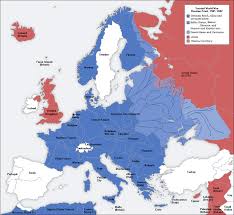
    In 1940, after the fall of France, the map of Europe turned almost entirely gray with Axis occupation. Yet three small western nations Switzerland, Sweden, and Spain remained unoccupied, their flags flying over capitals that never saw a single German tank. Their neutrality, however, was not a quiet absence from the war. It was a high-wire act, a daily negotiation with survival, and a moral tightrope that each nation crossed differently.

    This is the story of how these countries fed their people, armed their borders, and wrestled with their consciences while the world burned around them. It is a story of ration books and refugee lines, of secret railway carriages and wolfram mines, and of the painful compromises that kept them out of the war but not untouched by it.

    Switzerland: The Armed Hedgehog

    When German forces swept through the Low Countries and into France in May 1940, Switzerland found itself completely surrounded by the Axis. The Swiss response was swift and defiant. General Henri Guisan, the commander-in-chief, ordered the mobilization of up to 850,000 soldiers roughly 20% of the entire population. Every able-bodied man had a rifle and a place in the line.

    But Guisan had a plan that was less about holding the border and more about making conquest futile. From 1940 onward, the Swiss army withdrew into the Réduit, a fortified redoubt deep in the Alps. The lowlands, where most of the population and industry lived, would be ceded to an invader. But the mountains would become a fortress, with tunnels, bunkers, and artillery hidden in the rock. Any invader would pay a terrible price for the lowlands and still face an unbreakable core. The strategy was simple: make Switzerland too expensive to take.

    Life on the home front was a lesson in scarcity. Food, clothing, and fuel were rationed using a points system. Every family received a booklet of coupons, and every purchase—bread, butter, shoes, coal—required points. The government, under agronomist Friedrich Wahlen, launched a crash program to make the country self-sufficient. Every patch of arable land was pressed into service: parks became potato fields, and flower beds gave way to cabbage. By 1943, Swiss farmers were producing about 60% of the nation’s food, a remarkable feat for a country that had imported heavily before the war.

    Yet the Swiss also made a devil’s bargain. Encircled by the Axis, they had to trade with Germany to survive. They imported coal and food, and in return, they sold precision instruments, machine tools, and armaments. Swiss banks, through a plan negotiated by diplomat Paul Walen, bought gold from the Reichsbank—much of it looted from occupied countries. This trade kept the Swiss economy afloat but also kept the German war machine running. It was a moral stain that would haunt the country for decades.

    The refugee question was equally fraught. Switzerland officially admitted around 300,000 refugees during the war, including interned soldiers and civilians. But the policy was painfully restrictive. Between 1942 and 1943, Swiss border guards turned away tens of thousands of Jewish refugees, often sending them back to almost certain death in occupied France. It was only in 1944, as the war turned, that the doors opened wider. The Swiss also interned about 100,000 foreign soldiers—mostly Allied and Italian—who had crossed the border. These men were housed in camps and often put to work on roads and farms.

    Sweden: The Pragmatic Neutral

    Sweden’s neutrality was of a different sort. While Switzerland was physically surrounded, Sweden had a coastline and a long border with German-occupied Norway. It also had something Germany desperately needed: iron ore. From the mines of Kiruna in the far north, Sweden supplied about 75% of Germany’s iron ore during the war. This was not a trivial export; it was the backbone of the German arms industry.

    In exchange, Sweden allowed German troops and war materiel to transit its railways. This “permittenttrafik” was a massive concession. Over the course of the war, up to two million German soldiers passed through Sweden on their way to and from Norway and Finland. The most glaring breach came in 1941, when a fully armed German division—the Engelbrecht Division—was allowed to travel from Norway to Finland through Swedish territory. This move caused a domestic political crisis, known as the “Midnight Crisis,” and revealed how far Sweden was willing to bend to German pressure.

    But the Swedish government, led by Prime Minister Per Albin Hansson, was playing a longer game. They believed that a too-close alliance with the Allies would invite invasion, and a too-close alliance with Germany would make them a target. So they made concessions, but they also quietly prepared. Defense spending skyrocketed from about 4% to 25% of GDP. The military was modernized, and plans were drawn up for a possible German attack.

    On the home front, life was a study in rationing. Coffee, sugar, gasoline, and tires were all rationed. A bland “mixed bread” made from rye and other grains was mandated to stretch wheat supplies. The black market flourished, and many Swedes grew vegetables in their gardens. Yet the country was not starving, and the economy remained functional.

    The turn came after the German defeat at Stalingrad in 1943. Sweden began to tilt toward the Allies. The troop transits stopped. Swedish airfields were opened to Allied airmen in need of emergency landing. And the refugee policy changed dramatically. Sweden accepted around 200,000 refugees in total, including 8,000 Danish Jews who were smuggled across the Øresund in October 1943, and about 30,000 Norwegian resistance members and Jews. It also took in 30,000 Baltic conscripts from the German army. In 1945, Count Folke Bernadotte’s “White Buses” operation rescued 15,000 to 20,000 prisoners from German concentration camps. It was a humanitarian record that helped balance the earlier, darker compromises.

    Spain: The Hungry Neutral

    Spain had just emerged from its own civil war, a brutal conflict that left the country in ruins when World War II began. The economy was shattered. Wheat production had fallen to about 30% of pre-war levels. The 1940s became known as “los años del hambre”—the years of hunger. Bread, oil, and other staples were rationed from 1939, and the rationing did not end until 1952. For many Spaniards, the war years were a daily struggle against starvation.

    Franco’s regime was ideologically aligned with the Axis. He had come to power with German and Italian help, and he owed them a debt. But he was also a pragmatist. In October 1940, he met Hitler at Hendaye, on the French-Spanish border. Franco demanded Gibraltar, French Morocco, and massive food aid as the price for entering the war. Hitler balked at the demands, and the meeting ended without a deal. Spain would remain officially “non-belligerent”—not neutral, but not at war.

    Still, Spain found ways to support the Axis without formally joining. The most famous was the Blue Division, some 47,000 Spanish volunteers who fought on the Eastern Front against the Soviet Union from 1941 to 1943. These men were officially volunteers, not state forces, but they were a clear signal of Franco’s sympathies. They were eventually withdrawn as the war turned.

    Spain also traded with both sides. The most critical export was tungsten, or wolfram, a metal essential for armor-piercing shells. Germany bought Spanish tungsten until 1944, when Allied pressure—the “wolfram crisis”—forced a cutoff. In return, Spain received German arms and technology. Spanish ports quietly served as resupply points for German U-boats, and Spanish intelligence cooperated with the Abwehr.

    On the refugee front, Spain was inconsistent. It allowed perhaps 20,000 to 30,000 Jewish refugees to transit through the country, often via the Pyrenees route. But the policy was erratic, sometimes depending on bribes or the whim of a local official. Some were saved; others were turned back. Spain also accepted thousands of Allied airmen who crash-landed on Spanish soil, most of whom were repatriated.

    For ordinary Spaniards, the war was less about politics and more about survival. The black market was rampant, and hunger was a constant companion. And yet, compared to the occupied nations of Europe, Spain had a measure of freedom. There was no Gestapo, no forced labor, no deportations. The price was a regime that would remain in power for decades, its economy stunted by isolation and its politics frozen in the shadow of civil war.

    What Neutrality Meant

    These three countries were not passive bystanders. They were active participants in a war they officially avoided. Their neutrality was a constantly negotiated position, shaped by geography, economics, and the shifting fortunes of battle. Switzerland had to balance its armed defiance with trade with the Axis. Sweden had to balance its iron ore exports with its growing humanitarian role. Spain had to balance its Axis sympathies with the desperate needs of its own people.

    In the end, all three survived the war without invasion. But the survival came at a cost. They made moral compromises, some of which would take decades to confront. And they proved that neutrality was never a comfortable middle ground—it was a tightrope walk, where one misstep could mean destruction, and where the safety of the nation often came at the expense of others.

    The neutrality of Switzerland, Sweden, and Spain during World War II was not a simple refusal to take sides. It was a series of high-stakes calculations, each nation trading with the devil to keep its people alive. They emerged from the war with their flags intact, but the war left its mark on all of them—in the ration books, the refugee policies, and the quiet compromises that history would later judge.

    Summary

    • Switzerland mobilized 20% of its population and retreated to an alpine redoubt, but traded with Germany and turned away many Jewish refugees.
    • Sweden supplied 75% of Germany’s iron ore and allowed troop transits, but later shifted to the Allies and rescued thousands of concentration camp prisoners.
    • Spain, devastated by civil war, remained officially non-belligerent, sent volunteers to the Eastern Front, and traded tungsten to Germany while its people starved.
    • All three countries maintained official neutrality but made pragmatic concessions that kept them out of the war while deeply involving them in it.

    FAQ

    Q: Why didn’t Germany invade Switzerland?
    A: The Swiss Réduit strategy made conquest prohibitively costly, and Switzerland’s trade with Germany was more valuable than its occupation.

    Q: How many refugees did Switzerland accept?
    A: About 300,000 total, but tens of thousands of Jewish refugees were turned away at the border in 1942–1943.

    Q: What was the ‘Midnight Crisis’?
    A: In 1941, Sweden allowed a fully armed German division to transit its territory, causing a political crisis that highlighted Sweden’s concessions to Germany.

    Q: Did Spain fight in World War II?
    A: Spain sent volunteers (the Blue Division) to fight on the Eastern Front, but the state never formally entered the war.

    Q: What were ‘los años del hambre’?
    A: The ‘years of hunger’ in Spain during the 1940s, when food rationing and economic collapse led to widespread starvation.

  • The Shadow Economy of WWII: How Rationing Gave Birth to the Black Market

    The Shadow Economy of WWII: How Rationing Gave Birth to the Black Market

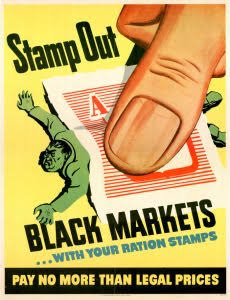
    In 1943, an American housewife in Chicago could buy a pound of butter on the legal market only with the right ration stamps if her grocer had any in stock. But two blocks away, a butcher kept a stash under the counter, and for $1.50 (nearly four times the official price) she could walk out with that butter, no questions asked. That transaction, repeated millions of times across every combatant nation, was the black market.

    World War II rationing was a monumental act of collective sacrifice: governments froze prices, limited purchases, and issued coupons to ensure scarce goods were shared fairly. But these controls created an artificial scarcity that ordinary citizens, desperate for a taste of normalcy, were willing to circumvent. The result was a vast shadow economy that, at its peak in the United States, moved roughly $1 billion a year equivalent to $15–18 billion today.

    The Rationing That Created the Opportunity

    Rationing wasn’t a minor inconvenience; it touched nearly every aspect of daily life. In the United States, it began in May 1942 with sugar, then expanded to coffee, gasoline, tires, meat, butter, and processed foods. Every civilian received a ration book filled with stamps, each color and letter designating what could be purchased and in what quantity. A car owner had to display a windshield sticker A, B, C, or T to show how much gasoline they were entitled to, with the lowest category (A) allowing just a few gallons a week.

    The United Kingdom started even earlier, in January 1940, and rationing there extended to clothing and fuel, continuing long after the war ended some items weren’t freed until 1954. The Soviet Union maintained strict state rationing throughout the war, and Germany introduced its system in 1939.

    These controls were necessary. Submarine warfare, bombing raids, and labor shortages disrupted supply chains; without rationing, the wealthy would have hoarded food and fuel, and prices would have spiraled out of control. But the system had a fundamental flaw: it created shortages where none truly existed. Goods were available just not at the official price or in the legal quantity. That gap between what the government allowed and what people wanted was the black market’s breeding ground.

    The black market of WWII was neither a simple crime wave nor a heroic resistance. It was a messy, human response to the impossible pressures of total war a shadow economy that fed the hungry, frustrated the powerful, and, in the end, proved as unstoppable as the tide. When the guns fell silent, the black market didn’t vanish; it lingered for years, a stubborn reminder that even in the most disciplined of societies, the urge to trade, to barter, to survive, cannot be rationed away.

    Summary

    • Black markets emerged in every combatant nation, driven by artificial scarcity from rationing and price controls
    • In the U.S., the OPA estimated black market activity reached $1 billion per year at its 1943–1944 peak
    • Ordinary citizens, not just criminals, participated seeing it as survival or a way to beat the system
    • In occupied Europe, black markets were often the only source of food for urban populations
    • Post-war, black markets persisted, with cigarettes serving as currency in Germany until the 1948 currency reform

    FAQ

    Q: What exactly was the black market during WWII?
    A: It was the illegal buying and selling of rationed goods—food, gasoline, clothing, and more—outside government controls. It operated in every combatant nation, from the U.S. to the Soviet Union.

    Q: Why did rationing create a black market?
    A: Rationing set legal limits on purchases and official prices, but demand still exceeded supply. Goods existed but couldn’t be legally obtained, so people turned to illegal channels to get them.

    Q: Were black marketeers punished severely?
    A: It varied. In the U.S., the OPA had about 3,000 investigators, and penalties included fines and jail, but enforcement was inconsistent. In Germany, the Gestapo pursued black marketeers brutally, with executions for serious offenses.

    Q: Did the black market help or hurt the war effort?
    A: It’s ambiguous. It undermined rationing’s fairness but also helped feed people in occupied countries where official rations were starvation-level. Many participants saw it as a necessary survival mechanism.

    Q: What happened to the black market after the war?
    A: It persisted for years due to continued shortages. In Germany, cigarettes became the de facto currency until the 1948 currency reform introduced the Deutsche Mark, which restored confidence in official money.

  • The 1839 Joke That Became the World’s Most Useful Word: The Strange Story of OK

    The 1839 Joke That Became the World’s Most Useful Word: The Strange Story of OK

    Steve - Today in History: On March 23, 1839, the term “O.K.” appeared for the very first time in print in THE BOSTON MORNING POST. Used as part of a humorous fad

    On March 23, 1839, the Boston Morning Post printed a sentence that would quietly change the world. It wasn’t a declaration of war or a scientific breakthrough just a two-letter abbreviation buried in a joke. ‘He … would have had the OK if he had succeeded in his object,’ the paper wrote, using “OK” to mean “oll korrect,” a playful misspelling of “all correct.” Nobody could have guessed that this throwaway gag would outlive every newspaper from that era, conquer the globe, and become the most widely understood word in human history.

    Today, “OK” is so ingrained in our lives that we barely notice it. We use it to confirm plans, acknowledge emails, and check if our computers are working (HTTP 200: OK). Astronauts say it to Mission Control. Children learn it before they can tie their shoes. But how did a 19th-century joke become a universal linguistic Swiss Army knife? The answer involves a presidential election, a smear campaign, and a lucky accident of timing.

    A Fad for Misspellings

    In the 1830s, Boston newspapers were a playground for witty editors who competed for readers with inside jokes and playful slang. One of their favorite games was intentional misspelling paired with abbreviations—a bit like today’s internet acronyms (LOL, BRB) but with a literary twist. “OK” stood for “oll korrect,” a deliberately wrong spelling of “all correct.” It was part of a broader fad: newspapers also used “O.W.” for “oll wright,” “K.G.” for “know go,” and “N.C.” for “nuff ced.” Readers who understood these abbreviations were “in the know,” and the jokes signaled sophistication.

    The specific credit for the first “OK” usually goes to Charles Gordon Greene, the editor of the Boston Morning Post, though some scholars suggest a contributor may have written it. The sentence appeared in an article about a group traveling to Providence, and it wasn’t even the main point—just a passing quip. Yet, of all those abbreviations, only “OK” survived. Why? Because it got a lucky break in the 1840 presidential election.

    The Political Boost That Changed Everything

    Martin Van Buren, the incumbent president, was running for re-election. He was born in Kinderhook, New York, and his supporters affectionately called him “Old Kinderhook.” The initials matched the existing “OK” abbreviation, and the Democrats seized the opportunity. They formed “OK Clubs” across New York and other cities, turning “OK” into a rallying cry. It was the first modern political meme—a slogan that fused a joke with a nickname.

    But politics is a rough game. The Whig opposition twisted “OK” into “Out of Kash,” “Orful Katastrophe,” and “Out of Kwick,” referencing financial scandals and Van Buren’s associates. They even spread a false rumor that Van Buren had learned the term from his “old master,” implying he was a slave (he wasn’t), hoping to use the word as a racial slur. Despite losing the election, Van Buren gave “OK” the national platform it needed to stick around.

    The political boost was critical. Without it, “OK” would likely have faded like its siblings “O.W.” and “K.G.” But instead, it entered the American lexicon permanently. By the end of the 19th century, it had spread to telegraphy, where it became the standard acknowledgment signal because it was short, unambiguous, and easy to transmit.

    Why Did “OK” Win the Linguistic Lottery?

    Why did “OK” survive when so many other words faded? The answer lies in three properties: phonetic utility, semantic flexibility, and cultural momentum.

    Phonetic utility: “OK” is incredibly easy to say, hear, and type. It has a crisp, clear sound that cuts through noise, which is why telegraph operators, pilots, and astronauts love it. In 1969, Apollo 11 astronauts used “OK” in communications with Mission Control, cementing its association with competence and precision.

    Semantic flexibility: “OK” can mean agreement (“OK, let’s go”), acknowledgment (“OK, I hear you”), approval (“The boss gave the OK”), or a general state of being fine (“It’s OK”). It works as a noun, verb, adjective, and interjection. That versatility makes it indispensable.

    Cultural momentum: Once “OK” got a boost from the election and telegraphy, it became a self-reinforcing loop. The more people used it, the more useful it became, until it spread to languages with no native “O” or “K” sounds. In Japanese, it’s “ōkē”; in many other languages, it coexists with native equivalents like French “d’accord” or Spanish “vale,” but often wins for its brevity and neutrality.

    The Man Who Proved It

    For decades, people guessed at the origin of “OK.” Some thought it came from a Native American language (Choctaw “okeh”), others from a French mispronunciation of “aux Cayes,” or from a German abbreviation. But in the 1960s, American etymologist Allen Walker Read published his meticulous research, tracing “OK” back to that 1839 Boston Morning Post article. He combed through archives, found the original sentence, and debunked all earlier theories.

    Read’s work is now the gold standard. It’s a reminder that the most familiar words can have surprisingly concrete, documented origins—and that a single lucky joke can change the world.

    So the next time you type “OK” in a text or hear it in a movie, remember its journey: from a Boston newspaper joke, to a presidential campaign slogan, to a telegraph signal, to a global linguistic phenomenon. It survived because it was useful, yes, but also because of a series of accidents—a political nickname, a fad for misspellings, and a need for clear communication. “OK” is proof that sometimes the most profound impact comes from the simplest, most playful of ideas.

    Summary

    • “OK” originated on March 23, 1839, in the Boston Morning Post as part of a fad for intentional misspellings, standing for “oll korrect” (all correct).
    • The 1840 presidential election boosted “OK” when Martin Van Buren’s supporters used it as a nickname for “Old Kinderhook,” forming OK Clubs.
    • Opponents weaponized “OK” with smear interpretations like “Out of Kash” and false racial claims, but it survived and spread.
    • “OK” survived due to its phonetic utility, semantic flexibility, and cultural momentum, aided by telegraphy and later spaceflight.
    • Allen Walker Read’s research in the 1960s definitively traced “OK” to its 1839 source, debunking earlier theories.

    FAQ

    Q: What does “OK” originally stand for?
    A: It stood for “oll korrect,” a deliberate misspelling of “all correct,” used as a joke in a Boston newspaper in 1839.

    Q: Why did “OK” become so popular after 1839?
    A: It got a major boost in the 1840 U.S. presidential election when Martin Van Buren’s supporters used it as a slogan for “Old Kinderhook.” The political exposure gave it a national audience.

    Q: Are there other similar abbreviations from that era?
    A: Yes, there were others like “O.W.” (oll wright) and “K.G.” (know go), but they died out. “OK” survived because of its phonetic clarity, versatility, and the political accident.

    Q: How did “OK” spread to other languages?
    A: It spread through global communication technologies like telegraphy, radio, and later the internet, and because of its simplicity, it was adopted even in languages without native “O” or “K” sounds, like Japanese.

    Q: Was “OK” ever used as a racial slur?
    A: Yes, in the 1840 election, opponents spread a false rumor that Van Buren learned it from his enslaved servant, using it as a smear. But that usage didn’t stick; the word’s positive associations prevailed.

  • The QWERTY Keyboard Wasn’t Built to Slow You Down But the Myth Persists

    The QWERTY Keyboard Wasn’t Built to Slow You Down But the Myth Persists

    Every day, millions of fingers dance across QWERTY keyboards, tapping out emails, documents, and messages without a second thought. But there’s a story that’s been circling for decades: that the layout was deliberately designed to slow typists down, preventing the mechanical jams of early typewriters. It’s a neat, conspiratorial tale and it’s almost certainly wrong.

    The truth is more mundane but far more interesting. QWERTY wasn’t a plot to throttle human speed; it was an engineer’s pragmatic solution to a very real mechanical problem. And the myth’s persistence says more about how we love a good story than about the keyboard itself.

    The Birth of a Keyboard

    In the 1860s, Christopher Latham Sholes a Milwaukee newspaper editor and part-time inventorn was tinkering with a machine that could put words on paper faster than a pen. With help from printer Carlos Glidden and machinist Samuel Soulé, he developed one of the first practical typewriters. On July 14, 1868, he received U.S. Patent No. 207,559 for his invention.

    Sholes’ early prototypes were arranged alphabetically. Keys for A through Z sat in two neat rows. But there was a problem: when a typist hit two keys quickly, the typebars—metal arms that strike the ribbon—could collide and jam. Common letter pairs like “th” or “er” were often adjacent on the alphabetical layout, making jams frequent and frustrating.

    So Sholes did what any good inventor would: he experimented. He shuffled the keys around, testing different arrangements, often with the help of telegraph operators who were among the first skilled typists. The result was a layout that spread out commonly used letter pairs, reducing the risk of clashing typebars. The 1878 Remington No. 2, the first commercially successful typewriter, featured this new layout—the one we now call QWERTY, named for the first six letters on the top row.

    The “Slow Down” Myth Takes Root

    Somewhere along the line, that practical fix morphed into a myth: QWERTY was designed to slow typists down. The logic seemed plausible—if you make the keyboard awkward, people can’t type fast enough to jam it. But the evidence doesn’t support it.

    No primary source from Sholes or Remington mentions slowing anyone down. In fact, speed was a selling point. Early advertisements touted the typewriter’s ability to produce “perfectly legible” documents “with a speed almost equal to ordinary handwriting.” If the goal were to slow typists, why would they market it as fast?

    The myth appears to have gained traction in the 1980s and 1990s, when computer history became a popular topic. Oversimplified retellings in books and articles turned a mechanical fix into a conspiracy. But the historical record offers no such claim.

    What QWERTY Actually Did

    The real genius of QWERTY was its handling of the “home row”—the middle row of keys where your fingers rest. Sholes arranged it so that common letters were distributed between hands, encouraging alternation. For example, the left hand handles QWERT and the right handles YUIOP. This alternation actually increases typing speed, not the opposite.

    Moreover, the home row was designed to be convenient for touch typing, a skill that was just emerging. Frank McGurrin, a court stenographer, popularized touch typing in the 1880s by demonstrating that he could type at high speeds without looking at the keys. His public contests showed that QWERTY could be used efficiently—and that speed was a feature, not a bug.

    Why the Myth Endures

    If the evidence is so clear, why does the myth persist? Partly because it’s a satisfying underdog story: a flawed design that we’re stuck with, a hidden agenda by manufacturers, a reason for our typos. It also connects to a kernel of truth—QWERTY isn’t the most efficient layout possible. Later designs, like the Dvorak Simplified Keyboard (1936) by August Dvorak, claimed to reduce finger travel and increase speed. But Dvorak’s own studies were often funded by himself, and a famous 1944 U.S. Navy study that supposedly proved Dvorak’s superiority was later found to be methodologically flawed.

    Even if Dvorak or modern layouts like Colemak are more efficient, switching costs are steep: retraining muscle memory, remapping software, and buying new hardware. QWERTY’s dominance is a classic example of path dependence—once a standard is established, it’s hard to dislodge, even if alternatives are better.

    The Real Takeaway

    QWERTY wasn’t a conspiracy to slow you down. It was a clever engineering solution to a mechanical problem, refined through trial and error. Its quirks—the left-hand bias, the overused top row—are the legacy of 19th-century metal arms, not a secret plot. And while the myth persists, the truth is more impressive: a design that solved a real problem, stuck around for over a century, and still works today.

    The QWERTY keyboard is not a relic of deliberate sabotage. It’s a testament to how a practical fix can become an enduring standard—and how a good story can overshadow the truth. So the next time you type a fast message, remember: your keyboard was never trying to slow you down. It was trying to keep up with you.

    Summary

    • QWERTY was designed to reduce mechanical jams by separating common letter pairs, not to slow typists down.
    • No primary source from Sholes or Remington mentions slowing typists; speed was actually a selling point.
    • The myth became popular in the 1980s-90s but lacks documentary evidence.
    • The home row was designed to encourage hand alternation, which increases typing speed.
    • QWERTY’s persistence is due to path dependence, not because it’s the most efficient layout.

    FAQ

    Q: Did QWERTY really slow typists down?
    A: No. The layout was designed to prevent mechanical jams by separating common letter pairs, not to reduce typing speed. In fact, it was marketed as a speed-enhancing device.

    Q: Why did Sholes change the alphabetical layout?
    A: The alphabetical layout caused frequent jams because adjacent keys were often used in quick succession. Sholes rearranged the keys to minimize these collisions.

    Q: Is there any evidence for the “slow down” claim?
    A: No. No letters, patents, or advertisements from Sholes or Remington suggest slowing typists was a goal. The claim appears to have originated in the 1980s-90s in popular tech history.

    Q: What is the Dvorak keyboard?
    A: The Dvorak Simplified Keyboard, designed in 1936, was meant to increase typing speed by reducing finger travel. However, studies supporting it were often flawed, and it never displaced QWERTY due to switching costs.

    Q: Why do we still use QWERTY?
    A: It’s a classic case of path dependence. Once QWERTY became the standard in the late 19th century, retraining users and changing hardware became too costly, even if alternatives are more efficient.

  • The Humble Potato: How a South American Tuber Conquered the World

    The Humble Potato: How a South American Tuber Conquered the World

    Every day, billions of people eat potatoes in some form mashed, fried, boiled, or baked. This starchy tuber is so common that it’s easy to forget its extraordinary journey: from a wild plant in the Andes to a global staple that shaped empires, fueled industrial revolutions, and even triggered a humanitarian catastrophe. The potato’s story is a testament to how a single crop can transform economies, diets, and destinies.

    But the potato’s influence isn’t just historical. Today, it’s the world’s fourth-largest food crop, with over 370 million metric tons produced annually. Its adaptability and nutritional density make it a critical tool in the fight against hunger. Yet, the same vulnerabilities that led to the Irish Potato Famine still loom, reminding us that our food systems are more fragile than they appear.

    The Birthplace: The Andes

    Potatoes were first domesticated 7,000–10,000 years ago in the highlands of southern Peru and northwestern Bolivia, near Lake Titicaca. The Incas were master potato breeders, cultivating hundreds of varieties in every color and shape imaginable. They even invented freeze-drying a process called chuño which allowed them to store potatoes for years, sustaining armies and feeding entire cities.

    This was no accident. The potato is a member of the nightshade family, alongside tomatoes and peppers, and it thrives in the harsh Andean climate where other crops fail. Its ability to grow at altitudes up to 4,000 meters made it invaluable to ancient civilizations.

    The European Arrival: From Suspicion to Staple

    When Spanish conquistadors brought potatoes to Europe in the 1570s, they were met with deep skepticism. Europeans believed the tuber caused leprosy, was poisonous (it’s related to deadly nightshade), or was simply unfit for Christians because it wasn’t mentioned in the Bible. For over a century, potatoes were mostly fed to livestock or grown as botanical curiosities.

    The turning point came in the 18th century, thanks to two unlikely champions. Frederick the Great of Prussia distributed free seed potatoes to peasants and even threatened to cut off the noses of those who refused to plant them. Meanwhile, in France, a pharmacist named Antoine-Augustin Parmentier used more cunning tactics: he posted armed guards around potato fields during the day, making the crop seem precious, then allowed “thefts” at night. The ruse worked, and potatoes quickly spread across Europe.

    Fueling the Industrial Revolution

    The potato’s high yield per acre far exceeding grains like wheat provided cheap, abundant calories that fueled Europe’s population boom. This surplus labor powered the Industrial Revolution, as workers flocked to cities and factories. In Ireland, however, the reliance on potatoes became dangerously absolute. By the 1840s, a third of the Irish population depended almost exclusively on the potato for survival, cultivating just one variety: the Irish Lumper.

    When a fungus-like pathogen called Phytophthora infestans struck in 1845, it devastated the crop. The Irish Potato Famine killed about 1 million people and forced another 1–2 million to emigrate. The disaster exposed the fatal flaw of monoculture a single disease could wipe out an entire nation’s food supply.

    The Potato Goes Global

    While Europe embraced the potato, Portuguese traders carried it to Asia in the late 16th century. In China, it became a lifeline for poor farmers in marginal highlands, and today China is the world’s largest potato producer, growing over 90 million tons annually. In India, the potato became a staple during British colonial rule, and in Africa, colonial powers introduced it, making it a key crop in countries like Kenya and Rwanda.

    The potato’s adaptability made it a perfect candidate for the Green Revolution of the 20th century. Research centers like the International Potato Center (CIP) in Lima, Peru, have developed blight-resistant and drought-tolerant varieties, ensuring that this humble tuber can continue to feed a growing planet. The UN even declared 2008 the International Year of the Potato to highlight its role in food security.

    Environmental and Economic Realities

    Potatoes are relatively efficient: they require less water than rice and can grow in diverse climates. However, modern industrial farming often relies on heavy chemical inputs, raising sustainability concerns. Additionally, cosmetic standards lead to significant food waste—blemished or oddly shaped potatoes are often discarded before reaching consumers.

    Economically, potatoes are a lifeline for smallholder farmers worldwide, providing income and food security. But their future depends on addressing these environmental and social challenges.

    The potato’s journey from the Andes to every corner of the globe is a story of resilience, adaptation, and human ingenuity. It has fed civilizations, sparked revolutions, and taught us hard lessons about the dangers of overreliance. As we face climate change and a growing global population, the humble potato may once again prove to be one of our most valuable allies.

    Summary

    • Originated in the Andes 7,000–10,000 years ago; Incas developed hundreds of varieties and freeze-drying techniques.
    • Introduced to Europe in the 1570s, initially met with suspicion and myths; promoted by figures like Frederick the Great and Parmentier.
    • Fueled Europe’s population boom and the Industrial Revolution, but the Irish Potato Famine (1845–1852) showed the perils of monoculture.
    • Now the world’s fourth-largest food crop, with China as the top producer; crucial for food security in Asia and Africa.
    • Modern challenges include environmental sustainability, food waste, and the need for disease-resistant varieties.

    FAQ

    Q: Why was the potato initially rejected in Europe?
    A: Europeans feared it caused leprosy, considered it un-Christian because it wasn’t in the Bible, and believed it was poisonous due to its relation to nightshade plants.

    Q: What caused the Irish Potato Famine?
    A: The famine was caused by late blight (Phytophthora infestans), a pathogen that destroyed the potato crop in Ireland, where the population was heavily dependent on a single variety.

    Q: How many potatoes are produced globally each year?
    A: Over 370 million metric tons are produced annually, making potatoes the fourth-largest food crop after rice, wheat, and corn.

    Q: What is chuño?
    A: Chuño is a freeze-dried potato product developed by the Incas, which allowed them to preserve potatoes for years and store them for long campaigns.

    Q: Are potatoes nutritious?
    A: Yes, a medium potato (about 150g) provides about 110 calories, 26g of carbohydrates, 3g of protein, and significant amounts of vitamin C, potassium, and vitamin B6.

  • The Werewolf Myth: How Cultures Around the World Shaped the Legend

    The Werewolf Myth: How Cultures Around the World Shaped the Legend

    The werewolf is one of the most enduring monsters in human storytelling. Today, we imagine a person transforming under a full moon, howling at the night, vulnerable only to silver bullets. But that version is a recent invention, polished by Hollywood. The real history of the werewolf is far stranger and more varied, spanning thousands of years and every continent. From ancient Mesopotamian gods to Navajo witches, from French noblemen cursed for sins to Argentine seventh sons, the werewolf myth has been shaped by local fears, beliefs, and environments. Understanding these different versions reveals not just how cultures imagine monsters, but what they value, fear, and punish.

    The Ancient Roots: Gods and Kings

    The earliest known werewolf story comes from the Epic of Gilgamesh, written around 2100 BCE. In it, the goddess Ishtar transforms a shepherd who spurns her advances into a wolf his own dogs turn on him, and he is doomed to roam the wild. This is not a curse of the full moon; it’s divine punishment, a theme that recurs in Greek mythology.

    King Lycaon of Arcadia served human flesh to Zeus to test his divinity. Zeus, disgusted, turned him into a wolf. This myth gave us the word “lycanthropy” and set a pattern: werewolves as symbols of divine retribution or moral corruption. The Greek historian Herodotus later wrote of the Neuri, a tribe who supposedly became wolves for a few days each year a claim that blends geography with folklore.

    The Romans added their own layer. They associated wolves with Mars, the god of war, and with the founding myth of Romulus and Remus, who were suckled by a she-wolf. But rural Romans also feared the versipellis the “skin-turner,” a person who could change form at will. Pliny the Elder and Petronius both recorded werewolf tales, cementing the motif in classical literature.

    Medieval Europe: From Curse to Conspiracy

    In Norse mythology, the ulfhednar were warriors who wore wolf pelts and fought with berserker fury, believing they channeled wolf spirits. The Völsunga saga tells of a father and son who don enchanted wolf skins and become wolves for ten days. Here, transformation is voluntary and tied to clothing a far cry from the modern involuntary victim.

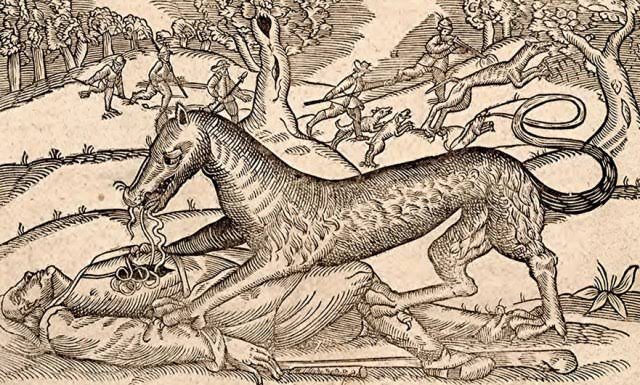
    With the spread of Christianity, the werewolf’s meaning shifted. The Church reframed these shapeshifters as servants of the Devil, linking them to witchcraft and heresy. This was not just a theological debate; it had deadly consequences. In the 16th and 17th centuries, werewolf trials swept Europe, often alongside witch trials. In France, Gilles Garnier was burned alive in 1573 for allegedly attacking children as a wolf. Peter Stumpp, the “Werewolf of Bedburg,” was executed in 1589 for similar crimes, along with his family. Estimates suggest hundreds of executions across the continent.

    Why this sudden hysteria? Crop failures, livestock losses to real wolves, and social upheaval created a climate of fear. Confessions were often extracted under torture, and accused “werewolves” described using salves, belts, or ointments to transform. Some of these substances—like belladonna or henbane—contain hallucinogenic compounds that could induce the sensation of becoming an animal. In this way, the myth became self-perpetuating: people believed they were wolves, confessed to it, and the belief spread.

    But not all European werewolves were demonic. In France, the loup-garou was often seen as a penitential curse. A person might be doomed to roam as a wolf for seven to ten years before being released. In Slavic regions, the vukodlak blurred the line between werewolf and vampire—a corpse that rises to harm the living, needing decapitation or a stake. These regional variations show how local folklore absorbed the werewolf into pre-existing beliefs about the dead, the soul, and the supernatural.

    The Global Werewolf: Skin-Walkers, Werehyenas, and Weretigers

    While Europe developed its own werewolf traditions, similar figures exist worldwide, often with distinct mechanics. In Navajo culture, the yee naaldlooshii—or skin-walker—is an evil witch who can shapeshift into any animal, not just a wolf. Unlike European werewolves, skin-walkers are not victims of a curse; they are malevolent practitioners who choose their power.

    In West Africa, particularly Ethiopia, the bouda is a werehyena. Hyenas are scavengers associated with sorcery, so the creature mirrors the werewolf but reflects local ecology and symbolism. In South Asia, the rakshasa and vetal are shapeshifting demons, while Bengal has a weretiger tradition. East Asia, meanwhile, favored foxes: China’s huli jing and Japan’s kitsune are shapeshifters, but they transform into foxes, not wolves—a reminder that the animal of choice depends on which predators loom largest in the cultural imagination.

    South America offers a striking variant: the lobisón. This creature is said to be the seventh son in a family, cursed to become a wolf-like beast. The belief was so strong that Argentine law once required the president to serve as godfather to seventh sons, a symbolic act meant to break the curse. Here, the werewolf is not a random victim or a sinner, but a specific birth order—a twist that shows how deeply the myth can be woven into social structures.

    Hollywood and the Modern Werewolf

    The werewolf we know today—full-moon transformation, silver bullets, contagion through bites—is largely a cinematic invention. The Wolf Man (1941) codified the tragic, involuntary werewolf, while An American Werewolf in London (1981) added graphic horror and dark humor. These films distilled centuries of folklore into a single, marketable archetype. The full moon, for instance, was rarely central to older myths; it became a plot device in the 20th century.

    This modern version has also been shaped by medicine. Clinical lycanthropy is a rare psychiatric delusion in which patients believe they are transforming into an animal. Hypertrichosis, a condition of excessive body hair, has been retroactively suggested as a possible origin for some historical accusations. These scientific perspectives offer a rational lens, but they don’t diminish the myth’s power—they simply add another layer.

    Gender and the Werewolf

    One striking pattern in European lore is the werewolf’s overwhelming maleness. Female werewolves are rare; Marie de France’s 12th-century lai Bisclavret features a nobleman who becomes a wolf, but women are more often victims or witnesses than shapeshifters. This gender imbalance may reflect cultural anxieties about male aggression and the beast within, or it may mirror the male-dominated world of medieval law and folklore. In contrast, some non-European shapeshifters, like the fox spirits of East Asia, are frequently female. The gender of the monster, it seems, says as much about the culture as the monster itself.

    The werewolf is not a single myth but a family of stories, each shaped by its environment. From divine punishment in Mesopotamia to demonic servants in medieval Europe, from skin-walkers in the American Southwest to weretigers in Bengal, the werewolf adapts to local fears and beliefs. The Hollywood version is just the latest iteration—a simplification that hides a rich, global tapestry. By exploring these variations, we see that the werewolf is less a monster than a mirror, reflecting what different cultures dread, desire, and seek to control.

    Summary

    • The werewolf myth dates back to ancient Mesopotamia and Greece, where it was often a divine punishment, not a lunar curse.
    • Medieval Europe transformed werewolves into devil-worshippers, leading to hundreds of executions during the 16th–17th centuries.
    • Non-European cultures have their own shapeshifters, like Navajo skin-walkers, Ethiopian werehyenas, and Argentine lobisón, each reflecting local ecology and beliefs.
    • Hollywood’s werewolf—full-moon transformations and silver bullets—is a modern invention, not rooted in ancient folklore.
    • The werewolf myth has been used to explain mental illness, social fears, and even posthumous threats, showing its adaptability across time and place.

    FAQ

    Q: When was the first werewolf story recorded?
    A: The earliest known reference is in the Epic of Gilgamesh (c. 2100 BCE), where Ishtar transforms a shepherd into a wolf.

    Q: Why did medieval Europeans accuse people of being werewolves?
    A: Werewolf trials often occurred during periods of social stress, and confessions were frequently extracted under torture. The Church linked werewolves to witchcraft, making them heretics.

    Q: Are there werewolf myths outside Europe?
    A: Yes, many cultures have shapeshifters, but they often involve different animals, like hyenas in Africa or tigers in India, and have different rules (e.g., skin-walkers are evil witches, not cursed victims).

    Q: How did the full moon become associated with werewolves?
    A: The full moon connection is largely a Hollywood invention, first popularized in the 1941 film The Wolf Man.

    Q: Is there a medical explanation for werewolf beliefs?
    A: Clinical lycanthropy is a rare psychiatric delusion where patients believe they are transforming into animals. Hypertrichosis (excessive hair growth) may have also contributed to historical accusations.

  • The Secret City: Inside the Manhattan Project’s Race to Build the Bomb

    The Secret City: Inside the Manhattan Project’s Race to Build the Bomb

    In the summer of 1945, a handful of scientists gathered on a remote stretch of New Mexico desert. At 5:29 a.m., the first atomic bomb detonated, turning night into day and sand into glass. The Trinity test was the culmination of a three-year, $2 billion gamble that had consumed the lives of 130,000 people most of whom had no idea what they were building.

    This is the story of that gamble: a secret race against Nazi Germany, a convergence of brilliant minds and brute industrial force, and the moment when humanity’s relationship with science changed forever.

    A Letter That Changed History

    The Manhattan Project began with a letter. In August 1939, Albert Einstein and physicist Leo Szilard wrote to President Franklin D. Roosevelt, warning that Nazi Germany might be developing an atomic bomb. The theoretical groundwork was already in place: Einstein’s equation E=mc² had hinted at the energy locked inside matter, and in 1938, German chemists Otto Hahn and Fritz Strassmann had split the uranium atom a discovery explained by Lise Meitner and Otto Frisch as nuclear fission.

    Roosevelt took action. The U.S. Advisory Committee on Uranium was formed, but it moved slowly. It wasn’t until 1942, when the U.S. Army Corps of Engineers took over, that the project gained its name and its urgency. The Manhattan Project was born.

    A City of Secrets

    General Leslie Groves, a no-nonsense military engineer, was put in charge. He chose J. Robert Oppenheimer, a theoretical physicist with a reputation for brilliance and a left-leaning past, to lead the scientific effort. Together, they created a network of secret sites across the country.

    Los Alamos, New Mexico, became the brain a remote laboratory on a mesa where Oppenheimer gathered the greatest minds in physics: Enrico Fermi, Hans Bethe, Richard Feynman, Edward Teller. They worked in an atmosphere of urgency and secrecy, solving problems that had never been attempted.

    At Oak Ridge, Tennessee, workers built the K-25 gaseous diffusion plant the largest building in the world at the time, covering 44 acres to separate the rare uranium-235 isotope from its more common cousin. In Hanford, Washington, nuclear reactors churned out plutonium, an element that barely existed in nature.

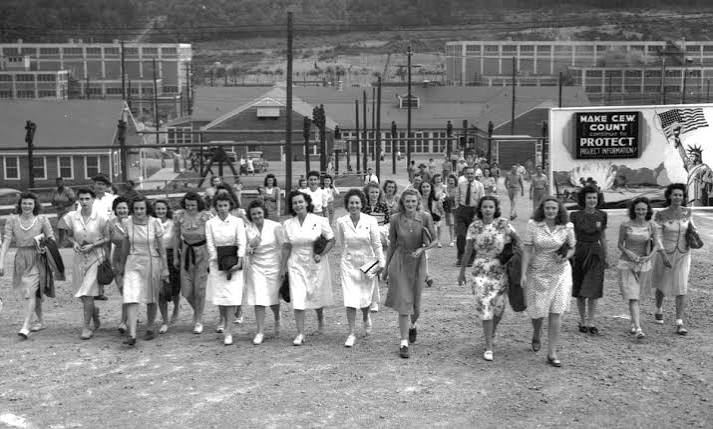
    The scale was staggering. At its peak, the project employed 130,000 people across 30 sites. Most of them the factory workers, the technicians, the clerks had no idea what they were building. They knew only that it was vital to the war effort, and that they must never speak of it.

    The Race Against Germany

    The project was driven by fear. German scientists had discovered fission, and the Nazis had a head start. But the German program, the Uranverein, was underfunded and fragmented. It never came close to a weapon. The Manhattan Project’s scientists didn’t know that. They worked as if every day mattered, because it might.

    There was also a quieter race: the Soviet Union. Even as the United States worked in secret, Soviet spies were inside the project. Klaus Fuchs, a British physicist, passed detailed information to the Soviets. Theodore Hall, a young American scientist, did the same. Their espionage would accelerate the Soviet bomb program by years.

    The First Chain Reaction

    On December 2, 1942, Enrico Fermi stood beneath the stands of a squash court at the University of Chicago. Above him, a pile of graphite and uranium—Chicago Pile-1—was about to become the world’s first controlled nuclear chain reaction. When the neutron count began to rise, and the reaction sustained itself, Fermi smiled. He had proven that a chain reaction was possible. The bomb was now a matter of engineering.

    But engineering was a challenge. The gun-type design, which fired one piece of uranium into another, was relatively straightforward—but it required uranium-235. The implosion design, which squeezed a sphere of plutonium with explosives, was far more complex. At Los Alamos, Oppenheimer’s team wrestled with the physics of implosion, testing and retesting until they got it right.

    Trinity and the End of the War

    On July 16, 1945, the world’s first nuclear explosion lit up the New Mexico sky. The blast was visible 200 miles away. Oppenheimer later recalled a line from the Bhagavad Gita: “Now I am become Death, the destroyer of worlds.”

    Less than a month later, on August 6, a B-29 bomber named Enola Gay dropped “Little Boy” on Hiroshima, Japan. Three days later, “Fat Man” fell on Nagasaki. The bombs killed an estimated 200,000 people, most of them civilians. Japan surrendered on August 15, 1945.

    The war was over. But the questions were just beginning.

    A Moral Reckoning

    Even before the bombs were dropped, scientists had debated their use. The Franck Report, written in June 1945, urged a demonstration explosion rather than an attack on cities. Leo Szilard, who had helped start the project, petitioned against use. But the decision was made by President Harry Truman, who had only learned of the project after Roosevelt’s death. Truman’s stated goal was to end the war and save American lives. An invasion of Japan, he argued, would have cost hundreds of thousands of casualties.

    Oppenheimer, initially supportive, later expressed deep regret. He opposed the development of the hydrogen bomb, a weapon far more powerful than the ones he had helped create. He was called before a security hearing in 1954 and stripped of his security clearance—a punishment for his past associations and his outspokenness.

    The project officially ended with the Atomic Energy Act of 1946, which transferred control to the civilian Atomic Energy Commission. But its legacy was permanent. It had created the template for “big science”—government-funded research on a massive scale—and it had unleashed a nuclear age that would define the Cold War and beyond.

    The workers at Oak Ridge and Hanford, many of whom had labored in ignorance, later learned what they had built. Some faced health problems from radiation exposure. The communities around the sites absorbed the environmental costs. The full human toll is still being measured.

    The Manhattan Project was a triumph of science and a tragedy of war. It was a race that ended with a weapon that could destroy the world—and a question that still haunts us: what do we do with it?

    The Manhattan Project was not just a scientific achievement or a military milestone; it was a profound turning point in human history. It demonstrated that the same knowledge that could power cities could also vaporize them. As we live with the legacy of that secret race—the nuclear arsenals, the national laboratories, the ethical quandaries—we are still, in a sense, inside that desert test site, watching the light and wondering what it means.

    Summary

    • The Manhattan Project was a secret U.S. program (1942-1946) that built the first atomic bombs, employing 130,000 people across 30 sites.
    • Key sites included Los Alamos (design), Oak Ridge (uranium enrichment), and Hanford (plutonium production).
    • The bombs, “Little Boy” and “Fat Man,” were dropped on Hiroshima and Nagasaki in August 1945, leading to Japan’s surrender.
    • The project was motivated by fear of a Nazi bomb, but Soviet espionage (Klaus Fuchs, Theodore Hall) accelerated the Soviet program.
    • It sparked debates over ethics, led to the Atomic Energy Act of 1946, and established the model for large-scale government-funded science.

    FAQ

    Q: Why was it called the Manhattan Project?
    A: It began in the Manhattan Engineer District of the U.S. Army Corps of Engineers, and the name stuck even as the work moved to other sites.

    Q: How much did the project cost?
    A: Roughly $2 billion at the time, equivalent to over $30 billion today.

    Q: Did Germany have an atomic bomb program?
    A: Yes, the Uranverein, but it was underfunded and never came close to building a weapon.

    Q: How did Soviet spies affect the outcome?
    A: Klaus Fuchs and others passed secrets that allowed the Soviet Union to build its own bomb by 1949, accelerating the Cold War arms race.

    Q: Were there protests against using the bomb?
    A: Yes, the Franck Report and Leo Szilard’s petition urged a demonstration instead of use on cities, but the U.S. government decided to drop the bombs to end the war quickly.

  • The Forgotten Plague: How Typhoid Fever Shaped Modern Public Health

    The Forgotten Plague: How Typhoid Fever Shaped Modern Public Health

    In the 19th century, typhoid fever was a leading killer in crowded cities, striking down rich and poor alike with relentless fever and intestinal agony. Today, most people in developed countries have never seen a case, and the disease has faded from public memory. Yet typhoid is far from extinct: it still causes millions of infections each year in parts of Asia and Africa, and drug-resistant strains are spreading. More importantly, the fight against typhoid gave us the blueprint for modern public health from water chlorination to carrier tracing. Understanding this forgotten plague reveals how much of our daily safety rests on invisible infrastructure built to defeat it.

    A Fever That Changed the World

    Typhoid fever is caused by the bacterium Salmonella typhi, which spreads through contaminated food and water. In the 1800s, as cities industrialized, overcrowded tenements and poor sanitation created perfect conditions for outbreaks. The disease struck with a sustained high fever, often reaching 103-104°F, accompanied by headache, abdominal pain, and sometimes a rash of rose-colored spots. Before antibiotics, 10–30% of untreated cases were fatal. It was a scourge of urban life, killing thousands each year in cities like London, New York, and Philadelphia.

    Distinguishing Typhoid from Typhus

    A major breakthrough came in 1829 when Parisian physician Pierre-Charles-Alexandre Louis distinguished typhoid from typhus, a similar but distinct disease spread by lice. The names themselves hint at the confusion: ‘typhoid’ means ‘typhus-like.’ This clinical distinction was critical for accurate diagnosis and later for tracking outbreaks. In 1880, Karl Joseph Eberth identified the typhoid bacillus under a microscope, and in 1884, Georg Gaffky grew it in pure culture, proving it was the culprit.

    The Sanitary Awakening

    The mid-19th century saw a growing realization that filth and disease were linked. Edwin Chadwick’s 1842 report on sanitation in Britain sparked a movement to improve living conditions. John Snow’s investigation of cholera in 1854 demonstrated that water could carry disease, a principle soon applied to typhoid. The old miasma theory that disease came from ‘bad air’ gave way to germ theory as scientists like Pasteur and Koch established that microorganisms cause infections.

    Engineering Solutions

    Once the waterborne transmission was understood, cities began investing in infrastructure to protect their water supplies. Slow sand filtration plants, first used in London in 1852, removed pathogens and dramatically reduced typhoid rates. The next breakthrough came in 1908 when Jersey City, New Jersey, became the first U.S. city to continuously chlorinate its water supply. The result was staggering: within a decade, typhoid mortality in the U.S. fell by about 80%. Separate sewer systems and wastewater treatment removed sewage from the environment, and milk pasteurization mandated in many cities by the 1920s cut off another transmission route.

    The Birth of Field Epidemiology

    Typhoid forced the development of field epidemiology: the practice of tracing cases back to their sources. Investigators would interview patients, map outbreaks, and test water and food samples to identify the point of contamination. This approach proved essential when the first chronic carriers were discovered. About 1–5% of infected individuals continue to shed the bacteria for years, even without symptoms. The most famous was Mary Mallon, a cook in New York, who infected at least 47 people between 1900 and 1907. Dubbed ‘Typhoid Mary,’ she was forcibly quarantined twice, sparking debates about individual rights versus public health that still resonate today.

    Military Lessons

    Typhoid was a major military threat. During the Spanish-American War in 1898, more soldiers died from typhoid than from combat—about 1,600 deaths out of 20,000 cases. This disaster prompted the U.S. Army to mandate typhoid vaccination in 1911, using a vaccine developed by Almroth Wright. By World War I, improved sanitation and vaccination had reduced typhoid deaths among U.S. troops to near zero. Military medicine thus became a proving ground for public health measures.

    The Antibiotic Era and Its Limits

    In 1948, chloramphenicol became the first effective antibiotic against typhoid, reducing mortality to under 1%. For decades, antibiotics controlled the disease in countries with access to them. However, overuse and misuse have led to the emergence of drug-resistant strains. In 2016–2018, an extensively drug-resistant (XDR) outbreak in Pakistan resisted nearly all antibiotics, including chloramphenicol, ampicillin, and fluoroquinolones. This serves as a stark reminder that typhoid is not a disease of the past—it remains a serious threat where sanitation is poor and antibiotics are unreliable.

    The Modern Burden

    Today, typhoid still causes an estimated 11–21 million infections and 128,000–161,000 deaths each year, mostly in South Asia, sub-Saharan Africa, and Southeast Asia. The disease is a marker of inadequate water and sanitation infrastructure. Efforts to combat it include vaccination with modern vaccines like Vi-polysaccharide and Ty21a, and newer conjugate vaccines that can be given to infants as young as six months. But the ultimate solution remains the same as it was a century ago: clean water and proper sanitation.

    Why It Matters Now

    Typhoid’s legacy is everywhere. The water treatment plants, sewage systems, and food safety regulations that we take for granted were built in response to typhoid and other waterborne diseases. The practice of tracking and controlling carriers started with typhoid. The importance of vaccination campaigns was proven on the battlefield. As we face new infectious disease threats, we continue to rely on these same principles. Understanding how typhoid shaped public health helps us appreciate the fragile systems that keep us safe and the need to extend them to all parts of the world.

    Typhoid fever may be a forgotten plague in many countries, but its impact endures. The battle against it taught humanity how to build cities that do not sicken their inhabitants, how to trace and contain outbreaks, and how to protect populations through vaccination. As antibiotic resistance grows and the disease persists in the developing world, the lessons of typhoid remain as relevant as ever. The next time you turn on a tap, remember that the clean water flowing out is a triumph of public health—won through the struggle against a deadly fever.

    Summary

    • Typhoid fever, caused by Salmonella typhi, was a major killer in 19th-century cities due to poor sanitation.
    • The distinction from typhus and the germ theory paved the way for understanding waterborne transmission.
    • Sanitary engineering—filtration, chlorination, sewage systems, and pasteurization—dramatically reduced typhoid in developed countries.
    • The ‘Typhoid Mary’ case led to the concept of chronic carriers and the practice of field epidemiology.
    • Antibiotics reduced mortality, but drug-resistant strains, like the XDR outbreak in Pakistan, pose a modern threat, highlighting the need for continued vigilance and global sanitation efforts.

    FAQ

    Q: What is the difference between typhoid and typhus?
    A: Typhoid is caused by the bacterium Salmonella typhi and spreads through contaminated food and water. Typhus is caused by Rickettsia prowazekii and is transmitted by lice. They have similar symptoms—fever, headache, and rash—but are different diseases.

    Q: How is typhoid fever transmitted?
    A: It spreads via the fecal-oral route, meaning through ingestion of food or water contaminated with the feces of an infected person. It can also spread through direct contact with an infected person’s stool or urine.

    Q: What is a ‘chronic carrier’ of typhoid?
    A: A chronic carrier is a person who continues to shed the bacteria in their stool or urine for more than a year, even after recovering from symptoms. About 1–5% of infected individuals become chronic carriers, and they can unknowingly spread the disease.

    Q: Why is chlorination of water so important?
    A: Chlorination kills bacteria and other pathogens in water, making it safe to drink. The first continuous chlorination of a U.S. city water supply in Jersey City in 1908 led to a dramatic drop in typhoid cases, and it remains a crucial public health measure worldwide.

    Q: Is typhoid fever still a problem today?
    A: Yes, typhoid affects an estimated 11–21 million people annually, causing over 100,000 deaths, mostly in South Asia and sub-Saharan Africa. The emergence of drug-resistant strains, such as the XDR outbreak in Pakistan, underscores the ongoing threat.

  • The Great Comet of 1811: How a Celestial Visitor Shaped Art, Literature, and War

    The Great Comet of 1811: How a Celestial Visitor Shaped Art, Literature, and War

    Great Comet of 1811 - Wikipedia

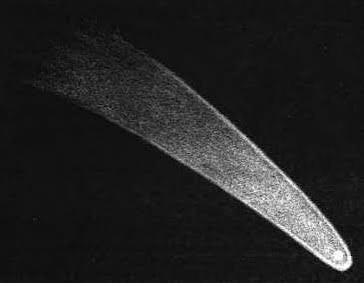
    In the autumn of 1811, a brilliant comet stretched across the night sky, its tail curving like a cosmic fan over a world already in turmoil. For nearly nine months from March 1811 to January 1812 it remained visible to the naked eye, a record that still stands. This was no fleeting visitor; it was a celestial spectacle that captured the imagination of millions, from peasants to emperors.

    But the Great Comet of 1811 was more than just a pretty sight. It arrived at a pivotal moment in history, when Napoleon was amassing his forces for the invasion of Russia, and the Romantic movement was reshaping European art and thought. Its appearance sparked a cultural and intellectual ferment that influenced everything from poetry to military strategy. This article explores how one comet left an indelible mark on art, literature, and even the course of war.

    The Comet’s Splendor: A Cosmic Spectacle

    Honoré Flaugergues, a French astronomer, first spotted the comet on March 25, 1811, from his observatory in Viviers. It was a faint smudge, but as weeks passed, it grew brighter and more dramatic. By September 12, when it made its closest approach to the Sun (perihelion), it had become a dazzling object with a magnitude of 0 as bright as the brightest stars. Its tail, composed of dust and gas, stretched an astonishing 25 to 30 degrees across the sky. Under dark rural skies, some observers claimed it reached up to 60 degrees a third of the way across the heavens.

    What made this comet so remarkable was not just its brightness, but its longevity. Most bright comets fade within weeks, but this one remained visible for about 260 days. That’s roughly nine months of nightly reminders that humanity was not alone in the cosmos. William Herschel, the renowned British astronomer, measured the comet’s nucleus and estimated it to be about 645 kilometers in diameter a figure that turned out to be an overestimate, but it was clear the nucleus was genuinely large. Johann Elert Bode in Germany and Vincenzo Chiminello in Italy also tracked it meticulously, contributing to a growing body of scientific knowledge about these mysterious wanderers.

    The Napoleonic Omen: A Comet of Destiny or Doom?

    Napoleon Bonaparte was preparing for his invasion of Russia when the comet appeared. For him, it was a sign of personal destiny. He reportedly told his aides that the comet was a celestial endorsement of his ambitions. Some soldiers in his Grand Army saw it as a harbinger of victory, a cosmic reassurance that their emperor was favored by the heavens.

    But not everyone shared that optimism. Across Europe, many saw the comet as a warning. In Russia, where the comet was still visible as Napoleon’s forces marched east in June 1812, peasants and soldiers alike interpreted it as an omen of the invader’s downfall. And indeed, the campaign ended in catastrophic defeat for Napoleon, with the Grand Army decimated by the Russian winter and guerrilla warfare.

    Was the “Napoleon comet” interpretation a later invention, or did contemporaries genuinely believe it? The evidence suggests both. Some contemporary letters and diaries show that people actively debated the comet’s meaning. Some saw it as a sign of victory; others as a portent of disaster. When Napoleon fell, the comet was retrospectively cast as a harbinger of his doom—a classic example of hindsight bias. But at the time, it was a blank canvas onto which people projected their hopes and fears.

    A Muse in the Sky: Romantic Art and Literature

    The comet arrived during the Romantic era, a period that celebrated the sublime and the awe-inspiring power of nature. It was a perfect muse for poets and artists who sought to capture the ineffable.

    Tolstoy’s War and Peace

    The most famous literary reference comes from Leo Tolstoy’s War and Peace. In the novel, Pierre Bezukhov, a central character, sees the comet in 1812 (Tolstoy slightly compresses the timeline). For Pierre, who has been through a spiritual crisis, the comet is a symbol of hope and renewal. Tolstoy writes:

    “This comet was like a flower… that had blossomed in the heavens.”

    Pierre interprets the comet as a personal sign of rebirth, a moment of clarity amid the chaos of war. The comet becomes a metaphor for the possibility of change and redemption.

    Romantic Poetry and Music

    The comet also inspired a wave of poetry across Europe. British poets like Samuel Taylor Coleridge and Lord Byron mentioned it in their correspondence, and numerous odes and sonnets were published in its honor. In the United States, the young nation saw the comet as a sign of progress and manifest destiny. Musical tributes included the “Comet Waltz,” which was performed in dance halls.

    Visual Art

    Painters and printmakers produced countless images of the comet. Some were crude broadsides sold on the streets, while others were more refined works of art. These images often depicted the comet over city skylines, with crowds pointing upward in wonder. They served as both scientific records and cultural artifacts, capturing the public’s fascination.

    Scientific Breakthroughs: Understanding Comets

    The 1811 comet also contributed to the advancement of astronomy. At the time, comets were still poorly understood. Many believed they were atmospheric phenomena or supernatural omens. The detailed observations of the 1811 comet helped scientists refine their understanding of:

    • Comet tails: The curved, fan-shaped tail was meticulously documented, leading to debates about its composition. Scientists later distinguished between dust tails (which are curved by solar radiation pressure) and ion tails (which are straight and affected by solar wind). The 1811 comet’s prominent dust tail provided valuable data.
    • Nucleus size: Herschel’s measurements, despite being an overestimate, were a pioneering attempt to determine the physical size of a comet’s nucleus.
    • Orbital mechanics: Improved calculations of the comet’s orbit, estimated at 3,000 to 3,400 years, helped astronomers understand long-period comets. This comet will not return until around the 5th millennium CE.

    This period was also a golden age of discovery. Uranus had been found in 1781, and the first asteroids—Ceres, Pallas, Juno, and Vesta—were discovered between 1801 and 1807. The 1811 comet was part of a broader revolution in humanity’s understanding of the solar system.

    A Shared Human Experience

    What made the Great Comet of 1811 truly great was its universality. It was seen by people across Europe, Asia, and the Americas. In an era before artificial light pollution, the night sky was a constant companion. For months, everyone who looked up saw the same celestial visitor. It was a shared experience that transcended borders, languages, and cultures.

    In America, observers saw it as a sign of national destiny. In Europe, it was a subject of both scientific study and superstitious dread. In Russia, it became intertwined with the fate of Napoleon’s invasion. The comet was a mirror, reflecting the hopes and fears of a world in transition.

    Today, we know that comets are icy remnants from the solar system’s formation, but in 1811, they were mysteries that inspired awe and wonder. The Great Comet of 1811 reminds us that our place in the cosmos is both humbling and inspiring. It was a reminder that, even in the midst of human conflict, there are moments of beauty and unity.

    The Great Comet of 1811 was more than just a celestial event; it was a cultural phenomenon that left its mark on history. From Napoleon’s war room to Tolstoy’s pages, it shaped how people thought about destiny, nature, and their place in the universe. As it fades into the distant past, its legacy endures, a reminder that the sky above us has always been a canvas for our deepest emotions and grandest ideas.

    Summary

    • The Great Comet of 1811 (C/1811 F1) was visible to the naked eye for 260 days, one of the longest such periods in history.
    • Its appearance coincided with Napoleon’s invasion of Russia, leading many to interpret it as an omen of his destiny or downfall.
    • The comet inspired art and literature, including a famous scene in Tolstoy’s War and Peace.
    • It contributed to astronomical knowledge about comet tails, nuclei, and orbital mechanics.
    • The comet was a global phenomenon, observed and interpreted across Europe, America, and Russia.

    FAQ

    Q: How long was the Great Comet of 1811 visible?
    A: It was visible to the naked eye for approximately 260 days, from March 1811 to January 1812, making it one of the longest-visible comets in recorded history.

    Q: What was the comet’s official name?
    A: It is officially designated C/1811 F1, also known as Comet Flaugergues after its discoverer Honoré Flaugergues.

    Q: How did Napoleon interpret the comet?
    A: Napoleon reportedly saw the comet as a personal omen of triumph, telling his aides it was a sign of his destiny. After his defeat, it was retrospectively seen as a harbinger of his downfall.

    Q: What literary work features the Great Comet?
    A: Leo Tolstoy’s War and Peace includes a scene where the character Pierre Bezukhov sees the comet and interprets it as a symbol of spiritual rebirth.

    Q: Will the comet return?
    A: Yes, but not for a very long time. Its orbital period is estimated at 3,000–3,400 years, so it will not return until around the 5th millennium CE.

  • The 872 Days That Defined Leningrad: A City That Refused to Die

    The 872 Days That Defined Leningrad: A City That Refused to Die

    In the winter of 1941, the thermometer in Leningrad dropped to minus 30 degrees Celsius. There was no heat, no electricity, and no running water. The daily bread ration for a worker was 125 grams a slice so thin it was barely worth the name. Yet the city did not surrender.

    The siege of Leningrad lasted 872 days, from September 8, 1941, to January 27, 1944. It was not a battle for territory in the traditional sense. Hitler ordered a blockade, a strategy of deliberate starvation designed to erase the city from the map. What followed was one of the most harrowing and heroic chapters of World War II, a story of endurance against impossible odds.

    The Trap Closes

    On June 22, 1941, Germany launched Operation Barbarossa, a massive invasion of the Soviet Union. Army Group North pushed through the Baltic states with relentless speed, heading for Leningrad, the USSR’s second-largest city and a symbol of the 1917 revolution. By early September, the Germans had reached the outskirts. On September 8, they captured Shlisselburg, a town on Lake Ladoga’s southern shore. With that, the last land route into the city was severed. The siege had begun.

    Hitler’s orders were explicit: no surrender, no negotiated settlement. The city was to be starved into submission and then razed. The Finns, allied with Germany, blockaded from the north but did not advance beyond their 1939 border. The Spanish Blue Division added a few thousand troops to the German line. But the main weapon was hunger.

    Inside the city, Soviet leadership initially resisted evacuation. Stalin feared a mass exodus would cause panic and undermine morale. As a result, nearly 2.5 million civilians, including hundreds of thousands of children, were trapped.

    The Anatomy of Starvation

    By November 1941, the food situation had become catastrophic. Warehouses had been bombed early in the siege, and the city’s reserves were dangerously low. The daily bread ration was cut repeatedly. In the worst months November and December 1941 workers received 250 grams of bread per day, while children and non-working adults got just 125 grams. That bread was often made with sawdust and other substitutes, making it more filler than sustenance.

    People ate everything: wallpaper paste, leather shoes, furniture glue. They boiled and ate cats, dogs, and crows. Cannibalism was reported, and the NKVD prosecuted those who committed it. The city’s morgues overflowed; bodies lay in the streets, frozen solid, waiting for spring to thaw them into a stinking reminder of the dead.

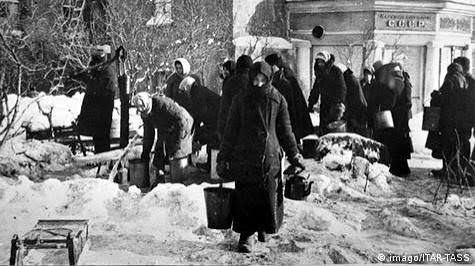
    Disease compounded the starvation. Scurvy, dysentery, and typhus swept through the population. Without electricity, water pumps froze, and people melted snow for drinking water. The winter of 1941-42 was brutally cold, one of the coldest on record.

    The Road of Life

    The only hope was Lake Ladoga. In the summer, barges carried supplies across the water. But it was the winter ice that became legendary. When the lake froze thick enough, truck convoys began rolling across the ice, a route that came to be known as the “Road of Life.” Despite constant German bombing and the ever-present risk of the ice cracking, the road kept the city barely alive.

    Over the course of the siege, the Road of Life carried about 1.5 million tons of supplies and evacuated roughly 1.3 million people, mostly women and children. For the survivors, the road was both a lifeline and a cemetery. Thousands of trucks broke through the ice, their drivers and passengers drowning in the freezing water.

    Culture as Resistance

    Even in the face of starvation, the city’s cultural institutions fought back. The Leningrad Radio broadcast daily, with poet Olga Berggolts reading her verses to the besieged citizens. Her voice became a symbol of endurance. In August 1942, Dmitri Shostakovich’s Symphony No. 7, subtitled “Leningrad,” was premiered in the city. The orchestra was half-starved; musicians were pulled from the front lines and hospitals. The performance was broadcast live, a defiant statement that the city would not be silenced.

    The Hermitage Museum was stripped of its treasures; many were evacuated by train. But the building itself remained, its empty frames a silent testament to what had been lost and what was being defended.

    The Breaking of the Blockade

    For over a year, the city endured. Then, in January 1943, the Soviet Army launched Operation Iskra, a desperate attempt to break the siege. The offensive was costly, but it succeeded in opening a narrow corridor along the southern shore of Lake Ladoga. For the first time in 16 months, land communication with the rest of the USSR was restored. Food and supplies could now reach the city by rail, though the corridor was still within German artillery range.

    The full lifting of the siege came a year later, on January 27, 1944, after Operation January Thunder pushed the German lines back. The 872-day nightmare was over. But the cost was staggering. Estimates of civilian deaths range from 1 to 1.5 million, the vast majority from starvation. Military casualties added another 300,000 to 500,000. The exact numbers remain contested, but the scale is beyond dispute.

    A Complex Legacy

    The siege of Leningrad is remembered as a heroic epic in Russian national memory. In 1945, the city was named a Hero City. The story is told as one of unbroken endurance, of a people who refused to surrender even when faced with annihilation.

    But the full story is more complex. Survivor diaries, like that of Tanya Savicheva, who recorded the deaths of her entire family in a small notebook, reveal a darker side: moral collapse, theft, and even cannibalism. The Soviet leadership, including Stalin, has been criticized for failing to evacuate civilians earlier and for suppressing information about the true scale of suffering.

    The German perspective, too, is contested. While some officers saw the siege as a necessary military operation, the starvation policy was part of the broader “Hunger Plan” for the USSR, which aimed at the deliberate extermination of civilians. Many historians now view the siege as a war crime and an act of genocide-by-starvation.

    The siege of Leningrad stands as a stark reminder of the cost of war and the resilience of the human spirit. It is a story of suffering that defies easy narratives, but it is also a story of survival against impossible odds.

    The siege of Leningrad was not just a military engagement; it was a test of human endurance. For 872 days, a city of millions faced the relentless assault of starvation, cold, and enemy fire. The road to survival was paved with unimaginable sacrifice, and the memory of those who died is etched into the city’s stones. As the years pass, the siege remains a powerful symbol—both of the capacity for human cruelty and the strength of the human will to live.

    Summary

    • The siege of Leningrad lasted 872 days, from September 8, 1941, to January 27, 1944.
    • An estimated 1–1.5 million civilians died, mostly from starvation, cold, and disease.
    • The daily bread ration at the worst point was 125 grams for workers and 250 grams for others.
    • The ‘Road of Life’ across frozen Lake Ladoga supplied the city and evacuated about 1.3 million people.
    • The siege ended with the Soviet offensive Operation January Thunder in 1944.

    FAQ

    Q: How long did the siege of Leningrad actually last?
    A: The siege lasted 872 days, from September 8, 1941, to January 27, 1944. It is often rounded to ‘900 days’ in Russian rhetoric for symbolic impact.

    Q: What was the ‘Road of Life’?
    A: It was a supply route across frozen Lake Ladoga that operated in winter. It carried food and supplies into the city and evacuated civilians. Despite German bombing, it was the city’s only lifeline.

    Q: How many people died during the siege?
    A: Civilian deaths are estimated at 1–1.5 million, mostly from starvation. Military casualties add another 300,000–500,000. Total numbers remain contested.

    Q: Why didn’t the Soviet leadership evacuate civilians earlier?
    A: Stalin initially refused a full evacuation, fearing it would cause panic and undermine morale. This decision has been criticized by post-Soviet historians and human rights groups.

    Q: What happened to the city after the siege?
    A: Leningrad was named a Hero City in 1945. It remains a central symbol of Soviet and Russian national identity, with the siege commemorated annually on January 27.

  • The Swiss Watch: How Neutrality Became an Intelligence Lifeline

    The Swiss Watch: How Neutrality Became an Intelligence Lifeline

    In 1942, a tall American walked into the Hotel Bellevue in Bern, Switzerland, carrying a briefcase of diplomatic cables and a cover story that would hold for three years. Allen Dulles, the OSS station chief, was not just another diplomat. He was the tip of an intelligence spear that relied on a simple, centuries-old Swiss invention: the watch.

    Switzerland’s watch industry, born in the 16th century and industrialized in the Jura Mountains, had become the world’s primary source of precision timepieces. But those watches were more than just instruments of time. They were the backbone of a neutral infrastructure that allowed spies, couriers, and money to move across a continent at war. This is the story of how Swiss neutrality, forged in 1815, became a lifeline for intelligence operations.

    The Neutrality That Made It Possible

    Switzerland’s neutrality was not passive. It was armed, defended by a citizen militia that made invasion costly. The Congress of Vienna in 1815 formalized this status, and the Treaty of Paris reaffirmed it. Geographically, Switzerland sat at the crossroads of Europe, bordered by Germany, France, Italy, and Austria. This position made it a natural listening post, a place where spies could meet, and a transit point for goods and information.

    The Hague Conventions permitted trade in civilian goods, even during wartime. Watches were civilian goods, though they had obvious military applications. Navigation, artillery timing, and aviation coordination all demanded precision timekeeping. Swiss watchmakers, with their decentralized network of workshops in the Jura, produced watches that were the most accurate in the world. Both Allied and Axis powers needed them.

    The Watch Industry as Cover

    The Swiss watch industry was not a single factory but a dense web of small workshops, each making a component. This decentralization made it nearly impossible for any power to control or disrupt the supply chain. It also created a perfect cover for intelligence operations. The constant movement of goods and personnel watch components, finished watches, salesmen, and couriers was normal. Swiss watch brands had agents and retailers worldwide, providing a legitimate network of contacts, shipments, and financial transactions.

    Intelligence agencies piggybacked on this network. A courier carrying a diplomatic pouch could easily pass as a watch salesman. A dead drop could be hidden in a shipment of watch movements. The sheer volume of traffic made surveillance difficult.

    Espionage in the Heart of Europe

    During World War II, Switzerland was a hive of espionage. The OSS operated out of Bern, with Allen Dulles as station chief. Dulles worked openly under diplomatic cover, using Swiss neutrality as a base for operations into Nazi Germany and occupied Europe. His network included contacts in the German resistance, including the plotters of Operation Valkyrie.

    The Germans were also active. The Abwehr and SD ran operations from Swiss cities. Both sides used Switzerland as a meeting ground, a place where spies could talk without fear of immediate arrest.

    One of the most remarkable operations was the Lucy Ring, a Soviet spy network run by Rudolf Roessler, a German émigré. Roessler used Swiss-based couriers and communications to transmit German military secrets to Moscow. The information was so sensitive that it often arrived within hours of being decided in Berlin.

    The Financial Complement

    Swiss banking secrecy, codified in the 1934 Banking Act, complemented the watch trade. Both industries formed what intelligence services called a “neutral infrastructure.” Banks allowed spies to move and store funds discreetly. Watches provided cover. Together, they made Switzerland an indispensable hub.

    In 1945, Operation Sunrise brought the war in Italy to an early end. Secret surrender negotiations between Allied forces and German commanders were facilitated through Swiss intermediaries in Lugano and Bern. The watch industry, with its reputation for precision and discretion, was the perfect metaphor for the operation.

    The Cold War and Beyond

    After 1945, Swiss neutrality continued to serve as a listening post. The CIA, the KGB, and other agencies used Geneva, Zurich, and Bern for meetings, dead drops, and signals intelligence. The Geneva Summit tradition, from 1955 to 1985, reflected Switzerland’s role as a neutral meeting ground.

    The watch industry remained a multi-billion-dollar export business, but the “watch as cover” became largely historical. Intelligence operations shifted to electronic surveillance and financial intrigue.

    In 2022, Switzerland faced a new challenge. When Western nations imposed sanctions on Russia, Switzerland agreed to adopt them, breaking with strict neutrality. The move highlighted the tension between neutrality and the demands of the West. The watch industry, once a lifeline for intelligence, now faces a world where neutrality itself is under pressure.

    The Swiss watch was never just a timepiece. It was a tool of statecraft, a cover for spies, and a symbol of a neutrality that made intelligence operations possible. From the Jura workshops to the banks of Geneva, Switzerland’s neutral infrastructure served as a lifeline for secrets in a world at war. Today, as neutrality is tested anew, the legacy of the watch endures—a reminder that precision and discretion can be powerful allies.

    Summary

    • Switzerland’s armed neutrality, formalized in 1815, made it a safe haven for spies and a crossroads for intelligence during both World Wars.
    • The Swiss watch industry, with its decentralized workshops and global distribution, provided perfect cover for couriers, dead drops, and clandestine communications.
    • Swiss banking secrecy complemented the watch trade, forming a “neutral infrastructure” that intelligence agencies exploited.
    • Key operations like Allen Dulles’s OSS network, the Lucy Ring, and Operation Sunrise all relied on Swiss soil and Swiss discretion.
    • The 2022 sanctions on Russia highlight the modern tension between neutrality and Western pressure, as the era of the watch as cover fades into history.

    FAQ

    Q: How did Swiss neutrality help intelligence operations during WWII?
    A: Switzerland’s armed neutrality, recognized by international law, allowed it to trade with all belligerents. Its geographic position at the heart of Europe made it a natural meeting point for spies, and its diplomatic presence in Bern provided cover for intelligence officers like Allen Dulles.

    Q: Why were Swiss watches so valuable for military purposes?
    A: Swiss watches were the most accurate timepieces available. Military coordination, naval navigation, and artillery timing all depended on precise timekeeping, making Swiss exports strategically essential to both Allied and Axis powers.

    Q: What role did the watch industry play as cover for spies?
    A: The industry was decentralized, with hundreds of small workshops in the Jura Mountains. The constant movement of components, finished watches, and salesmen created a legitimate cover for couriers and dead drops. Global distribution networks offered a ready-made infrastructure for intelligence operations.

    Q: How did Swiss banking secrecy complement the watch trade?
    A: The 1934 Banking Act codified banking secrecy, allowing intelligence agencies to move and store funds discreetly. Together with the watch trade, it formed a “neutral infrastructure” that both Allied and Axis powers exploited.

    Q: Is the watch industry still used as cover today?
    A: Largely historical. Modern intelligence relies on electronic surveillance and financial networks. However, Switzerland remains a meeting ground for diplomats and spies, and the 2022 sanctions on Russia show the ongoing tension between neutrality and Western demands.

  • The Silence of the Crowd: How the Bystander Effect Shaped the Holocaust

    The Silence of the Crowd: How the Bystander Effect Shaped the Holocaust

    In the summer of 1941, as Einsatzgruppen squads moved through Eastern Europe conducting mass shootings, they often did so in broad daylight, in open pits, sometimes with hundreds of local residents watching. These onlookers were not SS members, not collaborators, not active participants in the killing. They were ordinary people farmers, shopkeepers, mothers who stood by and did nothing. Their inaction, multiplied across millions of moments across occupied Europe, became a defining feature of the Holocaust: not the brutality of the perpetrators alone, but the silence of the many who allowed it to happen.

    Why did so many do nothing? The answer lies not in simple cowardice or indifference, but in a complex web of social-psychological mechanisms that have been studied for decades. The same forces that keep a crowd passive during a street emergency diffusion of responsibility, pluralistic ignorance, fear of standing out operated on a catastrophic scale during the Holocaust. Understanding these mechanisms does not excuse the silence, but it helps explain how a genocide of six million Jews could unfold with the passive compliance of the vast majority of the population.

    This article examines the bystander effect as it applied to the Holocaust, from the psychological experiments that defined it to the historical realities that gave it such devastating power. It challenges the simple narrative of ‘good’ versus ‘evil,’ and instead looks at the situational pressures that turned ordinary people into silent witnesses—and the rare few who broke that silence.

    The Birth of a Concept: Kitty Genovese and the 38 Witnesses

    The term ‘bystander effect’ entered the psychological lexicon in 1968, following the murder of Kitty Genovese in New York City. According to initial reports, 38 people witnessed the attack from their apartment windows over a 30-minute period, yet no one called the police. Social psychologists John Darley and Bibb Latané were disturbed by this apparent apathy and conducted experiments that revealed a counterintuitive truth: the more witnesses present, the less likely any one of them is to help.

    Darley and Latané identified two key mechanisms. The first is diffusion of responsibility—when a crowd is present, individuals feel less personal accountability, assuming that ‘someone else’ will act. The second is pluralistic ignorance—in ambiguous situations, people look to others to interpret what is happening. If no one else is reacting, they conclude the event is not an emergency.

    These findings, originally observed in controlled laboratory settings, would later be applied to far larger and darker historical events. The Genovese case itself has been revisited and the story partially disputed, but the psychological principles it inspired remain foundational to understanding group behavior in crises.

    From Street Corner to Genocide: How the Bystander Effect Operates on a Mass Scale

    The Holocaust was not a single emergency but a gradual, state-sponsored campaign of persecution that unfolded over years. It began with legal discrimination—the Nuremberg Laws of 1935 stripped Jews of citizenship—and escalated through social ostracism, ghettoization, and finally mass murder. This incremental nature made it particularly conducive to bystander passivity.

    When persecution arrives step by step, each stage normalizes the previous one. People adapt to the status quo, and what might have once seemed outrageous becomes acceptable. By the time the killing began, the groundwork of social compliance had already been laid. It was not a sudden crisis but a creeping horror, and the bystander effect thrives in such ambiguity.

    Consider the Evian Conference of 1938. Thirty-two nations gathered in France to discuss the growing crisis of Jewish refugees fleeing Nazi Germany. Most countries, including the United States and Britain, refused to significantly increase their immigration quotas. They were, in effect, international bystanders. Their inaction was not a single dramatic failure but a collective decision to look away, each nation assuming that others would take in the refugees or that the problem would somehow resolve itself.

    The Five Steps to Intervention (and Where They Failed)

    Darley and Latané proposed that intervention requires five steps: notice the event, interpret it as an emergency, assume responsibility, decide how to help, and act. Failure at any step results in inaction.

    During the Holocaust, each step presented its own barriers. Noticing the persecution was impossible to avoid—Jews were forced to wear yellow stars, ghettos were visible, and mass shootings occurred in open areas. But interpreting it as an emergency was harder. Nazi propaganda dehumanized Jews, labeling them Untermenschen (subhumans), which made it easier for people to rationalize that the victims were not fully human and thus not deserving of help.

    Assuming responsibility was perhaps the most difficult step. The Nazi state was totalitarian, with pervasive surveillance by the Gestapo, SS, and a network of informants. Hiding a Jew was punishable by death—not merely for the rescuer but often for their entire family. This fear of reprisal created a powerful disincentive to act. The risk was not abstract; it was immediate and lethal.

    Deciding how to help was also complex. Even those who felt compassion for the victims often had no idea what to do. Could they hide a family in their home? Forge documents? Bribe officials? The logistics of rescue were daunting, especially for ordinary people with limited resources.

    Finally, acting required overcoming the psychological numbing that prolonged exposure to atrocity produces. As historian Raul Hilberg noted, many Europeans became desensitized to the violence around them, a coping mechanism that made daily life bearable but also eroded the moral urgency to intervene.

    The Historical Reality: Who Were the Bystanders?

    The vast majority of Europeans under Nazi occupation were neither active perpetrators nor active rescuers. Historians estimate that rescuers—those who hid or helped Jews at great personal risk—numbered well under 1% of the population in most occupied countries. Yad Vashem, Israel’s official Holocaust memorial, has recognized over 28,000 individuals as ‘Righteous Among the Nations,’ a significant number but a tiny fraction of the population.

    Take the Warsaw Ghetto Uprising of 1943. For nearly a month, Jewish fighters held out against the German army in one of the most heroic acts of resistance in the Holocaust. But the surrounding Polish population largely did not intervene. Some were hostile, some were indifferent, and some were paralyzed by fear. The uprising was brutally suppressed, and the ghetto was burned to the ground.

    Similarly, the Einsatzgruppen massacres in Eastern Europe occurred in open areas, often witnessed by local populations. In many cases, the killers were assisted by local collaborators, but many more simply stood by. The sheer scale of the killing—over a million Jews shot in mass graves—made individual intervention seem futile. What could one person do against a firing squad?

    These examples illustrate a critical point: the bystander effect in the Holocaust was not merely a matter of individual psychology but of overwhelming power dynamics. The Nazi state had a monopoly on violence, and any act of rescue could be met with swift and brutal reprisal. The bystander effect, in this context, was amplified by terror.

    The Psychology of Obedience and Dehumanization

    Stanley Milgram’s experiments in the early 1960s provided another key insight into bystander behavior. In his now-famous study, ordinary people were willing to administer what they believed were painful electric shocks to another person when instructed by an authority figure. Even when the ‘victim’ screamed and begged to stop, many participants continued, driven by a sense of obedience to authority.

    Milgram’s findings suggest that the bystander effect is not simply about apathy but about the power of authority to override individual conscience. During the Holocaust, the authority of the Nazi state was absolute. People were conditioned to obey orders, and the propaganda machine reinforced the idea that Jews were enemies of the state. This combination of obedience and dehumanization made it psychologically possible for ordinary people to stand by while their neighbors were dragged away.

    Dehumanization played a crucial role. By labeling Jews as subhuman, the Nazi regime reduced the moral inhibition against harming them. For bystanders, this meant that the victims were not seen as fully human, making it easier to look away. The psychological distance created by propaganda was reinforced by physical distance—Jews were segregated into ghettos and camps, making them less visible and easier to ignore.

    The Exception: The Righteous Among the Nations

    Despite the overwhelming pressures to do nothing, a small minority did act. The Righteous Among the Nations are a testament to the fact that the bystander effect is not inevitable. These individuals—some 28,000 recognized by Yad Vashem—risked their lives to hide Jews, forge documents, and provide food and shelter. They came from all walks of life: farmers, diplomats, clergy, and ordinary housewives.

    What made them different? Research suggests that rescuers often had a strong moral compass, a personal connection to a Jewish friend or neighbor, or a deep religious conviction. Some simply acted on impulse, driven by a sense of outrage that overcame their fear. They were not immune to the bystander effect; they were able to override it through individual agency.

    One example is Oskar Schindler, a German industrialist who saved over 1,000 Jews by employing them in his factory. Schindler was not a saint; he was a flawed man who initially profited from the war. Yet he underwent a transformation, using his wealth and influence to protect his workers. His story, immortalized in the film ‘Schindler’s List,’ illustrates that the decision to act can come from the most unexpected places.

    Another example is Irena Sendler, a Polish social worker who smuggled over 2,500 Jewish children out of the Warsaw Ghetto. She was arrested and tortured by the Gestapo but refused to reveal the children’s names. Sendler’s courage shows that even in the face of extreme danger, individuals can choose to act.

    These rescuers are the exception, but they prove that the bystander effect, while powerful, is not deterministic. The circumstances of the Holocaust were extremely adverse, but some people still found the strength to resist the forces of diffusion and pluralistic ignorance.

    The Moral Question: Is Inaction Ever Neutral?

    The bystander effect is a descriptive concept—it explains why people do nothing, but it does not justify their inaction. Philosophers like Hannah Arendt, who coined the term ‘the banality of evil,’ argued that the greatest moral failure of the Holocaust was not the actions of the perpetrators alone but the passivity of the many. Arendt observed that evil could be committed by ordinary people who simply went along with the system, never thinking critically about what they were doing.

    Emmanuel Levinas, a philosopher who lost his family in the Holocaust, argued that we have an infinite responsibility to the other person. Inaction, in his view, is never morally neutral. When we see suffering and do nothing, we become complicit in it.

    These philosophical perspectives challenge us to consider the bystander effect not as an excuse but as a warning. If we understand the psychological mechanisms that lead to inaction, we can work to counteract them. Education, moral courage, and a willingness to question authority are antidotes to the bystander effect.

    Conclusion: Lessons from the Silence

    The Holocaust stands as the darkest example of the bystander effect in human history. It shows how ordinary people, under the right conditions, can become silent witnesses to genocide. The mechanisms of diffusion of responsibility, pluralistic ignorance, obedience to authority, and dehumanization did not operate in isolation; they combined with terror and totalitarian control to create a society where inaction was the norm.

    But the story of the Righteous Among the Nations reminds us that the bystander effect is not an iron law. It can be overcome. The choice to act lies within each individual, even in the most dire circumstances. The lesson of the Holocaust is not that people are inherently passive but that we must be vigilant against the forces that lead to inaction. We must train ourselves to notice, to interpret, to take responsibility, and to act.

    As we reflect on this history, we face a moral imperative: to ensure that we are not bystanders in our own time. The silence of the crowd during the Holocaust was a collective failure of humanity. We honor the memory of the victims by working to ensure that we, and future generations, are never silent again.

    The bystander effect, as it manifested during the Holocaust, reveals a terrifying truth about human nature: under extreme pressure, most people will do nothing. Yet it also reveals that some will act, often at great personal cost. The difference between the two is not always clear-cut, but it is shaped by individual conscience, moral clarity, and the courage to defy authority. The silence of the many was a tragedy; the actions of the few were a beacon of hope. We must choose which example to follow.

    Summary

    • The bystander effect, coined by Darley and Latané after the Kitty Genovese murder, explains why people are less likely to help in emergencies when others are present.
    • Mechanisms include diffusion of responsibility and pluralistic ignorance, which were amplified during the Holocaust by totalitarian terror and dehumanization.
    • The vast majority of Europeans were neither perpetrators nor rescuers; rescuers numbered less than 1% of the population, with 28,000 recognized as Righteous Among the Nations.
    • Key examples of mass inaction include the Warsaw Ghetto Uprising, Einsatzgruppen massacres, and the Evian Conference.
    • Despite overwhelming pressure to do nothing, individuals like Oskar Schindler and Irena Sendler acted, proving the bystander effect can be overcome.
    • Philosophical perspectives, such as those of Arendt and Levinas, argue that inaction is never morally neutral and that we have a responsibility to act against injustice.

    FAQ

    Q: What is the bystander effect?
    A: The bystander effect is a social-psychological phenomenon where individuals are less likely to offer help in an emergency when other people are present. The more bystanders, the less likely any one person is to intervene, due to mechanisms like diffusion of responsibility and pluralistic ignorance.

    Q: How did the bystander effect apply to the Holocaust?
    A: The Holocaust was a state-sponsored genocide with overwhelming power dynamics. The gradual escalation of persecution, combined with terror and dehumanization, made it difficult for people to recognize a single moment requiring intervention. The risk of helping was death, and the Nazi regime’s surveillance created a climate of fear that amplified passivity.

    Q: Who were the Righteous Among the Nations?
    A: The Righteous Among the Nations are non-Jews who risked their lives to save Jews during the Holocaust. Yad Vashem has recognized over 28,000 individuals, though this represents a tiny fraction of the population. They are honored for their courage and moral integrity.

    Q: Why did some people choose to help while others did not?
    A: Rescuers often had a strong moral compass, personal connections to Jewish friends or neighbors, or deep religious convictions. They were able to override the bystander effect through individual agency, despite the extreme danger. Their actions show that even in the worst circumstances, some people choose to act.

    Q: What can we learn from the bystander effect in the Holocaust?
    A: The Holocaust teaches us that inaction in the face of atrocity is not morally neutral. Understanding the psychological mechanisms that lead to passivity can help us counteract them. We must train ourselves to notice, interpret, take responsibility, and act, so that we do not become bystanders in our own time.

  • Beyond Vengeance: What Holocaust Survivors Actually Felt About Their Captors

    Beyond Vengeance: What Holocaust Survivors Actually Felt About Their Captors

    In the spring of 1945, as Allied forces pushed through Germany, the world began to grasp the scale of the Holocaust. Six million Jews had been murdered. The survivors who emerged from the camps were skeletal, grieving, and stripped of everything except, sometimes, a burning desire for revenge. But in the decades that followed, a more complex picture emerged. Studies of survivor testimonies reveal that while revenge fantasies were common, actual acts of vengeance were rare. The feelings survivors held toward their captors ranged from hatred to indifference, and sometimes even to a strange form of pity. This article explores the psychology of revenge among Holocaust survivors, drawing on clinical research and archival testimonies to understand why most chose testimony over retaliation.

    The Rage That Rarely Became Action

    In 1945, Abba Kovner, a Jewish resistance leader, formed a group called Nakam Hebrew for “revenge.” Their plan was audacious: to poison the water supplies of German cities and kill millions. In one operation, they coated bread with arsenic and slipped it to 2,200 former SS prisoners at a camp near Nuremberg. The prisoners fell ill, but none died. The plot was a failure, and Nakam disbanded within a year.

    Kovner’s group was an exception. Most survivors did not act on their fury. Psychologist William Niederland, who coined the term “survivor syndrome” in the 1960s, documented that many survivors experienced intense revenge fantasies but consciously rejected them. These fantasies served a psychological purpose: they restored a sense of agency in people who had been utterly powerless. But acting on them was another matter it required resources, organization, and a willingness to risk moral condemnation.

    The Mind of the Survivor

    Survivor syndrome included depression, anxiety, guilt, and emotional numbing. Among these symptoms, guilt was particularly corrosive. Many survivors felt guilty for living when family members had died. Revenge, in this context, seemed futile—it could not bring back the dead. Some even viewed revenge as a betrayal of the murdered, a descent into the same brutality that had destroyed them.

    Clinical studies by Henry Krystal and others found that survivors often described their captors as “not human.” This perception had a paradoxical effect: if the SS guards were monsters, then revenge was meaningless—you cannot punish a creature that lacks moral agency. This detachment, while a defense mechanism, also drained the emotional energy needed for sustained vengeance.

    A Spectrum of Feelings

    Testimonies from the USC Shoah Foundation and Yad Vashem reveal a wide range of emotions. Some survivors expressed undying hatred, hoping their captors would suffer in hell. Others felt indifference, too exhausted to care. A few, particularly religious survivors, spoke of forgiveness—though they were a minority. Most fell somewhere in between, neither forgiving nor pursuing revenge.

    One striking pattern is that survivors often felt more anger toward Jewish kapos—fellow prisoners who collaborated with the Nazis—than toward the German guards. The kapos were seen as traitors, and the betrayal cut deeper. This nuance is often lost in broad narratives of victim and perpetrator.

    Why Justice Replaced Revenge

    The Nuremberg Trials (1945–46) and subsequent prosecutions offered a structured alternative to vigilante violence. For many survivors, testifying was a form of revenge—a way to ensure their captors faced consequences without resorting to murder. Philosopher Martha Minow has argued that trials served as a “civilized” substitute for vengeance, allowing anger to be channeled into a legal process.

    The Eichmann trial in 1961 was a watershed. For the first time, survivors took the stand in large numbers to tell their stories publicly. This was not just legal justice; it was catharsis. The trial shifted the narrative from statistics to individual voices, and it gave survivors a platform to confront their tormentors—albeit from a safe distance.

    The Long Arc of Time

    Many survivors reported that their rage diminished over the decades. The demands of rebuilding—new families, new countries, new careers—took precedence. And as time passed, the commitment to memory became a more enduring response than revenge. As Primo Levi wrote in The Drowned and the Saved, revenge would have reduced survivors to the moral level of their captors. Instead, they chose to bear witness.

    The generation of survivors is now passing away—only about 245,000 were alive in 2020, according to the Claims Conference. What they leave behind is not a legacy of vengeance, but a testament to the complexity of human emotion in the face of unimaginable evil.

    The story of Holocaust survivors is not one of revenge fulfilled, but of revenge transformed. The rare acts of violence—like Nakam’s failed poisoning—were overshadowed by a far more powerful response: the decision to testify, to rebuild, and to remember. In the end, the psychological evidence and the archival testimonies align: most survivors chose to turn their rage into a legacy of justice, not a cycle of violence.

    Summary

    • Revenge fantasies were common among Holocaust survivors, but actual acts of revenge were rare and largely symbolic.
    • The Nakam group’s 1946 bread-poisoning plot sickened 2,200 former SS prisoners but killed no one, illustrating the limits of organized vengeance.
    • Survivor syndrome—including guilt and emotional numbing—often made revenge seem futile or morally unacceptable.
    • Survivors frequently felt more anger toward Jewish kapos (collaborators) than toward German guards.
    • Legal trials, especially the Eichmann trial, provided a socially sanctioned outlet for anger, shifting focus from revenge to testimony.

    FAQ

    Q: Did any Holocaust survivors actually attempt revenge?
    A: Yes, but on a very small scale. The Nakam group, led by Abba Kovner, poisoned bread given to former SS prisoners in 1946, sickening about 2,200 but causing no deaths. Most other attempts were individual and symbolic, such as identifying captors to authorities.

    Q: Why did most survivors not pursue revenge?
    A: Psychological factors—such as survivor guilt and emotional numbing—made revenge seem pointless. Additionally, many felt that killing their captors would make them morally equivalent to the Nazis. The priority for most was rebuilding their lives, not vengeance.

    Q: How did survivors feel about Jewish kapos?
    A: Often with more intense anger than toward German guards, because kapos were seen as traitors to their own people. This nuance is documented in many testimonies and is a less-discussed aspect of survivor psychology.

    Q: Did any survivors forgive their captors?
    A: A minority did, often for religious reasons, but most neither forgave nor sought revenge. The majority remained in a state of unresolved grief and anger, channeled into memory and testimony.

    Q: How did the Eichmann trial affect survivors’ feelings?
    A: It provided a public platform for survivors to testify, which many found cathartic. It allowed them to confront their tormentors legally, serving as a form of justice that replaced personal vengeance.

  • Mind Control on the Home Front: How WWII Propaganda Shaped American Psychology

    Mind Control on the Home Front: How WWII Propaganda Shaped American Psychology

    In the summer of 1942, a Chicago housewife named Margaret Jones received a letter from her son, a soldier stationed in the Pacific. He wrote about the heat, the mud, and the fear. But when she tried to share his words with her neighbor, she stopped herself. A poster on the wall of the post office reminded her: ‘Loose Lips Sink Ships.’ She said nothing.

    That poster was one of thousands produced by the U.S. government’s Office of War Information (OWI), which, between 1941 and 1945, saturated American life with propaganda. It wasn’t just about selling war bonds or rationing sugar it was about psychologically reshaping a nation. The OWI and its private-sector partners used fear, guilt, and a relentless drumbeat of patriotic messaging to turn a reluctant public into a unified war machine. But the psychological cost on children, on minorities, on the very fabric of civic trust would linger long after the guns fell silent.

    The Machinery of Persuasion

    The United States didn’t invent propaganda in World War II. During World War I, the Committee on Public Information (CPI), led by George Creel, had pioneered mass-scale government messaging, using films, posters, and 75,000 volunteer speakers known as “Four Minute Men.” But the CPI’s excesses including outright lies about German atrocities sparked a public backlash, and it was dismantled in 1919. By the 1930s, Americans were deeply suspicious of propaganda, especially as Nazi Germany elevated it to a dark art.

    So when war broke out in Europe, U.S. officials faced a dilemma. They knew they needed to rally public support, but they feared a cynical population would reject anything that smelled of manipulation. The solution, as historian Allan Winkler notes in The Politics of Propaganda, was to create an agency that would “tell the truth”—but strategically.

    The Office of War Information, established in June 1942 under journalist Elmer Davis, walked that line. It produced more than 1,000 posters, 60 films, and countless radio scripts. It didn’t fabricate stories wholesale; it chose which facts to highlight and which to bury. Casualty figures were downplayed, setbacks in the Pacific were spun as “strategic withdrawals,” and the enemy was reduced to a caricature.

    Fear, Guilt, and the Psychology of Control

    The OWI’s methods were grounded in the emerging science of persuasion. Behavioral psychologist John B. Watson had already shown that fear and emotion could drive consumer behavior. The government, working with advertising executives through the War Advertising Council, applied those same principles to the war effort.

    Fear was the sharpest tool. Posters depicted Japanese soldiers as subhuman “Japs” with clawed hands and bestial faces, and Germans as goose-stepping automatons. The threat of invasion was made visceral: “If you tell a friend, you might tell the enemy.” Atrocity stories, some true and some embellished, stoked a righteous anger.

    But fear alone wasn’t enough. The OWI also wielded guilt. “Do with less—so they’ll have enough” shamed hoarders. “Someone talked!” posters accused the careless. Women were told that keeping a clean home and canning vegetables was a patriotic duty, and that any failure endangered the troops. Children were recruited into scrap drives and war stamp campaigns, their schoolrooms plastered with reminders that “Every Slip of the Tongue Can Help the Enemy.”

    The result was a pervasive atmosphere of anxiety and obligation. A 1943 study by the American Psychological Association found that 40% of children surveyed reported fears of air raids and enemy invasion—fears that had no basis in reality for most of the country. Japanese American families, already facing internment, were simultaneously told to prove their loyalty through “voluntary” contributions to war bond drives.

    The Cooperation of Hollywood and Madison Avenue

    The OWI didn’t work alone. It had two powerful partners: Hollywood and the advertising industry. The Bureau of Motion Pictures reviewed scripts, and studios willingly produced pro-war films like Casablanca and Mrs. Miniver. These films didn’t just entertain; they normalized sacrifice and demonized the enemy.

    The War Advertising Council coordinated roughly $1 billion in free advertising space each year—the equivalent of $15–18 billion today. Advertisers seamlessly integrated war messages into commercial campaigns. A soap ad might remind you to save fat for explosives. A cigarette ad might feature a soldier smoking the same brand, linking patriotism to a product.

    This saturation was deliberate. Psychologists like Carl Hovland, who would later study persuasion at Yale, knew that repetition was key. The same message, repeated across radio, print, and film, would eventually feel like a natural truth.

    The Skeptics and the Silenced

    Not every American was a passive sponge. Historian Michael Sweeney, in Secrets of Victory, shows that many people recognized the propaganda and resented it. They complained about censorship, mocked the rosy newsreels, and developed a critical eye that would serve them well in the postwar era.

    But dissent was not tolerated. The OWI and the Office of Censorship suppressed anti-war publications and imprisoned some objectors. The government’s messaging about Japanese Americans—that they were a threat—legitimized the internment of over 110,000 people, a decision that caused profound psychological trauma that survivors described for decades.

    The Legacy: A Template for Manipulation

    When the war ended, the machinery didn’t shut down. The Advertising Council, which had been a wartime partner, turned its attention to peacetime campaigns—”Smokey Bear,” “Keep America Beautiful.” The techniques of persuasion honed in the war—fear appeals, guilt, bandwagon effects—became the backbone of modern public relations and consumer marketing.

    The Cold War extended the pattern. The government continued to use propaganda to shape public opinion, from “Duck and Cover” films that frightened schoolchildren to the demonization of the Soviet Union. The post-9/11 era saw similar tactics, from color-coded terror alerts to “Support Our Troops” ribbons.

    What the Research Tells Us About the Psychological Impact

    Scholarship on the subject is clear: WWII propaganda succeeded in its immediate goals—maintaining morale, mobilizing 16 million workers, selling $185 billion in war bonds. But it came at a cost. The fear and guilt it instilled left lasting psychological scars, particularly among those who were already vulnerable.

    Children who grew up in the 1940s carried a sense of constant threat into adulthood. Japanese Americans faced a double betrayal: being asked to prove loyalty to a country that had stripped them of their rights. And the public’s trust in government, battered by the CPI’s excesses in WWI, was again eroded by the OWI’s omissions.

    Yet there was a silver lining. The very exposure to propaganda taught a generation to be wary. The skepticism they developed in the 1940s laid the groundwork for the media literacy movements of the 1960s and beyond. As Susan Brewer argues in Why America Fights, the war taught Americans not just what to think, but how to question what they were told.

    The propaganda of the American home front was a double-edged sword. It united a nation and helped win a war, but it also demonstrated how easily democratic societies can be psychologically manipulated. The posters are faded now, but the lessons remain: when we hear “Loose Lips Sink Ships,” we should also ask who is doing the sinking, and why we are being told to stay silent.

    Summary

    • The OWI produced over 1,000 posters, 60 films, and countless radio scripts during WWII, saturating American media.
    • Techniques included fear appeals (enemy caricatures), guilt (rationing shaming), and bandwagon effects (“everyone’s doing their part”).
    • Children and minorities bore a disproportionate psychological burden, with 40% of kids fearing air raids and Japanese Americans facing internment while being asked to prove loyalty.
    • Hollywood and the advertising industry cooperated voluntarily, with the War Advertising Council providing $1 billion in free ad space annually.
    • The legacy extends to modern public relations and government messaging, shaping how we consume information today.

    FAQ

    Q: Was the ‘We Can Do It!’ poster really a government propaganda tool?
    A: No. The famous “We Can Do It!” poster was actually an internal morale booster made by Westinghouse for its own workers, not an OWI campaign. It was not widely displayed during the war and only became iconic decades later.

    Q: How did children experience WWII propaganda?
    A: Children were heavily targeted through schools, scrap drives, and war stamps. They were exposed to fear-based messages about invasion and espionage, leading to widespread anxiety. A 1943 study found 40% of children surveyed feared air raids, even though the U.S. mainland was never attacked.

    Q: Did Americans accept propaganda passively?
    A: No. Many recognized it and resented censorship. Historian Michael Sweeney’s research shows that audiences developed a critical awareness, which contributed to postwar skepticism toward advertising and government messaging.

    Q: What was the ‘Double V’ campaign?
    A: The ‘Double V’ was a grassroots African American campaign during WWII, not an OWI initiative. It called for victory over fascism abroad and victory over segregation at home, highlighting the contradiction of fighting for freedom while denying it to Black Americans.

    Q: How did WWII propaganda influence the Cold War?
    A: The techniques and personnel from wartime propaganda were repurposed for Cold War messaging, including ‘Duck and Cover’ films and the demonization of the Soviet Union. The Advertising Council also transitioned to peacetime public service campaigns like Smokey Bear.

  • The Machinery of Fear: How Propaganda Bent Entire Nations to Its Will

    The Machinery of Fear: How Propaganda Bent Entire Nations to Its Will

    In the summer of 1917, a rumor swept through Allied trenches: German soldiers were boiling corpses to render fat for lubricants. The story was false, but it was printed in newspapers, repeated in sermons, and pinned to recruiting posters. Thousands of young men who had never met a German enlisted to fight a monster that did not exist. That was propaganda’s first great triumph of the twentieth century—not in winning a battle, but in rewriting reality.

    Propaganda is not merely lying. It is the systematic engineering of emotion, bypassing reason to plant fear deep in the gut. When fear takes root, people stop asking questions. They accept the offered enemy, the promised solution, and the sacrifice demanded. This article traces the psychological levers that propagandists have pulled—from the trenches of WWI to the radio hills of Rwanda—and shows how the same mechanisms still hum beneath the surface of modern media.

    The Psychology of Fear: Why Our Brains Are Primed for Manipulation

    Fear is not a flaw in the human operating system; it is a survival feature. The amygdala scans for threats, and when it detects one, it floods the body with cortisol and adrenaline. The prefrontal cortex—the seat of critical thinking—takes a back seat. In this state, humans are more suggestible, more impulsive, and more likely to accept a simple, aggressive solution than a nuanced one.

    Propagandists exploit this by crafting messages that meet three criteria: the threat must feel severe, it must feel probable, and a solution must be offered. The solution is always the propagandist’s agenda. In Nazi Germany, the threat was the “Jewish-Bolshevik conspiracy,” a myth repeated so often and so loudly that it became the frame for every subsequent event. The solution was Hitler. In Cold War America, the threat was nuclear annihilation from Soviet missiles; the solution was a massive arms race and loyalty oaths.

    The human mind also bends toward cognitive shortcuts that propagandists weaponize. Confirmation bias makes people seek out information that validates their existing fears. The availability heuristic makes vivid, recent images—like a burning flag or a single atrocity story—loom larger in the mind than statistics. Anchoring means the first piece of information sets the frame for everything that follows. A propagandist who controls the first message controls the interpretation of all later events.

    Case Study: The Great War’s Atrocity Machine

    World War I was the first total propaganda war. The British established the Wellington House, the US created the Committee on Public Information under George Creel, and Germany had its own war press office. These agencies produced an astonishing volume of material: Creel’s committee alone distributed 75 million pamphlets, posters, and films.

    The narratives were built on fear. The Germans were depicted as “Huns”—barbarians who bayoneted babies and crucified soldiers. The Allies were cast as defenders of civilization. Atrocity stories were often fabricated or wildly exaggerated. The famous “corpse factory” tale, claiming Germans boiled bodies for glycerin, was later debunked but not before it had fueled enlistment and hatred on both sides.

    Harold Lasswell, an American political scientist, analyzed these efforts in his 1927 book Propaganda Technique in the World War. He documented how propagandists used “name-calling” and “atrocity stories” to dehumanize the enemy, making it easier for ordinary people to kill. The war ended, but the machinery did not. It was refined and turned inward.

    The Nazi Blueprint: Fear, Repetition, and the “Big Lie”

    Joseph Goebbels, Hitler’s Minister of Propaganda, distilled the lessons of WWI into a cynical doctrine. His principles were simple: repeat a message until it becomes truth, simplify it to a slogan, and target the emotions of the masses rather than their intellect. The “big lie” technique—asserting something so audacious that people assume it must be true—was applied relentlessly against Jews, communists, and foreign powers.

    Goebbels had a new tool that WWI propagandists lacked: radio. By 1939, the Nazi regime had flooded Germany with cheap radios, the “People’s Receiver,” designed to receive only state broadcasts. Listeners gathered in public squares to hear Hitler’s speeches. The film Triumph of the Will (1935), directed by Leni Riefenstahl, used sweeping aerial shots and orchestral music to portray the Nazi party as an unstoppable force of nature. The message was not argument but awe.

    The fear narrative was built on a scapegoat. Jews were cast as an internal enemy, a “cancer” on the German body. This dehumanization did not happen overnight; it escalated in steps. First, social exclusion. Then, legal discrimination. Then, deportation. Then, mass murder. At each stage, propaganda softened the ground, making ordinary Germans complicit in atrocities they might otherwise have rejected. The Holocaust was not a sudden outburst of hatred; it was the logical endpoint of a decade of fear-based manipulation.

    The Soviet Machine: Fear of the Enemy Within

    In the Soviet Union under Stalin, the enemy was not just external—it was everywhere. Propaganda manufactured a permanent atmosphere of siege. The capitalist powers threatened from outside, but the more insidious danger was the “enemy within”: saboteurs, wreckers, Trotskyites. The state used show trials to publicly humiliate and execute “traitors,” each confession extracted under torture but presented as voluntary. Citizens were encouraged to inform on neighbors, colleagues, and even family members.

    The psychological mechanism was terror. Stalin’s purges in the 1930s killed hundreds of thousands, but the fear reached millions. The propaganda machine did not need to convince everyone that the enemies were real; it only needed to make everyone afraid of being accused. This is a darker twist on fear appeals: the threat is not an external invader but the very system you live in. The solution offered was loyalty—unquestioning, public, performative loyalty.

    Cold War Dread: The Nuclear Shadow

    After 1945, the fear of annihilation went nuclear. Both the United States and the Soviet Union used propaganda to justify the arms race, each side portraying the other as an aggressor on the brink of launching missiles. Civil defense drills in American schools—”duck and cover”—taught children that a nuclear war could be survived with a desk over your head. The absurdity of this message was not lost on later generations, but at the time it served to manage anxiety and maintain public support for military spending.

    Radio Free Europe and Voice of America beamed propaganda behind the Iron Curtain, while Soviet jammers tried to drown them out. Sports became a proxy war: Olympic victories were touted as proof of each system’s superiority. The fear of communism or capitalism, depending on which side you stood on, justified surveillance, censorship, and military intervention around the globe.

    The Cold War also saw the institutionalization of psychological warfare. The CIA’s Operation Mockingbird infiltrated media outlets, and the Pentagon used psychological operations in Vietnam and beyond. Edward Bernays, the “father of public relations,” had already laid the groundwork in the 1920s. He applied Freudian psychology to mass persuasion, arguing that people are driven by irrational desires and needs. For Bernays, propaganda—he later called it “public relations”—was a necessary tool for democracy, a way to “engineer consent” in a society where the masses were too ignorant to govern themselves.

    Rwanda: Radio as a Weapon of Genocide

    The Rwandan genocide of 1994 showed how quickly fear-based propaganda can turn into mass murder. The radio station RTLM, controlled by Hutu extremists, began broadcasting in 1993. Its DJs mixed popular music with hate speech, calling Tutsis “cockroaches” and “snakes.” They warned that Tutsis were planning to slaughter Hutus, and they called on Hutus to “cut down the tall trees.”

    The dehumanization was systematic. By framing Tutsis as vermin, the propaganda made it psychologically possible for ordinary Hutus to kill their neighbors. The calls to action were explicit; RTLM even broadcast the names and locations of Tutsi hiding places. When the genocide ended, an estimated 800,000 people had been killed in a hundred days. The radio had been a key enabler.

    The Digital Age: Fear Goes Viral

    Today, the psychology of fear has migrated to social media. Algorithms optimize for engagement, and fear is the most engaging emotion. Outrage, anxiety, and threat narratives spread faster than calm, nuanced information. Cambridge Analytica’s micro-targeting efforts in the 2016 US election and Brexit referendum applied Bernays’ principles at an individual scale—sending tailored fear messages to millions of swing voters.

    Propaganda is no longer the sole province of regimes. Non-state actors, conspiracy theorists, and foreign intelligence services use the same levers: confirmation bias, availability heuristic, and the emotional hijacking of the amygdala. The “big lie” has become a meme. The enemy is no longer a neighboring nation but a political party, an ethnic group, or a shadowy cabal.

    The Defenses: Recognizing the Levers

    The Institute for Propaganda Analysis, founded in 1937, identified seven common devices: name-calling, glittering generalities, transfer, testimonial, plain folks, card stacking, and bandwagon. These tools are still in use, dressed in modern clothes. Recognizing them is the first step toward resistance.

    But awareness alone is not enough. The brain’s fear response is primal; it can be trained but not eliminated. The most effective defense is time. Propaganda thrives on immediacy—it wants you to react before you think. Pausing, seeking out contrary evidence, and questioning the source can break the spell. In a world where the machinery of fear runs 24/7, the ability to slow down is a revolutionary act.

    Propaganda did not end with the fall of the Third Reich or the collapse of the Soviet Union. It evolved, adapting to each new medium, from print to radio to television to algorithms. The psychology remains the same: fear is the lever, and the human brain is the machine it pulls. Understanding how that machine works is not just an academic exercise. It is the first line of defense against those who would use our own minds against us.

    Summary

    • Propaganda exploits fear through three-part appeals: severe threat, probable threat, and a promised solution.
    • Cognitive biases like confirmation bias and the availability heuristic make humans susceptible to manipulation.
    • Historical examples: WWI atrocity stories, Nazi radio and film, Soviet show trials, Cold War nuclear dread, and Rwanda’s RTLM radio.
    • Key figures: Edward Bernays (public relations), Joseph Goebbels (Nazi propaganda), and Harold Lasswell (academic analysis).
    • Modern digital propaganda uses algorithms and micro-targeting to apply fear psychology at scale.

    FAQ

    Q: What is the main difference between propaganda and education?
    A: Education seeks to inform and empower critical thinking. Propaganda seeks to manipulate by bypassing reason and targeting emotions, often with a hidden agenda.

    Q: How did the Nazis use radio as a propaganda tool?
    A: They produced cheap “People’s Receivers” that could only pick up state broadcasts, forcing listeners to hear Nazi messages. Public speeches and rallies were broadcast to create a sense of unity and fear.

    Q: Can propaganda be resisted?
    A: Yes, by recognizing common devices (name-calling, glittering generalities), pausing before reacting, seeking diverse sources, and questioning the emotional pull of a message.

    Q: Did Cold War propaganda have any positive effects?
    A: Some argue it fostered a sense of national unity and purpose, but it also fueled an arms race and justified costly conflicts. The negative consequences far outweighed any benefits.

    Q: How does modern social media amplify propaganda?
    A: Algorithms prioritize content that generates engagement, and fear-based content is highly engaging. This can create echo chambers where extreme views are reinforced, and micro-targeting allows propagandists to tailor messages to individual vulnerabilities.