Tag: history

  • The Sogdians: The Silk Road’s Forgotten Middlemen and the Secrets of Their Rise and Fall

    The Sogdians: The Silk Road’s Forgotten Middlemen and the Secrets of Their Rise and Fall

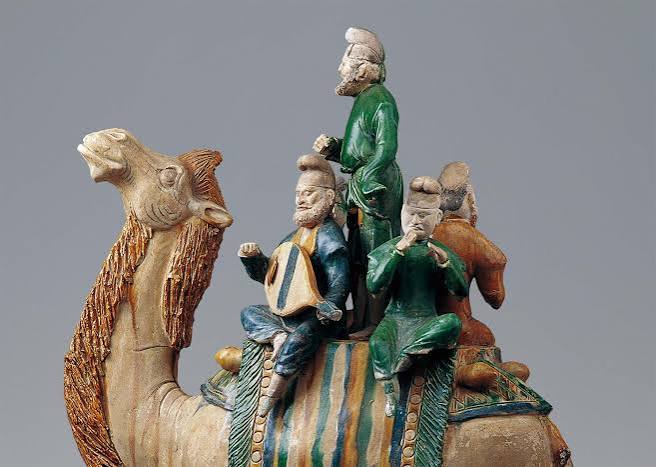
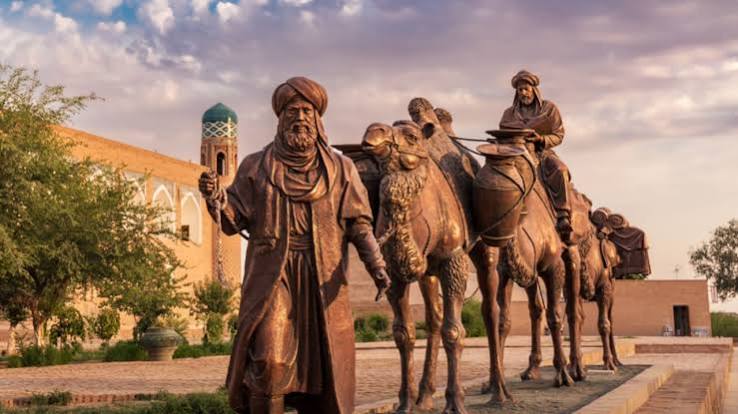
    Two thousand years ago, a merchant in Samarkand loaded his caravan with bolts of silk, jars of rhubarb, and a stack of written contracts. He was a Sogdian, and his people controlled the arteries of commerce between China and the Mediterranean. They spoke a language that became the lingua franca of Central Asia, built self-governing colonies from Mongolia to Korea, and translated Buddhist scriptures for the Chinese. Yet today, their name barely registers outside academic circles.

    For six centuries, the Sogdians were the indispensable intermediaries of the Silk Road. They didn’t build an empire or field a great army. Instead, they built something more durable: a network. When the Arabs arrived in the 8th century and the Tang dynasty retreated, that network collapsed. The Sogdians didn’t vanish—they assimilated, converted, and dissolved into the Persianate world. Their story is a masterclass in how trade can shape history, and how geopolitics can erase a people.

    Who Were the Sogdians?

    Imagine a land of fertile river valleys ringed by desert and steppe. That was Sogdiana, centered on the Zeravshan River in what is now Uzbekistan and Tajikistan. The Sogdians were an Eastern Iranian people, with roots stretching back to the Achaemenid Empire of the 6th century BCE. By the 4th century BCE, Alexander the Great had stormed through their territory, folding them into the Hellenistic world. But they were never a unified state—they were a collection of oasis city-states: Samarkand, Bukhara, Panjakent.

    Their language, Sogdian, was written in a script borrowed from Aramaic and adapted over time. It doesn’t sound like much, but that language became the diplomatic and commercial language of the Silk Road for centuries. If you were doing business in Central Asia in the 6th century, you did it in Sogdian.

    The Silk Road’s Commercial Geniuses

    The Sogdians didn’t invent the Silk Road, but they perfected the art of moving goods across it. They were the middlemen who connected China’s silk and paper with Persia’s silver and glass, India’s spices, and the steppe’s horses. They didn’t just carry things—they engineered the entire logistics.

    Take the Sogdian Ancient Letters, a cache of correspondence from the early 4th century CE, found near Dunhuang. These letters reveal a sophisticated commercial network. Merchants wrote to each other about credit, debts, and market conditions. They used written contracts and agency relationships, where one merchant would represent another’s interests in a distant city. In modern terms, they invented supply chain management and international brokerage.

    They also spread their diaspora communities along the routes. In Tang China’s capital, Chang’an, a whole quarter was Sogdian. They had their own self-governing colonies in Dunhuang, Turfan, and even Mongolia and Korea. These weren’t just trading posts—they were cultural bubbles where Sogdian customs, religions, and art flourished.

    What did they trade? Silk, of course, but also jade, musk, rhubarb (a prized medicine), and horses from the steppes. They dealt in glassware and silverware from the west, and they traded slaves. They were experts in arbitrage—buying low in one empire and selling high in another, while navigating the patchwork of imperial taxes and tariffs.

    Cultural Middlemen: More Than Merchants

    The Sogdians’ role wasn’t just commercial. They were cultural conduits. As they moved goods, they moved ideas. They practiced Zoroastrianism, but they were remarkably tolerant. They adopted Buddhism, Manichaeism, and Nestorian Christianity and spread them along the Silk Road.

    Their most impressive cultural feat was translation. When Buddhism traveled from India to China, the Sogdians acted as intermediaries. They translated Buddhist scriptures into Chinese, not directly from Sanskrit but via Sogdian. They shaped how East Asia received a world religion.

    Their art reflects this synthesis. The wall paintings of Panjakent and Afrasiab show a visual blend of Persian motifs, Indian postures, Greek drapery, and Chinese brushwork. The Sogdians didn’t just carry objects—they carried aesthetics and styles, fusing them into something new.

    Their language left a lasting mark, too. The Sogdian script influenced the Uyghur script, which later gave rise to the Mongolian and Manchu scripts. So the next time you see Mongolian writing, you’re looking at a distant descendant of Sogdian.

    Empires and Alliances: The Geopolitical Tightrope

    The Sogdians survived for centuries by being useful to larger powers. They served as administrators under the Achaemenids, as diplomats under the Göktürk Khaganate, and as officials in Tang China. They weren’t a threat, so empires tolerated them. They were an asset.

    Their partnership with the Göktürks in the 6th and 7th centuries was particularly fruitful. The Sogdians provided the commercial expertise, and the Göktürks provided military protection on the northern Silk Road. This nomadic-sedentary alliance was a model of cooperation that kept trade flowing.

    In Tang China, Sogdians reached the highest levels. They served as generals, ministers, and even influenced court politics. But this dependence on empires was their Achilles’ heel. When those empires clashed, the Sogdians were caught in the middle.

    The Fall: Squeezed Between Caliph and Emperor

    The Arab conquest of Transoxiana began in the early 8th century. By 722 CE, the Arabs had taken Samarkand and Bukhara. The Sogdians resisted, but they were not a unified state, and their city-states fell one by one.

    The decisive blow came at the Battle of Talas in 751 CE. The Abbasid Caliphate faced Tang China on the banks of the Talas River in modern Kyrgyzstan. Sogdians fought on both sides. The Arabs won, and the battle shifted the balance of power in Central Asia. The Tang withdrew their influence, and the Arabs tightened their grip.

    For the Sogdians, this was a catastrophe. They were squeezed between two expanding powers. With the Arabs in control and the Chinese retreating, their comfortable position as intermediaries vanished. The trade routes shifted, and the Sogdian network began to unravel.

    Assimilation and Legacy

    The Sogdians didn’t die out—they were absorbed. Over the next two centuries, they converted to Islam and adopted Persian culture. The Sogdian language faded, replaced by Persian and Tajik. By the 10th or 11th century, it was effectively dead.

    But their legacy persisted. The Sogdian diaspora in China—families with names like Shi and An—continued for generations, even as they assimilated into Chinese society. Their descendants included famous generals and officials. The artistic styles they helped spread lived on in later Central Asian cultures.

    Their greatest legacy might be the model of trade itself. The Sogdians showed that you don’t need an army to shape the world—you need a network, a language, and the ability to adapt. Their rise was built on innovation and tolerance. Their fall came when geopolitics left no room for middlemen.

    The Sogdians are a reminder that history often forgets the mediators. Empires write chronicles; merchants leave ledgers. But those ledgers shaped civilization. The Sogdians connected worlds, carried ideas, and paid the price when the worlds collided. Their story isn’t just a chapter in Central Asian history—it’s a lesson in how commerce and culture intertwine, and how fragile that web can be.

    Summary

    • The Sogdians were an Eastern Iranian people from Sogdiana (modern Uzbekistan/Tajikistan), who dominated Silk Road trade from the 4th to 8th centuries CE.
    • They operated a vast commercial network with diaspora colonies from China to Korea, using language, contracts, and logistics to control trade.
    • They were cultural brokers, spreading Buddhism, Christianity, and Manichaeism, and translating scriptures into Chinese.
    • Their power came from alliances with empires like the Göktürks and Tang China, but they were squeezed between the Arab Caliphate and Tang, leading to their decline after the Battle of Talas (751 CE).
    • They assimilated into Islamic Persianate culture, with their language dying out by the 10th century, but their influence on scripts and trade practices endured.

    FAQ

    Q: What was the Sogdians’ main contribution to the Silk Road?
    A: The Sogdians were the dominant middlemen, connecting China with Persia and the Mediterranean. They pioneered logistics, credit instruments, and multilingual brokerage, moving goods and ideas across Central Asia.

    Q: Why did the Sogdians disappear?
    A: They didn’t disappear suddenly. After the Arab conquest and the Battle of Talas, they lost their privileged position. They gradually converted to Islam and adopted Persian culture, and their language died out by the 10th century.

    Q: Where can we see Sogdian influence today?
    A: Their script influenced Mongolian and Manchu scripts. Their art and culture left traces in Central Asian heritage, and their descendants in China kept family names like Shi and An.

    Q: Were the Sogdians a unified empire?
    A: No, they were a network of independent city-states like Samarkand and Bukhara. Their power relied on commercial cooperation, not political unity.

    Q: What did the Sogdians trade?
    A: They traded silk, jade, horses, glass, silverware, rhubarb, and slaves, among other goods. They were skilled at arbitrage across different imperial tax systems.
  • The Guano Boom: How Bird Droppings Built Empires and Changed Agriculture Forever

    The Guano Boom: How Bird Droppings Built Empires and Changed Agriculture Forever

    In the mid-1800s, the world’s most sought-after commodity wasn’t gold, oil, or spices it was bird excrement. Peruvian guano, a potent natural fertilizer, sparked a global rush that funded wars, toppled governments, and transformed farming. But the story of this ‘accidental empire’ is more than a tale of manure: it’s a lens through which to see how resource exploitation, geopolitics, and scientific discovery intersected in the 19th century.

    Today, when we sprinkle synthetic fertilizer on our gardens, we rarely think about the fact that modern agriculture once depended on the accumulated droppings of seabirds on remote islands. The guano era shaped borders, economies, and labor practices in ways that still resonate. It’s a remarkable chapter in history—one that explains why the U.S. claims tiny Pacific islands, why Chile and Bolivia went to war, and why Peru’s economy boomed and busted.

    The Stuff That Made the Desert Bloom

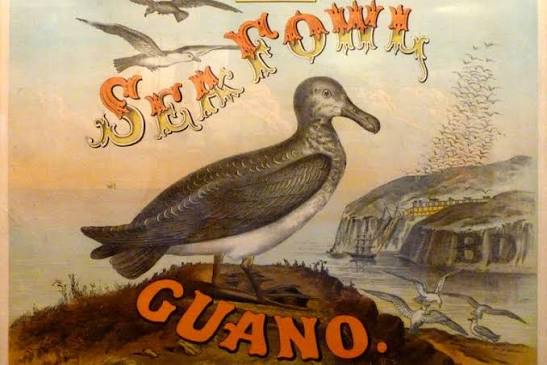
    Guano is the accumulated excrement of seabirds, bats, and seals, but in the 19th century, the term meant one thing: the nitrogen-rich deposits on arid islands off the coasts of Peru, Chile, and Namibia. These islands had the perfect recipe for guano formation: a rainless climate that wouldn’t wash the nutrients away, massive seabird colonies (cormorants, boobies, and pelicans), and the cold, nutrient-rich Humboldt Current that supported enormous fish populations—which the birds ate and turned into fertilizer.

    Peruvian guano was exceptionally potent, with nitrogen content often exceeding 12–15%, compared to modern synthetic fertilizers. That nitrogen, along with phosphorus and potassium, made it a superfood for crops. But it wasn’t just the chemistry that mattered; it was the scale. Over millennia, seabirds had deposited layers of guano dozens of feet thick on islands like the Chincha Islands, creating a seemingly endless supply.

    The Agricultural Crisis That Created a Monster Demand

    By the early 1800s, European agriculture was in trouble. Centuries of intensive farming had exhausted the soil, and traditional fertilizers—animal dung, night soil, bone meal—were nowhere near enough. The Industrial Revolution had also driven rapid urbanization, meaning more mouths to feed with fewer hands in the fields. It was a genuine crisis, often called the ‘manure crisis.’

    Enter science. In 1840, German chemist Justus von Liebig published Organic Chemistry in Its Application to Agriculture and Physiology, proving that plants need specific mineral nutrients. This made guano’s value scientifically undeniable, not just folkloric. When Prussian naturalist Alexander von Humboldt brought guano samples back to Europe in 1802, they were a curiosity. By the 1840s, they were a strategic resource.

    The demand was explosive. British farmers, in particular, were desperate, and guano became a household word. At its peak, a ton of guano sold for $50–$80 in Europe—equivalent to several thousand dollars today. It was literally worth its weight in gold, and the race was on.

    Peru’s Boom and Bust

    Peru was sitting on the world’s richest guano deposits, accumulated over millennia on its rainless islands. The government nationalized extraction and contracted foreign firms—mostly British—to mine and ship the stuff. Between 1848 and 1875, Peru exported an estimated 11–12 million tons of guano.

    The revenue was staggering. At its peak, guano funded roughly 60% of Peru’s national budget. The money paid off foreign debt, built railroads, and financed a lavish state apparatus. It was a classic ‘resource curse’—a sudden influx of wealth that distorted the economy and created dependency.

    But the boom had a dark side. The labor force was composed of convicts, Chinese indentured laborers (over 100,000 between 1849 and 1874), and conscripted indigenous workers. Conditions were brutal. Workers inhaled guano dust, which caused respiratory diseases, and they faced exhaustion, malnutrition, and high mortality. The guano islands were, in effect, a prison and a death sentence for many.

    The U.S. Guano Islands Act: Claiming Islands for Bird Poop

    American farmers also needed fertilizer, and U.S. merchants and whalers had already been scooping up guano from Caribbean and Pacific islands. In 1856, Congress passed the Guano Islands Act, which allowed any U.S. citizen to claim an unoccupied guano island for the United States. Once claimed, the island became U.S. territory.

    This legislation was a foundational piece of U.S. overseas expansion, predating the more famous acquisitions of Alaska, Hawaii, and the Philippines. Under the Act, the U.S. claimed over 100 islands. Many of those claims are still U.S. territories today—Baker Island, Howland Island, and Jarvis Island, for instance, are almost entirely forgotten, but they remain part of the United States because of bird droppings. The Act is still on the books, vestigial but never repealed.

    The War of the Pacific: When Fertilizer Caused a War

    Guano wasn’t just an economic resource; it was a geopolitical flashpoint. The Atacama Desert, which stretched across the borders of Chile, Peru, and Bolivia, contained both guano deposits and sodium nitrate—another fertilizer and a key ingredient in gunpowder. In 1879, disputes over taxation and control of these resources erupted into the War of the Pacific.

    Chile fought against Peru and Bolivia, and won decisively. Chile annexed Peru’s southern provinces and took Bolivia’s entire coastline, leaving Bolivia landlocked to this day. Peru’s guano economy collapsed, and the country was left bankrupt and politically destabilized. The war was, in many ways, a fight over who would control the literal excrement that kept global agriculture alive.

    The Decline: Faster Than the Birds Could Poop

    Guano deposits were mined faster than they could regenerate. Seabird guano accumulates at a rate of just 1–2 mm per year, so the islands’ reserves were finite. By the 1870s, the quality of Peruvian guano was visibly declining as miners reached lower-grade deposits.

    The final blow came with the development of the Haber-Bosch process in the early 20th century. In 1909–1913, German chemists Fritz Haber and Carl Bosch figured out how to synthesize ammonia from atmospheric nitrogen, creating a virtually unlimited source of nitrogen fertilizer. This broke the link between food production and mined excrement.

    Synthetic fertilizer didn’t just replace guano; it revolutionized agriculture. The world’s food supply no longer depended on the whims of seabird populations or political control of remote islands. But the guano era left its mark: it accelerated the expansion of synthetic fertilizers, which now feed billions of people. Ironically, the modern agricultural system that guano helped create is the very system that made guano obsolete.

    The guano boom was a bizarre and brutal chapter in global history. It was a period when the world’s most powerful nations fought over bird droppings, when Peru’s economy soared and crashed, and when the U.S. quietly expanded its empire one island at a time. But it also laid bare the fragility of a world dependent on a single, non-renewable resource. The lessons from the guano era—about resource exploitation, labor practices, and the environmental costs of agriculture—are still relevant today. Next time you fertilize your garden, remember: it wasn’t always as simple as a bag from the hardware store.

    Summary

    • Guano is the accumulated excrement of seabirds, rich in nitrogen, phosphorus, and potassium, and was a vital fertilizer in the 19th century.
    • Peruvian guano exports funded ~60% of the national budget during the boom years (1848–1875), but extraction relied on brutal labor.
    • The U.S. Guano Islands Act of 1856 led to the claim of over 100 islands, many of which remain U.S. territories today.
    • The War of the Pacific (1879–1884) was fought over guano and nitrate-rich territories, leaving Bolivia landlocked and bankrupting Peru.
    • The Haber-Bosch process (1909–1913) made synthetic nitrogen fertilizer, displacing guano and transforming global agriculture.

    FAQ

    Q: What exactly is guano?
    A: Guano is the accumulated excrement of seabirds, bats, or seals. In the 19th-century trade, it referred specifically to seabird guano from arid islands, prized for its high nitrogen content.

    Q: Why was Peruvian guano so valuable?
    A: Peruvian guano had an exceptionally high nitrogen content (often 12–15%), making it an extremely effective fertilizer for nitrogen-hungry crops. It also contained phosphorus and potassium, essential plant nutrients.

    Q: How did the Guano Islands Act affect U.S. territory?
    A: The Act allowed U.S. citizens to claim unoccupied guano islands for the U.S., leading to the acquisition of over 100 islands. Many remain U.S. territories today, such as Baker Island and Howland Island.

    Q: What caused the War of the Pacific?
    A: The war was fought over control of the Atacama Desert, which contained valuable guano and sodium nitrate deposits. Chile defeated Peru and Bolivia, annexing territory and leaving Bolivia landlocked.

    Q: Why did guano stop being used?
    A: Guano deposits were depleted faster than they could regenerate, and the Haber-Bosch process (developed 1909–1913) allowed synthetic production of ammonia fertilizer, which was cheaper and unlimited in supply.

  • The Accidental Republic of Cospaia: How a Surveying Mistake Created a 400-Year Tobacco Smuggling Haven

    The Accidental Republic of Cospaia: How a Surveying Mistake Created a 400-Year Tobacco Smuggling Haven

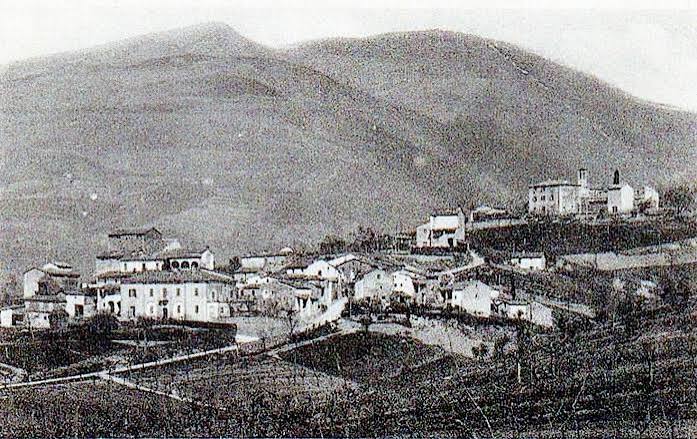
    In 1440, a clerical error during a land sale left a tiny strip of Italian soil unclaimed by either the Pope or the Republic of Florence. Rather than being absorbed by a larger power, the inhabitants declared themselves an independent republic and somehow made it last for 386 years.

    This accidental micro-state, Cospaia, had no army, no prison, no formal laws, and no taxes. Its survival hinged on a single, unlikely commodity: tobacco. While its powerful neighbors banned the crop, Cospaia grew it openly and became the smuggling capital of central Italy. This is the story of how a cartographic oversight and a lucrative vice kept a village free for four centuries.

    The End of an Anomaly

    By the early 19th century, Cospaia’s luck ran out. The Congress of Vienna (1815) reshaped Europe after Napoleon’s fall, and the Papal States began consolidating territory to strengthen their position.

    Pope Leo XII formally annexed Cospaia in 1826. The annexation was peaceful—no resistance is recorded. By then, the tobacco trade had declined, and the economic rationale for tolerance had weakened. The republic that survived by accident was absorbed without a fight.

    Today, Cospaia is part of the modern town of San Giustino in Umbria, Italy. Little remains of its independent past except historical records and a lingering local pride.

    Cospaia’s 386-year existence is a reminder that history isn’t always driven by grand designs. Sometimes, it’s shaped by a surveyor’s mistake, a pope’s distraction, and a village’s willingness to simply declare itself free. It’s a story of how a tiny, forgotten strip of land turned a vice into a virtue—and held on to its liberty for four centuries.

    Summary

    • Cospaia was a micro-state in central Italy that existed from 1440 to 1826, born from a surveying error in a papal land sale.
    • It had no formal government, no army, no prison, and no taxes; a council of family heads managed affairs.
    • Its economy relied on tobacco cultivation and smuggling, as it was the only place in the region where the crop was legal.
    • Both the Papal States and Florence tolerated its independence because they profited from the tobacco trade and avoided border conflicts.
    • The republic was peacefully annexed by Pope Leo XII in 1826 after the tobacco trade declined.

    FAQ

    Q: How did Cospaia become independent?
    A: In 1440, Pope Eugene IV sold the town of San Giustino to Florence, but surveyors accidentally omitted a strip of land. Neither side claimed it, and the inhabitants declared themselves a republic.

    Q: How did Cospaia survive for so long?
    A: Its survival hinged on mutual benefit: both the Pope and Florence profited from the tobacco smuggling trade, and the tiny state served as a buffer zone. It was too small to be worth conquering.

    Q: What was Cospaia’s government like?
    A: It had no formal constitution or written laws. A council of family heads managed communal affairs, and disputes were settled by mediation.

    Q: Why was tobacco so important to Cospaia?
    A: Tobacco was banned in the Papal States and restricted in Florence, but legal in Cospaia. This made it the only source of legal tobacco in the region, fueling a lucrative smuggling trade.

    Q: When and why did Cospaia cease to exist?
    A: Pope Leo XII annexed Cospaia in 1826. The tobacco trade had declined, and the Papal States were consolidating territory after the Congress of Vienna.

  • The Dutch East India Company: The World’s First Multinational and Its Spectacular Collapse

    The Dutch East India Company: The World’s First Multinational and Its Spectacular Collapse

    In 1602, a group of Dutch merchants pooled their money to fund a risky voyage to the Spice Islands. That gamble became the Vereenigde Oostindische Compagnie (VOC)—the world’s first multinational corporation. It invented the stock market, controlled trade across half the globe, and at its peak was worth more than Apple, Amazon, and Google combined. But within two centuries, this colossal enterprise collapsed into bankruptcy. How did a company that once commanded the world’s oceans end up a cautionary tale? The answer lies in its own brilliant, and brutal, innovations.

    The Birth of a Corporate Giant

    The VOC was born from a crisis. In the 1590s, Spain closed Lisbon’s port to Dutch ships, cutting off their access to Asian spices. Dutch merchants had to sail directly to the East Indies, but the voyages were long, dangerous, and expensive. Competing Dutch companies were undercutting each other, driving up prices in Asia and crashing them in Europe. So the Dutch government forced them to merge. In 1602, they formed a single entity with a 21-year monopoly on trade east of the Cape of Good Hope and west of the Strait of Magellan.

    The VOC’s structure was revolutionary. It had a permanent capital base, funded by public investment. Anyone could buy shares, and those shares could be traded on the newly established Amsterdam Stock Exchange. This was the world’s first initial public offering (IPO). Investors weren’t just funding a single voyage; they were buying into a company that would exist indefinitely. This model of permanent, transferable equity became the blueprint for modern corporations.

    The company was governed by a board of 17 directors, the Heeren XVII, with Amsterdam holding 8 seats. Six regional chambers managed operations, but the real power lay in the boardroom. The VOC wasn’t just a trading company; it was a state within a state. It could wage war, sign treaties, and govern territories. Its charter gave it the authority to maintain its own army and navy.

    The Spice Monopoly and the Brutal Logic of Profit

    The VOC’s core business was spices—pepper, nutmeg, cloves, and cinnamon. These were luxury goods in Europe, worth more than gold by weight. The company’s “Grand Design” was to control the entire supply chain, from production to distribution. That meant conquering the source of the spices and eliminating competitors.

    Jan Pieterszoon Coen, the Governor-General from 1619, embodied this ruthless strategy. He established Batavia (modern Jakarta) as the company’s Asian headquarters, and from there, he waged a campaign to dominate the spice trade. The most infamous incident was the Banda Islands massacre in 1621. The local population, who sold nutmeg to the English, were systematically killed or enslaved to secure a monopoly. Coen’s actions were brutal, but they were effective. The VOC achieved a near-total control of the nutmeg market, and profits soared.

    At its peak, the VOC operated over 150 merchant ships and 40 warships, employing more than 70,000 people. It maintained forts and trading posts from the Cape of Good Hope to Japan. In Japan, it was the only Western company allowed to trade, operating from the artificial island of Dejima in Nagasaki harbor. The VOC was, in every sense, a global enterprise.

    Financial Innovation and the World’s First Stock Market Bubble

    The VOC’s financial innovations were as groundbreaking as its military conquests. By issuing shares that could be freely traded, it created a secondary market. This allowed investors to buy and sell stakes without waiting for a voyage to return. The Amsterdam Stock Exchange, established in 1602, became the hub of this new financial world.

    The company’s dividend policy was remarkably consistent. Over its lifetime, the VOC paid an average annual dividend of 18%. At its height, its market capitalization was estimated to be worth roughly $7.9 trillion in modern dollars, adjusted for inflation and GDP share. That makes it the most valuable company in history relative to the global economy.

    But this success bred complacency. The VOC’s permanent capital meant shareholders had little say in management, and the directors grew increasingly corrupt and inefficient. The company’s focus shifted from innovation to exploitation. It relied on forced cultivation and monopolistic practices, which alienated local populations and invited competition.

    The Long Decline: Corruption, Competition, and Changing Tides

    The VOC’s decline was gradual but inexorable. By the late 17th century, its profitability was already waning. The company paid high dividends even when profits were falling, borrowing to maintain the payouts. This eroded its financial base. Corruption was rampant; directors and employees embezzled funds, and the company’s books were a mess.

    Competition from the English and French East India Companies eroded its monopoly. The VOC’s military costs soared as it fought to maintain its territories. The Fourth Anglo-Dutch War (1780-1784) was a disaster, crippling its navy and trade. By the 1790s, the company was effectively bankrupt.

    In 1799, the VOC was formally dissolved, and its debts were taken over by the Dutch state. Its territories became the Dutch East Indies, which would remain a Dutch colony until 1949. The company that had once been the world’s mightiest corporation ended in ignominy.

    Lessons for Modern Business

    The VOC’s rise and fall offer enduring lessons. Its innovations—permanent capital, transferable shares, and limited liability—became the foundation of modern capitalism. But its failures also highlight the dangers of unchecked power, corruption, and a short-term focus on dividends. The VOC was a pioneer, but it also showed how a company can become too big, too arrogant, and too detached from the realities of its market.

    Today, as multinational corporations wield unprecedented influence, the VOC’s story is a cautionary tale. It reminds us that corporate power, when left unchecked, can lead to exploitation and collapse. But it also shows the transformative potential of financial innovation. The VOC didn’t just build an empire; it built the template for the global economy we live in today.

    The End of an Era

    When the VOC was dissolved, it left behind a legacy of innovation and brutality. Its rise was driven by a bold vision and financial genius; its fall was a result of hubris and decay. The world’s first multinational was a product of its time, but its influence persists. Every time a company issues shares on a stock exchange, it is following in the footsteps of the Dutch East India Company. And every time a corporation collapses under the weight of its own excess, it echoes the VOC’s final days.

    The Dutch East India Company was a marvel of its age, a corporation that changed the course of history. Its innovations laid the groundwork for modern finance, but its methods were often brutal, and its decline was as dramatic as its ascent. The VOC’s story is a reminder that even the mightiest companies are not immortal. They rise on the strength of their ideas, but they fall when they lose sight of the very principles that made them great.

    Summary

    • The VOC, founded in 1602, was the world’s first multinational corporation, with a permanent capital base and publicly traded shares.
    • It controlled the spice trade through territorial conquest and brutal monopolistic practices, including the Banda Islands massacre.
    • At its peak, it employed 70,000 people, operated 150 ships, and had a market cap equivalent to $7.9 trillion today.
    • Its decline was fueled by corruption, excessive dividends, military overreach, and rising competition from the English and French.
    • Dissolved in 1799, the VOC’s legacy includes the blueprint for modern corporations and a cautionary tale about unchecked corporate power.

    FAQ

    Q: Why was the Dutch East India Company considered the first multinational?
    A: It was the first company to operate across multiple continents with a permanent capital base, tradeable shares, and a hierarchical governance structure. It had operations from Africa to Asia and was chartered by a government to act with quasi-sovereign powers.

    Q: What was the VOC’s most significant financial innovation?
    A: The VOC pioneered the concept of a permanent, transferable equity capital. It issued shares that were freely traded on the Amsterdam Stock Exchange, allowing for liquidity and continuous investment. This became the foundation of modern stock markets.

    Q: How did the VOC maintain its monopoly on spices?
    A: Through a combination of military force and strategic treaties. The company conquered key spice-producing regions, such as the Banda Islands, and used violence to eliminate competitors, ensuring its sole control over the supply.

    Q: Why did the VOC decline?
    A: The decline was due to a mix of internal corruption, excessive dividend payouts that drained cash, rising competition from rival East India companies, and costly military conflicts. The company became overextended and inefficient.

    Q: What can modern businesses learn from the VOC?
    A: The VOC’s rise shows the power of financial innovation and strategic vision. Its fall warns against complacency, corruption, and a short-term focus on shareholder returns at the expense of long-term sustainability.

  • The Great Moon Hoax of 1835: When a Newspaper Sold the Moon

    The Great Moon Hoax of 1835: When a Newspaper Sold the Moon

    How the Sun Conned the World With "The Great Moon Hoax" - JSTOR Daily

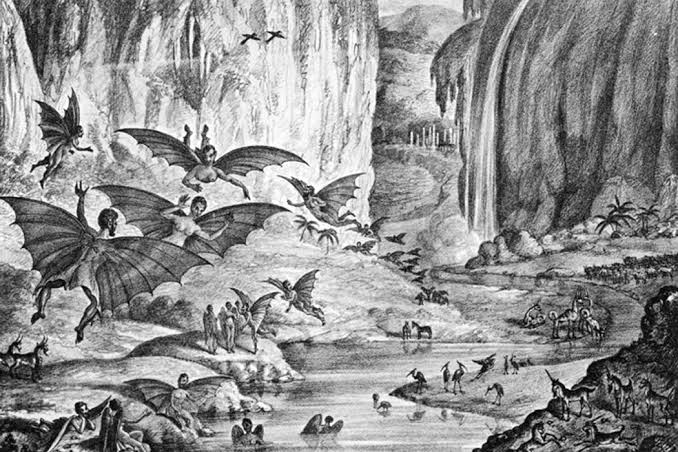
    In late August 1835, readers of the New York Sun opened their papers to an astonishing story. Sir John Herschel, the most respected astronomer of his day, had reportedly built a telescope so powerful it could see the Moon’s surface in detail. And there, he had found life: bison, unicorns, and even winged human-like creatures. The public devoured the story, and the Sun’s circulation skyrocketed. There was just one problem: none of it was true.

    The series ran for six days, from August 21 to August 31, 1835, and became one of the most famous hoaxes in journalism history. It showed how a fabricated story, wrapped in the authority of science, could fool thousands. But it also revealed something deeper about the era: a public hungry for wonder, a press willing to sell it, and the birth of mass media’s complicated relationship with the truth.

    The Penny Press and the Hunger for Sensation

    To understand the Moon Hoax, you have to understand the media landscape of 1830s New York. Before the penny press, newspapers were expensive—six cents or more—and aimed at merchants and elites. They were dense with shipping news and political debates. But in 1833, Benjamin Day launched the New York Sun, selling papers for just one cent. The price made it affordable to the working class, and Day filled it with crime stories, human-interest tales, and anything that would grab attention.

    The Sun was a pioneer of what we now call sensationalism. Its goal was simple: sell more copies. And nothing sold copies like a good story, even if it wasn’t true. The Moon Hoax was the ultimate expression of that philosophy.

    The Fabricated Telescope and Its ‘Discoveries’

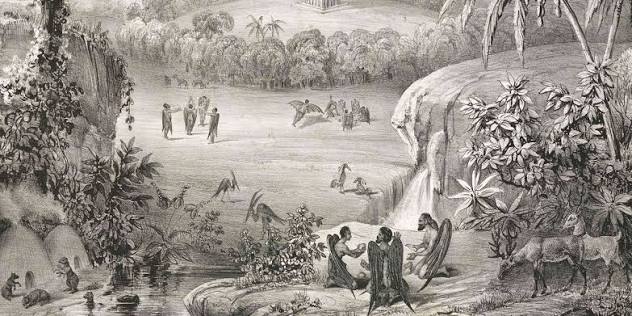
    The articles, attributed to a fictional supplement to the Edinburgh Journal of Science, described a colossal telescope built by Herschel with a 24-foot mirror, capable of magnifying objects up to 42,000 times. Through this telescope, Herschel had supposedly observed the Moon’s surface in exquisite detail: lush vegetation, seas, and forests. Then came the creatures.

    First, there were bison, similar to those on Earth. Then, strange unicorns, with ‘a silvery hair, and a horn like a bright crystal.’ But the most sensational discovery was a race of winged beings, which the articles called ‘Vespertilio-homo’—bat-men. These creatures were described as ‘four feet high,’ with faces like those of humans, and wings that they used to fly. The descriptions were vivid, specific, and utterly invented.

    The writing was so detailed, so matter-of-fact, that it carried the ring of truth. The Sun’s readers, many of whom had no scientific training, had no reason to doubt it.

    Why Did People Believe It?

    To modern eyes, it seems incredible that thousands of people believed in bat-men on the Moon. But in 1835, the public’s understanding of science was very different. Astronomy was a popular science, but telescopes were limited. The Moon’s surface had been mapped, but no one had seen any signs of life. The question of whether the Moon was inhabited was widely discussed, not just by scientists, but by theologians and the public.

    One influential figure was the Reverend Thomas Dick, who had written popular books estimating the population of the solar system based on theological reasoning. He suggested that the Moon might be home to millions of inhabitants. Locke’s hoax was partly a parody of Dick’s speculative style—but the parody was too subtle. The public was already primed to believe in lunar life, and Herschel’s name gave the story unimpeachable authority.

    Sir John Herschel was a legitimate celebrity scientist. His father, William Herschel, had discovered Uranus. John himself had done groundbreaking work on nebulae and double stars. When the articles claimed he had made these discoveries, the public had no way to verify them. And the Sun’s rivals, caught off guard, initially republished the story without checking.

    The Aftermath: Exposure and Legacy

    Within a few weeks, other newspapers began to investigate. They contacted the Edinburgh Journal of Science—and found it did not exist. The story was a fabrication. But the Sun never printed a formal retraction. The paper’s editor, Richard Adams Locke, eventually admitted he had written the series, claiming it was intended as a satire. The Sun, meanwhile, had already reaped the rewards: its circulation had soared from about 8,000 to over 19,000 copies per day, making it one of the best-selling papers in the world.

    The hoax exposed the power of media to shape public belief, and the commercial incentives behind it. Sound familiar? The Moon Hoax is often cited as a precursor to modern ‘fake news’ and clickbait. In the 1830s, the Sun’s revenue depended on circulation, just as today’s digital media depend on clicks and ad views. The economic pressures are structurally similar: sensational stories, even false ones, sell.

    The Satire That Wasn’t

    Locke’s claim that the hoax was a satire is debated. The series was so detailed, so elaborate, that it seems unlikely it was purely a joke. But if it was satire, it failed spectacularly—because the public took it at face value. The line between satire and fraud is a thin one, and the Moon Hoax crossed it.

    What’s more, the hoax had a lasting impact on science communication. It showed how scientific authority could be weaponized. Herschel, who was actually in South Africa at the time, doing real astronomical observations, was embarrassed by the affair. He reportedly dismissed it as a ‘silly hoax,’ but his name had been used to sell newspapers.

    Lessons for Today

    The Great Moon Hoax offers a cautionary tale that remains relevant. It reminds us that the public’s trust can be exploited, and that the desire for wonder can override skepticism. But it also highlights the importance of fact-checking and verification—skills that are as vital today as they were in 1835.

    When you see a sensational claim, ask yourself: Who is making this claim? Can I verify it? The Sun’s readers didn’t ask those questions, and they were fooled. We can learn from their mistake.

    The Great Moon Hoax of 1835 was more than a funny footnote in history. It was a landmark in the relationship between media, science, and the public. It showed how a fabricated story, dressed in the language of science, could captivate the world. And it revealed the economic pressures that can tempt journalists to prioritize sensation over truth. The bat-men of the Moon are long gone, but the lessons of the hoax remain: skepticism, verification, and the need to question what we read.

    Summary

    • The New York Sun published a six-part series in August 1835 claiming astronomer Sir John Herschel had discovered life on the Moon, including bison, unicorns, and winged humanoids.
    • The story was entirely fabricated by Sun editor Richard Adams Locke, who later claimed it was intended as satire.
    • The hoax boosted the Sun’s circulation from about 8,000 to over 19,000 copies per day.
    • The public believed the story because of Herschel’s reputation, the plausibility of lunar life, and the lack of fact-checking in the era.
    • The hoax is a foundational case study in journalism ethics and the dangers of sensationalism.

    FAQ

    Q: Who wrote the Great Moon Hoax?
    A: The series was written by Richard Adams Locke, a British-born journalist and editor at the New York Sun. He later admitted authorship, though he claimed it was intended as a satire of astronomical speculation.

    Q: Did anyone ever admit the hoax was false?
    A: The Sun never printed a formal retraction. The hoax was exposed when other newspapers investigated and found that the Edinburgh Journal of Science, the supposed source, did not exist. Locke eventually admitted the fabrication.

    Q: How did the hoax affect the New York Sun’s circulation?
    A: The Sun’s circulation reportedly soared from about 8,000 to over 19,000 copies per day, making it one of the best-selling newspapers in the world at the time.

    Q: Why did so many people believe the hoax?
    A: People believed because Sir John Herschel was a trusted scientist, the claims seemed plausible given contemporary speculation about lunar life, and there was no infrastructure for fact-checking. The public’s desire for wonder also played a role.

    Q: Is the Great Moon Hoax considered the first example of fake news?
    A: It’s often cited as an early landmark in the history of fake news and tabloid journalism, demonstrating that sensational fabrication could drive circulation. However, it was not the first hoax, but it is one of the most famous.

  • The Sogdians: The Ancient Silk Road Traders Who Shaped Eurasian History

    The Sogdians: The Ancient Silk Road Traders Who Shaped Eurasian History

    Long before the Silk Road became a byword for exotic goods and cultural exchange, a network of city-states in Central Asia had already turned trade into an art form. The Sogdians, an Eastern Iranian people from the fertile valleys of modern Uzbekistan and Tajikistan, were the master middlemen of Eurasia for over five centuries. Their language became the lingua franca of the Silk Road, their merchants reached the courts of Byzantium and Chang’an, and their ideas religious, artistic, and technological flowed across continents.

    Yet, despite their outsized influence, the Sogdians remain a footnote in most history books. They never built an empire, raised a massive army, or left behind monumental architecture. Instead, they built something more durable: a commercial and cultural network that held Eurasia together. This is the story of how a people without a state shaped the course of world history, and why their legacy still matters today.

    Who Were the Sogdians?

    The Sogdians were an Eastern Iranian people who inhabited Sogdiana, a region centered on the Zarafshan River Valley in modern-day Uzbekistan and Tajikistan. Their major cities—Samarkand, Bukhara, and Panjakent—were not capitals of a unified kingdom but independent city-states that cooperated for commercial gain. They spoke Sogdian, an Eastern Iranian language written in a script adapted from Aramaic, which later evolved into the Uyghur and Mongolian scripts.

    Their civilization flourished from roughly the 6th century BCE to the 10th century CE, with a golden age between the 4th and 8th centuries CE. Sogdiana sat at the crossroads of the steppe nomads to the north, Persia to the west, India to the south, and China to the east. This geographic position made them natural intermediaries, but their success was not just luck—it was a deliberate strategy of cultural and commercial adaptability.

    The Trading Network That Connected Continents

    The Sogdians were the dominant middlemen of the Silk Road for over 500 years. They controlled trade routes that linked China, India, Persia, and the Mediterranean, handling goods like silk, glassware, spices, precious metals, horses, and even slaves. Their commercial networks stretched from Byzantium in the west to Chang’an (modern Xi’an) in the east, with diaspora communities established at every major trading post along the way.

    What set the Sogdians apart was their business acumen. They developed sophisticated commercial practices, including partnership agreements, credit instruments, and long-distance agency relationships. These were not just informal arrangements—they were legally binding contracts that facilitated trade across vast distances. The Sogdians essentially operated as proto-capitalists, creating a framework for commerce that would later be adopted by other cultures.

    The Ancient Letters: A Window into Sogdian Life

    In 1907, a cache of Sogdian letters was discovered in a watchtower near Dunhuang, China. Known as the Ancient Letters, they date from the early 4th century CE and offer a rare first-person glimpse into the Sogdian world. The letters reveal the everyday concerns of merchants, including trade disputes, family matters, and the disruptions caused by political instability. One letter, written by a Sogdian merchant named Nanai-Vandak, describes the chaos following the fall of the Han Dynasty and the collapse of trade routes. These letters are invaluable historical documents, showing that the Sogdians were not just faceless traders but real people dealing with the same challenges we face today: market volatility, political risk, and the struggle to maintain connections across borders.

    Cultural Transmitters: More Than Merchants

    The Sogdians were not just carriers of goods; they were carriers of ideas. They played a pivotal role in transmitting Buddhism from India to China, translating numerous sutras into Chinese. One prominent figure, Kang Senghui, was a Sogdian Buddhist monk who helped spread Buddhism in southern China in the 3rd century CE. They also carried Manichaeism and Nestorian Christianity eastward, while practicing Zoroastrianism themselves.

    Their artistic influence was equally profound. The murals of Panjakent and Afrasiab are among the richest visual records of Silk Road life, depicting scenes of trade, warfare, and mythology. These works blended Persian, Indian, and Chinese influences, creating a unique Sogdian style that would later inspire the art of the Tang Dynasty and beyond.

    The An Lushan Rebellion: A Sogdian Who Shook China

    Perhaps the most dramatic impact the Sogdians had on world history came through a man named An Lushan. Born in 703 CE to a Sogdian father and a Turkic mother, An Lushan rose to become a powerful general in the Tang Dynasty. In 755 CE, he launched a massive rebellion that nearly toppled the dynasty, plunging China into a devastating civil war that killed millions. The An Lushan Rebellion, as it came to be known, not only shattered the Tang’s golden age but also disrupted the Silk Road trade that the Sogdians had built their fortunes on. This event was a turning point in Sogdian history, marking the beginning of their decline.

    Decline and Legacy

    The Arab conquest of Sogdiana in the 8th century was the beginning of the end. Qutayba ibn Muslim’s armies captured Samarkand in 712 CE, and a series of Sogdian revolts against Arab rule in the 720s-740s were ultimately unsuccessful. The An Lushan Rebellion further devastated Sogdian communities in China, and the rise of maritime trade routes shifted commercial power away from the overland Silk Road. By the 10th century, the Samanid Empire had absorbed Sogdiana, and the Sogdian language gradually gave way to Persian and Turkic.

    Yet the Sogdian legacy endures. Their script influenced the Uyghur and Mongolian writing systems. Their commercial practices laid the groundwork for modern international trade. And their role as cultural intermediaries helped shape the religious and artistic landscape of Asia. The Sogdians may have vanished as a distinct people, but their impact on Eurasian history is undeniable.

    The Sogdians were the unseen architects of the Silk Road, a people who built bridges between civilizations without ever building an empire. Their story reminds us that history is often shaped not by kings and generals but by merchants and translators who move goods, ideas, and beliefs across borders. In an age of globalization, the Sogdians offer a powerful lesson: that the most enduring connections are forged not by conquest but by commerce and cultural exchange.

    Summary

    • The Sogdians were an Eastern Iranian people from Central Asia who dominated Silk Road trade for over 500 years.
    • They never formed a unified empire, organizing instead as a network of city-states like Samarkand and Bukhara.
    • Their language became the lingua franca of the Silk Road, and they were key transmitters of Buddhism, Manichaeism, and Nestorian Christianity.
    • The Ancient Letters, discovered near Dunhuang, offer a rare first-hand look at their trade operations and daily life.
    • Their decline came after the Arab conquest and the An Lushan Rebellion, but their legacy lives on in commercial practices and cultural transmission.

    FAQ

    Q: Who were the Sogdians?
    A: The Sogdians were an Eastern Iranian people who lived in Sogdiana, a region in modern-day Uzbekistan and Tajikistan, from the 6th century BCE to the 10th century CE. They were renowned as the dominant traders of the Silk Road.

    Q: What made the Sogdians such successful traders?
    A: Their success lay in their sophisticated business practices, including partnership agreements, credit instruments, and long-distance agency relationships. They also controlled key trade routes and established diaspora communities across Eurasia.

    Q: How did the Sogdians influence religion and culture?
    A: They transmitted Buddhism from India to China, translating sutras into Chinese, and also carried Manichaeism and Nestorian Christianity eastward. Their art and murals blended Persian, Indian, and Chinese styles, influencing the artistic traditions of the Silk Road.

    Q: What was the An Lushan Rebellion and why is it significant?
    A: The An Lushan Rebellion was a massive uprising in Tang China led by An Lushan, a general of Sogdian-Turkic origin. It nearly toppled the dynasty and disrupted Silk Road trade, contributing to the decline of Sogdian influence.

    Q: Why did the Sogdians disappear?
    A: The Arab conquest in the 8th century, combined with the An Lushan Rebellion and the rise of maritime trade routes, weakened their networks. By the 10th century, they were assimilated into Persian and Turkic cultures.

  • The Great Moon Hoax of 1835: How a Newspaper Faked Lunar Life and Fooled a Nation

    The Great Moon Hoax of 1835: How a Newspaper Faked Lunar Life and Fooled a Nation

    In August 1835, the New York Sun published a series of articles claiming that the famous astronomer Sir John Herschel had discovered life on the Moon using a powerful new telescope. The articles described trees, oceans, and strange animals, including bison-like creatures and a ‘man-bat’ with bat-like wings. The story was a complete fabrication, but it fooled many readers and boosted the paper’s circulation from 8,000 to nearly 20,000 copies per day, making it the best-selling newspaper in the world at the time.

    This episode is a landmark in the history of journalism, illustrating the power of sensationalism and the tension between circulation and truth. It also reflects the scientific and cultural context of the 1830s, when the Moon was a subject of genuine curiosity and the idea of lunar life was not considered absurd by many. The hoax was revealed as a fabrication within two weeks, but its legacy endures as a cautionary tale about fake news and the importance of verification.

    The Penny Press and the Hunger for Sensation

    The 1830s saw the rise of the ‘penny press’—cheap, mass-circulation newspapers aimed at working-class readers. The New York Sun, founded in 1833 by Benjamin Day, was a pioneer of this model, selling papers for one cent instead of the traditional six cents. This created intense competition for readership, and editors quickly learned that sensational stories sold papers. The Moon hoax was a product of this environment, where the line between news and entertainment was often blurred.

    The Hoax Unfolds: A Six-Part Series

    The series ran from August 21 to August 31, 1835, as a supplement to the regular edition. It claimed that Sir John Herschel, a real and respected astronomer, had made incredible discoveries using a telescope with a 24-foot lens and magnification of 42,000x—technology far beyond anything that existed. The articles described:

    • Trees, oceans, and vegetation on the lunar surface
    • Strange animals, including bison-like creatures and a ‘man-bat’ (a humanoid creature with bat-like wings)
    • Blue-tinted, goat-like unicorns
    • A temple made of polished sapphire
    • The claim that Herschel had named the discovery the ‘Vespertilio-homo’ (bat-man)

    These details were presented with scientific precision, complete with technical descriptions and references to Herschel’s real work. The fact that Herschel was in South Africa at the time made it difficult for him to respond quickly, adding to the hoax’s credibility.

    The Scientific and Cultural Context

    Why did so many people believe the story? In the 1830s, the ‘plurality of worlds’ theory—that other celestial bodies might harbor life—was widely discussed. Some respected scientists, including William Herschel (John’s father), had speculated about life on the Moon. The concept of ‘selenites’ (lunar inhabitants) had appeared in earlier speculative works, such as those by the German astronomer Johann Schröter. So the idea of lunar life was not absurd to many readers.

    The hoax also touched on theological questions: If life existed on the Moon, did it have souls? Were they descended from Adam? These questions were debated in the press, and some religious publications initially took the story seriously, while others condemned it as blasphemous.

    The Author: Richard Adams Locke

    Richard Adams Locke, a British-born journalist and editor at the Sun, is widely credited as the author of the hoax. Some historians argue that Locke intended the story as a satire of contemporary scientific speculation and religious credulity, not a malicious deception. His targets may have included the astronomer John Herschel and the popular press’s tendency to sensationalize science. The Sun never formally retracted the story; when the hoax was exposed, the paper’s response was muted and defensive.

    The Public’s Reaction: Gullibility or Skepticism?

    Contemporary accounts suggest many readers were genuinely fooled, but some historians argue that the public was more skeptical than later retellings suggest. The hoax was exposed relatively quickly—within about two weeks—partly because readers and rival papers began questioning the details. Some evidence suggests that many readers understood it as entertainment or satire, not literal truth. Still, the circulation jump from 8,000 to nearly 20,000 copies per day indicates that the story captured the public’s imagination.

    The Scientific Community’s Response

    Real astronomers were initially puzzled and then outraged. Some wrote letters to other papers denouncing the claims. The hoax damaged public trust in scientific reporting, though it also sparked genuine public interest in astronomy. Some scientists used the hoax as a cautionary tale about the need for rigorous verification in scientific communication.

    The Herschel Family’s Perspective

    Sir John Herschel reportedly found the hoax amusing when he learned of it, though he was initially annoyed. His reputation was not permanently damaged; he continued his work and later became a respected figure in British science. The hoax has been called ‘The Great Moon Hoax’ only in retrospect; at the time it was sometimes called ‘The Lunar Hoax’ or ‘The Astronomical Hoax.’

    Legacy and Lessons

    The Great Moon Hoax remains a powerful example of ‘fake news’ long before the term existed. It highlights the ethical responsibilities of journalists and the dangers of prioritizing circulation over truth. It also shows how scientific ignorance and cultural beliefs can make people vulnerable to misinformation. In an era of rapid technological change and intense media competition, the lessons of 1835 are still relevant today.

    The Great Moon Hoax of 1835 was a pivotal moment in the history of journalism, demonstrating both the power of the press and its capacity for deception. While the hoax was short-lived, its impact on public trust and its role as a cautionary tale continue to resonate. As we navigate our own era of misinformation, the story of the New York Sun and its fabricated lunar life serves as a reminder of the importance of critical thinking and responsible reporting.

    Summary

    • In August 1835, the New York Sun published a six-part series falsely claiming that astronomer Sir John Herschel had discovered life on the Moon.
    • The hoax described bizarre creatures like man-bats and unicorns, and boosted the paper’s circulation from 8,000 to nearly 20,000 copies per day.
    • The story was likely written by Richard Adams Locke, possibly as a satire of scientific speculation and credulity.
    • The hoax was exposed within two weeks, but it damaged public trust in scientific reporting and remains a classic example of fake news.
    • The episode highlights the tension between sensationalism and truth in journalism, a lesson still relevant today.

    FAQ

    Q: Was the Great Moon Hoax a deliberate deception?
    A: Yes, the articles were fabricated, but some historians argue that the author, Richard Adams Locke, intended it as a satire of scientific speculation and religious credulity, not a malicious lie.

    Q: How did the public react when the hoax was revealed?
    A: Many readers were initially fooled, but within two weeks, rival papers and skeptical readers began questioning the details, leading to exposure. Some readers may have understood it as entertainment from the start.

    Q: Did the hoax damage Sir John Herschel’s reputation?
    A: No, Herschel reportedly found it amusing and his reputation was not permanently harmed. He continued his scientific work and remained respected.

    Q: Why did so many people believe the story?
    A: The idea of lunar life was not considered absurd in the 1830s, and Herschel’s real work in South Africa added credibility. The detailed, scientific tone of the articles also helped.

    Q: What is the legacy of the Great Moon Hoax?
    A: It is a landmark example of fake news and a cautionary tale about the dangers of sensationalism in journalism. It also sparked public interest in astronomy and highlighted the need for verification in science reporting.

  • The Ballpoint Pen Was Invented by a Journalist Who Got Tired of Smudges

    The Ballpoint Pen Was Invented by a Journalist Who Got Tired of Smudges

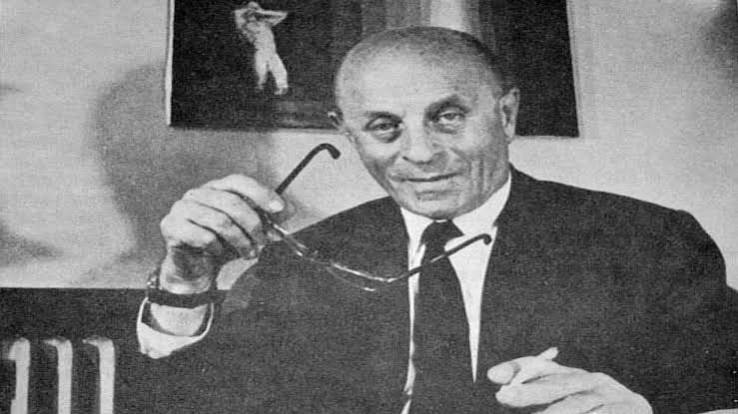
    Every time you click a ballpoint pen, you’re using a design that changed the world—but the name behind it is barely a footnote. László Bíró, a Hungarian journalist with no formal engineering training, invented the ballpoint in the 1930s after getting fed up with fountain pens that smeared, leaked, and needed constant refilling. His solution was so simple and effective that it’s still the basis for billions of pens produced every year, yet most people credit the brand, not the man.

    Bíró’s story is not just about a clever mechanism. It’s about how a practical problem—seen through the eyes of a journalist—led to an invention that transformed writing. It’s also a story of fleeing Nazi persecution, rebuilding a life in Argentina, and watching a giant corporation turn his invention into a global commodity while his own name faded. Here’s how a frustrated writer became one of the most influential inventors of the 20th century.

    The Problem with Fountain Pens

    Before the ballpoint, writing was a messy affair. Fountain pens were the standard, but they had a host of problems. They required frequent refilling from ink bottles, used water-based ink that smeared easily, and were notorious for leaking and blotting. For a journalist like László Bíró, this was a daily frustration. He’d be in the middle of taking notes, and the ink would blob, or the pen would run dry, or—if he was writing on a moving train—the ink would spill everywhere.

    Bíró wasn’t an engineer. He was a journalist, and he’d also worked as a hypnotist in his youth. But he had a keen eye for observation and a mind that connected dots. One day, he noticed something about the ink used in newspaper printing presses. It was thick, viscous, and dried almost instantly—no smudging. The problem was that this ink was too thick to flow through a fountain pen nib. It would clog instantly.

    But what if you could use a different mechanism to get that thick ink onto paper?

    The solution came from an unlikely source: a ball bearing rolling through a puddle. Bíró reportedly saw a ball bearing roll through a puddle, leaving a trail of water behind it. He realized that a similar ball-and-socket mechanism could pick up thick ink from a reservoir and roll it onto paper, leaving a clean, even line. That’s the eureka moment—not a lab experiment, but a simple observation of how a ball rolls.

    The Invention and the Brothers

    Bíró teamed up with his brother György, who was a chemist. Together, they developed a prototype. The pen had a tiny ball at the tip that rotated as you wrote, picking up ink from a cartridge and transferring it to the paper. The ink was a special formula—based on the fast-drying printing ink—that was viscous enough to stay in the cartridge but thin enough to roll off the ball.

    The first prototype was demonstrated at the Budapest International Fair in 1931, but it wasn’t until 1938 that Bíró filed a patent—first in Hungary, then in Britain. The patent described the ball-and-socket mechanism, which was the key innovation. The design was solid, but there were still bugs to work out. The ball had to be perfectly smooth, and the ink had to be just right.

    Then the war changed everything.

    Fleeing Hitler, Finding Argentina

    László Bíró was Jewish, and as Nazi persecution intensified in Europe, he and his brother fled Hungary in 1941. They eventually made their way to Argentina, where they found a business partner, Juan Jorge Meyne. Together, they started producing the pen commercially in 1943 under the brand name “Birome”—a combination of Bíró and Meyne.

    The timing was perfect. The British government was looking for a pen that could work at high altitudes, where fountain pens leaked due to air pressure changes. They bought a license to produce Bíró’s pens for Royal Air Force pilots. The ballpoint worked flawlessly at 30,000 feet, and this wartime use proved its reliability.

    The Bic Empire and the $2 Million Mistake

    In 1945, Bíró sold his patent to Marcel Bich, a French manufacturer, for $2 million. At the time, that was a fortune—but it would turn out to be a fraction of what the ballpoint was worth. Bich refined the manufacturing process, making the pens cheaper and more reliable. He marketed them as “Bic” pens, and by the 1950s, they were everywhere.

    Bíró’s name lived on in the word “biro,” which became a generic term for ballpoint pens in the UK and Commonwealth, much like “Kleenex” or “Xerox.” But the man himself was largely forgotten. Bich became a billionaire; Bíró lived modestly in Argentina until his death in 1985.

    Why did Bíró sell so cheap? He wasn’t a businessman. He was an inventor who wanted to see his creation succeed, and Bich had the manufacturing and marketing muscle to make that happen. The sale was a strategic decision, but it also meant Bíró didn’t share in the massive profits that followed.

    A Journalist’s Legacy

    Bíró’s story challenges the stereotype of the inventor as a lab-coated scientist. He was a writer who solved a problem he faced every day. That’s a powerful reminder that innovation can come from anyone who’s willing to look closely at a problem and think creatively.

    His journey also highlights the role of immigrants in innovation. Bíró fled fascism, lost his homeland, and rebuilt his life in Argentina, where he made his most significant contribution. He became a naturalized Argentine citizen and died there in 1985, far from the Hungarian city of his birth.

    Today, the ballpoint is the most common writing instrument in the world. Billions are produced every year. And while we might say “Bic” or “biro,” we’re really using Bíró’s invention. His name may not be on the label, but his idea is in every click.

    László Bíró didn’t just invent a pen—he solved a problem that had plagued writers for decades. His story is a reminder that great ideas can come from anyone, and that the most transformative inventions often arise from the most ordinary frustrations. Next time you pick up a ballpoint, remember the journalist who saw a ball rolling through a puddle and changed the world.

    Summary

    • László Bíró, a Hungarian journalist, invented the ballpoint pen in 1938 after getting frustrated with fountain pens that smeared and leaked.
    • His key insight came from observing a ball bearing rolling through a puddle, which inspired the ball-and-socket mechanism.
    • He fled Nazi persecution in 1941 and settled in Argentina, where he produced the pens under the brand “Birome” with partner Juan Jorge Meyne.
    • The British Royal Air Force used his pens during WWII because they worked at high altitudes.
    • Bíró sold his patent to Marcel Bich for $2 million in 1945; Bich’s company, Bic, made billions while Bíró’s name faded.

    FAQ

    Q: What inspired László Bíró to invent the ballpoint pen?
    A: Bíró was a journalist who was frustrated by fountain pens that smeared, leaked, and needed frequent refilling. He noticed that newspaper printing ink dried quickly and didn’t smear, and he got the idea for a ball-and-socket mechanism from watching a ball bearing roll through a puddle.

    Q: How does a ballpoint pen work?
    A: A ballpoint pen uses a tiny rotating ball at the tip. As you write, the ball picks up viscous ink from a cartridge and rolls it onto the paper, leaving a clean, even line. The ink is thick enough to stay in the cartridge but thin enough to flow around the ball.

    Q: Why is the ballpoint pen sometimes called a “biro”?
    A: “Biro” became a genericized trademark in the UK and many Commonwealth countries, similar to “Kleenex” or “Xerox.” It comes from Bíró’s name, even though the brand “Bic” is more commonly known today.

    Q: Did Bíró become rich from his invention?
    A: He sold the patent to Marcel Bich for $2 million in 1945, which was a lot of money then, but far less than what Bic earned. Bich became a billionaire, while Bíró lived modestly.

    Q: What was Bíró’s background before inventing the pen?
    A: Bíró was a journalist and also worked as a hypnotist in his youth. He had no formal engineering or chemistry training, but his brother György, a chemist, helped develop the ink.

  • The Safety Pin: How a $15 Debt Sparked a 175-Year-Old Household Essential

    The Safety Pin: How a $15 Debt Sparked a 175-Year-Old Household Essential

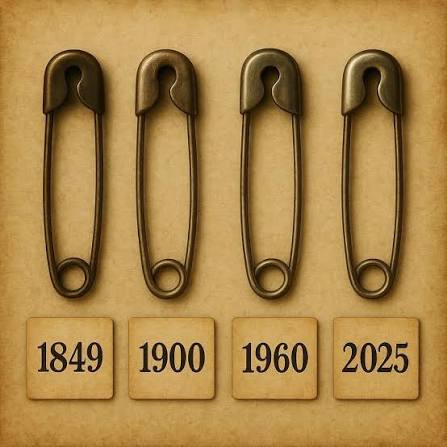
    In April 1849, Walter Hunt, a New York mechanic, was $15 in debt. To settle it, he twisted a piece of wire into a coil, added a clasp, and created what would become the safety pin. He sold the rights for $100 (or $400, depending on the account) and never saw another cent. Today, the safety pin is so ubiquitous that we rarely think about its origin but its design has barely changed in 175 years, and its invention was a direct answer to a very 19th-century problem: the corset.

    Hunt wasn’t just any tinkerer. He was a prolific inventor with over 100 patents, including an early sewing machine and a fountain pen. Yet he died without wealth, and his safety pin became a staple in every household. The story of its creation is a mix of ingenuity, debt, and a stroke of practical genius that solved a daily annoyance for millions of women.

    The Debt That Sparked an Idea

    Walter Hunt was a man of many inventions, but his motivation in 1849 was simple: he owed a friend $15 and needed quick cash. According to the story, he sat down with a piece of wire and, within three hours, had twisted it into a coiled spring at one end and a clasp at the other. The design was so effective that he filed for a patent on April 10, 1849, under the title “Dress Pin.” The patent, U.S. Patent No. 6,281, described a pin that would “secure the point” to prevent injury a feature that set it apart from every straight pin before it.

    Hunt sold the patent rights to W.R. Grace & Company for $100 (some sources say $400). The company likely profited enormously as the safety pin became a mass-market item. Hunt, meanwhile, never received royalties. He was a brilliant mechanic but a poor businessman—a pattern that repeated throughout his life. He had also invented a sewing machine in 1834 but didn’t patent it, fearing it would put seamstresses out of work. Elias Howe later patented a similar machine and became wealthy. Hunt’s story is a classic case of genius without commercial sense.

    Why the Safety Pin Was a Breakthrough

    Before 1849, pins were dangerous. Straight pins had been around for centuries, used in ancient Egypt and Rome, and by the 19th century they were essential for fastening clothing—especially women’s dresses and undergarments. But they had serious flaws: they could prick the wearer, fall out, get lost in fabric, and rust easily. For women wearing corsets, the problem was acute.

    The corset was a structural garment that shaped the torso, made of stiff whalebone, steel, or cord. It required tight lacing and frequent adjustment. Pins were used to hold the corset closed before lacing, secure the busk (the stiff front piece), and attach petticoats and chemises. A broken or slipped pin could scratch skin, tear fabric, or cause embarrassment. The safety pin’s spring-loaded clasp was specifically designed to cover the sharp point when closed, significantly reducing the risk of injury. It was a simple but revolutionary solution to a daily problem.

    The Industrial Context

    The mid-19th century was a time of rapid industrialization. Wire-drawing technology had improved, making it cheaper and easier to produce fine wire—the essential material for Hunt’s invention. The U.S. patent system, established in 1790, encouraged “useful arts,” and Hunt was part of a wave of self-taught inventors like Samuel Morse and Charles Goodyear. The sewing machine, which Hunt himself had a hand in, was about to transform clothing production, but in 1849 most clothing was still made at home or by hand. Pins were indispensable tools for dressmakers and homemakers, and a safer version was a genuine need.

    A Woman’s Technology

    While Hunt was a man, the safety pin was invented to solve a problem faced primarily by women. In the 1840s, corsets were a central piece of women’s fashion, and pins were a constant source of frustration. The term “pin money”—a small allowance for a woman—derives from the cost of pins, which were sold in paper packets and were a common household expense. The safety pin’s design, with its coiled spring and clasp, was a direct response to the needs of women’s dress. It was a women’s technology, even if its inventor was male.

    The Design That Endured

    The safety pin’s basic design has remained essentially unchanged since 1849. Modern versions are typically made of stainless steel or brass (often nickel-plated) to resist corrosion, and they come in a range of sizes, from tiny pins for delicate fabrics to large kilt pins. The coiled spring provides tension, and the clasp covers the point, making it safe. It’s a design so efficient that it hasn’t needed improvement.

    The Reluctant Genius

    Hunt’s story is often told as a cautionary tale: a man of immense creativity who lacked business acumen. He invented the safety pin to pay a debt, sold it for a pittance, and watched others profit. But some historians argue this narrative is overstated. Hunt was a working mechanic who needed quick cash; $100 in 1849 was roughly equivalent to $3,000 to $12,000 today—a significant sum. He may have made a rational choice, not a foolish one. Still, the irony is hard to ignore: a man who invented so many things, including the sewing machine, died without wealth, while his safety pin became a household essential.

    The Safety Pin Today

    Today, the safety pin is everywhere. It’s used for everything from securing baby diapers (before disposable diapers) to hemming pants, from punk fashion to emergency repairs. It’s a tool that’s so simple we take it for granted. But its invention was a direct result of a specific problem—the dangers of straight pins in corsets—and a man who needed $15. The next time you use a safety pin, think of Walter Hunt: a genius who solved a problem, sold his solution for a song, and left a legacy that’s still with us.

    The safety pin is a testament to the power of simple solutions. It was born out of a debt, a piece of wire, and a moment of inspiration. Walter Hunt may not have profited from his invention, but his design has endured for 175 years, outlasting the corsets that inspired it. It’s a reminder that great ideas often come from everyday problems—and that genius isn’t always rewarded in the way we expect.

    Summary

    • Invented by Walter Hunt in 1849 to pay off a $15 debt; he sold the patent for $100 and never got royalties.
    • Key innovation: a coiled spring and a clasp that covers the sharp point, making it safe to use.
    • Motivated by the corset: straight pins were dangerous and caused injuries, especially in women’s fashion.
    • Design unchanged: modern safety pins are still made of stainless steel or brass and come in various sizes.
    • Hunt’s legacy: a prolific inventor with over 100 patents, but he died without wealth, a cautionary tale of genius without business sense.

    FAQ

    Q: Why was the safety pin invented?
    A: It was invented to solve the problem of straight pins pricking and injuring people, particularly women wearing corsets. Walter Hunt created it in 1849 to pay off a $15 debt.

    Q: How much did Walter Hunt sell the safety pin patent for?
    A: He sold it to W.R. Grace & Company for $100 (some sources say $400). He didn’t receive royalties, so he missed out on long-term profits.

    Q: What was the safety pin originally called?
    A: The patent was titled “Dress Pin.” The term “safety pin” came into common use later.

    Q: How has the safety pin design changed over time?
    A: The basic design has remained essentially unchanged since 1849. Modern versions are made of stainless steel or brass (often nickel-plated) to resist corrosion and come in various sizes.

    Q: What else did Walter Hunt invent?
    A: Hunt was a prolific inventor with over 100 patents, including a sewing machine (which he didn’t patent), a fountain pen, a breech-loading rifle, a knife sharpener, and a streetcar bell.

  • The Pony Express: The 18-Month Gamble That Shaped the West

    The Pony Express: The 18-Month Gamble That Shaped the West

    In 1860, the fastest way to send a message from the East Coast to California took about three weeks by stagecoach. Then three businessmen launched a service that promised to cut that time by more than half, using a relay of horses and young riders across 1,966 miles of prairie, desert, and mountain. The Pony Express operated for only 18 months, lost a fortune, and was made obsolete by the telegraph. Yet its brief existence left a lasting mark on the American West.

    This is the story of how a short-lived mail service became a legend—and why its impact went far beyond the letters it carried.

    A Gamble on Speed

    In the late 1850s, California was booming. The Gold Rush had drawn hundreds of thousands of people westward, and they wanted news from home. But the Overland Mail Company’s southern stagecoach route took 25 days or more to deliver mail from the East. The political crisis of 1860 made the situation urgent: with Southern states threatening to secede, leaders in Washington worried that California might drift away from the Union. Faster communication could help hold the nation together.

    William H. Russell, Alexander Majors, and William B. Waddell—partners in a freighting firm—saw an opportunity. They proposed a mail service along a central route that would cut delivery time to 10 days. It was a bold, expensive idea, and they funded it themselves, hoping to win a lucrative government contract. The Pony Express was, in some ways, a high-stakes publicity stunt.

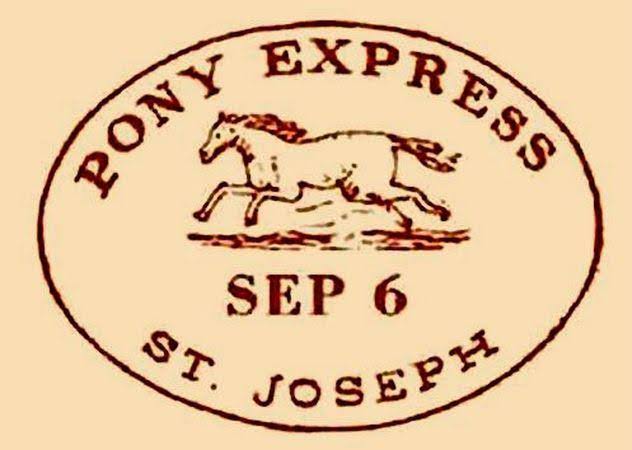
    The first riders left St. Joseph, Missouri, and Sacramento, California, on April 3, 1860. Ten days later, the westbound mail arrived in Sacramento. The eastbound mail reached St. Joseph in just over 11 days. The service was a sensation. But it was also a financial disaster from the start.

    The Pony Express was a financial failure and a technological anachronism almost from the moment it began. But in its 18 months of operation, it proved that the West could be connected to the East faster than anyone thought possible. It kept California informed and loyal during a critical moment in American history, and it inspired a sense of possibility that outlasted its operation. The riders and horses are gone, but the legend endures—a reminder that sometimes the most impactful ventures are the briefest.

    Summary

    • The Pony Express operated for only 18 months, from April 1860 to October 1861, but cut mail delivery time between the coasts from weeks to about 10 days.
    • It was a money-losing venture by Russell, Majors & Waddell, who hoped to win a government mail contract that never came.
    • The service used a relay system with about 157 stations and 400–500 horses, with riders changing mounts every 10–15 miles.
    • The fastest run carried Lincoln’s inaugural address in March 1861, covering the route in about 7 days and 17 hours.
    • The completion of the transcontinental telegraph made the Pony Express obsolete, and it shut down two days later, but its legacy shaped the West’s image and communication.

    FAQ

    Q: How long did the Pony Express operate?
    A: The Pony Express operated for about 18 months, from April 3, 1860, to October 26, 1861.

    Q: How fast was the Pony Express?
    A: The average delivery time was about 10 days in summer and 12–14 days in winter. The fastest run was approximately 7 days and 17 hours, carrying Lincoln’s inaugural address.

    Q: How much did it cost to send a letter?
    A: Initially $5 per half-ounce (about $150–$180 today), later reduced to $1 per half-ounce.

    Q: Who were some famous riders?
    A: William “Buffalo Bill” Cody rode as a teenager, and Robert “Pony Bob” Haslam made a famous 380-mile continuous round trip after his relief rider was killed.

    Q: Why did the Pony Express end?
    A: The transcontinental telegraph was completed on October 24, 1861, making the Pony Express obsolete. The last run was two days later.

  • How a Misspelled Joke Became the World’s Most Spoken Word: The 185-Year Journey of ‘OK’

    How a Misspelled Joke Became the World’s Most Spoken Word: The 185-Year Journey of ‘OK’

    On March 23, 1839, a Boston newspaper printed a tiny joke that would outlive every political slogan, every internet meme, and every catchphrase of its era. The joke was ‘o.k.’—a playful abbreviation for ‘oll korrect,’ a deliberately misspelled ‘all correct.’ No one laughed for long; the joke itself was forgettable. But the two letters stuck around, spread across continents, and became the most universally understood word on Earth.

    Today, ‘OK’ is spoken or recognized by roughly 90% of the world’s population, according to linguist Allan Metcalf, author of ‘OK: The Improbable Story of America’s Greatest Word.’ It has been borrowed into Japanese, Spanish, Arabic, Hindi, and dozens of other languages. It works as a noun, a verb, an adjective, an adverb, and an interjection. It can mean ‘fine,’ ‘I understand,’ ‘let’s go,’ or simply ‘I’m still here.’

    How did a misspelled joke from 1839 conquer the globe? The answer involves a failed presidential campaign, the telegraph, and a linguistic perfect storm that made ‘OK’ the most successful word ever invented.

    A Joke Born in the Penny Press

    The 1830s were a wild time for American English. The young nation was forging its own identity, and Boston and New York journalists were at the center of a linguistic playground. They invented a fad of playful abbreviations and intentional misspellings—a 19th-century version of internet slang. ‘O.W.’ stood for ‘oll wright’ (all right), ‘N.C.’ meant ’nuff ced’ (enough said), and ‘K.Y.’ was ‘know yuse’ (no use). Most of these died within months.

    But ‘o.k.’ survived. Why? It had two things going for it: it was short, and it was funny. The abbreviation appeared in a satirical article in the Boston Morning Post, and readers got the joke. It was a small, clever wink at the absurdity of taking yourself too seriously.

    The Campaign That Launched a Word

    ‘OK’ might have stayed a niche joke if not for a lucky coincidence in 1840. Martin Van Buren, the sitting president, was running for re-election. His opponents called him ‘Old Kinderhook,’ after his hometown in New York. His campaign seized on the nickname and turned it into a slogan: ‘Vote for OK.’

    The slogan was printed on banners, chanted at rallies, and plastered in newspapers. It was one of the first examples of political branding in a mass media age—a catchy, meme-like hook designed to stick. Van Buren lost the election to William Henry Harrison, but ‘OK’ won a permanent place in the American lexicon. The word had gone from a niche joke to a national catchphrase in under a year.

    The Telegraph Made It Official

    If the campaign made ‘OK’ famous, the telegraph made it essential. In the 1840s and 1850s, telegraph operators needed a quick, unambiguous way to acknowledge messages. ‘OK’ was perfect: two letters, easy to tap in Morse code, and universally understood. It became the standard acknowledgment on transmission lines, and later, a prosign for ‘end of message.’

    The telegraph trained a generation of operators—and the businesses that used them—to rely on ‘OK.’ When the typewriter arrived, ‘OK’ was one of the first words taught in typing classes. When early computers needed a default button, ‘OK’ was there. Each new technology picked up the word and carried it forward.

    Why ‘OK’ Won

    Linguists have spent decades trying to explain why ‘OK’ beat out every other slang term of its era. The answer is a perfect storm of phonetics, visual clarity, and semantic flexibility.

    Phonetically, ‘OK’ is two short, easy sounds that work across almost all language systems. The ‘oh’ and the ‘kay’ are distinct and simple to pronounce, whether you speak English, Japanese, or Swahili. Visually, the two letters are clear and easy to read, even in poor handwriting or on a flickering screen.

    But the real genius of ‘OK’ is its flexibility. It can mean approval (‘That’s OK’), acknowledgment (‘OK, I heard you’), agreement (‘OK, let’s do it’), or understanding (‘OK, I get it’). It can be a noun (‘I got the OK’), a verb (‘She OK’d the plan’), an adjective (‘It’s OK’), an adverb (‘He did OK’), or an interjection (‘OK, let’s go!’). It’s a pragmatic chameleon, adapting to almost any situation.

    The Global Export

    ‘OK’ didn’t just spread—it conquered. American media, technology, and business carried it overseas in the 20th century. Hollywood movies, the internet, and global corporations needed a word that meant ‘yes, fine, understood’ in any context. ‘OK’ fit the bill.

    In Japan, it became オーケー (ōkē), used as a polite acknowledgment in customer service. In Spain and Latin America, it’s ‘okey,’ sometimes with a slightly dismissive edge. In Arabic, it’s أوكي (ōkay), and in Hindi, ओके (oke). In many languages, ‘OK’ is a loanword that needs no translation—it’s simply understood.

    ‘OK’ is also classless, ageless, and borderless. Unlike ‘cool’ or ‘dude,’ it’s not tied to a subculture or a generation. A toddler in Tokyo, a CEO in São Paulo, and a farmer in rural Kenya all recognize it. That universality is why Allan Metcalf calls it ‘the most successful word ever invented.’

    A Word for the Ages

    ‘OK’ has outlived the abbreviations that inspired it, the politicians who popularized it, and the technologies that entrenched it. It’s a small word with a big story—a story that starts with a misspelled joke in a Boston newspaper and ends with a word spoken by billions.

    Next time you type ‘OK’ into a chat box or nod and say ‘OK’ in a meeting, remember: you’re using a piece of American history that conquered the world.

    The story of ‘OK’ is a reminder that language is alive—it grows, spreads, and adapts in ways no one can predict. A joke from 1839 became the world’s most global word, not because it was profound, but because it was useful. And that utility has made it immortal.

    Summary

    • ‘OK’ originated as a humorous abbreviation for ‘oll korrect’ (a misspelling of ‘all correct’) in a Boston newspaper in 1839.
    • Martin Van Buren’s 1840 presidential campaign used ‘OK’ as a slogan, giving it national exposure.
    • The telegraph cemented ‘OK’ as a standard acknowledgment, and later technologies (typewriters, computers) reinforced it.
    • ‘OK’ is now recognized by about 90% of the world’s population, making it the most widely understood word on Earth.
    • Its success is due to phonetic simplicity, visual clarity, and semantic flexibility—it can mean many things in many contexts.

    FAQ

    Q: When was the first recorded use of ‘OK’?
    A: The first recorded use was in the Boston Morning Post on March 23, 1839, as ‘o.k.’ in a satirical article.

    Q: What does ‘OK’ originally stand for?
    A: It stands for ‘oll korrect,’ a deliberate misspelling of ‘all correct’ that was part of a 1830s fad of playful abbreviations.

    Q: Why did ‘OK’ survive while other abbreviations from that era died?
    A: ‘OK’ had phonetic simplicity, visual clarity, and semantic flexibility. It was easy to say, easy to write, and could mean many things, making it more useful than its peers.

    Q: How did the telegraph contribute to the spread of ‘OK’?
    A: Telegraph operators needed a quick, unambiguous acknowledgment, and ‘OK’ was short and easy to send in Morse code. It became the standard, training a generation to use it.

    Q: Is ‘OK’ used in other languages?
    A: Yes, it’s borrowed into nearly every major language, including Japanese, Spanish, Arabic, and Hindi, often as a loanword that needs no translation.

  • The Invasion of Poland: The 36 Days That Began World War II

    The Invasion of Poland: The 36 Days That Began World War II

    At 4:45 AM on September 1, 1939, the German battleship Schleswig-Holstein opened fire on a Polish military transit depot at Westerplatte, near Danzig. Within minutes, German dive-bombers screamed over Polish cities, and armored columns crashed across the border from three directions. The invasion of Poland had begun not as a border skirmish, but as the opening act of the deadliest conflict in human history.

    Poland’s army, nearly a million strong, was the fifth-largest in Europe. It had tanks, aircraft, and a plan. But the plan relied on something that never came: a Western offensive against Germany. By October 6, organized Polish resistance was over. The country was partitioned between Hitler’s Reich and Stalin’s USSR. The war that followed would claim over 50 million lives.

    The False Dawn: Poland Between the Wars

    Poland had been erased from maps for 123 years, partitioned by Russia, Prussia, and Austria. Its rebirth in 1918 was a miracle of Versailles and the Polish-Soviet War of 1919–21. But the reconstituted state was fragile. The Polish Corridor, a strip of land giving Poland access to the Baltic Sea, sliced East Prussia off from the rest of Germany. Danzig (now Gdańsk) was declared a Free City under League of Nations oversight, its population overwhelmingly German. To Hitler, this was an intolerable wound. To many Germans, it was a genuine grievance — but Hitler had no interest in negotiation. He wanted war.

    Nazi propaganda called Poland a “seasonal state” (Saisonstaat), a temporary aberration created by the Treaty of Versailles. Poles were portrayed as Untermenschen — subhumans. Hitler’s real goal was Lebensraum, living space for the German people in the East. Poland was the first target, not the last.

    The Pact That Shocked the World

    On August 23, 1939, the world witnessed one of the most cynical diplomatic reversals in history. Nazi Germany and the Soviet Union, ideological enemies, signed the Molotov-Ribbentrop Pact. Publicly, it was a non-aggression treaty. Secretly, it divided Eastern Europe into spheres of influence. Poland would be split roughly along the Bug River — the same line Stalin had demanded in 1920.

    Stalin’s motives were cold and strategic. He distrusted Hitler but needed time to rebuild the Red Army, decimated by his own purges. The pact gave him a buffer zone and the chance to reclaim territories lost after World War I. It also ensured that if Germany attacked, the USSR would not be the first target. For Poland, the pact was a death sentence, signed behind its back.

    Blitzkrieg: The German Onslaught

    September 1, 1939. Germany hurled 1.5 million troops, 2,700 tanks, and 2,300 aircraft at Poland. The strategy was Blitzkrieg — lightning war. It wasn’t just about speed; it was about coordination. Panzer divisions punched through weak points, encircling entire Polish armies. Stuka dive-bombers acted as flying artillery, shattering communications and morale. The Polish air force, with roughly 400 outdated planes, was largely destroyed on the ground in the first days.

    Poland had mobilized about a million men, but not all units reached their positions. Its 880 tanks were mostly obsolete, its cavalry — despite romantic myths — was used for reconnaissance, not charges against armor. The Polish plan was defensive: hold the frontier, fall back to the Vistula River, and wait for France and Britain to attack Germany from the west. That attack never came.

    The Western Allies: Words Without Action

    On September 3, Britain and France declared war on Germany. But the declaration was followed by silence. In the west, the French army sat behind the Maginot Line while Germany’s western frontier was defended by only about 30 second-rate divisions. The main German forces were in Poland. A determined Allied offensive might have broken through. It didn’t happen. This period became known as the “Phoney War” — a strange, eerie calm in the West while Poland burned.

    Historians still debate whether an Allied attack could have changed the course of the war. What is certain is that Poland was let down. Its government had signed a military alliance with France in 1921 and received British guarantees in 1939. Those promises proved hollow. The Polish campaign lasted 36 days — not because Poland was weak, but because it fought alone against two overwhelming enemies.

    The Soviet Invasion: The Stab in the Back

    On September 17, 1939, the Red Army crossed Poland’s eastern border. Officially, Moscow claimed it was “liberating” ethnic Ukrainians and Belarusians from Polish oppression. In reality, it was executing the secret protocol of the Molotov-Ribbentrop Pact. Soviet forces numbered up to 800,000 troops, with thousands of tanks and aircraft. Polish resistance in the east was light — the country was already collapsing under the German onslaught.

    The timing was deliberate. The Polish government and military command had just fled to Romania, hoping to continue the fight from exile. The Soviet invasion sealed Poland’s fate. There was no possibility of a prolonged defense. The last major engagement, the Battle of Kock, ended on October 6. Poland was partitioned once again — the fourth partition in its history.

    The Human Cost: Numbers That Stun

    Poland’s military lost an estimated 66,000–70,000 dead and 130,000–200,000 wounded. Around 700,000 soldiers were captured by Germany and the USSR. Civilians fared no better. Between 150,000 and 200,000 Polish civilians were killed during the campaign itself, many in bombing raids, executions, and atrocities. The Luftwaffe bombed open cities, hospitals, and refugee columns — a foretaste of total war.

    German casualties were light by comparison: roughly 16,000–17,000 dead and 30,000 wounded. Soviet losses were even smaller, around 1,000–3,000 killed. But the true horror came later. In 1940, the NKVD executed approximately 15,000–20,000 Polish officers and intelligentsia in the Katyn Forest and other sites. The Nazis would go on to kill millions of Polish citizens, including nearly all of Poland’s 3 million Jews. The invasion was not just a military campaign; it was the beginning of a racial war of annihilation.

    Acts of Defiance: Westerplatte, Bzura, and Warsaw

    Even in defeat, there were moments of extraordinary courage. The Battle of Westerplatte lasted seven days. Outnumbered and outgunned, a garrison of 182 Polish soldiers held out against naval bombardment and ground assaults before surrendering. The Battle of the Bzura was the largest Polish counterattack of the campaign. For a week, Polish forces managed to temporarily halt a German advance, inflicting significant casualties. The defense of Warsaw held until September 27–28, when relentless bombing and shelling forced the city to capitulate.

    These actions did not change the outcome, but they defined Poland’s narrative of resistance. The campaign may have been a military disaster, but it was not a moral one. The Polish government-in-exile continued the fight in France and Britain, and the Polish Underground State would become one of the largest resistance movements in occupied Europe.

    The Legacy: A War Begun in Deceit

    The invasion of Poland is often cited as the clearest case of aggressive war under international law. It was the central charge at the Nuremberg trials. The Molotov-Ribbentrop Pact remains a symbol of how great powers can sacrifice smaller nations for their own ends. For Poland, the war lasted five and a half years, but the occupation was genocidal. An estimated 6 million Polish citizens died — about 17% of the country’s population.

    The invasion also shattered the illusion that appeasement could contain Hitler. It forced a reluctant Britain and France into war. And it set the stage for the Holocaust, the Eastern Front, and the division of Europe that would last until 1989. The 36 days of the Polish campaign were not just a prelude; they were the explosion that set the world ablaze.

    The invasion of Poland was a collision of brutal ideology, diplomatic betrayal, and military innovation. It ended with a country erased from maps again, but it also ignited a war that would ultimately consume its aggressors. The courage of Polish soldiers and civilians, fighting against overwhelming odds without allied help, remains a stark reminder of what happens when states choose appeasement over resistance. The war that began on September 1, 1939, did not end until 1945, but its first chapter was written in Polish blood.

    Summary

    • Germany invaded Poland on September 1, 1939, using Blitzkrieg tactics. Poland was outnumbered and outgunned, with obsolete equipment and a defensive strategy.
    • The Soviet Union invaded from the east on September 17, 1939, as per the secret Molotov-Ribbentrop Pact. Poland was partitioned between Germany and the USSR.
    • Britain and France declared war on Germany but did not launch a major offensive, leaving Poland to fight alone.
    • Polish military and civilian casualties were heavy: 66,000–70,000 military dead, 150,000–200,000 civilian dead, and 700,000 captured.
    • The invasion was the opening act of World War II and led to a brutal occupation that killed an estimated 6 million Polish citizens, including 3 million Jews.

    FAQ

    Q: Why did Germany invade Poland?
    A: Hitler wanted to regain Danzig and the Polish Corridor, but his larger goal was Lebensraum — living space for Germans in the East. Nazi ideology viewed Poles as subhumans, and the invasion was the first step in a racial war of annihilation.

    Q: Why did the Soviet Union invade Poland?
    A: The USSR invaded on September 17, 1939, executing the secret protocol of the Molotov-Ribbentrop Pact. Stalin wanted to reclaim territories lost after World War I, create a buffer zone against Germany, and buy time to rebuild the Red Army.

    Q: What was the Molotov-Ribbentrop Pact?
    A: Signed on August 23, 1939, it was a non-aggression treaty between Nazi Germany and the Soviet Union. A secret protocol divided Eastern Europe into spheres of influence, leading to the partition of Poland.

    Q: Why didn’t France and Britain help Poland?
    A: They declared war on Germany on September 3, 1939, but did not launch a major offensive. This period became known as the Phoney War. Historians debate whether an Allied attack could have succeeded, but Poland was left to fight alone.

    Q: How did Poland fall so quickly?
    A: Poland was outnumbered and outgunned, with obsolete tanks and aircraft. Its defense relied on allied help that never came. The Soviet invasion on September 17 sealed Poland’s fate. The last organized resistance ended on October 6, 1939.

  • 500 Years of Disability Benefits: The Same Fights, Different Wigs

    500 Years of Disability Benefits: The Same Fights, Different Wigs

    When a Tudor official handed a license to beg to a disabled person in 1531, he was doing something revolutionary: drawing a line between the ‘genuinely’ disabled and the ‘sturdy beggar’ who just wouldn’t work. That line—and the arguments around it—has been redrawn ever since.

    Today, the line is drawn by a points-based assessment for Personal Independence Payment (PIP), and by Work Capability Assessments that decide if a claimant is ‘fit for work.’ The language has changed, but the core questions remain: Who is really disabled? How can we tell? And how do we stop fraud without punishing those in genuine need?

    The Tudor Invention of the ‘Deserving Poor’

    Before the 1530s, charity was mostly the Church’s job. Monasteries ran hospitals and handed out alms. But when Henry VIII dissolved the monasteries between 1536 and 1541, that safety net vanished. The state had to step in.

    The result was a series of Poor Laws that created the first state-administered welfare system. The 1531 Act made a crucial distinction: the ‘impotent poor’—the old, the sick, the disabled—could receive a license to beg. The ‘sturdy beggars,’ able-bodied vagrants, were to be whipped and punished.

    That distinction is the direct ancestor of today’s ‘fit for work’ assessments. The Elizabethan Poor Law of 1601 formalized it into three categories: the able-bodied poor (set to work), the impotent poor (relieved), and vagrants (punished). Each parish was responsible for its own poor, funded by a local property tax. That link between local taxation and welfare was born.

    The 19th-Century Hardening: ‘Less Eligibility’

    By the 1830s, many thought the old system was too generous. The Poor Law Amendment Act 1834 introduced the principle of ‘less eligibility’: relief for the able-bodied must be less desirable than the lowest-paid work. The workhouse system was deliberately harsh—a deterrent.

    But what about the disabled? Theoretically, they were still ‘deserving.’ In practice, cash relief (outdoor relief) was restricted, pushing many into workhouses. And a new gatekeeper emerged: the doctor. Medical certification became the way to prove you couldn’t work. That’s the direct ancestor of today’s PIP and WCA assessments, where a healthcare professional’s opinion can decide your benefits.

    The Modern Welfare State: A Different Route

    The Beveridge Report of 1942 and the post-war Labour government created a ‘cradle to grave’ welfare state. Disability benefits, however, were initially folded into sickness benefits. It wasn’t until the 1970s that specific disability benefits appeared—Attendance Allowance in 1971, Invalidity Benefit in 1971, and Disability Living Allowance (DLA) in 1992.

    DLA was different: it wasn’t means-tested, and it aimed to cover the extra costs of disability, not just lost income. It was also notoriously subjective. Claimants self-reported their difficulties, and awards were often based on a paper assessment that was hard to challenge.

    The Austerity Crackdown: PIP and the New Hostility

    From the 2010s, under austerity, the UK government focused on cutting disability benefit spending. The rhetoric often painted claimants as potential fraudsters. PIP was introduced in 2013 to replace DLA, with the explicit goal of cutting costs by 20%. The new system was points-based, designed to be ‘objective.’

    It hasn’t worked out that way. Over 60% of PIP appeals are decided in the claimant’s favor, suggesting the initial assessments are often wrong. The Work Capability Assessment for Employment and Support Allowance has been criticized by disability charities and the UN for being too harsh. Universal Credit’s ‘digital by default’ approach has been a nightmare for claimants with cognitive or learning disabilities.

    The Same Fight, 500 Years On

    Here’s the uncomfortable truth: the arguments today are remarkably similar to those of the 16th century. Who is ‘genuinely’ disabled? How do we prevent fraud without punishing the needy? How much should the state pay, and who should decide?

    The Tudor solution was a license to beg. The Victorian solution was the workhouse and medical certification. The modern solution is a points system and a fitness-for-work test. Each generation thinks it’s finally got the answer, and each generation is wrong.

    The cost is enormous—disability and incapacity benefits run to tens of billions of pounds a year in the UK. That makes them a permanent political target. But the human cost is also enormous. When over 60% of appeals succeed, that means thousands of disabled people are being wrongly denied support. The system is failing on both sides of the ledger.

    What We Can Learn

    The history doesn’t offer a magic solution. But it does offer a warning: every time a government tries to solve the problem with a more ‘objective’ test, it fails. The Tudor test was begging licenses; the 1834 test was the workhouse; the 2013 test is PIP. All have been criticized as harsh, bureaucratic, and error-prone.

    Maybe the problem isn’t the test. Maybe it’s the assumption that we can ever perfectly distinguish the ‘deserving’ from the ‘undeserving’ poor. As the 500-year record shows, we can’t. But we can make the system fairer, more humane, and more accurate—if we remember the lessons of history.

    The debate over disability benefits has been raging for five centuries, and it’s not going away. But we can stop pretending that any assessment system will get it right every time. The goal should be to minimize errors, to treat claimants with dignity, and to remember that behind every statistic is a person whose life depends on the outcome.

    Summary

    • The Tudor Poor Laws of the 16th century established the first state welfare system, drawing a line between the ‘deserving’ disabled and ‘sturdy beggars’.
    • The 1834 Poor Law introduced ‘less eligibility’ and medical certification, the ancestor of today’s ‘fit for work’ tests.
    • Modern UK benefits like PIP and WCA are points-based and often criticized—over 60% of PIP appeals succeed.
    • The same arguments about fraud, deservingness, and cost have persisted for 500 years.
    • History suggests that objective tests don’t solve the problem; they just change the language of exclusion.

    FAQ

    Q: What was the first disability benefit in England?
    A: The 1531 Act under Henry VIII allowed the ‘impotent poor’—the old, sick, and disabled—to receive a license to beg. This was the first state-sanctioned relief for disabled people.

    Q: How did the 1834 Poor Law change disability support?
    A: It introduced ‘less eligibility’—relief had to be less desirable than paid work—and pushed many disabled people into harsh workhouses. It also made medical certification a key gatekeeper for proving inability to work.

    Q: Why was PIP introduced in 2013?
    A: PIP replaced Disability Living Allowance with a points-based assessment, intended to cut costs by 20% and to focus on ‘objective’ criteria. It has been criticized for high error rates and appeals.

    Q: What is the ‘bedroom tax’?
    A: The under-occupancy penalty, introduced in 2013, reduces housing benefit for social tenants with spare bedrooms. It has disproportionately affected disabled claimants who need extra space for equipment or carers.

    Q: How many disability benefit appeals succeed?
    A: In recent years, over 60% of PIP appeals have been decided in the claimant’s favor, indicating systemic problems with initial assessments.

  • From Scopitone to TikTok: How the Music Video Reinvented Itself

    From Scopitone to TikTok: How the Music Video Reinvented Itself

    Before MTV, before YouTube, there was a machine that played music videos in bars for a quarter. The Scopitone, a French invention from 1958, was a jukebox with a 16mm film screen, and it offered a glimpse of what was to come: a world where music and moving images were inseparable. Today, you can watch a music video on your phone in vertical format, designed for a thumbnail screen. The journey between those two moments is a story of technology, artistry, and the constant reinvention of how we experience music.

    The Prehistory: Illustrated Songs and Coin-Operated Visions

    The music video didn’t start with MTV. In the 1890s, Edward B. Marks and Joe Stern published “The Little Lost Child,” a song that came with a set of magic lantern slides. Theaters would project the slides while the audience sang along, creating an early “illustrated song” experience. It was a simple but powerful idea: music could be paired with visuals to enhance the emotional impact.

    By the 1940s, the Panoram Soundie machines took this concept into bars and diners. For a dime, patrons could watch a three-minute film of jazz, swing, or R&B artists performing. These coin-operated jukeboxes were the direct ancestors of the Scopitone, and they set the stage for the visual music culture that would explode decades later.

    The Scopitone: A French Invention with a Risqué Streak

    The Scopitone, introduced in 1958 by the Compagnie Européenne de Télévision, was the first widely successful film jukebox. It played 16mm color film clips of popular artists, and it found a home in bars and nightclubs across Europe and the United States. The clips were often more risqué than what you’d see on TV, featuring go-go dancers and suggestive choreography. This was music video as entertainment, not art — but it was a start.

    Despite its popularity in the mid-1960s, the Scopitone declined by the end of the decade. The machines were expensive to maintain, and the novelty wore off. But the idea of a dedicated device for watching music videos was a precursor to the visual culture that would become central to pop music.

    The 1960s and 1970s: Promo Clips and the Rise of the Performance Film

    In the 1960s, artists began making promotional films to reach audiences without appearing on TV in person. The Beatles’ A Hard Day’s Night (1964) popularized the “performance film” aesthetic, with its energetic, documentary-style footage of the band. Singles like “Strawberry Fields Forever” and “Penny Lane” (1966–1967) were accompanied by promo clips that were more experimental, blending surreal imagery with the music.

    The Rolling Stones also embraced the form, with clips like “We Love You” (1966) that featured dramatic, cinematic sequences. These early promo films were shown on shows like Top of the Pops in the UK and American Bandstand in the US, giving artists a way to promote their singles without touring.

    By the 1970s, the promotional clip had become a standard tool. David Bowie, Queen, and ABBA all produced videos for TV appearances, each adding their own visual style. But these were still secondary to the music itself — nobody thought of the video as a work of art in its own right.

    MTV: The Channel That Changed Everything

    On August 1, 1981, MTV launched with “Video Killed the Radio Star” by The Buggles. It was a fitting first video, as the channel would indeed transform the music industry. For the first time, a 24-hour cable channel was dedicated entirely to music videos. The visual image became central to an artist’s success, and the VJ (video jockey) became a new kind of celebrity.

    MTV created a feedback loop: a video in heavy rotation could make an unknown artist a superstar overnight. Duran Duran, Madonna, and Michael Jackson all rode MTV to global fame. The channel also gave directors a platform to experiment, turning the music video into a legitimate art form.

    But MTV had a dark side. In its early years, the channel was criticized for ignoring Black artists. Michael Jackson’s “Billie Jean” (1983) and “Thriller” (1983) broke down those barriers, but the channel’s history remains a point of contention. “Thriller” itself was a watershed moment — a 14-minute short film directed by John Landis that turned the music video into a cultural event. It premiered to massive audiences and became a template for high-budget, narrative-driven videos.

    The Golden Age: Directors as Auteurs

    The 1990s were the golden age of the music video. Directors like Spike Jonze, Michel Gondry, and Mark Romanek became auteurs, known for their distinct visual styles. Budgets soared, and videos became cinematic, with elaborate sets, special effects, and narratives that rivaled short films.

    Michael Jackson continued to push boundaries with videos like “Black or White” (1991), which featured groundbreaking morphing effects. Madonna’s “Vogue” (1990) and “Like a Prayer” (1989) were cultural touchstones. Nirvana’s “Smells Like Teen Spirit” (1991) captured the grunge movement with its chaotic, low-fi aesthetic. And Missy Elliott’s “The Rain (Supa Dupa Fly)” (1997) used surreal CGI to create a visual style that was uniquely her own.

    This was also the era when MTV began to shift away from music videos. By the late 1990s, the channel was airing more reality programming like The Real World and Jackass, and video airplay started to decline. The golden age was coming to an end, but the directors and artists it produced had already changed the medium forever.

    YouTube and the Democratization of Video

    In 2005, YouTube launched, and it changed everything again. Suddenly, anyone could upload a music video, and anyone could watch it, on demand, for free. Artists no longer needed MTV to get their videos seen. The internet became the new gatekeeper, and viral videos became a new path to fame.

    One of the first viral music videos was OK Go’s “Here It Goes Again” (2006), a single-take video of the band performing a choreographed routine on treadmills. It was a low-budget, clever video that captured the internet’s imagination, and it demonstrated the power of online distribution.

    YouTube also allowed for a diversity of voices that had been marginalized by traditional media. Artists could reach global audiences without a record label’s backing, and fans could discover music from anywhere in the world. The music video became a democratic medium, for better and for worse.

    The Streaming Era: Vertical, Short-Form, and the Rise of TikTok

    Today, music videos are consumed primarily on streaming platforms like YouTube, Vevo, and Spotify. Vevo, launched in 2009 as a joint venture between major labels and YouTube, provides a dedicated home for official videos. But the format has changed.

    The rise of TikTok has pushed music videos toward vertical, short-form content. A song’s success often depends on a 15-second clip going viral, and artists now create videos with that in mind. The full-length music video still exists, but it competes with a constant stream of short, snackable content.

    Artists like Beyoncé have embraced the streaming era with visual albums like Lemonade (2016), which was released as a film on HBO. Childish Gambino’s “This Is America” (2018) became a viral sensation for its powerful imagery, and it was designed to be watched and discussed online. The music video has evolved from a promotional tool to a primary form of artistic expression, and it continues to adapt to new technologies and viewing habits.

    The Enduring Power of Music Video

    From Scopitone to TikTok, the music video has proven its resilience. It has survived the decline of MTV, the rise of the internet, and the shift to mobile-first consumption. Each era has brought new formats, new technologies, and new ways of telling stories. But the core idea remains the same: music and images, combined to create something greater than the sum of their parts.

    As we look to the future, it’s clear that the music video will keep evolving. Virtual reality, interactive videos, and AI-generated content are just a few of the possibilities. But whatever form it takes, the music video will always be a space for creativity, a reflection of culture, and a way for artists to connect with audiences around the world.

    The music video has come a long way from a coin-operated film jukebox in a French bar. It has been a promotional tool, an art form, a cultural event, and a viral sensation. As technology continues to change, the music video will keep reinventing itself, but its ability to capture the essence of a song in a visual form will remain timeless.

    Summary

    • The music video originated in the 1890s with illustrated songs and evolved through Soundies and Scopitone film jukeboxes.
    • MTV launched in 1981, making the visual image central to musical success and turning directors into celebrities.
    • The 1990s were the golden age, with high-budget videos from artists like Michael Jackson and Madonna.
    • YouTube democratized video distribution, allowing anyone to share and discover music videos.
    • The streaming era has shifted toward vertical, short-form content on platforms like TikTok.

    FAQ

    **Q: What was the first music video ever?
    A: The first music video is a matter of debate, but the “illustrated song” “The Little Lost Child” (1894) is often cited as a precursor. The first video played on MTV was “Video Killed the Radio Star” by The Buggles in 1981.

    **Q: Why is Michael Jackson’s “Thriller” so important?
    A: “Thriller” (1983) redefined the music video as a cultural event and a short film. Its 14-minute runtime, narrative, and special effects set a new standard for production values and turned the music video into an art form.

    **Q: How did YouTube change the music video industry?
    A: YouTube allowed anyone to upload and watch music videos for free, bypassing traditional gatekeepers like MTV. This democratized distribution and led to the rise of viral videos, giving independent artists a global platform.

    **Q: What is a Scopitone?
    A: A Scopitone is a French film jukebox from 1958 that played 16mm color music clips. It was popular in bars and nightclubs in the 1960s and was a precursor to modern music videos.

    **Q: Are music videos still relevant in the streaming era?
    A: Yes, but they’ve evolved. Full-length videos still exist, but shorter, vertical formats on platforms like TikTok are now essential for promoting songs. Artists use these to create viral moments that can drive a song’s success.

  • The Day of Infamy: Pearl Harbor, December 7, 1941

    The Day of Infamy: Pearl Harbor, December 7, 1941

    At 7:48 a.m. on a quiet Sunday, the sky above Oahu filled with the roar of 353 Japanese aircraft. The first bombs fell on Battleship Row, and within minutes, the U.S. Pacific Fleet lay in flames. The attack on Pearl Harbor lasted just 110 minutes, but it killed 2,403 Americans, sunk or damaged 21 ships, and permanently altered the course of World War II.

    This was not a random act of aggression, but the culmination of a decade of rising tensions, economic sanctions, and a desperate gamble by an empire that saw no other way out. The story of Pearl Harbor is one of strategic miscalculation, human courage, and the moment that propelled the United States into a global conflict.

    A Sunday Morning Turned to Ash

    December 7, 1941, began as a typical Sunday at Pearl Harbor. Sailors were at breakfast, church services were underway, and the fleet lay at anchor in what was considered a safe haven. The first wave of 183 Japanese aircraft, led by Commander Mitsuo Fuchida, arrived at 7:48 a.m. They came in two waves, targeting battleships, airfields, and aircraft.

    The attack was over by 9:45 a.m. When the smoke cleared, the U.S. had lost 188 aircraft and seen all eight of its Pacific Fleet battleships damaged, four of them sunk. The USS Arizona alone took 1,177 of her crew with her, and the USS Oklahoma capsized, trapping hundreds below deck.

    Japan’s losses were comparatively light: 29 aircraft, 55 airmen, and five midget submarines. But the strategic victory was hollow. The attack missed the U.S. aircraft carriers (which were at sea), the oil storage tanks, and the submarine base—all of which would prove vital in the Pacific War.

    Pearl Harbor was a day of infamy that galvanized a nation. The memory of that morning—the burning ships, the fallen sailors, the cries for vengeance—propelled the United States into a war that would end with Japan’s surrender in 1945. The attack failed to break American will; instead, it forged a resolve that would carry the Allies to victory.

    Summary

    • The attack on Pearl Harbor occurred on December 7, 1941, at 7:48 a.m., lasting 110 minutes.
    • Japan launched 353 aircraft from six carriers, sinking or damaging 21 U.S. ships and destroying 188 aircraft.
    • U.S. casualties: 2,403 dead, 1,178 wounded; Japan lost 29 aircraft and 55 airmen.
    • The attack was a preemptive strike to neutralize the U.S. Pacific Fleet and secure Japan’s oil supply in Southeast Asia.
    • The following day, the U.S. declared war on Japan, and on December 11, Germany and Italy declared war on the U.S., bringing America into World War II.

    FAQ

    Q: Why did Japan attack Pearl Harbor?
    A: Japan sought to cripple the U.S. Pacific Fleet to buy time to seize oil-rich territories in Southeast Asia, which were essential for its war effort in China. The U.S. oil embargo and asset freeze threatened Japan’s strategic survival.

    Q: How many waves of aircraft attacked?
    A: Two waves. The first wave of 183 aircraft hit at 7:48 a.m.; the second wave of 170 arrived about an hour later. The attack was over by 9:45 a.m.

    Q: What was the U.S. intelligence failure?
    A: While the U.S. had broken Japan’s diplomatic code (Purple), it had not cracked the naval code (JN-25). Washington sent a ‘war warning’ on November 27 but did not anticipate an attack on Hawaii, focusing instead on the Philippines or Southeast Asia.

    Q: Did any U.S. ships survive the attack?
    A: All eight battleships were damaged, but four were repaired and returned to service. The USS Arizona and USS Oklahoma were permanently lost. The aircraft carriers, the primary targets, were not in port and were never hit.

    Q: What was the immediate U.S. reaction?
    A: On December 8, President Franklin D. Roosevelt delivered his ‘Day of Infamy’ speech, and Congress declared war on Japan with only one dissenting vote. Three days later, Germany and Italy declared war on the U.S., thrusting America into both the Pacific and European theaters.