Tag: military history

  • The Radar Revolution: How Technology Won the Battle of Britain

    The Radar Revolution: How Technology Won the Battle of Britain

    In the summer of 1940, as Luftwaffe bombers droned across the English Channel, a handful of men and women in wooden towers and underground bunkers held the key to Britain’s survival. They weren’t pilots or gunners, but radar operators and plotters, armed with little more than cathode-ray tubes and telephone lines. Their work gave Fighter Command a precious gift: time.

    Before radar, defending against an air raid was like fighting in the dark. Sound locators giant concrete ears and binoculars gave at best five to eight minutes of warning, often less, and were useless in cloud or at night. The bomber, it was said, would always get through. But a secret network of steel towers, code-named Chain Home, would shatter that assumption and rewrite the rules of aerial warfare.

    The Daventry Experiment

    On a damp February morning in 1935, a young scientist named Robert Watson-Watt stood beside a van in a field near Daventry, England. Inside the van, a receiver was tuned to the BBC’s shortwave broadcast from nearby Daventry. As a bomber flew through the radio beam, the receiver detected a sudden fluctuation the aircraft had reflected the radio waves. The Daventry Experiment was a success, proving that radio waves could detect aircraft.

    Watson-Watt, who had been tasked by the Air Ministry’s Committee for the Scientific Survey of Air Defence to investigate a “death ray,” had instead delivered something far more practical. Within weeks, his team began developing a system that would become Chain Home.

    Building the Chain Home Network

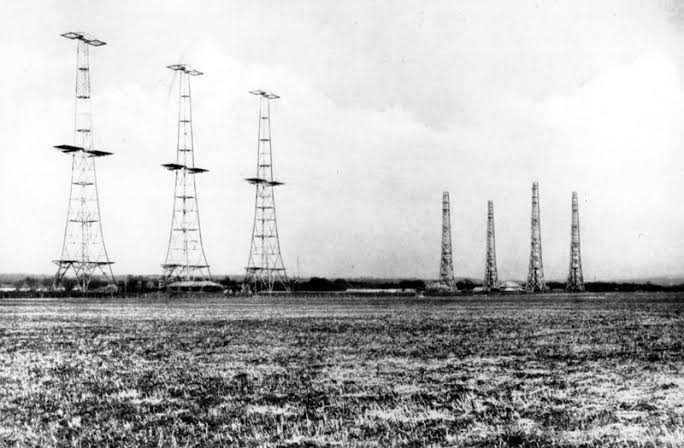
    By 1939, a chain of 21 coastal radar stations stretched from the Orkney Islands to the Isle of Wight, later expanding to about 30. Each station featured 350-foot steel transmitter towers emitting 25-meter wavelength pulses, with wooden receiver towers set back from the coast. Operators measured the time delay of reflected pulses to determine the range and bearing of incoming aircraft.

    The system could detect planes up to 120 miles away enough to provide 10 to 15 minutes of warning before German formations reached the coast. But it had limitations: it couldn’t accurately determine altitude, and once aircraft crossed the coastline, they were lost to the radar. Overland tracking fell to the Royal Observer Corps, whose 1,000 posts fed information to a central command.

    The Dowding System: Brains and Brawn

    The real innovation wasn’t just radar; it was the integration of radar into a single command-and-control network, known as the Dowding System, after Air Chief Marshal Hugh Dowding. Radar stations telephoned their data to Filter Rooms, where WAAF plotters moved markers across a large table with croupier-style rakes. Controllers then scrambled fighters and vectored them via radio to intercept the enemy.

    This closed loop—detection, filtering, decision, interception—was unprecedented. It allowed Fighter Command to conserve its limited aircraft and pilots by launching them only when and where they were needed, rather than keeping standing patrols that burned fuel and exhausted crews.

    German intelligence knew of the radar masts but severely underestimated their capability. They believed the towers were navigation beacons or crude early-warning devices, easily jammed. They didn’t grasp the sophistication of the Dowding System, and their attempts to bomb the radar stations in August 1940 were brief and not sustained. Göring’s decision to shift attacks to London, aiming to break British morale, is often cited as a critical error—it gave the RAF’s airfields a reprieve.

    The Numbers Behind the Victory

    During the height of the Battle in August and September 1940, the Dowding System processed information from over 1,000 Observer Corps posts and more than 21 radar stations. The warning time it provided was decisive: fighters could be scrambled and climb to altitude before the Luftwaffe arrived, turning what could have been a slaughter into a defensive victory.

    Without radar, Fighter Command would have been forced to maintain standing patrols, exhausting pilots and fuel, and would have been caught on the ground during raids. Radar allowed the RAF to meet the enemy at the right place, at the right time, and with the right numbers. It was a contest of attrition, and radar tipped the balance.

    Radar didn’t win the Battle of Britain alone—the pilots, ground crews, WAAF plotters, and Observer Corps volunteers were equally vital. But without the Chain Home network and the Dowding System, the RAF would have been fighting blind. The technology didn’t just give Britain an edge; it gave them the ability to fight another day, and in the summer of 1940, that was everything.

    Summary

    • Chain Home, a network of 21+ coastal radar stations, gave Fighter Command 10–15 minutes of warning before German raids reached the coast.
    • The Dowding System integrated radar data, Observer Corps reports, and fighter control into a single command network, enabling precise interception.
    • German intelligence underestimated British radar, believing it crude and easily jammed, and failed to sustain attacks on radar stations.
    • Radar allowed the RAF to conserve resources by scrambling fighters only when needed, avoiding standing patrols that would have exhausted pilots and fuel.
    • The Battle of Britain was a contest of attrition; radar provided the strategic advantage that made victory possible.

    FAQ

    Q: What was the Daventry Experiment?
    A: It was a February 1935 test where a bomber flying through a BBC radio beam was detected by a receiver, proving radio waves could detect aircraft. This led to the development of Chain Home.

    Q: How did Chain Home radar work?
    A: It used 350-foot steel towers to emit radio pulses; receivers measured the time delay of reflected pulses to determine aircraft range and bearing. It could detect planes up to 120 miles away.

    Q: What was the Dowding System?
    A: It was an integrated command-and-control network linking radar stations, Observer Corps posts, operations rooms, and fighter airfields, allowing centralized tracking and vectoring of fighters.

    Q: Why didn’t the Germans destroy the radar stations?
    A: German intelligence underestimated their importance, believing they were navigation beacons or crude early-warning devices. Their attacks in August 1940 were brief and not sustained; Göring then shifted focus to London.

    Q: Could the RAF have won without radar?
    A: Without radar, Fighter Command would have had to maintain standing patrols, exhausting pilots and fuel, and would have been caught on the ground. Radar was necessary, though not sufficient, for victory.
  • The Trauma of Returning Soldiers: PTSD Before It Had a Name

    The Trauma of Returning Soldiers: PTSD Before It Had a Name

    In the summer of 1917, a young British soldier sat trembling in a hospital ward in France. He had not been hit by shrapnel, yet his hands shook uncontrollably, his sleep was plagued by nightmares of the trenches, and the sound of a door slamming sent him diving for cover. His medical file read simply: ‘shell shock.’ The term was new, but the condition was ancient a wound that had followed soldiers home for centuries, wearing different names in different wars.

    Before ‘Post-Traumatic Stress Disorder’ entered the psychiatric manual in 1980, the trauma of war was called ‘soldier’s heart,’ ‘railway spine,’ ‘combat fatigue,’ and ‘post-Vietnam syndrome.’ Each name reflected not just the medical understanding of the time, but also the politics, stigma, and institutional priorities that shaped how a suffering soldier was treated or ignored.

    The story of PTSD before it had a name is not a tidy timeline of medical progress. It is a story of misdiagnosis, euphemism, and advocacy—a battle fought not on the front lines, but in the wards, courtrooms, and veterans’ halls where the wounds of war were finally given a voice.

    The First Names: Soldier’s Heart and Railway Spine

    In the 1860s, as the American Civil War raged, Dr. Jacob Mendez Da Costa noticed something strange among Union soldiers. They complained of palpitations, chest pain, and breathlessness—symptoms that suggested heart disease. Yet when he examined them, their hearts appeared structurally normal. Da Costa called the condition ‘irritable heart,’ and it was later known as ‘Da Costa’s syndrome.’

    He was not the first to observe such symptoms. A few decades earlier, British physicians had documented similar complaints in survivors of railway accidents, coining the term ‘railway spine.’ The idea was that the jolt of a train crash caused physical damage to the spine, even if no fracture was visible. But Da Costa’s work was different: it tied the symptoms to the stress of combat, not a physical blow. Still, the prevailing assumption was that the problem was organic—a hidden injury, not a mental one.

    This view had consequences. Soldiers with ‘irritable heart’ were often discharged with pensions, but they were also sometimes accused of malingering. The notion that psychological stress could produce physical symptoms was slow to take hold. It would take a world war to force the issue.

    Shell Shock: A Term Born in the Trenches

    In 1915, British psychologist Charles Samuel Myers published a paper in The Lancet describing a new condition among soldiers in the trenches of World War I. He called it ‘shell shock,’ believing it was caused by the physical concussion of exploding shells. The term stuck, but the explanation did not.

    As the war ground on, physicians began to realize that shell shock was not limited to men who had been near explosions. Soldiers who had never been under bombardment developed tremors, mutism, paralysis, and terrifying flashbacks. The condition was psychological, not physical—a breakdown under the relentless stress of modern warfare.

    The British military treated about 80,000 cases of shell shock during the war, and roughly 20,000 soldiers were pensioned for it. But the diagnosis became a double-edged sword. Commanders worried that it was an easy excuse for shirking duty. In 1917, the British War Office banned the term as an official diagnosis, fearing it would encourage desertion.

    Treatment was inconsistent and often cruel. At Craiglockhart War Hospital in Scotland, psychiatrist W.H.R. Rivers used humane talk therapy, helping soldiers like the poet Siegfried Sassoon confront their trauma. But at the National Hospital in London, Lewis Yealland used electric shocks to ‘cure’ mutism, a coercive method that many veterans found degrading. The debate between organic and psychological explanations raged, but the soldiers were caught in the middle.

    World War II: The Euphemism of Combat Fatigue

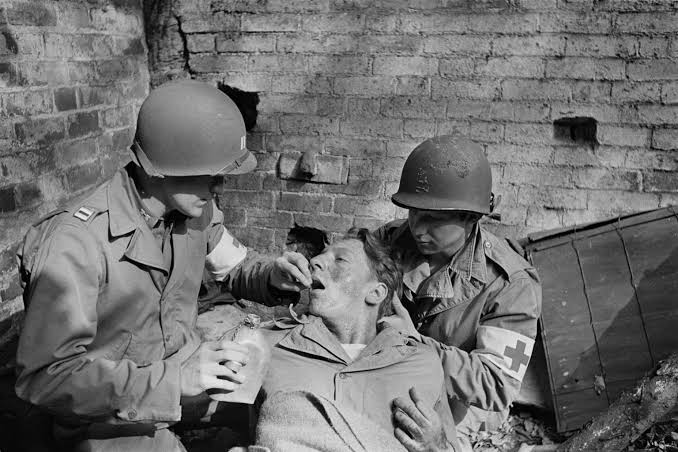
    When World War II broke out, military psychiatrists were determined not to repeat the mistakes of the previous war. They had learned something from the shell shock experience: that early, brief, and proximate treatment near the front lines could return more men to duty. This was codified in the ‘PIE’ principles—Proximity, Immediacy, Expectancy—developed by psychiatrist William Menninger.

    The U.S. Army adopted the term ‘combat exhaustion’ or ‘combat fatigue’ deliberately. Unlike ‘shell shock,’ which implied a permanent breakdown, ‘combat fatigue’ suggested a temporary, treatable stress reaction. The goal was to reduce stigma and keep soldiers fighting. It worked in the short term: men who were treated close to the front and expected to return to duty often did.

    But the euphemism had a dark side. By framing the trauma as a simple exhaustion, the military minimized the long-term psychological damage. The scale of the problem was staggering: the U.S. Army discharged about 500,000 soldiers for psychiatric reasons during the war, and there were roughly one million neuropsychiatric casualties. Yet the official narrative remained that these men just needed rest.

    After the war, the first edition of the Diagnostic and Statistical Manual of Mental Disorders (DSM-I) included a category called ‘gross stress reaction,’ but it was rarely used. Most veterans were diagnosed with ‘anxiety reaction’ or simply left to cope on their own. The Korean War produced little new research, and the condition faded from public consciousness.

    Vietnam: The Political Birth of Post-Vietnam Syndrome

    The Vietnam War changed everything. As soldiers returned home, they brought with them a new set of symptoms—delayed-onset flashbacks, guilt, rage, and a profound sense of alienation. The anti-war movement gave these veterans a platform, and they began to speak out.

    In 1972, psychiatrist Chaim Shatan coined the term ‘post-Vietnam syndrome’ in a New York Times op-ed. He described a condition that was not a temporary fatigue but a lasting psychological injury. Veterans’ groups like Vietnam Veterans Against the War lobbied for recognition, holding hearings and sharing their stories. They were joined by psychiatrists like Robert Jay Lifton, who argued that the trauma of war could not be reduced to a simple stress reaction.

    This grassroots advocacy paid off. In 1980, the third edition of the DSM included ‘Post-Traumatic Stress Disorder’ as a formal diagnosis. For the first time, the condition had a name that acknowledged its severity and its roots in trauma, not weakness. The inclusion was a victory for veterans, but it also reflected a broader cultural shift—a recognition that the wounds of war were not always visible.

    The National Vietnam Veterans Readjustment Study, published in 1988, estimated that 15-30% of Vietnam veterans had experienced PTSD. These numbers were shocking, but they confirmed what the veterans had been saying for years: the war did not end when they came home.

    The Legacy of a Name

    The history of PTSD before 1980 is not a straight line from ignorance to enlightenment. It is a story of competing theories, institutional priorities, and the slow, painful process of giving a name to an invisible wound. Each era’s label—’soldier’s heart,’ ‘shell shock,’ ‘combat fatigue’—was shaped by the political and medical assumptions of its time. And each label had consequences for the soldiers it described.

    When shell shock was banned in 1917, it was not because the condition had disappeared, but because the military feared its misuse. When combat fatigue was coined in WWII, it was not to help veterans but to return them to the front. And when post-Vietnam syndrome was introduced, it was not by a medical committee but by a psychiatrist responding to the voices of veterans themselves.

    Today, PTSD is a recognized diagnosis, but the lessons of its history remain relevant. The name we give trauma shapes how we treat it, how we fund it, and how we honor those who suffer it. The soldiers who came home from the Civil War, the trenches, the beaches of Normandy, and the jungles of Vietnam all carried the same wound. It took over a century to give it a name that did not blame the victim.

    That name—PTSD—was hard-won. It is a reminder that the trauma of war is not a weakness, but a wound. And like any wound, it deserves treatment, not judgment.

    The journey from ‘soldier’s heart’ to ‘PTSD’ was not a smooth evolution of medical knowledge. It was shaped by war, politics, and the courage of veterans who refused to be silent. Today, when we use the term PTSD, we honor those who suffered under its earlier names—and we acknowledge that the trauma they carried was real, even when the medical establishment failed to understand it.

    Summary

    • Before 1980, PTSD was known by various names, including ‘soldier’s heart,’ ‘shell shock,’ ‘combat fatigue,’ and ‘post-Vietnam syndrome.’
    • Each name reflected the medical and political assumptions of its era, often minimizing the condition to protect military manpower.
    • Shell shock in WWI was initially thought to be a physical injury, but was later recognized as psychological; the British War Office banned the term in 1917.
    • WWII’s ‘combat fatigue’ was a deliberate euphemism to imply temporary stress, though the U.S. Army discharged ~500,000 soldiers for psychiatric reasons.
    • Vietnam veterans and advocacy groups pushed for recognition, leading to the formal inclusion of PTSD in the DSM-III in 1980.

    FAQ

    Q: What was the first name for PTSD?
    A: The first widely documented name was ‘soldier’s heart’ or ‘irritable heart,’ coined by Dr. Jacob Mendez Da Costa during the American Civil War to describe cardiac symptoms without organic disease.

    Q: Why was ‘shell shock’ banned in WWI?
    A: The British War Office banned the term in 1917 because it was seen as an easy excuse for soldiers to avoid duty, not because the condition had disappeared.

    Q: What were the PIE principles in WWII?
    A: PIE stood for Proximity, Immediacy, and Expectancy—treating soldiers close to the front, immediately after symptoms appeared, with the expectation of returning to duty. This was designed to reduce long-term disability and maintain troop strength.

    Q: How did Vietnam veterans influence the PTSD diagnosis?
    A: Veterans’ groups like Vietnam Veterans Against the War, alongside psychiatrists like Chaim Shatan and Robert Jay Lifton, advocated for the recognition of ‘post-Vietnam syndrome,’ which led to the inclusion of PTSD in the DSM-III in 1980.

    Q: What were the prevalence rates of PTSD among Vietnam veterans?
    A: The National Vietnam Veterans Readjustment Study (1988) estimated that 15-30% of Vietnam veterans had experienced PTSD at some point.

  • The Ghost Army: How 1,100 Artists Fooled the Nazis with Inflatable Tanks

    The Ghost Army: How 1,100 Artists Fooled the Nazis with Inflatable Tanks

    In the spring of 1945, a lone American soldier stood on a bluff overlooking the Rhine River, puffing on a cigarette. Across the water, German artillery zeroed in on his position, sending shells whistling past. The soldier didn’t flinch. He was a decoy part of an elaborate ruse that had fooled the Germans into believing a massive Allied force was massing for an assault. In reality, he was one of 1,100 artists, actors, and sound engineers who had spent the past year staging the greatest theatrical production of World War II.

    This was the Ghost Army, officially the 23rd Headquarters Special Troops, a unit so secret that its existence was classified for decades. Armed with inflatable tanks, fake radio traffic, and recordings of clanking armor, these men waged a war of illusion across Europe, saving thousands of lives without firing a shot. Their story, declassified in 1996 and honored with a Congressional Gold Medal in 2022, reveals how creativity became one of the Allies’ most potent weapons.

    The Birth of a Deception

    By early 1944, the Allies faced a brutal problem: how to invade Fortress Europe without being annihilated. The Germans had fortified the Atlantic Wall with millions of mines, concrete bunkers, and crack divisions. A successful landing required not just overwhelming force, but strategic surprise. The Allies needed to convince the Germans that the invasion would come somewhere other than Normandy.

    Traditional deception—dummy camps, fake radio chatter—had been used before, but never with the sophistication the Allies now envisioned. So they assembled a unit unlike any other: the 23rd Headquarters Special Troops, activated in January 1944 in England. Its ranks were drawn from art schools, advertising agencies, and design firms. Among its members were fashion designer Bill Blass, painter Ellsworth Kelly, and photographer Art Kane. These were men trained to create beauty, not destruction—yet their canvas was the battlefield itself.

    Three Kinds of Illusion

    The Ghost Army operated in three parallel tracks, each designed to deceive a different German sense.

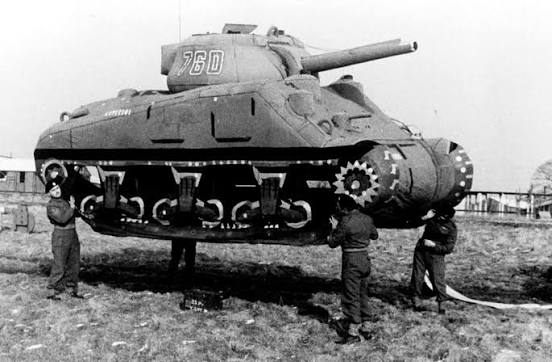
    Visual Deception: The core of the unit’s arsenal was a collection of inflatable rubber tanks, trucks, artillery pieces, and even airplanes. From a distance—or through aerial reconnaissance—these balloons looked like real armor. The soldiers would carefully arrange them, draping them with camouflage netting, painting on shadows and highlights, and positioning them to mimic the chaotic layout of a genuine encampment. At night, they inflated them with air compressors; by dawn, a phantom division would appear where hours earlier there had been empty fields.

    Radio Deception: The Germans were avid listeners to Allied radio frequencies. Ghost Army signalmen exploited this by creating fake radio traffic that mimicked the call signs, transmission patterns, and even the individual Morse code “fists” of real units. They would broadcast false orders, coordinate movements, and maintain a steady stream of chatter that made the phantom units seem alive. This was painstaking work—each operator had to learn the unique rhythms of the real operators they were impersonating.

    Audio Deception: The most theatrical element was sound. Engineers recorded the roar of tanks, the rumble of artillery, and the shouts of troops—then played these recordings through massive speakers that could project sound up to 15 miles away. At night, the Ghost Army would broadcast the noise of a moving column: engines revving, tracks clanking, voices calling out. To German listening posts, it sounded like a full division was on the march.

    The Theatrical Element

    But the Ghost Army’s most audacious trick was human. Soldiers were trained to impersonate officers of real units. They would drive jeeps with the correct insignia, wear the right patches, and even visit local towns to be seen by German spies or sympathetic civilians. Some spoke fluent German and would spread false information in bars and cafes. One soldier, posing as a general, would drive past German observers with a map case full of fake documents.

    This was not just camouflage—it was a performance. As one veteran later put it, “We were actors, and the stage was Europe.” The illusion was so convincing that German intelligence often reported Allied units in places where they had never set foot, and failed to spot the real units that were moving under the cover of their phantom counterparts.

    Key Operations: Saving Lives with Illusion

    The Ghost Army executed over 20 major operations between June 1944 and May 1945. Three stand out.

    Operation Quicksilver (1944): The unit’s first major test came during the D-Day invasion. Their mission was to convince the Germans that the main Allied invasion would land at Pas-de-Calais, not Normandy. They deployed inflatable tanks and landing craft along the English coast, broadcast fake radio traffic, and even used sound effects to simulate the assembly of a massive invasion fleet. The ruse was so powerful that the Germans kept a full army group—nearly 200,000 troops—in reserve at Pas-de-Calais for weeks after the Normandy landings, waiting for an attack that never came.

    Operation Viersen (March 1945): As the war neared its end, the Ghost Army executed one of its most critical deceptions. The U.S. 9th Army needed to cross the Rhine River, but the Germans held the opposite bank in strength. The Ghost Army deployed near Viersen, creating the illusion of a massive buildup across from a different section of the river. They inflated hundreds of dummy tanks, played recordings of bridging operations, and broadcast fake radio traffic. The Germans shifted their defenses to meet the phantom threat, leaving the real crossing point lightly guarded. The 9th Army crossed with minimal resistance—a success that likely saved thousands of lives.

    Operation Bettembourg (1945): In the final weeks of the war, the Ghost Army drew German fire away from the real 6th Armored Division. By creating a fake armored column near Bettembourg, they tricked German artillery into wasting shells on empty fields. The real division moved unmolested, preserving its strength for the final push into Germany.

    The Price of Secrecy

    The Ghost Army’s work was so secret that even their own commanders struggled to acknowledge it. The unit’s existence was classified as top secret, and its members were sworn to silence. They were told that if they were captured, they would likely be executed as spies. After the war, the equipment was packed away, and the men returned to civilian life, carrying a secret they could not share.

    For decades, the story remained unknown. The unit’s records were declassified in 1996, and veterans began to speak publicly. In 2022, the Ghost Army was awarded the Congressional Gold Medal, the highest civilian honor Congress can bestow. For the surviving members—and the families of those who had died—it was a long-overdue recognition of their extraordinary service.

    Was It Effective? The Debate

    While many historians credit the Ghost Army with saving thousands of lives, some caution against overstating its impact. The Germans were already plagued by intelligence failures and stretched thin across a collapsing front. Some operations, like Quicksilver, may have reinforced German misconceptions that were already forming. The exact number of lives saved is impossible to quantify.

    Yet even skeptics acknowledge the unit’s uniqueness. The Ghost Army was the first dedicated tactical deception unit in American history, and its methods—combining visual, radio, and audio illusion—were revolutionary. Its legacy can be seen in modern psychological operations and the elaborate decoys used in conflicts from the Gulf War to the present day.

    A Legacy of Artists and Illusionists

    The Ghost Army’s story is also one of creative minds turned to destructive ends. Many of its members went on to become celebrated artists: Ellsworth Kelly became a pioneer of abstract painting, Bill Blass built a fashion empire, and Art Kane photographed some of the most iconic images of the 20th century. They brought to war the same skills that would later define their careers: an eye for detail, a talent for persuasion, and a deep understanding of how to make people see what they expect to see.

    In that sense, the Ghost Army’s greatest deception was not on the battlefield—it was the irony that artists, trained to reveal truth, were turned into masters of falsehood. But as one veteran reflected, “In war, the lie that saves lives is the noblest truth.”

    The Ghost Army remains one of World War II’s most extraordinary stories—a unit of 1,100 artists who fought with imagination instead of bullets. Their inflatable tanks never fired a shot, yet they helped divert German divisions, protect Allied crossings, and save countless lives. Declassified in 1996 and honored with a Congressional Gold Medal in 2022, their legacy endures as a testament to the power of creativity, even in the darkest of times.

    Summary

    • The Ghost Army (23rd Headquarters Special Troops) was a U.S. Army deception unit of about 1,100 men, active in Europe from June 1944 to May 1945.
    • It used inflatable decoys, fake radio traffic, and sound recordings to fool German forces about Allied troop locations and movements.
    • Key operations included Operation Quicksilver (D-Day cover), Operation Viersen (Rhine crossing), and Operation Bettembourg (drawing fire away from the 6th Armored Division).
    • Members included notable artists like fashion designer Bill Blass, painter Ellsworth Kelly, and photographer Art Kane.
    • The unit’s existence was top secret until 1996; it received the Congressional Gold Medal in 2022.

    FAQ

    Q: What was the Ghost Army?
    A: The Ghost Army was the nickname for the U.S. Army’s 23rd Headquarters Special Troops, a tactical deception unit active in Europe during World War II. It used inflatable tanks, fake radio traffic, and sound effects to deceive German forces about Allied troop positions and strength.

    Q: How did the Ghost Army fool the Nazis?
    A: They used three main methods: visual deception (inflatable rubber tanks and artillery), radio deception (fake radio traffic mimicking real units), and audio deception (recordings of tank and troop movements played through speakers). They also used theatrical impersonation, with soldiers posing as officers of real units.

    Q: What was the Ghost Army’s most famous operation?
    A: Operation Quicksilver, which helped convince the Germans that the D-Day invasion would occur at Pas-de-Calais rather than Normandy. This deception kept German forces tied up in the wrong location for weeks.

    Q: Was the Ghost Army successful?
    A: Most historians credit it with saving thousands of lives by drawing enemy fire away from real units and creating confusion. Operations like Viersen helped the U.S. 9th Army cross the Rhine with minimal resistance. However, the exact strategic impact is debated.

    Q: Why was the Ghost Army kept secret for so long?
    A: The unit’s methods were classified as top secret to protect the techniques and the soldiers, who risked execution if captured. The story was declassified in 1996, and the unit received the Congressional Gold Medal in 2022.

  • The Harlem Hellfighters: The Most Decorated American Unit of World War I

    The Harlem Hellfighters: The Most Decorated American Unit of World War I

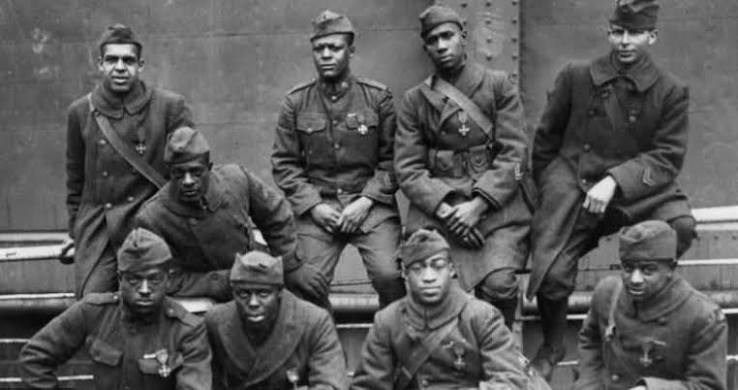
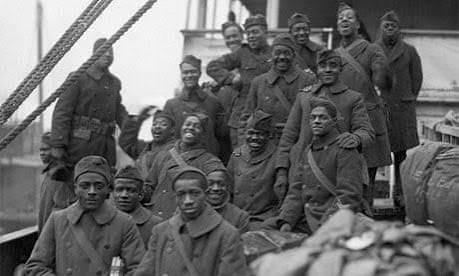
    In the early hours of May 15, 1918, in the Argonne forest of France, two Black American soldiers found themselves surrounded by a German raiding party of nearly twenty men. One of them, Henry Johnson, had run out of ammunition. He used his rifle as a club, then pulled out a bolo knife and attacked. By dawn, the raiders had retreated, leaving Johnson and his partner Needham Roberts wounded but victorious. That night, they became the first Americans of any race to receive France’s highest military honor, the Croix de Guerre with Palm.

    These men were part of the 369th Infantry Regiment, nicknamed the ‘Harlem Hellfighters’ by the Germans they fought against. The unit spent 191 days on the front lines—longer than any other American regiment in World War I—and never lost a foot of ground or a man to capture. Yet when they returned home, they were met not with parades but with the same segregation and violence they had left behind. This is their story, and it’s a story that corrects a common misconception: the Hellfighters were a World War I unit, not a World War II one.

    The Making of the Hellfighters

    When the United States entered World War I in 1917, the military was strictly segregated. African Americans were largely relegated to labor, supply, and stevedore roles, not combat. But the 369th Infantry Regiment—originally the 15th New York National Guard—was different. It was one of the few Black combat regiments, and its soldiers were determined to fight.

    Colonel William Hayward, the regiment’s commanding officer, pushed for his men to see action. But the U.S. Army, reflecting the racism of the era, was reluctant to use Black soldiers in battle. So in 1918, the 369th was ‘loaned’ to the French Army, which was desperate for reinforcements. The French were more egalitarian in their treatment of Black soldiers, and they equipped, fed, and integrated the regiment into their units. The Hellfighters wore French helmets, carried French rifles, and fought under French command.

    The nickname ‘Hellfighters’ reportedly came from the Germans, who called them Höllenkämpfer—hellfighters—for their ferocity. The French had their own name: Hommes de Bronze, or ‘Men of Bronze.’

    191 Days on the Front

    From their deployment in 1918, the 369th spent 191 days on the front lines—more than any other American unit in the war. They fought in some of the bloodiest battles of the final year, including the Second Battle of the Marne and the Meuse-Argonne Offensive, where they played a critical role in halting the German Spring Offensive.

    The toll was staggering. The regiment suffered approximately 1,500 casualties—killed, wounded, or missing—out of a fighting strength of about 3,000 men. That’s a casualty rate of roughly 50%, the highest of any American regiment. Yet they never lost a man to capture, and they never gave up ground they held.

    One of the most famous actions came on May 15, 1918, when Henry Johnson and Needham Roberts were on sentry duty. A German raiding party of at least a dozen men attacked. Both Americans were wounded, and Johnson ran out of ammunition. He clubbed and knifed the attackers, driving them off. The action earned both men the Croix de Guerre with Palm, the highest grade of the award—the first time Americans had received it. Johnson was also posthumously awarded the U.S. Medal of Honor in 2015, more than 95 years after his death.

    The entire regiment received the French Croix de Guerre with Silver Star, and 171 individual members earned the Croix de Guerre. No other American unit in World War I was so decorated.

    The Band That Brought Jazz to Europe

    The Hellfighters weren’t just soldiers—they were cultural ambassadors. The regimental band, led by Lieutenant James Reese Europe, was a sensation in France. Europe, already a famous jazz bandleader in New York, brought his syncopated rhythms to European audiences, performing for troops and civilians alike. The band is widely credited with introducing jazz to France and sparking the Jazz Age in Europe. For many French people, the Hellfighters’ music was their first taste of a uniquely American art form.

    A Bitter Homecoming

    The Hellfighters returned to the United States as heroes—but they were not treated like heroes. The country was still deeply segregated, and the soldiers who had fought for democracy abroad were denied it at home. In the summer of 1919, a wave of racial violence known as the Red Summer swept the nation. Some Hellfighters were attacked for wearing their uniforms, a stark reminder that the fight for equality was far from over.

    The regiment’s legacy is a complex one: they were celebrated in France, decorated by a foreign government, and yet still faced the same systemic racism in America. Their story is a testament to their courage and a reminder of the long struggle for civil rights.

    The Harlem Hellfighters were not just the most decorated American unit of World War I—they were a symbol of what Black soldiers could achieve when given the chance. Their 191 days on the front, their unprecedented decorations, and their cultural impact in France all speak to their extraordinary service. And yet, their homecoming was a bitter reminder of the deep racial divides in America. Their story is one of valor and injustice, of triumph and tragedy. And it’s a story that deserves to be remembered, not for what it wasn’t—a WWII unit—but for what it truly was: a groundbreaking chapter in American military history.

    Summary

    • The Harlem Hellfighters were a World War I unit, not a WWII unit, despite a common misconception.
    • The 369th Infantry Regiment spent 191 days on the front lines, the longest of any American unit in WWI, and suffered a 50% casualty rate.
    • The entire regiment received the French Croix de Guerre, and 171 individuals were also decorated.
    • Henry Johnson and Needham Roberts were the first Americans to receive the Croix de Guerre with Palm.
    • James Reese Europe’s band introduced jazz to France, making the regiment cultural ambassadors as well as soldiers.

    FAQ

    Q: Were the Harlem Hellfighters a WWII unit?
    A: No. The Harlem Hellfighters were a World War I unit, active from 1917 to 1918. They did not serve in World War II.

    Q: Why were they called the Harlem Hellfighters?
    A: The nickname was given by German soldiers, who reportedly called them ‘Höllenkämpfer’ (Hellfighters) due to their ferocity in combat. The French called them ‘Men of Bronze.’

    Q: What was the 369th Infantry Regiment’s combat record?
    A: They spent 191 days on the front lines, longer than any other American unit in WWI. They had about 1,500 casualties (50% of their strength), but never lost a man to capture or gave up ground.

    Q: What decorations did the Hellfighters receive?
    A: The entire regiment received the French Croix de Guerre with Silver Star. 171 individuals received the Croix de Guerre. Henry Johnson and Needham Roberts were the first Americans to receive the Croix de Guerre with Palm. Johnson also received the U.S. Medal of Honor posthumously in 2015.

    Q: How did James Reese Europe contribute to the regiment’s legacy?
    A: James Reese Europe led the regimental band and is credited with introducing jazz to France and Europe, helping spark the Jazz Age.

  • Verdun vs. Somme: Counting the Costs of 1916’s Twin Atrocities

    Verdun vs. Somme: Counting the Costs of 1916’s Twin Atrocities

    The winter of 1916 found the Western Front locked in a stalemate of mud and wire. Two battles, launched within five months of each other, would come to define the brutality of the First World War. At Verdun, the German army sought to bleed France white. On the Somme, the British and French aimed to break the German line. Both failed in their strategic goals, but together they consumed over a million casualties in a single year. Which was more devastating? The answer depends on how you measure devastation—by raw numbers, by daily toll, or by the lasting scar on the nations that fought.

    The Two Battles: A Study in Contrasts

    Verdun and the Somme were not just different battles; they were different kinds of war. Verdun, which raged from February 21 to December 18, 1916, was a compact, grinding siege fought over a 20-kilometer front along the Meuse River. The German chief of staff, Erich von Falkenhayn, planned it as an attritional masterstroke: attack a fortress the French could not abandon, forcing them to pour troops into a meat grinder until their army collapsed. The Somme, from July 1 to November 18, was a broader Allied offensive on a 30-kilometer front, originally conceived as a French-led breakthrough but transformed into a British-led relief effort after Verdun bled the French army dry.

    These differences shaped the experience of the soldiers. At Verdun, the French rotated roughly 70% of their army through the battle, earning it the nickname ‘the mill on the Meuse.’ The entire battle was fought over a few square miles of shell-pocked hills and forts, with the crucial supply road—the Voie Sacrée—kept open by a relentless convoy of trucks. On the Somme, the British launched set-piece attacks after massive preliminary bombardments, and on September 15, they introduced the tank at Flers-Courcelette, a weapon that was too few in number and too unreliable to change the outcome.

    The Arithmetic of Death: Total Casualties

    The most obvious measure of devastation is the raw count of casualties. For Verdun, the widely cited figures are 377,000 French and 337,000 German casualties, totaling about 714,000. Some estimates push the combined toll to a million. For the Somme, the numbers are higher: approximately 420,000 British Empire casualties, 200,000 French, and between 450,000 and 500,000 German, for a total of over 1.1 million. By this metric, the Somme was clearly more devastating in aggregate—roughly 400,000 more casualties than Verdun.

    But raw totals obscure the intensity of suffering. The Somme’s first day alone, July 1, 1916, remains the bloodiest day in British military history: nearly 57,000 British casualties, including about 19,000 dead, most within the first few hours. No single day at Verdun came close to that. Yet Verdun’s 302 days of continuous combat meant that the front was a charnel house for nearly a year, with no respite.

    Daily Toll: The Grinding Horror

    When you divide casualties by days of fighting, a different picture emerges. The Somme lasted 141 days and produced roughly 7,000 to 9,200 casualties per day. Verdun, over 302 days, produced roughly 2,300 to 3,300 per day. The Somme’s daily toll was nearly three times higher. This was due to the density of artillery and the nature of the offensive: on the Somme, the Allies launched repeated infantry assaults against prepared German positions, while at Verdun, the fighting was more evenly matched, with both sides launching counterattacks and defending in a relatively confined space.

    The Somme was also more costly for the British Empire because of the ‘Pals Battalions’—volunteer units recruited from the same towns and factories. On the first day, entire communities lost their young men in a single morning. The psychological shock in Britain was incalculable, and it reverberated through the rest of the war.

    Territorial Change: The Futility of It All

    Both battles ended with front lines that were almost identical to where they started. At Verdun, the Germans initially captured the key forts of Douaumont and Vaux, but the French counter-offensive in October and December 1916 recaptured most of the lost ground. By the end, the front had returned to roughly its original position. The only permanent change was the complete destruction of the landscape—villages were erased, forests reduced to splinters, and the earth itself was churned into a lunar landscape.

    The Somme saw a slightly larger territorial change: the Allies advanced about 7 miles (11 kilometers) at the deepest point, capturing villages like Thiepval and Flers. But this advance fell far short of the planned breakthrough. In terms of strategic value, both battles were equally futile. The German army was severely strained by both, but it did not collapse. The French army was shaken at Verdun but held. The British army gained experience but at a terrible price.

    The Human Cost: Deaths and Lasting Scars

    The number of deaths—killed or missing—is another critical measure. At Verdun, the combined deaths were roughly 300,000: 163,000 French and 143,000 German. At the Somme, deaths were between 300,000 and 350,000 combined. The difference is not as stark as total casualties, partly because the Somme’s wounded-to-killed ratio was higher, due to the nature of the artillery bombardments and infantry tactics.

    But the devastation goes beyond numbers. Verdun became a symbol of French endurance, embodied in General Philippe Pétain’s order ‘Ils ne passeront pas’—’They shall not pass.’ The battle left a permanent scar on the French psyche, a collective memory of sacrifice that would influence French strategy and politics for decades. The Somme, particularly for Britain and the Commonwealth, became a synonym for the horror of trench warfare and the perceived incompetence of commanders like Douglas Haig. The memory of the Somme shaped British attitudes toward war and remembrance, and its cemeteries and memorials—like the Thiepval Memorial to the Missing—are among the most visited sites on the Western Front.

    Conclusion: Which Was More Devastating?

    The answer is not simple. If devastation is measured by total casualties, the Somme was worse, with over a million men killed, wounded, or missing. If measured by daily intensity, the Somme again takes the lead, with nearly 8,000 casualties per day. But if measured by duration and the psychological toll on a single nation, Verdun’s 302 days of relentless attrition on the French army may be more devastating. The Somme was a broader catastrophe, affecting the British, French, and German armies. Verdun was a focused horror that nearly broke the French will to fight. In the end, both battles were part of the same tragedy: the Western Front’s descent into industrialized slaughter, where the only goal was to kill more of the enemy than he could kill of you. Neither battle achieved its strategic objective, and both left a generation in ruins. The true measure of devastation lies not in the numbers, but in the fact that the war continued for two more years after these battles, and the dead were replaced by fresh conscripts who would face the same futility.

    Verdun and the Somme were twin pillars of the 1916 bloodbath, each devastating in its own way. The Somme’s higher casualty figures and daily toll make it numerically worse, but Verdun’s year-long grind and its near-fatal impact on the French army make it a unique symbol of national sacrifice. Neither battle changed the course of the war; they only deepened the tragedy. As we remember the dead, the question of which was more devastating becomes less important than the shared lesson: the human cost of war is always too high, and the promises of decisive victories are too often lies.

    Summary

    • The Battle of the Somme produced more total casualties (over 1.1 million) compared to Verdun (about 714,000).
    • The Somme had a much higher daily casualty rate, around 7,000–9,200 per day versus Verdun’s 2,300–3,300.
    • Both battles ended with minimal territorial changes, but the Somme saw a deeper Allied advance of about 7 miles.
    • Verdun was the longest battle of World War I, lasting 302 days, and nearly broke the French army.
    • The Somme’s first day was the bloodiest in British military history, with 57,000 casualties, including 19,000 dead.

    FAQ

    Q: Which battle had higher total casualties?
    A: The Battle of the Somme, with over 1.1 million casualties, compared to Verdun’s approximately 714,000.

    Q: Why was Verdun so important to France?
    A: Verdun was a symbol of French national pride and a fortress city. The German plan was to force France to defend it at all costs, bleeding their army dry, which is why it became a symbol of French endurance.

    Q: What was the strategic goal of the Somme?
    A: The Somme was a joint Allied offensive to relieve pressure on Verdun and achieve a breakthrough against German lines. It was originally planned as a French-led attack but became primarily a British operation after Verdun diverted French troops.

    Q: How did the daily casualty rates compare?
    A: The Somme averaged about 7,000–9,200 casualties per day, while Verdun averaged about 2,300–3,300. The Somme was more intense on a daily basis.

    Q: Did either battle achieve its objectives?
    A: No. Verdun’s German offensive failed to capture the city and the front returned to its start. The Somme’s Allies advanced just 7 miles, far short of a breakthrough, and the German lines held.

  • Haig vs. Foch: The Two Strategies That Broke the German Army

    Haig vs. Foch: The Two Strategies That Broke the German Army

    On the morning of August 8, 1918, a dense fog rolled over the fields of Amiens. Under its cover, hundreds of British tanks and infantry from Australia and Canada surged forward. By nightfall, they had torn a 15-mile gap in the German lines, capturing 12,000 prisoners. General Erich Ludendorff called it the “black day of the German army.” The Allies had finally broken the stalemate that had killed millions since 1914.

    But who deserved the credit for this victory and the war itself? Two commanders had shaped the Allied path to that moment: Douglas Haig, the British commander who had spent years grinding down the German army at a horrific cost, and Ferdinand Foch, the French general who became Supreme Allied Commander in 1918 and orchestrated the final, crushing blow. Their strategies were different, their personalities clashed, and their legacies remain contested. This is the story of how two very different approaches—attrition and coordination—together won the war, and why the question of who deserves the laurels is more complicated than it seems.

    The Two Commanders and Their Doctrines

    Douglas Haig took command of the British Expeditionary Force in December 1915. He was a cavalryman by training, but he became the architect of a brutal, industrial war of attrition. His idea was simple: keep attacking the German army relentlessly, even if it meant losing tens of thousands of men, because Germany would run out of soldiers before the British Empire did. The results were staggering. On the first day of the Somme in July 1916, the British suffered 57,000 casualties—the bloodiest day in British military history. By the end of Passchendaele in November 1917, the British had gained a few miles of mud at the cost of hundreds of thousands of lives. Critics called him the “Butcher of the Somme.”

    Ferdinand Foch, by contrast, was a French artilleryman and a fierce advocate of the offensive spirit. Before the war, he had preached the doctrine of “offensive à outrance”—attack with everything you have, and the strongest will to win will prevail. That doctrine had proven disastrous in 1914, when French offensives in Alsace and Lorraine were mowed down by German machine guns. But by 1918, Foch had evolved. As Supreme Allied Commander, he would become the master of coordination, not the champion of the frontal assault.

    The Crisis of 1918: When the Allies Almost Lost

    The spring of 1918 brought the war to a tipping point. With Russia out of the war, Germany transferred 50 divisions to the Western Front, hoping to knock out the Allies before American troops arrived in strength. On March 21, they launched Operation Michael, a massive offensive aimed at the British Fifth Army. The British lines buckled and nearly broke. The Allies faced the real prospect of being split apart and defeated.

    At the Doullens Conference on March 26, the Allies made a historic decision: they appointed Foch as Supreme Allied Commander, giving him authority over all Allied forces on the Western Front. It was the first time in the war that a single commander had coordinated the efforts of the British, French, and later American armies. Haig, who had been reluctant to serve under anyone, accepted the arrangement, recognizing the emergency. It was a moment of unity that would prove decisive.

    Foch’s Strategy: Flexibility and Counter-Attack

    Foch’s approach in 1918 was radically different from his pre-war doctrine. Instead of rigid defense or reckless offense, he emphasized flexibility. His motto was “Tout le monde à la bataille”—everyone to the battle. He managed reserves like a chess master, refusing to commit them to static defensive lines. Instead, he waited for the right moment to counter-attack.

    That moment came on July 18, 1918. The German spring offensives had exhausted themselves, and Foch launched a counter-offensive at the Marne, throwing in French and American troops. The attack was a stunning success, pushing the Germans back and signaling that the initiative had shifted. Foch’s coordination of reserves had prevented a German breakthrough in the spring and set the stage for the final Allied advance.

    Haig’s War of Attrition: The Long Grind That Made Victory Possible

    While Foch’s 1918 coordination was brilliant, it rested on the foundation laid by Haig’s attrition strategy. From 1916 to 1917, Haig had kept relentless pressure on the German army, even when the gains were measured in yards. The Somme and Passchendaele were horrific, but they inflicted irreplaceable losses on the Germans. By 1918, German divisions were understrength, poorly fed, and demoralized. Ludendorff’s own memoirs admit that the German army was a shadow of its former self.

    Haig also oversaw the transformation of the British army into a modern, combined-arms fighting force. The BEF had grown from 6 divisions in 1914 to 60 divisions by 1918—the largest Allied army on the Western Front. Under his command, the British adopted new tactics: creeping barrages, tanks, aircraft coordination, and infiltration techniques. The Battle of Amiens was a textbook example of this new warfare. It was a British-planned and British-executed victory, with Australian and Canadian troops at the spearhead. Foch had actually pushed for a more ambitious offensive, but it was Haig’s forces that achieved the breakthrough.

    The Hundred Days: Two Strategies Merge

    In the autumn of 1918, Foch orchestrated the final offensive—a “sledgehammer” of simultaneous attacks along the entire front. The goal was to prevent the Germans from shifting reserves from one sector to another. Haig, initially reluctant to extend his offensive, eventually pushed for the breakthrough of the Hindenburg Line. On September 29, British, Australian, and American forces broke through the supposedly impregnable line. The German army was in full retreat, mutiny was spreading, and the Kaiser abdicated. On November 11, the Armistice was signed.

    The Hundred Days Offensive was a coordinated triumph, but it was built on the attrition of the previous years. Without Haig’s grinding warfare, the German army might have been strong enough to withstand the final blow. Without Foch’s coordination, the Allies might have squandered their advantage. The two strategies were complementary, not opposed.

    The Legacy and the Debate

    The question “Which general won the war?” is, in many ways, the wrong question. The war was won by the combined efforts of millions of soldiers and the strategies of both commanders. Haig’s attrition was necessary but costly; Foch’s coordination was brilliant but depended on the foundation Haig had built. Their legacies, however, are wildly different. Haig remains the “Butcher of the Somme” in popular memory, though revisionist historians argue he was a necessary evil. Foch is celebrated as the architect of victory, though his pre-war offensive doctrine had proven deadly. The truth is that both men adapted to the realities of industrial warfare—Haig by embracing attrition, Foch by embracing coordination—and together they broke the German army.

    The debate between Haig and Foch is not a simple choice. It is a story of two men with different philosophies who, in the crucible of 1918, found a way to work together. Haig’s attrition wore down the enemy; Foch’s coordination delivered the final blow. The war was won by both—and by the millions who fought and died under their command. Their strategies, though different, were two halves of a single whole, and the question of who deserves the credit is best answered by recognizing that neither could have won without the other.

    Summary

    • Douglas Haig commanded the British Expeditionary Force from 1915, implementing a strategy of attrition that inflicted heavy losses on the German army, despite massive British casualties.
    • Ferdinand Foch became Supreme Allied Commander in March 1918, coordinating Allied reserves and launching counter-offensives that turned the tide.
    • Foch’s flexibility and coordination were crucial in 1918, but they relied on the weakened German army that Haig’s attrition had created.
    • The Hundred Days Offensive was a coordinated effort, with Haig’s forces achieving key breakthroughs like Amiens and the Hindenburg Line.
    • The war was won by a combination of both strategies, not by one general alone.

    FAQ

    Q: Who was Douglas Haig?
    A: Douglas Haig was the Commander-in-Chief of the British Expeditionary Force from December 1915 to the end of World War I. He is known for his attrition strategy, which led to heavy casualties at battles like the Somme and Passchendaele, but also contributed to the eventual defeat of Germany.

    Q: Who was Ferdinand Foch?
    A: Ferdinand Foch was a French general who became the Supreme Allied Commander in March 1918. He coordinated the Allied response to the German Spring Offensive and planned the final Hundred Days Offensive that led to the Armistice.

    Q: What was the Hundred Days Offensive?
    A: The Hundred Days Offensive was the final Allied offensive of World War I, from August 8 to November 11, 1918. It consisted of a series of coordinated attacks along the Western Front that broke the German army’s will to fight.

    Q: Why is Haig called the ‘Butcher of the Somme’?
    A: Haig earned this nickname because of the massive casualties suffered under his command, particularly on the first day of the Battle of the Somme, which saw 57,000 British casualties. Critics argue he was reckless, while supporters say his attrition strategy was necessary.

    Q: Did Foch and Haig agree on strategy?
    A: Not always. They had different approaches—Haig favored attrition, while Foch favored coordination and counter-attack. However, they worked together in 1918, with Haig accepting Foch’s overall command and Foch relying on Haig’s forces for key breakthroughs.

  • Tanks vs Gas: Which Weapon Terrified WWI Soldiers More?

    Tanks vs Gas: Which Weapon Terrified WWI Soldiers More?

    At 6:30 AM on April 22, 1915, near Ypres, a strange yellow-green cloud drifted toward French colonial troops. Within minutes, soldiers were choking, clawing at their throats, and fleeing in panic. It was the first large-scale gas attack in history. Eighteen months later, on September 15, 1916, at the Somme, another new horror emerged: a 28-ton steel box clanking across no man’s land, spitting fire. Both weapons were born of the same desperation to break the trench stalemate, but they terrified soldiers in profoundly different ways. Which was more terrifying? The answer depends on whether you’re talking about the fear of a sudden, agonizing death or the dread of a slow, lingering one.

    The Tactical Problem That Spawned Both Weapons

    By 1915, the Western Front had become a killing field of static horror. Barbed wire, machine guns, and rapid-fire artillery made any frontal assault a suicide mission. The generals needed a way to break the deadlock—something that could cross the wire, crush the trenches, or simply erase the enemy. The tank and the gas cloud were two very different answers to the same question.

    The Tank: A Moving Fortress That Often Broke Down

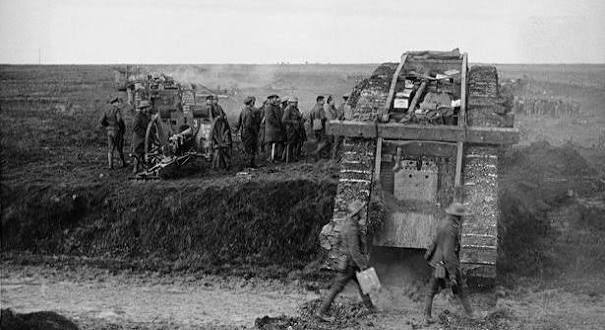
    The British Mark I tank debuted at the Battle of the Somme on September 15, 1916. Of the 49 available, only 32 even reached the start line. Many broke down or ditched in the mud. The specifications were impressive on paper: 28 tons, a top speed of 3.7 mph, a crew of eight, and armor up to 12mm—enough to stop bullets, but not artillery. It was armed with two 6-pounder guns (in the ‘male’ version) or machine guns (in the ‘female’ version).

    But the tank’s real power was psychological. German troops, who had never seen such a machine, often fled at the sight of it. They called it a ‘devil’ or a ‘monster’. For Allied infantry, the sight of a tank was a burst of hope—’our tanks are coming’ became a rallying cry. Yet for the crew inside, the tank was a death trap. Poor ventilation meant heat, fumes, and carbon monoxide poisoning. The noise was deafening, and the fear of burning alive was constant.

    Despite its fearsome appearance, the tank killed relatively few soldiers directly. Its main value was breaking barbed wire, crossing trenches, suppressing machine-gun nests, and demoralizing the enemy. At Cambrai in November 1917, 476 tanks broke through the Hindenburg Line on day one, but the exploitation failed. By the end of the war, Britain had produced about 2,600 tanks, France about 3,900 (including the revolutionary Renault FT with a rotating turret), and Germany only about 20.

    Gas: The Invisible Killer That Could Strike Anytime

    Gas was different. It was invisible, silent, and could strike at any moment—even while soldiers slept. The first large-scale attack at Ypres on April 22, 1915, used chlorine gas released from 5,700 cylinders. The result: about 1,200 killed and 3,000 wounded, but the terror was far greater. French colonial troops broke in panic, creating a gap in the line.

    Gas came in several forms. Chlorine caused choking, coughing, vomiting, and a greenish froth at the mouth. Phosgene, introduced later, was more deadly—it caused delayed pulmonary edema, and it was responsible for about 85% of gas deaths. Mustard gas, first used by Germany in July 1917, was the most terrifying of all. It caused massive blisters, temporary blindness, and agonizing pain. It also contaminated the ground for weeks, forcing troops to wear heavy protective gear that slowed them down and exhausted them.

    Gas was more a disabler than a killer. Total gas casualties across all sides are estimated at 1.2 to 1.3 million, with about 90,000 to 100,000 deaths—only about 2-3% of total war deaths. But gas caused roughly 1 in 4 of all US casualties, and many survivors suffered chronic lung or eye damage for the rest of their lives.

    The Terror of the Invisible vs. The Terror of the Inevitable

    Soldiers feared gas because it was unpredictable and could strike without warning. You couldn’t see it coming, and the countermeasures—gas masks—were uncomfortable and often ineffective. A gas mask could save you from chlorine or phosgene, but mustard gas was designed to defeat masks by attacking the skin. The fear of gas was a constant, low-grade dread that wore on men’s nerves.

    Tanks, on the other hand, were terrifying because they were visible, loud, and seemingly unstoppable. To face a tank was to face a mobile fortress that could crush you under its tracks or cut you down with machine-gun fire. But tanks were also unreliable and vulnerable to artillery. A well-placed shell could turn one into a burning coffin. The terror of a tank was immediate and visceral, but it was also brief—you either survived the encounter or you didn’t.

    Which Was More Terrifying?

    Both weapons were terrifying in their own ways, but for different reasons. Gas was a slow, lingering terror that could strike at any time, even in the safety of a dugout. It was a weapon that disabled more than it killed, leaving survivors with permanent scars. Tanks were a sudden, explosive terror that announced themselves with a roar and a cloud of smoke. They were deadly to face, but they were also a source of hope for the troops who had them on their side.

    In the end, artillery remained the true ‘king of battle,’ causing 60-70% of all casualties. But among the new weapons of WWI, gas and tanks each carved out a unique niche of fear. Gas was the invisible enemy that made soldiers dread the air they breathed. Tanks were the mechanical monsters that made them dread the ground they stood on. Both were horrifying, and both changed the face of warfare forever.

    The question of which weapon was more terrifying may never have a single answer. It depends on whether you fear the unknown or the inevitable. Gas was a weapon of psychological attrition, wearing down soldiers with the constant threat of a silent, painful death. Tanks were a weapon of shock and awe, crushing the enemy with raw mechanical power. Both were born of the same desperation, and both left an indelible mark on the soldiers who faced them. In the end, the true horror of WWI was not any single weapon, but the brutal reality that mankind had found new and inventive ways to kill each other on an industrial scale.

    Summary

    • Gas caused an estimated 1.2-1.3 million casualties, with about 90,000-100,000 deaths; it was more a disabler than a killer.
    • Tanks killed relatively few soldiers directly but were a major psychological weapon, causing German troops to flee at the sight of them.
    • Gas was invisible, silent, and could strike anytime, creating constant dread; mustard gas could defeat gas masks by attacking the skin.
    • Tanks were loud, visible, and terrifying to face, but also unreliable and vulnerable to artillery; they inspired hope in Allied troops.
    • Artillery remained the biggest killer, causing 60-70% of casualties, but both tanks and gas added new dimensions of terror to the battlefield.

    FAQ

    Q: How many tanks were used in WWI?
    A: Britain produced about 2,600 tanks, France about 3,900, and Germany only about 20. The first use was at the Somme in 1916, with only 32 of 49 tanks reaching the start line.

    Q: Why was mustard gas so terrifying?
    A: Mustard gas caused severe blisters, temporary blindness, and agonizing pain. It also contaminated the ground for weeks, forcing troops to wear heavy protective gear, and it could penetrate gas masks by attacking the skin.

    Q: Did gas kill more soldiers than tanks?
    A: Yes, gas caused an estimated 90,000-100,000 deaths, while tanks killed relatively few directly. However, both were secondary to artillery, which caused 60-70% of all casualties.

    Q: How did soldiers protect themselves from gas?
    A: Gas masks, such as the box respirators introduced in 1916, were effective against chlorine and phosgene, but mustard gas could defeat them by causing skin burns.

    Q: What was the main tactical role of tanks?
    A: Tanks were used primarily to break barbed wire, cross trenches, suppress machine-gun nests, and demoralize enemy infantry. Their psychological impact was often greater than their physical destruction.

  • The Code That Forbade Surrender: Bushido and the Japanese Soldier in WWII

    The Code That Forbade Surrender: Bushido and the Japanese Soldier in WWII

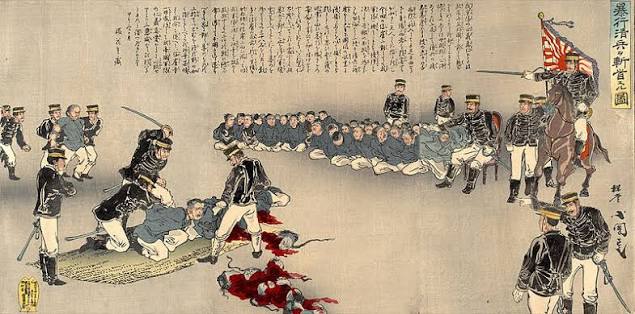
    In the spring of 1945, on the island of Okinawa, a Japanese soldier named Kiyoshi Ogawa climbed into a bomb-laden plane. His mission was not to return. He was one of thousands of pilots who volunteered for suicide attacks, believing that dying for the Emperor was the highest honor. But Ogawa’s choice was not simply the result of an ancient warrior code. It was the product of a modern, carefully constructed ideology that had been built over decades.

    This ideology, called bushido, or ‘the Way of the Warrior,’ has become synonymous with the Japanese refusal to surrender. Yet the reality is more complex. The code that demanded death before dishonor was not a timeless tradition but a reinvented doctrine, wielded by the state to create an army that would fight to the last man. This article explores how bushido was transformed from a samurai ideal into a weapon of war, and why so many Japanese soldiers chose death over capture.

    The Samurai Ideal: A Flexible Code

    The samurai emerged in Japan during the Heian period (794–1185) as provincial warriors. Their early ethos was pragmatic. In the Gempei War (1180–1185), samurai surrendered, ransomed captives, and even changed sides when it suited them. The romanticized ideal of death before dishonor was not absolute.

    It was only during the long peace of the Edo period (1603–1868) that bushido was codified. With no wars to fight, samurai became bureaucrats, and their code became a philosophy of loyalty and self-discipline. In 1716, Yamamoto Tsunetomo wrote the Hagakure, a manual that declared, ‘The Way of the Samurai is found in death.’ But this was a spiritual ideal, not a practical guide. Many samurai lived long lives, and surrender was not always seen as shameful.

    The Meiji Reinvention

    The Meiji Restoration of 1868 abolished the samurai class, but the new government needed a unifying ideology. It revived bushido, but with a new twist. The code was fused with Shinto emperor-worship and Confucian loyalty to create a state religion of sacrifice.

    In 1882, Emperor Meiji issued the Imperial Rescript to Soldiers and Sailors, which demanded absolute loyalty and obedience. Soldiers were taught that death in battle was the highest honor. This was a break from the past: the samurai’s loyalty had been to a lord, but now it was to the Emperor, a divine figure.

    The Indoctrination Machine

    By the 1930s, Japan was a militarist state, and indoctrination was systematic. Children in schools learned ‘moral education’ (shushin), which glorified self-sacrifice. They heard stories of the ‘Three Brave Warriors’ of the 1932 Shanghai Incident, who died in a suicide charge. The military itself was a brutal institution. Recruits were hazed and beaten to break their individuality. Surrender was equated with cowardice and betrayal.

    In 1941, General Tojo Hideki issued the Senjinkun, or Field Code of Conduct. It was a simple, chilling document that stated: ‘Do not suffer the shame of being taken alive.’ It was read aloud daily and treated as sacred. The code left no room for interpretation: capture was a crime against the Emperor and the nation.

    The Battlefield Reality

    On the battlefield, the no-surrender ethos was reinforced by fear. Japanese soldiers were told that Allied forces would torture and execute prisoners. This was partly propaganda, but there were real instances of Allied atrocities, such as the killing of Japanese POWs at the Battle of the Bismarck Sea in 1943. The Japanese military also had no provision for surrender. There was no protocol, no training. Officers often shot men who tried to give up.

    Cultural shame was a powerful force. Surrender brought disgrace not only to the soldier but to his family and hometown. Families of POWs were ostracized, and some soldiers’ families were told they had died honorably even when they were captured. This social pressure made death seem like the only acceptable option.

    The result was a staggering casualty rate. Of approximately 1.74 million Japanese soldiers killed in WWII, only about 20,000 to 50,000 were taken prisoner by Western Allies (excluding Soviet captures). This ratio of dead to captured was far higher than in other major armies, such as the German or American.

    The Modern Invention

    Scholars like John Dower and Edward Drea argue that the ‘death cult’ was a modern invention. They point out that the Hagakure was not widely read until the 1930s, when it was resurrected as propaganda. The Meiji and Showa states deliberately cherry-picked and distorted bushido to create a military ethos that prioritized efficiency over life.

    This view is supported by the fact that the phenomenon was not uniform. Some Japanese soldiers did surrender, especially late in the war. Some units fought for survival rather than honor. The no-surrender ethos was strongest among officers and the most indoctrinated. Even so, the pressure was immense. Group dynamics and peer pressure made individual survival unthinkable. The unit was a ‘total institution’ that demanded absolute conformity.

    The Post-War Repudiation

    After 1945, under Allied occupation, bushido was officially repudiated as militaristic propaganda. The 1947 Constitution renounced war, and the Japanese military was disbanded. But the legacy of bushido did not disappear. It persists in corporate culture, where loyalty and hard work are still valued, and in martial arts, where discipline and honor are emphasized.

    The story of bushido is a cautionary tale about the power of ideology. It shows how an ancient code, reinvented for modern purposes, can drive ordinary men to extraordinary acts of self-destruction. It also reminds us that the line between honor and fanaticism is often drawn by those in power.

    The Japanese soldiers who fought to the death were not the products of an unchanging ancient code. They were the products of a modern state that systematically indoctrinated them with a distorted version of bushido. Understanding this distinction is crucial, not only for historical accuracy but for recognizing how ideologies can be weaponized. The code that forbade surrender was a choice, made by leaders who valued military efficiency over human life. And it cost over a million lives.

    Summary

    • Bushido, the ‘Way of the Warrior,’ was not an unchanging ancient code but a flexible ethic that was reinvented in the Meiji era for nation-building.
    • The 1882 Imperial Rescript and the 1941 Senjinkun explicitly forbade surrender, framing capture as a shameful crime.
    • Indoctrination through education, military training, and propaganda created a culture where death was preferred over dishonor.
    • Of 1.74 million Japanese soldiers killed, only 20,000–50,000 were taken prisoner, a far lower ratio than in other armies.
    • After WWII, bushido was repudiated, but its legacy persists in modern Japanese culture.

    FAQ

    Q: Was bushido the sole cause of Japanese soldiers’ refusal to surrender?
    A: No. Bushido was a key factor, but it was supplemented by military indoctrination, the Senjinkun, fear of Allied mistreatment, and deep cultural shame. The state deliberately promoted a distorted version of bushido to create soldiers who would fight to the death.

    Q: Did any Japanese soldiers surrender during WWII?
    A: Yes. Some did, especially late in the war. The no-surrender ethos was strongest among officers and the most indoctrinated. The overall ratio of dead to captured, however, was far higher than in other armies.

    Q: What is the Senjinkun?
    A: The Senjinkun, issued in 1941 by General Tojo, was the Field Code of Conduct for the Japanese military. It explicitly stated, ‘Do not suffer the shame of being taken alive,’ and was read aloud daily.

    Q: How was bushido used after the Meiji Restoration?
    A: The Meiji government revived bushido as a tool for nation-building, fusing it with Shinto emperor-worship and Confucian loyalty. It became a state ideology that demanded absolute sacrifice for the Emperor.

    Q: What happened to bushido after WWII?
    A: Under Allied occupation, bushido was officially repudiated as militaristic propaganda. The 1947 Constitution renounced war. However, elements of the code persist in Japanese corporate culture and martial arts.

  • The Finnish Winter War: How One Nation Defied the Soviet Giant

    The Finnish Winter War: How One Nation Defied the Soviet Giant

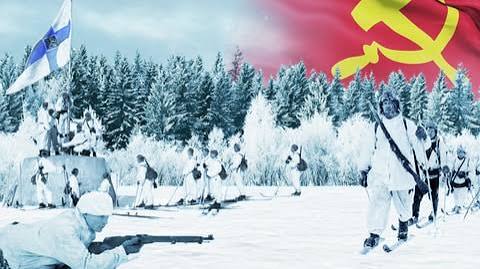
    On November 30, 1939, at 6:50 in the morning, Soviet artillery opened fire across the Karelian Isthmus. Without a formal declaration of war, the Red Army rolled into Finland, expecting a swift victory over a nation of barely three and a half million people. Instead, they met a wall of snow, silence, and stubborn resistance that would become legend.

    For 105 days, Finland—outnumbered, outgunned, and fighting in the deep winter—held the Soviet giant at bay. The world watched as a small democracy defied the odds, and in doing so, Finland forged a national identity that endures to this day. This is the story of the Winter War, a conflict that reshaped the map of Northern Europe and exposed the cracks in the Soviet war machine.

    The Spark: Stalin’s Demand and Finland’s Refusal

    The roots of the Winter War lie in the uneasy geography of the Baltic. Leningrad, the Soviet Union’s second-largest city, sat just 32 kilometers from the Finnish border. To Stalin, this was an unacceptable vulnerability. He feared that Finland could become a launching pad for an invasion by Germany or other hostile powers. In October 1939, the Kremlin presented Helsinki with an ultimatum: exchange Finnish territory near Leningrad for larger but less valuable Soviet land in eastern Karelia, and lease the Hanko Peninsula as a naval base.

    Finland saw this as a prelude to annexation. The government, led by President Kyösti Kallio and Foreign Minister Väinö Tanner, refused. The Soviet Union, having already signed the Molotov-Ribbentrop Pact with Nazi Germany—which placed Finland in the Soviet sphere—was not prepared to take no for an answer.

    The Invasion: A Miscalculation of the Worst Kind

    The Red Army that crossed the border on November 30 was a force the Finns had no hope of matching. Estimates suggest between 450,000 and 1 million Soviet troops were committed, supported by roughly 1,000 aircraft and 2,000 to 3,000 tanks. Finland could field only about 340,000 to 400,000 men, with just 32 tanks and 114 aircraft, most of them obsolete. The Soviet high command expected the campaign to last a few weeks at most. They were wrong.

    What the Red Army hadn’t accounted for was the terrain, the weather, and the Finnish soldier. The Karelian Isthmus was defended by the Mannerheim Line, a series of fortifications that, while not as formidable as the Maginot Line, was perfectly suited to the forested, lake-dotted landscape. And then there was the winter—temperatures dropped to -40°C, and the Finns, who knew how to ski and fight in the cold, used it to their advantage.

    The Battles That Made Legends

    In December 1939, the Red Army’s advance ground to a halt. At the Battle of Tolvajärvi, Finnish forces under Colonel Paavo Talvela launched a surprise counterattack that routed a Soviet division. But the most famous engagement came at Suomussalmi, where Finnish troops encircled and destroyed two Soviet divisions on the Raate Road. The Finns, moving silently on skis, cut the enemy columns into small pockets and picked them off one by one. It was a victory that stunned the world and gave birth to the myth of the ‘White Death’—a nickname for Finnish sniper Simo Häyhä, who reportedly accounted for over 500 kills.

    The Soviet military, already reeling from Stalin’s purges of its officer corps in 1937-38, proved ill-prepared for this kind of unconventional warfare. Poor logistics, low morale, and commanders who refused to adapt to the conditions led to catastrophic losses. But the Red Army had numbers on its side, and Stalin was not willing to accept defeat.

    The Soviet Reckoning: Timoshenko and the February Offensive

    In January 1940, Stalin replaced the initial commander, Kirill Meretskov, with Marshal Semyon Timoshenko. The Red Army regrouped, bringing in fresh troops, heavy artillery, and overwhelming air power. On February 1, they launched a massive offensive against the Mannerheim Line. For weeks, Soviet artillery pounded the Finnish positions, while waves of infantry and tanks advanced, often suffering horrific losses but slowly grinding down the defenders.

    By mid-February, the line was breached. The Finnish army, exhausted and running low on ammunition, fell back. Yet even in retreat, they fought with a ferocity that earned the respect of their enemies. The Soviet breakthrough was achieved only at tremendous cost, and it was clear to Moscow that a full conquest of Finland would require a complete reorganization of its forces—time Stalin was not willing to give.

    The Moscow Peace Treaty: Independence, but at a Price

    On March 12, 1940, Finland signed the Moscow Peace Treaty. The terms were harsh: Finland ceded the Karelian Isthmus, the city of Viipuri (Vyborg), and parts of Ladoga Karelia—about 10% of its pre-war territory. The Hanko Peninsula was leased to the USSR for 30 years as a naval base. In total, roughly 400,000 to 450,000 Finns were evacuated from the ceded lands, leaving behind homes, farms, and ancestral graves.

    But Finland kept its independence. That was the key outcome. The Soviet Union, despite its overwhelming superiority, had failed to subjugate the country. For the Finns, this was a moral victory that would shape their national psyche for generations. The ‘Spirit of the Winter War’—a term used to describe the unity and resilience of the Finnish people—became a cornerstone of their identity, healing the deep divisions of the 1918 Civil War.

    The Global Repercussions

    On December 14, 1939, the League of Nations expelled the Soviet Union for its aggression—an act that was largely symbolic but demonstrated the outrage of the international community. Britain and France debated sending an expeditionary force to aid Finland, but the plan was never executed, in part because of Scandinavian neutrality and in part because the Allies were more interested in cutting off Swedish iron ore supplies to Germany.

    Germany, surprisingly, remained neutral, bound by the Molotov-Ribbentrop Pact. But Hitler watched the Red Army’s clumsy performance with growing contempt. The Winter War exposed glaring weaknesses in the Soviet military—poor leadership, ineffective logistics, and low morale—which directly contributed to Hitler’s decision to launch Operation Barbarossa in June 1941. The Winter War, in effect, helped shape the course of World War II.

    The Legacy of the Winter War

    Today, the Winter War remains a pivotal moment in Finnish history. It is remembered not as a defeat, but as a testament to the power of determination against overwhelming odds. The term ‘sisu’—a Finnish concept of grit and resilience—became a national motto. The war also had a profound impact on the Soviet Union, forcing Stalin to enact military reforms that would ultimately help defeat Germany.

    The human cost was staggering: Soviet casualties are estimated at 126,000 to 170,000 killed or missing, with 200,000 to 270,000 wounded, while Finland lost 25,000 to 27,000 dead and 43,000 to 45,000 wounded. The ratio of losses—roughly 5 to 1 against the Soviets—tells the story of a mismatched fight where skill and determination often trumped raw numbers.

    As the world watched in the winter of 1939-40, a small nation stood its ground against a superpower. The Winter War may have been a territorial loss for Finland, but it was a strategic and moral victory that resonated far beyond its borders. It proved that even in the darkest of times, courage and unity can defy the odds.

    The Finnish Winter War ended on March 13, 1940, but its echoes have never faded. It showed that numbers alone do not decide the outcome of a conflict—that a determined people, fighting for their homes and their independence, can hold back a giant. Finland lost territory, but it preserved its sovereignty, its culture, and its pride. The world learned a lesson that would shape the years to come: the Red Army was not invincible, and the cost of aggression can be far higher than any dictator anticipates. For Finland, the Winter War remains a defining moment—a story of courage, sacrifice, and an unbreakable will to be free.

    Summary

    • Finland defied Soviet invasion for 105 days (Nov 30, 1939 – Mar 13, 1940), despite being vastly outnumbered and outgunned.
    • Key victories at Tolvajärvi and Suomussalmi showcased Finnish skiing tactics and ‘sisu’ resilience.
    • The Moscow Peace Treaty forced Finland to cede 10% of its territory, but it retained its independence.
    • Soviet losses were catastrophic (126,000–170,000 killed), exposing military weaknesses that influenced Hitler’s decision to invade the USSR.
    • The war forged a unified Finnish national identity and left a lasting cultural legacy.

    FAQ

    Q: Why did the Soviet Union invade Finland in 1939?
    A: The main reasons were strategic security—Leningrad was only 32 km from the Finnish border—and Stalin’s fear that Finland could be used as a staging ground for an invasion by Germany or other powers. The USSR also sought territorial concessions and a naval base at Hanko, which Finland refused.

    Q: What was the ‘Mannerheim Line’?
    A: It was a defensive fortification line across the Karelian Isthmus, built by Finland to deter Soviet aggression. While not a continuous wall, it used natural terrain—lakes, forests, and rocks—to create strong defensive positions. It played a crucial role in halting the initial Soviet advance.

    Q: How did Finland manage to hold out for so long?
    A: Finland’s success was due to a combination of factors: knowledge of the harsh winter terrain, excellent soldier training, effective use of ski troops and guerrilla tactics, and strong national unity that transcended political divisions. The Red Army, by contrast, was ill-prepared for winter warfare and suffered from poor leadership and logistics.

    Q: What were the terms of the Moscow Peace Treaty?
    A: Finland ceded about 10% of its territory, including the Karelian Isthmus, the city of Viipuri, and parts of Ladoga Karelia, and leased the Hanko Peninsula to the USSR for 30 years. Approximately 400,000–450,000 Finns were evacuated from these areas.

    Q: How did the Winter War affect World War II?
    A: The war exposed the Red Army’s weaknesses, leading Hitler to believe the USSR could be quickly defeated—a key factor in his decision to launch Operation Barbarossa in 1941. It also delayed Soviet attention and forced military reforms that later helped the USSR defeat Germany. The war also led to the League of Nations expelling the USSR, and it shaped Allied plans for Scandinavia, though these were never executed.

  • Why the First World War Lasted So Long: The Anatomy of a Stalemate

    Why the First World War Lasted So Long: The Anatomy of a Stalemate

    On the morning of August 22, 1914, the French Army suffered 27,000 casualties—the deadliest single day in its history. The war was barely three weeks old, and already the quick, decisive victory every general staff had promised was unraveling. By September, the German advance on Paris had been halted at the Marne, and within months, a line of trenches stretched from the North Sea to Switzerland. The war would grind on for another four years, consuming millions of lives and toppling empires.

    Why did the First World War, expected to be over by Christmas, drag on for over 1,500 days of trench warfare? The answer lies not in a single blunder, but in a lethal combination of military technology, industrial mobilization, and political inflexibility that turned a continental conflict into a global war of attrition.

    The Quick-War Mirage

    In 1914, every major European power planned for a short war. The German Schlieffen Plan aimed to knock out France in six weeks, then turn east to face Russia. Austria-Hungary expected a swift punitive strike against Serbia. Russia’s mobilization plans were geared toward rapid offensives into East Prussia. These plans were built on speed, rail timetables, and the belief that modern economies could not sustain a long war.

    But the plans ignored a fundamental shift in warfare: the firepower revolution. The magazine rifle, the machine gun, quick-firing artillery, and barbed wire gave defenders an overwhelming advantage. A handful of men with machine guns could mow down advancing infantry by the thousands. The first months of the war proved this brutally. At the Battle of the Marne in September 1914, the French and British halted the German advance, but at a staggering cost. The “Race to the Sea” that followed extended the front line northward, but neither side could outflank the other. By Christmas, the Western Front was a continuous, fortified line.

    The Defense Dominates

    The technology of the era favored the defender. Artillery, which caused the majority of casualties, could be pre-sighted on no-man’s-land. Barbed wire slowed attackers, turning them into targets. Machine guns swept the battlefield. And when an offensive did achieve a breakthrough, the reserves—moved by rail—could seal the gap faster than the attackers could exploit it on foot or horseback. The tactical mobility of defenders outpaced the strategic mobility of attackers.

    Commanders tried to break the deadlock with sheer mass. At Verdun in 1916, German General Falkenhayn aimed not to take the city but to “bleed the French Army white”—to force them into a battle of attrition they could not win. The French held, but at a cost of over 700,000 casualties on both sides. The Somme, launched the same year, was meant to relieve pressure on Verdun. It produced over a million casualties for a maximum advance of about seven miles. Neither battle changed the strategic picture.

    The Industrial War of Attrition

    The war lasted because both sides could absorb enormous losses and keep fighting. Total war economies shifted to produce shells, guns, and equipment on an unprecedented scale. Factories churned out artillery shells by the millions. Conscription replaced the men who fell. The British blockade of Germany and the German U-boat campaign against Allied shipping turned the war into an economic contest as much as a military one. Each side’s industrial capacity allowed it to replace losses, so neither could achieve a decisive breakthrough.

    The learning curve was slow. Tanks appeared on the Somme in 1916, but were too few and mechanically unreliable. Stormtrooper tactics and creeping barrages matured only by 1917–18. Yet even the great German spring offensive of 1918, using these new tactics, failed to break the Allied lines before American reinforcements arrived in strength.

    The Global Reach

    The war was never just a European affair. The Ottoman Empire’s entry in 1914 opened fronts in Gallipoli, Mesopotamia, Palestine, and the Caucasus. Colonial empires mobilized troops from Africa, India, and the Pacific. The British naval blockade and German U-boat campaigns made this a global economic war. This global dimension stretched resources and ensured that no single defeat could end the conflict.

    The Political Lock

    War aims expanded as the war ground on. What began as a punitive action against Serbia grew into maximalist goals: annexations, reparations, regime change, the destruction of rival empires. Neither alliance could accept a compromise peace without risking domestic political collapse. Nationalist publics, war-bond investments, and the “spirit of 1914” made it politically impossible for leaders to seek a negotiated peace. Governments feared that admitting failure would trigger revolution—a fear realized in Russia in 1917, and nearly in Germany and France the same year.

    The Russian Revolution and the Treaty of Brest-Litovsk in March 1918 removed Russia from the war, giving Germany a temporary advantage. But the subsequent spring offensives failed to break the Allied lines before American troops arrived in force. The war ended not with a decisive battlefield victory, but with military exhaustion, the collapse of the Central Powers’ home fronts, and the Armistice of 11 November 1918.

    The Final Months

    By the summer of 1918, the Central Powers were cracking. The Allied blockade had caused widespread famine in Germany. Mutinies broke out in the German Navy, and revolutions toppled the Kaiser. Austria-Hungary dissolved into nationalist chaos. The war ended because the home fronts collapsed, not because the armies were defeated in a single battle. The First World War lasted so long because it became a war of attrition—a grinding, industrial slaughter that neither side could win quickly, but neither could abandon.

    The First World War lasted so long because it was a war of attrition fought with the technology of the industrial age. The quick-war plans of 1914 failed because the defense dominated, and total war economies allowed both sides to absorb staggering losses. Political leaders, trapped by their own maximalist war aims and nationalist publics, could not accept a compromise peace. The war ended only when the Central Powers’ home fronts collapsed under the strain of blockade and exhaustion. The Great War’s longevity was not an accident—it was the logical outcome of a world that had industrialized warfare but had not yet developed the means to end it quickly.

    Summary

    • The First World War lasted over 1,500 days because no decisive military breakthrough was possible given contemporary technology and tactics.
    • The defense dominated due to machine guns, barbed wire, and quick-firing artillery; railways allowed defenders to reinforce faster than attackers could exploit breakthroughs.
    • Total war economies enabled both sides to replace losses, turning the conflict into a war of attrition.
    • War aims expanded over time, making compromise politically impossible for leaders.
    • The war ended through exhaustion, blockade, and home-front collapse, not a single decisive battle.

    FAQ

    Q: What was the Schlieffen Plan and why did it fail?
    A: The Schlieffen Plan was Germany’s strategy to defeat France quickly by invading through Belgium, then turning east to face Russia. It failed at the Battle of the Marne in September 1914, when the French and British halted the German advance. The plan underestimated the speed of Russian mobilization and the resilience of the French army.

    Q: Why did trench warfare lead to a stalemate?
    A: Trench warfare created a static, fortified line where the defense had overwhelming advantages. Machine guns, barbed wire, and pre-sighted artillery made frontal assaults extremely costly. Even when breakthroughs occurred, defenders could use railways to rush reserves to seal the gap, while attackers on foot could not exploit the breach quickly enough.

    Q: How did the war become a global conflict?
    A: The Ottoman Empire’s entry in 1914 opened fronts in the Middle East and Caucasus. Colonial empires mobilized troops from Africa, India, and the Pacific. The British naval blockade and German U-boat campaigns turned the war into an economic struggle across the globe.

    Q: What role did the Russian Revolution play in prolonging the war?
    A: The Russian Revolution in 1917 led to Russia’s withdrawal from the war, allowing Germany to concentrate forces on the Western Front. However, the resulting spring offensives in 1918 failed to break the Allied lines before American troops arrived in strength, prolonging the war until autumn.

    Q: Why didn’t either side seek a negotiated peace?
    A: War aims expanded over time to include annexations, reparations, and regime change. Nationalist publics and political leaders feared that compromising would trigger domestic collapse. The fear of revolution, which became reality in Russia, made it politically impossible to accept a less-than-total victory.

  • The Anatomy of Defeat: Why Germany Lost the First World War

    The Anatomy of Defeat: Why Germany Lost the First World War

    In the autumn of 1918, the German Empire was not defeated on a single battlefield. It collapsed like a house of cards—militarily exhausted, economically starved, and politically fractured. The end came swiftly: the Hundred Days Offensive broke the Western Front, the British blockade had already crippled the home front, and Germany’s allies deserted one by one. Within weeks, the Kaiser fled, the military sued for peace, and a revolution erupted in Berlin. This article traces the multifaceted reasons behind Germany’s defeat, from strategic blunders to the devastating effects of total war.

    The Last Gamble: The Spring Offensives of 1918

    By early 1918, Germany’s situation was dire. The British blockade had been strangling the country for over three years, and the entry of the United States into the war in April 1917 threatened to tip the balance permanently against the Central Powers. General Erich Ludendorff, the de facto military dictator of Germany, knew that time was not on his side. He launched a series of five massive offensives—collectively known as the Kaiserschlacht—between March and July 1918, aiming to knock out the Allies before American troops arrived in overwhelming numbers.

    The first offensive, Operation Michael, began on March 21, 1918, with a devastating artillery bombardment. German stormtroopers, specially trained in infiltration tactics, broke through the British lines and advanced up to 60 kilometers in some places. It was the deepest penetration of Allied lines since the trench warfare began in 1914. For a few weeks, it seemed possible that Germany might win the war.

    But the offensive stalled. The German army had advanced too far from its supply lines, and its soldiers were exhausted and hungry. The Allies, under the unified command of Marshal Ferdinand Foch, held key defensive positions and counterattacked relentlessly. By July, the last German offensive, Friedensturm, had failed. The German army had suffered over 800,000 casualties in these spring offensives—losses that could not be replaced. In contrast, the Allies were reinforced by fresh American troops at a rate of over a million per month by mid-1918.

    The Black Day of the German Army

    August 8, 1918, marked the turning point. At Amiens, Allied forces—including British, French, Canadian, and Australian troops—launched a counteroffensive supported by over 400 tanks. They broke through the German lines with astonishing ease, capturing 15,000 prisoners and 400 guns in a single day. Ludendorff called it “the black day of the German army,” not because of the territorial losses, but because of the morale collapse: German soldiers surrendered in droves, and many units refused to fight.

    The Hundred Days Offensive that followed was a continuous series of Allied attacks that pushed the Germans back relentlessly. The Allies had learned to combine infantry, artillery, tanks, and aircraft in coordinated assaults—tactics that the Germans could not match with their dwindling resources. By September, the German army was in full retreat, but it was not a rout. It was a disciplined withdrawal, yet one marked by growing mutiny and desertion. The German high command knew the war was lost, but they continued to fight, hoping to secure a negotiated peace.

    The Hunger Blockade

    While the German army was being defeated in the field, the home front was collapsing. The British Royal Navy had imposed a naval blockade on Germany from the start of the war, cutting off imports of food, fuel, and raw materials. The blockade was not absolute—some goods trickled through via neutral countries—but it was devastating enough. By 1918, the German civilian population was suffering from severe malnutrition. The infamous “turnip winter” of 1916–17, when the potato crop failed and the population was forced to subsist on turnips, had already caused widespread suffering. Estimates suggest that between 500,000 and 800,000 German civilians died from starvation and disease caused by the blockade.

    The blockade also crippled Germany’s war economy. Without access to overseas resources, Germany had to rely on Ersatz (substitute) materials—synthetic rubber, ersatz coffee, and even bread made with sawdust. But these substitutes were inferior and never enough. By 1918, German factories were producing fewer shells, guns, and aircraft than the Allies. The German war machine was slowly starving to death.

    The Collapse of Germany’s Allies

    Germany’s strategic position was further weakened by the rapid collapse of its allies in the autumn of 1918. On September 29, Bulgaria signed an armistice with the Allies, opening the road to the Danube and threatening Germany from the south. On October 30, the Ottoman Empire capitulated, followed by Austria-Hungary on November 3. These defections left Germany isolated, fighting alone on multiple fronts. The German army had to divert troops to shore up its faltering allies, further weakening its already exhausted forces in the West.

    The collapse of Austria-Hungary was particularly significant. The Austro-Hungarian Empire, Germany’s primary ally, had been a liability for years. Its multi-ethnic armies were riddled with dissent and desertion. By October 1918, the empire was disintegrating into independent national states, and its army dissolved. Germany could no longer rely on any ally to tie down Allied forces.

    The Home Front Revolts

    The final blow came from within. In late October 1918, the German High Seas Fleet was ordered to sail out for a final, suicidal battle against the British Royal Navy. The sailors at Kiel mutinied, refusing to throw away their lives in a hopeless gesture. The mutiny quickly spread to other ports and then to industrial cities across Germany. Workers and soldiers formed councils, following the example of the Russian Revolution. By November 9, revolution had reached Berlin, and Kaiser Wilhelm II was forced to abdicate and flee to the Netherlands.

    The new government, led by the Social Democrat Friedrich Ebert, had no choice but to sue for peace. On November 11, 1918, the Armistice was signed in a railway carriage at Compiègne, France. The guns fell silent, but the German army was not decisively beaten in a single battle. It was exhausted, demoralized, and starved, but it was still on foreign soil—inside France and Belgium. This gave rise to the dangerous myth of the “stab in the back.”

    The Myth of the Stab in the Back

    Even before the war ended, Ludendorff and other right-wing figures began to spread the false claim that the German army was “undefeated in the field” and had been betrayed by civilians at home—socialists, democrats, and Jews. This “stab-in-the-back” myth was a deliberate attempt to shift blame away from the military leadership and to undermine the new democratic government. It was a lie, but it was a powerful one. It poisoned German politics for the next two decades and was later weaponized by the Nazis to justify their rise to power.

    The truth was that Germany lost the war because it was militarily, economically, and politically overwhelmed. The failure of the Schlieffen Plan in 1914 condemned Germany to a two-front war of attrition that it could not win. The British blockade strangled its economy. The entry of the United States tipped the numerical balance irrevocably against it. The failure of the 1918 offensives exhausted its army. And the collapse of its allies left it isolated. By November 1918, Germany was not stabbed in the back; it was simply beaten.

    Germany’s defeat in the First World War was not the result of a single catastrophic mistake, but a combination of strategic errors, economic strangulation, military exhaustion, and political collapse. The war ended not because the German army was routed, but because it was no longer able to fight. The armistice of November 11, 1918, was a military surrender, but the myth of the stab in the back would live on to haunt the peace and sow the seeds of an even greater conflict.

    Summary

    • Germany’s last military gamble, the Spring Offensives of 1918, failed to achieve a strategic breakthrough and exhausted irreplaceable reserves.
    • The Allied Hundred Days Offensive, starting with the ‘Black Day’ at Amiens on August 8, 1918, broke the German army’s morale and led to continuous retreat.
    • The British naval blockade starved Germany of food and resources, causing hundreds of thousands of civilian deaths and crippling war production.
    • The rapid collapse of Bulgaria, the Ottoman Empire, and Austria-Hungary in autumn 1918 left Germany isolated and fighting alone.
    • The Kiel Mutiny and subsequent revolution forced the Kaiser to abdicate and led to the armistice, while the ‘stab-in-the-back’ myth falsely blamed civilians for the defeat.

    FAQ

    Q: What was the immediate cause of Germany’s defeat?
    A: The immediate cause was the collapse of the German army during the Hundred Days Offensive, combined with the revolution at home that forced the Kaiser to abdicate and the new government to sign the Armistice on November 11, 1918.

    Q: How did the British blockade contribute to Germany’s defeat?
    A: The blockade cut off Germany’s access to overseas food and raw materials, causing widespread malnutrition and starvation that killed an estimated 500,000–800,000 civilians. It also severely hampered German war production, making it impossible to match Allied output.

    Q: Why did the Spring Offensives of 1918 fail?
    A: The offensives achieved initial territorial gains but outran their supply lines and were halted by Allied counterattacks. German casualties were irreplaceable, while Allied forces were continuously reinforced by fresh American troops.

    Q: What was the ‘stab-in-the-back’ myth?
    A: It was a false claim promoted by Ludendorff and other right-wing figures that the German army was undefeated in the field and had been betrayed by civilians—socialists, democrats, and Jews—who undermined the war effort and forced a surrender. This myth was later used by the Nazis to attack the Weimar Republic.

    Q: How did the collapse of Germany’s allies affect the outcome?
    A: The rapid defeats of Bulgaria, the Ottoman Empire, and Austria-Hungary in the autumn of 1918 isolated Germany, leaving it to fight alone on multiple fronts and reducing its ability to concentrate forces in the West.

  • The Weight of the War: How the Allies Broke Germany in 1918

    The Weight of the War: How the Allies Broke Germany in 1918

    In the spring of 1918, the German army launched its last gamble. Operation Michael, the first of a series of Spring Offensives, pushed the British Fifth Army back forty miles in a matter of days. It was the deepest advance on the Western Front in four years. Yet by August, the tide had turned so completely that Allied forces were advancing daily, and by November, the German high command was suing for peace. How did the Allies, who had suffered years of stalemate and slaughter, finally win?

    The answer is not a single stroke of genius but a grinding combination of material superiority, naval blockade, strategic coordination, and a slow learning curve that culminated in the Hundred Days Offensive. The Allies did not win because they were braver or cleverer; they won because they could afford to lose more and learn faster. The war was a test of endurance, and the Allies had the resources to outlast the Central Powers.

    The Arithmetic of War: Material Superiority

    World War I was a war of production. By 1918, the Allies were out-producing the Central Powers in almost every category that mattered. In steel, the Allies produced more than double Germany’s output. In coal, the British mines alone fed the war effort, while Germany’s access to overseas raw materials was cut off. The United States, entering the war in April 1917, tipped the balance decisively. American industry supplied not only its own troops but also billions of dollars in loans to Britain and France, keeping their war economies afloat.

    The numbers tell a stark story. When the U.S. entered the war, it had a standing army of about 200,000 men. By the Armistice, over 1.2 million American soldiers had arrived in France. This fresh manpower was crucial, not because the Americans were better fighters, but because they filled the ranks depleted by years of attrition. The French army had mutinied in 1917, and the British were scraping the bottom of their manpower barrel. The arrival of the Americans allowed the Allies to absorb German offensives and then counterattack.

    The Silent Siege: The British Blockade

    While the guns thundered on the Western Front, a quieter weapon was strangling Germany. The British Royal Navy’s blockade, initiated in 1914, cut off Germany from overseas food and raw materials. The impact was catastrophic. By 1916, Germany was experiencing the “turnip winter,” where the population survived on turnips because potatoes and grain were scarce. Malnutrition weakened the civilian population, leading to disease and a drop in morale. By 1918, strikes and protests were common in German cities, and the war effort was increasingly unpopular.

    The blockade also affected the military. German troops in 1918 were undersized and hungry, and their equipment was shoddy due to a lack of raw materials like rubber and copper. In contrast, the Allies had access to global resources, and their supply lines were never seriously threatened. The U-boat campaign was Germany’s attempt to counter-blockade Britain, but it failed to starve the island nation and instead provoked the United States into the war.

    Coordination: The Birth of a Unified Command

    For most of the war, the Allies fought as separate armies with separate strategies. This changed in March 1918, when the German Spring Offensives threatened to split the British and French armies. In response, the Allies appointed French General Ferdinand Foch as Supreme Allied Commander, giving him authority to coordinate operations across all fronts. This was a revolutionary step. For the first time, the British, French, and American armies could act as a single force, moving to plug gaps and launch joint offensives.

    Foch’s coordination was key to the Hundred Days Offensive, which began on August 8, 1918. The assault at Amiens used a combined-arms approach: infantry, tanks, artillery, and aircraft working together. The British tanks, first introduced at Cambrai in 1917, had improved significantly. The element of surprise was achieved by not shelling the German lines beforehand, a departure from standard practice. The attack broke through, and the Allies advanced, capturing prisoners and territory in a way that had been impossible in earlier years.

    Learning the Hard Way: Tactical Innovation

    The Allies’ victory was also a story of learning. The early years of the war had been marked by futile frontal assaults against entrenched positions. The Somme in 1916 and Verdun in 1916 taught bloody lessons. By 1918, the Allies had developed “bite and hold” tactics, where they would seize a limited objective, consolidate, and then move on. They used creeping barrages, where artillery fire moved forward just ahead of the infantry, providing cover and neutralizing German machine guns.

    The Hundred Days Offensive showed how much the Allies had evolved. The Battle of Amiens on August 8 was described by German General Erich Ludendorff as the “black day of the German army.” The Allies captured 15,000 prisoners and broke through the German lines. The offensive continued, with the Allies attacking on multiple fronts, forcing the Germans to retreat. The Hindenburg Line, the German defensive position, was breached in late September, and the German army was in full retreat.

    The Collapse of the Central Powers

    The Allied victory was not just won in France. The other Central Powers were crumbling. Bulgaria signed an armistice on September 29, 1918, after an Allied offensive in the Balkans. The Ottoman Empire followed in October, and Austria-Hungary signed an armistice on November 3, 1918. These collapses meant that Germany was fighting alone, with no allies and no hope of reinforcement. The German high command, led by Hindenburg and Ludendorff, realized that the war was lost. Ludendorff, who had been the architect of the Spring Offensives, urged the government to seek an armistice, fearing that the army would collapse and that revolution was imminent.

    The German people were starving and war-weary. The blockade had taken its toll, and news of the military defeats sapped morale. On November 9, the Kaiser abdicated, and on November 11, the Armistice was signed in a railway carriage at Compiègne. The Allies had won, but the cost was immense: over 5 million Allied soldiers dead, and Germany itself was on the brink of revolution.

    A War of Attrition, Won by Endurance

    In the end, the Allies won because they could endure longer. Their economies and populations were larger, their supply lines were open, and their strategy improved. The German Spring Offensives of 1918 were a final gamble that failed, leaving the German army exhausted and demoralized. The Allies had learned to fight a modern war, and they had the resources to do it. The victory was not a single moment but a slow, grinding process that reached its climax in 1918.

    The Allied victory in World War I was not a flash of brilliance but a grinding accumulation of advantages. The blockade starved Germany, the U.S. entry provided fresh resources, and tactical innovation broke the stalemate. By 1918, the Central Powers were exhausted, and the Allies were not. It was a war of endurance, and the Allies simply had more of it.

    Summary

    • The Allies’ industrial and economic superiority, especially after U.S. entry, gave them a decisive advantage in resources and manpower.
    • The British naval blockade caused severe shortages in Germany, weakening civilian morale and military effectiveness.
    • The appointment of Ferdinand Foch as Supreme Allied Commander in 1918 enabled effective coordination among Allied armies.
    • Tactical innovations like bite-and-hold and creeping barrages, plus improved tanks, broke the trench stalemate.
    • The collapse of Bulgaria, the Ottoman Empire, and Austria-Hungary isolated Germany and hastened its surrender.

    FAQ

    Q: Why did the U.S. entry into the war matter so much?
    A: The U.S. provided fresh troops, financial credit, and industrial output. Over 1.2 million American soldiers arrived by the Armistice, filling Allied ranks and tipping the balance.

    Q: How did the British blockade affect Germany?
    A: The blockade cut off food and raw materials, causing malnutrition and disease among civilians, leading to strikes and unrest, and weakening the German war effort.

    Q: What was the Hundred Days Offensive?
    A: A series of Allied offensives starting on August 8, 1918, that broke the German lines and led to the Armistice. It used combined-arms tactics and was the first successful sustained offensive by the Allies.

    Q: Did tanks win the war?
    A: No, tanks were not decisive alone, but they were part of the combined-arms tactics that helped break the stalemate. The Allies used them effectively in 1918, especially at Amiens.

    Q: Why did Germany surrender in 1918?
    A: Germany was exhausted: the Spring Offensives failed, the blockade caused shortages, and the collapse of its allies left it isolated. The high command recognized the war was lost and sought an armistice.

  • The Forgotten Front: Colonial Soldiers’ Untold Stories of the Great War

    The Forgotten Front: Colonial Soldiers’ Untold Stories of the Great War

    When the guns of August 1914 fell silent, the world’s empires called upon their most distant subjects. From the plains of Punjab to the villages of Senegal, millions of men marched to a war they had no part in starting, yet whose consequences would shape their lives forever. This is the story of those soldiers—the men history often overlooks.

    Between 2 and 3 million colonial soldiers served in World War I, yet their experiences remain shadowed by the dominant narratives of European trenches. They fought in the mud of Flanders, the heat of Mesopotamia, and the jungles of East Africa. They died in numbers that rivaled their European counterparts, yet their sacrifices were met with broken promises and colonial indifference.

    The First to Arrive: Indian Soldiers on the Western Front

    In October 1914, the Indian Army Corps—comprising the Lahore and Meerut Divisions—became the first colonial troops to reach the Western Front. They were thrown into the Battle of Ypres, where they faced a new kind of warfare: trenches, machine guns, and poison gas. The cold, the mud, and the unfamiliar landscape took a heavy toll. By the war’s end, over 1.4 million Indian soldiers had served, and around 74,000 never returned home.

    Their presence was a radical departure from pre-war doctrine. The Indian Army was designed for imperial policing on the North-West Frontier, not European battlefields. Yet, the British Empire’s need for manpower was desperate. Indian soldiers fought at Neuve Chapelle, the Somme, and Gallipoli, earning a reputation for bravery that was often met with paternalistic racism.

    The experience was profoundly alienating. Men accustomed to the heat of South Asia suffered frostbite in the trenches. Their traditional diets were unavailable, and their religious practices were often ignored. As the war dragged on, morale plummeted, and some soldiers began to question why they were dying for a distant king.

    The Force Noire: France’s African Soldiers

    France, facing a demographic crisis, turned to its colonies with a theory known as the force noire. General Charles Mangin’s 1910 book of the same name argued that African soldiers were natural warriors who could be used as shock troops. When the war broke out, France mobilized roughly 600,000 colonial soldiers, including about 180,000 from sub-Saharan Africa and 475,000 from North Africa.

    The Tirailleurs Sénégalais—a catch-all term for West African soldiers—bore the brunt of the fighting. Around 135,000 served, and nearly 30,000 were killed. They were often placed in the most dangerous frontal assaults, suffering disproportionate casualties. At Verdun, they held the line when French units faltered, but their sacrifices were rarely acknowledged.

    Recruitment was often coercive. Village chiefs were pressured to supply quotas, and many men were taken against their will. They were promised pay, land, and citizenship—promises that were largely broken after the war. Despite their sacrifices, they returned to a colonial system that treated them as subjects, not citizens.

    The Carrier Corps: Africa’s Invisible Army

    In East Africa, the war took a different form. The German commander Paul von Lettow-Vorbeck led a guerrilla campaign with about 14,000 Askaris (African soldiers) and thousands of carriers. To counter him, the British assembled the Carrier Corps, a force of over 25,000 African porters who carried supplies, ammunition, and food across some of the most unforgiving terrain on Earth.

    These men were not soldiers in the traditional sense, but their contribution was vital. They died in staggering numbers—mortality rates reached 20–25%, largely from disease and starvation. Malaria, dysentery, and influenza killed more men than combat. The Carrier Corps was a logistical lifeline, but their suffering was invisible to the outside world.

    The campaign in East Africa was a sideshow to the European war, yet it consumed resources and lives on an enormous scale. The Germans, too, relied on African carriers, and the civilian population bore the brunt of the conflict. When the war ended, the survivors returned to villages devastated by famine and disease.

    The British West Indies Regiment: Black Soldiers in a White Man’s War

    The British West Indies Regiment (BWIR) was formed in 1915, with over 15,000 men volunteering from the Caribbean. They were initially used as laborers, but eventually saw combat in the Middle East and on the Western Front. The regiment suffered 185 killed in action, but over 1,000 died of disease—a common fate for colonial troops.

    Despite their service, the BWIR faced systemic racism. They were paid less than their white counterparts, and promotion was nearly impossible. After the war, many veterans were denied pensions, and their service was quietly forgotten. The war had been a crucible of hope, but the imperial system remained unchanged.

    Forgotten in the Mud: The Aftermath

    When the armistice was signed in November 1918, colonial soldiers returned to a world that had not changed. In India, veterans expected recognition for their service, but instead found the same colonial administration, the same poverty, and the same lack of rights. Their experiences fueled the growing nationalist movement, as men who had fought for the empire began to question why they should not govern themselves.

    In France, colonial troops were used to occupy the Rhineland after the war. This sparked a racist campaign in Germany, known as the “Black Shame,” which portrayed African soldiers as barbaric occupiers. This propaganda was a precursor to the racial ideologies that would engulf Europe in the next war.

    Commemoration was almost exclusively white. Few memorials were built to honor colonial soldiers, and their names were omitted from official histories. It was not until the 21st century that countries began to acknowledge their sacrifices, with memorials in places like London and Paris.

    Legacy: A Complex Reckoning

    The story of colonial soldiers is not one of simple heroism or victimhood. They fought for empires that often despised them, yet they fought with courage and determination. They were pawns in imperial power games, yet their experiences shaped the course of decolonization.

    In Africa, veterans returned with new ideas about rights and citizenship. In the Caribbean, the BWIR’s treatment fueled labor unrest. In India, the war accelerated the demand for self-rule. The war may have been fought for empire, but it sowed the seeds of its demise.

    Today, historians are piecing together these untold stories, revealing a war that was truly global. The colonial soldiers were not bystanders to history; they were actors who shaped it, even if their voices were silenced for too long.

    The Great War was a global conflict, fought not just by Europeans but by millions of men from every continent. Their stories challenge the traditional narrative of the war as a European tragedy, reminding us that the cost of empire was paid in blood across the globe. As we remember the fallen, we must also remember those who were forgotten—the colonial soldiers whose sacrifices were too often erased from history.

    Summary

    • Approximately 2–3 million colonial soldiers served in World War I, with over 1.4 million from India alone.
    • Colonial troops fought in major battles on the Western Front, Gallipoli, and Africa, often suffering disproportionate casualties.
    • African carriers in East Africa faced mortality rates as high as 20–25%, mostly from disease and starvation.
    • Despite their sacrifices, colonial veterans returned to unchanged colonial rule, with many denied pensions and recognition.
    • The war fueled nationalist movements and challenged imperial authority, shaping the 20th century.

    FAQ

    Q: How many colonial soldiers served in World War I?
    A: Estimates range from 2 to 3 million, though exact numbers are contested. The British Empire contributed over 1.4 million from India, and France about 600,000 from its colonies.

    Q: What role did colonial soldiers play on the Western Front?
    A: Indian troops arrived in October 1914 and fought in major battles like Ypres and the Somme. French colonial units, such as the Tirailleurs Sénégalais, were often used as shock troops in frontal assaults, suffering heavy casualties.

    Q: Why are colonial soldiers often forgotten in World War I history?
    A: Historians have traditionally focused on European experiences. Additionally, colonial powers had little interest in commemorating soldiers from their colonies, and many veterans faced discrimination that silenced their stories.

    Q: What was the Carrier Corps?
    A: The Carrier Corps was a group of African porters who supplied British forces in East Africa. They were not soldiers but were essential to the campaign, and they suffered high death rates from disease and starvation.

    Q: How did colonial service affect post-war independence movements?
    A: Veterans returned with new expectations of rights and citizenship. Their disillusionment with colonial rule fueled nationalist movements in India, Africa, and the Caribbean, contributing to decolonization after World War II.

  • The Silent Siege: How Naval Blockades Strangled Nations and Reshaped History

    The Silent Siege: How Naval Blockades Strangled Nations and Reshaped History

    In the winter of 1918, a young German boy named Erich Kästner watched his mother cry over a bowl of turnip soup. The soup was all they had, and it was thin. Across the North Sea, British warships had been sitting in the gray waters for nearly four years, their steel hulls a constant reminder that no food, no medicine, and no hope could reach Germany’s ports. Kästner later wrote, ‘The blockade was a siege, and we were the besieged.’ He was not a soldier. He was a child, and he was starving.

    Naval blockades are the quiet engines of war. They do not explode or charge across fields. They simply wait. And in that waiting, they can kill more people than any battle. From Napoleon’s Continental System to the U.S. quarantine of Cuba, blockades have strangled economies, toppled governments, and pushed the world to the brink of annihilation—all without a single shot fired at the enemy’s main forces.

    The Weapon That Waits

    A naval blockade is a military act: the isolation of a port or coastline by enemy ships to cut off all maritime traffic. It is not an embargo, which is a political or economic tool. A blockade is enforced by cannon and steel, and it has a legal backbone. Under the 1856 Declaration of Paris and the 1909 Declaration of London, a blockade must be publicly declared, effectively enforced—not a mere “paper blockade”—and applied equally to all nations. But the law has rarely cushioned the suffering it causes.

    Blockades became strategically vital only when nations grew dependent on the sea for survival. In the 19th century, industrial warfare meant that a country’s ability to fight rested on imported food, coal, rubber, and oil. Cut those imports, and the war machine sputters. The concept of a “fleet in being” emerged: a fleet doesn’t have to win a battle; its mere presence deters enemy shipping, creating a psychological and economic stranglehold.

    The American Civil War’s Anaconda Plan is a textbook example. In 1861, the Union navy began a blockade of Confederate ports, stretching from Virginia to Texas. The plan was slow, but it worked. Southern cotton exports plummeted, and weapons imports dried up. By 1865, the Confederacy’s economy was in ruins, and its armies were short on rifles and gunpowder. The blockade didn’t win the war alone, but it squeezed the life out of the South’s ability to fight.

    The Hunger Blockade of World War I

    World War I elevated the blockade to an industrial-scale instrument of mass suffering. Britain, with its overwhelming naval superiority, blockaded Germany from the war’s first days. The British aimed to starve Germany into submission. They intercepted neutral ships, confiscated cargoes, and mined the North Sea. By 1918, Germany was importing almost nothing. The result was catastrophic: an estimated 400,000 to 800,000 German civilians died from starvation and disease—people who never wore a uniform.

    The German government exploited the blockade for propaganda, but the suffering was real. Children, the elderly, and the sick were the first to fall. Turnip soup became a symbol of desperation. The blockade didn’t break the German army, but it broke the home front. The German Revolution of 1918–1919, which toppled the Kaiser, was fueled in part by hunger. The blockade was not lifted until July 1919, months after the armistice, a decision that historians still debate as a deliberate act of cruelty.

    Germany’s response to the British blockade was to invert the concept. Since Germany couldn’t match British surface power, it turned to submarines. The U-boat campaign was a counter-blockade: Germany declared the waters around Britain a war zone and sank merchant ships, including those of neutral nations. The sinking of the Lusitania in 1915, which killed 1,198 civilians, showed how blockades could blur the line between combatant and civilian. The U-boats nearly brought Britain to its knees in 1917, but the introduction of convoys and the entry of the United States turned the tide. Both blockades caused immense suffering, but the Allied blockade was the more effective and the more deadly.

    The Battle of the Atlantic and the Axis Stranglehold

    World War II saw blockades on a global scale. Germany again tried to starve Britain, this time with U-boats in the Battle of the Atlantic. The goal was to sink enough merchant ships to cut Britain’s lifeline. In 1942, German submarines were sinking ships faster than the Allies could build them. The turning point came with improved radar, code-breaking, and air cover. By 1943, the Allies were winning the battle, and the blockade of Germany’s sea routes was nearly complete. The Allies also blockaded Japan, which was heavily dependent on imported oil, rice, and other essentials. The U.S. Navy’s submarine campaign sank Japanese merchant shipping, and by 1945, Japan’s industrial production had collapsed. The blockade contributed to widespread malnutrition and an estimated 1 million civilian deaths, though the atomic bombs and the Soviet invasion ultimately forced Japan’s surrender.

    The blockades of WWII were part of a broader strategy of total war, where the distinction between soldier and civilian dissolved. The Allied blockade of Europe, while designed to weaken the Axis, also caused suffering among occupied populations. The Dutch famine of 1944–1945, which killed tens of thousands, was exacerbated by the German blockade of the Netherlands, a reverse blockade. Blockades were not just between nations; they were also tools of occupation.

    The Brink of Nuclear War: The Cuban Quarantine

    The most dangerous blockade in history came in 1962, during the Cuban Missile Crisis. The United States discovered Soviet nuclear missiles in Cuba, just 90 miles from Florida. President John F. Kennedy chose a “quarantine”—a blockade—rather than an air strike or invasion. U.S. warships formed a ring around Cuba, and Kennedy announced that any Soviet ship carrying offensive weapons would be stopped. The world held its breath. For 13 days, American and Soviet forces teetered on the edge of nuclear conflict. The blockade worked as a tool of coercive diplomacy: Soviet ships turned back, and the crisis ended with a secret deal to remove missiles from both Cuba and Turkey.

    The Cuban quarantine was different from the hunger blockades of the world wars. It was brief, targeted, and did not aim to starve civilians. But it showed that the blockade was still a potent weapon in the nuclear age—a way to apply pressure without escalating to full-scale war. It also highlighted the legal and moral complexities of blockades. Was it legal to stop and search Soviet ships on the high seas? The United States argued it was a quarantine, not a blockade, to avoid the formal declaration required under international law. The crisis passed, but the precedent remains controversial.

    The Ethics of Starvation

    Blockades raise profound ethical questions. Is it legitimate to starve a civilian population to force a military surrender? The international community has tried to answer with law. The Geneva Conventions and modern international humanitarian law place limits on blockades, requiring that food and medicine be allowed through for civilian populations. But these rules are often ignored in practice. The debate over the WWI blockade—whether it was a legitimate military strategy or a war crime—has never been fully resolved. Historians remain divided. Some argue that the blockade was a lawful means of warfare, aimed at breaking Germany’s war-making capacity. Others see it as a deliberate policy of mass starvation, a war crime.

    Modern conflicts have seen blockades in Yemen, Gaza, and elsewhere, where humanitarian organizations decry the civilian toll. The same logic that drove the Anaconda Plan still operates: cut off supplies, and the enemy will eventually capitulate. But the cost in human life is staggering. Children are the most vulnerable. The blockade of Germany in WWI led to a generation of undernourished children, who grew up with lasting health problems. The blockade of Japan in WWII led to food shortages that killed civilians even before the atomic bombs fell.

    The political and psychological effects of a blockade are also profound. A siege mentality can unite a population against the enemy, as it did in Britain during the U-boat campaigns. But it can also breed despair and revolution, as it did in Germany in 1918. Blockades are slow, grinding instruments of war. They test national resolve, create political instability, and can reshape the balance of power long after the war ends.

    Conclusion

    Naval blockades are a paradox of war: they are invisible, silent, and slow, yet they can be more devastating than any battle. From the Continental System to the Cuban quarantine, they have changed the course of history by strangling economies, breaking morale, and killing millions. They are a testament to the brutal calculus of total war, where the line between soldier and civilian is erased. And they remain a haunting reminder that in war, the most powerful weapon is often not the one that explodes, but the one that waits.

    Blockades are a weapon of attrition, and their history is a grim ledger of human suffering. They have been used by empires, republics, and dictatorships alike, and they have always been justified by necessity. But the cost is always borne by the most vulnerable. As long as nations depend on the sea for survival, the blockade will remain a tool of war—and a moral challenge that we have yet to answer.

    Summary

    • A naval blockade is a military isolation of a coast, enforced by warships, distinct from a political embargo.
    • The WWI British blockade of Germany caused an estimated 400,000–800,000 civilian deaths from starvation and disease.
    • The WWII Allied blockade of Japan contributed to approximately 1 million civilian deaths and widespread malnutrition.
    • The Cuban Missile Crisis of 1962 saw a U.S. “quarantine” of Cuba that brought the world to the brink of nuclear war.
    • Modern international law tries to limit blockades by requiring food and medicine to reach civilians, but enforcement remains weak.

    FAQ

    Q: What is the difference between a blockade and an embargo?
    A: A blockade is a military measure enforced by naval forces, while an embargo is a political or economic measure that restricts trade. A blockade physically prevents ships from reaching a port.

    Q: How did the WWI British blockade affect Germany?
    A: The blockade cut off food and raw material imports, leading to an estimated 400,000–800,000 civilian deaths from starvation and disease, and contributed to the German Revolution of 1918–1919.

    Q: Was the Cuban Missile Crisis a blockade?
    A: The United States called it a “quarantine,” but it was a naval blockade of Cuba to prevent Soviet missiles from being delivered. It was a short, targeted action that avoided a direct invasion.

    Q: Are blockades legal under international law?
    A: Yes, but they must be declared, effective, and impartial. Modern humanitarian law also requires allowing food and medicine for civilians, but this is often violated in practice.

    Q: What is the “fleet in being” concept?
    A: It is the idea that a fleet can have strategic effect without fighting a battle, simply by its presence. In a blockade, the mere threat of interception deters enemy shipping, creating economic pressure.

  • The Unfinished Duty: How DNA and Archaeology Are Finding WWI’s Lost Soldiers

    The Unfinished Duty: How DNA and Archaeology Are Finding WWI’s Lost Soldiers

    The fields of the Western Front still give up their dead. A century after the guns fell silent, farmers in the Somme regularly turn up bones and rusted equipment. Construction crews in Flanders hit buried trenches with human remains. The numbers are staggering: of the 9.7 million military deaths in WWI, roughly 30% have no known grave. For the Commonwealth alone, that’s about 300,000 soldiers. In Germany, the Volksbund estimates 1.2 million are still missing on the Western Front.

    Finding these soldiers is a painstaking, often emotional work that blends history, archaeology, and cutting-edge science. It involves metal detectors sweeping former battlefields, ground-penetrating radar scanning for disturbed earth, and DNA matching against living relatives. It’s a race against time, as development and erosion threaten what remains. And it’s a duty that many believe is never truly finished.

    The Scale of the Loss

    The nature of WWI made death anonymous. Trench warfare meant soldiers died in no-man’s land, in collapsed dugouts, or were buried by shellfire. Artillery was the great killer, and it often obliterated bodies or left them under tons of earth. Field burials were hasty, with wooden crosses that rotted or were destroyed by later shelling. Post-war recovery teams, often German POWs, searched the battlefields between 1919 and 1939, but the task was overwhelming. By the time they stopped, hundreds of thousands of bodies remained undiscovered.

    France alone accounts for an estimated 700,000+ missing soldiers from all nations. Memorials like the Menin Gate in Ypres, with its 54,000 names, and the Thiepval Memorial on the Somme, with 72,000, stand as somber roll calls of the missing. But these names are not just historical records—they represent families who never knew what happened to their loved ones.

    How the Search Works Today

    The search for lost soldiers is a methodical process that combines old records with new technology. It starts with historical research. Maps from the war—trench maps, aerial photos, and post-war surveys—are overlaid onto modern satellite imagery. This helps pinpoint likely burial sites, such as old trench lines, shell holes, or documented field graves.

    Once a site is identified, teams use metal detectors to sweep the ground. The presence of military equipment—rifles, ammunition, personal gear—can indicate a body nearby. Ground-penetrating radar (GPR) and LiDAR can reveal disturbed soil or hidden cavities without digging. But the only way to be sure is to excavate.

    Excavations happen in two ways: planned archaeological digs and unplanned discoveries. Planned digs are often driven by research, like the 2009–2010 excavation at Pheasant Wood in Fromelles, where 250 Australian soldiers were recovered from a mass grave. Unplanned discoveries are more common: a farmer plowing a field, a construction crew laying a pipeline, or a riverbank eroding after heavy rain. In France, any human remains found are treated as war dead, and the government must be notified. Excavation then follows, often with archaeologists and military experts.

    The Science of Identification

    Once remains are recovered, the hard work of identification begins. Forensic anthropologists examine the bones to estimate age, height, and any signs of injury—such as a healed fracture or a bullet wound. Dental records, if available, can provide a match. Clothing and equipment, like buttons, insignia, or dog tags, offer direct clues. In 2024, a soldier from the 1916 Battle of the Somme was identified using a rare regimental badge and DNA matching.

    DNA analysis has been the game-changer. Since the 1990s, labs like the Armed Forces DNA Identification Laboratory (AFDIL) in the US have used mitochondrial DNA (maternal line) and Y-chromosome (paternal line) to match remains with living descendants. This requires collecting DNA samples from potential relatives, which can be a delicate process. But it has led to remarkable identifications, such as the 2018 discovery of US soldiers from the “Lost Battalion” in the Argonne Forest, who were identified through DNA.

    The process is not always successful. Some bodies are too fragmented, or the DNA is too degraded. In those cases, soldiers are buried as “unknown” under a headstone that reads “Known Unto God.” The CWGC maintains over 1.7 million graves and memorials across 150 countries, and many of those are for unknown soldiers.

    The Organizations and the Law

    The work is carried out by a mix of official bodies and volunteer groups. The Commonwealth War Graves Commission (CWGC) is the primary body for British Empire casualties. The German War Graves Commission (Volksbund) does the same for German soldiers. The American Battle Monuments Commission (ABMC) oversees US graves and memorials. The French Ministry of Defense manages French military graves and recovery.

    In addition, non-profits and volunteer groups like The Diggers in the UK and La Route des Châteaux in France conduct searches and advocate for recovery. They often work with local authorities and landowners.

    Legal frameworks govern this work. In France, excavation requires government authorization, and any remains found must be treated with respect. The 2005 Fromelles Agreement between the UK, Australia, and France set protocols for excavation and reburial after the mass grave at Pheasant Wood was discovered. Internationally, the 1919 Treaty of Versailles mandated the return of remains and the establishment of cemeteries. The 2006 “Human Remains in Archaeology” guidelines, while UK-based, have influenced practice worldwide.

    Why It Still Matters

    The centenary commemorations of 2014–2018 brought renewed public interest. But the search continues for a more personal reason: families still want answers. For many, a grave—even a known one—brings closure. For others, it’s about historical duty and respect for the dead.

    There are also practical reasons. Development and agriculture are constantly disturbing the ground. Every year, construction projects uncover mass graves, as happened in 2023 at Beaucourt-sur-l’Ancre on the Somme, where 30+ British and German soldiers were found. Erosion along riverbanks and coasts also exposes remains. The work is urgent.

    Each discovery is a story. In 2021, the remains of 13 Australian soldiers from Fromelles were identified and reburied with full military honors. Their families, some of whom had waited over a century, finally had a place to mourn. This is the heartbeat of the work: it turns a name on a memorial into a real person, honored and remembered.

    The search for WWI’s lost soldiers is a testament to human perseverance and compassion. It’s a task that may never be fully complete, but each identification brings a measure of peace to families and ensures that the sacrifice of those soldiers is not forgotten. As technology advances and new discoveries are made, the promise is kept: no soldier left behind, even a century later.

    Summary

    • Approximately 1 million WWI soldiers remain unidentified or missing, including 300,000 from the Commonwealth and 1.2 million Germans.
    • Soldiers are found through metal detection, ground-penetrating radar, historical map analysis, and unplanned discoveries during construction or farming.
    • Identification uses forensic anthropology, artifacts, and DNA matching with living descendants.
    • Key organizations include the CWGC, Volksbund, ABMC, and French Ministry of Defense, operating under legal frameworks like the Fromelles Agreement.
    • Recent discoveries, such as the 2023 mass grave at Beaucourt-sur-l’Ancre, highlight the ongoing need for recovery.

    FAQ

    Q: How many WWI soldiers are still missing?
    A: Approximately 1 million soldiers from all nations remain unidentified or missing, with about 300,000 from the Commonwealth and 1.2 million Germans.

    Q: How are soldiers’ remains discovered today?
    A: They are found through systematic metal detection surveys, excavation during construction or farming, and remote sensing like ground-penetrating radar and LiDAR.

    Q: What methods are used to identify remains?
    A: Identification combines forensic anthropology (age, height, injuries), dental records, artifacts and insignia, and DNA analysis matching with living descendants.

    Q: What happens when remains are found on private land?
    A: In France, any human remains are treated as war dead, and the government must be notified. Excavation follows with proper authorization and archaeological oversight.

    Q: Why are soldiers still being found so long after the war?
    A: Causes include agricultural plowing, construction and infrastructure projects, erosion, and deliberate searches driven by technology and centenary interest.