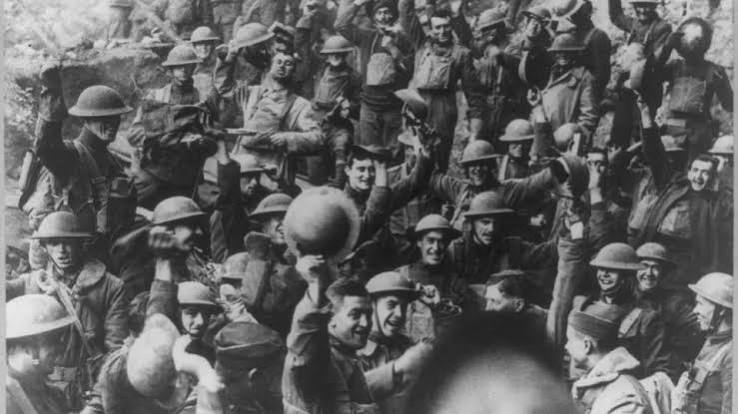
On the morning of August 22, 1914, the French Army suffered 27,000 casualties—the deadliest single day in its history. The war was barely three weeks old, and already the quick, decisive victory every general staff had promised was unraveling. By September, the German advance on Paris had been halted at the Marne, and within months, a line of trenches stretched from the North Sea to Switzerland. The war would grind on for another four years, consuming millions of lives and toppling empires.
Why did the First World War, expected to be over by Christmas, drag on for over 1,500 days of trench warfare? The answer lies not in a single blunder, but in a lethal combination of military technology, industrial mobilization, and political inflexibility that turned a continental conflict into a global war of attrition.
The Quick-War Mirage
In 1914, every major European power planned for a short war. The German Schlieffen Plan aimed to knock out France in six weeks, then turn east to face Russia. Austria-Hungary expected a swift punitive strike against Serbia. Russia’s mobilization plans were geared toward rapid offensives into East Prussia. These plans were built on speed, rail timetables, and the belief that modern economies could not sustain a long war.
But the plans ignored a fundamental shift in warfare: the firepower revolution. The magazine rifle, the machine gun, quick-firing artillery, and barbed wire gave defenders an overwhelming advantage. A handful of men with machine guns could mow down advancing infantry by the thousands. The first months of the war proved this brutally. At the Battle of the Marne in September 1914, the French and British halted the German advance, but at a staggering cost. The “Race to the Sea” that followed extended the front line northward, but neither side could outflank the other. By Christmas, the Western Front was a continuous, fortified line.
The Defense Dominates
The technology of the era favored the defender. Artillery, which caused the majority of casualties, could be pre-sighted on no-man’s-land. Barbed wire slowed attackers, turning them into targets. Machine guns swept the battlefield. And when an offensive did achieve a breakthrough, the reserves—moved by rail—could seal the gap faster than the attackers could exploit it on foot or horseback. The tactical mobility of defenders outpaced the strategic mobility of attackers.
Commanders tried to break the deadlock with sheer mass. At Verdun in 1916, German General Falkenhayn aimed not to take the city but to “bleed the French Army white”—to force them into a battle of attrition they could not win. The French held, but at a cost of over 700,000 casualties on both sides. The Somme, launched the same year, was meant to relieve pressure on Verdun. It produced over a million casualties for a maximum advance of about seven miles. Neither battle changed the strategic picture.
The Industrial War of Attrition
The war lasted because both sides could absorb enormous losses and keep fighting. Total war economies shifted to produce shells, guns, and equipment on an unprecedented scale. Factories churned out artillery shells by the millions. Conscription replaced the men who fell. The British blockade of Germany and the German U-boat campaign against Allied shipping turned the war into an economic contest as much as a military one. Each side’s industrial capacity allowed it to replace losses, so neither could achieve a decisive breakthrough.
The learning curve was slow. Tanks appeared on the Somme in 1916, but were too few and mechanically unreliable. Stormtrooper tactics and creeping barrages matured only by 1917–18. Yet even the great German spring offensive of 1918, using these new tactics, failed to break the Allied lines before American reinforcements arrived in strength.
The Global Reach
The war was never just a European affair. The Ottoman Empire’s entry in 1914 opened fronts in Gallipoli, Mesopotamia, Palestine, and the Caucasus. Colonial empires mobilized troops from Africa, India, and the Pacific. The British naval blockade and German U-boat campaigns made this a global economic war. This global dimension stretched resources and ensured that no single defeat could end the conflict.
The Political Lock
War aims expanded as the war ground on. What began as a punitive action against Serbia grew into maximalist goals: annexations, reparations, regime change, the destruction of rival empires. Neither alliance could accept a compromise peace without risking domestic political collapse. Nationalist publics, war-bond investments, and the “spirit of 1914” made it politically impossible for leaders to seek a negotiated peace. Governments feared that admitting failure would trigger revolution—a fear realized in Russia in 1917, and nearly in Germany and France the same year.
The Russian Revolution and the Treaty of Brest-Litovsk in March 1918 removed Russia from the war, giving Germany a temporary advantage. But the subsequent spring offensives failed to break the Allied lines before American troops arrived in force. The war ended not with a decisive battlefield victory, but with military exhaustion, the collapse of the Central Powers’ home fronts, and the Armistice of 11 November 1918.
The Final Months
By the summer of 1918, the Central Powers were cracking. The Allied blockade had caused widespread famine in Germany. Mutinies broke out in the German Navy, and revolutions toppled the Kaiser. Austria-Hungary dissolved into nationalist chaos. The war ended because the home fronts collapsed, not because the armies were defeated in a single battle. The First World War lasted so long because it became a war of attrition—a grinding, industrial slaughter that neither side could win quickly, but neither could abandon.
The First World War lasted so long because it was a war of attrition fought with the technology of the industrial age. The quick-war plans of 1914 failed because the defense dominated, and total war economies allowed both sides to absorb staggering losses. Political leaders, trapped by their own maximalist war aims and nationalist publics, could not accept a compromise peace. The war ended only when the Central Powers’ home fronts collapsed under the strain of blockade and exhaustion. The Great War’s longevity was not an accident—it was the logical outcome of a world that had industrialized warfare but had not yet developed the means to end it quickly.
Summary
- The First World War lasted over 1,500 days because no decisive military breakthrough was possible given contemporary technology and tactics.
- The defense dominated due to machine guns, barbed wire, and quick-firing artillery; railways allowed defenders to reinforce faster than attackers could exploit breakthroughs.
- Total war economies enabled both sides to replace losses, turning the conflict into a war of attrition.
- War aims expanded over time, making compromise politically impossible for leaders.
- The war ended through exhaustion, blockade, and home-front collapse, not a single decisive battle.
FAQ
Q: What was the Schlieffen Plan and why did it fail?
A: The Schlieffen Plan was Germany’s strategy to defeat France quickly by invading through Belgium, then turning east to face Russia. It failed at the Battle of the Marne in September 1914, when the French and British halted the German advance. The plan underestimated the speed of Russian mobilization and the resilience of the French army.
Q: Why did trench warfare lead to a stalemate?
A: Trench warfare created a static, fortified line where the defense had overwhelming advantages. Machine guns, barbed wire, and pre-sighted artillery made frontal assaults extremely costly. Even when breakthroughs occurred, defenders could use railways to rush reserves to seal the gap, while attackers on foot could not exploit the breach quickly enough.
Q: How did the war become a global conflict?
A: The Ottoman Empire’s entry in 1914 opened fronts in the Middle East and Caucasus. Colonial empires mobilized troops from Africa, India, and the Pacific. The British naval blockade and German U-boat campaigns turned the war into an economic struggle across the globe.
Q: What role did the Russian Revolution play in prolonging the war?
A: The Russian Revolution in 1917 led to Russia’s withdrawal from the war, allowing Germany to concentrate forces on the Western Front. However, the resulting spring offensives in 1918 failed to break the Allied lines before American troops arrived in strength, prolonging the war until autumn.
Q: Why didn’t either side seek a negotiated peace?
A: War aims expanded over time to include annexations, reparations, and regime change. Nationalist publics and political leaders feared that compromising would trigger domestic collapse. The fear of revolution, which became reality in Russia, made it politically impossible to accept a less-than-total victory.
Leave a Reply