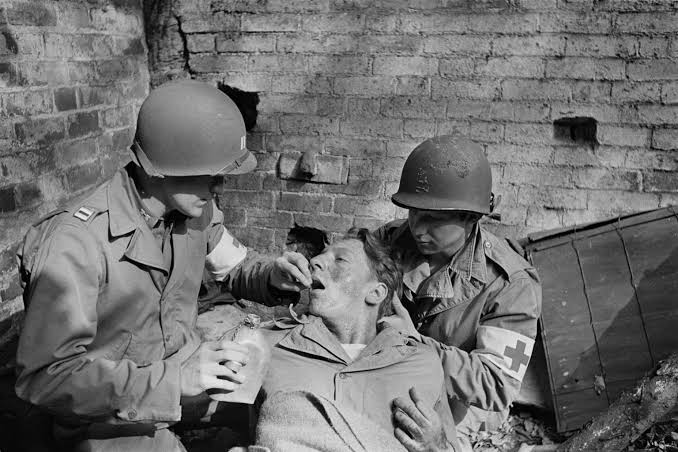
In the summer of 1917, a young British soldier sat trembling in a hospital ward in France. He had not been hit by shrapnel, yet his hands shook uncontrollably, his sleep was plagued by nightmares of the trenches, and the sound of a door slamming sent him diving for cover. His medical file read simply: ‘shell shock.’ The term was new, but the condition was ancient a wound that had followed soldiers home for centuries, wearing different names in different wars.
Before ‘Post-Traumatic Stress Disorder’ entered the psychiatric manual in 1980, the trauma of war was called ‘soldier’s heart,’ ‘railway spine,’ ‘combat fatigue,’ and ‘post-Vietnam syndrome.’ Each name reflected not just the medical understanding of the time, but also the politics, stigma, and institutional priorities that shaped how a suffering soldier was treated or ignored.
The story of PTSD before it had a name is not a tidy timeline of medical progress. It is a story of misdiagnosis, euphemism, and advocacy—a battle fought not on the front lines, but in the wards, courtrooms, and veterans’ halls where the wounds of war were finally given a voice.
The First Names: Soldier’s Heart and Railway Spine
In the 1860s, as the American Civil War raged, Dr. Jacob Mendez Da Costa noticed something strange among Union soldiers. They complained of palpitations, chest pain, and breathlessness—symptoms that suggested heart disease. Yet when he examined them, their hearts appeared structurally normal. Da Costa called the condition ‘irritable heart,’ and it was later known as ‘Da Costa’s syndrome.’
He was not the first to observe such symptoms. A few decades earlier, British physicians had documented similar complaints in survivors of railway accidents, coining the term ‘railway spine.’ The idea was that the jolt of a train crash caused physical damage to the spine, even if no fracture was visible. But Da Costa’s work was different: it tied the symptoms to the stress of combat, not a physical blow. Still, the prevailing assumption was that the problem was organic—a hidden injury, not a mental one.
This view had consequences. Soldiers with ‘irritable heart’ were often discharged with pensions, but they were also sometimes accused of malingering. The notion that psychological stress could produce physical symptoms was slow to take hold. It would take a world war to force the issue.
Shell Shock: A Term Born in the Trenches
In 1915, British psychologist Charles Samuel Myers published a paper in The Lancet describing a new condition among soldiers in the trenches of World War I. He called it ‘shell shock,’ believing it was caused by the physical concussion of exploding shells. The term stuck, but the explanation did not.
As the war ground on, physicians began to realize that shell shock was not limited to men who had been near explosions. Soldiers who had never been under bombardment developed tremors, mutism, paralysis, and terrifying flashbacks. The condition was psychological, not physical—a breakdown under the relentless stress of modern warfare.
The British military treated about 80,000 cases of shell shock during the war, and roughly 20,000 soldiers were pensioned for it. But the diagnosis became a double-edged sword. Commanders worried that it was an easy excuse for shirking duty. In 1917, the British War Office banned the term as an official diagnosis, fearing it would encourage desertion.
Treatment was inconsistent and often cruel. At Craiglockhart War Hospital in Scotland, psychiatrist W.H.R. Rivers used humane talk therapy, helping soldiers like the poet Siegfried Sassoon confront their trauma. But at the National Hospital in London, Lewis Yealland used electric shocks to ‘cure’ mutism, a coercive method that many veterans found degrading. The debate between organic and psychological explanations raged, but the soldiers were caught in the middle.
World War II: The Euphemism of Combat Fatigue
When World War II broke out, military psychiatrists were determined not to repeat the mistakes of the previous war. They had learned something from the shell shock experience: that early, brief, and proximate treatment near the front lines could return more men to duty. This was codified in the ‘PIE’ principles—Proximity, Immediacy, Expectancy—developed by psychiatrist William Menninger.
The U.S. Army adopted the term ‘combat exhaustion’ or ‘combat fatigue’ deliberately. Unlike ‘shell shock,’ which implied a permanent breakdown, ‘combat fatigue’ suggested a temporary, treatable stress reaction. The goal was to reduce stigma and keep soldiers fighting. It worked in the short term: men who were treated close to the front and expected to return to duty often did.
But the euphemism had a dark side. By framing the trauma as a simple exhaustion, the military minimized the long-term psychological damage. The scale of the problem was staggering: the U.S. Army discharged about 500,000 soldiers for psychiatric reasons during the war, and there were roughly one million neuropsychiatric casualties. Yet the official narrative remained that these men just needed rest.
After the war, the first edition of the Diagnostic and Statistical Manual of Mental Disorders (DSM-I) included a category called ‘gross stress reaction,’ but it was rarely used. Most veterans were diagnosed with ‘anxiety reaction’ or simply left to cope on their own. The Korean War produced little new research, and the condition faded from public consciousness.
Vietnam: The Political Birth of Post-Vietnam Syndrome
The Vietnam War changed everything. As soldiers returned home, they brought with them a new set of symptoms—delayed-onset flashbacks, guilt, rage, and a profound sense of alienation. The anti-war movement gave these veterans a platform, and they began to speak out.
In 1972, psychiatrist Chaim Shatan coined the term ‘post-Vietnam syndrome’ in a New York Times op-ed. He described a condition that was not a temporary fatigue but a lasting psychological injury. Veterans’ groups like Vietnam Veterans Against the War lobbied for recognition, holding hearings and sharing their stories. They were joined by psychiatrists like Robert Jay Lifton, who argued that the trauma of war could not be reduced to a simple stress reaction.
This grassroots advocacy paid off. In 1980, the third edition of the DSM included ‘Post-Traumatic Stress Disorder’ as a formal diagnosis. For the first time, the condition had a name that acknowledged its severity and its roots in trauma, not weakness. The inclusion was a victory for veterans, but it also reflected a broader cultural shift—a recognition that the wounds of war were not always visible.
The National Vietnam Veterans Readjustment Study, published in 1988, estimated that 15-30% of Vietnam veterans had experienced PTSD. These numbers were shocking, but they confirmed what the veterans had been saying for years: the war did not end when they came home.
The Legacy of a Name
The history of PTSD before 1980 is not a straight line from ignorance to enlightenment. It is a story of competing theories, institutional priorities, and the slow, painful process of giving a name to an invisible wound. Each era’s label—’soldier’s heart,’ ‘shell shock,’ ‘combat fatigue’—was shaped by the political and medical assumptions of its time. And each label had consequences for the soldiers it described.
When shell shock was banned in 1917, it was not because the condition had disappeared, but because the military feared its misuse. When combat fatigue was coined in WWII, it was not to help veterans but to return them to the front. And when post-Vietnam syndrome was introduced, it was not by a medical committee but by a psychiatrist responding to the voices of veterans themselves.
Today, PTSD is a recognized diagnosis, but the lessons of its history remain relevant. The name we give trauma shapes how we treat it, how we fund it, and how we honor those who suffer it. The soldiers who came home from the Civil War, the trenches, the beaches of Normandy, and the jungles of Vietnam all carried the same wound. It took over a century to give it a name that did not blame the victim.
That name—PTSD—was hard-won. It is a reminder that the trauma of war is not a weakness, but a wound. And like any wound, it deserves treatment, not judgment.
The journey from ‘soldier’s heart’ to ‘PTSD’ was not a smooth evolution of medical knowledge. It was shaped by war, politics, and the courage of veterans who refused to be silent. Today, when we use the term PTSD, we honor those who suffered under its earlier names—and we acknowledge that the trauma they carried was real, even when the medical establishment failed to understand it.
Summary
- Before 1980, PTSD was known by various names, including ‘soldier’s heart,’ ‘shell shock,’ ‘combat fatigue,’ and ‘post-Vietnam syndrome.’
- Each name reflected the medical and political assumptions of its era, often minimizing the condition to protect military manpower.
- Shell shock in WWI was initially thought to be a physical injury, but was later recognized as psychological; the British War Office banned the term in 1917.
- WWII’s ‘combat fatigue’ was a deliberate euphemism to imply temporary stress, though the U.S. Army discharged ~500,000 soldiers for psychiatric reasons.
- Vietnam veterans and advocacy groups pushed for recognition, leading to the formal inclusion of PTSD in the DSM-III in 1980.
FAQ
Q: What was the first name for PTSD?
A: The first widely documented name was ‘soldier’s heart’ or ‘irritable heart,’ coined by Dr. Jacob Mendez Da Costa during the American Civil War to describe cardiac symptoms without organic disease.
Q: Why was ‘shell shock’ banned in WWI?
A: The British War Office banned the term in 1917 because it was seen as an easy excuse for soldiers to avoid duty, not because the condition had disappeared.
Q: What were the PIE principles in WWII?
A: PIE stood for Proximity, Immediacy, and Expectancy—treating soldiers close to the front, immediately after symptoms appeared, with the expectation of returning to duty. This was designed to reduce long-term disability and maintain troop strength.
Q: How did Vietnam veterans influence the PTSD diagnosis?
A: Veterans’ groups like Vietnam Veterans Against the War, alongside psychiatrists like Chaim Shatan and Robert Jay Lifton, advocated for the recognition of ‘post-Vietnam syndrome,’ which led to the inclusion of PTSD in the DSM-III in 1980.
Q: What were the prevalence rates of PTSD among Vietnam veterans?
A: The National Vietnam Veterans Readjustment Study (1988) estimated that 15-30% of Vietnam veterans had experienced PTSD at some point.
Leave a Reply