Tag: military history

  • How World War I Remade the United States

    How World War I Remade the United States

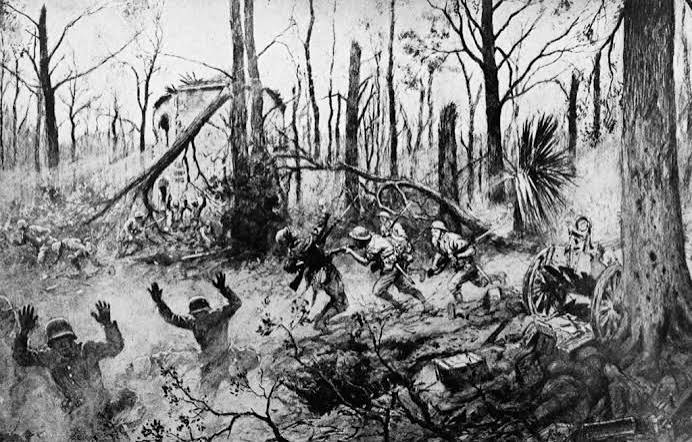
    In 1914, the United States was a nation at peace, its army smaller than Bulgaria’s, its federal government a distant presence in most citizens’ lives. Four years later, it had become the world’s leading creditor, with a federal budget twenty-five times larger and a government that reached into factories, farms, and even private speech. The transformation was not gradual; it was compressed into nineteen months of active belligerency that changed the country’s role in the world and the relationship between Washington and its citizens.

    The war’s legacy is often overshadowed by the Second World War, but the first global conflict was the crucible in which modern America was forged. From the Great Migration to the 19th Amendment, from the income tax to the surveillance state, the war’s effects are still visible today. This is the story of how a country that wanted nothing to do with Europe’s quarrels became a global power—and what it cost.

    A Nation Reluctant to Fight

    When war erupted in Europe in August 1914, President Woodrow Wilson declared neutrality, a stance that reflected both tradition and pragmatism. The United States had a standing army of roughly 100,000 men—smaller than most European powers—and a foreign policy rooted in George Washington’s warning against entangling alliances. German-Americans numbered about 8 million, and Irish-Americans were often hostile to Britain, making any pro-Allied stance politically dangerous.

    But neutrality proved difficult to maintain. Germany’s unrestricted submarine warfare, which sank the Lusitania in May 1915 and killed 128 Americans, tested American patience. The Zimmermann Telegram of January 1917, in which Germany proposed an alliance with Mexico against the U.S., was the final straw. By then, American banks had lent $2.3 billion to the Allies and only $27 million to Germany; a German victory would have meant default. On April 6, 1917, Congress declared war.

    The Machinery of War

    The U.S. had only 19 months to mobilize, but it did so with astonishing speed. Over 4.7 million Americans served in the armed forces, and about 2 million reached France. The Selective Service Act of 1917 drafted men from all walks of life, creating a mass army for the first time since the Civil War.

    The war effort demanded more than soldiers; it demanded a reorganization of the economy. The War Industries Board coordinated production, the Food Administration under Herbert Hoover controlled prices and rationing, and the Railroad Administration temporarily nationalized the railroads. The federal budget ballooned from $725 million in 1914 to $18.5 billion in 1919. The top income tax rate soared from 7% to 77% under the War Revenue Act of 1917 and the Revenue Act of 1918.

    This expansion of federal power was unprecedented. The government became the largest purchaser of goods in the nation, and it used that leverage to set wages, working conditions, and even prices. The National War Labor Board mediated disputes, often favoring unions in exchange for no-strike pledges. For the first time, the federal government was a direct presence in the daily lives of ordinary workers.

    The Dark Side of Patriotism

    The war also brought a crackdown on dissent. The Espionage Act of 1917 and the Sedition Act of 1918 criminalized speech that interfered with the war effort. Over 2,000 people were prosecuted, including Eugene V. Debs, the Socialist Party leader, who was sentenced to ten years in prison for an anti-war speech. The Committee on Public Information, headed by journalist George Creel, churned out propaganda that demonized the enemy and encouraged vigilance against spies and saboteurs.

    This climate of suspicion spilled into the postwar period. The Red Scare of 1919–1920, marked by the Palmer Raids and the deportation of thousands of suspected radicals, was a direct legacy of wartime anti-dissent legislation. The war had normalized the idea that the government could restrict civil liberties in the name of national security—a tension that persists to this day.

    The Great Migration and the Changing Face of America

    The war also set in motion demographic changes that reshaped the country. European immigration, which had averaged 1.2 million people a year before the war, ground to a halt as the conflict consumed the continent. At the same time, the demand for industrial labor in northern cities drew African Americans from the South in what became known as the Great Migration. Between 1916 and 1919, approximately 500,000 African Americans moved north, seeking jobs in steel mills, packinghouses, and factories.

    This migration had profound social and political consequences. It created new urban communities, shifted political power in northern cities, and laid the groundwork for the civil rights movements of the twentieth century. The war also opened new opportunities for women, whose workforce participation increased by about 25%. Women filled jobs left vacant by men and took on roles in industry, government, and the military. The war effort gave a powerful boost to the suffrage movement, and the 19th Amendment, granting women the right to vote, was ratified in August 1920.

    A Debtor No More

    The economic transformation was equally dramatic. U.S. GDP grew from roughly $38 billion in 1914 to $78 billion in 1918. The nation shifted from a debtor country owing $3.7 billion to foreign investors to a creditor country owed $3.5 billion by foreign governments. The war had made the United States the world’s banker, a position it would not relinquish.

    But the cost was staggering. About 116,500 American military personnel died—53,000 in combat, the rest from disease, especially the 1918 influenza pandemic. The war also left a bitter political legacy. President Wilson’s dream of joining the League of Nations was dashed when the Senate refused to ratify the Treaty of Versailles in 1919 and 1920. The United States retreated into isolationism, but it had already been transformed.

    The War’s Lasting Legacy

    The United States entered World War I as a peripheral power and emerged as a global one. The war created the modern administrative state, with federal agencies that reached into every corner of the economy. It accelerated the Great Migration, expanded women’s rights, and made the income tax a permanent feature of American life.

    It also left a troubling legacy of government surveillance and suppression of dissent. The Espionage and Sedition Acts set a precedent for restricting civil liberties in times of crisis, a precedent that would be invoked again in the Second World War and beyond.

    The war’s significance is not just a matter of battles won or lost. It was the moment when the United States stopped being a collection of states and became a nation, with a centralized government, a powerful military, and a permanent global role. The changes were so profound that they still shape American life a century later.

    World War I was a catalyst that transformed the United States from a debtor nation with a small federal government into a creditor nation with a powerful administrative state. It ended American isolationism, accelerated social changes like the Great Migration and women’s suffrage, and left a legacy of federal power and civil liberties tensions that continue to define the nation. The war’s significance lies not in the battles, but in the remaking of America itself.

    Summary

    • The U.S. shifted from neutrality to full belligerency in 19 months, with over 4.7 million serving and 116,500 deaths.
    • The federal budget grew 25-fold, and the top income tax rate rose from 7% to 77%, funding a new administrative state.
    • The Great Migration moved 500,000 African Americans north, and women’s workforce participation rose 25%, boosting the suffrage movement.
    • The Espionage and Sedition Acts criminalized dissent, leading to over 2,000 prosecutions and setting a precedent for later restrictions.
    • The U.S. became a creditor nation, but rejected the Treaty of Versailles and the League of Nations, retreating into isolationism.

    FAQ

    Q: How long was the United States involved in World War I?
    A: The U.S. was an active belligerent for about 19 months, from April 6, 1917, to November 11, 1918.

    Q: What was the Great Migration during WWI?
    A: It was the movement of approximately 500,000 African Americans from the South to northern industrial cities between 1916 and 1919, driven by labor shortages and wartime industrial demand.

    Q: How did WWI affect women’s suffrage?
    A: The war effort, which saw women’s workforce participation increase by about 25%, is widely credited as a catalyst for the ratification of the 19th Amendment in August 1920.

    Q: What were the Espionage and Sedition Acts?
    A: They were federal laws enacted in 1917 and 1918 that criminalized dissent against the war, leading to over 2,000 prosecutions, including that of Eugene V. Debs.

    Q: Why did the U.S. not join the League of Nations?
    A: The Senate rejected the Treaty of Versailles in November 1919 and March 1920, largely due to concerns about sovereignty and partisan politics, despite President Wilson’s advocacy.
  • The Somme: 141 Days That Defined the Futility of War

    The Somme: 141 Days That Defined the Futility of War

    On July 1, 1916, at 7:30 AM, British infantry climbed out of their trenches along a 25-mile front in northern France and walked into machine-gun fire. By nightfall, nearly 57,000 of them were casualties—19,000 dead—the worst single-day loss in British military history. The Battle of the Somme would drag on for another 140 days, cost over a million lives, and move the front line barely six miles. It has since become the enduring symbol of the First World War’s senseless slaughter.

    But was the Somme truly futile? Or did the horror obscure a grim necessity? The battle’s legacy is contested: in popular memory, it stands for incompetent generals and wasted youth; in revisionist histories, it emerges as a brutal but vital learning curve that ultimately won the war. This article explores the facts, the interpretations, and why the Somme still haunts us a century later.

    The Plan That Failed Before It Began

    The Somme offensive was conceived as a joint Anglo-French strike to break the stalemate on the Western Front. But the German assault on Verdun in February 1916 bled the French army white, so the burden shifted to the British Expeditionary Force under General Sir Douglas Haig. The plan was straightforward: a seven-day artillery bombardment—1.5 million shells—would destroy German barbed wire, trenches, and artillery. Then infantry would advance in orderly lines, expecting little resistance.

    The bombardment did little of what it promised. Many shells were duds. German deep dugouts, some 40 feet below ground, sheltered soldiers from the blast. When the guns lifted, the Germans emerged to man their machine guns. British troops, each carrying about 60 pounds of equipment, were ordered to walk—not run—across no man’s land. They were mown down in rows.

    By the end of the first day, the British had gained almost no ground. The French, attacking on the southern sector, fared better, but the overall offensive had already failed its primary objective: a quick breakthrough.

    The Human Cost: More Than a Million Casualties

    The battle ground on for 141 days. By the time it ended on November 18, the Allies had advanced just six miles at the deepest point. The price: approximately 420,000 British Empire casualties, 200,000 French, and around 500,000 German—roughly 1.1 million men killed, wounded, or missing.

    To put that in perspective, that’s about the entire population of a city like San Jose, California, in 1916, either dead or maimed. The Germans, though defending, suffered nearly as much as the attackers—their losses were equally irreplaceable.

    The First Tanks: A Glimmer of the Future

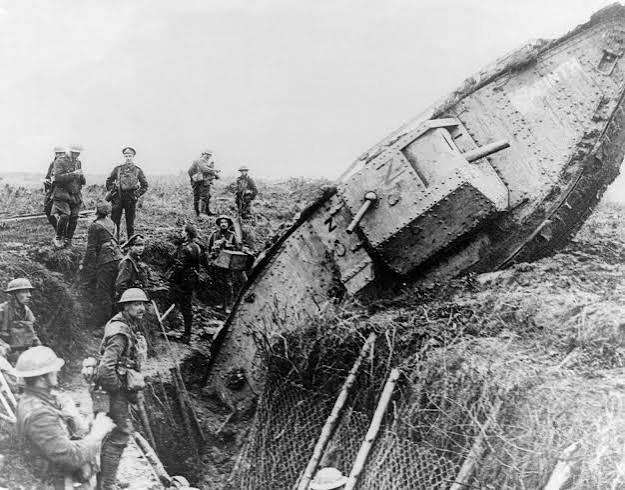
    On September 15, 1916, at Flers-Courcelette, the British deployed the first tanks in warfare—the Mark I. These lumbering machines were meant to crush barbed wire and cross trenches, but they were mechanically unreliable, broke down frequently, and moved at walking pace. They had limited tactical impact in the battle, but they signaled a new era of mechanized warfare that would mature by 1918.

    A Battle of Attrition: Who Won?

    In terms of territory, the Somme was a draw. In terms of attrition, it was a mutual bloodbath. The German army, however, lost many of its best pre-war regulars—veterans who could not be replaced. German commanders like Crown Prince Rupprecht recognized the battle as a strategic defeat in the sense that their army was bled white. The British, meanwhile, learned painful lessons in artillery coordination, infantry tactics, and logistics, evolving into the force that would eventually break the Hindenburg Line in 1918.

    The Futility Narrative: Poetry, Film, and the ‘Donkeys’

    The Somme became the archetype of war’s futility not just because of the numbers, but because of how it was remembered. The official film The Battle of the Somme (1916) brought images of the dead and wounded to British cinemas. Soldier-poets like Wilfred Owen and Siegfried Sassoon captured the horror in verse—Owen’s “Dulce et Decorum Est” described gas victims drowning in their own lungs. In 1963, Alan Clark’s The Donkeys popularized the “lions led by donkeys” trope, painting General Haig as a butcher. This narrative dominated for decades.

    The Revisionist View: A Grim Necessity

    More recent historians—Gary Sheffield, William Philpott, John Terraine—argue that the Somme was not futile. They point out that it inflicted irreplaceable losses on the German army, relieved pressure on Verdun, and forced the British army to modernize. The high ground captured around Thiepval and Pozières, though small, was strategically useful. Haig’s attritional strategy, they argue, was the only way to win a war of this scale—there was no cheap victory.

    But even revisionists admit the cost was staggering. The “futility” label may be a moral judgment, but it reflects a human reality: over a million families lost sons, husbands, brothers, and the ground gained could be walked in an afternoon.

    The Somme’s Legacy in German Memory

    In Germany, the Somme is less celebrated but no less painful. For German soldiers, it was a defensive ordeal—they suffered massive casualties from Allied artillery. The experience refined their “elastic defense” tactics, but the human cost was devastating. German memory focuses on the Verdun battlefield more often, but the Somme’s dead are equally mourned in collective remembrance.

    Why the Somme Still Matters

    The Somme remains a touchstone because it asks uncomfortable questions. Was the sacrifice a noble cause or a senseless waste? Can a battle be both necessary and futile? The answer may be that it was both—a brutal necessity in a war that had no easy exits, but also a tragedy of immense proportion. As we mark a century since, the Somme’s lesson is not that war is avoidable, but that its costs must be counted in human terms before we commit to it.

    The Battle of the Somme was not a victory or a defeat in the conventional sense—it was a catastrophic wound on the body of Europe. Its legacy as a symbol of futility is both a warning and a memorial. To understand the Somme is to understand the First World War’s terrible arithmetic: millions of lives for mere miles of mud. Yet even in that horror, the Somme also shows human endurance and the painful process of learning. The Somme will never be forgotten because it embodies the ultimate cost of war.

    Summary

    • The Battle of the Somme lasted from July 1 to November 18, 1916, with over 1.1 million total casualties.
    • The first day remains the bloodiest in British military history: ~57,470 casualties, including 19,240 killed.
    • The Allies gained only about 6 miles of ground, failing to break German lines.
    • The battle saw the first use of tanks in warfare, at Flers-Courcelette on September 15, 1916.
    • Popular memory frames the Somme as futile, but revisionist historians argue it was a necessary attritional step toward Allied victory in 1918.

    FAQ

    Q: Why is the Battle of the Somme considered a symbol of futility?
    A: Because of its massive casualties (over 1.1 million) for minimal territorial gains (6 miles), combined with the failure of the initial plan and the perception of incompetent leadership, particularly General Haig. The battle came to epitomize the senseless slaughter of trench warfare.

    Q: What was the bloodiest day of the Somme?
    A: July 1, 1916, the first day of the battle, when the British suffered approximately 57,470 casualties, including 19,240 killed—the worst one-day loss in British military history.

    Q: Did the Battle of the Somme have any positive outcomes?
    A: Yes, according to revisionist historians. It relieved pressure on the French at Verdun, inflicted irreplaceable losses on the German army, and forced the British army to develop effective modern tactics that contributed to the Allied victory in 1918. It also saw the first use of tanks.

    Q: How did the German experience of the Somme differ?
    A: The Germans experienced the Somme as a defensive ordeal, suffering heavy casualties from Allied artillery. They refined their defensive tactics but lost many irreplaceable pre-war regulars, which weakened their army in the long run.

    Q: How did the Somme shape public memory of World War I?
    A: Through film (the 1916 documentary The Battle of the Somme) and the poetry of soldiers like Wilfred Owen and Siegfried Sassoon, the Somme became the archetype of war’s horror and futility, shaping anti-war sentiment for generations.

  • Verdun 1916: The 303-Day Battle That Became a Symbol of Industrialized Slaughter

    Verdun 1916: The 303-Day Battle That Became a Symbol of Industrialized Slaughter

    On February 21, 1916, at 7:15 AM, the German army unleashed over 2 million shells on a narrow front near the French fortress city of Verdun. The bombardment lasted nine hours, and the sound was heard 100 miles away. By the time it stopped, the landscape had been transformed into a lunar crater field, and the battle that followed would not end for 303 days.

    Verdun was not just another battle on the Western Front. It became the ultimate symbol of the futility and horror of World War I—a battle fought not for territory, but for national pride and the destruction of an army. When it was over, an estimated 700,000 to 800,000 soldiers were dead, wounded, or missing, and the front line had barely moved.

    The Strategy of Bleeding France White

    Verdun was the brainchild of Erich von Falkenhayn, the German Chief of Staff. By late 1915, the Western Front was a stalemate of trenches and barbed wire. Germany faced a war of attrition against the Allies, who had more manpower and industrial capacity. Falkenhayn believed France was the weaker link in the Allied chain. In a December 1915 memorandum to the Kaiser, he argued that by attacking a position the French could not abandon—for reasons of strategy and national honor—Germany could force the French army to “bleed to death.”

    Verdun was the perfect target. It was a fortified salient jutting into German lines, a historic fortress city on the Meuse River that had guarded the route to Paris since Roman times. Its loss would be a psychological blow and open a corridor into the French rear. Falkenhayn’s plan was not to capture Verdun itself, but to draw the French army into a battle of attrition where German artillery would slaughter them.

    The German preparations were massive. Over 1,200 artillery pieces, including 420mm “Big Bertha” howitzers, were massed along an 8-mile front. The initial bombardment was designed to be so overwhelming that it would crush French morale and allow a rapid infantry advance. The Germans also had a secret weapon: the new flamethrower, used for the first time in large numbers.

    The Fortresses That Were Supposed to Be Obsolete

    Verdun was ringed by a series of forts built after the Franco-Prussian War of 1870. Fort Douaumont and Fort Vaux were the most formidable, with thick concrete and steel armor. But by 1916, the French high command, led by General Joseph Joffre, had stripped many of these forts of their heavy artillery, believing they were obsolete in the age of modern siege guns. The forts were undermanned and poorly supplied.

    This was a critical mistake. On February 25, just four days after the attack began, a small German raiding party captured Fort Douaumont—the largest and most powerful fort on the Verdun perimeter—without firing a shot. The French were shocked. The fort’s fall was a major blow to French morale and gave the Germans a strong defensive position.

    Fort Vaux would hold out longer, but not by much. Its commander, Major Sylvain Eugène Raynal, and his garrison defended the fort for seven days in June, fighting in the dark, flooded corridors, and communicating with the outside world by carrier pigeon. When they finally surrendered, they were down to their last canteen of water.

    The Sacred Way and the Noria System

    After the initial German advance, the French reacted with desperation. General Philippe Pétain was given command of the 2nd Army and tasked with holding Verdun at all costs. Pétain understood that the key to survival was logistics. The city was nearly surrounded, with only one road connecting it to the rear—a narrow, two-lane road from Bar-le-Duc.

    Pétain organized an around-the-clock convoy of trucks to keep the road open. At its peak, a truck passed every 14 seconds, delivering 1,800 tons of supplies and 2,000 troops per day. The road became known as the “Voie Sacrée” (Sacred Way), and it was the lifeline of the French defense. Without it, Verdun would have fallen in weeks.

    Pétain also implemented the “noria” system—a rotation of divisions. Instead of leaving units in the line until they were destroyed, he cycled them through the battle for short periods, then pulled them back to rest and refit. Over the course of the battle, 70% of the entire French army passed through Verdun. This kept morale relatively intact and ensured that no single unit bore the full brunt of the slaughter.

    The Human Cost: A Hell on Earth

    Verdun was a battle of matériel, but it was fought by flesh and blood. The soldiers on both sides described it as “hell on earth.” The constant artillery bombardment churned the ground into a muddy, cratered moonscape. Bodies were buried and reburied by each new shell. The wounded often drowned in mud-filled craters. Rats and lice were constant companions.

    The psychological toll was immense. French soldier René Benjamin wrote: “You have to have seen Verdun to understand what war really is. It’s not war; it’s apocalypse.” A German soldier described the battlefield as “a sea of mud, blood, and iron.”

    The battle also took a toll on the officers who would later become famous. Charles de Gaulle was a young French captain at Verdun. He was captured by the Germans in March 1916 and spent the rest of the war as a prisoner of war. On the German side, a young lieutenant named Friedrich Paulus fought at Verdun; he would later command the German 6th Army at Stalingrad.

    The Failure of Attrition

    The battle dragged on for months, with neither side able to achieve a decisive breakthrough. The Germans captured the village of Fleury in June, coming within 2.5 miles of Verdun, but they could not take the city itself. The French counterattacked in October, recapturing Fort Douaumont and Fort Vaux. By December, the front line had returned to roughly where it had started in February.

    The strategic outcome was a French victory, but at a staggering cost. French casualties numbered about 377,000, while German casualties were about 337,000. Falkenhayn’s plan to bleed France white had failed—Germany had bled nearly as much as its enemy. The battle also failed to prevent the Allied offensive on the Somme, which began in July 1916 and further drained German resources.

    Historians today debate whether Falkenhayn’s “bleed France white” memo was a genuine strategy or a post-hoc justification for a failed breakthrough attempt. Crown Prince Wilhelm, who commanded the German 5th Army, later wrote that he believed the goal was to capture Verdun, not to bleed the French. The evidence is ambiguous, but the result is clear: Verdun was a military and human disaster for both sides.

    The Legacy of Verdun

    Verdun became a symbol of French resistance and sacrifice. The phrase “Ils ne passeront pas” (“They shall not pass”)—attributed to General Robert Nivelle, who succeeded Pétain—became a rallying cry for the entire war. In France, Verdun is still remembered as the quintessential battle of World War I, a place where the nation’s soul was tested and preserved.

    The battle had political consequences as well. In France, Joffre was replaced as Commander-in-Chief by Nivelle in December 1916, partly due to the perceived mishandling of Verdun. In Germany, Falkenhayn was dismissed as Chief of Staff in August 1916, replaced by Paul von Hindenburg and Erich Ludendorff.

    Today, the battlefield of Verdun is a memorial to the dead. The remains of 130,000 unidentified soldiers lie in the Douaumont Ossuary, a bone house built after the war. The ground is still scarred by craters and littered with unexploded shells, making it one of the most dangerous places in France—a century later, it is still too dangerous to farm or walk freely.

    The Battle in Numbers

    • 303 days: the length of the battle
    • 2 million: shells fired in the first 24 hours
    • 1,200+: German artillery pieces massed
    • 70%: percentage of the French army that served at Verdun
    • 14 seconds: the interval between trucks on the Voie Sacrée
    • 800,000: approximate total casualties
    • 300,000+: estimated dead on both sides

    Verdun was a battle that should never have been fought, and once fought, could not be stopped. It was a product of industrial warfare, where the logic of attrition trumped human life. The battle’s legacy is not a glorious victory, but a grim reminder of what happens when nations commit to total war. Today, Verdun stands as a warning—a silent, scarred landscape that tells us that some battles are not won, but survived.

    Summary

    • The Battle of Verdun lasted from February 21 to December 18, 1916, approximately 303 days, making it the longest battle of World War I.
    • German Chief of Staff Erich von Falkenhayn designed the attack to “bleed France white” through attrition, but the plan backfired, costing Germany nearly as many casualties as France.
    • French commander Philippe Pétain organized the Voie Sacrée supply road and a division rotation system that kept the French army functioning, becoming a symbol of French endurance.
    • The battle resulted in an estimated 700,000–800,000 total casualties, with about 300,000–400,000 dead, and ended with the front line nearly unchanged.
    • Verdun became a powerful symbol of the futility of war, memorialized by the Douaumont Ossuary and the phrase “Ils ne passeront pas.”

    FAQ

    Q: Why was Verdun so important to the French?
    A: Verdun was a historic fortress city on the Meuse River, guarding the route to Paris. It had been a bastion since Roman times and was a point of French national pride. Its loss would have been a psychological blow and opened a corridor into the French rear.

    Q: What was the “Voie Sacrée”?
    A: The Voie Sacrée was a single road from Bar-le-Duc to Verdun that was kept open by continuous truck convoys. At peak, a truck passed every 14 seconds, delivering 1,800 tons of supplies and 2,000 troops per day. It was the lifeline of the French defense.

    Q: Did the Germans actually aim to capture Verdun?
    A: There is debate. Falkenhayn’s plan was to “bleed France white” through attrition, not necessarily to capture the city. However, Crown Prince Wilhelm and field commanders believed the goal was to take Verdun itself. The plan’s failure led to Falkenhayn’s dismissal.

    Q: How many soldiers died at Verdun?
    A: Estimates of total casualties (killed, wounded, missing) range from 700,000 to 800,000. Of those, about 300,000 to 400,000 were killed, with French losses around 377,000 and German around 337,000.

    Q: What is the Douaumont Ossuary?
    A: The Douaumont Ossuary is a memorial building near Verdun that contains the remains of at least 130,000 unidentified soldiers from the battle. It was built after the war as a resting place for the dead of both sides.

  • The Last German Gamble: How the Second Battle of the Marne Broke the Kaiser’s Army

    The Last German Gamble: How the Second Battle of the Marne Broke the Kaiser’s Army

    In the summer of 1918, the German army made one final, desperate gamble to win World War I before American troops could tip the balance. The Second Battle of the Marne, fought from July 15 to July 18, 1918, was the last German offensive of the war—and it failed catastrophically. This article unpacks the battle’s strategy, the turning point it represented, and why it set the stage for the Armistice just four months later.

    The battle was not just another clash on the Western Front. It was a high-stakes race against time. Germany had knocked Russia out of the war and transferred hundreds of thousands of troops west, hoping to achieve a decisive victory before the United States could deploy its millions of fresh soldiers. The Marne was where that gamble collapsed, and the Allied counteroffensive that followed marked the beginning of the Hundred Days Offensive that ended the war.

    The Strategic Setting: A Salient Pointing at Paris

    By early 1918, Germany’s strategic position was dire. The British naval blockade was strangling its economy, and the entry of the United States into the war in 1917 threatened to tip the manpower balance decisively against the Central Powers. General Erich Ludendorff, the de facto German commander, launched a series of massive offensives in the spring of 1918—Operation Michael, Georgette, Blücher-Yorck, and others—designed to crush the Allies before American divisions arrived in force.

    These Spring Offensives drove deep into Allied territory, creating a large bulge in the front line along the Marne River, only about 60 miles from Paris. This salient was a tempting target for the Allies, but for Ludendorff it was a launching pad. His plan, Operation Marneschutz-Reims, called for a two-pronged assault: one army would cross the Marne east of Reims, another west of Reims, to encircle the city and split the French lines. If successful, the Germans would capture Reims, roll up the French defenses, and potentially force a negotiated peace before the Americans could matter.

    But Ludendorff was overreaching. His troops were exhausted after months of offensive operations, supply lines were stretched thin, and he had no significant reserves to exploit a breakthrough. The plan was a gamble that relied on speed and surprise—and surprise was the one thing he didn’t have.

    The Allied Intelligence Advantage

    The French had broken German radio codes and knew the timing and location of the attack in advance. General Henri Gouraud, commanding the French Fourth Army east of Reims, used this intelligence to devastating effect. He deliberately evacuated his frontline trenches, leaving only light screening forces to absorb the initial German barrage. Meanwhile, he concentrated his artillery on the rear areas where German troops would mass.

    When the German artillery opened fire on July 15, it was largely wasted on empty trenches. Then, as German infantry advanced, they walked into a killing zone of French artillery and machine-gun fire. The attack east of Reims stalled almost immediately.

    West of Reims, the Germans initially had more success. They crossed the Marne River and pushed forward several miles, but they were soon slowed by determined resistance, particularly from the American 3rd Division. This division, which had only recently arrived in France, held its ground at the Marne crossings, earning the nickname “Rock of the Marne.” At the bridge at Mézy, American troops counterattacked and threw the Germans back across the river.

    The Great Counteroffensive: July 18, 1918

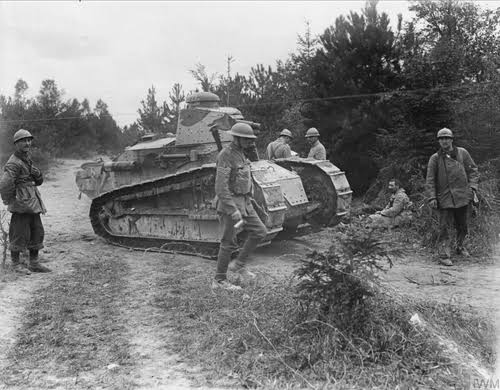
    With the German attack stalling, Supreme Allied Commander Ferdinand Foch saw his opportunity. On July 18, he launched a massive counteroffensive against the western flank of the Marne salient, near Soissons. The attack featured about 350 tanks—mostly French Renault FTs—and a combined force of French and American infantry, including the U.S. 1st and 2nd Divisions.

    The assault caught the Germans completely off guard. They had been focused on their own offensive and had not expected the Allies to launch a major attack so quickly. The use of tanks, which were still a relatively new weapon, allowed the Allies to break through German lines despite minimal artillery preparation. The French and Americans advanced up to five miles on the first day, threatening to cut off the German forces inside the salient.

    Faced with the prospect of encirclement, Ludendorff ordered a retreat. Over the following weeks, the Allies pushed the Germans back to the Aisne and Vesle rivers, erasing the Marne salient entirely by early August. The battle was over, and the strategic initiative had passed permanently to the Allies.

    Why the Battle Was a Turning Point

    The Second Battle of the Marne was decisive for several reasons. First, it marked the end of German offensive capability on the Western Front. The German army had suffered approximately 139,000 casualties during the battle—killed, wounded, or captured—and had lost irreplaceable equipment and experienced soldiers. Ludendorff’s dream of winning the war before the Americans arrived was shattered.

    Second, it demonstrated the effectiveness of combined-arms tactics. The Allied counteroffensive integrated infantry, artillery, tanks, and air power in a coordinated assault, a precursor to the more sophisticated operations of the Hundred Days Offensive. The success also validated Foch’s strategy of maintaining a strong central reserve and using it to strike at the enemy’s weakest point.

    Third, the battle had profound psychological effects. For the French, it was a vindication after the devastating mutinies of 1917 and the German advances of early 1918. The defense of Paris was a national triumph. For the Americans, it proved that their troops could fight and win against the best of the German army. For the Germans, the defeat was a demoralizing blow; many soldiers began to see the war as unwinnable, and desertions increased in the months that followed.

    The Human Cost

    Casualty figures are grim. Allied losses were approximately 95,000 French, 16,000 British, and 12,000–15,000 American soldiers. German losses were higher, around 139,000. For many American soldiers, this was their first major battle, and they showed remarkable bravery and effectiveness. The 3rd Division’s stand at the Marne became a legend, but it came at a price: the division suffered over 1,900 casualties in three days of fighting.

    German soldiers faced a different kind of suffering. Many were underfed, exhausted, and increasingly disillusioned. The arrival of fresh American troops, who seemed to have endless supplies and high morale, further undermined their confidence. The Second Marne was not just a military defeat; it was a psychological blow from which the German army never recovered.

    The Road to the Armistice

    The Allied counteroffensive at the Marne did not end the war overnight, but it set the stage. In August 1918, the Allies launched the Hundred Days Offensive, a series of coordinated attacks that pushed the Germans back relentlessly. With its army collapsing and its allies surrendering, Germany sued for peace, and the Armistice was signed on November 11, 1918.

    The Second Battle of the Marne is often overshadowed by other events of the war, but it deserves recognition as one of the most important battles of the conflict. It was the turning point where the Allies seized the initiative and never let go. For the Germans, it was the last great offensive, and its failure sealed the fate of the Kaiserreich.

    The Second Battle of the Marne was more than just a military engagement; it was the decisive moment when the tide of World War I turned irrevocably. The failure of the German offensive and the success of the Allied counteroffensive demonstrated that the Central Powers could no longer win the war. It was a battle of intelligence, courage, and strategic vision, and it paved the way for the final Allied victory. Understanding this battle helps us appreciate the complexity of the Great War and the fragility of empires that dared to overreach.

    Summary

    • Dates and Outcome: The Second Battle of the Marne (July 15–18, 1918) was the last German offensive of WWI, ending in a decisive Allied victory.
    • German Plan: Operation Marneschutz-Reims aimed to encircle Reims and split French lines, but the Allies knew the plan in advance thanks to broken codes.
    • Allied Counteroffensive: On July 18, Foch launched a tank-led attack that collapsed the Marne salient, forcing the Germans to retreat.
    • Casualties: German losses were ~139,000; Allied losses were ~95,000 French, 16,000 British, and 12,000–15,000 American.
    • Significance: The battle ended German offensive capability, boosted Allied morale, and set the stage for the Hundred Days Offensive and the Armistice in November 1918.

    FAQ

    Q: Why was the Second Battle of the Marne important?
    A: It was the last major German offensive of World War I. Its failure marked the turning point of the war, as the Allies seized the initiative and launched the Hundred Days Offensive that led to the Armistice.

    Q: What was the “Rock of the Marne”?
    A: It was the nickname given to the U.S. 3rd Division for its determined defense of the Marne River crossings on July 15, 1918, where it held its ground against German attacks.

    Q: How did the Allies know about the German attack?
    A: The French had broken German radio codes and knew the timing and location of the offensive. This allowed them to prepare a devastating defense, including evacuating frontline trenches and concentrating artillery.

    Q: What role did tanks play in the battle?
    A: The Allied counteroffensive on July 18 used about 350 tanks, mostly French Renault FTs. Their surprise appearance helped break through German lines and was crucial to the success of the attack.

    Q: How many American troops fought in the Second Battle of the Marne?
    A: Approximately 85,000–110,000 American troops participated, including the 3rd, 1st, and 2nd Divisions, among others. Their performance demonstrated that American soldiers could fight effectively against the German army.

  • The Harlem Hellfighters: The Untold Story of America’s Most Decorated WWI Regiment

    The Harlem Hellfighters: The Untold Story of America’s Most Decorated WWI Regiment

    In the early hours of May 15, 1918, a 26-year-old railway porter from Albany, New York, found himself alone in a French forest, facing a German raiding party of nearly two dozen men. His rifle jammed after the first shot. His comrade lay wounded beside him. So Henry Johnson did what seemed impossible: he fought with a bolo knife and his bare fists, killing at least four Germans and driving off the rest—all while suffering 21 wounds. The French would call him ‘the bravest man in the world.’ The Germans gave his entire regiment a nickname: the Hellfighters.

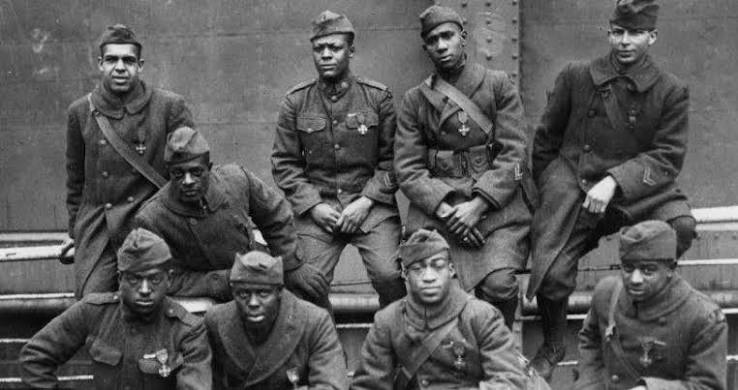
    This was the 369th Infantry Regiment, a unit of Black American soldiers from Harlem who spent 191 days in continuous front-line combat—longer than any other American regiment in World War I. They never lost a foot of ground to the enemy. They never had a soldier captured. Yet when they returned home, they were met not with gratitude, but with the same racism they had fought to defeat overseas.

    Their story is one of extraordinary bravery, institutional prejudice, and a cultural legacy that reached far beyond the battlefield. It’s the story of men who had to fight two wars: one against the Germans, and one against the color line in their own army.

    The Making of a Regiment

    The 369th Infantry Regiment began as the 15th New York National Guard Regiment, formed in 1916. Over 90% of its soldiers were Black Americans, many drawn from the vibrant community of Harlem. But the officer corps was initially all-white—a source of deep controversy. Colonel William Hayward, a white lawyer and politician, commanded the regiment. While Hayward was a staunch advocate for his men, the racial dynamics of the era meant that Black soldiers were rarely trusted to lead.

    The regiment was federalized in 1917 and sent to Camp Wadsworth in South Carolina for training. There, they encountered intense racial hostility from local whites and from the Army itself. Instead of preparing for combat, they were often assigned menial labor. The War Department, already nervous after the 1917 Houston Riot involving Black soldiers, was reluctant to deploy Black combat units. The prevailing belief among many white officers was that Black men lacked the courage or intelligence for war.

    From Laborers to Front-Line Fighters

    When the 369th finally arrived in France in late 1917, they were initially relegated to stevedore and dockworker duties. The men had volunteered to fight, not to unload ships. Frustration grew.

    General John J. Pershing, commander of the American Expeditionary Forces, refused to ‘lend’ Black troops to the French for combat. He feared it would create expectations of equality. But the French were desperate for manpower, and under political pressure, Pershing relented—with a caveat. The French were told to treat the Black soldiers as equals, which they did. This created a striking contrast: Black soldiers experienced more respect and less racism from the French than from their own army.

    Attached to the French 161st Division, the 369th finally got their chance to fight. They would go on to participate in the Champagne-Marne Defensive, the Aisne-Marne Offensive, the Meuse-Argonne Offensive, and the Second Battle of the Marne. For 191 days, they held the line—longer than any other American regiment. Of the roughly 3,000 men in the regiment, about 1,500 were killed or wounded. Yet not a single soldier was captured, and no ground was lost while they held the line.

    The Battle of Henry Johnson

    The action that made Johnson a legend occurred on the night of May 14–15, 1918. Johnson and Pvt. Needham Roberts were on sentry duty when a German raiding party of about 20 men attacked. Roberts was hit and fell. Johnson’s rifle jammed after the first shot. With no working firearm, he used his bolo knife and fists, killing at least four Germans, wounding others, and driving the raiders off. He suffered 21 wounds but survived. The French awarded both men the Croix de Guerre, and Johnson earned the nickname ‘Black Death.’

    Johnson became a national hero in the U.S. and France. But his story took a bitter turn. After the war, he returned to a segregated America, struggled with disabilities from his wounds, and died in 1929 at age 32, largely forgotten. It took decades of advocacy to correct the record. In 2015, President Barack Obama posthumously awarded Johnson the Medal of Honor. In 2021, the entire regiment received the Congressional Gold Medal.

    Jazz and the Cultural Bridge

    One of the most unexpected legacies of the 369th was musical. Lt. James Reese Europe, a famed jazz bandleader, led the regimental band. They became a sensation in France, performing for French and Allied troops and civilians. They are credited with introducing jazz and ragtime to European audiences, influencing French culture for decades. Europe’s band also boosted morale and served as a cultural bridge between Black Americans and the French.

    The Hellfighters’ music was a reminder that their contribution wasn’t just military—it was cultural. They didn’t just fight for democracy; they brought a new art form to the world.

    The Homecoming That Wasn’t

    On February 17, 1919, the 369th marched up Fifth Avenue in New York City in a triumphant homecoming parade—the first African-American unit to be honored with such a parade. But the celebration was short-lived. Black veterans returned to a segregated, racist America. The ‘Red Summer’ of 1919 saw race riots and lynchings, including attacks on Black veterans in uniform. The Hellfighters had proven their courage on the battlefield, but they couldn’t escape the color line at home.

    Their story was largely erased from mainstream history for decades. But in recent years, the Hellfighters have received the recognition they always deserved, through books, documentaries, and the posthumous honors for Henry Johnson and the regiment.

    The Harlem Hellfighters were not just soldiers; they were pioneers who challenged the racist assumptions of their era with every act of bravery. Their 191 days in the trenches, their refusal to yield, and their cultural contributions in France stand as a powerful rebuke to the prejudice they faced. Their delayed honors—the Medal of Honor, the Congressional Gold Medal—are not just corrections of history; they are an acknowledgment that heroism knows no color. The Hellfighters’ legacy is a reminder that true courage is not measured by the color of one’s skin, but by the strength of one’s resolve.

    Summary

    • The 369th Infantry Regiment, known as the Harlem Hellfighters, was the first African-American regiment to see combat in WWI.
    • They spent 191 days in continuous front-line combat, longer than any other American regiment, and never lost ground or had a soldier captured.
    • Sgt. Henry Johnson’s heroic stand against a German raiding party earned him the Medal of Honor posthumously in 2015.
    • The regiment was attached to the French Army because the American military refused to use Black combat units, and they experienced less racism from the French.
    • Lt. James Reese Europe’s band introduced jazz to France, leaving a lasting cultural impact.

    FAQ

    Q: Why were they called the Harlem Hellfighters?
    A: German soldiers reportedly called them ‘Höllenkämpfer’ (Hellfighters) because of their ferocity in combat and refusal to surrender or retreat. The name was later popularized by the American press.

    Q: How many soldiers were in the regiment, and what were their casualties?
    A: The regiment had about 3,000 men. Roughly 1,500 were killed or wounded in combat.

    Q: Did the regiment receive any awards?
    A: Yes. The regiment was awarded the French Croix de Guerre with silver star as a unit, and 171 individual members received the Croix de Guerre or Légion d’Honneur. In 2021, the regiment collectively received the Congressional Gold Medal.

    Q: Why were they attached to the French Army?
    A: The American Expeditionary Forces, under General John J. Pershing, refused to use Black combat units. However, due to political and logistical pressure, and because the French needed manpower, they were attached to the French 161st Division.

    Q: What was the significance of the jazz band?
    A: Lt. James Reese Europe’s band introduced jazz and ragtime to European audiences, influencing French culture and music for decades. It also boosted morale and served as a cultural bridge.

  • The Red Baron: How a Prussian Nobleman Became WWI’s Deadliest Ace

    The Red Baron: How a Prussian Nobleman Became WWI’s Deadliest Ace

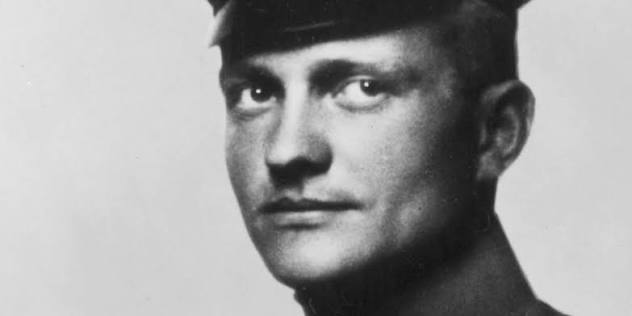
    On April 21, 1918, a single bullet ended the life of the most feared pilot of World War I. Manfred von Richthofen, the ‘Red Baron,’ had just claimed his 80th aerial victory, a record that still stands. His death, shrouded in controversy, marked the end of an era of chivalrous air combat.

    But who was the man behind the red Fokker triplane? Born into Prussian aristocracy, Richthofen was less a daredevil and more a cold, calculating hunter. His story is one of adaptation, from cavalry to cockpit, and of a legend that grew far beyond the facts of his life.

    From Cavalry to Cockpit

    Manfred Albrecht Freiherr von Richthofen entered the world on May 2, 1892, in Kleinburg, then part of the German Empire. His family was aristocratic, with a father who served as a cavalry officer. Following tradition, young Manfred joined the Uhlan regiment in 1911, eager to prove himself on horseback.

    But the Great War shattered that romantic vision. By 1915, trench warfare had made cavalry charges obsolete. Horses were mowed down by machine guns; glory was found in the mud. Richthofen, seeking a new way to fight, transferred to the Imperial German Army Air Service. He started as an observer, learning the war from above, before earning his pilot’s wings.

    His first confirmed kill came on September 17, 1916, when he downed a British FE.2b. It was the beginning of a meteoric rise. By January 1917, he commanded Jasta 11, a squadron that would become legendary under his leadership.

    The Birth of the Red Baron

    The red paint was a practical choice. In the chaotic swirl of dogfights, Richthofen wanted to be instantly recognizable to his own pilots—and to strike fear in his enemies. He began painting his Albatros D.III red in early 1917, and later switched to the iconic Fokker Dr.I triplane, also painted a vivid crimson.

    The British and French press dubbed him the ‘Red Baron’ (der Rote Baron in German), while the French called him ‘Le Petit Rouge.’ His unit, Jagdgeschwader 1, formed in June 1917, became known as the ‘Flying Circus’—not just for the bright colors of its aircraft, but for its mobile, tent-based operations that moved across the front like a traveling show.

    The Hunter’s Ethos

    Richthofen was not a flamboyant ace. Contemporaries described him as cold, methodical, and calculating. He approached aerial combat like a hunter, not a sportsman. In his memoir, Der rote Kampfflieger (‘The Red Battle Flyer’), he wrote clinically about his kills, often comparing them to game hunting.

    He collected trophies from his victims—serial numbers, machine guns, even a table that he had made from the wreckage of a British plane. Yet, there were moments of strange chivalry. He reportedly once refused to shoot a downed enemy pilot who was struggling in the water. Such contradictions made him both admired and feared.

    The Deadliest Month: Bloody April

    April 1917 was Richthofen’s apex. During ‘Bloody April,’ he shot down 22 British aircraft, a staggering feat that cemented his reputation. The German air force enjoyed a period of superiority, and the Red Baron was its undisputed master.

    But the war was changing. The Allies were producing more planes, and new tactics were emerging. Richthofen, ever the strategist, adapted. Yet, after a severe head wound in July 1917, some historians argue his judgment began to falter. He became more reckless in 1918, pushing into danger with a bravado that was uncharacteristic.

    The Final Flight

    On April 21, 1918, Richthofen took to the skies near the Somme River. He was pursuing a Canadian pilot, Wilfrid ‘Wop’ May, when a single bullet tore through his chest. He managed to land his red triplane in a field, but he was dead by the time Allied soldiers reached him.

    The question of who fired the fatal shot has fueled debate for over a century. The Royal Air Force officially credited Captain Arthur Roy Brown, a Canadian ace who attacked Richthofen from behind and above. But many historians believe the bullet came from Australian ground fire—specifically from machine gunners like Sergeant Cedric Popkin or Gunner Robert Buie.

    Modern forensic analysis of the bullet trajectory (entering from the right and exiting left) suggests the shot came from the ground, not from Brown’s position. Yet, the debate persists, with no definitive answer.

    The Legacy

    Richthofen was buried with full military honors by the Allies at Bertangles, France—a mark of respect for a worthy adversary. His remains were later moved to Wiesbaden, Germany, where they rest today. He had 80 confirmed victories, the highest of any ace in World War I, and his legend only grew after his death.

    The Red Baron became a symbol of a bygone era of air combat, where knights of the sky dueled above the trenches. But the reality was brutal, and Richthofen was a product of that brutality. His death, just seven months before the Armistice, was a turning point—not just for the German air force, but for the mythology of the war itself.

    Manfred von Richthofen was more than a pilot; he was a phenomenon. His life and death encapsulate the contradictions of World War I: the chivalry and the carnage, the skill and the luck. The Red Baron remains a haunting figure, a reminder that even the most skilled hunter can become the hunted.

    Summary

    • Manfred von Richthofen was a German aristocrat who became WWI’s top ace with 80 confirmed victories.
    • He painted his aircraft red for recognition and fear, earning the nickname ‘Red Baron.’
    • His unit, the ‘Flying Circus,’ was famous for its mobile operations and colorful planes.
    • Richthofen was killed on April 21, 1918, and the identity of his killer remains disputed.
    • He was buried with honors by the Allies, and his legacy endures as a symbol of WWI aviation.

    FAQ

    Q: How many planes did the Red Baron shoot down?
    A: Manfred von Richthofen had 80 confirmed aerial victories, the highest of any ace in World War I.

    Q: Why was his plane red?
    A: He painted his aircraft red for easy recognition in combat and to intimidate enemies. The color became his trademark.

    Q: Who shot down the Red Baron?
    A: The official credit went to Canadian Captain Roy Brown, but many historians believe he was killed by Australian ground fire. The exact shooter remains a subject of debate.

    Q: What was the ‘Flying Circus’?
    A: It was the nickname for Jagdgeschwader 1, Richthofen’s unit, known for its brightly colored aircraft and mobile, tent-based operations.

    Q: Where is the Red Baron buried?
    A: He was initially buried in France, then moved to Wiesbaden, Germany, where he rests in the Südfriedhof cemetery.

  • Mud, Rats, and the Human Cost: Inside the Trenches of World War I

    Mud, Rats, and the Human Cost: Inside the Trenches of World War I

    By 1917, the Western Front stretched 475 miles from the North Sea to the Swiss border, a scar across Europe that would hold for years. Within that line, soldiers carved out a world of mud, rats, and constant fear—a world that produced its own kind of horror, from trench foot to shell shock. This is the story of that world, told through the daily grind of the men who lived it.

    A City Underground

    The trench system was not a single ditch but a sprawling network. An estimated 35,000 miles of trenches crisscrossed the Western Front, with front-line, support, and reserve lines connected by zigzag communication trenches. The fire trench faced the enemy, its sandbagged parapet offering a slim shield against bullets. Behind it, support and reserve trenches sat 70 to 100 yards back, housing reinforcements and supplies. Dugouts—some shallow, some deep—provided shelter from shells and a place to sleep, though many were vulnerable to direct hits.

    Soldiers lived in these cramped, damp spaces for days at a time. A typical rotation sent men to the front for four to six days, then back to support, then reserve, then rest areas behind the lines. But even in “rest,” there was little rest: fatigues, repairs, and drills filled the hours.

    The Mud That Swallowed Men

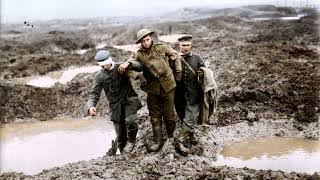
    Flanders’ clay-heavy soil turned to glue with the first rain. A single storm could leave trenches waist-deep in water, and the mud was more than an inconvenience—it was a killer. At Passchendaele in 1917, men and horses drowned in shell craters filled with liquid mud. Artillery shells that hit the muck often failed to explode, while soldiers struggled to move, their boots sucked down with each step.

    Trench foot, a non-freezing cold injury, became epidemic. In the winter of 1914–15 alone, over 20,000 British soldiers were treated for it. The condition—swollen, numb, decaying tissue—often led to amputation. Soldiers tried to ward it off by drying their feet and changing socks, but in the waterlogged trenches, such efforts were rarely enough.

    Rats and Lice: The Constant Companions

    Brown rats, Rattus norvegicus, thrived in the trenches. They fed on corpses, food scraps, and horse carcasses, growing to the size of cats, soldiers claimed. Millions of rats infested the front lines, and men killed them with shovels, bayonets, and even trained dogs—but the numbers were overwhelming. One soldier wrote of rats running over his face at night, their claws scratching against his skin.

    Lice were just as pervasive. They caused “trench fever,” a relapsing illness that added fever and pain to the misery. The daily ritual of “chatting”—searching clothing for lice—was a constant, futile battle.

    The Invisible Wound: Shell Shock

    The term “shell shock” emerged during the war to describe the tremors, paralysis, mutism, and nightmares that struck soldiers without physical injury. The British Army recorded around 80,000 cases, and in 1916, shell shock accounted for about 40% of casualties in some front-line units. Treatments ranged from rest and tonics to electroshock and hypnosis—often with little understanding of the condition.

    Many shell-shocked men were branded cowards or malingerers. Some faced courts-martial and execution for desertion; the British executed 306 soldiers, several of whom likely suffered from shell shock. The legacy of shell shock helped shape modern military psychiatry, but for the men who endured it, the war never ended.

    A Day in the Trenches

    Life followed a grim rhythm. “Stand-to” at dawn and dusk meant manning the fire step, bayonets fixed, watching for attack. Days were spent inspecting, repairing, and hauling supplies. Nights were for work—repairing wire, patrolling No Man’s Land, or raiding enemy trenches.

    Food was cold and monotonous: bully beef, hard biscuits, jam, and tea. Fresh food was a luxury, often arriving in parcels from home. Sleep came in shifts, in wet clothes, in cramped dugouts. Chronic exhaustion was universal.

    The Human Toll

    The trenches were a machine designed to grind men down—body and mind. The mud, the rats, the lice, the fear—they all combined into a daily endurance test. The men who survived carried the scars, visible and invisible. Shell shock and trench foot were just the names for the damage; the reality was a generation changed forever.

    The trenches of World War I were more than a military strategy; they were a world unto themselves, a place where the human spirit was tested to its limits. The mud, the vermin, and the psychological wounds left an indelible mark on all who passed through. Understanding that world is not just about remembering the past—it’s about honoring the endurance of those who lived it.

    Summary

    • The Western Front spanned 475 miles, with 35,000 miles of trenches by 1917.
    • Trench foot affected over 20,000 British soldiers in the winter of 1914–15 alone.
    • Brown rats and lice were ubiquitous, causing disease and constant torment.
    • Shell shock affected an estimated 80,000 British soldiers, yet many were treated as cowards.
    • Daily life was a cycle of stand-to, hard labor, and sleep deprivation, all under the threat of death.

    FAQ

    Q: What was the typical depth and width of a trench?
    A: Trenches were usually 6–8 feet deep and 3–5 feet wide, with duckboards on the floor to keep men above water.

    Q: How did soldiers deal with rats?
    A: They used shovels, bayonets, and dogs to kill rats, and tried traps and poison—but the rat population was so vast that these efforts had little impact.

    Q: What were the symptoms of shell shock?
    A: Symptoms included tremors, paralysis, mutism, nightmares, anxiety, and dissociation. It was not a formal diagnosis at the time.

    Q: How long did soldiers spend in the front line?
    A: Typically 4–6 days, after which they rotated to support and reserve lines, then to rest areas, though the cycle repeated continuously.

    Q: What caused trench foot?
    A: Prolonged exposure to wet, cold conditions caused swelling, numbness, and tissue decay, often leading to amputation.

  • How Wireless Won the Battlefield: The Birth of Military Radio

    How Wireless Won the Battlefield: The Birth of Military Radio

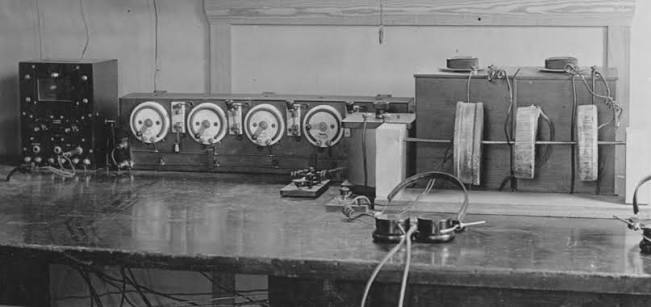
    In 1899, during the Boer War, British Army signals officers unpacked a strange new device: a spark-gap transmitter and coherer receiver, capable of sending Morse code across the veldt without a single wire. It was crude, prone to interference, and weighed over a hundred pounds, but it worked. For the first time, a commander could send orders to troops beyond the horizon in real time, without relying on telegraph lines that the enemy could cut or visual signals that darkness could hide.

    That moment marked the beginning of a revolution that would transform warfare. Within two decades, radio went from a laboratory curiosity to a standard military tool for every major power. The same technology that would one day carry the voice of a ‘walkie-talkie’ operator on D-Day had its roots in these early, crackling spark transmissions.

    This is the story of how radio was born, how the military seized on it, and how it changed the face of conflict forever.

    A World Wired for Failure

    Before radio, military communication was a patchwork of fragile methods. Visual signals—semaphore flags, heliographs, and Aldis lamps—required clear weather and line of sight. Audio signals like bugle calls and drums were short-range and easily drowned out by the noise of battle. Wired telegraphy, established during the Crimean War and perfected in the American Civil War, was a step forward, but it had a fatal weakness: the wires themselves. A single artillery shell could sever a line, and laying cable across hostile terrain was slow and dangerous.

    At sea, the problem was even worse. Once a fleet sailed over the horizon, it was effectively blind and mute to its commanders. Admirals had to rely on pre-arranged plans and visual signals that could be lost in smoke or fog. The ‘fog of war’ wasn’t just a metaphor—it was a literal, physical limitation.

    Into this void stepped a young Italian inventor with a box of spark coils and a dream.

    Marconi’s Spark: From Salisbury Plain to the Sea

    Guglielmo Marconi wasn’t the first to experiment with radio waves—Heinrich Hertz had confirmed their existence in 1887, and Nikola Tesla had filed patents on wireless apparatus as early as 1897. But Marconi was the first to turn radio into a practical communication system. In 1895, he demonstrated wireless telegraphy in Italy; two years later, he sent a signal across the Salisbury Plain in England, a distance of about four kilometers. The British military took notice.

    In 1899, the Royal Navy used Marconi sets in naval exercises, and the British Army deployed them during the Boer War. The sets were primitive by modern standards: spark-gap transmitters produced a crackling, broad-spectrum signal that was hard to tune, and the coherer receiver—a tube of metal filings that suddenly conducted when struck by radio waves—was finicky and slow. But they worked, and they gave military commanders something they’d never had before: instant, wireless communication over distance.

    The Russo-Japanese War of 1904–1905 was the first major conflict where both sides used wireless for naval communication and tactical coordination. Ships could now share intelligence, coordinate maneuvers, and report enemy positions in real time. The age of radio warfare had begun.

    The Voice Breaks Through: Fessenden, de Forest, and the Road to Clarity

    Early radio was all dots and dashes, but a Canadian inventor named Reginald Fessenden was determined to send the human voice. In 1900, he achieved the first voice transmission over radio, a feat that required a continuous-wave transmitter instead of the noisy spark-gap. Fessenden’s work, along with Lee de Forest’s invention of the Audion tube in 1906, made amplification and clearer signals possible. The Audion, a vacuum tube that could boost weak signals, was a game-changer—quite literally, for it enabled voice and long-range communication that was reliable enough for military use.

    The Titanic disaster in 1912 underscored radio’s life-saving potential. The ship’s wireless operator sent distress signals that brought rescue ships to the scene, but the tragedy also revealed the chaos of unregulated airwaves. This spurred international regulation and accelerated military adoption. By the time World War I broke out in 1914, radio was a standard tool for all major powers.

    Trench Warfare and the Push for Portability

    World War I was the crucible that forged modern military radio. Trench warfare demanded rugged, portable sets that could survive mud, shellfire, and constant movement. The early sets were heavy and fragile—the SCR-68, used by the U.S. Army after 1917, weighed over 100 pounds and was often transported by pack mule. But by the end of the war, the U.S. Signal Corps had developed lighter, more reliable sets like the SCR-77, and radio had become essential for coordinating artillery fire, directing reconnaissance, and maintaining contact between frontline units and headquarters.

    Radio also went airborne. Aircraft used wireless to report enemy positions and direct artillery fire, though early sets were heavy and unreliable. The war drove rapid innovation, including Edwin Armstrong’s invention of the superheterodyne receiver in 1918, which made tuning and reception far more precise.

    The interwar years saw further advances: FM radio, invented by Armstrong in 1933, offered clearer, more secure communication than AM, and miniaturization made possible the famous SCR-300 ‘walkie-talkie’ and SCR-536 ‘handie-talkie’ of World War II. These devices put radio in the hands of individual soldiers, transforming small-unit tactics.

    The Revolution in Command and Control

    The military adoption of radio was not just a technological shift—it was a revolution in command and control. At sea, it ended the isolation of ships, enabling coordinated fleet maneuvers and over-the-horizon intelligence. On land, it allowed artillery observers to direct fire in real time, a capability that would prove decisive in both world wars. In the air, it linked pilots to ground commanders, making close air support possible.

    But radio also brought new vulnerabilities. The signal was broadcast, meaning anyone with a receiver could listen in. Interception and jamming became immediate concerns, driving the development of encryption and spread-spectrum techniques that continue to this day.

    Strategically, radio fueled imperial competition. Britain, Germany, Russia, and Japan raced to develop and deploy wireless, recognizing its strategic value. The 1906 Berlin Radiotelegraphic Convention established international frequency allocation, driven partly by military concerns about interference. Radio had become a matter of national security, and it has remained so ever since.

    The birth of military radio was a story of unlikely heroes—inventors, engineers, and soldiers who saw the potential in crackling sparks and vacuum tubes. From the Boer War to the beaches of Normandy, radio transformed warfare from a series of isolated engagements into a coordinated, real-time enterprise. It was one of the fastest adoptions of a technology in military history, and its legacy is still with us in every encrypted frequency-hopping radio, every satellite uplink, and every drone pilot’s video feed. The spark-gap transmitter may be a museum piece, but the revolution it started is still unfolding.

    Summary

    • Radio went from a lab curiosity to a standard military tool in under two decades (1895–1914), driven by naval and imperial needs.
    • Early military radio used spark-gap transmitters and coherer receivers, which were crude but effective for Morse code.
    • Key inventors: Marconi (commercialization), Fessenden (voice), de Forest (amplification), and Armstrong (FM and superheterodyne receiver).
    • WWI drove the development of portable, rugged sets, leading to the SCR-series and eventually the walkie-talkie of WWII.
    • Radio revolutionized command and control—naval coordination, artillery direction, and air support—but also introduced vulnerabilities like interception and jamming.

    FAQ

    Q: What was the first military use of radio?
    A: The first documented military use was in 1899, when the British Royal Navy used Marconi sets in naval exercises, and the British Army used them during the Boer War.

    Q: Who invented the technology behind military radio?
    A: Guglielmo Marconi commercialized wireless telegraphy, but Nikola Tesla and Alexander Popov also filed early patents and demonstrations. Reginald Fessenden sent the first voice transmission, Lee de Forest invented the Audion tube for amplification, and Edwin Armstrong developed FM radio and the superheterodyne receiver.

    Q: How did radio change naval warfare?
    A: Radio allowed ships to communicate beyond visual range, enabling coordinated fleet maneuvers, real-time intelligence sharing, and over-the-horizon targeting. This ended the isolation of ships at sea and transformed naval tactics.

    Q: What was the impact of WWI on military radio?
    A: WWI drove the development of portable, rugged radio sets that could survive trench conditions. It also introduced radio to aircraft and artillery coordination, making it a standard tool for all major powers.

    Q: What were the limitations of early military radio?
    A: Early sets were heavy, fragile, and used spark-gap transmitters that produced noisy, hard-to-tune signals. They were also broadcast, so messages could be intercepted, leading to concerns about security and the development of encryption.

  • From Trench Knives to Flamethrowers: How WWI Reshaped the Infantryman’s Arsenal

    From Trench Knives to Flamethrowers: How WWI Reshaped the Infantryman’s Arsenal

    In 1914, infantrymen went to war with bolt-action rifles, long bayonets, and sabers—weapons designed for open battlefields that no longer existed. By 1918, the trenches had forced a revolution in personal weaponry, giving rise to trench knives, grenades, shotguns, and even flamethrowers.

    This article traces that transformation, from the improvised clubs of the first trench raids to the world’s first submachine gun, and shows how the static stalemate of the Western Front turned close-quarters combat into a brutal science.

    The Problem: Long Rifles in a Short-Range War

    Before 1914, infantry doctrine emphasized massed rifle fire at ranges of 500 to 800 yards. The standard-issue rifles—the British Lee-Enfield SMLE, the German Mauser Gewehr 98, and the French Lebel M1886—were accurate and powerful, but they were long, heavy, and awkward in a trench. Bayonets were even longer: the French Épée-Baïonnette measured a full 20 inches, designed for bayonet drills that never anticipated a muddy ditch 6 feet wide.

    Trench warfare shattered these assumptions. By late 1914, the Western Front had congealed into a network of zigzagging trenches, and attacks across No Man’s Land meant closing with the enemy at distances under 100 yards—often less than 30. In this environment, a bolt-action rifle with a 30-inch barrel was a liability. Soldiers needed weapons that were compact, quick to deploy, and devastating at point-blank range.

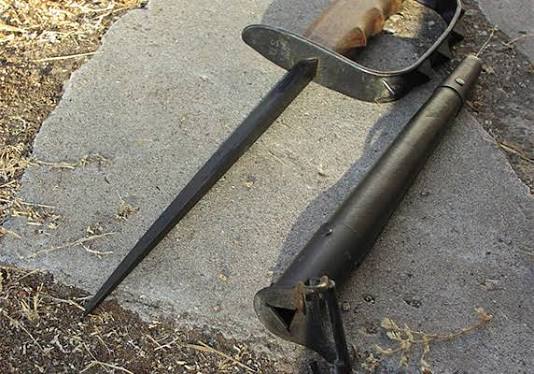
    The result was a frantic period of improvisation. Troops on all sides fashioned clubs from entrenching tools, wire, and scrap metal. They lashed bayonets to wooden handles to make spears. They traded rifles for pistols and knives. By 1915, armies began issuing purpose-built trench knives, such as the French Couteau Poignard M1916 and the German Nahkampfmesser. Many featured brass knuckles on the grip, turning the knife into a dual-purpose weapon for stabbing and punching.

    The Grenade: From Improvisation to Mass Production

    Grenades were almost nonexistent in 1914. Pre-war armies had experimented with hand-thrown explosives, but none had standardized them. The trench experience changed that overnight. Soldiers soon discovered that a thrown explosive could clear a trench section or bunker without exposing the thrower to enemy fire.

    The early war saw a flood of improvised grenades—jam tins packed with nails and gunpowder, glass bottles filled with explosives. But these were dangerous and unreliable. The first practical answer came in 1915 with the British Mills bomb, a fragmentation grenade with a serrated cast-iron body and a lever-and-pin mechanism. It could be thrown accurately and exploded into dozens of lethal fragments.

    The Germans took a different approach with the Stielhandgranate, or stick grenade. Its long wooden handle allowed for longer throws and could be rolled into trenches. By 1918, Britain alone had produced roughly 75 million grenades, compared to about 500,000 in 1914. The grenade had gone from a makeshift tool to a standard infantry weapon, essential for trench raids and assaults.

    The Trench Gun: America’s Controversial Addition

    When the United States entered the war in 1917, it brought a weapon that no European army had used: the pump-action shotgun. The Winchester Model 1897, already a civilian hunting gun, was modified with a bayonet mount and a heat shield, earning the nickname “trench broom” or “trench sweeper.”

    Its effectiveness was undeniable. Each pump-action blast fired a spread of buckshot that could hit multiple targets in a confined space. In the close quarters of a trench, it was arguably the most lethal personal weapon on the battlefield. The Germans were so outraged that they issued a formal protest in 1918, claiming the shotgun violated the Hague Conventions’ ban on inhumane weapons. The US rejected the protest, noting that shotguns were not explicitly prohibited. The controversy illustrates how desperate the war had become—and how quickly new weapons blurred the line between acceptable and barbaric.

    The Flamethrower: Terror as a Weapon

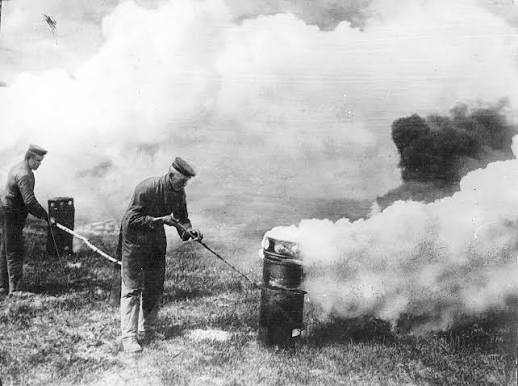
    The flamethrower was the most terrifying weapon introduced in the war. The Germans first used the Flammenwerfer on July 30, 1915, at Hooge, Belgium, against British troops. The effect was immediate and psychological: men fled in panic, and the weapon’s ability to clear bunkers and trenches made it a feared assault tool.

    Portable models, such as the Kleinflammenwerfer, could project a stream of burning fuel up to 20 or 30 meters. Larger static versions, like the British Livens Large Gallery Flame Projector, could reach 40 meters but were effectively one-shot devices. The flamethrower’s tactical value was limited—the operator was vulnerable to snipers, and the fuel tanks were heavy—but its terror value was immense. A soldier facing a stream of fire had to break cover or burn, which made flamethrowers effective at forcing enemy troops out of strongpoints.

    The weapon’s legality was murky. The Hague Conventions banned poison gas and expanding bullets but said nothing about fire. As with the shotgun, Germany used flamethrowers extensively, so the moral high ground was shaky. The weapon’s legacy was clear: future wars would see improved versions, and the psychological impact of fire would never be forgotten.

    Early Machine Guns and Submachine Guns: The Seeds of Modern Firepower

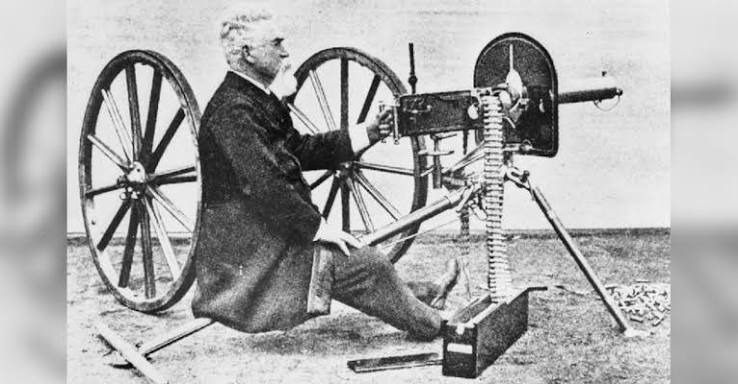
    Machine guns existed before the war—the Maxim gun had been in service since 1884—but they were treated as artillery, not infantry weapons. The war changed that. The British Lewis Gun, the French Chauchat, and the German MG 08/15 were all portable enough to accompany infantry, though they were heavy, prone to jamming, and required crews to operate.

    The real breakthrough came in 1918 with the German MP 18. Designed for the stormtrooper units that spearheaded the Spring Offensive, the MP 18 was the world’s first practical submachine gun. It fired 9mm pistol ammunition at a rate of about 400 rounds per minute, and its short barrel and detachable magazine made it ideal for close-quarters fighting. Issued to assault troops, the MP 18 allowed a single soldier to lay down a withering volume of fire while moving. It was the direct ancestor of every modern submachine gun and a clear sign of where infantry weapons were headed.

    From Static Lines to Stormtroopers

    The shift in weapons reflected a shift in tactics. By 1917, the Germans had developed infiltration tactics, using small, highly trained teams of stormtroopers armed with grenades, pistols, and flamethrowers to bypass strongpoints and attack command posts and supply lines. This approach required light, portable firepower, which drove the adoption of SMGs and grenades.

    The rest of the Allies followed, though more slowly. By November 1918, the infantryman’s kit was vastly different from 1914. The long bayonet was still present, but it was now a secondary weapon. Grenades were standard issue. Shotguns and submachine guns had made their debut. The flamethrower, though still niche, had proven its psychological power.

    These changes were not just technological; they were cultural. The war had broken the old rules of warfare, and the new weapons reflected a brutal pragmatism. Soldiers no longer fought in lines; they fought in bursts of violence, using whatever tool could give them an edge.

    The Legacy of WWI Infantry Weapons

    The weapons developed between 1914 and 1918 laid the foundation for modern infantry combat. The submachine gun, the fragmentation grenade, and the portable flame weapon all became standard in subsequent conflicts. The trench shotgun, though controversial, was used again in World War II and beyond.

    More importantly, the war demonstrated that infantry weapons must adapt to the realities of the battlefield. The lessons of the trenches—close-quarters lethality, portability, and psychological impact—remain central to small-arms design today. When you see a soldier with a carbine and a grenade launcher, you are seeing a descendant of the MP 18 and the Mills bomb.

    The trenches of WWI were a crucible that forged a new kind of warfare. The weapons that emerged from that crucible were brutal, innovative, and often terrifying. They were also a necessary response to a war that had turned the world upside down.

    World War I forced armies to abandon 19th-century weapons and embrace the close-quarters tools of modern war. From the trench knife to the flamethrower, each innovation was a pragmatic answer to the unique horror of the trenches. These weapons not only changed how wars were fought but also set the stage for the infantry arsenals of the 20th century. The stalemate of the Western Front may have been a deadlock, but it was also a forge—one that produced the tools that would define warfare for generations to come.

    Summary

    • Trench warfare made long rifles and bayonets obsolete, leading to the development of compact close-quarters weapons like trench knives and pistols.
    • Grenades went from improvised jam tins to mass-produced Mills bombs and stick grenades, with Britain producing 75 million by 1918.
    • The US shotgun, or “trench broom,” was so effective that Germany protested it as inhumane, though it was not banned.
    • Flamethrowers, first used by Germany in 1915, were more about psychological terror than tactical efficiency, with ranges of 20–40 meters.
    • The MP 18, the first practical submachine gun, was introduced in 1918 and directly influenced modern infantry weapons.

    FAQ

    Q: Why were trench knives so important in WWI?
    A: Trench knives, often with brass knuckles, were essential for silent raids and close-quarters combat, where rifles were too long and noisy. They were compact, deadly, and could be used in the confined spaces of trenches.

    Q: Did the shotgun really cause a diplomatic protest?
    A: Yes. In 1918, Germany formally protested the US use of pump-action shotguns, claiming they violated the Hague Conventions. The US rejected the protest, and shotguns remained in use.

    Q: How effective were flamethrowers in combat?
    A: Their effectiveness was mixed. They were terrifying and could clear bunkers, but they had short range (20–30 meters), were heavy, and made operators vulnerable. Their main impact was psychological.

    Q: What was the first submachine gun?
    A: The German MP 18, introduced in 1918, is generally considered the first practical submachine gun. It was used by stormtroopers during the Spring Offensive.

    Q: How did grenades change during the war?
    A: Grenades went from improvised, unreliable devices to standardized, mass-produced weapons like the British Mills bomb and German stick grenade. Production increased from about 500,000 in 1914 to 75 million by 1918.

  • The Machine Gun: How a Single Invention Redefined Warfare

    The Machine Gun: How a Single Invention Redefined Warfare

    In 1884, Hiram Maxim patented a weapon that could fire 500 rounds per minute—a rate equivalent to the firepower of dozens of riflemen. Within three decades, it would mow down massed infantry charges, entrench armies in mud, and kill more soldiers than any other weapon of its era. The machine gun didn’t just change battlefields; it upended centuries of military doctrine and reshaped the very nature of conflict.

    This article traces the machine gun’s journey from a mechanical curiosity to the centerpiece of modern warfare. We’ll explore its technical evolution, its brutal debut in colonial wars, its role in the stalemate of World War I, and how it continues to influence tactics today.

    The Pre-Machine Gun Battlefield: A World of Volleys and Charges

    Before the machine gun, infantry tactics revolved around massed volley fire. Muskets and rifles had effective ranges of 100–300 meters, and a trained soldier could fire 2–4 rounds per minute with a muzzle-loader, or 10–15 with a bolt-action repeater. Battles were often decided by disciplined volleys, cavalry charges, and bayonet assaults. Artillery provided indirect fire, but it was slow to adjust and vulnerable to counter-battery fire.

    The machine gun shattered this world. It wasn’t just a faster rifle—it was a fundamentally different tool. A single Maxim gun could lay down a continuous stream of lead, turning open ground into a kill zone. The implications were clear to anyone paying attention, but the weapon’s true impact wouldn’t be felt until it met the massed armies of the 20th century.

    The Industrial Revolution and the Maxim Breakthrough

    The machine gun was a child of the Industrial Revolution. Precision machining, mass production of cartridges, and advances in metallurgy made reliable automatic fire possible. But one invention was crucial: smokeless powder. Introduced in the 1880s, it produced less smoke and fouling than black powder, allowing sustained fire without obscuring the gunner’s view or revealing his position.

    Hiram Maxim, an American-born inventor living in Britain, combined these elements in 1884. His design used the recoil energy of the fired round to eject the spent cartridge, chamber a new round, and cock the hammer—all automatically. The Maxim gun could fire 500–600 rounds per minute, roughly the firepower of 30–50 riflemen. It was a self-contained cycle requiring no external power. This was the first true machine gun.

    Colonial Wars: The Weapon as a Grim Reaper

    The machine gun found its first brutal application in European colonial expansion. At the Battle of Omdurman in 1898, British forces with Maxim guns killed thousands of Sudanese Dervishes while suffering only dozens of casualties. In the Matabele War (1893–94), 50 British soldiers with four Maxims held off thousands of Ndebele warriors. These one-sided victories created a myth of European invincibility and demonstrated the weapon’s devastating potential. But they also set a grim precedent: the machine gun could turn a battlefield into a slaughterhouse.

    World War I: The Machine Gun’s Coming of Age

    When World War I broke out in 1914, every major power had machine guns, but military doctrine lagged. They were treated as artillery or special weapons, not integrated into infantry tactics. The reality of 1914–1918 was brutal: defensive machine gun fire, especially from German MG 08s, made frontal infantry assaults suicidal. The machine gun was the primary cause of the trench warfare stalemate. Some estimates suggest it caused 50–60% of all battlefield deaths in the war.

    The machine gun didn’t just cause casualties—it changed the geometry of warfare. It forced armies underground, creating the vast trench systems that stretched from the English Channel to the Swiss border. The weapon’s defensive power made offensive breakthroughs nearly impossible without overwhelming artillery support or innovative new tactics like infiltration and armor.

    Interwar and WWII Developments: The General-Purpose Machine Gun

    Between the wars, designers sought to make machine guns more mobile and versatile. Germany led the way with the MG 34 and MG 42, which introduced the concept of the general-purpose machine gun (GPMG)—a single weapon usable as a light, medium, or heavy machine gun. The MG 42’s rate of fire of 1,200–1,500 rounds per minute earned it the nickname “Hitler’s Buzzsaw.” Its sound was so distinctive that it struck fear into Allied soldiers.

    The United States relied on the Browning M1919 (medium) and the M2 .50 cal (heavy), the latter still in service today. The Soviet Union produced the DP-27 and later the PKM, providing rugged, reliable squad-level firepower. These weapons were lighter, air-cooled, and more portable than their WWI predecessors, allowing them to be used in mobile offensives rather than just static defense.

    Post-WWII and Modern Systems: From SAWs to Miniguns

    After World War II, the machine gun continued to evolve. Squad automatic weapons (SAWs) like the M249 and light machine guns like the RPK provided infantry squads with portable automatic fire using intermediate cartridges like 5.56×45mm NATO. These weapons were lighter and more controllable, but they retained the core principle of automatic fire.

    Modern systems have pushed the concept even further. The M134 Minigun, an electric-powered Gatling-style weapon, can fire 2,000–6,000 rounds per minute, devastating at close range. Advanced optics, suppressors, and smart fire-control systems have made machine guns more accurate and versatile. Yet the fundamental calculus remains: a machine gun multiplies the firepower of a few soldiers into that of a much larger force.

    The Machine Gun’s Legacy: A Weapon That Changed Everything

    The machine gun’s legacy is profound. It made massed infantry assaults obsolete, forced armies to adopt new tactics like fire-and-maneuver, and accelerated the development of tanks, aircraft, and other countermeasures. It also raised the human cost of war to unprecedented levels. In a sense, the machine gun is a mirror of 20th-century warfare: efficient, industrial, and utterly unforgiving.

    Today, machine guns remain a staple of every military force, from the M249 to the PKM. They are no longer the dominant weapon they once were—guided munitions and drones have taken that role—but they still hold a vital place on the battlefield. The machine gun changed battlefields forever because it solved a timeless problem: how to deliver maximum firepower with minimum manpower. That solution came at a terrible price, but it reshaped warfare in ways that continue to echo.

    The machine gun is more than a weapon; it’s a turning point in military history. From Maxim’s first recoil-operated design to the electric-powered Minigun, it has forced armies to adapt, innovate, and confront the grim arithmetic of industrial warfare. Its legacy is visible in every modern infantry squad, every defensive position, and every military doctrine that prioritizes firepower. The machine gun didn’t just change battlefields—it defined them for a century and continues to shape how wars are fought today.

    Summary

    • The first true machine gun was patented by Hiram Maxim in 1884, using recoil energy to automate the firing cycle.
    • Machine guns caused 50–60% of World War I combat casualties and were the primary driver of trench warfare stalemate.
    • Colonial wars like the Battle of Omdurman demonstrated the weapon’s devastating one-sided effectiveness.
    • Germany’s MG 34 and MG 42 introduced the general-purpose machine gun, which could serve as a light, medium, or heavy weapon.
    • Modern machine guns range from squad automatic weapons like the M249 to electric-powered Miniguns firing 2,000–6,000 rounds per minute.

    FAQ

    Q: What was the first true machine gun?
    A: The Maxim gun, patented by Hiram Maxim in 1884, is widely considered the first true machine gun because it was self-powered, using recoil energy to automate the firing cycle.

    Q: How did the machine gun affect World War I tactics?
    A: The machine gun’s defensive firepower made frontal infantry assaults suicidal, forcing armies to dig trenches and creating a stalemate that lasted for years. It also spurred the development of tanks and new infantry tactics.

    Q: What is a general-purpose machine gun?
    A: A general-purpose machine gun (GPMG) is a single weapon that can serve multiple roles—light, medium, or heavy—by changing its mount and feed system. Examples include the German MG 42 and the modern PKM.

    Q: Why was smokeless powder important for machine guns?
    A: Smokeless powder produced less smoke and fouling than black powder, allowing sustained fire without obscuring the gunner’s view or revealing the weapon’s position. It was essential for the machine gun’s practicality.

    Q: Are machine guns still used in modern warfare?
    A: Yes, machine guns like the M249 SAW, M2 .50 cal, and PKM remain standard equipment in most militaries. They provide suppressive fire and are used in both offensive and defensive roles, though their dominance has been challenged by guided munitions and drones.

  • The Day the Wind Turned Deadly: Poison Gas at Ypres

    The Day the Wind Turned Deadly: Poison Gas at Ypres

    At 5:00 PM on April 22, 1915, a strange greenish-yellow cloud began to roll across no-man’s-land near Ypres, Belgium. It wasn’t smoke from artillery or a weather phenomenon—it was chlorine gas, released from thousands of cylinders by German troops. Within minutes, French colonial soldiers were choking, coughing up blood, and collapsing in the trenches. The first large-scale chemical attack in history had begun, and it would change the nature of warfare forever.

    The attack was a desperate attempt to break the deadlock of trench warfare, where millions of soldiers faced each other across a wasteland of mud and barbed wire. For months, both sides had tried frontal assaults, artillery barrages, and even the first use of tear gas, but nothing had moved the front line more than a few miles. The German High Command, facing a shortage of conventional explosives and a naval blockade, turned to science for a solution. The result was a weapon so terrifying that it would later be banned by international treaty, but not before it had killed and maimed thousands.

    The Weapon: Chlorine Gas

    Chlorine gas is a simple chemical—a yellow-green gas with a pungent, suffocating odor. When inhaled, it reacts with water in the lungs to form hydrochloric acid, which burns and destroys lung tissue. Even at low concentrations, it causes violent coughing, chest pain, and shortness of breath. At higher concentrations, it can cause death by asphyxiation. The gas is heavier than air, so it tends to settle in trenches and dugouts, making them death traps.

    The German military had been experimenting with chemical agents since the beginning of 1915. On January 31, they tried using xylyl bromide (a type of tear gas) in shells at the Battle of Bolimov, but the cold weather caused the liquid to freeze, and the gas failed to vaporize. The commander of the 4th Army, Albrecht von Württemberg, then suggested using chlorine gas from pressurized cylinders, a method that had been tested at the German Army’s chemical weapons facility. The plan was ambitious: dig in thousands of cylinders along the front line, wait for a favorable wind, and release the gas in a massive cloud that would drift toward the Allied trenches.

    The man behind the weapon was Fritz Haber, a brilliant chemist who would later win the Nobel Prize for his work on nitrogen fixation. Haber was a fervent patriot who believed that science could win the war. He personally oversaw the placement of the cylinders and the training of the troops who would release them. His wife, Clara Immerwahr, also a chemist, was so horrified by his work that she committed suicide in May 1915, reportedly in protest.

    The Attack: Chaos at Ypres

    The Ypres Salient was a bulge in the Allied line that had been held since the First Battle of Ypres in November 1914. It was a vulnerable position, surrounded on three sides by German-held high ground, and the Allies had been reinforcing it with troops from France and the British Empire. On April 22, the German 4th Army faced French colonial troops from Algeria and Morocco, as well as the Canadian Division, which had recently arrived from training in England.

    At 5:00 PM, the Germans opened the valves on 5,730 cylinders, releasing 168 tons of chlorine gas. The cloud, about 6 kilometers wide, drifted slowly toward the Allied lines, carried by a light wind. The effect was instantaneous. The French colonial troops, who had no protection, began to choke and panic. Many fled, leaving a gap of about 4 miles in the Allied line. The Canadians, on the left flank, were also hit, but they managed to hold on, partly because some soldiers improvised by urinating on handkerchiefs and holding them over their mouths—the ammonia in urine neutralized the chlorine.

    Within the first hour, an estimated 6,000 Allied soldiers were affected, and between 800 and 1,000 died, many from asphyxiation. The greenish-yellow cloud was followed by German infantry, but they advanced cautiously, wearing gas masks or holding cloths over their faces, and they were slowed by the fear of the gas and the need to wait for it to dissipate. This hesitation gave the Allies time to seal the breach with counterattacks, and the German breakthrough was contained.

    The Aftermath: A New Era of Warfare

    The attack at Ypres was a tactical failure for the Germans—they did not achieve the strategic breakthrough they had hoped for. But it was a strategic turning point in the war. The Allies were outraged by the use of poison gas, which they saw as a barbaric violation of the Hague Conventions of 1899 and 1907, which prohibited the use of “poison or poisoned weapons.” The Germans argued that the conventions did not explicitly ban chemical clouds or shells, but the international community was not convinced. The British and French governments used the attack as a propaganda tool, describing the suffering of the victims in lurid detail to galvanize public opinion against Germany.

    The attack also sparked a chemical weapons arms race. By the end of 1915, the Allies had developed their own gas masks and were producing chlorine gas. In September 1915, the British launched their own gas attack at the Battle of Loos, with mixed results due to wind shifts. Throughout the war, both sides developed more potent agents, including phosgene and mustard gas, which caused even more horrific injuries. By the end of the war, chemical weapons had killed an estimated 90,000 soldiers and injured over a million more.

    The legacy of Ypres is a cautionary tale about the intersection of science and warfare. Fritz Haber, who was later awarded the Nobel Prize in Chemistry in 1918, would become a controversial figure, condemned by some for his role in developing chemical weapons and admired by others for his contributions to agriculture. His wife’s suicide, in protest of his work, remains a poignant symbol of the moral dilemmas posed by scientific progress in wartime.

    The use of poison gas at Ypres also led to the Geneva Protocol of 1925, which banned the use of chemical and biological weapons in war. The protocol was a step forward, but it did not prevent the use of chemical weapons in later conflicts, such as the Iran-Iraq War in the 1980s and the Syrian Civil War in the 2010s. The ghost of Ypres still haunts the modern battlefield.

    The first use of poison gas at Ypres was a watershed moment in military history. It demonstrated that science could create weapons of mass destruction, and it set a precedent for the use of chemical agents in warfare. The attack was a tactical failure, but it had a profound strategic impact, galvanizing the Allies and leading to an arms race in chemical warfare. The suffering of the soldiers at Ypres, many of whom died gasping for air in the trenches, remains a powerful reminder of the human cost of technological innovation in war.

    Summary

    • On April 22, 1915, Germany launched the first large-scale poison gas attack in history at Ypres, using 168 tons of chlorine gas from 5,730 cylinders.
    • The attack created a 4-mile gap in the Allied lines, but German infantry were slow to advance, allowing the Allies to seal the breach.
    • Around 6,000 Allied soldiers were affected within the first hour, with 800–1,000 deaths, mostly among French colonial troops.
    • The attack was planned by General Erich von Falkenhayn and developed by chemist Fritz Haber, whose wife later committed suicide in protest.
    • The use of gas was condemned as a violation of the Hague Conventions, leading to the development of gas masks and an arms race in chemical weapons, culminating in the Geneva Protocol of 1925.

    FAQ

    Q: What was the first poison gas used in World War I?
    A: Chlorine gas, released from pressurized cylinders by German forces at the Second Battle of Ypres on April 22, 1915.

    Q: How did soldiers protect themselves from the gas?
    A: Initially, soldiers had no protection. Some improvised by urinating on handkerchiefs and holding them over their mouths, as the ammonia in urine neutralized the chlorine. Later, both sides developed effective gas masks.

    Q: Why did the Germans use poison gas?
    A: Germany was facing a stalemate on the Western Front and a shortage of conventional explosives. The German High Command saw chemical weapons as a potential war-winning technology and believed it would shorten the war.

    Q: Was the use of poison gas a violation of international law?
    A: The Hague Conventions of 1899 and 1907 prohibited the use of “poison or poisoned weapons,” but the language was ambiguous regarding gas. Germany argued that it was not explicitly banned, but the Allies condemned it as a violation of international law.

    Q: What was the long-term impact of the gas attack at Ypres?
    A: The attack led to the development of more lethal chemical agents, such as phosgene and mustard gas, and the eventual ban on chemical weapons in the Geneva Protocol of 1925. It also highlighted the moral and ethical dilemmas of scientific research in wartime.

  • The Battle of Belleau Wood: How US Marines Forged a Legend in France

    The Battle of Belleau Wood: How US Marines Forged a Legend in France

    On June 26, 1918, a short message crackled across the wire: “Woods now entirely — US Marine Corps.” The words ended a brutal three-week struggle for a patch of forest in northern France, but they also marked the moment the US Marine Corps announced itself on the world stage. Belleau Wood was not just a battle; it was a crucible that transformed raw American troops into battle-hardened veterans and gave the Marines their enduring reputation as elite shock troops.

    The fight came at a desperate time. Germany’s Spring Offensive had pushed Allied lines to the breaking point, and Paris lay within striking distance. Into this breach stepped the 4th Marine Brigade, a force of roughly 8,000 men who would face machine-gun fire, poison gas, and some of the toughest terrain on the Western Front. By the time the wood fell, they had suffered over 5,000 casualties — but they had stopped the German advance cold.

    The Road to Belleau Wood

    In the spring of 1918, the Western Front was on the verge of collapse. With Russia out of the war, Germany transferred nearly 50 divisions to France, hoping to win a decisive victory before American troops could tip the balance. The third German offensive, Operation Blücher-Yorck, smashed through Allied lines along the Aisne River on May 27, driving toward Paris.

    The Americans were green. The US had entered the war in April 1917, but by spring 1918, only a handful of divisions were ready for combat. The 2nd Division was one of them, and it included the 4th Marine Brigade — the only Marine brigade in the American Expeditionary Forces. Initially used for rear-area security, the Marines were rushed to the front when the Germans broke through.

    By June 1, they were digging in along the Paris-Metz highway, blocking the road to the capital. The terrain favored the defender: Belleau Wood sat on a ridge overlooking the Marne Valley, a dense tangle of trees, boulders, and ravines that made it a natural fortress. But the Marines were untested, and the Germans were confident they could brush aside these inexperienced colonials.

    “Retreat? Hell, We Just Got Here!”

    The first days of June were a trial by fire. German attacks slammed into Marine positions along the highway, but the Americans held. It was during this period that Capt. Lloyd Williams of the 5th Marines supposedly delivered the line that would become legend. When a French officer suggested his men pull back, Williams reportedly replied: “Retreat? Hell, we just got here!”

    The Germans soon learned that the Marines were not going to be easy prey. But holding the line was only the beginning. On June 6, the Allies launched the first major American offensive of the war, with the Marines ordered to take Belleau Wood itself.

    The attack was a disaster in the making. The Marines had to cross open wheat fields swept by machine-gun fire from the wood’s edge. They advanced in waves, and the casualties were horrific. The 6th Marine Regiment’s commander, Lt. Col. Albertus Catlin, was shot through the lungs almost immediately. By day’s end, the Marines had suffered 1,087 casualties — the bloodiest single day in Marine Corps history to that point.

    Fighting in the “Devil’s Wood”

    What followed was weeks of brutal, close-quarters combat inside the wood. The terrain made artillery support nearly useless; the fighting devolved into small-unit actions where men relied on grenades, bayonets, and raw courage.

    One of the most famous moments came when Gunnery Sgt. Dan Daly, a two-time Medal of Honor recipient, rallied his men for an assault on a German machine-gun nest. According to accounts, he shouted: “Come on, you sons of bitches! Do you want to live forever?” The Marines surged forward and took the position.

    The Germans, for their part, were stunned by the ferocity of the Americans. They had expected inexperienced troops who would break under fire. Instead, they faced men who kept coming despite devastating losses. German reports referred to the Marines as “devil dogs” — a nickname that stuck.

    But the fighting was far from one-sided. The Marines were repeatedly counterattacked, and the wood changed hands several times. Between June 13 and June 21, the battle ground to a stalemate as both sides pounded each other with artillery. The Marines were exhausted, their units shattered, but they refused to give up.

    The Final Push

    By late June, fresh American troops were brought up, and the Allies launched a renewed offensive. The Marines, despite their losses, were determined to finish the job. On June 26, after a final assault, the wood was declared secure. The message — “Woods now entirely — US Marine Corps” — signaled the end of the battle.

    The cost had been staggering. The 2nd Division as a whole lost nearly 10,000 men, including over 1,800 killed. The Marine Brigade alone suffered more than 5,000 casualties, with over 1,000 dead. German losses were estimated at over 10,000, though exact numbers remain disputed.

    But the victory had strategic significance beyond the bloodshed. The German drive on Paris was halted, and the Allies had proven that American troops could fight — and win — against the best the German army could throw at them. The battle also marked a turning point in the war, as the initiative shifted to the Allies.

    The Legacy of Belleau Wood

    The battle’s impact on the US Marine Corps was profound. Before 1918, the Marines were a small, often overlooked branch of the US military. After Belleau Wood, they were recognized as an elite fighting force, feared by their enemies and respected by their allies. The French government renamed the forest “Bois de la Brigade de Marine” in honor of the Marines’ sacrifice.

    But the legacy is also one of sorrow. The Marines who fought at Belleau Wood were volunteers and regulars who had signed up for a war they believed was just. They faced horrors — poison gas, machine guns, and hand-to-hand combat — that would haunt them for the rest of their lives. Many never made it home.

    The battle also served as a lesson in leadership and tenacity. Gen. John J. Pershing, commander of the AEF, had insisted on keeping American units together, and Belleau Wood validated that decision. It showed that American troops, when properly led, could match the veteran armies of Europe.

    Why It Still Matters

    Today, Belleau Wood is a site of pilgrimage for Marines, who visit to pay tribute to their predecessors. The battle is taught in military academies as an example of how determination and tactical flexibility can overcome difficult odds. It also stands as a reminder of the human cost of war — the thousands of young men who died in a forest that, by all accounts, was not worth the sacrifice in purely strategic terms.

    But at the time, the stakes were existential. If the Germans had broken through, Paris could have fallen, and the war might have ended differently. The Marines at Belleau Wood held the line, and in doing so, they helped turn the tide of World War I. Their baptism of fire was not just a test — it was a transformation.

    The Battle of Belleau Wood was a brutal, costly victory that proved the mettle of the US Marine Corps. It was a fight fought with raw courage against a determined enemy, in a forest that became a graveyard for thousands. But it was also a turning point, both for the war and for the Marines. The legends born there — Daly’s battle cry, Williams’s defiance — still echo through the Corps today. Belleau Wood was not just a battle; it was a defining moment that shaped the identity of the United States military for a century.

    Summary

    • The Battle of Belleau Wood (June 1–26, 1918) was the first major offensive by US Marines in World War I, halting the German advance toward Paris.
    • The 4th Marine Brigade suffered over 5,000 casualties (more than half their strength), with the bloodiest day on June 6 costing 1,087 men.
    • Key figures included Capt. Lloyd Williams (“Retreat? Hell, we just got here!”) and Gunnery Sgt. Dan Daly (“Come on, you sons of bitches! Do you want to live forever?”).
    • The victory proved American troops could fight effectively, boosting Allied morale and leading the French to rename the wood “Bois de la Brigade de Marine.”
    • The battle cemented the Marines’ reputation as an elite fighting force, earning them the nickname “Devil Dogs” from the Germans.

    FAQ

    Q: What was the ‘baptism of fire’ for the US Marines?
    A: It refers to the Battle of Belleau Wood in June 1918, the first major combat test for American Marines in World War I. They were thrown into a desperate fight to stop a German offensive and proved their toughness despite heavy losses.

    Q: How many Marines died at Belleau Wood?
    A: The 4th Marine Brigade suffered approximately 1,062 killed and 5,183 wounded or missing out of about 8,000 men — a casualty rate of over 60%.

    Q: What is the origin of the term ‘Devil Dogs’?
    A: German soldiers, impressed by the Marines’ ferocity, reportedly called them ‘Teufel Hunden’ (devil dogs), a nickname that stuck in American lore.

    Q: Why was Belleau Wood strategically important?
    A: It sat on a ridge overlooking the Marne Valley, and controlling it was crucial for blocking the German drive toward Paris. The battle halted that advance.

    Q: How did the battle affect the US Marine Corps’ reputation?
    A: It transformed the Marines from a small, secondary force into an elite infantry unit, solidifying their role as shock troops and leading to the French renaming the forest in their honor.

  • The East African Campaign: The Four-Year Guerrilla War That Never Ended

    The East African Campaign: The Four-Year Guerrilla War That Never Ended

    When the guns fell silent on the Western Front on November 11, 1918, one German commander refused to lay down his arms. General Paul von Lettow-Vorbeck, leading a small force of European officers and African soldiers in the jungles of East Africa, continued fighting for two more weeks. He finally surrendered on November 25, 1918, not because he was defeated, but because a British officer showed him a newspaper announcing the Armistice.

    That surrender marked the end of the East African Campaign, a four-year conflict that stretched from the beaches of Tanzania to the mountains of Mozambique. It was a war of ambushes, disease, and endurance—a guerrilla war that cost the lives of over 100,000 African porters and tied down hundreds of thousands of Allied troops. Yet it remains one of the least-known chapters of World War I.

    The Opening Blow: The Battle of Tanga

    The campaign began in earnest on November 2, 1914, when a British-Indian expeditionary force of about 8,000 men landed near the port of Tanga, on the coast of German East Africa. The British expected a quick victory against a small colonial garrison. Instead, they were met by Lettow-Vorbeck’s force of about 1,000 German officers and Askaris—professional African soldiers who were marksmen and disciplined fighters.

    Over two days of chaotic fighting in the jungle, the British were routed. The Askaris, armed with modern rifles and trained in bush warfare, outflanked the British and sent them fleeing back to their ships, leaving behind weapons, ammunition, and even medical supplies. The Battle of Tanga was a humiliating defeat for the British Empire and set the tone for the entire campaign: the Germans, though heavily outnumbered, were better led, better trained, and better adapted to the environment.

    Lettow-Vorbeck’s Strategy: Tie Down, Don’t Conquer

    Lettow-Vorbeck, a Prussian aristocrat and a veteran of colonial wars, understood that he could not hold the colony against the full might of the British Empire. His goal was simpler and more strategic: to tie down as many Allied troops as possible, for as long as possible, thereby diverting resources from the Western Front. He once said, “We must fight on as long as we can, and when we can no longer fight, we must die.”

    To achieve this, he adopted a guerrilla strategy. He avoided pitched battles, melted into the jungle or mountains, struck at supply lines and isolated outposts, and then vanished. His troops lived off the land, supplemented by captured Allied supplies. They moved quickly, often covering 20 miles a day through trackless bush, and they knew the terrain intimately.

    The Askaris, who numbered about 11,000–12,000 at the peak, were not conscripts. They were volunteers, drawn from the local population, and they were fiercely loyal to Lettow-Vorbeck. They were equipped with modern rifles, including captured British ones, and they were trained to a standard that made them the equal of any European soldier in Africa.

    The Allied Response: A Costly Escalation

    The British initially underestimated the campaign, sending small forces that were easily outmaneuvered. After Tanga, they escalated dramatically. By 1916, under the command of General Jan Smuts, a South African statesman-soldier, the Allies had amassed over 130,000 troops—including more than 60,000 South Africans and 40,000 Indians—against a German force that never exceeded about 15,000.

    Smuts’s strategy was to encircle and crush the Germans in a vast pincer movement. But the terrain was against him. The campaign was fought in some of the most disease-ridden country on Earth: malaria, dysentery, and sleeping sickness were rampant. Quinine, the antimalarial drug, was in short supply. More Allied soldiers died of disease than of German bullets. By 1917, Smuts’s South African troops were withdrawn, exhausted and decimated, and replaced by African and Belgian forces who were better acclimatized.

    The Carrier Corps: The Invisible Backbone

    Behind the front lines, an even larger tragedy unfolded. The Allies relied on over 1 million African porters, known as the Carrier Corps, to carry supplies on their heads through the trackless bush. These porters were often conscripted by force, and they faced brutal conditions. They had no medical care, inadequate food, and were frequently exposed to the same diseases that killed soldiers.

    Estimates suggest that over 100,000 porters died—from disease, starvation, and exhaustion. Their mortality rate in some units was as high as 20–30%. This human catastrophe went largely unrecorded at the time, and it remains one of the most tragic and underreported statistics of the war.

    The German side also used forced labor, but on a smaller scale. Both armies stripped the land as they moved, causing famine and suffering for the local population.

    The Pursuit Across Africa

    By 1917, Lettow-Vorbeck was being pursued relentlessly by Allied forces. He led his men south into Portuguese East Africa (Mozambique), where they raided Portuguese garrisons for supplies and evaded capture. In 1918, he turned north again, invading Northern Rhodesia (Zambia). Even as the war in Europe was ending, his force was still operational, still evading the Allies, and still fighting.

    The campaign finally ended on November 25, 1918, when Lettow-Vorbeck surrendered at Abercorn, Northern Rhodesia—two weeks after the Armistice. He surrendered only after being shown a newspaper that confirmed the war was over. His force was intact, undefeated in the field, and had achieved its goal: tying down over 130,000 Allied troops for four years.

    The Legacy: A Masterclass in Guerrilla Warfare

    The East African Campaign is studied today in military academies as a case study in asymmetric warfare. Lettow-Vorbeck is often called the “master of guerrilla war,” and his tactics anticipated many of the insurgencies of the 20th century. He used small, mobile forces, indigenous soldiers, and the environment to neutralize a vastly superior enemy.

    But the campaign’s legacy is also one of devastation. The local population suffered enormously—from disease, famine, and violence. The Carrier Corps deaths are a dark chapter in colonial history, and the campaign’s impact on East Africa was felt for decades.

    In the end, the East African Campaign was a war that should not have been fought, and yet it was fought with extraordinary tenacity on both sides. It was a war of attrition in the worst possible conditions, and it ended not with a decisive battle, but with a quiet surrender in the African bush.

    The East African Campaign was a strange and brutal side show of World War I. It was a guerrilla war that defied the conventional narratives of the Western Front, and it was fought with a ferocity and endurance that are hard to fathom. Lettow-Vorbeck’s surrender was not a defeat but a recognition that the war was over. His campaign remains a testament to the power of asymmetric warfare—and a sobering reminder of the human cost of colonial conflict.

    Summary

    • The East African Campaign lasted from August 1914 to November 1918, making it one of the longest continuous campaigns of WWI.
    • German forces, never exceeding about 15,000 men, tied down over 130,000 Allied troops using guerrilla tactics.
    • The Battle of Tanga (1914) was a disastrous British defeat that set the tone for the campaign.
    • Over 1 million African porters served the Allies, and an estimated 100,000+ died from disease, starvation, and exhaustion.
    • Lettow-Vorbeck surrendered on November 25, 1918, two weeks after the Armistice, with his force still undefeated in the field.

    FAQ

    Q: Why didn’t Lettow-Vorbeck surrender at the Armistice?
    A: He was deep in the bush of Northern Rhodesia and had no reliable communication with the outside world. He only learned of the Armistice when a British officer showed him a newspaper, and he surrendered two weeks later on November 25, 1918.

    Q: How many troops were involved on each side?
    A: The Germans never had more than about 14,000–15,000 men, including 3,000 German officers and NCOs. The Allies committed over 130,000 troops at various points, including South Africans, Indians, Africans, and Belgians.

    Q: What was the role of the Carrier Corps?
    A: The Carrier Corps were African porters conscripted by the British to carry supplies. Over 1 million served, and more than 100,000 died from disease, starvation, and exhaustion.

    Q: Was the campaign a German victory?
    A: In a military sense, the Germans were never decisively defeated in the field, but they ultimately lost the colony. The campaign is considered a strategic victory for the Allies because the German force surrendered, but it came at a huge cost.

    Q: Why is the campaign studied in military academies?
    A: It is a classic example of guerrilla warfare—how a small, mobile force can tie down a much larger enemy using terrain, indigenous troops, and unconventional tactics. Lettow-Vorbeck’s campaign is often cited as a model for asymmetric warfare.

  • The Battle of Cambrai: When Tanks Changed the Rules of War

    The Battle of Cambrai: When Tanks Changed the Rules of War

    At 6:20 AM on November 20, 1917, the ground near Cambrai, France, trembled. Not from an earthquake, but from the roar of nearly 476 Mark IV tanks—the largest concentration of armored vehicles ever assembled at that time. Their mission: smash through the seemingly impenetrable Hindenburg Line without a single preliminary artillery shell. It was a gamble that would either prove tanks as war-winning weapons or consign them to the scrapheap of failed experiments.

    For years, the Western Front had been a bloody stalemate. Soldiers huddled in muddy trenches, and offensives gained yards at the cost of thousands of lives. The tank, introduced in 1916, had sputtered and stalled in small numbers, but at Cambrai, the British deployed them en masse, in a coordinated attack that combined armor, artillery, and infantry in a way never seen before. The result was a dramatic breakthrough that changed military thinking forever—even though the battle itself ended in a bitter stalemate.

    The Road to Cambrai: Why Tanks Had to Prove Themselves

    By 1917, the tank was not a new invention. The British had first used them at Flers-Courcelette in September 1916, and again at Messines in June 1917. But those deployments were small-scale, plagued by mechanical breakdowns, and often bogged down in mud. Skeptics called them unreliable behemoths. Even their supporters admitted they were slow, clumsy, and prone to breaking down.

    However, the Mark IV tank was an improvement. It boasted better armor, a steering system that was slightly less temperamental, and came in two versions: “male” tanks with 6-pounder cannons, and “female” tanks with only machine guns. The Tank Corps, led by the flamboyant Brigadier-General Hugh Elles, was desperate for a chance to prove their worth on a grand scale.

    They found an unlikely ally in an artillery officer, Brigadier-General Henry Tudor. Tudor had developed a new technique called “predicted fire,” which allowed artillery to target enemy positions using map coordinates and sound ranging, rather than firing a few sighting shots first. This meant the guns could open fire at the exact moment of attack, without warning the enemy. No preliminary bombardment—a radical departure from standard practice.

    The Plan: Tanks, Fascines, and a Surprise Assault

    The Cambrai sector was chosen for its firm chalk soil, which was ideal for tanks. The plan was audacious: tanks would crush the barbed wire, cross the wide trenches using bundles of brushwood called fascines (dropped into the trenches as makeshift bridges), and then infantry would follow to mop up. Cavalry, still considered a decisive arm, would then ride through the gap and capture Cambrai, a vital rail hub.

    The attack began at dawn, with no warning. The tanks lumbered forward, their engines roaring, and the infantry followed. The German defenders, manning the formidable Hindenburg Line, were taken completely by surprise. In a few hours, the British had broken through, gaining up to five miles in some places. Church bells rang in Britain to celebrate the victory.

    The Breakthrough: A Glimpse of the Future

    The initial success was stunning. The Hindenburg Line, thought to be unbreachable, had been pierced. In the village of Bourlon Wood and at Fontaine-Notre-Dame, bitter fighting raged, but the tank had proven its worth as a weapon of shock and awe. The German soldiers, many of whom had never seen a tank, were terrified. The sheer mass of armor, crushing wire and crossing trenches, was demoralizing.

    But the breakthrough was not exploited. The cavalry, which had been waiting to charge through, found the ground churned up and the enemy quickly reinforcing. There were not enough reserves to push deeper. The tanks, too, were suffering. Of the 476 that started, about 180 were knocked out by the end of the battle—many from mechanical failure or bogging down in the soft ground, not from enemy fire.

    The German Counteroffensive: A Lesson in Defense

    The Germans were not idle. Under General Georg von der Marwitz, they launched a counteroffensive on November 30, using stormtrooper infiltration tactics—small, elite units that bypassed strongpoints and struck at command centers. They recaptured most of the ground the British had taken, and the battle ended in a stalemate on December 7.

    The casualties were heavy: about 45,000 British and 50,000 German killed, wounded, or missing. For the British, it was a bitter pill—a victory that had turned into a defeat. But for military theorists, it was a revelation. The tank, used in mass, had created a breakthrough that was unprecedented. It was a forerunner of the Blitzkrieg tactics of World War II.

    The Aftermath: What Cambrai Really Proved

    Cambrai was not the first use of tanks, but it was the first time they were used in mass, in a coordinated assault. It proved that tanks could overcome trench warfare, at least temporarily. It also proved that they could be stopped—by anti-tank guns, by mud, and by determined infantry.

    The battle had a profound impact on the Germans. They quickly developed anti-tank tactics, including armor-piercing ammunition and wider trenches. The British, meanwhile, learned that a breakthrough needed to be exploited with reserves and that tanks needed better reliability.

    Historians still debate whether Cambrai was a revolution in warfare. Some argue it was an evolutionary step, building on earlier experiments. But most agree that it marked a turning point: the tank had moved from the sidelines to the center of military planning. The age of armored warfare had begun.

    The Human Cost and the Human Experience

    Beyond the tactics and technology, Cambrai was a brutal struggle. Soldiers in the tank crews described the terror of being inside a metal box, the heat, the fumes, and the fear of being burned alive. For the infantry, the sight of tanks crushing through wire and trenches was awe-inspiring, but the close-quarters fighting in villages like Bourlon Wood was savage.

    The battle also highlighted the obsolescence of cavalry. The horse-mounted troops, who had been waiting for the gap to open, were unable to exploit it. They were misused, perhaps, but their failure symbolized the end of an era.

    Conclusion: The Battle That Changed Warfare

    Cambrai was not a decisive victory for either side. But it was a decisive moment in the history of warfare. It showed that tanks, used in mass and in coordination with artillery and infantry, could break the stalemate of the trenches. It also showed the importance of reserves and the dangers of overreach. The lessons of Cambrai echoed through the next century, from the blitzkrieg of 1940 to the armored warfare of today. The tank had arrived, and the rules of war would never be the same.

    In the annals of military history, the Battle of Cambrai stands as a paradox: a breakthrough that failed, yet transformed warfare. It was the first major use of tanks, and it proved that armor could be a decisive weapon. Though the battle ended in a stalemate, its lessons shaped the future of combat. Cambrai was not the end of the story—it was the beginning of a new one.

    Summary

    • The Battle of Cambrai (Nov 20–Dec 7, 1917) was the first large-scale use of tanks in warfare, with ~476 Mark IV tanks.
    • The attack used a surprise assault without a preliminary bombardment, breaking the Hindenburg Line initially.
    • Despite the breakthrough, a German counteroffensive recaptured most ground, ending in a stalemate.
    • The battle demonstrated the potential of combined arms (tanks, artillery, infantry) and the obsolescence of cavalry.
    • Casualties were heavy: ~45,000 British and ~50,000 German.
    • Cambrai is often seen as a forerunner of Blitzkrieg and a turning point in armored warfare.

    FAQ

    Q: Was Cambrai the first battle to use tanks?
    A: No. Tanks were first used at Flers-Courcelette in September 1916 and at Messines in June 1917. Cambrai was the first massed use of tanks (hundreds at once) in a surprise assault without a preliminary bombardment.

    Q: Why was Cambrai considered a success if it ended in a stalemate?
    A: The initial breakthrough was a success, proving that tanks could break trench defenses. But the Germans counterattacked and recaptured most ground. The battle is seen as a tactical success but a strategic failure, yet it demonstrated the future of armored warfare.

    Q: What was the ‘predicted fire’ technique?
    A: It was an artillery method using map coordinates and sound ranging to target enemy positions without prior registration, allowing for a surprise barrage at the moment of attack. This was a key innovation at Cambrai.

    Q: How many tanks were used and how many were lost?
    A: About 476 British tanks were initially committed. Around 180 were knocked out, many due to mechanical failure or bogging down, not just enemy fire.

    Q: What was the German response to the tanks?
    A: The Germans were impressed but developed anti-tank tactics, including field guns with armor-piercing ammunition and wider trenches. Their counteroffensive used stormtrooper infiltration tactics to reverse the British gains.

  • The Battle of Amiens: The Black Day That Doomed the German Army

    The Battle of Amiens: The Black Day That Doomed the German Army

    At 4:20 AM on August 8, 1918, a sudden barrage of over 2,000 artillery pieces erupted along a 12-mile front east of Amiens, France. Under the cover of fog and the roar of guns, hundreds of tanks and 120,000 Allied troops surged forward. By nightfall, they had advanced up to 8 miles, captured 12,000 prisoners, and shattered the German front line. It was the largest single-day territorial gain on the Western Front since 1914, and it triggered a crisis in the German high command. General Erich Ludendorff would later call it ‘the black day of the German Army.’ This was the beginning of the end for Germany.

    Amiens was not just another battle; it was a masterclass in modern combined-arms warfare. The Allies had finally figured out how to coordinate infantry, tanks, artillery, and aircraft into a cohesive fighting machine. For the Germans, it was a devastating blow that exposed their exhaustion and signaled that the war was lost. The battle set the stage for the Hundred Days Offensive, which would end with the Armistice on November 11, 1918.

    The Strategic Gamble: Why Amiens Mattered

    By mid-1918, the German Spring Offensives had gained ground but at a terrible cost. After Russia’s collapse, Germany had thrown everything into a series of massive attacks to win before American troops arrived in strength. But by July, the offensives had stalled. The German army was exhausted, understrength, and demoralized. The Allies saw their chance.

    The front near Amiens was a salient—a bulge created by the German advances. Amiens itself was a vital railway hub for the Allies, and the surrounding high ground was key to any future advance. If the Allies could retake it, they would not only secure the city but also open a gateway to the open country beyond.

    Field Marshal Sir Douglas Haig and General Sir Henry Rawlinson conceived a bold plan: a surprise attack without the customary days-long artillery bombardment. Instead, they would use a short, intense ‘hurricane’ barrage just before zero hour. Secrecy was paramount. Troops moved at night, radio silence was enforced, and the Canadians were brought in under strict security, with leave cancelled and mail censored. Even dummy tanks were deployed to mislead German intelligence.

    The Plan: A Textbook in Combined Arms

    The plan was a radical departure from the slogging matches of previous years. The British Fourth Army, including the elite Australian and Canadian Corps, would lead the assault, with the French First Army on the southern flank. The Australians were commanded by Lieutenant General Sir John Monash, and the Canadians by Lieutenant General Sir Arthur Currie—two of the most innovative commanders of the war. Together, they orchestrated a coordinated attack that integrated every arm of the military.

    At 4:20 AM on August 8, the artillery opened fire. Over 2,000 guns laid down a creeping barrage that moved forward in precise increments, protecting the infantry as they advanced. Behind them came 430 British Mark V and Whippet tanks—the largest tank deployment of the war to that point. The tanks crushed barbed wire, silenced machine-gun nests, and provided mobile firepower. Above, about 1,000 Allied aircraft dominated the skies, outnumbering the Germans nearly three to one. They strafed ground targets and gathered intelligence.

    This was combined-arms warfare at its finest. The infantry, tanks, artillery, and airpower worked in synchronized waves, each supporting the others. The Germans, with only about 30,000–40,000 front-line defenders, were overwhelmed. They had expected a long bombardment, not this sudden, coordinated onslaught.

    The Black Day of the German Army

    The first day was a disaster for the Germans. They lost 12,000 prisoners and 450 guns. The front line was pushed back 8–12 miles, the deepest advance in a single day since 1914. German divisions were shattered, and reserves were too far back to respond. Ludendorff, the de facto German commander, was stunned. He later wrote, ‘August 8th was the black day of the German Army in the history of this war.’

    But the battle was not without cost. The Allies suffered about 22,000 casualties over the five days of the main offensive, including 13,000 British and 9,000 French. The Germans lost about 30,000, including the prisoners. The fighting continued sporadically until August 17, but the damage was done. The German army’s morale was broken. As one German officer wrote, ‘The men were no longer what they had been; they had lost their confidence in their leaders.’

    The victory at Amiens marked the start of the Hundred Days Offensive, a relentless series of Allied attacks that would push the Germans back to the Hindenburg Line and eventually force the Armistice. For the Germans, there was no recovery. The battle proved that the Allies had mastered modern warfare, and the German army could not counter it.

    The Aftermath: A Turning Point in History

    The Battle of Amiens was a decisive victory for the Allies, but its significance goes beyond the battlefield. It demonstrated that the stalemate of trench warfare had been broken. The coordination of tanks, infantry, artillery, and aircraft was a model for future military operations. Monash and Currie became national heroes in Australia and Canada, where the battle is still celebrated as a key moment in their nations’ histories.

    For Germany, Amiens was a psychological blow from which it never recovered. The army’s exhaustion and the arrival of American troops signaled that the war was unwinnable. Ludendorff resigned in October, and the German government began seeking an armistice. When the guns finally fell silent on November 11, 1918, it was the end of a war that had claimed millions of lives. Amiens was the beginning of that end.

    The Battle of Amiens was more than a military victory; it was a turning point that changed the course of the First World War. By mastering combined-arms tactics, the Allies broke the deadlock and set the stage for the final offensive. For Germany, it was the moment when defeat became inevitable. August 8, 1918, was indeed the black day of the German Army—and the beginning of the end.

    Summary

    • The Battle of Amiens (August 8–12, 1918) was a decisive Allied victory, with the largest single-day territorial gain on the Western Front since 1914.
    • Allied forces used a surprise attack without a long bombardment, coordinating infantry, tanks, artillery, and aircraft for the first time effectively.
    • German casualties were about 30,000, including 12,000 prisoners on the first day, leading Ludendorff to call it ‘the black day of the German Army.’
    • The battle launched the Hundred Days Offensive, which ended with the Armistice on November 11, 1918.
    • Commanders Monash (Australia) and Currie (Canada) became national heroes, and the battle is seen as a model of modern combined-arms warfare.

    FAQ

    Q: What was the significance of the Battle of Amiens?
    A: It was the start of the Allied Hundred Days Offensive, broke the German army’s morale, and demonstrated the effectiveness of combined-arms tactics, leading to the Armistice in November 1918.

    Q: How many tanks were used at Amiens?
    A: About 430 British Mark V and Whippet tanks, the largest tank deployment of the war up to that point.

    Q: Who commanded the Allied forces at Amiens?
    A: Field Marshal Sir Douglas Haig oversaw the offensive, with General Rawlinson commanding the British Fourth Army, and Lieutenant Generals Monash and Currie leading the Australian and Canadian Corps, respectively.

    Q: Why did Ludendorff call August 8, 1918, ‘the black day of the German Army’?
    A: Because the German front line collapsed under a surprise attack, resulting in massive losses and a blow to morale from which the German army never recovered.

    Q: How long did the main battle last?
    A: The major offensive phase lasted from August 8 to August 12, with fighting continuing sporadically until August 17.