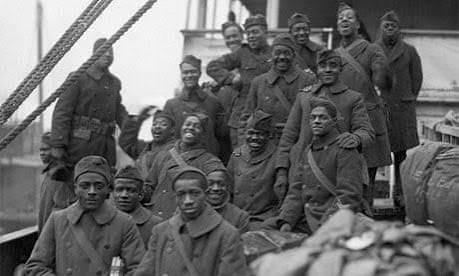
When the guns of August 1914 fell silent, the world’s empires called upon their most distant subjects. From the plains of Punjab to the villages of Senegal, millions of men marched to a war they had no part in starting, yet whose consequences would shape their lives forever. This is the story of those soldiers—the men history often overlooks.
Between 2 and 3 million colonial soldiers served in World War I, yet their experiences remain shadowed by the dominant narratives of European trenches. They fought in the mud of Flanders, the heat of Mesopotamia, and the jungles of East Africa. They died in numbers that rivaled their European counterparts, yet their sacrifices were met with broken promises and colonial indifference.
The First to Arrive: Indian Soldiers on the Western Front
In October 1914, the Indian Army Corps—comprising the Lahore and Meerut Divisions—became the first colonial troops to reach the Western Front. They were thrown into the Battle of Ypres, where they faced a new kind of warfare: trenches, machine guns, and poison gas. The cold, the mud, and the unfamiliar landscape took a heavy toll. By the war’s end, over 1.4 million Indian soldiers had served, and around 74,000 never returned home.
Their presence was a radical departure from pre-war doctrine. The Indian Army was designed for imperial policing on the North-West Frontier, not European battlefields. Yet, the British Empire’s need for manpower was desperate. Indian soldiers fought at Neuve Chapelle, the Somme, and Gallipoli, earning a reputation for bravery that was often met with paternalistic racism.
The experience was profoundly alienating. Men accustomed to the heat of South Asia suffered frostbite in the trenches. Their traditional diets were unavailable, and their religious practices were often ignored. As the war dragged on, morale plummeted, and some soldiers began to question why they were dying for a distant king.
The Force Noire: France’s African Soldiers
France, facing a demographic crisis, turned to its colonies with a theory known as the force noire. General Charles Mangin’s 1910 book of the same name argued that African soldiers were natural warriors who could be used as shock troops. When the war broke out, France mobilized roughly 600,000 colonial soldiers, including about 180,000 from sub-Saharan Africa and 475,000 from North Africa.
The Tirailleurs Sénégalais—a catch-all term for West African soldiers—bore the brunt of the fighting. Around 135,000 served, and nearly 30,000 were killed. They were often placed in the most dangerous frontal assaults, suffering disproportionate casualties. At Verdun, they held the line when French units faltered, but their sacrifices were rarely acknowledged.
Recruitment was often coercive. Village chiefs were pressured to supply quotas, and many men were taken against their will. They were promised pay, land, and citizenship—promises that were largely broken after the war. Despite their sacrifices, they returned to a colonial system that treated them as subjects, not citizens.
The Carrier Corps: Africa’s Invisible Army
In East Africa, the war took a different form. The German commander Paul von Lettow-Vorbeck led a guerrilla campaign with about 14,000 Askaris (African soldiers) and thousands of carriers. To counter him, the British assembled the Carrier Corps, a force of over 25,000 African porters who carried supplies, ammunition, and food across some of the most unforgiving terrain on Earth.
These men were not soldiers in the traditional sense, but their contribution was vital. They died in staggering numbers—mortality rates reached 20–25%, largely from disease and starvation. Malaria, dysentery, and influenza killed more men than combat. The Carrier Corps was a logistical lifeline, but their suffering was invisible to the outside world.
The campaign in East Africa was a sideshow to the European war, yet it consumed resources and lives on an enormous scale. The Germans, too, relied on African carriers, and the civilian population bore the brunt of the conflict. When the war ended, the survivors returned to villages devastated by famine and disease.
The British West Indies Regiment: Black Soldiers in a White Man’s War
The British West Indies Regiment (BWIR) was formed in 1915, with over 15,000 men volunteering from the Caribbean. They were initially used as laborers, but eventually saw combat in the Middle East and on the Western Front. The regiment suffered 185 killed in action, but over 1,000 died of disease—a common fate for colonial troops.
Despite their service, the BWIR faced systemic racism. They were paid less than their white counterparts, and promotion was nearly impossible. After the war, many veterans were denied pensions, and their service was quietly forgotten. The war had been a crucible of hope, but the imperial system remained unchanged.
Forgotten in the Mud: The Aftermath
When the armistice was signed in November 1918, colonial soldiers returned to a world that had not changed. In India, veterans expected recognition for their service, but instead found the same colonial administration, the same poverty, and the same lack of rights. Their experiences fueled the growing nationalist movement, as men who had fought for the empire began to question why they should not govern themselves.
In France, colonial troops were used to occupy the Rhineland after the war. This sparked a racist campaign in Germany, known as the “Black Shame,” which portrayed African soldiers as barbaric occupiers. This propaganda was a precursor to the racial ideologies that would engulf Europe in the next war.
Commemoration was almost exclusively white. Few memorials were built to honor colonial soldiers, and their names were omitted from official histories. It was not until the 21st century that countries began to acknowledge their sacrifices, with memorials in places like London and Paris.
Legacy: A Complex Reckoning
The story of colonial soldiers is not one of simple heroism or victimhood. They fought for empires that often despised them, yet they fought with courage and determination. They were pawns in imperial power games, yet their experiences shaped the course of decolonization.
In Africa, veterans returned with new ideas about rights and citizenship. In the Caribbean, the BWIR’s treatment fueled labor unrest. In India, the war accelerated the demand for self-rule. The war may have been fought for empire, but it sowed the seeds of its demise.
Today, historians are piecing together these untold stories, revealing a war that was truly global. The colonial soldiers were not bystanders to history; they were actors who shaped it, even if their voices were silenced for too long.
The Great War was a global conflict, fought not just by Europeans but by millions of men from every continent. Their stories challenge the traditional narrative of the war as a European tragedy, reminding us that the cost of empire was paid in blood across the globe. As we remember the fallen, we must also remember those who were forgotten—the colonial soldiers whose sacrifices were too often erased from history.
Summary
- Approximately 2–3 million colonial soldiers served in World War I, with over 1.4 million from India alone.
- Colonial troops fought in major battles on the Western Front, Gallipoli, and Africa, often suffering disproportionate casualties.
- African carriers in East Africa faced mortality rates as high as 20–25%, mostly from disease and starvation.
- Despite their sacrifices, colonial veterans returned to unchanged colonial rule, with many denied pensions and recognition.
- The war fueled nationalist movements and challenged imperial authority, shaping the 20th century.
FAQ
Q: How many colonial soldiers served in World War I?
A: Estimates range from 2 to 3 million, though exact numbers are contested. The British Empire contributed over 1.4 million from India, and France about 600,000 from its colonies.
Q: What role did colonial soldiers play on the Western Front?
A: Indian troops arrived in October 1914 and fought in major battles like Ypres and the Somme. French colonial units, such as the Tirailleurs Sénégalais, were often used as shock troops in frontal assaults, suffering heavy casualties.
Q: Why are colonial soldiers often forgotten in World War I history?
A: Historians have traditionally focused on European experiences. Additionally, colonial powers had little interest in commemorating soldiers from their colonies, and many veterans faced discrimination that silenced their stories.
Q: What was the Carrier Corps?
A: The Carrier Corps was a group of African porters who supplied British forces in East Africa. They were not soldiers but were essential to the campaign, and they suffered high death rates from disease and starvation.
Q: How did colonial service affect post-war independence movements?
A: Veterans returned with new expectations of rights and citizenship. Their disillusionment with colonial rule fueled nationalist movements in India, Africa, and the Caribbean, contributing to decolonization after World War II.
Leave a Reply