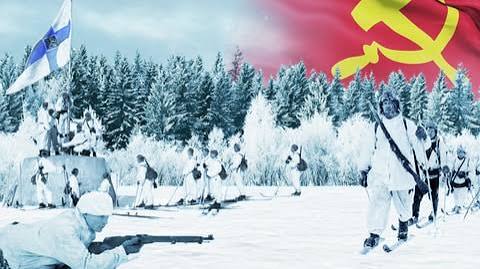
On November 30, 1939, at 6:50 in the morning, Soviet artillery opened fire across the Karelian Isthmus. Without a formal declaration of war, the Red Army rolled into Finland, expecting a swift victory over a nation of barely three and a half million people. Instead, they met a wall of snow, silence, and stubborn resistance that would become legend.
For 105 days, Finland—outnumbered, outgunned, and fighting in the deep winter—held the Soviet giant at bay. The world watched as a small democracy defied the odds, and in doing so, Finland forged a national identity that endures to this day. This is the story of the Winter War, a conflict that reshaped the map of Northern Europe and exposed the cracks in the Soviet war machine.
The Spark: Stalin’s Demand and Finland’s Refusal
The roots of the Winter War lie in the uneasy geography of the Baltic. Leningrad, the Soviet Union’s second-largest city, sat just 32 kilometers from the Finnish border. To Stalin, this was an unacceptable vulnerability. He feared that Finland could become a launching pad for an invasion by Germany or other hostile powers. In October 1939, the Kremlin presented Helsinki with an ultimatum: exchange Finnish territory near Leningrad for larger but less valuable Soviet land in eastern Karelia, and lease the Hanko Peninsula as a naval base.
Finland saw this as a prelude to annexation. The government, led by President Kyösti Kallio and Foreign Minister Väinö Tanner, refused. The Soviet Union, having already signed the Molotov-Ribbentrop Pact with Nazi Germany—which placed Finland in the Soviet sphere—was not prepared to take no for an answer.
The Invasion: A Miscalculation of the Worst Kind
The Red Army that crossed the border on November 30 was a force the Finns had no hope of matching. Estimates suggest between 450,000 and 1 million Soviet troops were committed, supported by roughly 1,000 aircraft and 2,000 to 3,000 tanks. Finland could field only about 340,000 to 400,000 men, with just 32 tanks and 114 aircraft, most of them obsolete. The Soviet high command expected the campaign to last a few weeks at most. They were wrong.
What the Red Army hadn’t accounted for was the terrain, the weather, and the Finnish soldier. The Karelian Isthmus was defended by the Mannerheim Line, a series of fortifications that, while not as formidable as the Maginot Line, was perfectly suited to the forested, lake-dotted landscape. And then there was the winter—temperatures dropped to -40°C, and the Finns, who knew how to ski and fight in the cold, used it to their advantage.
The Battles That Made Legends
In December 1939, the Red Army’s advance ground to a halt. At the Battle of Tolvajärvi, Finnish forces under Colonel Paavo Talvela launched a surprise counterattack that routed a Soviet division. But the most famous engagement came at Suomussalmi, where Finnish troops encircled and destroyed two Soviet divisions on the Raate Road. The Finns, moving silently on skis, cut the enemy columns into small pockets and picked them off one by one. It was a victory that stunned the world and gave birth to the myth of the ‘White Death’—a nickname for Finnish sniper Simo Häyhä, who reportedly accounted for over 500 kills.
The Soviet military, already reeling from Stalin’s purges of its officer corps in 1937-38, proved ill-prepared for this kind of unconventional warfare. Poor logistics, low morale, and commanders who refused to adapt to the conditions led to catastrophic losses. But the Red Army had numbers on its side, and Stalin was not willing to accept defeat.
The Soviet Reckoning: Timoshenko and the February Offensive
In January 1940, Stalin replaced the initial commander, Kirill Meretskov, with Marshal Semyon Timoshenko. The Red Army regrouped, bringing in fresh troops, heavy artillery, and overwhelming air power. On February 1, they launched a massive offensive against the Mannerheim Line. For weeks, Soviet artillery pounded the Finnish positions, while waves of infantry and tanks advanced, often suffering horrific losses but slowly grinding down the defenders.
By mid-February, the line was breached. The Finnish army, exhausted and running low on ammunition, fell back. Yet even in retreat, they fought with a ferocity that earned the respect of their enemies. The Soviet breakthrough was achieved only at tremendous cost, and it was clear to Moscow that a full conquest of Finland would require a complete reorganization of its forces—time Stalin was not willing to give.
The Moscow Peace Treaty: Independence, but at a Price
On March 12, 1940, Finland signed the Moscow Peace Treaty. The terms were harsh: Finland ceded the Karelian Isthmus, the city of Viipuri (Vyborg), and parts of Ladoga Karelia—about 10% of its pre-war territory. The Hanko Peninsula was leased to the USSR for 30 years as a naval base. In total, roughly 400,000 to 450,000 Finns were evacuated from the ceded lands, leaving behind homes, farms, and ancestral graves.
But Finland kept its independence. That was the key outcome. The Soviet Union, despite its overwhelming superiority, had failed to subjugate the country. For the Finns, this was a moral victory that would shape their national psyche for generations. The ‘Spirit of the Winter War’—a term used to describe the unity and resilience of the Finnish people—became a cornerstone of their identity, healing the deep divisions of the 1918 Civil War.
The Global Repercussions
On December 14, 1939, the League of Nations expelled the Soviet Union for its aggression—an act that was largely symbolic but demonstrated the outrage of the international community. Britain and France debated sending an expeditionary force to aid Finland, but the plan was never executed, in part because of Scandinavian neutrality and in part because the Allies were more interested in cutting off Swedish iron ore supplies to Germany.
Germany, surprisingly, remained neutral, bound by the Molotov-Ribbentrop Pact. But Hitler watched the Red Army’s clumsy performance with growing contempt. The Winter War exposed glaring weaknesses in the Soviet military—poor leadership, ineffective logistics, and low morale—which directly contributed to Hitler’s decision to launch Operation Barbarossa in June 1941. The Winter War, in effect, helped shape the course of World War II.
The Legacy of the Winter War
Today, the Winter War remains a pivotal moment in Finnish history. It is remembered not as a defeat, but as a testament to the power of determination against overwhelming odds. The term ‘sisu’—a Finnish concept of grit and resilience—became a national motto. The war also had a profound impact on the Soviet Union, forcing Stalin to enact military reforms that would ultimately help defeat Germany.
The human cost was staggering: Soviet casualties are estimated at 126,000 to 170,000 killed or missing, with 200,000 to 270,000 wounded, while Finland lost 25,000 to 27,000 dead and 43,000 to 45,000 wounded. The ratio of losses—roughly 5 to 1 against the Soviets—tells the story of a mismatched fight where skill and determination often trumped raw numbers.
As the world watched in the winter of 1939-40, a small nation stood its ground against a superpower. The Winter War may have been a territorial loss for Finland, but it was a strategic and moral victory that resonated far beyond its borders. It proved that even in the darkest of times, courage and unity can defy the odds.
The Finnish Winter War ended on March 13, 1940, but its echoes have never faded. It showed that numbers alone do not decide the outcome of a conflict—that a determined people, fighting for their homes and their independence, can hold back a giant. Finland lost territory, but it preserved its sovereignty, its culture, and its pride. The world learned a lesson that would shape the years to come: the Red Army was not invincible, and the cost of aggression can be far higher than any dictator anticipates. For Finland, the Winter War remains a defining moment—a story of courage, sacrifice, and an unbreakable will to be free.
Summary
- Finland defied Soviet invasion for 105 days (Nov 30, 1939 – Mar 13, 1940), despite being vastly outnumbered and outgunned.
- Key victories at Tolvajärvi and Suomussalmi showcased Finnish skiing tactics and ‘sisu’ resilience.
- The Moscow Peace Treaty forced Finland to cede 10% of its territory, but it retained its independence.
- Soviet losses were catastrophic (126,000–170,000 killed), exposing military weaknesses that influenced Hitler’s decision to invade the USSR.
- The war forged a unified Finnish national identity and left a lasting cultural legacy.
FAQ
Q: Why did the Soviet Union invade Finland in 1939?
A: The main reasons were strategic security—Leningrad was only 32 km from the Finnish border—and Stalin’s fear that Finland could be used as a staging ground for an invasion by Germany or other powers. The USSR also sought territorial concessions and a naval base at Hanko, which Finland refused.
Q: What was the ‘Mannerheim Line’?
A: It was a defensive fortification line across the Karelian Isthmus, built by Finland to deter Soviet aggression. While not a continuous wall, it used natural terrain—lakes, forests, and rocks—to create strong defensive positions. It played a crucial role in halting the initial Soviet advance.
Q: How did Finland manage to hold out for so long?
A: Finland’s success was due to a combination of factors: knowledge of the harsh winter terrain, excellent soldier training, effective use of ski troops and guerrilla tactics, and strong national unity that transcended political divisions. The Red Army, by contrast, was ill-prepared for winter warfare and suffered from poor leadership and logistics.
Q: What were the terms of the Moscow Peace Treaty?
A: Finland ceded about 10% of its territory, including the Karelian Isthmus, the city of Viipuri, and parts of Ladoga Karelia, and leased the Hanko Peninsula to the USSR for 30 years. Approximately 400,000–450,000 Finns were evacuated from these areas.
Q: How did the Winter War affect World War II?
A: The war exposed the Red Army’s weaknesses, leading Hitler to believe the USSR could be quickly defeated—a key factor in his decision to launch Operation Barbarossa in 1941. It also delayed Soviet attention and forced military reforms that later helped the USSR defeat Germany. The war also led to the League of Nations expelling the USSR, and it shaped Allied plans for Scandinavia, though these were never executed.
Leave a Reply