Tag: military history

  • The Great Emu War of 1932: When Australia’s Military Lost to Birds


    In late 1932, the Australian military deployed soldiers with machine guns to cull emus in Western Australia. The operation was meant to protect farmers’ wheat crops, but it ended in embarrassment: the emus outmaneuvered the troops, and the military withdrew, declaring the birds ‘unconquerable.’ The story has become a legend of military absurdity, but the real history is more nuanced—and more revealing about the challenges of human-wildlife conflict.

    The Setup: Farmers in Crisis

    The conflict began in the wheat belt of Western Australia, where returning soldiers from World War I had been granted land under settlement schemes. These farms were marginal, and the Great Depression had collapsed wheat prices, leaving many farmers on the brink of ruin. Then, drought pushed an estimated 20,000 emus inland from their breeding grounds. The birds—standing up to 1.9 meters tall and weighing up to 60 kilograms—trampled crops, ate wheat, and, crucially, broke through the rabbit-proof fencing that farmers had erected. For the farmers, this was an existential threat.

    They petitioned the government for help, and the government, under political pressure, made an unusual decision: deploy the military. In October 1932, Major G.P.W. Meredith of the Royal Australian Artillery arrived in the Campion district with two soldiers and two Lewis light machine guns, along with 10,000 rounds of ammunition. The plan was simple—ambush the emus at water sources and mow down large groups.

    The Battle Begins

    The first engagement was a disaster. Meredith and his men set up an ambush near a waterhole, but the emus spotted them and scattered before they could fire effectively. The birds proved fast—capable of running up to 50 kilometers per hour—and erratic, making them difficult targets. When the soldiers did manage to fire, the emus simply outran the gunfire or changed direction unpredictably.

    Over the next week, the military tried various tactics: mounting a gun on a truck to chase the birds, but the terrain was too rough and the truck’s speed was no match for the emus’ agility. By November 8, the first sortie had killed only a handful of birds, and Meredith withdrew to regroup. The press had a field day, mocking the operation as a farce. International papers picked up the story, presenting it as comic relief during the grim Depression era.

    A second deployment, from November 13 to December 10, fared only slightly better. In total, official reports claimed 986 emus killed with roughly 10,000 rounds of ammunition—a ratio of about 10 bullets per bird. Other estimates put the number higher, including wounded birds, but the outcome was clear: the emus were winning. Meredith himself reportedly said, “If we had a military division with the bullet-carrying capacity of these birds, it would face any army in the world.” The military withdrew, and the government reintroduced a bounty system for emu scalps, leaving farmers to manage the problem themselves.

    Why the Emus Won

    The emus’ victory was not just a matter of luck. They had several advantages: their speed and agility made them hard to hit, and their social coordination meant that when one bird sensed danger, the entire group would scatter. They also adapted quickly to the sound of gunfire, learning to avoid areas where soldiers had been seen. Ethologists note that emus are highly alert and intelligent, traits that served them well in this encounter.

    The terrain also worked against the military. The open plains offered little cover for soldiers, while the emus could see them from a distance. The Lewis guns, designed for World War I trench warfare, were heavy and difficult to aim at fast-moving targets. In hindsight, the operation was doomed from the start.

    The Human Cost and Perspective

    For the farmers, the war was no joke. They faced genuine economic ruin, and the military’s failure left them bitter. They felt abandoned by a government that had sent soldiers with guns instead of a practical solution. The operation’s failure also highlighted a broader pattern in Australia: a long history of attempting to control native species through force, from kangaroos to dingoes, and introduced pests like rabbits and camels. The Emu War is often cited as a case study in the failure of militarized approaches to ecological problems.

    The political dimension was equally significant. The deployment was a peacetime use of the military, which was controversial and of questionable legality under the Defence Act. Opposition politicians mocked the operation, questioning the misuse of military resources during a time of economic crisis. Sir George Pearce, the Minister for Defence who authorized the deployment, was himself a Western Australian, and his decision was seen as a public relations move—showing farmers that the government was taking their concerns seriously, even if the military solution was ill-conceived.

    Myths and Misconceptions

    Popular retellings often exaggerate the scale and absurdity of the Emu War. For instance, Australia did not ‘declare war’ on emus; it was a military deployment for pest control, not a formal declaration. The operation was small-scale and short-lived, lasting only about two months in total. Some historians argue that the comedy has been overstated, noting that the military was withdrawn once it became clear the operation was ineffective, and the government quickly shifted to more practical measures like bounties.

    Another myth is that emus were ‘unconquerable’ in a strategic sense. While the birds did win the immediate skirmishes, the conflict was ultimately part of a broader human-wildlife tension that continues today. Modern wildlife management would likely use fencing, habitat modification, or controlled culling by trained professionals, not machine guns.

    The Legacy

    The Great Emu War has become a cultural touchstone, a meme that resurfaces whenever someone needs an example of human folly. It is frequently cited in lists of bizarre historical events, and the story has been told and retold with varying degrees of accuracy. But the real lesson is not just that Australia lost a war to birds—it’s that when humans try to solve complex ecological problems with military force, they often get a feathery lesson in humility.

    As for the emus, they continued to thrive in the region, and the bounty system eventually reduced their numbers enough to ease the farmers’ plight. The war may have been lost, but the farmers did not entirely lose the battle against the birds. Yet the image of Australian soldiers firing machine guns at a flock of emus remains a powerful reminder of the limits of human control over nature.

    The Great Emu War was not a formal war, nor was it a total failure for the farmers, but its legacy as a military fiasco endures. The emus’ victory was a rare instance where non-human animals were framed as strategic winners, and the event offers a compelling—and humorous—case study in the unintended consequences of human attempts to dominate nature. Perhaps the true lesson is that sometimes, the best response to a problem is not to attack it head-on, but to find a more thoughtful, adaptive solution.

    Summary

    • In late 1932, the Australian military deployed soldiers with machine guns to cull emus in Western Australia, but the operation failed after roughly two months, with only about 1,000 birds killed using 10,000 rounds of ammunition.
    • The conflict arose when drought pushed ~20,000 emus into farmland, damaging wheat crops already stressed by the Great Depression.
    • The emus’ speed, agility, and social coordination made them nearly impossible to target, leading Major Meredith to declare them ‘unconquerable.’
    • The operation was a public relations move by the government, but it backfired, becoming a global joke and a case study in failed militarized wildlife management.
    • The story is often exaggerated as a formal ‘war,’ but it was a small-scale pest control operation that nonetheless highlights the absurdity of using military force against nature.

    FAQ

    Q: Did Australia officially declare war on emus?
    A: No. The ‘Great Emu War’ was not a formal declaration of war, but a peacetime military deployment under the Defence Act to cull emus as pest control. The term ‘war’ is a media and popular culture invention.

    Q: How many emus were killed?
    A: Official reports claim 986 emus killed, but other estimates, including wounded birds, suggest around 2,500. Roughly 10,000 rounds of ammunition were used, making the operation highly inefficient.

    Q: Why did the military fail?
    A: The emus were extremely fast (up to 50 km/h), agile, and alert, making them difficult targets. The terrain was open, and the Lewis machine guns were heavy and hard to aim at moving birds. The emus also adapted quickly to the gunfire, scattering at the first sign of danger.

    Q: What happened after the military withdrew?
    A: The government reintroduced a bounty system for emu scalps, which proved more effective in reducing emu numbers. Farmers were left to manage the problem themselves, but the conflict highlighted the need for more practical wildlife management solutions.

    Q: Is the Emu War story accurate?
    A: The core facts are accurate—the military deployed, failed, and withdrew—but popular retellings often exaggerate the scale and absurdity. It was a short, small-scale operation, and the comedy has been amplified over time. Still, it remains a unique historical event where humans lost to birds in a military context.
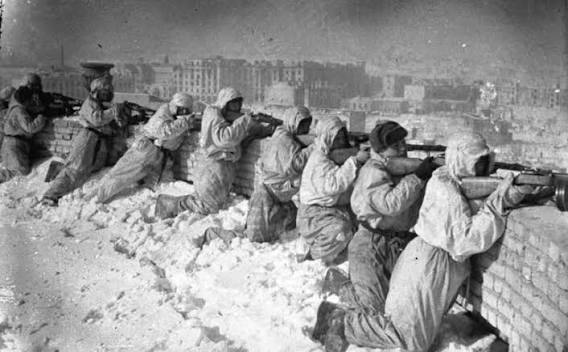
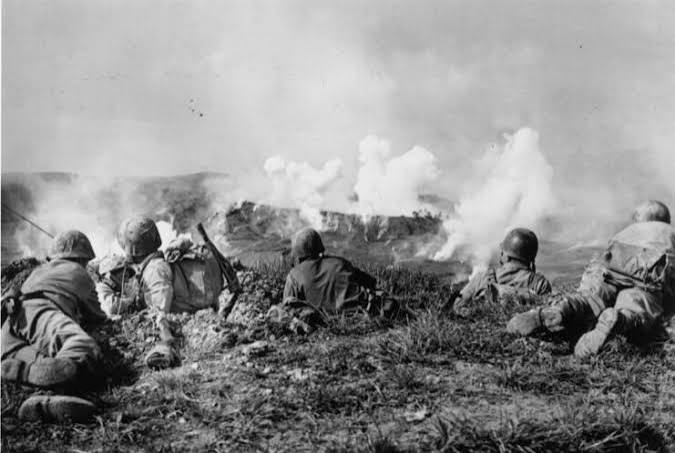
  • The Battle of Stalingrad: The Turning Point of World War II

    The Battle of Stalingrad: The Turning Point of World War II

    On August 23, 1942, the German Sixth Army reached the Volga River and began the assault on Stalingrad. What followed was one of the most brutal and consequential battles in human history. Over the next five months, the city became a maelstrom of urban combat, where soldiers fought for every block, floor, and room. By the time the last German forces surrendered on February 2, 1943, over a million soldiers and tens of thousands of civilians had perished. The Battle of Stalingrad was not just a military engagement; it was the turning point of World War II in Europe, the moment when the Nazi war machine irrevocably lost its momentum and the Red Army began its relentless march toward Berlin.

    The battle’s significance extends beyond its staggering casualties. It shattered the myth of German invincibility, marked the first time a German field marshal was captured, and demonstrated the resilience of the Soviet people under unimaginable hardship. In the rubble of Stalingrad, the fate of the Eastern Front—and ultimately the entire war—was decided.

    The Road to Stalingrad

    In the summer of 1942, Hitler launched Operation Blue, a massive offensive aimed at the southern Soviet Union. The objectives were clear: capture the oil fields of the Caucasus and secure the Volga River, a vital supply artery. Stalingrad, a major industrial city and Stalin’s namesake, lay directly in the path. The German Sixth Army, the largest in the Wehrmacht with over 330,000 men, was tasked with taking the city.

    The advance was rapid. By late August, the Germans had reached the outskirts and began a devastating aerial bombardment that reduced much of the city to rubble. The Luftwaffe’s bombing raids were so intense that the city’s defenders, the Soviet 62nd Army under General Vasily Chuikov, were forced to fight amidst the ruins. The Volga River became a lifeline, with reinforcements and supplies ferried across under constant fire.

    The Rat War

    The fighting in Stalingrad degenerated into what soldiers called “rat war” (Rattenkrieg). It was close-quarters combat at its most brutal—block by block, floor by floor, room by room. Chuikov adopted a radical tactic: “hugging the enemy.” By keeping Soviet lines uncomfortably close to German positions, he prevented the Luftwaffe and German artillery from striking without risking their own troops. This nullified the Germans’ advantage in firepower and turned the battle into a brutal grind of attrition.

    Snipers became iconic figures. Vasily Zaytsev, a Soviet sniper credited with over 200 kills, became a symbol of the Red Army’s determination. The city’s industrial plants—the tractor factory, the Red October steel plant, and the Barrikady arms factory—became fortified strongpoints, fought over with desperate intensity.

    The Soviet Counteroffensive: Operation Uranus

    While the world’s attention was fixed on the city’s defenders, Soviet commanders Georgy Zhukov and Aleksandr Vasilevsky were planning a massive counteroffensive. They identified a critical weakness: the German flanks were held by weaker Romanian, Italian, and Hungarian units. Operation Uranus, a double envelopment, was launched on November 19, 1942. The Red Army broke through the Romanian lines and within four days encircled the entire German Sixth Army, along with parts of the Fourth Panzer Army—about 300,000 men trapped in a pocket 30 miles wide.

    Hitler refused to authorize a breakout, ordering the Sixth Army to hold as “Fortress Stalingrad” and await relief. Field Marshal Erich von Manstein’s Operation Winter Storm, launched on December 12, came within about 30 miles of the pocket but failed to break through. The Luftwaffe’s promise to supply the trapped army by air proved catastrophic—they could deliver at most 100 to 120 tons per day, far short of the 700 tons required. Starvation and cold began to decimate the encircled forces.

    The End and the Surrender

    The Red Army tightened the noose, splitting the pocket and forcing the Germans into ever-shrinking areas of control. On January 30, 1943, Hitler promoted General Friedrich Paulus to Field Marshal—an implicit order to commit suicide, as no German field marshal had ever been captured. Paulus disobeyed and surrendered the next day. The last German units in the northern pocket capitulated on February 2, 1943.

    The scale of the catastrophe was staggering. The Axis suffered an estimated 800,000 to 850,000 casualties, including over 100,000 prisoners taken at surrender, of whom fewer than 6,000 ever returned home. Soviet losses were even higher, with over a million killed, wounded, or missing. The city itself was a wasteland, with tens of thousands of civilians dead.

    A Turning Point

    Stalingrad marked the definitive turning point in the European theater. After February 1943, the Wehrmacht never regained the strategic initiative on the Eastern Front. The Red Army began a continuous westward advance that would end in Berlin. The battle also had profound psychological and political effects. It shattered the aura of German invincibility and demonstrated to the world that the Nazi war machine could be defeated. In the words of one German soldier, “Stalingrad is the turning point of the war. We are lost.”

    The Battle of Stalingrad was a crucible of suffering and sacrifice, a confrontation that decided the fate of nations. The Red Army’s victory was not just a military triumph but a testament to human endurance in the face of unimaginable adversity. It remains a stark reminder of the cost of war and the resilience of those who fight for survival.

    Summary

    • The Battle of Stalingrad lasted from August 23, 1942, to February 2, 1943, and resulted in a decisive Soviet victory.
    • The German Sixth Army was encircled by Operation Uranus and destroyed, marking the first time a German field marshal was captured.
    • The battle caused over 1.5 million total casualties, making it one of the deadliest in history.
    • Stalingrad was the turning point of World War II in Europe; the Wehrmacht never regained the strategic initiative.
    • The Soviet tactic of “hugging the enemy” nullified German firepower in brutal urban combat.

    FAQ

    Q: Why was Stalingrad strategically important?
    A: Stalingrad was a major industrial center and a symbolic city named after Stalin. Controlling it would secure the Volga River supply route and protect the flank of German forces advancing toward the Caucasus oil fields.

    Q: How did the Soviet Union manage to turn the tide?
    A: The Soviets launched Operation Uranus, a massive counteroffensive targeting the weaker Romanian units on the German flanks, leading to the encirclement of the German Sixth Army.

    Q: What was the “rat war”?
    A: “Rat war” (Rattenkrieg) was the term soldiers used for the brutal close-quarters combat in Stalingrad, where fighting occurred block by block, floor by floor, and room by room.

    Q: How many casualties were there?
    A: Axis casualties were about 800,000 to 850,000, while Soviet casualties were over 1.1 million, including military and civilian deaths.

    Q: What happened to Field Marshal Paulus?
    A: Paulus was promoted to Field Marshal by Hitler on January 30, 1943, an implicit order to commit suicide. He instead surrendered, becoming the first German field marshal to be captured by the enemy.

  • The 82-Day Siege: How Okinawa Became the Pacific War’s Bloodiest Battle

    The 82-Day Siege: How Okinawa Became the Pacific War’s Bloodiest Battle

    On April 1, 1945, Easter Sunday, the largest amphibious assault of the Pacific War hit the beaches of Okinawa. The first waves of Marines and soldiers scrambled ashore expecting a slaughter. Instead, they found silence—no artillery, no machine-gun fire, no Japanese. The beaches were empty.

    That silence was the opening move in a deliberate Japanese strategy. Lt. Gen. Mitsuru Ushijima had ordered his 32nd Army to abandon the shoreline and dig into the island’s southern hills, turning Okinawa into a fortress designed not to repel the invasion, but to bleed it dry. What followed was an 82-day ordeal that would kill more than 12,000 Americans, over 77,000 Japanese soldiers, and—by most estimates—more than 100,000 Okinawan civilians. It was the last and bloodiest battle of World War II, and it changed the calculus for invading Japan itself.

    The Silent Beaches

    The U.S. Tenth Army, commanded by Lt. Gen. Simon Bolivar Buckner Jr., put 183,000 troops ashore in the first wave—more than the Normandy landings. The fleet offshore numbered over 1,300 ships, including the British Pacific Fleet’s Task Force 57, which covered the southern flank. Yet the Hagushi beaches on the island’s west coast were eerily quiet. The Japanese had not fired a shot.

    Ushijima, a seasoned commander, had rejected the old doctrine of annihilating invaders at the water’s edge. He knew the U.S. Navy’s overwhelming firepower would chew up any beach defense. Instead, he pulled his forces south, into a network of caves, tunnels, and pillboxes carved into the ridges around Shuri Castle. His operations officer, Col. Hiromichi Yahara, had argued for a pure war of attrition—no counterattacks, just relentless defense. Ushijima agreed, and the island’s fate was sealed.

    The Southern Fortress

    For the first three weeks, the battle seemed almost routine. The 1st and 6th Marine Divisions swept north, clearing the Motobu Peninsula by mid-April with light resistance. The army’s 7th and 96th Infantry Divisions moved south and hit the outer edges of the Shuri Line. That’s where the war turned ugly.

    Kakazu Ridge, Sugar Loaf Hill, Conical Hill, and the Maeda Escarpment—nicknamed Hacksaw Ridge—became names written in blood. The Japanese had fortified every approach, with interlocking fields of fire that turned each hill into a meat grinder. Progress was measured in yards, not miles. The 96th Division alone took 1,500 casualties taking Hacksaw Ridge, a 400-foot escarpment defended by a single Japanese battalion.

    Then the rain came. The spring typhoons turned the battlefield into a quagmire. Tanks sank to their hulls in mud. Supply trucks bogged down. Wounded men drowned in shell craters. One Marine officer wrote, “The mud is our worst enemy. It’s like fighting in a swamp that’s been churned by a million hooves.”

    The Shuri Line was a masterpiece of defensive engineering. Ushijima had spent months building it, with tunnels that linked the ridges so troops could move underground without exposure. The Japanese defenders—roughly 100,000 strong, including 20,000 Okinawan conscripts—were ordered not to surrender. They fought until they were killed, or killed themselves.

    The Kamikaze Storm

    While the ground troops bled for every ridge, the U.S. Navy faced its own nightmare. The Japanese launched the largest kamikaze campaign of the war—over 1,400 sorties against the invasion fleet. The destroyer USS Laffey survived six kamikaze hits and four bomb strikes on April 16, earning the nickname “The Ship That Would Not Die.” But many ships weren’t so lucky. Over 36 U.S. ships were sunk and 368 damaged, including 14 destroyers lost to kamikazes.

    The most dramatic moment came on April 7, when the super-battleship Yamato sortied on a one-way mission. She was the largest battleship ever built, but without air cover she was a floating target. U.S. carrier aircraft swarmed her, and she went down with more than 3,700 crew. It was the end of the Imperial Japanese Navy as a fighting force.

    The Counteroffensive That Failed

    By early May, Ushijima faced a dilemma. His defenses were holding, but the constant shelling and bombing were grinding down his troops. His staff officers, led by chief of staff Lt. Gen. Isamu Chō, demanded a counterattack. Yahara argued against it, warning that it would waste irreplaceable men. Ushijima sided with Chō.

    On May 4, the Japanese launched a mass assault. It was a disaster. The Americans had anticipated it, and their artillery and naval guns tore the attackers apart. The counteroffensive cost Ushijima thousands of men and, critically, his artillery ammunition. When it failed, the Shuri Line was doomed.

    The Collapse of the Shuri Line

    Throughout May, the U.S. Tenth Army ground forward. The 1st Marine Division took Sugar Loaf Hill after days of brutal fighting—the hill changed hands so many times that the ground was literally carpeted with bodies. The 7th Infantry Division finally broke through at Conical Hill, outflanking the Shuri Line from the east. By the end of May, Ushijima’s position was untenable. He ordered a withdrawal south, to the last defensive position at the Kiyan Peninsula.

    The retreat was a bloody affair. The Japanese abandoned thousands of wounded who couldn’t move—many of them killed themselves rather than be captured. The Americans pursued, and the fighting degenerated into a series of desperate, suicidal stands in caves and ravines.

    The Last Days and the Civilian Catastrophe

    By mid-June, the end was near. Ushijima’s remaining forces were cornered in the south. On June 18, Lt. Gen. Buckner was killed by a piece of coral shrapnel while observing the final assault—the highest-ranking U.S. general killed in the Pacific. His death was a bitter irony: the man who had ordered the invasion died just days before it ended.

    On June 22, Ushijima and Chō performed ritual suicide in a cave near Mabuni Hill. With them died the last organized resistance. The U.S. declared victory that day, though mopping-up operations continued for weeks.

    The true horror of Okinawa was the civilian toll. The Japanese military had conscripted Okinawans as laborers and, in many cases, as human shields. They also distributed grenades to civilians, encouraging them to commit suicide rather than surrender. As the battle collapsed into the southern tip of the island, tens of thousands of civilians were caught in the crossfire, killed by artillery, bombing, starvation, or their own hands. Estimates range from 40,000 to 150,000 dead—roughly a quarter to a third of the pre-war population. The exact number will never be known.

    The Legacy: A Warning of What Was to Come

    Okinawa was the bloodiest battle of the Pacific War. The U.S. lost over 12,500 killed and 38,000 wounded—more than at Iwo Jima and Guadalcanal combined. The Japanese lost nearly all of their 100,000-man garrison, with only a few thousand surrendering, most of them Okinawan conscripts.

    The cost was so staggering that it directly influenced the decision to use the atomic bomb. The planned invasion of Japan, Operation Downfall, was expected to cost millions of casualties on both sides. Okinawa proved that the Japanese would fight to the last man, and that civilians would die in massive numbers. When President Harry Truman authorized the atomic bombings of Hiroshima and Nagasaki in August 1945, his decision was shaped in part by the horrific preview that Okinawa had provided.

    The Battle of Okinawa was not just a military victory—it was a revelation. It showed the world the brutal lengths the Japanese would go to defend their homeland, and the terrible price the Allies would pay to take it. The island’s capture gave the U.S. a staging base for the invasion of Japan, but the battles’ casualties made that invasion almost unthinkable. In the end, Okinawa’s 82 days of hell may have saved millions of lives by making the atomic bomb seem like the lesser evil. It remains a sobering reminder of the true cost of war.

    Summary

    • The Battle of Okinawa lasted 82 days, from April 1 to June 22, 1945, and was the largest amphibious assault of the Pacific War.
    • The Japanese deliberately ceded the beaches and fought from fortified positions in the south, inflicting massive casualties on U.S. forces.
    • Over 12,500 Americans were killed and 38,000 wounded; Japanese military deaths exceeded 77,000, with most refusing to surrender.
    • An estimated 100,000–150,000 Okinawan civilians died, many from forced suicides and crossfire.
    • The battle’s horrific toll influenced the decision to use atomic bombs on Hiroshima and Nagasaki in August 1945.

    FAQ

    Q: How long did the Battle of Okinawa last?
    A: The ground combat lasted 82 days, from April 1 to June 22, 1945. Naval operations and kamikaze attacks continued into late July.

    Q: Why was the Battle of Okinawa so bloody?
    A: The Japanese abandoned beach defense and built a deep, fortified line in the south, fighting from caves and tunnels. They also launched mass kamikaze attacks against the U.S. fleet. The combination of fanatical resistance, difficult terrain, and heavy civilian presence led to catastrophic casualties.

    Q: How many people died at Okinawa?
    A: U.S. deaths were about 12,500, with 38,000 wounded. Japanese military deaths were between 77,000 and 110,000. Civilian deaths are estimated at 40,000–150,000, with the most common figure around 100,000–150,000.

    Q: What was the Shuri Line?
    A: The Shuri Line was a series of heavily fortified Japanese defensive positions in southern Okinawa, centered around Shuri Castle. It included tunnels, caves, and pillboxes, and was the main battleground of the battle.

    Q: How did the battle affect the decision to drop the atomic bomb?
    A: The massive casualties at Okinawa convinced U.S. leaders that an invasion of Japan would be prohibitively costly. This influenced the decision to use atomic bombs to force Japan’s surrender without an invasion.

  • 36 Days on a Volcanic Rock: The Brutal Calculus of Iwo Jima

    36 Days on a Volcanic Rock: The Brutal Calculus of Iwo Jima

    On February 19, 1945, the first wave of Marines hit the black sand beaches of Iwo Jima. They expected a quick fight—planners had given the island five days. Thirty-six days later, nearly 7,000 Americans were dead, and the island had cost more Marine lives than it would ever save in B-29 landings. The battle became a symbol of American grit, a Japanese masterpiece of defense, and a strategic decision that historians still argue about.

    This is the story of how a tiny volcanic island, 750 miles from Tokyo, turned into one of the bloodiest encounters of the Pacific War—and why the debate over its necessity has never fully settled.

    The Island That Shouldn’t Have Mattered

    Iwo Jima is a lump of volcanic rock and sulfur, roughly eight square miles. In early 1945, it was a Japanese radar outpost and a base for fighters that harassed American B-29s flying from the Marianas to bomb Tokyo. The U.S. Joint Chiefs wanted it: an emergency landing field for damaged bombers, a home for P-51 Mustang escorts, and a staging ground for the invasion of Japan itself.

    The plan, Operation Detachment, assumed five days to secure the island. The Japanese had other ideas.

    Lieutenant General Tadamichi Kuribayashi had studied American tactics. He knew the beaches would be hammered by naval guns, so he abandoned the beach defense. Instead, his 21,000 troops dug into 11 miles of tunnels, built 800 pillboxes, and zeroed their artillery on the landing zones. He banned banzai charges, ordering his men to fight from cover and make the Americans pay for every yard.

    The pre-invasion bombardment—three days, the heaviest of the Pacific War—did little. The shells churned the surface but missed the buried fortifications.

    The First 36 Days

    On February 19, the 4th and 5th Marine Divisions hit the southeastern beaches. The black volcanic ash was loose, like walking in sand, and provided no cover. Japanese guns from Mount Suribachi to the south and the northern highlands opened up. The first day ended with 550 dead and more than 1,800 wounded—the worst single day in Marine Corps history up to that point.

    The fighting was relentless. The Marines advanced yard by yard, using flamethrowers, demolition charges, and grenades to clear bunkers. Kuribayashi’s men, well-supplied and hidden, inflicted casualties at a rate that stunned the Americans. By March 3, the airfield was in use, but the island was far from secure.

    On February 23, a patrol reached the summit of Mount Suribachi. A small flag went up, photographed by Marine photographer Lou Lowery. Hours later, a larger flag replaced it. Associated Press photographer Joe Rosenthal captured that second raising—an image that would become the Marine Corps War Memorial. Of the six men in the photo, three—Harlon Block, Franklin Sousley, and Mike Strank—were killed later in the battle. It took 71 years to correct the identity of another man in the picture: Harold Schultz, not John Bradley, as misidentified for decades.

    The Toll and the Aftermath

    The battle dragged on. The 3rd Marine Division joined the fight. By March 16, the island was declared secure, but organized resistance continued until March 26, when the last Japanese defenders launched a final attack. At the end, 6,821 Americans were dead and 19,217 wounded. Japanese dead numbered about 20,000, with only 216 taken prisoner. This was the only major Pacific battle where U.S. casualties exceeded Japanese.

    Twenty-seven Medals of Honor were awarded—more than in any other single battle in American history. The cost was staggering for an island that, in the end, did not prove decisive.

    The Strategic Debate

    Supporters point to the numbers: more than 2,200 B-29s made emergency landings on Iwo Jima, saving an estimated 24,000 airmen. The radar station was silenced, and the fighter base allowed P-51s to escort bombers.

    Critics argue the numbers are misleading. Many of those landings were routine, not emergencies, and the P-51 escorts had limited impact. The cost—nearly 7,000 dead—was too high for what was gained. Some historians suggest the invasion was driven by interservice rivalry and momentum rather than strategic necessity.

    Kuribayashi’s defense is studied today as a model of how to fight against overwhelming odds. In Japan, the battle is remembered as a symbol of sacrifice, though its meaning has been contested in nationalist narratives.

    Thirty-six days on a volcanic rock changed the course of the Pacific War, but not in the way planners expected. The island was taken, but at a cost that still raises questions about whether it was worth it.

    The battle of Iwo Jima remains a study in contrasts: a tactical victory, a strategic question mark, and a human tragedy. The flag raising on Suribachi became an icon of American resolve, but the island’s cost in lives demands a closer look at the decisions that led there. For the Marines who fought, the island was simply a job to do. For historians, it is a lesson in the brutal arithmetic of war—where the value of a piece of ground is measured in lives, not miles.

    Summary

    • The battle lasted 36 days, from February 19 to March 26, 1945, far beyond the 5 days planned.
    • U.S. casualties: 6,821 killed, 19,217 wounded; Japanese: about 20,000 killed, only 216 captured.
    • Kuribayashi’s tunnel defense and ban on banzai charges made the island a fortress.
    • The iconic flag raising on Mount Suribachi had six men; three were killed later, and one was misidentified for decades.
    • The strategic value of the island is debated: 2,200 B-29 landings vs. nearly 7,000 U.S. dead.

    FAQ

    Q: Why did the U.S. want Iwo Jima?
    A: To provide an emergency landing field for B-29 bombers, a base for P-51 fighter escorts, and a staging area for the planned invasion of Japan.

    Q: How did the Japanese defend the island?
    A: Under Lieutenant General Tadamichi Kuribayashi, they built over 11 miles of tunnels, 800 pillboxes, and used artillery positioned to fire on the beaches. They avoided banzai charges and fought from prepared positions.

    Q: How many Medals of Honor were awarded?
    A: 27 Medals of Honor were awarded, more than any other single battle in U.S. history.

    Q: What was the significance of the flag raising?
    A: The second flag raising, photographed by Joe Rosenthal, became a symbol of the battle and inspired the Marine Corps War Memorial. Three of the six men in the photo were killed later in the battle.

    Q: Was the invasion of Iwo Jima necessary?
    A: The debate continues. Supporters cite over 2,200 B-29 landings and the elimination of the radar station. Critics argue the cost in lives outweighed the benefits, and the invasion may have been driven by momentum rather than necessity.

  • The Six-Month Struggle for Guadalcanal: How the Allies Seized the Initiative in the Pacific

    The Six-Month Struggle for Guadalcanal: How the Allies Seized the Initiative in the Pacific

    On August 7, 1942, a force of nearly 19,000 U.S. Marines stormed the beaches of Guadalcanal, a small, jungle-covered island in the Solomon Islands. They expected a quick seizure of a half-built airfield. Instead, they ignited a six-month furnace of jungle warfare, naval clashes, and aerial duels that would become the turning point of the Pacific War.

    This was not a single battle but a relentless campaign of attrition, fought across land, sea, and air. By the time the Japanese evacuated in February 1943, the Allies had inflicted the first major defeat on the Empire of Japan, shifting the momentum of the war. The fight for Guadalcanal proved that the Allies could not only hold their own but also push back against an enemy that had seemed unstoppable since Pearl Harbor.

    The Strategic Gamble: Why Guadalcanal Mattered

    In mid-1942, Japan’s empire stretched from the Indian Ocean to the central Pacific. After the stunning loss of four fleet carriers at Midway in June, Japan still held the initiative in the South Pacific. Their plan was to build an airfield on Guadalcanal, extending their defensive perimeter and threatening the vital supply lines between the United States and Australia. From this base, they could launch further offensives toward Fiji, Samoa, and New Caledonia.

    American intelligence, aided by Australian coastwatchers hidden behind Japanese lines, detected the airfield’s construction. The Allies decided to strike first, launching Operation Watchtower with remarkable speed. The 1st Marine Division, many of whom had never seen combat, landed on August 7, 1942. They caught the Japanese construction crews and their guards off guard, capturing the nearly complete airfield within two days. They renamed it Henderson Field, in honor of a Marine aviator killed at Midway.

    The Jungle War: Land Battles and the Fight for Henderson Field

    The Marines dug in, but the Japanese were not about to surrender the island quietly. Over the next months, they launched repeated attempts to retake the airfield. One of the most desperate came in September 1942, when Japanese forces attacked along a grassy ridge south of the airfield. The Marines, outnumbered and low on ammunition, held their line through the night, repelling wave after wave of charges. The ridge became known as Edson’s Ridge, after the Marine colonel who led the defense. The Japanese lost over 1,000 men in that single assault.

    Supply was a constant problem. The Marines had landed with only a fraction of their equipment, and Japanese naval forces controlled the waters around the island at night. They survived on captured Japanese rice and whatever could be brought in by ship or air. Despite these hardships, they held the airfield, which became the linchpin of the entire campaign.

    The Ironbottom Sound: Naval Battles and the Tokyo Express

    The sea around Guadalcanal became a graveyard of ships, earning the name Ironbottom Sound. The first major naval engagement, the Battle of Savo Island in August 1942, was a disaster for the Allies. A Japanese cruiser force surprised and sank four Allied cruisers in a matter of minutes. The Japanese suffered minimal losses, and the Allies were forced to withdraw their carriers and transports, leaving the Marines on the island isolated.

    The Japanese, however, could not sustain their naval dominance. They resorted to nightly destroyer runs, dubbed the “Tokyo Express,” to deliver troops and supplies. But these ships could not carry heavy equipment or enough food, and the Japanese soldiers on the island began to starve. The Allies, meanwhile, used radar and codebreaking to gain an edge in night battles. The Naval Battle of Guadalcanal in November 1942 was a turning point, as the U.S. Navy turned back a Japanese bombardment force and sank two battleships, securing control of the sea.

    The Cactus Air Force: Command of the Skies

    From Henderson Field, a motley collection of Marine, Navy, and Army aircraft, known as the Cactus Air Force, flew daily sorties against Japanese bombers and supply convoys. They were often outnumbered and flying worn-out planes, but they inflicted heavy losses on the Japanese. In one notable action, they sank a Japanese transport carrying troops and supplies, forcing the Japanese to resort to even more desperate measures.

    Air superiority was crucial. It allowed the Allies to reinforce and resupply their troops, while denying the Japanese the same. By late 1942, the Japanese had lost so many aircraft and pilots that they could no longer challenge the Allies in the air.

    Attrition and Starvation: The Japanese Collapse

    The Japanese command made a fatal decision: instead of evacuating Guadalcanal when it became clear that they could not win, they continued to pour in reinforcements. This only increased the death toll. Japanese soldiers, cut off from supplies, died by the thousands from starvation and disease. Many resorted to desperate banzai charges, but they could not break the Allied lines.

    In January 1943, the Allies launched a final offensive, pushing the remaining Japanese forces to the northern coast. The Japanese, realizing the futility of further resistance, began a secret evacuation under the cover of darkness, Operation KE. Over several nights in early February, they managed to withdraw about 12,000 troops, leaving the island for good.

    The Turning Point: What Guadalcanal Meant

    The victory at Guadalcanal was not just a military achievement; it was a psychological breakthrough. For the first time, the Allies had decisively defeated the Japanese on land, sea, and air. The Japanese had been stopped, and the long road to Tokyo had begun.

    Casualties were heavy on both sides. The Allies lost over 7,000 dead and nearly 8,000 wounded, along with 24 ships. The Japanese lost over 19,000 dead on the island alone, with thousands more in the surrounding waters, and 38 ships. But the strategic gain was incalculable. The Allies had secured the sea lanes to Australia and established a forward base for future operations.

    Guadalcanal also proved that the U.S. military could adapt and overcome. The lessons learned in night fighting, amphibious assault, and logistics would be applied in the subsequent island-hopping campaign across the Pacific. For the Japanese, it was a bitter lesson in the cost of overreach.

    Conclusion

    The Battle of Guadalcanal was a brutal, grinding struggle that tested the endurance of both sides. It was won not by a single brilliant maneuver, but by the stubborn determination of Marines, sailors, and airmen who refused to lose. The island’s jungles and waters bore witness to the deadliest fighting of the Pacific War, but they also marked the moment when the tide turned. From Guadalcanal onward, the Allies would not look back.

    The Battle of Guadalcanal was a brutal, grinding struggle that tested the endurance of both sides. It was won not by a single brilliant maneuver, but by the stubborn determination of Marines, sailors, and airmen who refused to lose. The island’s jungles and waters bore witness to the deadliest fighting of the Pacific War, but they also marked the moment when the tide turned. From Guadalcanal onward, the Allies would not look back.

    Summary

    • First Major Allied Offensive: The campaign, from August 7, 1942, to February 9, 1943, was the first major Allied counteroffensive against Japan in the Pacific.
    • Strategic Importance: The fight centered on Henderson Field, which the Allies captured and held, securing supply lines to Australia and halting Japanese expansion.
    • Brutal Attrition: The campaign involved intense land battles (Edson’s Ridge, Matanikau), naval clashes (Savo Island, Naval Battle of Guadalcanal), and daily aerial duels, with heavy casualties on both sides.
    • Japanese Defeat: Japan lost over 19,000 troops on the island, many to starvation and disease, and was forced to evacuate in February 1943, marking their first major retreat of the war.
    • Turning Point: The Allied victory shifted the strategic momentum in the Pacific, paving the way for the island-hopping campaign that led to Japan’s eventual defeat.

    FAQ

    Q: Why was Guadalcanal so important?
    A: Guadalcanal was vital because it housed a Japanese airfield that threatened Allied supply lines to Australia. Capturing it allowed the Allies to protect those lines and launch their own offensive operations in the Pacific.

    Q: What was the Tokyo Express?
    A: The Tokyo Express was the nickname for Japanese naval forces, primarily destroyers, that made nightly runs to deliver troops and supplies to Guadalcanal. They were effective but could not carry heavy equipment or enough food, leading to severe shortages for Japanese troops.

    Q: What were the casualties at Guadalcanal?
    A: Allied forces suffered approximately 7,100 dead and 7,900 wounded, along with 24 ships sunk. Japanese losses were much higher, with around 19,200 dead on the island and about 31,000 total including naval and air losses, and 38 ships sunk.

    Q: Who were the key leaders on each side?
    A: On the Allied side, key figures included Admiral Chester Nimitz, General Alexander Vandegrift (1st Marine Division), and Admiral William Halsey. On the Japanese side, Admiral Isoroku Yamamoto, General Harukichi Hyakutake, and Vice Admiral Nobutake Kondo led their forces.

    Q: What was the outcome of the Guadalcanal Campaign?
    A: The Allies won a decisive strategic victory. Japan evacuated the island in February 1943, marking their first major retreat of the war. The campaign demonstrated that Japan could be defeated and set the stage for the Allied island-hopping strategy.

  • The Bulge: How the Last German Offensive Collapsed in the Ardennes

    The Bulge: How the Last German Offensive Collapsed in the Ardennes

    At 5:30 a.m. on December 16, 1944, the quiet of the Ardennes Forest shattered. More than 1,900 German artillery pieces opened fire along an 80-mile front, and 200,000 infantry and panzer troops surged forward into the American lines. The surprise was almost total. The U.S. forces holding that sector—about 80,000 men stretched thin across a rugged, forested region considered a ‘ghost front’—were about to be engulfed in the largest and bloodiest battle the U.S. Army fought in World War II.

    The offensive was Hitler’s gamble. He called it Operation Wacht am Rhein—Watch on the Rhine—and he believed it could split the Allied armies, seize the port of Antwerp, and force the Western Allies to sue for peace. For six weeks, the fate of the Western Front hung in the balance, as American soldiers fought in freezing cold, surrounded and outnumbered, in what became known as the Battle of the Bulge.

    A Quiet Sector Turned Trap

    The Ardennes region had been quiet since the Allies pushed through it in September 1944. The terrain—dense woods, steep hills, and winding roads—was ideal for defense and terrible for armored warfare. Allied commanders, including General Dwight Eisenhower and General Omar Bradley, considered it a low-risk sector. So they sent battle-weary divisions there to rest and refit, alongside green divisions fresh from the States. The U.S. VIII Corps holding the line was a patchwork of units, some at half strength.

    German intelligence had hidden the buildup masterfully. Troops moved only at night, radio silence was absolute, and false rumors were planted. The Allied codebreakers at Bletchley Park—Ultra—picked up hints of an impending offensive, but the reports were fragmented and contradictory. Eisenhower’s staff judged that the Wehrmacht lacked the fuel, the tanks, and the manpower for a major winter attack. They were wrong.

    The attack began with a massive artillery barrage, followed by infantry and armor pouring through the American lines. The Germans had nearly 1,000 tanks and assault guns, including elite SS panzer divisions. Their objective: cross the Meuse River within 48 hours and drive northwest to Antwerp, a vital port that was not yet fully operational but was essential for the Allied supply chain. Hitler believed that splitting the British and American armies would break the coalition and free Germany to turn its full force against the Soviet Union in the East.

    The American Response: Holding the Shoulders

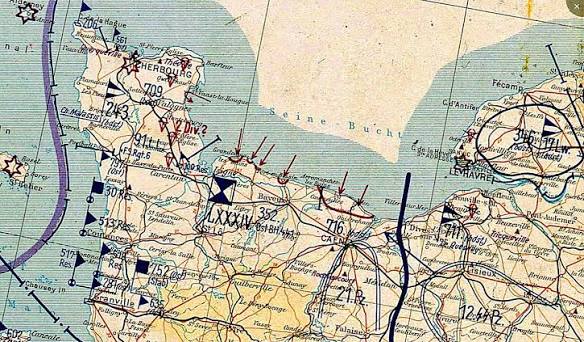
    The initial American defense was chaotic. Units were surrounded, communications cut, and commanders lost contact with their troops. Yet within days, a pattern emerged. The battle developed a distinctive shape on the maps: a westward bulge in the Allied lines, which gave the battle its name. The key was to hold the shoulders of the bulge—the northern and southern flanks—to prevent the Germans from widening the breach.

    At the northern shoulder, on the Elsenborn Ridge, the U.S. 2nd and 99th Infantry Divisions held their ground against repeated assaults by the 6th Panzer Army, the strongest German force in the offensive. For days, they endured ferocious attacks, freezing weather, and shortages of ammunition. Their stand was critical: they blocked the shortest route to the Meuse and forced the German armor into a bottleneck, slowing the entire offensive.

    At the southern shoulder, the city of Bastogne sat at a crossroads of seven roads—a vital hub for any armored advance. On December 20, the Germans surrounded the town, trapping the 101st Airborne Division and elements of the 10th Armored Division. When the German commander demanded surrender, Brigadier General Anthony McAuliffe responded with a terse answer that became legendary: “Nuts!” The Americans held out, repelling attack after attack, surviving on meager rations and ammunition, while the weather grounded Allied supply drops.

    The Weather Turns

    The offensive had been timed to exploit a forecast of heavy cloud cover, which grounded the Allied air forces. For the first week, the German armor moved under a blanket of fog and snow, protected from the fighter-bombers that had dominated the skies since D-Day. But on December 23, the skies cleared. Within hours, Allied aircraft—P-47 Thunderbolts, P-51 Mustangs, and British Typhoons—swarmed over the battlefield, attacking German columns, supply lines, and fuel depots. The Luftwaffe attempted a massive strike on Allied airfields on January 1, 1945, but it was a costly failure.

    Aerial resupply also reached Bastogne, dropping ammunition, food, and medical supplies to the besieged garrison. The relief of Bastogne came on December 26, when units of General George Patton’s Third Army, having turned north from their position in France, broke through the German lines. Patton had executed a near-impossible 90-degree turn of his entire army in less than three days—a movement that remains a textbook example of battlefield agility.

    The Price of the Gamble

    The offensive continued into January, but the German momentum was spent. By early January, the Allies were counterattacking, pinching off the bulge from the north and south. On January 25, 1945, the U.S. Army officially declared the bulge eliminated, though fighting in the salient continued into early February.

    The cost was staggering. The United States suffered roughly 89,500 casualties—about 19,000 killed, 47,500 wounded, and 23,000 captured or missing. The British, who had been called in to help hold the northern shoulder, lost about 1,400 men. German casualties are estimated between 67,000 and 125,000, with 15,000 to 25,000 killed. Germany also lost roughly 800 tanks and 1,000 aircraft—losses it could not replace. The battle consumed the last of Hitler’s strategic reserves in the West. From then on, the Wehrmacht was on its heels, retreating toward the Rhine and the eventual surrender in May.

    But the battle also took a human toll that numbers alone cannot capture. American soldiers fought in freezing temperatures, often without winter coats, suffering frostbite and trench foot. In the hamlet of Malmedy, on December 17, Waffen-SS troops summarily executed 84 American prisoners of war—a war crime that fueled the determination of the troops who pushed into Germany in the months that followed.

    The Battle of the Bulge was the last major German offensive on the Western Front. It was also the largest battle fought by the U.S. Army in World War II, and one of the most brutal. The German gamble failed, but it came closer than many realized. Had the weather held, had the shoulders cracked, had Bastogne fallen, the course of the war in Europe might have been different. Instead, the bulge was flattened, and the road to Berlin lay open.

    The Battle of the Bulge remains a defining moment of World War II—a story of surprise, endurance, and the resilience of the American soldier against overwhelming odds. It was Hitler’s final gamble, and it failed, hastening the end of the Third Reich. For the men who fought in the freezing Ardennes, the battle was a crucible of fire and ice, a test of courage that shaped the rest of the war and the peace that followed.

    Summary

    • The Battle of the Bulge (December 16, 1944 – January 25, 1945) was the last major German offensive on the Western Front, launched through the Ardennes Forest.
    • The attack aimed to split the Allied lines and capture the port of Antwerp, but it failed due to strong American resistance, especially at the shoulders of the bulge and at Bastogne.
    • The U.S. bore the brunt of the fighting, suffering about 89,500 casualties, with German losses estimated between 67,000 and 125,000.
    • The weather played a critical role: cloud cover grounded Allied air power in the first week, but a clearing on December 23 allowed devastating air attacks on German forces.
    • The battle exhausted Germany’s strategic reserves and set the stage for the final Allied advance into Germany.

    FAQ

    Q: Why was it called the Battle of the Bulge?
    A: The name came from the westward bulge that the German offensive created in the Allied front lines, as shown on wartime maps. The term was popularized by the press.

    Q: What was the German plan?
    A: The plan, codenamed Operation Wacht am Rhein, was to drive through the Ardennes, cross the Meuse River, and capture the port of Antwerp, splitting the Allied armies and forcing a negotiated peace.

    Q: How did the Allies respond to the surprise attack?
    A: Despite initial chaos, the Allies held key defensive positions, particularly at the Elsenborn Ridge and Bastogne, and then launched counterattacks once the weather cleared, allowing air power to be brought to bear.

    Q: What was the significance of Bastogne?
    A: Bastogne was a vital road junction. The 101st Airborne Division held the town against encirclement, and its relief on December 26 by Patton’s Third Army was a turning point in the battle.

    Q: What were the casualties?
    A: The U.S. suffered about 89,500 casualties, the British about 1,400, and German estimates range from 67,000 to 125,000. Germany also lost irreplaceable tanks and aircraft.

  • The Longest Day: How 156,000 Troops Stormed Hitler’s Atlantic Wall

    The Longest Day: How 156,000 Troops Stormed Hitler’s Atlantic Wall

    At 00:16 on June 6, 1944, the first American paratroopers of the 82nd Airborne Division dropped into the darkness above Normandy. Their mission was to secure the town of Sainte-Mère-Église, a crossroads vital to the success of the largest seaborne invasion in history. Within hours, they would be followed by thousands more, and by dawn, the sea itself would churn with the largest armada ever assembled.

    The D-Day landings were not a single battle but a sprawling, chaotic, and deadly operation that stretched across 50 miles of French coastline. It was the culmination of years of planning, a supreme gamble on weather, and a testament to the courage of ordinary soldiers facing an entrenched enemy. This is the story of how that day unfolded—from the tense decision-making in Allied headquarters to the blood-soaked sand of Omaha Beach.

    The Decision to Go

    In the spring of 1944, General Dwight D. Eisenhower faced a dilemma that would define the war. The invasion of Western Europe, code-named Operation Overlord, had been planned for months, but the weather was uncooperative. On June 3, a storm swept across the English Channel, whipping up waves and clouds that would make an amphibious landing nearly impossible. Eisenhower, the Supreme Commander of the Allied Expeditionary Force, had set June 5 as the launch date, but his chief meteorologist, James Stagg, warned of a break in the weather—a narrow window of improved conditions on June 6.

    Eisenhower hesitated. The Germans, convinced that no invasion would come in such rough seas, had let their guard down. In a series of tense meetings, Eisenhower polled his commanders. Some agreed with the delay; others wanted to go. Finally, at 4:00 AM on June 5, Eisenhower made the call: “OK, we’ll go.” That decision, made in a damp English manor house, would send 156,000 troops into battle the next day.

    The Atlantic Wall and the Deception

    The Germans had spent years building the Atlantic Wall—a chain of fortifications stretching from Norway to the Spanish border. But the wall was not a single barrier; it was a patchwork of concrete bunkers, beach obstacles, and gun emplacements, some formidable, others incomplete. Field Marshal Erwin Rommel, assigned to defend the coast, believed the invasion must be stopped on the beaches. He had mined the shallows and strung barbed wire, but he could not be everywhere. The Allies, meanwhile, had launched Operation Bodyguard, a massive deception campaign designed to convince the Germans that the main attack would come at Pas-de-Calais, the closest point to England. They created a fictional army under George Patton, complete with inflatable tanks and fake radio traffic. The ruse worked: German reserves, including the powerful 15th Army, were held back from Normandy for weeks, waiting for an invasion that would never come.

    The Airborne Assault

    In the darkness before dawn, the skies over Normandy filled with aircraft. Around 13,000 paratroopers of the U.S. 82nd and 101st Airborne Divisions, along with the British 6th Airborne, jumped into the unknown. Their mission was to secure the flanks of the invasion beaches, capture key bridges, and disrupt German communications. But the drops were scattered by cloud cover and anti-aircraft fire. Men landed in flooded fields, on rooftops, and in the middle of German positions. At Sainte-Mère-Église, Private John Steele’s parachute caught on the church steeple, where he hung for two hours, playing dead to avoid capture. Despite the chaos, the paratroopers managed to achieve their objectives. By dawn, they had secured the village and were holding the line, their presence sowing confusion in the German ranks.

    The Beaches

    The seaborne assault began at 6:30 AM. The invasion force was divided into five sectors: Utah and Omaha for the Americans, Gold and Sword for the British, and Juno for the Canadians. At Utah, the landings were relatively easy—the troops came ashore on the wrong part of the beach, but the German defenses were light, and by noon, the 4th Infantry Division had pushed inland. At Gold and Sword, the British and Canadian forces faced stiff resistance but managed to secure their objectives, including the capture of the crucial Caen Canal bridge, later known as Pegasus Bridge, by glider-borne troops.

    Omaha Beach was different. The Americans faced the 352nd Infantry Division, a crack German unit that had been moved there for training. The naval bombardment, meant to soften the defenses, had missed many of the bunkers. As the landing craft opened their ramps, the men were met with a murderous crossfire from the bluffs above. The first waves were decimated. Many soldiers were killed before they could even reach the water. For hours, the landing seemed to be a disaster. But slowly, small groups of men—many of them from the 1st and 29th Infantry Divisions—managed to climb the bluffs and knock out the German positions. By nightfall, they had carved out a beachhead, but at a cost of over 2,400 casualties, the highest of any sector.

    The German Response

    The Germans were caught off guard. Rommel was in Germany celebrating his wife’s birthday; many senior officers were away from their posts. The initial reaction was confusion. Hitler, who had been asleep, was not awakened until late morning. When he finally authorized the release of the Panzer divisions, it was already too late. The reserves, held back for the expected invasion at Pas-de-Calais, were slow to move, and Allied air superiority made their journey to the beaches a deadly gauntlet. By the end of the day, the Allies had landed over 156,000 troops and established a foothold. The Atlantic Wall had been breached, but the battle for Normandy was far from over.

    The Human Cost

    D-Day’s success came at a terrible price. Allied casualties on June 6 are estimated at around 10,000, with over 4,400 confirmed dead. The Americans suffered the most, particularly at Omaha. German casualties are estimated between 4,000 and 9,000, but the true numbers are unknown. French civilians also paid a heavy toll. In the weeks leading up to the invasion, Allied bombing raids targeted roads, bridges, and railways, killing thousands of civilians. The town of Caen, a key objective, was almost completely destroyed, and its liberation would not come until July. For the French, the war was not just a distant struggle; it was a brutal reality that shattered their homes and lives.

    The Road to Victory

    The D-Day landings were not the end of the war, but they were the beginning of the end. The lodgment area in Normandy, though initially shallow, grew over the following weeks as the Allies fought through the hedgerows. The German army, though defending fiercely, was slowly pushed back. The liberation of Paris came in August, and by September, the Allies were on the German border. But the road was long and bloody. The Battle of the Bulge in December would prove that the Germans were still capable of a deadly counterattack. Yet D-Day had irrevocably changed the course of the war. It established a second front in Western Europe, forcing Germany to fight a two-front war against the Soviets in the east and the Western Allies in the west. The eventual defeat of Nazi Germany was now a matter of time.

    The Debate: Was D-Day Decisive?

    Historians have long debated the significance of D-Day relative to the Eastern Front. Some argue that the Soviet Union bore the brunt of the German war machine and that the Red Army’s victories were more decisive. Others contend that the Western Allied invasion, with its massive logistical and industrial power, was essential to breaking Germany’s ability to fight. The truth is that both fronts were crucial. D-Day opened a new theater that forced Germany to disperse its forces, and the Allied strategic bombing campaign—which had been crippling German industry and transportation—could now be supported by ground forces advancing toward the heart of the Reich. The invasion also had a profound psychological impact, demonstrating to the world that the Allies were committed to the liberation of Europe.

    The D-Day landings were a turning point, not just in military terms, but in the moral arc of the war. They were a demonstration of what free nations could achieve when they pooled their resources and their courage. The day’s heroism—from the paratroopers in the dark to the men struggling ashore on Omaha—has been immortalized in books, films, and memorials. But the true legacy of D-Day is not merely in the battle itself, but in the peace that followed. The invasion of Normandy was the first step toward the liberation of Western Europe and the eventual end of Nazi tyranny. It is a day that reminds us of the cost of freedom and the resolve required to defend it.

    Summary

    • Approximately 156,000 Allied troops landed on D-Day, supported by 11,000 aircraft and 7,000 naval vessels.
    • The operation involved five beach sectors: Utah, Omaha (U.S.), Gold, Sword (British), and Juno (Canadian).
    • A massive deception operation (Bodyguard) convinced the Germans that the invasion would come at Pas-de-Calais, not Normandy.
    • The bloodiest fighting was at Omaha Beach, where American forces suffered over 2,400 casualties.
    • Allied casualties on D-Day are estimated at 10,000, with 4,400 confirmed dead.

    FAQ

    Q: Why was Normandy chosen for the invasion instead of Pas-de-Calais?
    A: Normandy was chosen because it was within range of Allied fighter aircraft, had suitable beaches, and was less heavily fortified than Pas-de-Calais. The shorter crossing to Pas-de-Calais made it an obvious target, so the Germans built stronger defenses there. Normandy also offered the advantage of surprise, as the Allies’ deception campaign led the Germans to expect the main attack elsewhere.

    Q: What was the role of the French Resistance on D-Day?
    A: The French Resistance played a crucial role in the days before and after D-Day. They carried out acts of sabotage, cutting telephone lines, disrupting rail lines, and ambushing German convoys. They also provided valuable intelligence to the Allies about German troop movements. The BBC broadcast coded messages to coordinate these actions, with phrases like “the dice are on the table” signaling the start of the invasion.

    Q: How did the weather affect the invasion?
    A: The invasion was originally scheduled for June 5, but poor weather forced a 24-hour delay. Eisenhower’s decision to go on June 6 was based on a narrow weather window—a break in the storms that would allow the landings to proceed. The Germans, believing the weather was too rough for an invasion, were caught off guard, which contributed to the initial success of the landings.

    Q: What were the Mulberry harbors?
    A: The Mulberry harbors were artificial portable harbors built by the Allies to supply the invasion forces. They were constructed in England and towed across the Channel, then assembled off the Normandy coast. Two were built, one at Omaha Beach and one at Gold Beach, but the one at Omaha was destroyed by a storm on June 19. The remaining harbor was used for months to bring in troops, vehicles, and supplies.

    Q: How many casualties did the Allies suffer on D-Day?
    A: Allied casualties on D-Day are estimated at around 10,000, with 4,400 confirmed dead. The Americans suffered the most, with about 2,400 casualties at Omaha Beach alone. German casualties are estimated between 4,000 and 9,000, but the exact numbers are uncertain. Civilian casualties in Normandy were also significant, with many French citizens killed in the bombing and fighting.

  • George S. Patton: The General Who Fought Like a Ghost

    George S. Patton: The General Who Fought Like a Ghost

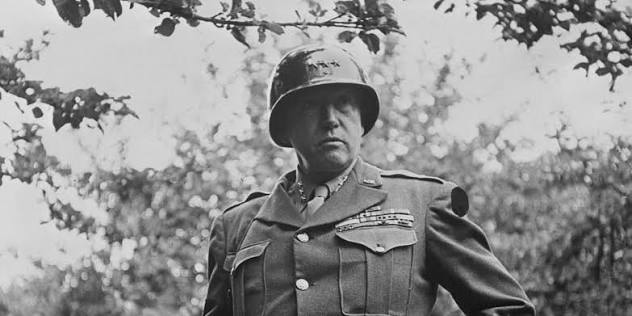
    George S. Patton Jr. was not a man who believed in half measures. He wore ivory-handled revolvers into battle, prayed daily, and was convinced he had lived past lives as a Roman legionnaire and a Napoleonic cavalryman. His troops nicknamed him ‘Old Blood and Guts’ a moniker that captured both his ferocious aggression and his tendency to get his own blood spilled. But Patton’s real legacy is not the bravado; it’s the cold, calculated military genius that made him one of the most effective field commanders of World War II.

    From the sands of North Africa to the frozen roads of the Ardennes, Patton’s Third Army covered more ground, took more prisoners, and broke more enemy lines than any other Allied force. Yet his career nearly ended not by a German bullet, but by his own hand a slap that almost cost him everything. Understanding Patton means reconciling the contradictions: a deeply religious man who swore like a sailor, a history buff who believed in reincarnation, and a battlefield genius who fought his own demons as fiercely as he fought the Axis.

    The Making of a Warrior

    George Smith Patton Jr. was born on November 11, 1885, on a ranch in San Gabriel, California. His family had a long military lineage his great-uncle had been a Confederate colonel killed at Gettysburg. Growing up, Patton was an avid horseman and hunter, but it was his intellectual obsession with military history that set him apart. He devoured the works of Julius Caesar and Napoleon, and he came to believe in reincarnation, feeling that he had been a warrior in previous lives. This belief wasn’t a passing fancy; it shaped his entire worldview. He saw war as a noble, almost sacred calling, and himself as a man chosen by fate and by God to lead.

    Patton’s academic path was rocky. He entered West Point in 1904 but had to repeat his plebe year after failing mathematics a humbling start for someone so confident. He graduated in 1909, married Beatrice Ayer in 1910, and then pursued a career as a cavalry officer. His athleticism and skill with a sword earned him a spot in the 1912 Stockholm Olympics, where he competed in the modern pentathlon. He finished fifth overall, but his aggressive style left a mark. Even then, Patton was not content to simply participate; he wanted to win.

    Patton died on December 21, 1945, in Heidelberg, Germany, from injuries sustained in a car accident twelve days earlier. He was buried at Luxembourg American Cemetery, not at West Point, because he wanted to lie with his men. His legacy is a paradox: a man who loved war but hated its cost, who demanded discipline yet broke the rules, who believed in fate but fought every battle as if his will alone could bend history. In the end, Patton’s greatest contribution was not just the victories he won, but the way he won them with speed, audacity, and an unshakable belief that the offensive spirit could overcome any obstacle. He remains a figure of controversy and admiration, a reminder that even the most brilliant leaders are flawed, and that sometimes the ghosts we carry are the ones that push us forward.

    Summary

    • Patton commanded the U.S. Third Army in Europe, executing the rapid breakout from Normandy and covering more ground than any other Allied force.
    • In the Battle of the Bulge, he turned his army 90 degrees north in under 48 hours to relieve Bastogne—a masterclass in operational flexibility.
    • His career nearly ended in 1943 after he slapped two soldiers hospitalized for battle fatigue; he was sidelined for nearly a year.
    • Patton believed in reincarnation and considered himself a warrior from past lives, which shaped his aggressive, fatalistic approach to war.
    • He died in December 1945 from injuries in a car accident and was buried at Luxembourg American Cemetery, among his troops.

    FAQ

    Q: Why was Patton called ‘Old Blood and Guts’?
    A: The nickname came from his troops, who saw his aggressive style and his willingness to lead from the front. Some joked that it was ‘his blood and our guts,’ but Patton embraced the image.

    Q: What was the slapping incident?
    A: In August 1943, during the Sicily campaign, Patton slapped and verbally abused two soldiers who were hospitalized for battle fatigue. He called them cowards and ordered them out of the hospital. The incident nearly ended his career; he was forced to apologize and was sidelined for almost a year.

    Q: How did Patton turn the Third Army around so quickly at the Battle of the Bulge?
    A: When the Germans attacked in the Ardennes, Patton ordered his staff to begin planning a 90-degree turn north even before he got official approval. Within 48 hours, his army was moving toward Bastogne, a feat of logistics and staff work that surprised even the Germans.

    Q: Did Patton really believe in reincarnation?
    A: Yes. He wrote about it, and his close friends and family confirmed it. He believed he had fought as a Roman legionnaire and a Napoleonic cavalryman in past lives, which he felt explained his natural instinct for war.

    Q: Why was Patton not buried at West Point?
    A: Patton requested to be buried with his men at Luxembourg American Cemetery, where many of his Third Army soldiers were laid to rest. He felt that was where he belonged, with the troops he led in battle.

  • Bernard Montgomery: The Brilliant, Brash Commander Who Divided Allies

    Bernard Montgomery: The Brilliant, Brash Commander Who Divided Allies

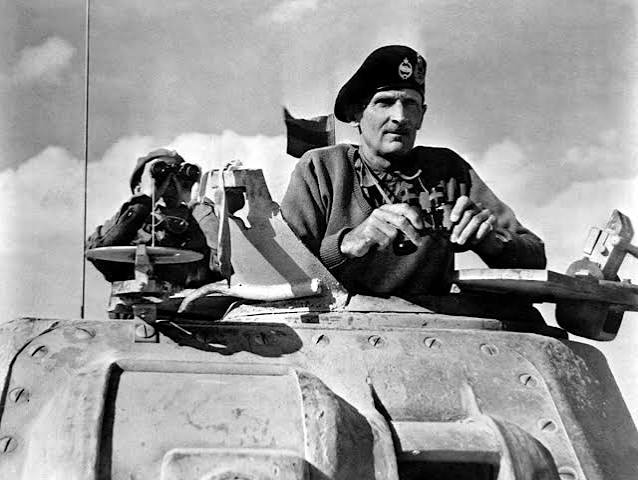
    On a November morning in 1942, a British general in a black beret stood on a ridge in Egypt, watching his artillery pound German positions. He was about to deliver the first major land defeat of the Axis powers. That general was Bernard Law Montgomery, and the battle was El Alamein. To the British public, he was ‘Monty’ a hero who restored pride after years of defeat. To many Americans, he was an arrogant, cautious egotist who nearly fractured the Allied alliance.

    Montgomery’s career was a study in contradictions. He was a meticulous planner who saved thousands of lives with careful preparation, yet his caution frustrated generals like Patton and Eisenhower. He was beloved by his troops, who appreciated his attention to their welfare, but he alienated almost every superior and ally with his tactless remarks. His legacy remains fiercely debated: was he a military genius or a lucky beneficiary of Allied superiority? The answer lies in the details of his campaigns, his personality, and the bitter clashes that defined World War II’s western front.

    From Parsonage to Sandhurst

    Bernard Law Montgomery was born in 1887 in Kennington, London, to a Church of Ireland clergyman. His father, a bishop, was gentle; his mother, by all accounts, was cold and strict. Biographers have long pointed to this chilly upbringing as the root of Monty’s later prickly demeanor. He attended St. Paul’s School and then the Royal Military College at Sandhurst, but he was not a standout cadet. In fact, he was nearly expelled for setting fire to a fellow cadet’s shirt tails during a prank.

    Commissioned into the Royal Warwickshire Regiment in 1908, Monty saw his first combat in World War I. At the Battle of Ypres in 1914, he was shot through the chest by a sniper. He lay on the battlefield for hours, and the bullet narrowly missed his heart and spine. The experience left him with a lifelong belief in meticulous preparation: he had survived, he later said, because of careful training and a bit of luck. He was awarded the Distinguished Service Order for his bravery.

    Between the wars, Monty served in Ireland, Palestine, and India, earning a reputation as a hard-driving trainer. He was not popular he was too intense, too critical but he produced well-drilled units. He also developed a fanatical focus on physical fitness and mental resilience, habits that would define his command style.

    The Rise to Eighth Army Command

    When World War II broke out, Monty commanded the 3rd Division in France. He was evacuated from Dunkirk in 1940, an experience that reinforced his conviction that the British Army needed radical reform. Back in Britain, he took over corps commands and then South-Eastern Command, where he drilled troops endlessly, insisting on realistic exercises and strict discipline.

    In August 1942, the desert war in North Africa was going badly. The British Eighth Army had been pushed back by German Field Marshal Erwin Rommel, and morale was low. Prime Minister Winston Churchill was desperate for a victory. Monty was appointed to take command, replacing Claude Auchinleck. He arrived in Egypt and immediately broadcast his confidence: he told his new command that they would hold the line, then break Rommel’s forces — and he was right.

    El Alamein and the Desert Victory

    The Second Battle of El Alamein, fought from October 23 to November 4, 1942, was Montgomery’s greatest triumph. He had spent weeks preparing: stockpiling supplies, training troops, and devising a plan that relied on overwhelming firepower. His strategy was deliberately set-piece — a methodical artillery barrage followed by infantry and tank advances, designed to grind down the Axis forces.

    Critics later noted that Rommel’s army was stretched thin, short on fuel and supplies, and that Allied code-breaking (Ultra) had given Monty precise intelligence. But at the time, the victory was a turning point. It ended the Axis threat to Egypt and the Suez Canal, and it gave the British people a much-needed boost. Monty became a national hero overnight.

    He wore a black beret with two badges — the Royal Tank Regiment and the General’s insignia — and insisted on addressing his men personally. He also improved their food, mail delivery, and medical care, earning genuine affection from the rank and file. To them, he was ‘Monty’ — a commander who cared about their welfare and who would not waste their lives in reckless attacks.

    Normandy and the Friction with Allies

    Monty’s next major role was as commander of the Allied ground forces for the D-Day invasion on June 6, 1944. He oversaw the initial landings in Normandy and the subsequent campaign to break out from the beaches. The fighting in the ‘bocage’ — dense hedgerows — was brutal and slow. Monty’s critics, including American generals George Patton and Omar Bradley, accused him of being too cautious. They wanted a rapid armored thrust; Monty favored a grinding, methodical approach that minimized casualties.

    The friction was personal as well as strategic. Monty was tactless and often appeared to claim credit for Allied successes. He clashed repeatedly with Supreme Commander Dwight Eisenhower over the direction of the campaign. Monty advocated for a single, concentrated thrust toward Berlin; Eisenhower preferred a broad front. Their arguments were frequent and bitter.

    In September 1944, Monty launched Operation Market Garden, an ambitious plan to seize a series of bridges in the Netherlands and cross the Rhine into Germany. It was a bold gamble, but it failed. The last bridge at Arnhem — ‘a bridge too far’ — was held by German forces, and thousands of Allied paratroopers were killed or captured. Monty had pushed for the operation despite intelligence warnings, and the failure tarnished his reputation.

    The Bulge and the Press Conference That Backfired

    In December 1944, Germany launched a surprise offensive through the Ardennes forest, creating a bulge in the Allied lines. Eisenhower placed Monty in command of the northern shoulder, a move that angered American generals. Monty’s forces helped halt the German advance and then counterattacked. But in January 1945, he held a press conference in which he appeared to take credit for ‘the British’ saving the Americans from a ‘little local difficulty’. The remarks were reported in American newspapers and caused a major uproar. Eisenhower and Bradley were furious; some even demanded Monty’s removal.

    Monty later claimed he was misquoted, but the damage was done. The incident cemented his reputation among Americans as an arrogant, self-promoting Brit. It also highlighted the deeper issue: Monty was brilliant at commanding a single army, but he struggled with coalition warfare.

    Post-War Legacy and Controversies

    After the war, Monty served as Chief of the Imperial General Staff (1946–1948), overseeing the contraction of Britain’s military commitments as the empire dissolved. He then took roles in the Western Union and NATO, but his tactlessness continued. He retired in 1958 and published his memoirs, which were scathing about many former colleagues, including Eisenhower and Patton. The book reignited the wartime feuds and alienated many allies.

    Monty died in 1976, but the debates over his legacy have never ended. Revisionist historians argue that El Alamein was won against a weakened enemy and that Monty’s caution prolonged the war. They point to his failure at Market Garden and his slow progress in Normandy. Traditionalists counter that he saved British morale, prepared his troops meticulously, and avoided the reckless waste of life that characterized earlier commanders.

    The Soldier’s General and the Man

    What is undeniable is that Monty was a soldier’s general. He visited units, talked to troops, and insisted on proper supplies and medical care. He was also a man of deep contradictions: supremely confident in public, but privately insecure; a master of detail, yet prone to strategic gambles. His beret and his bluntness made him a recognizable figure, but they also made him a target.

    Perhaps the fairest assessment is that Monty was exactly what Britain needed in 1942: a commander who could restore confidence and win a decisive battle. But as the war progressed, his methods became less suited to the fast-moving, coalition-based campaign in northwest Europe. He was a brilliant set-piece commander, not a master of mobile warfare. And his personality, while effective in motivating his own troops, was disastrous for Allied unity.

    Today, visitors to the Imperial War Museum in London can see Monty’s beret and his staff car. But the true monument is the debate he continues to inspire — a debate that reflects the complexities of leadership, personality, and coalition warfare.

    Bernard Montgomery was a man of his time: a product of Victorian discipline and a pioneer of modern military professionalism. He gave Britain a victory when it desperately needed one, and he treated his soldiers with a respect that was ahead of its time. But his abrasive personality and strategic caution created as many problems as they solved. He remains a compelling figure — not because he was flawless, but because his flaws were as large as his achievements. In the end, Monty was a brilliant, flawed, and unforgettable commander, and that is why we still argue about him today.

    Summary

    • Bernard Montgomery, known as ‘Monty’, was Britain’s most famous World War II general, celebrated for the victory at El Alamein.
    • He was a meticulous planner who emphasized logistics and set-piece battles, but his caution frustrated allies like Patton and Eisenhower.
    • He was beloved by his troops for improving their welfare, but his tactless remarks caused major Allied frictions.
    • His biggest failure was Operation Market Garden, an ambitious airborne operation that ended in defeat.
    • His post-war memoirs reignited controversies, and historians still debate whether he was a genius or a lucky beneficiary of Allied superiority.

    FAQ

    Q: Why was Montgomery called ‘Monty’?
    A: The nickname ‘Monty’ was widely used by his troops and the British public, reflecting his popularity and approachable image, even though he was often aloof with superiors.

    Q: What was Montgomery’s most famous victory?
    A: The Second Battle of El Alamein (1942) in Egypt, where he defeated German Field Marshal Rommel, marking the first major Allied land victory over the Axis and a turning point in the war.

    Q: Why did Montgomery clash with American generals?
    A: He was famously direct and tactless, often appearing to claim credit for Allied successes. His strategic disagreements with Eisenhower and Patton, along with a controversial press conference after the Battle of the Bulge, created deep friction.

    Q: What was Operation Market Garden?
    A: It was a bold plan in September 1944 to capture a series of bridges in the Netherlands and cross the Rhine into Germany. It failed, especially at Arnhem, and became known as ‘a bridge too far’, significantly damaging Montgomery’s reputation.

    Q: What was Montgomery’s role after the war?
    A: He served as Chief of the Imperial General Staff, then in Western Union and NATO commands, before retiring in 1958. His later memoirs were highly critical of wartime colleagues, causing further controversy.

  • Douglas MacArthur: The Five-Star General Who Shaped the Pacific

    Douglas MacArthur: The Five-Star General Who Shaped the Pacific

    Douglas MacArthur was a study in contradictions: a brilliant strategist who suffered early defeats, a lifelong soldier who clashed with presidents, and a general who governed Japan like a modern-day shogun. From the beaches of the Philippines to the decks of the USS Missouri, his decisions reshaped the Pacific and left a legacy that still sparks debate.

    Few military figures have held such sweeping power or provoked such strong reactions. He was the youngest brigadier general in World War I, the architect of Japan’s post-war transformation, and the commander who dared to challenge the President of the United States. His story is not just one of battles won and lost, but of a man who believed he was destined for greatness.

    A Legacy Forged in the Philippines

    Douglas MacArthur was born into a military family his father, Arthur MacArthur Jr., was a Medal of Honor recipient and a Civil War hero. Growing up on frontier army posts, young Douglas absorbed a sense of duty and destiny. He entered West Point and graduated first in his class in 1903, an early sign of the exceptional career to come.

    His first posting was to the Philippines, a country that would become central to his life. He served there as a young officer, later as military advisor, and finally as commander during World War II. The Philippines was where he made his famous promise “I shall return” and where he fulfilled it in 1944, wading ashore at Leyte to liberate the islands.

    The Pacific Strategy: Island Hopping and Bold Risks

    During World War II, MacArthur led the Allied forces in the Southwest Pacific. His strategy of “island hopping” bypassing heavily fortified Japanese positions and capturing key islands was controversial but effective. It saved lives and accelerated the Allied advance toward Japan.

    His most daring move came in Korea, not during World War II. In September 1950, with UN forces pinned in the Pusan Perimeter, MacArthur launched a bold amphibious landing at Inchon, far behind enemy lines. The operation was a stunning success, turning the tide of the war and showcasing MacArthur’s ability to take calculated risks that others deemed impossible.

    Rebuilding Japan: From Warlord to Reformer

    After Japan’s surrender in 1945, MacArthur was appointed Supreme Commander for the Allied Powers (SCAP). For nearly six years, he ruled Japan with near-absolute authority, overseeing a transformation that remains unprecedented in history. He introduced a new constitution that renounced war (Article 9), granted women the right to vote, implemented land reforms, and supported labor rights. He also presided over the Tokyo War Crimes Tribunal.

    His rule was not without controversy. He censored media, retained Emperor Hirohito to maintain stability, and was criticized for his imperial style. Yet, his reforms laid the foundation for Japan’s post-war economic miracle and its emergence as a peaceful, democratic nation.

    Clash with Truman: The Firing That Shook America

    The Korean War brought MacArthur into direct conflict with President Harry Truman. MacArthur, commanding UN forces, wanted to expand the war into China, even suggesting the use of nuclear weapons. Truman, committed to a limited war and the principle of civilian control over the military, saw MacArthur’s insubordination as a direct challenge to the Constitution.

    On April 11, 1951, Truman fired MacArthur. The decision was politically explosive—polls showed most Americans supported the general. MacArthur returned home to a hero’s welcome, but the episode reaffirmed a fundamental principle: the military serves the civilian government, not the other way around.

    The Man and the Myth

    MacArthur was a complex figure, both admired and criticized. He was a brilliant tactician and a visionary leader, but also arrogant and politically ambitious. He sought the Republican presidential nomination in 1948 and 1952, both times unsuccessfully.

    His legacy is a mixed one. He is remembered as a liberator in the Philippines and a reformer in Japan, but also as a commander who was unprepared for the initial Japanese attacks in 1941 and who overreached in Korea. Yet, his impact on the Pacific is undeniable. He shaped the region’s post-war order and left a mark that persists today.

    Douglas MacArthur was a man of his time—a product of America’s rise to global power and the Cold War’s complexities. His life was marked by extraordinary achievements and significant controversies, but his influence on the Pacific and on the role of the military in American society remains undeniable. Whether hailed as a hero or criticized as a loose cannon, MacArthur’s story is essential to understanding the 20th century.

    Summary

    • Early Life and Career: Graduated first in his class at West Point, served in World War I, and became the youngest brigadier general in the U.S. Army.
    • World War II: Led the defense of the Philippines, the island-hopping campaign, and accepted Japan’s surrender in 1945.
    • Occupation of Japan: As SCAP, he oversaw sweeping reforms that transformed Japan into a peaceful democracy.
    • Korean War: Masterminded the Inchon landing, but was fired by Truman for insubordination over expanding the war.
    • Legacy: A brilliant but controversial figure, remembered for his military genius and his assertion of civilian control over the military.

    FAQ

    Q: Why is Douglas MacArthur famous?
    A: He was a five-star general known for his leadership in the Pacific during World War II, the occupation of Japan, and the Korean War. He is also famous for being fired by President Truman.

    Q: What did MacArthur do in Japan?
    A: As Supreme Commander for the Allied Powers, he oversaw Japan’s post-war reconstruction, including a new constitution, land reform, women’s suffrage, and economic recovery.

    Q: What was the Inchon landing?
    A: It was a bold amphibious invasion in September 1950 during the Korean War, which successfully turned the tide against North Korean forces.

    Q: Why did Truman fire MacArthur?
    A: MacArthur publicly disagreed with Truman’s limited-war strategy and advocated for expanding the war into China. Truman fired him for insubordination and to uphold civilian control of the military.

    Q: Did MacArthur receive the Medal of Honor?
    A: Yes, he received the Medal of Honor for his defense of the Philippines in 1942.

  • Erwin Rommel: The Making and Unmaking of the Desert Fox Myth

    Erwin Rommel: The Making and Unmaking of the Desert Fox Myth

    Erwin Rommel is the most famous German general of World War II. His name evokes images of desert warfare, tactical brilliance, and a kind of chivalrous conduct that seemed out of place in the Nazi regime. But the ‘Desert Fox’ was as much a product of propaganda as of actual military achievement. Over the past few decades, historians have chipped away at the legend, revealing a more complex—and less heroic—figure.

    This article separates the man from the myth. We’ll trace Rommel’s rise from a WWI hero to Hitler’s favorite general, examine his campaigns in France and North Africa, and finally confront the uncomfortable truths about his relationship with Nazism and his role in the July 20 plot. The story that emerges is not about a clean soldier in a dirty war, but about a man whose reputation was carefully constructed—and is now being dismantled.

    The Making of a Legend: WWI and the Interwar Years

    Rommel was born in 1891 in Heidenheim, Germany, into a middle-class family. His father was a schoolteacher, and the young Rommel initially considered engineering. But he joined the infantry as an officer cadet in 1910, and the military became his life.

    In WWI, Rommel fought on the Western and Eastern fronts, then in Italy. At the Battle of Caporetto in 1917, he led a series of infiltration attacks that captured key mountain positions, using tactics that would later define his style. For this, he won the Pour le Mérite, Germany’s highest military honor at the time. After the war, he stayed in the army and wrote a manual, Infantry Attacks (1937), based on his experiences. The book caught the attention of Hitler, who was always looking for officers who thought offensively. It also became a bestseller abroad—George Patton read it, and it influenced his own aggressive armored warfare.

    The Ghost Division: Rommel in 1940

    When WWII broke out, Rommel was given command of the 7th Panzer Division. In the invasion of France in May 1940, he ignored orders and pushed his tanks at breakneck speed, often leaving the infantry far behind. His division moved so fast that it became known as the “Ghost Division”—it seemed to be everywhere at once. In one engagement, he used captured British tanks to confuse the enemy. His success was undeniable, but it also sowed seeds for his later arrogance: he believed he could outrun logistics and outsmart any opponent.

    The Desert Fox: North Africa, 1941–1943

    In February 1941, Rommel was sent to North Africa to rescue the struggling Italian army. He arrived with just two divisions, but within weeks he had pushed the British back across the desert. The British, desperate to explain their defeats, began to mythologize Rommel. They called him the “Desert Fox”—a clever, chivalrous enemy who outfoxed them with daring maneuvers. This propaganda suited the British: it made their defeat seem noble and their eventual victory more glorious.

    Rommel’s early successes were real. He recaptured Cyrenaica, besieged the port of Tobruk for months, and by June 1942 he had taken Tobruk and pushed his forces deep into Egypt. For that, Hitler promoted him to Field Marshal. But his advance stalled at El Alamein, just 100 miles from Alexandria. The supply lines stretched, the tanks wore out, and the British under Montgomery had the advantage of shorter logistics. Rommel’s gamble failed. After the Second Battle of El Alamein in October–November 1942, he was forced into a long retreat across Libya and Tunisia, finally leaving Africa in March 1943 due to illness—just before the Axis surrender in Tunisia.

    The Myth and the Reality: Rommel’s Strategic Flaws

    The legend says Rommel was a tactical genius, but historians have pointed out his strategic weaknesses. He often overextended his supply lines, underestimated logistics, and made decisions based on intuition rather than careful planning. His obsession with offensive action could be reckless. In North Africa, he ignored the advice of his quartermasters and pushed too far, which contributed to his eventual defeat. The “military genius” reputation was also inflated by British propaganda—they needed a superhuman enemy to justify their own setbacks.

    A Nazi General? Rommel’s Relationship with the Regime

    For decades, Rommel was seen as an apolitical soldier who served his country, not the Nazi Party. This view was promoted by his widow, his former subordinates, and even the Western Allies after the war, who found him a useful symbol of a “clean” German military. But recent scholarship has painted a different picture.

    Rommel was not a member of the Nazi Party, but he was not opposed to Hitler either. He benefited from Hitler’s favor, receiving rapid promotions and decorations that were often outside the normal chain of command. He also tolerated, and at times supported, war crimes. In North Africa, he ordered “energetic action” against Jewish refugees in Tunisia, and he did not object to the murder of captured commandos. His attitude toward the Holocaust was at best indifferent, at worst complicit.

    The July 20 Plot and Forced Suicide

    By 1944, Rommel was in command of Army Group B in Normandy, tasked with defending the Atlantic Wall against an expected Allied invasion. He argued that the panzer divisions should be stationed near the coast, but Hitler overruled him. On D-Day, June 6, 1944, Rommel was in Germany for his wife’s birthday—a fact that has been used to explain the chaotic German response. He returned to Normandy and was wounded on July 17 when an Allied fighter strafed his car.

    Three days later, on July 20, a bomb exploded in Hitler’s headquarters. The conspirators’ plot failed, but under torture, some named Rommel as a potential supporter. Hitler gave Rommel a choice: face a public trial for treason, which would mean the execution of his family, or take a cyanide pill and be given a state funeral with honors. Rommel chose suicide. On October 14, 1944, he was driven to a quiet spot, swallowed the poison, and died. His death was officially reported as resulting from his wounds—a lie that held for years.

    The End of the Legend

    Rommel’s role in the July 20 plot was passive at best. He had been approached by conspirators, but he was more concerned about the war’s inevitable defeat than about overthrowing Hitler. He did not actively participate, and his motives were not moral but pragmatic. The myth of Rommel as a principled resistance fighter is just that—a myth.

    Today, historians like Ralf Georg Reuth and Peter Lieb have argued that Rommel was a committed Nazi who used Hitler’s favor for his career and was complicit in crimes. His legend was built on selective memory and propaganda, both by the British to explain their defeats and by postwar Germans to distance themselves from the Nazi regime. The real Rommel was a brilliant tactical commander, yes, but also a man who served a criminal regime and looked away from its horrors.

    Erwin Rommel was a complex figure: a brave soldier, a talented tactician, and a man who rose to fame under a murderous dictatorship. His myth as the “clean” general served many purposes after the war, but it does not survive scrutiny. Understanding the real Rommel—with his flaws, his complicity, and his tragic end—is more valuable than preserving a legend. It reminds us that heroism is never simple, and that even the most celebrated figures can be built on sand.

    Summary

    • Rommel’s early successes in WWI and his manual Infantry Attacks made him a favorite of Hitler and a respected military mind.
    • In WWII, he led the “Ghost Division” in France and the Afrika Korps in North Africa, earning the nickname “Desert Fox” from the British.
    • His strategic flaws, especially overextending supply lines, contributed to his defeat at El Alamein.
    • The “clean Wehrmacht” myth is false: Rommel was a beneficiary of Nazism, tolerated war crimes, and was not a principled opponent of Hitler.
    • He was forced to commit suicide in 1944 after being implicated in the July 20 plot, but his involvement was passive and pragmatic.

    FAQ

    Q: Was Rommel a member of the Nazi Party?
    A: No, he was not a formal member, but he supported the regime and benefited from Hitler’s favor. He was not a principled opponent of Nazism.

    Q: What was Rommel’s role in the July 20 plot?
    A: His involvement was minimal. He was approached by conspirators, but he did not actively participate. His concerns were more about the war’s outcome than about overthrowing Hitler.

    Q: Why did the British call him the “Desert Fox”?
    A: They used the nickname to explain their defeats in North Africa, creating an image of a clever and chivalrous enemy. It was part of propaganda that later contributed to the Rommel myth.

    Q: Did Rommel commit war crimes?
    A: He tolerated and sometimes ordered actions that were war crimes, such as the murder of captured commandos and “energetic action” against Jewish refugees in Tunisia.

    Q: How did Rommel die?
    A: He was forced to commit suicide in 1944 after being implicated in the July 20 plot. Hitler gave him the choice of suicide with family protection or a public trial with family persecution. He chose suicide.

  • The Brief, Radical Rearrangement: How WWII Redrew the Map of Women’s Work

    The Brief, Radical Rearrangement: How WWII Redrew the Map of Women’s Work

    In 1942, a young woman in Detroit named Rose Will Monroe left her job at a beauty parlor to rivet B-24 bombers at the Willow Run plant. She was one of six million American women who stepped into factories, shipyards, and offices during World War II. The war did not merely open doors it kicked them off their hinges. But the story of what happened after the war is more complex than a simple before-and-after.

    The Great Manpower Vacuum

    When the United States entered the war in December 1941, the demand for war materiel exploded. By 1943, the country was producing more than 86,000 aircraft a year, and every one of those planes required thousands of hours of labor. With 12 million men in uniform by 1944, factories faced a critical shortage. The government’s War Manpower Commission launched a recruitment drive aimed squarely at women, using posters and films to frame factory work as patriotic duty.

    Women responded in numbers that shocked even the optimists. By 1944, they constituted 36% of the civilian labor force, up from 27% in 1940. In the shipyards of California and the steel mills of Pennsylvania, women operated cranes, welded hulls, and inspected shells. The image of “Rosie the Riveter” first drawn by J. Howard Miller in 1942 as a private-industry morale booster, then made famous by Norman Rockwell’s 1943 Saturday Evening Post cover became a national symbol. But Rosie was not just a poster. She was a real workforce that kept the war machine running.

    The British Experiment: Conscription of Women

    Across the Atlantic, Britain went further than any other Western nation. In 1941, the National Service Act (No. 2) conscripted unmarried women aged 20 to 30 into war work the first time in British history that women were drafted. By 1943, nearly 80% of married women under 40 were doing some form of war work, from assembling aircraft to driving buses. The Women’s Land Army sent tens of thousands of women to farms, replacing male laborers who had joined the military. Women also served in auxiliary military services the ATS, WAAF, and WRNS performing roles from anti-aircraft gun operations (though they did not fire the guns, they plotted the targets) to codebreaking at Bletchley Park.

    This conscription was a radical break with pre-war norms. Before 1939, many British employers enforced “marriage bars” policies that forced women to leave their jobs upon marriage. The war made such policies untenable, and they were formally abolished between 1944 and 1946. The change was pragmatic, not ideological. The government needed workers, and women were the only available pool.

    The Soviet Exception: Women in Combat

    No nation mobilized women as thoroughly as the Soviet Union. Over 800,000 women served in the Red Army, a scale unmatched by any other belligerent. They flew combat missions in the all-female 588th Night Bomber Regiment, the “Night Witches,” who dropped bombs from obsolete biplanes under cover of darkness. Lyudmila Pavlichenko, a sniper, recorded 309 confirmed kills, making her one of the deadliest snipers in history. Women also drove tanks, served as medics under fire, and worked in partisan units.

    The Soviet mobilization was born of desperation. With 27 million Soviet deaths, the military had no choice but to turn to women. But even after the war, Soviet women’s labor participation remained high out of economic necessity. The state’s rhetoric re-emphasized motherhood, but the reality of reconstruction demanded that women continue to work. The result was a peculiar paradox: women were celebrated as heroes yet still expected to bear the double burden of work and domesticity.

    The Post-War Push-Back

    The war ended in 1945, and with it came a concerted effort to return women to the home. In the United States, the GI Bill of 1944 provided education and housing benefits to veterans—overwhelmingly male—giving them a leg up in the job market. By 1947, about 3.5 million women had left or been forced out of the workforce. The baby boom, which began in 1946 and lasted until 1964, reinforced the ideology of domesticity. Magazines, films, and advertising all promoted the image of the happy homemaker.

    But the reversal was never complete. Women’s workforce participation did not return to pre-war levels. In 1940, about 27% of women worked; by 1950, that figure had risen to over 33%. The war had normalized married women’s employment, and many women—especially working-class women and women of color—continued to work out of financial necessity. The “marriage bar” in Britain was gone for good. The war also created a cohort of women who had experienced independence and wages, and who would not forget it. That cohort would provide the leadership for the second-wave feminism of the 1960s and 1970s.

    A Legacy of Contradiction

    The war’s impact on gender roles was not a simple liberation story. It was a rearrangement—temporary, but with lasting consequences. The war proved that women could do “men’s work,” but it also reinforced the idea that this was an exception, a patriotic sacrifice. The “double burden”—paid work plus unpaid domestic labor—was born in this era, as women juggled factory shifts with rationing, childcare, and household management.

    Revisionist historians have pointed out that the “Rosie” narrative obscures the continuity of gender inequality. Many women were laid off at war’s end, and those who stayed often faced lower pay and exclusion from supervisory roles. Yet the war also created cracks in the edifice. It gave women a taste of economic independence, and it altered public perception of what women could do. When the feminist movement of the 1960s demanded equal pay and equal opportunity, it drew on the memory of women who had welded ships and flown bombers.

    The war changed gender roles not by overthrowing the system, but by bending it so far that it could not spring fully back into shape.

    World War II did not permanently transform gender roles, but it permanently unsettled them. The women who worked in factories and served in uniform did not set out to start a revolution, yet they laid the groundwork for one. Their labor—and their willingness to return to the home—created the conditions for the debates that would dominate the following decades. The war’s legacy is not a simple narrative of progress, but a story of how a crisis can rearrange the possible.

    Summary

    • Over 6 million American women entered the workforce during WWII, boosting women’s share of the civilian labor force from 27% to 36% by 1944.
    • The UK conscripted unmarried women aged 20-30 into war work in 1941, a historic first, and abolished marriage bars by 1946.
    • The Soviet Union mobilized over 800,000 women in the military, including combat roles like snipers and pilots.
    • After the war, millions of women were pushed out of jobs, but female workforce participation never fell to pre-war levels.
    • The war normalized married women’s employment and provided a foundation for the 1960s feminist movement.

    FAQ

    Q: How many women worked in war industries during WWII?
    A: In the US, over 6 million women entered the workforce, with 36% of the civilian labor force being women by 1944. In the UK, about 2 million women were recruited into war work.

    Q: Were women conscripted in any country?
    A: Yes, Britain conscripted unmarried women aged 20-30 into war work in 1941. The Soviet Union also mobilized women, but through a general draft rather than a gender-specific one.

    Q: Did women serve in combat roles?
    A: Yes, in the Soviet Union, over 800,000 women served in the Red Army, including snipers, pilots, and tank crews. The all-female 588th Night Bomber Regiment was famous.

    Q: What happened to women’s jobs after the war?
    A: In the US, about 3.5 million women left or were pushed out of the workforce by 1947. However, women’s participation rate did not return to pre-war levels, indicating a lasting change.

    Q: Did WWII lead to equal pay?
    A: No, equal pay was not achieved during or immediately after the war. Women’s wages rose relative to men’s but remained unequal, and many women were laid off when men returned.

  • The Civilian Road Map That Outmaneuvered the German Army on D-Day

    The Civilian Road Map That Outmaneuvered the German Army on D-Day

    On June 6, 1944, as Allied troops stormed the beaches of Normandy, they carried a secret weapon that had nothing to do with new tanks or code-breaking machines. It was a simple road map, designed for French motorists, published by the tire company Michelin. This map, No. 51 in Michelin’s series, covering the region from Caen to Le Mans, would prove to be one of the most effective intelligence assets of the entire campaign.

    The Germans had fortified the Atlantic Wall with concrete bunkers, millions of mines, and formidable artillery. But they had overlooked the humble road map. While German officers navigated with outdated military surveys, Allied commanders unfolded their Michelin maps and saw a detailed web of minor roads, farm tracks, and bridges that the German maps simply didn’t show. In the chaos of the Normandy bocage a maze of sunken lanes and earthen hedgerows this difference was decisive.

    A Map Made for Tourists, Not Soldiers

    Michelin began producing detailed road maps of France in 1900, not for military strategists but for the growing number of motorists who wanted to explore the countryside in their new automobiles. The company’s tire salesmen and local correspondents fed a constant stream of updates back to the mapmakers, ensuring that roads, bridges, and even isolated farms were accurately depicted. By the 1930s, these maps had become the gold standard for civilian travel in France.

    When the Second World War broke out, the British War Office recognized the potential military value of these maps. They quietly began stockpiling Michelin maps, and when France fell in 1940, they made sure to secure as many copies as possible. But the real champion of the Michelin map was Major David “Dai” Rees, a Welsh cartographer with the British Army’s Geographical Section, General Staff (GSGS).

    The Cartographer Who Saw the Obvious

    Major Rees was not a flamboyant intelligence officer. He was a meticulous mapmaker who understood that the official military maps of Normandy were woefully inadequate. Many were based on surveys from the 19th century, and they lacked the granular detail of minor roads and sunken lanes that would be crucial for troop movements in the bocage. Rees knew that the Michelin maps, with their up-to-date road networks, gradients, and even the locations of isolated farmhouses, were infinitely better.

    He faced bureaucratic resistance. Some officers dismissed the idea of using a commercial touring map for military operations. But Rees persisted, and his foresight paid off. The War Office reproduced the Michelin maps in huge numbers, classifying them as “GSGS 4249.” Hundreds of thousands of copies were printed on lightweight, color-coded paper that could be folded and stuffed into a soldier’s pocket.

    The Bocage: A Navigator’s Nightmare

    The terrain of Normandy was unlike anything the Allied troops had encountered. The bocage was a patchwork of small fields enclosed by thick, earthen hedgerows, often topped with trees and shrubs. Sunken lanes, worn down by centuries of use, crisscrossed the landscape. Tanks and infantry could easily get lost, and the hedgerows provided the Germans with excellent defensive positions. For the Allies, every advance required precise navigation.

    German forces, by contrast, were often operating with maps that lacked the same level of detail. They had not anticipated that the Allies would rely on a civilian commercial map, and they certainly did not expect the Allies to have such intimate knowledge of the minor road network. This gave the Allies a significant navigational advantage, especially in the months of brutal fighting that followed the initial landings.

    The Secret That Wasn’t

    The maps were not classified documents. The secrecy lay in the fact that the Allies were using them at all, and in the scale of the reproduction effort. The Germans could not conceive that a tire company’s product for motorists would become a critical military tool. It was a cartographic sleight of hand that took the enemy by surprise.

    After the war, Michelin’s role was officially acknowledged. The company was praised for its foresight in maintaining detailed, up-to-date maps of France. The maps, originally created to sell tires, had helped to liberate the country.

    The Michelin map of Normandy is a reminder that sometimes the most effective tools are not the most sophisticated. A civilian road map, designed for Sunday drives, gave the Allies a crucial edge in one of the most complex military operations in history. It was a triumph of commercial cartography applied to the grim business of war, and it saved countless lives.

    Summary

    • The Michelin road map No. 51 (covering Caen to Le Mans) was used extensively by Allied forces during D-Day and the Battle of Normandy.
    • The map provided detailed data on minor roads, bridges, and terrain features that official military maps lacked.
    • Major David “Dai” Rees, a British cartographer, championed the use of the Michelin maps, overcoming bureaucratic resistance.
    • The maps were mass-produced by the British War Office as “GSGS 4249” and distributed to hundreds of thousands of Allied troops.
    • The Germans were unaware that the Allies relied on a civilian commercial map, giving the Allies a significant navigational advantage in the bocage country.

    FAQ

    Q: Were the Michelin maps classified as ‘secret’ during the war?
    A: No, the maps themselves were not classified. The secrecy was in the fact that the Allies were using them at all, and in the scale of the reproduction effort.

    Q: Why were the official military maps of Normandy so poor?
    A: Many were based on outdated surveys, some dating back to the 19th century, and they lacked detail on minor roads and sunken lanes. Additionally, the French national mapping agency had been compromised by the Vichy regime, and some official maps were deliberately inaccurate.

    Q: How did the Allies get their hands on the Michelin maps?
    A: The British War Office stockpiled Michelin maps before the war, and additional copies were smuggled out of occupied France by resistance networks.

    Q: What made the Michelin maps better than military maps?
    A: They were updated frequently and included details like road widths, gradients, and the locations of isolated farms, making them far more accurate for navigation in the bocage.

    Q: Did the Germans ever figure out that the Allies were using Michelin maps?
    A: There is no evidence they did. The Germans did not anticipate that the Allies would rely on a civilian commercial map, and the Allies’ detailed knowledge of minor roads took them by surprise.

  • The Unseen Wounds: How War and Society Learned to Name the Trauma

    The Unseen Wounds: How War and Society Learned to Name the Trauma

    Trauma Explained: From Shell Shock to Today

    On a quiet ward in a British military hospital in 1917, a young officer who had led his men through the Somme sat mute, unable to speak or move his hands. He wasn’t physically injured, yet his body had betrayed him. Doctors called it shell shock, a term that suggested his brain had been rattled by explosions. But the real damage was invisible, a psychological rupture that would take decades to understand.

    This scene, repeated across every war in recorded history, marks the beginning of a slow and painful reckoning. For most of human history, the psychological wounds of war were dismissed as cowardice, homesickness, or moral failure. Only in the twentieth century did societies begin to name, treat, and eventually accept these wounds as legitimate injuries. The journey from the firing squads of World War I to the diagnostic manuals of today is not just a medical story it’s a story about how societies cope with the aftermath of violence, and how the trauma of war ripples through generations.

    The Birth of Shell Shock

    When World War I broke out, no one was prepared for the psychological devastation it would unleash. Industrial warfare artillery barrages, machine guns, poison gas produced casualties that defied traditional medicine. Soldiers returned from the front with tremors, paralysis, nightmares, and mutism, yet no physical wound could explain their suffering. In 1915, British Army physician Charles Myers coined the term “shell shock” to describe these cases, initially believing they were caused by physical damage from exploding shells. But when soldiers far from any explosion began showing identical symptoms, the theory collapsed.

    The disorder had a name, but no agreed cause. Treatment was often brutal. Doctors used electroshock, isolation, and “re-education” to force soldiers back to the front. Some, like psychiatrist W.H.R. Rivers at Craiglockhart Hospital in Scotland, took a gentler approach, using talking therapy to help patients process their experiences. Among Rivers’ patients were the poets Siegfried Sassoon and Wilfred Owen, whose verses about the war’s horrors would later become famous. Rivers’ methods worked, but they were the exception.

    The stigma was immense. In Britain, ~306 soldiers were executed for desertion or cowardice during the war, many of whom likely suffered from shell shock. Officers were often spared. Ordinary soldiers were not. The message was clear: psychological collapse was a failure of character, not a wound. It took until 2006 for the UK government to issue posthumous pardons for these men.

    From Combat Fatigue to PTSD

    World War II brought a new term: “combat fatigue” or “operational exhaustion.” The name was deliberate it implied that the condition was temporary and that recovery was possible. The U.S. military screened recruits for psychological fitness, but the effort failed. Psychiatric casualties still numbered ~500,000 discharged soldiers. In response, military psychiatrists developed “forward psychiatry,” based on three principles: Proximity, Immediacy, and Expectancy (PIE). Treat soldiers near the front, as quickly as possible, and with the expectation that they will return to duty. The approach worked surprisingly well. Soldiers treated under PIE showed higher recovery rates than those evacuated far from the battlefield.

    The war also expanded the scope of trauma beyond soldiers. The Holocaust produced a distinct syndrome, described by psychiatrist William Niederland as “survivor syndrome”chronic anxiety, depression, guilt, and psychosomatic symptoms. Civilian bombing victims in London suffered from “bomb neurosis.” The atomic bomb survivors in Japan, the hibakusha, faced unique psychological burdens, including radiation stigma and survivor guilt. By the end of the war, it was impossible to ignore that war trauma affected everyone, not just those in uniform.

    Vietnam and the Road to Recognition

    The Vietnam War changed everything. Unlike previous conflicts, many veterans did not develop symptoms until years after returning home. This delayed onset often 2 to 10 years post-service challenged existing models of combat fatigue, which assumed that symptoms appeared during or immediately after combat. Veterans returned to a society that was often hostile or indifferent. The anti-war movement and advocacy groups like Vietnam Veterans Against the War pushed for recognition and treatment.

    Their efforts culminated in 1980, when the American Psychiatric Association officially recognized PTSD in the DSM-III. The diagnosis was shaped not only by veterans’ advocacy but also by feminist movements highlighting sexual trauma. For the first time, war trauma was acknowledged as a legitimate psychiatric condition, not a personal failing. The National Vietnam Veterans Readjustment Study (1988) found that ~30% of male Vietnam veterans had experienced PTSD at some point—a staggering figure that underscored the scale of the problem.

    Civilians in the Crossfire

    If the twentieth century taught anything, it’s that civilians bear the heaviest burden of modern war. In World War II, civilians accounted for roughly 50% of casualties. In recent conflicts, that number has risen to an estimated 90%. Civilian trauma includes displacement, loss of family, sexual violence, and the psychological impact of bombing. The Blitz in London, the firebombing of Dresden, and the atomic bombings of Hiroshima and Nagasaki all created new categories of psychological injury.

    Displacement is a particular kind of wound. Refugees and internally displaced people lose not just their homes but their sense of identity and community. Studies of displaced populations show elevated rates of depression, anxiety, and PTSD. The trauma is compounded by the uncertainty of exile and the difficulty of rebuilding a life from scratch.

    The Long Shadow: Generational Trauma

    The effects of war do not end when the shooting stops. Studies of WWII veterans, Holocaust survivors, and Vietnam veterans show elevated rates of depression, suicide, substance abuse, and cardiovascular disease decades after conflict. The trauma can even pass to the next generation. Children of survivors exhibit higher rates of anxiety and PTSD, a phenomenon researchers attribute to both behavioral modeling and epigenetic changes. The grandchildren of Holocaust survivors, for example, show altered stress hormone regulation, suggesting that trauma leaves a biological mark.

    This intergenerational transmission is not fate, but it is a reminder that the psychological wounds of war are not confined to the individual. They ripple through families, communities, and entire societies. Recognizing and treating these wounds is not just a matter of medical care—it’s a matter of social justice.

    How Societies Cope: Lessons and Gaps

    Institutional responses have evolved significantly. The U.S. Veterans Administration (now VA) expanded massively after WWII and again after Vietnam, creating a framework for treating war trauma. Forward psychiatry remains a model for battlefield care. Yet gaps persist. Many veterans still face stigma when seeking help. Access to care is uneven, and the diagnosis of PTSD remains contested in some quarters.

    Societies also cope through culture and memory. Literature, film, and memorials serve as collective processing tools. The poems of Sassoon and Owen, the novels of Tim O’Brien, the films of Oliver Stone—these are not just art; they are ways of making sense of the incomprehensible. They allow societies to confront trauma together rather than leaving it to individuals to bear alone.

    The Unfinished Work

    The history of war trauma is a history of naming and naming again. Shell shock, combat fatigue, PTSD—each term reflected a society struggling to understand what it was seeing. Each name carried its own stigma and its own promise. The work is far from complete. As new conflicts arise, new generations of veterans and civilians will bear the psychological wounds. The question is whether societies will learn from the past or repeat its mistakes.

    The story of how societies cope with war trauma is not just a story of medicine. It’s a story of compassion, of listening to those who have suffered, and of refusing to look away. It’s a story that continues to unfold.

    The psychological wounds of war are as old as war itself, but the understanding of them is young. From the shell-shocked soldiers of WWI to the PTSD-diagnosed veterans of today, societies have slowly, painfully learned to name and treat what they once dismissed. The journey is not over. As long as wars are fought, there will be invisible wounds to heal—and a responsibility to heal them.

    Summary

    • Shell shock, coined in WWI, was initially thought to be physical brain damage; it was later recognized as psychological trauma.
    • Forward psychiatry (PIE principles) in WWII improved recovery rates by treating soldiers near the front.
    • PTSD was officially recognized in 1980, partly due to Vietnam veterans’ advocacy.
    • Civilians now account for ~90% of war casualties, with trauma including displacement and bombing.
    • Trauma can be transmitted across generations, affecting children and grandchildren of survivors.

    FAQ

    Q: What is shell shock?
    A: Shell shock is a term coined in WWI to describe soldiers with psychological symptoms like tremors, paralysis, and nightmares, initially attributed to physical brain damage from explosions.

    Q: How did WWII change the treatment of war trauma?
    A: WWII introduced “combat fatigue” and forward psychiatry (PIE principles), which treated soldiers near the front, leading to better recovery rates.

    Q: Why was PTSD added to the DSM?
    A: PTSD was added in 1980 due to advocacy by Vietnam veterans and feminist movements, recognizing delayed-onset trauma.

    Q: Do civilians experience war trauma too?
    A: Yes, civilians now account for most war casualties, and their trauma includes displacement, loss, and bombing-related psychological injury.

    Q: Can war trauma affect future generations?
    A: Yes, studies show that children and grandchildren of survivors can experience higher rates of anxiety and PTSD, due to behavioral and epigenetic factors.

  • The China-Burma-India Theater: The War Churchill Called ‘The Forgotten Front’

    The China-Burma-India Theater: The War Churchill Called ‘The Forgotten Front’

    In the spring of 1942, as Japanese forces swept through Burma, a small band of American pilots the Flying Tigers took to the skies over the jungles of Southeast Asia. Their P-40 fighters, painted with shark mouths, were outnumbered and outgunned, yet they inflicted outsized damage on the Japanese Air Force. It was the opening act of a theater that would stretch across three countries, involve millions of soldiers, and become the most complex and neglected campaign of World War II.

    Winston Churchill called it ‘the Forgotten Front,’ a term that stuck. The China-Burma-India (CBI) Theater spanned from 1942 to 1945, encompassing the jungles of Burma, the mountains of Assam, and the vast plains of China. It was the only ground war where American, British, Chinese, and Indian forces fought side by side against a common enemy. Yet it received the lowest priority for resources, and its battles often fought in disease-ridden jungles or on remote Himalayan ridges were overshadowed by the more publicized campaigns in Europe and the Pacific.

    This is the story of that theater: of the Hump airlift that defied the Himalayas, the road that was built at unimaginable cost, and the commanders whose rivalries shaped the fate of nations. It is a story of strategic necessity, human endurance, and the bitter price of war.

    The Strategic Stakes: Why China Mattered

    The CBI Theater existed because of a simple calculation: if China fell, over a million Japanese troops would be freed to fight elsewhere. The United States, committed to a Germany-first strategy, still recognized that keeping China in the war was vital. China was bleeding Japan’s army, tying down forces that would otherwise threaten Australia, India, or the Pacific islands.

    The only land link to China was the Burma Road, a twisting mountain highway that had carried supplies since 1937. When the Japanese seized Burma in 1942, they cut that road, isolating China. The Allies faced a dire choice: find another way to supply China, or watch it collapse. The answer was an air bridge over the Himalayas—a route so treacherous that pilots called it the ‘Hump.’

    Between 1942 and 1945, the Air Transport Command flew over 650,000 tons of supplies over the Hump. The cost was staggering: over 600 aircraft and more than 1,000 aircrew lost to storms, icing, and Japanese fighters. The weather was the real enemy; sudden squalls could tear a plane apart, and the mountains offered no safe landing. Yet the airlift kept China in the war, and its success laid the groundwork for the eventual reopening of a land route.

    The Commanders and Their Clashes

    The CBI was a theater of strong personalities and bitter rivalries. At the center was General Joseph Stilwell, a blunt, acerbic soldier who served as U.S. Commander of CBI, Chief of Staff to Chiang Kai-shek, and Deputy Supreme Allied Commander of Southeast Asia. Stilwell believed the war would be won on the ground, and he pushed for a massive offensive to retake Burma. He despised Chiang’s caution, seeing it as a betrayal of the Allied cause.

    Opposing Stilwell was General Claire Chennault, commander of the Flying Tigers and later the 14th Air Force. Chennault argued that air power alone could defeat Japan in China—bombing Japanese shipping and bases would strangle their supply lines without the need for a costly ground war. He had the ear of Chiang, who preferred to conserve his army for the post-war struggle against the Communists.

    The conflict between Stilwell and Chennault was more than a personality clash; it was a strategic debate that divided the Allied command. Stilwell wanted to build a road through northern Burma to reconnect with the Burma Road. Chennault wanted to use those resources to build up air bases in China. The argument consumed months, even as the Japanese advanced.

    Chiang Kai-shek, for his part, played one against the other. He was less interested in defeating Japan than in preserving his forces. His primary concern was the Communists, who were growing stronger in the north. He saw the Americans as tools to be manipulated, not allies to be trusted. This distrust would have profound consequences.

    The Hump and the Ledo Road: Engineering Against the Odds

    While the Hump airlift was the lifeline, the ground route was the long-term goal. The Ledo Road, later renamed the Stilwell Road, was a 1,079-mile engineering marvel. It began in Ledo, Assam, and snaked through the jungles of northern Burma, over mountain passes, and across rivers, finally linking with the old Burma Road at Kunming, China.

    The road was built by U.S. Army engineers and thousands of local laborers, working in grueling conditions. Malaria, dysentery, and Japanese ambushes took a constant toll. The road was completed in January 1945, at a cost of enormous effort and lives. Yet by the time it opened, the Hump airlift was delivering more tonnage per month than the road ever would. The road was a strategic achievement, but also a symbol of how the war had changed—air power had eclipsed ground logistics.

    The Battles That Turned the Tide

    The CBI saw some of the most brutal fighting of the war. In Burma, the British Fourteenth Army, commanded by General William Slim, fought a campaign that would become legendary. At its peak, Slim’s army numbered about a million troops, mostly Indian soldiers, who bore the brunt of the fighting.

    The turning point came in 1944 at the Battle of Imphal and Kohima. Japanese forces invaded India, hoping to capture the supply bases and break British morale. The battle was fought in the hills of Assam, where the Japanese surrounded British and Indian forces. The siege lasted months, with supplies dropped by air. The Japanese, cut off and starving, suffered catastrophic losses. Their defeat at Imphal and Kohima is often called ‘the Stalingrad of the East.’ It broke the back of the Japanese Burma Area Army, which lost over 150,000 dead, many from starvation and disease.

    In China, the Japanese launched Operation Ichi-Go in 1944, a massive offensive to capture Allied airfields and link their forces from north to south. The Chinese armies, weakened by years of war and internal strife, retreated. The operation was a strategic disaster for the Allies, but it came too late to change the course of the war. Japan was already losing in the Pacific.

    The Forgotten Soldiers and Their Legacy

    The soldiers of the CBI served in obscurity. The British Fourteenth Army was called the ‘Forgotten Army’ by its own men, fighting in a theater that the British public barely knew existed. American soldiers, whether flying the Hump or building the Ledo Road, labored in conditions of extreme hardship. The Chinese soldiers, millions strong, fought with inadequate equipment and leadership, yet held on against the Japanese.

    The theater was also a place of shifting alliances. General Aung San, a Burmese nationalist, initially collaborated with Japan, believing they would grant Burma independence. By 1945, he switched sides to the Allies, a move that would shape the post-war independence movement. The war in Burma was not just a colonial struggle; it was a crucible for nationalism.

    The End of the Theater

    The CBI Theater was formally dissolved after Japan surrendered in August 1945. The war had ended, but the legacy was complex. The United States had achieved its goal of keeping China in the war, but at a cost. The relationship between Stilwell and Chiang had soured, and the failure to integrate American aid with Chinese military strategy left a bitter taste. The British reclaimed Burma, but the war had eroded their empire. The Chinese Communists, strengthened by the war, would soon topple Chiang and take control of China.

    The Forgotten Front was not just a backwater; it was a place where the future of Asia was being decided. The sacrifices of the soldiers, pilots, and laborers were not in vain, but they were often overlooked. As Churchill said, it was indeed forgotten—but the echoes of those battles still resonate in the politics and borders of modern Asia.

    The China-Burma-India Theater remains a testament to the complexity of war and the endurance of the human spirit. It was a theater of contradictions: enormous sacrifices for uncertain goals, strategic debates that delayed action, and alliances that were as fragile as the terrain. The Hump airlift and the Ledo Road stand as monuments to what was achieved, while the battles of Imphal and Kohima remind us of the cost. The soldiers of the CBI, whether American, British, Chinese, or Indian, fought and died in a place that history almost forgot. Their story deserves to be remembered, not just as a footnote, but as a vital chapter in the global struggle against fascism.

    Summary

    • The CBI Theater was the largest land theater of the Pacific War, yet received the lowest priority for resources.
    • The Hump airlift flew over 650,000 tons of supplies to China, at the cost of 600+ aircraft and 1,000+ aircrew.
    • The Ledo Road, completed in 1945, was a 1,079-mile engineering feat that was soon outpaced by air supply.
    • The Battle of Imphal and Kohima in 1944 was the turning point, breaking the Japanese invasion of India.
    • Strategic rivalries, especially between Stilwell and Chennault, shaped the course of the war in this theater.

    FAQ

    Q: Why is the CBI Theater called the ‘Forgotten Front’?
    A: Winston Churchill coined the term because the theater received little attention and few resources compared to Europe and the Pacific, despite its strategic importance.

    Q: What was the Hump airlift?
    A: It was the air route over the eastern Himalayas used to supply China after the Burma Road was cut. It delivered over 650,000 tons of supplies, with heavy losses in aircraft and crews.

    Q: Who were the key commanders in the CBI?
    A: General Joseph Stilwell (U.S.), General Claire Chennault (Flying Tigers), Generalissimo Chiang Kai-shek (China), Lord Louis Mountbatten (SEAC), and General William Slim (British Fourteenth Army).

    Q: What was the significance of the Ledo Road?
    A: It was a 1,079-mile road built to reconnect land supply routes to China. Completed in 1945, it was a major engineering achievement, though its practical impact was limited by the success of the airlift.

    Q: How many casualties were there in the CBI?
    A: Allied casualties exceeded 200,000, including those from disease. Japanese losses in Burma alone were over 150,000 dead, many from starvation and disease.