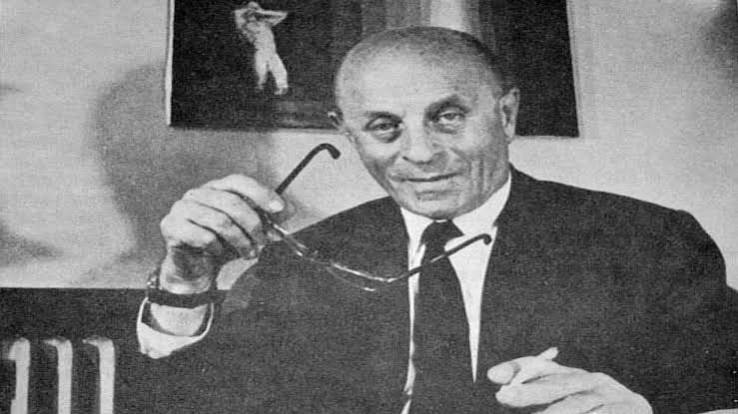
Every time you click a ballpoint pen, you’re using a design that changed the world—but the name behind it is barely a footnote. László Bíró, a Hungarian journalist with no formal engineering training, invented the ballpoint in the 1930s after getting fed up with fountain pens that smeared, leaked, and needed constant refilling. His solution was so simple and effective that it’s still the basis for billions of pens produced every year, yet most people credit the brand, not the man.
Bíró’s story is not just about a clever mechanism. It’s about how a practical problem—seen through the eyes of a journalist—led to an invention that transformed writing. It’s also a story of fleeing Nazi persecution, rebuilding a life in Argentina, and watching a giant corporation turn his invention into a global commodity while his own name faded. Here’s how a frustrated writer became one of the most influential inventors of the 20th century.
The Problem with Fountain Pens
Before the ballpoint, writing was a messy affair. Fountain pens were the standard, but they had a host of problems. They required frequent refilling from ink bottles, used water-based ink that smeared easily, and were notorious for leaking and blotting. For a journalist like László Bíró, this was a daily frustration. He’d be in the middle of taking notes, and the ink would blob, or the pen would run dry, or—if he was writing on a moving train—the ink would spill everywhere.
Bíró wasn’t an engineer. He was a journalist, and he’d also worked as a hypnotist in his youth. But he had a keen eye for observation and a mind that connected dots. One day, he noticed something about the ink used in newspaper printing presses. It was thick, viscous, and dried almost instantly—no smudging. The problem was that this ink was too thick to flow through a fountain pen nib. It would clog instantly.
But what if you could use a different mechanism to get that thick ink onto paper?
The solution came from an unlikely source: a ball bearing rolling through a puddle. Bíró reportedly saw a ball bearing roll through a puddle, leaving a trail of water behind it. He realized that a similar ball-and-socket mechanism could pick up thick ink from a reservoir and roll it onto paper, leaving a clean, even line. That’s the eureka moment—not a lab experiment, but a simple observation of how a ball rolls.
The Invention and the Brothers
Bíró teamed up with his brother György, who was a chemist. Together, they developed a prototype. The pen had a tiny ball at the tip that rotated as you wrote, picking up ink from a cartridge and transferring it to the paper. The ink was a special formula—based on the fast-drying printing ink—that was viscous enough to stay in the cartridge but thin enough to roll off the ball.
The first prototype was demonstrated at the Budapest International Fair in 1931, but it wasn’t until 1938 that Bíró filed a patent—first in Hungary, then in Britain. The patent described the ball-and-socket mechanism, which was the key innovation. The design was solid, but there were still bugs to work out. The ball had to be perfectly smooth, and the ink had to be just right.
Then the war changed everything.
Fleeing Hitler, Finding Argentina
László Bíró was Jewish, and as Nazi persecution intensified in Europe, he and his brother fled Hungary in 1941. They eventually made their way to Argentina, where they found a business partner, Juan Jorge Meyne. Together, they started producing the pen commercially in 1943 under the brand name “Birome”—a combination of Bíró and Meyne.
The timing was perfect. The British government was looking for a pen that could work at high altitudes, where fountain pens leaked due to air pressure changes. They bought a license to produce Bíró’s pens for Royal Air Force pilots. The ballpoint worked flawlessly at 30,000 feet, and this wartime use proved its reliability.
The Bic Empire and the $2 Million Mistake
In 1945, Bíró sold his patent to Marcel Bich, a French manufacturer, for $2 million. At the time, that was a fortune—but it would turn out to be a fraction of what the ballpoint was worth. Bich refined the manufacturing process, making the pens cheaper and more reliable. He marketed them as “Bic” pens, and by the 1950s, they were everywhere.
Bíró’s name lived on in the word “biro,” which became a generic term for ballpoint pens in the UK and Commonwealth, much like “Kleenex” or “Xerox.” But the man himself was largely forgotten. Bich became a billionaire; Bíró lived modestly in Argentina until his death in 1985.
Why did Bíró sell so cheap? He wasn’t a businessman. He was an inventor who wanted to see his creation succeed, and Bich had the manufacturing and marketing muscle to make that happen. The sale was a strategic decision, but it also meant Bíró didn’t share in the massive profits that followed.
A Journalist’s Legacy
Bíró’s story challenges the stereotype of the inventor as a lab-coated scientist. He was a writer who solved a problem he faced every day. That’s a powerful reminder that innovation can come from anyone who’s willing to look closely at a problem and think creatively.
His journey also highlights the role of immigrants in innovation. Bíró fled fascism, lost his homeland, and rebuilt his life in Argentina, where he made his most significant contribution. He became a naturalized Argentine citizen and died there in 1985, far from the Hungarian city of his birth.
Today, the ballpoint is the most common writing instrument in the world. Billions are produced every year. And while we might say “Bic” or “biro,” we’re really using Bíró’s invention. His name may not be on the label, but his idea is in every click.
László Bíró didn’t just invent a pen—he solved a problem that had plagued writers for decades. His story is a reminder that great ideas can come from anyone, and that the most transformative inventions often arise from the most ordinary frustrations. Next time you pick up a ballpoint, remember the journalist who saw a ball rolling through a puddle and changed the world.
Summary
- László Bíró, a Hungarian journalist, invented the ballpoint pen in 1938 after getting frustrated with fountain pens that smeared and leaked.
- His key insight came from observing a ball bearing rolling through a puddle, which inspired the ball-and-socket mechanism.
- He fled Nazi persecution in 1941 and settled in Argentina, where he produced the pens under the brand “Birome” with partner Juan Jorge Meyne.
- The British Royal Air Force used his pens during WWII because they worked at high altitudes.
- Bíró sold his patent to Marcel Bich for $2 million in 1945; Bich’s company, Bic, made billions while Bíró’s name faded.
FAQ
Q: What inspired László Bíró to invent the ballpoint pen?
A: Bíró was a journalist who was frustrated by fountain pens that smeared, leaked, and needed frequent refilling. He noticed that newspaper printing ink dried quickly and didn’t smear, and he got the idea for a ball-and-socket mechanism from watching a ball bearing roll through a puddle.
Q: How does a ballpoint pen work?
A: A ballpoint pen uses a tiny rotating ball at the tip. As you write, the ball picks up viscous ink from a cartridge and rolls it onto the paper, leaving a clean, even line. The ink is thick enough to stay in the cartridge but thin enough to flow around the ball.
Q: Why is the ballpoint pen sometimes called a “biro”?
A: “Biro” became a genericized trademark in the UK and many Commonwealth countries, similar to “Kleenex” or “Xerox.” It comes from Bíró’s name, even though the brand “Bic” is more commonly known today.
Q: Did Bíró become rich from his invention?
A: He sold the patent to Marcel Bich for $2 million in 1945, which was a lot of money then, but far less than what Bic earned. Bich became a billionaire, while Bíró lived modestly.
Q: What was Bíró’s background before inventing the pen?
A: Bíró was a journalist and also worked as a hypnotist in his youth. He had no formal engineering or chemistry training, but his brother György, a chemist, helped develop the ink.
Leave a Reply