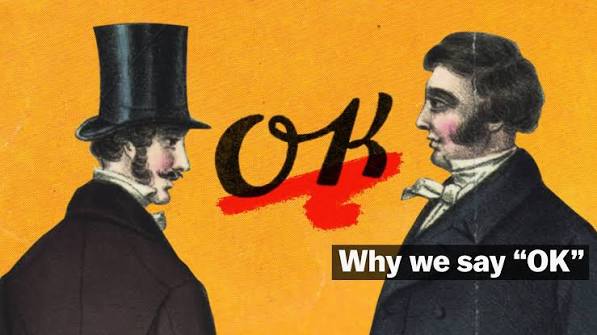
On March 23, 1839, a Boston newspaper printed a tiny joke that would outlive every political slogan, every internet meme, and every catchphrase of its era. The joke was ‘o.k.’—a playful abbreviation for ‘oll korrect,’ a deliberately misspelled ‘all correct.’ No one laughed for long; the joke itself was forgettable. But the two letters stuck around, spread across continents, and became the most universally understood word on Earth.
Today, ‘OK’ is spoken or recognized by roughly 90% of the world’s population, according to linguist Allan Metcalf, author of ‘OK: The Improbable Story of America’s Greatest Word.’ It has been borrowed into Japanese, Spanish, Arabic, Hindi, and dozens of other languages. It works as a noun, a verb, an adjective, an adverb, and an interjection. It can mean ‘fine,’ ‘I understand,’ ‘let’s go,’ or simply ‘I’m still here.’
How did a misspelled joke from 1839 conquer the globe? The answer involves a failed presidential campaign, the telegraph, and a linguistic perfect storm that made ‘OK’ the most successful word ever invented.
A Joke Born in the Penny Press
The 1830s were a wild time for American English. The young nation was forging its own identity, and Boston and New York journalists were at the center of a linguistic playground. They invented a fad of playful abbreviations and intentional misspellings—a 19th-century version of internet slang. ‘O.W.’ stood for ‘oll wright’ (all right), ‘N.C.’ meant ’nuff ced’ (enough said), and ‘K.Y.’ was ‘know yuse’ (no use). Most of these died within months.
But ‘o.k.’ survived. Why? It had two things going for it: it was short, and it was funny. The abbreviation appeared in a satirical article in the Boston Morning Post, and readers got the joke. It was a small, clever wink at the absurdity of taking yourself too seriously.
The Campaign That Launched a Word
‘OK’ might have stayed a niche joke if not for a lucky coincidence in 1840. Martin Van Buren, the sitting president, was running for re-election. His opponents called him ‘Old Kinderhook,’ after his hometown in New York. His campaign seized on the nickname and turned it into a slogan: ‘Vote for OK.’
The slogan was printed on banners, chanted at rallies, and plastered in newspapers. It was one of the first examples of political branding in a mass media age—a catchy, meme-like hook designed to stick. Van Buren lost the election to William Henry Harrison, but ‘OK’ won a permanent place in the American lexicon. The word had gone from a niche joke to a national catchphrase in under a year.
The Telegraph Made It Official
If the campaign made ‘OK’ famous, the telegraph made it essential. In the 1840s and 1850s, telegraph operators needed a quick, unambiguous way to acknowledge messages. ‘OK’ was perfect: two letters, easy to tap in Morse code, and universally understood. It became the standard acknowledgment on transmission lines, and later, a prosign for ‘end of message.’
The telegraph trained a generation of operators—and the businesses that used them—to rely on ‘OK.’ When the typewriter arrived, ‘OK’ was one of the first words taught in typing classes. When early computers needed a default button, ‘OK’ was there. Each new technology picked up the word and carried it forward.
Why ‘OK’ Won
Linguists have spent decades trying to explain why ‘OK’ beat out every other slang term of its era. The answer is a perfect storm of phonetics, visual clarity, and semantic flexibility.
Phonetically, ‘OK’ is two short, easy sounds that work across almost all language systems. The ‘oh’ and the ‘kay’ are distinct and simple to pronounce, whether you speak English, Japanese, or Swahili. Visually, the two letters are clear and easy to read, even in poor handwriting or on a flickering screen.
But the real genius of ‘OK’ is its flexibility. It can mean approval (‘That’s OK’), acknowledgment (‘OK, I heard you’), agreement (‘OK, let’s do it’), or understanding (‘OK, I get it’). It can be a noun (‘I got the OK’), a verb (‘She OK’d the plan’), an adjective (‘It’s OK’), an adverb (‘He did OK’), or an interjection (‘OK, let’s go!’). It’s a pragmatic chameleon, adapting to almost any situation.
The Global Export
‘OK’ didn’t just spread—it conquered. American media, technology, and business carried it overseas in the 20th century. Hollywood movies, the internet, and global corporations needed a word that meant ‘yes, fine, understood’ in any context. ‘OK’ fit the bill.
In Japan, it became オーケー (ōkē), used as a polite acknowledgment in customer service. In Spain and Latin America, it’s ‘okey,’ sometimes with a slightly dismissive edge. In Arabic, it’s أوكي (ōkay), and in Hindi, ओके (oke). In many languages, ‘OK’ is a loanword that needs no translation—it’s simply understood.
‘OK’ is also classless, ageless, and borderless. Unlike ‘cool’ or ‘dude,’ it’s not tied to a subculture or a generation. A toddler in Tokyo, a CEO in São Paulo, and a farmer in rural Kenya all recognize it. That universality is why Allan Metcalf calls it ‘the most successful word ever invented.’
A Word for the Ages
‘OK’ has outlived the abbreviations that inspired it, the politicians who popularized it, and the technologies that entrenched it. It’s a small word with a big story—a story that starts with a misspelled joke in a Boston newspaper and ends with a word spoken by billions.
Next time you type ‘OK’ into a chat box or nod and say ‘OK’ in a meeting, remember: you’re using a piece of American history that conquered the world.
The story of ‘OK’ is a reminder that language is alive—it grows, spreads, and adapts in ways no one can predict. A joke from 1839 became the world’s most global word, not because it was profound, but because it was useful. And that utility has made it immortal.
Summary
- ‘OK’ originated as a humorous abbreviation for ‘oll korrect’ (a misspelling of ‘all correct’) in a Boston newspaper in 1839.
- Martin Van Buren’s 1840 presidential campaign used ‘OK’ as a slogan, giving it national exposure.
- The telegraph cemented ‘OK’ as a standard acknowledgment, and later technologies (typewriters, computers) reinforced it.
- ‘OK’ is now recognized by about 90% of the world’s population, making it the most widely understood word on Earth.
- Its success is due to phonetic simplicity, visual clarity, and semantic flexibility—it can mean many things in many contexts.
FAQ
Q: When was the first recorded use of ‘OK’?
A: The first recorded use was in the Boston Morning Post on March 23, 1839, as ‘o.k.’ in a satirical article.
Q: What does ‘OK’ originally stand for?
A: It stands for ‘oll korrect,’ a deliberate misspelling of ‘all correct’ that was part of a 1830s fad of playful abbreviations.
Q: Why did ‘OK’ survive while other abbreviations from that era died?
A: ‘OK’ had phonetic simplicity, visual clarity, and semantic flexibility. It was easy to say, easy to write, and could mean many things, making it more useful than its peers.
Q: How did the telegraph contribute to the spread of ‘OK’?
A: Telegraph operators needed a quick, unambiguous acknowledgment, and ‘OK’ was short and easy to send in Morse code. It became the standard, training a generation to use it.
Q: Is ‘OK’ used in other languages?
A: Yes, it’s borrowed into nearly every major language, including Japanese, Spanish, Arabic, and Hindi, often as a loanword that needs no translation.
Leave a Reply