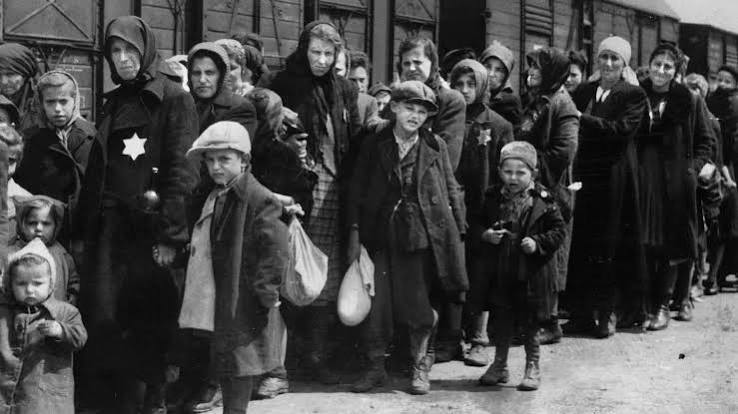
In the summer of 1944, American B-17 bombers roared over the Polish countryside, their bomb bays opening over the I.G. Farben synthetic fuel plant at Monowitz, just five miles from the gas chambers of Auschwitz-Birkenau. The bombs shook the earth, and prisoners in the camp felt the vibrations. Some dared to hope that the next wave would hit the crematoria. It never did.
This is the story of a moral and military quandary that has haunted historians for decades: why did the Allies, who had the planes, the intelligence, and the proximity, choose not to bomb Auschwitz? The answers are tangled in strategy, bureaucracy, and the brutal calculus of war, but they begin with a simple fact: the Allies knew, and they did not act.
The Knowledge They Had
By mid-1944, the Allies possessed irrefutable evidence of the horrors at Auschwitz. The most detailed account came from two escapees, Rudolf Vrba and Alfred Wetzler, who in April 1944 produced a report describing the camp’s layout, the gas chambers, and the crematoria in chilling detail. The report reached London and Washington within weeks. Polish underground intelligence had been sending similar warnings since 1942. Aerial reconnaissance photographs taken during the Monowitz raids even captured the gas chambers and crematoria, though interpreters at the time failed to identify them.
Yet knowledge did not translate into action. When Jewish organizations formally petitioned the U.S. and British governments in May 1944 to bomb Auschwitz or the railway lines leading to it, the requests were met with a wall of official reluctance. The U.S. War Department called the idea “impracticable” and warned it would require “the diversion of considerable air support essential for the success of our forces elsewhere.” Assistant Secretary of War John J. McCloy added a chilling caveat: bombing might “provoke even more vindictive action by the Germans.”
The Strategic Priorities of 1944
The summer of 1944 was not a time of slack for Allied air power. D-Day had just launched on June 6, and the Normandy campaign was consuming vast resources. The strategic bombing offensive—Operation Pointblank—was hammering German oil production, aircraft factories, and transportation networks. Every bomber was assigned to a target that would shorten the war. The prevailing doctrine, articulated by Churchill and Roosevelt, was that the fastest way to save the victims was to win the war outright. Diverting planes to Auschwitz, the argument went, would not end the killing—it might even prolong it.
This was not a decision made lightly, but it was made firmly. In July 1944, McCloy wrote again, repeating that bombing Auschwitz “might provoke even more vindictive action by the Germans.” The requests were denied, and no serious military planning was ever undertaken.
What the Bombers Could Have Done
The counterargument is stark: Allied aircraft were already flying over the area. On April 4, 1944, U.S. planes bombed the I.G. Farben plant at Monowitz, and on August 20, 1944, 127 B-17 Flying Fortresses dropped their loads on the same target, with bombs landing within two miles of the gas chambers. A raid on September 13 caused bombs to fall on Auschwitz I, killing both SS personnel and prisoners. These raids proved that the Allies had the capability to reach the camp complex. The moral question is whether they had the will.
Proponents of bombing argued that even an imprecise raid could disrupt the killing machinery, destroy the rail lines, or at least demonstrate Allied resolve. Rail lines, however, were a weak point in the argument—German engineers could repair them within days. The gas chambers themselves were harder to hit without precision, and a direct hit risked killing the very prisoners the Allies sought to save.
The Soviet Factor and the Politics of Rescue
Another layer of complexity was the geopolitical reality. Auschwitz lay in the Soviet zone of operations. The Western Allies argued that the Red Army was best positioned to liberate the camp, which it did on January 27, 1945. Stalin was never consulted about bombing requests, and Soviet cooperation was never explored. Some historians suggest that the Western Allies were reluctant to expend resources in a theater where the Soviets would claim the credit.
But the deeper issue was the “rescue versus victory” debate. Jewish organizations and some politicians argued that targeted rescue operations could save lives without delaying victory. The Allies countered that every bomb diverted to Auschwitz was a bomb not dropped on a German factory or a V-2 launch site. In the brutal arithmetic of war, the lives of the prisoners were weighed against the lives of soldiers and civilians across Europe.
The Aftermath and the Enduring Question
In November 1944, Himmler ordered the cessation of gassings, and the crematoria were dismantled as the Red Army advanced. Auschwitz was liberated on January 27, 1945. The Allies had not bombed the camp, and the debate over why has never fully subsided. Historians have offered many explanations—military impracticality, strategic priorities, bureaucratic inertia, and even indifference. But the fact remains that the Allies had the intelligence, the aircraft, and the proximity. They chose not to act, and that choice has become a permanent scar on the moral history of World War II.
The question of why the Allies did not bomb Auschwitz is not a comfortable one. It forces us to confront the limits of military power in the face of human evil, and the uncomfortable reality that even the most righteous war has its blind spots. The bombs that fell on Monowitz were aimed at German industry, not at the machinery of murder. In the end, the answer is a complex web of strategic calculation, political hesitation, and a failure of moral imagination that continues to resonate today.
Summary
- The Allies had credible intelligence about Auschwitz as early as 1942, and detailed reports by 1944, yet no bombing mission was ever ordered.
- Requests from Jewish organizations to bomb the camp or rail lines were formally rejected by the U.S. War Department in 1944 as “impracticable” and a diversion of resources.
- Allied aircraft bombed the nearby I.G. Farben plant at Monowitz multiple times in 1944, proving the area was within reach.
- The official rationale was that bombing would not shorten the war and might provoke even more vindictive German actions.
- The debate remains a moral flashpoint, highlighting the tension between military priorities and humanitarian intervention.
FAQ
Q: Was there ever a formal plan to bomb Auschwitz?
A: No. Despite requests from Jewish organizations, the U.S. War Department and British government never authorized or planned a bombing mission against the camp complex or its rail infrastructure.
Q: How close did Allied bombs come to the gas chambers?
A: During a raid on August 20, 1944, bombs landed within two miles of the gas chambers at Birkenau. Another raid on September 13 caused bombs to fall on Auschwitz I, but these were accidental and not aimed at the camp.
Q: Were the railway lines to Auschwitz ever bombed?
A: No. The Allies never targeted the rail lines, despite arguments that disrupting the deportations of Hungarian Jews in mid-1944 could have saved lives.
Q: Did the Allies have enough information to act?
A: Yes. The Vrba-Wetzler Report, Polish underground intelligence, and aerial reconnaissance provided detailed knowledge of the camp’s layout and the mass murders.
Q: What was the main reason for not bombing?
A: The official position was that bombing was “impracticable” and would divert resources from the strategic bombing campaign aimed at winning the war. There was also concern about precision and the risk of killing prisoners.
Leave a Reply