On May 5, 1945, six people died in a quiet forest near Bly, Oregon. They weren’t soldiers on a battlefield; they were a minister’s wife and five children on a Sunday school picnic. The weapon that killed them had traveled over 5,000 miles, carried by the wind, launched from a secret Japanese laboratory. It was a balloon 33 feet wide, made of paper, and armed with explosives.
This was the Fu-Go campaign, Japan’s only attack on the American mainland during World War II. Over 9,000 balloon bombs were launched across the Pacific in the winter of 1944-45. They were designed to burn down America’s forests, sow panic, and pull military resources away from the front lines. But a combination of bad weather, luck, and a government-imposed news blackout kept the threat hidden from the public until it was too late for a handful of civilians.
The Paper Weapon
Japan’s balloon bombs were a feat of engineering, built from humble materials. Each balloon was made of four to five layers of washi, a paper crafted from mulberry bark, glued together with konnyaku, a paste derived from devil’s tongue root. The result was a lightweight but durable envelope that could hold about 19,000 cubic feet of hydrogen. At launch, the balloon stood three stories tall.
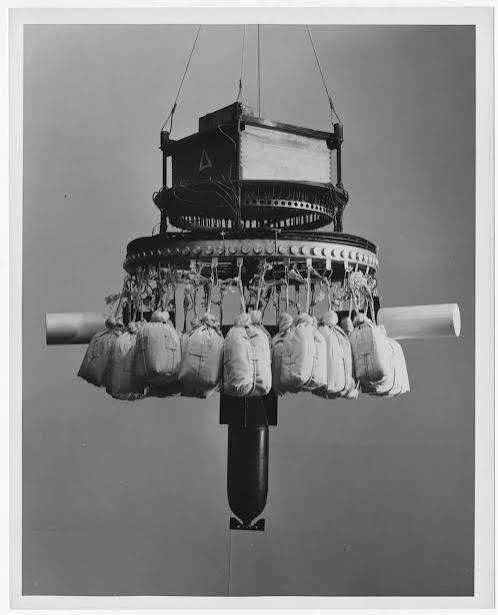
Suspended from the balloon was a payload of 33 to 36 pounds: thermite incendiary bombs to start fires, a single anti-personnel fragmentation bomb with a delayed fuse, and sandbags for ballast. An altimeter mechanism released the sandbags as the balloon lost altitude, keeping it cruising at around 30,000 feet high enough to catch the jet stream, a wind current that Japanese meteorologists had discovered could carry objects across the Pacific in 30 to 60 hours.
The program, developed by the Imperial Japanese Army’s Noborito Research Institute a secret weapons lab was a direct response to the Doolittle Raid of April 1942. That bombing of Tokyo had shown Japan’s vulnerability, and the military sought both revenge and a way to stretch American resources. Major General Sueyoshi Kusaba oversaw the effort, and by November 1944, launch sites on Honshu were sending balloons skyward.
The Silent Crossing
On November 3, 1944, the first balloons were launched. The next day, a U.S. Navy patrol spotted something unusual off the coast of San Pedro, California. It was the first confirmed sighting, but it would be months before the military understood what they were dealing with.
Over the next six months, roughly 9,300 balloons were launched from three sites: Ōtsu, Ichinomiya, and Nakoso. The peak came in March 1945, with about 1,400 balloons sent off in a single month. Not all made the journey, but an estimated 340 to 370 reached North America, with some reports suggesting the number could be as high as 1,000.
The balloons landed everywhere from the Pacific Northwest to the Midwest, and as far east as Michigan. They were found in fields, forests, and even on a farm in Iowa. One balloon caused a brief scare when it tangled in power lines in Washington state, knocking out electricity for a few hours. But the intended damage massive forest fires never materialized. The winter of 1944–45 was unusually wet, and the remote, damp forests where most balloons landed were poor fuel for thermite.
The Silence Campaign
The U.S. military quickly identified the balloons’ origin through an unlikely clue: the sand in the ballast bags contained diatom species unique to Japanese beaches. That evidence, along with serial numbers on bomb components, confirmed the threat. But rather than alert the public, the government did the opposite.
The Office of Censorship and the War Department asked newspapers, radio stations, and broadcasters to keep all balloon incidents quiet. The rationale was simple: officials feared that public reports would cause panic, give the Japanese valuable intelligence on where balloons landed, and encourage them to refine the program. The media largely complied, making this one of the most successful censorship campaigns of the war.
In the background, the military took action. Fighter aircraft were scrambled to intercept balloons, a program called Project Sunset, but the balloons flew too high and too fast for most planes. Radar stations were upgraded, and a network of ground observers was established. Still, the balloons kept coming, and the silence held.
The silence had a deadly cost. On May 5, 1945, Reverend Archie Mitchell and his wife Elsie took a group of children from their church on a picnic near Bly, Oregon. While the reverend was parking the car, the children ran ahead into the woods and found a strange object lying on the ground—a balloon bomb that had landed days earlier. When they dragged it, the anti-personnel bomb exploded. Elsie Mitchell, 26 and pregnant, was killed along with five children aged 11 to 14. They were the only casualties of the balloon campaign on American soil.
The End and the Aftermath
The Bly tragedy broke the silence. The military, fearing more deaths, finally lifted the news blackout, and the story of the balloon bombs became public. But by then, the campaign was already winding down. Japan launched its last balloons in April 1945, its supply of paper and hydrogen exhausted. The program had failed in its primary goals: it started no significant fires and caused no military disruption. It did, however, achieve a kind of psychological effect—after the war, the U.S. public learned that their home front had not been entirely safe.
The declassification in 1947 revealed the full scope of the operation. In Japan, the Noborito Research Institute’s work was largely forgotten, obscured by the larger narrative of the war. But for the families of the Bly victims, the memory remained. Today, a stone monument at the site of the explosion marks the spot where six civilians died, the only deaths from enemy action on the U.S. mainland during World War II.
The balloon bombs were a desperate gamble, a weapon of limited technology and even more limited results. They were a reminder that even in a world war, the home front could be a target—and that sometimes, the most dangerous weapons are the ones that arrive silently, carried by the wind.
The Fu-Go campaign was a failure in military terms, but its legacy is a cautionary tale about the unforeseen consequences of warfare. Japan’s paper balloons flew farther than any other weapon of their kind, yet they caused no fires, no panic, and no strategic diversion. Instead, they left a small, quiet tragedy in an Oregon forest—a reminder that even the most ambitious plans can end in unexpected, heartbreaking ways.
Summary
- Japan launched over 9,000 balloon bombs (Fu-Go) from November 1944 to April 1945, aiming to start forest fires and disrupt the U.S. home front.
- The balloons were made of paper and glue, carried thermite and anti-personnel bombs, and rode the jet stream across the Pacific in 30–60 hours.
- The U.S. military imposed a news blackout on all balloon incidents to prevent panic and deny Japan intelligence, and the media largely complied.
- The only casualties were six civilians—Elsie Mitchell and five children—killed on May 5, 1945, near Bly, Oregon.
- The campaign failed to cause any significant damage, but it remains the only enemy attack on the U.S. mainland during WWII to result in deaths.
FAQ
Q: How many balloon bombs reached the United States?
A: There were 340–370 documented incidents, but some estimates suggest up to 1,000 balloons may have arrived, with many going unreported or undiscovered.
Q: What were the balloons made of?
A: Each balloon was constructed from four to five layers of washi (mulberry bark paper) glued with konnyaku (devil’s tongue root paste). They were about 33 feet in diameter and filled with hydrogen.
Q: Why did the U.S. government hide the balloon attacks?
A: Officials feared public knowledge would cause panic, provide Japan with valuable intelligence on landing sites, and encourage improvements to the program. The media voluntarily complied with a news blackout.
Q: Did the balloon bombs cause any major fires?
A: No. Despite the intent, the bombs caused negligible damage, largely due to wet winter conditions and the remote, forested areas where most landed.
Q: When did the public learn about the balloon bombs?
A: The full story was declassified in 1947, though the Bly, Oregon deaths in May 1945 forced the military to partially lift the news blackout.
Leave a Reply