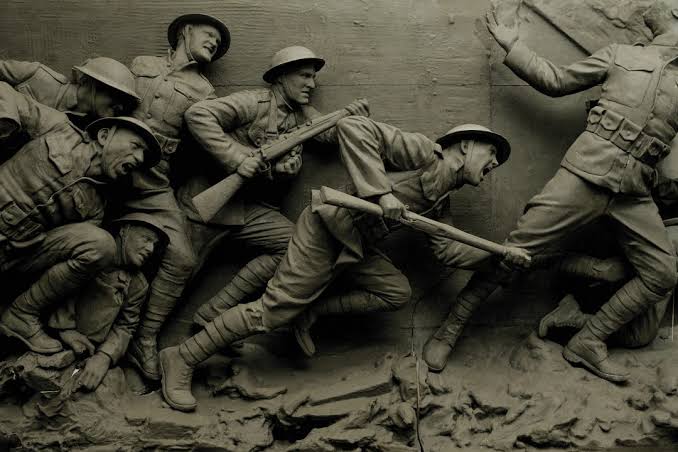
In 1914, the United States was a nation at peace, its army smaller than Bulgaria’s, its federal government a distant presence in most citizens’ lives. Four years later, it had become the world’s leading creditor, with a federal budget twenty-five times larger and a government that reached into factories, farms, and even private speech. The transformation was not gradual; it was compressed into nineteen months of active belligerency that changed the country’s role in the world and the relationship between Washington and its citizens.
The war’s legacy is often overshadowed by the Second World War, but the first global conflict was the crucible in which modern America was forged. From the Great Migration to the 19th Amendment, from the income tax to the surveillance state, the war’s effects are still visible today. This is the story of how a country that wanted nothing to do with Europe’s quarrels became a global power—and what it cost.
A Nation Reluctant to Fight
When war erupted in Europe in August 1914, President Woodrow Wilson declared neutrality, a stance that reflected both tradition and pragmatism. The United States had a standing army of roughly 100,000 men—smaller than most European powers—and a foreign policy rooted in George Washington’s warning against entangling alliances. German-Americans numbered about 8 million, and Irish-Americans were often hostile to Britain, making any pro-Allied stance politically dangerous.
But neutrality proved difficult to maintain. Germany’s unrestricted submarine warfare, which sank the Lusitania in May 1915 and killed 128 Americans, tested American patience. The Zimmermann Telegram of January 1917, in which Germany proposed an alliance with Mexico against the U.S., was the final straw. By then, American banks had lent $2.3 billion to the Allies and only $27 million to Germany; a German victory would have meant default. On April 6, 1917, Congress declared war.
The Machinery of War
The U.S. had only 19 months to mobilize, but it did so with astonishing speed. Over 4.7 million Americans served in the armed forces, and about 2 million reached France. The Selective Service Act of 1917 drafted men from all walks of life, creating a mass army for the first time since the Civil War.
The war effort demanded more than soldiers; it demanded a reorganization of the economy. The War Industries Board coordinated production, the Food Administration under Herbert Hoover controlled prices and rationing, and the Railroad Administration temporarily nationalized the railroads. The federal budget ballooned from $725 million in 1914 to $18.5 billion in 1919. The top income tax rate soared from 7% to 77% under the War Revenue Act of 1917 and the Revenue Act of 1918.
This expansion of federal power was unprecedented. The government became the largest purchaser of goods in the nation, and it used that leverage to set wages, working conditions, and even prices. The National War Labor Board mediated disputes, often favoring unions in exchange for no-strike pledges. For the first time, the federal government was a direct presence in the daily lives of ordinary workers.
The Dark Side of Patriotism
The war also brought a crackdown on dissent. The Espionage Act of 1917 and the Sedition Act of 1918 criminalized speech that interfered with the war effort. Over 2,000 people were prosecuted, including Eugene V. Debs, the Socialist Party leader, who was sentenced to ten years in prison for an anti-war speech. The Committee on Public Information, headed by journalist George Creel, churned out propaganda that demonized the enemy and encouraged vigilance against spies and saboteurs.
This climate of suspicion spilled into the postwar period. The Red Scare of 1919–1920, marked by the Palmer Raids and the deportation of thousands of suspected radicals, was a direct legacy of wartime anti-dissent legislation. The war had normalized the idea that the government could restrict civil liberties in the name of national security—a tension that persists to this day.
The Great Migration and the Changing Face of America
The war also set in motion demographic changes that reshaped the country. European immigration, which had averaged 1.2 million people a year before the war, ground to a halt as the conflict consumed the continent. At the same time, the demand for industrial labor in northern cities drew African Americans from the South in what became known as the Great Migration. Between 1916 and 1919, approximately 500,000 African Americans moved north, seeking jobs in steel mills, packinghouses, and factories.
This migration had profound social and political consequences. It created new urban communities, shifted political power in northern cities, and laid the groundwork for the civil rights movements of the twentieth century. The war also opened new opportunities for women, whose workforce participation increased by about 25%. Women filled jobs left vacant by men and took on roles in industry, government, and the military. The war effort gave a powerful boost to the suffrage movement, and the 19th Amendment, granting women the right to vote, was ratified in August 1920.
A Debtor No More
The economic transformation was equally dramatic. U.S. GDP grew from roughly $38 billion in 1914 to $78 billion in 1918. The nation shifted from a debtor country owing $3.7 billion to foreign investors to a creditor country owed $3.5 billion by foreign governments. The war had made the United States the world’s banker, a position it would not relinquish.
But the cost was staggering. About 116,500 American military personnel died—53,000 in combat, the rest from disease, especially the 1918 influenza pandemic. The war also left a bitter political legacy. President Wilson’s dream of joining the League of Nations was dashed when the Senate refused to ratify the Treaty of Versailles in 1919 and 1920. The United States retreated into isolationism, but it had already been transformed.
The War’s Lasting Legacy
The United States entered World War I as a peripheral power and emerged as a global one. The war created the modern administrative state, with federal agencies that reached into every corner of the economy. It accelerated the Great Migration, expanded women’s rights, and made the income tax a permanent feature of American life.
It also left a troubling legacy of government surveillance and suppression of dissent. The Espionage and Sedition Acts set a precedent for restricting civil liberties in times of crisis, a precedent that would be invoked again in the Second World War and beyond.
The war’s significance is not just a matter of battles won or lost. It was the moment when the United States stopped being a collection of states and became a nation, with a centralized government, a powerful military, and a permanent global role. The changes were so profound that they still shape American life a century later.
World War I was a catalyst that transformed the United States from a debtor nation with a small federal government into a creditor nation with a powerful administrative state. It ended American isolationism, accelerated social changes like the Great Migration and women’s suffrage, and left a legacy of federal power and civil liberties tensions that continue to define the nation. The war’s significance lies not in the battles, but in the remaking of America itself.
Summary
- The U.S. shifted from neutrality to full belligerency in 19 months, with over 4.7 million serving and 116,500 deaths.
- The federal budget grew 25-fold, and the top income tax rate rose from 7% to 77%, funding a new administrative state.
- The Great Migration moved 500,000 African Americans north, and women’s workforce participation rose 25%, boosting the suffrage movement.
- The Espionage and Sedition Acts criminalized dissent, leading to over 2,000 prosecutions and setting a precedent for later restrictions.
- The U.S. became a creditor nation, but rejected the Treaty of Versailles and the League of Nations, retreating into isolationism.
FAQ
Q: How long was the United States involved in World War I?
A: The U.S. was an active belligerent for about 19 months, from April 6, 1917, to November 11, 1918.
Q: What was the Great Migration during WWI?
A: It was the movement of approximately 500,000 African Americans from the South to northern industrial cities between 1916 and 1919, driven by labor shortages and wartime industrial demand.
Q: How did WWI affect women’s suffrage?
A: The war effort, which saw women’s workforce participation increase by about 25%, is widely credited as a catalyst for the ratification of the 19th Amendment in August 1920.
Q: What were the Espionage and Sedition Acts?
A: They were federal laws enacted in 1917 and 1918 that criminalized dissent against the war, leading to over 2,000 prosecutions, including that of Eugene V. Debs.
Q: Why did the U.S. not join the League of Nations?
A: The Senate rejected the Treaty of Versailles in November 1919 and March 1920, largely due to concerns about sovereignty and partisan politics, despite President Wilson’s advocacy.
Leave a Reply