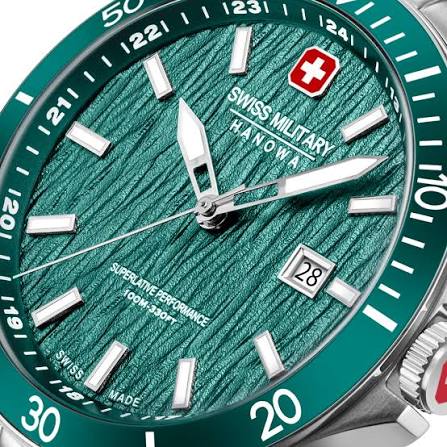
In 1942, a tall American walked into the Hotel Bellevue in Bern, Switzerland, carrying a briefcase of diplomatic cables and a cover story that would hold for three years. Allen Dulles, the OSS station chief, was not just another diplomat. He was the tip of an intelligence spear that relied on a simple, centuries-old Swiss invention: the watch.
Switzerland’s watch industry, born in the 16th century and industrialized in the Jura Mountains, had become the world’s primary source of precision timepieces. But those watches were more than just instruments of time. They were the backbone of a neutral infrastructure that allowed spies, couriers, and money to move across a continent at war. This is the story of how Swiss neutrality, forged in 1815, became a lifeline for intelligence operations.
The Neutrality That Made It Possible
Switzerland’s neutrality was not passive. It was armed, defended by a citizen militia that made invasion costly. The Congress of Vienna in 1815 formalized this status, and the Treaty of Paris reaffirmed it. Geographically, Switzerland sat at the crossroads of Europe, bordered by Germany, France, Italy, and Austria. This position made it a natural listening post, a place where spies could meet, and a transit point for goods and information.
The Hague Conventions permitted trade in civilian goods, even during wartime. Watches were civilian goods, though they had obvious military applications. Navigation, artillery timing, and aviation coordination all demanded precision timekeeping. Swiss watchmakers, with their decentralized network of workshops in the Jura, produced watches that were the most accurate in the world. Both Allied and Axis powers needed them.
The Watch Industry as Cover
The Swiss watch industry was not a single factory but a dense web of small workshops, each making a component. This decentralization made it nearly impossible for any power to control or disrupt the supply chain. It also created a perfect cover for intelligence operations. The constant movement of goods and personnel watch components, finished watches, salesmen, and couriers was normal. Swiss watch brands had agents and retailers worldwide, providing a legitimate network of contacts, shipments, and financial transactions.
Intelligence agencies piggybacked on this network. A courier carrying a diplomatic pouch could easily pass as a watch salesman. A dead drop could be hidden in a shipment of watch movements. The sheer volume of traffic made surveillance difficult.
Espionage in the Heart of Europe
During World War II, Switzerland was a hive of espionage. The OSS operated out of Bern, with Allen Dulles as station chief. Dulles worked openly under diplomatic cover, using Swiss neutrality as a base for operations into Nazi Germany and occupied Europe. His network included contacts in the German resistance, including the plotters of Operation Valkyrie.
The Germans were also active. The Abwehr and SD ran operations from Swiss cities. Both sides used Switzerland as a meeting ground, a place where spies could talk without fear of immediate arrest.
One of the most remarkable operations was the Lucy Ring, a Soviet spy network run by Rudolf Roessler, a German émigré. Roessler used Swiss-based couriers and communications to transmit German military secrets to Moscow. The information was so sensitive that it often arrived within hours of being decided in Berlin.
The Financial Complement
Swiss banking secrecy, codified in the 1934 Banking Act, complemented the watch trade. Both industries formed what intelligence services called a “neutral infrastructure.” Banks allowed spies to move and store funds discreetly. Watches provided cover. Together, they made Switzerland an indispensable hub.
In 1945, Operation Sunrise brought the war in Italy to an early end. Secret surrender negotiations between Allied forces and German commanders were facilitated through Swiss intermediaries in Lugano and Bern. The watch industry, with its reputation for precision and discretion, was the perfect metaphor for the operation.
The Cold War and Beyond
After 1945, Swiss neutrality continued to serve as a listening post. The CIA, the KGB, and other agencies used Geneva, Zurich, and Bern for meetings, dead drops, and signals intelligence. The Geneva Summit tradition, from 1955 to 1985, reflected Switzerland’s role as a neutral meeting ground.
The watch industry remained a multi-billion-dollar export business, but the “watch as cover” became largely historical. Intelligence operations shifted to electronic surveillance and financial intrigue.
In 2022, Switzerland faced a new challenge. When Western nations imposed sanctions on Russia, Switzerland agreed to adopt them, breaking with strict neutrality. The move highlighted the tension between neutrality and the demands of the West. The watch industry, once a lifeline for intelligence, now faces a world where neutrality itself is under pressure.
The Swiss watch was never just a timepiece. It was a tool of statecraft, a cover for spies, and a symbol of a neutrality that made intelligence operations possible. From the Jura workshops to the banks of Geneva, Switzerland’s neutral infrastructure served as a lifeline for secrets in a world at war. Today, as neutrality is tested anew, the legacy of the watch endures—a reminder that precision and discretion can be powerful allies.
Summary
- Switzerland’s armed neutrality, formalized in 1815, made it a safe haven for spies and a crossroads for intelligence during both World Wars.
- The Swiss watch industry, with its decentralized workshops and global distribution, provided perfect cover for couriers, dead drops, and clandestine communications.
- Swiss banking secrecy complemented the watch trade, forming a “neutral infrastructure” that intelligence agencies exploited.
- Key operations like Allen Dulles’s OSS network, the Lucy Ring, and Operation Sunrise all relied on Swiss soil and Swiss discretion.
- The 2022 sanctions on Russia highlight the modern tension between neutrality and Western pressure, as the era of the watch as cover fades into history.
FAQ
Q: How did Swiss neutrality help intelligence operations during WWII?
A: Switzerland’s armed neutrality, recognized by international law, allowed it to trade with all belligerents. Its geographic position at the heart of Europe made it a natural meeting point for spies, and its diplomatic presence in Bern provided cover for intelligence officers like Allen Dulles.
Q: Why were Swiss watches so valuable for military purposes?
A: Swiss watches were the most accurate timepieces available. Military coordination, naval navigation, and artillery timing all depended on precise timekeeping, making Swiss exports strategically essential to both Allied and Axis powers.
Q: What role did the watch industry play as cover for spies?
A: The industry was decentralized, with hundreds of small workshops in the Jura Mountains. The constant movement of components, finished watches, and salesmen created a legitimate cover for couriers and dead drops. Global distribution networks offered a ready-made infrastructure for intelligence operations.
Q: How did Swiss banking secrecy complement the watch trade?
A: The 1934 Banking Act codified banking secrecy, allowing intelligence agencies to move and store funds discreetly. Together with the watch trade, it formed a “neutral infrastructure” that both Allied and Axis powers exploited.
Q: Is the watch industry still used as cover today?
A: Largely historical. Modern intelligence relies on electronic surveillance and financial networks. However, Switzerland remains a meeting ground for diplomats and spies, and the 2022 sanctions on Russia show the ongoing tension between neutrality and Western demands.
Leave a Reply