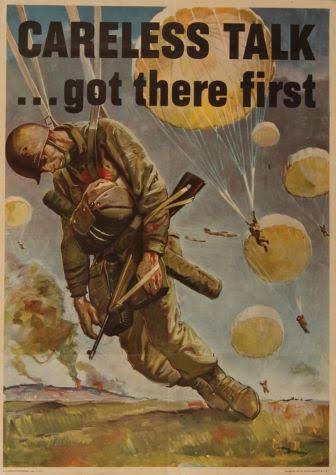
In the summer of 1942, a Chicago housewife named Margaret Jones received a letter from her son, a soldier stationed in the Pacific. He wrote about the heat, the mud, and the fear. But when she tried to share his words with her neighbor, she stopped herself. A poster on the wall of the post office reminded her: ‘Loose Lips Sink Ships.’ She said nothing.
That poster was one of thousands produced by the U.S. government’s Office of War Information (OWI), which, between 1941 and 1945, saturated American life with propaganda. It wasn’t just about selling war bonds or rationing sugar it was about psychologically reshaping a nation. The OWI and its private-sector partners used fear, guilt, and a relentless drumbeat of patriotic messaging to turn a reluctant public into a unified war machine. But the psychological cost on children, on minorities, on the very fabric of civic trust would linger long after the guns fell silent.
The Machinery of Persuasion
The United States didn’t invent propaganda in World War II. During World War I, the Committee on Public Information (CPI), led by George Creel, had pioneered mass-scale government messaging, using films, posters, and 75,000 volunteer speakers known as “Four Minute Men.” But the CPI’s excesses including outright lies about German atrocities sparked a public backlash, and it was dismantled in 1919. By the 1930s, Americans were deeply suspicious of propaganda, especially as Nazi Germany elevated it to a dark art.
So when war broke out in Europe, U.S. officials faced a dilemma. They knew they needed to rally public support, but they feared a cynical population would reject anything that smelled of manipulation. The solution, as historian Allan Winkler notes in The Politics of Propaganda, was to create an agency that would “tell the truth”—but strategically.
The Office of War Information, established in June 1942 under journalist Elmer Davis, walked that line. It produced more than 1,000 posters, 60 films, and countless radio scripts. It didn’t fabricate stories wholesale; it chose which facts to highlight and which to bury. Casualty figures were downplayed, setbacks in the Pacific were spun as “strategic withdrawals,” and the enemy was reduced to a caricature.
Fear, Guilt, and the Psychology of Control
The OWI’s methods were grounded in the emerging science of persuasion. Behavioral psychologist John B. Watson had already shown that fear and emotion could drive consumer behavior. The government, working with advertising executives through the War Advertising Council, applied those same principles to the war effort.
Fear was the sharpest tool. Posters depicted Japanese soldiers as subhuman “Japs” with clawed hands and bestial faces, and Germans as goose-stepping automatons. The threat of invasion was made visceral: “If you tell a friend, you might tell the enemy.” Atrocity stories, some true and some embellished, stoked a righteous anger.
But fear alone wasn’t enough. The OWI also wielded guilt. “Do with less—so they’ll have enough” shamed hoarders. “Someone talked!” posters accused the careless. Women were told that keeping a clean home and canning vegetables was a patriotic duty, and that any failure endangered the troops. Children were recruited into scrap drives and war stamp campaigns, their schoolrooms plastered with reminders that “Every Slip of the Tongue Can Help the Enemy.”
The result was a pervasive atmosphere of anxiety and obligation. A 1943 study by the American Psychological Association found that 40% of children surveyed reported fears of air raids and enemy invasion—fears that had no basis in reality for most of the country. Japanese American families, already facing internment, were simultaneously told to prove their loyalty through “voluntary” contributions to war bond drives.
The Cooperation of Hollywood and Madison Avenue
The OWI didn’t work alone. It had two powerful partners: Hollywood and the advertising industry. The Bureau of Motion Pictures reviewed scripts, and studios willingly produced pro-war films like Casablanca and Mrs. Miniver. These films didn’t just entertain; they normalized sacrifice and demonized the enemy.
The War Advertising Council coordinated roughly $1 billion in free advertising space each year—the equivalent of $15–18 billion today. Advertisers seamlessly integrated war messages into commercial campaigns. A soap ad might remind you to save fat for explosives. A cigarette ad might feature a soldier smoking the same brand, linking patriotism to a product.
This saturation was deliberate. Psychologists like Carl Hovland, who would later study persuasion at Yale, knew that repetition was key. The same message, repeated across radio, print, and film, would eventually feel like a natural truth.
The Skeptics and the Silenced
Not every American was a passive sponge. Historian Michael Sweeney, in Secrets of Victory, shows that many people recognized the propaganda and resented it. They complained about censorship, mocked the rosy newsreels, and developed a critical eye that would serve them well in the postwar era.
But dissent was not tolerated. The OWI and the Office of Censorship suppressed anti-war publications and imprisoned some objectors. The government’s messaging about Japanese Americans—that they were a threat—legitimized the internment of over 110,000 people, a decision that caused profound psychological trauma that survivors described for decades.
The Legacy: A Template for Manipulation
When the war ended, the machinery didn’t shut down. The Advertising Council, which had been a wartime partner, turned its attention to peacetime campaigns—”Smokey Bear,” “Keep America Beautiful.” The techniques of persuasion honed in the war—fear appeals, guilt, bandwagon effects—became the backbone of modern public relations and consumer marketing.
The Cold War extended the pattern. The government continued to use propaganda to shape public opinion, from “Duck and Cover” films that frightened schoolchildren to the demonization of the Soviet Union. The post-9/11 era saw similar tactics, from color-coded terror alerts to “Support Our Troops” ribbons.
What the Research Tells Us About the Psychological Impact
Scholarship on the subject is clear: WWII propaganda succeeded in its immediate goals—maintaining morale, mobilizing 16 million workers, selling $185 billion in war bonds. But it came at a cost. The fear and guilt it instilled left lasting psychological scars, particularly among those who were already vulnerable.
Children who grew up in the 1940s carried a sense of constant threat into adulthood. Japanese Americans faced a double betrayal: being asked to prove loyalty to a country that had stripped them of their rights. And the public’s trust in government, battered by the CPI’s excesses in WWI, was again eroded by the OWI’s omissions.
Yet there was a silver lining. The very exposure to propaganda taught a generation to be wary. The skepticism they developed in the 1940s laid the groundwork for the media literacy movements of the 1960s and beyond. As Susan Brewer argues in Why America Fights, the war taught Americans not just what to think, but how to question what they were told.
The propaganda of the American home front was a double-edged sword. It united a nation and helped win a war, but it also demonstrated how easily democratic societies can be psychologically manipulated. The posters are faded now, but the lessons remain: when we hear “Loose Lips Sink Ships,” we should also ask who is doing the sinking, and why we are being told to stay silent.
Summary
- The OWI produced over 1,000 posters, 60 films, and countless radio scripts during WWII, saturating American media.
- Techniques included fear appeals (enemy caricatures), guilt (rationing shaming), and bandwagon effects (“everyone’s doing their part”).
- Children and minorities bore a disproportionate psychological burden, with 40% of kids fearing air raids and Japanese Americans facing internment while being asked to prove loyalty.
- Hollywood and the advertising industry cooperated voluntarily, with the War Advertising Council providing $1 billion in free ad space annually.
- The legacy extends to modern public relations and government messaging, shaping how we consume information today.
FAQ
Q: Was the ‘We Can Do It!’ poster really a government propaganda tool?
A: No. The famous “We Can Do It!” poster was actually an internal morale booster made by Westinghouse for its own workers, not an OWI campaign. It was not widely displayed during the war and only became iconic decades later.
Q: How did children experience WWII propaganda?
A: Children were heavily targeted through schools, scrap drives, and war stamps. They were exposed to fear-based messages about invasion and espionage, leading to widespread anxiety. A 1943 study found 40% of children surveyed feared air raids, even though the U.S. mainland was never attacked.
Q: Did Americans accept propaganda passively?
A: No. Many recognized it and resented censorship. Historian Michael Sweeney’s research shows that audiences developed a critical awareness, which contributed to postwar skepticism toward advertising and government messaging.
Q: What was the ‘Double V’ campaign?
A: The ‘Double V’ was a grassroots African American campaign during WWII, not an OWI initiative. It called for victory over fascism abroad and victory over segregation at home, highlighting the contradiction of fighting for freedom while denying it to Black Americans.
Q: How did WWII propaganda influence the Cold War?
A: The techniques and personnel from wartime propaganda were repurposed for Cold War messaging, including ‘Duck and Cover’ films and the demonization of the Soviet Union. The Advertising Council also transitioned to peacetime public service campaigns like Smokey Bear.
Leave a Reply