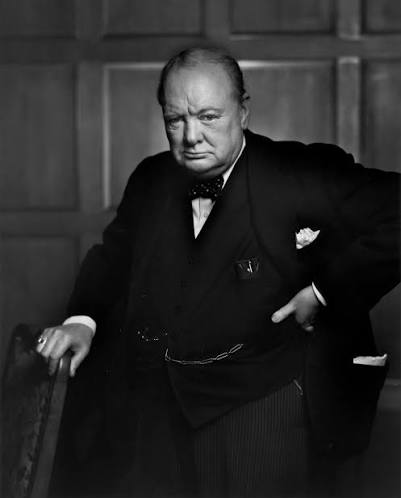
On 10 May 1940, as German tanks rolled into France and the Low Countries, a 65-year-old politician with a checkered past took the helm of Britain. Winston Churchill had been written off by many as a washed-up maverick, but within days he would deliver a speech that defined a nation’s resolve: ‘I have nothing to offer but blood, toil, tears and sweat.’ That moment launched the most celebrated chapter of a life that spanned two world wars, five decades in Parliament, and a legacy so towering it still casts shadows both heroic and troubling.
Churchill is often remembered as the bulldog who defied Hitler, but his story is far more complex. He was a soldier, a journalist, a painter, a Nobel Prize-winning author, a free-trade rebel, an imperialist, and a strategist whose decisions saved millions and condemned millions more. To understand the man, we have to look beyond the bronze statues and the famous quotes. We have to trace his journey from a lonely aristocratic boy to the leader who refused to surrender and then ask what that leadership cost.
From Blenheim Palace to the Battlefield
Winston Leonard Spencer-Churchill was born on 30 November 1874, in the gilded splendor of Blenheim Palace, the ancestral home of the Dukes of Marlborough. His father, Lord Randolph Churchill, was a rising Conservative star, and his mother, Jennie Jerome, was a glamorous American heiress. Yet their son was largely ignored left to be raised by nannies while his parents pursued politics and society. He later wrote that his father ‘was my most honoured, and at the same time, my most feared, critic.’
School was a disaster. Churchill was stubborn, rebellious, and struggled with Latin and Greek. He eventually found his footing at the Royal Military College, Sandhurst, where he graduated eighth in a class of 150. His first taste of action came far from England: in Cuba, India, and Sudan. As a cavalry officer and war correspondent, he charged with the 21st Lancers at the Battle of Omdurman in 1898, one of the last great cavalry charges in history. But it was the Boer War that made him famous. In 1899, he was captured as a prisoner of war and then pulled off a daring escape, hopping trains and hiding in a mine shaft. He returned home a hero, and Parliament was the obvious next step.
A Political Rollercoaster: From Conservative to Liberal and Back
Churchill entered the House of Commons in 1900 as a Conservative, but he soon clashed with his party over tariffs. In 1904, he crossed the aisle to the Liberals, a move that scandalized his family and many voters. Over the next two decades, he held a dizzying array of posts: Home Secretary, First Lord of the Admiralty, Minister of Munitions, Secretary of State for War and Air, and finally Chancellor of the Exchequer.
At the Admiralty before World War I, Churchill pushed to modernize the Royal Navy, championing the all-big-gun Dreadnought battleships and helping to found the Royal Naval Air Service. But his boldness had a dark side. He was the architect of the Gallipoli campaign in 1915, a naval assault on the Ottoman Empire that ended in bloody stalemate, with tens of thousands of Allied casualties. Churchill took the blame, resigned, and went to the trenches in France to command a battalion—a humbling fall from power.
He returned to government, but his career remained turbulent. As Chancellor in 1925, he put Britain back on the Gold Standard at the pre-war exchange rate, a decision that many economists blame for deflation, unemployment, and the General Strike of 1926. Then came the 1930s: a decade in which Churchill was out of office, derided by many as a warmonger, and vindicated only later. He warned relentlessly about Hitler’s rearmament and Britain’s unpreparedness, but his was a lonely voice.
The Wilderness Years and the Call to Lead
Between 1929 and 1939, Churchill was a man without a party that trusted him. He wrote, painted, and built a fortress of words against Nazism. When Germany invaded Poland in 1939, Prime Minister Neville Chamberlain reluctantly brought him back as First Lord of the Admiralty. The signal went out to the fleet: ‘Winston is back.’ Yet even then, few expected him to become prime minister.
On 10 May 1940, Chamberlain resigned, and Churchill was the compromise candidate. He formed a coalition government that included Labour and Liberal ministers, a move that united the country. In his first speech to the Commons, he offered only ‘blood, toil, tears and sweat.’ A month later, after the evacuation of Dunkirk, he declared, ‘We shall fight on the beaches, we shall fight on the landing grounds, we shall fight in the fields and in the streets, we shall fight in the hills; we shall never surrender.’ Those words, delivered over BBC radio, stiffened British spines when invasion seemed imminent.
The Architect of Victory—and the Imperialist
Churchill’s leadership during World War II was strategic and personal. He forged a ‘Special Relationship’ with Franklin D. Roosevelt, signing the Atlantic Charter in 1941, and quickly allied with the Soviet Union after Germany invaded in June 1941. He attended the major conferences—Tehran, Yalta, Potsdam—where the postwar world was carved up. His insistence on fighting in North Africa and the Mediterranean before D-Day remains a matter of debate among historians, but his overall war direction is generally credited with keeping Britain in the fight.
Yet the man who saved Britain was also a lifelong imperialist. He opposed Indian self-rule, dismissing Gandhi as a ‘half-naked fakir.’ He supported the use of poison gas against ‘uncivilised tribes’ and was adamant about preserving the British Empire. The most tragic consequence came in 1943, when a catastrophic famine struck Bengal, killing an estimated 3 million Indians. Churchill’s wartime government diverted food and shipping to the war effort, and his personal comments were callous. Many historians argue that his policies exacerbated the disaster, a stain on his legacy that cannot be washed away by his wartime heroics.
The Iron Curtain and a Second Act
In July 1945, just weeks after Germany’s surrender, Churchill was voted out of office. The British public, exhausted by war, chose Labour’s Clement Attlee to build a new society. Churchill took it in stride, reportedly saying that the people had the right to kick him out. He returned to the opposition and gave one of his most famous speeches in Fulton, Missouri, in 1946, warning that an ‘iron curtain’ had descended across Europe—coining a phrase that defined the Cold War.
He became prime minister again in 1951, but his second term was a quieter affair, dominated by foreign policy and a declining health. He suffered a stroke in 1953, yet he hung on until April 1955, when he handed over to Anthony Eden. He remained an MP until 1964, and when he died in January 1965, at the age of 90, he was given a state funeral—the only non-royal in the 20th century to receive such an honor, joining the ranks of the Duke of Wellington and Lord Nelson. His funeral was watched by millions, a final salute to the lion who had roared when Britain needed it most.
The Complex Legacy
Churchill’s reputation has oscillated. He was voted the greatest Briton in a 2002 BBC poll, and his speeches still echo in political rhetoric. But the revisionist view has grown stronger: he was an imperialist who prioritized empire over the welfare of colonial subjects, a military gambler whose decisions cost lives, and a man who could be cold and callous. The truth is that he was all of these things at once. He was a master of language and a man of action, a visionary and a reactionary, a leader who saved his nation and a politician who failed the people of Bengal.
Perhaps the most honest assessment comes from his own words, written in My Early Life: ‘Success is not final, failure is not fatal: it is the courage to continue that counts.’ Churchill’s courage was never in doubt. The judgment of history is more complicated—and that is exactly why his story still matters.
Winston Churchill was not a simple hero. He was a man who rose from political obscurity to lead Britain through its darkest hour, only to be rejected at the ballot box, then returned to shape the Cold War. His legacy is a paradox: the defender of democracy who championed empire, the orator of freedom who oversaw famine. We can honor his wartime leadership without ignoring his flaws. That is the measure of a leader whose life was as complex as the century he helped shape.
Summary
- Churchill became Prime Minister on 10 May 1940, uniting Britain with a coalition government and defiant speeches.
- His pre-war career was a rollercoaster: from Conservative to Liberal, Gallipoli disaster, Gold Standard controversy, and the ‘wilderness years’ of the 1930s.
- He won the Nobel Prize in Literature in 1953 for his historical and biographical works.
- He coined the ‘Iron Curtain’ phrase in 1946, shaping Cold War diplomacy.
- His imperialist views and wartime policies, particularly during the Bengal Famine of 1943, remain deeply controversial.
FAQ
Q: Why is Churchill considered a great wartime leader?
A: He took office in May 1940 when Britain faced invasion and inspired the nation with powerful speeches like ‘We shall fight on the beaches.’ He formed a coalition government and forged key alliances with the US and Soviet Union, helping to secure Allied victory.
Q: What was Churchill’s role in the Gallipoli campaign?
A: As First Lord of the Admiralty in 1915, he championed the naval attack on the Dardanelles, which failed disastrously and resulted in a brutal stalemate on the Gallipoli peninsula. He resigned after the failure and served in the trenches to rebuild his reputation.
Q: Did Churchill support Indian independence?
A: No. He was a staunch imperialist who opposed Indian self-rule and famously called Gandhi a ‘half-naked fakir.’ His commitment to the British Empire remained unshakeable throughout his life.
Q: What is the Bengal Famine controversy?
A: During the 1943 famine in Bengal, which killed around 3 million people, Churchill’s government diverted food supplies and shipping for the war effort. Critics argue his policies worsened the disaster, though the exact degree of personal responsibility is debated.
Q: How many times was Churchill Prime Minister?
A: Twice. First from 1940 to 1945 during World War II, and then again from 1951 to 1955. He lost the 1945 election to Clement Attlee’s Labour Party despite his wartime popularity.
Leave a Reply