On 18 June 1940, a little-known French brigadier general sat in a London studio and, over BBC radio, told his countrymen that France had lost a battle, not the war. That broadcast, heard by a minority of the population, would become the seed of French resistance and the foundation of a political legend. Charles de Gaulle was not just a soldier or a statesman; he was a man possessed by an idea ‘a certain idea of France’ that drove him to defy defeat, reshape the republic, and leave a mark on global politics that still endures.
De Gaulle’s life spanned two world wars, the collapse and rebirth of French democracy, and the end of empire. From the mud of Verdun to the pinnacle of presidential power, his trajectory was anything but linear. He spent years in the wilderness, only to be called back in times of crisis, each time bending the course of history to his stubborn vision. This is the story of a man whose legacy is as polarizing as it is monumental.
A Certain Idea of France
Born in 1890 in Lille, de Gaulle grew up in a devout Catholic, patriotic family. His father, a philosophy professor, instilled in him a deep sense of duty and history. After graduating from the elite Saint-Cyr military academy in 1912, he entered an army still haunted by the trauma of 1870’s defeat by Prussia. The young officer quickly distinguished himself, but it was World War I that forged his character.
At Verdun in 1916, de Gaulle was wounded and captured. He spent 32 months as a prisoner of war, attempting escape five times. The experience taught him patience and the importance of moral resilience qualities he would later draw upon during his darkest political moments. After the war, he served on the staff of Marshal Pétain, the hero of Verdun, but his thinking began to diverge radically from the conservative high command.
The Prophet of Armor
During the interwar years, de Gaulle became an early advocate of mechanized warfare. In his 1934 book, The Army of the Future, he argued for the creation of professional, armored divisions that could strike quickly and decisively—a concept later vindicated by Germany’s blitzkrieg. The French military establishment, wedded to static defense, largely ignored him. When the Germans invaded in 1940, France collapsed in six weeks, precisely because it had failed to embrace the mobile warfare de Gaulle had preached.
In June 1940, as the government sued for peace, de Gaulle refused to accept defeat. He fled to London and, on the 18th, made his historic broadcast. The Appeal of 18 June was a direct challenge to the legitimacy of the Vichy regime, which had surrendered to Hitler. De Gaulle declared that the flame of French resistance must not be extinguished. At that moment, he was a brigadier general with no army, no resources, and no international recognition.
The Outsider in London
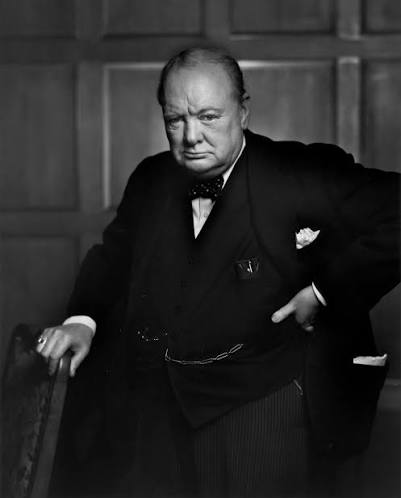
De Gaulle’s relationship with his allies was fraught. Winston Churchill, who had offered him asylum, found him insufferable yet indispensable. President Franklin Roosevelt viewed him as a potential dictator and refused to recognize the Free French as a legitimate government. Despite these obstacles, de Gaulle maneuvered relentlessly to assert French sovereignty. He insisted that France, though defeated, must be treated as a great power.
His stubbornness paid off. By 1944, de Gaulle had become the symbol of the Resistance, and his provisional government was welcomed into liberated Paris. He walked down the Champs-Élysées to the roar of the crowd, a moment that cemented his role as the savior of French honor. But his vision of a strong executive clashed with the political class, and in 1946 he resigned, disgusted by the new constitution that gave parliament the upper hand.
The Long March Back
For the next twelve years, de Gaulle was out of power. He led a political movement, the Rally of the French People, but it fizzled out. He retired to his estate in Colombey-les-Deux-Églises, writing his memoirs and waiting. His patience was rewarded in 1958, when France faced its gravest crisis since the war: the Algerian War had triggered an army revolt in Algiers, and the Fourth Republic teetered on the brink of collapse.
The generals demanded de Gaulle’s return. He accepted, but on his own terms. He was granted emergency powers and quickly drafted a new constitution that created a powerful presidency, directly accountable to the people. The Fifth Republic was born, and de Gaulle was elected its first president. His return marked a turning point—he intended to end the Algerian War, which had become a quagmire.
Ending the War, Surviving Assassins
De Gaulle’s solution for Algeria was self-determination, a move that enraged the French settlers and the military. The Secret Army Organization (OAS) launched a campaign of terror, and de Gaulle survived numerous assassination attempts. In 1962, the Évian Accords granted Algeria independence, and de Gaulle, once hated by the far right, secured his legacy as a decolonizer.
His foreign policy was equally bold. He pursued an independent nuclear deterrent, the force de frappe, ensuring France could defend itself without relying on the United States. In 1966, he withdrew France from NATO’s integrated military command, a shock that underscored his commitment to French autonomy. He also sought détente with the Soviet bloc and built a special partnership with West Germany, symbolized by the Élysée Treaty of 1963.
Grandeur at Home and the Storm of 1968
Domestically, de Gaulle modernized France. He introduced the new franc to stabilize the currency, promoted industrial growth, and invested in infrastructure. His vision of grandeur—a France that stood tall on the world stage—was matched by a period of economic prosperity that lasted through the 1960s.
But the revolution came in May 1968. Students took to the streets of Paris, soon joined by millions of workers in a general strike that paralyzed the country. De Gaulle was initially caught off guard. He fled to Baden-Baden in Germany to consult with French military commanders, a move that some saw as a sign of weakness, others as a strategic retreat. When he returned, he called snap elections, framing the vote as a choice between him and chaos. He won a massive majority, but the events had shaken his authority.
The Final Act
De Gaulle’s political career ended not with a defeat at the polls, but with a referendum on regional reform and Senate changes. He had promised to resign if the proposal was rejected, and when the French voted no in April 1969, he kept his word. He retired to Colombey, where he died on 9 November 1970, just a few weeks before his 80th birthday.
His funeral was deliberately modest, held in his hometown, with no state ceremony. Yet his influence on France is immeasurable. The Fifth Republic he created endures to this day, and his name remains synonymous with a certain idea of national independence and pride.
Charles de Gaulle was a paradox: a man of tradition who embraced modernity, a nationalist who ended an empire, and a democrat who wielded power with an iron fist. His legacy is not without contradictions, but his impact is undeniable. He gave France a constitution that brought stability, a foreign policy that asserted its independence, and a sense of honor that survived the humiliation of 1940. Whether revered or criticized, de Gaulle remains a towering figure, a testament to what one stubborn visionary can achieve.
Summary
- De Gaulle’s 1940 ‘Appeal of 18 June’ from London became the founding act of the French Resistance, even though the BBC broadcast was heard by a minority at the time.
- He was an early proponent of armored warfare, but the French high command ignored his ideas, contributing to the 1940 collapse.
- After leading the provisional government, he resigned in 1946, spending 12 years in the political wilderness before returning in the 1958 Algerian crisis.
- As president, he ended the Algerian War, established an independent nuclear deterrent, and withdrew France from NATO’s integrated command in 1966.
- The Fifth Republic, with its strong executive, remains his most enduring institutional legacy, still governing France today.
FAQ
Q: Why is de Gaulle considered a savior of France?
A: He refused to accept the armistice with Nazi Germany in 1940, rallied the French to resist from London, and eventually led the provisional government that restored France as a sovereign power. His ‘Appeal of 18 June’ became a symbol of national defiance.
Q: What was the ‘Algerian crisis’ and why was it significant?
A: The Algerian War (1954–1962) was a brutal conflict over Algeria’s independence from France, causing a political crisis that threatened the Fourth Republic. De Gaulle was called back to power in 1958, and he ended the war by granting Algeria independence in 1962, despite opposition from French settlers.
Q: How did de Gaulle reshape the French constitution?
A: He founded the Fifth Republic in 1958 with a constitution that strengthened the presidency, allowing the head of state to act decisively without parliamentary paralysis. From 1962, the president was directly elected by the people, and the executive gained significant powers.
Q: What were de Gaulle’s main foreign policy goals?
A: He pursued ‘grandeur’—a France that was independent and influential. This included building a nuclear arsenal (force de frappe), withdrawing from NATO’s integrated military command in 1966, fostering cooperation with West Germany, and pursuing détente with the Soviet Union.
Q: Why did de Gaulle resign in 1969?
A: He resigned after losing a referendum on reforming the Senate and creating regional governments. He had promised to step down if the proposal was rejected, and he honored that pledge, ending his political career.