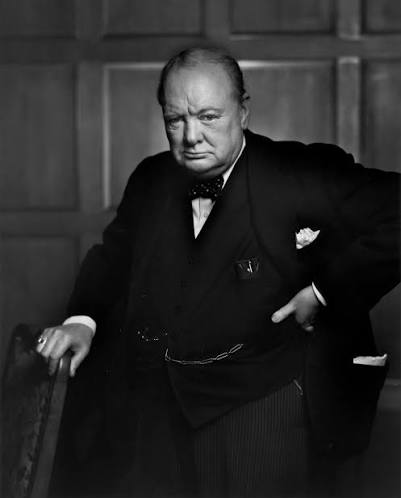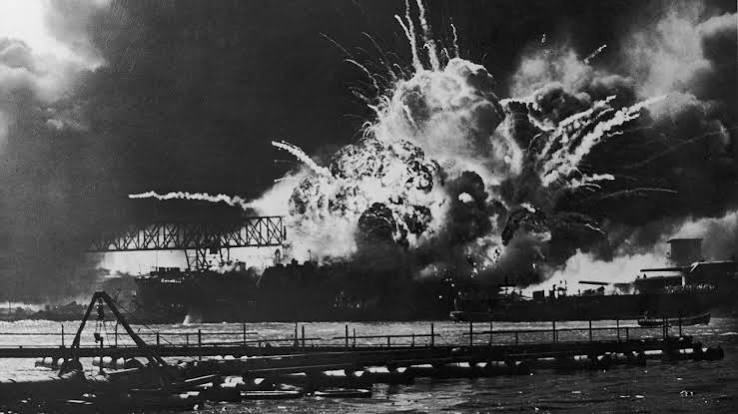
On the evening of December 7, 1941, at Chequers, the British Prime Minister’s country retreat, Winston Churchill was at dinner with two American guests: U.S. Ambassador John Winant and W. Averell Harriman, President Roosevelt’s special envoy. The conversation was likely tense; the world was at war, but the United States remained on the sidelines. Then the BBC interrupted its broadcast with a terse bulletin: Japanese aircraft had attacked the U.S. Pacific Fleet at Pearl Harbor.
Churchill later wrote that he went to bed that night and “slept the sleep of the saved and thankful.” That reaction relief as much as shock has fueled a persistent conspiracy theory: that Churchill knew the attack was coming and deliberately withheld the intelligence to drag America into the war. But the historical record, including Churchill’s own memoirs and the findings of multiple official inquiries, paints a more complex picture of surprise, strategic desperation, and a failure of intelligence that was shared across both nations.
The Scene at Chequers
Churchill was not in London that night. He had retreated to Chequers, the 16th-century manor in Buckinghamshire that serves as the Prime Minister’s country residence, for a working dinner with Winant and Harriman. The trio had just finished their meal when a butler named Sawyers entered the dining room. According to Churchill’s account, he switched on a small wireless set in the room. The BBC was broadcasting news of the attack on Pearl Harbor.
Churchill immediately placed a transatlantic call to the White House. Roosevelt came on the line and told him directly: “They have attacked us. We are all in the same boat now.” The American President’s voice was calm, but the weight of the words was immense. For Churchill, it was the moment he had been waiting for since the fall of France in 1940.
Eyewitnesses describe Churchill’s initial reaction as one of genuine surprise. Harriman later said that Churchill was stunned by the news, though he quickly grasped its implications. The Prime Minister’s own memoirs confirm this: he wrote that he was “thankful” that the United States was finally in the war, but he did not claim to have anticipated the attack on Pearl Harbor specifically.
The Intelligence Picture: What Britain Knew
By late 1941, British codebreakers at Bletchley Park had cracked the German Enigma cipher, giving them access to significant German military communications. But Japanese naval codes were a different story. The Imperial Japanese Navy’s main operational code, JN-25, was only partially broken, and the British were largely reliant on diplomatic intercepts—decrypted by the Americans and shared with London—and on signals intelligence from their Far East stations.
Britain’s Far East Combined Bureau in Singapore had been tracking Japanese fleet movements for weeks. There were clear indications that Japan was preparing for a major offensive. But the consensus among British and American intelligence analysts was that the most likely targets were Britain’s own colonies—Malaya, Singapore, or the Dutch East Indies—or perhaps the American-held Philippines. Pearl Harbor, 4,000 miles from Japan, seemed an unlikely target, protected by its distance and by the assumption that the U.S. Pacific Fleet would deter any attack.
Churchill was aware of the deteriorating diplomatic situation between the U.S. and Japan. Roosevelt had kept him informed through their secret correspondence, in which Churchill signed as “Former Naval Person.” The Prime Minister knew that war in the Pacific was likely, but he did not know when or where it would break out. He certainly had no specific warning of the attack on Pearl Harbor.
The “Germany First” Strategy: A Matter of Policy, Not Deception
One of the pillars of the conspiracy theory is the claim that Churchill had a motive to trick the U.S. into war. But the historical record shows that the U.S. and Britain had already agreed on a “Germany First” strategy in secret staff talks held in early 1941, known as the ABC-1 talks. The U.S. military had formally adopted the policy that if America entered the war, the priority would be defeating Germany before Japan.
Churchill did not need to deceive Roosevelt into joining the war in Europe; the U.S. was already committed to that strategy in principle. What Churchill wanted was for the U.S. to become a full belligerent, and Pearl Harbor achieved that. But the idea that he withheld specific intelligence about the attack requires evidence that simply does not exist in the archives.
The Conspiracy Theory and Its Flaws
Proponents of the “Churchill knew” theory point to a few pieces of circumstantial evidence: Churchill’s relief at the news, the presence of British intelligence officers in the Pacific, and the claim that British codebreakers had intercepted Japanese signals indicating an attack on Pearl Harbor. Authors like James Rusbridger in Betrayal at Pearl Harbor and Robert Stinnett in Day of Deceit have argued that the British (or, in Stinnett’s case, the Americans) deliberately suppressed intelligence about the attack.
But these claims collapse under scrutiny. The Roberts Commission, established in 1941, and the later Joint Committee on the Investigation of the Pearl Harbor Attack (1945–46) examined the intelligence failures in exhaustive detail. Neither found any evidence of British foreknowledge. The Japanese fleet that attacked Pearl Harbor maintained strict radio silence during its transit, and the U.S. Navy’s own intelligence community—which had broken Japanese diplomatic codes but not the naval code—was caught off guard. The British were no better positioned.
Churchill’s relief was real, but it was the relief of a leader who had just seen his greatest strategic hope realized. He had spent two years trying to bring the United States into the war. The attack on Pearl Harbor did not merely bring America in; it united the American people behind the war effort in a way no political maneuvering could have achieved. Churchill’s own words on the night of the attack capture his state of mind: “I went to bed and slept the sleep of the saved and thankful.” Those are not the words of a man surprised by a plan gone right; they are the words of a man who had just been handed a lifeline.
The Immediate Aftermath
The day after the attack, Churchill convened Parliament and declared that Britain and the United States were now “in this together.” He immediately began planning a trip to Washington, which took place in late December 1941 under the codename ARCADIA. At that conference, the “Germany First” strategy was formally confirmed, and the Allied war effort was locked into a unified command structure.
For Churchill, the road to victory was now clear. But the path to Pearl Harbor had been paved with misjudgments and missed signals on both sides of the Atlantic. The attack was a surprise not because some grand conspiracy was in play, but because the intelligence systems of two great powers—both struggling to process a flood of information—failed to anticipate a single, audacious move.
The question of whether Churchill knew about Pearl Harbor in advance has a clear answer: no. The evidence is overwhelming that he was surprised by the attack, even if he was not surprised that Japan was going to war. His relief was not a sign of complicity but of desperation, as a man who had been fighting alone against Hitler saw the world’s greatest industrial power finally join the fight. The conspiracy theory persists because it offers a tidy explanation for a messy event, but the historical record shows a more human story of intelligence failures, misperceptions, and a leader who, like the rest of the world, was caught off guard by the audacity of the Japanese attack.
Summary
- Churchill learned of the Pearl Harbor attack from a BBC bulletin at Chequers, not from a private intelligence channel.
- He expressed shock, then relief, because U.S. entry into the war guaranteed eventual Allied victory.
- British intelligence had warnings of a Japanese strike, but the consensus was that targets would be British Malaya, the Philippines, or the Dutch East Indies—not Pearl Harbor.
- The U.S. and Britain had already agreed on a “Germany First” strategy in secret talks, undermining the claim that Churchill needed to deceive Roosevelt.
- Official inquiries (Roberts Commission, Joint Committee) found no evidence of British foreknowledge.
FAQ
Q: Did Churchill have specific warning of the Pearl Harbor attack?
A: No. Churchill was aware that Japan was preparing for war, but there is no credible evidence that he knew the specific target or timing of the Pearl Harbor attack. The intelligence available to Britain pointed to likely targets in Southeast Asia, not Hawaii.
Q: Why did Churchill feel relief after the attack?
A: Churchill had spent two years trying to bring the United States into the war, as Britain was fighting alone against Germany. The attack on Pearl Harbor achieved that goal, and Churchill believed that U.S. entry guaranteed Allied victory. His relief was a strategic, not conspiratorial, reaction.
Q: What was the “Germany First” strategy, and how does it relate to the conspiracy theory?
A: “Germany First” was a strategy agreed upon in secret U.S.-British staff talks in early 1941, stating that if America entered the war, the priority would be defeating Germany before Japan. This makes the claim that Churchill needed to trick the U.S. into the war less plausible, as the U.S. was already committed to that strategy.
Q: Have any official investigations found evidence of British foreknowledge?
A: No. The Roberts Commission (1941–42) and the Joint Committee on the Investigation of the Pearl Harbor Attack (1945–46) thoroughly examined the intelligence failures and found no evidence that the British (or anyone else) knew the attack was coming.
Q: Why does the conspiracy theory persist?
A: The theory persists because it offers a simple explanation for a complex event, and because Churchill’s relief at the news can be misread as confirmation of a plan. However, the historical record shows a surprise attack that was the result of intelligence failures, not deliberate deception.