Tag: British history

  • Winston Churchill: The Lion, the Imperialist, and the Architect of Wartime Britain

    Winston Churchill: The Lion, the Imperialist, and the Architect of Wartime Britain

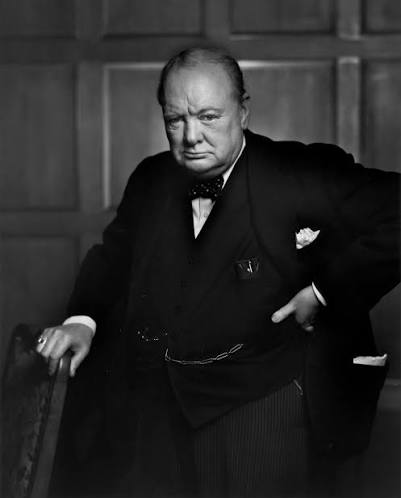
    On 10 May 1940, as German tanks rolled into France and the Low Countries, a 65-year-old politician with a checkered past took the helm of Britain. Winston Churchill had been written off by many as a washed-up maverick, but within days he would deliver a speech that defined a nation’s resolve: ‘I have nothing to offer but blood, toil, tears and sweat.’ That moment launched the most celebrated chapter of a life that spanned two world wars, five decades in Parliament, and a legacy so towering it still casts shadows both heroic and troubling.

    Churchill is often remembered as the bulldog who defied Hitler, but his story is far more complex. He was a soldier, a journalist, a painter, a Nobel Prize-winning author, a free-trade rebel, an imperialist, and a strategist whose decisions saved millions and condemned millions more. To understand the man, we have to look beyond the bronze statues and the famous quotes. We have to trace his journey from a lonely aristocratic boy to the leader who refused to surrender and then ask what that leadership cost.

    From Blenheim Palace to the Battlefield

    Winston Leonard Spencer-Churchill was born on 30 November 1874, in the gilded splendor of Blenheim Palace, the ancestral home of the Dukes of Marlborough. His father, Lord Randolph Churchill, was a rising Conservative star, and his mother, Jennie Jerome, was a glamorous American heiress. Yet their son was largely ignored left to be raised by nannies while his parents pursued politics and society. He later wrote that his father ‘was my most honoured, and at the same time, my most feared, critic.’

    School was a disaster. Churchill was stubborn, rebellious, and struggled with Latin and Greek. He eventually found his footing at the Royal Military College, Sandhurst, where he graduated eighth in a class of 150. His first taste of action came far from England: in Cuba, India, and Sudan. As a cavalry officer and war correspondent, he charged with the 21st Lancers at the Battle of Omdurman in 1898, one of the last great cavalry charges in history. But it was the Boer War that made him famous. In 1899, he was captured as a prisoner of war and then pulled off a daring escape, hopping trains and hiding in a mine shaft. He returned home a hero, and Parliament was the obvious next step.

    A Political Rollercoaster: From Conservative to Liberal and Back

    Churchill entered the House of Commons in 1900 as a Conservative, but he soon clashed with his party over tariffs. In 1904, he crossed the aisle to the Liberals, a move that scandalized his family and many voters. Over the next two decades, he held a dizzying array of posts: Home Secretary, First Lord of the Admiralty, Minister of Munitions, Secretary of State for War and Air, and finally Chancellor of the Exchequer.

    At the Admiralty before World War I, Churchill pushed to modernize the Royal Navy, championing the all-big-gun Dreadnought battleships and helping to found the Royal Naval Air Service. But his boldness had a dark side. He was the architect of the Gallipoli campaign in 1915, a naval assault on the Ottoman Empire that ended in bloody stalemate, with tens of thousands of Allied casualties. Churchill took the blame, resigned, and went to the trenches in France to command a battalion—a humbling fall from power.

    He returned to government, but his career remained turbulent. As Chancellor in 1925, he put Britain back on the Gold Standard at the pre-war exchange rate, a decision that many economists blame for deflation, unemployment, and the General Strike of 1926. Then came the 1930s: a decade in which Churchill was out of office, derided by many as a warmonger, and vindicated only later. He warned relentlessly about Hitler’s rearmament and Britain’s unpreparedness, but his was a lonely voice.

    The Wilderness Years and the Call to Lead

    Between 1929 and 1939, Churchill was a man without a party that trusted him. He wrote, painted, and built a fortress of words against Nazism. When Germany invaded Poland in 1939, Prime Minister Neville Chamberlain reluctantly brought him back as First Lord of the Admiralty. The signal went out to the fleet: ‘Winston is back.’ Yet even then, few expected him to become prime minister.

    On 10 May 1940, Chamberlain resigned, and Churchill was the compromise candidate. He formed a coalition government that included Labour and Liberal ministers, a move that united the country. In his first speech to the Commons, he offered only ‘blood, toil, tears and sweat.’ A month later, after the evacuation of Dunkirk, he declared, ‘We shall fight on the beaches, we shall fight on the landing grounds, we shall fight in the fields and in the streets, we shall fight in the hills; we shall never surrender.’ Those words, delivered over BBC radio, stiffened British spines when invasion seemed imminent.

    The Architect of Victory—and the Imperialist

    Churchill’s leadership during World War II was strategic and personal. He forged a ‘Special Relationship’ with Franklin D. Roosevelt, signing the Atlantic Charter in 1941, and quickly allied with the Soviet Union after Germany invaded in June 1941. He attended the major conferences—Tehran, Yalta, Potsdam—where the postwar world was carved up. His insistence on fighting in North Africa and the Mediterranean before D-Day remains a matter of debate among historians, but his overall war direction is generally credited with keeping Britain in the fight.

    Yet the man who saved Britain was also a lifelong imperialist. He opposed Indian self-rule, dismissing Gandhi as a ‘half-naked fakir.’ He supported the use of poison gas against ‘uncivilised tribes’ and was adamant about preserving the British Empire. The most tragic consequence came in 1943, when a catastrophic famine struck Bengal, killing an estimated 3 million Indians. Churchill’s wartime government diverted food and shipping to the war effort, and his personal comments were callous. Many historians argue that his policies exacerbated the disaster, a stain on his legacy that cannot be washed away by his wartime heroics.

    The Iron Curtain and a Second Act

    In July 1945, just weeks after Germany’s surrender, Churchill was voted out of office. The British public, exhausted by war, chose Labour’s Clement Attlee to build a new society. Churchill took it in stride, reportedly saying that the people had the right to kick him out. He returned to the opposition and gave one of his most famous speeches in Fulton, Missouri, in 1946, warning that an ‘iron curtain’ had descended across Europe—coining a phrase that defined the Cold War.

    He became prime minister again in 1951, but his second term was a quieter affair, dominated by foreign policy and a declining health. He suffered a stroke in 1953, yet he hung on until April 1955, when he handed over to Anthony Eden. He remained an MP until 1964, and when he died in January 1965, at the age of 90, he was given a state funeral—the only non-royal in the 20th century to receive such an honor, joining the ranks of the Duke of Wellington and Lord Nelson. His funeral was watched by millions, a final salute to the lion who had roared when Britain needed it most.

    The Complex Legacy

    Churchill’s reputation has oscillated. He was voted the greatest Briton in a 2002 BBC poll, and his speeches still echo in political rhetoric. But the revisionist view has grown stronger: he was an imperialist who prioritized empire over the welfare of colonial subjects, a military gambler whose decisions cost lives, and a man who could be cold and callous. The truth is that he was all of these things at once. He was a master of language and a man of action, a visionary and a reactionary, a leader who saved his nation and a politician who failed the people of Bengal.

    Perhaps the most honest assessment comes from his own words, written in My Early Life: ‘Success is not final, failure is not fatal: it is the courage to continue that counts.’ Churchill’s courage was never in doubt. The judgment of history is more complicated—and that is exactly why his story still matters.

    Winston Churchill was not a simple hero. He was a man who rose from political obscurity to lead Britain through its darkest hour, only to be rejected at the ballot box, then returned to shape the Cold War. His legacy is a paradox: the defender of democracy who championed empire, the orator of freedom who oversaw famine. We can honor his wartime leadership without ignoring his flaws. That is the measure of a leader whose life was as complex as the century he helped shape.

    Summary

    • Churchill became Prime Minister on 10 May 1940, uniting Britain with a coalition government and defiant speeches.
    • His pre-war career was a rollercoaster: from Conservative to Liberal, Gallipoli disaster, Gold Standard controversy, and the ‘wilderness years’ of the 1930s.
    • He won the Nobel Prize in Literature in 1953 for his historical and biographical works.
    • He coined the ‘Iron Curtain’ phrase in 1946, shaping Cold War diplomacy.
    • His imperialist views and wartime policies, particularly during the Bengal Famine of 1943, remain deeply controversial.

    FAQ

    Q: Why is Churchill considered a great wartime leader?
    A: He took office in May 1940 when Britain faced invasion and inspired the nation with powerful speeches like ‘We shall fight on the beaches.’ He formed a coalition government and forged key alliances with the US and Soviet Union, helping to secure Allied victory.

    Q: What was Churchill’s role in the Gallipoli campaign?
    A: As First Lord of the Admiralty in 1915, he championed the naval attack on the Dardanelles, which failed disastrously and resulted in a brutal stalemate on the Gallipoli peninsula. He resigned after the failure and served in the trenches to rebuild his reputation.

    Q: Did Churchill support Indian independence?
    A: No. He was a staunch imperialist who opposed Indian self-rule and famously called Gandhi a ‘half-naked fakir.’ His commitment to the British Empire remained unshakeable throughout his life.

    Q: What is the Bengal Famine controversy?
    A: During the 1943 famine in Bengal, which killed around 3 million people, Churchill’s government diverted food supplies and shipping for the war effort. Critics argue his policies worsened the disaster, though the exact degree of personal responsibility is debated.

    Q: How many times was Churchill Prime Minister?
    A: Twice. First from 1940 to 1945 during World War II, and then again from 1951 to 1955. He lost the 1945 election to Clement Attlee’s Labour Party despite his wartime popularity.
  • How the Blitz and the Queue Built Britain’s Welfare State

    How the Blitz and the Queue Built Britain’s Welfare State

    Bombing - Social Impact of WWII in Britain - National 4 History Revision - BBC Bitesize

    In September 1940, as German bombs rained on London, a social experiment began that would reshape Britain forever. Children from the East End, pale and underfed, were packed onto trains and sent to rural villages. Their hosts, comfortable middle-class families, were shocked to see rickets, lice, and malnutrition up close. This was the ‘national revelation’ that cracked open the door to the modern welfare state.

    By 1948, just three years after the war ended, Britain had a health service free at the point of use, universal social insurance, and family allowances. The journey from those crowded railway platforms to the founding of the NHS was not smooth or inevitable. It took a war, a bestselling report, and a landslide election to turn shared sacrifice into permanent social rights.

    The Hungry Thirties: A Patchwork of Punishment

    Before the war, Britain’s social safety net was a cruel contradiction. The 1911 National Insurance Act covered only select workers for health and unemployment, leaving millions to fall back on the Poor Law a system designed to deter, not help. Means tests were intrusive and humiliating; benefits were inconsistent. In Jarrow, South Wales, and Clydeside, unemployment peaked at 22% in 1932, and whole communities were left to rot.

    Public health was equally dire. Malnutrition was widespread, and medical care was simply unaffordable for many working-class families. A hospital visit could mean bankruptcy. Voluntary hospitals relied on charity, and the sick poor often went untreated. This was the Britain that went to war in 1939.

    Wartime Transformations: Bombs, Rationing, and a New Solidarity

    The war changed everything, starting with the evacuation. In just four days in September 1939, 1.5 million people mostly children were moved from cities to the countryside. For the first time, the middle classes saw how the other half lived. Rickets, lice, and chronic malnutrition were not abstract statistics; they were children sleeping in their spare rooms. This ‘national revelation’ made poverty a national scandal.

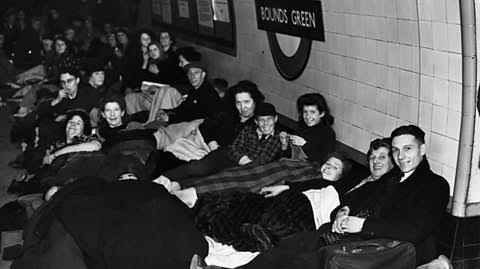
    The Blitz deepened the shift. Bombing did not discriminate between rich and poor neighborhoods. Rich and poor huddled together in underground stations, sharing the same risk. The state organized shelters, emergency services, and, from 1940, universal rationing. Everyone got the same rations, whether they lived in Mayfair or Manchester. This was a radical experiment in equality, and it worked. The state proved it could run large-scale operations effectively — from the Ministry of Food to the Ministry of Supply.

    Full employment was the final proof. By 1943, unemployment had fallen below 1%. The state had managed the economy to mobilize for war, and it had succeeded. If it could do that, why could it not conquer poverty in peacetime?

    The Beveridge Report: A Bestseller That Changed the Debate

    In December 1942, economist Sir William Beveridge — a Liberal, not a Labour man — published his report on social insurance. It was commissioned by the wartime coalition, which included Labour ministers like Clement Attlee and Ernest Bevin. Beveridge proposed a universal system of social insurance, funded by flat-rate contributions, covering every citizen ‘from cradle to grave.’ He structured his plan around five ‘Giant Evils’: Want, Disease, Ignorance, Squalor, and Idleness.

    The report sold over 600,000 copies. It was read in factories, pubs, and army camps. People queued to buy it. The government initially tried to downplay it, but the public demand was unstoppable. All parties were forced to accept its broad framework. The question after the war was not whether to implement Beveridge, but how quickly and how completely.

    1945: The Landslide That Made It Happen

    The July 1945 election was a shock. Winston Churchill, the victorious wartime leader, was defeated in a landslide. Labour won 393 seats to the Conservatives’ 213. The people wanted more than victory; they wanted a new Britain. Clement Attlee became Prime Minister, and his government moved with remarkable speed.

    One of the first acts was the Family Allowances Act of 1945, which gave a universal cash benefit to mothers. Then came the National Insurance Act of 1946, a comprehensive contributory scheme covering sickness, unemployment, retirement, and widowhood. The National Health Service Act of 1946 created the NHS, which launched on 5 July 1948. The National Assistance Act of 1948 provided a safety net for those outside the insurance system. By 1948, the welfare state was complete.

    Aneurin Bevan, the Health Minister, was the architect of the NHS. He faced fierce opposition from doctors who feared losing their independence. But Bevan held firm, famously saying that he would ‘stuff their mouths with gold’ — in the end, he won them over with a compromise that allowed private practice alongside NHS work. The NHS was born on 5 July 1948, offering free healthcare to everyone, regardless of income.

    The Wartime Roots of the Welfare State

    The war did not just create the conditions for the welfare state; it created the political will. The evacuation and the Blitz exposed inequality in a way that could not be ignored. Rationing normalized state intervention in daily life. Full employment proved the state could manage the economy. And the phrase ‘People’s War’ captured the idea that this was a war of the whole nation, deserving a post-war reward.

    But the war alone was not enough. It took a Labour landslide and a government determined to implement Beveridge’s vision. The war created the opportunity; Labour seized it. The welfare state was not a gift from the wartime coalition — it was a victory won by the people, through their votes and their sacrifices.

    The welfare state was built on the ruins of war, but it was not an accident of history. It was a deliberate choice, made by a people who had endured the Blitz and rationing and decided they deserved better. The NHS, the National Insurance scheme, and family allowances were not just policies; they were promises that the sacrifices of war would not be in vain. Today, as debates about the welfare state continue, it is worth remembering that its foundations were laid in the fires of the People’s War.

    Summary

    • The Beveridge Report (1942) sold over 600,000 copies and framed the post-war social settlement around five ‘Giant Evils’: Want, Disease, Ignorance, Squalor, and Idleness.
    • Evacuation and the Blitz exposed middle-class Britons to urban poverty, creating a ‘national revelation’ that fueled demand for change.
    • Universal rationing and full employment during the war normalized state intervention and proved the government could manage the economy effectively.
    • Labour’s landslide victory in 1945 gave Attlee’s government a mandate to implement Beveridge’s plan with remarkable speed.
    • By 1948, the NHS, National Insurance, and National Assistance had created a universal welfare state ‘from cradle to grave.’

    FAQ

    Q: Why is the Beveridge Report considered so important?
    A: It was the first comprehensive plan for a universal welfare state, covering all citizens ‘from cradle to grave’ and identifying five ‘Giant Evils’ to be conquered. Its popularity (over 600,000 copies sold) forced all parties to accept its framework.

    Q: What role did the war play in creating the welfare state?
    A: The war exposed social inequality through evacuation and the Blitz, normalized state intervention through rationing, and proved the state could manage the economy through full employment. It created the political will for change.

    Q: Was the welfare state a Labour achievement?
    A: Yes, the Labour government elected in 1945 implemented the legislation. But the wartime coalition, which included Labour ministers, commissioned the Beveridge Report and passed the 1944 Education Act. The war created the conditions; Labour provided the political will.

    Q: Why did the 1945 election result in a Labour landslide?
    A: The public associated the Conservatives with the pre-war depression and wanted a new Britain after the war. Labour’s promise to implement the Beveridge Report resonated with voters, leading to 393 seats for Labour versus 213 for the Conservatives.

    Q: What were the five ‘Giant Evils’?
    A: Beveridge identified Want (poverty), Disease (ill health), Ignorance (lack of education), Squalor (poor housing), and Idleness (unemployment) as the five major social problems the welfare state was designed to overcome.

  • The Last Ration Book: How Britain’s Scraps Defined a Decade

    The Last Ration Book: How Britain’s Scraps Defined a Decade

    In January 1940, every household in Britain received a small buff-coloured book. Inside, pages of coupons promised a weekly allowance of bacon, butter, and sugar. No one knew then that the last coupon would not be torn out until 4 July 1954 nine years after the war in Europe ended.

    This is the story of those fourteen years, when a nation of 48 million learned to measure its life in ounces. It is a story of grey bread, dried eggs, and a vegetable pie named after a politician. But it is also a story of how scarcity, managed with ruthless fairness, reshaped what it meant to be British.

    The Fair Shares Principle

    When the Second World War began, Britain imported about 70% of its food. German U-boats quickly targeted those supply lines, sinking roughly 2,000 British merchant ships between 1939 and 1945. By 1943, imports had collapsed to 30%.

    Memories of the First World War haunted the government. Food riots and profiteering had damaged morale then. So, in 1939, the Ministry of Food was created with a single mission: make sure shortages did not lead to hoarding or class resentment. The solution was rationing, introduced on 8 January 1940 for bacon, butter, and sugar. Within two years, most foodstuffs were rationed.

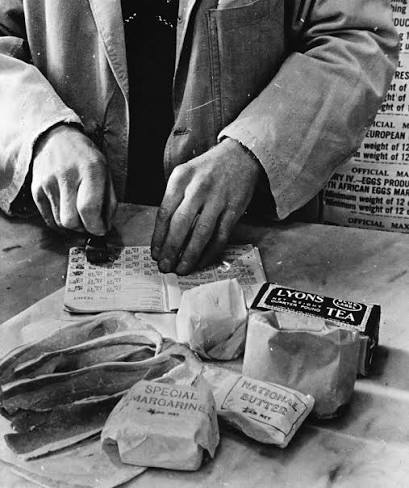
    Every man, woman, and child received a colour-coded ration book: buff for adults, green for pregnant women and children, blue for under-fives. Registration was compulsory. You picked a grocer, a butcher, and a milkman, and you bought only from them. The system tracked every purchase, and inspectors could check your book against the shop’s records.

    The Weekly Allowance

    At the peak of rationing in 1942–43, an adult’s weekly allowance was stark:

    • Meat: about 450g of cheap cuts, often bone-in
    • Bacon or ham: 113g
    • Butter: 57g
    • Margarine: 113g
    • Sugar: 227g
    • Cheese: 57g (occasionally 113g)
    • Tea: 57g
    • Eggs: one fresh egg plus dried egg powder equivalent to about one egg per fortnight
    • Sweets: 113g
    • Milk: 1.7 litres, with more for children and expectant mothers

    These numbers meant constant arithmetic. A slice of bread and scrape of butter was a meal. A single egg was a luxury, stretched across a family breakfast.

    The government did not simply ration — it dictated what you could eat. The National Loaf, introduced in 1942, was mandatory. Made from high-extraction wholemeal flour, it was grey, dense, and widely hated. Yet it was nutritionally superior to white bread, and the Ministry of Food did not care that it tasted like cardboard.

    The Points System and the Black Market

    Canned goods, dried fruit, cereals, and biscuits were not part of the basic ration. Instead, from December 1941, a points system allowed some choice. Each person received a set number of points per month, and every non-perishable item had a points price. This flexibility prevented panic buying and let families save up for a treat.

    But scarcity bred temptation. The black market flourished. Contemporary estimates suggested it turned over £100–£200 million a year, though figures remain vague. Under-the-counter sales, coupon fraud, and theft from supply chains were common. “Spivs” — flashy men in wide-lapelled coats — sold nylons, cigarettes, and petrol on street corners.

    Ministry of Food inspectors pursued offenders with zeal. Fines and prison sentences were handed out. Yet the public’s attitude was complicated. Many saw the black market as a necessary evil, a way to feed a family or celebrate a wedding. The spiv became a folk anti-hero, a symbol of post-war cynicism.

    Digging for Victory

    The Ministry of Food did more than restrict. It also produced, with a propaganda machine that would make a modern PR firm blush. The “Dig for Victory” campaign launched in October 1939. By 1943, 1.4 million allotments were in use, producing about 10% of Britain’s food.

    Cartoon characters pushed the message. Dr. Carrot promised better night vision. Potato Pete sang the praises of the humble spud. The Ministry published recipes for Woolton Pie — a vegetable pie named after Minister of Food Lord Woolton, with a pastry or potato crust. It was designed to stretch scarce meat and cheese, and it became a symbol of make-do cooking.

    Lord Woolton himself, a former businessman, was the public face of austerity. His name attached to pies, bread, and an ethos of “making do.” He also oversaw British Restaurants — communal canteens serving cheap, nutritious meals. By 1943, there were more than 2,000 of them across the country.

    The Paradox of Post-War Austerity

    The war ended in May 1945, but rationing did not. In fact, it got worse. Lend-Lease was abruptly terminated in August 1945, leaving Britain bankrupt. A $3.75 billion US loan arrived in 1946, but with strings: sterling had to be convertible, which triggered a financial crisis in 1947.

    Bread, which had never been rationed during the war, was rationed in July 1946. Potatoes followed in 1947–48 after a brutal winter and harvest failure. The Attlee Labour government chose austerity deliberately, prioritising exports and rebuilding industry over domestic consumption.

    This was the “Age of Austerity” — a period that stretched until 1954. It included the 1947 austerity budget, the 1949 devaluation of the pound, and even the 1951 Festival of Britain, which was meant to look forward but could not escape the grey reality of the present.

    The End of the Line

    Rationing ended piecemeal. Tea came off in 1952. Sugar and sweets followed in 1953. But the final item was meat, which came off ration on 4 July 1954. Housewives queued at butchers that morning, and newspapers ran photos of people buying unrestricted chops.

    For nearly a decade after VE Day, Britons had lived on scraps. The ration book had been a constant companion — a small, dog-eared object that decided what was for dinner. When it was finally put away, something else went with it. The memory of queuing, of counting ounces, of making Woolton Pie from whatever the garden produced, stayed with a generation.

    The nutrition policy left a quieter legacy. Free milk, orange juice, and cod liver oil for children and pregnant women meant that, by some measures, the poorest Britons ate better during rationing than before the war. The fair shares principle had been a moral experiment, and it had worked — at a cost no one wanted to pay again.

    The ration book is a museum piece now, but its shadow lingers. It taught Britons to measure value in ounces, to distrust waste, and to believe that fairness could be administered from a government office. When the last coupon was torn on 4 July 1954, it was not just the end of austerity. It was the end of a shared national experiment in how to survive on less — and the beginning of a new era of plenty that no one quite trusted.

    Summary

    • Rationing began in January 1940 with bacon, butter, and sugar, and expanded until most food was rationed by 1942.
    • The weekly adult ration at its peak included 113g of bacon, 57g of butter, and one fresh egg — plus dried egg powder.
    • The National Loaf, dried egg, and Spam became iconic foods of the era, while the black market thrived despite enforcement.
    • Post-war austerity continued after 1945, with bread rationed in 1946 and meat rationing ending only on 4 July 1954.
    • The government’s nutrition policy — free milk, orange juice, and cod liver oil for children — improved health for many despite scarcity.

    FAQ

    Q: When did rationing start in Britain?
    A: Rationing began on 8 January 1940, with bacon, butter, and sugar. It expanded to most foodstuffs by 1942, and clothes rationing started in June 1941.

    Q: What was the weekly ration per adult at its peak?
    A: At the peak in 1942–43, an adult received about 113g of bacon or ham, 57g of butter, 113g of margarine, 227g of sugar, 57g of cheese, 57g of tea, one fresh egg, and 1.7 litres of milk, plus points for canned goods.

    Q: Why was bread rationed after the war?
    A: Bread was rationed in July 1946 because Britain was bankrupt after Lend-Lease ended, and the government prioritised exports over domestic consumption. It lasted until July 1948.

    Q: What was the black market like?
    A: The black market in rationed goods was significant, with contemporary estimates of £100–£200 million annually. Offences included under-the-counter sales and coupon fraud, punished by fines and imprisonment, but many saw it as a necessary evil.

    Q: Did rationing have any positive effects?
    A: Yes, the government used rationing to improve nutrition. Free milk, orange juice, and cod liver oil for children and pregnant women, plus the wholemeal National Loaf, meant many poorer Britons ate better than before the war.

  • How the First World War Redrew the Boundaries of Gender

    How the First World War Redrew the Boundaries of Gender

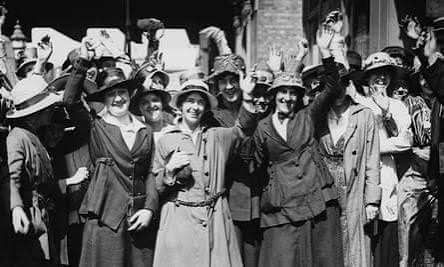
    In 1914, a British woman’s place was presumed to be the home. By 1918, over a million of them were making artillery shells, driving trams, and serving in uniform. The war did not just empty the factories of men—it filled them with women, and in doing so, it cracked the ideological foundation of separate spheres. But the story of gender after the war is not a simple tale of progress. It is a story of temporary disruption, political reward, and stubborn continuity.

    The Manpower Crisis That Opened the Doors

    In 1915, Britain’s army was bleeding. By the end of that year, over half a million soldiers had been killed or wounded. The Somme, in 1916, would add another 400,000 casualties in a single battle. With conscription introduced in 1916, nearly six million men were eventually mobilized. The factories, farms, and offices they left behind needed workers. The government, which had initially resisted women’s labor, began actively recruiting them.

    The numbers are stark. In 1914, about 5.9 million women were employed in Britain. By 1918, that figure had risen to 7.3 million. But the nature of the work mattered more than the count. Women moved into jobs that had been coded as masculine: heavy engineering, transport, and munitions. In the munitions factories alone, over one million women worked, producing 80% of the UK’s artillery shells. They were nicknamed ‘canary girls’ because TNT exposure turned their skin yellow. It was dangerous, dirty, and essential work.

    The Uniformed Woman: Auxiliary Forces and the Eastern Front

    Women also served closer to the front lines, though not in combat roles. Britain’s Women’s Army Auxiliary Corps (WAAC), Women’s Royal Naval Service (WRNS), and Women’s Royal Air Force (WRAF) attracted over 80,000 women. They worked as clerks, cooks, and drivers, freeing men for the trenches. Russia went further, fielding the Women’s Battalion of Death in 1917, a combat unit that fought in the chaos of the Revolution. These uniformed women were visible symbols of a world turned upside down.

    The war also created a demographic catastrophe. Britain ended the conflict with an estimated 1.7 to 2 million more women than men—the ‘surplus women’ problem. Millions of women became widows, and many more became sole breadwinners with no state support. The ‘lost generation’ was not a metaphor; it was a statistical reality that reshaped marriage patterns and public discourse.

    The Vote: A Reward or a Limited Concession?

    The most famous political change came with the Representation of the People Act in 1918. It gave the vote to women over 30 who met property qualifications—about 8.5 million women. Prime Minister Lloyd George framed it as gratitude for women’s war work. But the act was deliberately restrictive. It excluded women under 30 and most working-class women. Full equal suffrage did not arrive until 1928. In the United States, the 19th Amendment followed in 1920, and Germany granted women the vote in 1919. But France and Italy, despite their own massive wars, did not. France waited until 1944, Italy until 1945.

    The war also broke down legal barriers. Britain’s Sex Disqualification (Removal) Act of 1919 opened professions like law, civil service, and accountancy to women. But these were symbolic victories for a minority.

    The Backlash: Restoration of Pre-War Practices

    The revisionist view holds that the war’s impact was temporary. In 1919, the Restoration of Pre-War Practices Act forced women out of ‘men’s jobs’ in munitions and transport. By 1921, women’s employment rates had largely returned to pre-war levels. The interwar years saw a glorification of domesticity, a ‘cult of motherhood,’ and a cultural push for women to return home. The gender division of labor was reasserted, but the justification was weakened. Women had proven they could do the work; the argument that they were biologically incapable no longer held.

    The Cultural Shift: Fashion, Freedom, and the Flapper

    What did change irreversibly was culture. The war demanded practicality. Women wore shorter skirts and shed corsets for factory work. They bobbed their hair. They smoked, drank, and dated unchaperoned. The ‘flapper’ of the 1920s was a direct descendant of the munitionette. The war did not overturn the structures of patriarchy, but it undermined the myths that supported it. The separate spheres ideology—that women belonged in the home—was never fully restored. Even as women were pushed back into domestic roles, the memory of their wartime service lingered. It became a reference point for future feminist movements.

    The Verdict: A Disruption, Not a Revolution

    The First World War was not a clean break. It was a violent rupture that opened new possibilities and then slammed many doors shut. Women gained the vote in some countries, but not others. They entered new professions, but were pushed out after the war. They proved their capability, but were told to go home. The most lasting change was cognitive: the idea that women’s place was solely in the home was dealt a blow from which it never fully recovered. The war changed perceptions more than structures, but perceptions matter. They set the stage for the slow, grinding progress of the twentieth century.

    The First World War did not ‘give’ women equality, nor did it permanently erase gender divisions. It was a cataclysm that forced societies to reconsider what women could do. The vote came, but it was limited. Jobs opened, but they closed again. The war’s greatest legacy was not a law or a policy, but a shift in the collective imagination. Once women had built shells and driven trains, the old arguments about their fragility rang hollow. The door did not swing fully open, but it was never again locked shut.

    Summary

    • Women’s employment in Britain rose from 5.9 million (1914) to 7.3 million (1918), with over a million in munitions.
    • Over 80,000 women served in British auxiliary forces; Russia fielded an all-female combat unit.
    • Suffrage breakthroughs came in Britain (1918, partial), the US (1920), and Germany (1919), but France and Italy held out for decades.
    • The Restoration of Pre-War Practices Act (1919) pushed women out of wartime jobs, but cultural shifts—like shorter skirts and bobbed hair—persisted.
    • The war changed perceptions of women’s capabilities more than it changed economic structures, laying groundwork for future feminist advances.

    FAQ

    Q: Did all women get the vote in Britain after WWI?
    A: No. The 1918 Representation of the People Act gave the vote only to women over 30 who met property qualifications—about 8.5 million women. Full equal suffrage came in 1928.

    Q: Why didn’t France and Italy grant women the vote after WWI?
    A: Despite women’s significant war contributions, both countries delayed suffrage—France until 1944, Italy until 1945. The reasons varied, including fears of conservative women’s voting patterns and political instability.

    Q: What were ‘canary girls’?
    A: Women munitions workers whose skin turned yellow from TNT exposure. They produced 80% of the UK’s artillery shells during the war.

    Q: Did women’s employment remain high after the war?
    A: No. The Restoration of Pre-War Practices Act (1919) forced women out of ‘men’s jobs,’ and by 1921 employment rates had largely returned to pre-war levels.

    Q: What was the ‘surplus women’ problem?
    A: Britain had 1.7–2 million more women than men after the war, leading to public debate about unmarried women and their societal role.