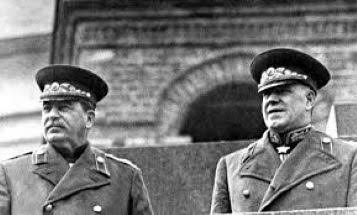
At dawn on June 22, 1941, German artillery opened fire along a front stretching from the Baltic to the Black Sea. Within hours, millions of Soviet citizens found themselves plunged into a war that would consume their country for four years.
By the time the guns fell silent on May 9, 1945, the Soviet Union had lost over 26 million people more than any other nation in history. Yet the survivors endured. They worked 16-hour shifts in freezing factories, ate bread rations measured in grams, and watched their cities burn. This is the story of how ordinary people lived and died under Stalin’s rule during the Great Patriotic War.
The Shock of Invasion: June 1941
The Red Army was catastrophically unprepared. In the first six months, roughly 4 million soldiers were killed or captured. Entire armies were encircled at Kiev alone, about 600,000 men were taken prisoner. Stalin, reportedly in shock for days, finally addressed the nation on July 3, 1941, not as comrades but as “Brothers and sisters.”
That address marked a turning point. The regime dropped overt communist rhetoric and instead invoked Russian nationalism, Orthodox Christianity, and historical heroes like Alexander Nevsky and Kutuzov. The war became the “Great Patriotic War,” a defense of the Motherland. The Comintern was dissolved in 1943 as a gesture to Western allies.
The Home Front: Endurance and Suffering
With over 34 million men mobilized, women filled the void. By 1943, they made up roughly 80% of the agricultural workforce and a large share of industrial labor. Over 800,000 women also served in the military as snipers, pilots, medics, and partisans.
Rationing began in July 1941. Workers received 400-800 grams of bread daily; dependents as little as 250 grams. Black markets thrived despite severe penalties. In Leningrad, the siege lasted 872 days. About 1 million civilians died, mostly of starvation. The only supply line was the “Road of Life” across frozen Lake Ladoga. Cannibalism was documented.
Factories ran 14-16 hour shifts. Children worked alongside adults. Schools moved to bomb shelters or closed entirely.
The Great Evacuation: Moving an Industry East
Between 1941 and 1942, over 1,500 factories were dismantled and relocated east of the Urals. This was one of the largest industrial migrations in history. Workers reassembled machinery in weeks, often in open fields, and resumed production. Millions of people were evacuated in cattle cars, losing everything. Over 25 million were left homeless.
Order No. 227: “Not a Step Back!”
In July 1942, as German forces pushed toward Stalingrad, Stalin issued Order No. 227. It established blocking detachments—barrier troops who could shoot retreating soldiers. Desertion was punishable by execution. The order was brutal, but it signaled that surrender was not an option.
At the front, conditions were desperate. Early on, some units had one rifle for every two men. Later, Soviet tactics relied on mass artillery and “human wave” assaults. Despite the terror, many fought fiercely out of patriotism.
The Gulag and Internal Exile
Prisoners in the Gulag built factories, railroads, and mines in the east. Some were released early to join penal battalions. Entire nationalities were accused of collaboration and deported: Chechens, Ingush, Crimean Tatars, Volga Germans, and others. Over 1.5 million people were sent to Central Asia and Siberia, with high mortality.
Soviet POWs suffered doubly. Stalin declared them traitors under Order No. 270. Of about 5.7 million Soviet POWs, roughly 3.3 million died in German captivity. Those who returned were often sent to filtration camps and then to the Gulag or penal battalions.
Lend-Lease: The Lifeline from the West
The United States and Allies supplied about $11 billion in aid—food, trucks, aircraft, raw materials. This contributed roughly 10–15% of Soviet war production inputs. It was critical for logistics, especially Studebaker trucks, but not the majority of armaments.
The Human Cost: 26 Million Lost
The Soviet Union lost over 26–27 million citizens—military and civilian combined. Roughly 8.7–11 million military deaths and 13–14 million civilian deaths from starvation, bombing, disease, and mass executions. At its peak, Nazi Germany occupied about 1.5 million square kilometers of Soviet territory, home to about 85 million people—nearly 40% of the population.
Aftermath: A Country Transformed
Victory came at an unimaginable price. The war left deep scars on Soviet society. Millions were displaced, orphaned, or widowed. Yet the regime emerged stronger, having successfully reframed itself as the defender of the Motherland. For the survivors, the memory of those years—the hunger, the loss, the endurance—would shape the Soviet identity for decades.
The Great Patriotic War was not just a military conflict; it was a test of human endurance. Under Stalin’s iron rule, millions sacrificed everything for a victory that would define the Soviet Union’s place in history. The war’s legacy—of suffering and survival—remains etched in the collective memory of Russia and its neighbors.
Summary
- The Soviet Union lost over 26 million people during WWII, including 8.7–11 million military deaths and 13–14 million civilian deaths.
- The German invasion in June 1941 caught the Red Army unprepared, leading to catastrophic losses in the first months.
- The home front endured extreme hardship: rationing, 16-hour work shifts, and the 872-day siege of Leningrad.
- Over 1,500 factories were evacuated east of the Urals, one of the largest industrial migrations in history.
- Stalin’s regime used terror and nationalism to maintain control, including Order No. 227 and ethnic deportations of over 1.5 million people.
FAQ
Q: How many Soviet citizens died in WWII?
A: The Soviet Union lost over 26–27 million citizens, including both military and civilian deaths.
Q: What was the Siege of Leningrad?
A: It was a 872-day siege by German forces from 1941 to 1944, during which about 1 million civilians died, mostly from starvation.
Q: What was Order No. 227?
A: Issued in July 1942, it was Stalin’s “Not a Step Back!” order that established blocking detachments to shoot retreating soldiers and made desertion punishable by execution.
Q: How did Lend-Lease help the Soviet Union?
A: The US and Allies provided about $11 billion in aid—food, trucks, aircraft, raw materials—which contributed roughly 10–15% of Soviet war production inputs, critical for logistics.
Q: What happened to Soviet POWs?
A: Stalin declared them traitors under Order No. 270. Of about 5.7 million Soviet POWs, roughly 3.3 million died in German captivity, and many returnees were sent to the Gulag or penal battalions.
Leave a Reply