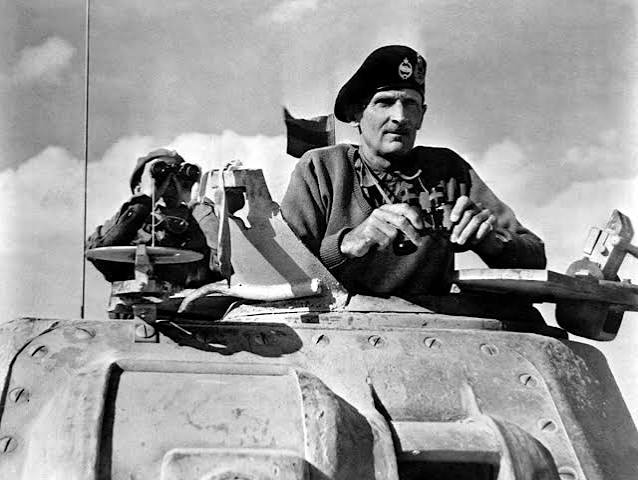
On a November morning in 1942, a British general in a black beret stood on a ridge in Egypt, watching his artillery pound German positions. He was about to deliver the first major land defeat of the Axis powers. That general was Bernard Law Montgomery, and the battle was El Alamein. To the British public, he was ‘Monty’ a hero who restored pride after years of defeat. To many Americans, he was an arrogant, cautious egotist who nearly fractured the Allied alliance.
Montgomery’s career was a study in contradictions. He was a meticulous planner who saved thousands of lives with careful preparation, yet his caution frustrated generals like Patton and Eisenhower. He was beloved by his troops, who appreciated his attention to their welfare, but he alienated almost every superior and ally with his tactless remarks. His legacy remains fiercely debated: was he a military genius or a lucky beneficiary of Allied superiority? The answer lies in the details of his campaigns, his personality, and the bitter clashes that defined World War II’s western front.
From Parsonage to Sandhurst
Bernard Law Montgomery was born in 1887 in Kennington, London, to a Church of Ireland clergyman. His father, a bishop, was gentle; his mother, by all accounts, was cold and strict. Biographers have long pointed to this chilly upbringing as the root of Monty’s later prickly demeanor. He attended St. Paul’s School and then the Royal Military College at Sandhurst, but he was not a standout cadet. In fact, he was nearly expelled for setting fire to a fellow cadet’s shirt tails during a prank.
Commissioned into the Royal Warwickshire Regiment in 1908, Monty saw his first combat in World War I. At the Battle of Ypres in 1914, he was shot through the chest by a sniper. He lay on the battlefield for hours, and the bullet narrowly missed his heart and spine. The experience left him with a lifelong belief in meticulous preparation: he had survived, he later said, because of careful training and a bit of luck. He was awarded the Distinguished Service Order for his bravery.
Between the wars, Monty served in Ireland, Palestine, and India, earning a reputation as a hard-driving trainer. He was not popular he was too intense, too critical but he produced well-drilled units. He also developed a fanatical focus on physical fitness and mental resilience, habits that would define his command style.
The Rise to Eighth Army Command
When World War II broke out, Monty commanded the 3rd Division in France. He was evacuated from Dunkirk in 1940, an experience that reinforced his conviction that the British Army needed radical reform. Back in Britain, he took over corps commands and then South-Eastern Command, where he drilled troops endlessly, insisting on realistic exercises and strict discipline.
In August 1942, the desert war in North Africa was going badly. The British Eighth Army had been pushed back by German Field Marshal Erwin Rommel, and morale was low. Prime Minister Winston Churchill was desperate for a victory. Monty was appointed to take command, replacing Claude Auchinleck. He arrived in Egypt and immediately broadcast his confidence: he told his new command that they would hold the line, then break Rommel’s forces — and he was right.
El Alamein and the Desert Victory
The Second Battle of El Alamein, fought from October 23 to November 4, 1942, was Montgomery’s greatest triumph. He had spent weeks preparing: stockpiling supplies, training troops, and devising a plan that relied on overwhelming firepower. His strategy was deliberately set-piece — a methodical artillery barrage followed by infantry and tank advances, designed to grind down the Axis forces.
Critics later noted that Rommel’s army was stretched thin, short on fuel and supplies, and that Allied code-breaking (Ultra) had given Monty precise intelligence. But at the time, the victory was a turning point. It ended the Axis threat to Egypt and the Suez Canal, and it gave the British people a much-needed boost. Monty became a national hero overnight.
He wore a black beret with two badges — the Royal Tank Regiment and the General’s insignia — and insisted on addressing his men personally. He also improved their food, mail delivery, and medical care, earning genuine affection from the rank and file. To them, he was ‘Monty’ — a commander who cared about their welfare and who would not waste their lives in reckless attacks.
Normandy and the Friction with Allies
Monty’s next major role was as commander of the Allied ground forces for the D-Day invasion on June 6, 1944. He oversaw the initial landings in Normandy and the subsequent campaign to break out from the beaches. The fighting in the ‘bocage’ — dense hedgerows — was brutal and slow. Monty’s critics, including American generals George Patton and Omar Bradley, accused him of being too cautious. They wanted a rapid armored thrust; Monty favored a grinding, methodical approach that minimized casualties.
The friction was personal as well as strategic. Monty was tactless and often appeared to claim credit for Allied successes. He clashed repeatedly with Supreme Commander Dwight Eisenhower over the direction of the campaign. Monty advocated for a single, concentrated thrust toward Berlin; Eisenhower preferred a broad front. Their arguments were frequent and bitter.
In September 1944, Monty launched Operation Market Garden, an ambitious plan to seize a series of bridges in the Netherlands and cross the Rhine into Germany. It was a bold gamble, but it failed. The last bridge at Arnhem — ‘a bridge too far’ — was held by German forces, and thousands of Allied paratroopers were killed or captured. Monty had pushed for the operation despite intelligence warnings, and the failure tarnished his reputation.
The Bulge and the Press Conference That Backfired
In December 1944, Germany launched a surprise offensive through the Ardennes forest, creating a bulge in the Allied lines. Eisenhower placed Monty in command of the northern shoulder, a move that angered American generals. Monty’s forces helped halt the German advance and then counterattacked. But in January 1945, he held a press conference in which he appeared to take credit for ‘the British’ saving the Americans from a ‘little local difficulty’. The remarks were reported in American newspapers and caused a major uproar. Eisenhower and Bradley were furious; some even demanded Monty’s removal.
Monty later claimed he was misquoted, but the damage was done. The incident cemented his reputation among Americans as an arrogant, self-promoting Brit. It also highlighted the deeper issue: Monty was brilliant at commanding a single army, but he struggled with coalition warfare.
Post-War Legacy and Controversies
After the war, Monty served as Chief of the Imperial General Staff (1946–1948), overseeing the contraction of Britain’s military commitments as the empire dissolved. He then took roles in the Western Union and NATO, but his tactlessness continued. He retired in 1958 and published his memoirs, which were scathing about many former colleagues, including Eisenhower and Patton. The book reignited the wartime feuds and alienated many allies.
Monty died in 1976, but the debates over his legacy have never ended. Revisionist historians argue that El Alamein was won against a weakened enemy and that Monty’s caution prolonged the war. They point to his failure at Market Garden and his slow progress in Normandy. Traditionalists counter that he saved British morale, prepared his troops meticulously, and avoided the reckless waste of life that characterized earlier commanders.
The Soldier’s General and the Man
What is undeniable is that Monty was a soldier’s general. He visited units, talked to troops, and insisted on proper supplies and medical care. He was also a man of deep contradictions: supremely confident in public, but privately insecure; a master of detail, yet prone to strategic gambles. His beret and his bluntness made him a recognizable figure, but they also made him a target.
Perhaps the fairest assessment is that Monty was exactly what Britain needed in 1942: a commander who could restore confidence and win a decisive battle. But as the war progressed, his methods became less suited to the fast-moving, coalition-based campaign in northwest Europe. He was a brilliant set-piece commander, not a master of mobile warfare. And his personality, while effective in motivating his own troops, was disastrous for Allied unity.
Today, visitors to the Imperial War Museum in London can see Monty’s beret and his staff car. But the true monument is the debate he continues to inspire — a debate that reflects the complexities of leadership, personality, and coalition warfare.
Bernard Montgomery was a man of his time: a product of Victorian discipline and a pioneer of modern military professionalism. He gave Britain a victory when it desperately needed one, and he treated his soldiers with a respect that was ahead of its time. But his abrasive personality and strategic caution created as many problems as they solved. He remains a compelling figure — not because he was flawless, but because his flaws were as large as his achievements. In the end, Monty was a brilliant, flawed, and unforgettable commander, and that is why we still argue about him today.
Summary
- Bernard Montgomery, known as ‘Monty’, was Britain’s most famous World War II general, celebrated for the victory at El Alamein.
- He was a meticulous planner who emphasized logistics and set-piece battles, but his caution frustrated allies like Patton and Eisenhower.
- He was beloved by his troops for improving their welfare, but his tactless remarks caused major Allied frictions.
- His biggest failure was Operation Market Garden, an ambitious airborne operation that ended in defeat.
- His post-war memoirs reignited controversies, and historians still debate whether he was a genius or a lucky beneficiary of Allied superiority.
FAQ
Q: Why was Montgomery called ‘Monty’?
A: The nickname ‘Monty’ was widely used by his troops and the British public, reflecting his popularity and approachable image, even though he was often aloof with superiors.
Q: What was Montgomery’s most famous victory?
A: The Second Battle of El Alamein (1942) in Egypt, where he defeated German Field Marshal Rommel, marking the first major Allied land victory over the Axis and a turning point in the war.
Q: Why did Montgomery clash with American generals?
A: He was famously direct and tactless, often appearing to claim credit for Allied successes. His strategic disagreements with Eisenhower and Patton, along with a controversial press conference after the Battle of the Bulge, created deep friction.
Q: What was Operation Market Garden?
A: It was a bold plan in September 1944 to capture a series of bridges in the Netherlands and cross the Rhine into Germany. It failed, especially at Arnhem, and became known as ‘a bridge too far’, significantly damaging Montgomery’s reputation.
Q: What was Montgomery’s role after the war?
A: He served as Chief of the Imperial General Staff, then in Western Union and NATO commands, before retiring in 1958. His later memoirs were highly critical of wartime colleagues, causing further controversy.
Leave a Reply