On a quiet ward in a British military hospital in 1917, a young officer who had led his men through the Somme sat mute, unable to speak or move his hands. He wasn’t physically injured, yet his body had betrayed him. Doctors called it shell shock, a term that suggested his brain had been rattled by explosions. But the real damage was invisible, a psychological rupture that would take decades to understand.
This scene, repeated across every war in recorded history, marks the beginning of a slow and painful reckoning. For most of human history, the psychological wounds of war were dismissed as cowardice, homesickness, or moral failure. Only in the twentieth century did societies begin to name, treat, and eventually accept these wounds as legitimate injuries. The journey from the firing squads of World War I to the diagnostic manuals of today is not just a medical story it’s a story about how societies cope with the aftermath of violence, and how the trauma of war ripples through generations.
The Birth of Shell Shock
When World War I broke out, no one was prepared for the psychological devastation it would unleash. Industrial warfare artillery barrages, machine guns, poison gas produced casualties that defied traditional medicine. Soldiers returned from the front with tremors, paralysis, nightmares, and mutism, yet no physical wound could explain their suffering. In 1915, British Army physician Charles Myers coined the term “shell shock” to describe these cases, initially believing they were caused by physical damage from exploding shells. But when soldiers far from any explosion began showing identical symptoms, the theory collapsed.
The disorder had a name, but no agreed cause. Treatment was often brutal. Doctors used electroshock, isolation, and “re-education” to force soldiers back to the front. Some, like psychiatrist W.H.R. Rivers at Craiglockhart Hospital in Scotland, took a gentler approach, using talking therapy to help patients process their experiences. Among Rivers’ patients were the poets Siegfried Sassoon and Wilfred Owen, whose verses about the war’s horrors would later become famous. Rivers’ methods worked, but they were the exception.
The stigma was immense. In Britain, ~306 soldiers were executed for desertion or cowardice during the war, many of whom likely suffered from shell shock. Officers were often spared. Ordinary soldiers were not. The message was clear: psychological collapse was a failure of character, not a wound. It took until 2006 for the UK government to issue posthumous pardons for these men.
From Combat Fatigue to PTSD
World War II brought a new term: “combat fatigue” or “operational exhaustion.” The name was deliberate it implied that the condition was temporary and that recovery was possible. The U.S. military screened recruits for psychological fitness, but the effort failed. Psychiatric casualties still numbered ~500,000 discharged soldiers. In response, military psychiatrists developed “forward psychiatry,” based on three principles: Proximity, Immediacy, and Expectancy (PIE). Treat soldiers near the front, as quickly as possible, and with the expectation that they will return to duty. The approach worked surprisingly well. Soldiers treated under PIE showed higher recovery rates than those evacuated far from the battlefield.
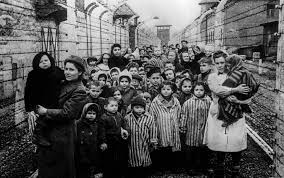
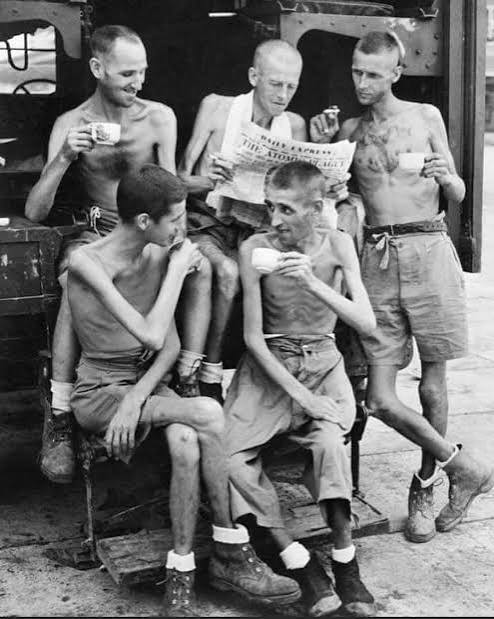
The war also expanded the scope of trauma beyond soldiers. The Holocaust produced a distinct syndrome, described by psychiatrist William Niederland as “survivor syndrome”chronic anxiety, depression, guilt, and psychosomatic symptoms. Civilian bombing victims in London suffered from “bomb neurosis.” The atomic bomb survivors in Japan, the hibakusha, faced unique psychological burdens, including radiation stigma and survivor guilt. By the end of the war, it was impossible to ignore that war trauma affected everyone, not just those in uniform.
Vietnam and the Road to Recognition
The Vietnam War changed everything. Unlike previous conflicts, many veterans did not develop symptoms until years after returning home. This delayed onset often 2 to 10 years post-service challenged existing models of combat fatigue, which assumed that symptoms appeared during or immediately after combat. Veterans returned to a society that was often hostile or indifferent. The anti-war movement and advocacy groups like Vietnam Veterans Against the War pushed for recognition and treatment.
Their efforts culminated in 1980, when the American Psychiatric Association officially recognized PTSD in the DSM-III. The diagnosis was shaped not only by veterans’ advocacy but also by feminist movements highlighting sexual trauma. For the first time, war trauma was acknowledged as a legitimate psychiatric condition, not a personal failing. The National Vietnam Veterans Readjustment Study (1988) found that ~30% of male Vietnam veterans had experienced PTSD at some point—a staggering figure that underscored the scale of the problem.
Civilians in the Crossfire
If the twentieth century taught anything, it’s that civilians bear the heaviest burden of modern war. In World War II, civilians accounted for roughly 50% of casualties. In recent conflicts, that number has risen to an estimated 90%. Civilian trauma includes displacement, loss of family, sexual violence, and the psychological impact of bombing. The Blitz in London, the firebombing of Dresden, and the atomic bombings of Hiroshima and Nagasaki all created new categories of psychological injury.
Displacement is a particular kind of wound. Refugees and internally displaced people lose not just their homes but their sense of identity and community. Studies of displaced populations show elevated rates of depression, anxiety, and PTSD. The trauma is compounded by the uncertainty of exile and the difficulty of rebuilding a life from scratch.
The Long Shadow: Generational Trauma
The effects of war do not end when the shooting stops. Studies of WWII veterans, Holocaust survivors, and Vietnam veterans show elevated rates of depression, suicide, substance abuse, and cardiovascular disease decades after conflict. The trauma can even pass to the next generation. Children of survivors exhibit higher rates of anxiety and PTSD, a phenomenon researchers attribute to both behavioral modeling and epigenetic changes. The grandchildren of Holocaust survivors, for example, show altered stress hormone regulation, suggesting that trauma leaves a biological mark.
This intergenerational transmission is not fate, but it is a reminder that the psychological wounds of war are not confined to the individual. They ripple through families, communities, and entire societies. Recognizing and treating these wounds is not just a matter of medical care—it’s a matter of social justice.
How Societies Cope: Lessons and Gaps
Institutional responses have evolved significantly. The U.S. Veterans Administration (now VA) expanded massively after WWII and again after Vietnam, creating a framework for treating war trauma. Forward psychiatry remains a model for battlefield care. Yet gaps persist. Many veterans still face stigma when seeking help. Access to care is uneven, and the diagnosis of PTSD remains contested in some quarters.
Societies also cope through culture and memory. Literature, film, and memorials serve as collective processing tools. The poems of Sassoon and Owen, the novels of Tim O’Brien, the films of Oliver Stone—these are not just art; they are ways of making sense of the incomprehensible. They allow societies to confront trauma together rather than leaving it to individuals to bear alone.
The Unfinished Work
The history of war trauma is a history of naming and naming again. Shell shock, combat fatigue, PTSD—each term reflected a society struggling to understand what it was seeing. Each name carried its own stigma and its own promise. The work is far from complete. As new conflicts arise, new generations of veterans and civilians will bear the psychological wounds. The question is whether societies will learn from the past or repeat its mistakes.
The story of how societies cope with war trauma is not just a story of medicine. It’s a story of compassion, of listening to those who have suffered, and of refusing to look away. It’s a story that continues to unfold.
The psychological wounds of war are as old as war itself, but the understanding of them is young. From the shell-shocked soldiers of WWI to the PTSD-diagnosed veterans of today, societies have slowly, painfully learned to name and treat what they once dismissed. The journey is not over. As long as wars are fought, there will be invisible wounds to heal—and a responsibility to heal them.
Summary
- Shell shock, coined in WWI, was initially thought to be physical brain damage; it was later recognized as psychological trauma.
- Forward psychiatry (PIE principles) in WWII improved recovery rates by treating soldiers near the front.
- PTSD was officially recognized in 1980, partly due to Vietnam veterans’ advocacy.
- Civilians now account for ~90% of war casualties, with trauma including displacement and bombing.
- Trauma can be transmitted across generations, affecting children and grandchildren of survivors.
FAQ
Q: What is shell shock?
A: Shell shock is a term coined in WWI to describe soldiers with psychological symptoms like tremors, paralysis, and nightmares, initially attributed to physical brain damage from explosions.
Q: How did WWII change the treatment of war trauma?
A: WWII introduced “combat fatigue” and forward psychiatry (PIE principles), which treated soldiers near the front, leading to better recovery rates.
Q: Why was PTSD added to the DSM?
A: PTSD was added in 1980 due to advocacy by Vietnam veterans and feminist movements, recognizing delayed-onset trauma.
Q: Do civilians experience war trauma too?
A: Yes, civilians now account for most war casualties, and their trauma includes displacement, loss, and bombing-related psychological injury.
Q: Can war trauma affect future generations?
A: Yes, studies show that children and grandchildren of survivors can experience higher rates of anxiety and PTSD, due to behavioral and epigenetic factors.