Tag: psychology

  • Why We Fear Death and How to Face It

    Why We Fear Death and How to Face It

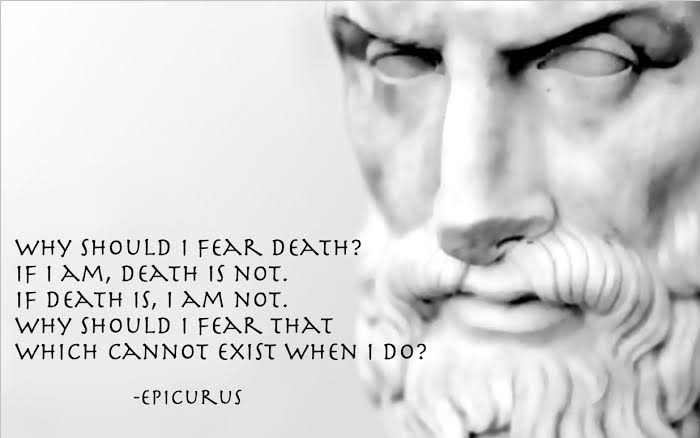
    Death anxiety is more than a morbid thought—it’s a universal human experience that shapes our choices, relationships, and mental health. For most people, it’s a background hum, but for 3–10% of us, it becomes a clinical condition that interferes with daily life. The good news: psychology offers clear insights into why we fear death and practical ways to ease that fear.

    The Evolutionary Roots of Death Fear

    Fear of death isn’t a flaw; it’s a feature. Our ancestors who avoided life-threatening situations survived to pass on their genes. But humans are unique—we can imagine our own nonexistence, a cognitive burden that comes with our advanced prefrontal cortex. That same brain region lets us plan for the future and think abstractly, but it also creates the potential for paralyzing terror.

    Terror Management Theory: How We Cope

    In 1973, cultural anthropologist Ernest Becker won a Pulitzer Prize for The Denial of Death, arguing that human civilization is largely a defense against the terror of mortality. Psychologists Jeff Greenberg, Sheldon Solomon, and Tom Pyszczynski built on this to develop Terror Management Theory (TMT) in 1986. TMT says we manage death anxiety through two main buffers:

    • Cultural worldviews—belief systems that give life meaning, order, and the promise of literal or symbolic immortality (heaven, reincarnation, legacy).
    • Self-esteem—the sense that we are valuable contributors to that meaningful world.

    When these buffers are threatened, death anxiety spikes. Studies show that reminding people of their mortality increases their defense of their worldview and boosts their self-esteem striving.

    The Age Factor: When Fear Peaks and Falls

    Death anxiety isn’t constant. It follows a developmental arc:

    • Children grasp death’s irreversibility around ages 5–7, and fear peaks in middle childhood.
    • Adolescents explore death philosophically and sometimes flirt with risk-taking to test mortality boundaries.
    • Adults in their 20s–40s often report lower anxiety, but it creeps back in midlife (40s–50s)—the ‘midlife mortality crisis.’
    • Older adults (65+) generally report less fear than younger adults, a shift researchers attribute to emotional selectivity and greater acceptance of life’s natural arc. Health, religiosity, and social support also play roles.

    The Cultural Buffer: Religion and Secular Worldviews

    Historically, religion has been the primary buffer. Research consistently shows that intrinsic religiosity—deep personal faith—is linked to lower death anxiety, while extrinsic religiosity (social or instrumental participation) is not. Secular worldviews offer alternatives: legacy (children, creative works), scientific immortality (cryonics, transhumanism), or philosophical acceptance (Stoicism, existentialism).

    Modern medicine has changed the landscape. Death moved from a domestic, familiar event to a medicalized, institutional one. Limited exposure paradoxically makes death feel foreign—and scarier. The COVID-19 pandemic provided a natural experiment: globally, death anxiety rose, hitting younger adults and healthcare workers hardest.

    The Death Positive Movement: Facing Fear Directly

    Mortician Caitlin Doughty and The Order of the Good Death advocate for death acceptance through direct engagement: home funerals, death cafes, advance care planning, and open conversation. This movement draws on historical practices where death was a community event. The logic: what we avoid, we fear more; what we engage with, we demystify.

    Practical Ways to Overcome Death Anxiety

    Psychology offers evidence-based strategies:

    • Cognitive-behavioral therapy (CBT)—helps identify and challenge catastrophic thinking about death.
    • Existential therapy—encourages confronting mortality to live more authentically (à la Yalom).
    • Mindfulness and meditation—reduce anxiety by grounding you in the present.
    • Advance care planning—writing a living will or advance directive can reduce anxiety by giving a sense of control.
    • Death cafes—informal gatherings to talk about death over tea and cake, reducing taboo.
    • Near-death experience research—studies by Bruce Greyson find that NDEs often reduce fear of death, regardless of prior beliefs, suggesting that perceiving consciousness as continuing can ease anxiety.

    The Dual-Process Model: Conscious vs. Unconscious Fear

    Paul Wong’s dual-process model (2008) distinguishes between conscious and unconscious death fears. Conscious fears respond to rational discussion and planning; unconscious fears may need experiential or symbolic approaches (e.g., art therapy, dream work). Tailoring coping strategies to the level of fear is key.

    Conclusion

    Fear of death is a natural part of being human. But it doesn’t have to control you. By understanding its roots—evolutionary, cultural, and personal—and using evidence-based tools, you can transform this fear into a catalyst for living more meaningfully. As the death positive movement shows, facing death openly can reduce its power.

    Death anxiety is a universal human experience, deeply rooted in our biology and psychology. Yet it’s not a fixed destiny. By recognizing the mechanisms behind it—Terror Management Theory, cultural buffers, developmental patterns—and actively engaging with mortality through therapy, planning, and open conversation, we can ease its grip. The goal isn’t to eliminate fear but to live with it, using it as a reminder to appreciate the present.

    Summary

    • Death anxiety is universal, affecting 3–10% of people clinically.
    • Terror Management Theory explains we buffer fear through culture and self-esteem.
    • Fear peaks in childhood and midlife, but often declines after 65.
    • Intrinsic religiosity and secular worldviews both reduce anxiety.
    • Practical strategies: CBT, mindfulness, advance care planning, and death cafes.

    FAQ

    Q: Is fear of death a mental disorder?
    A: Only when it interferes with daily functioning. Clinical estimates suggest 3–10% of people experience significant death anxiety, often linked to anxiety, depression, or PTSD.

    Q: Why do I fear death more as I get older?
    A: It’s common for death anxiety to increase in midlife (40s–50s), sometimes called the ‘midlife mortality crisis.’ It often declines in older age as acceptance grows.

    Q: Does religion help reduce death anxiety?
    A: Yes, but only intrinsic religiosity—deep personal faith—is consistently linked to lower anxiety. Merely attending services for social reasons doesn’t have the same effect.

    Q: What can I do to reduce my death anxiety?
    A: Cognitive-behavioral therapy, mindfulness, advance care planning, and open conversations about death (like death cafes) are all evidence-based strategies.

    Q: Do near-death experiences reduce fear of death?
    A: Yes. Studies show that many people who have NDEs report reduced fear of death, regardless of their prior religious beliefs.

  • 8 Science-Backed Ways to Read Body Language (Without the Pseudoscience)

    8 Science-Backed Ways to Read Body Language (Without the Pseudoscience)

    Most people think reading body language is about spotting a liar by the way they touch their nose. But that’s a myth. In reality, decoding nonverbal cues is more like listening to a conversation with your eyes—it takes context, clusters, and a healthy dose of humility.

    Here are 8 practical, research-informed ways to read people’s body language like a pro, without falling for the oversimplified ‘tells’ you see on TV.

    1. Look for Clusters, Not Single Cues

    One crossed arm doesn’t mean someone is defensive. It could mean they’re cold, comfortable, or just resting their arm. The pro move is to look for clusters—multiple cues that reinforce the same message. If someone has crossed arms and is leaning away and avoiding eye contact, that’s a stronger signal of discomfort. A single gesture is a word; a cluster is a sentence.

    2. Establish a Baseline First

    You can’t read anyone’s body language without knowing their ‘normal.’ Some people naturally gesture wildly; others sit stone-still. Before you interpret anything, watch how a person behaves in a relaxed, neutral setting. Then notice deviations from that baseline. A normally calm person who starts fidgeting during a specific topic is more meaningful than a chronic fidgeter doing the same.

    3. Read the Eyes—But Not Like a Lie Detector

    Eye contact is powerful, but not in the way pop psychology claims. Prolonged staring isn’t a sign of honesty; it can be a dominance move or a sign of anxiety (some people overcompensate). What to watch instead: blink rate and pupil dilation. Increased blinking can signal stress or cognitive load. Pupils dilate when we’re interested or aroused—but they also dilate in bright light, so be careful. Use eyes as one part of the puzzle, not the whole picture.

    4. Watch the Feet and Legs

    Feet are often the most honest part of the body because we’re less conscious of them. In a conversation, if someone’s feet point toward you, they’re likely engaged. If their feet point toward the exit or shift away, they may want to leave. This is one of the more reliable cues, but again, it works best in clusters with posture and gaze.

    5. Spot Microexpressions—But Practice

    Microexpressions are brief facial flickers (under 1/5 of a second) that reveal true emotions. Paul Ekman’s research showed they’re universal across cultures. But spotting them takes training—the average person catches them less than 10% of the time. You can practice with online tools like the Microexpression Training Tool, but don’t expect to become a human lie detector overnight. Even Ekman warns that microexpressions indicate emotion, not deception.

    6. Mirroring Builds Rapport—If It’s Natural

    When two people are in sync, they unconsciously mirror each other’s posture, gestures, and speech rhythms. This interpersonal coordination is a sign of rapport and trust. You can deliberately mirror someone to build connection, but do it subtly. Overt mimicry—copying every move like a cartoon character—will backfire and creep people out. Aim for approximation, not imitation.

    7. Proxemics: Respect the Space Bubble

    Edward T. Hall’s proxemics defines distance zones: intimate (0–18 inches), personal (18 inches–4 feet), social (4–12 feet), and public (12+ feet). In Western cultures, standing too close (invading the intimate zone) can trigger discomfort; standing too far can feel cold. But these distances vary by culture, so adjust accordingly. When someone leans in, they’re likely interested; when they back away, you may be crowding them.

    8. Don’t Forget Context and Culture

    Every cue means something different in another context. A thumbs-up is positive in the U.S. but offensive in parts of the Middle East. Direct eye contact is respectful in Western settings but can be rude in some East Asian cultures. And a gesture like nodding can mean ‘yes’ in some places and ‘no’ in others (e.g., Bulgaria). Always ask: What is this person’s baseline, what is the situation, and what are their cultural norms? Without that, you’re just projecting your own assumptions.

    Reading body language is a skill, not a superpower. The pros know that a single ‘tell’ means nothing—it’s the cluster, the baseline, and the context that matter. So next time you want to understand someone, resist the urge to decode them. Instead, watch, listen, and let the whole picture form. Your intuition—sharpened by these evidence-based habits—will do the rest.

    Summary

    • Look for clusters of cues, not single gestures
    • Establish a baseline for each person before interpreting
    • Eyes matter, but blink rate and pupils are more useful than stare duration
    • Feet and legs often reveal true intentions
    • Microexpressions are real but require training to spot
    • Mirroring builds rapport when done subtly
    • Respect proxemics and cultural variations
    • Context is king—never ignore it

    FAQ

    Q: Is it true that 55% of communication is body language?
    A: No. That figure comes from Albert Mehrabian’s research on inconsistent messages about feelings (like sarcasm), not all communication. It’s one of the most misquoted stats in the field.

    Q: Can you tell if someone is lying by their body language?
    A: Not reliably. Research shows people detect lies at about 54% accuracy, barely above chance. There’s no single ‘Pinocchio’s nose’ cue. Instead, look for deviations from a person’s baseline, like increased fidgeting or changes in speech rate, but even those aren’t foolproof.

    Q: What’s the difference between a microexpression and a regular expression?
    A: A microexpression is a very brief, involuntary facial expression that lasts less than 1/5 of a second. It reveals a true emotion that a person might be trying to hide, but catching it requires practice and training.

    Q: Does crossed arms always mean defensiveness?
    A: No. It can mean coldness, comfort, or habit. Without baseline comparison and other cues, it’s meaningless. Always look for clusters and context.

    Q: How can I improve my own body language?
    A: Practice open posture (uncrossed arms, relaxed shoulders), maintain natural eye contact, and mirror others subtly. But the most important thing is to be congruent—your nonverbal cues should match your words. Authenticity beats technique.

  • 9 Signs You Are Mentally Stronger Than Most People

    9 Signs You Are Mentally Stronger Than Most People

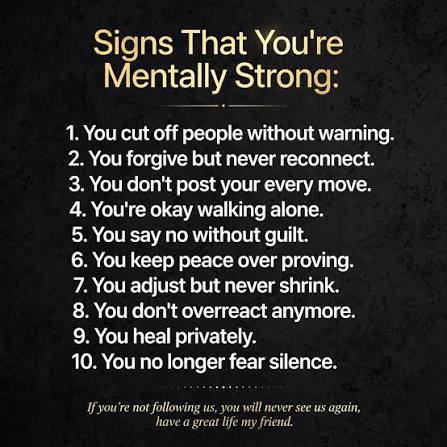
    You’ve probably heard the phrase “mental strength” thrown around, but what does it actually look like in real life? It’s not about never crying, never doubting, or powering through exhaustion with a stiff upper lip. In fact, some of the most telling signs are counterintuitive—like asking for help or admitting you’re wrong.

    Psychologists define mental strength as the ability to regulate emotions, manage thoughts, and behave productively even under stress. It’s a skill set, not a personality trait, and research shows it can be built over time. The following nine signs aren’t a checklist for superiority; they’re markers that you’ve developed habits that most people haven’t yet mastered. If you recognize yourself in several, you’re likely more resilient than you give yourself credit for.

    1. You Feel Discomfort—and Stay Anyway

    Mentally strong people don’t enjoy pain, but they don’t run from it either. Whether it’s an awkward conversation, a difficult deadline, or the anxiety of trying something new, they tolerate the discomfort long enough to make progress. This isn’t about being a masochist; it’s about recognizing that avoiding discomfort only makes it bigger. Psychologists call this “distress tolerance,” and it’s a core component of emotional regulation. If you’ve ever sat with a hard feeling instead of distracting yourself with your phone or a snack, you’ve practiced this.

    2. You Regulate Your Emotions, Not Suppress Them

    Mental strength is often mistaken for stoic indifference. But actually, it’s the opposite. People with high mental strength feel their emotions fully—they just don’t let them drive the car. When you’re angry, you can pause before firing off that email. When you’re sad, you let yourself cry, but you still show up to work the next day. This emotional regulation is a skill, and it’s linked to prefrontal cortex activity. It’s how you can be furious with your partner and still speak respectfully.

    3. You Focus on What You Can Control

    Ever catch yourself spiraling about the economy, a colleague’s mood, or the weather? Mentally strong people don’t waste energy there. They’ve internalized the Stoic distinction between what’s up to you and what isn’t. When a flight gets delayed, they don’t rant at the gate agent; they pull out a book. When a project gets canceled, they pivot to the next task instead of dwelling on the lost work. This isn’t apathy—it’s strategic energy management. You can’t control the storm, but you can control how you prepare for it.

    4. You Say “No” Without Guilt

    Setting boundaries feels uncomfortable, especially if you’re a people-pleaser. But mentally strong people have learned that saying “yes” to everything means saying “no” to their own priorities. They can decline a social invitation, turn down extra work, or leave a toxic relationship without feeling the need to over-explain. This self-advocacy is a sign of self-respect, and it’s a skill you can build. If you’ve ever said “no” and didn’t immediately apologize, you’re ahead of the curve.

    5. You See Failure as Data, Not Identity

    When you fail a test, lose a client, or get rejected, what’s your inner monologue? Mentally strong people treat failure as feedback. They ask, “What can I learn from this?” rather than “What’s wrong with me?” This is the growth mindset that Carol Dweck identified. It’s not about sugarcoating mistakes; it’s about separating your worth from your outcomes. If you’ve ever failed at something and still felt good about yourself, that’s a sign of mental strength.

    6. You’re Kind to Yourself After Mistakes

    This one surprises people. You might think mental strength means beating yourself up for a misstep to “stay sharp.” But research shows that self-compassion—treating yourself with the same kindness you’d offer a friend—is actually linked to greater resilience. When you mess up, you acknowledge it, comfort yourself, and then get back up. This isn’t letting yourself off the hook; it’s preventing shame from becoming a barrier to progress. If you’ve ever told yourself “It’s okay, everyone makes mistakes” and meant it, you’re practicing this.

    7. You Choose Long-Term Rewards Over Short-Term Pleasure

    The Marshmallow Test isn’t destiny, but delayed gratification is a real skill. Mentally strong people can resist the immediate dopamine hit—whether it’s a shopping spree, a sugar rush, or a binge-watch—when it conflicts with a bigger goal. They save for retirement, skip the dessert, and hit the gym. This isn’t about being a robot; it’s about having a clear sense of your priorities. If you’ve ever said “I’ll skip this now so I can have something better later,” you’re exercising this muscle.

    8. You Adapt When Plans Go Off the Rails

    Life is unpredictable. Mentally strong people don’t get married to a single plan. When a sudden illness, a job loss, or a global pandemic disrupts their trajectory, they mourn the loss, then adjust. This adaptability is what psychologists call cognitive flexibility—the ability to reframe a situation and find a new path. If you’ve ever had your life upended and managed to find a new routine, you’ve shown this.

    9. You Ask for Help When You Need It

    Contrary to the lone-wolf myth, mentally strong people recognize when they’re in over their heads. They reach out to a therapist, a mentor, or a friend because they know that seeking support is a strategy, not a weakness. This is particularly counterintuitive in cultures that prize self-reliance. But research shows that social support is a key resilience factor. If you’ve ever said “I can’t do this alone” and reached out, you’re demonstrating mental strength, not the lack of it.

    Mental strength isn’t about being invincible. It’s about being flexible, self-aware, and willing to grow. If you recognized yourself in these signs, you’re likely more resilient than you thought. And if you didn’t, remember: these are skills, not fixed traits. You can start building them today, one small choice at a time.

    Summary

    • Mental strength is a skill set, not a personality trait; it can be developed with practice.
    • Key signs include tolerating discomfort, regulating emotions, and focusing on what you can control.
    • Saying “no” without guilt and asking for help are signs of strength, not weakness.
    • Failure is viewed as feedback, not identity, by mentally strong individuals.
    • Self-compassion and adaptability are crucial components, often overlooked in pop psychology.

    FAQ

    Q: Is mental strength the same as resilience?
    A: They overlap, but there’s a subtle difference. Resilience is about bouncing back from adversity, while mental strength is a broader skill set that includes emotional regulation, cognitive flexibility, and self-discipline. You can be resilient without yet having all the other skills.

    Q: Can I become mentally stronger if I don’t have these signs?
    A: Absolutely. Mental strength is like a muscle—it grows with practice. You can start by practicing one skill, like focusing on what you can control or saying “no” more often.

    Q: Does mental strength mean I never feel negative emotions?
    A: No. In fact, mentally strong people feel a full range of emotions. The difference is they don’t let negative emotions dictate their actions. They experience anger, sadness, and fear, but they still behave productively.

    Q: Is asking for help a sign of weakness?
    A: No, it’s a sign of self-awareness and strategic thinking. Everyone has limits, and recognizing when you need support is a hallmark of mental strength.

    Q: How does culture affect what mental strength looks like?
    A: Cultural norms shape how people express mental strength. In collectivist cultures, asking for help might be more normalized, while in individualistic cultures, self-reliance is emphasized. The signs are the same, but they may manifest differently.

  • 7 Psychological Tricks to Stop Overthinking Instantly

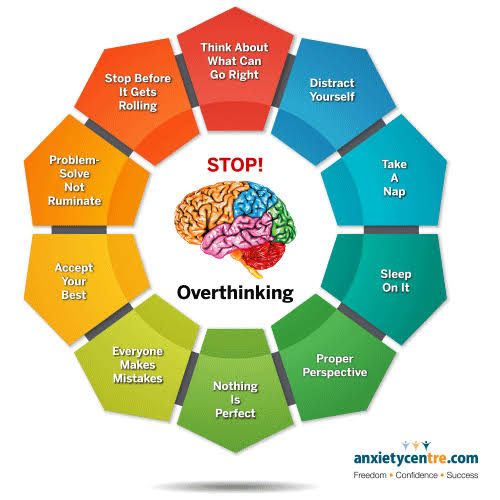
    7 Psychological Tricks to Stop Overthinking Instantly

    Overthinking feels like a treadmill for the mind: you’re running hard, but you’re not getting anywhere. Whether you’re replaying an awkward conversation, worrying about a decision, or spiraling into worst-case scenarios, the mental loop can be exhausting. It’s not just an annoyance—research shows that up to 73% of adults aged 25–35 report overthinking regularly, and chronic rumination is linked to anxiety, depression, and poor sleep.

    The good news? You can interrupt the loop. These seven techniques are drawn from established psychological therapies like Acceptance and Commitment Therapy (ACT), cognitive-behavioral therapy (CBT), and mindfulness. They’re not magic cures—they’re interruption tools that give your brain a moment of relief, which is often enough to break the cycle. Here’s what actually works, according to research and clinical practice.

    1. The 5-4-3-2-1 Grounding Technique

    When your thoughts are spinning, your brain is stuck in the default mode network (DMN)—the network active when your mind wanders. Grounding techniques pull your attention back to the present moment by engaging your senses. The 5-4-3-2-1 method is a classic: name 5 things you can see, 4 you can touch, 3 you can hear, 2 you can smell, and 1 you can taste. This forces your brain to process sensory input, which reduces DMN activity and helps you step out of the thought loop.

    Try it next time you’re lying in bed at 2 a.m. replaying a mistake. You might not fall asleep instantly, but you’ll stop the spiral.

    2. Thought Labeling

    Thought labeling comes from ACT. The idea is to change your relationship with your thoughts by naming them for what they are: mental events, not facts. When you catch yourself overthinking, say (silently or aloud): “I am having the thought that I’m going to fail.” This simple act of labeling engages the prefrontal cortex, which helps regulate the amygdala—the brain’s fear center. It creates distance between you and the thought, making it less overwhelming.

    Research shows that labeling emotions reduces their intensity. The same applies to thoughts: when you name the pattern (“Here’s that worry about the meeting again”), you’re less likely to get swept away by it.

    3. Scheduled Worry Time

    Paradoxically, trying to suppress thoughts often makes them stronger—a phenomenon called ironic process theory. Instead of fighting your worries, schedule a specific time to think about them. For example, set aside 15 minutes each evening to worry. When a worry pops up during the day, write it down and tell yourself, “I’ll deal with this at 6 p.m.” This technique, used in CBT, gives your brain permission to let go of the thought until the designated time.

    A study published in the Journal of Anxiety Disorders found that scheduled worry time reduced anxiety and depressive symptoms in participants. It works because it transforms vague, intrusive worry into a bounded activity.

    4. The STOP Technique

    STOP stands for Stop, Take a breath, Observe, Proceed. It’s a mindfulness-based interruption tool. When you notice you’re overthinking, say “Stop” to yourself (or visualize a stop sign). Then take a deep breath. Observe your thoughts and emotions without judgment—just notice them. Finally, proceed with one small action, even if it’s just standing up or drinking water.

    This technique is effective because it breaks the automatic loop. The deep breath activates the parasympathetic nervous system, which calms your body’s stress response. The observation step creates distance, and the “proceed” step shifts your focus to the present.

    5. Distract Your Cognitive Resources

    Overthinking requires working memory. If you occupy your brain with a demanding cognitive task, there’s less room for rumination. Try counting backward from 100 by 7s, solving a puzzle, or memorizing a list. This isn’t avoidance—it’s a deliberate interruption that gives you a break from the loop.

    Research on attention-shifting shows that activities requiring focused attention reduce DMN activity. The key is to choose something challenging enough to hold your attention but not so frustrating that it adds stress.

    6. Write It Down

    Externalizing your thoughts on paper can help you see them more objectively. When you’re stuck in a loop, open a notebook and write down everything that’s running through your mind—without editing. This process, sometimes called “brain dumping,” helps you identify recurring themes and often reveals that your worries are less concrete than they feel.

    A study from the University of Chicago found that students who wrote about their worries before an exam performed better. Writing helps you process emotions and creates a sense of closure, making it easier to move on.

    7. The “Friend” Reframe

    Ask yourself: “What would I tell my best friend if they were having this same thought?” This reframe is a classic CBT technique. It challenges the harsh, self-critical tone of overthinking by forcing you to apply the same compassion you’d offer someone else.

    For example, if you’re thinking, “I’m going to mess up this presentation,” you’d probably tell a friend, “You’ve prepared well, and even if it’s not perfect, you’ll handle it.” This shift in perspective can reduce the intensity of the thought and help you think more realistically.

    These seven tricks aren’t a one-size-fits-all cure. Overthinking is a habit, and habits take time to change. But each technique offers a practical way to interrupt the loop—whether it’s grounding your senses, labeling your thoughts, or giving yourself permission to worry later. The goal isn’t to never overthink again; it’s to catch yourself sooner and step off the treadmill. And if rumination feels chronic or overwhelming, consider talking to a professional. These tools work best when paired with deeper support.

    Summary

    • Overthinking is not deep thinking—it’s repetitive, passive, and often unproductive.
    • Grounding techniques like 5-4-3-2-1 pull you out of the default mode network.
    • Thought labeling creates distance from your thoughts and reduces their power.
    • Scheduled worry time lets you postpone worry, avoiding the trap of suppression.
    • Cognitive distraction (puzzles, counting) gives your brain a break from the loop.
    • Writing down thoughts helps you externalize and process them.
    • Asking “What would I tell a friend?” adds self-compassion and perspective.
    • These are interruption tools, not cures—long-term change requires practice and sometimes therapy.

    FAQ

    Q: Can these tricks really stop overthinking instantly?nA: Not always, and not permanently. They’re designed to interrupt the loop quickly, but the effect is temporary. For lasting change, you need to practice these techniques regularly and address underlying triggers.

    Q: Is it bad to try to suppress thoughts?nA: Yes, research shows that thought suppression often backfires—it makes the thoughts more frequent. Techniques like scheduled worry time work better because they give your brain permission to worry at a specific time.

    Q: What if none of these tricks work for me?nA: Different techniques work for different people. If one doesn’t work, try another. If overthinking is severely impacting your life, consider talking to a therapist who can help you develop a personalized approach.

    Q: Are these tricks based on science?nA: Yes, most are drawn from evidence-based therapies like CBT, ACT, and mindfulness. However, the “instant” framing is a simplification—they’re best understood as interruption tools.

    Q: Is all overthinking bad?nA: No. Constructive reflection and planning are healthy. The problem is when thinking becomes repetitive and uncontrollable—that’s rumination. The goal is to shift from rumination to productive problem-solving.

  • 12 Small Daily Habits of Highly Successful People (and the Science Behind Them)

    12 Small Daily Habits of Highly Successful People (and the Science Behind Them)

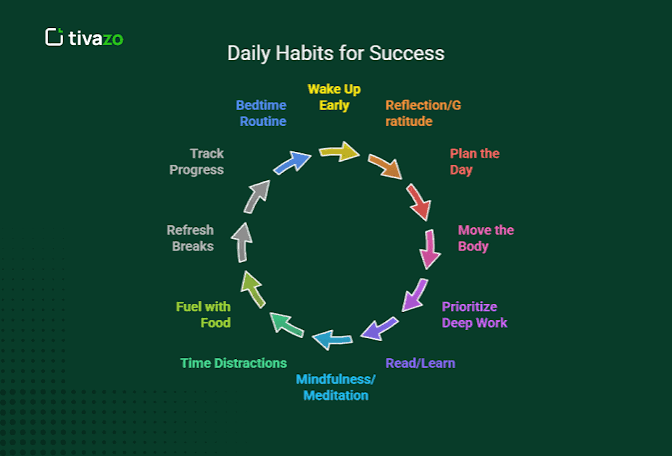
    Success rarely comes from one dramatic breakthrough. More often, it’s the quiet accumulation of small, daily actions that compound over time. Think of the CEO who reads 20 pages every night, or the athlete who visualizes success for ten minutes each morning. These micro-routines—each taking less than half an hour—are the building blocks of high achievement.

    But do these habits actually work, or are they just survivor stories? While many lists rely on celebrity anecdotes, the core behaviors are backed by psychology and productivity research. This article breaks down 12 of the most common small habits, explains why they matter, and offers practical ways to adopt them—without needing a 4 AM wake-up call.

    1. Wake Up Early (But Not Necessarily at 3:45 AM)

    Apple CEO Tim Cook rises at 3:45 AM. That’s extreme, but many high achievers are early risers. The key isn’t the specific hour—it’s carving out quiet, distraction-free time before the world demands your attention. A 2010 study in the Journal of Applied Social Psychology found that early risers are more proactive and better at anticipating problems.

    Try it: Move your wake-up time 15 minutes earlier each week until you find a sustainable window. Use that time for something meaningful, not just checking email.

    2. Move Your Body for 10–20 Minutes

    Richard Branson says his daily exercise doubles his productivity. The science agrees: even short bursts of physical activity boost cognitive function, memory, and mood by increasing blood flow to the brain. A 2019 study in Frontiers in Psychology found that just 10 minutes of moderate exercise improves focus.

    Try it: Don’t aim for a 2-hour gym session. A brisk walk, a few yoga sun salutations, or a quick bodyweight circuit before your morning shower is enough.

    3. Read 20 Pages a Day

    Warren Buffett reads 5–6 hours a day—but the average person can’t replicate that. The “small” version is 20 pages. That’s roughly 15–20 minutes of reading. A 2014 study from the Journal of Applied Psychology showed that reading for pleasure reduces stress by 68%, and a 2013 study in Brain Connectivity found it improves brain connectivity in regions related to empathy and attention.

    Try it: Keep a book on your nightstand and commit to 20 pages before bed. If you prefer e-books, set a goal of 30 minutes of reading instead of scrolling.

    4. Write Down Your Top 3 Tasks for the Day

    Planning isn’t just about organization—it reduces decision fatigue. Psychologist Roy Baumeister’s research shows that making too many decisions depletes willpower. By choosing your top 3 priorities each morning, you start the day with intention, not reactivity.

    Try it: Every morning, before checking your phone, write down the three tasks that will have the most impact. Do the hardest one first (eat the frog).

    5. Journal for 5 Minutes

    Gratitude journaling has been shown to increase happiness and resilience. A 2003 study by Emmons and McCullough found that participants who wrote about gratitude for 10 minutes a week felt more optimistic and exercised more. Reflection journaling—reviewing what went well and what you learned—also boosts self-awareness.

    Try it: Each night, jot down one thing you’re grateful for and one thing you’d do differently. Keep it short—no pressure to write an essay.

    6. Meditate for 10 Minutes

    Salesforce CEO Marc Benioff credits meditation for his success. A 2011 study from Harvard found that mindfulness meditation can change brain structure in 8 weeks, increasing gray matter in regions linked to memory and emotion regulation. Even 10 minutes a day can lower stress and improve focus.

    Try it: Use an app like Headspace or Calm, or simply sit quietly and focus on your breath. If 10 minutes feels long, start with 5.

    7. Drink Water Before Coffee

    This habit is more about hydration than magic. After 7–8 hours of sleep, you’re mildly dehydrated, which can cause fatigue and brain fog. A 2012 study in the Journal of Nutrition found that even mild dehydration impairs mood and concentration.

    Try it: Keep a glass or bottle of water on your nightstand and drink it before you brew your morning coffee.

    8. Make Your Bed

    Admiral William McRaven’s 2014 commencement speech made this famous: “If you make your bed every morning, you will have accomplished the first task of the day.” It’s a small win that sets a tone of discipline. A 2017 study from the University of California, Davis, linked making your bed to better sleep quality.

    Try it: It takes 2 minutes. Do it right after you get up—no snooze button.

    9. Single-Task (Time-Block) for 25-Minute Chunks

    Multitasking is a myth. Stanford researcher Clifford Nass found that heavy multitaskers are worse at filtering out irrelevant information. Instead, high achievers time-block—focusing on one task for a set period. The Pomodoro Technique (25 minutes of work, 5-minute break) is a simple way to build this habit.

    Try it: Pick one task, set a timer for 25 minutes, and turn off notifications. You’ll be amazed at what you can accomplish.

    10. Learn Something New During Your Commute

    Successful people are lifelong learners. Instead of scrolling social media on the train, they listen to a podcast, an audiobook, or a language app. A 2015 study in the Journal of Applied Psychology found that continuous learning increases job performance and career satisfaction.

    Try it: Download a podcast or audiobook that interests you. Even 15 minutes a day adds up to over 90 hours a year.

    11. Make One Small Connection Per Day

    Networking doesn’t have to mean schmoozing at events. A simple “touch base”—a quick email, a LinkedIn message, or a comment on someone’s post—keeps your network warm. A 2019 study in the Academy of Management Journal found that maintaining weak ties (acquaintances) leads to more job opportunities and innovation.

    Try it: Each day, reach out to one person you haven’t spoken to in a while. Ask how they’re doing, not for a favor.

    12. Unplug for the First and Last Hour of the Day

    Digital detox is a buzzword, but it has real benefits. A 2018 study in the Journal of Experimental Psychology found that taking a break from screens reduces stress and improves sleep. Checking your phone first thing triggers a cortisol spike, putting you in a reactive state.

    Try it: Leave your phone outside the bedroom or use a physical alarm clock. For the first hour after waking, avoid email and social media. Do the same for the hour before bed.

    But Wait—Do These Really Work?

    It’s easy to fall into the “successful people do X” trap. The truth is, these habits are not magic bullets. They work because they align with basic psychology: they reduce friction, build momentum, and create a sense of control. However, correlation is not causation. Successful people may also develop these habits because they have more autonomy and resources.

    That’s why the “small” qualifier is so important. You don’t need to adopt all 12. Pick one or two that resonate and stack them onto existing routines. For example, drink water right after you make your bed (habit stacking). Research suggests it takes an average of 66 days for a habit to become automatic, but smaller behaviors are more likely to stick.

    And if a habit doesn’t work for you, that’s okay. Not everyone thrives on a rigid 5 AM routine. Some people are night owls; some neurodivergent brains need novelty. The goal isn’t to copy Tim Cook—it’s to find small actions that improve your day.

    The habits of highly successful people are not about grand gestures. They’re about the small, daily choices that compound into extraordinary results. Whether it’s making your bed, reading 20 pages, or taking a 10-minute walk, the key is consistency. Start with one habit, be patient, and remember: success is not a single decision—it’s a thousand small ones repeated daily.

    Summary

    • Small habits compound: 5–30 minute daily actions lead to significant long-term results.
    • Science supports many habits: Exercise, planning, gratitude journaling, and reading have measurable cognitive and emotional benefits.
    • You don’t need all 12: Pick 1–3 habits that fit your lifestyle and stack them onto existing routines.
    • Beware of survivorship bias: Celebrity examples are anecdotal; focus on the behavioral psychology, not the famous names.
    • Adapt to your needs: Not every habit works for everyone—sleep, neurodiversity, and personal preferences matter.

    FAQ

    Q: How long does it take to form a habit?
    A: Research by Lally et al. (2010) found it takes an average of 66 days for a behavior to become automatic, but the range is 18 to 254 days. Smaller, simpler habits tend to stick faster.

    Q: Can I really become successful just by making my bed?
    A: No single habit guarantees success. But making your bed builds a sense of order and accomplishment that can trigger a chain of positive behaviors. It’s a starting point, not a magic wand.

    Q: I’m not a morning person. Can I still be successful?
    A: Absolutely. The habit is about finding a quiet, focused time—not necessarily morning. Some people are more productive at night. Adjust the routines to your chronotype.

    Q: How do I avoid feeling overwhelmed by these habits?
    A: Start small. Choose one habit you’re excited about and practice it for a week. Then add another. Use habit stacking: link a new habit to an existing one (e.g., “After I brush my teeth, I will journal for 5 minutes”).

    Q: Are these habits supported by science or just anecdotes?
    A: Many are supported by psychology research (e.g., exercise, planning, meditation). However, the specific claim that “successful people do X” is largely anecdotal. Use the science as a guide, not a prescription.

  • The Dunning-Kruger Effect: A Real Cognitive Bias or Just a Statistical Illusion?

    The Dunning-Kruger Effect: A Real Cognitive Bias or Just a Statistical Illusion?

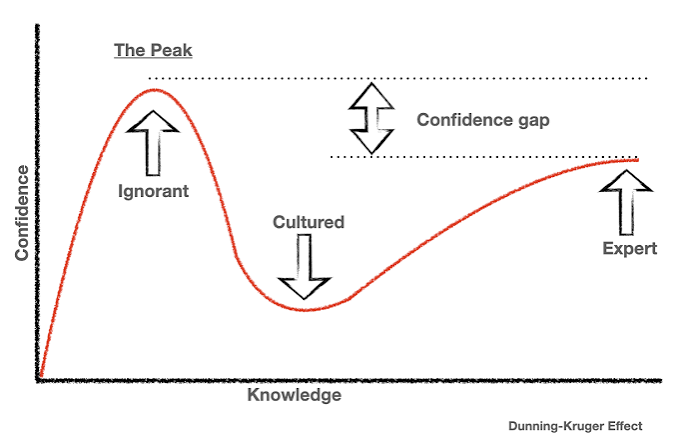
    You’ve probably heard of the Dunning-Kruger effect: the idea that incompetent people are too ignorant to know they’re incompetent, so they overestimate their abilities. It’s become a cultural touchstone, used to explain everything from bad drivers to political pundits. But what if this famous phenomenon is not a quirk of the human mind, but rather a quirk of statistics? A 2020 paper suggests just that, arguing that the Dunning-Kruger effect may be largely a data artefact—a mirage created by the way we analyze numbers, not a real psychological bias.

    This isn’t just academic squabbling. The Dunning-Kruger effect has been cited in countless articles, books, and management seminars. If it’s not real, we might need to rethink some of our assumptions about self-awareness and competence. But before we throw the concept out, let’s dive into the debate. We’ll explore the original research, the statistical critique, and what both sides have to say. By the end, you’ll have a clearer picture of whether the Dunning-Kruger effect is a genuine insight into human nature or a statistical illusion that has fooled us all.

    The Original Dunning-Kruger Effect: A Quick Recap

    In 1999, psychologists Justin Kruger and David Dunning published a landmark study titled “Unskilled and unaware of it.” They asked participants to take tests in logic, grammar, and humor, and then asked them to rate their own performance. The results were striking: those who scored in the bottom quartile (the lowest 25%) rated themselves as being in the 60th to 70th percentile—meaning they thought they were above average, when in fact they were well below. Conversely, those in the top quartile often underestimated their performance, rating themselves slightly below where they actually fell.

    The explanation Dunning and Kruger offered was that the same cognitive deficits that cause poor performance also prevent people from recognizing their incompetence. In other words, if you lack the skills to do something well, you also lack the skills to know you’re doing it badly. This “double burden” of ignorance became the core of the Dunning-Kruger effect, and it quickly entered popular culture as a meme, a management training talking point, and a way to explain everything from political polarization to vaccine hesitancy.

    The 2020 Critique: A Statistical Artefact?

    Fast forward to 2020, and a team of researchers from Carnegie Mellon University and the University of Toronto published a paper with a provocative title: “The Dunning-Kruger effect is probably not real.” Their argument was not that the original studies were fabricated, but that the pattern of results could be explained by statistical artefacts—specifically, regression to the mean and measurement error—without any need for a psychological bias.

    Let’s break down these concepts with an analogy. Imagine you’re a basketball coach trying to evaluate your players’ shooting ability. You have them take a series of shots, and you also ask them to rate how good they think they are. Both measures are imperfect: a player might have an off day (measurement error), and if you pick the worst performers from one day, they’re likely to do better the next time just by chance (regression to the mean).

    Now, suppose you compare the players’ self-ratings to their actual performance. The players who scored lowest on the shooting test might have had a particularly bad day, but their self-rating reflects their overall ability, which is probably higher than that one bad performance. So they appear to overestimate themselves. Conversely, the top performers might have had a lucky day, but their self-rating is based on their average ability, which is lower than that one great performance. So they appear to underestimate themselves. The result? A pattern that looks exactly like the Dunning-Kruger effect, but it’s purely a statistical illusion.

    The 2020 researchers ran simulations to show that random data with no true bias can produce the classic Dunning-Kruger “inverted U” pattern when analyzed the same way. They argued that when you control for these statistical artefacts, the effect size shrinks dramatically or disappears entirely.

    The Defense: Dunning and Kruger Respond

    David Dunning and Justin Kruger have not taken this critique lying down. They’ve defended their original findings on several fronts:

    First, they argue that the statistical critique is not new. In their original 1999 paper, they addressed concerns about regression to the mean and designed their studies to minimize its impact. For example, they used quartile splits and multiple measures to ensure that the effect wasn’t just a statistical fluke.

    Second, they point to subsequent research that has replicated the effect using different methodologies. For instance, studies using peer ratings (where others assess a person’s competence) have shown that poor performers are indeed unaware of their deficiencies. Longitudinal designs, which track people over time, have also found evidence consistent with the cognitive explanation.

    Third, they argue that the statistical critique explains some of the pattern but not all of it. Even after controlling for regression artefacts, a residual effect remains that suggests a real cognitive bias. In other words, the Dunning-Kruger effect is not just a mirage; there’s something real underneath.

    The Broader Context: The Replication Crisis

    The 2020 critique is part of a larger movement in psychology known as the “replication crisis.” Over the past decade, researchers have found that many famous psychological findings don’t hold up when re-tested with larger samples and more rigorous methods. The Dunning-Kruger effect is one of the most widely cited findings, so it’s no surprise that it has come under scrutiny.

    This debate highlights the importance of statistical literacy. When we hear about a study, we often assume the results are straightforward. But in reality, data can be messy, and the way we analyze it can create patterns that don’t reflect reality. The Dunning-Kruger controversy is a perfect example of why we need to be cautious about accepting psychological findings at face value.

    What Does This Mean for You?

    So, is the Dunning-Kruger effect real or not? The honest answer is: it’s complicated. The 2020 critique raises valid methodological concerns, but it doesn’t definitively prove that the effect is entirely a statistical artefact. Dunning and Kruger’s defense also has merit, and the weight of evidence from other studies suggests that there is at least some cognitive bias at play.

    However, the debate has a practical takeaway: we should be humble about our own abilities, but also humble about our confidence in psychological research. The Dunning-Kruger effect may not be as robust as we thought, but the underlying idea—that people often have poor insight into their own competence—still resonates with many real-world experiences. Whether it’s a statistical illusion or a genuine bias, the lesson remains: we could all benefit from seeking feedback and being open to the possibility that we might not be as good as we think.

    The Dunning-Kruger effect is a fascinating phenomenon, but its status as a real cognitive bias is now under question. The 2020 statistical critique shows that the pattern can emerge from data artefacts alone, but the original authors and subsequent research suggest there’s more to the story. As with many scientific debates, the truth likely lies somewhere in between. For now, the Dunning-Kruger effect remains a useful reminder of the limits of self-awareness—whether it’s a quirk of the mind or a quirk of numbers.

    Summary

    • The Dunning-Kruger effect, proposed in 1999, suggests that incompetent people overestimate their abilities, while competent people underestimate them.
    • A 2020 paper argued that this effect may be a statistical artefact, caused by regression to the mean and measurement error, not a real cognitive bias.
    • The original authors defend their findings, citing methodological precautions and subsequent replications.
    • The debate is part of the broader replication crisis in psychology, highlighting the need for rigorous statistical analysis.
    • The practical takeaway: be humble about your abilities and about the robustness of psychological research.

    FAQ

    Q: What is the Dunning-Kruger effect?
    A: The Dunning-Kruger effect is a cognitive bias where people with low ability at a task overestimate their ability, while people with high ability underestimate it. It was first described by Justin Kruger and David Dunning in 1999.

    Q: Why do some researchers think it’s a statistical artefact?
    A: A 2020 paper argued that the pattern can be explained by regression to the mean and measurement error. When you compare self-assessments to performance, extreme scores are likely to be partly due to chance, creating an apparent over/underestimation pattern without any real bias.

    Q: Did Dunning and Kruger respond to the critique?
    A: Yes, they defended their original findings, saying they had already addressed regression artefacts in their original study, and that subsequent research using different methods (like peer ratings) supports the cognitive explanation.

    Q: Is the Dunning-Kruger effect still considered real?
    A: The scientific community is divided. The 2020 critique raises valid concerns, but many researchers believe there is still evidence for a genuine effect. The debate is ongoing, and more research is needed to settle it.

    Q: What can we learn from this debate?
    A: It reminds us to be critical of psychological findings and to understand that statistical analysis can sometimes create illusions. It also reinforces the importance of seeking feedback and being open to learning about our own limitations.

  • Why Do We Dream? The Science Behind the Brain’s Nightly Theater

    Why Do We Dream? The Science Behind the Brain’s Nightly Theater

    Every night, as you drift into sleep, your brain transforms into a vivid theater, projecting stories that can be thrilling, terrifying, or utterly nonsensical. You might find yourself flying over cities, conversing with long-lost friends, or facing impossible challenges—all while your body lies still. This universal experience has fascinated humans for millennia, but only in recent decades have scientists begun to unravel its mysteries. Why do we dream? What purpose does this nightly cinema serve? In this article, we’ll explore the leading scientific theories, the neurobiology behind dreams, and why this question continues to captivate researchers and dreamers alike.

    The Basics: What Happens When We Dream?

    Dreaming is a universal human experience—virtually all of us dream multiple times each night, even if we rarely remember it. Most dreams are forgotten within minutes of waking, which is why you might recall only fragments or nothing at all. Dreams occur primarily during a phase of sleep called REM (rapid eye movement), which cycles every 90 minutes or so throughout the night. As the night progresses, REM periods lengthen, with the longest episodes occurring in the final third of your sleep.

    During REM, your brain is nearly as active as when you’re awake, but your body is in a state of temporary paralysis called muscle atonia. This paralysis is a safety mechanism—it prevents you from acting out your dreams. Interestingly, dreams can also occur during non-REM (NREM) sleep, but they tend to be more thought-like, less vivid, and less narrative-driven.

    On average, humans spend about two hours per night dreaming, which is roughly 25% of total sleep time. Infants spend even more—up to 50% of their sleep in REM—while adults average 20–25%. And here’s a staggering statistic: studies suggest that about 95% of dreams are forgotten upon waking unless you’re awakened during or immediately after REM. That’s why keeping a dream journal can be so effective—you catch the dream before it fades.

    The Leading Theories: Why Do We Dream?

    Scientists have proposed several major theories to explain why we dream. No single theory fully accounts for all aspects of dreaming, but each offers a piece of the puzzle.

    Activation-Synthesis: The Brain’s Best Guess

    In 1977, psychiatrists J. Allan Hobson and Robert McCarley proposed the activation-synthesis hypothesis. They argued that dreams are the brain’s attempt to make sense of random neural signals originating from the brainstem during REM sleep. According to this theory, the brain receives chaotic signals and tries to weave them into a coherent story—much like a person looking at inkblots and seeing shapes. This explains why dreams can be bizarre and illogical: the brain is synthesizing random input.

    Hobson later updated this as “activation-synthesis hypothesis 2.0,” incorporating newer findings, but the core idea remains: dreams are a byproduct of neural activity, not necessarily meaningful messages.

    Threat Simulation: A Virtual Reality for Survival

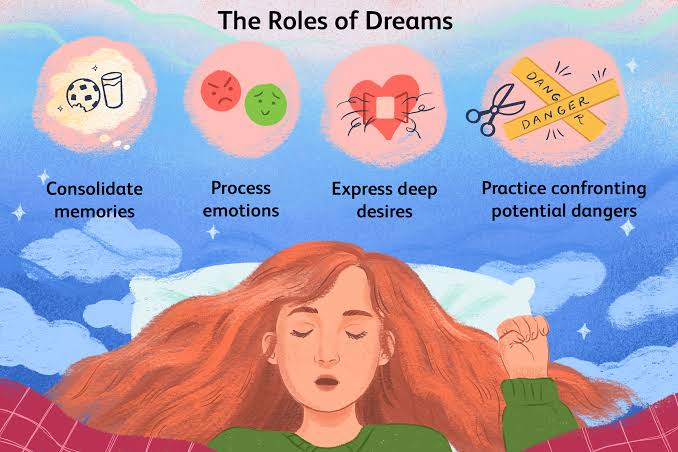
    Evolutionary psychologist Antti Revonsuo proposed the threat simulation theory in 2000. He suggested that dreams evolved as a kind of virtual reality simulator, allowing our ancestors to rehearse responses to threats in a safe environment. By simulating dangerous situations—like being chased or attacked—the brain could practice survival strategies without real-world risks. This theory is supported by the fact that dreams often involve threatening scenarios, and it aligns with the idea that dreaming has adaptive value.

    Memory Consolidation: Filing Away the Day

    Another prominent theory is that dreams help with memory consolidation. During sleep, the brain processes and integrates memories from waking life, moving them from short-term to long-term storage. Researchers like Robert Stickgold and Matthew Walker have shown that the hippocampus—a brain region crucial for memory—replays recent experiences during sleep. This replay is thought to strengthen important memories and discard irrelevant ones. Dreams may be the subjective experience of this consolidation process, as the brain weaves fragments of the day into narratives.

    Emotional Regulation: Overnight Therapy

    Matthew Walker, a sleep researcher, describes dreaming as “overnight therapy.” During REM sleep, the amygdala—a brain structure involved in processing emotions—is highly active, while the prefrontal cortex, which handles logic and reasoning, is largely deactivated. This combination allows the brain to process emotional experiences in a safe, dream-like context, helping to regulate mood and reduce emotional reactivity. Studies have shown that people who dream about stressful events tend to cope better with them, supporting this theory.

    The Default Mode Network and Creative Problem-Solving

    Some researchers view dreaming as an extension of the default mode network (DMN), a set of brain regions active when we’re not focused on external tasks. The DMN is associated with mind-wandering, creativity, and self-reflection. During dreaming, the brain is free to make novel associations and connections, which can lead to creative insights. This is why some people report solving problems in their dreams—the brain is exploring possibilities without the constraints of waking logic.

    Predictive Processing: Simulating the Future

    A more recent computational framework suggests that dreams are a form of predictive processing. The brain is constantly building models of the world to predict future events. During sleep, it simulates possible scenarios to refine these models, testing what might happen in various situations. This theory, rooted in Bayesian brain concepts, posits that dreams are a way to update our internal predictions based on past experiences, preparing us for future challenges.

    The Neurobiology: A Tour of the Dreaming Brain

    To understand dreams, we need to look at the brain’s activity during REM sleep. The process begins in the pons, a region in the brainstem that triggers REM sleep. During REM, there’s a surge of acetylcholine, a neurotransmitter associated with arousal and attention, while norepinephrine and serotonin—chemicals linked to alertness and mood—are suppressed. This chemical cocktail creates a state of heightened brain activity but with reduced self-awareness.

    The amygdala, as mentioned, is highly active, which explains the emotional intensity of dreams. The prefrontal cortex, responsible for logic and self-awareness, is largely deactivated, which is why dreams can feel bizarre yet believable—you don’t question the impossible events unfolding. The hippocampus replays recent experiences, supporting the memory consolidation theory. The visual cortex is active, generating vivid imagery, and the motor cortex is active but suppressed by atonia, so you feel movement without actually moving.

    A Brief History: From Divine Messages to Neural Signals

    Dreams have been interpreted in various ways throughout history. Ancient civilizations, like the Egyptians and Greeks, saw dreams as divine messages or portals to other realms. They built dream temples where people would sleep to receive healing or prophetic dreams. In 1900, Sigmund Freud published The Interpretation of Dreams, proposing that dreams are “the royal road to the unconscious.” He distinguished between manifest content (the surface story) and latent content (hidden wishes). Though modern neuroscience has largely rejected Freud’s specific ideas, his influence on popular culture persists.

    Carl Jung, a student of Freud, expanded on this, viewing dreams as expressions of the collective unconscious and archetypes—universal symbols shared across humanity. In 1953, Eugene Aserinsky and Nathaniel Kleitman discovered REM sleep, which launched modern dream science. Then, in 1977, Hobson and McCarley’s activation-synthesis model shifted the field from psychoanalysis to neurobiology. Since the 1990s, neuroimaging techniques like fMRI and PET have allowed researchers to map the dreaming brain in real time, and computational models have emerged, bringing us closer to understanding this mysterious phenomenon.

    Why the Mystery Persists

    Despite decades of research, no single theory fully explains dreaming. This is partly because dreams are subjective—researchers can’t directly observe another person’s dream. They rely on self-reports, which are often incomplete or distorted. Additionally, studying dreams in non-human animals is challenging, as we can’t ask a rat what it dreamed about. The question also sits at the intersection of neuroscience, psychology, philosophy, and even artificial intelligence—can machines dream? These complexities keep the mystery alive and drive ongoing research.

    Conclusion

    Dreaming is a fascinating and complex phenomenon that reflects the brain’s remarkable ability to generate rich experiences from neural activity. While we don’t have a complete answer to why we dream, the leading theories offer compelling insights: dreams may help us rehearse threats, consolidate memories, regulate emotions, foster creativity, and refine our predictive models of the world. As research continues, we may one day unlock the full purpose of this nightly theater. For now, the next time you wake from a vivid dream, you can appreciate the intricate neural choreography that made it possible—and perhaps wonder what your brain was rehearsing for.

    Summary

    • Dreams occur primarily during REM sleep, which cycles every 90 minutes, and most are forgotten within minutes of waking.
    • Leading theories include activation-synthesis (random signals), threat simulation (rehearsing dangers), memory consolidation (processing memories), emotional regulation (overnight therapy), and predictive processing (simulating futures).
    • During REM, the amygdala is active, the prefrontal cortex is deactivated, and the hippocampus replays memories, explaining the emotional, bizarre, and narrative nature of dreams.
    • The history of dream interpretation spans from ancient divine messages to Freud’s psychoanalysis to modern neurobiology.
    • No single theory fully explains dreaming, making it an ongoing mystery at the intersection of science and philosophy.

    FAQ

    Q: Why do we forget most dreams?
    A: Most dreams are forgotten because they occur during REM sleep, and unless you wake up during or immediately after REM, the memory of the dream fades quickly. The brain doesn’t prioritize storing dream memories, as they are not essential for survival.

    Q: Can dreams predict the future?
    A: There is no scientific evidence that dreams can predict the future. While some people report prophetic dreams, these are likely coincidences or the brain’s tendency to find patterns. Dreams are more about processing past experiences and simulating possible scenarios.

    Q: Do animals dream?
    A: Many animals, especially mammals, exhibit REM sleep, which is associated with dreaming in humans. While we can’t ask animals about their dreams, studies on rats have shown that their brains replay maze-running patterns during sleep, suggesting they may dream about their experiences.

    Q: Why are dreams so bizarre?
    A: Dreams are bizarre because the prefrontal cortex, which handles logic and self-awareness, is largely deactivated during REM sleep. This allows the brain to make unusual connections and create scenarios that would seem impossible when awake.

    Q: Can I control my dreams?
    A: Yes, some people can learn to control their dreams through a practice called lucid dreaming. In a lucid dream, you become aware that you’re dreaming and can sometimes influence the dream’s content. Techniques like reality testing and keeping a dream journal can help increase the likelihood of lucid dreams.

  • Why Do We Dream? The Leading Theories Explained

    Why Do We Dream? The Leading Theories Explained

    Every night, as you drift into sleep, your brain embarks on a bizarre journey—one filled with flying, falling, talking animals, or even reliving the day’s events. These vivid mental adventures are dreams, and they’ve puzzled humans for millennia. Why do we dream? Is there a purpose, or is it just random noise from a sleeping brain?

    In this article, we’ll explore the leading scientific theories that attempt to explain why we dream. From the idea that dreams help us process memories and emotions to the possibility that they’re a biological threat-rehearsal system, we’ll break down the complex science into clear, everyday language. By the end, you’ll have a deeper understanding of what happens in your mind while you sleep—and why it matters.

    What Are Dreams, Exactly?

    Before diving into theories, let’s define what a dream is. A dream is a succession of images, ideas, emotions, and sensations that occur involuntarily in the mind during certain stages of sleep, most prominently during REM (rapid eye movement) sleep. REM sleep, discovered in 1953 by Eugene Aserinsky and Nathaniel Kleitman, is a stage characterized by rapid eye movements, increased brain activity, and temporary muscle paralysis (to keep you from acting out your dreams).

    On average, humans spend about 2 hours per night dreaming, spread across 4–6 episodes. But here’s a surprising fact: about 95% of dreams are forgotten within minutes of waking. That’s why you might remember only a fragment of a dream, or none at all, most mornings.

    The Brain on Dreams: A Quick Tour

    To understand why we dream, it helps to know what’s happening in the brain. Neuroimaging studies (like fMRI and PET scans) show that during REM sleep, several key areas light up:

    • The amygdala: the brain’s emotion center, is highly active, which explains why dreams are often emotionally charged.
    • The hippocampus: involved in memory, is also active, suggesting a link between dreaming and memory processing.
    • The visual association cortex: processes visual imagery, so it’s no surprise dreams are so visual.

    Meanwhile, the dorsolateral prefrontal cortex—the area responsible for logical reasoning and executive control—shows reduced activity. This may explain why dreams often lack logic and why we accept bizarre scenarios without question.

    Theory 1: Activation-Synthesis Hypothesis

    One of the most influential modern theories is the Activation-Synthesis Hypothesis, proposed by psychiatrists J. Allan Hobson and Robert McCarley in 1977. The idea is that during REM sleep, the brainstem sends random electrical signals to the cortex—the outer layer of the brain responsible for higher-level thinking. The cortex, always trying to make sense of things, then “synthesizes” these random signals into a coherent story—a dream.

    Think of it like this: if you’re sitting in a dark room and hear a series of random thumps, your brain tries to piece them together into a pattern, maybe imagining a burglar or a tree branch hitting the window. Similarly, the cortex takes random neural noise and weaves it into a narrative, even if that narrative is nonsensical.

    Hobson later refined this into the AIM model, which considers three dimensions: Activation (brain energy), Input-output gating (how sensory input is blocked), and Modulation (the balance of brain chemicals). This model emphasizes that dreams reflect a unique state of consciousness, not just random noise.

    Theory 2: Memory Consolidation Theory

    Another leading theory is that dreams help consolidate memories. During sleep, especially REM, the brain replays and processes the day’s experiences, strengthening important memories and integrating them into existing knowledge networks. This is like a librarian sorting and shelving books after a busy day—except the librarian is your brain, and the books are memories.

    Research by Robert Stickgold and Matthew Walker has shown that REM sleep is critical for emotional memory consolidation. If you learn a new skill or have an emotional experience, dreaming about it can help cement it in your memory. This theory suggests that dreams are not just random but are actually the brain’s way of deciding what to keep and what to discard.

    Theory 3: Threat Simulation Theory

    Evolutionary psychologist Antti Revonsuo proposed that dreams evolved as a biological defense mechanism. According to this theory, dreams simulate threatening events—like being chased, attacked, or lost—so that we can rehearse avoidance and coping strategies in a safe environment. This would have been crucial for our ancestors, who faced real dangers like predators and hostile tribes.

    Evidence for this theory includes studies showing that children’s dreams contain more threats than adults’ dreams, and that people in dangerous environments have more realistic threats in their dreams. So, that dream about being chased by a monster might be your brain’s way of practicing survival skills.

    Theory 4: Emotional Regulation Theory

    Closely related to memory consolidation is the idea that dreams help regulate our emotions. Psychologist Rosalind Cartwright proposed that dreams allow us to process emotional experiences in a safe, simulated environment. By re-experiencing and working through negative emotions during dreams, we can wake up feeling better adjusted.

    For example, if you have a stressful day at work, you might dream about the situation, but in the dream, you handle it differently or the outcome is positive. This can help you feel more prepared and less anxious in real life. Studies have shown that people who dream more about negative events show better emotional adaptation.

    Theory 5: Social Simulation Theory

    Revonsuo also extended his threat simulation theory to include social interactions. Most dreams involve multiple characters and social scenarios, suggesting that dreams might also serve to rehearse social skills and bonding. This could be a way to practice navigating complex social relationships without real-world consequences.

    Think of it as a virtual reality training ground for social situations. You might dream about a conversation with a friend, a confrontation with a coworker, or a romantic encounter—all of which help you refine your social responses.

    Theory 6: Neurocognitive Theory

    Cognitive neuroscientist G. William Domhoff argues that dreams are a cognitive achievement built on waking-life memory systems. In other words, dreams reflect your concerns, personality, and developmental stage. If you’re worried about an exam, you might dream about being unprepared. If you’re a musician, you might dream about performing.

    This theory is supported by findings that dream content is continuous with waking concerns. It suggests that dreams are not random or purely biological but are meaningful reflections of who we are.

    Theory 7: Default Mode Network and Continual Activation

    Some researchers propose that dreaming is an extension of the brain’s default mode network—the network that’s active when your mind wanders. During sleep, with no external sensory input, this network might go into overdrive, producing dreams. This is sometimes called “extreme mind-wandering.”

    Similarly, the Continual Activation Theory (proposed by Jie Zhang in 2016) suggests that dreaming is a byproduct of the brain’s need to keep the mind continuously active, even during sleep. The brain is always processing information, and dreams are just what that processing looks like when there’s no real-world input.

    Lucid Dreaming: When You Know You’re Dreaming

    Before we wrap up, it’s worth mentioning lucid dreaming—a state where you’re aware you’re dreaming and can sometimes control the dream. About 55% of people have experienced at least one lucid dream, and about 23% have them monthly. Lucid dreaming offers a unique window into the nature of dreams, showing that the brain can be both asleep and self-aware at the same time.

    Putting It All Together: Why Do We Dream?

    So, which theory is correct? The truth is, there’s no single answer. Dreams likely serve multiple functions, and different theories highlight different aspects. Here’s a simple way to think about it:

    • Biologically, dreams may be the brain’s way of processing neural activity and consolidating memories.
    • Psychologically, they help us regulate emotions and rehearse for real-life challenges.
    • Evolutionarily, they might have helped our ancestors survive by simulating threats and social situations.

    In essence, dreams are a complex interplay of brain activity, memory, emotion, and evolution. They’re not just random noise—they’re a reflection of your mind’s inner workings.

    How to Remember Your Dreams

    If you’re curious about your own dreams, here are a few tips to improve recall:

    • Keep a dream journal by your bed and write down anything you remember immediately upon waking.
    • Wake up naturally (without an alarm) to increase the chance of waking from REM sleep.
    • Before falling asleep, tell yourself, “I will remember my dreams.” This intention can help.

    Remembering your dreams can give you insight into your subconscious mind and help you appreciate the incredible complexity of your sleeping brain.

    Dreams remain one of the great mysteries of the human mind. While we don’t have a single, definitive answer to why we dream, the leading theories offer compelling explanations—from memory consolidation and emotional regulation to threat simulation and neural noise interpretation. What’s clear is that dreaming is a fundamental part of being human, and it plays a vital role in our cognitive and emotional well-being. So the next time you wake up from a bizarre dream, you can smile knowing that your brain was hard at work, sorting memories, processing emotions, and perhaps even rehearsing for life’s challenges.

    Summary

    • Dreams are vivid mental experiences that occur mainly during REM sleep, with most people dreaming 4–6 times per night.
    • The Activation-Synthesis Hypothesis suggests dreams are the brain’s attempt to make sense of random neural signals.
    • Memory Consolidation Theory posits that dreams help strengthen and integrate memories.
    • Threat Simulation Theory proposes that dreams evolved to rehearse survival strategies.
    • Emotional Regulation Theory indicates dreams help process and regulate emotions.
    • Lucid dreaming, where you’re aware you’re dreaming, occurs in about 55% of people at least once.

    FAQ

    Q: How long do dreams last?
    A: Dreams typically last anywhere from a few minutes to up to 30 minutes, with longer dreams occurring later in the night. On average, you spend about 2 hours per night dreaming across multiple episodes.

    Q: Why do we forget most dreams?
    A: About 95% of dreams are forgotten within minutes of waking. This is partly because dreams occur during REM sleep, and if you don’t wake up directly from REM, the memory of the dream may not transfer to long-term memory. Also, the brain’s chemical state during sleep may not support memory encoding.

    Q: Can dreams predict the future?
    A: There’s no scientific evidence that dreams can predict the future. While some people report dreams that seem to come true, this is likely due to coincidence or the brain’s tendency to find patterns. Dreams are more likely a reflection of your thoughts, worries, and experiences.

    Q: Do animals dream?
    A: Many animals, especially mammals, experience REM sleep and show brain activity patterns similar to humans during dreaming. For example, rats have been observed replaying maze-running sequences during sleep, suggesting they dream about their waking experiences.

    Q: What is a lucid dream?
    A: A lucid dream is one in which you are aware that you are dreaming. In some cases, you can even control the dream’s content. About 55% of people have had at least one lucid dream, and they occur most often during late-night REM periods.

  • How Mindfulness Can Make Waiting Easier—Without Willpower

    How Mindfulness Can Make Waiting Easier—Without Willpower

    Waiting is an inescapable part of life. Whether it’s a delayed flight, a medical test result, or the slow growth of a retirement fund, we spend countless hours in the gap between now and the future we desire. For many, this gap feels like a burden—an anxious, restless stretch of time that we endure rather than experience. We try to distract ourselves, or we summon willpower to resist the urge for instant gratification, but these strategies often leave us drained and frustrated.

    New research suggests there’s a different approach: mindfulness. By training attention to the present moment, mindfulness can change how we experience waiting, making it less psychologically painful—without requiring Herculean self-control. This isn’t about forcing yourself to be patient; it’s about shifting your relationship to time itself.

    The Problem with Waiting

    Humans are notoriously bad at waiting. Psychologists call this tendency temporal discounting: we devalue rewards that are delayed, so a $100 prize in a year feels worth far less than $100 today. This bias is deeply wired into our brains, and it’s linked to real-world struggles like procrastination, poor savings, addiction, and difficulty sticking to long-term goals.

    Traditional solutions rely on willpower—the mental muscle that helps us resist temptation. But willpower is effortful and easily depleted. When we’re stressed or tired, our ability to delay gratification crumbles. That’s why we often give in to the immediate reward, whether it’s a sugary snack, a shopping spree, or a binge-watch session, even when we know it’s not in our best interest.

    What Mindfulness Changes

    Mindfulness—the practice of non-judgmental, present-moment awareness—offers a different route. Instead of fighting the urge for immediate reward, mindfulness teaches us to observe it without acting. This “monitoring and acceptance” approach reduces the emotional charge of desire, making it easier to let the urge pass.

    But mindfulness does more than that. It also alters our perception of time. When we’re waiting, our attention tends to lock onto the absence of what we want. We mentally time-travel to the future, imagining how good it will be when the reward finally arrives—and that gap between present and future feels aversive. Mindfulness redirects attention to the sensory details of the present: the breath moving in and out, the feeling of the chair beneath us, the sounds around us. This “fills” the temporal gap, so the waiting period becomes less about what’s missing and more about what’s here.

    What the Research Shows

    Laboratory studies have found that even brief mindfulness exercises—just 10 to 15 minutes of focused breathing—can reduce impulsive choice. In one typical experiment, participants who practiced mindfulness were more likely to choose a larger, delayed reward over a smaller, immediate one, compared to control groups who did relaxation exercises or math problems.

    Correlational studies support this: people who score higher on mindfulness questionnaires tend to have lower discounting rates, meaning they’re more patient. And neuroimaging research suggests that mindfulness practice changes activity in the brain’s default mode network—the system linked to mind-wandering and mental time travel—as well as in prefrontal-striatal circuits involved in decision-making.

    Of course, there are limitations. Many studies are small, and the effects of a single mindfulness session may be short-lived. But the pattern is consistent: mindfulness seems to make waiting less painful, and it doesn’t require the same kind of effortful self-control that traditional willpower does.

    Practical Techniques for Everyday Waiting

    So what does this mean for your daily life? Here are a few mindfulness-based strategies to try the next time you’re stuck in a waiting situation:

    • Breath-focused meditation: When you notice impatience rising, bring your attention to your breath. Feel the air entering and leaving your nostrils. When your mind wanders to the future, gently bring it back. This simple practice can anchor you in the present.
    • Body scan: If you’re waiting in a line or a doctor’s office, do a quick mental scan of your body from head to toe. Notice any tension, and consciously relax those areas. This shifts your focus from the future to the present moment.
    • Urge surfing: If you’re craving something immediate—a snack, a purchase, a text message—observe the urge like a wave. Notice where you feel it in your body, and watch it rise and fall without acting on it. This is a core skill in mindfulness-based relapse prevention.
    • Mindful walking: If you’re waiting for a meeting or a call, take a short walk and pay attention to each step, the sensation of your feet on the ground, the rhythm of your stride. This can turn a frustrating wait into a grounding experience.

    The Deeper Lesson

    Waiting is not just an inconvenience; it’s a fundamental condition of human life. We are always waiting for something—a promotion, a diagnosis, a relationship, a moment of peace. The phrase “good things take time” suggests that the waiting itself has value. Mindfulness offers a way to be with time rather than against it. Instead of seeing the wait as an obstacle to be endured, we can see it as an opportunity to practice presence.

    In a culture obsessed with speed and instant gratification, mindfulness is a radical counterbalance. It reminds us that the present moment is not a placeholder for the future—it’s the only place we ever actually live. By learning to wait mindfully, we don’t just make the wait easier; we reclaim the time we spend waiting as our own.

    The next time you find yourself tapping your foot in frustration, remember: patience isn’t a fixed trait. It’s a skill that can be trained, and mindfulness is one of the most effective tools we have. By shifting your attention from the gap between now and later, you can transform waiting from a burden into a practice—one that makes the good things in life feel even sweeter when they finally arrive.

    Summary

    • Mindfulness can reduce the psychological burden of waiting by shifting attention away from the gap between present and future.
    • Brief mindfulness exercises (10–15 minutes) have been shown to reduce impulsive choice in laboratory studies.
    • Mindfulness works by observing desires without acting on them, bypassing the need for effortful willpower.
    • Practical techniques include breath-focused meditation, body scans, urge surfing, and mindful walking.
    • Waiting is a fundamental part of life; mindfulness helps us be with time rather than against it.

    FAQ

    Q: How does mindfulness reduce the pain of waiting?
    A: Mindfulness shifts attention from the absence of the desired outcome to the sensory details of the present moment, which reduces the aversive feeling of the delay.

    Q: Do I need to meditate for years to see benefits?
    A: No. Even brief mindfulness exercises, like 10–15 minutes of focused breathing, can have an effect in laboratory settings, though longer-term practice may lead to more lasting changes.

    Q: Is mindfulness just a form of distraction?
    A: No. Distraction tries to ignore the wait; mindfulness involves acknowledging the present moment and observing thoughts and feelings without judgment, which is a different mechanism.

    Q: Can mindfulness help with long-term goals like saving money?
    A: Yes. By reducing temporal discounting, mindfulness can make it easier to choose larger, delayed rewards over smaller, immediate ones, which is beneficial for financial planning and other long-term goals.

    Q: What if I find meditation difficult?
    A: That’s normal. Mindfulness is a skill that improves with practice. You can start with short sessions and use guided meditations or apps to help you get started.

  • The 95% You Don’t Know: How Your Conscious and Unconscious Minds Really Work

    The 95% You Don’t Know: How Your Conscious and Unconscious Minds Really Work

    You probably think you’re in charge. You make decisions, weigh options, and steer your life with deliberate thought. But modern neuroscience suggests otherwise: roughly 95% of your brain’s activity is unconscious. Your conscious mind—the part that feels like ‘you’—is more like a spotlight in a vast, dark warehouse, illuminating only a tiny fraction of what’s actually happening.

    This isn’t the Freudian unconscious of repressed desires and dark secrets. It’s a sophisticated, high-speed processing system that runs your perceptions, habits, emotions, and even many of your ‘conscious’ decisions before you ever become aware of them. Understanding how this hidden machinery works—and how it interacts with your conscious awareness—can transform how you think about choice, habit, and self-control.

    The Two-System Brain: Fast and Furious vs. Slow and Steady

    Psychologist Daniel Kahneman popularized the idea of two thinking systems. System 1 is fast, automatic, and unconscious. It recognizes faces, drives a familiar route, and instantly reads emotions in a stranger’s face. System 2 is slow, deliberate, and conscious. It solves math problems, plans a career move, and resists the second slice of cake.

    Here’s the twist: System 1 runs most of your life. It’s the default mode, processing millions of bits of information per second. System 2, by contrast, is lazy. It prefers to endorse System 1’s quick answers rather than do the hard work of re-evaluating. That’s why you might snap at a partner after a stressful day (System 1) and then rationalize it later (System 2 making up a story).

    The Unconscious as a Prediction Machine

    Your brain isn’t passively receiving the world—it’s actively predicting it. According to predictive processing theory, your unconscious constantly generates expectations about what you’ll see, hear, and feel. When those predictions match reality, you stay unaware. When they fail—when something unexpected happens—a ‘prediction error’ is flagged, and consciousness is recruited to figure out what went wrong.

    Think of walking into your kitchen. You unconsciously predict the light switch’s location, the smell of coffee, the feel of the floor. If everything matches, you move on autopilot. But if the light switch is moved, your conscious mind snaps to attention. This is why novelty and surprise feel so vivid: they’re the moments when your unconscious hands the reins to consciousness.

    The Limited Workspace of Consciousness

    Your conscious mind is a bottleneck. Working memory holds only about 4–7 chunks of information at once. Neuroscientist Stanislas Dehaene describes consciousness as a ‘global workspace’—a brief, widespread broadcast of selected information across the brain. Unconscious processes compete for access to this workspace, but only a few ‘win’ and become conscious.

    This explains why you can’t multitask well. When you try to talk on the phone while writing an email, both tasks compete for the same limited workspace. You end up switching back and forth, losing efficiency. The unconscious can handle parallel processing—like breathing, walking, and scanning for threats—but conscious attention is strictly serial.

    Who’s Really in Charge? The Illusion of Control

    In the 1980s, Benjamin Libet showed that brain activity predicting a simple hand movement occurs about half a second before you consciously decide to move. This ‘readiness potential’ suggests your unconscious initiates actions before you’re aware of choosing them. Modern replications have refined this, but the implication remains: your conscious sense of ‘I decided’ may be a post-hoc story.

    But it’s not that simple. While unconscious processes initiate many actions, consciousness can act as a veto—a ‘free won’t.’ You might feel an urge to say something rude (unconscious), but you can consciously override it. Moreover, conscious goals set the long-term agenda. You decide to learn a language, and then unconscious processes handle the grammar drills during sleep. So consciousness isn’t the CEO, but it’s more like a board of directors that sets strategy while the unconscious runs daily operations.

    The Unconscious in Everyday Life: Priming and Implicit Bias

    Your unconscious is constantly influenced by cues you never notice. In a classic study, John Bargh found that people who were primed with words related to the elderly (like ‘Florida’ and ‘bingo’) walked more slowly down a hallway—without any awareness of why. Similarly, achievement-related words improved performance on puzzles.

    This extends to social judgments. Implicit Association Tests (IAT) reveal that many people hold unconscious biases about race, gender, or age that contradict their conscious beliefs. These biases aren’t necessarily ‘true’ preferences; they’re learned associations from culture and experience. But they can influence hiring decisions, interactions, and even medical care.

    Emotion and Intuition: The Somatic Marker Hypothesis

    Antonio Damasio’s research on patients with damage to emotion-processing brain regions showed something surprising: without emotional signals, they couldn’t make even simple decisions. They could reason logically but couldn’t assign value to options. Damasio proposed that the body sends ‘somatic markers’—gut feelings, subtle changes in heart rate or muscle tension—that guide decision-making unconsciously.

    That’s why ‘going with your gut’ can be smart. Your unconscious has integrated years of experience into emotional signals. But it can also be wrong, especially in unfamiliar situations. The key is to use conscious reasoning to evaluate whether your intuition is appropriate for the context.

    Sleep, Dreams, and the Creative Unconscious

    While you sleep, your unconscious is hard at work. During REM sleep, the brain consolidates memories, processes emotions, and makes creative connections. This is why ‘sleeping on a problem’ often works. Studies show that people who sleep after learning a task perform better than those who stay awake, and dreams can offer novel solutions.

    One famous example is Dmitri Mendeleev, who reportedly dreamed the periodic table’s layout. While not everyone gets such dramatic insights, the unconscious mind’s ability to recombine information during sleep is a powerful tool for problem-solving.

    Practical Takeaways: Working With Your Unconscious

    Understanding this interaction isn’t just academic—it has practical applications. Here are a few ways to leverage your unconscious:

    • Build habits deliberately. When you consciously repeat a behavior, it becomes automatic over time. Use System 2 to establish routines, then let System 1 run them.
    • Design your environment. Since your unconscious responds to cues, arrange your surroundings to support desired behaviors. Put fruit on the counter, not cookies.
    • Beware of ‘choking.’ When you’re skilled at something, conscious overthinking can disrupt automatic performance. That’s why you might fumble when someone watches you type or play an instrument.
    • Use sleep strategically. Review material before bed to enhance memory consolidation. Keep a notebook by your bed for creative insights.
    • Question your intuitions. Your gut feelings are valuable, but they’re not infallible. For high-stakes decisions, gather data and deliberate consciously.

    The Big Picture: A Partnership, Not a Battle

    Your conscious and unconscious minds aren’t enemies—they’re partners. The unconscious handles the heavy lifting of perception, emotion, and skill, while consciousness provides flexibility, planning, and self-reflection. The illusion that you’re always in control is just that—an illusion. But it’s a useful one, because it motivates you to set goals and make choices that shape your unconscious patterns over time.

    By understanding how these two systems interact, you can stop fighting your brain and start working with it. You can design habits, environments, and practices that align with your deeper processing. And you can appreciate the vast, hidden machinery that makes your conscious life possible.

    The next time you make a ‘snap decision’ or feel a gut instinct, remember: that’s your unconscious mind doing its job. Your conscious mind is the spotlight, but the warehouse is vast. By learning to trust, train, and occasionally override your unconscious, you can live more intentionally—even while knowing that most of your mind is working behind the scenes.

    Summary

    • 95% of brain activity is unconscious. Conscious processing is a rare, limited resource.
    • Dual-process theory: System 1 (fast, automatic) and System 2 (slow, deliberate) work together, with System 1 running most of life.
    • The brain is a prediction machine. Consciousness arises when predictions fail, not when they succeed.
    • Consciousness is a limited workspace. It can hold only 4–7 chunks of information and broadcasts selected contents globally.
    • You can work with your unconscious by building habits, designing environments, using sleep, and questioning intuitions.

    FAQ

    Q: Is the unconscious mind the same as Freud’s idea?
    A: No. Freud saw the unconscious as a cauldron of repressed desires and conflicts. Modern science views it as a set of adaptive, parallel-processing systems that handle perception, memory, emotion, and skills—not necessarily repressed or pathological.

    Q: If my unconscious makes decisions, do I have free will?
    A: It’s complicated. Unconscious processes initiate many actions, but consciousness can veto or override them. You have ‘free won’t’—the ability to stop automatic responses. Long-term goals set by consciousness also shape unconscious patterns.

    Q: Can I control my unconscious mind?
    A: Not directly, but you can influence it. Through deliberate practice, habit formation, and environmental design, you can train your unconscious to respond in desired ways. Meditation and mindfulness can also help you observe unconscious patterns without being swept away.

    Q: Why do I sometimes ‘choke’ under pressure?
    A: Choking happens when conscious attention interferes with automatic skills. When you overthink a well-learned task, you disrupt the smooth, unconscious execution. This is why practice and trust in your training are important.

    Q: How can I use my unconscious to be more creative?
    A: Sleep and rest are key. During sleep, the brain consolidates memories and makes novel connections. Also, taking breaks and letting your mind wander can allow unconscious processes to surface. Keep a notebook handy to capture insights.