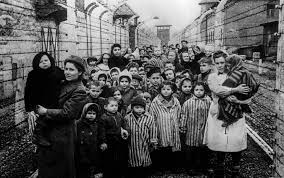
In the winter of 1944, a young Austrian psychiatrist named Viktor Frankl stood naked in the freezing showers of Auschwitz, clutching the manuscript of his life’s work. When the guards took it away, he felt a profound loss not just of paper, but of meaning. Yet, as he later wrote, he realized that even in that moment, he could choose his response: ‘Everything can be taken from a man but one thing: the last of the human freedoms to choose one’s attitude in any given set of circumstances.’
Frankl’s experience is one of the most famous accounts of survival in Nazi concentration camps, but it is not the whole story. The camps were not just places of physical suffering; they were psychological laboratories designed to break the human spirit. Understanding how prisoners navigated despair and hope—and how some found meaning while others drowned—remains a painful but essential inquiry into the resilience and fragility of the human mind.
The Camp as a Machine of Dehumanization
The Nazi camp system, which began with Dachau in 1933 and expanded into a vast network including extermination camps like Auschwitz and Treblinka, was deliberately engineered to destroy identity and will. Arrival was a ‘threshold’ experience: prisoners were stripped of clothes, shaved, tattooed with numbers, and forced into uniforms that erased individuality. This shock was compounded by starvation, sleep deprivation, and arbitrary violence. Psychiatrist Robert Jay Lifton coined the term ‘psychic numbing’ to describe the emotional shutdown that enabled prisoners—and perpetrators—to function amid atrocity. The goal was to reduce humans to what the camp slang called ‘Mussulmen’: prisoners who had collapsed into apathy, withdrawal, and a living death.
Bruno Bettelheim, a Dachau and Buchenwald survivor, argued that prisoners often regressed to infantile states, and some ‘identified with the aggressor’ as a defense mechanism. His views, published in The Informed Heart (1960), were controversial, partly because they seemed to blame victims. But his observations highlighted a grim reality: the camp environment was designed to provoke such regression.
The Drowned and the Saved
Primo Levi, an Italian Jewish chemist who survived Auschwitz, offered a more nuanced taxonomy. In If This Is a Man (1947) and later The Drowned and the Saved (1986), he distinguished between ‘the drowned’—those who gave up and died—and ‘the saved,’ who survived, often through morally ambiguous means. Levi himself survived partly because of his professional value as a chemist, but he never romanticized survival. He wrote that the saved were often those who ‘struggled to survive at the expense of others.’ This ethical complexity is a stark counterpoint to redemptive narratives.
Terrence Des Pres, in The Survivor: An Anatomy of Life in the Death Camps (1976), pushed further, arguing that survival was not primarily about meaning but about the biological and social ‘excremental’ struggle: managing filth, disease, and the relentless pressure of bodily needs. He criticized Frankl’s emphasis on meaning as too neat, noting that survival often hinged on luck, physical constitution, and the chance of being assigned to a better work detail.
The Will to Meaning
Viktor Frankl’s logotherapy, developed from his camp experience, posits that humans are driven by a ‘will to meaning.’ In Man’s Search for Meaning (1946), he famously wrote: ‘He who has a why to live for can bear almost any how.’ Frankl described how prisoners who had a future goal—a loved one waiting, a book to finish, a task to complete—were more likely to endure. He offered the example of a woman who found meaning in the beauty of a tree she could see from her barracks, noting that even in the most degraded conditions, the mind could find a foothold.
But Frankl’s view has been challenged. Lawrence Langer, a Holocaust scholar, argued in Holocaust Testimonies: The Ruins of Memory (1991) that survivors’ ‘deep memory’ resists redemptive meaning-making. He showed that many testimonies are fragmented, filled with images that defy narrative coherence. Langer insisted that imposing a positive narrative on atrocity is a form of betrayal. This debate—between meaning and rupture—remains central to understanding hope in the camps.
Beyond the Nazi Camps: The Gulag and Other Systems
The psychology of despair and hope is not confined to Nazi camps. In the Soviet Gulag (1930s–1950s), prisoners faced extreme cold, starvation, and forced labor, but the camps were not extermination-oriented. Survival often depended on criminal networks (‘blatnye’) and the ability to secure better work assignments. Varlam Shalamov’s Kolyma Tales depicts a world where moral compromises were routine, and hope was often a luxury. Japanese internment camps for American citizens (1942–1946) and POW camps in Japan also produced testimonies of resilience, but the conditions were less systematically deadly.
In all these contexts, similar psychological dynamics emerged: the collapse of social identity, the stratification of prisoners into hierarchies, and the desperate search for any source of meaning—whether religious faith, political conviction, or simple human connection.
Survival Strategies and Their Costs
Survival was not a single path. Some prisoners formed mutual aid networks, sharing food and information. Others clung to religious faith or political ideology. Some created secret schools or artistic works—the Theresienstadt camp is famous for children’s drawings and music. But every strategy had a cost. The ‘survivor syndrome,’ identified by psychiatrist William Niederland in 1961, describes long-term effects: chronic anxiety, depression, guilt, and anhedonia. Many survivors felt guilt for having lived while others died, a guilt that Frankl acknowledged as part of the human condition.
The concept of post-traumatic growth (PTG), introduced by Tedeschi and Calhoun in 1995, has been applied retrospectively to some survivors, who reported a deepened appreciation for life or a renewed sense of purpose. But as Langer would caution, such growth is not universal, and imposing it can obscure the irreparable damage.
The Uncomfortable Truth
The research reveals an uncomfortable truth: there is no single ‘psychology’ of camp survival. Some found hope through meaning; others survived through luck and morally ambiguous actions; still others drowned into the Mussulman state. The camps were designed to extinguish humanity, and they often succeeded. But the testimonies of those who survived—and those who did not—demand that we confront the full range of human response, from the noblest to the most compromised.
The psychology of despair and hope in concentration camps is not a neat story of triumph or tragedy. It is a messy, painful record of human endurance and frailty. Frankl’s ‘will to meaning’ offers one lens, but Levi’s ‘drowned’ and Langer’s ‘deep memory’ remind us that many found no redemption. What remains is a challenge: to honor the complexity of those experiences without flinching, and to learn what we can about the limits and possibilities of the human spirit.
Summary
- Concentration camps were deliberately designed to dehumanize prisoners, using shock, starvation, and violence to break identity and will.
- Viktor Frankl’s logotherapy emphasized finding meaning as a key to survival, but this view is contested by scholars like Lawrence Langer.
- Primo Levi distinguished between ‘the drowned’ who gave up and ‘the saved’ who survived, often through morally ambiguous means.
- Survival strategies included mutual aid, faith, political conviction, and artistic expression, but all came with psychological costs.
- The ‘survivor syndrome’ describes long-term trauma effects, while post-traumatic growth is not universal and can obscure suffering.
FAQ
Q: What was the ‘Mussulman’ state in concentration camps?
A: ‘Mussulman’ (Muselmann) was a camp slang term for prisoners who had reached complete physical and psychological collapse, showing apathy and withdrawal. It is considered the extreme endpoint of despair.
Q: How did Viktor Frankl’s theory of meaning apply to camp survival?
A: Frankl argued that prisoners who found a sense of purpose—whether a loved one, a task, or a belief—were more likely to endure. His logotherapy posits that the ‘will to meaning’ is a primary human drive.
Q: What is the ‘survivor syndrome’?
A: Identified by psychiatrist William Niederland in 1961, it is a cluster of symptoms including chronic anxiety, depression, guilt, and inability to experience pleasure, observed in Holocaust survivors.
Q: Did all survivors experience post-traumatic growth?
A: No. Post-traumatic growth is not universal. Many survivors suffered lasting trauma, and some scholars like Lawrence Langer argue that imposing redemptive narratives on survivor testimony distorts their reality.
Q: How did survival strategies differ between Nazi camps and the Gulag?
A: In the Nazi camps, survival often depended on assignments and luck, while in the Gulag, criminal networks and securing better work roles were more important. Both involved moral compromises and psychological strain.
Leave a Reply