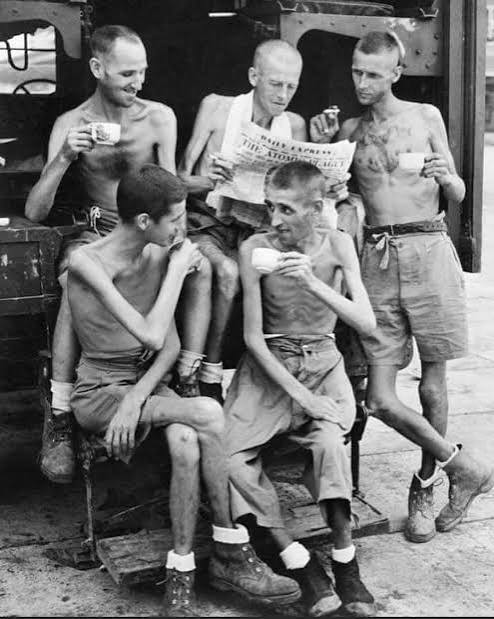
In the summer of 1942, a young American soldier named Lester Tenney was captured by Japanese forces on the island of Java. He would spend the next three and a half years as a prisoner of war, working on the infamous Burma Railway, where starvation, beatings, and disease were constants. Yet Tenney survived, and like many former POWs, he returned home with his mind intact. His story is not unique it is part of a larger, little-understood phenomenon: how did millions of prisoners, held for years under brutal conditions, keep from losing their sanity?
The answer lies not in a single heroic act, but in a toolkit of psychological strategies, social structures, and inner resources that POWs developed sometimes consciously, sometimes instinctively to endure the unendurable. This article explores the documented methods that helped these men and women survive the psychological assault of captivity, from the camps of World War II to the prisons of Vietnam.
The Scale of the Ordeal
To understand the psychological challenge, consider the numbers. During World War II alone, an estimated 35 million soldiers were taken prisoner. The conditions varied wildly by theater. In German camps for Western Allied POWs, survival was high—96 to 99 percent—thanks to Red Cross parcels and a relatively rule-bound system. But for Soviet POWs under the Nazis, the death rate was catastrophic: roughly 57 percent, a genocidal neglect. In Japanese camps, about 27 percent of Western POWs died—one in four—from starvation, disease, and violence.
Many POWs were held for three to five years. Some, like those captured during the Korean War or Vietnam War, endured seven or eight. The experience was a “total stressor”—combining physical deprivation, loss of autonomy, isolation, uncertainty, and constant threat. Yet post-war studies found that a majority of POWs did not develop chronic PTSD or depression. They returned with remarkable resilience. This “survivor paradox” puzzled researchers and pointed to deep psychological defenses.
The Internal Toolkit: Mental Discipline
When the body is imprisoned, the mind becomes the last territory. POWs used a variety of internal strategies to maintain cognitive control.
Memory exercises were common. Prisoners in the Hanoi Hilton, the Vietnamese prison for American pilots, would recall poetry, recite multiplication tables, or mentally reconstruct entire books. Some built imaginary houses in their minds, room by room, furnishing them with meticulous detail. These exercises served a dual purpose: they occupied the mind and preserved a sense of agency.
Compartmentalization was another key strategy. POWs often separated their mental state from their physical suffering. One former POW described it as “watching my body endure”—a dissociation that allowed him to withstand torture without surrendering his identity. This was not denial; it was a deliberate cognitive split.
Cognitive reframing transformed the meaning of captivity. Instead of viewing imprisonment as a punishment, many POWs framed it as a test, a mission, or even a research project. Admiral James Stockdale, a Vietnam POW for over seven years, called this the “Stockdale Paradox”: you must retain faith that you will prevail while confronting the brutal facts of your current reality. In his own words, the optimists—those who believed they’d be home by Christmas—died of broken hearts. The survivors accepted the long haul.
Time management was critical. POWs created internal calendars, marked days, and set micro-goals. Breaking the endless monotony into manageable chunks made the years feel less overwhelming. One POW in a German camp kept a detailed journal of imaginary chess games, playing out entire tournaments in his head.
The Social Dimension: Bonds and Hierarchy
Captivity often meant forced proximity with strangers, yet social structures emerged as a lifeline. In many camps, senior officers maintained military discipline, organizing daily roll calls, classes, and even theatrical performances. This hierarchy provided a sense of order and purpose.
Social bonds were perhaps the strongest defense. POWs formed tight-knit groups, sharing food, information, and emotional support. A study of American POWs in Vietnam found that those who had strong friendships were less likely to develop severe psychological symptoms. In the camps, a shared joke or a whispered conversation could stave off despair.
Defiance as resistance also played a role. For some, survival itself became an act of resistance—a way to deny the enemy victory. This was particularly strong among Vietnam POWs, who developed elaborate communication codes, tapping on walls to pass news and maintain morale. This defiance gave meaning to suffering.
The Role of Hope and Faith
Hope was not a passive feeling; it was an active practice. POWs planned post-war lives in detail—the meals they would eat, the people they would see, the careers they would pursue. This future-orientation kept the present bearable.
Religious faith was another anchor. Many POWs reported that prayer or meditation provided comfort and a sense of connection beyond the camps. For some, faith offered a framework for understanding their suffering—as a test, a penance, or a mission.
Humor, too, was a survival tool. In the darkest moments, a joke could cut through despair. POWs in Changi prison in Singapore staged elaborate musicals and comedy sketches, using whatever materials they had. This creativity was not frivolous; it was a assertion of humanity.
The Fourth Phase: Repatriation
Surviving captivity was only half the battle. Repatriation brought its own challenges—what psychologists call the “fourth phase.” Many POWs struggled to readjust to civilian life, facing nightmares, anxiety, and a sense of alienation. Yet even here, resilience showed. A significant minority developed chronic PTSD, but the majority did not, and many went on to lead productive lives.
Admiral Stockdale, after his release, became a philosopher and naval leader. Lester Tenney became a professor. Their stories illustrate a broader truth: the mind, even under extreme duress, can find ways to endure. The psychology of survival is not about avoiding pain; it is about finding meaning within it.
The POW experience is a testament to human resilience—not because the survivors were extraordinary, but because they used ordinary tools: memory, routine, friendship, and hope. These strategies did not erase suffering, but they made it bearable. In understanding how POWs kept their sanity, we learn something about ourselves: that even in the darkest circumstances, the mind can build a shelter.
Summary
- POWs faced total stressors: physical deprivation, isolation, and uncertainty, yet most did not develop chronic PTSD.
- Internal strategies included memory exercises, compartmentalization, cognitive reframing, and time management.
- Social bonds and military hierarchies in camps provided crucial support and a sense of purpose.
- The Stockdale Paradox—faith in eventual victory combined with acceptance of brutal reality—was vital for long-term survival.
- Hope, faith, and humor were active practices that helped POWs endure.
FAQ
Q: What was the most common psychological strategy used by POWs?
A: Cognitive reframing—reinterpreting captivity as a test or mission—was widespread, along with mental exercises like memory recall to maintain cognitive control.
Q: Did all POWs develop PTSD?
A: No, the majority did not. While a significant minority developed chronic PTSD or depression, many returned with remarkable resilience, often using the strategies described above.
Q: How did social bonds help POWs survive?
A: Friendships provided emotional support, a shared sense of purpose, and practical aid like food sharing. In Vietnam POW camps, communication codes maintained morale and cohesion.
Q: What is the Stockdale Paradox?
A: Named after Admiral James Stockdale, it is the ability to hold onto faith that you will prevail while confronting the brutal facts of reality. Survivors accepted the long haul rather than clinging to false optimism.
Q: What was the “fourth phase” of captivity?
A: Repatriation—the period after release when POWs faced readjustment challenges, including nightmares and anxiety. It was often overlooked but crucial for long-term psychological health.
Leave a Reply