It’s 2 AM. You’re scrolling through your phone, fully aware that your report is due in eight hours, yet you can’t seem to put down the phone and start typing. You’re not lazy—you’re caught in a perfect psychological storm. This explainer unpacks what’s happening in your brain at this specific hour and offers evidence-based strategies to stop the cycle.
What Procrastination Really Is
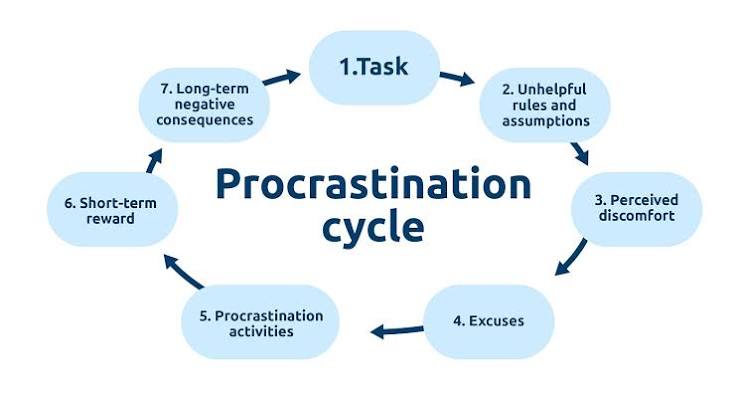
Procrastination isn’t laziness. Laziness means you don’t intend to act. Procrastination means you do intend to act, but something overrides that intention. Psychologists define it as voluntarily delaying an intended action despite knowing the delay will likely hurt you.
This distinction matters because it points to the real problem: not time management, but emotion management. As researchers Tim Pychyl and Fuschia Sirois put it, we procrastinate to avoid negative emotions like boredom, anxiety, or self-doubt. The task isn’t the enemy; the feeling it triggers is.
The 2 AM Perfect Storm
At 2 AM, several biological and psychological factors converge to make procrastination almost inevitable.
Your Brain Is Running on Empty
Your circadian rhythm has you at a low point. Core body temperature drops, melatonin rises, and alertness plummets. More critically, your prefrontal cortex—the region responsible for planning, impulse control, and rational decision-making—is running on fumes. Extended wakefulness impairs this region’s function, making it harder to resist immediate temptations. The limbic system, which processes emotions and rewards, is still firing, but the rational “brakes” are weak.
The “Second Wind” Illusion
Many people experience a paradoxical burst of energy late at night. After an evening slump, a second wind can make you feel alert and capable. This false sense of competence leads you to believe you’ll finally get that task done. But this energy isn’t quality energy—it’s a stress hormone spike that doesn’t restore executive function.
No One Is Watching
By 2 AM, social accountability is gone. No one will know if you don’t start. Deadlines feel abstract because the immediate moment is empty. The “cost” of delaying seems low, and the future self who suffers seems like a different person—research by Hal Hershfield shows we discount our future selves’ needs similarly to strangers’ needs.
The Digital Feedback Loop
Screens play a role too. Blue light suppresses melatonin, delaying sleep further. Each swipe, like, or video gives a quick dopamine hit—an immediate reward that outcompetes the distant reward of finishing a report. It’s a feedback loop: the more you scroll, the more tired you get, and the harder it is to stop.
Why Revenge Bedtime Procrastination Is a Rebellion
Journalist Daphne K. Lee coined the term “revenge bedtime procrastination” in 2019 to describe the phenomenon of delaying sleep to reclaim personal time lost to work or obligations. It’s a form of psychological reactance—you rebel against a day that wasn’t yours by refusing to end it.
This rebellion makes sleep itself the most procrastinated activity at 2 AM. You know you need to sleep, but you don’t want to. The evening was stolen, so you steal it back—even from your own rest.
Research-Backed Strategies to Break the Cycle
Understanding the psychology doesn’t stop the behavior, but it points to solutions that actually work.
1. Reduce the Emotional Friction of the Task
Since procrastination is emotion regulation, make the task feel less unpleasant. Break it into absurdly small steps: “open the document,” “write one sentence.” Starting is the hardest part; once you begin, momentum builds.
2. Use Implementation Intentions
Plan not just what you’ll do, but when and where. Research shows that “if-then” plans—”if it’s 7 PM, I’ll work for 25 minutes”—automate the decision and bypass the 2 AM negotiation.
3. Create Artificial Accountability
Since no one is watching at 2 AM, manufacture a witness. Tell a friend you’ll send them a progress update by 10 PM. Use a website blocker that shuts down social media after a set time. External constraints substitute for the prefrontal cortex’s weak brakes.
4. Protect Your Sleep
Revenge bedtime procrastination stems from a lack of autonomy during the day. Reclaim time earlier: schedule breaks, set work boundaries, and intentionally schedule “personal time” before the evening. If you feel you’ve had a slice of the day, the urge to steal back the night diminishes.
5. Ride the Urge
Urges to procrastinate are waves—they peak and then fade. When the urge to scroll hits, set a timer for 10 minutes and commit to sitting with the discomfort. You’ll often find the urge passes, and the task seems more manageable.
Conclusion
2 AM procrastination isn’t a character flaw—it’s a predictable outcome of a tired brain in a low-accountability environment, fighting to avoid unpleasant feelings. The fix isn’t more willpower; it’s less friction. By reducing the emotional weight of tasks, adding accountability, and respecting your circadian limits, you can break the cycle—and get some sleep.
Summary
- Procrastination is an emotion regulation problem, not a time management one.
- At 2 AM, the prefrontal cortex is impaired, making impulse control and rational decision-making harder.
- The “second wind” is a false sense of alertness that doesn’t restore executive function.
- Revenge bedtime procrastination is a rebellion against lost daytime autonomy.
- Effective strategies include breaking tasks into tiny steps, using if-then plans, and creating artificial accountability.
FAQ
Q: Is procrastination the same as laziness?
A: No. Laziness means you don’t intend to act. Procrastination means you intend to act but delay anyway, often to avoid negative emotions.
Q: Why do I feel more alert at 2 AM?
A: That’s the “second wind,” a stress hormone spike that creates a false sense of alertness. It doesn’t restore the cognitive functions needed for complex tasks.
Q: How can I stop revenge bedtime procrastination?
A: Reclaim personal time earlier in the day. Schedule breaks and set work boundaries to reduce the urge to “steal” the evening back.
Q: What is the best way to start a task I’ve been avoiding?
A: Break it into ridiculously small steps—open the document, write one sentence. The goal is to bypass the initial emotional resistance.
Q: Does sleep deprivation affect procrastination?
A: Yes, even mild sleep deprivation impairs prefrontal cortex function, making it harder to resist immediate temptations and easier to rationalize delay.
Leave a Reply