Tag: espionage

  • The Red Orchestra: The Spy Network That Danced in the Dark Heart of Nazi Germany

    The Red Orchestra: The Spy Network That Danced in the Dark Heart of Nazi Germany

    The Red Orchestra - JIFF

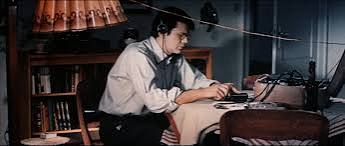
    In the summer of 1941, as German troops massed on the Soviet border, a small group of Berliners began transmitting secrets from the capital of the Reich. They were not professional spies in the usual sense a Luftwaffe officer, an economist, a film publicist, an American woman but they formed the nucleus of what the Gestapo would later call the Rote Kapelle, the Red Orchestra. The name came from the Gestapo’s own slang: ‘Kapelle’ meant a radio operator, whose keying sounded like music, and ‘Rot’ meant red, for communism. The orchestra played a deadly tune, and when the Nazis finally found the source, the music stopped in a prison courtyard, but the echo of its notes would reach across the Cold War and into the present day.

    This is the story of two intertwined networks one in Berlin, one in Western Europe that fed intelligence to Moscow from the heart of the Nazi war machine. It is a story of courage, betrayal, and a warning that was tragically ignored. It is also a story that challenges easy categories: these were not heroes in the usual sense, nor traitors, but people caught between ideologies and loyalties, who made choices that cost many of them their lives.

    The Birth of the Orchestra

    The Red Orchestra did not emerge from a vacuum. It grew out of the wreckage of the Great Purge, which had decimated Soviet intelligence in the late 1930s. Desperate for reliable agents in Germany, the GRU Soviet military intelligence, not the NKVD turned to existing anti-fascist networks. One such network centered on Harro Schulze-Boysen, a Luftwaffe intelligence officer with a deep hatred of Nazism, and Arvid Harnack, an economist at the Reich Ministry of Economics. They were joined by their wives, Libertas and Mildred, and a circle of friends, artists, and civil servants who shared a loathing for Hitler.

    This was not a monolithic communist cell. The Berlin group was a loose and diverse circle: some were communists, but others were conservatives, nationalists, or simply humanists. They were united by opposition to the regime, not by ideology. This diversity gave them access to a wide range of information Harro could see Luftwaffe plans, Arvid had contact with economic data but it also created security lapses. The Gestapo, which initially underestimated communist networks, would later exploit these weaknesses.

    Meanwhile, in Brussels, a separate network was being built by Leopold Trepper, a Polish-Jewish communist and a veteran of Soviet intelligence. His network was more professional, composed of experienced agents and organized into cells. They focused on military and economic intelligence, and they would become the principal Soviet source in Western Europe.

    The Pact and the Silence

    The Nazi-Soviet Pact of 1939 created a moral and operational crisis for the Berlin group. Many of its members were anti-Nazi but not pro-Soviet; the pact forced them to choose between opposing Hitler and supporting Stalin. Some paused their operations, unwilling to help Moscow while it was allied with Berlin. Others continued to gather intelligence but withheld it from Moscow, waiting for the day when the two dictators would turn on each other.

    That day came on June 22, 1941, when German forces invaded the Soviet Union. The Red Orchestra’s warning of the invasion date—delivered via the Swiss ‘Lucy’ network, run by Rudolf Roessler—was dismissed by Stalin as British disinformation. It was a tragic intelligence failure that would cost millions of lives. After the invasion, the Berlin group’s work became urgent. They began transmitting information on German military production, Luftwaffe aircraft specifications, troop movements, and even the planned invasion itself—though the warning arrived too late.

    The Music of the Airwaves

    The Trepper network sent thousands of messages from Brussels and Paris. They reported on German logistics, economic data, and, crucially, the development of V-1 and V-2 rockets at Peenemünde. The Berlin group, despite its amateurish nature, provided valuable intelligence on the Luftwaffe and on German war production. The Swiss ‘Red Three’ network, a related but distinct operation run by Alexander Foote and Rachel Dübendorfer, transmitted over 3,000 messages to Moscow, including the Barbarossa warning.

    The Gestapo, however, was listening. The Funkabwehr, the German radio counterintelligence unit, used direction-finding to locate the transmitters. The discovery of the networks was not a single stroke but a slow process of triangulation, helped by a Belgian informant who betrayed the Trepper network in late 1941. The noose began to tighten.

    The Fall of the Orchestra

    In the summer of 1942, the Gestapo struck. Over 50 members of the Berlin group were arrested in a wave of raids. The arrests were followed by torture and interrogations, which led to further arrests. The trials were swift and brutal. Most of the accused were sentenced to death for ‘preparing to commit high treason’ and ‘aiding the enemy.’

    The executions took place at Plötzensee Prison in Berlin—by hanging or firing squad. Harro Schulze-Boysen was executed on December 22, 1942. His wife Libertas was killed the same day. Arvid Harnack was executed, and Mildred Harnack, who was American, was initially sentenced to six years in prison, but Hitler personally ordered a new trial, and she was executed on February 16, 1943. In all, more than 50 members of the Berlin group lost their lives.

    Trepper was arrested in 1942 but managed to escape in 1943 and survived the war. Anatoli Gurevich, codename ‘Kent,’ was captured and later returned to the USSR, where he was imprisoned—a fate that awaited many Soviet agents who had fallen into enemy hands. The network that had once been the Red Orchestra was no more.

    Aftermath and Memory

    The Red Orchestra’s place in history is contested. In West Germany, they were often branded as traitors, excluded from the honored narrative of the German resistance, which centered on the conservative plotters of the July 20, 1944, assassination attempt on Hitler. The communist association made them suspect. Only in recent decades have they been rehabilitated, with exhibitions at the German Resistance Memorial Center in Berlin.

    From the Soviet perspective, the network was a source of pride and a source of suspicion. Moscow treated the survivors with suspicion, imprisoning some, like Gurevich, despite their service. The Cold War froze the Red Orchestra into a propaganda tool, and the complex human stories behind the espionage were often lost.

    Today, the Red Orchestra is remembered as a rare instance of resistance from within the heart of the Nazi state, but it is also a cautionary tale about the limits of intelligence and the cost of political idealism. The warning they sent about Barbarossa was ignored, but the intelligence they gathered was not entirely without effect. The story of the Red Orchestra is not a simple victory or defeat; it is a story of moral ambiguity, sacrifice, and the terrible choices that war forces on people.

    The Trepper Network and the ‘Red Three’

    The Trepper network, separate from the Berlin group, was more professional but faced similar risks. Its members included Anatoli Gurevich, who operated in France and Switzerland, and a network of communist cells across Belgium and the Netherlands. The ‘Red Three’ in Switzerland, run by Alexander Foote and Rachel Dübendorfer, was crucial in transmitting the Barbarossa warning, but it also had its own internal tensions and was eventually compromised by a double agent.

    The information they provided was vast: reports on German logistics, economic data, and the V-2 rocket program. But the impact of this intelligence on the war’s outcome is debated. Some historians argue that it helped the Soviet Union prepare for the German onslaught, while others point to Stalin’s distrust and the failure to act on the warnings. The Red Orchestra’s legacy is thus ambiguous—neither a triumph nor a total failure, but a testament to the courage of individuals who risked everything to fight a monstrous regime from within.

    The Red Orchestra played its final notes in a Berlin prison, but its music has not faded. The story of these spies—the Luftwaffe officer, the economist, the American woman, the Polish communist—reminds us that resistance can take many forms, and that the line between hero and traitor is often drawn by history’s victors. Their warning was ignored, but their sacrifice was not in vain; it stands as a haunting reminder of the cost of ignoring the truth, and of the enduring power of human conviction in the face of tyranny.

    Summary

    • The Red Orchestra was a Soviet spy network in Nazi Germany, named by the Gestapo, with two main groups: the Berlin circle and the Trepper network in Western Europe.
    • Active from 1938 to 1942, it transmitted military and economic intelligence to Moscow, including the warning of Operation Barbarossa, which Stalin dismissed.
    • The Berlin group was a diverse anti-Nazi circle, not purely communist, while the Trepper network was more professional and communist-based.
    • The networks were broken by German radio counterintelligence and betrayal, leading to over 50 arrests and executions, including Harro Schulze-Boysen and Arvid Harnack.
    • Post-war, they were often excluded from the German resistance narrative, but have been rehabilitated in recent decades.

    FAQ

    Q: What was the Red Orchestra?
    A: The Red Orchestra was a Soviet spy network operating in Nazi Germany and Western Europe during World War II. It consisted of two main groups: the Berlin group led by Harro Schulze-Boysen and Arvid Harnack, and the Trepper network based in Brussels and Paris, led by Leopold Trepper.

    Q: Why was it called the Red Orchestra?
    A: The Gestapo coined the name ‘Rote Kapelle’ (Red Orchestra) because ‘Kapelle’ was their slang for a radio operator, whose transmissions sounded like music, and ‘Rot’ referred to communism. So the name literally meant ‘Red Band’ or ‘Red Orchestra.’

    Q: What information did the Red Orchestra send to Moscow?
    A: The Berlin group sent information on German military production, Luftwaffe aircraft specifications, and troop movements. The Trepper network reported on German logistics, economic data, and V-1/V-2 rocket development. The Swiss ‘Red Three’ network transmitted over 3,000 messages, including the warning of Operation Barbarossa.

    Q: How was the Red Orchestra discovered?
    A: The networks were broken by the German Funkabwehr (radio counterintelligence) using radio direction-finding to locate transmitters, and by a Belgian informant who betrayed the Trepper network in late 1941.

    Q: What happened to the members of the Red Orchestra?
    A: Over 50 members of the Berlin group were arrested in 1942 and most were executed by hanging or firing squad at Plötzensee Prison. Leopold Trepper was arrested but escaped in 1943 and survived the war. Anatoli Gurevich was captured and later imprisoned in the USSR.
  • The Women of SOE: The Female Spies Sent to Occupied France

    The Women of SOE: The Female Spies Sent to Occupied France

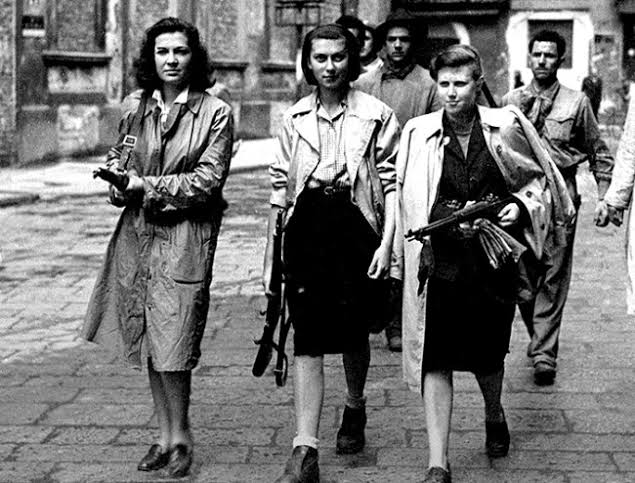
    In the summer of 1940, as Britain braced for invasion, a secret organization was born with a mandate from Winston Churchill: “set Europe ablaze.” The Special Operations Executive (SOE) was tasked with sabotaging the Nazi war machine from within, and its French Section would soon dispatch an unlikely weapon women. While the military establishment balked, SOE’s F Section sent nearly forty women into occupied France, where they would serve as couriers, wireless operators, and even leaders of resistance networks. Their story is one of extraordinary courage, betrayal, and sacrifice, and their contribution was pivotal in the fight against Nazism.

    The Unlikely Recruits

    These were not professional spies. They were secretaries, shop assistants, and even a princess. Violette Szabo, a young widow with a young daughter, had worked as a shop assistant before the war. Noor Inayat Khan was an Indian-American musician and children’s author, descended from Tipu Sultan. Nancy Wake, an Australian journalist, had already witnessed Nazi brutality in Vienna and was determined to fight. Odette Sansom, a French-born mother of three, had initially written to the War Office offering a family photograph for a map an innocent letter that would lead her into the heart of the resistance.

    They came from diverse backgrounds, but they shared a common willingness to risk everything. The SOE was desperate for agents. Men were being conscripted, and women offered a tactical advantage: they could move through checkpoints and crowded streets with less suspicion. As one SOE officer noted, a woman could cycle through the French countryside carrying a wireless set in a shopping basket, and no one would look twice.

    Training: Equal Rigor, Unequal Pay

    Once recruited, these women were subjected to the same grueling training as their male counterparts at Special Training Schools scattered across Scotland and England. At Wanborough Manor and Arisaig, they learned silent killing, unarmed combat, and how to handle explosives. They practiced parachute jumps, often at night, and memorized complex wireless codes. At STS 31, the Thatched Barn, they studied fieldcraft how to live rough, evade capture, and maintain cover.

    The training was brutal and unrelenting. Instructors pushed them to their physical and mental limits, weeding out those who could not handle the pressure. Yet, despite this equal training, women were paid less than men and were initially barred from leadership roles. The role of organizer the leader of a resistance circuit was deemed too dangerous, too demanding for a woman. That would change as the war progressed, but the prejudice was persistent.

    The Toughest Jobs in the Field

    Once in France, these women took on roles that were often more dangerous than those of their male colleagues. Couriers like Andrée Borrel carried messages, weapons, and supplies across enemy territory, constantly moving and always at risk of being stopped at a checkpoint. Wireless operators like Noor Inayat Khan faced the most perilous job of all: transmitting intelligence to London while German direction-finding vans roamed the streets, capable of pinpointing their location within minutes of a transmission. To be a wireless operator was to live on borrowed time, knowing that each signal could be your last.

    Some women eventually took on organizing roles. Pearl Witherington, a courier who had infiltrated France in 1943, assumed command of a maquis group after her organizer was arrested. She built a force of 1,500 men, coordinating sabotage operations that disrupted German supply lines in the lead-up to D-Day. When the British government offered her the Military Cross, she refused, pointing out that as a woman she was ineligible for the award. She later accepted the CBE, but her refusal highlighted the double standard that persisted even in the face of extraordinary service.

    The Shadow of Betrayal

    The SOE’s operations in France were constantly threatened by German counter-intelligence. The Sicherheitsdienst (SD) ran a ruthless campaign to infiltrate and dismantle resistance networks. The infamous Funkspiel—”radio game”—involved captured wireless operators transmitting false messages to London, tricking the SOE into sending more agents into traps.

    One of the most devastating blows was the fall of the Prosper network in 1943. This extensive circuit, which coordinated sabotage and resistance across northern France, was thoroughly compromised. Mass arrests followed, sweeping up many agents, including Andrée Borrel and Noor Inayat Khan. The disaster raised questions about SOE security and whether London had ignored warnings of compromise. For the women caught in this wave, the consequences were fatal.

    The Final Brutality

    Of the approximately 39 women sent to France, 13 never returned. Their fates were among the most brutal of the war. In July 1944, four women—Andrée Borrel, Diana Rowden, Vera Leigh, and Sonya Olschanezky—were executed at Natzweiler-Struthof concentration camp by lethal injection. Their bodies were cremated, their remains never recovered. Violette Szabo was captured after a firefight with German troops, tortured, and sent to Ravensbrück, where she was executed in early 1945. Noor Inayat Khan was shackled in chains and sent to Dachau, where she was shot. Odette Sansom survived Ravensbrück, but only after enduring unspeakable torture that left her with permanent injuries.

    These were not casualties of battle; they were deliberate executions, meted out to women who had dared to fight. The Gestapo treated female agents with particular cruelty, subjecting them to beatings, starvation, and solitary confinement. Yet, many of these women maintained their defiance to the end. Witnesses reported that Violette Szabo sang as she was led to her execution.

    A Legacy Remembered

    Recognition came slowly. Odette Sansom became the first woman to receive the George Cross in 1946, but it would take decades for others to gain similar honors. Noor Inayat Khan was posthumously awarded the George Cross in 1949. Violette Szabo’s story was popularized by the 1958 film Carve Her Name with Pride. In 1991, the Valençay SOE Memorial was unveiled in France, honoring the 104 SOE agents who died in service, including the 13 women.

    The women of SOE were not merely participants in the war; they were pioneers who shattered the boundaries of what women were believed capable of. They proved that courage, skill, and determination were not the province of men alone. Their legacy is not just one of sacrifice, but of possibility—a reminder that even in the darkest times, ordinary people can rise to extraordinary heights.

    The women of SOE were not footnotes in the history of espionage. They were central players in a desperate fight, and their contributions came at a staggering cost. Today, their stories are preserved in archives and memorials, but they deserve more than remembrance. They deserve to be recognized as models of bravery, and as proof that the fight for freedom knows no gender.

    Summary

    • The SOE sent approximately 39 women into occupied France as spies, of whom 13 were killed.
    • Women served as couriers, wireless operators, and later as organizers, often in roles more dangerous than those of men.
    • They underwent the same rigorous training as men but were paid less and initially barred from leadership roles.
    • The Prosper network disaster and the Gestapo’s Funkspiel operation led to the capture and execution of several female agents.
    • Recognition was slow but posthumous honors include George Crosses for Noor Inayat Khan and Violette Szabo, and the Valençay Memorial honors all fallen agents.

    FAQ

    Q: How many women were sent to France by the SOE?
    A: Approximately 39 women were sent to occupied France as SOE agents, though some sources say 40 depending on inclusion criteria. Of these, 13 were killed in action, executed, or died in captivity.

    Q: What roles did these women perform?
    A: They served primarily as couriers, carrying messages and supplies, and as wireless operators, transmitting intelligence to London. A few, like Pearl Witherington, eventually led resistance networks as organizers.

    Q: Were women treated equally in the SOE?
    A: No. Despite undergoing the same training as men, women were paid less and were initially barred from leadership roles. They were only given roles as organizers later in the war.

    Q: What was the “Funkspiel”?
    A: Funkspiel, meaning “radio game,” was a German counter-intelligence operation where captured wireless operators were forced to transmit false messages to London, tricking the SOE into sending more agents into traps.

    Q: How are these women remembered today?
    A: They are honored at the Valençay SOE Memorial in France, and several have been posthumously awarded the George Cross. Their stories are preserved in archives at the Imperial War Museum and the Special Forces Club.

  • The Spy Ring That Could Have Sunk America: Inside the FBI’s Greatest Counterespionage Coup

    The Spy Ring That Could Have Sunk America: Inside the FBI’s Greatest Counterespionage Coup

    In the spring of 1941, a German-born American citizen named William Sebold walked into FBI headquarters in New York City. He had a story to tell one that would unravel the largest Nazi espionage network ever discovered on U.S. soil. Sebold was a naturalized American, but during a visit to Germany, he had been pressured by the Abwehr, German military intelligence, to return to the U.S. and spy on American industrial and military secrets. Instead, he turned himself in. The FBI saw an opportunity: use Sebold as a double agent to expose the entire ring.

    What followed was a two-year operation that would end with 33 convictions, a 300-year prison sentence for the ring’s leader, and a permanent expansion of FBI power. But behind the headlines of triumph lay a darker story of betrayal, desperation, and the fragile line between security and liberty one that still resonates today.

    The Man Who Would Be Spy

    Fritz Joubert Duquesne was not your average spy. Born in South Africa to a Dutch father and a mother of Huguenot descent, he had spent a lifetime nursing a deep hatred of Britain fueled by his experiences in the Boer War, where he had been a captain and had seen his family’s farm burned by British troops. That hatred made him a perfect recruit for German intelligence, and by the late 1930s, he was running a network of agents across the United States, feeding information to Berlin through shortwave radio and coded messages.

    Duquesne was a flamboyant figure, a big-game hunter and adventurer who had once claimed to have been the only survivor of a British ship he had torpedoed (a claim the British never confirmed). He recruited a motley crew: a German-born housewife in New York, a former soldier, a chemist, a mechanic, and a few businessmen none of them professional spies. They were motivated by ideology, money, or personal grievances, but they shared one thing: a willingness to sell out their adopted country for a cause that was about to plunge the world into war.

    The Double Agent

    When Sebold came forward, the FBI’s counterintelligence division then still in its infancy saw a chance to turn the tables. Under Director J. Edgar Hoover, the Bureau had been pushing for greater authority to investigate foreign espionage, and this case could prove its worth. Sebold was given a new identity, a fake office in New York, and a shortwave radio that the FBI could monitor. The office was rigged with hidden microphones and cameras, and Sebold was instructed to encourage the agents to talk freely about their activities.

    Between 1939 and 1941, Sebold met with dozens of suspects, recording their conversations and handing over fabricated intelligence that the FBI hoped would be useless to Germany. The operation was a masterstroke of tradecraft, but it was also a legal minefield. Defense lawyers later argued entrapment—that Sebold had induced the agents to commit crimes they wouldn’t have otherwise. The courts rejected that argument, but the case raised questions that would echo for decades: how far can the government go to catch spies without violating civil liberties?

    The Ring Comes Apart

    The FBI’s break came in June 1941, when it arrested Duquesne and 32 others in a coordinated sweep. The evidence was overwhelming: transcripts of conversations, photographs of documents, and radio transmissions that showed the ring had been sending information on ship movements, aircraft production, and military equipment. The trial began in September 1941, but it was interrupted by Pearl Harbor in December, which only heightened public anger toward the defendants.

    On January 2, 1942, the jury convicted all 33 members. Duquesne received 300 years—the maximum sentence, effectively a life term. Others got 20 to 30 years. Hoover called it “the greatest spy roundup in American history,” and the press agreed. But the victory was not without cost: many of the agents had sent little more than harmless gossip and fabricated data, and the real damage to U.S. security was minimal. The ring was less a threat than a symbol—a symbol of the “fifth column” that Americans feared was lurking in every German-American neighborhood.

    The Broader Web

    The Duquesne ring was not the only Nazi operation on U.S. soil. In 1942, Operation Pastorius landed eight saboteurs by U-boat on Long Island and Florida with plans to blow up bridges, factories, and transportation hubs. They were caught quickly, tried by military tribunal, and six were executed. Two others, who confessed and cooperated, were imprisoned and later pardoned in 1948. The trial, known as Ex parte Quirin, set a controversial precedent: civilians could be tried in military courts for espionage, bypassing civilian due process.

    Other rings, like the Lone Star and Joe K networks, were smaller but equally doomed. The FBI claims to have arrested over 100 German agents during the war, but many of these were low-level operatives who provided little real intelligence. The Abwehr, for its part, was increasingly skeptical of its U.S. network—especially after Sebold’s betrayal became known. In the end, the German espionage effort in America was a failure, but it left a lasting legacy: the FBI’s expanded power, justified by the threat of spies, would grow into the massive counterintelligence apparatus of the Cold War.

    The Cost of Fear

    The Duquesne case also fed a climate of fear that had darker consequences. The “fifth column” panic convinced many that German and Japanese immigrants were a danger, leading to the internment of over 100,000 Japanese-Americans and thousands of German and Italian aliens. While the spies were real, the vast majority of immigrants were loyal Americans. The government’s response, driven by the same logic that had caught the Duquesne ring, swept up innocent people in a net designed for a few.

    William Sebold, the man who helped break the ring, vanished into obscurity after the trial. He had risked his life to expose the spies, but the FBI’s secrecy meant he could never return to a normal life. He died in 1965, largely forgotten. The spies he helped convict served their sentences, but the questions they raised—about loyalty, security, and the price of freedom—remain as relevant as ever.

    The Nazi spy ring in the United States was never the grave threat that the headlines suggested. But it was a turning point. It gave the FBI the power it craved, tested the limits of civil liberties in wartime, and showed how easily fear can justify overreach. In the end, the spies were caught not because they were clever, but because one man chose to betray them. The lesson is not that vigilance is unnecessary—but that the tools we use to protect ourselves must be examined as carefully as the enemies we face.

    Summary

    • The Duquesne Spy Ring (1938–1941) was the largest Nazi espionage operation in U.S. history, with 33 members convicted in 1942.
    • FBI double agent William Sebold, a German-born American, infiltrated the ring, providing evidence through hidden microphones and cameras.
    • The ring’s leader, Fritz Duquesne, received a 300-year sentence; others got 20–30 years.
    • Other operations included Operation Pastorius (1942), where eight saboteurs landed but six were executed, and smaller rings like Lone Star and Joe K.
    • The case expanded FBI counterintelligence powers and fueled fifth-column fears, contributing to the internment of Japanese-Americans and other aliens.

    FAQ

    Q: How did the FBI catch the Duquesne Spy Ring?
    A: The FBI used a double agent, William Sebold, who had been recruited by German intelligence but turned himself in. He set up a fake office and radio station in New York, which the FBI wired with hidden microphones and cameras, allowing them to record the agents’ activities.

    Q: What was Operation Pastorius?
    A: In June 1942, eight German saboteurs were landed by U-boat on Long Island and Florida with plans to attack U.S. infrastructure. They were caught within weeks, tried by military tribunal, and six were executed; two were imprisoned and later pardoned in 1948.

    Q: Were there other Nazi spy rings in the U.S.?
    A: Yes, the FBI also broke up the Lone Star and Joe K rings in 1944–1945, smaller networks that were also unsuccessful. In total, the FBI arrested over 100 German agents during the war.

    Q: What was the legal controversy in the Duquesne trial?
    A: Defense lawyers argued entrapment, saying Sebold induced the agents to commit crimes. The courts rejected this, but the case raised questions about the use of secret evidence and the balance between security and civil liberties.

    Q: How did this case affect U.S. counterintelligence?
    A: It cemented the FBI’s role in domestic intelligence and expanded its powers, leading to a larger counterintelligence apparatus that grew during the Cold War. It also contributed to the internment of Japanese-Americans and other aliens due to fifth-column fears.

  • The OSS vs. the Gestapo: How America’s First Spies Took On Hitler’s Secret Police

    The OSS vs. the Gestapo: How America’s First Spies Took On Hitler’s Secret Police

    In the summer of 1942, a young American named John Doe parachuted into occupied France with forged papers and a mission to blow up a railway bridge. Within hours, he was being hunted by the Gestapo, whose agents had already turned the local café owner into an informant. Doe was one of the first operatives of the Office of Strategic Services (OSS), a brand-new agency that President Franklin D. Roosevelt had created just weeks earlier. The OSS was America’s first centralized intelligence service, and its agents were walking into a war against the most feared secret police in history.

    The Gestapo, Hitler’s secret state police, had a decade of experience in surveillance, infiltration, and brutal interrogation. By 1942, it had already crushed resistance movements across Europe. The OSS, by contrast, was a hastily assembled experiment staffed by Wall Street lawyers, academics, and Olympic athletes led by a Medal of Honor winner named William Donovan. What followed was a shadow war of radio games, double agents, and sabotage, fought in the back alleys of Paris and the mountains of Yugoslavia. This is the story of how a scrappy American upstart took on the Nazi terror machine and helped win a war.

    The Birth of an Agency

    Before World War II, the United States had no permanent foreign intelligence service. Information was scattered across the Army’s G-2, the Navy’s Office of Naval Intelligence, and the State Department, with little coordination. President Roosevelt was frustrated by the lack of actionable intelligence, especially as war loomed in Europe. In 1940, he sent a Wall Street lawyer and WWI hero, William “Wild Bill” Donovan, on a fact-finding trip to Britain. Donovan returned convinced that the U.S. needed a centralized, British-style intelligence organization one that could conduct espionage, sabotage, and psychological warfare.

    On June 13, 1942, Roosevelt signed the order creating the Office of Strategic Services, with Donovan as its director. The OSS was an experiment from the start. It recruited from unlikely places: professors from Ivy League universities, bankers, boxers, and even Hollywood set designers. At its peak, it employed around 13,000 people a fraction of the Gestapo’s 32,000 members, who were backed by an army of informants. The OSS was underfunded, understaffed, and often at odds with the military brass, but it had one thing going for it: Donovan’s willingness to take risks.

    The Gestapo’s Iron Grip

    The Gestapo, short for Geheime Staatspolizei, was Nazi Germany’s secret state police. Founded in 1933 by Hermann Göring, it was later taken over by Heinrich Himmler and folded into the Reich Security Main Office in 1939. The Gestapo’s power rested on surveillance, informants, and the legal authority to use “protective custody” imprisonment without trial. In occupied Europe, it was the hammer that crushed resistance networks. Its agents used torture, summary execution, and the Commando Order of 1942, which mandated the killing of captured saboteurs without trial.

    The Gestapo was everywhere. In France, it maintained a network of informants in every café, train station, and police precinct. It used radio direction-finding to track down clandestine transmitters. It ran double-agent operations that fed false intelligence to the Allies. One of its most infamous successes was the Englandspiel, a radio deception that led to the capture of dozens of Dutch agents. For any OSS operative, the Gestapo was the ever-present enemy, and capture almost always meant death.

    The Shadow War Begins

    OSS agents were dropped into this cauldron with minimal training. They carried forged papers, a pistol, and a cyanide pill. Their missions were simple in concept but deadly in practice: blow up bridges, arm the resistance, gather intelligence on enemy troop movements. In France, the OSS worked with the Maquis, supplying them with weapons and explosives. In Italy, they coordinated with partisans to sabotage German supply lines. In Yugoslavia, they supported both Chetniks and Partisans, trying to decide which side to back.

    The Gestapo, in turn, made hunting OSS agents a priority. They used informants to sniff out strangers in small towns. They set up roadblocks and checked papers. They tortured captured agents to extract names and locations. Many OSS operatives never made it back. Some were executed; others disappeared into concentration camps. Yet the OSS kept pushing, learning from each failure.

    The David vs. Goliath Dynamic

    The OSS was a David against a Goliath. The Gestapo had experience, resources, and a ruthlessness that knew no bounds. The OSS had improvisation and a willingness to break the rules. Donovan recruited academics who spoke multiple languages, athletes who could climb cliffs, and gamblers who could bluff their way past checkpoints. This unconventional approach often worked. OSS agents were trained in guerrilla warfare, and they developed tactics that the Gestapo found hard to counter, such as using local resistance fighters to ambush patrols.

    One key advantage was the OSS’s ability to adapt. When radio games backfired, it switched to more secure communication methods. When agents were captured, it changed codes and safe houses. The Gestapo, by contrast, relied on a rigid hierarchy and a culture of fear, which sometimes led to overconfidence. The OSS’s willingness to take risks—sometimes recklessly—paid off in the end.

    The Cost of the Conflict

    The war of spies came at a terrible cost. The OSS lost hundreds of agents in Europe, many of whom were never accounted for. The Gestapo’s brutal methods broke many under torture, but the OSS’s decentralized structure meant that capturing one agent rarely led to a network. By 1944, the OSS was operating effectively in France, Italy, and the Balkans, supporting the Allied advance. The Gestapo, meanwhile, was stretched thin, fighting a losing battle against the resistance and the Allied armies.

    When the war ended, the OSS was disbanded on October 1, 1945, just weeks after Japan’s surrender. President Truman, wary of a permanent intelligence agency, scattered its functions across the State and War Departments. But the lessons learned in the fight against the Gestapo were not forgotten. In 1947, Congress passed the National Security Act, creating the CIA—the OSS’s direct descendant. The Gestapo, declared a criminal organization at Nuremberg, was dissolved, and many of its leaders were executed or fled to South America. The conflict between the two agencies shaped the future of intelligence for decades.

    The OSS’s fight against the Gestapo was more than a military confrontation; it was a clash between two visions of power. The Gestapo represented totalitarian control, operating outside the law to enforce a brutal ideology. The OSS, for all its flaws, was an experiment in democratic espionage—not perfect, but accountable to a civilian government. The legacy of that experiment lives on in the CIA and in the very concept of American intelligence. The story of the OSS is a reminder that even the most powerful agencies start small, and that courage and improvisation can sometimes outmatch experience and terror.

    Summary

    • The OSS was the first U.S. centralized spy agency, created in 1942 by FDR and led by William “Wild Bill” Donovan.
    • The Gestapo was Nazi Germany’s secret police, a brutal force of 32,000 that targeted resistance and spies across occupied Europe.
    • The OSS operated in direct opposition to the Gestapo, using sabotage, espionage, and support for resistance movements.
    • The conflict was a David vs. Goliath struggle, with the OSS’s unconventional tactics eventually proving effective.
    • The OSS was disbanded after the war, but its legacy lives on in the CIA, while the Gestapo was condemned at Nuremberg.

    FAQ

    Q: What does OSS stand for?
    A: OSS stands for Office of Strategic Services, the United States’ first centralized intelligence agency, established in 1942.

    Q: Who led the OSS?
    A: William “Wild Bill” Donovan, a Medal of Honor recipient and Wall Street lawyer, led the OSS.

    Q: How was the OSS different from the CIA?
    A: The OSS was a wartime agency, disbanded in 1945, while the CIA was created in 1947 as a permanent peacetime agency.

    Q: What happened to captured OSS agents?
    A: Many were tortured and executed by the Gestapo, often under the Commando Order of 1942.

    Q: Did the OSS succeed in its missions?
    A: The OSS contributed to Allied victory by supporting resistance movements, gathering intelligence, and conducting sabotage, though it suffered heavy losses.

  • The Resistance Networks: How Ordinary People Became Spies

    The Resistance Networks: How Ordinary People Became Spies

    In the gray dawn of a Nazi-occupied European city, a schoolteacher walks to work with a loaf of bread under her arm. Hidden inside the crust are microdots containing German troop positions. She is not a soldier, not a trained agent just an ordinary woman who decided to fight back. Across the continent, millions of civilians faced a stark choice: submit to occupation or resist. A brave minority chose the latter, becoming spies, couriers, forgers, and saboteurs in clandestine networks that would help shape the outcome of World War II.

    This is the story of those ordinary people farmers, postal workers, clergy, students, housewives who transformed themselves into intelligence operatives. They operated in the shadows, faced unimaginable risks, and their efforts, though often overlooked, were vital to the Allied war effort. From the Dutch resistance’s tragic Englandspiel to the Polish cryptologists who cracked Enigma, these networks showed that courage could be found in the most unexpected places.

    The Making of a Spy

    Resistance networks were not born from thin air. They emerged from the brutal reality of Nazi occupation systematic repression, forced labor, food shortages, and mass murder. For many, the decision to resist was a moral response to witnessing atrocities. A teacher in Lyon who saw a neighbor dragged away for hiding a Jewish child might decide that silence was no longer possible.

    Patriotism also played a role. After conventional armies surrendered, resistance became a continuation of national defense. For communists, especially after Germany invaded the Soviet Union in June 1941, resistance was an ideological imperative. But perhaps the most common path into the resistance was through personal networks—a friend, a family member, a trusted priest or teacher already involved. Trust was the currency of recruitment.

    These new spies came from every walk of life. Railway workers could observe troop movements. Postal workers could intercept communications. Farmers knew the terrain and could hide fugitives. Women, often overlooked by German patrols, served as couriers, carrying messages and supplies under the noses of the occupiers.

    The Cell Structure: Safety in Compartments

    Resistance networks operated on a cell structure. Each member knew only a few others a courier might know one contact, who knew another, and so on. If one person was captured, the rest of the network remained safe. This compartmentalization was crucial for survival.

    The tradecraft was often basic but effective. Lemon juice or milk could serve as invisible ink. Messages were hidden in personal ads, dead drops, or brush passes—handing documents to a contact in passing, as if by accident. Early in the war, couriers were the primary method of communication, carrying information across cities and borders. Later, wireless radio operators, often trained in Britain and parachuted in, became vital—but also extremely dangerous. German direction-finding units could locate transmitters within minutes, making the operator’s life expectancy tragically short.

    The Comet Line: A Highway to Freedom

    One of the most remarkable networks was the Réseau Comète, or Comet Line, which smuggled downed Allied airmen from Belgium and France across the Pyrenees into neutral Spain. Run by a young Belgian woman named Andrée De Jongh, the Comet Line saved roughly 800 airmen. The route was perilous: airmen had to be hidden, fed, and moved through checkpoints with forged papers. The network relied on a chain of safe houses, each run by ordinary families who risked their lives every time they opened their doors.

    Of the ~200 agents who worked on the line, about 30 were killed or died in concentration camps. The cost was high, but the impact was undeniable—returning pilots and crew could fly again, and the intelligence they carried was invaluable.

    The Englandspiel Disaster

    Not all resistance efforts succeeded. The Dutch resistance suffered a catastrophic blow in the Englandspiel, or “England Game,” which ran from 1942 to 1944. German military intelligence, the Abwehr, captured Dutch agents and used them to send false messages to London. For almost two years, the British SOE sent supplies, money, and new agents—directly into German hands. Dozens of agents were captured and executed. The disaster was a stark lesson in the dangers of amateur espionage and the fragility of trust.

    The Polish Enigma

    The Polish Home Army (Armia Krajowa) ran one of the largest underground intelligence operations, but perhaps their greatest contribution was intellectual. In the 1930s, Polish cryptologists—Marian Rejewski, Henryk Zygalski, and Jerzy Różycki—broke early Enigma codes. In 1939, as war loomed, they passed their work to British intelligence. This breakthrough laid the foundation for Bletchley Park’s later successes, which shortened the war by years. Ordinary mathematicians, not trained spies, had changed the course of history.

    The Danish Rescue

    In October 1943, the Danish resistance organized one of the most extraordinary acts of rescue of the war. When the Nazis ordered the roundup of Danish Jews, the resistance, with help from ordinary citizens, evacuated over 7,000 Jews to neutral Sweden. Fishermen sailed their boats across the Øresund, hiding families below decks. This was not intelligence gathering, but it was resistance in its purest form—a moral stand that saved thousands of lives.

    Women: The Invisible Spies

    Women were often the backbone of resistance networks. Their roles as couriers were particularly vital because they were less likely to be searched or suspected. A woman with a basket of groceries or a baby carriage could move through checkpoints with relative ease. Women also ran safe houses, forged documents, and provided medical care. Many paid the ultimate price—arrest, torture, and execution in concentration camps.

    The gender angle is striking: in many networks, women were more numerous than men, and their contributions were essential to survival. Yet after the war, their stories were often overlooked, their heroism downplayed.

    The Moral Complexity

    Resistance was not without its moral ambiguities. Some actions, such as assassinations, provoked brutal reprisals against civilian populations. The question of whether such actions were justified remains debated. The line between collaboration and resistance was not always clear—many ordinary people collaborated, out of fear, opportunism, or ideology. The resistance was a minority, perhaps 1–2% of the population in most occupied countries.

    But for those who joined, the choice was often clear: to resist was to affirm humanity in the face of inhumanity. They were not professional soldiers, but they became spies, saboteurs, and lifelines for the persecuted. Their courage was not born of training, but of conviction.

    The resistance networks were a testament to the power of ordinary people under extraordinary pressure. They did not have the training of professional spies, but they had something else: a deep-seated commitment to freedom and justice. Their actions, whether cracking codes or hiding a downed pilot, made a tangible difference in the war. As we look back, we see not just the heroics, but the human cost—the arrests, the torture, the deaths. Yet their legacy endures, a reminder that even in the darkest times, ordinary people can choose to become extraordinary.

    Summary

    • Resistance networks in Nazi-occupied Europe were composed of ordinary civilians—teachers, farmers, housewives, and students—who engaged in espionage, sabotage, and rescue operations.
    • The Comet Line saved roughly 800 downed Allied airmen, at the cost of about 30 agents killed or dead in concentration camps.
    • The Polish cryptologists broke Enigma codes in the 1930s, providing a crucial head start to British intelligence.
    • The Denmark resistance evacuated over 7,000 Jewish citizens to neutral Sweden in October 1943, a remarkable moral and logistical feat.
    • Women played a vital role as couriers, using their perceived innocence to move intelligence and supplies under German noses.

    FAQ

    Q: What was the Englandspiel?
    A: The Englandspiel was a German counterintelligence operation that ran from 1942 to 1944, in which the Abwehr captured Dutch resistance agents and used them to send false messages to London, leading to the capture and death of dozens of agents.

    Q: How did ordinary people learn spy craft?
    A: They learned basic techniques like invisible ink, dead drops, and coded messages through word-of-mouth, training from Allied intelligence officers, or trial and error. Many learned on the job, relying on caution and the network’s cell structure for safety.

    Q: Were women really less suspected?
    A: Yes, German patrols were often less thorough in searching women, especially those with children or groceries, making them ideal couriers. This allowed women to play a disproportionately large role in intelligence networks.

    Q: Did all resistance networks have Allied support?
    A: Many did, particularly from the British SOE and MI6, and later the American OSS. However, support was not always reliable, as the Englandspiel disaster showed, and some networks operated with minimal outside help.

    Q: What happened to resistance members after the war?
    A: Many returned to civilian life, but their contributions often went unrecognized for years. Some were persecuted by new communist regimes in Eastern Europe, while others struggled with the trauma of their experiences. Many were eventually honored, but not all.

  • The Corpse That Fooled the Nazis: Inside Operation Mincemeat

    The Corpse That Fooled the Nazis: Inside Operation Mincemeat

    In April 1943, a dead man washed ashore on the coast of Spain, carrying a briefcase chained to his wrist. The documents inside would change the course of the war in Europe. This is the story of Operation Mincemeat, the most audacious deception of World War II.

    The Allies needed to convince Hitler that the invasion of Europe would come through Greece and Sardinia, not Sicily. Their plan: a corpse, a fake identity, and a briefcase full of lies. The body was that of Glyndwr Michael, a homeless Welshman who had died from rat poison. The British dressed him as a Royal Marines officer and set him adrift, hoping the Germans would take the bait.

    The operation was the brainchild of two intelligence officers, Charles Cholmondeley and Ewen Montagu, who turned a grim necessity into a masterpiece of misdirection. It would ultimately save thousands of Allied lives and pave the way for the invasion of Sicily.

    The Strategic Trap

    In early 1943, the Allies had swept through North Africa and were gearing up for the next big move. Sicily was the obvious target—it would open the Mediterranean and serve as a launchpad for the invasion of Italy. The Germans knew this. They had fortified the island and were ready to repel an assault.

    The Allies needed a way to make Hitler look elsewhere. The plan was to convince the German High Command that the real invasion would come in the Balkans, with Greece and Sardinia as the primary objectives. If the Germans bought it, they would divert troops away from Sicily, leaving the island vulnerable.

    The challenge was to make the deception stick. Wireless transmissions could be intercepted and analyzed. Double agents could be exposed. But a dead body carrying forged documents? That was a different kind of gamble.

    The idea had been floating around since 1939, when Lieutenant Commander Ian Fleming—yes, the future James Bond author—suggested using a corpse with false papers. In 1942, Charles Cholmondeley of MI5 proposed a similar scheme. The two concepts were merged, and Operation Mincemeat was born.

    The Man Who Never Was

    The operation needed a body that would pass as a drowning victim, not a murder or a disease. The planners found their man in Glyndwr Michael, a 34-year-old Welsh laborer who had died in London from ingesting rat poison. His death was tragic, but it was perfect for the deception—phosphorus poisoning would be hard to detect after days in the sea.

    Michael’s family was never told. His body was taken to a coroner’s office and kept on ice until it was ready. He was given a new identity: Major William Martin, Royal Marines. The fictional major was given a personality through the documents in his pockets and the letters in his briefcase. He had a fiancée, Pamela, whose photograph and love letters were included to make him seem human. He even had a ticket stubs and a letter from his bank about an overdraft.

    The key documents were two letters. One was from General Sir Archibald Nye, Vice-Chief of the Imperial General Staff, to General Sir Harold Alexander, the Allied commander in North Africa. The other was from Admiral Louis Mountbatten to Admiral Sir Andrew Cunningham. Both referenced a plan called “Operation Husky”—the real codename for the Sicily invasion—and suggested that it was a cover for the true targets: Greece and Sardinia.

    The letters were crafted with deliberate care. They hinted at Allied intentions without being too explicit. The Germans would have to read between the lines, and they did.

    The Drop and the Bite

    On April 30, 1943, the submarine HMS Seraph surfaced off the coast of Huelva, Spain. The crew launched a canister labeled as an “optical instrument,” containing Major Martin’s body, dressed in his Royal Marines uniform, with the briefcase chained to his wrist. The tide carried him to shore.

    Spain was officially neutral, but it was sympathetic to the Axis. The local authorities found the body and the documents. Before returning them to the British, they allowed German intelligence—the Abwehr—to photograph and study them. This was exactly what the British had hoped for.

    The Germans were fooled. They examined the letters and concluded that the Allied invasion would come in Greece and Sardinia. Hitler ordered reinforcements to the Balkans and the Aegean. Troops were diverted away from Sicily, and the island was left with a skeleton defense.

    On July 9, 1943, the Allies landed in Sicily. They achieved complete tactical surprise. The invasion was a success, and the door to Italy was open.

    The Aftermath

    The operation remained a secret for years. It was revealed to the public in 1950, when Ewen Montagu published The Man Who Never Was, which was later made into a film. But the true identity of the body—Glyndwr Michael—was not disclosed until 1996, when historian Roger Morgan uncovered the records.

    Michael’s story is a footnote in history, but his sacrifice was immense. He never knew the role he would play, and his family never knew what happened to him. In a way, he became the ultimate unsung hero of the war.

    Operation Mincemeat is now studied as a classic example of strategic deception. It showed that sometimes, the most effective weapon is not a bomb or a bullet, but a lie, carefully crafted and delivered with conviction.

    Operation Mincemeat remains one of the most brilliant and audacious deceptions in military history. It proved that a single corpse, a fictional identity, and a briefcase of forged documents could alter the course of a war. The success of the operation saved countless lives and demonstrated the power of creative intelligence work. Glyndwr Michael, the man who never was, helped turn the tide in Europe—his story is a testament to the strange and often tragic ways war is fought.

    Summary

    • Operation Mincemeat was a British deception operation in 1943, aimed at convincing the Germans that the Allies would invade Greece and Sardinia, not Sicily.
    • The operation used the corpse of Glyndwr Michael, a homeless man who had died from rat poison, dressed as a Royal Marines officer named Major William Martin.
    • The body was dropped off the coast of Spain, where German intelligence gained access to the forged documents and was deceived.
    • As a result, Hitler diverted troops away from Sicily, allowing the Allied invasion on July 9, 1943, to achieve tactical surprise.
    • The operation was revealed in 1950, but the true identity of the corpse was only disclosed in 1996.

    FAQ

    Q: Who was the real person behind the corpse?
    A: The corpse was that of Glyndwr Michael, a 34-year-old Welsh homeless man who died from ingesting rat poison. His identity was concealed, and he was given the fictional identity of Major William Martin.

    Q: What was in the briefcase chained to the body?
    A: The briefcase contained forged personal documents, including love letters from a fictional fiancée, and two crucial letters from high-ranking British officers that discussed the Allied invasion plans, suggesting Greece and Sardinia as targets.

    Q: How did the Germans get hold of the documents?
    A: The body washed ashore in Huelva, Spain, a region with a known German agent. The Spanish authorities, who were sympathetic to the Axis, allowed German intelligence to examine the documents before returning them to the British.

    Q: Did Operation Mincemeat actually succeed?
    A: Yes, the Germans were deceived. They reinforced the Balkans and Sardinia, diverting troops away from Sicily, which allowed the Allied invasion of Sicily to achieve tactical surprise and succeed.

    Q: When was the operation revealed to the public?
    A: The operation was declassified and revealed in 1950 through Ewen Montagu’s book, The Man Who Never Was. The true identity of the body was not disclosed until 1996.

  • The Cambridge Five: How Britain’s Elite Became Moscow’s Most Valuable Spies

    The Cambridge Five: How Britain’s Elite Became Moscow’s Most Valuable Spies

    In the 1930s, as fascism swept across Europe, a group of brilliant young men at Cambridge University made a choice that would haunt British intelligence for decades. They were not recruited for money or blackmail, but for ideology. They believed the Soviet Union was the only true bulwark against Hitler.

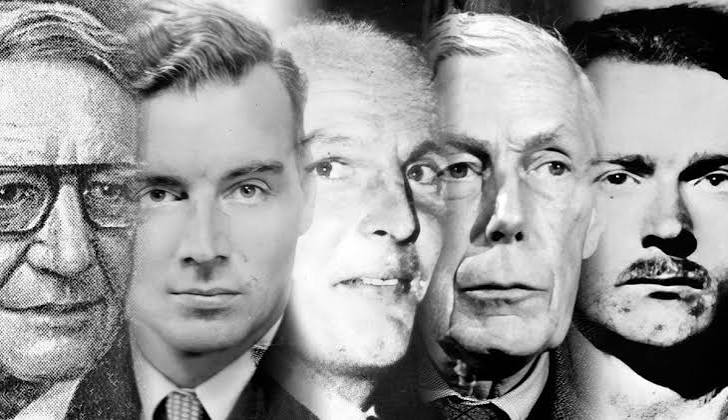
    Over the next thirty years, these five men Kim Philby, Donald Maclean, Guy Burgess, Anthony Blunt, and John Cairncross rose to the highest echelons of British power. They became diplomats, intelligence officers, and even the Queen’s art adviser. All the while, they fed the Kremlin the West’s most guarded secrets, from atomic weapons research to the identities of Western spies.

    The Making of a Spy Ring

    Cambridge University in the 1930s was a cauldron of radical ideas. The Great Depression had shattered economies, the Spanish Civil War was a rallying cry for anti-fascists, and Hitler’s rise in Germany made communism seem like the only credible opposition. For many students, Marxism wasn’t just a theory it was a moral imperative.

    The Soviet NKVD, the predecessor to the KGB, saw an opportunity. They targeted elite universities, reasoning that upper-class recruits could infiltrate Britain’s corridors of power with ease. Their key recruiter was Arnold Deutsch, a Soviet agent who arrived in London in 1934.

    Deutsch found fertile ground. Kim Philby, the son of a British diplomat, was already a committed communist. Donald Maclean, a tall, charismatic Scot, shared his zeal. Guy Burgess, flamboyant and brilliant, was a member of the Apostles, a secret intellectual society that also included Anthony Blunt. The ring grew organically, bound by shared ideology and friendship. John Cairncross, a scholarship boy, joined later, recruited by Blunt.

    Their class background was their shield. Public school, Oxbridge, family connections these were the keys to Britain’s establishment, and the Five had them in spades. No one suspected that these gentlemen could be traitors.

    The Cambridge Five remain a cautionary tale about the power of ideology, the dangers of complacency, and the blindness of privilege. Their story is not just a spy thriller, but a mirror held up to the British establishment a reflection of how easily the elite can be deceived when they cannot imagine betrayal from within.

    Summary

    • The Cambridge Five were five British spies who leaked secrets to the Soviet Union from the 1930s to the 1950s, including atomic intelligence and the identities of Western agents.
    • They were recruited at Cambridge University by Soviet handler Arnold Deutsch, motivated by anti-fascism and Marxist ideology.
    • Their privileged backgrounds made them above suspicion, allowing them to rise to senior positions in MI6, the Foreign Office, and even the royal household.
    • The ring unraveled slowly, beginning with the Venona decrypts and the 1951 defection of Burgess and Maclean, followed by Philby in 1963, and the public unmasking of Blunt in 1979 and Cairncross in 1990.
    • Their actions caused immense damage to Western intelligence and highlighted systemic failures in British intelligence’s old boy network.

    FAQ

    Q: Who were the Cambridge Five?
    A: The Cambridge Five were a ring of British spies—Kim Philby, Donald Maclean, Guy Burgess, Anthony Blunt, and John Cairncross—who passed classified information to the Soviet Union from the 1930s through the 1950s.

    Q: Why did they spy for the Soviet Union?
    A: They were ideologically motivated communists who believed the USSR was the only real bulwark against fascism. They were not paid mercenaries but committed believers in Marxism.

    Q: How were they eventually caught?
    A: The Venona project, a US code-breaking effort, identified Soviet agents codenamed “Homer” (Maclean) and “Stanley” (Philby). The 1951 defection of Burgess and Maclean, the 1963 defection of Philby, and the 1964 confession of Blunt all contributed to the unraveling.

    Q: What was the scale of the damage they caused?
    A: They compromised Western intelligence operations, exposed agents inside Soviet intelligence, and leaked atomic secrets that accelerated the Soviet nuclear program. They also alerted Moscow to the Venona project, allowing the Soviets to change their codes.

    Q: Why were they able to evade detection for so long?
    A: Their class background and establishment connections made them above suspicion. The “old boy network” protected them, and senior figures found it hard to believe that Oxbridge elites could be traitors.

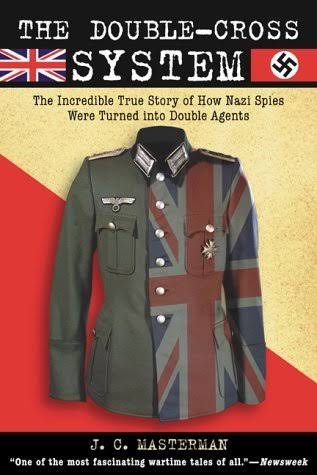
  • The Double-Cross System: How Britain Turned Nazi Spies into Its Greatest Weapon

    The Double-Cross System: How Britain Turned Nazi Spies into Its Greatest Weapon

    In the spring of 1944, as the Allies prepared for the invasion of Normandy, a Spanish double agent code-named Garbo sat in a London safe house, crafting a message that would help decide the fate of Europe. For years, he had been feeding the German Abwehr a stream of carefully fabricated intelligence from a network of fictitious sub-agents a network that existed only in his imagination. Now, on the eve of D-Day, his lies would convince Hitler that the real invasion was coming at Pas-de-Calais, not Normandy. The Germans trusted him so completely that they awarded him the Iron Cross. The British, for their part, gave him an MBE.

    Garbo was just one of dozens of Nazi agents who, after being captured or turning themselves in, became unwilling or sometimes willing allies of MI5. The Double-Cross System, as it was called (the Roman numeral XX, a pun on ‘double cross’), was a counter-espionage operation that flipped nearly every German spy sent to Britain during World War II. Of the roughly 115 to 120 agents dispatched by the Abwehr, all were captured or surrendered. None operated freely for any significant time. Instead, MI5 used them to feed false intelligence back to Germany, shaping the enemy’s strategic decisions and ultimately saving thousands of Allied lives.

    The Birth of a Deception

    Before the war, MI5 was a small, underfunded organization focused on domestic subversion Soviet espionage and Irish republicanism not on running double agents. It had little experience with such operations, and the idea of turning enemy spies into assets was untested. But the early war years forced a change.

    The turning point came in 1939 with a Welsh electrical engineer named Arthur Owens, code-named ‘Snow.’ Owens, a German agent, walked into MI5 and offered his services. He became the first major double agent, and his case proved that a captured or volunteer agent could be used to feed false information back to the Abwehr. Snow’s success led to a more systematic approach.

    In January 1941, the Twenty Committee was formally established to coordinate the growing number of double agents. Chaired by Sir John Masterman, a historian and MI5 officer, the committee met weekly. Its members included representatives from MI5, MI6, the armed services, and the Home Defence Executive. The committee’s name Twenty, or XX was a Roman numeral pun on ‘double cross.’ Its goal: to ensure that every double agent’s messages to Germany were carefully crafted to deceive the enemy, not inform them.

    The Agents: A Rogue’s Gallery

    The Double-Cross System relied on a colorful cast of characters, each with their own reasons for betraying their German handlers.

    Garbo (Juan Pujol García) was a Spanish double agent who invented an entire network of fictitious sub-agents. His misinformation helped convince the Germans that the D-Day landings at Normandy were a diversion. He was awarded both the Iron Cross (by Germany) and an MBE (by Britain).

    Zigzag (Eddie Chapman) was a British criminal and safecracker who volunteered to work for Germany, then turned himself in to MI5 upon returning to Britain. He was used to feed false intelligence about bombing damage, convincing the Germans that their V-1 and V-2 attacks were causing more destruction than they actually were.

    Tate (Wulf Schmidt) was a Danish agent who was captured and doubled. He maintained a consistent radio link with Germany for years, sending a steady stream of false reports that helped convince the Germans that British morale was low and that the country was on the brink of collapse.

    Mutt and Jeff (John Moe and Tor Glad) were two Norwegian agents who were doubled and used to convince Germany that Britain was preparing for an invasion of Norway part of Operation Fortitude North, the northern half of the D-Day deception.

    Tricycle (Duško Popov) was a Serbian playboy and lawyer who, while working as a double agent, alerted the FBI to German interest in Pearl Harbor. His warning was largely ignored, but his work for the British was invaluable.

    The Indispensable Partner: Bletchley Park

    The Double-Cross System could not have worked without the intelligence gleaned from Bletchley Park’s decryption of German Enigma traffic. Ultra, as it was called, allowed British intelligence to read Abwehr radio messages and verify what the Germans believed. This meant MI5 could confirm that their double agents were trusted, and calibrate the false information accordingly. Without Ultra, the Double-Cross System would have been flying blind.

    For example, when Garbo sent a message to Germany, the British could read the Abwehr’s response and see whether they bought his story. If they hesitated, MI5 could adjust the next message to reinforce their trust. This feedback loop made the deception nearly perfect.

    The Greatest Deception: Operation Fortitude

    The Double-Cross System’s crowning achievement was Operation Fortitude, the deception that preceded D-Day. The Allies needed to convince the Germans that the invasion would come at Pas-de-Calais, the closest point to England, rather than at Normandy. To do this, they created a fictional army—the First U.S. Army Group (FUSAG)—under General George S. Patton.

    Double agents, including Garbo, reported on the supposed movements of FUSAG, building a picture of an invasion force poised to strike at Calais. Garbo’s network of fictitious agents sent detailed reports—complete with sightings of troops, vehicles, and equipment—that the Germans found entirely credible. They even reported that the Normandy landings were a diversion, designed to draw forces away from the real invasion.

    Hitler fell for it. He kept German forces in the Pas-de-Calais region for weeks after the Normandy landings, convinced that the main attack was still coming. This delay gave the Allies a crucial advantage in establishing their beachhead and breaking out into France.

    The Legal and Moral Grey Zone

    The Double-Cross System operated in a legal grey area. Under the laws of war, captured enemy agents were liable to execution. By doubling them, MI5 spared their lives in exchange for cooperation. But not all agents cooperated. Some refused and were executed. Others were deemed too dangerous to keep alive, even after they had provided useful information. The British public was never told about the system during the war.

    The morality of using captured spies was debated at the time, but the results were undeniable. The system saved countless lives by reducing the effectiveness of German intelligence and enabling the success of D-Day.

    A Legacy of Success

    The Double-Cross System is widely regarded as one of the most successful deception operations in military history. It shaped German strategic assessments, misled them about Allied intentions, and contributed significantly to the Allied victory. The agents themselves, many of whom were criminals, traitors, or opportunists, became unlikely heroes of a war that demanded extraordinary measures.

    The Double-Cross System was a testament to the power of deception in warfare. By turning the enemy’s own spies against them, British intelligence not only neutralized the threat of German espionage but also used it as a weapon to win the war. The story of Garbo, Zigzag, Tate, and the others is a reminder that in war, truth is the first casualty—but sometimes, a well-crafted lie can save a nation.

    Summary

    • The Double-Cross System (XX System) was a British counter-espionage operation that flipped captured German agents into double agents, feeding false intelligence to the Abwehr.
    • Of the 115-120 German agents sent to Britain during WWII, all were captured or surrendered; about 40-50 were doubled.
    • Key agents included Garbo (Juan Pujol García), Zigzag (Eddie Chapman), Tate (Wulf Schmidt), Mutt and Jeff (Norwegian agents), and Tricycle (Duško Popov).
    • The Twenty Committee, chaired by Sir John Masterman, coordinated the operation, with crucial support from Bletchley Park’s Ultra decrypts.
    • The system played a central role in Operation Fortitude, convincing Hitler that D-Day would come at Pas-de-Calais, not Normandy, and aiding the Allied victory.

    FAQ

    Q: What was the Double-Cross System?
    A: The Double-Cross System (XX System) was a British intelligence operation during World War II that identified, captured, and ‘turned’ German agents in Britain, using them to feed false information back to Nazi Germany’s intelligence services.

    Q: How many German agents were doubled?
    A: Of the roughly 115-120 German agents sent to Britain, all were captured or turned themselves in. Approximately 40-50 were used for deception; the rest were executed or imprisoned.

    Q: Who was Garbo?
    A: Garbo was Juan Pujol García, a Spanish double agent who invented a fictitious network of sub-agents. His misinformation helped convince the Germans that the D-Day landings at Normandy were a diversion. He was awarded both the Iron Cross and an MBE.

    Q: How did Bletchley Park help the Double-Cross System?
    A: Bletchley Park’s decryption of German Enigma traffic (Ultra) allowed MI5 to read Abwehr messages, verify that their double agents were trusted, and calibrate false information accordingly.

    Q: What was Operation Fortitude?
    A: Operation Fortitude was the D-Day deception that convinced the Germans that the Allied invasion would land at Pas-de-Calais, not Normandy, using a fictional army (FUSAG) under General Patton. The Double-Cross System was central to this deception.

  • The Swiss Watch: How Neutrality Became an Intelligence Lifeline

    The Swiss Watch: How Neutrality Became an Intelligence Lifeline

    In 1942, a tall American walked into the Hotel Bellevue in Bern, Switzerland, carrying a briefcase of diplomatic cables and a cover story that would hold for three years. Allen Dulles, the OSS station chief, was not just another diplomat. He was the tip of an intelligence spear that relied on a simple, centuries-old Swiss invention: the watch.

    Switzerland’s watch industry, born in the 16th century and industrialized in the Jura Mountains, had become the world’s primary source of precision timepieces. But those watches were more than just instruments of time. They were the backbone of a neutral infrastructure that allowed spies, couriers, and money to move across a continent at war. This is the story of how Swiss neutrality, forged in 1815, became a lifeline for intelligence operations.

    The Neutrality That Made It Possible

    Switzerland’s neutrality was not passive. It was armed, defended by a citizen militia that made invasion costly. The Congress of Vienna in 1815 formalized this status, and the Treaty of Paris reaffirmed it. Geographically, Switzerland sat at the crossroads of Europe, bordered by Germany, France, Italy, and Austria. This position made it a natural listening post, a place where spies could meet, and a transit point for goods and information.

    The Hague Conventions permitted trade in civilian goods, even during wartime. Watches were civilian goods, though they had obvious military applications. Navigation, artillery timing, and aviation coordination all demanded precision timekeeping. Swiss watchmakers, with their decentralized network of workshops in the Jura, produced watches that were the most accurate in the world. Both Allied and Axis powers needed them.

    The Watch Industry as Cover

    The Swiss watch industry was not a single factory but a dense web of small workshops, each making a component. This decentralization made it nearly impossible for any power to control or disrupt the supply chain. It also created a perfect cover for intelligence operations. The constant movement of goods and personnel watch components, finished watches, salesmen, and couriers was normal. Swiss watch brands had agents and retailers worldwide, providing a legitimate network of contacts, shipments, and financial transactions.

    Intelligence agencies piggybacked on this network. A courier carrying a diplomatic pouch could easily pass as a watch salesman. A dead drop could be hidden in a shipment of watch movements. The sheer volume of traffic made surveillance difficult.

    Espionage in the Heart of Europe

    During World War II, Switzerland was a hive of espionage. The OSS operated out of Bern, with Allen Dulles as station chief. Dulles worked openly under diplomatic cover, using Swiss neutrality as a base for operations into Nazi Germany and occupied Europe. His network included contacts in the German resistance, including the plotters of Operation Valkyrie.

    The Germans were also active. The Abwehr and SD ran operations from Swiss cities. Both sides used Switzerland as a meeting ground, a place where spies could talk without fear of immediate arrest.

    One of the most remarkable operations was the Lucy Ring, a Soviet spy network run by Rudolf Roessler, a German émigré. Roessler used Swiss-based couriers and communications to transmit German military secrets to Moscow. The information was so sensitive that it often arrived within hours of being decided in Berlin.

    The Financial Complement

    Swiss banking secrecy, codified in the 1934 Banking Act, complemented the watch trade. Both industries formed what intelligence services called a “neutral infrastructure.” Banks allowed spies to move and store funds discreetly. Watches provided cover. Together, they made Switzerland an indispensable hub.

    In 1945, Operation Sunrise brought the war in Italy to an early end. Secret surrender negotiations between Allied forces and German commanders were facilitated through Swiss intermediaries in Lugano and Bern. The watch industry, with its reputation for precision and discretion, was the perfect metaphor for the operation.

    The Cold War and Beyond

    After 1945, Swiss neutrality continued to serve as a listening post. The CIA, the KGB, and other agencies used Geneva, Zurich, and Bern for meetings, dead drops, and signals intelligence. The Geneva Summit tradition, from 1955 to 1985, reflected Switzerland’s role as a neutral meeting ground.

    The watch industry remained a multi-billion-dollar export business, but the “watch as cover” became largely historical. Intelligence operations shifted to electronic surveillance and financial intrigue.

    In 2022, Switzerland faced a new challenge. When Western nations imposed sanctions on Russia, Switzerland agreed to adopt them, breaking with strict neutrality. The move highlighted the tension between neutrality and the demands of the West. The watch industry, once a lifeline for intelligence, now faces a world where neutrality itself is under pressure.

    The Swiss watch was never just a timepiece. It was a tool of statecraft, a cover for spies, and a symbol of a neutrality that made intelligence operations possible. From the Jura workshops to the banks of Geneva, Switzerland’s neutral infrastructure served as a lifeline for secrets in a world at war. Today, as neutrality is tested anew, the legacy of the watch endures—a reminder that precision and discretion can be powerful allies.

    Summary

    • Switzerland’s armed neutrality, formalized in 1815, made it a safe haven for spies and a crossroads for intelligence during both World Wars.
    • The Swiss watch industry, with its decentralized workshops and global distribution, provided perfect cover for couriers, dead drops, and clandestine communications.
    • Swiss banking secrecy complemented the watch trade, forming a “neutral infrastructure” that intelligence agencies exploited.
    • Key operations like Allen Dulles’s OSS network, the Lucy Ring, and Operation Sunrise all relied on Swiss soil and Swiss discretion.
    • The 2022 sanctions on Russia highlight the modern tension between neutrality and Western pressure, as the era of the watch as cover fades into history.

    FAQ

    Q: How did Swiss neutrality help intelligence operations during WWII?
    A: Switzerland’s armed neutrality, recognized by international law, allowed it to trade with all belligerents. Its geographic position at the heart of Europe made it a natural meeting point for spies, and its diplomatic presence in Bern provided cover for intelligence officers like Allen Dulles.

    Q: Why were Swiss watches so valuable for military purposes?
    A: Swiss watches were the most accurate timepieces available. Military coordination, naval navigation, and artillery timing all depended on precise timekeeping, making Swiss exports strategically essential to both Allied and Axis powers.

    Q: What role did the watch industry play as cover for spies?
    A: The industry was decentralized, with hundreds of small workshops in the Jura Mountains. The constant movement of components, finished watches, and salesmen created a legitimate cover for couriers and dead drops. Global distribution networks offered a ready-made infrastructure for intelligence operations.

    Q: How did Swiss banking secrecy complement the watch trade?
    A: The 1934 Banking Act codified banking secrecy, allowing intelligence agencies to move and store funds discreetly. Together with the watch trade, it formed a “neutral infrastructure” that both Allied and Axis powers exploited.

    Q: Is the watch industry still used as cover today?
    A: Largely historical. Modern intelligence relies on electronic surveillance and financial networks. However, Switzerland remains a meeting ground for diplomats and spies, and the 2022 sanctions on Russia show the ongoing tension between neutrality and Western demands.