Tag: resistance

  • Between Defeat and Dawn: Daily Life in Occupied France, 1940-1944

    Between Defeat and Dawn: Daily Life in Occupied France, 1940-1944

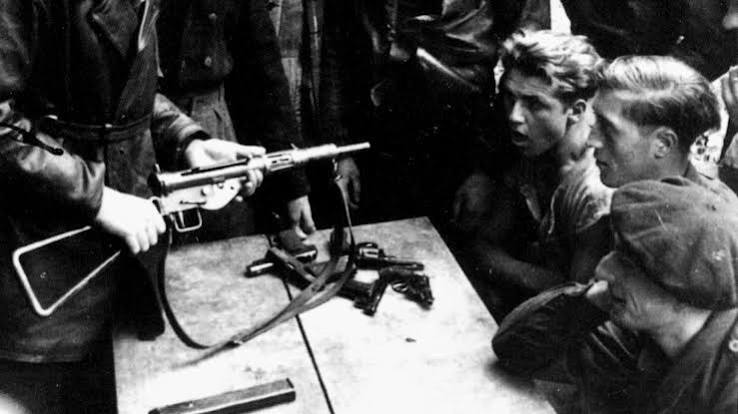
    On June 14, 1940, German troops marched down the Champs-Élysées in Paris. Within days, the French government signed an armistice that split the country in two: the Occupied Zone in the north, under direct German military control, and the southern Free Zone, governed by the collaborationist Vichy regime. For the next four years, the French lived under a shadow of occupation that reached into every corner of public and private life from the ration books that dictated meals to the curfews that silenced streets after dark.

    This is the story of how ordinary people navigated that shadow: the choices they made, the compromises they accepted, and the small acts of defiance that kept hope alive. It is a story of collaboration, resistance, and survival not as abstract categories, but as daily realities shaped by hunger, fear, and the stubborn will to endure.

    The Liberation and Its Aftermath

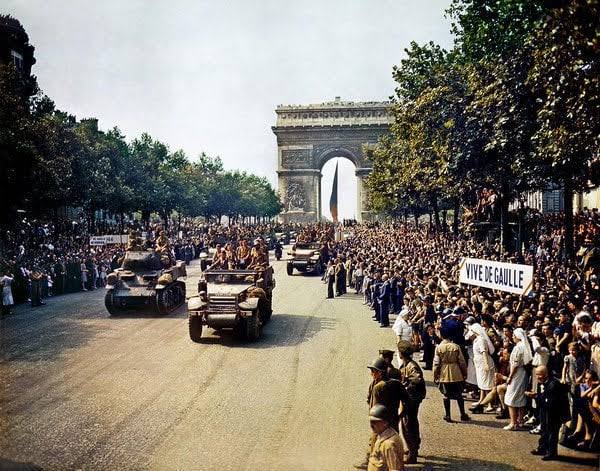
    The D-Day landings in June 1944 and the liberation of Paris in August brought hope, but the occupation did not end overnight. As the Allies pushed through France, the Vichy regime collapsed, and the collaborators were exposed.

    In the aftermath, roughly 300,000 people were investigated for collaboration. About 100,000 were sentenced, and around 7,000 were executed. Some were punished for crimes, others for opportunism, and still others were simply in the wrong place at the wrong time. The process was imperfect, but it allowed France to confront the choices made during the occupation.

    France emerged from the war with deep scars. Approximately 600,000 French people had died military, civilian, and Holocaust victims. The country had been divided, humiliated, and morally compromised. Yet it also had the legacy of the Resistance, a small but significant number of people who had chosen to fight back against the occupier and the collaborationist state.

    Life in occupied France was a daily negotiation between survival and conscience. Some collaborated, some resisted, and most simply tried to get by. The choices were rarely clear-cut, and the lines between collaboration and resistance blurred in the gray zone of everyday life. But the stories of those who lived through it the denunciations and the hidden Jews, the black market and the Maquis remind us that even in the darkest times, people find ways to endure, to help others, and to reclaim their dignity.

    Summary

    • The occupation split France into the Occupied Zone and the Free Zone, with Vichy collaborating in the south.
    • Rationing and shortages reduced caloric intake to nearly half of normal, fueling a black market.
    • Collaboration ranged from state policy to everyday denunciations, with millions of letters sent.
    • Resistance grew from small acts to organized networks, especially after the STO forced laborers into hiding.
    • Liberation brought justice but also imperfect reckoning, with thousands executed for collaboration.

    FAQ

    Q: What was the difference between the Occupied Zone and the Free Zone?
    A: The Occupied Zone, in the north and along the Atlantic coast, was directly controlled by German military authorities. The Free Zone, in the south, was governed by the Vichy regime under Marshal Pétain, who collaborated with Germany. In November 1942, Germany occupied the Free Zone as well, ending the division.

    Q: How did ordinary French people survive the rationing?
    A: They relied on ration books, but rations were far below normal caloric needs—around 1,500 calories a day. Many turned to the black market, which offered goods at high prices, while rural families often had better access to food. People also grew their own vegetables and bartered with neighbors.

    Q: What was the Milice, and what did it do?
    A: The Milice was Vichy’s paramilitary police force, created in January 1943. It actively hunted Resistance members and Jews, often using torture and summary executions. Its brutality was notorious, and it was feared more than the German Gestapo in some areas.

    Q: How did the STO lead to the growth of the Maquis?
    A: The STO (Service du Travail Obligatoire) required hundreds of thousands of young French men to work in German factories. Many refused and fled to rural areas, joining guerrilla bands known as the Maquis. These groups conducted sabotage and ambushes, and they became a significant part of the Resistance.

    Q: What happened to collaborators after the liberation?
    A: After liberation, roughly 300,000 people were investigated for collaboration. About 100,000 were sentenced, and around 7,000 were executed. The process was often chaotic and sometimes unjust, but it was an attempt to hold people accountable for their actions during the occupation.

  • The Red Orchestra: The Spy Network That Danced in the Dark Heart of Nazi Germany

    The Red Orchestra: The Spy Network That Danced in the Dark Heart of Nazi Germany

    The Red Orchestra - JIFF

    In the summer of 1941, as German troops massed on the Soviet border, a small group of Berliners began transmitting secrets from the capital of the Reich. They were not professional spies in the usual sense a Luftwaffe officer, an economist, a film publicist, an American woman but they formed the nucleus of what the Gestapo would later call the Rote Kapelle, the Red Orchestra. The name came from the Gestapo’s own slang: ‘Kapelle’ meant a radio operator, whose keying sounded like music, and ‘Rot’ meant red, for communism. The orchestra played a deadly tune, and when the Nazis finally found the source, the music stopped in a prison courtyard, but the echo of its notes would reach across the Cold War and into the present day.

    This is the story of two intertwined networks one in Berlin, one in Western Europe that fed intelligence to Moscow from the heart of the Nazi war machine. It is a story of courage, betrayal, and a warning that was tragically ignored. It is also a story that challenges easy categories: these were not heroes in the usual sense, nor traitors, but people caught between ideologies and loyalties, who made choices that cost many of them their lives.

    The Birth of the Orchestra

    The Red Orchestra did not emerge from a vacuum. It grew out of the wreckage of the Great Purge, which had decimated Soviet intelligence in the late 1930s. Desperate for reliable agents in Germany, the GRU Soviet military intelligence, not the NKVD turned to existing anti-fascist networks. One such network centered on Harro Schulze-Boysen, a Luftwaffe intelligence officer with a deep hatred of Nazism, and Arvid Harnack, an economist at the Reich Ministry of Economics. They were joined by their wives, Libertas and Mildred, and a circle of friends, artists, and civil servants who shared a loathing for Hitler.

    This was not a monolithic communist cell. The Berlin group was a loose and diverse circle: some were communists, but others were conservatives, nationalists, or simply humanists. They were united by opposition to the regime, not by ideology. This diversity gave them access to a wide range of information Harro could see Luftwaffe plans, Arvid had contact with economic data but it also created security lapses. The Gestapo, which initially underestimated communist networks, would later exploit these weaknesses.

    Meanwhile, in Brussels, a separate network was being built by Leopold Trepper, a Polish-Jewish communist and a veteran of Soviet intelligence. His network was more professional, composed of experienced agents and organized into cells. They focused on military and economic intelligence, and they would become the principal Soviet source in Western Europe.

    The Pact and the Silence

    The Nazi-Soviet Pact of 1939 created a moral and operational crisis for the Berlin group. Many of its members were anti-Nazi but not pro-Soviet; the pact forced them to choose between opposing Hitler and supporting Stalin. Some paused their operations, unwilling to help Moscow while it was allied with Berlin. Others continued to gather intelligence but withheld it from Moscow, waiting for the day when the two dictators would turn on each other.

    That day came on June 22, 1941, when German forces invaded the Soviet Union. The Red Orchestra’s warning of the invasion date—delivered via the Swiss ‘Lucy’ network, run by Rudolf Roessler—was dismissed by Stalin as British disinformation. It was a tragic intelligence failure that would cost millions of lives. After the invasion, the Berlin group’s work became urgent. They began transmitting information on German military production, Luftwaffe aircraft specifications, troop movements, and even the planned invasion itself—though the warning arrived too late.

    The Music of the Airwaves

    The Trepper network sent thousands of messages from Brussels and Paris. They reported on German logistics, economic data, and, crucially, the development of V-1 and V-2 rockets at Peenemünde. The Berlin group, despite its amateurish nature, provided valuable intelligence on the Luftwaffe and on German war production. The Swiss ‘Red Three’ network, a related but distinct operation run by Alexander Foote and Rachel Dübendorfer, transmitted over 3,000 messages to Moscow, including the Barbarossa warning.

    The Gestapo, however, was listening. The Funkabwehr, the German radio counterintelligence unit, used direction-finding to locate the transmitters. The discovery of the networks was not a single stroke but a slow process of triangulation, helped by a Belgian informant who betrayed the Trepper network in late 1941. The noose began to tighten.

    The Fall of the Orchestra

    In the summer of 1942, the Gestapo struck. Over 50 members of the Berlin group were arrested in a wave of raids. The arrests were followed by torture and interrogations, which led to further arrests. The trials were swift and brutal. Most of the accused were sentenced to death for ‘preparing to commit high treason’ and ‘aiding the enemy.’

    The executions took place at Plötzensee Prison in Berlin—by hanging or firing squad. Harro Schulze-Boysen was executed on December 22, 1942. His wife Libertas was killed the same day. Arvid Harnack was executed, and Mildred Harnack, who was American, was initially sentenced to six years in prison, but Hitler personally ordered a new trial, and she was executed on February 16, 1943. In all, more than 50 members of the Berlin group lost their lives.

    Trepper was arrested in 1942 but managed to escape in 1943 and survived the war. Anatoli Gurevich, codename ‘Kent,’ was captured and later returned to the USSR, where he was imprisoned—a fate that awaited many Soviet agents who had fallen into enemy hands. The network that had once been the Red Orchestra was no more.

    Aftermath and Memory

    The Red Orchestra’s place in history is contested. In West Germany, they were often branded as traitors, excluded from the honored narrative of the German resistance, which centered on the conservative plotters of the July 20, 1944, assassination attempt on Hitler. The communist association made them suspect. Only in recent decades have they been rehabilitated, with exhibitions at the German Resistance Memorial Center in Berlin.

    From the Soviet perspective, the network was a source of pride and a source of suspicion. Moscow treated the survivors with suspicion, imprisoning some, like Gurevich, despite their service. The Cold War froze the Red Orchestra into a propaganda tool, and the complex human stories behind the espionage were often lost.

    Today, the Red Orchestra is remembered as a rare instance of resistance from within the heart of the Nazi state, but it is also a cautionary tale about the limits of intelligence and the cost of political idealism. The warning they sent about Barbarossa was ignored, but the intelligence they gathered was not entirely without effect. The story of the Red Orchestra is not a simple victory or defeat; it is a story of moral ambiguity, sacrifice, and the terrible choices that war forces on people.

    The Trepper Network and the ‘Red Three’

    The Trepper network, separate from the Berlin group, was more professional but faced similar risks. Its members included Anatoli Gurevich, who operated in France and Switzerland, and a network of communist cells across Belgium and the Netherlands. The ‘Red Three’ in Switzerland, run by Alexander Foote and Rachel Dübendorfer, was crucial in transmitting the Barbarossa warning, but it also had its own internal tensions and was eventually compromised by a double agent.

    The information they provided was vast: reports on German logistics, economic data, and the V-2 rocket program. But the impact of this intelligence on the war’s outcome is debated. Some historians argue that it helped the Soviet Union prepare for the German onslaught, while others point to Stalin’s distrust and the failure to act on the warnings. The Red Orchestra’s legacy is thus ambiguous—neither a triumph nor a total failure, but a testament to the courage of individuals who risked everything to fight a monstrous regime from within.

    The Red Orchestra played its final notes in a Berlin prison, but its music has not faded. The story of these spies—the Luftwaffe officer, the economist, the American woman, the Polish communist—reminds us that resistance can take many forms, and that the line between hero and traitor is often drawn by history’s victors. Their warning was ignored, but their sacrifice was not in vain; it stands as a haunting reminder of the cost of ignoring the truth, and of the enduring power of human conviction in the face of tyranny.

    Summary

    • The Red Orchestra was a Soviet spy network in Nazi Germany, named by the Gestapo, with two main groups: the Berlin circle and the Trepper network in Western Europe.
    • Active from 1938 to 1942, it transmitted military and economic intelligence to Moscow, including the warning of Operation Barbarossa, which Stalin dismissed.
    • The Berlin group was a diverse anti-Nazi circle, not purely communist, while the Trepper network was more professional and communist-based.
    • The networks were broken by German radio counterintelligence and betrayal, leading to over 50 arrests and executions, including Harro Schulze-Boysen and Arvid Harnack.
    • Post-war, they were often excluded from the German resistance narrative, but have been rehabilitated in recent decades.

    FAQ

    Q: What was the Red Orchestra?
    A: The Red Orchestra was a Soviet spy network operating in Nazi Germany and Western Europe during World War II. It consisted of two main groups: the Berlin group led by Harro Schulze-Boysen and Arvid Harnack, and the Trepper network based in Brussels and Paris, led by Leopold Trepper.

    Q: Why was it called the Red Orchestra?
    A: The Gestapo coined the name ‘Rote Kapelle’ (Red Orchestra) because ‘Kapelle’ was their slang for a radio operator, whose transmissions sounded like music, and ‘Rot’ referred to communism. So the name literally meant ‘Red Band’ or ‘Red Orchestra.’

    Q: What information did the Red Orchestra send to Moscow?
    A: The Berlin group sent information on German military production, Luftwaffe aircraft specifications, and troop movements. The Trepper network reported on German logistics, economic data, and V-1/V-2 rocket development. The Swiss ‘Red Three’ network transmitted over 3,000 messages, including the warning of Operation Barbarossa.

    Q: How was the Red Orchestra discovered?
    A: The networks were broken by the German Funkabwehr (radio counterintelligence) using radio direction-finding to locate transmitters, and by a Belgian informant who betrayed the Trepper network in late 1941.

    Q: What happened to the members of the Red Orchestra?
    A: Over 50 members of the Berlin group were arrested in 1942 and most were executed by hanging or firing squad at Plötzensee Prison. Leopold Trepper was arrested but escaped in 1943 and survived the war. Anatoli Gurevich was captured and later imprisoned in the USSR.
  • The Resistance Networks: How Ordinary People Became Spies

    The Resistance Networks: How Ordinary People Became Spies

    In the gray dawn of a Nazi-occupied European city, a schoolteacher walks to work with a loaf of bread under her arm. Hidden inside the crust are microdots containing German troop positions. She is not a soldier, not a trained agent just an ordinary woman who decided to fight back. Across the continent, millions of civilians faced a stark choice: submit to occupation or resist. A brave minority chose the latter, becoming spies, couriers, forgers, and saboteurs in clandestine networks that would help shape the outcome of World War II.

    This is the story of those ordinary people farmers, postal workers, clergy, students, housewives who transformed themselves into intelligence operatives. They operated in the shadows, faced unimaginable risks, and their efforts, though often overlooked, were vital to the Allied war effort. From the Dutch resistance’s tragic Englandspiel to the Polish cryptologists who cracked Enigma, these networks showed that courage could be found in the most unexpected places.

    The Making of a Spy

    Resistance networks were not born from thin air. They emerged from the brutal reality of Nazi occupation systematic repression, forced labor, food shortages, and mass murder. For many, the decision to resist was a moral response to witnessing atrocities. A teacher in Lyon who saw a neighbor dragged away for hiding a Jewish child might decide that silence was no longer possible.

    Patriotism also played a role. After conventional armies surrendered, resistance became a continuation of national defense. For communists, especially after Germany invaded the Soviet Union in June 1941, resistance was an ideological imperative. But perhaps the most common path into the resistance was through personal networks—a friend, a family member, a trusted priest or teacher already involved. Trust was the currency of recruitment.

    These new spies came from every walk of life. Railway workers could observe troop movements. Postal workers could intercept communications. Farmers knew the terrain and could hide fugitives. Women, often overlooked by German patrols, served as couriers, carrying messages and supplies under the noses of the occupiers.

    The Cell Structure: Safety in Compartments

    Resistance networks operated on a cell structure. Each member knew only a few others a courier might know one contact, who knew another, and so on. If one person was captured, the rest of the network remained safe. This compartmentalization was crucial for survival.

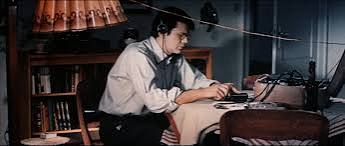
    The tradecraft was often basic but effective. Lemon juice or milk could serve as invisible ink. Messages were hidden in personal ads, dead drops, or brush passes—handing documents to a contact in passing, as if by accident. Early in the war, couriers were the primary method of communication, carrying information across cities and borders. Later, wireless radio operators, often trained in Britain and parachuted in, became vital—but also extremely dangerous. German direction-finding units could locate transmitters within minutes, making the operator’s life expectancy tragically short.

    The Comet Line: A Highway to Freedom

    One of the most remarkable networks was the Réseau Comète, or Comet Line, which smuggled downed Allied airmen from Belgium and France across the Pyrenees into neutral Spain. Run by a young Belgian woman named Andrée De Jongh, the Comet Line saved roughly 800 airmen. The route was perilous: airmen had to be hidden, fed, and moved through checkpoints with forged papers. The network relied on a chain of safe houses, each run by ordinary families who risked their lives every time they opened their doors.

    Of the ~200 agents who worked on the line, about 30 were killed or died in concentration camps. The cost was high, but the impact was undeniable—returning pilots and crew could fly again, and the intelligence they carried was invaluable.

    The Englandspiel Disaster

    Not all resistance efforts succeeded. The Dutch resistance suffered a catastrophic blow in the Englandspiel, or “England Game,” which ran from 1942 to 1944. German military intelligence, the Abwehr, captured Dutch agents and used them to send false messages to London. For almost two years, the British SOE sent supplies, money, and new agents—directly into German hands. Dozens of agents were captured and executed. The disaster was a stark lesson in the dangers of amateur espionage and the fragility of trust.

    The Polish Enigma

    The Polish Home Army (Armia Krajowa) ran one of the largest underground intelligence operations, but perhaps their greatest contribution was intellectual. In the 1930s, Polish cryptologists—Marian Rejewski, Henryk Zygalski, and Jerzy Różycki—broke early Enigma codes. In 1939, as war loomed, they passed their work to British intelligence. This breakthrough laid the foundation for Bletchley Park’s later successes, which shortened the war by years. Ordinary mathematicians, not trained spies, had changed the course of history.

    The Danish Rescue

    In October 1943, the Danish resistance organized one of the most extraordinary acts of rescue of the war. When the Nazis ordered the roundup of Danish Jews, the resistance, with help from ordinary citizens, evacuated over 7,000 Jews to neutral Sweden. Fishermen sailed their boats across the Øresund, hiding families below decks. This was not intelligence gathering, but it was resistance in its purest form—a moral stand that saved thousands of lives.

    Women: The Invisible Spies

    Women were often the backbone of resistance networks. Their roles as couriers were particularly vital because they were less likely to be searched or suspected. A woman with a basket of groceries or a baby carriage could move through checkpoints with relative ease. Women also ran safe houses, forged documents, and provided medical care. Many paid the ultimate price—arrest, torture, and execution in concentration camps.

    The gender angle is striking: in many networks, women were more numerous than men, and their contributions were essential to survival. Yet after the war, their stories were often overlooked, their heroism downplayed.

    The Moral Complexity

    Resistance was not without its moral ambiguities. Some actions, such as assassinations, provoked brutal reprisals against civilian populations. The question of whether such actions were justified remains debated. The line between collaboration and resistance was not always clear—many ordinary people collaborated, out of fear, opportunism, or ideology. The resistance was a minority, perhaps 1–2% of the population in most occupied countries.

    But for those who joined, the choice was often clear: to resist was to affirm humanity in the face of inhumanity. They were not professional soldiers, but they became spies, saboteurs, and lifelines for the persecuted. Their courage was not born of training, but of conviction.

    The resistance networks were a testament to the power of ordinary people under extraordinary pressure. They did not have the training of professional spies, but they had something else: a deep-seated commitment to freedom and justice. Their actions, whether cracking codes or hiding a downed pilot, made a tangible difference in the war. As we look back, we see not just the heroics, but the human cost—the arrests, the torture, the deaths. Yet their legacy endures, a reminder that even in the darkest times, ordinary people can choose to become extraordinary.

    Summary

    • Resistance networks in Nazi-occupied Europe were composed of ordinary civilians—teachers, farmers, housewives, and students—who engaged in espionage, sabotage, and rescue operations.
    • The Comet Line saved roughly 800 downed Allied airmen, at the cost of about 30 agents killed or dead in concentration camps.
    • The Polish cryptologists broke Enigma codes in the 1930s, providing a crucial head start to British intelligence.
    • The Denmark resistance evacuated over 7,000 Jewish citizens to neutral Sweden in October 1943, a remarkable moral and logistical feat.
    • Women played a vital role as couriers, using their perceived innocence to move intelligence and supplies under German noses.

    FAQ

    Q: What was the Englandspiel?
    A: The Englandspiel was a German counterintelligence operation that ran from 1942 to 1944, in which the Abwehr captured Dutch resistance agents and used them to send false messages to London, leading to the capture and death of dozens of agents.

    Q: How did ordinary people learn spy craft?
    A: They learned basic techniques like invisible ink, dead drops, and coded messages through word-of-mouth, training from Allied intelligence officers, or trial and error. Many learned on the job, relying on caution and the network’s cell structure for safety.

    Q: Were women really less suspected?
    A: Yes, German patrols were often less thorough in searching women, especially those with children or groceries, making them ideal couriers. This allowed women to play a disproportionately large role in intelligence networks.

    Q: Did all resistance networks have Allied support?
    A: Many did, particularly from the British SOE and MI6, and later the American OSS. However, support was not always reliable, as the Englandspiel disaster showed, and some networks operated with minimal outside help.

    Q: What happened to resistance members after the war?
    A: Many returned to civilian life, but their contributions often went unrecognized for years. Some were persecuted by new communist regimes in Eastern Europe, while others struggled with the trauma of their experiences. Many were eventually honored, but not all.

  • The Woman Who Buried Names in Jars: How Irena Sendler Saved 2,500 Children from the Warsaw Ghetto

    The Woman Who Buried Names in Jars: How Irena Sendler Saved 2,500 Children from the Warsaw Ghetto

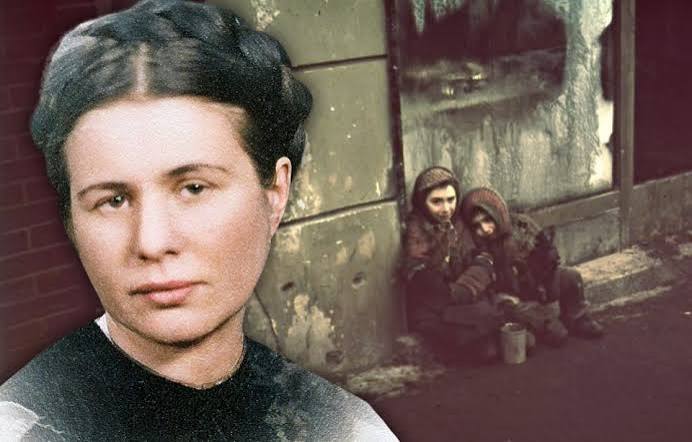
    In the autumn of 1943, a young Polish social worker named Irena Sendler was arrested by the Gestapo. For months, she had been smuggling Jewish children out of the Warsaw Ghetto, hiding them in ambulances, toolboxes, and even coffins. Now, the Nazis wanted to know where the children were. They broke her legs and feet, but she refused to talk. Sentenced to death, she was saved at the last moment by a bribe and she went right back to work.

    Sendler’s story is not a simple tale of a solitary hero. It is a story of a network of women, a secret council, and a radical act of record-keeping: burying the names of 2,500 children in glass jars so that one day, they might find their families again. This is how she did it.

    A Childhood Shaped by Loss

    Irena Sendler was born on February 15, 1910, in Warsaw, then part of the Russian Empire. She grew up in Otwock, a town outside the city, where her father, Dr. Stanisław Krzyżanowski, ran a clinic. He treated poor patients regardless of their religion, and when a typhus epidemic swept through the Jewish community in 1917, he went to help—even though other doctors refused. He caught the disease and died, leaving seven-year-old Irena with a lesson she never forgot: “If you see a person drowning, you must jump in and save them, even if you don’t know how to swim.”

    That lesson guided her through university, where she studied law and social work. She openly opposed the “ghetto benches”—segregated seating for Jewish students—and was suspended for her protests. By the time Germany invaded Poland in 1939, she was a senior administrator in the Warsaw Social Welfare Department, a position that would give her cover for the most dangerous work of her life.

    Inside the Walls of Despair

    When the Warsaw Ghetto was sealed in November 1940, more than 400,000 Jews were crammed into an area of 1.3 square miles. Disease and starvation were rampant. Sendler, using her credentials as a sanitary worker, obtained a pass to enter the ghetto legally, ostensibly to check for typhus outbreaks. But she used every visit to carry out a different mission: smuggling children out.

    The logistics were harrowing. Babies were hidden in ambulances, sometimes sedated to keep them quiet. Older children were placed in burlap sacks, toolboxes, or even under stretchers in dog carts. Some escaped through sewers and underground passages, guided by the Polish underground. Each rescue required split-second timing and absolute secrecy.

    But the hardest part was convincing parents to let their children go. Sendler later recalled the anguish in their eyes: they knew that sending a child away meant they might never see them again. Yet they also knew that staying meant almost certain death. It was a cruel choice, and Sendler bore the weight of it.

    The Jars Under the Apple Tree

    Once a child was out, they needed a new identity. Sendler and her network—about 30 core members, mostly women—placed children in Catholic convents, orphanages, and Polish families. They were given Christian names, taught Catholic prayers, and told to forget their past. For their safety, no one wrote anything down—except Sendler.

    She kept meticulous records on thin tissue paper, listing each child’s real name, their new identity, and the location where they were hidden. She coded these lists and buried them in two glass jars under an apple tree in a friend’s garden. The jars were her way of fighting back against the Nazi attempt to erase an entire people: if the children survived, she wanted them to find their families again.

    This act of record-keeping was itself a form of resistance. The Nazis kept their own meticulous records—of deportations, murders, and theft. Sendler’s jars were an antidote to that bureaucracy of death.

    Arrest, Torture, and a Narrow Escape

    In October 1943, the Gestapo arrested Sendler. They tortured her, breaking her legs and feet, but she revealed nothing. Sentenced to death by firing squad, she was saved by Żegota—the Council to Aid Jews, a clandestine organization funded by the Polish government-in-exile. They bribed a German officer, and Sendler escaped during her supposed execution.

    She went into hiding, but she did not stop. She continued her work under the alias “Jolanta,” though she was now a hunted woman. The war ended in 1945, and she dug up the jars, hoping to reunite children with their families. The task was heartbreaking: most parents had been murdered in Treblinka or other camps. Of the 2,500 children she saved, only a fraction found any surviving relatives.

    A Life of Quiet Courage

    After the war, Sendler’s story was suppressed. The communist regime persecuted her for her ties to the Polish government-in-exile. She was interrogated by the secret police, and her wartime work was largely ignored. She lived quietly in Warsaw, working as a social worker, raising a family, and rarely speaking of her past.

    It was not until 1965 that Yad Vashem honored her as Righteous Among the Nations—an honor she accepted only after the Israeli government finally tracked her down in 1983. In 2003, Poland awarded her the Order of the White Eagle, its highest civilian honor. She was nominated for the Nobel Peace Prize, though she never won it, and she dismissed the idea of being called a hero. “I was taught,” she said, “that if someone is drowning, you must jump in to save them.”

    Irena Sendler died on May 12, 2008, at the age of 98. Her story might have been lost to history, except for a group of Kansas schoolgirls who wrote a play about her in 1999, sparking a global search for the woman they called “the female Oskar Schindler.” She found them in Warsaw, and they found her—a small, frail woman with a profound legacy.

    Irena Sendler’s rescue of 2,500 children was not a solo act. It was a coordinated effort that involved the Catholic Church, the Polish underground, and dozens of ordinary Poles who risked their lives daily. Her jars were more than a record—they were a promise that the children would not be forgotten. Today, her story reminds us that courage is not the absence of fear, but the determination to act despite it. And that sometimes, the greatest act of resistance is simply to write down a name.

    Summary

    • Irena Sendler, a Polish social worker, smuggled approximately 2,500 Jewish children out of the Warsaw Ghetto during World War II.
    • She used creative methods: hiding children in ambulances, toolboxes, coffins, and even under stretchers in dog carts.
    • She kept coded records of each child’s real and assumed names, buried in jars in a friend’s garden, to reunite families after the war.
    • Arrested by the Gestapo in 1943, she was tortured but refused to reveal any information, and escaped execution with help from Żegota.
    • Honored as Righteous Among the Nations in 1965 and with Poland’s Order of the White Eagle in 2003, she died in 2008 at age 98.

    FAQ

    Q: How many children did Irena Sendler save?
    A: The widely cited figure is 2,500, but this is an estimate. The exact number is unverifiable due to the secrecy of the operation, and some sources suggest it could be higher or lower.

    Q: How did she smuggle children out of the ghetto?
    A: She used a variety of methods, including ambulances, trams, coffins, sacks, toolboxes, and even under stretchers in dog carts. Some children escaped through sewers and underground passages.

    Q: Why did she bury records in jars?
    A: She wanted to reunite children with their families after the war. The coded lists contained real names, new identities, and hiding places, which she buried under an apple tree to keep them safe from the Nazis.

    Q: Was she caught by the Nazis?
    A: Yes, she was arrested in October 1943 and tortured, but she revealed nothing. She was sentenced to death, but Żegota bribed a German officer, and she escaped during her execution.

    Q: What happened to the children after the war?
    A: Sadly, most of their parents had been killed in the Holocaust. Sendler dug up the jars and tried to find surviving relatives, but only a small number of children were reunited with family members.

  • The White Rose: Six Leaflets That Defied Hitler

    The White Rose: Six Leaflets That Defied Hitler

    In the winter of 1943, as the Sixth Army froze and starved at Stalingrad, a small group of students in Munich began to print leaflets. They called themselves the White Rose. Their weapons were not guns or explosives, but words typed, mimeographed, and slipped into mailboxes and phone booths across the city.

    Their first leaflet opened with a blunt accusation: ‘The German people slumber on in a dull, stupid sleep and encourage the fascist criminals.’ That sentence was a death warrant for its authors. Within months, the core members would be executed by guillotine, but their words would outlive them, dropped by Allied planes over a Germany they had tried to awaken.

    The Students Who Saw Too Much

    Hans Scholl was 24 when he helped found the White Rose. He had served as a medic on the Eastern Front, where he witnessed the brutal treatment of Jews and prisoners of war. The experience shattered whatever illusions he had about the Nazi regime. His sister Sophie, 21, joined later, initially out of loyalty to her brother, but she quickly became as committed as he was. Christoph Probst, a 23-year-old medical student, completed the inner circle.

    They were not professional revolutionaries. They were students at the University of Munich, raised in a middle-class family, and deeply influenced by Christian morality and German idealism. Their professor, Kurt Huber, taught philosophy and provided intellectual grounding, drawing on Aristotle and Augustine to argue that tyranny must be resisted on moral grounds.

    The group’s name, White Rose, may have come from a novel by B. Traven, but it also evoked purity and resistance. They chose a symbol, not a battle cry.

    Six Leaflets, One Message

    Between June 1942 and February 1943, the White Rose produced six leaflets. Each was a call to passive resistance, sabotage of the war effort, and moral awakening. They were not asking for a coup or an assassination. They were asking Germans to think for themselves.

    The first four leaflets, distributed in Munich and other cities, were followed by a fifth, titled “Appeal to the Germans,” in January 1943. The sixth and final leaflet was printed in a run of approximately 6,000 to 9,000 copies. It was smuggled abroad through Helmuth von Moltke’s contacts and later dropped by Allied planes over Germany in 1943—a testament to the reach of their words, if not their immediate impact.

    The leaflets were not sophisticated political tracts. They were moral arguments, rooted in the belief that every individual had a duty to resist evil. They condemned the mass murder of Jews, the suppression of free speech, and the blind obedience that allowed the regime to continue.

    The Moment of Capture

    On February 18, 1943, Hans and Sophie Scholl carried a suitcase full of the sixth leaflet to the University of Munich. They left stacks in the hallways and on windowsills. A janitor saw them and reported them to the Gestapo.

    They were arrested within hours. In interrogation, Sophie was defiant. She reportedly told her interrogators that what she did, she did for Germany. The trial was swift. On February 22, 1943, Hans Scholl, Sophie Scholl, and Christoph Probst were found guilty of high treason and sentenced to death. They were executed by guillotine the same day at Stadelheim Prison.

    Their deaths did not end the movement. A second wave of arrests followed, leading to the execution of Willi Graf, Alexander Schmorell, and Kurt Huber later in 1943. Dozens more were imprisoned or sent to concentration camps.

    The Symbolic Impact

    The White Rose did not shorten the war by a single day. They did not save a single life directly. Their audience was limited to educated Germans who could access and understand the leaflets. Some historians argue they were ineffective as a resistance movement, lacking any plan for overthrowing the regime.

    But their impact was not operational. It was symbolic. They showed that “another Germany” existed—a Germany of conscience, not just complicity. The sixth leaflet, dropped by Allied planes, became a piece of propaganda that proved to the world that not all Germans supported Hitler.

    Sophie Scholl’s role is particularly significant. In a narrative dominated by men, she stands out as a young woman who defied the regime with equal courage. Her defiance during interrogation challenged the stereotype of women as passive bystanders in Nazi Germany.

    The Moral Legacy

    What remains today is not the strategy, but the moral clarity. The White Rose leaflet’s message—that ordinary people must resist evil, even at the cost of their lives—continues to resonate. Their Christian faith, both Protestant and Catholic, framed Nazism as a false religion demanding absolute loyalty. Kurt Huber’s final words before execution were: “In a few minutes you will stand before a higher judge.”

    The White Rose was a small group, but their words were big. They did not win, but they refused to be silent. That refusal, captured in six leaflets, remains a powerful example of conscience in the face of tyranny.

    The White Rose movement ended with the thud of a guillotine blade on February 22, 1943. But their leaflets, scattered across Munich and later dropped from Allied planes, carried a message that outlived the Third Reich. They were ordinary students who decided that silence was complicity. Their story is not a military victory but a moral one—a reminder that even the smallest voices can speak truth to power.

    Summary

    • The White Rose was a non-violent resistance group at the University of Munich, led by Hans and Sophie Scholl, Christoph Probst, and supported by Professor Kurt Huber.
    • They produced six leaflets between June 1942 and February 1943, calling for passive resistance and moral awakening.
    • The core members were caught distributing the sixth leaflet on February 18, 1943, and executed by guillotine on February 22, 1943.
    • The leaflets were later dropped by Allied planes, symbolizing that “another Germany” existed.
    • Their impact was symbolic rather than operational, but their moral clarity endures.

    FAQ

    Q: Who were the core members of the White Rose?
    A: The inner circle consisted of Hans Scholl (24), Sophie Scholl (21), and Christoph Probst (23). Key associates included Professor Kurt Huber, Alexander Schmorell, Willi Graf, and Jürgen Wittenstein.

    Q: What did the White Rose leaflets call for?
    A: They called for passive resistance, sabotage of the war effort, and a moral awakening of the German people. They were not a call for violent overthrow, but a plea for conscience.

    Q: How were the leaflets distributed?
    A: They were mailed to addresses across Germany and Austria, left in phone booths, trains, and public spaces, and placed in the University of Munich hallways.

    Q: What happened to the group after the Scholls were caught?
    A: A second wave of arrests led to the execution of Willi Graf, Alexander Schmorell, and Kurt Huber in 1943. Dozens more were imprisoned or sent to concentration camps.

    Q: Was the White Rose effective?
    A: They did not directly hasten the end of the war, but their leaflets were dropped by Allied planes as proof that “another Germany” existed, and their moral example has inspired generations.

  • The White Mouse: Nancy Wake and the War She Refused to Lose

    The White Mouse: Nancy Wake and the War She Refused to Lose

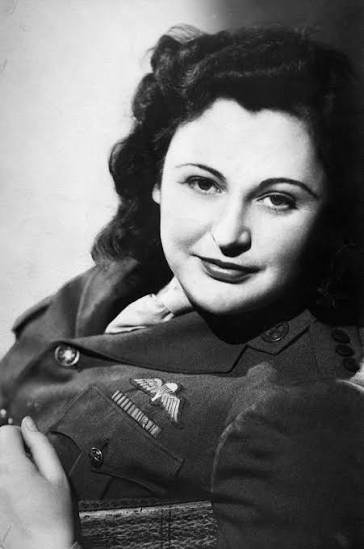
    In the spring of 1944, a woman with a price on her head pedaled a bicycle through the French countryside. German checkpoints dotted the roads, and every patrol car carried her photograph. Nancy Wake—known to the Gestapo as the White Mouse—was on a mission that would cover 500 kilometers, crossing enemy lines to deliver a radio codebook that would link the Maquis to London.

    She was 31 years old, a former journalist who had traded her typewriter for a Sten gun. The Germans had put a 5-million-franc bounty on her head, a sum that made her the most wanted person in the Marseille region. But Wake never stopped moving. ‘I was never afraid,’ she later said. ‘I was too busy to be afraid.’

    From Sydney to the Shadows

    Nancy Grace Augusta Wake was born in Wellington, New Zealand, in 1912, the youngest of six children in a poor family. When she was still a child, her family moved to Sydney, Australia. At 16, she left home to work as a nurse, but a small inheritance gave her a chance to escape. She used it to travel to Europe, where she trained as a journalist.

    By the mid-1930s, Wake was working for the Hearst press in Paris. Her assignments took her to Vienna and Berlin, where she watched the rise of Nazism firsthand. The violence and hatred she witnessed radicalized her. ‘I made up my mind then that if I ever had the chance, I would do something about it,’ she recalled.

    The chance came sooner than she expected. In 1939, she married Henri Fiocca, a wealthy French industrialist, and settled in Marseille. When France fell to the Germans in June 1940, Wake didn’t flee. Instead, she joined the Resistance.

    The Escape Line

    Marseille became a hub for the Resistance, and Wake found her niche in an escape network that smuggled Allied airmen and refugees over the Pyrenees into neutral Spain. She used her charm, her looks, and her fluency in French to move through checkpoints and bribe officials. ‘I was the most feminine thing that ever was,’ she once said, ‘and I could out-drink any man.’

    The Gestapo began to notice. They gave her the nickname ‘White Mouse’ because she slipped through their traps time and again. By 1943, they had placed a 5-million-franc bounty on her head—an astronomical sum. Henri urged her to leave, but she refused. When the net tightened, he stayed behind in Marseille while she escaped over the mountains to Spain, then to Britain.

    It was the last time she would see him alive.

    The SOE and the Maquis

    In London, Wake joined the Special Operations Executive, the secret organization Churchill had created to ‘set Europe ablaze.’ The SOE trained her in sabotage, wireless communication, and hand-to-hand combat. In April 1944, she parachuted into the Auvergne region of central France as a courier.

    Her mission was to arm and organize the Maquis—rural guerrilla bands of young men who had fled to the hills to avoid forced labor in Germany. By the time she arrived, they were scattered and poorly equipped. Wake changed that. She coordinated airdrops of weapons and explosives, trained fighters, and helped unite the groups into a force of some 7,000 men.

    Her methods were direct. When a radio codebook was needed urgently, she cycled 500 kilometers across German checkpoints to deliver it. When an SS sentry raised the alarm during a raid, she killed him with a karate chop to the neck. ‘I’d never done anything like that before,’ she admitted, ‘but it had to be done.’

    In June 1944, she led a 150-strong Maquis attack on the Gestapo headquarters in Montluçon. The raid was a success, but the Germans were closing in. Wake and her men were forced to retreat, but they had proved that the Resistance was a force to be reckoned with.

    The Cost of War

    When the war ended, Wake was celebrated as the most decorated servicewoman of WWII. She received the George Medal from Britain, the Médaille de la Résistance and the Croix de Guerre with Palm from France, and the US Medal of Freedom. But the accolades couldn’t erase the personal cost.

    In 1949, she learned the truth about her husband. Henri had been captured by the Gestapo in 1943. He was tortured for information about her whereabouts, but he refused to talk. The Gestapo executed him. Wake was devastated. ‘I thought I had nothing left to live for,’ she said.

    She spent the next decades working for British intelligence, then moved to Australia, where she ran unsuccessfully for Parliament. The war never left her. She admitted to nightmares and heavy drinking. ‘I was a bloody awful woman,’ she once said, ‘but I was the right person for the job.’

    The Forgotten Heroine

    In her later years, Wake moved to a retirement home in London, largely forgotten by the public. She died in 2011 at the age of 98. But her story has endured, not just as a tale of bravery, but as a reminder of the roles women played in the war—roles that were often dismissed or ignored.

    Wake herself was blunt about the double standard. ‘I don’t see why we women should just wave our men a proud goodbye and then knit them balaclavas,’ she said. She refused to be defined by gender, and she refused to be forgotten.

    Nancy Wake’s war was not a matter of abstract ideology. It was a series of concrete choices—to stay in Marseille, to climb the Pyrenees, to parachute into France, to ride a bicycle through checkpoints, to kill a man with her bare hands. She did not act out of a love of violence, but out of a conviction that fascism had to be stopped. ‘Freedom is the only thing worth living for,’ she once said. ‘I wasn’t afraid to die for it.’

    Summary

    • Nancy Wake was a New Zealand-born journalist who joined the French Resistance after the fall of France, helping smuggle Allied airmen over the Pyrenees.
    • The Gestapo gave her the nickname ‘White Mouse’ and placed a 5-million-franc bounty on her head, making her the most wanted person in the Marseille region.
    • As an SOE agent, she organized and armed 7,000 Maquis fighters in the Auvergne, cycled 500 kilometers to deliver a radio codebook, and killed an SS sentry with a karate chop.
    • Her husband, Henri Fiocca, was executed by the Gestapo in 1943 for refusing to reveal her whereabouts.
    • Wake became the most decorated servicewoman of WWII, but was largely forgotten in later life, dying in 2011 at 98.

    FAQ

    Q: Why was Nancy Wake called the ‘White Mouse’?
    A: The Gestapo gave her the nickname because she repeatedly eluded their traps, slipping through their nets like a mouse. The name stuck, and it was used on wanted posters.

    Q: How did Nancy Wake kill an SS sentry?
    A: During a raid on the Gestapo headquarters in Montluçon, a sentry raised the alarm. Wake killed him with a karate chop to the neck, an action she later described as necessary but shocking.

    Q: What was the 5-million-franc bounty on Wake?
    A: The Gestapo offered 5 million francs for her capture, a sum that made her the most wanted person in the Marseille region. She evaded it by escaping to Spain and then to Britain.

    Q: What happened to Nancy Wake’s husband?
    A: Henri Fiocca was captured by the Gestapo in 1943. He was tortured for information about Wake’s whereabouts but refused to talk. He was executed, and Wake didn’t learn of his death until 1949.

    Q: What awards did Nancy Wake receive?
    A: She received the George Medal (UK), the Médaille de la Résistance and the Croix de Guerre with Palm (France), and the US Medal of Freedom, making her the most decorated servicewoman of WWII.