Tag: propaganda

  • The Coordinated Life: How the Nazis Seized Control of Everyday Germany

    The Coordinated Life: How the Nazis Seized Control of Everyday Germany

    On the morning of February 28, 1933, the Reichstag building in Berlin smoldered. Within hours, President Hindenburg signed the Reichstag Fire Decree, suspending civil liberties across Germany. It was the first of many legal instruments that would dismantle the Weimar Republic and reshape daily life under Nazi rule. The decree allowed the regime to arrest political opponents without trial, search homes without warrants, and confiscate property all in the name of protecting the state from a Communist threat.

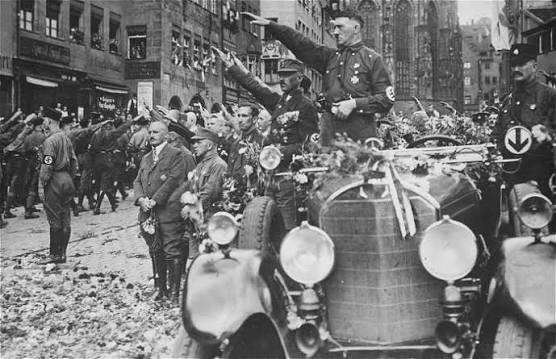
    But the Nazis’ control went far beyond legal repression. They aimed to orchestrate every aspect of existence: what people read, listened to, learned, and even how they spent their leisure time. Through a process they called Gleichschaltung coordination all institutions were aligned under Nazi ideology, creating a society where private life and public duty merged. This article explores how the regime penetrated the everyday, using a mix of terror, propaganda, and material incentives to bind ordinary Germans to the state.

    The Intensification of Control During War

    When World War II began in September 1939, control tightened further. Rationing of food, clothing, and consumer goods was introduced, and the regime planned the economy through the Four Year Plan, which prioritized rearmament and autarky. The war also brought new forms of mobilization: women were conscripted into factories, children were evacuated to the countryside, and forced laborers from occupied territories were brought in to work in German industry.

    Dissent was met with increasing brutality. The Gestapo and SD became more aggressive, and concentration camps expanded. The regime also executed thousands of Germans for “defeatist” remarks or resistance, including the members of the White Rose movement in 1943. Everyday life under war became a balancing act: survival, loyalty, and the need to avoid suspicion.

    The Nazis’ control of everyday life was neither purely coercive nor purely voluntary. It was a combination of terror, propaganda, and tangible benefits that created a society where many Germans were complicit in the regime’s crimes. The block warden, the denouncer, and the enthusiastic Hitler Youth member were as much a part of the system as the Gestapo officer. Understanding this coordination how a modern state can infiltrate the most intimate aspects of life remains a sobering lesson about the fragility of democracy and the dangers of totalitarian ambition.

    Summary

    • The Nazi regime used legal decrees like the Reichstag Fire Decree and the Enabling Act to dismantle democracy and establish a dictatorship.
    • Propaganda, led by Goebbels, controlled all media and culture, shaping public opinion through radio, film, and press.
    • Mass organizations like the Hitler Youth and Strength Through Joy provided benefits and indoctrination, fostering loyalty among the “racially valuable” population.
    • Everyday surveillance relied on block wardens and voluntary denunciations, making the Gestapo effective despite its small size.
    • Control intensified during WWII, with rationing, total mobilization, and brutal repression of dissent.

    FAQ

    Q: What was Gleichschaltung?
    A: Gleichschaltung, or “coordination,” was the Nazi process of aligning all political, social, and cultural institutions under Nazi control. It involved banning other political parties, replacing trade unions with the German Labor Front, and bringing media, education, and religion in line with Nazi ideology.

    Q: How did the Gestapo operate if it was so small?
    A: The Gestapo relied heavily on voluntary denunciations from ordinary Germans. Citizens reported neighbors, coworkers, and even family members for political crimes. This system of surveillance was so effective that the Gestapo could focus on the most serious cases, while the threat of denunciation kept the population in line.

    Q: Were there any benefits for ordinary Germans under Nazi rule?
    A: Yes, many Germans received material benefits, such as employment through rearmament and public works programs, leisure activities through the Strength Through Joy program, and welfare from the NSV, but only if they were considered “racially worthy.” These benefits helped secure loyalty and a sense of belonging.

    Q: How did Nazi control of everyday life change during World War II?
    A: During the war, control intensified. Rationing was introduced, women were mobilized for factory work, children were evacuated, and dissent was brutally suppressed. The regime also used forced labor from occupied territories, and the threat of execution for even minor criticism increased.

    Q: What was the role of block wardens?
    A: Block wardens were Nazi party officials assigned to apartment blocks. They monitored households for political loyalty, flag displays, and compliance with regulations, and reported any suspicious behavior to the party or police. They were a key part of the everyday surveillance system.

  • Mind Control on the Home Front: How WWII Propaganda Shaped American Psychology

    Mind Control on the Home Front: How WWII Propaganda Shaped American Psychology

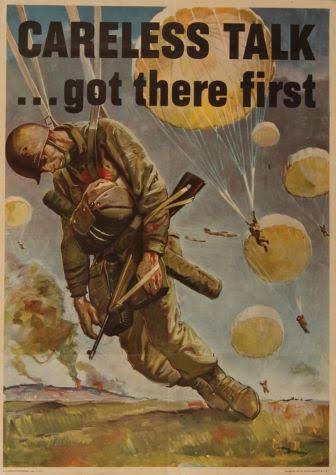
    In the summer of 1942, a Chicago housewife named Margaret Jones received a letter from her son, a soldier stationed in the Pacific. He wrote about the heat, the mud, and the fear. But when she tried to share his words with her neighbor, she stopped herself. A poster on the wall of the post office reminded her: ‘Loose Lips Sink Ships.’ She said nothing.

    That poster was one of thousands produced by the U.S. government’s Office of War Information (OWI), which, between 1941 and 1945, saturated American life with propaganda. It wasn’t just about selling war bonds or rationing sugar it was about psychologically reshaping a nation. The OWI and its private-sector partners used fear, guilt, and a relentless drumbeat of patriotic messaging to turn a reluctant public into a unified war machine. But the psychological cost on children, on minorities, on the very fabric of civic trust would linger long after the guns fell silent.

    The Machinery of Persuasion

    The United States didn’t invent propaganda in World War II. During World War I, the Committee on Public Information (CPI), led by George Creel, had pioneered mass-scale government messaging, using films, posters, and 75,000 volunteer speakers known as “Four Minute Men.” But the CPI’s excesses including outright lies about German atrocities sparked a public backlash, and it was dismantled in 1919. By the 1930s, Americans were deeply suspicious of propaganda, especially as Nazi Germany elevated it to a dark art.

    So when war broke out in Europe, U.S. officials faced a dilemma. They knew they needed to rally public support, but they feared a cynical population would reject anything that smelled of manipulation. The solution, as historian Allan Winkler notes in The Politics of Propaganda, was to create an agency that would “tell the truth”—but strategically.

    The Office of War Information, established in June 1942 under journalist Elmer Davis, walked that line. It produced more than 1,000 posters, 60 films, and countless radio scripts. It didn’t fabricate stories wholesale; it chose which facts to highlight and which to bury. Casualty figures were downplayed, setbacks in the Pacific were spun as “strategic withdrawals,” and the enemy was reduced to a caricature.

    Fear, Guilt, and the Psychology of Control

    The OWI’s methods were grounded in the emerging science of persuasion. Behavioral psychologist John B. Watson had already shown that fear and emotion could drive consumer behavior. The government, working with advertising executives through the War Advertising Council, applied those same principles to the war effort.

    Fear was the sharpest tool. Posters depicted Japanese soldiers as subhuman “Japs” with clawed hands and bestial faces, and Germans as goose-stepping automatons. The threat of invasion was made visceral: “If you tell a friend, you might tell the enemy.” Atrocity stories, some true and some embellished, stoked a righteous anger.

    But fear alone wasn’t enough. The OWI also wielded guilt. “Do with less—so they’ll have enough” shamed hoarders. “Someone talked!” posters accused the careless. Women were told that keeping a clean home and canning vegetables was a patriotic duty, and that any failure endangered the troops. Children were recruited into scrap drives and war stamp campaigns, their schoolrooms plastered with reminders that “Every Slip of the Tongue Can Help the Enemy.”

    The result was a pervasive atmosphere of anxiety and obligation. A 1943 study by the American Psychological Association found that 40% of children surveyed reported fears of air raids and enemy invasion—fears that had no basis in reality for most of the country. Japanese American families, already facing internment, were simultaneously told to prove their loyalty through “voluntary” contributions to war bond drives.

    The Cooperation of Hollywood and Madison Avenue

    The OWI didn’t work alone. It had two powerful partners: Hollywood and the advertising industry. The Bureau of Motion Pictures reviewed scripts, and studios willingly produced pro-war films like Casablanca and Mrs. Miniver. These films didn’t just entertain; they normalized sacrifice and demonized the enemy.

    The War Advertising Council coordinated roughly $1 billion in free advertising space each year—the equivalent of $15–18 billion today. Advertisers seamlessly integrated war messages into commercial campaigns. A soap ad might remind you to save fat for explosives. A cigarette ad might feature a soldier smoking the same brand, linking patriotism to a product.

    This saturation was deliberate. Psychologists like Carl Hovland, who would later study persuasion at Yale, knew that repetition was key. The same message, repeated across radio, print, and film, would eventually feel like a natural truth.

    The Skeptics and the Silenced

    Not every American was a passive sponge. Historian Michael Sweeney, in Secrets of Victory, shows that many people recognized the propaganda and resented it. They complained about censorship, mocked the rosy newsreels, and developed a critical eye that would serve them well in the postwar era.

    But dissent was not tolerated. The OWI and the Office of Censorship suppressed anti-war publications and imprisoned some objectors. The government’s messaging about Japanese Americans—that they were a threat—legitimized the internment of over 110,000 people, a decision that caused profound psychological trauma that survivors described for decades.

    The Legacy: A Template for Manipulation

    When the war ended, the machinery didn’t shut down. The Advertising Council, which had been a wartime partner, turned its attention to peacetime campaigns—”Smokey Bear,” “Keep America Beautiful.” The techniques of persuasion honed in the war—fear appeals, guilt, bandwagon effects—became the backbone of modern public relations and consumer marketing.

    The Cold War extended the pattern. The government continued to use propaganda to shape public opinion, from “Duck and Cover” films that frightened schoolchildren to the demonization of the Soviet Union. The post-9/11 era saw similar tactics, from color-coded terror alerts to “Support Our Troops” ribbons.

    What the Research Tells Us About the Psychological Impact

    Scholarship on the subject is clear: WWII propaganda succeeded in its immediate goals—maintaining morale, mobilizing 16 million workers, selling $185 billion in war bonds. But it came at a cost. The fear and guilt it instilled left lasting psychological scars, particularly among those who were already vulnerable.

    Children who grew up in the 1940s carried a sense of constant threat into adulthood. Japanese Americans faced a double betrayal: being asked to prove loyalty to a country that had stripped them of their rights. And the public’s trust in government, battered by the CPI’s excesses in WWI, was again eroded by the OWI’s omissions.

    Yet there was a silver lining. The very exposure to propaganda taught a generation to be wary. The skepticism they developed in the 1940s laid the groundwork for the media literacy movements of the 1960s and beyond. As Susan Brewer argues in Why America Fights, the war taught Americans not just what to think, but how to question what they were told.

    The propaganda of the American home front was a double-edged sword. It united a nation and helped win a war, but it also demonstrated how easily democratic societies can be psychologically manipulated. The posters are faded now, but the lessons remain: when we hear “Loose Lips Sink Ships,” we should also ask who is doing the sinking, and why we are being told to stay silent.

    Summary

    • The OWI produced over 1,000 posters, 60 films, and countless radio scripts during WWII, saturating American media.
    • Techniques included fear appeals (enemy caricatures), guilt (rationing shaming), and bandwagon effects (“everyone’s doing their part”).
    • Children and minorities bore a disproportionate psychological burden, with 40% of kids fearing air raids and Japanese Americans facing internment while being asked to prove loyalty.
    • Hollywood and the advertising industry cooperated voluntarily, with the War Advertising Council providing $1 billion in free ad space annually.
    • The legacy extends to modern public relations and government messaging, shaping how we consume information today.

    FAQ

    Q: Was the ‘We Can Do It!’ poster really a government propaganda tool?
    A: No. The famous “We Can Do It!” poster was actually an internal morale booster made by Westinghouse for its own workers, not an OWI campaign. It was not widely displayed during the war and only became iconic decades later.

    Q: How did children experience WWII propaganda?
    A: Children were heavily targeted through schools, scrap drives, and war stamps. They were exposed to fear-based messages about invasion and espionage, leading to widespread anxiety. A 1943 study found 40% of children surveyed feared air raids, even though the U.S. mainland was never attacked.

    Q: Did Americans accept propaganda passively?
    A: No. Many recognized it and resented censorship. Historian Michael Sweeney’s research shows that audiences developed a critical awareness, which contributed to postwar skepticism toward advertising and government messaging.

    Q: What was the ‘Double V’ campaign?
    A: The ‘Double V’ was a grassroots African American campaign during WWII, not an OWI initiative. It called for victory over fascism abroad and victory over segregation at home, highlighting the contradiction of fighting for freedom while denying it to Black Americans.

    Q: How did WWII propaganda influence the Cold War?
    A: The techniques and personnel from wartime propaganda were repurposed for Cold War messaging, including ‘Duck and Cover’ films and the demonization of the Soviet Union. The Advertising Council also transitioned to peacetime public service campaigns like Smokey Bear.

  • The Machinery of Fear: How Propaganda Bent Entire Nations to Its Will

    The Machinery of Fear: How Propaganda Bent Entire Nations to Its Will

    In the summer of 1917, a rumor swept through Allied trenches: German soldiers were boiling corpses to render fat for lubricants. The story was false, but it was printed in newspapers, repeated in sermons, and pinned to recruiting posters. Thousands of young men who had never met a German enlisted to fight a monster that did not exist. That was propaganda’s first great triumph of the twentieth century—not in winning a battle, but in rewriting reality.

    Propaganda is not merely lying. It is the systematic engineering of emotion, bypassing reason to plant fear deep in the gut. When fear takes root, people stop asking questions. They accept the offered enemy, the promised solution, and the sacrifice demanded. This article traces the psychological levers that propagandists have pulled—from the trenches of WWI to the radio hills of Rwanda—and shows how the same mechanisms still hum beneath the surface of modern media.

    The Psychology of Fear: Why Our Brains Are Primed for Manipulation

    Fear is not a flaw in the human operating system; it is a survival feature. The amygdala scans for threats, and when it detects one, it floods the body with cortisol and adrenaline. The prefrontal cortex—the seat of critical thinking—takes a back seat. In this state, humans are more suggestible, more impulsive, and more likely to accept a simple, aggressive solution than a nuanced one.

    Propagandists exploit this by crafting messages that meet three criteria: the threat must feel severe, it must feel probable, and a solution must be offered. The solution is always the propagandist’s agenda. In Nazi Germany, the threat was the “Jewish-Bolshevik conspiracy,” a myth repeated so often and so loudly that it became the frame for every subsequent event. The solution was Hitler. In Cold War America, the threat was nuclear annihilation from Soviet missiles; the solution was a massive arms race and loyalty oaths.

    The human mind also bends toward cognitive shortcuts that propagandists weaponize. Confirmation bias makes people seek out information that validates their existing fears. The availability heuristic makes vivid, recent images—like a burning flag or a single atrocity story—loom larger in the mind than statistics. Anchoring means the first piece of information sets the frame for everything that follows. A propagandist who controls the first message controls the interpretation of all later events.

    Case Study: The Great War’s Atrocity Machine

    World War I was the first total propaganda war. The British established the Wellington House, the US created the Committee on Public Information under George Creel, and Germany had its own war press office. These agencies produced an astonishing volume of material: Creel’s committee alone distributed 75 million pamphlets, posters, and films.

    The narratives were built on fear. The Germans were depicted as “Huns”—barbarians who bayoneted babies and crucified soldiers. The Allies were cast as defenders of civilization. Atrocity stories were often fabricated or wildly exaggerated. The famous “corpse factory” tale, claiming Germans boiled bodies for glycerin, was later debunked but not before it had fueled enlistment and hatred on both sides.

    Harold Lasswell, an American political scientist, analyzed these efforts in his 1927 book Propaganda Technique in the World War. He documented how propagandists used “name-calling” and “atrocity stories” to dehumanize the enemy, making it easier for ordinary people to kill. The war ended, but the machinery did not. It was refined and turned inward.

    The Nazi Blueprint: Fear, Repetition, and the “Big Lie”

    Joseph Goebbels, Hitler’s Minister of Propaganda, distilled the lessons of WWI into a cynical doctrine. His principles were simple: repeat a message until it becomes truth, simplify it to a slogan, and target the emotions of the masses rather than their intellect. The “big lie” technique—asserting something so audacious that people assume it must be true—was applied relentlessly against Jews, communists, and foreign powers.

    Goebbels had a new tool that WWI propagandists lacked: radio. By 1939, the Nazi regime had flooded Germany with cheap radios, the “People’s Receiver,” designed to receive only state broadcasts. Listeners gathered in public squares to hear Hitler’s speeches. The film Triumph of the Will (1935), directed by Leni Riefenstahl, used sweeping aerial shots and orchestral music to portray the Nazi party as an unstoppable force of nature. The message was not argument but awe.

    The fear narrative was built on a scapegoat. Jews were cast as an internal enemy, a “cancer” on the German body. This dehumanization did not happen overnight; it escalated in steps. First, social exclusion. Then, legal discrimination. Then, deportation. Then, mass murder. At each stage, propaganda softened the ground, making ordinary Germans complicit in atrocities they might otherwise have rejected. The Holocaust was not a sudden outburst of hatred; it was the logical endpoint of a decade of fear-based manipulation.

    The Soviet Machine: Fear of the Enemy Within

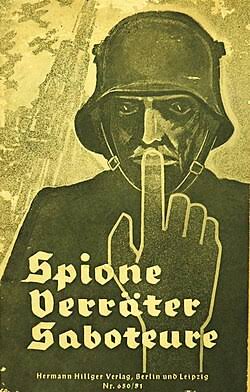
    In the Soviet Union under Stalin, the enemy was not just external—it was everywhere. Propaganda manufactured a permanent atmosphere of siege. The capitalist powers threatened from outside, but the more insidious danger was the “enemy within”: saboteurs, wreckers, Trotskyites. The state used show trials to publicly humiliate and execute “traitors,” each confession extracted under torture but presented as voluntary. Citizens were encouraged to inform on neighbors, colleagues, and even family members.

    The psychological mechanism was terror. Stalin’s purges in the 1930s killed hundreds of thousands, but the fear reached millions. The propaganda machine did not need to convince everyone that the enemies were real; it only needed to make everyone afraid of being accused. This is a darker twist on fear appeals: the threat is not an external invader but the very system you live in. The solution offered was loyalty—unquestioning, public, performative loyalty.

    Cold War Dread: The Nuclear Shadow

    After 1945, the fear of annihilation went nuclear. Both the United States and the Soviet Union used propaganda to justify the arms race, each side portraying the other as an aggressor on the brink of launching missiles. Civil defense drills in American schools—”duck and cover”—taught children that a nuclear war could be survived with a desk over your head. The absurdity of this message was not lost on later generations, but at the time it served to manage anxiety and maintain public support for military spending.

    Radio Free Europe and Voice of America beamed propaganda behind the Iron Curtain, while Soviet jammers tried to drown them out. Sports became a proxy war: Olympic victories were touted as proof of each system’s superiority. The fear of communism or capitalism, depending on which side you stood on, justified surveillance, censorship, and military intervention around the globe.

    The Cold War also saw the institutionalization of psychological warfare. The CIA’s Operation Mockingbird infiltrated media outlets, and the Pentagon used psychological operations in Vietnam and beyond. Edward Bernays, the “father of public relations,” had already laid the groundwork in the 1920s. He applied Freudian psychology to mass persuasion, arguing that people are driven by irrational desires and needs. For Bernays, propaganda—he later called it “public relations”—was a necessary tool for democracy, a way to “engineer consent” in a society where the masses were too ignorant to govern themselves.

    Rwanda: Radio as a Weapon of Genocide

    The Rwandan genocide of 1994 showed how quickly fear-based propaganda can turn into mass murder. The radio station RTLM, controlled by Hutu extremists, began broadcasting in 1993. Its DJs mixed popular music with hate speech, calling Tutsis “cockroaches” and “snakes.” They warned that Tutsis were planning to slaughter Hutus, and they called on Hutus to “cut down the tall trees.”

    The dehumanization was systematic. By framing Tutsis as vermin, the propaganda made it psychologically possible for ordinary Hutus to kill their neighbors. The calls to action were explicit; RTLM even broadcast the names and locations of Tutsi hiding places. When the genocide ended, an estimated 800,000 people had been killed in a hundred days. The radio had been a key enabler.

    The Digital Age: Fear Goes Viral

    Today, the psychology of fear has migrated to social media. Algorithms optimize for engagement, and fear is the most engaging emotion. Outrage, anxiety, and threat narratives spread faster than calm, nuanced information. Cambridge Analytica’s micro-targeting efforts in the 2016 US election and Brexit referendum applied Bernays’ principles at an individual scale—sending tailored fear messages to millions of swing voters.

    Propaganda is no longer the sole province of regimes. Non-state actors, conspiracy theorists, and foreign intelligence services use the same levers: confirmation bias, availability heuristic, and the emotional hijacking of the amygdala. The “big lie” has become a meme. The enemy is no longer a neighboring nation but a political party, an ethnic group, or a shadowy cabal.

    The Defenses: Recognizing the Levers

    The Institute for Propaganda Analysis, founded in 1937, identified seven common devices: name-calling, glittering generalities, transfer, testimonial, plain folks, card stacking, and bandwagon. These tools are still in use, dressed in modern clothes. Recognizing them is the first step toward resistance.

    But awareness alone is not enough. The brain’s fear response is primal; it can be trained but not eliminated. The most effective defense is time. Propaganda thrives on immediacy—it wants you to react before you think. Pausing, seeking out contrary evidence, and questioning the source can break the spell. In a world where the machinery of fear runs 24/7, the ability to slow down is a revolutionary act.

    Propaganda did not end with the fall of the Third Reich or the collapse of the Soviet Union. It evolved, adapting to each new medium, from print to radio to television to algorithms. The psychology remains the same: fear is the lever, and the human brain is the machine it pulls. Understanding how that machine works is not just an academic exercise. It is the first line of defense against those who would use our own minds against us.

    Summary

    • Propaganda exploits fear through three-part appeals: severe threat, probable threat, and a promised solution.
    • Cognitive biases like confirmation bias and the availability heuristic make humans susceptible to manipulation.
    • Historical examples: WWI atrocity stories, Nazi radio and film, Soviet show trials, Cold War nuclear dread, and Rwanda’s RTLM radio.
    • Key figures: Edward Bernays (public relations), Joseph Goebbels (Nazi propaganda), and Harold Lasswell (academic analysis).
    • Modern digital propaganda uses algorithms and micro-targeting to apply fear psychology at scale.

    FAQ

    Q: What is the main difference between propaganda and education?
    A: Education seeks to inform and empower critical thinking. Propaganda seeks to manipulate by bypassing reason and targeting emotions, often with a hidden agenda.

    Q: How did the Nazis use radio as a propaganda tool?
    A: They produced cheap “People’s Receivers” that could only pick up state broadcasts, forcing listeners to hear Nazi messages. Public speeches and rallies were broadcast to create a sense of unity and fear.

    Q: Can propaganda be resisted?
    A: Yes, by recognizing common devices (name-calling, glittering generalities), pausing before reacting, seeking diverse sources, and questioning the emotional pull of a message.

    Q: Did Cold War propaganda have any positive effects?
    A: Some argue it fostered a sense of national unity and purpose, but it also fueled an arms race and justified costly conflicts. The negative consequences far outweighed any benefits.

    Q: How does modern social media amplify propaganda?
    A: Algorithms prioritize content that generates engagement, and fear-based content is highly engaging. This can create echo chambers where extreme views are reinforced, and micro-targeting allows propagandists to tailor messages to individual vulnerabilities.