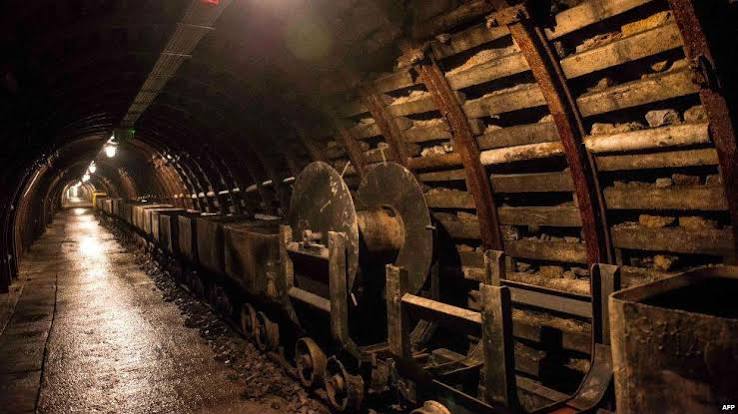
In the spring of 1945, as the Third Reich crumbled, a train loaded with gold, silver, and personal belongings stolen from Hungarian Jews rolled westward through Austria. U.S. forces intercepted it near the town of Werfen in May, but much of its cargo vanished into the hands of soldiers and officials before it could be inventoried. The Hungarian Gold Train is just one chapter in the unfinished story of Nazi loot.
Between 1933 and 1945, the Nazis systematically stripped central banks and Jewish households across Europe of their wealth. Estimates put the value of gold alone at $550–600 million at the time roughly $8–10 billion today. While the Allies recovered a significant cache in a German salt mine, billions of dollars in gold and other valuables remain unaccounted for, buried in lakes, sealed in bank vaults, or simply lost to history.
The Machinery of Theft
Nazi looting was not a chaotic free-for-all. The Reichsbank, under presidents Hjalmar Schacht and later Walther Funk, ran a formal operation. Looted gold from central banks in Belgium, the Netherlands, and Czechoslovakia, as well as from Jewish deportees was melted down and recast into anonymous bars. The Degussa company handled the smelting, erasing any marks that might reveal the gold’s origin. SS officer Bruno Melmer even established a dedicated account at the Reichsbank, through which dental gold and jewelry flowed directly from concentration camps.
The scale was staggering. At its peak, the Reichsbank held hundreds of tons of gold. But as Allied bombs fell on Berlin, the regime began moving its hoard.
The Merkers Discovery
In early 1945, Nazi officials packed the remaining Reichsbank gold into trucks and trains, heading for a salt mine in Merkers, Thuringia. The choice was practical: the mine was deep, dry, and far from the front lines. On April 8, 1945, U.S. troops descended into the mine and found a scene of organized chaos gold bars stacked like bricks, crates of currency, and paintings wrapped in paper.
The haul was enormous: approximately 100 tons of gold, worth about $238 million at the time. Alongside it were millions in cash, art, and other valuables. The Allies shipped this treasure to Frankfurt, where the Tripartite Gold Commission (TGC) established by the U.S., UK, and France in 1946 began the slow work of returning it to claimant nations. The TGC distributed roughly $60 million (1946 value) to 16 countries before winding down in 1998. But not all of the Merkers gold could be traced to its owners, and some remained in a pool for unresolved claims.
The Swiss Connection
Switzerland played a pivotal role in laundering Nazi gold. The Swiss National Bank (SNB) accepted gold from the Reichsbank throughout the war, exchanging it for Swiss francs—a lifeline that allowed Germany to purchase raw materials. An estimated 80% of all Nazi gold sales passed through Swiss banks. The Swiss have often argued they were neutral and unaware, but the 1996 Eizenstat Report, commissioned by the U.S. State Department, revealed extensive knowledge and cooperation.
In 1946, the Washington Agreement forced Switzerland to pay 250 million Swiss francs (about $58 million) to the Allies for restitution. Critics then and now have called this a bargain. After the London Conference on Nazi Gold in 1998, Swiss banks agreed to a $1.25 billion settlement with Holocaust survivors and their heirs, acknowledging their role in laundering funds and holding dormant accounts.
The Hungarian Gold Train
The case of the Hungarian Gold Train illustrates how even when the Allies captured loot, restitution could fail. In 1945, Hungarian fascists and Nazis loaded a train with property confiscated from the country’s Jewish population—gold, silver, jewelry, and art—and fled toward Austria. U.S. forces captured the train in May 1945, but the contents were never fully inventoried or returned to owners.
A 1999 U.S. government investigation found that U.S. military personnel had taken items for personal use, and some goods were sold at a discount to local merchants. Only a fraction of the train’s contents was eventually returned to Hungary or distributed to survivors. The rest remains unaccounted for.
The Mysteries That Remain
Beyond the known caches, several tantalizing leads have never been resolved. During the war’s final days, U-boats like U-234 carried gold and documents toward South America or Japan; some were captured, others scuttled, their cargoes uncertain. Lake Toplitz in Austria, a deep alpine lake, was rumored to hold crates of counterfeit British pounds and valuables. Divers have recovered currency and documents, but no significant gold.
In 2015, two explorers claimed to have found a buried armored train near Walbrzych, Poland—the so-called “Nazi Gold Train.” Ground-penetrating radar showed anomalies, but a thorough excavation in 2016 found nothing. The claim is now widely dismissed as a hoax.
It’s also important to distinguish the Yamashita Gold—a largely mythologized hoard allegedly hidden in the Philippines by Japanese forces—from the Nazi looting apparatus. The two are often confused in popular culture, but they are separate stories.
The Legacy of Unfinished Business
The search for Nazi gold is not just about treasure; it’s about accountability. The 1998 London Conference forced governments and banks to audit their wartime records, but many archives remain sealed or destroyed. The Tripartite Gold Commission’s work ended in 1998, leaving unresolved claims. The Swiss settlement of $1.25 billion was a step, but it cannot undo the systematic destruction of lives and livelihoods.
Today, the hunt continues—not for myth, but for facts. Governments, historians, and private investigators dig through archives and probe lake beds, hoping to answer a question that has haunted the post-war world: where is the rest of the gold?
The missing Nazi gold is more than a treasure hunt; it is a reminder of the scale of Nazi crimes and the difficulties of justice after atrocity. While the Merkers discovery and the Tripartite Gold Commission recovered a significant portion, billions of dollars in looted wealth vanished into the chaos of war and the silence of banks. The stories of the Hungarian Gold Train and the Walbrzych hoax show that the truth is often more complex than legend. As archives open and technology improves, the full account may never be known, but the effort to trace the gold is part of a broader reckoning with history.
Summary
- The Nazis looted an estimated $550–600 million in gold (equivalent to $8–10 billion today) from central banks and Jewish citizens.
- The largest recovery was at the Merkers salt mine in 1945: about 100 tons of gold, worth $238 million then.
- Switzerland laundered an estimated 80% of Nazi gold sales, leading to post-war settlements and a $1.25 billion fund in 1997.
- The Hungarian Gold Train was captured by U.S. forces, but much of its contents were never returned to owners.
- Mysteries remain, including scuttled U-boats and Lake Toplitz, while the 2015 Walbrzych “Nazi gold train” claim was debunked.
FAQ
Q: How much Nazi gold is still missing?
A: While exact figures are unknown, estimates suggest that only a fraction of the looted gold was recovered. The Merkers mine yielded about 100 tons, but the Nazis seized far more. Unaccounted amounts include gold sold to neutral countries, lost in transport, or hidden in unverified locations.
Q: Was the “Nazi gold train” in Poland real?
A: No. In 2015, two explorers claimed to have found a buried armored train near Walbrzych, but excavation in 2016 found no trace. The claim is widely considered a hoax.
Q: What was the role of Switzerland in Nazi gold?
A: Switzerland was the primary buyer and launderer of Nazi gold, exchanging it for Swiss francs that funded Germany’s war effort. The Swiss National Bank accepted gold knowing its likely origin. Post-war settlements included a 1946 payment of 250 million francs and a 1997 settlement of $1.25 billion.
Q: What happened to the gold found at Merkers?
A: The approximately 100 tons of gold was taken to Frankfurt and administered by the Tripartite Gold Commission, which returned about $60 million worth to claimant nations by 1998.
Q: Is the Yamashita Gold part of the Nazi gold story?
A: No. The Yamashita Gold is a separate, largely mythologized hoard allegedly hidden by Japanese forces in the Philippines. It is often confused with Nazi gold in popular culture but is not connected.
Leave a Reply