Tag: evacuation

  • Surviving the Great Patriotic War: Life in Stalin’s Soviet Union, 1941–1945

    Surviving the Great Patriotic War: Life in Stalin’s Soviet Union, 1941–1945

    At dawn on June 22, 1941, German artillery opened fire along a front stretching from the Baltic to the Black Sea. Within hours, millions of Soviet citizens found themselves plunged into a war that would consume their country for four years.

    By the time the guns fell silent on May 9, 1945, the Soviet Union had lost over 26 million people more than any other nation in history. Yet the survivors endured. They worked 16-hour shifts in freezing factories, ate bread rations measured in grams, and watched their cities burn. This is the story of how ordinary people lived and died under Stalin’s rule during the Great Patriotic War.

    The Shock of Invasion: June 1941

    The Red Army was catastrophically unprepared. In the first six months, roughly 4 million soldiers were killed or captured. Entire armies were encircled at Kiev alone, about 600,000 men were taken prisoner. Stalin, reportedly in shock for days, finally addressed the nation on July 3, 1941, not as comrades but as “Brothers and sisters.”

    That address marked a turning point. The regime dropped overt communist rhetoric and instead invoked Russian nationalism, Orthodox Christianity, and historical heroes like Alexander Nevsky and Kutuzov. The war became the “Great Patriotic War,” a defense of the Motherland. The Comintern was dissolved in 1943 as a gesture to Western allies.

    The Home Front: Endurance and Suffering

    With over 34 million men mobilized, women filled the void. By 1943, they made up roughly 80% of the agricultural workforce and a large share of industrial labor. Over 800,000 women also served in the military as snipers, pilots, medics, and partisans.

    Rationing began in July 1941. Workers received 400-800 grams of bread daily; dependents as little as 250 grams. Black markets thrived despite severe penalties. In Leningrad, the siege lasted 872 days. About 1 million civilians died, mostly of starvation. The only supply line was the “Road of Life” across frozen Lake Ladoga. Cannibalism was documented.

    Factories ran 14-16 hour shifts. Children worked alongside adults. Schools moved to bomb shelters or closed entirely.

    The Great Evacuation: Moving an Industry East

    Between 1941 and 1942, over 1,500 factories were dismantled and relocated east of the Urals. This was one of the largest industrial migrations in history. Workers reassembled machinery in weeks, often in open fields, and resumed production. Millions of people were evacuated in cattle cars, losing everything. Over 25 million were left homeless.

    Order No. 227: “Not a Step Back!”

    In July 1942, as German forces pushed toward Stalingrad, Stalin issued Order No. 227. It established blocking detachments—barrier troops who could shoot retreating soldiers. Desertion was punishable by execution. The order was brutal, but it signaled that surrender was not an option.

    At the front, conditions were desperate. Early on, some units had one rifle for every two men. Later, Soviet tactics relied on mass artillery and “human wave” assaults. Despite the terror, many fought fiercely out of patriotism.

    The Gulag and Internal Exile

    Prisoners in the Gulag built factories, railroads, and mines in the east. Some were released early to join penal battalions. Entire nationalities were accused of collaboration and deported: Chechens, Ingush, Crimean Tatars, Volga Germans, and others. Over 1.5 million people were sent to Central Asia and Siberia, with high mortality.

    Soviet POWs suffered doubly. Stalin declared them traitors under Order No. 270. Of about 5.7 million Soviet POWs, roughly 3.3 million died in German captivity. Those who returned were often sent to filtration camps and then to the Gulag or penal battalions.

    Lend-Lease: The Lifeline from the West

    The United States and Allies supplied about $11 billion in aid—food, trucks, aircraft, raw materials. This contributed roughly 10–15% of Soviet war production inputs. It was critical for logistics, especially Studebaker trucks, but not the majority of armaments.

    The Human Cost: 26 Million Lost

    The Soviet Union lost over 26–27 million citizens—military and civilian combined. Roughly 8.7–11 million military deaths and 13–14 million civilian deaths from starvation, bombing, disease, and mass executions. At its peak, Nazi Germany occupied about 1.5 million square kilometers of Soviet territory, home to about 85 million people—nearly 40% of the population.

    Aftermath: A Country Transformed

    Victory came at an unimaginable price. The war left deep scars on Soviet society. Millions were displaced, orphaned, or widowed. Yet the regime emerged stronger, having successfully reframed itself as the defender of the Motherland. For the survivors, the memory of those years—the hunger, the loss, the endurance—would shape the Soviet identity for decades.

    The Great Patriotic War was not just a military conflict; it was a test of human endurance. Under Stalin’s iron rule, millions sacrificed everything for a victory that would define the Soviet Union’s place in history. The war’s legacy—of suffering and survival—remains etched in the collective memory of Russia and its neighbors.

    Summary

    • The Soviet Union lost over 26 million people during WWII, including 8.7–11 million military deaths and 13–14 million civilian deaths.
    • The German invasion in June 1941 caught the Red Army unprepared, leading to catastrophic losses in the first months.
    • The home front endured extreme hardship: rationing, 16-hour work shifts, and the 872-day siege of Leningrad.
    • Over 1,500 factories were evacuated east of the Urals, one of the largest industrial migrations in history.
    • Stalin’s regime used terror and nationalism to maintain control, including Order No. 227 and ethnic deportations of over 1.5 million people.

    FAQ

    Q: How many Soviet citizens died in WWII?
    A: The Soviet Union lost over 26–27 million citizens, including both military and civilian deaths.

    Q: What was the Siege of Leningrad?
    A: It was a 872-day siege by German forces from 1941 to 1944, during which about 1 million civilians died, mostly from starvation.

    Q: What was Order No. 227?
    A: Issued in July 1942, it was Stalin’s “Not a Step Back!” order that established blocking detachments to shoot retreating soldiers and made desertion punishable by execution.

    Q: How did Lend-Lease help the Soviet Union?
    A: The US and Allies provided about $11 billion in aid—food, trucks, aircraft, raw materials—which contributed roughly 10–15% of Soviet war production inputs, critical for logistics.

    Q: What happened to Soviet POWs?
    A: Stalin declared them traitors under Order No. 270. Of about 5.7 million Soviet POWs, roughly 3.3 million died in German captivity, and many returnees were sent to the Gulag or penal battalions.

  • The Children of WWII: Evacuation, Survival, and the Long Shadow of Loss

    The Children of WWII: Evacuation, Survival, and the Long Shadow of Loss

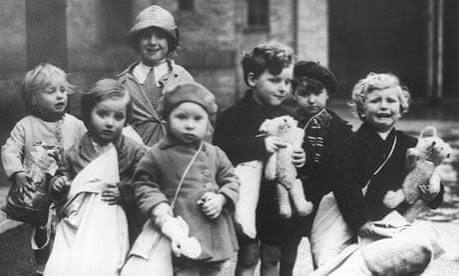
    In the first week of September 1939, as the British government prepared for war, a railway network across the country moved a small army—not of soldiers, but of children. Over three days, 1.5 million young Londoners, Mancunians, and Glaswegians were sent to the countryside, clutching gas masks and name tags. They were part of Operation Pied Piper, the largest planned evacuation of children in history. The trains were packed with school groups, siblings, and bewildered toddlers, many of whom had never left their urban streets before.

    This was not a uniquely British story. From the bombed-out cities of Germany to the freezing steppes of the Soviet Union and the island villages of Japan, the Second World War uprooted tens of millions of children. Governments saw them as the future of the nation—both biologically and ideologically—and moved them in massive state-run operations. But the evacuation was not just a logistical feat; it was a profound rupture in the lives of children, many of whom would never return home, never see their parents again, or would carry the psychological scars for decades.

    These are the untold stories of those children: the trauma of separation, the clash of class and culture, the indoctrination camps, the famine trains, and the silence that followed the war. The scale of the displacement is staggering—over 3.5 million in Britain alone, up to 15 million in the Soviet Union—but the human cost is measured in the small, individual moments of confusion and loss that shaped a generation.

    The Great Uprooting: Why Governments Sent Children Away

    The fear of aerial bombing was the driving force behind the mass evacuations. Politicians and military strategists, remembering the predictions of Stanley Baldwin that “the bomber will always get through,” anticipated that cities would be flattened and civilians would suffer catastrophic casualties. Children, as the most vulnerable and the future of the nation, were the first to be moved.

    In Britain, the evacuation was organized by the government, with school groups billeted in rural homes. The operation was massive: 1.5 million children moved in the first days of September 1939, and by 1945, about 3.5 million had been evacuated at some point, including a second wave during the Blitz. The children were sent to live with host families, a practice that was supposed to be temporary but often lasted for years. The clash of class and culture was immediate: middle-class children found themselves in working-class homes, and vice versa. Some were treated with warmth; others were neglected, exploited, or abused. The government later acknowledged that vetting of host families was inadequate.

    Across the Channel, the German Kinderlandverschickung (KLV) program moved 2.5 to 3 million children from bomb-threatened cities to rural areas. But the KLV was not just about safety—it was an ideological project. Children were sent to camps run by the Hitler Youth, where they wore uniforms, participated in paramilitary training, and were indoctrinated with Nazi ideology. The camps were designed to remove children from the “weak” influence of their urban parents and turn them into loyal soldiers for the Reich. Many children later described the experience as a “second childhood”—both formative and deeply traumatic.

    The Soviet Union evacuated children on an even grander scale, though the records are incomplete. Estimates suggest 12 to 15 million children were displaced eastward, often traveling for weeks in cattle cars to Central Asia, Siberia, or the Urals. Many children were evacuated with their schools or orphanages, not with their families. The journey was brutal: starvation, disease, and cold killed many before they reached safety. During the siege of Leningrad, ~400,000 children were evacuated, but many perished on the way or in the evacuation zones due to famine.

    Japan, facing the threat of American bombing in 1944-45, evacuated over 400,000 children from major cities to rural temples and villages. The Sokai (group evacuation) program sent elementary school children in school cohorts, with teachers acting as surrogate parents. The children often faced malnutrition, disease, and harsh labor in the rural areas, where food was also scarce.

    The Trauma of Separation

    For many children, the departure was a moment of inexplicable loss. They were too young to understand why they were being sent away, and some never saw their parents again. The separation disrupted the primary attachment bonds that are crucial for healthy development. Psychologists later used these experiences to develop attachment theory, but at the time, the emotional toll was largely ignored.

    Letters were the only link, but postal systems were slow and unreliable. Some children did not hear from their parents for months, and the uncertainty compounded the anxiety. In Britain, the government tried to keep families informed, but the system was often overwhelmed. In the Soviet Union, the state’s control over communication meant that many children were simply lost in the system, with no way to trace their families.

    The class and culture clash in Britain was particularly jarring. Children who had never seen a cow were suddenly expected to help on farms; those from affluent homes were billeted with families who had no indoor plumbing. The experience could be enlightening or degrading, depending on the host family. Some children were treated as beloved guests; others were used as unpaid labor or subjected to neglect. The long-term psychological effects were profound: a generation of children grew up feeling abandoned, even if their parents had acted out of love.

    The Nazi KLV: Indoctrination and a “Second Childhood”

    The Kinderlandverschickung was the most ideologically driven evacuation program. The camps were run by the Hitler Youth and Nazi welfare organizations, and the children were subjected to constant propaganda. They learned Nazi racial theory, practiced military drills, and were taught to idolize Hitler. The goal was to create a generation of loyal Nazis, independent of family influence.

    Life in the camps was regimented but also offered a sense of community and adventure. Some children later recalled that the camps provided a rare escape from the bombing and the fear, a “second childhood” of sorts. However, the indoctrination left deep scars. After the war, many German evacuees did not speak about their experiences until the 1990s, partly out of shame for the Nazi ideology they had been taught and partly because the cultural focus was on adult suffering.

    The Soviet Orphan Trains: Starvation and State Control

    In the Soviet Union, evacuation was often a matter of survival, but it came at a terrible cost. Children were sent eastward in cattle cars, packed in with little food or water. Many died en route from disease or starvation. The state placed children in state-run institutions, where they were trained for labor and subjected to strict discipline. Family reunification was slow and often impossible; the state’s records were incomplete, and many children simply fell through the cracks.

    The siege of Leningrad was a particular tragedy. Around 400,000 children were evacuated from the city, but many perished in the evacuation zones due to famine. The survivors were often orphaned, as their parents had died in the siege or were never traced. The Soviet government did not prioritize family reunification; the state was the parent, and children were expected to contribute to the war effort.

    The Japanese Sokai: Group Survival and Post-War Silence

    In Japan, the evacuation was a group effort. Schools were moved wholesale to rural areas, with teachers acting as surrogate parents. The children lived in temple compounds or village homes, often in cramped and unsanitary conditions. Food was scarce, and many suffered from malnutrition and disease. They were also expected to work, helping with farm labor or other tasks.

    The Japanese evacuees rarely spoke about their experiences after the war. The narrative of victimhood was complicated by Japan’s role as an aggressor, and many felt ashamed or were told to forget. It was not until the 1980s and 1990s that some began to share their stories, revealing a similar pattern of trauma and loss as seen in Britain and Germany.

    The Invisible Casualties: Children Killed and Orphaned

    The evacuation was meant to protect children, but it could not shield them from the war’s violence. In Britain, ~7,700 children were killed in bombing raids, including the Blitz. In Germany, ~20,000–25,000 children died in bombing raids, including the firebombing of Hamburg and Dresden. The Holocaust claimed ~1.5 million Jewish children, most of whom were not evacuated but killed in ghettos and camps. In the Soviet Union, historians estimate that 1–2 million children died from war-related causes—starvation, bombing, disease, and violence.

    The evacuation itself could be deadly. In the Soviet Union, children died on the trains; in Japan, they died in the rural areas from malnutrition; in Britain, some were killed in bombing raids on the very areas they had been sent to for safety, as the Germans also targeted rural industrial sites. The loss was not just physical but psychological: many children who survived were orphaned, either by the bombing or by the chaos of displacement.

    The Long Shadow: Post-War Silence and Memory

    For decades after the war, the experiences of the evacuated children were largely ignored. In Britain, there was a cultural focus on the “Blitz spirit” and the heroism of adults; children’s stories were seen as secondary. In Germany, the focus was on the guilt of the Nazi era, and the children who had been indoctrinated were often silenced by shame. In the Soviet Union, the state controlled the narrative, and the suffering of children was subsumed into the broader story of Soviet victory. In Japan, the victimhood of children was complicated by the nation’s aggression.

    It was not until the 1990s that these stories began to be told. Oral history projects, memoirs, and academic studies have since revealed the long-term psychological impact: anxiety, depression, attachment disorders, and a persistent sense of loss. The children of WWII are now elderly, but their stories are a vital part of understanding the war’s full cost. They remind us that the most vulnerable are often the first to be uprooted and the last to be heard.

    The evacuation of children during World War II was a massive experiment in social engineering, driven by fear and ideology, but it was carried out on the backs of children who had no say in the matter. The stories of these children—of separation, survival, and loss—are not just historical footnotes; they are a testament to the resilience of the human spirit and a warning about the costs of war. As the generation of evacuees passes, their memories become even more precious, urging us to remember that the true price of conflict is written not in numbers, but in the quiet, enduring pain of children who were sent away and never fully returned.

    Summary

    • The scale was massive: Over 3.5 million children were evacuated in Britain, 2.5–3 million in Germany, 12–15 million in the Soviet Union, and 400,000+ in Japan.
    • The reasons were complex: Governments moved children to protect them from bombing, but also for ideological purposes (Nazi KLV) and due to state control (Soviet Union).
    • The experience was traumatic: Separation from parents, culture clash, abuse, starvation, and death were common.
    • Many children never recovered: The psychological scars lasted a lifetime, but were often silenced by shame or cultural focus on adult suffering.
    • The stories were hidden for decades: It was not until the 1990s that many evacuees began to speak about their experiences, revealing the long-term cost of the war’s disruption.

    FAQ

    Q: How many children were evacuated during WWII?
    A: In Britain, around 3.5 million children were evacuated; in Germany, 2.5–3 million via the KLV; in the Soviet Union, estimates range from 12–15 million displaced; and in Japan, over 400,000 children were sent to rural areas.

    Q: What was the Kinderlandverschickung (KLV)?
    A: The KLV was a German program that evacuated children from bomb-threatened cities to rural camps run by the Hitler Youth. It aimed not only to protect children but also to indoctrinate them in Nazi ideology, removing them from the influence of their parents.

    Q: Why did it take so long for these stories to be told?
    A: Many evacuees stayed silent due to shame (in Germany about Nazi ideology), cultural focus on adult suffering (in Britain), state control of memory (in the Soviet Union), and complicated narratives of victimhood (in Japan). It was only in the 1990s that oral histories began to emerge.

    Q: What were the long-term psychological effects on evacuated children?
    A: Many children experienced separation trauma, which disrupted attachment bonds. This led to anxiety, depression, and attachment disorders that persisted into adulthood. The effects were often unrecognized for decades.

    Q: Did any children die during the evacuation?
    A: Yes, many children died during evacuation, especially in the Soviet Union, where they traveled in cattle cars and faced starvation and disease. In Germany, children also died in bombing raids despite being evacuated; the firebombing of Hamburg and Dresden killed thousands of evacuees.

  • U.S. Issues Evacuation Prep Alerts for Americans in Ten Countries: What You Need to Know

    U.S. Issues Evacuation Prep Alerts for Americans in Ten Countries: What You Need to Know

    In an unprecedented move, the U.S. State Department has issued security alerts advising American citizens in approximately ten countries to prepare for potential evacuation or to depart immediately. The warnings, centered on the Middle East and North Africa, come in the wake of escalating military tensions between the U.S., Israel, and Iran. For the thousands of Americans living or traveling in these regions, the alerts raise urgent questions: What exactly does ‘prepare to flee’ mean? And how should one respond? This article breaks down the facts, dispels common myths, and offers practical guidance for those affected.

    Understanding the Alerts: What’s Happening?

    The State Department’s alerts are not a blanket mandatory evacuation order. Instead, they are a mix of ‘prepare to shelter in place’ and ‘depart if possible’ notices, varying by country. The core list includes Iran, Iraq, Syria, Lebanon, Israel, the West Bank, and Gaza, with additional warnings for Jordan, Kuwait, Saudi Arabia, and the UAE, depending on the evolving threat assessment. The stated reason is an elevated risk of terrorist attacks, military conflict, or civil unrest following a series of escalations between the U.S., Israel, and Iran, including drone and missile strikes.

    These alerts are layered on top of existing travel advisories, which already label several of these countries as ‘Level 4: Do Not Travel.’ The new security alerts are short-term, specific warnings that signal a heightened, imminent threat.

    Why Now? The Escalation Cycle

    The warnings stem from a direct military exchange between Iran and Israel in April 2025, which was itself a response to an Israeli strike on an Iranian diplomatic compound in Damascus. This marked a significant shift from the ‘shadow war’ of covert operations to open, direct conflict. The U.S. has been militarily involved in defending Israel, intercepting drones and missiles, and has conducted strikes against Iranian-backed proxies in Yemen and Syria. This involvement makes U.S. citizens and facilities potential targets.

    Historically, the U.S. has issued similar ‘authorized departure’ or ‘ordered departure’ notices for non-emergency embassy staff in past crises, such as Libya in 2014 and Sudan in 2023. However, a broad, multi-country warning to private citizens is relatively rare and signals a high threat level.

    What Does ‘Prepare to Flee’ Actually Mean?

    The State Department’s advice includes enrolling in the Smart Traveler Enrollment Program (STEP), keeping passports and documents ready, and having emergency supplies on hand. But for many, the phrase ‘get ready to flee’ is misleading. In reality, commercial flights are often canceled immediately during such crises, and the U.S. government does not typically organize mass evacuations of private citizens. The advice to ‘shelter in place’ is often more realistic than ‘flee.’

    For expatriates in the Gulf states like the UAE or Saudi Arabia, the alert may seem routine, given the region’s volatility. However, for those in Lebanon or Iraq, the dilemma is stark: leaving means abandoning jobs, homes, and assets, and many may not have the financial means to ‘flee’ on short notice.

    Myth vs. Reality: What You Should Know

    Myth: The U.S. government will evacuate all citizens if things go south.
    Reality: The U.S. typically only evacuates embassy personnel and, in extreme cases, may assist with commercial departures, but private citizens are largely on their own. The State Department’s ability to provide emergency consular services in conflict zones is limited.

    Myth: ‘Prepare to flee’ means you should leave immediately.
    Reality: The alerts are precautionary. They advise having a plan and being ready to leave if the situation deteriorates, but they do not mandate immediate departure. In some countries, sheltering in place may be safer than attempting to travel during a conflict.

    Myth: The alerts are just bureaucratic ‘CYA’ (cover your assets).
    Reality: While there is an element of legal protection, the alerts are based on real intelligence. The State Department is legally obligated to warn citizens of imminent threats. Ignoring them could be dangerous.

    Practical Steps for Americans in Affected Countries

    1. Enroll in STEP: This free service allows the embassy to contact you in an emergency and provides updates on security conditions.
    2. Prepare a Go-Bag: Include passports, important documents, medications, cash, and essential supplies like water and non-perishable food.
    3. Stay Informed: Monitor local news and the State Department’s travel advisories. Sign up for alerts from the nearest U.S. embassy or consulate.
    4. Have a Communication Plan: Ensure you have a way to reach family and friends. Consider using encrypted messaging apps like Signal, and back up important digital data, including two-factor authentication codes.
    5. Know Your Exit Routes: Familiarize yourself with local airports, borders, and transportation options. Have a plan for how you would leave if needed, but also know where to shelter in place.

    The Digital Preparedness Angle

    In today’s connected world, digital readiness is as important as physical readiness. During crises, communication infrastructure can fail. Download offline maps, back up important documents to the cloud, and ensure you have access to your banking and financial accounts. A VPN can help you access U.S. services while abroad, but be aware that some countries restrict VPN use.

    Conclusion

    The State Department’s alerts are a stark reminder of the volatility in the Middle East and North Africa. For Americans in the affected countries, the key is to stay calm, stay informed, and be prepared. While the prospect of ‘fleeing’ is daunting, having a plan can make all the difference. Remember, the U.S. government’s ability to assist is limited, so personal preparedness is paramount.

    The security alerts for Americans in ten countries are a serious development, but they are not a reason to panic. By understanding what the alerts mean, dispelling myths, and taking practical steps, you can navigate this uncertain time with greater confidence. Stay informed, stay prepared, and prioritize your safety above all.

    Summary

    • The U.S. State Department has issued security alerts for Americans in about ten countries, mainly in the Middle East, advising them to prepare for potential evacuation or to depart if possible.
    • The alerts are due to elevated risks of terrorist attacks and military conflict following escalations between the U.S., Israel, and Iran.
    • The alerts are not mandatory evacuations; they are precautionary, with advice to shelter in place or leave depending on the country.
    • The U.S. government typically does not organize mass evacuations of private citizens, so personal preparedness is crucial.
    • Practical steps include enrolling in STEP, preparing a go-bag, staying informed, and having a communication and exit plan.

    FAQ

    Q: Is the U.S. government going to evacuate all Americans from these countries?
    A: No. The U.S. typically only evacuates embassy personnel and may assist with commercial departures in extreme cases, but private citizens are generally responsible for their own evacuation.

    Q: What does ‘prepare to flee’ mean exactly?
    A: It means having a plan and being ready to leave if the situation worsens. This includes having documents, supplies, and a route in mind. It does not necessarily mean you must leave immediately.

    Q: Are these alerts the same as travel advisories?
    A: No. Travel advisories are long-term risk levels (e.g., Level 4: Do Not Travel), while security alerts are short-term, specific warnings about imminent threats.

    Q: What should I do if I’m an American in one of these countries?
    A: Enroll in STEP, prepare a go-bag, stay informed via local news and embassy alerts, and have a communication and exit plan. Consider both sheltering in place and departure options.

    Q: Is it safe to travel to these countries right now?
    A: The State Department advises against travel to many of these countries due to high risk. If you must travel, exercise extreme caution and follow all safety guidance.