Tag: survival

  • The Hunger Winter: When the Netherlands Ate Tulip Bulbs to Survive

    The Hunger Winter: When the Netherlands Ate Tulip Bulbs to Survive

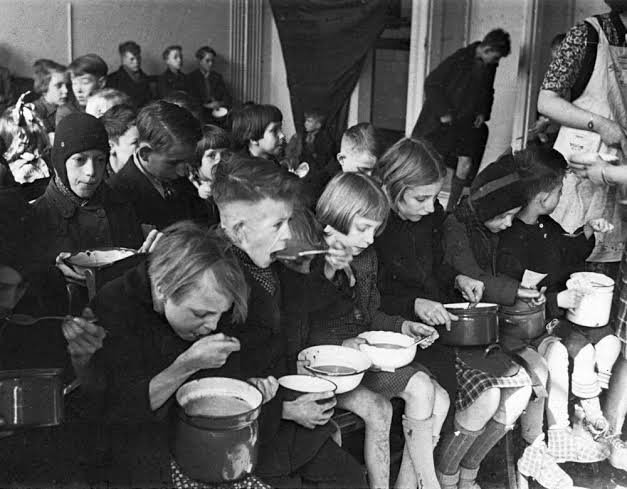
    In the winter of 1944-45, the western Netherlands became a silent, frozen landscape of starvation. With German occupation forces blocking all food transport and the Allies stalled south of the Rhine, over 4.5 million people were trapped in a famine that would kill an estimated 20,000 to 30,000 civilians. Tulip bulbs, sugar beets, and even grass became the last resort for survival.

    This is the story of how a railway strike, a failed military operation, and a brutal winter combined to create one of the darkest chapters of World War II in Western Europe  and how the Dutch endured, resisted, and ultimately survived against impossible odds.

    The Perfect Storm: Railway Strike, Market Garden, and the German Embargo

    The Hunger Winter did not arrive suddenly. It was the product of a chain of events that began in September 1944, when the Allies launched Operation Market Garden, a bold plan to capture key bridges in the Netherlands and outflank the German defenses. The operation failed at the Battle of Arnhem, leaving the western Netherlands under German occupation for another eight months. The Allies were stuck south of the Rhine, and the Germans were determined to hold their ground.

    On September 17, 1944, the Dutch government-in-exile in London called for a nationwide railway strike to support the Allied advance. The strike was largely successful, crippling German logistics. In retaliation, the German Reichskommissar Arthur Seyss-Inquart imposed a total embargo on all food and fuel transport into the western Netherlands on September 27, 1944. The embargo was partially lifted in November, but by then the damage was done. The winter had set in, freezing the canals, and the Germans had deliberately flooded large agricultural areas the inundations to impede Allied advances, destroying crops and farmland in the process.

    The Netherlands had been a net food importer before the war. Under occupation, food was rationed but generally sufficient until 1944. The embargo, combined with the loss of agricultural land to flooding, the destruction of transport infrastructure, and the general collapse of the German administrative apparatus, created a total breakdown of the food distribution system. By December 1944, the official ration had already dropped below subsistence. By February 1945, the official daily ration was down to 400–600 calories and often the rations were unavailable altogether. Actual intake was frequently even lower.

    The Human Cost: Cities Under Siege

    The cities of Amsterdam, Rotterdam, The Hague, and Utrecht were hit hardest. Urban dwellers had no access to farmland, and the German army requisitioned much of the harvest from rural areas. People queued for hours for a loaf of bread made from flour substitutes like tulip bulbs or sugar beets. The bread was grey, heavy, and barely edible, but it was something.

    Thousands of city dwellers took to the roads in what became known as “Hunger Walks” — long treks into the countryside to trade valuables like jewelry, linens, and bicycles for food with farmers. Many died on these journeys, either from exhaustion, cold, or starvation. The roads were littered with the bodies of those who had collapsed and never got up again.

    Children were particularly vulnerable. The famine had a profound effect on them, both physically and psychologically. Many were sent to live with families in the countryside or in the liberated south, where food was more plentiful. These “Hunger Winter children” later became a subject of medical study, as researchers traced the long-term health effects of prenatal and early childhood malnutrition.

    Women bore the brunt of household survival strategies. They queued for hours in the cold, foraged for anything edible, and managed the family’s meager rations with meticulous care. The psychological toll was immense. Many women later spoke of the constant, gnawing hunger, the desperation, and the guilt of having to choose who in the family would eat.

    The Humanitarian Response: A Ray of Hope

    Despite the dire situation, there were glimmers of hope. The Swedish Red Cross organized limited relief shipments, delivering flour and margarine through the port of Delfzijl in the north in early 1945. These shipments were a lifeline, but they were not enough to feed millions.

    The turning point came in April 1945, when the Allies and the German occupiers reached a secret agreement to allow food drops over German-occupied territory. Operation Manna (British) and Operation Chowhound (American) saw Allied bomber crews dropping food packages from April 29 to May 8, 1945. For the Dutch, the sight of those planes was a harbinger of liberation. The drops were followed by Operation Faust, ground convoys of food trucks that entered the liberated areas immediately after the German surrender on May 5, 1945.

    The Aftermath: A Legacy of Hunger

    The German surrender on May 5, 1945 — Liberation Day — ended the famine, but the damage was done. An estimated 20,000 to 30,000 people had died directly from starvation and malnutrition-related illness. The survivors carried the scars for the rest of their lives. The Hunger Winter became a defining experience for a generation of Dutch people, shaping their attitudes toward food, security, and resilience.

    The famine also had a lasting impact on the Dutch landscape and psyche. The inundations had destroyed vast areas of farmland, and it took years to rebuild. The Hunger Winter is remembered every year on May 4-5, when the Netherlands commemorates its war dead and celebrates liberation. It serves as a stark reminder of the fragility of food systems and the human cost of war.

    The Hunger Winter of 1944-45 was a tragedy born of war, strategy, and circumstance. The Dutch endured unimaginable suffering, but they also demonstrated remarkable resilience. The food drops of Operation Manna and Chowhound were a testament to international solidarity, and the eventual liberation brought relief and reconstruction. Today, the Hunger Winter stands as a powerful reminder of the horrors of war and the importance of peace.

    Summary

    • The Hunger Winter occurred from October/November 1944 to May 1945, affecting the western and northern Netherlands.
    • Caused by a German rail and port embargo in retaliation for the Dutch railway strike, and the failure of Operation Market Garden.
    • An estimated 20,000-30,000 deaths from starvation and malnutrition-related illness.
    • Official daily rations dropped to as low as 400-600 calories by February-April 1945.
    • Ended by the German surrender on May 5, 1945, and Allied food drops (Operation Manna/Chowhound) and ground convoys (Operation Faust).

    FAQ

    Q: What was the Hunger Winter?
    A: The Hunger Winter (Hongerwinter) was a famine in the German-occupied western Netherlands during the winter of 1944-45, caused by a German embargo on food and fuel transport, leading to starvation and over 20,000 deaths.

    Q: Why did the Dutch run out of food?
    A: The Dutch government-in-exile called a railway strike in September 1944 to support the Allies. In retaliation, the Germans embargoed all food and fuel transport into the western Netherlands. The failure of Operation Market Garden left the area under German control, and the winter froze canals, preventing food distribution.

    Q: What did people eat during the Hunger Winter?
    A: People resorted to eating tulip bulbs, sugar beets, and bread made from flour substitutes. They also foraged for anything edible, and many went on “Hunger Walks” to the countryside to trade valuables for food.

    Q: How did the Hunger Winter end?
    A: The famine ended with the German surrender on May 5, 1945, and the subsequent Allied food drops (Operation Manna/Chowhound) and ground convoys (Operation Faust) that delivered food to the starving population.

    Q: What were the long-term effects of the Hunger Winter?
    A: The famine had lasting health effects on survivors, especially children who experienced malnutrition. It also became a defining cultural memory for the Netherlands, commemorated annually on May 4-5.
  • The Psychology of Despair and Hope Inside Concentration Camps

    The Psychology of Despair and Hope Inside Concentration Camps

    In the winter of 1944, a young Austrian psychiatrist named Viktor Frankl stood naked in the freezing showers of Auschwitz, clutching the manuscript of his life’s work. When the guards took it away, he felt a profound loss not just of paper, but of meaning. Yet, as he later wrote, he realized that even in that moment, he could choose his response: ‘Everything can be taken from a man but one thing: the last of the human freedoms to choose one’s attitude in any given set of circumstances.’

    Frankl’s experience is one of the most famous accounts of survival in Nazi concentration camps, but it is not the whole story. The camps were not just places of physical suffering; they were psychological laboratories designed to break the human spirit. Understanding how prisoners navigated despair and hope—and how some found meaning while others drowned—remains a painful but essential inquiry into the resilience and fragility of the human mind.

    The Camp as a Machine of Dehumanization

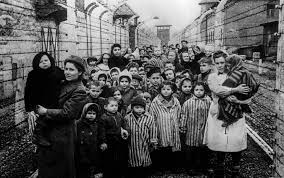
    The Nazi camp system, which began with Dachau in 1933 and expanded into a vast network including extermination camps like Auschwitz and Treblinka, was deliberately engineered to destroy identity and will. Arrival was a ‘threshold’ experience: prisoners were stripped of clothes, shaved, tattooed with numbers, and forced into uniforms that erased individuality. This shock was compounded by starvation, sleep deprivation, and arbitrary violence. Psychiatrist Robert Jay Lifton coined the term ‘psychic numbing’ to describe the emotional shutdown that enabled prisoners—and perpetrators—to function amid atrocity. The goal was to reduce humans to what the camp slang called ‘Mussulmen’: prisoners who had collapsed into apathy, withdrawal, and a living death.

    Bruno Bettelheim, a Dachau and Buchenwald survivor, argued that prisoners often regressed to infantile states, and some ‘identified with the aggressor’ as a defense mechanism. His views, published in The Informed Heart (1960), were controversial, partly because they seemed to blame victims. But his observations highlighted a grim reality: the camp environment was designed to provoke such regression.

    The Drowned and the Saved

    Primo Levi, an Italian Jewish chemist who survived Auschwitz, offered a more nuanced taxonomy. In If This Is a Man (1947) and later The Drowned and the Saved (1986), he distinguished between ‘the drowned’—those who gave up and died—and ‘the saved,’ who survived, often through morally ambiguous means. Levi himself survived partly because of his professional value as a chemist, but he never romanticized survival. He wrote that the saved were often those who ‘struggled to survive at the expense of others.’ This ethical complexity is a stark counterpoint to redemptive narratives.

    Terrence Des Pres, in The Survivor: An Anatomy of Life in the Death Camps (1976), pushed further, arguing that survival was not primarily about meaning but about the biological and social ‘excremental’ struggle: managing filth, disease, and the relentless pressure of bodily needs. He criticized Frankl’s emphasis on meaning as too neat, noting that survival often hinged on luck, physical constitution, and the chance of being assigned to a better work detail.

    The Will to Meaning

    Viktor Frankl’s logotherapy, developed from his camp experience, posits that humans are driven by a ‘will to meaning.’ In Man’s Search for Meaning (1946), he famously wrote: ‘He who has a why to live for can bear almost any how.’ Frankl described how prisoners who had a future goal—a loved one waiting, a book to finish, a task to complete—were more likely to endure. He offered the example of a woman who found meaning in the beauty of a tree she could see from her barracks, noting that even in the most degraded conditions, the mind could find a foothold.

    But Frankl’s view has been challenged. Lawrence Langer, a Holocaust scholar, argued in Holocaust Testimonies: The Ruins of Memory (1991) that survivors’ ‘deep memory’ resists redemptive meaning-making. He showed that many testimonies are fragmented, filled with images that defy narrative coherence. Langer insisted that imposing a positive narrative on atrocity is a form of betrayal. This debate—between meaning and rupture—remains central to understanding hope in the camps.

    Beyond the Nazi Camps: The Gulag and Other Systems

    The psychology of despair and hope is not confined to Nazi camps. In the Soviet Gulag (1930s–1950s), prisoners faced extreme cold, starvation, and forced labor, but the camps were not extermination-oriented. Survival often depended on criminal networks (‘blatnye’) and the ability to secure better work assignments. Varlam Shalamov’s Kolyma Tales depicts a world where moral compromises were routine, and hope was often a luxury. Japanese internment camps for American citizens (1942–1946) and POW camps in Japan also produced testimonies of resilience, but the conditions were less systematically deadly.

    In all these contexts, similar psychological dynamics emerged: the collapse of social identity, the stratification of prisoners into hierarchies, and the desperate search for any source of meaning—whether religious faith, political conviction, or simple human connection.

    Survival Strategies and Their Costs

    Survival was not a single path. Some prisoners formed mutual aid networks, sharing food and information. Others clung to religious faith or political ideology. Some created secret schools or artistic works—the Theresienstadt camp is famous for children’s drawings and music. But every strategy had a cost. The ‘survivor syndrome,’ identified by psychiatrist William Niederland in 1961, describes long-term effects: chronic anxiety, depression, guilt, and anhedonia. Many survivors felt guilt for having lived while others died, a guilt that Frankl acknowledged as part of the human condition.

    The concept of post-traumatic growth (PTG), introduced by Tedeschi and Calhoun in 1995, has been applied retrospectively to some survivors, who reported a deepened appreciation for life or a renewed sense of purpose. But as Langer would caution, such growth is not universal, and imposing it can obscure the irreparable damage.

    The Uncomfortable Truth

    The research reveals an uncomfortable truth: there is no single ‘psychology’ of camp survival. Some found hope through meaning; others survived through luck and morally ambiguous actions; still others drowned into the Mussulman state. The camps were designed to extinguish humanity, and they often succeeded. But the testimonies of those who survived—and those who did not—demand that we confront the full range of human response, from the noblest to the most compromised.

    The psychology of despair and hope in concentration camps is not a neat story of triumph or tragedy. It is a messy, painful record of human endurance and frailty. Frankl’s ‘will to meaning’ offers one lens, but Levi’s ‘drowned’ and Langer’s ‘deep memory’ remind us that many found no redemption. What remains is a challenge: to honor the complexity of those experiences without flinching, and to learn what we can about the limits and possibilities of the human spirit.

    Summary

    • Concentration camps were deliberately designed to dehumanize prisoners, using shock, starvation, and violence to break identity and will.
    • Viktor Frankl’s logotherapy emphasized finding meaning as a key to survival, but this view is contested by scholars like Lawrence Langer.
    • Primo Levi distinguished between ‘the drowned’ who gave up and ‘the saved’ who survived, often through morally ambiguous means.
    • Survival strategies included mutual aid, faith, political conviction, and artistic expression, but all came with psychological costs.
    • The ‘survivor syndrome’ describes long-term trauma effects, while post-traumatic growth is not universal and can obscure suffering.

    FAQ

    Q: What was the ‘Mussulman’ state in concentration camps?
    A: ‘Mussulman’ (Muselmann) was a camp slang term for prisoners who had reached complete physical and psychological collapse, showing apathy and withdrawal. It is considered the extreme endpoint of despair.

    Q: How did Viktor Frankl’s theory of meaning apply to camp survival?
    A: Frankl argued that prisoners who found a sense of purpose—whether a loved one, a task, or a belief—were more likely to endure. His logotherapy posits that the ‘will to meaning’ is a primary human drive.

    Q: What is the ‘survivor syndrome’?
    A: Identified by psychiatrist William Niederland in 1961, it is a cluster of symptoms including chronic anxiety, depression, guilt, and inability to experience pleasure, observed in Holocaust survivors.

    Q: Did all survivors experience post-traumatic growth?
    A: No. Post-traumatic growth is not universal. Many survivors suffered lasting trauma, and some scholars like Lawrence Langer argue that imposing redemptive narratives on survivor testimony distorts their reality.

    Q: How did survival strategies differ between Nazi camps and the Gulag?
    A: In the Nazi camps, survival often depended on assignments and luck, while in the Gulag, criminal networks and securing better work roles were more important. Both involved moral compromises and psychological strain.

  • The Unbroken Mind: How POWs Held Onto Sanity in Captivity

    The Unbroken Mind: How POWs Held Onto Sanity in Captivity

    In the summer of 1942, a young American soldier named Lester Tenney was captured by Japanese forces on the island of Java. He would spend the next three and a half years as a prisoner of war, working on the infamous Burma Railway, where starvation, beatings, and disease were constants. Yet Tenney survived, and like many former POWs, he returned home with his mind intact. His story is not unique it is part of a larger, little-understood phenomenon: how did millions of prisoners, held for years under brutal conditions, keep from losing their sanity?

    The answer lies not in a single heroic act, but in a toolkit of psychological strategies, social structures, and inner resources that POWs developed sometimes consciously, sometimes instinctively to endure the unendurable. This article explores the documented methods that helped these men and women survive the psychological assault of captivity, from the camps of World War II to the prisons of Vietnam.

    The Scale of the Ordeal

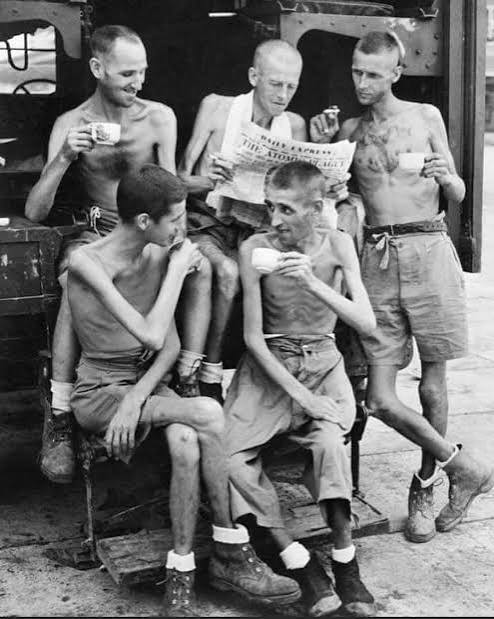
    To understand the psychological challenge, consider the numbers. During World War II alone, an estimated 35 million soldiers were taken prisoner. The conditions varied wildly by theater. In German camps for Western Allied POWs, survival was high—96 to 99 percent—thanks to Red Cross parcels and a relatively rule-bound system. But for Soviet POWs under the Nazis, the death rate was catastrophic: roughly 57 percent, a genocidal neglect. In Japanese camps, about 27 percent of Western POWs died—one in four—from starvation, disease, and violence.

    Many POWs were held for three to five years. Some, like those captured during the Korean War or Vietnam War, endured seven or eight. The experience was a “total stressor”—combining physical deprivation, loss of autonomy, isolation, uncertainty, and constant threat. Yet post-war studies found that a majority of POWs did not develop chronic PTSD or depression. They returned with remarkable resilience. This “survivor paradox” puzzled researchers and pointed to deep psychological defenses.

    The Internal Toolkit: Mental Discipline

    When the body is imprisoned, the mind becomes the last territory. POWs used a variety of internal strategies to maintain cognitive control.

    Memory exercises were common. Prisoners in the Hanoi Hilton, the Vietnamese prison for American pilots, would recall poetry, recite multiplication tables, or mentally reconstruct entire books. Some built imaginary houses in their minds, room by room, furnishing them with meticulous detail. These exercises served a dual purpose: they occupied the mind and preserved a sense of agency.

    Compartmentalization was another key strategy. POWs often separated their mental state from their physical suffering. One former POW described it as “watching my body endure”—a dissociation that allowed him to withstand torture without surrendering his identity. This was not denial; it was a deliberate cognitive split.

    Cognitive reframing transformed the meaning of captivity. Instead of viewing imprisonment as a punishment, many POWs framed it as a test, a mission, or even a research project. Admiral James Stockdale, a Vietnam POW for over seven years, called this the “Stockdale Paradox”: you must retain faith that you will prevail while confronting the brutal facts of your current reality. In his own words, the optimists—those who believed they’d be home by Christmas—died of broken hearts. The survivors accepted the long haul.

    Time management was critical. POWs created internal calendars, marked days, and set micro-goals. Breaking the endless monotony into manageable chunks made the years feel less overwhelming. One POW in a German camp kept a detailed journal of imaginary chess games, playing out entire tournaments in his head.

    The Social Dimension: Bonds and Hierarchy

    Captivity often meant forced proximity with strangers, yet social structures emerged as a lifeline. In many camps, senior officers maintained military discipline, organizing daily roll calls, classes, and even theatrical performances. This hierarchy provided a sense of order and purpose.

    Social bonds were perhaps the strongest defense. POWs formed tight-knit groups, sharing food, information, and emotional support. A study of American POWs in Vietnam found that those who had strong friendships were less likely to develop severe psychological symptoms. In the camps, a shared joke or a whispered conversation could stave off despair.

    Defiance as resistance also played a role. For some, survival itself became an act of resistance—a way to deny the enemy victory. This was particularly strong among Vietnam POWs, who developed elaborate communication codes, tapping on walls to pass news and maintain morale. This defiance gave meaning to suffering.

    The Role of Hope and Faith

    Hope was not a passive feeling; it was an active practice. POWs planned post-war lives in detail—the meals they would eat, the people they would see, the careers they would pursue. This future-orientation kept the present bearable.

    Religious faith was another anchor. Many POWs reported that prayer or meditation provided comfort and a sense of connection beyond the camps. For some, faith offered a framework for understanding their suffering—as a test, a penance, or a mission.

    Humor, too, was a survival tool. In the darkest moments, a joke could cut through despair. POWs in Changi prison in Singapore staged elaborate musicals and comedy sketches, using whatever materials they had. This creativity was not frivolous; it was a assertion of humanity.

    The Fourth Phase: Repatriation

    Surviving captivity was only half the battle. Repatriation brought its own challenges—what psychologists call the “fourth phase.” Many POWs struggled to readjust to civilian life, facing nightmares, anxiety, and a sense of alienation. Yet even here, resilience showed. A significant minority developed chronic PTSD, but the majority did not, and many went on to lead productive lives.

    Admiral Stockdale, after his release, became a philosopher and naval leader. Lester Tenney became a professor. Their stories illustrate a broader truth: the mind, even under extreme duress, can find ways to endure. The psychology of survival is not about avoiding pain; it is about finding meaning within it.

    The POW experience is a testament to human resilience—not because the survivors were extraordinary, but because they used ordinary tools: memory, routine, friendship, and hope. These strategies did not erase suffering, but they made it bearable. In understanding how POWs kept their sanity, we learn something about ourselves: that even in the darkest circumstances, the mind can build a shelter.

    Summary

    • POWs faced total stressors: physical deprivation, isolation, and uncertainty, yet most did not develop chronic PTSD.
    • Internal strategies included memory exercises, compartmentalization, cognitive reframing, and time management.
    • Social bonds and military hierarchies in camps provided crucial support and a sense of purpose.
    • The Stockdale Paradox—faith in eventual victory combined with acceptance of brutal reality—was vital for long-term survival.
    • Hope, faith, and humor were active practices that helped POWs endure.

    FAQ

    Q: What was the most common psychological strategy used by POWs?
    A: Cognitive reframing—reinterpreting captivity as a test or mission—was widespread, along with mental exercises like memory recall to maintain cognitive control.

    Q: Did all POWs develop PTSD?
    A: No, the majority did not. While a significant minority developed chronic PTSD or depression, many returned with remarkable resilience, often using the strategies described above.

    Q: How did social bonds help POWs survive?
    A: Friendships provided emotional support, a shared sense of purpose, and practical aid like food sharing. In Vietnam POW camps, communication codes maintained morale and cohesion.

    Q: What is the Stockdale Paradox?
    A: Named after Admiral James Stockdale, it is the ability to hold onto faith that you will prevail while confronting the brutal facts of reality. Survivors accepted the long haul rather than clinging to false optimism.

    Q: What was the “fourth phase” of captivity?
    A: Repatriation—the period after release when POWs faced readjustment challenges, including nightmares and anxiety. It was often overlooked but crucial for long-term psychological health.