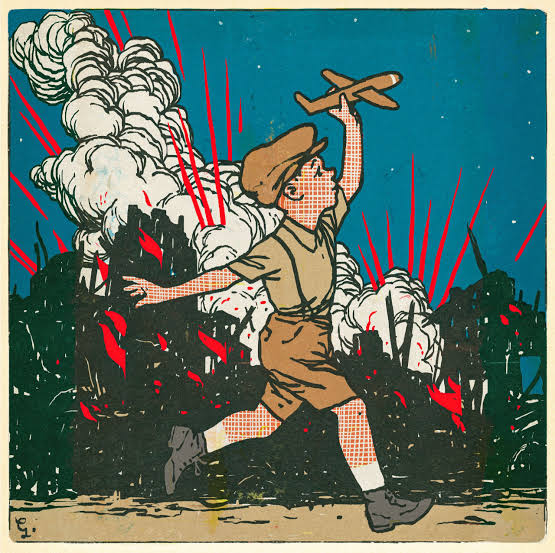
On a quiet morning in 1945, the world emerged from six years of war with 70 to 85 million dead—roughly 3% of the global population at the time. The conflict had consumed continents, toppled empires, and introduced weapons that could end civilization. But the war did not end in 1945. Its institutions, its memories, and its unresolved tensions continue to shape the politics and culture of this century.
Today, when a Russian official invokes the ‘Great Patriotic War’ to justify action in Ukraine, or when a German chancellor bows before the Holocaust memorial in Berlin, they are reaching for the same historical anchor. The post-war order—the United Nations, the European Union, the nuclear non-proliferation regime—was built as a direct response to the war’s horrors. Understanding the 21st century means tracing these lineages back to the conflict that defined the modern era.
The Architecture of the Post-War World
The war’s most enduring legacy is the institutional framework that governs international relations. In 1945, the United Nations was founded with a Security Council whose five permanent members—the United States, the United Kingdom, France, Russia, and China—are the war’s principal victors. That structure remains unchanged, giving the winners of 1945 a permanent veto over global security decisions. The Bretton Woods institutions (the IMF and World Bank) created in 1944 still anchor the global financial system, and the Universal Declaration of Human Rights (1948) set the standard for international law.
Europe’s integration, too, is a war project. The 1951 European Coal and Steel Community was designed explicitly to bind France and Germany’s heavy industries so tightly that another war would be impossible. That coal-and-steel pact evolved into the European Union, a political and economic bloc of 27 nations. When the EU faces a crisis—whether the eurozone debt or Brexit—it is grappling with the legacy of a peace project born from the ashes of war.
Nuclear Deterrence: A Fragile Peace
The war’s final act, the atomic bombings of Hiroshima and Nagasaki, created a doctrine that has—so far—prevented direct great-power conflict. Nuclear deterrence theory holds that the fear of mutual assured destruction keeps rival states from open war. The Cold War’s proxy conflicts in Korea, Vietnam, and Afghanistan were bloody, but the US and Soviet Union never fought each other directly. That logic persists: the Treaty on the Non-Proliferation of Nuclear Weapons (1968) remains the cornerstone of arms control, even as states like North Korea and Iran challenge its limits.
Yet the system is fragile. The war’s nuclear legacy has spread to nine countries, and the risk of use—through accident, miscalculation, or terrorism—remains a defining threat of this century. As the Bulletin of the Atomic Scientists’ Doomsday Clock has repeatedly warned, the world is closer to nuclear catastrophe than at any point since the Cold War’s darkest days.
The Geopolitical Chessboard: From Colonies to Superpowers
The war accelerated the collapse of European colonial empires. Britain, France, and the Netherlands emerged from the conflict financially exhausted and unable to maintain control over their colonies. India gained independence in 1947, followed by dozens of African and Asian nations in the following decades. But the war’s promise of self-determination clashed with colonial powers’ reluctance—a tension that still resonates in postcolonial states grappling with borders drawn during the war era.
The war also created the bipolar superpower rivalry that defined the Cold War. The US and the Soviet Union emerged as the two dominant powers, each with a global sphere of influence. That rivalry shaped the post-war map: NATO expanded eastward after the Cold War’s end, and the US maintains approximately 750 military bases in over 80 countries—a posture that originated in WWII and Cold War strategy. When Russia invaded Ukraine in 2022, it explicitly invoked WWII memory, casting the conflict as a continuation of the ‘Great Patriotic War’ against Western encroachment. Ukraine’s president, Volodymyr Zelenskyy, in turn, has drawn parallels to the Nazi invasion.
Memory as a Political Weapon
The war’s memory is not a static relic; it is a living political tool. In Russia, 80% of the population views the war as the most important event of the 20th century. The ‘Great Patriotic War’ narrative is central to President Vladimir Putin’s legitimacy, framing Russia as the liberator of Europe and a bulwark against fascism. This memory justifies military actions and suppresses dissent by equating criticism with betrayal.
In Germany, by contrast, the war has produced Vergangenheitsbewältigung—a term for ‘coming to terms with the past.’ Holocaust memory is a cornerstone of German and European identity. Germany has mandatory Holocaust education, and its leaders routinely visit memorials. But this reckoning is not universal. Japan’s handling of its wartime atrocities, particularly the ‘comfort women’ issue, remains a source of conflict with South Korea. Poland’s 2018 Holocaust law, which criminalized blaming the Polish nation for Nazi crimes, sparked international outrage.
These divergent memories create real-world disputes. In 2023, the Polish government demanded reparations from Germany for WWII damages, while Germany insists the matter is closed. In the US, the ‘Greatest Generation’ myth of heroic unity contrasts with more critical European cinema, which explores collaboration and guilt.
Culture: How We Remember and Represent
Cultural production continually reinterprets the war, reflecting each generation’s concerns. Steven Spielberg’s Schindler’s List (1993) shaped American perceptions of the Holocaust, while Jonathan Glazer’s The Zone of Interest (2023) offers a more challenging view, focusing on the banality of evil. Novels, films, and video games—from The Book Thief to Call of Duty—keep the war in public consciousness, but each medium selects its own truths.
The war also transformed gender roles. With millions of men mobilized, women entered the workforce in unprecedented numbers, symbolized by ‘Rosie the Riveter’ in the US. This shift laid groundwork for post-war feminist movements. The war’s racial dimensions—from Japanese American internment to the Holocaust’s racial ideology—sparked civil rights struggles that continue to this day.
The Unfinished Business of Decolonization
The war’s promise of self-determination, enshrined in the Atlantic Charter (1941), clashed with colonial realities. The post-war period saw a wave of decolonization, but it was neither smooth nor complete. The partition of India, the Algerian War, and the Vietnam War all traced their roots to the war’s aftermath. Today, postcolonial states still struggle with the arbitrary borders drawn by European powers during the war era, fueling conflicts from the Middle East to Africa.
The Strained Liberal Order
The post-war order—liberal internationalism, free trade, human rights—is now under strain. Revisionist powers like Russia and China view it as a Western-imposed hierarchy, while Western leaders defend it as the guarantor of peace. The war’s legacy is thus a contested one: is the ‘rules-based order’ a shield against tyranny, or a weapon of the powerful? The answer depends on where you stand.
The Demographic Legacy: Migration and the Baby Boom
The war triggered massive demographic upheaval. Millions of refugees, displaced persons, and soldiers crossed borders, reshaping nations. The ‘baby boom’ (1946–1964) created a generation whose size drove economic growth and cultural change in the US and Europe. The war also led to the entry of women into the workforce at scale, a shift that had lasting implications for family structures and gender equality.
The War in the 21st Century: A Living Legacy
Seventy-eight years after the war’s end, its influence is everywhere: in the UN Security Council’s vetoes, in Europe’s shared currency, in the nuclear warheads that guard against another great-power war, in the memory politics that inflame national pride. The war’s trauma and triumph are woven into the fabric of our political and cultural institutions. To understand the 21st century—from the rise of China to the war in Ukraine—one must trace the lines back to 1945.
World War II was not a distant event but the foundation upon which the modern world was built. Its institutions, its memories, and its unresolved tensions continue to shape our politics and culture. As new powers rise and old alliances fray, the war’s legacy remains a touchstone—a reminder of both the worst of humanity and the fragile systems we have built to prevent it from repeating.
Summary
- The UN Security Council’s permanent members are WWII’s victors, a structure that still governs global security.
- The EU’s origins lie in the 1951 European Coal and Steel Community, designed to prevent Franco-German conflict.
- Nuclear deterrence, born from the war’s atomic conclusion, has prevented direct great-power conflict but remains fragile.
- The war accelerated decolonization and created the bipolar superpower rivalry that defined the Cold War.
- National memories of the war differ sharply and are used as political tools, from Russia’s ‘Great Patriotic War’ to Germany’s Holocaust reckoning.
FAQ
Q: How does World War II still influence international politics today?
A: The war created the UN Security Council, the IMF, and the World Bank, which still govern global governance and finance. The US maintains ~750 military bases from that era, and the nuclear non-proliferation regime is a direct response to the war’s atomic bombings.
Q: Why is WWII memory so contested in different countries?
A: Nations remember the war through different lenses: victimhood (Russia, Poland), perpetrator reckoning (Germany, Japan), and triumph (US, UK). These narratives are used to justify contemporary policies and shape national identity.
Q: What is the ‘rules-based order’ and why is it debated?
A: The ‘rules-based order’ refers to the post-WWII framework of international law and institutions. Western powers see it as preventing great-power war, while revisionist states like Russia and China view it as a Western-imposed hierarchy.
Q: How did WWII reshape gender roles?
A: With men mobilized, women entered the workforce in unprecedented numbers (e.g., ‘Rosie the Riveter’), laying the groundwork for post-war feminist movements and lasting changes in family structures.
Q: What is Germany’s ‘Vergangenheitsbewältigung’?
A: It is the process of ‘coming to terms with the past,’ involving Holocaust education, memorials, and public reckoning. It has made Holocaust memory a central part of German and European identity.
Leave a Reply