Tag: International Relations

  • The Birth of the United Nations: A Hope for Global Peace

    The Birth of the United Nations: A Hope for Global Peace

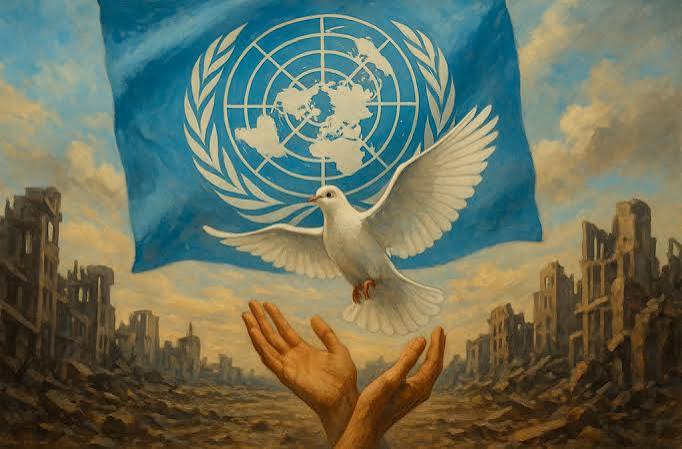
    On June 26, 1945, in the San Francisco Opera House, delegates from 50 nations put pen to paper and signed the United Nations Charter. The world was still smoldering from the ashes of World War II a conflict that had killed an estimated 60 to 80 million people and ended with the blinding flash of atomic bombs over Hiroshima and Nagasaki. The charter was not just a document; it was a promise, born from the wreckage of a failed League of Nations, that humanity would find a better way to settle its disputes.

    The road to that signing was long and winding, shaped by wartime alliances and the dogged vision of leaders who had witnessed two catastrophic global wars. This article traces that journey from the Atlantic Charter to the San Francisco Conference and examines how the United Nations came to embody both the hopes and the contradictions of a post-war world order.

    The League’s Ghost

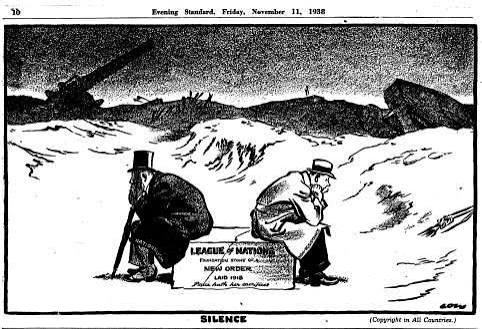
    Before the United Nations, there was the League of Nations a grand experiment that began with high ideals after World War I but collapsed under the weight of its own weaknesses. It had no enforcement mechanism, no standing army, and the United States, its most powerful potential backer, never joined. When Japan invaded Manchuria in 1931, the League could only issue condemnations. When Italy marched into Ethiopia in 1935, its sanctions were toothless. When Hitler remilitarized the Rhineland in 1936, the League stood by, paralyzed.

    The lesson was clear: a peacekeeping body without teeth was a paper tiger. As World War II erupted in 1939, it became brutally apparent that the next attempt at global governance would need to be stronger and more inclusive.

    Wartime Blueprints

    The planning for a new world order began even as the bombs fell. In August 1941, President Franklin D. Roosevelt and British Prime Minister Winston Churchill met aboard a warship in the North Atlantic and issued the Atlantic Charter a joint declaration that outlined goals for a post-war world, including disarmament of aggressors and a “permanent system of general security.”

    By January 1942, 26 Allied nations signed the Declaration by United Nations, pledging to fight the Axis powers and affirming the Atlantic Charter’s principles. It was in that declaration that Roosevelt first coined the term “United Nations” a phrase that would come to define a global institution.

    The blueprint took shape at the Dumbarton Oaks Conference in Washington, D.C., in the autumn of 1944. Representatives from the U.S., the UK, the USSR, and China drafted proposals for the new organization’s structure, including a Security Council with five permanent members each holding veto power. Then, in February 1945, at the Yalta Conference, Roosevelt, Churchill, and Stalin finalized the voting procedures and set a date for a formal conference in San Francisco.

    San Francisco: The World Gathers

    When delegates assembled in San Francisco on April 25, 1945, the world had changed. Roosevelt had died just two weeks earlier, and Germany’s surrender was only days away. The conference carried an air of urgency a sense that the world was holding its breath.

    Fifty nations sent 850 delegates, and more than 2,500 journalists covered every twist and turn. The smaller nations particularly those from Latin America and the Middle East pushed back against the dominance of the Big Five. They demanded stronger human rights language and a greater role for the General Assembly. Their insistence led to the inclusion of the Trusteeship Council and a more robust commitment to decolonization.

    After two months of intense negotiation, the Charter was unanimously adopted on June 25, 1945. The next day, delegates signed it in the Herbst Theatre, the same venue where the conference had opened. Poland, absent at the signing, would add its name on October 15, bringing the original membership to 51.

    A Charter of Contradictions

    The United Nations Charter, drafted by South African statesman Jan Smuts, opens with the stirring words: “We the peoples of the United Nations determined to save succeeding generations from the scourge of war.” Article 1 lays out the organization’s core purposes: to maintain international peace and security, develop friendly relations among nations, achieve international cooperation in solving economic, social, cultural, and humanitarian problems, and to be a center for harmonizing the actions of nations.

    But the Charter also enshrined a fundamental tension. The Security Council’s five permanent members — the U.S., the UK, the USSR, France, and China — each hold veto power, a provision that gave the great powers a privileged position. Smaller nations, who had hoped for a more democratic structure, had to settle for a General Assembly where every nation had one vote, but where resolutions carried no binding force.

    The First Steps

    The Charter entered into force on October 24, 1945, after the five permanent members and a majority of other signatories ratified it. That date is now celebrated as United Nations Day.

    The first General Assembly opened on January 10, 1946, at Central Hall, Westminster, in London. Fifty-one member states were represented. The Security Council held its first meeting a week later, on January 17. The UN initially operated from temporary quarters — first in London, then at the Sperry Gyroscope plant in Lake Success, New York — until its permanent headquarters on the East River in Manhattan was completed in 1952.

    The League of Nations, meanwhile, formally dissolved itself on April 18, 1946, at its final session in Geneva, transferring its assets and functions to its successor. The old order was gone. The new one had begun.

    A Hope, Not a Guarantee

    The United Nations was born with a heavy burden: to prevent another world war. Its first decades were marked by the Cold War, colonial wars, and regional conflicts — but the UN has also facilitated peacekeeping missions, brokered ceasefires, and provided humanitarian relief to millions. The Charter’s promise of collective security has never been fully realized, but the organization has evolved, expanding to 193 member states and taking on issues its founders never imagined, from climate change to global health.

    The birth of the UN was a hope — a fragile and imperfect one, but a hope nonetheless. As the world continues to grapple with conflict and division, that founding vision remains a touchstone, a reminder that even in the darkest hours, nations can come together to build something better.

    The United Nations was not a clean slate; it was a response to catastrophe, built on the lessons of a failed League and the ashes of war. Its creation in 1945 represented a collective leap of faith — that diplomacy could outpace destruction, and that the nations of the world could cooperate to secure peace. That hope endures, even as the organization continues to face the hard realities of a fractured world.

    Summary

    • The UN Charter was signed on June 26, 1945, by 50 nations at the San Francisco Conference; Poland later signed, making 51 original members.
    • The Charter came into force on October 24, 1945, after ratification by the five permanent Security Council members and a majority of signatories.
    • The UN replaced the League of Nations, which failed to prevent World War II due to lack of enforcement and U.S. absence.
    • Key wartime milestones: Atlantic Charter (1941), Declaration by United Nations (1942), Moscow Conference (1943), Dumbarton Oaks (1944), Yalta (1945).
    • The San Francisco Conference (April–June 1945) involved 850 delegates from 50 nations, with smaller nations pushing for human rights and decolonization.

    FAQ

    Q: When was the United Nations founded?
    A: The UN was founded on October 24, 1945, when the Charter came into force after ratification by the five permanent members and a majority of other signatories.

    Q: What was the League of Nations, and why did it fail?
    A: The League was a post-World War I organization created to maintain peace. It failed because it lacked enforcement power, had no standing military, and the U.S. never joined, making it unable to prevent Japanese, Italian, and German aggression in the 1930s.

    Q: Who coined the term “United Nations”?
    A: U.S. President Franklin D. Roosevelt coined the term in the Declaration by United Nations on January 1, 1942.

    Q: What is the role of the Security Council?
    A: The Security Council is responsible for maintaining international peace and security. It has five permanent members (U.S., UK, USSR/Russia, France, China) with veto power, plus ten rotating non-permanent members.

    Q: Where was the UN’s first meeting held?
    A: The first General Assembly opened on January 10, 1946, at Central Hall, Westminster, London. The UN later moved to temporary quarters in Lake Success, New York, before its permanent headquarters was completed in 1952.
  • How World War II Still Shapes the 21st Century: Politics, Memory, and Culture

    How World War II Still Shapes the 21st Century: Politics, Memory, and Culture

    On a quiet morning in 1945, the world emerged from six years of war with 70 to 85 million dead—roughly 3% of the global population at the time. The conflict had consumed continents, toppled empires, and introduced weapons that could end civilization. But the war did not end in 1945. Its institutions, its memories, and its unresolved tensions continue to shape the politics and culture of this century.

    Today, when a Russian official invokes the ‘Great Patriotic War’ to justify action in Ukraine, or when a German chancellor bows before the Holocaust memorial in Berlin, they are reaching for the same historical anchor. The post-war order—the United Nations, the European Union, the nuclear non-proliferation regime—was built as a direct response to the war’s horrors. Understanding the 21st century means tracing these lineages back to the conflict that defined the modern era.

    The Architecture of the Post-War World

    The war’s most enduring legacy is the institutional framework that governs international relations. In 1945, the United Nations was founded with a Security Council whose five permanent members—the United States, the United Kingdom, France, Russia, and China—are the war’s principal victors. That structure remains unchanged, giving the winners of 1945 a permanent veto over global security decisions. The Bretton Woods institutions (the IMF and World Bank) created in 1944 still anchor the global financial system, and the Universal Declaration of Human Rights (1948) set the standard for international law.

    Europe’s integration, too, is a war project. The 1951 European Coal and Steel Community was designed explicitly to bind France and Germany’s heavy industries so tightly that another war would be impossible. That coal-and-steel pact evolved into the European Union, a political and economic bloc of 27 nations. When the EU faces a crisis—whether the eurozone debt or Brexit—it is grappling with the legacy of a peace project born from the ashes of war.

    Nuclear Deterrence: A Fragile Peace

    The war’s final act, the atomic bombings of Hiroshima and Nagasaki, created a doctrine that has—so far—prevented direct great-power conflict. Nuclear deterrence theory holds that the fear of mutual assured destruction keeps rival states from open war. The Cold War’s proxy conflicts in Korea, Vietnam, and Afghanistan were bloody, but the US and Soviet Union never fought each other directly. That logic persists: the Treaty on the Non-Proliferation of Nuclear Weapons (1968) remains the cornerstone of arms control, even as states like North Korea and Iran challenge its limits.

    Yet the system is fragile. The war’s nuclear legacy has spread to nine countries, and the risk of use—through accident, miscalculation, or terrorism—remains a defining threat of this century. As the Bulletin of the Atomic Scientists’ Doomsday Clock has repeatedly warned, the world is closer to nuclear catastrophe than at any point since the Cold War’s darkest days.

    The Geopolitical Chessboard: From Colonies to Superpowers

    The war accelerated the collapse of European colonial empires. Britain, France, and the Netherlands emerged from the conflict financially exhausted and unable to maintain control over their colonies. India gained independence in 1947, followed by dozens of African and Asian nations in the following decades. But the war’s promise of self-determination clashed with colonial powers’ reluctance—a tension that still resonates in postcolonial states grappling with borders drawn during the war era.

    The war also created the bipolar superpower rivalry that defined the Cold War. The US and the Soviet Union emerged as the two dominant powers, each with a global sphere of influence. That rivalry shaped the post-war map: NATO expanded eastward after the Cold War’s end, and the US maintains approximately 750 military bases in over 80 countries—a posture that originated in WWII and Cold War strategy. When Russia invaded Ukraine in 2022, it explicitly invoked WWII memory, casting the conflict as a continuation of the ‘Great Patriotic War’ against Western encroachment. Ukraine’s president, Volodymyr Zelenskyy, in turn, has drawn parallels to the Nazi invasion.

    Memory as a Political Weapon

    The war’s memory is not a static relic; it is a living political tool. In Russia, 80% of the population views the war as the most important event of the 20th century. The ‘Great Patriotic War’ narrative is central to President Vladimir Putin’s legitimacy, framing Russia as the liberator of Europe and a bulwark against fascism. This memory justifies military actions and suppresses dissent by equating criticism with betrayal.

    In Germany, by contrast, the war has produced Vergangenheitsbewältigung—a term for ‘coming to terms with the past.’ Holocaust memory is a cornerstone of German and European identity. Germany has mandatory Holocaust education, and its leaders routinely visit memorials. But this reckoning is not universal. Japan’s handling of its wartime atrocities, particularly the ‘comfort women’ issue, remains a source of conflict with South Korea. Poland’s 2018 Holocaust law, which criminalized blaming the Polish nation for Nazi crimes, sparked international outrage.

    These divergent memories create real-world disputes. In 2023, the Polish government demanded reparations from Germany for WWII damages, while Germany insists the matter is closed. In the US, the ‘Greatest Generation’ myth of heroic unity contrasts with more critical European cinema, which explores collaboration and guilt.

    Culture: How We Remember and Represent

    Cultural production continually reinterprets the war, reflecting each generation’s concerns. Steven Spielberg’s Schindler’s List (1993) shaped American perceptions of the Holocaust, while Jonathan Glazer’s The Zone of Interest (2023) offers a more challenging view, focusing on the banality of evil. Novels, films, and video games—from The Book Thief to Call of Duty—keep the war in public consciousness, but each medium selects its own truths.

    The war also transformed gender roles. With millions of men mobilized, women entered the workforce in unprecedented numbers, symbolized by ‘Rosie the Riveter’ in the US. This shift laid groundwork for post-war feminist movements. The war’s racial dimensions—from Japanese American internment to the Holocaust’s racial ideology—sparked civil rights struggles that continue to this day.

    The Unfinished Business of Decolonization

    The war’s promise of self-determination, enshrined in the Atlantic Charter (1941), clashed with colonial realities. The post-war period saw a wave of decolonization, but it was neither smooth nor complete. The partition of India, the Algerian War, and the Vietnam War all traced their roots to the war’s aftermath. Today, postcolonial states still struggle with the arbitrary borders drawn by European powers during the war era, fueling conflicts from the Middle East to Africa.

    The Strained Liberal Order

    The post-war order—liberal internationalism, free trade, human rights—is now under strain. Revisionist powers like Russia and China view it as a Western-imposed hierarchy, while Western leaders defend it as the guarantor of peace. The war’s legacy is thus a contested one: is the ‘rules-based order’ a shield against tyranny, or a weapon of the powerful? The answer depends on where you stand.

    The Demographic Legacy: Migration and the Baby Boom

    The war triggered massive demographic upheaval. Millions of refugees, displaced persons, and soldiers crossed borders, reshaping nations. The ‘baby boom’ (1946–1964) created a generation whose size drove economic growth and cultural change in the US and Europe. The war also led to the entry of women into the workforce at scale, a shift that had lasting implications for family structures and gender equality.

    The War in the 21st Century: A Living Legacy

    Seventy-eight years after the war’s end, its influence is everywhere: in the UN Security Council’s vetoes, in Europe’s shared currency, in the nuclear warheads that guard against another great-power war, in the memory politics that inflame national pride. The war’s trauma and triumph are woven into the fabric of our political and cultural institutions. To understand the 21st century—from the rise of China to the war in Ukraine—one must trace the lines back to 1945.

    World War II was not a distant event but the foundation upon which the modern world was built. Its institutions, its memories, and its unresolved tensions continue to shape our politics and culture. As new powers rise and old alliances fray, the war’s legacy remains a touchstone—a reminder of both the worst of humanity and the fragile systems we have built to prevent it from repeating.

    Summary

    • The UN Security Council’s permanent members are WWII’s victors, a structure that still governs global security.
    • The EU’s origins lie in the 1951 European Coal and Steel Community, designed to prevent Franco-German conflict.
    • Nuclear deterrence, born from the war’s atomic conclusion, has prevented direct great-power conflict but remains fragile.
    • The war accelerated decolonization and created the bipolar superpower rivalry that defined the Cold War.
    • National memories of the war differ sharply and are used as political tools, from Russia’s ‘Great Patriotic War’ to Germany’s Holocaust reckoning.

    FAQ

    Q: How does World War II still influence international politics today?
    A: The war created the UN Security Council, the IMF, and the World Bank, which still govern global governance and finance. The US maintains ~750 military bases from that era, and the nuclear non-proliferation regime is a direct response to the war’s atomic bombings.

    Q: Why is WWII memory so contested in different countries?
    A: Nations remember the war through different lenses: victimhood (Russia, Poland), perpetrator reckoning (Germany, Japan), and triumph (US, UK). These narratives are used to justify contemporary policies and shape national identity.

    Q: What is the ‘rules-based order’ and why is it debated?
    A: The ‘rules-based order’ refers to the post-WWII framework of international law and institutions. Western powers see it as preventing great-power war, while revisionist states like Russia and China view it as a Western-imposed hierarchy.

    Q: How did WWII reshape gender roles?
    A: With men mobilized, women entered the workforce in unprecedented numbers (e.g., ‘Rosie the Riveter’), laying the groundwork for post-war feminist movements and lasting changes in family structures.

    Q: What is Germany’s ‘Vergangenheitsbewältigung’?
    A: It is the process of ‘coming to terms with the past,’ involving Holocaust education, memorials, and public reckoning. It has made Holocaust memory a central part of German and European identity.

  • The League of Nations: A Promise Broken by Its Own Members

    The League of Nations: A Promise Broken by Its Own Members

    On a crisp January morning in 1920, delegates from 42 nations gathered in Geneva, Switzerland, to inaugurate the world’s first permanent peacekeeping body. The League of Nations was born out of the ashes of World War I, a war that had killed over 16 million people and left Europe in ruins. Its founding covenant, embedded in the Treaty of Versailles, was a bold promise: never again would the world descend into such catastrophic conflict. The League would resolve disputes, disarm aggressors, and protect the weak.

    But within two decades, that promise lay in tatters. The League failed to stop Japanese aggression in Manchuria, Italian conquest of Ethiopia, and German remilitarization of the Rhineland. By 1939, it was a powerless bystander to the outbreak of World War II. The story of the League is not just a chronicle of institutional weakness; it is a cautionary tale about the limits of international cooperation when great powers refuse to lead.

    Birth of an Ideal

    The League’s intellectual roots stretched back to philosopher Immanuel Kant’s 1795 essay Perpetual Peace and the Concert of Europe that followed Napoleon’s defeat. But it was World War I that turned these ideas into a political reality. As the war dragged on, President Woodrow Wilson championed the cause, and in January 1918, his Fourteen Points called for a ‘general association of nations’ to guarantee political independence and territorial integrity. The British League of Nations Union and South African statesman Jan Smuts added their weight, and by the Paris Peace Conference in 1919, the Covenant was drafted in weeks.

    The structure was ambitious. The Assembly gave every member an equal vote. The Council had permanent seats for Britain, France, Italy, and Japan, plus rotating non-permanent members. The Secretariat, led by Sir Eric Drummond, provided day-to-day administration. The Permanent Court of International Justice opened in The Hague in 1922. The International Labour Organization, a semi-autonomous agency, aimed to improve working conditions globally.

    Yet the Covenant’s heart was collective security, outlined in Articles 10–16. Members pledged to respect each other’s territorial integrity and to respond to aggression with economic sanctions or military force. It was a revolutionary concept: aggression against one would be met by all.

    The Fatal Absence

    From the start, the League was crippled by the absence of its most powerful champion. The U.S. Senate, led by Henry Cabot Lodge, refused to ratify the Treaty of Versailles in 1919 and 1920. Lodge and his allies feared that Article X would drag America into foreign wars without congressional approval. President Wilson campaigned futilely for ratification, but the Senate voted no. The United States never joined.

    Without American participation, the League lacked military and economic heft. Britain and France, war-weary and financially strained, were reluctant to enforce sanctions against major powers. The League’s only real strength was moral suasion, and that proved insufficient against determined aggressors.

    Successes That Foreshadowed the UN

    Despite its eventual collapse, the League did achieve tangible successes, especially in the 1920s. It resolved the Åland Islands dispute between Finland and Sweden in 1921, peacefully settling a territorial conflict. In 1926, it mediated the Mosul question between Turkey and Iraq, and in 1934, it handled the Leticia dispute between Colombia and Peru.

    The League also pioneered humanitarian work. Fridtjof Nansen, a Norwegian explorer and diplomat, devised a passport system for stateless refugees in 1922, helping hundreds of thousands of displaced people. The League’s Health Organization fought epidemics like typhus and malaria, laying groundwork for the World Health Organization. It addressed drug trafficking, white slavery, and child labor, and it oversaw a mandates system to administer former German and Ottoman territories—though critics later dismissed this as colonialism in disguise.

    These successes, however, were local and administrative. They did not touch the core issue of great-power aggression.

    Cracks in the Edifice

    The 1930s brought the Great Depression, which fueled nationalism and militarism. The League’s first major test came in 1931, when Japan invaded Manchuria. China appealed to the League, which dispatched the Lytton Commission. The commission condemned Japan’s aggression, but no sanctions followed. Japan simply withdrew from the League in 1933. The message was clear: the League would not act against a major power.

    The second blow came in 1935, when Italy invaded Ethiopia. The League imposed partial sanctions, but oil was excluded—a fatal omission. Meanwhile, British and French foreign ministers secretly negotiated the Hoare-Laval Pact, which would have given Italy two-thirds of Ethiopia. The plan leaked, causing outrage, but the damage was done. Ethiopia was annexed, and the League’s credibility collapsed.

    Germany, now under Hitler, remilitarized the Rhineland in 1936, violating the Treaty of Versailles. The League took no action. The Spanish Civil War from 1936 to 1939 saw the Non-Intervention Committee fail to stop foreign intervention. When Germany annexed Austria in 1938 and the Sudetenland later that year, the League was bypassed entirely. By the time Germany invaded Poland in 1939, the League was effectively defunct.

    The Final Curtain

    The League held its last assembly on April 18, 1946, and formally dissolved the next day. Its assets and functions were transferred to the United Nations, founded in October 1945. The League’s legacy is ambiguous. It failed at its primary mission, yet it established the model for the UN and other international bodies. Its successes in health, labor, and refugee work were seeds that grew into specialized agencies.

    But the League’s failure offers a stark lesson: international institutions are only as strong as their member states’ willingness to act. The absence of the United States, the hesitancy of Britain and France, and the rise of totalitarian regimes combined to doom the experiment. As the UN faces its own challenges, the League’s story remains a warning that peace is not guaranteed by treaties alone—it requires constant vigilance and commitment.

    The League of Nations was not a failure of ideals but a failure of execution. It was a promise made by the world’s leaders to prevent another war, and it was broken not by its institutions but by the nations that created it. Its memory serves as a reminder that peace is a fragile achievement, requiring the active participation of the powerful. The League’s ghost still haunts Geneva, urging us to learn from its mistakes.

    Summary

    • The League of Nations was founded on January 10, 1920, as part of the Treaty of Versailles, with 42 original members.
    • It had both successes (e.g., Åland Islands, refugee work) and failures (Manchuria, Ethiopia).
    • The failure of the U.S. to join is considered a fatal flaw, weakening the League’s power.
    • The League dissolved on April 18-19, 1946, and its assets were transferred to the United Nations.
    • Its legacy includes establishing the model for the UN and specialized agencies like the ILO and WHO.

    FAQ

    Q: Why did the League of Nations fail?
    A: The League failed due to a combination of factors: the absence of the United States, the reluctance of Britain and France to enforce sanctions, the rise of aggressive totalitarian regimes, and the League’s lack of military enforcement power.

    Q: What were the League’s main successes?
    A: The League successfully resolved several territorial disputes, including the Åland Islands and Mosul. It also pioneered refugee assistance, health programs, and labor standards, which later influenced the UN.

    Q: How did the United States’ failure to join affect the League?
    A: The U.S. refusal to join deprived the League of its most powerful member, reducing its credibility and military and economic influence, making it harder to enforce collective security.

    Q: What happened at the last assembly of the League?
    A: The League’s last assembly was held on April 18, 1946, where it formally dissolved itself, and its functions and assets were transferred to the newly created United Nations.

    Q: What is the League’s legacy today?
    A: The League’s legacy is twofold: it is a cautionary tale of international failure, but it also established the framework for the UN and specialized agencies like the ILO and WHO, and its humanitarian work continues to inspire.

  • The 14 Points: How a President’s Dream of Peace Became a Century of Consequences

    The 14 Points: How a President’s Dream of Peace Became a Century of Consequences

    On a cold January evening in 1918, Woodrow Wilson stood before a joint session of Congress and unveiled a vision that would redefine the world’s understanding of peace. The 14 Points were not a treaty or a list of demands, but a moral blueprint—a declaration that the slaughter of millions must end not with vengeance, but with justice. Wilson’s words echoed beyond the chamber, reaching the trenches of the Western Front and the chancelleries of Europe, promising a new order where open diplomacy, self-determination, and a league of nations would banish the shadows of secret alliances and imperial greed.

    Yet the dream that captivated the world would crumble within a year, betrayed by the very leaders who sat at the peace table—and by the American Senate that rejected its own president’s triumph. The 14 Points were never fully realized, but their legacy is not failure. It is a story of how ideals, however compromised, can reshape the course of history, for better and for worse.

    A Speech That Shook the World

    Wilson’s address on January 8, 1918, was a masterstroke of timing. Russia had just exited the war, leaving the Allies to face the full might of the Central Powers alone. The American president, who had entered the war only nine months earlier, needed to give the conflict a purpose beyond territorial conquest. He needed to offer the German and Austrian publics a reason to turn against their own leaders.

    The speech was the product of months of intense intellectual labor. Wilson had assembled a team of about 150 scholars—geographers, historians, economists—known as The Inquiry. They pored over maps, ethnic distributions, and economic data, producing voluminous reports that Wilson distilled into a single, soaring vision. The result was a document of remarkable clarity: open covenants, freedom of the seas, free trade, disarmament, and a league of nations to guarantee the peace.

    Each point was a direct repudiation of the old world order. Point 1, banning secret treaties, struck at the heart of the diplomatic culture that had dragged Europe into war. Point 14, the League of Nations, was the keystone—a permanent institution to enforce the new rules. Wilson was not merely proposing a peace; he was proposing a revolution in international affairs.

    The Paris Chessboard

    When Wilson sailed for France in December 1918, he became the first sitting American president to travel to Europe. He was greeted by crowds of ecstatic Parisians, who saw him as a savior. But the euphoria did not last.

    At the Paris Peace Conference, Wilson faced three formidable opponents. Georges Clemenceau of France, known as ‘The Tiger,’ cared little for ideals; he had seen his country invaded twice in a generation and demanded security. David Lloyd George of Britain was determined to preserve the British Empire and naval supremacy. Vittorio Orlando of Italy sought territorial gains for his young nation.

    The Big Four negotiated in secret, a direct violation of Point 1. Clemenceau pushed for the Rhineland to be detached from Germany, while Lloyd George insisted on a punitive naval blockade. Wilson fought for his principles, but he was forced to make compromises. Germany was saddled with a ‘war guilt’ clause and crushing reparations. The Treaty of Versailles, signed on June 28, 1919, incorporated only some of the 14 Points—and even those were often watered down.

    The German Betrayal

    Perhaps the most tragic consequence of the Versailles Treaty was its impact on Germany. Germany had agreed to the armistice in November 1918 on the explicit understanding that the peace would be based on the 14 Points. When the treaty was unveiled, the Germans were stunned. The territorial losses, the war guilt clause, the astronomical reparations—none of it matched Wilson’s promised ‘peace without victory.’

    The sense of betrayal was not just diplomatic; it was visceral. German nationalists, including a young Adolf Hitler, would use this ‘stab in the back’ myth to undermine the Weimar Republic. The treaty’s harshness did not create Nazism, but it provided the fuel for the fire. Wilson’s dream of a just peace had become, in the eyes of many Germans, a tool of Allied vengeance.

    The League That Never Was

    The League of Nations was created in 1920, with its headquarters in Geneva. Wilson had staked his presidency on it, but he faced an insurmountable obstacle at home: the U.S. Senate. Isolationists, led by Henry Cabot Lodge, opposed the League’s Article X, which committed members to protect each other’s territorial integrity. Wilson refused to compromise, and the Senate refused to ratify the Treaty of Versailles. The United States never joined the League.

    Without American participation, the League was crippled from birth. It had no enforcement mechanism, no standing army, and no great-power unity. It failed to prevent the Italian invasion of Ethiopia, the Japanese annexation of Manchuria, or the rise of Hitler. By 1939, the League was a hollow shell, and the world was at war again.

    The Colonial Blind Spot

    Wilson’s vision of self-determination was revolutionary, but it had a glaring flaw: it applied only to Europeans. Point 5 called for an ‘impartial adjustment of colonial claims,’ with equal weight given to the interests of colonial peoples. But in practice, the victors simply divided up the German and Ottoman empires under the mandate system. The peoples of Africa, the Middle East, and Asia were given no say in their own futures.

    The League’s mandate system was a fig leaf for continued imperial control. ‘Self-determination’ was a promise for the Balkans and the Austro-Hungarian Empire, but not for the subjects of British, French, or Belgian empires. Wilson’s idealism, which had inspired anticolonial movements worldwide, ultimately reinforced the very structures it claimed to reform.

    A Legacy That Endures

    Despite its failures, the 14 Points did not vanish. The League of Nations, however flawed, established the template for the United Nations. The principle of self-determination reshaped the world map, leading to the independence of dozens of nations in the decades after World War II. The idea of open diplomacy, free trade, and international law became the bedrock of the postwar order.

    Wilson received the 1919 Nobel Peace Prize, but he died in 1924 a broken man, convinced his life’s work had failed. He could not foresee that his ideas would outlive him. The 14 Points were a profound moral statement—a recognition that peace cannot be built on revenge, that nations must be governed by law, and that the world’s peoples have a right to shape their own destinies.

    As we look at the wars and conflicts of the 21st century, the questions Wilson raised remain urgent. Can international institutions truly guarantee peace? Can self-determination be reconciled with territorial integrity? The 14 Points were a dream, but dreams have consequences. They may not be realized, but they set the course.

    Woodrow Wilson’s 14 Points remain a touchstone of internationalist thought, a reminder that peace is not merely the absence of war but a positive vision of justice. The dream failed in its time, but it planted seeds that would grow into the architecture of the modern world. Whether we look at the United Nations, the European Union, or the ongoing struggles for self-determination, Wilson’s shadow looms large. His dream was imperfect, and its consequences were often tragic, but it gave the world a new language of hope—one that we still speak today.

    Summary

    • The 14 Points were delivered on January 8, 1918, as a blueprint for a just peace, with significant input from The Inquiry, a team of ~150 experts.
    • Only some points were incorporated into the Treaty of Versailles, which was far harsher than Wilson promised, fueling German resentment and the ‘stab in the back’ myth.
    • The League of Nations was created but the U.S. Senate refused to join, leaving it without great-power support and doomed to fail.
    • Wilson’s self-determination was applied selectively, ignoring the colonial peoples of Africa and Asia, and the mandate system merely legitimized imperial control.
    • Despite its failures, the 14 Points inspired the UN and modern international institutions, and remain a powerful symbol of the pursuit of peace.

    FAQ

    Q: What were the main goals of the 14 Points?
    A: The 14 Points aimed to establish a framework for a just and lasting peace after World War I, including open diplomacy, freedom of the seas, free trade, disarmament, self-determination for European peoples, and the creation of a League of Nations to guarantee peace.

    Q: Why did the U.S. not join the League of Nations?
    A: The U.S. Senate refused to ratify the Treaty of Versailles, partly because of objections to Article X, which required members to protect each other’s territorial integrity. This was a victory for isolationist sentiment led by Senator Henry Cabot Lodge.

    Q: How did Germany react to the Treaty of Versailles?
    A: Germany felt betrayed because it had agreed to the armistice on the assumption that peace would be based on the 14 Points. The treaty’s harsh terms—war guilt, reparations, territorial losses—created a deep sense of injustice that nationalist leaders later exploited.

    Q: Did the 14 Points apply to colonial peoples?
    A: No, despite Point 5 calling for impartial adjustment of colonial claims, the mandate system simply transferred control, and self-determination was applied only to European nations, not to people in Asia, Africa, or the Middle East.

    Q: What is the lasting legacy of the 14 Points?
    A: The 14 Points influenced the creation of the United Nations and other international institutions, and the principle of self-determination reshaped global politics. They remain a symbol of the ideal that peace can be built on justice rather than vengeance, even if that ideal is never fully achieved.